Кабель, эквивалентный кабелю LAPP

ККГР、ККГРТ、ККГРВ、ККГВ、ККГПВ、ККПЭВ 是一组按俄罗斯技术条件 ТУ 16.К73-027-91 制造、符合 ГОСТ 31945-2012 要求的柔性电缆, 专门面向 转子采掘成套设备(роторные комплексы) 与 单斗挖掘机(одноковшовые экскаваторы)。 它们用于这类大型移动采掘机械上的 电气设备供电、控制装置、通信、照明以及电能输配, 其中 ККПЭВ 还作为 挖掘机控制计算系统的数据传输电缆。这组型号覆盖橡胶、PVC、聚乙烯多种绝缘与护套体系, 并具备 -60℃ 低温适应、耐油、不延燃 等露天采矿现场所必需的工程特性

什么是俄标 ККГР、ККГРТ、ККГРВ、ККГВ、ККГПВ、ККПЭВ 电缆

ККГР、ККГРТ、ККГРВ、ККГВ、ККГПВ、ККПЭВ 是一组按俄罗斯技术条件 ТУ 16.К73-027-91 制造、符合 ГОСТ 31945-2012 要求的柔性电缆, 专门面向 转子采掘成套设备(роторные комплексы) 与 单斗挖掘机(одноковшовые экскаваторы)。 它们用于这类大型移动采掘机械上的 电气设备供电、控制装置、通信、照明以及电能输配, 其中 ККПЭВ 还作为 挖掘机控制计算系统的数据传输电缆。这组型号覆盖橡胶、PVC、聚乙烯多种绝缘与护套体系, 并具备 -60℃ 低温适应、耐油、不延燃 等露天采矿现场所必需的工程特性
UNE 22511 — formally titled "Cables flexibles para minería subterránea con tensiones de 1,8/3 kV con aislamiento de caucho, sin armadura" (Flexible cables for underground mining, 1.8/3 kV, rubber-insulated, unarmoured) — is the definitive Spanish standard for heavy-duty power cables connecting underground mobile mining equipment to fixed electrical distribution networks. Published and maintained by AENOR (Asociación Española de Normalización y Certificación), it operates as a specialized overlay on IEC 60502-1, extending that base standard's electrical requirements with the stringent mechanical, safety, and flame-retardancy requirements specific to enclosed underground environments. Despite its Spanish origin, UNE 22511 enjoys a geographic reach far exceeding Iberia. The standard has been adopted — formally or by reference — across the major Spanish-speaking mining economies: Chile, Peru, Colombia, Bolivia, and Mexico, where AENOR-certified cables are accepted by national mining safety regulators as the primary qualification pathway for underground mobile equipment power supply cables. In Chile alone, UNE 22511 cables are installed across dozens of operations including major copper and coal mines. The standard's engineering DNA can be described in a single imperative: extreme dynamic flexibility combined with superior resistance to combined torsional and bending fatigue. This is not merely a performance aspiration — it is a structural requirement that shapes every material choice and geometric decision in the cable's construction. The logic proceeds as follows: Underground mobile equipment (continuous miners, shearers, shuttle cars) moves continuously and repeatedly during operation, dragging its power cable behind it or winding and unwinding it from a cable reel. This motion imposes cyclic bending, axial tension, and torsional loads on the cable simultaneously — a multi-axis fatigue regime of a severity not encountered in any other industrial cable application. Standard fixed-installation cables, even those classified as "flexible," are not designed for this loading regime and will fail in fatigue within weeks to months when installed in drag duty. Therefore, every structural element of a UNE 22511 cable — conductor wire diameter, insulation compound, earth core geometry, armour exclusion, sheath specification — is selected to maximize multi-axis fatigue endurance, not any single performance parameter. ⛏ The Founding Engineering Principle UNE 22511 is an unarmoured drag cable standard. The deliberate absence of any metallic armour — which might superficially seem to reduce robustness — is in fact the defining engineering choice that makes the standard viable. Steel wire or tape armour in a continuously torsionally-loaded cable acts as a progressive-failure torsional spring: each twist cycle accumulates irreversible plastic strain in the armour wires, leading to wire fractures within 10,000–30,000 cycles. For a shuttle car cable experiencing 80,000+ torsional cycles per year, armour represents not additional protection but a built-in scheduled failure mechanism. The UNE 22511 design eliminates this failure mode at source.

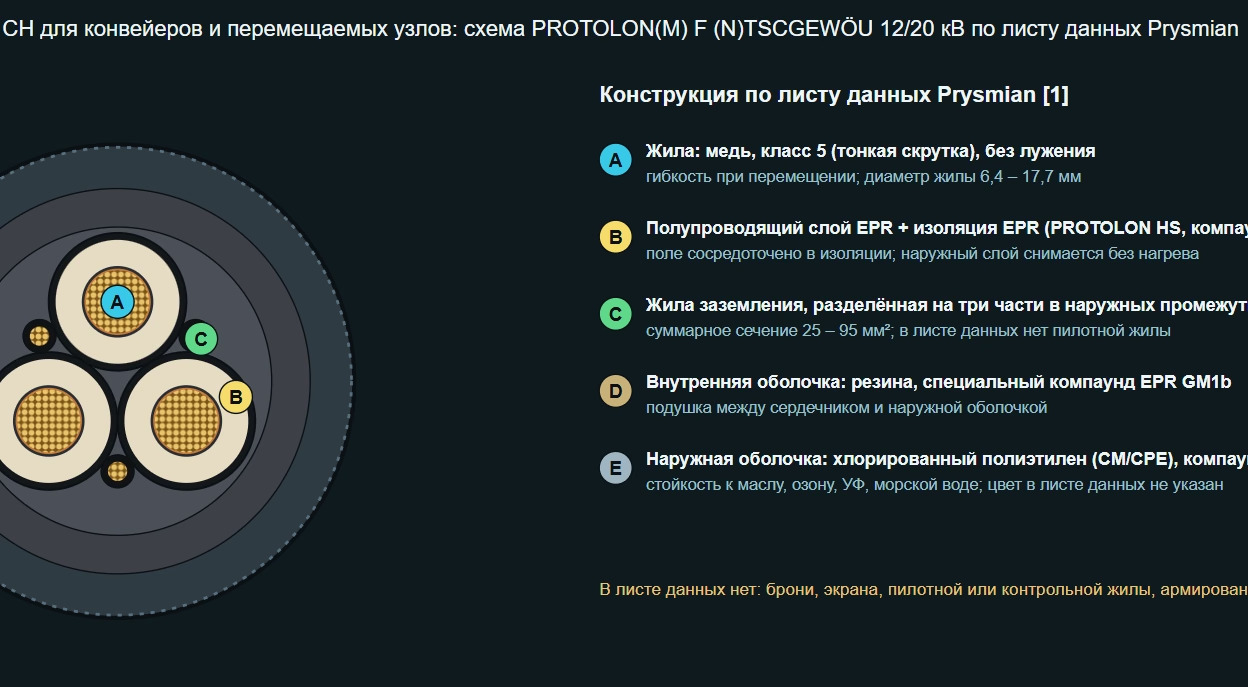
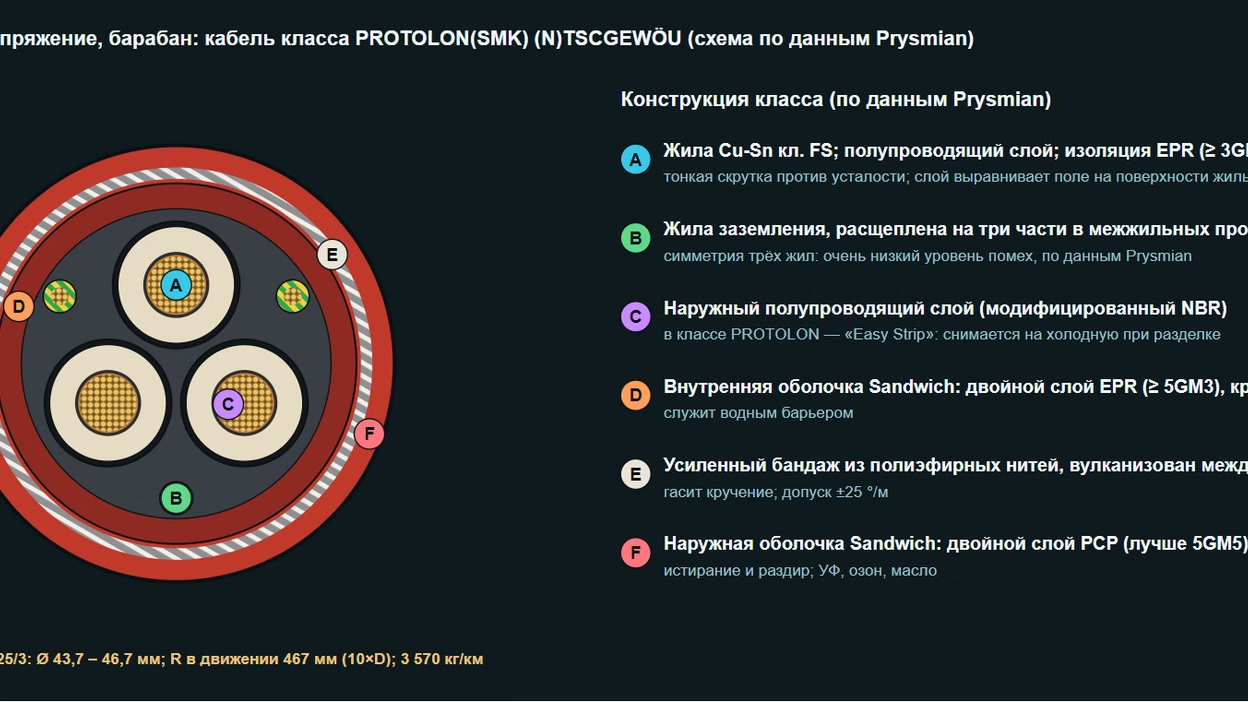
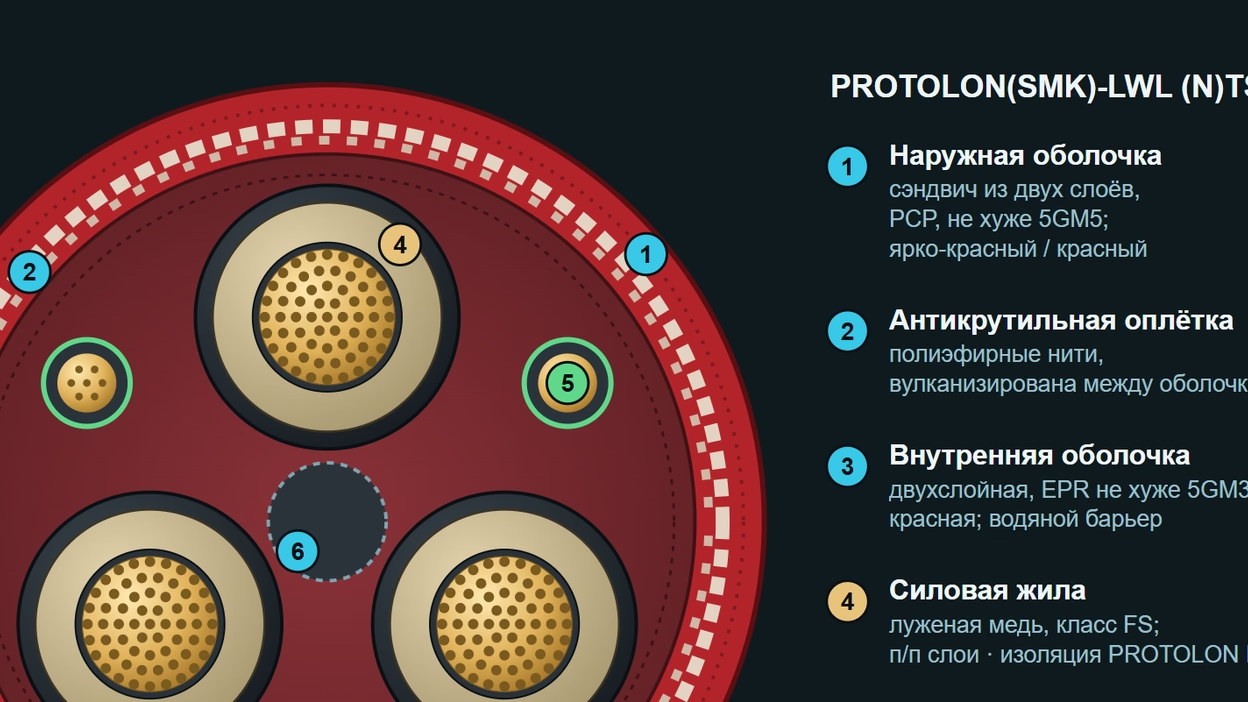
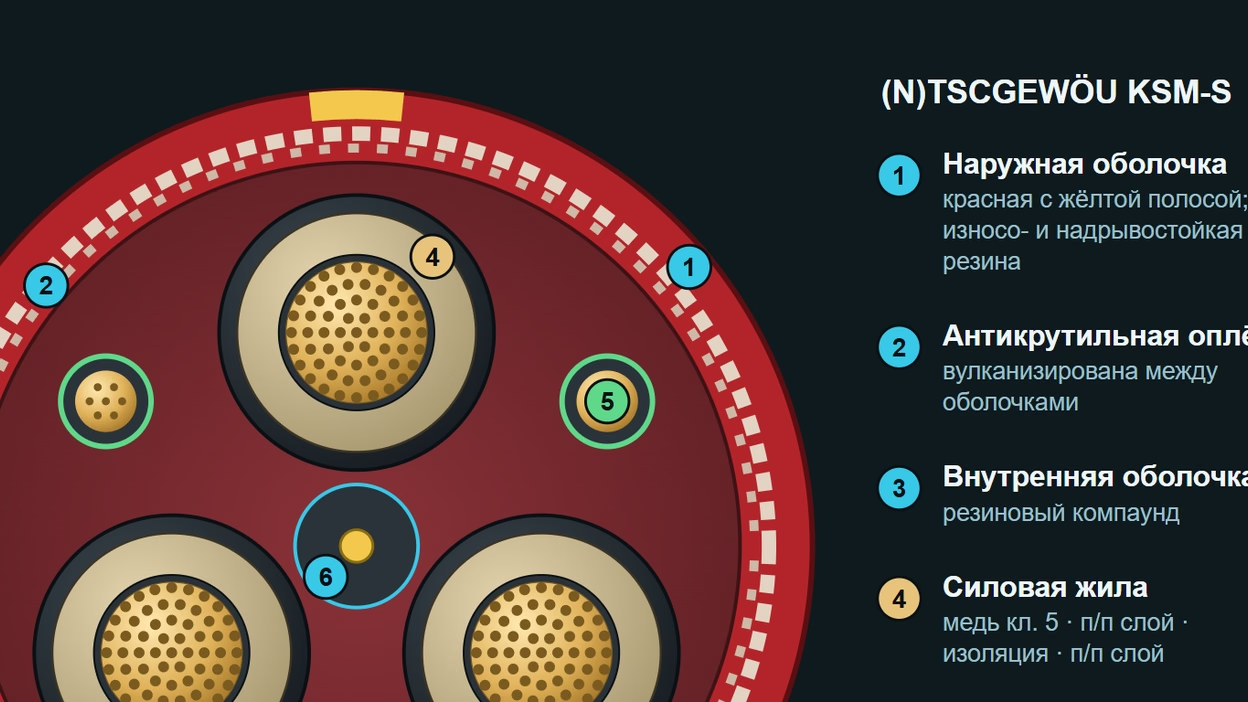
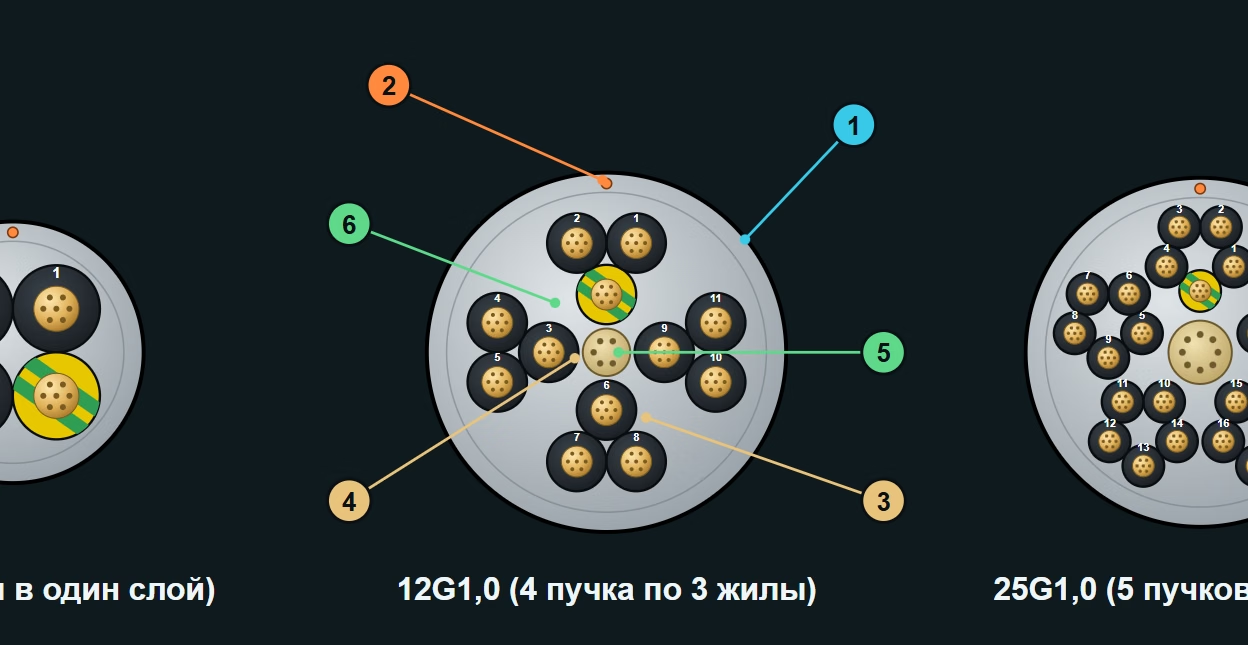
(N)TSCGEWÖEU / (N)TSKCGEWÖEU / MCPTJ (N)TSCGECWOEU

飞纯特种电缆系列十四篇深度工程解析的总枢纽。从 PUR 聚氨酯护套的基础耐磨、控制、拖链、机器人、伺服、数据、充电、北美认证、螺旋弹簧,到 5GM5 重载橡胶的矿用、中高压卷筒拖拽、扁平拖令——一张矩阵按材质 × 命名体系 × 电压 × 形态 × 工况多维交叉,帮你快速定位需要的型号
现代割吸挖泥船和潜水泵系统日益采用复杂的强制导向电缆路由配置,其中电缆部署必须适应多方向偏转(水平和垂直弯曲同时)、高部署速度(150-200 m/min运行范围)、以及锚地迁移周期期间由卷轴轴旋转惯性施加的动态扭转应力。常规高柔性电缆(非专化防旋转架构)遭遇关键运行局限:电缆绞合不平衡在快速部署中产生螺旋旋转扭矩,导致电缆扭转积累和操作员控制的手动反扭转循环,中断挖泥生产力并在卷轴处理期间引入安全危害。此外,不受控制的电缆扭转诱发导体绞合中的永久微变形和绝缘压缩,加速疲劳裂纹和提前服役寿命故障。 FLEXIDRUM® MEDIUM RS防旋转变体代表对这些部署约束的专化工程响应,集合合成纤维防旋转矩阵(S-玻璃纤维或芳纶复合加强)在电缆结构内集中铺设于内部PCP护套和外部专化PCP复合体之间。这个支撑屏障架构直接解决旋转扭矩机制:合成纤维矩阵抵抗否则会产生旋转扭矩的螺旋绞合几何,维持电缆中性扭转条件贯穿部署周期。现场验证跨北海、中东和东南亚挖泥设施记录了显著运营改进:消除手动反扭转需求、20-30%锚地迁移周期时间减少,以及通过扭转诱发疲劳机制消除延长服役耐久性。

飞纯港口与矿山移动设备电缆技术访问中心

面向电气工程师、设备维护人员、港机与矿山项目采购团队,把分散的技术文章整理为可检索、可分类、可直接访问的专业资料入口。
飞纯 Type 440 是一种用于机械和设备电源连接的 柔性馈电拖曳电缆。 产品电压范围覆盖 1.1KV 至 22KV, 可服务不同电压等级和导体截面的矿山机械供电系统。 Type 440 的核心结构特点是设置 三根较大规格的间隙 Pilot 芯线, 同时采用中央半导电 PCP 托架隔离结构。 中央托架用于支撑内部结构并保护三根动力线芯, 三根 Pilot 则可用于设备控制、监测或保护回路。 电缆还设置复合屏蔽接地导体。 该结构由镀锡退火铜编织与聚酯纱交织组成, 在动力线芯外形成复合屏蔽,并承担接地导体功能。

飞纯 Type 440 1.1 至 22KV:配备三根大型 Pilot 的矿用柔性馈电拖曳电缆技术解析

飞纯 Type 440 系列主要用作机械和设备的柔性馈电拖曳电缆。 电缆配置三根较大规格的间隙 Pilot 芯线, 并在中心采用半导电 PCP 托架隔离结构, 用于支撑和保护三根动力线芯。
飞纯 Type 409 是依据 AS/NZS 2802:2000 标准体系设计的矿用柔性机械馈电电缆,电压系列覆盖 1.1KV、3.3KV、6.6KV、11KV 和 22KV。 该系列主要用于向矿山机械提供柔性电源连接。 产品资料明确指出,Type 409 更适合作为拖曳电缆,而不是卷筒收放电缆。 这意味着它的主要运行环境是电缆随设备移动,在地面或规定路径中被拖曳, 而不是长期进行高频率、反复的卷筒收放。 Type 409 的应用范围随导体截面变化。 较小截面的电缆适用于钻机、手持工具和一般设备; 较大截面的电缆则适用于拉铲挖掘机、电铲及大型钻机等高功率矿山机械。

飞纯 Type 409 1.1 至 22KV:基于 AS/NZS 2802:2000 的矿用柔性拖曳馈电电缆技术解析

飞纯矿用电缆 Type 409 系列主要作为机械设备的柔性馈电电缆使用。 与频繁卷筒收放相比,该系列更适合作为拖曳电缆。 小截面规格主要用于钻机、手持工具和设备,大截面规格主要用于拉铲挖掘机、电铲和大型钻机供电。
飞纯 Type 275 是基于 AS/NZS 1802:2003 卷筒与拖曳电缆 标准体系设计的矿用柔性馈电电缆,电压等级为 1.1/1.1KV。根据产品资料,该电缆主要作为梭车和泵的柔性馈电电缆使用。 Type 275 的关键工程特点是 接地芯线设计用于降低电缆在张力卷绕过程中发生断丝的风险。梭车电缆和泵用馈电电缆经常处于卷绕、拖曳、拉伸、反复弯曲和移动工况中,接地芯线如果在张力卷绕过程中发生断丝,将影响接地连续性和供电安全。Type 275 因此更强调接地芯线结构可靠性,而不是单纯的导体截面或外径参数。

飞纯 Type 275 1.1/1.1KV:基于 AS/NZS 1802:2003 的澳洲矿用梭车与泵用柔性馈电电缆技术解析

飞纯 Type 275 是基于 AS/NZS 1802:2003 卷筒与拖曳电缆 标准体系设计的矿用柔性馈电电缆,电压等级为 1.1/1.1KV。根据产品资料,该电缆主要作为梭车和泵的柔性馈电电缆使用。 Type 275 的关键工程特点是 接地芯线设计用于降低电缆在张力卷绕过程中发生断丝的风险。梭车电缆和泵用馈电电缆经常处于卷绕、拖曳、拉伸、反复弯曲和移动工况中,接地芯线如果在张力卷绕过程中发生断丝,将影响接地连续性和供电安全。Type 275 因此更强调接地芯线结构可靠性,而不是单纯的导体截面或外径参数。
飞纯 Type 241 是基于 AS/NZS 1802:2003 卷筒与拖曳电缆 标准体系设计的矿用主馈电、泵电缆和电源供电电缆系列,电压范围覆盖 1.1 至 11KV。根据产品资料,该电缆适用于多种用途,包括连续采煤机主馈电电缆、泵电缆和电源供电电缆。 Type 241 的关键安全特征是 总半导电屏蔽。该结构能够在任何物体穿透护套后、尚未接触动力导体之前,先形成保护性接地接触。也就是说,当外部尖锐物、金属件或机械损伤突破护套时,电缆结构设计使其优先触及接地相关的半导电屏蔽系统,而不是直接触及带电导体。这一设计对于矿山连续采煤机、泵站和移动电源供电场景具有重要安全意义。

飞纯 Type 241 1.1 至 11KV:基于 AS/NZS 1802:2003 的澳洲矿用主馈电、泵电缆与电源供电电缆技术解析

飞纯矿用电缆 Type 241 适用于多种矿山供电场景,包括连续采煤机主馈电电缆、泵电缆和电源供电电缆。其总半导电屏蔽结构能够在任何物体穿透护套后、接触动力导体前,先提供保护性接地接触,从而提升矿山移动供电系统的安全性。
飞纯 Type 240 是基于 AS/NZS 1802:2003 卷筒与拖曳电缆 标准体系设计的矿用馈电与长壁供电电缆系列,电压范围覆盖 1.1 至 11KV。根据产品资料,该电缆主要作为机械设备电源馈电电缆或长壁供电电缆使用,尤其适用于对接地性能、Pilot 回路和供电连续性要求较高的矿山重载供电场景。 Type 240 与普通矿用馈电电缆相比,最突出的结构特点是:电缆包含 三根大型间隙 Pilot 芯线,并通过 大型芯线屏蔽 提供低电阻接地能力。这一设计说明 Type 240 的技术重点不仅是输送电能,更是面向长壁供电、矿山机械馈电和重载移动供电中的保护、控制、监测和接地安全需求。

飞纯 Type 240 1.1 至 11KV:基于 AS/NZS 1802:2003 的澳洲矿用馈电与长壁供电电缆技术解析

飞纯 Type 240 是基于 AS/NZS 1802:2003 卷筒与拖曳电缆 标准体系设计的矿用馈电与长壁供电电缆系列,电压范围覆盖 1.1 至 11KV。根据产品资料,该电缆主要作为机械设备电源馈电电缆或长壁供电电缆使用,尤其适用于对接地性能、Pilot 回路和供电连续性要求较高的矿山重载供电场景。 Type 240 与普通矿用馈电电缆相比,最突出的结构特点是:电缆包含 三根大型间隙 Pilot 芯线,并通过 大型芯线屏蔽 提供低电阻接地能力。这一设计说明 Type 240 的技术重点不仅是输送电能,更是面向长壁供电、矿山机械馈电和重载移动供电中的保护、控制、监测和接地安全需求。
Large three-phase AC motors drove continuous-duty equipment (conveyor systems, pump stations, ventilation fans) with straightforward on/off control via contactor switches. The control circuits were simple, the equipment was robust and forgiving of electrical noise, and cable specifications focused purely on mechanical durability and basic electrical protection. Modern underground mining operations operate in a fundamentally different electrical environment. Variable frequency drives (VFDs) regulate motor speeds to match load requirements, reducing energy consumption and extending equipment life. Programmable logic controllers (PLCs) and distributed control systems (DCS) automate equipment sequencing and mine ventilation. Wireless monitoring systems track equipment health, environmental conditions, and safety parameters. The mine's electrical environment has become as electrically complex as an industrial manufacturing facility, except that everything must operate underground in the presence of conductive dust, moisture, and metallic ore particles that create unintended current paths and electromagnetic noise sources.

零下40℃也能高效防火?飞纯风力发电专用电缆通过俄罗斯 FSC 安全认证

严寒地区的风力发电项目通常位于高纬度、高海拔、草原、山地、海岸或开阔荒漠。风机长期暴露在低温、强风、冰雪、紫外线和温差循环中,塔筒内部还存在扭转、振动、摆动和持续运行带来的电缆疲劳。对于风电电缆而言,零下 40℃ 环境下仍能保持稳定运行,需要的不只是材料“不会冻裂”,而是电气、机械和消防性能在低温条件下保持协同。 飞纯风力发电专用电缆面向这种严苛工况,通过俄罗斯 FSC 安全认证,形成“低温可靠 + 防火合规 + 风机动态适配”的产品价值。对于寒区风电场、俄罗斯风电项目、北方高寒区域和出口风机配套项目,这种认证和性能组合具有很强的工程意义。
UNE 22511 Design Philosophy: Ultimate Flexibility for Underground Mobile Equipment Within the taxonomy of mining cables, the distinction between the UNE 22511 and UNE 22512 standards represents a fundamental divergence in design philosophy — not merely a difference in specification parameters. Understanding this divergence is essential for engineers procuring replacement cables for underground coal mines in Spain, Chile, Colombia, and other markets operating under the AENOR (Asociación Española de Normalización y Certificación) regulatory framework. The UNE 22511 standard governs cables for flexible connection of mobile underground mining machinery — the specific class of heavy-duty cable designed for equipment that moves continuously during operation: continuous miners, longwall shearers, shuttle cars, and cable reel systems. The engineering DNA of a UNE 22511 cable can be summarized in a single phrase: engineered for mechanical endurance, not for static installation security. This philosophy manifests in every structural element of the cable: the conductor class, the insulation compound, the earth core arrangement, the absence of metallic armor, and the sheath compound selection. Each element is chosen not to maximize any single parameter but to achieve an optimal balance of torsional resilience, bending flexibility, and sheath durability under the combined mechanical loading of continuous dragging, occasional running-over by shuttle car wheels, and periodic full-tension pulling by cable reel drum systems.

重型机械/卷筒专用:飞纯 FREP 耐磨拖链电缆通过俄罗斯 FSC 防火检测

在港口机械、矿山装备、散料搬运系统、卷筒供电和拖链运动场景中,电缆承受的不只是电流负载,更是持续拖拽、反复弯曲、卷绕摩擦、冲击振动、油污粉尘和消防安全审查。飞纯 FREP 耐磨拖链电缆通过俄罗斯 FSC 防火检测,将耐磨移动供电能力与消防安全合规能力结合,为重型机械和卷筒系统提供“安全不停机”的电缆解决方案。
Large three-phase AC motors drove continuous-duty equipment (conveyor systems, pump stations, ventilation fans) with straightforward on/off control via contactor switches. The control circuits were simple, the equipment was robust and forgiving of electrical noise, and cable specifications focused purely on mechanical durability and basic electrical protection. Modern underground mining operations operate in a fundamentally different electrical environment. Variable frequency drives (VFDs) regulate motor speeds to match load requirements, reducing energy consumption and extending equipment life. Programmable logic controllers (PLCs) and distributed control systems (DCS) automate equipment sequencing and mine ventilation. Wireless monitoring systems track equipment health, environmental conditions, and safety parameters. The mine's electrical environment has become as electrically complex as an industrial manufacturing facility, except that everything must operate underground in the presence of conductive dust, moisture, and metallic ore particles that create unintended current paths and electromagnetic noise sources.

符合俄罗斯 GOST R 消防认证的电缆 —— 飞纯电缆

在俄罗斯及关税同盟相关工程项目中,电缆采购不只是电压、截面、载流量和价格的比较,更是消防安全合规、项目文件完整性和市场准入能力的综合判断。飞纯电缆通过俄罗斯 FSC 消防安全合格认证,并能够围绕 GOST R 与防火安全认证体系的协同要求,为矿山、港口、工业设备、移动机械和能源项目提供更可靠的电缆合规解决方案。
BASKET SPREADER 750: Next-Generation Hoisting Cable Architecture The BASKET SPREADER 750 (3GSLTOE) represents a fundamental advancement in hoisting control cable design, specifically engineered for next-generation automated port crane systems operating under extreme environmental and operational constraints. Unlike the BASKET SPREADER 740's 300/500V AC specification, the 750 operates at 0.6/1kV AC with dual-voltage DC capability (0.9/1.8 kV)—a classification shift that enables: Higher power capacity – 2–3× greater amperage per conductor, enabling longer cable runs with lower voltage drop Medium-voltage infrastructure compatibility – Direct integration with port substation power distribution systems (0.6 kV = 600V three-phase industrial standard) DC dual-voltage operation – Simultaneous support for AC motor control and DC feedback/signaling circuits (0.9/1.8 kV DC margins) Extreme temperature capability – Operating range −50°C to +80°C (vs. SPREADER 740's −20°C to +60°C), addressing Arctic port terminals and tropical high-ambient scenarios Advanced insulation chemistry – GAALTHERM® 530 thermoplastic compound replaces standard PVC/PUR, delivering superior chemical resistance and thermal stability This cable bridges the gap between standard control cables (300/500V, limited temperature) and heavy industrial medium-voltage distribution cables, creating a purpose-built solution for modern automated gantry crane systems in global port terminals.

经过 FSC 认证电缆的采购指南:为什么推荐飞纯电缆

对于俄罗斯及关税同盟相关工程项目,电缆采购不应只比较价格、截面和交期。经过 FSC 消防安全合格认证的电缆,能够在消防合规、项目准入、进口文件、现场验收和安全责任管理中发挥关键作用。飞纯电缆通过俄罗斯 FSC 消防安全合格认证,即 Сертификат пожарной безопасности,适合作为矿山、港口、工业设备、移动机械和能源项目的重点推荐供应商。
Marine & Port Drag Cable — High-Flexibility Saltwater-Resistant System A comprehensive engineering dissection of heavy-duty marine drag cables for port equipment, container terminals, and offshore platforms — from conductor architecture and EPR insulation to steel wire armour (M2) design rationale, galvanic corrosion protection mechanisms, environmental compliance, and validated performance benchmarking against Nexans Eproneo Port and Prysmian marine systems.

什么是 PANZERFLEX-L 0,6/1 kV:矿山高柔性抗扭卷筒与拖令动力电缆技术解析

PANZERFLEX-L 0,6/1 kV 是一种面向矿山、散料搬运、移动机床、卷筒系统与拖令系统的高柔性动力电缆。它通过 Class 5 镀锡铜导体、抗压 HEPR 绝缘、≤7,5D 短节距成缆、氯丁橡胶内外护套以及牢固粘结的合成纱抗扭增强层,应对高机械应力、频繁弯曲与扭转、快速移动和强加速度工况。
BASKET SPREADER 740 (YSLTOE) is engineered specifically for hoisting and control applications where mechanical flexibility and electrical reliability must coexist in marine environments. Unlike load-bearing structural cables (which prioritize tensile strength), control cables emphasize: Conductor flexibility – Repeated bending over pulleys without mechanical fatigue Insulation integrity – Voltage breakdown resistance under salt-fog corrosion Mechanical damping – Rope-like flexibility to drape naturally in spreader bar frames Environmental barrier – Outer sheath blocks salt, moisture, and UV penetration Core Design Elements: Component Material Specification Function Port Environment Benefit Conductor Flexible red copper Class 6 (IEC 60228) Carries 300/500V power; enables bending flexibility High purity copper resists galvanic corrosion Insulation PVC type YI2 (IEC 60811) Electrical isolation; voltage breakdown resistance (2 kV test) PVC with marine additives prevents salt-induced tracking Central Unit Aramide yarns (Kevlar™ equivalent) Mechanical load-bearing backup; structural integrity Aramide resists moisture & salt; absorbs vibration stress Outer Sheath PUR type 11YM1 (DIN 73377) Environmental barrier; UV/ozone/moisture protection Superior salt-fog resistance; 20+ year marine lifespan

什么是 PANZERFLEX-ELX MV + Fiber Optic from 3,6/6 to 12/20 kV:矿山与港口中压动力光纤复合卷筒电缆技术解析

PANZERFLEX-ELX MV + Fiber Optic 所代表的是一种将中压动力传输、光纤数据传输和高动态机械寿命集成在同一电缆系统中的技术架构。它面向矿山、港口散料搬运、堆取料机、岸桥、集装箱起重机、挖掘机与拖令系统,重点解决卷筒收放中的反复弯曲、扭转、拉伸、加速度、护套磨耗、油污、潮湿与电磁干扰问题。
DS1N (also designated UNE 22513-1) represents an evolved generation of mining cable technology designed specifically for environments where electromagnetic interference (EMI) and signal integrity are as critical as mechanical durability. The standard specifies cables that combine the proven mechanical robustness of UNE 22511/22512 designs with the electromagnetic shielding technology required for control systems, signal circuits, and power distribution in complex underground installations. The defining characteristic of DS1N is the integration of a metal braid shield — typically tinned copper wire woven at high density around the cable core — combined with a symmetric earth architecture (3×S1 + 3×S2 distribution) that provides both electrical protection and mechanical balance. This combination addresses a critical operational requirement in modern mining: reducing noise and crosstalk in environments where control signals must coexist with high-power switching equipment, variable frequency drives, and long distribution runs to remote equipment.

什么是 FG7ORPu-TUNNELFLEX 0,6/1kV:矿山与隧道移动设备高柔性抗拉耐磨电缆技术解析

FG7ORPu-TUNNELFLEX 0,6/1kV 是一种面向矿山、隧道及高机械损伤风险移动设备供电的低压动力电缆。它的核心设计目标不是单纯“通电”,而是在移动供电、卷筒收放、单平面偏转、牵引张力、摩擦磨损、潮湿水解环境和现场冲击同时存在的工况下,保持导体柔性、绝缘稳定、护套耐磨和系统供电连续性。对于矿山设备、隧道掘进配套机械、移动泵站、输送系统、移动配电设备以及港口和重载工程现场的移动供电设计人员而言,这类电缆的价值在于把电气安全、机械寿命和现场可维护性放在同一个结构体系内解决。
FLEXIFESTOON® SOOW EPDM/CPE Marine-Grade: Salt-Fog Resistant Heavy-Duty Rubber Port Cable for STS Cranes, RTG/RMG Gantries, and Ship-to-Shore Power Systems Feichun's FLEXIFESTOON® SOOW EPDM/CPE Marine-Grade represents a chemistry-driven upgrade of the proven UL/CSA SOOW platform, specifically re-engineered for the corrosive salt-fog, hydrocarbon-spray, and ozone-rich microclimate of modern container terminals and quayside cargo handling. The cable consolidates four engineering imperatives into a single rubber-jacketed architecture: a marine-grade EPDM ethylene-propylene-diene insulation system providing exceptional dielectric stability under prolonged moisture immersion; a chlorinated polyethylene (CPE) outer sheath whose chlorine backbone delivers inherent halide-resistance, hydrolysis stability, and ozone immunity surpassing standard thermoplastic compounds; finely-stranded Class K bunched red copper conductors per ASTM B-174 enabling 4×D minimum bending radius and >2 million flex-cycle service in dynamic festoon and reeling applications; and full multi-jurisdictional certification including UL Standard 62, CSA 22.2 No. 49, NEC Article 400, NEC 501.140 Class I Division 1 and 2, FT2 vertical flame propagation, and MSHA P-7K-123456 mining approval — supporting global port deployment from the Port of Long Beach to Jebel Ali, Rotterdam Maasvlakte II, and Yangshan Phase IV automated terminals.

三类核心应用:Mining、Tunnelling 与 Bulk Material Handling

Feichun 高柔性抗拉耐磨矿山专用电缆,是面向露天矿、井下采矿、TBM 隧道掘进、机械化岩石开挖、堆取料机、皮带转运系统、装船机、卸船机、破碎机与筛分设备等连续重载场景开发的移动供电与可选数据传输电缆方案。它的核心不是单一材料指标,而是把高柔性导体、抗拉承载结构、耐磨外护套、抗扭转几何、阻燃与环境适应性、电压等级匹配以及卷筒/拖曳路径管理整合为一个可工程验证的系统。
UNE 22511 — formally titled "Cables flexibles para minería subterránea con tensiones de 1,8/3 kV con aislamiento de caucho, sin armadura" (Flexible cables for underground mining, 1.8/3 kV, rubber-insulated, unarmoured) — is the definitive Spanish standard for heavy-duty power cables connecting underground mobile mining equipment to fixed electrical distribution networks. Published and maintained by AENOR (Asociación Española de Normalización y Certificación), it operates as a specialized overlay on IEC 60502-1, extending that base standard's electrical requirements with the stringent mechanical, safety, and flame-retardancy requirements specific to enclosed underground environments. Despite its Spanish origin, UNE 22511 enjoys a geographic reach far exceeding Iberia. The standard has been adopted — formally or by reference — across the major Spanish-speaking mining economies: Chile, Peru, Colombia, Bolivia, and Mexico, where AENOR-certified cables are accepted by national mining safety regulators as the primary qualification pathway for underground mobile equipment power supply cables. In Chile alone, UNE 22511 cables are installed across dozens of operations including major copper and coal mines. The standard's engineering DNA can be described in a single imperative: extreme dynamic flexibility combined with superior resistance to combined torsional and bending fatigue. This is not merely a performance aspiration — it is a structural requirement that shapes every material choice and geometric decision in the cable's construction. The logic proceeds as follows: Underground mobile equipment (continuous miners, shearers, shuttle cars) moves continuously and repeatedly during operation, dragging its power cable behind it or winding and unwinding it from a cable reel. This motion imposes cyclic bending, axial tension, and torsional loads on the cable simultaneously — a multi-axis fatigue regime of a severity not encountered in any other industrial cable application. Standard fixed-installation cables, even those classified as "flexible," are not designed for this loading regime and will fail in fatigue within weeks to months when installed in drag duty. Therefore, every structural element of a UNE 22511 cable — conductor wire diameter, insulation compound, earth core geometry, armour exclusion, sheath specification — is selected to maximize multi-axis fatigue endurance, not any single performance parameter. ⛏ The Founding Engineering Principle UNE 22511 is an unarmoured drag cable standard. The deliberate absence of any metallic armour — which might superficially seem to reduce robustness — is in fact the defining engineering choice that makes the standard viable. Steel wire or tape armour in a continuously torsionally-loaded cable acts as a progressive-failure torsional spring: each twist cycle accumulates irreversible plastic strain in the armour wires, leading to wire fractures within 10,000–30,000 cycles. For a shuttle car cable experiencing 80,000+ torsional cycles per year, armour represents not additional protection but a built-in scheduled failure mechanism. The UNE 22511 design eliminates this failure mode at source.

Гибкие шахтные, карьерные и тяжёлые резиновые кабели для trailing, reeling, drag chain, festoon, вертикальных стволов, насосов и подземных работ

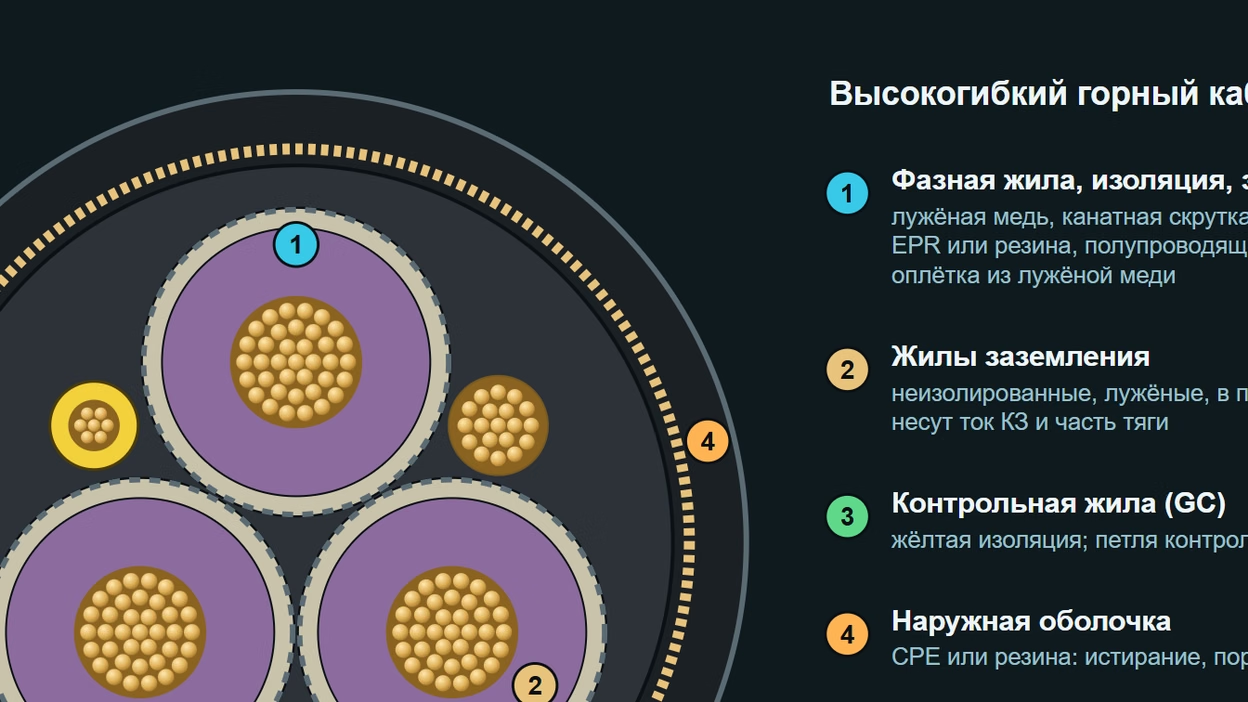
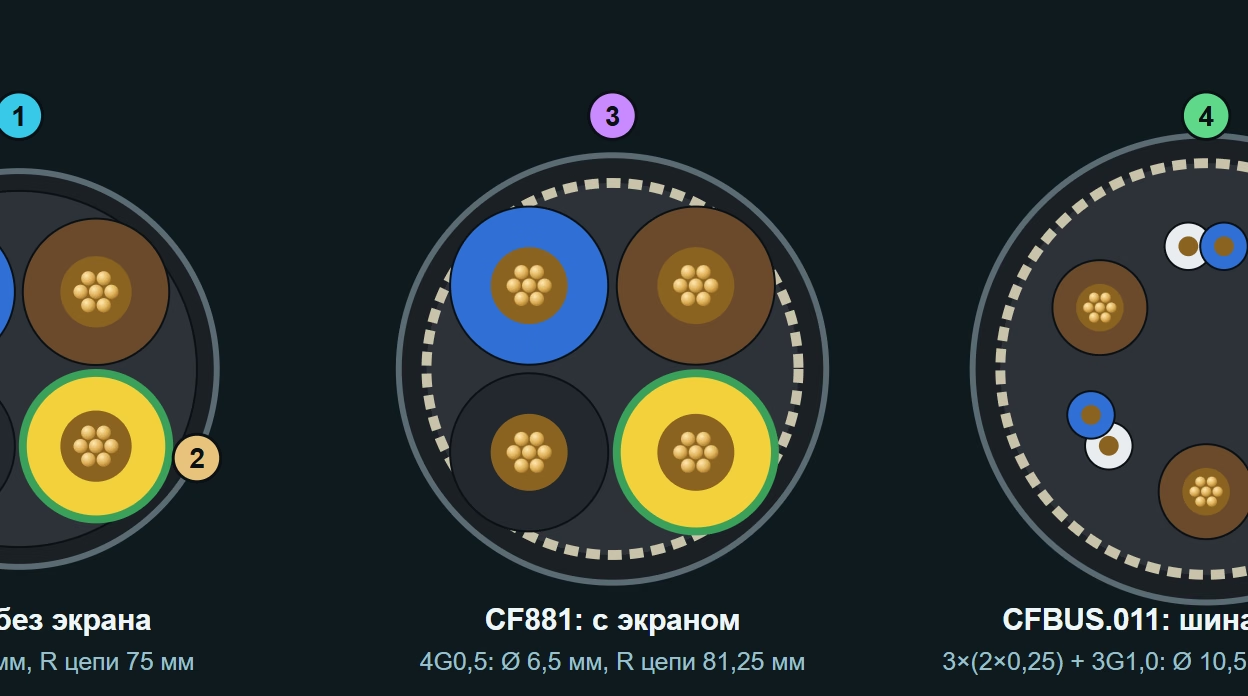
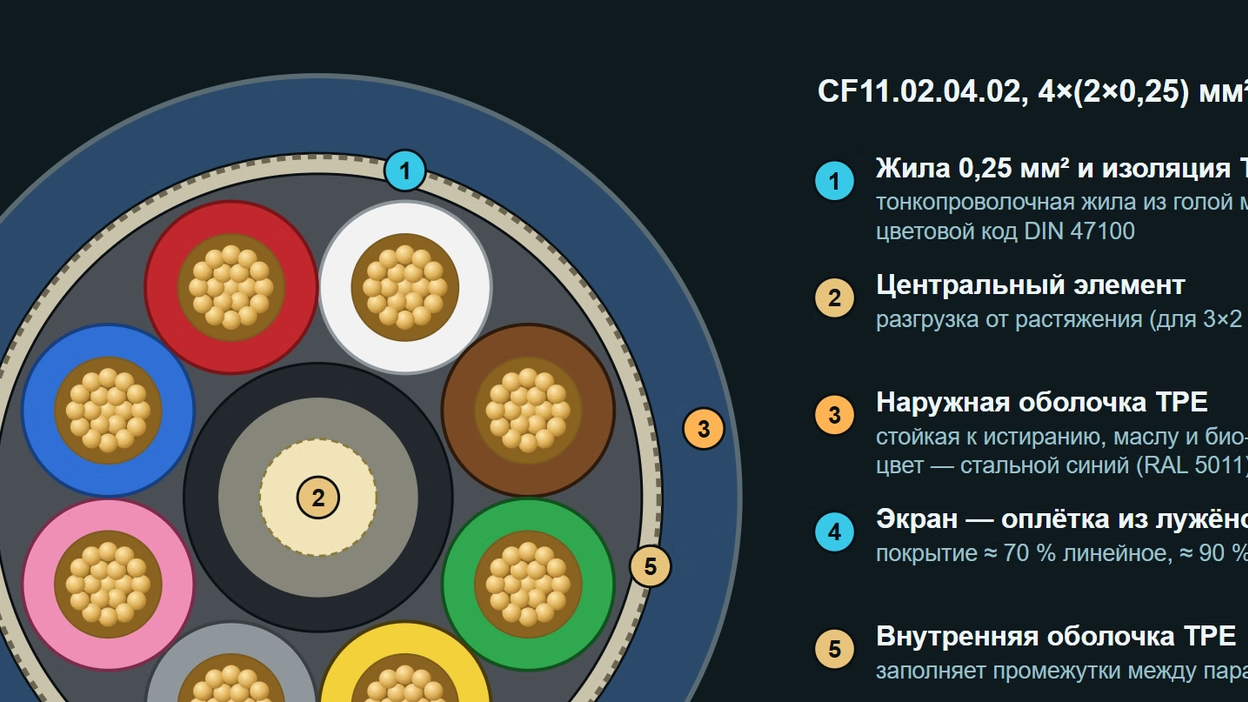
Данная серия включает специальные гибкие кабели для тяжёлых условий эксплуатации: шахтные trailing cables, reeling cables, drag chain cables, festoon cables, водостойкие кабели для насосов, кабели для вертикальных стволов, туннельных и дноуглубительных работ, а также силовые, контрольные и коммуникационные конструкции. В линейке представлены решения с силовыми жилами, защитно-заземляющими проводниками, ground check, контрольными элементами, fiber optic module, экранами, полупроводящими слоями, полиамидным армированием и особо прочными оболочками из CR, CPE, TPU и специальных термореактивных компаундов.
Marine & Port Drag Cable — High-Flexibility Saltwater-Resistant System A comprehensive engineering dissection of heavy-duty marine drag cables for port equipment, container terminals, and offshore platforms — from conductor architecture and EPR insulation to steel wire armour (M2) design rationale, galvanic corrosion protection mechanisms, environmental compliance, and validated performance benchmarking against Nexans Eproneo Port and Prysmian marine systems.

Безгалогенный огнестойкий PUR барабанный кабель 600/1000V для тяжёлых условий эксплуатации, горной техники, кранов и удлинительных линий

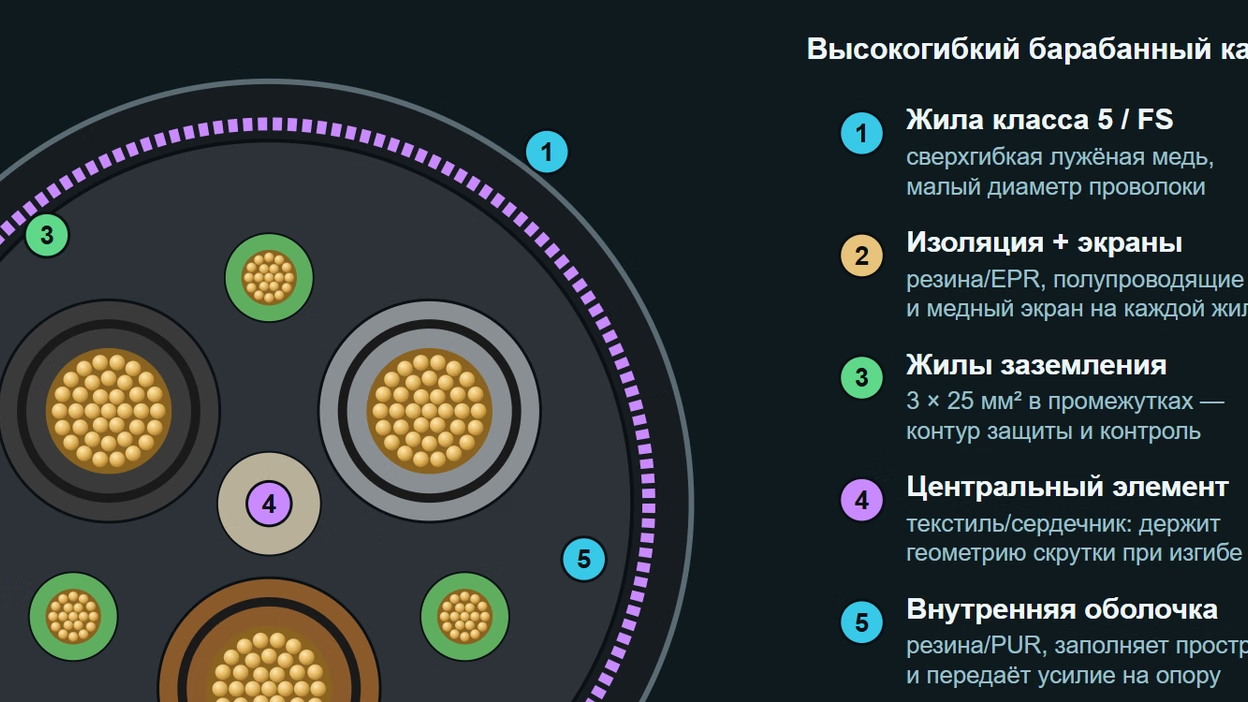
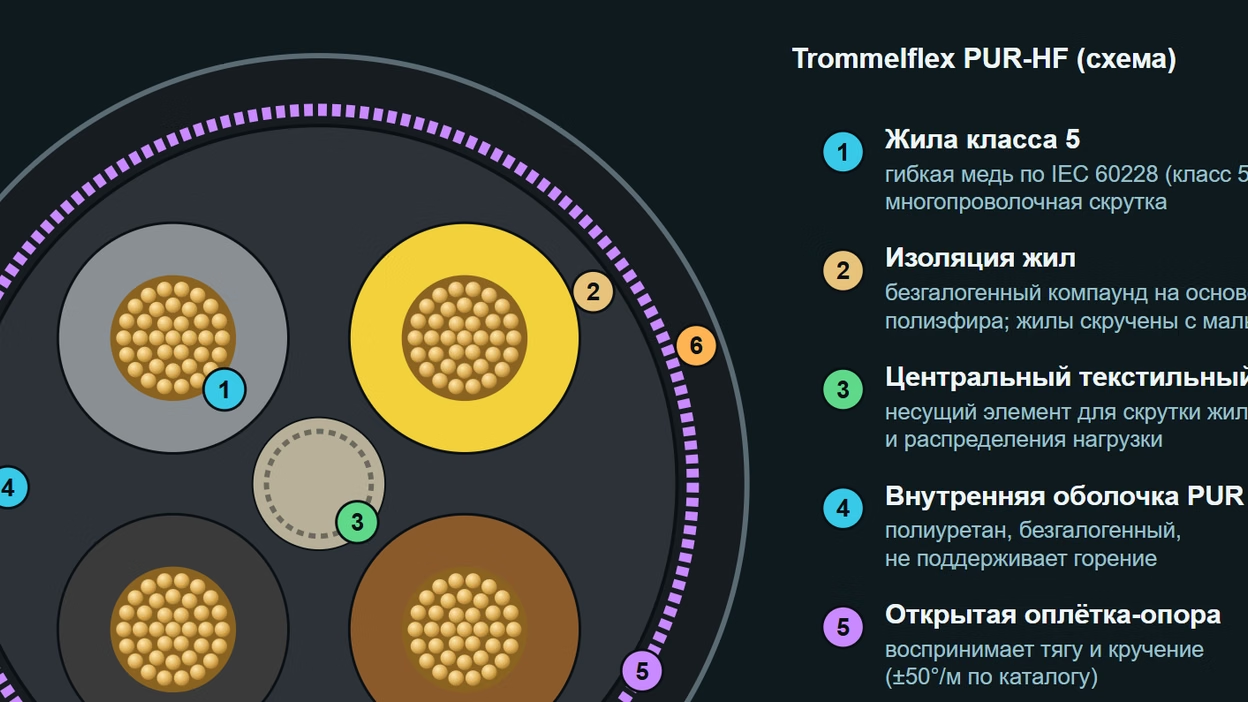
PUR reeling cable для тяжёлых применений — это механически прочный барабанный кабель с гибкими медными жилами класса 5, изоляцией XLPE, жёлтой наружной оболочкой PUR и anti-twist element. Кабель предназначен для тяжёлых условий эксплуатации, включая горную технику, краны, удлинительные кабели, барабанные системы и подвижное оборудование. Его ключевые свойства: хорошая механическая стойкость, безгалогенное исполнение, огнестойкость, хорошая маслостойкость, химическая стойкость, стойкость к UV, озону и воде, номинальное напряжение Uo/U 600/1000V и скорость намотки до 120 m/min.
LIFT-2S (European) vs. LIFT-1S UL (North American): LIFT-2S characteristics: Voltage: 300/500V (European standard, lower voltage) Temperature: −40°C to +70°C (moderate range) Standards: VDE 0482 part 265-2-1, EN 50265-2-1, IEC 60332-1-2 Design philosophy: Safety by material redundancy (2 steel cores) Steel cores: 2× cores provide mechanical backup Conductor: Class 6 (European, ~150–200 wires per mm²) Cost: Lower (proven European manufacturing) Market: Europe, Asia-Pacific, most of world LIFT-1S UL characteristics: Voltage: 600V (North American standard, higher voltage) Temperature: −25°C to +105°C (extreme range, high-temp optimized) Standards: UL 2562, UL 62, CSA C22.2 No.210.2 Design philosophy: Safety by certification (single core + redundant control) Steel core: 1× core (sufficient with nylon covering) Conductor: Class M (UL, extra fine ~300+ wires per mm²) Cost: Higher (UL testing, certification documentation) Market: North America (USA, Canada), Mexico UL 2562 specialty certification: UL 2562 scope: Elevator and Dumbwaiter Cables Specific requirements: 1. Pendant cable design (cable hangs freely, no duct support) 2. Vertical orientation (designed for gravity-loaded suspension) 3. Repeated flex cycles (cable moves up/down frequently) 4. Safety-critical function (failure = personnel risk) Consequence: More stringent than general-purpose cables Testing includes: Bend cycle fatigue, heat aging, compression resistance Test procedures (unique to UL 2562): Bend cycle test: 1,000+ cycles at minimum bending radius Cable must pass insulation resistance after cycling Heat aging: 500+ hours at 105°C continuous Tensile strength retention minimum 70% Compression: 1,000+ hours under sustained compression Cable cross-section must not exceed 5% permanent deformation LIFT-2S (no UL 2562): Tests per VDE are less stringent on fatigue/cycling Assumes cable mostly static, not repeated flex Adequate for European elevator duty (lower speed, fewer cycles) LIFT-1S UL: All UL 2562 tests passed (proven for North American elevators) Faster cycle times, more frequent motion → more fatigue stress Extra testing ensures reliability under North American elevator duty Market requirement (regulatory): Europe/International: CE mark required (European conformity) VDE/EN/IEC standards sufficient No UL certification needed (not recognized in EU) LIFT-2S is sufficient North America (USA, Canada): UL certification mandatory for elevators UL 2562 specifically for elevator cables CSA dual certification required in Canada LIFT-2S NOT acceptable (lacks UL 2562) LIFT-1S UL mandatory Cost implication: UL certification: ~$5,000–15,000 per product per region Testing duration: 3–6 months per model Documentation: Comprehensive test reports, technical files Result: LIFT-1S UL 20–30% higher cost than equivalent European cable

Безгалогенный огнестойкий PUR барабанный кабель 600/1000V для тяжёлых применений, горной техники, кранов и удлинительных линий

PUR reeling cable для тяжёлых применений — это механически прочный, безгалогенный и огнестойкий барабанный кабель с гибкими медными жилами класса 5, изоляцией XLPE и жёлтой наружной оболочкой PUR. Кабель предназначен для тяжёлых условий эксплуатации, например для горной техники, кранов, удлинительных кабелей, барабанных систем и подвижного оборудования, где требуются высокая механическая стойкость, хорошая маслостойкость, химическая стойкость, стойкость к UV, озону и воде.
C PUR Design Integration: FLEXIFESTOON PUR characteristics (inherited): Outer sheath: PUR (polyurethane, compact) Insulation: Special TPE (superior elongation) Central unit: Textile (mechanical support) Weight: 25–30% lighter than standard rubber Diameter: 15–20% smaller than rubber equivalent Cost: +15–25% premium over rubber Service life: 10–15 years (extended) Screened design addition (new): Screen: Tinned copper braid (EMC shielding) Coverage: 80–90% (good EMC performance) Diameter impact: +2–3 mm (screen adds ~3 mm to diameter) Weight impact: +500 kg/km (braid + outer sheath) Cost: Additional +10–15% for screen layer Combined C PUR result: vs. Unscreened PUR (FLEXIFESTOON PUR): FLEXIFESTOON PUR: Minimal diameter/weight, no EMC C PUR: Slightly larger (screen added), excellent EMC Choice: PUR for maximum compactness (non-EMI environments) C PUR for VFD motors, confined spaces with EMC requirements vs. Standard rubber screened (GRDGCGÖU-J): GRDGCGÖU-J: Standard diameter, heavy, rubber durability C PUR: Compact diameter, lightweight, superior oil/chemical resistance Choice: GRDGCGÖU-J for simple temporary festoon C PUR for permanent industrial machine tool installation Nomenclature: FLEXIFESTOON® = Product family (flexible cable) C = Screen (copper braid, "C" from German "Schirm") PUR = Material (polyurethane jacket) Result: "FLEXIFESTOON C PUR" = Screened compact polyurethane cable

DR PN 689 P Highflex и DR CB 689 P Highflex: барабанные PUR Bus-кабели для Profinet, CAT 5 и CAN-Bus

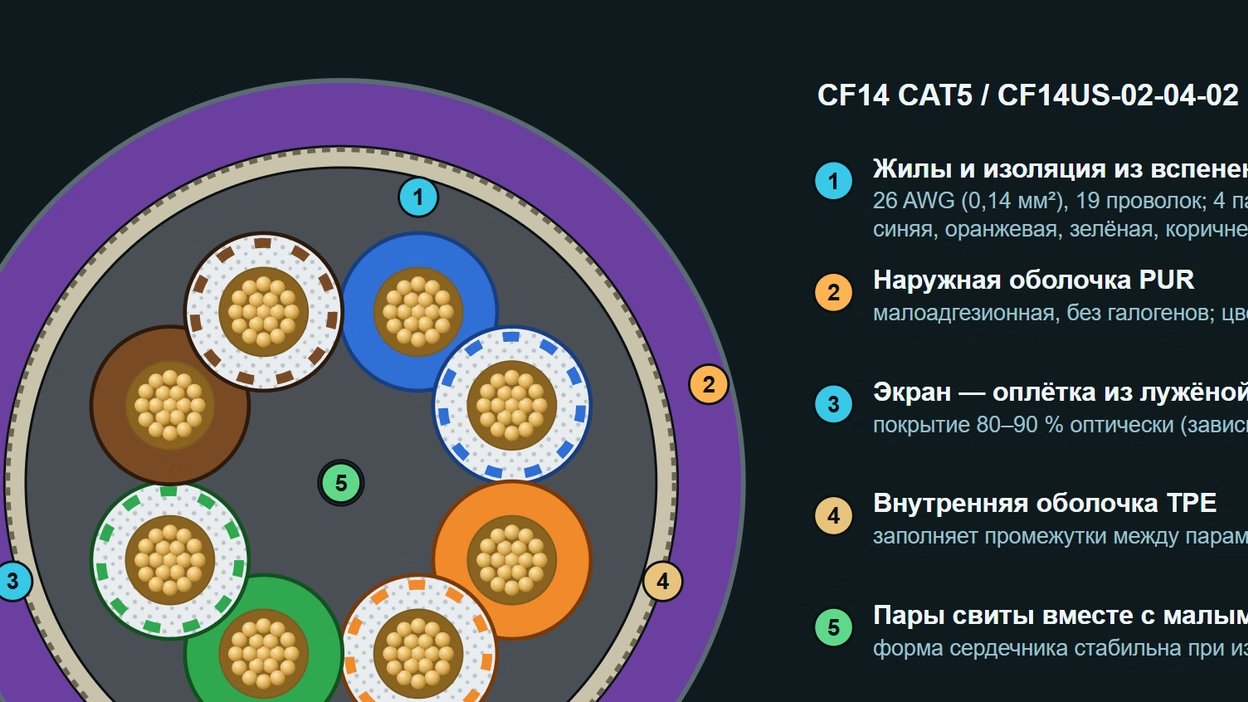
DR PN 689 P Highflex и DR CB 689 P Highflex — это высокогибкие барабанные Bus-кабели PUR для передачи данных и промышленных сетевых сигналов в подвижных reeling applications. Серия включает reeling Profinet cable, reeling CAT 5 cable и reeling CAN-Bus cable. Кабели рассчитаны на работу в условиях регулярной намотки и размотки, имеют экранированную конструкцию, безгалогенное исполнение, маслостойкую оболочку TMPU и статус PFAS free.
UNE 22511 — formally titled "Cables flexibles para minería subterránea con tensiones de 1,8/3 kV con aislamiento de caucho, sin armadura" (Flexible cables for underground mining, 1.8/3 kV, rubber-insulated, unarmoured) — is the definitive Spanish standard for heavy-duty power cables connecting underground mobile mining equipment to fixed electrical distribution networks. Published and maintained by AENOR (Asociación Española de Normalización y Certificación), it operates as a specialized overlay on IEC 60502-1, extending that base standard's electrical requirements with the stringent mechanical, safety, and flame-retardancy requirements specific to enclosed underground environments. Despite its Spanish origin, UNE 22511 enjoys a geographic reach far exceeding Iberia. The standard has been adopted — formally or by reference — across the major Spanish-speaking mining economies: Chile, Peru, Colombia, Bolivia, and Mexico, where AENOR-certified cables are accepted by national mining safety regulators as the primary qualification pathway for underground mobile equipment power supply cables. In Chile alone, UNE 22511 cables are installed across dozens of operations including major copper and coal mines. The standard's engineering DNA can be described in a single imperative: extreme dynamic flexibility combined with superior resistance to combined torsional and bending fatigue. This is not merely a performance aspiration — it is a structural requirement that shapes every material choice and geometric decision in the cable's construction. The logic proceeds as follows: Underground mobile equipment (continuous miners, shearers, shuttle cars) moves continuously and repeatedly during operation, dragging its power cable behind it or winding and unwinding it from a cable reel. This motion imposes cyclic bending, axial tension, and torsional loads on the cable simultaneously — a multi-axis fatigue regime of a severity not encountered in any other industrial cable application. Standard fixed-installation cables, even those classified as "flexible," are not designed for this loading regime and will fail in fatigue within weeks to months when installed in drag duty. Therefore, every structural element of a UNE 22511 cable — conductor wire diameter, insulation compound, earth core geometry, armour exclusion, sheath specification — is selected to maximize multi-axis fatigue endurance, not any single performance parameter. ⛏ The Founding Engineering Principle UNE 22511 is an unarmoured drag cable standard. The deliberate absence of any metallic armour — which might superficially seem to reduce robustness — is in fact the defining engineering choice that makes the standard viable. Steel wire or tape armour in a continuously torsionally-loaded cable acts as a progressive-failure torsional spring: each twist cycle accumulates irreversible plastic strain in the armour wires, leading to wire fractures within 10,000–30,000 cycles. For a shuttle car cable experiencing 80,000+ torsional cycles per year, armour represents not additional protection but a built-in scheduled failure mechanism. The UNE 22511 design eliminates this failure mode at source.

DR 724 P Spreader: PUR барабанный кабель для спредеров, моторных барабанов и контейнерных кранов

DR 724 P Spreader — это барабанный кабель PUR/TMPU для спредерных применений и тяжёлых динамических условий. Кабель предназначен для reeling applications с высокими механическими нагрузками, например для моторных барабанов в контейнерных кранах. Конструкция включает гибкие медные жилы класса 5, специальную полимерную изоляцию, центральный арамидный несущий элемент, внутреннюю оболочку PUR/TMPU, арамидную защитную сетку от скручивания и наружную оболочку PUR/TMPU чёрного цвета RAL 9005.
BASKET SPREADER 750: Next-Generation Hoisting Cable Architecture The BASKET SPREADER 750 (3GSLTOE) represents a fundamental advancement in hoisting control cable design, specifically engineered for next-generation automated port crane systems operating under extreme environmental and operational constraints. Unlike the BASKET SPREADER 740's 300/500V AC specification, the 750 operates at 0.6/1kV AC with dual-voltage DC capability (0.9/1.8 kV)—a classification shift that enables: Higher power capacity – 2–3× greater amperage per conductor, enabling longer cable runs with lower voltage drop Medium-voltage infrastructure compatibility – Direct integration with port substation power distribution systems (0.6 kV = 600V three-phase industrial standard) DC dual-voltage operation – Simultaneous support for AC motor control and DC feedback/signaling circuits (0.9/1.8 kV DC margins) Extreme temperature capability – Operating range −50°C to +80°C (vs. SPREADER 740's −20°C to +60°C), addressing Arctic port terminals and tropical high-ambient scenarios Advanced insulation chemistry – GAALTHERM® 530 thermoplastic compound replaces standard PVC/PUR, delivering superior chemical resistance and thermal stability This cable bridges the gap between standard control cables (300/500V, limited temperature) and heavy industrial medium-voltage distribution cables, creating a purpose-built solution for modern automated gantry crane systems in global port terminals.

DR 730 P Highflex: высокогибкий барабанный кабель PUR/TMPU с UL/cUL AWM Style 21897 для тяжёлых динамических применений

DR 730 P Highflex — это высокогибкий барабанный кабель для тяжёлых механизмов и оборудования с высокими механическими нагрузками. Он применяется для моторных кабельных барабанов, подъёмников, транспортных систем, подвижных двигателей и сельскохозяйственных транспортных средств. Кабель имеет признание UL Style 21897, признание cUL, маркировку AWM I/II A/B 80°C 600V FT1 FT2, номинальное напряжение DIN VDE Uo/U 0,6/1 kV, напряжение UL 1000 V и напряжение cUL 600 V.
UNE 22511 — formally titled "Cables flexibles para minería subterránea con tensiones de 1,8/3 kV con aislamiento de caucho, sin armadura" (Flexible cables for underground mining, 1.8/3 kV, rubber-insulated, unarmoured) — is the definitive Spanish standard for heavy-duty power cables connecting underground mobile mining equipment to fixed electrical distribution networks. Published and maintained by AENOR (Asociación Española de Normalización y Certificación), it operates as a specialized overlay on IEC 60502-1, extending that base standard's electrical requirements with the stringent mechanical, safety, and flame-retardancy requirements specific to enclosed underground environments. Despite its Spanish origin, UNE 22511 enjoys a geographic reach far exceeding Iberia. The standard has been adopted — formally or by reference — across the major Spanish-speaking mining economies: Chile, Peru, Colombia, Bolivia, and Mexico, where AENOR-certified cables are accepted by national mining safety regulators as the primary qualification pathway for underground mobile equipment power supply cables. In Chile alone, UNE 22511 cables are installed across dozens of operations including major copper and coal mines. The standard's engineering DNA can be described in a single imperative: extreme dynamic flexibility combined with superior resistance to combined torsional and bending fatigue. This is not merely a performance aspiration — it is a structural requirement that shapes every material choice and geometric decision in the cable's construction. The logic proceeds as follows: Underground mobile equipment (continuous miners, shearers, shuttle cars) moves continuously and repeatedly during operation, dragging its power cable behind it or winding and unwinding it from a cable reel. This motion imposes cyclic bending, axial tension, and torsional loads on the cable simultaneously — a multi-axis fatigue regime of a severity not encountered in any other industrial cable application. Standard fixed-installation cables, even those classified as "flexible," are not designed for this loading regime and will fail in fatigue within weeks to months when installed in drag duty. Therefore, every structural element of a UNE 22511 cable — conductor wire diameter, insulation compound, earth core geometry, armour exclusion, sheath specification — is selected to maximize multi-axis fatigue endurance, not any single performance parameter. ⛏ The Founding Engineering Principle UNE 22511 is an unarmoured drag cable standard. The deliberate absence of any metallic armour — which might superficially seem to reduce robustness — is in fact the defining engineering choice that makes the standard viable. Steel wire or tape armour in a continuously torsionally-loaded cable acts as a progressive-failure torsional spring: each twist cycle accumulates irreversible plastic strain in the armour wires, leading to wire fractures within 10,000–30,000 cycles. For a shuttle car cable experiencing 80,000+ torsional cycles per year, armour represents not additional protection but a built-in scheduled failure mechanism. The UNE 22511 design eliminates this failure mode at source.

DR 720 P Highflex: высокогибкий барабанный кабель PUR/TMPU для тяжёлых механизмов, подъёмников, транспортных систем и подвижных двигателей

DR 720 P Highflex — это высокогибкий барабанный кабель для тяжёлых потребителей и оборудования с высокими механическими нагрузками. Он применяется, например, для моторных кабельных барабанов, подъёмников, транспортных систем, подвижных двигателей и сельскохозяйственных транспортных средств. Кабель рассчитан на номинальное напряжение Uo/U 0,6/1 kV, имеет оболочку PUR/TMPU, центральный несущий элемент, поддерживающий экран из высокотехнологичной нити и конструкцию, рассчитанную на интенсивную намотку и размотку.
LIFT-2S (European) vs. LIFT-1S UL (North American): LIFT-2S characteristics: Voltage: 300/500V (European standard, lower voltage) Temperature: −40°C to +70°C (moderate range) Standards: VDE 0482 part 265-2-1, EN 50265-2-1, IEC 60332-1-2 Design philosophy: Safety by material redundancy (2 steel cores) Steel cores: 2× cores provide mechanical backup Conductor: Class 6 (European, ~150–200 wires per mm²) Cost: Lower (proven European manufacturing) Market: Europe, Asia-Pacific, most of world LIFT-1S UL characteristics: Voltage: 600V (North American standard, higher voltage) Temperature: −25°C to +105°C (extreme range, high-temp optimized) Standards: UL 2562, UL 62, CSA C22.2 No.210.2 Design philosophy: Safety by certification (single core + redundant control) Steel core: 1× core (sufficient with nylon covering) Conductor: Class M (UL, extra fine ~300+ wires per mm²) Cost: Higher (UL testing, certification documentation) Market: North America (USA, Canada), Mexico UL 2562 specialty certification: UL 2562 scope: Elevator and Dumbwaiter Cables Specific requirements: 1. Pendant cable design (cable hangs freely, no duct support) 2. Vertical orientation (designed for gravity-loaded suspension) 3. Repeated flex cycles (cable moves up/down frequently) 4. Safety-critical function (failure = personnel risk) Consequence: More stringent than general-purpose cables Testing includes: Bend cycle fatigue, heat aging, compression resistance Test procedures (unique to UL 2562): Bend cycle test: 1,000+ cycles at minimum bending radius Cable must pass insulation resistance after cycling Heat aging: 500+ hours at 105°C continuous Tensile strength retention minimum 70% Compression: 1,000+ hours under sustained compression Cable cross-section must not exceed 5% permanent deformation LIFT-2S (no UL 2562): Tests per VDE are less stringent on fatigue/cycling Assumes cable mostly static, not repeated flex Adequate for European elevator duty (lower speed, fewer cycles) LIFT-1S UL: All UL 2562 tests passed (proven for North American elevators) Faster cycle times, more frequent motion → more fatigue stress Extra testing ensures reliability under North American elevator duty Market requirement (regulatory): Europe/International: CE mark required (European conformity) VDE/EN/IEC standards sufficient No UL certification needed (not recognized in EU) LIFT-2S is sufficient North America (USA, Canada): UL certification mandatory for elevators UL 2562 specifically for elevator cables CSA dual certification required in Canada LIFT-2S NOT acceptable (lacks UL 2562) LIFT-1S UL mandatory Cost implication: UL certification: ~$5,000–15,000 per product per region Testing duration: 3–6 months per model Documentation: Comprehensive test reports, technical files Result: LIFT-1S UL 20–30% higher cost than equivalent European cable

DR 717 P Highflex: высокогибкий барабанный кабель PUR/TMPU для пружинных кабельных барабанов на сценах и в театрах

DR 717 P Highflex — это высокогибкий кабель для пружинных кабельных барабанов, применяемых на сценах и в театрах. Кабель разработан для намотки и размотки, имеет специально подобранную послойную скрутку вокруг центрального несущего элемента, оболочку PUR/TMPU, поддерживающий экран из высокотехнологичной нити, малый наружный диаметр, небольшой вес и высокую механическую стойкость.
BASKET SPREADER 750: Next-Generation Hoisting Cable Architecture The BASKET SPREADER 750 (3GSLTOE) represents a fundamental advancement in hoisting control cable design, specifically engineered for next-generation automated port crane systems operating under extreme environmental and operational constraints. Unlike the BASKET SPREADER 740's 300/500V AC specification, the 750 operates at 0.6/1kV AC with dual-voltage DC capability (0.9/1.8 kV)—a classification shift that enables: Higher power capacity – 2–3× greater amperage per conductor, enabling longer cable runs with lower voltage drop Medium-voltage infrastructure compatibility – Direct integration with port substation power distribution systems (0.6 kV = 600V three-phase industrial standard) DC dual-voltage operation – Simultaneous support for AC motor control and DC feedback/signaling circuits (0.9/1.8 kV DC margins) Extreme temperature capability – Operating range −50°C to +80°C (vs. SPREADER 740's −20°C to +60°C), addressing Arctic port terminals and tropical high-ambient scenarios Advanced insulation chemistry – GAALTHERM® 530 thermoplastic compound replaces standard PVC/PUR, delivering superior chemical resistance and thermal stability This cable bridges the gap between standard control cables (300/500V, limited temperature) and heavy industrial medium-voltage distribution cables, creating a purpose-built solution for modern automated gantry crane systems in global port terminals.

DR 718 CP Highflex Reeling Cable: экранированный высокогибкий PUR/TMPU кабель для spring cable reels, театральных сцен и крановых стрел

DR 718 CP Highflex — это reeling cable with overall copper screen для spring cable reels, например на сценах в театрах, а также для применения как control cable in crane arms. Кабель имеет жилы из bare copper strands class 5, special polymer insulation, специально подобранную скрутку вокруг центрального несущего элемента, PUR/TMPU inner sheath, tinned copper braiding screen и чёрную PUR/TMPU outer sheath RAL 9005.
H07RN-F: Advanced High-Flexibility Salt-Fog Resistant Port Cable Engineering Solution Specialized rubber-sheathed electrical cable engineered for extreme maritime and coastal port environments. H07RN-F combines superior mechanical flexibility (4×D minimum fixed-laying bending radius, 6×D flexible-application capability) with comprehensive salt-fog environmental resistance, enabling reliable 450/750V power distribution and control signaling in container gantry systems, ship loaders, and port automation infrastructure where conventional cables fail within 6–12 months of deployment.

Technical Data для mining и tunnelling cables: буквенная кодировка, свойства материалов, радиусы изгиба, сопротивление, токовая нагрузка и причины отказов

Этот технический раздел объединяет letter coding of cable types, механические свойства изоляционных и оболочечных материалов по DIN VDE 0207, минимальные радиусы изгиба, сопротивление и токовые нагрузки проводников mining cables, корректирующие коэффициенты температуры, причины отказов tunnelling cables, типовые ошибки splice / termination и правила обращения с кабельными барабанами.
FLEXIDRUM® R 702: Advanced Salt-Spray Resistant Multi-Core Cable for Maritime Port Infrastructure and Container Handling Systems Engineered for extreme corrosive marine environments, the FLEXIDRUM® R 702 delivers proven salt-fog resistance combined with Class 5 flexible conductor technology, GAALTHERM® 630 thermoplastic insulation, and advanced anti-twisting textile reinforcement. Designed for automated container spreader bars, vertical lifting platforms, and offshore equipment exposed to continuous salt-spray cycles—meeting DIN VDE, EN, and IEC standards with reduced weight and diameter for enhanced installation flexibility in modern port automation infrastructure.

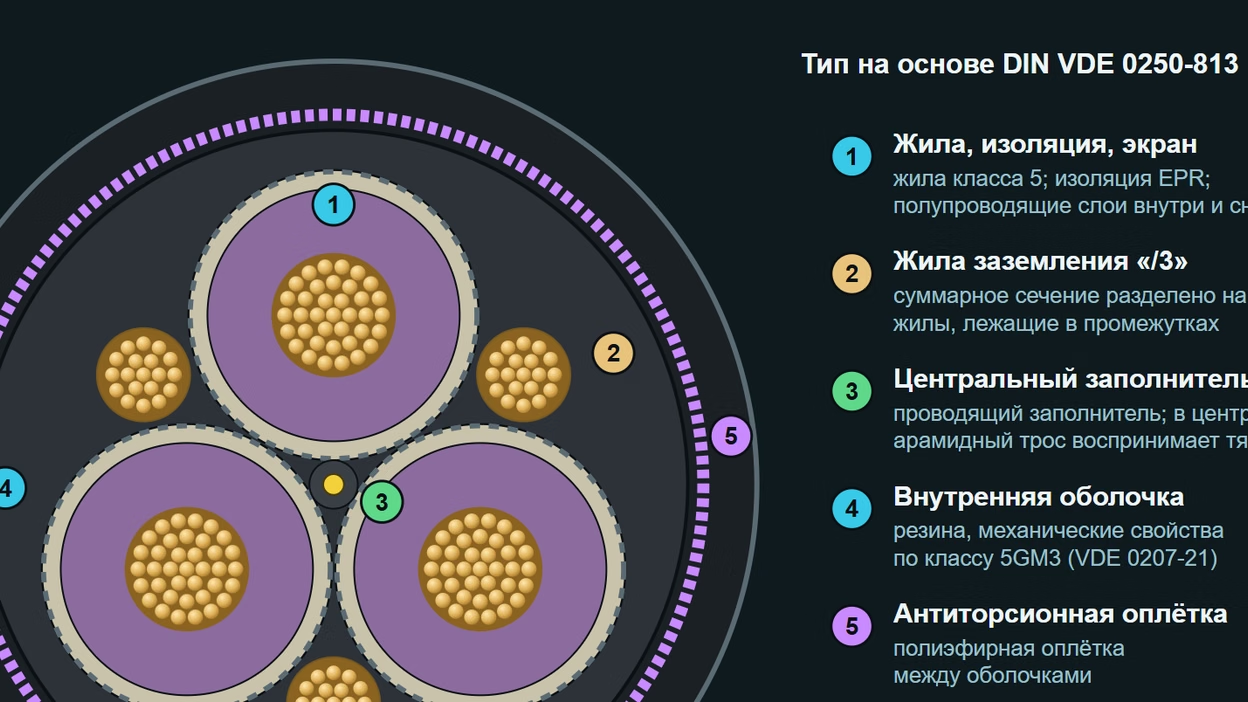
3GSEYQYMV Tunnel Power Cable: 18/30 kV средневольтный тоннельный силовой кабель с 3GI3 EPR изоляцией, медноленточным экраном и GSWB бронёй

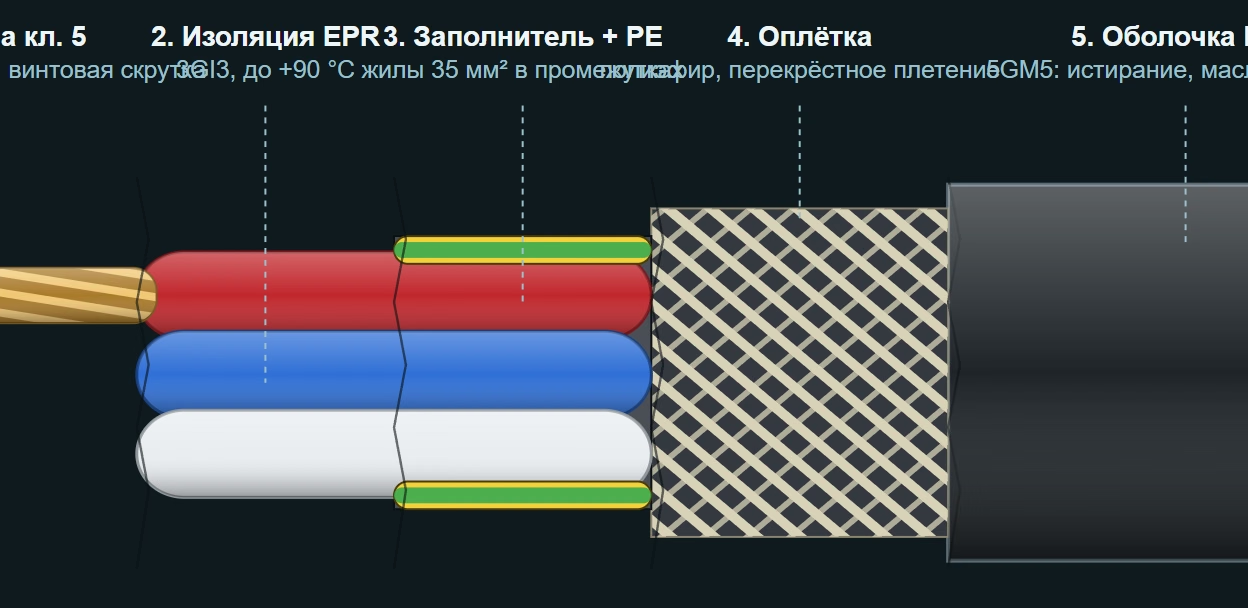
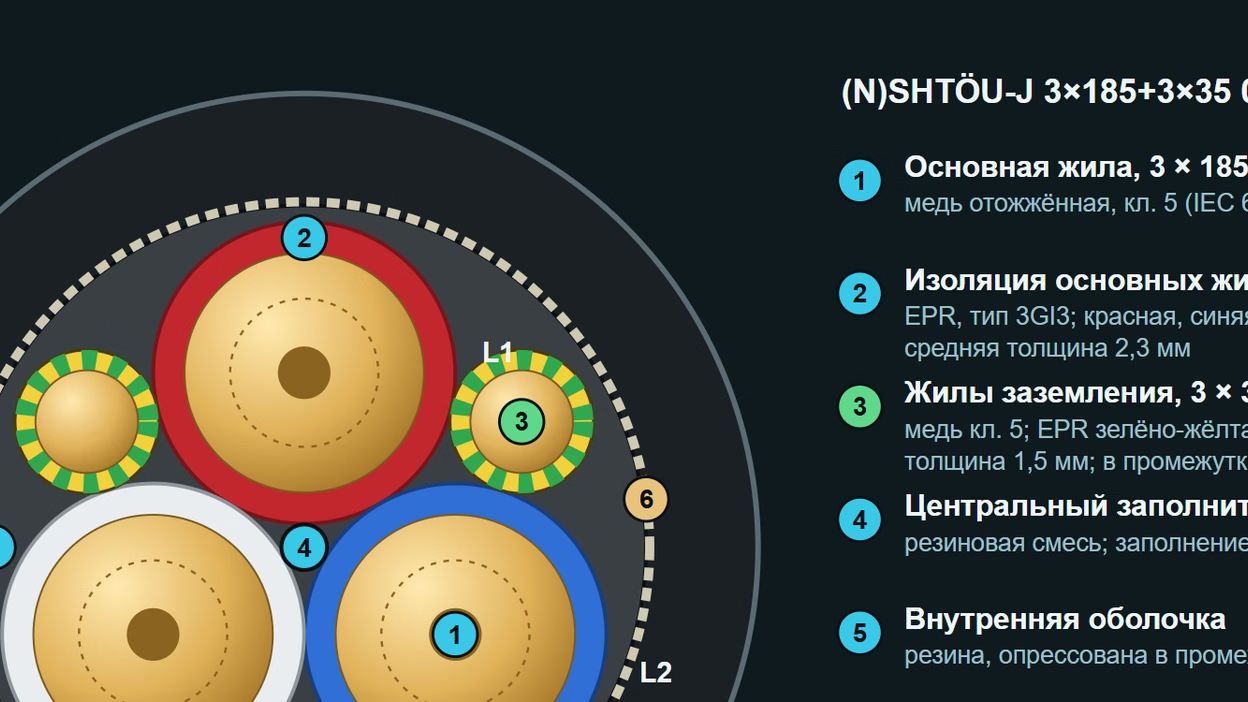
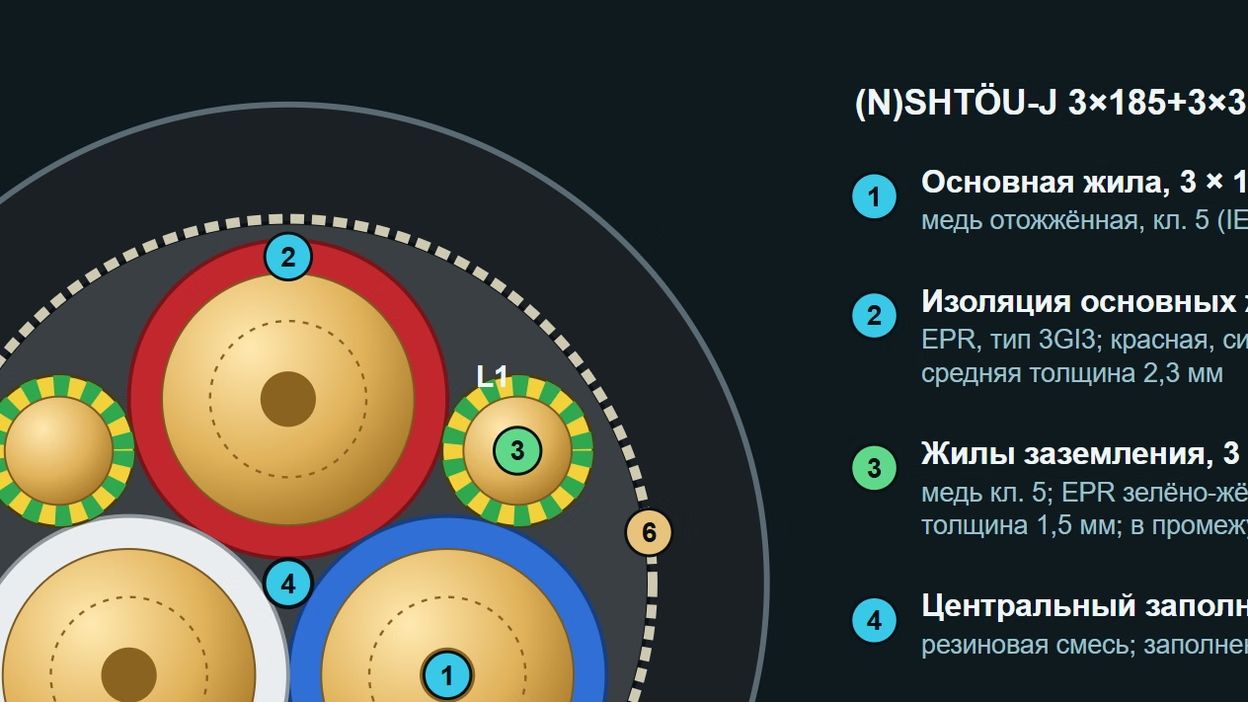
3GSEYQYMV — это MV Tunnel Power Cable на 18/30 kV для шахт, подземных выработок и тоннельных применений. По предоставленным данным кабель имеет круглый многопроволочный отожжённый медный проводник class 2 по IEC 60228, 3GI3 type EPR Compound, внутренний и наружный полупроводящие слои управления электрическим полем, copper tapes over each main core, PVC filler, galvanized steel wire braid minimum 90% и красную flame retardant special PVC outer sheath.
FLEXIFESTOON® PV-FLAT UL: High-Flexibility Salt-Fog Resistant Flat Festoon Cable for Port Operations, Marine Equipment, and Harbor Automation Systems Feichun's FLEXIFESTOON® PV-FLAT UL establishes a new performance paradigm for port-duty electrical infrastructure by combining three critical engineering requirements into unified cable architecture: extreme mechanical flexibility enabling 5×D minimum bending radius and 120 m/min festoon deployment on container gantries and ship loaders; comprehensive salt-fog environmental resistance through specialized PVC compound formulation with enhanced corrosion inhibitors surviving ASTM B117 salt-spray testing protocols characteristic of extreme coastal and offshore environments; and verified 600V/2000V dual-voltage certification (UL 1581, CSA approved) supporting both power distribution and precision automation signal transmission across the world's most demanding port and maritime cargo-handling operations.

2XSEYQYMV Tunnel Power Cable: 6/10 kV средневольтный тоннельный силовой кабель с XLPE изоляцией, медноленточным экраном и GSWB бронёй

2XSEYQYMV — это MV Tunnel Power Cable на 6/10 kV для шахт, подземных выработок и тоннельных применений. По предоставленным данным кабель имеет круглый многопроволочный отожжённый медный проводник class 2 по IEC 60228, XLPE insulation, inner and outer semiconductive field control, copper tapes over each main core, PVC filler, galvanized steel wire braid minimum 90% и красную flame retardant special PVC outer sheath.
UNE 22511 — formally titled "Cables flexibles para minería subterránea con tensiones de 1,8/3 kV con aislamiento de caucho, sin armadura" (Flexible cables for underground mining, 1.8/3 kV, rubber-insulated, unarmoured) — is the definitive Spanish standard for heavy-duty power cables connecting underground mobile mining equipment to fixed electrical distribution networks. Published and maintained by AENOR (Asociación Española de Normalización y Certificación), it operates as a specialized overlay on IEC 60502-1, extending that base standard's electrical requirements with the stringent mechanical, safety, and flame-retardancy requirements specific to enclosed underground environments. Despite its Spanish origin, UNE 22511 enjoys a geographic reach far exceeding Iberia. The standard has been adopted — formally or by reference — across the major Spanish-speaking mining economies: Chile, Peru, Colombia, Bolivia, and Mexico, where AENOR-certified cables are accepted by national mining safety regulators as the primary qualification pathway for underground mobile equipment power supply cables. In Chile alone, UNE 22511 cables are installed across dozens of operations including major copper and coal mines. The standard's engineering DNA can be described in a single imperative: extreme dynamic flexibility combined with superior resistance to combined torsional and bending fatigue. This is not merely a performance aspiration — it is a structural requirement that shapes every material choice and geometric decision in the cable's construction. The logic proceeds as follows: Underground mobile equipment (continuous miners, shearers, shuttle cars) moves continuously and repeatedly during operation, dragging its power cable behind it or winding and unwinding it from a cable reel. This motion imposes cyclic bending, axial tension, and torsional loads on the cable simultaneously — a multi-axis fatigue regime of a severity not encountered in any other industrial cable application. Standard fixed-installation cables, even those classified as "flexible," are not designed for this loading regime and will fail in fatigue within weeks to months when installed in drag duty. Therefore, every structural element of a UNE 22511 cable — conductor wire diameter, insulation compound, earth core geometry, armour exclusion, sheath specification — is selected to maximize multi-axis fatigue endurance, not any single performance parameter. ⛏ The Founding Engineering Principle UNE 22511 is an unarmoured drag cable standard. The deliberate absence of any metallic armour — which might superficially seem to reduce robustness — is in fact the defining engineering choice that makes the standard viable. Steel wire or tape armour in a continuously torsionally-loaded cable acts as a progressive-failure torsional spring: each twist cycle accumulates irreversible plastic strain in the armour wires, leading to wire fractures within 10,000–30,000 cycles. For a shuttle car cable experiencing 80,000+ torsional cycles per year, armour represents not additional protection but a built-in scheduled failure mechanism. The UNE 22511 design eliminates this failure mode at source.

2XSEYQYMV Tunnel Power Cable: 6/10 kV средневольтный тоннельный силовой кабель с XLPE изоляцией, медноленточным экраном и GSWB бронёй

2XSEYQYMV — это MV Tunnel Power Cable на 6/10 kV для шахт, подземных выработок и тоннельных применений. По предоставленным данным кабель имеет круглый многопроволочный отожжённый медный проводник class 2 по IEC 60228, XLPE insulation, inner and outer semiconductive field control, copper tapes over each main core, PVC filler, galvanized steel wire braid minimum 90% и красную flame retardant special PVC outer sheath.
BASKET SPREADER 740 (YSLTOE) is engineered specifically for hoisting and control applications where mechanical flexibility and electrical reliability must coexist in marine environments. Unlike load-bearing structural cables (which prioritize tensile strength), control cables emphasize: Conductor flexibility – Repeated bending over pulleys without mechanical fatigue Insulation integrity – Voltage breakdown resistance under salt-fog corrosion Mechanical damping – Rope-like flexibility to drape naturally in spreader bar frames Environmental barrier – Outer sheath blocks salt, moisture, and UV penetration Core Design Elements: Component Material Specification Function Port Environment Benefit Conductor Flexible red copper Class 6 (IEC 60228) Carries 300/500V power; enables bending flexibility High purity copper resists galvanic corrosion Insulation PVC type YI2 (IEC 60811) Electrical isolation; voltage breakdown resistance (2 kV test) PVC with marine additives prevents salt-induced tracking Central Unit Aramide yarns (Kevlar™ equivalent) Mechanical load-bearing backup; structural integrity Aramide resists moisture & salt; absorbs vibration stress Outer Sheath PUR type 11YM1 (DIN 73377) Environmental barrier; UV/ozone/moisture protection Superior salt-fog resistance; 20+ year marine lifespan

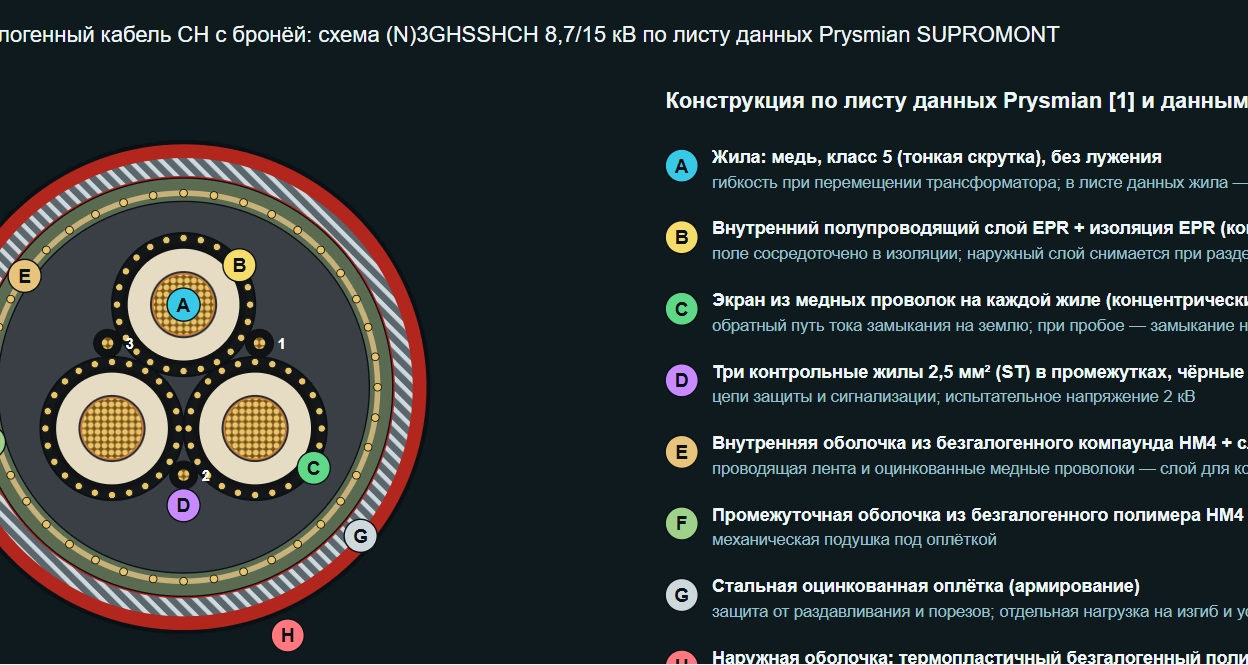
(N)3GHSSHCH Flexible Power Cable: HFFR средневольтный кабель для mobile operating equipment, mines и hazardous underground environments

(N)3GHSSHCH — это гибкий средневольтный силовой кабель для подключения mobile operating equipments в шахтах и подземных выработках с hazardous environments. По предоставленным данным он также применяется в stationary operation, например для high-voltage transformers in mining and tunnelling. Главное отличие конструкции — использование special halogen free and flame retardant HFFR compound для внутренних и наружной оболочек, в сочетании с EPR-изоляцией 3GI3, pilot control cores, 3E protective conductors, ÜL monitoring conductor и galvanized steel wire braiding с покрытием минимум 75%.
LIFT-2S (European) vs. LIFT-1S UL (North American): LIFT-2S characteristics: Voltage: 300/500V (European standard, lower voltage) Temperature: −40°C to +70°C (moderate range) Standards: VDE 0482 part 265-2-1, EN 50265-2-1, IEC 60332-1-2 Design philosophy: Safety by material redundancy (2 steel cores) Steel cores: 2× cores provide mechanical backup Conductor: Class 6 (European, ~150–200 wires per mm²) Cost: Lower (proven European manufacturing) Market: Europe, Asia-Pacific, most of world LIFT-1S UL characteristics: Voltage: 600V (North American standard, higher voltage) Temperature: −25°C to +105°C (extreme range, high-temp optimized) Standards: UL 2562, UL 62, CSA C22.2 No.210.2 Design philosophy: Safety by certification (single core + redundant control) Steel core: 1× core (sufficient with nylon covering) Conductor: Class M (UL, extra fine ~300+ wires per mm²) Cost: Higher (UL testing, certification documentation) Market: North America (USA, Canada), Mexico UL 2562 specialty certification: UL 2562 scope: Elevator and Dumbwaiter Cables Specific requirements: 1. Pendant cable design (cable hangs freely, no duct support) 2. Vertical orientation (designed for gravity-loaded suspension) 3. Repeated flex cycles (cable moves up/down frequently) 4. Safety-critical function (failure = personnel risk) Consequence: More stringent than general-purpose cables Testing includes: Bend cycle fatigue, heat aging, compression resistance Test procedures (unique to UL 2562): Bend cycle test: 1,000+ cycles at minimum bending radius Cable must pass insulation resistance after cycling Heat aging: 500+ hours at 105°C continuous Tensile strength retention minimum 70% Compression: 1,000+ hours under sustained compression Cable cross-section must not exceed 5% permanent deformation LIFT-2S (no UL 2562): Tests per VDE are less stringent on fatigue/cycling Assumes cable mostly static, not repeated flex Adequate for European elevator duty (lower speed, fewer cycles) LIFT-1S UL: All UL 2562 tests passed (proven for North American elevators) Faster cycle times, more frequent motion → more fatigue stress Extra testing ensures reliability under North American elevator duty Market requirement (regulatory): Europe/International: CE mark required (European conformity) VDE/EN/IEC standards sufficient No UL certification needed (not recognized in EU) LIFT-2S is sufficient North America (USA, Canada): UL certification mandatory for elevators UL 2562 specifically for elevator cables CSA dual certification required in Canada LIFT-2S NOT acceptable (lacks UL 2562) LIFT-1S UL mandatory Cost implication: UL certification: ~$5,000–15,000 per product per region Testing duration: 3–6 months per model Documentation: Comprehensive test reports, technical files Result: LIFT-1S UL 20–30% higher cost than equivalent European cable

(N)3GHSSYCY Flexible Power Cable: бронированный средневольтный кабель для mobile operating equipment, mines и hazardous underground environments

(N)3GHSSYCY — это гибкий средневольтный силовой кабель для подключения mobile operating equipments в шахтах и подземных выработках с hazardous environments. По предоставленным данным он также применяется в stationary operation, например для high-voltage transformers in mining and tunnelling. Конструкция объединяет EPR-изолированные main cores и pilot control cores, protective conductors вокруг каждой main core, monitoring conductor, PVC inner sheaths YM5/DMV6, galvanized steel wire braiding с покрытием минимум 75% и наружную PVC-оболочку DMV6 красного или чёрного цвета.
BASKET SPREADER 740 (YSLTOE) is engineered specifically for hoisting and control applications where mechanical flexibility and electrical reliability must coexist in marine environments. Unlike load-bearing structural cables (which prioritize tensile strength), control cables emphasize: Conductor flexibility – Repeated bending over pulleys without mechanical fatigue Insulation integrity – Voltage breakdown resistance under salt-fog corrosion Mechanical damping – Rope-like flexibility to drape naturally in spreader bar frames Environmental barrier – Outer sheath blocks salt, moisture, and UV penetration Core Design Elements: Component Material Specification Function Port Environment Benefit Conductor Flexible red copper Class 6 (IEC 60228) Carries 300/500V power; enables bending flexibility High purity copper resists galvanic corrosion Insulation PVC type YI2 (IEC 60811) Electrical isolation; voltage breakdown resistance (2 kV test) PVC with marine additives prevents salt-induced tracking Central Unit Aramide yarns (Kevlar™ equivalent) Mechanical load-bearing backup; structural integrity Aramide resists moisture & salt; absorbs vibration stress Outer Sheath PUR type 11YM1 (DIN 73377) Environmental barrier; UV/ozone/moisture protection Superior salt-fog resistance; 20+ year marine lifespan

NTSKCGECWÖU: тяжёлый trailing cable для mobile electrical equipment, coal cutting machines и экстремальных изгибов в steel / plastic track chains

NTSKCGECWÖU — это средневольтный эластомерный кабель для подключения мобильного электрического оборудования в шахтах и тоннелях. По предоставленным данным он особенно подходит для coal cutting machines, прежде всего при extreme bending loads внутри steel or plastic track chains. Конструкция включает лужёные медные жилы DIN VDE 0295 Class 5, 3GI3 EPR и semiconductive rubber, cradle separator с контрольной проволокой, electrical field control, ST KON / ÜL KON элементы, GM1b inner sheath, гибкую броню из лужёной меди и оцинкованной стали, а также красную наружную оболочку 5GM5.
La vida útil de los cables móviles de carrete, festón y canasta depende, en gran medida, de la instalación y del diseño del sistema de enrollado. Este manual abarca radios de curvatura, guías, protección de tensión, anclaje, selección de carrete y eliminación de torsión, junto con los métodos eléctricos de capacidad de corriente, reducción (derating), caída de tensión y cortocircuito.

(N)TSCGEWÖU – FO (LWL): средневольтный гибкий кабель с оптическим волокном для power and data transmission в mining и tunnelling applications

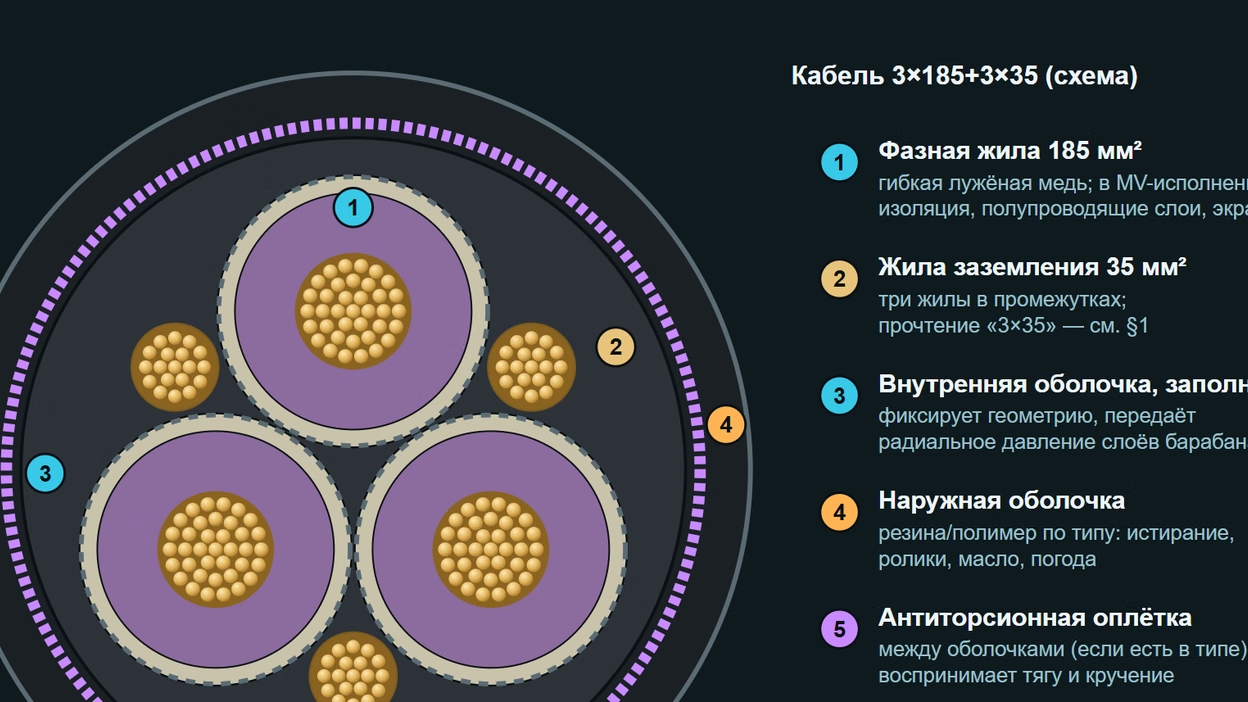
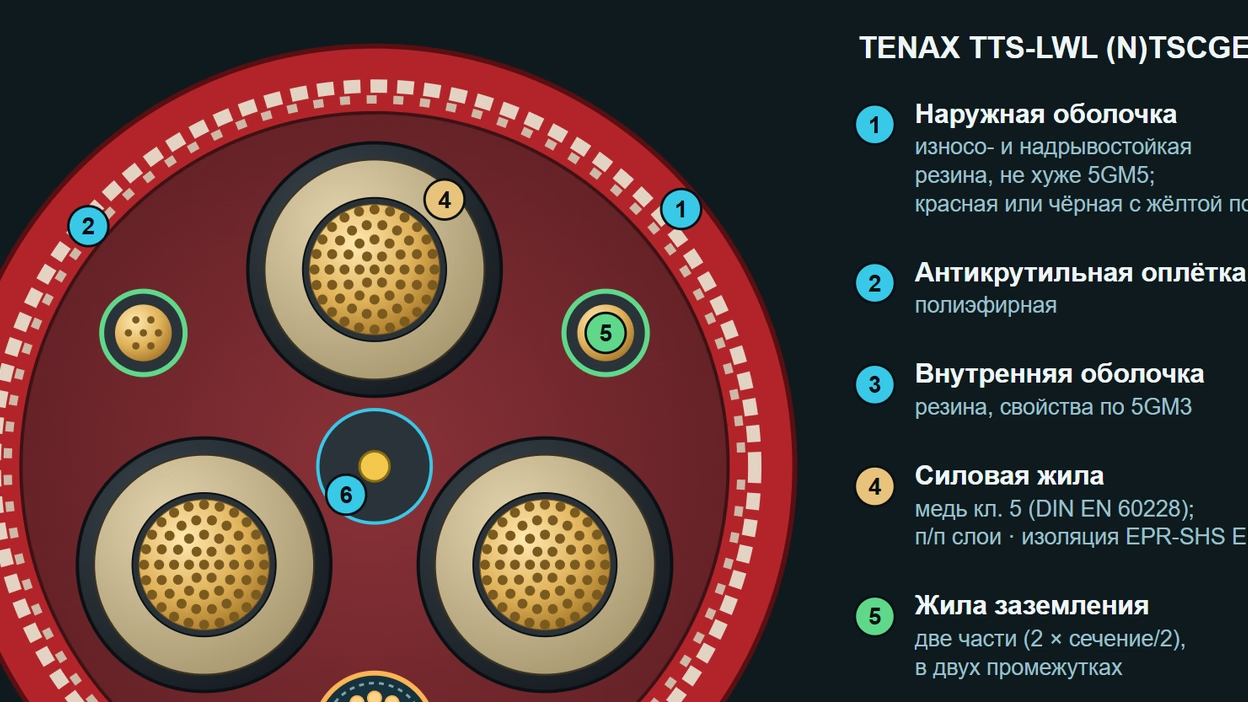
(N)TSCGEWÖU – FO (LWL) — это комбинированный средневольтный кабель, который объединяет силовое питание и передачу данных по оптическому волокну. По предоставленным данным он предназначен для подключения электрического оборудования и крупных material handling machines, таких как excavators, cranes и dumpers, в mining and tunnelling applications. Кабель также подходит как flexible MV reeling cable и для festoon systems.