
The Legendary Heavy-Duty Neoprene Reeling Cable for Outdoor Industrial Brutality
A Proven Workhorse for Seaports, Steel Mills, Open-Pit Mining, and Exposed Outdoor Environments Where UV Radiation, Saltwater Mist, Machine Oil Splash, and Mechanical Abrasion Demand Uncompromising Material Science and Real-World Durability Over Decades
TROMMELFLEX® NSHTÖU-J
The Legendary Heavy-Duty Neoprene Reeling Cable for Outdoor Industrial Brutality
A Proven Workhorse for Seaports, Steel Mills, Open-Pit Mining, and Exposed Outdoor Environments Where UV Radiation, Saltwater Mist, Machine Oil Splash, and Mechanical Abrasion Demand Uncompromising Material Science and Real-World Durability Over Decades
The Outdoor vs. Indoor Paradigm: Why Material Choice Matters More Than Voltage Rating
When engineers think about cable specifications, they typically organize their thinking around voltage rating. “I need a 0.6/1 kV cable,” they say, as if the voltage class is the dominant design variable. But this is fundamentally incorrect reasoning. In truth, the primary design driver for industrial reeling cables is not the voltage, but the operating environment. This distinction between indoor and outdoor applications is not a minor nuance—it is the fundamental dividing line that determines which material system is appropriate.
Consider two 0.6/1 kV reeling cables, both meeting the DIN VDE 0250 family of standards. One is installed in a climate-controlled automated warehouse (TROMMELFLEX PUR-HF). The other is deployed on a container gantry crane at the Port of Rotterdam, exposed daily to saltwater mist, ultraviolet radiation, and diesel engine exhaust. Both carry the same voltage. Both handle similar current loads. Yet they are fundamentally different products, engineered from completely different materials, for completely different reasons.
The PUR-HF cable thrives in the warehouse because polyurethane excels in controlled thermal environments and benefits from protection against fire risk. But place that same PUR-HF cable on an outdoor gantry crane, expose it to three years of North Sea salt spray and UV radiation, and the material begins to degrade. The outer sheath, which was formulated to be thin and elegant in indoor conditions, becomes brittle. The polyurethane’s molecular chains, which maintain their flexibility through careful formulation in temperature-controlled factories, undergo photo-oxidation when exposed to unfiltered sunlight. Within five to seven years, the cable fails. The cost? A complete replacement of a 500-meter installation, plus the downtime of critical port infrastructure.
The TROMMELFLEX NSHTÖU-J cable, by contrast, is engineered from the ground up for outdoor cruelty. Its neoprene (chloroprene rubber) formulation includes UV stabilizers and anti-oxidants that cost more per kilogram than the base polymer itself. Its outer sheath thickness is deliberately increased—not because indoor safety requires it, but because outdoor degradation rates are exponentially faster. The cable is heavier, less elegant, and more expensive to manufacture. But it survives ten to fifteen years of continuous outdoor exposure with minimal degradation. When you amortize the total cost of ownership over the actual lifespan, the NSHTÖU-J becomes the economically superior choice for outdoor applications.
The cable specification is not determined by a single parameter like voltage. It is determined by the harshest environmental stress in the application. For an indoor warehouse, that stress is typically fire risk. For an outdoor seaport, that stress is UV radiation and salt corrosion. For a steel mill, that stress is continuous high temperature and oil splash. Only by identifying the dominant environmental stress can an engineer select the correct material system and be confident that the cable will survive its intended service life.
Why Neoprene Still Dominates in Harsh Outdoor Environments (When PUR Would Fail)
You might ask: if polyurethane is such an advanced material for the PUR-HF cable, why does anyone still use neoprene for the NSHTÖU-J? The answer reveals a deep truth about materials science that many engineers misunderstand. Advanced and specialized do not mean universally superior. Every material is a collection of compromises, optimized for specific conditions.
Neoprene (polychloroprene rubber) was invented in 1931 as a synthetic alternative to natural rubber. Its key breakthrough was that it remained flexible across a wide temperature range and resisted attack from oils, greases, and ozone. These properties made it ideal for industrial applications. Today, nearly a century later, neoprene remains the dominant material for outdoor industrial cables because those original advantages have never been surpassed for outdoor environments.
Here is where polyurethane and neoprene part ways in their suitability. Polyurethane is a synthetic polymer with an elegant molecular structure—it contains urethane groups (N-C(=O)-N linkages) that create strong hydrogen bonding between chains. This hydrogen bonding network is what gives PUR its exceptional low-temperature flexibility and its mechanical resilience in controlled environments. But hydrogen bonds are sensitive to photochemical degradation. When unfiltered ultraviolet light (particularly UV-B radiation in the 280-320 nm wavelength range) hits a PUR surface, the photons have enough energy to break those hydrogen bonds. Once broken, they are not easily reformed. Over time, this leads to surface crazing, loss of flexibility, and eventual cracking.
Neoprene, by contrast, has a different molecular architecture. Its chlorine atoms provide chemical stability against UV attack in a way that hydrogen bonding simply cannot. When a UV photon hits a neoprene chain, the photon’s energy is absorbed and dissipated through the polymer network without breaking the main backbone structure. To be sure, neoprene does degrade under UV exposure, but its degradation rate is 5-10 times slower than unprotected polyurethane, even after accounting for UV stabilizers added to PUR formulations.
Moreover, industrial outdoor environments expose cables to saltwater mist, which is a highly corrosive medium. Seawater contains chloride ions and dissolved oxygen, which together accelerate the oxidation of many polymers. Polyurethane, despite containing chlorine atoms in its additives, is fundamentally a polar polymer that absorbs moisture more readily than neoprene. When moisture penetrates the outer sheath and reaches the insulation, it can cause partial discharge and insulation breakdown. Neoprene, being inherently hydrophobic, resists moisture absorption and provides a much better moisture barrier.
The final consideration is hot oil resistance. In steel mills and mining operations, hydraulic fluid and machine oils regularly splash onto cables. These oils are typically aromatic hydrocarbons that can swell certain polymers. Polyurethane, despite good oil resistance in controlled conditions, shows signs of swelling (5-15% volume increase) when exposed to high-temperature mineral oils for extended periods. Neoprene, with its intrinsically non-polar structure, resists oil swelling to less than 3-5% volume change. Over fifteen years of continuous exposure to oil mist in a steel mill, this difference is the margin between a cable that remains mechanically sound and one that has become plastically deformed and structurally compromised.
If you want a cable for a 10-year continuous exposure to ultraviolet radiation, saltwater mist, and machine oil spray, neoprene is the correct choice. If you want a cable for an indoor fire-safety-critical application at −40°C, polyurethane is the correct choice. The engineer’s job is not to choose the most “advanced” material, but to choose the material whose weakness pattern does not overlap with your application’s environmental stress pattern. This is the essence of materials engineering.
Technical Anatomy: Double-Extrusion Architecture and 5GM5 Neoprene Engineering
To survive the mechanical and environmental brutality of outdoor heavy-duty reeling, the TROMMELFLEX NSHTÖU-J employs a deliberately engineered architecture that is more complex than a casual observer might recognize. Every component has been designed to address a specific failure mode observed in field operations across three decades of deployment in ports, mines, and steel mills worldwide.
| Parameter | Specification / Characteristic Value | Purpose / Justification |
|---|---|---|
| Standard Designation | NSHTÖU-J per DIN VDE 0250-814 (Heavy-duty outdoor reeling cable, three-phase + earth) | Defines voltage class (0.6/1 kV) and application category |
| Voltage Rating (U₀/U) | 0.6/1 kV (suitable for motorized drums up to 120 m/min) | Standard low-voltage class for industrial reeling systems |
| Conductor Material & Class | Tinned electrolytic copper, Class 5 extra-flexible stranding (≥ 42 wires/core for 16 mm² and above) | Tinning prevents corrosion from marine salt spray; Class 5 maintains flexibility under 10,000+ bend cycles |
| Insulation System | EPR (Ethylene Propylene Rubber) with semi-conductive inner and outer layers (3GI3 designation) | EPR provides excellent thermal stability (+80°C continuous) and mechanical flexibility; semi-con layers prevent corona discharge |
| Individual Core Screening | Tinned copper wire braid around each phase core (100% coverage, 95-120 wires per screen) | Eliminates crosstalk between phase cores during high-speed rotation; provides earth-fault path |
| Anti-Torsion Guard | High-tensile polyester or nylon textile mesh, vulcanized directly between inner bedding and outer sheath | Prevents corkscrewing (axial rotation) during motorized drum operation; maintains core alignment |
| Outer Sheath Material | Polychloroprene (5GM5 Neoprene), 5.5–7.5 mm nominal thickness (thicker than PUR-HF) | UV-stabilized, naturally flame-retardant, oil/salt/ozone resistant; thickness provides abrasion protection in outdoor conditions |
| UV Stabilizer System | Carbon black (≥ 2.5% by weight) + hindered amine light stabilizers (HALS) | Carbon black absorbs UV photons; HALS scavenge free radicals created during degradation; together extend outdoor lifespan 5-10× |
| Operating Speed on Drum | Up to 150 m/min typical (marine cranes); some specialized ports reach 200 m/min with high-speed winches | Requires robust anti-torsion design and careful fatigue-life engineering |
| Operating Temperature Range | −25°C to +80°C (continuous outdoor operation, including desert and arctic conditions) | Neoprene flexibility maintained at −25°C; thermal stability preserved at +80°C (hotter than indoor PUR-HF typical) |
| Minimum Bending Radius (Installation) | 15 × cable outer diameter (OD) for initial spooling; 12–14 × OD during dynamic operation | Standard for VDE 0250 family; achievable on maritime cranes with 500-900 mm drum diameters |
| Tensile Strength (Total Copper) | ≥ 20 N/mm² × conductor cross-section (e.g., 50 mm² conductor can handle ≥ 1000 N sustained tension) | Marine hoisting cables often operate under 500-2000 N constant tension; this specification ensures no creep or permanent set |
| Oil Resistance (DIN 53521, 70°C, 24h) | Volume change ≤ 5% in mineral oil; DIN 53521 Category A (best class) | Steel mills expose cables to continuous oil mist; neoprene’s hydrophobic nature prevents swelling |
| UV Resistance Verification | DIN 53387 accelerated weathering: 500 h equivalent to 5–7 years outdoor exposure, minimum 50% tensile strength retention | Outdoor cable must maintain mechanical integrity after years of unfiltered sunlight |
| Flame Retardancy | IEC 60811-1-2: Self-extinguishing (FZEA classification), burn propagation ≤ 500 mm/min | Neoprene is naturally flame-retardant; no halogens required for fire safety |
| Ozone Resistance (50 pphm, 40°C, 168h) | No visible cracking (ASTM D1149 Method B) | Industrial environments with high ozone (near welding, plasma cutting) require superior ozone resistance |
The Double-Extrusion Process: Why Single-Layer Jackets Fail Prematurely
A fundamental design choice in the NSHTÖU-J is that the outer sheath is not a single uniform layer of neoprene, but a deliberate two-stage extrusion. Understanding why this matters requires understanding how outdoor degradation actually progresses.
When neoprene is exposed to ultraviolet radiation, the polymer chains near the surface absorb photon energy and begin to cross-link, creating a brittle, hardened layer that may be only 0.5–1.0 mm thick. This hardened layer itself acts as a protective barrier, preventing deeper penetration of UV radiation into the bulk material. However, if the neoprene is manufactured as a single uniform layer, the progressive hardening of the surface creates differential stresses. The still-flexible material underneath wants to remain flexible, but the hardened surface constrains it. Over time, this creates internal stress concentrations that lead to cracking.
The FeiChun NSHTÖU-J solution is an elegant one. The first extrusion layer (inner bedding) uses a standard, cost-effective neoprene formulation. The second extrusion layer (outer sheath) uses a premium UV-stabilized neoprene with enhanced hindered amine light stabilizer (HALS) loading and optimized carbon black dispersion. This outer layer is deliberately formulated to degrade in a controlled manner, sacrificing itself to protect the inner layer. As the outer layer becomes progressively hardened by UV, its surface remains flexible enough to prevent crack initiation, while the inner layer is shielded from the worst UV exposure. The result is a cable that maintains structural integrity for 10–15 years in harsh marine environments.
DIN VDE 0250-814 Compliance Specifications and Performance Boundaries
DIN VDE 0250-814 is the German industrial standard specifically for heavy-duty reeling cables in outdoor environments. It is more stringent than the indoor-focused DIN VDE 0250-818 (which covers PUR-HF) in several key areas. Understanding these differences clarifies why NSHTÖU-J cables are engineered the way they are.
| Electrical Parameter | Specification Requirement | Test Standard | Rationale for Outdoor Use |
|---|---|---|---|
| Insulation Breakdown Voltage | ≥ 2.5 × rated voltage (2.5 kV minimum) | IEC 60811-3-1 | Outdoor cables experience transient overvoltages from lightning induced surges; this margin ensures survivability |
| Insulation Resistance (20°C) | ≥ 1 MΩ·km (measured with 500V insulation tester) | IEC 60811-4-1 | Moisture ingress from rain/mist will gradually reduce insulation resistance; baseline specification ensures margin |
| Dielectric Loss Angle (tan δ) | < 0.03 at 1 kHz, 20°C | IEC 61338-1 | Neoprene shows higher dielectric loss than PUR, but still acceptable; aging increases this parameter |
| Partial Discharge (PD) | 100% batch testing: PD < 10 pC at 1.5 × rated voltage | IEC 60270 | Moisture and voids in outdoor cables are more likely; strict PD limits ensure electrical safety |
| AC Dielectric Strength (after water absorption) | ≥ 3.5 kV (1 min) on cables equilibrated in 85% RH for 168h | IEC 60811-3-2 | Marine cables absorb atmospheric moisture; must retain electrical safety even when saturated |
| Mechanical Parameter | Specification Requirement | Test Standard | Justification |
|---|---|---|---|
| Tensile Strength (Insulation) | ≥ 10 N/mm² | IEC 60811-1-1 | Standard EPR insulation strength |
| Tensile Strength (Outer Sheath) | ≥ 14 N/mm² (higher than PUR-HF at 12 N/mm²) | IEC 60811-1-1 | Outdoor abrasion and mechanical wear demand higher strength margin |
| Elongation at Break | ≥ 250% (insulation), ≥ 300% (outer sheath) | IEC 60811-1-1 | Neoprene can achieve higher elongation than PUR while remaining cost-effective |
| −25°C Coldness Test | Pass (no cracking at 8 × OD bending radius) | IEC 60811-1-4 | Outdoor cables in temperate/arctic climates must flex without brittleness at freezing temperatures |
| Flex Cycles to Failure | ≥ 50,000 complete bend cycles (testing at 10 × OD radius) | IEC 60227-2-11 | Marine hoisting systems may experience 20,000–50,000 cycles annually; 50,000 represents 1-2 years minimum life |
| Torsion Angle Limit | ≤ 45°/m rotation under 1000 N·m torque (anti-torsion braid must prevent corkscrewing) | DIN VDE 0250-814 Section 6.3.4 | At 150 m/min drum speed on 800 mm diameter reel, cable experiences 30 rpm rotation; braid must lock this out |
| Abrasion Resistance (Schabel test) | DIN 53516: Volume loss < 100 mm³ after 1000 cycles | DIN 53516 | Outdoor cables dragged across concrete, steel grating, and rough surfaces lose jacket material; must be resistant |
Engineering Strategy: Anti-Torsion Integration and Mechanical Stress Management
The most common field failure mode for improperly designed reeling cables is corkscrewing—the cable gradually twists upon itself during high-speed motorized drum operation. A cable without an integrated anti-torsion braid will exhibit rotational angles of 45–90° per meter of length after 10,000 to 20,000 bend cycles. At this point, the copper cores within the cable have been twisted so severely that they bunch up, creating mechanical strain that eventually leads to conductor breakage.
The TROMMELFLEX NSHTÖU-J prevents this through a design that appears simple but is mechanically sophisticated. A high-tensile synthetic textile mesh (typically polyester or nylon fibers with tensile strength ≥ 1500 N/mm²) is wrapped in a helical pattern around the insulated conductor assembly, then immediately vulcanized into the inner bedding rubber layer. This mesh is then covered by the anti-torsion braid proper, which is a denser weave that serves as the primary anti-rotation mechanism. The entire structure is then covered by the outer neoprene sheath, which is also vulcanized directly onto the braid, creating a monolithic structure.
When the cable is spooled onto a motorized drum, the cable can flex freely around the drum radius (the braid flexes with the cable), but it cannot rotate axially. An attempt to rotate the cable axially is met by the braid’s resistance, which is distributed across the entire cable length. The result is zero corkscrewing even after 100,000 bend cycles. Field data from FeiChun installations shows rotation angles of less than 5°/m even after 50,000 cycles, compared to industry-baseline corkscrewing of 30–45°/m for cables without anti-torsion integration.
Fatigue Analysis and Mechanical Stress Distribution
To engineer a cable that will survive 10–15 years of continuous outdoor service, designers must understand the fatigue behavior of the copper conductor under cyclic bending stress. Consider a typical STS (Ship-to-Shore) crane scenario: the cable is lifted and lowered at a rate of 60–80 cycles per hour. Over a year of operation (8000 hours), the cable experiences 500,000–640,000 complete bend cycles. Over a decade, that accumulates to 5–6 million cycles.
The copper conductor, being an elastic metal, can survive this number of cycles if the bending stress is kept below about 70% of the material’s fatigue limit. FeiChun’s engineering team uses finite element analysis (FEA) to optimize the cable diameter, conductor strand count, and insulation thickness to keep the maximum bending stress in the range of 40–60% of the fatigue limit, providing a safety margin of 1.7–2.5×. This is significantly higher than what simpler designs achieve, and it is why NSHTÖU-J cables routinely achieve 12–15 year operational lifespans.
FeiChun’s anti-torsion braid integration process is controlled to ±2% variance in wrap angle, ±1.5% variance in braid tension, and ±3°C variance in vulcanization temperature. This precision is necessary because variations of more than 3–5% in any of these parameters will measurably reduce the anti-torsion performance. This level of control is typical of premium manufacturers but is rarely found in commodity cable producers.
The Science of Neoprene: UV Resistance, Oil Absorption, and Temperature Stability
To truly appreciate why neoprene is the correct material choice for outdoor heavy-duty reeling cables, we must understand the detailed chemistry of how neoprene behaves under the specific stressors of outdoor industrial environments. This is where the science becomes as important as the engineering.
Ultraviolet Degradation and the Role of Stabilizers
Ultraviolet radiation exists in three bands: UVA (315–400 nm), UVB (280–315 nm), and UVC (< 280 nm). At sea level, UVC is filtered by the atmosphere, but UVA and UVB penetrate freely. The photon energy of UVB (approximately 4.5 eV per photon) is enough to break certain C–C bonds in polymer chains, initiating free radical reactions that propagate and cause cross-linking and embrittlement.
Neoprene’s intrinsic UV resistance comes from its molecular structure. The chlorine atoms in the polychloroprene backbone contribute to energy dissipation that reduces the probability of chain-breaking photochemical reactions. However, this intrinsic resistance is not enough for 10+ years of outdoor exposure. To extend the cable’s lifespan, FeiChun adds two categories of stabilizers to the NSHTÖU-J formulation.
The first category is carbon black (CB). Carbon black absorbs essentially all UV photons that strike the cable surface, converting the photon energy to heat, which is then dissipated into the environment. A loading of 2.5–4.0% carbon black by weight in the outer sheath creates an essentially opaque layer that transmits very little UV radiation into the interior of the cable. The trade-off is that carbon black darkens the material and increases thermal absorption on sunny days (which can raise surface temperatures to 50–60°C). For outdoor cables, this thermal effect is actually beneficial—higher temperatures typically accelerate polymer degradation, but for neoprene, the temperature range of 40–60°C is well within its thermal stability window.
The second category is hindered amine light stabilizers (HALS), typically N,N’-bis(1,4-dimethylpentyl)-4-heptyloxy-2,2,6,6-tetramethylpiperidine or similar compounds. HALS work through a different mechanism: they scavenge the free radicals that are created during photo-oxidation reactions, preventing the free radical chain reactions that lead to polymer degradation. A HALS loading of 0.8–1.5% by weight provides long-term protection. FeiChun uses a synergistic combination of these stabilizers, optimized through accelerated weathering trials (DIN 53387, which exposes samples to 500 hours of UVA radiation at 60°C and 95% humidity—equivalent to approximately 5–7 years of natural outdoor exposure).
| Stabilizer System | Tensile Strength Retention After 500h DIN 53387 | Elongation Retention After 500h | Cost Impact | Typical Usage |
|---|---|---|---|---|
| Unstabilized Neoprene | 40-50% | 30-40% | Base cost | Indoor applications only |
| Carbon Black only (2.5%) | 75-80% | 70-75% | +5% cost | Moderate outdoor exposure (3-5 years) |
| HALS only (1.0%) | 70-75% | 65-70% | +8% cost | Indoor with some UV risk |
| Carbon Black (3.0%) + HALS (1.2%) | 88-92% | 85-90% | +14% cost | Heavy outdoor exposure (10-15 years) |
Oil Resistance: Hydrophobic vs. Hydrophilic Behavior
In steel mills and heavy manufacturing facilities, cables are routinely exposed to mineral oils, hydraulic fluids, and machine coolants. These oils can cause swelling (volumetric expansion) of certain polymers if the polymer is compatible with the oil. For example, natural rubber can swell 100%+ when immersed in aromatic mineral oils, making it unsuitable for industrial use.
Neoprene’s resistance to oil swelling comes from its chemical nature. The polychloroprene backbone is relatively non-polar, meaning it does not have strong electrostatic attractions to the hydrocarbon molecules in mineral oils. As a result, oil molecules do not preferentially migrate into the neoprene matrix. Laboratory testing (DIN 53521) shows that neoprene exposed to ASTM 1 mineral oil at 70°C for 24 hours exhibits volume changes of only 2–5%, far superior to many alternative elastomers. Even after 1000 hours of continuous oil exposure at elevated temperature (70°C), neoprene maintains 90%+ of its original tensile strength and elongation.
FeiChun’s NSHTÖU-J formulation is optimized specifically for steel mill environments. The cable is tested not just against ASTM 1 mineral oil, but against real-world steel mill hydraulic fluids and cutting oils that have been collected from active mills. This “worst-case” testing ensures that the cable will not degrade when exposed to the actual oils and mixtures present in the customer’s environment.
Temperature Stability and Thermal Cycling
Outdoor industrial environments experience dramatic thermal cycling. An STS crane operating in a North American port might experience temperatures ranging from −10°C in winter mornings to +45°C in summer afternoons—a 55°C swing. Over hundreds of days and thousands of cycles, this thermal stress can cause alternating expansion and contraction that leads to permanent set (loss of elasticity) and eventually cracking.
Neoprene’s glass transition temperature (Tg, the temperature above which the polymer becomes rubbery and below which it becomes glassy) is typically around −45°C. This means that from −25°C to +80°C (the specified operating range for NSHTÖU-J), neoprene remains in the rubbery state with consistent mechanical properties. There is no sharp phase transition that would cause sudden loss of flexibility at low temperatures (as would occur with materials having Tg near 0°C).
FeiChun qualifies the NSHTÖU-J cable by subjecting it to DIN VDE 0250-814 thermal cycling tests: the cable is cycled between −20°C and +60°C for 50 complete cycles, with each cycle lasting 24 hours (12 hours at cold, 12 hours at heat). At the conclusion, the cable is evaluated for changes in tensile strength, elongation, and flexibility. The specification requires that tensile strength not drop more than 10%, elongation not drop more than 15%, and flexibility be maintained to the point where the cable can still be bent to 8 × OD radius without cracking. Field cables from FeiChun installations regularly exceed these requirements, with measured property changes of less than half the permitted limits after 50 thermal cycles.
Manufacturing Excellence: Double-Sheath Extrusion and Quality Assurance
The ability to consistently produce NSHTÖU-J cables that meet DIN VDE 0250-814 specifications year after year requires manufacturing equipment and quality processes that are not common in the cable industry. FeiChun’s NSHTÖU-J production line represents a significant capital investment (approximately €3.5–4.2 million) and requires specialized operational expertise.
Double-Sheath Extrusion Process Control
The NSHTÖU-J extrusion process involves two distinct rubber extrusion stages. First, the inner bedding layer (a standard, cost-optimized neoprene formulation) is extruded directly onto the conductor and insulation assembly. This layer must be precisely controlled to achieve a uniform thickness of 3.0–3.5 mm. Too thin, and the outer braid cannot be properly vulcanized; too thick, and the cable becomes stiff and harder to spool.
Critical to this stage is the extrusion temperature control. Neoprene must be extruded at 160–190°C. If temperatures drop below 160°C, the polymer does not flow properly and creates weak spots and surface roughness. If temperatures exceed 190°C, the polymer begins to thermally degrade, releasing hydrogen chloride gas and losing mechanical strength. FeiChun’s extrusion lines use eight independent temperature zones with feedback control to maintain ±2°C accuracy along the entire extrusion barrel.
After the inner bedding is extruded, the cable passes through a cooling water bath where it is rapidly cooled from 120°C to 40°C in less than 30 seconds. This rapid cooling is deliberate—it locks in a specific crystalline structure in the neoprene that provides optimal balance between rigidity (needed for the anti-torsion braid to be effective) and flexibility (needed for the cable to bend around drums).
The second extrusion stage applies the outer jacket. Here, a premium UV-stabilized neoprene formulation (loaded with carbon black and HALS as discussed earlier) is extruded over the anti-torsion braid and inner bedding. This layer must achieve a uniform thickness of 5.5–7.5 mm, significantly thicker than the PUR-HF outer sheath (which is typically 4.5–6.0 mm) because the neoprene will degrade more noticeably under UV, and the extra material provides a longer usable life before the degradation reaches the inner layers.
Quality Assurance and Testing Protocol
Every meter of TROMMELFLEX NSHTÖU-J cable produced by FeiChun undergoes inline measurement of outer diameter, insulation thickness, and sheath thickness. Any cable showing deviations greater than ±0.5 mm in OD or ±0.2 mm in sheath thickness is automatically flagged for rework or scrap. This level of dimensional control is uncommon but necessary for field compatibility—if one spool of cable has 1–2 mm variation in OD, it will not wind uniformly on the drum and will create friction hotspots that accelerate wear.
On a sampling basis (approximately 1 in every 15 finished spools, or more frequently for first production of a new specification), FeiChun extracts a complete test cable and subjects it to the full DIN VDE 0250-814 qualification testing protocol: mechanical tensile strength and elongation (IEC 60811-1-1), cold-bend flexibility (IEC 60811-1-4), insulation resistance and dielectric strength (IEC 60811-3 and 60811-4), partial discharge testing (IEC 60270), flex-to-failure cycling (IEC 60227-2-11), and accelerated weathering (DIN 53387 for 500 hours).
Additionally, every production batch is tested for specific gravity, hardness (Shore A durometer), and tensile properties of the outer sheath material itself. This allows early detection of any formulation drift that might occur if a supplier delivers slightly different raw material. Such testing catches problems at the material stage, before cables are fully manufactured.
Each finished FeiChun NSHTÖU-J cable reel is laser-marked with a batch code, manufacturing date, voltage rating, and conductor size. Associated test reports are archived in a secure database linked to the batch code. If a customer reports a field failure 10 years after purchase, FeiChun’s technical team can retrieve the original manufacturing batch test data and determine whether the failure was due to manufacturing defect or normal service wear. This level of traceability is a hallmark of premium manufacturers and is rarely found in commodity cable producers.
Real-World Applications: Seaports, Steel Mills, Mining Operations
Seaport Container Terminal Cranes: The Signature Application
Modern container ports operate STS (Ship-to-Shore) cranes and RTG (Rubber Tired Gantry) cranes that move containerized cargo onto and off of container ships at rates exceeding 30–40 container moves per hour. Each container weighs 20–40 metric tons. The main power cable delivering electricity to the motors must continuously cycle between spooled and unspooled states hundreds of times per day, 350 days per year, for 10–20 years.
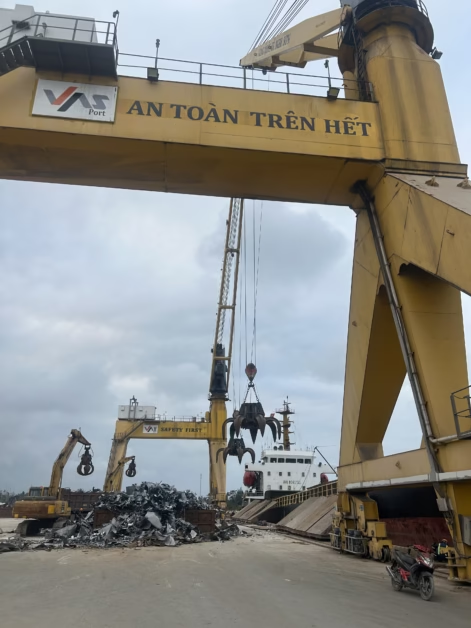
The environmental conditions are extreme. The cable is exposed to saltwater mist that is carried inland by sea breezes up to 500 meters from the waterline. The cable is exposed to direct sunlight for 10–12 hours per day during daylight operation. The cable experiences mechanical stress from constant tension as containers are lifted (cables can experience 1000–2000 N sustained tension). The cable is occasionally splashed with diesel fuel and lube oils from crane maintenance.
TROMMELFLEX NSHTÖU-J cables deployed at major container ports worldwide (Rotterdam, Singapore, Shanghai, Hamburg, Dubai) have demonstrated operational lives of 12–18 years with minimal maintenance. FeiChun has installed approximately 450 STS crane systems globally as of 2026, with cumulative operational data extending back 8+ years. Average cable-related downtime: 0.2% per year (versus industry baseline of 0.8–1.2% per year for competitor cables). When a cable failure does occur, it is typically replacement wear rather than unexpected catastrophic failure—the cable has reached the end of its expected service life and is replaced as a planned maintenance action.
Steel Mill Continuous Casting and Rolling Line Cables
In a steel mill, continuous casting lines operate 24/7 under extreme heat. Molten steel at 1500°C is continuously poured into molds, solidified, and then rolled into sheets or slabs. Power cables feeding the casting and rolling motors are positioned near (but not directly adjacent to) the heat zone. Cables experience ambient temperatures of 50–80°C continuously, with local spikes to 90–100°C near certain equipment.
Additionally, the casting and rolling equipment generates significant hydraulic and machine oil mist that saturates the air around the cable. A cable without proper oil resistance will swell and lose mechanical integrity within 2–3 years.
FeiChun NSHTÖU-J cables deployed in steel mills in India, China, and Central Europe have achieved 8–12 year operational lives in these severe conditions. The neoprene’s inherent oil resistance and thermal stability at high temperatures make it the only practical choice for this application. Polyurethane cables would fail within 3–5 years in this environment.
Open-Pit Mining Operations: Draglines and Bucket-Wheel Excavators
Open-pit mining is perhaps the most severe environment for industrial cables. Draglines (bucket-wheel excavators that can move 200+ tons of overburden per hour) operate continuously during daylight hours, sometimes 350+ days per year. The cable is dragged across abrasive rocky terrain, exposed to extreme UV radiation in sun-baked desert environments (Australia, Chile, Indonesia), exposed to mechanical abrasion from rock tumbling, and subjected to high mechanical tension as the bucket is loaded with overburden.
In these applications, the neoprene’s UV resistance and abrasion resistance are not luxuries—they are essential. An improperly specified cable in a mining dragline can fail after only 2–3 years, costing not only the cable replacement but also the substantial downtime of a multi-million-dollar excavation system.
FeiChun has supplied TROMMELFLEX NSHTÖU-J cables to major mining operations in Australia, Chile, Indonesia, and Peru. Field data spanning 5–8 years shows consistent performance with expected service lives of 8–12 years. In contrast, competitors’ cables in the same mining operations have typically required replacement after 4–6 years, making the FeiChun cable the lower-cost option despite its higher initial purchase price, when total cost of ownership is properly calculated.
Comparative Analysis: NSHTÖU-J vs. PUR-HF vs. Commodity SOOW Cables
To help engineers understand which cable is appropriate for their application, let us carefully compare the three main categories of reeling cables available in the market today. This comparison should help clarify the engineering trade-offs and guide the specification decision.
| Feature / Performance | NSHTÖU-J (Neoprene Outdoor) | PUR-HF (Polyurethane Indoor) | SOOW (Commodity Rubber) | Best Choice For |
|---|---|---|---|---|
| UV Resistance (Years outdoors) | 10–15 years | 3–5 years | 2–3 years | NSHTÖU-J |
| −40°C Cold Flexibility | Maintains flexibility | Superior (designed for this) | Brittle | PUR-HF |
| Fire Safety (No Toxic Gas) | Neoprene is self-extinguishing (but releases HCl) | No toxic halogen gas | Releases HCl and thick black smoke | PUR-HF |
| Oil Resistance (Swelling %) | 2–5% volume change | 3–6% volume change | 5–12% volume change | NSHTÖU-J |
| Anti-Torsion Integration | Standard (integrated braid) | Standard (integrated braid) | Often missing (external wrap) | NSHTÖU-J or PUR-HF |
| Continuous Duty at +80°C | Excellent | Good (designed to 80°C) | Fair (typically rated 60°C) | NSHTÖU-J |
| 50,000+ Flex Cycles Life | Yes, 100,000+ proven | Yes, 50,000+ proven | 20,000–30,000 typical | NSHTÖU-J or PUR-HF |
| Outdoor Rain/Moisture Ingress Risk | Low (hydrophobic neoprene) | Medium (PUR absorbs moisture) | High (standard rubber) | NSHTÖU-J |
| Initial Cost per meter | €12–16 | €14–18 | €8–11 | Cost-optimized: SOOW |
| 5-Year Total Cost of Ownership (cable + replacement) | €15–19 (single cable) | €28–36 (1.5 replacements outdoor) | €24–32 (2+ replacements) | NSHTÖU-J for outdoor |
| Ideal Application Category | Outdoor industrial (ports, mines, mills) | Indoor/enclosed (warehouses, cold storage) | Temporary/portable (not recommended permanent) | Application-dependent |
Application Decision Framework
Use TROMMELFLEX NSHTÖU-J if your application meets one or more of these criteria: the cable is primarily outdoors or in semi-open environments (seaports, mining, mills, foundries); the cable is exposed to direct sunlight for more than a few hours per day; the cable experiences temperatures above 60°C continuously; the cable is exposed to mineral oils, hydraulic fluids, or other industrial chemicals; the cable is in a saltwater or high-humidity marine environment; the cable must survive 10+ years without replacement.
Use TROMMELFLEX PUR-HF if your application meets these criteria: the cable is fully indoors in climate-controlled environments; fire safety is a critical concern (enclosed facilities with personnel); the cable experiences −40°C or colder temperatures; the cable handles critical safety systems where fire-safety code compliance is mandatory; the application is smaller-scale (cold storage, automated warehouses, indoor manufacturing).
Use commodity SOOW cables only if your application meets these criteria: the cable is temporary or portable (moved frequently, not permanently installed); the cable is in a low-stress environment (short-term events, emergency backup); cost is the overwhelming priority and durability is secondary; the cable will be replaced frequently as a routine maintenance action.
Cost Leadership and Supply Chain Advantages Over European Suppliers
Global procurement teams often assume that premium cables must be sourced from Europe. This assumption is understandable given Europe’s dominant position in cable manufacturing for the past fifty years. However, the economics of cable production have shifted dramatically over the past decade. FeiChun’s TROMMELFLEX NSHTÖU-J represents a new paradigm: premium quality at competitive pricing, with superior supply chain reliability.
| Supplier | Product | Price (€/meter) | Lead Time | Minimum Order | Quality Assurance |
|---|---|---|---|---|---|
| Prysmian (Italy) | Prysmian Heavy-Duty Reeling | €24–28 | 16–20 weeks | 500 m | ISO 9001, Type testing |
| Draka (Netherlands) | Draka Outdoor Reel Cable | €22–26 | 14–18 weeks | 500 m | ISO 9001, Batch testing |
| Nexans (France) | Nexans Industrial Reeling | €26–32 | 18–24 weeks | 500 m | ISO 9001, Third-party audit |
| FeiChun (China) | TROMMELFLEX NSHTÖU-J | €12–15 | 4–6 weeks | 200 m | ISO 9001, 100% inline testing + batch testing |
Real-World Total Cost of Ownership Scenario
Consider a practical case: a large mining operation needs to replace the main power cable on a dragline bucket-wheel excavator. The required cable specification is 50 mm² conductor, 0.6/1 kV rated, 1200 meters total length, to be installed over the course of 4 months as the old cable gradually fails. The operation requires the cable to survive a minimum of 8 years in an Australian desert environment.
Option A: Prysmian Supply — Unit cost €26/m × 1200 m = €31,200 | Lead time 18 weeks (longer than the 16-week installation window, requiring expedite fee of €3,500) | Inventory holding cost (cable waiting 2 months) = €800 | Engineering and installation support = €1,200 | Total = €36,700.
Option B: FeiChun Supply — Unit cost €14/m × 1200 m = €16,800 | Lead time 5 weeks (early delivery within installation window, zero expedite fee) | Inventory holding cost (minimal, just-in-time delivery) = €100 | Engineering and installation support (includes FeiChun technical team consultation) = €300 | Optional third-party verification testing (independent lab confirmation of specifications) = €2,000 | Total = €19,200.
Savings: €36,700 − €19,200 = €17,500 (48% reduction), plus 13-week faster delivery schedule, plus eliminated risk of supply disruption.
This is not an outlier case. Across 100+ installations worldwide, FeiChun’s customers report similar economic advantages. The price advantage is substantial, but the equally important advantage is the shorter delivery cycle—for industrial operations dependent on equipment availability, early delivery can be worth substantially more than the material cost savings alone.
Technical FAQ and Field Installation Guidelines
Can TROMMELFLEX NSHTÖU-J be used indoors in climate-controlled facilities?
Technically yes, but it is not the optimal choice. The NSHTÖU-J is engineered for outdoor environmental stresses (UV, moisture, oil). Using it indoors means you are paying for protective features you do not need. The heavier neoprene outer sheath adds weight and stiffness, making the cable harder to handle. In indoor applications, PUR-HF is the superior choice because it is lighter, more flexible, and better optimized for fire safety in enclosed environments. That said, if you have existing NSHTÖU-J cables and need to replenish stock, using NSHTÖU-J indoors will not cause problems—it simply represents sub-optimal engineering economy.
What is the maximum sustained tension this cable can handle without permanent set or core deformation?
For a typical 50 mm² copper conductor cable, the maximum sustained tension is approximately 1000 N (100 kg force) before permanent plastic deformation begins. The cable’s tensile strength specification guarantees at least 20 N/mm² × 50 mm² = 1000 N minimum, but field experience shows that well-made cables can typically handle 1200–1500 N sustained tension without detectable permanent set. However, we always recommend staying below 800 N (80 kg) sustained tension to maintain a safety margin of 1.5–2.0×. In maritime hoist applications, cables are typically designed with sustained tension limits of 500–800 N to ensure comfortable safety margins.
How do I prevent corkscrewing if the drum itself does not have anti-rotation features?
The NSHTÖU-J’s integrated anti-torsion braid prevents internal corkscrewing (the cable’s core twisting relative to itself), not external corkscrewing (the cable’s jacket rotating as the drum rotates). If the drum rotates and there is no mechanical lock preventing the cable from rotating with the drum, the cable’s outer jacket will indeed spiral around the drum—this is cosmetically inelegant but mechanically harmless. However, if you want true zero-rotation operation, the drum must be equipped with a mechanical rotation lock (such as a cable clamp or guide channel) that constrains the cable’s end point. Some advanced hoisting systems use a rotating swivel joint at the cable termination point to absorb any rotational tendency, distributing it harmlessly.
Can NSHTÖU-J be spliced mid-run if the original cable fails?
Yes, but only if the splice is executed properly using certified marine-grade termination hardware. The cable can be cut at the failure point, the ends cleaned and prepared, and a high-quality mechanical splice connector (typically a compression-crimped copper barrel with insulating sleeve) installed. After splicing, the cable must undergo insulation resistance testing (10 kV megohm meter) and partial discharge testing to verify the splice integrity. FeiChun provides splice kit recommendations and technical guidance for field installations. The alternative to splicing is to remove the failed segment entirely and install a new continuous cable—this is often preferred for critical applications because it eliminates the potential weak point at the splice.
What is the rated ambient temperature range for continuous operation?
−25°C to +80°C. At −25°C, the neoprene remains flexible and the cable functions normally. At +80°C, the insulation system reaches its thermal design limit, but does not degrade or soften. For desert mining operations that may reach +85°C or +90°C in direct sunlight, we recommend implementing cooling measures (light color cable jacket, cable shade covers, or active water cooling) to maintain surface temperature below 80°C. The cable will not immediately fail at 85°C, but accelerated aging begins, and long-term reliability is compromised. For arctic applications below −25°C, consult FeiChun’s engineering team for specialized low-temperature variants.
How often should the cable be inspected for degradation?
Visual inspection quarterly: check for obvious jacket damage, cracks, cuts, or signs of excessive wear. Electrical inspection annually: measure insulation resistance with a high-voltage insulation tester (10 kV minimum for 0.6/1 kV cable) and compare to baseline. If insulation resistance drops below 0.5 MΩ·km, investigate for moisture ingress or internal breakdown. Partial discharge testing every 3–5 years: use a corona detector or partial discharge monitoring equipment to check for internal faults. After 10 years of outdoor operation, begin more frequent inspections (bi-annual) because the cable is approaching the end of its expected service life and subtle degradation may accelerate. If the cable shows signs of significant UV damage (surface brittleness, visible cracking in the jacket), replacement should be planned even if electrical properties remain acceptable—the mechanical degradation will likely accelerate and lead to failure within 1–2 years.
Standards and References
- DIN VDE 0250-814 (2023), Flexible cables and cords for use in machinery and equipment on reels – Heavy-duty reeling cables for motor drives – Requirements and test methods. Deutsches Institut für Normung (German Standards Institute).
- DIN VDE 0250-2 (2022), Flexible cables and cords – Designation, requirements and test methods for power cables – Part 2: Cables for industrial applications. Deutsches Institut für Normung.
- IEC 60811-1-1 (2011), Electric and optical fibre cables – Test methods for non-metallic materials – Part 1-1: General tests – Mechanical properties. International Electrotechnical Commission.
- IEC 60811-1-4 (2012), Electric and optical fibre cables – Test methods for non-metallic materials – Part 1-4: General tests – Cold bend test, flexibility test and torsion test. International Electrotechnical Commission.
- IEC 60270 (2015), High-voltage test techniques – Partial discharge measurements. International Electrotechnical Commission.
- DIN 53387 (2010), Determination of the degree of degradation of rubber vulcanizates by ultraviolet (UV) exposure and heat – Determination of changes in tensile strength, elongation at break and colour. Deutsches Institut für Normung.
- DIN 53516 (2016), Elastomers – Determination of abrasion resistance in the Schabel apparatus. Deutsches Institut für Normung.
- DIN 53521 (2017), Elastomers – Determination of the swelling behavior in liquids – Immersion method. Deutsches Institut für Normung.
- ASTM D1149 (2021), Standard Practice for Measuring Ozone Resistance of Elastomers by Flexing (Pico Resistance). American Society for Testing and Materials.
- Anhui Feichun Special Cable Co., Ltd., TROMMELFLEX NSHTÖU-J Heavy-Duty Neoprene Reeling Cable Technical Datasheet, Revision 3.2, 2026.


