Prysmian TROMMELFLEX alternative

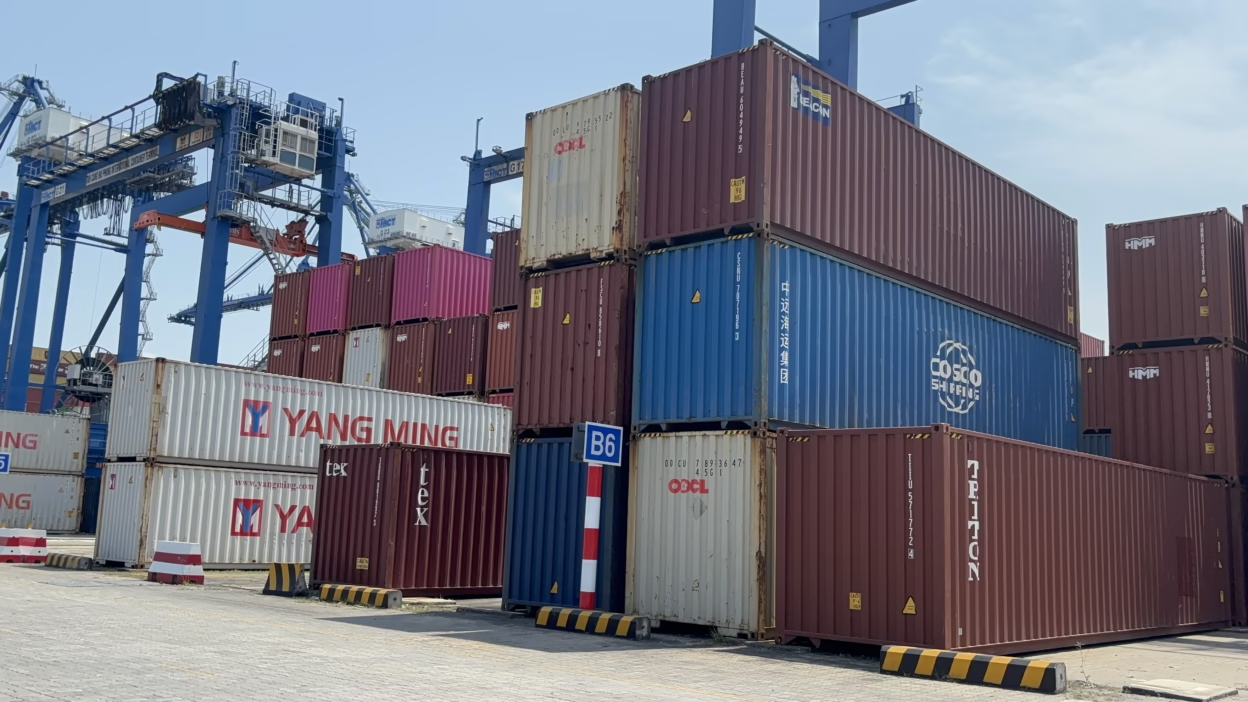
Modern container ports operate Ship-to-Shore (STS) cranes and massive gantry systems that demand unprecedented electrical power delivery. A typical STS trolley requires 18 kV to 30 kV of main power to lift 65-ton containers at speeds exceeding 600 meters per minute. This power must flow through a festoon cable system—a continuous loop of cable that unwinds and rewinds thousands of times per day as the trolley travels back and forth along the boom. Traditional round cables cannot solve this problem efficiently. A round medium voltage cable, rated for 18/30 kV, becomes rigid and difficult to bend. It occupies excessive space in the festoon track, requiring long parking lengths and increasing the footprint of the crane's electrical infrastructure. By contrast, a flat cable lays its massive phase cores side-by-side in a single plane, allowing for an incredibly tight bending radius—sometimes as small as 10 to 15 centimeters—while maintaining full electrical power delivery. This single geometric advantage reduces festoon track length by up to 40 percent, enabling faster crane acceleration and dramatically improving container terminal throughput.

FABER® Reelingflex

When you examine the spectrum of industrial reeling cables available in the market today, you encounter a clear categorization. On one side, there are cables designed for permanent outdoor installation—like the TROMMELFLEX NSHTÖU-J with its heavy neoprene sheath and decade-long lifespan. On the other side, there are cables designed for protected indoor environments where fire safety is paramount, such as the TROMMELFLEX PUR-HF. But there exists a third category of application that neither pure outdoor nor pure indoor cables are optimally suited for, and this is where the FABER Reelingflex finds its purpose.