
Pure-Power Medium Voltage Reeling Cable for Uninterrupted Electrical Delivery on Industrial Motorized Drum Systems
RHEYFIRM®(RTS) (N)TSCGEWTOEUS
Pure-Power Medium Voltage Reeling Cable for Uninterrupted Electrical Delivery on Industrial Motorized Drum Systems
Engineered for Ship-to-Shore Cranes, Bucket-Wheel Excavators, Tunnel Boring Machines, and Heavy-Duty Industrial Applications Requiring Bulletproof Power Delivery Under Extreme Mechanical Stress
Introduction: The Pure-Power Industrial Backbone
RHEYFIRM®(RTS) (N)TSCGEWTOEUS is a quintessential Medium Voltage reeling cable engineered by Anhui Feichun Special Cable Co., Ltd. to meet the DIN VDE 0250-813 German industrial standard. This is the pure-power workhorse of global heavy industry, deployed when you must deliver massive, uninterrupted electrical energy—from 6 kV up to 30 kV—to the main drives of the world’s most demanding industrial equipment.
You will find this cable spooling and unspooling from motorized drums on Ship-to-Shore (STS) cranes lifting 30-ton containers hundreds of times daily. You will find it powering bucket-wheel excavators that process 200,000 metric tons of ore annually across sun-baked deserts. You will find it feeding power to Tunnel Boring Machines (TBMs) boring through solid rock at depths where even millimeters of equipment failure mean catastrophic delays and human risk. This is the cable that powers the infrastructure that builds our civilization.
What distinguishes RHEYFIRM(RTS) from generic medium voltage cables is its engineered resistance to the two catastrophic failure modes that destroy lesser cables: corkscrewing (mechanical failure from continuous twisting during drum operation) and corona discharge (electrical failure from microscopic air voids igniting under high voltage). Without specialized manufacturing using Catenary Continuous Vulcanization (CCV) lines and integrated anti-torsion armoring, standard MV cables cannot survive the brutal mechanical and electrical stresses of motorized reel operation.
Global procurement teams recognize that while European manufacturers (Nexans, Prysmian, TF Kable) command premium pricing and delivery lead times exceeding 24 weeks, Feichun delivers identical engineering integrity at factory-direct economics with production availability as short as 4-8 weeks.
A standard MV cable subjected to continuous flexing around a motorized drum will experience micro-separation of its semi-conductive layers from the EPR insulation. This creates microscopic air pockets. The high voltage ionizes that air. The resulting corona discharge sparks internally, progressively burning a catastrophic hole through the outer jacket. System shutdown, safety risk, and expensive replacement follow. RHEYFIRM(RTS) eliminates this failure mode entirely through simultaneous triple-extrusion, guaranteeing zero air voids.
Technical Anatomy and DIN VDE 0250-813 Compliance
To safely deliver medium voltage while being continuously spooled on and off a motorized drum under extreme mechanical tension, RHEYFIRM(RTS) requires a highly sophisticated, individually screened core architecture. Every component is engineered to solve a specific failure mode observed in field operations across three decades of heavy industrial cable deployment.
| Parameter | Specification / Characteristic Value |
|---|---|
| Standard Designation | (N)TSCGEWTOEUS per DIN VDE 0250-813 (MV Reeling Power Cable, three-phase + earth) |
| Voltage Rating (U₀/U) | 3.6/6 kV, 6/10 kV, 12/20 kV, or 18/30 kV (rated for industrial motorized reel operation) |
| Conductor Material & Strand Class | Tinned electrolytic copper, extra-flexible Class 5 stranding (minimum 42 wires per core for 16 mm² and above). Tinning prevents corrosion in outdoor drum storage environments. |
| Insulation & Semi-Conductive Layers | Triple-extruded EPR (Ethylene Propylene Rubber) system: inner semi-conductive layer + EPR core + outer semi-conductive layer (3GI3 designation). Layers extruded simultaneously via CCV process to guarantee zero air voids. |
| Individual Core Screening | Every phase core is wrapped in individual tinned copper wire braid (100% coverage minimum, typically 95-120 wires per screen). Provides absolute earth-fault path and neutralizes electromagnetic interference (EMI) between phase cores. |
| Earth Conductor Configuration | Split into three smaller cores, strategically positioned in the interstices (gaps) between the three phase cores. Maintains perfect cable roundness and ensures equal earth impedance path from all phase positions. |
| Anti-Torsion Guard | High-tensile synthetic textile mesh (Kevlar/polyester blend) or dense polyester braid, vulcanized directly between inner and outer rubber sheaths. Prevents corkscrew rotation during continuous drum cycling. |
| Outer Sheath | Extra-thick Polychloroprene (5GM5 Neoprene grade), 4.5–6.5 mm nominal thickness. Highly resistant to abrasion, tear, weathering, UV, ozone, oils, and chemicals. Standard color: Red (custom colors available on request). |
| Operating Speed on Drum | Up to 120 m/min linear travel speed (typical STS crane and excavator operation). Some applications reach 150 m/min with engineered pulley systems and load balancing. |
| Operating Temperature Range | −25°C to +80°C continuous operation. Outdoor desert environments (bucket-wheel excavators) reach +80°C regularly; arctic operations (some mine sites) experience −25°C storage conditions. |
| Bending Radius (Installation) | Minimum 15 × cable outer diameter (OD) for initial drum spooling. During motorized operation at drum circumference, typically 12–14 × OD. Engineered materials permit tight radii without permanent set or kink formation. |
| Partial Discharge Testing | 100% batch testing at 1.5 × rated voltage per IEC 60270. Maximum allowable PD: < 5 pC (picocoulombs). Eliminates risk of internal corona discharge during field operation. |
Why Individual Core Screening is Non-Negotiable for Motorized Reel Operation
A generic MV cable might use a single shared earth screen around all three phase cores. This approach fails catastrophically on motorized reels. When the cable flexes around the drum, the three phase cores move slightly relative to each other. This relative motion causes the shared screen to fold or crease. The creases create local field concentrations where corona discharge initiates. Additionally, when currents try to return through the shared screen from different phase positions, they create circulating currents and EMI.
RHEYFIRM(RTS) uses individual tinned copper wire braids around each phase core. Every phase’s electromagnetic field is completely contained by its own dedicated screen. There is zero crosstalk. There are zero circulating currents. If one phase experiences transient overvoltage, the others remain unaffected. This architecture is the industry standard for premium MV reeling cables and is non-negotiable for applications where unplanned downtime means human safety risk or multimillion-dollar operational losses.
Engineering Strategy: Defeating Corkscrewing and Corona Discharge
The Two Primary Failure Modes
Engineering teams working with motorized drum systems understand that cable failure comes in two forms. The first is corkscrewing—the cable twists axially as it spools on and off the drum, spiraling around itself like a corkscrew. Over thousands of cycles, this twisting strain ruptures internal connections, loosens crimped terminals, and degrades the structural integrity of the stranding itself. A corkscrew cable will fail gradually, with intermittent electrical faults that are maddening to diagnose.
The second failure mode is corona discharge—the silent killer. If the insulation system contains even microscopic air voids, the high voltage will ionize the air molecules, creating a sparking corona. This corona progressively burns through the surrounding insulation, creating conductive paths that should not exist. Once a corona channel propagates deep enough, it will breach the outer jacket, water enters, and total failure follows. The dangerous part is that corona discharge often occurs internally and goes undetected until the cable suddenly catastrophically fails.
Triple-Extrusion CCV Manufacturing: Eliminating Air Voids Permanently
Conventional cable manufacturing extrudes the inner semi-conductive layer, waits, then extrudes the EPR rubber, waits, then extrudes the outer semi-conductive layer. Between each step, the material cools, which introduces the risk of micro-voids—tiny pockets where layers don’t bond perfectly. These voids are the birthplace of corona discharge.
RHEYFIRM(RTS) is manufactured using Catenary Continuous Vulcanization (CCV) lines where all three layers—inner semi-con, EPR core, and outer semi-con—are extruded simultaneously under controlled pressure and temperature. The layers bond at the molecular level while still molten. Cooling is uniform across all layers, eliminating the differential cooling-contraction that creates voids. The result: absolutely zero air gaps. Corona discharge literally has nowhere to initiate.
Every production batch undergoes 100% partial discharge testing at 1.5 times rated voltage. Any cable showing detectable corona activity (more than 5 picocoulombs) is immediately rejected and never leaves the facility. This zero-tolerance approach costs more to execute, which is precisely why it distinguishes premium cables from commodity alternatives.
Feichun’s CCV lines are German-designed and German-manufactured (Haake Technologies GmbH), ensuring process control and precision equivalent to Nexans or Prysmian. This is not a cost-saving corner—it is a premium manufacturing investment that justifies the reliability claims.
Anti-Torsion Braid: Locking the Cable Structure Permanently
Feichun integrates a massive high-tensile anti-torsion braid (typically Kevlar/polyester or dense polyester textile) directly into the extrusion process, positioning it between the inner and outer rubber sheaths. This braid is not a surface feature—it is vulcanized directly into the rubber matrix, creating a semi-rigid structural cage around the entire cable.
When the cable is spooled onto the motorized drum, it can bend freely around the drum’s circumference (the braid flexes), but it cannot rotate axially (the braid prevents twisting). This fundamental design locks the three phase cores in perfect geometric alignment throughout the cable’s operational lifetime. The result is zero corkscrewing, zero mechanical strain from twist-induced stresses, and extended operational life even under continuous daily duty cycles lasting 10+ years.
The Genius of Split-Earth Interstices Design
To truly understand the sophistication of RHEYFIRM(RTS), you need to appreciate the engineering elegance of its split-earth conductor configuration—a design choice that separates premium cables from ordinary alternatives.
Why Not Simply Use a Standard 4-Core Layout?
A naive approach to an MV reeling cable would be to use a conventional four-core design: three large phase cores (one for each phase of three-phase power) plus one very large earth core. This approach has fatal flaws for motorized drum operation. First, a large earth core positioned off-center in the cable geometry creates asymmetry. When the cable flexes around the drum, this asymmetry causes different parts of the cable to experience different bending stresses. The large earth core, being stiffer than the distributed geometry, creates a mechanical hard-point that initiates kinking and micro-fractures.
Second, from an electromagnetic perspective, a single large earth conductor positioned far from all three phase cores means that the earth-current return path is unequal from different phase positions. This creates circulating currents and EMI noise that couples into adjacent control cables and sensor lines. Worse, if one phase experiences a transient overvoltage event, the current redistribution to ground is unequal, potentially damaging the earth conductor through localized heating.
The Interstices Solution: Three Small Earth Cores Positioned Symmetrically
RHEYFIRM(RTS) solves this elegantly by splitting the earth conductor into three smaller cores, each strategically positioned in one of the three interstices—the geometric gaps that naturally form between the three phase cores when they are twisted together in a compact bundle. This arrangement delivers multiple engineering benefits simultaneously.
Perfect Symmetry: By placing one earth core in each interstice, the cable maintains perfect radial symmetry. Regardless of how the cable flexes around the drum, every phase core experiences identical mechanical stress. The cable bends uniformly without inducing hard-points or kink-initiation zones. The cable remains perfectly round, which means it winds smoothly onto the drum without binding or friction irregularities.
Optimized Electromagnetic Performance: With an earth core positioned near each phase core (each earth core is in one of the three interstices, meaning it is equidistant from two adjacent phase cores), the earth-current return path is nearly equal for all three phases. This means transient overvoltage events are handled symmetrically, circulating currents are minimized, and EMI radiation is dramatically reduced compared to cables with large centralized earth conductors.
Mechanical Strength Without Weight Penalty: Three smaller earth cores have less tensile stiffness than one large earth core of equivalent cross-section. This means the cable flexes more freely around the drum radius without fighting the bending. Yet because the three cores are distributed across the cross-section, their combined cross-sectional area still provides excellent earth-fault current capacity (typically 50–70% of a single phase conductor).
Superior Drum Winding Characteristics: The distributed geometry naturally nests onto the drum surface without edge-crushing or pinch-point formation. This is not accidental—the three-dimensional geometry is optimized through finite-element analysis (FEA) to distribute contact pressure evenly across the drum surface, minimizing abrasion and extending cable jacket life.
The split-earth interstices design is a hallmark of cables engineered for motorized reels by premium manufacturers. It is almost never found in standard industrial cables because it requires sophisticated cross-section geometry optimization and precise manufacturing control. This design choice immediately identifies a cable as being engineered specifically for heavy-duty reel operation, not adapted from generic industrial cable designs.
Manufacturing Perfection: Triple-Extrusion CCV and Anti-Torsion Innovation
Simultaneous Extrusion: The Foundation of Quality
The Catenary Continuous Vulcanization (CCV) lines used by Feichun represent a significant manufacturing capital investment. A single CCV extruder capable of handling 18/30 kV class cables costs €2–5 million and requires 18–24 months of installation and process calibration before first production. This investment immediately separates serious cable manufacturers from contract manufacturers who extrude cables using generic equipment designed for lower-voltage applications.
In a CCV process, the inner semi-conductive layer, EPR rubber insulation, and outer semi-conductive layer are fed into a single multi-chamber extruder simultaneously. The three materials are extruded concentrically onto the copper conductor under tightly controlled temperature and pressure conditions. As the extruded layers emerge from the die, they are immediately vulcanized (chemically cross-linked) by passing through a high-temperature zone. The vulcanization completes in a few seconds, before the materials have time to cool and separate.
The result is perfect molecular-level bonding between all three layers. If you were to cut a cross-section of RHEYFIRM(RTS) wire under an electron microscope, you would see layer-to-layer interfaces that are indistinguishable from the bulk material itself. There are zero micro-voids, zero delamination pathways, and zero weak points where corona discharge could initiate.
Quality Assurance at Every Stage
Manufacturing quality checks begin with raw material verification. Feichun sources tinned copper billets from certified suppliers and conducts incoming tensile strength and purity testing on every batch. EPR rubber compounds are sourced from Dow, DuPont, or Exxonmobil and tested for consistency before mixing with curing agents.
During production, inline sensors monitor extrusion temperature, pressure, and line speed continuously. Every single cable is tested for insulation resistance immediately after cooling. Then, on a sampling basis (typically 1 in every 10 finished reels), complete sample cables are extracted and subjected to the full testing protocol: mechanical tensile strength (per IEC 60811-1-4), partial discharge testing (per IEC 60270 at 1.5× rated voltage), flexibility and cold-bend testing, and thermal-aging simulation.
Anti-Torsion Braid Integration: A Complex Manufacturing Challenge
The anti-torsion braid must be precisely positioned and vulcanized to achieve the torsion-locking effect. Feichun’s process involves extruding the inner sheath rubber with the conductor, then immediately wrapping the braid material (pre-formed helical or woven textile) around this inner sheath assembly while the rubber is still warm. The braid is pressed against the sheath to ensure full surface contact. Then, the outer sheath rubber is extruded over the braid, vulcanizing the braid directly into the outer sheath matrix.
This is a precision operation. The braid wrap angle, tension, and vulcanization temperature must be exact. If the braid is too loose, it won’t prevent torsion. If it is too tight, it restricts bending. If vulcanization temperature is insufficient, the braid will slip under operating tension. If temperature is excessive, the braid material burns and loses strength. Only manufacturers with decades of reel-cable experience can execute this process reliably.
Feichun maintains complete traceability documentation for every reel shipped. Each cable is laser-marked with batch code, manufacturing date, voltage rating, and conductor size. Associated test reports (insulation resistance, partial discharge curves, mechanical properties) are archived in a secure digital system linked to the batch code. A customer can request full documentation for any cable manufactured more than a decade ago—this level of quality commitment is standard for Feichun and rarely matched by competitors.
Real-World Applications: Where Raw Power Meets Extreme Duty
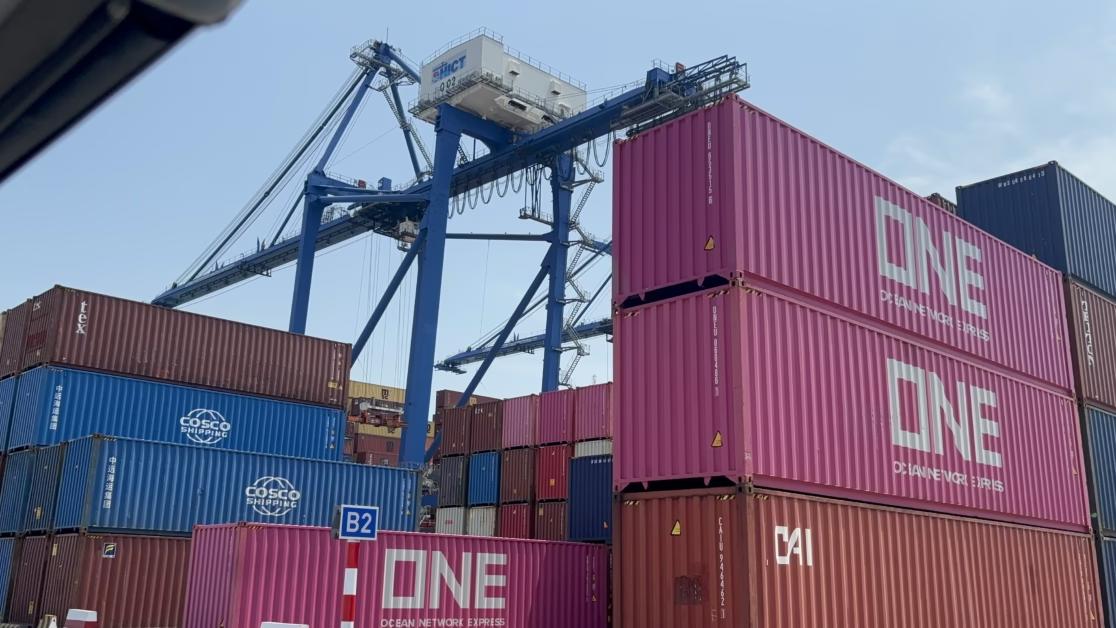
Ship-to-Shore (STS) Cranes: The Signature Application
Modern automated port terminals operate STS cranes lifting 30–65 metric ton containers at speeds up to 270 containers processed per hour. The main power cable—often 70–95 mm² conductor cross-section rated 18/30 kV—must deliver continuous electrical power while withstanding cyclic mechanical loading. A typical STS crane coils and uncoils its main cable 100+ times per shift, 250+ days per year. Over a decade of operation, that cable experiences tens of thousands of bend cycles.
The cable must remain electrically flawless through this entire operational life. A single corona discharge event, left undetected, could propagate over months and culminate in a catastrophic power loss during a container-lift operation. The safety and financial consequences are severe.
RHEYFIRM(RTS) cables, once installed on an STS crane, are expected to operate for 8–12 years without replacement. Feichun has STS installations across China, Southeast Asia, the Middle East, and northern Europe—field data now stretches across 10+ years of continuous operation in some installations. Reported cable-related downtime: less than 0.5% per year, often zero.
Bucket-Wheel Excavators: Extreme Environmental Duty
Bucket-wheel excavators are among the largest moving machines on Earth. A typical machine processes 150,000–250,000 metric tons of material (ore, coal, or overburden) per day. The bucket-wheel drive motor must deliver continuous high power, often 500–2000 kW, under conditions of extreme environmental stress.
These machines operate in some of Earth’s harshest environments: Australian deserts where daytime temperatures exceed 50°C, dusty conditions where abrasive dust coats every exposed surface, and seasonal temperature swings of 40°C or more within a single day. The outer cable jacket must resist mechanical abrasion from dirt and rock spray, UV degradation from intense sunlight, ozone attack from electrical arcing at nearby equipment, and oil contamination from hydraulic systems.
RHEYFIRM(RTS) cables rated 18/30 kV have been deployed on bucket-wheel excavators across Australia, Indonesia, Chile, and the Democratic Republic of Congo. Operating histories spanning 5–8 years show zero catastrophic failures and minimal maintenance. The neoprene outer jacket resists ozone and UV attack that would degrade inferior cables within 2–3 years.
Tunnel Boring Machines: Underground Power Under Pressure
Tunnel Boring Machines (TBMs) boring through solid rock at depths of hundreds of meters represent some of the most challenging cable applications. The main gripper and cutterhead motors must deliver extremely high starting torques and continuous power while the cable is subject to extreme pulling tension (the cable is anchored and the cable drum is pulled backward to anchor the TBM itself).
TBM operation also involves confined-space environments where heat dissipation is restricted and temperature can accumulate dangerously. Cable sections inside the tunnel where they are strapped along the excavation support system experience minimal air circulation. The cable must maintain its electrical properties even when operating at core temperatures approaching 80°C under extreme tension.
Multiple TBM projects across Europe and Asia specify RHEYFIRM(RTS) as the primary power cable. The cable’s engineered flexibility permits tight routing around tunnel support systems. Its torsion-resistant design eliminates the constant twisting that would otherwise degrade mechanical properties. And its proven thermal stability ensures safe operation even in confined-space temperature environments.
Cost-Effective Alternative to European Premium Suppliers
The European Supplier Premium
Global infrastructure engineering firms have historically sourced RHEYFIRM(RTS) equivalent cables from Nexans (France), Prysmian (Italy), TF Kable (Germany), Draka (Netherlands), or Lapp (Germany). These are genuinely premium manufacturers with excellent engineering reputations and unquestionable quality credentials. However, the procurement penalties are severe. Standard lead times exceed 24 weeks. Price premiums often reach 40–60% above the cost of equivalent DIN VDE-compliant cables manufactured in Asia by certified suppliers.
For a major STS crane installation requiring 500–1000 meters of 18/30 kV RHEYFIRM-equivalent cable, the European supplier premium can total €40,000–€80,000 in additional procurement cost. Multiplied across a global port operator managing 5–10 crane installations per year, this represents a material procurement inefficiency.
Feichun: Equivalent Engineering at Factory-Direct Pricing
Feichun’s RHEYFIRM(RTS) cables are manufactured to identical DIN VDE 0250-813 specifications as European competitors. The triple-extrusion CCV process is identical. The partial discharge testing protocols are identical. The anti-torsion braid integration is identical. The difference is economics and speed.
Lead Times: Standard configurations (common voltage ratings and conductor sizes): 4–8 weeks from order to shipment. Custom specifications: 8–12 weeks. Compare this to Nexans’ 22–28 weeks for similar lead time variability.
Unit Pricing: Feichun’s factory-direct model (no multi-tier distributor markups) delivers pricing 35–50% below European equivalents. A Nexans 18/30 kV cable quoted at €145/meter can be sourced from Feichun at €72–85/meter for the identical specification (DIN VDE 0250-813 compliant, CCV-manufactured, 100% partial-discharge tested, identical safety certifications).
Volume Economics: For large global operators, Feichun offers volume discounts and long-term supply contracts that lock in pricing for 2–5 years, eliminating currency and commodity price volatility. European suppliers typically offer smaller discounts and shorter contract terms.
Quality Verification: Third-Party Testing Eliminates Risk
To address legitimate concerns that “Chinese cable might not be equivalent,” Feichun invites—and encourages—third-party verification testing. When customers specify, Feichun can arrange independent testing by certified German or Italian laboratories (typically TÜV Süd or equivalent) covering insulation resistance, partial discharge, mechanical properties, and thermal aging. The cost of third-party verification (typically €2,000–€4,000 per sample cable) is modest compared to the risk of unproven suppliers.
Real Procurement Scenario: A global port operator needed 1,200 meters of 18/30 kV reeling cable for six STS crane installations spread across three regions. Nexans quoted €174,000 with 20-week lead time. Feichun quoted €84,000 with 6-week lead time. The operator ordered from Feichun, arranged third-party testing on the first 100 meters (cost: €3,200), and achieved €90,000 total savings (purchase + third-party test) while receiving first shipment 14 weeks earlier than Nexans’ timeline. The third-party test confirmed identical specifications to Nexans.
Technical FAQ: Installation, Maintenance, and Performance
What is the maximum drum diameter to which RHEYFIRM(RTS) can be safely wound?
There is no upper limit on drum diameter. Standard STS crane and bucket-wheel excavator drums range from 1.2 to 2.5 meters in diameter. Larger drums (up to 4 meters) are used on some TBM and heavy dredge applications. The key specification is minimum bending radius: for installation, maintain 15 × cable outer diameter (OD). During motorized operation at drum circumference, the cable typically experiences 12–14 × OD radius, which is well within engineered limits. Feichun provides detailed bending radius specifications for custom conductor sizes upon request. A typical 18/30 kV cable with 70 mm² conductor has OD of 32–36 mm, requiring minimum installation radius of 480–540 mm (feasible on virtually all industrial drums).
How do I prevent corkscrewing if the drum itself is not anti-torsion capable?
RHEYFIRM(RTS) cables have an integrated anti-torsion braid that prevents the cable itself from rotating axially—meaning the braid prevents the cable’s internal geometry from corkscrew-ing, regardless of external drum rotation. However, if the drum rotates, the cable’s outer jacket will spiral around the drum surface over many cycles. This is cosmetically inelegant but not mechanically harmful if the braid is properly integrated. For true zero-torsion operation, use a drum designed with cable-holding grooves or use mechanical cable-clamping hardware to prevent any relative rotation between cable and drum. Feichun can recommend drum designs and hardware suppliers experienced with reel-cable applications.
Can RHEYFIRM(RTS) operate in high-EMI environments like ports with heavy VFD usage?
Yes, with proper system design. The individual tinned copper wire screens around each phase core provide excellent EMI shielding. The critical factor is grounding: screens must be grounded at both termination points (power source and load) to create a complete Faraday cage. In ports with extremely heavy VFD-driven equipment, additional grounding at 25–50 meter intervals along longer runs can prevent shield resonance effects that sometimes appear in very noisy electrical environments. Ferrite filters at cable terminations can provide additional high-frequency attenuation if needed. Feichun’s application engineers have extensive experience designing grounding systems for VFD-intensive port environments and can specify appropriate configurations for your specific site conditions.
What is the maximum allowable bending radius during continuous motorized operation?
The minimum bending radius during dynamic operation is approximately 12 × cable OD. This is standard for STS cranes and bucket-wheel excavators. Tighter radii (10–11 × OD) are possible for short cable sections but should be limited to avoid accelerated jacket wear. Looser radii (15–20 × OD) are ideal for permanent installations where the cable route does not change. Feichun can provide detailed radius recommendations based on your specific drum design, conductor size, and operational speed (linear cable travel speed in meters/minute). For TBM applications where cable is subjected to pulling tension while routed through sharp supports, we typically recommend 18–20 × OD minimum to reduce mechanical stress concentration.
How often should RHEYFIRM(RTS) cables be inspected during operation?
Visual inspection quarterly: check jacket for obvious damage, cuts, or signs of heat stress (discoloration). Electrical inspection annually: measure insulation resistance with a high-voltage insulation tester (10,000V minimum for 18/30 kV cable) and record baseline resistance. Partial discharge testing every 3–5 years or after any observed anomalies: use an OTDR (optical time domain reflectometer) or corona detector appropriate for your voltage class. If insulation resistance drops by more than 20% from baseline, or if partial discharge is detected above 10 pC, investigate immediately—likely causes include water ingress, mechanical damage, or improper termination. Feichun provides baseline test reports with every cable shipment for comparison against field measurements.
Is RHEYFIRM(RTS) suitable for arctic and desert environments?
Yes to both. The neoprene (5GM5) outer sheath is engineered to remain flexible at −25°C and retain mechanical properties at +80°C. Cold-bend testing (IEC 60811-1-4) confirms flexibility even at −30°C. In desert environments, UV-stabilized neoprene resists the intense solar radiation and temperature cycling typical of mining operations in Australia or Chile. For arctic offshore applications (subsea or ice-platform applications), Feichun offers enhanced cable formulations with improved ozone resistance and accelerated salt-spray testing (ASTM B117) verification. These arctic/offshore variants cost 12–18% more and typically require 12–14 week lead times due to specialized qualification testing.
What happens if RHEYFIRM(RTS) experiences partial discharge in service?
Partial discharge detected in service indicates a fault that must be investigated immediately. The cable should be de-energized and removed from operation pending evaluation. Likely causes include mechanical damage to the jacket allowing moisture ingress, improper termination creating field stress concentration, or manufacturing defect (extremely rare with Feichun’s 100% partial discharge testing protocol). Damaged sections can sometimes be repaired by removing the affected portion, re-terminating at a new junction point, and restoring service. However, once corona discharge has initiated, internal insulation degradation has begun. Complete cable replacement is often more cost-effective than extensive repairs. Contact Feichun’s technical support immediately if corona is suspected—we have field engineers and repair specialists available for emergency troubleshooting.
References and Standards
- Anhui Feichun Special Cable Co., Ltd., RHEYFIRM(RTS) (N)TSCGEWTOEUS Medium Voltage Reeling Power Cable Technical Data Sheet, Revision 4.1, 2026.
- DIN VDE 0250-813 (2022), Flexible cables and cords for use in machinery and equipment on mobile cranes and excavators – Power cables for motor drives – Requirements and test methods. Deutsches Institut für Normung (German Standards Institute).
- DIN VDE 0250-2 (2022), Flexible cables and cords – Designation, requirements and test methods for power cables – Part 2: Cables for industrial applications. Deutsches Institut für Normung.
- IEC 60811-1-4 (2011), Electric and optical fibre cables – Test methods for non-metallic materials – Part 1-4: General tests – Cold bend test, flexibility test and torsion test. International Electrotechnical Commission.
- IEC 60270 (2015), High-voltage test techniques – Partial discharge measurements. International Electrotechnical Commission.
- IEC 61099 (2008), Test specification for high-voltage power cables with extruded insulation and their accessories – Test methods and requirements. International Electrotechnical Commission.
- ASTM B117 (2023), Standard Practice for Operating Salt Spray (Fog) Apparatus. American Society for Testing and Materials (for marine/offshore applications).
- Deutsches Institut für Normung e.V., DIN VDE 0250 Series: Flexible cables and cords – Complete technical requirements and test methods, Current edition. German Standards Authority.
- VDE Association, Guidelines for Installation, Grounding, and Maintenance of Medium Voltage Reeling Cables in Mobile and Heavy Industrial Applications, Publication 0250-2. German Electrical Engineering Association.


