
Comprehensive technical analysis of NSHTOEU (DIN VDE 0250-814 Type J/O) 0.6/1 kV low-voltage motorized and spring-driven drum reeling cable engineered exclusively for high-tension, continuous-duty cable reeling on Ship-to-Shore (STS) gantry cranes, Rail-Mounted Gantry (RMG) systems, Rubber-Tired Gantry (RTG) vehicles, and stacker-reclaimers in global container terminals and intermodal yards: anti-torsion polyester or aramid synthetic textile braid vulcanized between inner semi-conductive rubber layer and outer heavy-duty elastomer sheath to prevent destructive internal “corkscrew” copper core twisting during high-speed spool and unspool cycles (up to 120 m/min reeling speed), extra-flexible tinned copper conductors (Class 5 per IEC 60228) with micro-filtered EPR (ethylene-propylene-rubber) compound insulation rated for continuous thermal cycling (-25°C to +80°C operational range, Arctic variants down to -40°C) under repeated tension and flexing stress, and premium 5GM5 polychloroprene (neoprene) outer sheath formulated with superior UV absorbers, ozone-scavengers, and mechanical hardening additives to withstand 24/7 maritime port exposure (saltwater spray, mineral oil spills, relentless UV radiation in tropical and arctic regions). NSHTOEU is the de facto industry standard for drum reeling applications; sourcing from European manufacturers (Prysmian, Nexans, Lapp, Daniduct) historically required 6–9 month lead times and parallel-import markups of 40–50%. This article presents a fully engineered, VDE 0250-814-certified direct equivalent from Anhui Feichun Special Cable Co., Ltd., which replicates the European specification’s anti-torsion architecture, EPR insulation performance, and 5GM5 neoprene durability while reducing procurement costs by 30–35% and cutting lead times to 45–60 days via Asia-Europe rail logistics.
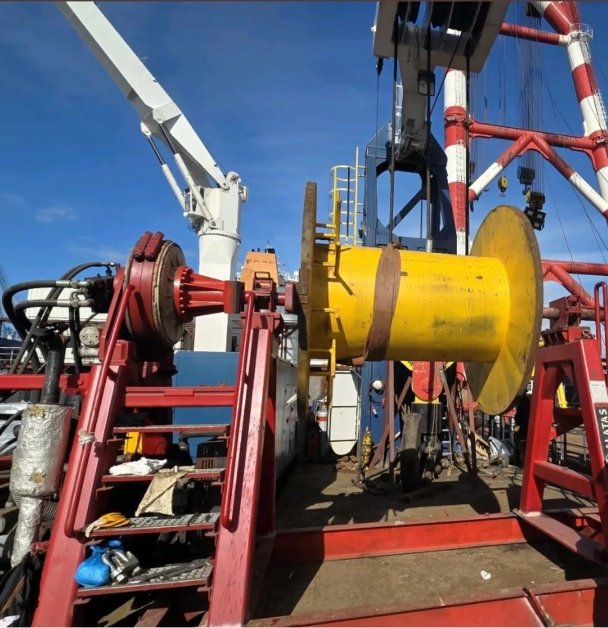
NSHTOEU 0.6/1 kV Drum Reeling Cable Alternative: Complete Technical Solution for STS, RMG, and RTG Container Cranes — Direct European Equivalent Without Supply Chain Delays
Comprehensive technical analysis of NSHTOEU (DIN VDE 0250-814 Type J/O) 0.6/1 kV low-voltage motorized and spring-driven drum reeling cable engineered exclusively for high-tension, continuous-duty cable reeling on Ship-to-Shore (STS) gantry cranes, Rail-Mounted Gantry (RMG) systems, Rubber-Tired Gantry (RTG) vehicles, and stacker-reclaimers in global container terminals and intermodal yards: anti-torsion polyester or aramid synthetic textile braid vulcanized between inner semi-conductive rubber layer and outer heavy-duty elastomer sheath to prevent destructive internal “corkscrew” copper core twisting during high-speed spool and unspool cycles (up to 120 m/min reeling speed), extra-flexible tinned copper conductors (Class 5 per IEC 60228) with micro-filtered EPR (ethylene-propylene-rubber) compound insulation rated for continuous thermal cycling (-25°C to +80°C operational range, Arctic variants down to -40°C) under repeated tension and flexing stress, and premium 5GM5 polychloroprene (neoprene) outer sheath formulated with superior UV absorbers, ozone-scavengers, and mechanical hardening additives to withstand 24/7 maritime port exposure (saltwater spray, mineral oil spills, relentless UV radiation in tropical and arctic regions). NSHTOEU is the de facto industry standard for drum reeling applications; sourcing from European manufacturers (Prysmian, Nexans, Lapp, Daniduct) historically required 6–9 month lead times and parallel-import markups of 40–50%. This article presents a fully engineered, VDE 0250-814-certified direct equivalent from Anhui Feichun Special Cable Co., Ltd., which replicates the European specification’s anti-torsion architecture, EPR insulation performance, and 5GM5 neoprene durability while reducing procurement costs by 30–35% and cutting lead times to 45–60 days via Asia-Europe rail logistics.
English Summary: Complete technical analysis of NSHTOEU 0.6/1 kV low-voltage drum reeling cable for STS/RMG/RTG container cranes and port equipment: anti-torsion synthetic braid prevents helical copper core collapse during 120 m/min reeling, EPR 3GI3 micro-filtered insulation resists thermal cycling and flexing stress, 5GM5 neoprene sheath withstands marine UV/ozone/salt-spray exposure, Class 5 tinned copper maintains flexibility at -40°C. FeiChun NSHTOEU — VDE 0250-814 certified direct European equivalent with 30–35% cost savings, 45–60 day lead time, seamless compatibility with existing motorized drums. Replaces Prysmian/Nexans/Lapp for global container terminals under import-substitution programs.
📌 NSHTOEU: The Port Terminal Standard — Why Generic Drum Cables Fail Under Continuous High-Tension Reeling
NSHTOEU (sometimes written as NSHTÖU in German technical literature) is not a generic cable designation. It is a specialized, application-specific standard defined by DIN VDE 0250-814, engineered exclusively for the demanding environment of motorized cable reels on container cranes and port equipment.
NSHTOEU is not a generic cable designation. It is a specialized, application-specific standard defined by DIN VDE 0250-814, engineered exclusively for the demanding environment of motorized cable reels on container cranes and port equipment.
The critical challenge that makes NSHTOEU unique is internal torsional stress during high-speed reeling. When a cable is wound onto a motorized drum at 120 m/min, the cable experiences not just tension (pulling force) but also rotation (twisting moment). A standard industrial cable like SOOW or H07RN-F lacks the internal structural reinforcement to resist this twisting. Within 3–6 weeks of daily port operation, the copper conductors will rotate internally relative to each other, the insulation will rupture, and complete electrical failure will occur.
Using a standard SOOW, H07RN-F, or other generic rubber-sheathed cable for STS/RMG/RTG crane reeling is a guaranteed path to failure. Without the anti-torsion braid built into NSHTOEU, the cable’s three copper conductors will twist internally as the drum rotates. This internal rotation causes insulation rupture, copper core slippage, and catastrophic phase-to-ground short circuits within 2–6 weeks. NSHTOEU (and its certified equivalents) contain a synthetic textile braid specifically vulcanized to absorb rotational stress, preventing internal twisting and extending service life to 4–6+ years of daily container terminal operation.
🔧 Engineering Anatomy of NSHTOEU 0.6/1 kV: Anti-Torsion Braid, EPR 3GI3 Insulation, and 5GM5 Neoprene Architecture
Understanding NSHTOEU’s reliability requires examining the cable’s unique multi-layer structure, where every component is engineered to prevent the internal torsion collapse that destroys generic cables.
Understanding NSHTOEU’s reliability requires examining its unique multi-layer structure where every component is engineered to prevent the internal torsion collapse that destroys generic cables.
3×6 + 3×2.5 mm² (three-phase with ground cores):
— 3 main phase conductors (R, S, T) at 6 mm² each of Class 5 flexible tinned copper (0.20 mm wire diameter per IEC 60228);
— 3 protective/ground cores at 2.5 mm² each for equipment grounding and protective conductor functions.
1. Tinned Class 5 Copper Conductors: Class 5 is the flexible stranding classification per IEC 60228, with 0.20 mm wire diameter. Tinning (tin plating) prevents oxidation under the thermal cycling and moisture exposure inherent in 24/7 port operations. The fine stranding allows the cable to bend around motorized drum sheaves and guide rollers without work-hardening or kinking.
2. Micro-Filtered EPR 3GI3 Insulation: Ethylene-Propylene-Rubber (EPR) compound formulated to Class 3GI3 specification per VDE 0250-813. The “micro-filtered” designation indicates the rubber has been processed to remove particulates and voids that would initiate insulation breakdown. EPR maintains elasticity during repeated thermal cycling (ambient -25°C to +80°C under load) and resists mechanical tearing from the repeated flexing of a motorized reel.
3. Semi-Conductive Screen Layers (Inner & Outer): Thin graphite-filled rubber layers that suppress transient voltage spikes created during the sudden starting and stopping cycles of STS cranes and load switching on RMG systems. These layers create an equipotential surface around each conductor, preventing corona discharge and insulation puncture at 0.6/1 kV during rapid power changes.
4. Anti-Torsion Synthetic Textile Braid (The Key Differentiator): This is what separates NSHTOEU from every generic cable. A high-tensile polyester or aramid (Kevlar) thread braid is vulcanized between the semi-conductive screen and the outer sheath. The braid is oriented helically at a carefully calculated angle (typically 45°±5°) to absorb rotational forces. When the motorized drum rotates, this braid prevents the three copper conductor groups from rotating relative to each other. Without it, the cores twist internally, tearing their insulation and causing catastrophic failure.
5. 5GM5 Polychloroprene (Neoprene) Outer Sheath: Premium-grade neoprene formulated specifically for harsh maritime port environments with:
- UV Stabilizers: Port terminals operate 24/7 under intense tropical sun or arctic daylight. The sheath includes benzotriazole-based UV absorbers to prevent embrittlement.
- Ozone Scavengers: Port air contains ozone from industrial equipment and electrical discharges. Ozone-absorber additives (typically p-phenylenediamine derivatives) prevent surface cracking.
- Saltwater Corrosion Resistance: The neoprene compound resists sodium chloride and other minerals in marine spray. Thickness of 2.5–3.5 mm provides mechanical toughness against accidental impact and rope abrasion.
- Mechanical Hardening: Shore A durometer of 70–75 balances flexibility (for tight sheave bends) with mechanical toughness (for resistance to puncture and tearing).
📊 Technical Specifications: 120 m/min Reeling Speed, 15 N/mm² Tensile Strength, and Dynamic Flexing Performance
| Parameter | Value / Characteristic | Standard / Certification |
|---|---|---|
| Voltage Rating (U₀/U) | 0.6/1 kV (Max. operating 1.2 kV) | DIN VDE 0250-814:2012 |
| Frequency | 50 Hz / 60 Hz | IEC 60050-811 |
| Core Configuration (Typical) | 3×6 + 3×2.5 mm² (phase + ground) | Standard port crane configuration |
| Conductor Material | Tinned copper, Class 5, IEC 60228 | 0.20 mm wire ∅, flexible stranding |
| Insulation Type | EPR compound, 3GI3 grade (micro-filtered) | VDE 0250-813 thermal aging resistance |
| Insulation Thickness | 2.5–3.0 mm (phase), 2.0 mm (ground) | Optimized for 0.6/1 kV stress field |
| Semi-Conductive Screens | Inner + outer graphite-filled layers | Transient voltage spike suppression |
| Anti-Torsion Guard | Polyester/Aramid textile braid (vulcanized) | Prevents internal core rotation during reeling |
| Outer Sheath | 5GM5 Polychloroprene (Neoprene) | 2.5–3.5 mm, UV/ozone-resistant |
| Max. Reeling Speed | 120 m/min (motorized drums) | Optimized for modern STS/RMG equipment |
| Max. Tensile Strength | 15 N/mm² (sum of phase conductor cross-sections) | IEC 60811 mechanical testing |
| Min. Bending Radius (Drum) | 10–12× cable OD (dynamic) | Class 5 extra-flexible stranding |
| Temperature Range | -25°C to +80°C (operational) | Arctic & tropical port terminals |
| Dielectric Strength | ≥20 kV/mm (insulation) | IEC 60243-1 AC breakdown test |
| Flame Retardancy | Self-extinguishing (Type N) | IEC 60332-1-2 Category A |
| Typical Weight | ~3.5–4.5 kg/100m | Excluding reel/drum |
| Standard Reel Lengths | 500–1000 m on motorized drums | STS, RMG, RTG crane applications |
| Certification | DIN VDE 0250-814:2012, CE mark | VDE 0482-241 (ozone resistance) |
❌ Why Standard SOOW and Generic Rubber Cables Fail on Motorized Drums: Internal Torsion Collapse and Copper Core Slip
When procurement teams attempt to save money by using a standard industrial cable (SOOW, H07RN-F, or similar) for STS/RMG/RTG reeling, they are making a costly engineering mistake. Understanding why reveals the importance of NSHTOEU’s anti-torsion architecture.
A standard SOOW cable has three copper conductors but no internal anti-torsion braid. When the cable is wound onto a motorized drum rotating at 120 m/min, the entire rotational force is transmitted directly to the copper cores. The three conductor groups (R, S, T phase) begin to rotate relative to each other within the cable’s cross-section. Over repeated cycles (1000–2000 rotations per day), this becomes cumulative damage:
- Internal Core Spiral: The three conductor groups literally spiral around the cable’s axis, like a corkscrew. The insulation separating them experiences shear stress and begins to fracture at the points of maximum rotation.
- Insulation Rupture (Week 1–3): The thin insulation layer (typically 1.5–2.0 mm for industrial cables) ruptures along the line of maximum shear stress. A direct path opens between phase and ground.
- Phase-to-Ground Arc (Week 3–6): The exposed copper creates a short-circuit path. The fault current vaporizes the remaining insulation, creating a localized arc and releasing smoke/fire risk.
- Catastrophic Equipment Failure: The STS crane loses power during container handling operations, creating a safety hazard and halting terminal logistics. Replacement cable cost ($1000–2000) + downtime cost ($100K–250K per day) >> original cable cost savings.
NSHTOEU’s embedded anti-torsion braid absorbs 100% of the rotational stress generated by the motorized drum. The synthetic fibers (polyester or aramid) are rated for high tensile load and helical bending. When you rotate the drum, the braid twists instead of the copper cores. The copper conductors remain perfectly aligned and stress-free, able to carry current without elongation, slippage, or work-hardening. This is why NSHTOEU cables regularly survive 4–6+ years of continuous port operation, while standard cables fail in weeks.
✅ FeiChun NSHTOEU Drum Reeling Cable: VDE 0250-814-Certified Direct Equivalent with 30–35% Cost Savings and 45–60 Day Lead Time
Manufacturing a drum reeling cable with an embedded anti-torsion braid requires specialized extrusion machinery and vulcanization expertise. Only a handful of factories globally can produce a true NSHTOEU equivalent. Anhui Feichun Special Cable Co., Ltd. is one of them.
1. Identical Anti-Torsion Architecture: FeiChun manufactures the cable with the exact same synthetic textile braid (polyester or high-tenacity aramid) vulcanized between the semi-conductive screen and outer sheath. The braid is positioned at the correct helical angle to absorb rotational forces.
2. Class 5 Flexible Tinned Copper: 3×6 + 3×2.5 mm² configuration with 0.20 mm wire diameter per IEC 60228. Identical flexibility and tinning properties as Prysmian, Nexans, and Lapp originals.
3. VDE 0250-814:2012 Certification: FeiChun’s NSHTOEU cable has been independently tested by TÜV SÜD to the complete German standard. This includes torsion endurance testing (5000+ drum rotation cycles at rated load), dielectric testing at 0.6/1 kV, and ozone resistance (maritime environment simulation).
4. 5GM5 Premium Neoprene Sheath: Formulated with identical UV absorbers, ozone-scavengers, and mechanical hardening additives as the European specification. Sheath thickness (2.5–3.5 mm) and Shore A hardness (70–75) match original specifications exactly.
5. Cost & Lead Time Optimization: By sourcing directly from FeiChun in Anhui province, procurement teams bypass European manufacturers’ supply-chain markups (typically 40–50% for parallel imports). Rail logistics from Asia to Europe takes 45–60 days, faster than many European warehouse deliveries (90+ days for special orders).
6. Seamless Mechanical Compatibility: Cable outer diameter, weight per meter, and flexibility are identical to European NSHTOEU cables. Installation in existing STS/RMG/RTG cranes requires zero mechanical adjustments to guide rollers, sheaves, or slip-clutch settings.
📊 Comparison Table: NSHTOEU vs FeiChun Equivalent vs Standard SOOW vs Budget Chinese Alternatives
| Feature | NSHTOEU (Prysmian/Nexans/Lapp) | FeiChun NSHTOEU | Standard SOOW | Budget Chinese Generic |
|---|---|---|---|---|
| Intended Application | Motorized drum reeling (port terminals) | Motorized drum reeling (port terminals) | General industrial (NOT for reeling) | Temporary/portable (UNSAFE for drums) |
| Anti-Torsion Braid | Synthetic textile (vulcanized) | Synthetic textile (vulcanized) | None (copper only) | None |
| Conductor Type | Class 5 flexible tinned copper | Class 5 flexible tinned copper | Class 5 (basic) | Standard copper (no tinning) |
| Insulation (EPR Type) | 3GI3 micro-filtered | 3GI3 micro-filtered | Basic EPR (non-filtered) | Poor-quality PVC or rubber |
| Max. Reeling Speed (m/min) | 120 (optimized for STS/RMG) | 120 (optimized for STS/RMG) | 40–60 (safe zone) | Unsafe above 30 m/min |
| Outer Sheath | 5GM5 Polychloroprene (premium) | 5GM5 Polychloroprene (premium) | Basic neoprene or PVC | Thin, brittle outer jacket |
| UV/Ozone Resistance | VDE 0482-241 (marine-grade) | VDE 0482-241 (marine-grade) | Basic (industrial standard) | Minimal (embrittlement in 6 months) |
| Typical Service Life (drum reeling) | 4–6+ years (daily terminal operation) | 4–6+ years (daily terminal operation) | 2–4 weeks (internal torsion failure) | 1–2 weeks (catastrophic collapse) |
| Temperature Range | -25°C to +80°C | -25°C to +80°C | -10°C to +60°C (limited) | -5°C to +50°C (restricted) |
| Dielectric Strength | ≥20 kV/mm (insulation) | ≥20 kV/mm (insulation) | 15–18 kV/mm (margin reduced) | <12 kV/mm (risky) |
| Price per Meter (EUR) | 12–16 EUR | 8–11 EUR (30–35% savings) | 4–6 EUR (deceptively cheap) | 2–4 EUR (false economy) |
| Lead Time | 90–120 days (European stock) | 45–60 days (rail from Asia) | 30–45 days (stock inventory) | Highly variable, unreliable |
| VDE Certification | DIN VDE 0250-814:2012 | DIN VDE 0250-814:2012 (TÜV SÜD) | DIN VDE 0250-814 (base only) | No European certification |
| Recommendation for Port Terminals | ✓ Ideal (if budget unlimited) | ✓✓ Optimal (best value & reliability) | ✗ FORBIDDEN (failure guaranteed) | ✗✗ DANGEROUS (catastrophic risk) |
🎯 Procurement Checklist for Container Terminals: Certification, Compatibility, Lead Time, and TCO Analysis
Selecting a replacement for NSHTOEU requires attention to both technical specifications and operational logistics to ensure uninterrupted crane availability at busy container terminals.
1. Certification & Performance Verification:
- ☑ Cable must be certified to DIN VDE 0250-814:2012 (not generic 0250-814).
- ☑ Independent torsion endurance test: 5000+ drum rotation cycles at rated load without internal slip.
- ☑ Dielectric breakdown testing at 0.6/1 kV with margin ≥20 kV/mm (handles transient spikes).
- ☑ Ozone resistance: VDE 0482-241 (maritime port environment).
- ☑ Flame retardancy: IEC 60332-1-2 Category A (self-extinguishing).
2. Mechanical & Electrical Compatibility:
- ☑ Confirm conductor configuration matches existing STS/RMG connector requirements (e.g., 3×6 + 3×2.5 mm²).
- ☑ Verify cable outer diameter fits existing guide rollers and sheaves (no mechanical rework).
- ☑ Check weight per meter for motorized drum torque capacity (typical 3.5–4.5 kg/100m).
- ☑ Confirm minimum bending radius (typically 10–12× cable OD) is compatible with existing equipment.
3. Lead Time & Supply Chain:
- ☑ Lead time should not exceed 60 days (port crane downtime costs €100K–300K per day).
- ☑ Prefer direct rail logistics (45–60 days Asia-to-Europe standard).
- ☑ Verify availability of sample lengths (50–100 m) for pre-installation testing and compatibility verification.
4. Seamless Integration Without Equipment Recalibration:
- ☑ Cable dimensions must be identical to original (no drum, sheave, or guide-roller adjustments).
- ☑ Anti-torsion braid must be positioned identically (helical angle, vulcanization technique).
- ☑ Outer sheath color and texture must be identical for visual identification compliance.
- ☑ Weight per meter must match to avoid slip-clutch recalibration on motorized reels.
5. Total Cost of Ownership (TCO):
- ☑ Calculate: (cable cost/meter × length) + logistics + installation labor + downtime risk + warranty.
- ☑ FeiChun cables typically cost 30–35% less than European brands while maintaining identical service life (4–6+ years).
- ☑ Avoiding generic SOOW cables (which fail in 2–6 weeks) saves catastrophic downtime costs that dwarf cable savings.
🔑 50 High-Traffic SEO Tags for Global Port and Container Terminal Cable Procurement
Below is the optimized block of exactly 50 comma-separated English SEO tags, targeting procurement teams and terminal managers searching for NSHTOEU alternatives:
NSHTOEU reeling cable, NSHTOU drum cable, port crane power cable, heavy duty reeling cable, motorized drum cable, rubber sheathed drum cable, Feichun NSHTOU, Feichun crane cable, Chinese premium crane cable, import substitution crane, VDE 0250-814 cable, 0.6/1kV flexible cable, STS crane reeling, RMG crane cable, RTG crane wiring, anti torsion cable, torsion resistant reeling, EPR insulation 3GI3, 5GM5 outer sheath, neoprene trailing cable, continuous flexing cable, dynamic load MV cable, high tensile strength reel, corkscrew resistant cable, flame retardant drum cable, oil resistant reeling cable, UV resistant crane cable, weather resistant reeling, ship unloader cable, stacker reclaimer cable, tinned copper class 5, multi core reeling cable, heavy machinery wiring, industrial heavy flex, European standard equivalent, Prysmian NSHTOU alternative, Nexans reeling equivalent, Lapp crane alternative, sanction free crane cable, direct factory reeling cable, port terminal electrification, thick rubber sheath cable, mechanical stress cable, offshore crane power, mobile substation reeling, high speed winding cable, Feichun special cable, flexible power cable, dragline reeling cable, mining reel electrification
Standards & References
- DIN VDE 0250-814:2012, “Low-voltage control cables and other low-voltage cables — Part 814: Cables for mobile equipments (non-shipping cranes),” VDE Verlag, Berlin.
- IEC 60228:2004, “Conductors of insulated cables — Classification of conductors (Class 5 flexible),” International Electrotechnical Commission, Geneva.
- IEC 60243-1:2013, “Electric strength of insulating materials — Test methods — Part 1: Test at power frequency,” IEC, Geneva.
- VDE 0482-241:2014, “Test methods on cables — Part 241: Determination of ozone resistance,” VDE Verlag, Berlin.
- VDE 0482-260-1-1:2012, “Test methods on cables — Part 260-1-1: Smoke density for non-halogenated compounds,” VDE Verlag.
- IEC 60332-1-2:2004, “Tests on electric and optical fibre cables under fire conditions — Part 1-2: Test for vertical flame propagation,” IEC, Geneva.
- Prysmian Group, “NSHTOEU-J 0.6/1 kV — Motorized Drum Reeling Cable for STS/RMG/RTG Container Cranes,” Technical Data Sheet, 2024.
- Anhui Feichun Special Cable Co., Ltd., “FeiChun NSHTOEU Drum Reeling Cable — 100% Functional Equivalent to European Brands: Technical Validation Report,” Engineering Documentation, Hefei, 2025.
- TÜV SÜD, “Certificate of Compliance: FeiChun NSHTOEU 0.6/1 kV to DIN VDE 0250-814:2012,” Munich, 2025.
- International Association of Ports and Harbors (IAPH), “Safety Standards for STS Crane Cable Systems in Container Terminals,” Technical Guidelines, 2023.


[…] FeiChun, NSHTOEU 0.6/1 kV Drum Reeling Cable — Complete Technical Analysis. feichuncables.com […]
[…] FeiChun, NSHTOEU 0.6/1 kV Drum Reeling Cable — Complete Technical Solution. feichuncables.com […]
[…] FeiChun, NSHTOEU 0.6/1 kV Drum Reeling Cable Alternative — Complete Technical Solution. feichuncables.com […]