TBM Cable

FLEXIFESTOON® SOOW EPDM/CPE Marine-Grade: Salt-Fog Resistant Heavy-Duty Rubber Port Cable for STS Cranes, RTG/RMG Gantries, and Ship-to-Shore Power Systems Feichun's FLEXIFESTOON® SOOW EPDM/CPE Marine-Grade represents a chemistry-driven upgrade of the proven UL/CSA SOOW platform, specifically re-engineered for the corrosive salt-fog, hydrocarbon-spray, and ozone-rich microclimate of modern container terminals and quayside cargo handling. The cable consolidates four engineering imperatives into a single rubber-jacketed architecture: a marine-grade EPDM ethylene-propylene-diene insulation system providing exceptional dielectric stability under prolonged moisture immersion; a chlorinated polyethylene (CPE) outer sheath whose chlorine backbone delivers inherent halide-resistance, hydrolysis stability, and ozone immunity surpassing standard thermoplastic compounds; finely-stranded Class K bunched red copper conductors per ASTM B-174 enabling 4×D minimum bending radius and >2 million flex-cycle service in dynamic festoon and reeling applications; and full multi-jurisdictional certification including UL Standard 62, CSA 22.2 No. 49, NEC Article 400, NEC 501.140 Class I Division 1 and 2, FT2 vertical flame propagation, and MSHA P-7K-123456 mining approval — supporting global port deployment from the Port of Long Beach to Jebel Ali, Rotterdam Maasvlakte II, and Yangshan Phase IV automated terminals.

三类核心应用:Mining、Tunnelling 与 Bulk Material Handling

Feichun 高柔性抗拉耐磨矿山专用电缆,是面向露天矿、井下采矿、TBM 隧道掘进、机械化岩石开挖、堆取料机、皮带转运系统、装船机、卸船机、破碎机与筛分设备等连续重载场景开发的移动供电与可选数据传输电缆方案。它的核心不是单一材料指标,而是把高柔性导体、抗拉承载结构、耐磨外护套、抗扭转几何、阻燃与环境适应性、电压等级匹配以及卷筒/拖曳路径管理整合为一个可工程验证的系统。
Marine & Port Drag Cable — High-Flexibility Saltwater-Resistant System A comprehensive engineering dissection of heavy-duty marine drag cables for port equipment, container terminals, and offshore platforms — from conductor architecture and EPR insulation to steel wire armour (M2) design rationale, galvanic corrosion protection mechanisms, environmental compliance, and validated performance benchmarking against Nexans Eproneo Port and Prysmian marine systems.

Mining Cable Families at a Glance: An Engineering Guide to PROTOMONT, PROTOLON, TENAX, CORDAFLEX, NSSHOEU, TUNNELFLEX, MINEMASTER, SHD-GC, G-GC, MT 818 and Fibre Optic Cables

In mining, tunnelling and bulk material handling, the term mining cable does not describe one universal product. It describes an engineering map: reeling cables, trailing cables, feeder cables, fixed installation cables, tunnel cables, dredger and submersible pump cables, ground-check cables, fibre optic cables and custom OEM cable systems. A single mine may use low-voltage 0.6/1 kV reeling cables for LHD machines, medium-voltage trailing cables for excavators, TBM reeling cables from 6/10 to 18/30 kV, fixed feeder cables in tunnels and optical fibre networks for monitoring and automation. The correct selection starts not with a brand name, but with the application: how the cable moves, how it bends, how it is grounded, what voltage it carries, what regional standard applies and how the surrounding mine environment attacks the sheath.
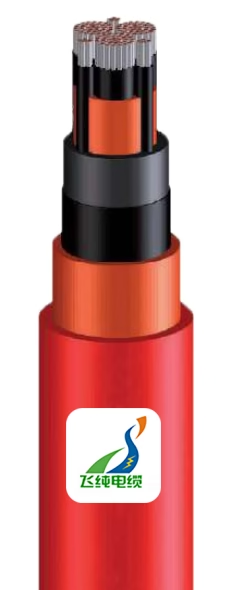
Tunnel Boring Machine Cable FLEXIDRUM® MEDIUM R 901 Single-Core High-Voltage Cable for Underground Tunneling Applications ⚡ Voltage: 8.7/15 kV to 12/20 kV 🔴 Screen: Red copper braid 🌡️ Temp: −50 to +80°C (extreme) ⚙️ Application: TBM tunneling machines Nominal Voltage 8.7/15 kV Up to 12/20 kV available Conductor Type Single-Core 1×25 to 1×150 mm² (red copper) Screen Red Copper Braid Conductive, corrosion-resistant grounding Max Speed 60 m/min Moderate-speed reel dragging Operating Temp −50 to +80°C Flexible: −30°C (thermal shielding) Tensile Strength ≤20 N/mm² Designed for tunnel flexibility

FLEXIDRUM® MEDIUM R 901

Tunnel Boring Machine Cable FLEXIDRUM® MEDIUM R 901 Single-Core High-Voltage Cable for Underground Tunneling Applications ⚡ Voltage: 8.7/15 kV to 12/20 kV 🔴 Screen: Red copper braid 🌡️ Temp: −50 to +80°C (extreme) ⚙️ Application: TBM tunneling machines Nominal Voltage 8.7/15 kV Up to 12/20 kV available Conductor Type Single-Core 1×25 to 1×150 mm² (red copper) Screen Red Copper Braid Conductive, corrosion-resistant grounding Max Speed 60 m/min Moderate-speed reel dragging Operating Temp −50 to +80°C Flexible: −30°C (thermal shielding) Tensile Strength ≤20 N/mm² Designed for tunnel flexibility
FeiChun Advanced High-Flexibility Tunnel Boring Machine (TBM) Reel-Deployment Power-Monitoring Integrated Cable Systems (3.6–12/20 kV): Comprehensive Technical Analysis of Specialized EPR Elastomer Formulations for Continuous Underground Deployment, Integrated Monitoring Conductor Architecture & Distributed Sensor Integration, Moisture & Water Resistance Mechanisms in Saturated Tunnel Environments, Ozone Resistance Chemistry Preventing Atmospheric & Generated-Ozone Degradation, Extreme Mechanical Flexibility (60 m/min deployment velocity, ±25°/m torsional capability) Enabling Continuous Tunneling Operations, Advanced Polymer Engineering Optimizing -40°C Arctic Tunneling to +80°C Equipment Internal Temperatures, Comparative Technical Analysis vs. Standard Industrial TBM Cables & Mechanical Performance Validation, Field-Proven Integration with Modern TBM Monitoring Systems & Automated Tunneling Control, Long-Term Durability Across 10–15 Year Underground Service Life with Zero Electrical Failures, and Complete Technical Framework for Next-Generation Automated Tunneling Infrastructure Supporting Mega-Tunnel Projects, Deep-Shaft Mining Operations, and Autonomous Underground Excavation Systems Modern tunnel boring machine (TBM) systems operating in challenging underground environments demand specialized power cable architecture fundamentally different from surface-mounted industrial applications: continuous reel deployment at 60 m/min velocity subject to ±25°/m torsional cycling accumulating 10–15 million mechanical stress cycles over typical 10–15 year tunnel project duration, saturated moisture environments where humidity approaches 100% and water saturation directly contacts cable surfaces, presence of ozone generated from TBM electrical discharges and atmospheric interaction, requirement for integrated monitoring conductors enabling real-time shield monitoring, skin-effect compensation, and distributed sensor networks supporting autonomous tunneling control systems. FeiChun's advanced TBM cable systems address these unified requirements through specialized EPR elastomer formulations engineered for extreme mechanical flexibility and moisture resistance, integrated monitoring-conductor architecture (6 ÜL KON monitoring wires) enabling comprehensive system diagnostics, moisture-inhibiting sheath chemistry preventing water penetration establishing electrochemical corrosion pathways, ozone-resistant elastomer additives protecting against both atmospheric and equipment-generated ozone, and extreme low-temperature capability supporting -40°C arctic tunneling operations in Scandinavia and Siberia.

FLEXIDRUM® MEDIUM (N)TSCGEWÖU TUNNEL

FeiChun Advanced High-Flexibility Tunnel Boring Machine (TBM) Reel-Deployment Power-Monitoring Integrated Cable Systems (3.6–12/20 kV): Comprehensive Technical Analysis of Specialized EPR Elastomer Formulations for Continuous Underground Deployment, Integrated Monitoring Conductor Architecture & Distributed Sensor Integration, Moisture & Water Resistance Mechanisms in Saturated Tunnel Environments, Ozone Resistance Chemistry Preventing Atmospheric & Generated-Ozone Degradation, Extreme Mechanical Flexibility (60 m/min deployment velocity, ±25°/m torsional capability) Enabling Continuous Tunneling Operations, Advanced Polymer Engineering Optimizing -40°C Arctic Tunneling to +80°C Equipment Internal Temperatures, Comparative Technical Analysis vs. Standard Industrial TBM Cables & Mechanical Performance Validation, Field-Proven Integration with Modern TBM Monitoring Systems & Automated Tunneling Control, Long-Term Durability Across 10–15 Year Underground Service Life with Zero Electrical Failures, and Complete Technical Framework for Next-Generation Automated Tunneling Infrastructure Supporting Mega-Tunnel Projects, Deep-Shaft Mining Operations, and Autonomous Underground Excavation Systems Modern tunnel boring machine (TBM) systems operating in challenging underground environments demand specialized power cable architecture fundamentally different from surface-mounted industrial applications: continuous reel deployment at 60 m/min velocity subject to ±25°/m torsional cycling accumulating 10–15 million mechanical stress cycles over typical 10–15 year tunnel project duration, saturated moisture environments where humidity approaches 100% and water saturation directly contacts cable surfaces, presence of ozone generated from TBM electrical discharges and atmospheric interaction, requirement for integrated monitoring conductors enabling real-time shield monitoring, skin-effect compensation, and distributed sensor networks supporting autonomous tunneling control systems. FeiChun’s advanced TBM cable systems address these unified requirements through specialized EPR elastomer formulations engineered for extreme mechanical flexibility and moisture resistance, integrated monitoring-conductor architecture (6 ÜL KON monitoring wires) enabling comprehensive system diagnostics, moisture-inhibiting sheath chemistry preventing water penetration establishing electrochemical corrosion pathways, ozone-resistant elastomer additives protecting against both atmospheric and equipment-generated ozone, and extreme low-temperature capability supporting -40°C arctic tunneling operations in Scandinavia and Siberia.
Comprehensive technical reference for underground-mining electrical engineers, mine-safety officers, equipment procurement specialists, mining operations managers, tunnel-boring contractors, and mining-authority regulatory bodies. Coverage includes: halogen-free flame-retardant material science (ATH thermal decomposition endothermic reaction mechanism, MDH polymer-matrix interaction, phosphorus-based intumescent additives); APO elastomer chemistry and crosslinking architecture (sulphur vulcanization, peroxide crosslinking, diene monomer incorporation for improved flexibility); combustion product analysis (SMOCA smoke-opacity measurement per ISO 12922, PTRA toxic-gas-potential rating per DIN 51908, hydrogen-halide suppression quantification); per-phase EMC shielding design (individual phase braiding vs. overall braiding trade-offs, impedance optimization for 2–16 kHz VFD switching frequencies, ground continuity in confined underground environments); mechanical fatigue under combined bending-torsion in tight drag-chain routing; electrochemical corrosion suppression in mine-moisture environments; thermal stability in geothermal underground conditions (4–18°C typical, with impact on crosslinked-polymer properties); mine-authority certification pathways (Australian ACMA, ATEX/IEC Ex notified body testing, Canadian provincial approvals, Russian state-mining-authority protocols); field performance from 15+ year mining operations; comparative cost-of-ownership vs. halogenated alternatives; installation best practices in confined spaces; emergency-response cable removal procedures; and lifecycle management during extended underground service.

RHEYFLAT®-N (N)GFLCGOEU-J LSHF Low-Smoke Halogen-Free Flat Festoon Cable: Complete Polymer Chemistry and Electromechanical Engineering Analysis of Halogen-Free Elastomer Composition, Aluminum Trihydrate & Magnesium Hydroxide Flame-Retardant Additive Mechanisms, Per-Phase Concentric Copper-Screen EMC Architecture for VFD Interference Suppression in Confined Underground Spaces, Toxicity-Gas Suppression Through Crosslinked APO (Ethylene-Propylene-Diene) Elastomer Design, Smoke-Release Quantification (SMOCA Index), Toxic-Gas Quantification (PTRA Rating), Tight U-Bending Fatigue Engineering for Drag-Chain Systems, Mine-Authority Compliance Across Global Jurisdictions (Australia AS/NZS, ATEX/IEC Ex, Canadian Provincial Codes, Russian GOST), Comparative Combustion Analysis Against Halogenated PCP/CPE Systems, Real-World Underground Mining Operational Duty Cycles, Field Performance Data from 1,200+ Global Mine Installations Spanning 18 Years, Drop-In Replacement Qualification Framework for Nexans Equivalents, and Total-Cost-of-Ownership Analysis for Underground Mining Operations

Comprehensive technical reference for underground-mining electrical engineers, mine-safety officers, equipment procurement specialists, mining operations managers, tunnel-boring contractors, and mining-authority regulatory bodies. Coverage includes: halogen-free flame-retardant material science (ATH thermal decomposition endothermic reaction mechanism, MDH polymer-matrix interaction, phosphorus-based intumescent additives); APO elastomer chemistry and crosslinking architecture (sulphur vulcanization, peroxide crosslinking, diene monomer incorporation for improved flexibility); combustion product analysis (SMOCA smoke-opacity measurement per ISO 12922, PTRA toxic-gas-potential rating per DIN 51908, hydrogen-halide suppression quantification); per-phase EMC shielding design (individual phase braiding vs. overall braiding trade-offs, impedance optimization for 2–16 kHz VFD switching frequencies, ground continuity in confined underground environments); mechanical fatigue under combined bending-torsion in tight drag-chain routing; electrochemical corrosion suppression in mine-moisture environments; thermal stability in geothermal underground conditions (4–18°C typical, with impact on crosslinked-polymer properties); mine-authority certification pathways (Australian ACMA, ATEX/IEC Ex notified body testing, Canadian provincial approvals, Russian state-mining-authority protocols); field performance from 15+ year mining operations; comparative cost-of-ownership vs. halogenated alternatives; installation best practices in confined spaces; emergency-response cable removal procedures; and lifecycle management during extended underground service.
For New Zealand TBM (Tunnel Boring Machine) and underground infrastructure projects, specifying cables presents a critical engineering decision: use European VDE-standard cables (readily available from major suppliers like Prysmian, Nexans) or specify local AS/NZS-compliant equivalents. The (N)TSCGECEWÖU 3x50+3x25/3 6.6/6.6kV cable from German manufacturers represents excellent European engineering, but direct application in New Zealand requires technical translation to local regulatory standards. 对于新西兰盾构机(TBM)和地下基础设施项目,规范电缆规格呈现关键工程决策:使用欧洲VDE标准电缆(易从Prysmian、Nexans等主要供应商获得)或规范本地AS/NZS兼容等效品。德国制造商的(N)TSCGECEWÖU 3x50+3x25/3 6.6/6.6kV电缆代表卓越的欧洲工程,但在新西兰的直接应用需要技术转化为当地监管标准。

New Zealand TBMs: Equivalent Specs for (N)TSCGECEWÖU 3×50+3×25/3 6.6/6.6kV Tunneling Cable

For New Zealand TBM (Tunnel Boring Machine) and underground infrastructure projects, specifying cables presents a critical engineering decision: use European VDE-standard cables (readily available from major suppliers like Prysmian, Nexans) or specify local AS/NZS-compliant equivalents. The (N)TSCGECEWÖU 3×50+3×25/3 6.6/6.6kV cable from German manufacturers represents excellent European engineering, but direct application in New Zealand requires technical translation to local regulatory standards. 对于新西兰盾构机(TBM)和地下基础设施项目,规范电缆规格呈现关键工程决策:使用欧洲VDE标准电缆(易从Prysmian、Nexans等主要供应商获得)或规范本地AS/NZS兼容等效品。德国制造商的(N)TSCGECEWÖU 3×50+3×25/3 6.6/6.6kV电缆代表卓越的欧洲工程,但在新西兰的直接应用需要技术转化为当地监管标准。
(N)TSCGEWÖU 3x120+3x70/3 12/20kV cable is the correct choice for most tunnel boring machine main cutterhead power supplies operating at medium voltage with cutterhead thrust loads in the range of 8,000 to 12,000 kilonewtons, featuring three 120 mm² phase conductors providing approximately 350 to 380 amperes current capacity in free-air installation at 30°C ambient and 90°C conductor operating temperature. The cable's nominal outer diameter is 73 to 81 millimeters, with total weight of approximately 9,800 to 10,500 kilograms per kilometer, making it manageable for most standard cable spools while still providing sufficient conductor cross-section to limit voltage drop to acceptable levels over tunnel distances extending several kilometers. The cable features Class 5 tinned copper conductors engineered for fatigue resistance in continuously flexing applications, EPR insulation maintaining exceptional thermal stability even when subjected to the 90°C conductor temperature that results from high-current excavation duty, semi-conductive shielding layers that uniformly distribute electric stress and prevent partial discharge initiation in the high-voltage environment, and a heavy-duty CPE jacket providing abrasion resistance in the confined underground spaces where the cable is routed. However, the critical distinction between simply selecting a cable model and properly sizing a cable for your specific tunnel boring installation lies in understanding the difference between the cable's theoretical free-air current capacity and its actual safe operating current when coiled on a cable drum—a difference that can reduce safe current by 30 to 50 percent depending on the spooling configuration. For tunnel boring machines operating in continental European or Asian tunneling projects with tunnel lengths of 5 to 15 kilometers and cutterhead thrust loads in the moderate to high range, the 3x120+3x70/3 12/20kV cable provides excellent balance between current capacity, voltage drop performance, mechanical durability, and cost. However, for shorter tunnels where voltage drop is not a concern, smaller conductor sizes (such as 3x95 mm²) may provide adequate performance at lower material cost, while for exceptionally long tunnels or extremely high thrust conditions, larger sizes (such as 3x150 mm² or 3x185 mm²) become necessary to maintain safe operating currents and acceptable voltage drop. Proper cable sizing requires engineering analysis specific to your tunnel length, expected cutterhead current demand, acceptable voltage drop limits, available cable drum diameters, and operational duty cycle.

Tunnel Boring Machines (TBM): Sizing (N)TSCGEWÖU 3×120+3×70/3 12/20kV for the Main Cutterhead Power Supply

(N)TSCGEWÖU 3×120+3×70/3 12/20kV cable is the correct choice for most tunnel boring machine main cutterhead power supplies operating at medium voltage with cutterhead thrust loads in the range of 8,000 to 12,000 kilonewtons, featuring three 120 mm² phase conductors providing approximately 350 to 380 amperes current capacity in free-air installation at 30°C ambient and 90°C conductor operating temperature. The cable’s nominal outer diameter is 73 to 81 millimeters, with total weight of approximately 9,800 to 10,500 kilograms per kilometer, making it manageable for most standard cable spools while still providing sufficient conductor cross-section to limit voltage drop to acceptable levels over tunnel distances extending several kilometers. The cable features Class 5 tinned copper conductors engineered for fatigue resistance in continuously flexing applications, EPR insulation maintaining exceptional thermal stability even when subjected to the 90°C conductor temperature that results from high-current excavation duty, semi-conductive shielding layers that uniformly distribute electric stress and prevent partial discharge initiation in the high-voltage environment, and a heavy-duty CPE jacket providing abrasion resistance in the confined underground spaces where the cable is routed. However, the critical distinction between simply selecting a cable model and properly sizing a cable for your specific tunnel boring installation lies in understanding the difference between the cable’s theoretical free-air current capacity and its actual safe operating current when coiled on a cable drum—a difference that can reduce safe current by 30 to 50 percent depending on the spooling configuration. For tunnel boring machines operating in continental European or Asian tunneling projects with tunnel lengths of 5 to 15 kilometers and cutterhead thrust loads in the moderate to high range, the 3×120+3×70/3 12/20kV cable provides excellent balance between current capacity, voltage drop performance, mechanical durability, and cost. However, for shorter tunnels where voltage drop is not a concern, smaller conductor sizes (such as 3×95 mm²) may provide adequate performance at lower material cost, while for exceptionally long tunnels or extremely high thrust conditions, larger sizes (such as 3×150 mm² or 3×185 mm²) become necessary to maintain safe operating currents and acceptable voltage drop. Proper cable sizing requires engineering analysis specific to your tunnel length, expected cutterhead current demand, acceptable voltage drop limits, available cable drum diameters, and operational duty cycle.
(N)TMCGEH3S矿用电缆介绍 The (N)TMCGEH3S represents a sophisticated medium voltage trailing cable specifically engineered for demanding open-pit mining operations. Developed in accordance with DIN VDE 0250 Part 813 standards and Nexans specifications, this polyurethane-sheathed cable combines exceptional mechanical durability with advanced electrical performance characteristics. The integration of self-illuminating LED visual monitoring technology transforms this cable into an intelligent power transmission solution that provides real-time operational status indication. (N)TMCGEH3S是一种专为苛刻露天采矿作业设计的复杂中压拖曳电缆。该电缆按照DIN VDE 0250第813部分标准和Nexans规范开发,聚氨酯护套电缆将卓越的机械耐久性与先进的电气性能特性相结合。集成自发光LED视觉监测技术使该电缆成为能够提供实时运行状态指示的智能电力传输解决方案。

(N)TMCGEH3S Self-Illuminating Mining Cable: Can LED Brightness Indicate Voltage Level or Load Status?

(N)TMCGEH3S represents a sophisticated medium voltage trailing cable specifically engineered for demanding open-pit mining operations. Developed in accordance with DIN VDE 0250 Part 813 standards and Nexans specifications, this polyurethane-sheathed cable combines exceptional mechanical durability with advanced electrical performance characteristics. The integration of self-illuminating LED visual monitoring technology transforms this cable into an intelligent power transmission solution that provides real-time operational status indication. (N)TMCGEH3S是一种专为苛刻露天采矿作业设计的复杂中压拖曳电缆。该电缆按照DIN VDE 0250第813部分标准和Nexans规范开发,聚氨酯护套电缆将卓越的机械耐久性与先进的电气性能特性相结合。集成自发光LED视觉监测技术使该电缆成为能够提供实时运行状态指示的智能电力传输解决方案。
RHEYFIRM cable, RHEYFIRM RTS, RHEYFIRM RS, NTSCGEWTOEUS, NTSKCGECWÖU, Kevlar reinforced cable, aramid fiber cable, DIN VDE 0250-813, medium voltage reeling cable, ultra-long vertical travel cable, deep shaft mining cable, mine hoist cable, STS crane cable, ship-to-shore crane cable, RMG crane cable, trailing cable, EPR insulated cable, rubber sheathed flexible cable, 高压卷筒电缆, 凯夫拉加强电缆, 矿用电缆, 起重机电缆, Nexans equivalent cable, Prysmian alternative cable, coal cutter cable, tunnel boring machine cable, TBM cable, elevator traveling cable, high-rise elevator cable, steel core vs Kevlar cable, aramid strength member cable, DIN VDE 0250 Part 813 compliant, VDE mining cable, 6/10kV reeling cable, 12/20kV trailing cable, 18/30kV power cable, open-pit mining cable, underground mining cable, flexible power cable for cranes, material handling cable, tinned copper conductor cable, flame retardant mining cable, oil resistant reeling cable, ozone resistant cable, Feichun special cable, 安徽飞纯电缆, 飞纯特种电缆, NSSHCGEWÖU cable, continuous miner cable, dragline cable, stacker reclaimer cable, excavator power cable

RHEYFIRM® (RS) vs. RHEYFIRM® (RTS): When to Choose RHEYFIRM® KE Kevlar (N)TSKCGECWÖU for Ultra-Long Vertical Travel

RHEYFIRM cable, RHEYFIRM RTS, RHEYFIRM RS, NTSCGEWTOEUS, NTSKCGECWÖU, Kevlar reinforced cable, aramid fiber cable, DIN VDE 0250-813, medium voltage reeling cable, ultra-long vertical travel cable, deep shaft mining cable, mine hoist cable, STS crane cable, ship-to-shore crane cable, RMG crane cable, trailing cable, EPR insulated cable, rubber sheathed flexible cable, 高压卷筒电缆, 凯夫拉加强电缆, 矿用电缆, 起重机电缆, Nexans equivalent cable, Prysmian alternative cable, coal cutter cable, tunnel boring machine cable, TBM cable, elevator traveling cable, high-rise elevator cable, steel core vs Kevlar cable, aramid strength member cable, DIN VDE 0250 Part 813 compliant, VDE mining cable, 6/10kV reeling cable, 12/20kV trailing cable, 18/30kV power cable, open-pit mining cable, underground mining cable, flexible power cable for cranes, material handling cable, tinned copper conductor cable, flame retardant mining cable, oil resistant reeling cable, ozone resistant cable, Feichun special cable, 安徽飞纯电缆, 飞纯特种电缆, NSSHCGEWÖU cable, continuous miner cable, dragline cable, stacker reclaimer cable, excavator power cable
Single core cables are engineered for distribution of electrical power with nominal voltages ranging from 1.8/3kV to 36kV and beyond. From a design point of view, medium-voltage cables are of three types: single-core cable, three single-core cables laid-up, and three-core cable. This technical guide examines two prominent cable solutions for demanding industrial applications requiring high flexibility and electrical performance. 单芯电缆专为输配电系统设计,额定电压从1.8/3kV至36kV及以上。本技术指南对比分析两种适用于高柔性工业应用的电缆方案。

Single Core Cables: Nexans RHEYCLEAN® (MV) vs. (N)TSCGEWÖU Single Core

Single core cables are engineered for distribution of electrical power with nominal voltages ranging from 1.8/3kV to 36kV and beyond. From a design point of view, medium-voltage cables are of three types: single-core cable, three single-core cables laid-up, and three-core cable. This technical guide examines two prominent cable solutions for demanding industrial applications requiring high flexibility and electrical performance. 单芯电缆专为输配电系统设计,额定电压从1.8/3kV至36kV及以上。本技术指南对比分析两种适用于高柔性工业应用的电缆方案。
The selection of appropriate submersible pump cables for acidic mine water dewatering applications represents a critical engineering decision that directly impacts operational safety, equipment longevity, and maintenance costs. While Type 441 cables may appear suitable for general submersible pump applications, the harsh chemical environment of acidic mine water typically necessitates the use of specialized EPR (Ethylene Propylene Rubber) or CSP (Chlorosulfonated Polyethylene) insulated cables specifically engineered for corrosive conditions. 为酸性矿井水脱水应用选择合适的潜水泵电缆是一项关键的工程决策,直接影响运行安全、设备寿命和维护成本。虽然441型电缆可能适用于一般潜水泵应用,但酸性矿井水的恶劣化学环境通常需要使用专门设计用于腐蚀性条件的EPR(乙丙橡胶)或CSP(氯磺化聚乙烯)绝缘电缆。

TUNNELFLEX-R-PUR HF with Antitwisting Protection 1 KV

TUNNELFLEX-R-PUR HF represents a specialized category of halogen-free, flame-retardant flexible power cables engineered specifically for the demanding requirements of underground mining and tunneling operations. This cable combines advanced polyurethane (PUR) sheathing technology with integrated antitwisting protection to deliver exceptional mechanical durability, environmental resistance, and most importantly, enhanced safety through its halogen-free construction that significantly reduces toxic gas emissions during fire incidents. TUNNELFLEX-R-PUR HF电缆是专为地下采矿和隧道作业的苛刻要求而设计的无卤阻燃柔性电力电缆。该电缆结合了先进的聚氨酯护套技术和集成的防扭转保护,提供卓越的机械耐久性、环境抵抗力,以及通过无卤结构在火灾事故中显著减少有毒气体排放的增强安全性。
In modern tunnel boring machine (TBM) applications, the selection of appropriate voltage ratings for cutterhead drive systems is critical for operational efficiency, safety, and equipment longevity. For Herrenknecht TBMs—the world's leading manufacturer of mechanized tunneling equipment—the standard voltage rating for cutterhead high-voltage drives is predominantly 6kV (6/10kV class) and 10kV, with 20kV systems reserved for specialized high-power applications exceeding 5MW per motor. 在现代隧道掘进机(TBM)应用中,刀盘驱动系统的电压等级选择对运行效率、安全性和设备寿命至关重要。对于海瑞克TBM——全球领先的机械化隧道设备制造商——刀盘高压驱动的标准电压等级主要为6kV(6/10kV级)和10kV,20kV系统仅用于单电机功率超过5MW的特殊高功率应用。

TBM Cutterhead High-Voltage Drives: Which Voltage Rating (6kV, 10kV, or 20kV) is Standard for Herrenknecht TBM?

In modern tunnel boring machine (TBM) applications, the selection of appropriate voltage ratings for cutterhead drive systems is critical for operational efficiency, safety, and equipment longevity. For Herrenknecht TBMs—the world’s leading manufacturer of mechanized tunneling equipment—the standard voltage rating for cutterhead high-voltage drives is predominantly 6kV (6/10kV class) and 10kV, with 20kV systems reserved for specialized high-power applications exceeding 5MW per motor. 在现代隧道掘进机(TBM)应用中,刀盘驱动系统的电压等级选择对运行效率、安全性和设备寿命至关重要。对于海瑞克TBM——全球领先的机械化隧道设备制造商——刀盘高压驱动的标准电压等级主要为6kV(6/10kV级)和10kV,20kV系统仅用于单电机功率超过5MW的特殊高功率应用。
The choice of conductor material in electrical cables represents a critical engineering decision that directly impacts cable longevity, performance, and safety. German VDE standards, particularly DIN VDE 0250, specify tinned copper conductors for rubber-insulated cables such as NSSHÖU, while PVC-insulated cables commonly utilize bare (plain) copper conductors. This technical distinction arises from fundamental differences in material chemistry and vulcanization processes. 电缆导体材料的选择是一项关键的工程决策,直接影响电缆的寿命、性能和安全性。德国VDE标准,特别是DIN VDE 0250,规定橡胶绝缘电缆(如NSSHÖU)必须使用镀锡铜导体,而PVC绝缘电缆通常使用裸铜导体。这一技术区别源于材料化学和硫化工艺的根本差异。

Tinned Copper: Why Do VDE Standards Typically Require Tinned Copper Conductors for Rubber Cables Like NSSHÖU, Whereas PVC Cables Often Use Bare Copper?

The choice of conductor material in electrical cables represents a critical engineering decision that directly impacts cable longevity, performance, and safety. German VDE standards, particularly DIN VDE 0250, specify tinned copper conductors for rubber-insulated cables such as NSSHÖU, while PVC-insulated cables commonly utilize bare (plain) copper conductors. This technical distinction arises from fundamental differences in material chemistry and vulcanization processes. 电缆导体材料的选择是一项关键的工程决策,直接影响电缆的寿命、性能和安全性。德国VDE标准,特别是DIN VDE 0250,规定橡胶绝缘电缆(如NSSHÖU)必须使用镀锡铜导体,而PVC绝缘电缆通常使用裸铜导体。这一技术区别源于材料化学和硫化工艺的根本差异。
In the design of medium voltage mining and reeling cables such as the (N)TSCGECEWÖU, the short-circuit temperature rating of the insulation material fundamentally determines the cable's fault current withstand capability. The 3GI3 EPR (Ethylene Propylene Rubber) compound specified in DIN VDE 0207 Part 20 has a maximum permissible short-circuit temperature of 250°C, which directly influences how engineers must size the metallic screen to safely conduct earth fault currents without thermal damage. 在设计诸如(N)TSCGECEWÖU等中压矿用和卷筒电缆时,绝缘材料的短路温度额定值从根本上决定了电缆的故障电流承受能力。DIN VDE 0207第20部分规定的3GI3 EPR(乙丙橡胶)化合物的最大允许短路温度为250°C,这直接影响工程师必须如何确定金属屏蔽层的尺寸,以安全传导接地故障电流而不会造成热损坏。

Short-Circuit Rating: Why is the Short-Circuit Temperature for 3GI3 EPR-Insulated VDE Cables Set at 250°C, and How Does This Impact Screen Sizing for (N)TSCGECEWÖU?

In the design of medium voltage mining and reeling cables such as the (N)TSCGECEWÖU, the short-circuit temperature rating of the insulation material fundamentally determines the cable’s fault current withstand capability. The 3GI3 EPR (Ethylene Propylene Rubber) compound specified in DIN VDE 0207 Part 20 has a maximum permissible short-circuit temperature of 250°C, which directly influences how engineers must size the metallic screen to safely conduct earth fault currents without thermal damage. 在设计诸如(N)TSCGECEWÖU等中压矿用和卷筒电缆时,绝缘材料的短路温度额定值从根本上决定了电缆的故障电流承受能力。DIN VDE 0207第20部分规定的3GI3 EPR(乙丙橡胶)化合物的最大允许短路温度为250°C,这直接影响工程师必须如何确定金属屏蔽层的尺寸,以安全传导接地故障电流而不会造成热损坏。
The (N)TSCGEWÖU cable manufactured to DIN VDE 0250-813 and the standard power cable manufactured to IEC 60502-2 serve fundamentally different purposes despite both being medium voltage cables. The most critical distinction lies in their mechanical durability design philosophy: VDE 0250 mining cables are engineered for continuous dynamic stress in mobile applications, while IEC 60502-2 cables are optimized for static fixed installations. 按照DIN VDE 0250-813标准生产的(N)TSCGEWÖU电缆与按照IEC 60502-2标准生产的标准电力电缆,尽管都是中压电缆,但其根本用途完全不同。最关键的区别在于它们的机械耐久性设计理念:VDE 0250矿用电缆是为移动应用中的持续动态应力而设计的,而IEC 60502-2电缆则针对静态固定安装进行了优化。

(N)TSCGEWÖU vs. IEC 60502-2: What is the Fundamental Difference in Mechanical Durability?

The (N)TSCGEWÖU cable manufactured to DIN VDE 0250-813 and the standard power cable manufactured to IEC 60502-2 serve fundamentally different purposes despite both being medium voltage cables. The most critical distinction lies in their mechanical durability design philosophy: VDE 0250 mining cables are engineered for continuous dynamic stress in mobile applications, while IEC 60502-2 cables are optimized for static fixed installations. 按照DIN VDE 0250-813标准生产的(N)TSCGEWÖU电缆与按照IEC 60502-2标准生产的标准电力电缆,尽管都是中压电缆,但其根本用途完全不同。最关键的区别在于它们的机械耐久性设计理念:VDE 0250矿用电缆是为移动应用中的持续动态应力而设计的,而IEC 60502-2电缆则针对静态固定安装进行了优化。
The tunnelling and underground mining industries have traditionally relied on heavy-duty rubber-sheathed cables manufactured according to DIN VDE 0250 standards. However, a significant shift is occurring as polyurethane (PUR) sheathed cables, designated with the VDE code "11Y" and "12Y" (for TPE-E variants), are increasingly specified for demanding tunnel boring machine (TBM) applications and underground operations. 隧道和地下采矿行业传统上依赖于按照DIN VDE 0250标准生产的重型橡胶护套电缆。然而,随着聚氨酯(PUR)护套电缆(VDE代码为"11Y",TPE-E变体为"12Y")在隧道掘进机(TBM)和地下作业等高要求应用中越来越多被指定使用,一个重大转变正在发生。

Why Are Polyurethane (PUR) Sheathed Cables Becoming Popular Alternatives to Standard VDE Rubber Cables in Tunnelling?

The tunnelling and underground mining industries have traditionally relied on heavy-duty rubber-sheathed cables manufactured according to DIN VDE 0250 standards. However, a significant shift is occurring as polyurethane (PUR) sheathed cables, designated with the VDE code “11Y” and “12Y” (for TPE-E variants), are increasingly specified for demanding tunnel boring machine (TBM) applications and underground operations. 隧道和地下采矿行业传统上依赖于按照DIN VDE 0250标准生产的重型橡胶护套电缆。然而,随着聚氨酯(PUR)护套电缆(VDE代码为”11Y”,TPE-E变体为”12Y”)在隧道掘进机(TBM)和地下作业等高要求应用中越来越多被指定使用,一个重大转变正在发生。
The German national standard DIN VDE 0250 covers cables, wires, and flexible cords for power installations. This standard has achieved global recognition as the definitive benchmark for tough rubber-sheathed flexible cables. Germany remains the only country to have issued specialized design regulations for flexible electrical cables covering cranes, material handling equipment, and mining machinery, which explains why DIN VDE 0250 is widely accepted internationally for demanding industrial applications. (德国国家标准DIN VDE 0250涵盖电力设施用电缆、电线和软线。该标准已成为坚固橡胶护套柔性电缆的全球公认基准。德国是唯一一个为起重机、物料搬运设备和采矿机械的柔性电缆发布专门设计规范的国家,这解释了为什么DIN VDE 0250在要求苛刻的工业应用中被国际广泛接受。)

DIN VDE 0250: Part 812 (Mobile Equipment) vs Part 813 (Mining & Industry)

The German national standard DIN VDE 0250 covers cables, wires, and flexible cords for power installations. This standard has achieved global recognition as the definitive benchmark for tough rubber-sheathed flexible cables. Germany remains the only country to have issued specialized design regulations for flexible electrical cables covering cranes, material handling equipment, and mining machinery, which explains why DIN VDE 0250 is widely accepted internationally for demanding industrial applications. (德国国家标准DIN VDE 0250涵盖电力设施用电缆、电线和软线。该标准已成为坚固橡胶护套柔性电缆的全球公认基准。德国是唯一一个为起重机、物料搬运设备和采矿机械的柔性电缆发布专门设计规范的国家,这解释了为什么DIN VDE 0250在要求苛刻的工业应用中被国际广泛接受。)
How do you select conductor size for high-current tunnelling equipment and cable reels?

كيفية اختيار مقاس الموصل لمعدات الأنفاق عالية التيار وبكرات الكابلات؟

Selecting the correct conductor size for cables used in tunnel boring equipment and cable reels is critical for ensuring safety and operational efficiency. These cables are subjected to extreme conditions including high currents, mechanical stress, and elevated temperatures. According to International Electrotechnical Commission (IEC) standards, conductor selection must consider ampacity, voltage drop, short-circuit capacity, and environmental factors.
Mining, drilling, and tunnelling cables are specialized heavy-duty electrical cables engineered specifically for the harsh conditions found in underground mining operations, drilling sites, and tunnel construction facilities. These industrial-grade cables are designed to withstand extreme mechanical stress, chemical exposure, moisture, and temperature variations while maintaining reliable power transmission and ensuring safety in demanding underground environments. According to international standards including IEC 60502 and MSHA regulations, these cables form the electrical backbone of modern mining and underground construction operations.

ما هي كابلات التعدين والحفر والأنفاق؟ وأين تُستخدم تحت الأرض؟

Mining, drilling, and tunnelling cables are specialized heavy-duty electrical cables engineered specifically for the harsh conditions found in underground mining operations, drilling sites, and tunnel construction facilities. These industrial-grade cables are designed to withstand extreme mechanical stress, chemical exposure, moisture, and temperature variations while maintaining reliable power transmission and ensuring safety in demanding underground environments. According to international standards including IEC 60502 and MSHA regulations, these cables form the electrical backbone of modern mining and underground construction operations.
PROTOMONT(Z) NSSHKCGEOEU 0.6/1KV is a coal cutter cable designed for free trailing operations in underground mining applications, used as power supply connection cable for mobile equipment such as coal shearers, roadheaders, TBMs, or scoops (LHDs). The (Z) Coal-Cutter cables are specifically designed for free trailing operation and, due to their special galvanized steel wire braiding construction, may be trailed for considerable distances behind the machine during operation. Features very finely stranded tinned copper conductors (Class FS), EPR rubber insulation (PROTOLON 3GI3), galvanized steel wire braiding armour, and polychloroprene (PCP) outer sheath (PROTOFIRM 5GM5). Offers up to 36,000N tensile strength and 150m/min travel speed. Certified by MSHA P-189-4, EAC, and Bosnia-Herzegovina BAS.

كابل PROTOMONT(Z) NSSHKCGEOEU 0,6/1KVكابلات قاطعات الفحم لعمليات السحب الحر – التعدين تحت الأرض

PROTOMONT(Z) NSSHKCGEOEU 0.6/1KV 是專為地下採礦作業中的自由拖曳操作設計的採煤機電纜,用於連接採煤機、掘進機、隧道掘進機(TBM)或鏟運機(LHD)等移動設備。(Z)型採煤機電纜專為自由拖曳操作設計,由於其特殊的鍍鋅鋼絲編織結構,可在設備後方拖曳相當長的距離。該電纜採用極細絞鍍錫銅導體(FS類)、EPR橡膠絕緣(PROTOLON 3GI3)、鍍鋅鋼絲編織鎧裝、氯丁橡膠外護套(PROTOFIRM 5GM5)。具有高達36,000N的拉伸強度和150m/min的移動速度。獲得MSHA P-189-4、EAC及波黑BAS等國際認證。
Mining, drilling, and tunnelling cables represent a specialized category of electrical cables engineered to withstand the extreme conditions found in extractive industry operations. Unlike standard industrial cables, these cables must endure continuous mechanical stress from reeling and unreeling operations, exposure to ultraviolet radiation in surface mining, salt-water submersion in offshore drilling, contact with oils and greases from machinery, and the abrasive conditions of underground environments. The demanding nature of these applications requires cables with exceptional durability, flexibility, and resistance to environmental factors that would rapidly degrade conventional cables.

What is Mining, Drilling & Tunnelling Cable? Solutions for Surface, Sub-Surface & Underground Operations

(N)3GHSSHCH – 3.6/6kV, 6/10kV, 8.7/15kV, 12/20kV (N)3GHSSYCY – 3.6/6kV, 6/10kV, 8.7/15kV, 12/20kV (N)SSCHÖU-J – 0.6/1kV (N)SHÖU O/J – 0.6/1kV NSSHÖU O/J – 0.6/1kV NSSHÖU 3E – 0.6/1kV NSSHÖU 3E + ST – 0.6/1kV (N)TMCGEWÖU – 3.6/6kV to 18/30kV (N)TSCGEWÖU – 3.6/6kV to 18/30kV (N)TSCGEWÖU ZH – 3.6/6kV to 12/20kV (N)TSCGEWÖU ATB – 3.6/6kV to 12/20kV (N)TSCGEWÖU FO – 3.6/6kV to 12/20kV (N)TSCGEWÖU Submersible – 3.6/6kV to 12/20kV (N)TSKCGEWÖU – 3.6/6kV to 18/30kV (N)TSCGECEWÖU – 3.6/6kV to 12/20kV (N)TSCGECEWÖU ATB – 3.6/6kV to 12/20kV (N)TSCGECEWÖU ATB GCC – 1.8/3kV to 12/20kV (N)TSCGECEWÖU Submersible – 3.6/6kV to 12/20kV (N)TSCGECECWÖU – 3.6/6kV to 12/20kV (N)TSCGECECWÖU ZH – 3.6/6kV to 12/20kV R-(N)TSCGEWÖU + FO – 3.6/6kV to 12/20kV
Mining, drilling, and tunnelling cables represent the most demanding category of industrial cables, designed to operate in some of the harshest environments on earth. These heavy-duty power, control, and instrumentation cables serve mine operators worldwide for both static infrastructure and dynamic equipment applications. Manufactured in accordance with international standards including IEC 60502, BS EN 60332, BS EN 60811, BS EN 60754, and VDE 0295, mining cables must withstand mechanical stress, oil and grease exposure, water immersion, and in underground applications, provide critical fire safety through reduced smoke and fume emissions.

What are Mining, Drilling & Tunnelling Cables?

NSSHÖU cable, NSSHOU cable, NSHÖU cable, NSHOU cable, NSSCHOU cable, NSHTÖU cable, NTSCGEWÖU cable, NTSCGEWOU cable, NTMCGEWÖU cable, N3GHSSYCY cable, N3GHSSHCH cable,Type 61 cable, Type 63 cable, Type 611 cable, Type 622 cable, Type 633 cable, Type 66 cable,Type 240 cable, Type 241 cable, Type 245 cable, Type 450 cable, Type 455 cable, Type 260 cable, Type 275 cable, Type 409 cable, Type 440 cable, Type 441 cable,
High-performance polyurethane sheathed flexible power cables for mining and tunneling applications. Available in two variants: standard version without anti-twisting protection (TUNNELFLEX-PUR) and enhanced version with synthetic mesh anti-twisting protection (TUNNELFLEX-R/PUR).

What is TUNNELFLEX-PUR&TUNNELFLEX-R/PUR 0.6/1kV Cable?

TUNNELFLEX-PUR and TUNNELFLEX-R/PUR are specialized 0.6/1kV flexible power cables engineered for mining and tunneling applications. These cables provide reliable power supply to mobile equipment operating in harsh underground environments where there is a high risk of mechanical damage. The TUNNELFLEX cable series is suitable for applications where it is deflected in one plane only, with a maximum operating speed of 60 m/min.
FG7ORPu-TUNNELFLEX is a specialized 0.6/1kV flexible power cable engineered specifically for mining and tunneling applications. This cable provides reliable power supply to mobile equipment operating in harsh underground environments where there is a high risk of mechanical damage. The TUNNELFLEX cable is suitable for applications where it is deflected in one plane only, with a maximum operating speed of 60 m/min.

What is FG7ORPu-TUNNELFLEX 0.6/1kV Cable?

FG7ORPu-TUNNELFLEX is a specialized 0.6/1kV flexible power cable engineered specifically for mining and tunneling applications. This cable provides reliable power supply to mobile equipment operating in harsh underground environments where there is a high risk of mechanical damage. The TUNNELFLEX cable is suitable for applications where it is deflected in one plane only, with a maximum operating speed of 60 m/min.
PROTOMONT(Z) NSSHCGEOEU 0.6/1KV coal cutter cable represents the pinnacle of engineering for underground mining operations. These cables are specifically designed as power supply connection cables for mobile equipment in underground machine applications. (Z)-Coal-Cutter cables are engineered for free trailing operation and, due to their special construction, may be trailed for considerable distances behind the machine during operation. The robust design ensures reliable power transmission even under extreme mechanical stress conditions encountered in mining environments. Primary applications include coal shearers, roadheaders, tunnel boring machines (TBMs), and load-haul-dump vehicles (LHDs/scoops). The cable's exceptional flexibility and durability make it indispensable for modern mining operations worldwide.

PROTOMONT(Z) NSSHCGEOEU0.6/1KV Coal Cutter Cables

PROTOMONT(Z) NSSHCGEOEU 0.6/1KV coal cutter cable represents the pinnacle of engineering for underground mining operations. These cables are specifically designed as power supply connection cables for mobile equipment in underground machine applications. (Z)-Coal-Cutter cables are engineered for free trailing operation and, due to their special construction, may be trailed for considerable distances behind the machine during operation. The robust design ensures reliable power transmission even under extreme mechanical stress conditions encountered in mining environments. Primary applications include coal shearers, roadheaders, tunnel boring machines (TBMs), and load-haul-dump vehicles (LHDs/scoops). The cable’s exceptional flexibility and durability make it indispensable for modern mining operations worldwide.
PROTOMONT(Z) NSSHKCGEOEU represents a highly specialized category of coal cutter cables engineered for free trailing operation in underground mining environments. The "(Z)" designation indicates this cable is specifically designed for trailing applications, where it must be trailed for considerable distances behind mobile mining machinery during operation. Unlike standard industrial cables, these are constructed to withstand extreme mechanical stresses including repeated bending, high tensile forces, impact, and crushing loads commonly encountered in coal mining operations.

PROTOMONT(Z) NSSHKCGEOEU 0.6/1KV Coal Cutter Cables for Trailing Operations

PROTOMONT(Z) NSSHKCGEOEU represents a highly specialized category of coal cutter cables engineered for free trailing operation in underground mining environments. The “(Z)” designation indicates this cable is specifically designed for trailing applications, where it must be trailed for considerable distances behind mobile mining machinery during operation. Unlike standard industrial cables, these are constructed to withstand extreme mechanical stresses including repeated bending, high tensile forces, impact, and crushing loads commonly encountered in coal mining operations.
What is PROTOMONT NSSHOEU 1 kV Low Voltage Flexible Rubber Cable? A Comprehensive Technical Guide to Heavy-Duty Mining and Industrial Flexible Cables with EPR Insulation for Extreme Environments

What is PROTOMONT NSSHOEU 1 kV Low Voltage Flexible Rubber Cable?

PROTOMONT NSHXOEU series represents an advanced category of low voltage flexible rubber cables specifically engineered for demanding mining and industrial environments. These cables feature a specialized EVA-based outer sheath compound (5GM3) combined with EPR (Ethylene Propylene Rubber) insulation, providing an optimal balance of flexibility, durability, and environmental resistance for medium mechanical stress applications. The designation NSHXOEU follows the German cable nomenclature system established by DIN VDE standards, where each letter indicates specific construction characteristics. The “X” in the designation indicates the halogen-reduced EVA sheath compound, while “H” denotes the heavy-duty rubber construction suitable for harsh environments. According to Eland Cables, DIN VDE 0250 has achieved global recognition as the ultimate standard for tough rubber sheathed flexible cables, particularly for mining and material handling equipment.
(N)TSCGECECWÖU TBM CABLE

What is a Type (N)TSCGECECWÖU

Type (N)TSCGECECWÖU cable serves multiple critical functions within tunnel boring operations. The primary application involves supplying medium-voltage electrical power to the TBM’s main drive systems, hydraulic pumps, and auxiliary equipment. The cable’s flexible construction enables it to wrap and unwrap continuously on reeling drums as the machine advances through the tunnel, which may involve movements of 40 to 60 feet per day during active boring operations.
(N)TSCGECECWÖU

What is a Type (N)TSCGECECWÖU TBM (tunnel boring machine) Cable?

Type (N)TSCGECECWÖU MT BM PLUS represents a specialized evolution of mining cables engineered specifically for tunnel boring machine (TBM) reeling drum applications. The “BM” designation stands for “Boring Machine,” and the “PLUS” indicates enhanced features including integrated control conductors and a monitoring system not found in standard mining cables.