Halogen Free Cable

UNE 22511 Design Philosophy: Ultimate Flexibility for Underground Mobile Equipment Within the taxonomy of mining cables, the distinction between the UNE 22511 and UNE 22512 standards represents a fundamental divergence in design philosophy — not merely a difference in specification parameters. Understanding this divergence is essential for engineers procuring replacement cables for underground coal mines in Spain, Chile, Colombia, and other markets operating under the AENOR (Asociación Española de Normalización y Certificación) regulatory framework. The UNE 22511 standard governs cables for flexible connection of mobile underground mining machinery — the specific class of heavy-duty cable designed for equipment that moves continuously during operation: continuous miners, longwall shearers, shuttle cars, and cable reel systems. The engineering DNA of a UNE 22511 cable can be summarized in a single phrase: engineered for mechanical endurance, not for static installation security. This philosophy manifests in every structural element of the cable: the conductor class, the insulation compound, the earth core arrangement, the absence of metallic armor, and the sheath compound selection. Each element is chosen not to maximize any single parameter but to achieve an optimal balance of torsional resilience, bending flexibility, and sheath durability under the combined mechanical loading of continuous dragging, occasional running-over by shuttle car wheels, and periodic full-tension pulling by cable reel drum systems.

FESTOONFLEX PUR-HF 0.6/1kV:兼顾悬挂、拖链、水中与中等卷筒应力的低压 PUR 电缆深度解析

FESTOONFLEX PUR-HF 0.6/1kV 是一款 PUR 护套低压圆形电缆, 用于严苛条件下的 festoon systems,可作为 energy and control cable 使用,并适合频繁弯曲。 资料同时说明它也适用于 drag chains、machine tools、materials handling systems, 可在非饮用水中长期使用至 50m 潜水深度,并且可作为 drum reeling cable under moderate mechanical stress。 与 C-PUR-HF 屏蔽型相比,本版本未列出编织屏蔽结构,重点更偏向通用动力/控制移动供电、无卤 PUR 护套、水中环境和中等机械应力卷筒应用
LIFT-2S (European) vs. LIFT-1S UL (North American): LIFT-2S characteristics: Voltage: 300/500V (European standard, lower voltage) Temperature: −40°C to +70°C (moderate range) Standards: VDE 0482 part 265-2-1, EN 50265-2-1, IEC 60332-1-2 Design philosophy: Safety by material redundancy (2 steel cores) Steel cores: 2× cores provide mechanical backup Conductor: Class 6 (European, ~150–200 wires per mm²) Cost: Lower (proven European manufacturing) Market: Europe, Asia-Pacific, most of world LIFT-1S UL characteristics: Voltage: 600V (North American standard, higher voltage) Temperature: −25°C to +105°C (extreme range, high-temp optimized) Standards: UL 2562, UL 62, CSA C22.2 No.210.2 Design philosophy: Safety by certification (single core + redundant control) Steel core: 1× core (sufficient with nylon covering) Conductor: Class M (UL, extra fine ~300+ wires per mm²) Cost: Higher (UL testing, certification documentation) Market: North America (USA, Canada), Mexico UL 2562 specialty certification: UL 2562 scope: Elevator and Dumbwaiter Cables Specific requirements: 1. Pendant cable design (cable hangs freely, no duct support) 2. Vertical orientation (designed for gravity-loaded suspension) 3. Repeated flex cycles (cable moves up/down frequently) 4. Safety-critical function (failure = personnel risk) Consequence: More stringent than general-purpose cables Testing includes: Bend cycle fatigue, heat aging, compression resistance Test procedures (unique to UL 2562): Bend cycle test: 1,000+ cycles at minimum bending radius Cable must pass insulation resistance after cycling Heat aging: 500+ hours at 105°C continuous Tensile strength retention minimum 70% Compression: 1,000+ hours under sustained compression Cable cross-section must not exceed 5% permanent deformation LIFT-2S (no UL 2562): Tests per VDE are less stringent on fatigue/cycling Assumes cable mostly static, not repeated flex Adequate for European elevator duty (lower speed, fewer cycles) LIFT-1S UL: All UL 2562 tests passed (proven for North American elevators) Faster cycle times, more frequent motion → more fatigue stress Extra testing ensures reliability under North American elevator duty Market requirement (regulatory): Europe/International: CE mark required (European conformity) VDE/EN/IEC standards sufficient No UL certification needed (not recognized in EU) LIFT-2S is sufficient North America (USA, Canada): UL certification mandatory for elevators UL 2562 specifically for elevator cables CSA dual certification required in Canada LIFT-2S NOT acceptable (lacks UL 2562) LIFT-1S UL mandatory Cost implication: UL certification: ~$5,000–15,000 per product per region Testing duration: 3–6 months per model Documentation: Comprehensive test reports, technical files Result: LIFT-1S UL 20–30% higher cost than equivalent European cable

FESTOONFLEX C-PUR-HF 0.6/1kV:严苛工况下的低压屏蔽 PUR 悬挂与拖链电缆深度解析

FESTOONFLEX C-PUR-HF 0.6/1kV 是一款用于 festoon systems 的低压屏蔽圆形 PUR 护套电缆, 可作为动力与控制电缆在严苛条件下使用,包括频繁弯曲、拖链、机床、物料搬运系统以及长期水中使用场景。 其产品定位非常鲜明:screened、PUR sheathed、halogen free、sea water resistant、suitable for permanent use in water up to 50m。 对深度使用者来说,这不是一条普通悬挂电缆,而是一条兼顾机械寿命、屏蔽保护、拖链适应、水下环境和无卤安全要求的移动供电系统电缆
FLEXIFESTOON® SPECIAL NE-FLAT: Advanced High-Temperature Flat Cable for Steel Mills, Petrochemical Plants, Renewable Energy Systems, and Extreme-Environment Industrial Control Feichun's revolutionary FLEXIFESTOON® SPECIAL NE-FLAT high-temperature cable platform delivers extreme thermal resilience (+135°C continuous flexible application with GAALTHERM® 533 insulation, or +90°C with XLPE), combined with halogen-free environmental compliance, 50 Mrad radiation hardening, and ultra-flexible parallel-core architecture enabling deployment in the world's most thermally demanding industrial environments—steel production, petrochemical processing, renewable energy infrastructure, and advanced thermal management systems.

FLEXIFESTOON® SPECIAL NE-FLAT

FLEXIFESTOON® SPECIAL NE-FLAT: Advanced High-Temperature Flat Cable for Steel Mills, Petrochemical Plants, Renewable Energy Systems, and Extreme-Environment Industrial Control Feichun’s revolutionary FLEXIFESTOON® SPECIAL NE-FLAT high-temperature cable platform delivers extreme thermal resilience (+135°C continuous flexible application with GAALTHERM® 533 insulation, or +90°C with XLPE), combined with halogen-free environmental compliance, 50 Mrad radiation hardening, and ultra-flexible parallel-core architecture enabling deployment in the world’s most thermally demanding industrial environments—steel production, petrochemical processing, renewable energy infrastructure, and advanced thermal management systems.
For cables deployed in the extreme radiant heat environment near steel mill slag transfer cars, where surface temperatures frequently reach 120°C to 150°C and occasionally exceed 160°C, the LAPP ÖLFLEX HEAT 180 silicone cable is substantially better suited than the standard (N)GRXGöu rubber cable, provided appropriate thermal monitoring and distance spacing are maintained. The LAPP ÖLFLEX HEAT 180, with its continuous operating temperature rating of 180°C (short-term to 200°C), provides a practical safety margin that allows reliable operation even when cable surface temperatures approach 150°C, whereas the (N)GRXGöu, rated for 90°C continuous operation (or 120°C for specialized high-temperature variants), begins to experience unacceptable material degradation at surface temperatures above 100°C to 110°C. However, the critical distinction that engineers often overlook is that a cable rated for 180°C continuous operation is not automatically safe when placed near a radiant heat source at 150°C surface temperature. The actual service life and reliability depend on multiple factors beyond the simple temperature comparison: the duration of exposure, whether the radiant heat exposure is continuous or intermittent, thermal cycling between high and low temperatures, the specific material composition and thermal cycling resistance of the insulation, cable routing distance from the heat source, and implementation of heat shielding or protective conduit. In actual steel mill deployments at integrated steelworks and open-hearth facilities, cables properly routed with 1 to 2 meters clearance from slag cars and protected with ceramic or reflective heat shielding can achieve 3 to 5 years of reliable service using LAPP ÖLFLEX HEAT 180, compared to approximately 6 to 12 months of acceptable service for standard (N)GRXGöu in the same thermal environment. The premium cost of LAPP ÖLFLEX HEAT 180—typically 40 to 60 percent higher than standard (N)GRXGöu—is economically justified in steel mill applications primarily because the extended service life and reduced replacement frequency far outweigh the higher initial cable cost, and secondarily because unplanned cable failures in integrated steelworks can cause production shutdowns costing tens of thousands of euros per hour.

High-Temperature Cable Selection: Can (N)GRXGöu or LAPP ÖLFLEX HEAT 180 Survive Radiant Heat Near Steel Mill Slag Transfer Cars?

For cables deployed in the extreme radiant heat environment near steel mill slag transfer cars, where surface temperatures frequently reach 120°C to 150°C and occasionally exceed 160°C, the LAPP ÖLFLEX HEAT 180 silicone cable is substantially better suited than the standard (N)GRXGöu rubber cable, provided appropriate thermal monitoring and distance spacing are maintained. The LAPP ÖLFLEX HEAT 180, with its continuous operating temperature rating of 180°C (short-term to 200°C), provides a practical safety margin that allows reliable operation even when cable surface temperatures approach 150°C, whereas the (N)GRXGöu, rated for 90°C continuous operation (or 120°C for specialized high-temperature variants), begins to experience unacceptable material degradation at surface temperatures above 100°C to 110°C. However, the critical distinction that engineers often overlook is that a cable rated for 180°C continuous operation is not automatically safe when placed near a radiant heat source at 150°C surface temperature. The actual service life and reliability depend on multiple factors beyond the simple temperature comparison: the duration of exposure, whether the radiant heat exposure is continuous or intermittent, thermal cycling between high and low temperatures, the specific material composition and thermal cycling resistance of the insulation, cable routing distance from the heat source, and implementation of heat shielding or protective conduit. In actual steel mill deployments at integrated steelworks and open-hearth facilities, cables properly routed with 1 to 2 meters clearance from slag cars and protected with ceramic or reflective heat shielding can achieve 3 to 5 years of reliable service using LAPP ÖLFLEX HEAT 180, compared to approximately 6 to 12 months of acceptable service for standard (N)GRXGöu in the same thermal environment. The premium cost of LAPP ÖLFLEX HEAT 180—typically 40 to 60 percent higher than standard (N)GRXGöu—is economically justified in steel mill applications primarily because the extended service life and reduced replacement frequency far outweigh the higher initial cable cost, and secondarily because unplanned cable failures in integrated steelworks can cause production shutdowns costing tens of thousands of euros per hour.
BFOU 0.6/1kV P5/P12 fire-resistant offshore power cable with 3 × 95 mm² tinned copper conductors is approximately 45 mm (1.77 inches), with a standard tolerance window of ±2.0 mm producing a permissible range of 43.0–47.0 mm. This specification is critical for cable gland selection because offshore and marine cable glands are manufactured with specific bore diameters engineered to accommodate this dimensional range. The approximate total weight of this cable is 4,950 kg/km (3,330 lbs/1000 ft), with copper content approximately 3,350 kg/km. It features three 95 mm² Class 2 tinned copper main power conductors, a halogen-free EPR insulation system, a critical mica tape fire-resistance layer rated for 830°C continuous operation (IEC 60331 certified), tinned copper wire braid armor providing mechanical protection and electromagnetic shielding, and an SHF2 halogen-free thermosetting outer sheath rated for extreme marine and subsea conditions.

Cable Gland Sizing: Finding the OD Tolerance for BFOU 0.6/1kV P5/P12 3×95 mm² Offshore Power Cable

BFOU 0.6/1kV P5/P12 fire-resistant offshore power cable with 3 × 95 mm² tinned copper conductors is approximately 45 mm (1.77 inches), with a standard tolerance window of ±2.0 mm producing a permissible range of 43.0–47.0 mm. This specification is critical for cable gland selection because offshore and marine cable glands are manufactured with specific bore diameters engineered to accommodate this dimensional range. The approximate total weight of this cable is 4,950 kg/km (3,330 lbs/1000 ft), with copper content approximately 3,350 kg/km. It features three 95 mm² Class 2 tinned copper main power conductors, a halogen-free EPR insulation system, a critical mica tape fire-resistance layer rated for 830°C continuous operation (IEC 60331 certified), tinned copper wire braid armor providing mechanical protection and electromagnetic shielding, and an SHF2 halogen-free thermosetting outer sheath rated for extreme marine and subsea conditions.
NEK 606 UX/UX(I) Technical Specifications Table The comprehensive specifications table below presents the complete range of commercially available conductor sizes for NEK 606 cables. This data encompasses the critical parameters that electrical engineers require when conducting load calculations, short-circuit analysis, and installation planning for offshore electrical systems. All ampacity values reference the baseline condition of 45°C ambient temperature in free air, single conductor installation per IEC 60092-352 standards.

Troubleshooting NEK 606 UX/UX(I) Mud-Resistant Grounding Cables on Offshore Platforms

NEK 606 UX/UX(I) Technical Specifications Table The comprehensive specifications table below presents the complete range of commercially available conductor sizes for NEK 606 cables. This data encompasses the critical parameters that electrical engineers require when conducting load calculations, short-circuit analysis, and installation planning for offshore electrical systems. All ampacity values reference the baseline condition of 45°C ambient temperature in free air, single conductor installation per IEC 60092-352 standards.
The European and American approaches to cable engineering reflect fundamentally different environmental threat models. BFOU cables manufactured to NEK 606 specifications incorporate halogen-free insulation, SHF2 H-M compound sheathing, and mica glass tape (MGT) as a fire barrier, enabling uninterrupted power delivery during fire situations in accordance with IEC 60331-21. This design prioritizes survival of critical systems during extreme thermal events—a recognized hazard in confined spaces such as engine rooms and living quarters aboard offshore vessels.

Why Your BFOU Cable Needs a Type N Jacket Upgrade?

The European and American approaches to cable engineering reflect fundamentally different environmental threat models. BFOU cables manufactured to NEK 606 specifications incorporate halogen-free insulation, SHF2 H-M compound sheathing, and mica glass tape (MGT) as a fire barrier, enabling uninterrupted power delivery during fire situations in accordance with IEC 60331-21. This design prioritizes survival of critical systems during extreme thermal events—a recognized hazard in confined spaces such as engine rooms and living quarters aboard offshore vessels.
Two major cable standards dominate the offshore drilling, marine platform and demanding industrial environments: NEK 606 RFOU and IEEE 1580 Type P. Understanding which standard suits your application is critical for equipment reliability and operational safety. NEK 606 represents the European approach to zero-halogen, low-smoke construction with rigorous mud resistance requirements, while IEEE 1580 Type P emphasises extreme flexibility, mechanical durability and elevated temperature tolerance favoured in North American operations.

NEK 606 RFOU vs IEEE 1580 Type P: Which Mud Resistant Cable is Best for Top Drives?

Two major cable standards dominate the offshore drilling, marine platform and demanding industrial environments: NEK 606 RFOU and IEEE 1580 Type P. Understanding which standard suits your application is critical for equipment reliability and operational safety. NEK 606 represents the European approach to zero-halogen, low-smoke construction with rigorous mud resistance requirements, while IEEE 1580 Type P emphasises extreme flexibility, mechanical durability and elevated temperature tolerance favoured in North American operations.
Over the past two decades, the cable industry has witnessed a fundamental transformation in safety requirements for confined space installations, particularly in tunnels, underground transit systems, and mining operations. At the center of this evolution lies the shift from traditional halogenated flame retardant cables to halogen-free, low-smoke alternatives. This technological transition represents more than just a materials change—it reflects a deeper understanding of fire safety dynamics and the true risks that cable fires pose to human life, critical infrastructure, and emergency response operations.1 在过去的二十年中,电缆行业在密闭空间安装(特别是隧道、地下交通系统和采矿作业)的安全要求方面发生了根本性的转变。这一演变的核心是从传统的卤化阻燃电缆向无卤、低烟替代品的转变。

Halogen-Free Mining: Why (N)TSCGEWÖU-FR Cables are Becoming Mandatory in Tunnel Projects

Over the past two decades, the cable industry has witnessed a fundamental transformation in safety requirements for confined space installations, particularly in tunnels, underground transit systems, and mining operations. At the center of this evolution lies the shift from traditional halogenated flame retardant cables to halogen-free, low-smoke alternatives. This technological transition represents more than just a materials change—it reflects a deeper understanding of fire safety dynamics and the true risks that cable fires pose to human life, critical infrastructure, and emergency response operations.1 在过去的二十年中,电缆行业在密闭空间安装(特别是隧道、地下交通系统和采矿作业)的安全要求方面发生了根本性的转变。这一演变的核心是从传统的卤化阻燃电缆向无卤、低烟替代品的转变。
Cable ampacity derating represents a fundamental consideration in electrical system design, particularly for mobile equipment and crane applications where environmental conditions deviate significantly from standard reference values. The ampacity, or current-carrying capacity, of a conductor must be adjusted based on actual installation conditions to prevent insulation degradation, ensure safety compliance, and maintain system reliability over the operational lifetime of the installation. 电缆载流量降额是电气系统设计中的一个基本考虑因素,特别是对于移动设备和起重机应用,其中环境条件显著偏离标准参考值。导体的载流量或电流承载能力必须根据实际安装条件进行调整,以防止绝缘退化,确保安全合规性,并在安装的整个使用寿命期间保持系统可靠性。

Ampacity Derating: What Causes “Z-kinking” in (N)TSFLCGEWÖU Flat Cables, and How to Adjust Festoon Trolleys?

Cable ampacity derating represents a fundamental consideration in electrical system design, particularly for mobile equipment and crane applications where environmental conditions deviate significantly from standard reference values. The ampacity, or current-carrying capacity, of a conductor must be adjusted based on actual installation conditions to prevent insulation degradation, ensure safety compliance, and maintain system reliability over the operational lifetime of the installation. 电缆载流量降额是电气系统设计中的一个基本考虑因素,特别是对于移动设备和起重机应用,其中环境条件显著偏离标准参考值。导体的载流量或电流承载能力必须根据实际安装条件进行调整,以防止绝缘退化,确保安全合规性,并在安装的整个使用寿命期间保持系统可靠性。
The choice of conductor material in electrical cables represents a critical engineering decision that directly impacts cable longevity, performance, and safety. German VDE standards, particularly DIN VDE 0250, specify tinned copper conductors for rubber-insulated cables such as NSSHÖU, while PVC-insulated cables commonly utilize bare (plain) copper conductors. This technical distinction arises from fundamental differences in material chemistry and vulcanization processes. 电缆导体材料的选择是一项关键的工程决策,直接影响电缆的寿命、性能和安全性。德国VDE标准,特别是DIN VDE 0250,规定橡胶绝缘电缆(如NSSHÖU)必须使用镀锡铜导体,而PVC绝缘电缆通常使用裸铜导体。这一技术区别源于材料化学和硫化工艺的根本差异。

Tinned Copper: Why Do VDE Standards Typically Require Tinned Copper Conductors for Rubber Cables Like NSSHÖU, Whereas PVC Cables Often Use Bare Copper?

The choice of conductor material in electrical cables represents a critical engineering decision that directly impacts cable longevity, performance, and safety. German VDE standards, particularly DIN VDE 0250, specify tinned copper conductors for rubber-insulated cables such as NSSHÖU, while PVC-insulated cables commonly utilize bare (plain) copper conductors. This technical distinction arises from fundamental differences in material chemistry and vulcanization processes. 电缆导体材料的选择是一项关键的工程决策,直接影响电缆的寿命、性能和安全性。德国VDE标准,特别是DIN VDE 0250,规定橡胶绝缘电缆(如NSSHÖU)必须使用镀锡铜导体,而PVC绝缘电缆通常使用裸铜导体。这一技术区别源于材料化学和硫化工艺的根本差异。
The tunnelling and underground mining industries have traditionally relied on heavy-duty rubber-sheathed cables manufactured according to DIN VDE 0250 standards. However, a significant shift is occurring as polyurethane (PUR) sheathed cables, designated with the VDE code "11Y" and "12Y" (for TPE-E variants), are increasingly specified for demanding tunnel boring machine (TBM) applications and underground operations. 隧道和地下采矿行业传统上依赖于按照DIN VDE 0250标准生产的重型橡胶护套电缆。然而,随着聚氨酯(PUR)护套电缆(VDE代码为"11Y",TPE-E变体为"12Y")在隧道掘进机(TBM)和地下作业等高要求应用中越来越多被指定使用,一个重大转变正在发生。

Why Are Polyurethane (PUR) Sheathed Cables Becoming Popular Alternatives to Standard VDE Rubber Cables in Tunnelling?

The tunnelling and underground mining industries have traditionally relied on heavy-duty rubber-sheathed cables manufactured according to DIN VDE 0250 standards. However, a significant shift is occurring as polyurethane (PUR) sheathed cables, designated with the VDE code “11Y” and “12Y” (for TPE-E variants), are increasingly specified for demanding tunnel boring machine (TBM) applications and underground operations. 隧道和地下采矿行业传统上依赖于按照DIN VDE 0250标准生产的重型橡胶护套电缆。然而,随着聚氨酯(PUR)护套电缆(VDE代码为”11Y”,TPE-E变体为”12Y”)在隧道掘进机(TBM)和地下作业等高要求应用中越来越多被指定使用,一个重大转变正在发生。
The VDE (Verband der Elektrotechnik) designation system is widely adopted across Europe for identifying cable properties and specifications. According to the DIN VDE 0292 standard, type designation codes provide systematic identification of cable characteristics including conductor material, insulation type, and structural features. (VDE命名系统在欧洲广泛采用,用于标识电缆特性和规格。根据DIN VDE 0292标准,型号代码系统性地标识电缆特性,包括导体材料、绝缘类型和结构特征。)

VDE Cable Designation: Understanding “G”, “2G”, and “3G” Insulation Material Codes

The VDE (Verband der Elektrotechnik) designation system is widely adopted across Europe for identifying cable properties and specifications. According to the DIN VDE 0292 standard, type designation codes provide systematic identification of cable characteristics including conductor material, insulation type, and structural features. (VDE命名系统在欧洲广泛采用,用于标识电缆特性和规格。根据DIN VDE 0292标准,型号代码系统性地标识电缆特性,包括导体材料、绝缘类型和结构特征。)
How do you select conductor size for high-current tunnelling equipment and cable reels?

كيفية اختيار مقاس الموصل لمعدات الأنفاق عالية التيار وبكرات الكابلات؟

Selecting the correct conductor size for cables used in tunnel boring equipment and cable reels is critical for ensuring safety and operational efficiency. These cables are subjected to extreme conditions including high currents, mechanical stress, and elevated temperatures. According to International Electrotechnical Commission (IEC) standards, conductor selection must consider ampacity, voltage drop, short-circuit capacity, and environmental factors.
كابل TROMMELFLEX PUR-HF D12Y11YU11Y 0,6/1KV هو كابل لف مرن منخفض الجهد بغلاف البولي يوريثان (PUR) مصمم للتطبيقات تحت الإجهادات الميكانيكية العالية. يتميز هذا الكابل بخاصية فريدة تجعله مناسباً للاستخدام الدائم في الماء (ليس ماء الشرب) حتى عمق غطس 50 متر. يوفر الكابل أداءً استثنائياً في البيئات الصناعية القاسية مع مقاومة الالتواء ±50 درجة لكل متر وسرعة سفر تصل إلى 180 متر في الدقيقة. التصميم الخالي من الهالوجين يجعله مثالياً للتطبيقات التي تتطلب معايير سلامة عالية من الحرائق.

ما هو كابل TROMMELFLEX PUR-HF للف منخفض الجهد بغلاف البولي يوريثان؟

يُستخدم هذا الكابل في مجموعة واسعة من التطبيقات الصناعية التي تتطلب أداءً عالياً في الظروف القاسية. تشمل التطبيقات الرئيسية: رافعات الموانئ والأرصفة البحرية، معدات الغطس والمنصات البحرية، أنظمة اللف والفستون، رافعات البناء والمستودعات، معدات التعدين، وتطبيقات المعالجة الصناعية. الخاصية الفريدة للاستخدام تحت الماء تجعله مثالياً لتطبيقات الموانئ في منطقة الخليج العربي حيث تتعرض المعدات للبيئة البحرية المالحة. التصميم الخالي من الهالوجين يجعله مناسباً للأنفاق والمباني المغلقة حيث السلامة من الحرائق أولوية قصوى.
Mining, drilling, and tunnelling cables represent a specialized category of electrical cables engineered to withstand the extreme conditions found in extractive industry operations. Unlike standard industrial cables, these cables must endure continuous mechanical stress from reeling and unreeling operations, exposure to ultraviolet radiation in surface mining, salt-water submersion in offshore drilling, contact with oils and greases from machinery, and the abrasive conditions of underground environments. The demanding nature of these applications requires cables with exceptional durability, flexibility, and resistance to environmental factors that would rapidly degrade conventional cables.

What is Mining, Drilling & Tunnelling Cable? Solutions for Surface, Sub-Surface & Underground Operations

(N)3GHSSHCH – 3.6/6kV, 6/10kV, 8.7/15kV, 12/20kV (N)3GHSSYCY – 3.6/6kV, 6/10kV, 8.7/15kV, 12/20kV (N)SSCHÖU-J – 0.6/1kV (N)SHÖU O/J – 0.6/1kV NSSHÖU O/J – 0.6/1kV NSSHÖU 3E – 0.6/1kV NSSHÖU 3E + ST – 0.6/1kV (N)TMCGEWÖU – 3.6/6kV to 18/30kV (N)TSCGEWÖU – 3.6/6kV to 18/30kV (N)TSCGEWÖU ZH – 3.6/6kV to 12/20kV (N)TSCGEWÖU ATB – 3.6/6kV to 12/20kV (N)TSCGEWÖU FO – 3.6/6kV to 12/20kV (N)TSCGEWÖU Submersible – 3.6/6kV to 12/20kV (N)TSKCGEWÖU – 3.6/6kV to 18/30kV (N)TSCGECEWÖU – 3.6/6kV to 12/20kV (N)TSCGECEWÖU ATB – 3.6/6kV to 12/20kV (N)TSCGECEWÖU ATB GCC – 1.8/3kV to 12/20kV (N)TSCGECEWÖU Submersible – 3.6/6kV to 12/20kV (N)TSCGECECWÖU – 3.6/6kV to 12/20kV (N)TSCGECECWÖU ZH – 3.6/6kV to 12/20kV R-(N)TSCGEWÖU + FO – 3.6/6kV to 12/20kV
Rolling stock cables are specialized electrical cables designed for use in railway vehicles, including trains, metros, trams, and underground rail systems. These cables form part of a comprehensive product range encompassing all cables used by moving vehicles across railway, metro, and underground rail infrastructures. According to international railway standards, rolling stock cables must meet stringent requirements for fire safety, mechanical durability, and electrical performance.

What is Rolling Stock Cable?

LFH Rail Rolling Stock Part 6 Type I Cable, LFH Rail Rolling Stock Part 6 Type II Cable, LFH Rail Rolling Stock Part 6 Type III Cable, LFH Rail Rolling Stock Part 6 Type IV Cable, LFH Rail Rolling Stock Part 6 Type V Cable, LFH Rail Rolling Stock Part 6 Type VI Cable, LFH Rail Rolling Stock Part 6 Type VII Cable, LFH Rail Rolling Stock Part 6 Type VIII Cable, LFH Rail Rolling Stock Part 6 Type IX Cable, LFH Rail Rolling Stock Part 6 Type XI Cable, LFH Rail Rolling Stock Part 6 Type XII Cable, LFH Rail Rolling Stock Part 6 Type XIII Cable
Polyurethane cables, commonly abbreviated as PUR cables, represent a specialized category of industrial wiring solutions engineered with thermoplastic polyurethane sheathing materials. These cables are characterized by their halogen-free composition, exceptional flame resistance properties, and superior mechanical and chemical resistance capabilities, which collectively render them optimal for deployment in demanding industrial environments where conventional PVC or rubber-sheathed cables would experience premature degradation.

What is PUR Cable?

H05BQ-F cable, H07BQ-F cable, H05BZ5-F cable, H07BZ5-F cable, PUR-JZ cable, PUR-HF cable, Veriflex PUR cable, Powerchain PUR cable, PUR Ethernet cable, screened PUR cable, PUR trommel cable, PUR festoon cable, Mode 4 EV cable, DC EV charging cable
KEMA approval is recognised as the key independent Dutch third-party accreditation for electrical cables, particularly important when working on low voltage installation projects in the Netherlands and across Europe. KEMA approvals are issued by KEMA Labs, based in Arnhem, The Netherlands. KEMA Labs' parent company is CESI (Centro Elettrotecnico Sperimentale Italiano), the Italian independent testing and laboratories business, having acquired the testing division from DNV GL Energy in 2019.

What are KEMA Approved Cables?

KEMA approved cable, KEMA certification, KEMA Labs, KEMA certified, KEMA approval, Dutch cable certification, Netherlands cable standard, third-party certified cable, independent cable certification KEMA认证电缆, KEMA認證電纜, 荷兰标准电缆, 荷蘭標準電纜, 低烟无卤电缆, 低煙無鹵電纜, 数据中心电缆, 數據中心電纜, 荷兰认证, 荷蘭認證
Harmonised Cables, commonly known as HAR cables, conform to harmonisation documents set out by CENELEC (Comité Européen de Normalisation Électrotechnique), the European Committee for Electrotechnical Standardisation. HAR cables have a single system of designation code used across all European member states, meeting the norms set out in harmonisation documents HD 361 and DIN VDE 0292. This unified coding system eliminates confusion and facilitates trade between the 33 member and 14 affiliate countries of CENELEC.

What are Harmonised Cables (HAR Cables)?

H07RN-F, H07BN4-F, H07ZZ-F, H05RR-F, H01N2-E, H01N2-D, H07V-R, H07V-U, H07Z-R, H07V-K, H05VV-F, H03VV-F, H05VVH6-F, H07Z-K, H05Z-K, H05Z1Z1-F, H07RN-F, H07RN-F cable, H07BN4-F, H07BN4-F cable, 6381TQ, H07ZZ-F, H05BN4-F, H05RR-F, 318-TRS, H05GG-F, H05RNH-F, H05RN-F, H07RN-8-F, H03RR-F, rubber flexible cable, neoprene cable, EPR cable, HOFR cable
UNE 21123 standard refers to the design and cross-sectional area specifications for cables used by utilities on power distribution circuits with voltage ratings up to and including 600/1000V (0.6/1kV). UNE standards are released by AENOR (Asociación Española de Normalización y Certificación), the Spanish Association for Standardisation and Certification. As AENOR is a member of ISO, IEC, and CENELEC, many of its standards are harmonized with European and international conventions.

What is UNE 21123 Cable?

UNE 21123 standard refers to the design and cross-sectional area specifications for cables used by utilities on power distribution circuits with voltage ratings up to and including 600/1000V (0.6/1kV). UNE standards are released by AENOR (Asociación Española de Normalización y Certificación), the Spanish Association for Standardisation and Certification. As AENOR is a member of ISO, IEC, and CENELEC, many of its standards are harmonized with European and international conventions.
The NF C 33-226 standard cables, designated as FR-N20XA8E (12/20kV) and FR-N30XA8E (18/30kV), represent the French reference specification for medium voltage (MV) power distribution cables. These cables are commonly referred to as "HTA cables" (Haute Tension A) in France and are engineered for critical power infrastructure applications requiring exceptional reliability and performance.

What is NF C 33-226 Cables FR-N20XA8E & FR-N30XA8E -R/AR?

NF C 33-226, FR-N20XA8E, FR-N30XA8E, FR-N20XA8E-R, FR-N20XA8E-AR, FR-N30XA8E-R, FR-N30XA8E-AR, 12/20kV cable, 18/30kV cable, IEC 60502-2, medium voltage cable, XLPE insulation cable, MV cable, HTA cable, copper conductor cable, aluminium conductor cable, direct burial cable, underground power cable, French standard cable, NF C 33-226 cable specification, XLPE medium voltage cable, Class 2 stranded conductor, semi-conductive screen, water blocking tape, MDPE sheath, primary distribution cable, secondary distribution cable, power cable China manufacturer, 中压电缆, 中壓電纜, cable media tensión, cable de distribución, NF C33-226, 24kV cable, 36kV cable, industrial power cable, substation cable, ring main unit cable, trefoil cable, triplex cable, single core MV cable, cable current rating, cable ampacity, halogen free cable, AD7 water resistant, European MV cable, utility power cable, renewable energy cable, XLPE 90°C rating, cable datasheet, MV cable price, special cable manufacturer
NEK TS 606 is the Norwegian offshore industry technical specification (TS) covering a range of power, instrumentation and earth cables that are halogen free and/or MUD resistant, protecting them against the type of hydrocarbon-laden drilling liquid used in drilling operations which can have an adverse effect on cable sheathing materials. Originally published in 1993 by the Norwegian Electrotechnical Committee (NEK) as a successor to the 'Recommended Practice for Specification of Cables' of the Norwegian Oil Industry Association, NEK 606 has evolved to become an internationally accepted standard for offshore cable applications.

What is NEK 606 Cable?

NEK 606, NEK TS 606, NEK 606 cable, offshore cable, BFOU cable, RFOU cable, Norwegian offshore standard, oil gas cable, mud resistant cable, fire resistant cable, halogen free cable, offshore power cable, offshore instrumentation cable, marine cable
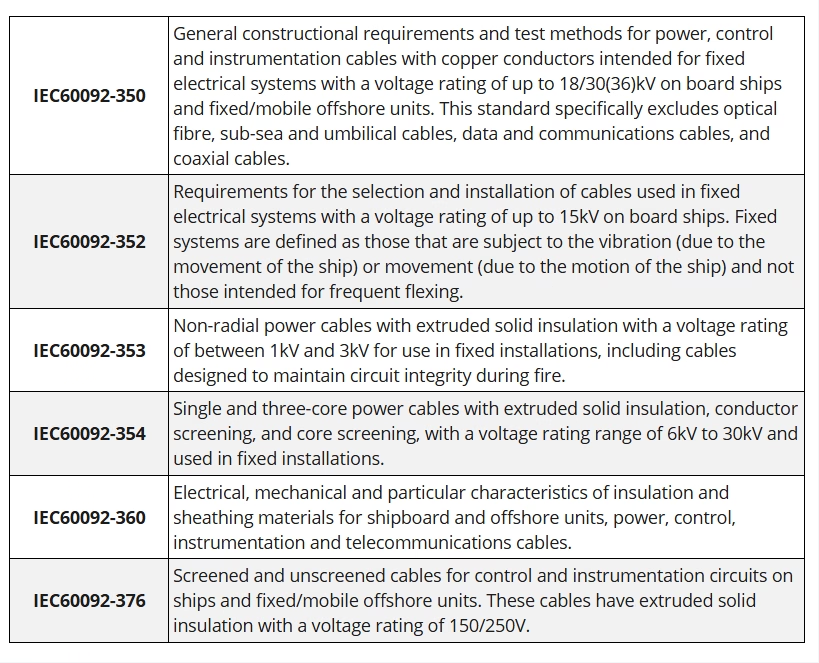
IEC 60092 is the international standard for electrical installations in ships and fixed/mobile marine applications. Ship wiring is covered by various national standards such as BS 6883 (British) and NEK 606 (Norwegian), and subject to third-party accreditations including Lloyd's Register, DNV (Det Norske Veritas), and ABS (American Bureau of Shipping). As an international standard, IEC 60092 covers power and instrumentation cables for use on ships and in mobile marine environments.

What is IEC 60092 Cable?

IEC 60092 cable, marine cable, shipboard cable, offshore cable, BS 6883 cable, NEK 606 cable, BFOU cable, RFOU cable, 657TQ cable, 658TQ cable, fire resistant marine cable, flame retardant cable, ship wiring, offshore platform cable, Lloyd’s Register approved, DNV certified, halogen free cable, LSZH marine cable, MUD resistant cable, IEC 60092-353, IEC 60092-354, IEC 60092-376, SW4 cable, EPR insulated, TCWB armoured, instrumentation cable, control cable, emergency power cable, oil rig cable, Feichun cable
The International Electrotechnical Commission (IEC) is the world's leading independent non-profit international standard-setting organization for electrical, electronic, and related technologies. Founded in 1906 with British Scientist Lord Kelvin as its first president, the IEC has over a century of expertise in developing international standards that form the basis for national and international standardization. All IEC standards are consensus-based and represent the needs of key stakeholders, with every member country having an equal vote.

What is IEC Cable?

IEC cable, IEC standard cable, IEC power cable, International Electrotechnical Commission cable, IEC 60228, IEC 60502, IEC 60331, IEC 60332, IEC cable standards, IEC compliant cable, international standard cable, IEC certified cable, IEC 60228, IEC 60228:2023, IEC 60228 conductor, IEC 60228 class 1, IEC 60228 class 2, IEC 60228 class 5, IEC 60228 class 6, IEC 60502, IEC 60502-1, IEC 60502-2, IEC 60502-4, IEC 60502-1:2021, IEC 60331, IEC 60331-1, IEC 60331-2, IEC 60331-21, IEC 60331-31, IEC 60332, IEC 60332-1, IEC 60332-1-2, IEC 60332-2, IEC 60332-3, IEC 60332-3-22, IEC 60332-3-23, IEC 60332-3-24, IEC 60332-3-25, IEC 61034, IEC 60754, IEC 60754-1, IEC 60754-2, IEC 60092, IEC 60702, IEC 60811, IEC 61158, IEC 60840
DNV (Det Norske Veritas) is an international accredited registrar and classification society headquartered in Høvik, Norway. As one of the world's leading classification societies, DNV provides certification, verification, and risk management services for the maritime, oil & gas, renewable energy, and other industries. DNV approved cables are electrical cables that have been tested, verified, and certified by DNV to meet stringent safety, quality, and performance standards for use in marine and offshore applications.

What is DNV Approved Cable?

offshore platform cable, drilling platform cable, oil rig cable, FPSO cable, jackup rig cable, semi-submersible cable, drillship cable, offshore wind farm cable, wind turbine cable, subsea cable, underwater cable, shipboard wiring cable, ship electrical cable, naval vessel cable, cruise ship cable, ferry cable, offshore substation cable, offshore power distribution, marine electrical installation