Class 5 flexible conductor

FLEXIDRUM® R 702: Advanced Salt-Spray Resistant Multi-Core Cable for Maritime Port Infrastructure and Container Handling Systems Engineered for extreme corrosive marine environments, the FLEXIDRUM® R 702 delivers proven salt-fog resistance combined with Class 5 flexible conductor technology, GAALTHERM® 630 thermoplastic insulation, and advanced anti-twisting textile reinforcement. Designed for automated container spreader bars, vertical lifting platforms, and offshore equipment exposed to continuous salt-spray cycles—meeting DIN VDE, EN, and IEC standards with reduced weight and diameter for enhanced installation flexibility in modern port automation infrastructure.

FLEXIDRUM® R 702

FLEXIDRUM® R 702: Advanced Salt-Spray Resistant Multi-Core Cable for Maritime Port Infrastructure and Container Handling Systems Engineered for extreme corrosive marine environments, the FLEXIDRUM® R 702 delivers proven salt-fog resistance combined with Class 5 flexible conductor technology, GAALTHERM® 630 thermoplastic insulation, and advanced anti-twisting textile reinforcement. Designed for automated container spreader bars, vertical lifting platforms, and offshore equipment exposed to continuous salt-spray cycles—meeting DIN VDE, EN, and IEC standards with reduced weight and diameter for enhanced installation flexibility in modern port automation infrastructure.
Feichun BASKET SPREADER 730: Advanced Aramide-Reinforced Industrial Basket Cable (300/500 V Nominal, −40 to +90°C Fixed Laying Extreme Temperature Envelope, −25°C Flexible Application, Proprietary Aramide Yarn Central Unit with 10 kN Minimum Tensile Strength for Vertical Load Suspension, Special EPR Rubber Insulation with Enhanced Low-Temperature Flexibility, Advanced CSP (Special Rubber) Outer Sheath with Comprehensive UV/Ozone/Moisture/Weather Resistance for Year-Round Outdoor Exposure, Class 5 Flexible Tinned Copper Conductor per IEC 60228, Sextuples Conductor Stranding with Optimized Lay-Length for Mechanical Durability & Electrical Performance, Non-Woven Synthetic Wrapper with Special Tape Wrapping, Comprehensive Oil, Water, & Chemical Resistance, 160 m/min High-Speed Basket Spreader Operation, 15×D Bending Radius (Mechanical Strength Priority), 4000 N Tensile Break Load (Constant Across All SKUs), FT2 Self-Extinguishing Flame Rating per DIN VDE 0482-265-2-1, Low Smoke & Corrosive Gas Emission per IEC 60754-1, Outdoor Vertical Use Certification, RoHS & CE Certification, 8+ SKU Configurations (6–9 Core Groups)): Comprehensive Advanced Industrial Lifting & Vertical Distribution Cable Architecture Analysis Integrating Aramide Fiber Mechanical Strength Engineering, Vertical Load Suspension Mechanics, Outdoor Weather-Resistance Polymer Chemistry, Temperature-Dependent Elastomer Flexibility, Rope-Grade Tensile Design, Port & Maritime Lifting System Integration, and Next-Generation Outdoor Temporary Power Distribution Integration

BASKET SPREADER 730

Feichun BASKET SPREADER 730: Advanced Aramide-Reinforced Industrial Basket Cable (300/500 V Nominal, −40 to +90°C Fixed Laying Extreme Temperature Envelope, −25°C Flexible Application, Proprietary Aramide Yarn Central Unit with 10 kN Minimum Tensile Strength for Vertical Load Suspension, Special EPR Rubber Insulation with Enhanced Low-Temperature Flexibility, Advanced CSP (Special Rubber) Outer Sheath with Comprehensive UV/Ozone/Moisture/Weather Resistance for Year-Round Outdoor Exposure, Class 5 Flexible Tinned Copper Conductor per IEC 60228, Sextuples Conductor Stranding with Optimized Lay-Length for Mechanical Durability & Electrical Performance, Non-Woven Synthetic Wrapper with Special Tape Wrapping, Comprehensive Oil, Water, & Chemical Resistance, 160 m/min High-Speed Basket Spreader Operation, 15×D Bending Radius (Mechanical Strength Priority), 4000 N Tensile Break Load (Constant Across All SKUs), FT2 Self-Extinguishing Flame Rating per DIN VDE 0482-265-2-1, Low Smoke & Corrosive Gas Emission per IEC 60754-1, Outdoor Vertical Use Certification, RoHS & CE Certification, 8+ SKU Configurations (6–9 Core Groups)): Comprehensive Advanced Industrial Lifting & Vertical Distribution Cable Architecture Analysis Integrating Aramide Fiber Mechanical Strength Engineering, Vertical Load Suspension Mechanics, Outdoor Weather-Resistance Polymer Chemistry, Temperature-Dependent Elastomer Flexibility, Rope-Grade Tensile Design, Port & Maritime Lifting System Integration, and Next-Generation Outdoor Temporary Power Distribution Integration
The (N)SSHÖU designation represents a family of European rubber-insulated cables designed and manufactured to German VDE standards, specifically VDE 0250-812. The designation encodes the cable's fundamental characteristics: flexible power transmission cable suitable for mining and industrial applications. The baseline European design is optimized for 0.6/1kV operation, representing the standard voltage rating for TN earthing systems prevalent throughout Europe and North America. (N)SSHÖU代表一系列欧洲橡胶绝缘电缆,按照德国VDE标准(特别是VDE 0250-812)设计和制造。该名称编码了电缆的基本特征:适合采矿和工业应用的灵活电力传输电缆。欧洲基线设计针对0.6/1kV运行进行了优化,代表了欧洲和北美普遍存在的TN接地系统的标准电压额定值。

Insulation Thickness Differences: How AS/NZS 1.1/1.1kV Modifies (N)SSHÖU Cable Structure

The (N)SSHÖU designation represents a family of European rubber-insulated cables designed and manufactured to German VDE standards, specifically VDE 0250-812. The designation encodes the cable’s fundamental characteristics: flexible power transmission cable suitable for mining and industrial applications. The baseline European design is optimized for 0.6/1kV operation, representing the standard voltage rating for TN earthing systems prevalent throughout Europe and North America. (N)SSHÖU代表一系列欧洲橡胶绝缘电缆,按照德国VDE标准(特别是VDE 0250-812)设计和制造。该名称编码了电缆的基本特征:适合采矿和工业应用的灵活电力传输电缆。欧洲基线设计针对0.6/1kV运行进行了优化,代表了欧洲和北美普遍存在的TN接地系统的标准电压额定值。
The NSSHÖU-J 4G95 0.6/1kV industrial mining cable is technically rated for temporary water immersion and is commonly used in open-pit and underground mining environments, but it is not specifically qualified for permanent submersion in acidic mine water and using it in this application is classified as beyond its design envelope. While the cable's EPR insulation (3GI3) and CPE outer sheath (5GM5) provide adequate resistance to neutral water and brief acidic exposure, permanent submersion in acidic mine water with pH values of 2.0 to 4.0—typical of copper and gold mining operations—accelerates material degradation to the point where service life drops to approximately 18 to 36 months compared to 8 to 10 years in neutral water applications. The fundamental issue is not that the cable fails immediately when deployed in acidic water (it does not), but rather that the aggressive acidic environment causes progressive swelling of the jacket, penetration of H⁺ ions into the insulation layer, electrochemical corrosion of the tinned copper conductor, and cumulative electrical property loss that eventually results in insulation breakdown. This distinction between "survives temporary exposure" and "safe for permanent submersion" is critically important to understand: a cable can physically remain intact for months or even a year or more in acidic water, but the electrical properties are degrading silently, and catastrophic failure can occur suddenly when the insulation resistance drops below critical thresholds. For submersible pump applications in acidic mine water, engineers should specify cables explicitly designed for this service, such as H07RN8-F submersible pump cables with specialized halogen-free formulations, or upgrade to acidic-resistant variants of marine-grade cables rated for chemical exposure. The standard NSSHÖU-J cable can be used in acidic mine water applications only if the operational requirement is for temporary or seasonal service (less than 6 months per year), coupled with rigorous monitoring protocols and planned replacement intervals of 12 to 18 months rather than the standard 5 to 7 year intervals appropriate for neutral water service.

Submersible Pump Cable Safety: Can NSSHÖU-J 4G95 0.6/1kV Withstand Permanent Submersion in Acidic Mine Water?

The NSSHÖU-J 4G95 0.6/1kV industrial mining cable is technically rated for temporary water immersion and is commonly used in open-pit and underground mining environments, but it is not specifically qualified for permanent submersion in acidic mine water and using it in this application is classified as beyond its design envelope. While the cable’s EPR insulation (3GI3) and CPE outer sheath (5GM5) provide adequate resistance to neutral water and brief acidic exposure, permanent submersion in acidic mine water with pH values of 2.0 to 4.0—typical of copper and gold mining operations—accelerates material degradation to the point where service life drops to approximately 18 to 36 months compared to 8 to 10 years in neutral water applications. The fundamental issue is not that the cable fails immediately when deployed in acidic water (it does not), but rather that the aggressive acidic environment causes progressive swelling of the jacket, penetration of H⁺ ions into the insulation layer, electrochemical corrosion of the tinned copper conductor, and cumulative electrical property loss that eventually results in insulation breakdown. This distinction between “survives temporary exposure” and “safe for permanent submersion” is critically important to understand: a cable can physically remain intact for months or even a year or more in acidic water, but the electrical properties are degrading silently, and catastrophic failure can occur suddenly when the insulation resistance drops below critical thresholds. For submersible pump applications in acidic mine water, engineers should specify cables explicitly designed for this service, such as H07RN8-F submersible pump cables with specialized halogen-free formulations, or upgrade to acidic-resistant variants of marine-grade cables rated for chemical exposure. The standard NSSHÖU-J cable can be used in acidic mine water applications only if the operational requirement is for temporary or seasonal service (less than 6 months per year), coupled with rigorous monitoring protocols and planned replacement intervals of 12 to 18 months rather than the standard 5 to 7 year intervals appropriate for neutral water service.
The nominal width of a (N)TSFLCGEWÖU 4x120 0.6/1kV shielded flat trailing cable is approximately 91 mm (3.58 inches), with a tolerance window of ±3.5 mm producing a permissible range of 87.5–94.5 mm. The nominal thickness is approximately 27.5 mm (1.08 inches), with a tolerance window of ±1.5 mm producing a permissible range of 26.0–29.0 mm. The approximate total weight of this cable is 8,200 kg/km (5,500 lbs/1000 ft), with copper weight approximately 5,250 kg/km. It features four 120 mm² main power conductors rated for 321 amperes continuous operation at 30°C ambient, supplemented by individual copper braid shielding on each conductor for electromagnetic compatibility (EMC) with variable-frequency drives and other sensitive equipment. The distinction between width and thickness for flat cables differs fundamentally from round cable specifications because flat cables do not have a single outer diameter. Instead, engineers must manage two dimensions simultaneously, and these dimensions directly determine whether the cable will fit into festoon track systems, contact shoe assemblies, and guidance rail configurations commonly deployed in overhead crane systems and automated material handling equipment.

What is the Width and Thickness of (N)TSFLCGEWÖU 4×120 0.6/1kV Shielded Flat Cable?

The nominal width of a (N)TSFLCGEWÖU 4×120 0.6/1kV shielded flat trailing cable is approximately 91 mm (3.58 inches), with a tolerance window of ±3.5 mm producing a permissible range of 87.5–94.5 mm. The nominal thickness is approximately 27.5 mm (1.08 inches), with a tolerance window of ±1.5 mm producing a permissible range of 26.0–29.0 mm. The approximate total weight of this cable is 8,200 kg/km (5,500 lbs/1000 ft), with copper weight approximately 5,250 kg/km. It features four 120 mm² main power conductors rated for 321 amperes continuous operation at 30°C ambient, supplemented by individual copper braid shielding on each conductor for electromagnetic compatibility (EMC) with variable-frequency drives and other sensitive equipment. The distinction between width and thickness for flat cables differs fundamentally from round cable specifications because flat cables do not have a single outer diameter. Instead, engineers must manage two dimensions simultaneously, and these dimensions directly determine whether the cable will fit into festoon track systems, contact shoe assemblies, and guidance rail configurations commonly deployed in overhead crane systems and automated material handling equipment.
In the Nexans handling cable catalog, yellow outer sheaths are predominantly used for low-voltage (0.6/1 kV) RHEYCORD® series cables, while red outer sheaths identify medium-voltage (3–30 kV) RHEYFIRM® series cables. This color differentiation serves as a critical visual safety indicator for voltage level identification in industrial environments. 在耐克森搬运电缆目录中,黄色外护套主要用于低压(0.6/1 kV) RHEYCORD®系列电缆,而红色外护套用于标识中压(3–30 kV) RHEYFIRM®系列电缆。这种颜色区分是工业环境中电压等级识别的重要视觉安全指标。

Yellow vs. Red Sheath: Decoding Nexans RHEYFIRM® Color Codes

In the Nexans handling cable catalog, yellow outer sheaths are predominantly used for low-voltage (0.6/1 kV) RHEYCORD® series cables, while red outer sheaths identify medium-voltage (3–30 kV) RHEYFIRM® series cables. This color differentiation serves as a critical visual safety indicator for voltage level identification in industrial environments. 在耐克森搬运电缆目录中,黄色外护套主要用于低压(0.6/1 kV) RHEYCORD®系列电缆,而红色外护套用于标识中压(3–30 kV) RHEYFIRM®系列电缆。这种颜色区分是工业环境中电压等级识别的重要视觉安全指标。
Overland conveyor systems represent critical infrastructure for bulk material handling across mining, quarrying, and heavy industrial operations. When these systems extend beyond 5 kilometers, the selection of appropriate power distribution cables becomes a paramount engineering decision that directly impacts operational reliability, maintenance costs, and system longevity. According to industry standards published by the International Electrotechnical Commission, power cables for such applications must meet rigorous mechanical and electrical performance criteria to withstand the demanding operational environment. This technical analysis examines two primary cable architectures utilized in extended overland conveyor applications: armoured cables and flexible cables. Each design philosophy addresses specific operational requirements, with armoured configurations prioritizing mechanical protection for fixed installations, while flexible designs accommodate dynamic loading and continuous motion requirements. The selection between these cable types fundamentally depends on installation methodology, environmental conditions, mechanical stress profiles, and long-term operational economics.

Overland Conveyor Systems: Armoured vs. Flexible Cables for 5km+ Power Distribution

Overland conveyor systems represent critical infrastructure for bulk material handling across mining, quarrying, and heavy industrial operations. When these systems extend beyond 5 kilometers, the selection of appropriate power distribution cables becomes a paramount engineering decision that directly impacts operational reliability, maintenance costs, and system longevity. According to industry standards published by the International Electrotechnical Commission, power cables for such applications must meet rigorous mechanical and electrical performance criteria to withstand the demanding operational environment. This technical analysis examines two primary cable architectures utilized in extended overland conveyor applications: armoured cables and flexible cables. Each design philosophy addresses specific operational requirements, with armoured configurations prioritizing mechanical protection for fixed installations, while flexible designs accommodate dynamic loading and continuous motion requirements. The selection between these cable types fundamentally depends on installation methodology, environmental conditions, mechanical stress profiles, and long-term operational economics.
Metso Lokotrack mobile crushing and screening plants have been a leading solution in the aggregates production and recycling industries since their introduction in 1985. These track-mounted machines combine complete mobility with high crushing capacity, enabling operations to process materials efficiently at production sites or move between locations with minimal setup time. The Lokotrack series includes jaw crushers (LT Series), cone crushers, and horizontal/vertical shaft impact (HSI/VSI) crushers designed for primary, secondary, and tertiary crushing applications. 美卓Lokotrack移动破碎和筛分设备自1985年推出以来,一直是骨料生产和回收行业的领先解决方案。这些履带式设备将完全的移动性与高破碎产能相结合,能够在生产现场高效处理物料,或以最短的安装时间在不同地点之间转移。

Metso Mobile Crushers (Lokotrack): Vibration Resistant Power Cables for Portable Plants

Metso Lokotrack mobile crushing and screening plants have been a leading solution in the aggregates production and recycling industries since their introduction in 1985. These track-mounted machines combine complete mobility with high crushing capacity, enabling operations to process materials efficiently at production sites or move between locations with minimal setup time. The Lokotrack series includes jaw crushers (LT Series), cone crushers, and horizontal/vertical shaft impact (HSI/VSI) crushers designed for primary, secondary, and tertiary crushing applications. 美卓Lokotrack移动破碎和筛分设备自1985年推出以来,一直是骨料生产和回收行业的领先解决方案。这些履带式设备将完全的移动性与高破碎产能相结合,能够在生产现场高效处理物料,或以最短的安装时间在不同地点之间转移。
Underground room-and-pillar mining operations present unique challenges for trailing cables. The Komatsu Joy 12HM series continuous miners must navigate through tight corners and confined spaces while maintaining continuous power supply. The trailing cable—connecting the miner to the power distribution system—must bend around right-angle turns, withstand crushing forces from equipment run-over, and maintain electrical integrity through thousands of flexing cycles without failure. 地下房柱式采矿作业对拖缆提出了独特的挑战。小松Joy 12HM系列连续采煤机必须在保持连续供电的同时穿越紧凑的转角和狭窄空间。连接采煤机与配电系统的拖缆必须能够绑过直角弯道,承受设备碾压的压力,并在数千次弯曲循环中保持电气完整性而不发生故障。

Komatsu Joy 12HM31 Continuous Miner: High-Flexibility Trailing Cables for Tight Corners

Underground room-and-pillar mining operations present unique challenges for trailing cables. The Komatsu Joy 12HM series continuous miners must navigate through tight corners and confined spaces while maintaining continuous power supply. The trailing cable—connecting the miner to the power distribution system—must bend around right-angle turns, withstand crushing forces from equipment run-over, and maintain electrical integrity through thousands of flexing cycles without failure. 地下房柱式采矿作业对拖缆提出了独特的挑战。小松Joy 12HM系列连续采煤机必须在保持连续供电的同时穿越紧凑的转角和狭窄空间。连接采煤机与配电系统的拖缆必须能够绑过直角弯道,承受设备碾压的压力,并在数千次弯曲循环中保持电气完整性而不发生故障。
The maximum allowable pilot loop resistance for Type 450 mining cables operating with Ampcontrol earth continuity relays represents a critical electrical parameter that directly impacts mine safety and operational reliability. This comprehensive technical analysis examines the interaction between AS/NZS 2802:2000 Type 450 cable specifications and Ampcontrol relay requirements, providing mining engineers and electrical designers with authoritative guidance for proper system design and selection. 与Ampcontrol地电连续继电器配合使用的Type 450矿用电缆的最大允许导向回路电阻是一个直接影响矿山安全和运行可靠性的关键电气参数。本全面技术分析检查了AS/NZS 2802:2000 Type 450电缆规格与Ampcontrol继电器要求之间的相互作用,为矿业工程师和电气设计师提供了正确系统设计和选择的权威指导。

PROTOLON (SB) NTSCGEWOEU I 3 – 30 KV

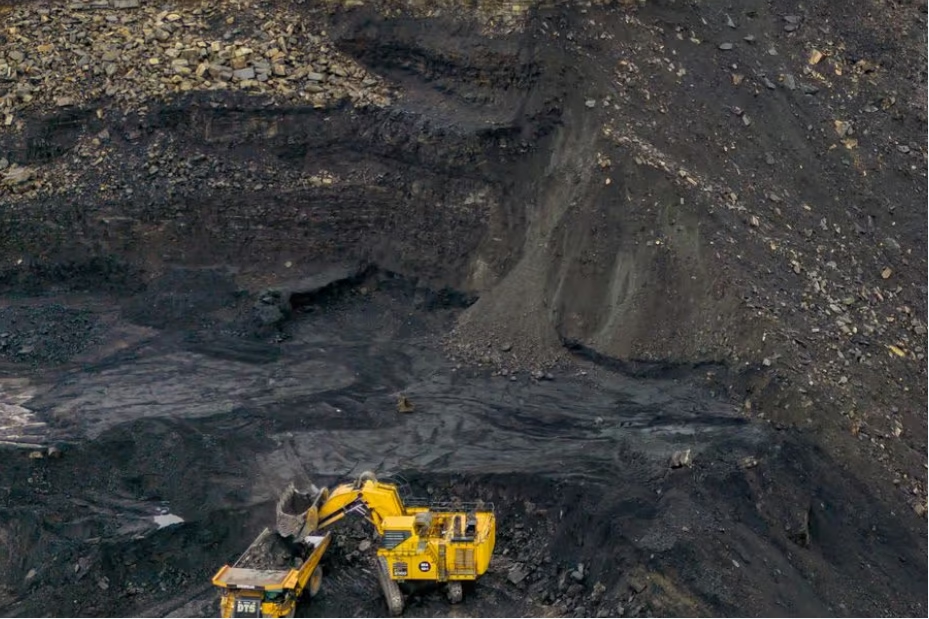
These cables serve as power supply or connection cables for large material handling machines, such as excavators in opencast mines, subjected to extremely high mechanical stresses where abrasion and chaffing stresses are expected in trailing operation. 这些电缆用作大型物料搬运机械(如露天矿山挖掘机)的电源或连接电缆,在拖曳作业中承受极高的机械应力、磨损和摩擦应力。
The Australian and New Zealand electrical cable markets have been historically dominated by two major premium brands that established strong reputations over decades of operation. Olex Versolex, manufactured by Nexans Australia (formerly Olex Cables), represents a flagship line of flexible single-core and multicore power cables that comply fully with AS/NZS 5000.1 standards. These cables feature Class 5 flexible copper conductors, X-90 XLPE (Cross-Linked Polyethylene) insulation rated for 90 degrees Celsius continuous operation, and TPE-90 or PVC sheathing suitable for a wide range of commercial, industrial, and mining applications. The Versolex range has earned recognition for its robustness, durability, and suitability for submersible applications up to 500 meters depth, making it a preferred choice for demanding installations where reliability is paramount. 澳大利亚和新西兰电缆市场历来由两个在数十年运营中建立了强大声誉的主要高端品牌主导。由Nexans澳大利亚(前身为Olex电缆)制造的Olex Versolex代表了一系列旗舰柔性单芯和多芯电力电缆,完全符合AS/NZS 5000.1标准。这些电缆采用5类柔性铜导体、额定90摄氏度连续运行的X-90 XLPE(交联聚乙烯)绝缘以及适用于各种商业、工业和采矿应用的TPE-90或PVC护套。

Cost-Effective Generic Alternatives to Olex Versolex and Prysmian Cables

The Australian and New Zealand electrical cable markets have been historically dominated by two major premium brands that established strong reputations over decades of operation. Olex Versolex, manufactured by Nexans Australia (formerly Olex Cables), represents a flagship line of flexible single-core and multicore power cables that comply fully with AS/NZS 5000.1 standards. These cables feature Class 5 flexible copper conductors, X-90 XLPE (Cross-Linked Polyethylene) insulation rated for 90 degrees Celsius continuous operation, and TPE-90 or PVC sheathing suitable for a wide range of commercial, industrial, and mining applications. The Versolex range has earned recognition for its robustness, durability, and suitability for submersible applications up to 500 meters depth, making it a preferred choice for demanding installations where reliability is paramount. 澳大利亚和新西兰电缆市场历来由两个在数十年运营中建立了强大声誉的主要高端品牌主导。由Nexans澳大利亚(前身为Olex电缆)制造的Olex Versolex代表了一系列旗舰柔性单芯和多芯电力电缆,完全符合AS/NZS 5000.1标准。这些电缆采用5类柔性铜导体、额定90摄氏度连续运行的X-90 XLPE(交联聚乙烯)绝缘以及适用于各种商业、工业和采矿应用的TPE-90或PVC护套。
The question of whether (N)SHTÖU control cables comply with RoHS 3 lead-free and phthalate-free directives is critically important for manufacturers, importers, and end-users operating within the European Union and increasingly global markets. (N)SHTÖU cables represent specialized heavy-duty flexible control and power cables manufactured according to German standard VDE 0250 Part 814, designed specifically for demanding applications involving cable reeling systems, cranes, material handling equipment, and industrial automation where simultaneous tensile and torsional stresses occur during operation. 关于(N)SHTÖU控制电缆是否符合RoHS 3无铅和无邻苯二甲酸盐指令的问题,对于在欧盟和日益全球化市场中运营的制造商、进口商和最终用户至关重要。(N)SHTÖU电缆代表根据德国标准VDE 0250第814部分制造的专业重型柔性控制和电力电缆,专门设计用于涉及电缆卷绕系统、起重机、物料搬运设备和工业自动化的苛刻应用,在操作过程中会发生同时的拉伸和扭转应力。

RoHS 3 Compliance: Are (N)SHTÖU Control Cables Lead-Free and Phthalate-Free?

The question of whether (N)SHTÖU control cables comply with RoHS 3 lead-free and phthalate-free directives is critically important for manufacturers, importers, and end-users operating within the European Union and increasingly global markets. (N)SHTÖU cables represent specialized heavy-duty flexible control and power cables manufactured according to German standard VDE 0250 Part 814, designed specifically for demanding applications involving cable reeling systems, cranes, material handling equipment, and industrial automation where simultaneous tensile and torsional stresses occur during operation. 关于(N)SHTÖU控制电缆是否符合RoHS 3无铅和无邻苯二甲酸盐指令的问题,对于在欧盟和日益全球化市场中运营的制造商、进口商和最终用户至关重要。(N)SHTÖU电缆代表根据德国标准VDE 0250第814部分制造的专业重型柔性控制和电力电缆,专门设计用于涉及电缆卷绕系统、起重机、物料搬运设备和工业自动化的苛刻应用,在操作过程中会发生同时的拉伸和扭转应力。
The question of whether NSSHÖU cables require CE marking for European surface mining operations involves a nuanced understanding of European Union electrical equipment regulations. NSSHÖU cables, manufactured according to the German standard DIN VDE 0250 Part 812, are heavy-duty rubber-sheathed flexible cables specifically designed for mining and industrial applications where extreme mechanical stress, abrasion resistance, and environmental durability are essential operational requirements. NSSHÖU电缆在欧洲露天采矿作业中是否需要CE标志的问题涉及对欧盟电气设备法规的细致理解。NSSHÖU电缆根据德国标准DIN VDE 0250第812部分制造,是专门为采矿和工业应用设计的重型橡胶护套柔性电缆,在这些应用中,极端的机械应力、耐磨性和环境耐久性是基本的操作要求。

CE Marking: Do NSSHÖU Cables Require a CE Mark for Use in European Surface Mining Operations?

The question of whether NSSHÖU cables require CE marking for European surface mining operations involves a nuanced understanding of European Union electrical equipment regulations. NSSHÖU cables, manufactured according to the German standard DIN VDE 0250 Part 812, are heavy-duty rubber-sheathed flexible cables specifically designed for mining and industrial applications where extreme mechanical stress, abrasion resistance, and environmental durability are essential operational requirements. NSSHÖU电缆在欧洲露天采矿作业中是否需要CE标志的问题涉及对欧盟电气设备法规的细致理解。NSSHÖU电缆根据德国标准DIN VDE 0250第812部分制造,是专门为采矿和工业应用设计的重型橡胶护套柔性电缆,在这些应用中,极端的机械应力、耐磨性和环境耐久性是基本的操作要求。
(N)TSCGEWÖU medium voltage reeling cable represents a specialized engineering solution designed for extreme mechanical stress applications in mining, material handling, and heavy industrial operations. When evaluating performance in Arctic environments with sustained temperatures of negative forty degrees Celsius, the cable's construction and material specifications demonstrate compliance with international cold performance standards, making it technically suitable for continuous operation in such demanding conditions.

Can (N)TSCGEWÖU Cables Handle Continuous Operation in -40°C Arctic Environments (Cold Impact Test)?

(N)TSCGEWÖU medium voltage reeling cable represents a specialized engineering solution designed for extreme mechanical stress applications in mining, material handling, and heavy industrial operations. When evaluating performance in Arctic environments with sustained temperatures of negative forty degrees Celsius, the cable’s construction and material specifications demonstrate compliance with international cold performance standards, making it technically suitable for continuous operation in such demanding conditions.
(N)TMCGEWÖU and reeling cables designated (N)TSCGEWÖU represents more than nomenclature. These cable types embody fundamentally different engineering approaches to managing mechanical stress, electrical performance, and operational reliability. While both cables conform to DIN VDE 0250 Part 813 standards and share similar voltage ratings from 3.6/6 kV to 18/30 kV, their construction reflects distinct design philosophies optimized for specific movement patterns and stress profiles. 在中压矿用电缆应用中,(N)TMCGEWÖU拖曳电缆和(N)TSCGEWÖU卷筒电缆之间的区别不仅仅是命名差异。这些电缆类型体现了管理机械应力、电气性能和运行可靠性的根本不同的工程方法。

(N)TMCGEWÖU vs. (N)TSCGEWÖU: Can I use a Medium Voltage Trailing cable for a Reeling application?

(N)TMCGEWÖU and reeling cables designated (N)TSCGEWÖU represents more than nomenclature. These cable types embody fundamentally different engineering approaches to managing mechanical stress, electrical performance, and operational reliability. While both cables conform to DIN VDE 0250 Part 813 standards and share similar voltage ratings from 3.6/6 kV to 18/30 kV, their construction reflects distinct design philosophies optimized for specific movement patterns and stress profiles. 在中压矿用电缆应用中,(N)TMCGEWÖU拖曳电缆和(N)TSCGEWÖU卷筒电缆之间的区别不仅仅是命名差异。这些电缆类型体现了管理机械应力、电气性能和运行可靠性的根本不同的工程方法。
Ozone resistance represents one of the most critical yet frequently overlooked material performance requirements for elastomeric power cables operating in demanding outdoor environments. This characteristic becomes particularly important for mining cables manufactured with rubber insulation and sheathing compounds, where exposure to atmospheric ozone can initiate premature degradation mechanisms that compromise both electrical performance and mechanical integrity. The DIN VDE 0472-805 standard, titled "Testing of cables, wires and flexible cords; Ozone resistance," establishes comprehensive test procedures for evaluating whether cable materials can withstand ozone exposure without developing the characteristic surface cracking that signals material breakdown.

What is the “Ozone Resistance” test procedure defined in VDE 0472, and why is it critical for (N)TSCGEWÖU cables in open-pit mines?

Ozone resistance represents one of the most critical yet frequently overlooked material performance requirements for elastomeric power cables operating in demanding outdoor environments. This characteristic becomes particularly important for mining cables manufactured with rubber insulation and sheathing compounds, where exposure to atmospheric ozone can initiate premature degradation mechanisms that compromise both electrical performance and mechanical integrity. The DIN VDE 0472-805 standard, titled “Testing of cables, wires and flexible cords; Ozone resistance,” establishes comprehensive test procedures for evaluating whether cable materials can withstand ozone exposure without developing the characteristic surface cracking that signals material breakdown.
NSSHKCGEOEU (Schräm-TENAX®-VE) — это специализированный кабель для угольных комбайнов с уникальной системой обнаружения повреждений от раздавливания. Кабель соответствует стандартам DIN VDE 0250, часть 812 и DIN VDE 0472, часть 818 («Поведение при сжимающей нагрузке»), что гарантирует обнаружение повреждений от раздавливания как замыканий на землю с максимальной надёжностью. Инновационная конструкция с центральным разделителем-корзиной из проводящей резины и распределённым заземляющим проводником обеспечивает превосходную защиту при экстремальных механических нагрузках, характерных для работы угольных комбайнов.

How do EMC-compliant VDE cables like (N)2XCCY differ structurally from standard screened mining cables like (N)TSCGEWÖU?

The distinction between EMC-compliant distribution cables such as the N2XCCY series manufactured according to DIN VDE 0276-620 standards and heavy-duty mining cables like the NTSCGEWÖU series designed per DIN VDE 0250-813 specifications reveals how cable construction must adapt to specific electromagnetic environments and mechanical demands. Understanding these structural differences provides essential insight for engineers specifying cables in installations where electromagnetic interference control is paramount alongside mechanical reliability.
The choice of conductor material in electrical cables represents a critical engineering decision that directly impacts cable longevity, performance, and safety. German VDE standards, particularly DIN VDE 0250, specify tinned copper conductors for rubber-insulated cables such as NSSHÖU, while PVC-insulated cables commonly utilize bare (plain) copper conductors. This technical distinction arises from fundamental differences in material chemistry and vulcanization processes. 电缆导体材料的选择是一项关键的工程决策,直接影响电缆的寿命、性能和安全性。德国VDE标准,特别是DIN VDE 0250,规定橡胶绝缘电缆(如NSSHÖU)必须使用镀锡铜导体,而PVC绝缘电缆通常使用裸铜导体。这一技术区别源于材料化学和硫化工艺的根本差异。

Tinned Copper: Why Do VDE Standards Typically Require Tinned Copper Conductors for Rubber Cables Like NSSHÖU, Whereas PVC Cables Often Use Bare Copper?

The choice of conductor material in electrical cables represents a critical engineering decision that directly impacts cable longevity, performance, and safety. German VDE standards, particularly DIN VDE 0250, specify tinned copper conductors for rubber-insulated cables such as NSSHÖU, while PVC-insulated cables commonly utilize bare (plain) copper conductors. This technical distinction arises from fundamental differences in material chemistry and vulcanization processes. 电缆导体材料的选择是一项关键的工程决策,直接影响电缆的寿命、性能和安全性。德国VDE标准,特别是DIN VDE 0250,规定橡胶绝缘电缆(如NSSHÖU)必须使用镀锡铜导体,而PVC绝缘电缆通常使用裸铜导体。这一技术区别源于材料化学和硫化工艺的根本差异。
The German national standard DIN VDE 0250 covers cables, wires, and flexible cords for power installations. This standard has achieved global recognition as the definitive benchmark for tough rubber-sheathed flexible cables. Germany remains the only country to have issued specialized design regulations for flexible electrical cables covering cranes, material handling equipment, and mining machinery, which explains why DIN VDE 0250 is widely accepted internationally for demanding industrial applications. (德国国家标准DIN VDE 0250涵盖电力设施用电缆、电线和软线。该标准已成为坚固橡胶护套柔性电缆的全球公认基准。德国是唯一一个为起重机、物料搬运设备和采矿机械的柔性电缆发布专门设计规范的国家,这解释了为什么DIN VDE 0250在要求苛刻的工业应用中被国际广泛接受。)

DIN VDE 0250: Part 812 (Mobile Equipment) vs Part 813 (Mining & Industry)

The German national standard DIN VDE 0250 covers cables, wires, and flexible cords for power installations. This standard has achieved global recognition as the definitive benchmark for tough rubber-sheathed flexible cables. Germany remains the only country to have issued specialized design regulations for flexible electrical cables covering cranes, material handling equipment, and mining machinery, which explains why DIN VDE 0250 is widely accepted internationally for demanding industrial applications. (德国国家标准DIN VDE 0250涵盖电力设施用电缆、电线和软线。该标准已成为坚固橡胶护套柔性电缆的全球公认基准。德国是唯一一个为起重机、物料搬运设备和采矿机械的柔性电缆发布专门设计规范的国家,这解释了为什么DIN VDE 0250在要求苛刻的工业应用中被国际广泛接受。)
NTSCGEWÖU and NTMCGEWÖU cables represent critical technical solutions for powering mobile machinery in mining, heavy industry, and material handling environments. Both cable types are manufactured according to the German DIN VDE 0250 standard, which is globally recognized as the definitive benchmark for tough rubber-sheathed flexible cables designed for cranes and material handling equipment. The fundamental distinction lies in their sheath construction: the "S" in NTSCGEWÖU indicates a double rubber sheath (Schwer = heavy-duty) providing enhanced mechanical protection for reeling applications, while "M" in NTMCGEWÖU denotes a single sheath with single-core design optimized for short-length medium voltage connections. According to industry specifications, Germany remains the only country to have issued special design regulations for flexible electrical cables covering cranes and material handling equipment, making DIN VDE 0250 the ultimate international standard for these demanding applications.

كيف تختار بين NTSCGEWÖU و NTMCGEWÖU للآلات المتحركة؟

NTSCGEWÖU and NTMCGEWÖU cables represent critical technical solutions for powering mobile machinery in mining, heavy industry, and material handling environments. Both cable types are manufactured according to the German DIN VDE 0250 standard, which is globally recognized as the definitive benchmark for tough rubber-sheathed flexible cables designed for cranes and material handling equipment. The fundamental distinction lies in their sheath construction: the “S” in NTSCGEWÖU indicates a double rubber sheath (Schwer = heavy-duty) providing enhanced mechanical protection for reeling applications, while “M” in NTMCGEWÖU denotes a single sheath with single-core design optimized for short-length medium voltage connections. According to industry specifications, Germany remains the only country to have issued special design regulations for flexible electrical cables covering cranes and material handling equipment, making DIN VDE 0250 the ultimate international standard for these demanding applications.
Кабель H07RN-F / A07RN-F имеет сложную многослойную конструкцию, разработанную для максимальной долговечности и электрических характеристик. Проводник состоит из тонкоскрученных медных проволок (лужёных для сечений до 10мм²), соответствующих требованиям гибкости класса 5 по IEC 60228. Изоляционный слой выполнен из этиленпропиленовой резиновой смеси класса EI4 — в частности, наша запатентованная формула TENAX®-O — обеспечивает исключительную озоностойкость, УФ-стабильность и устраняет необходимость дополнительной защиты жил в точках подключения.

Что такое гибкий кабель с резиновой изоляцией гармонизированной конструкции TENAX®-O H07RN-F A07RN-F?

Кабель H07RN-F / A07RN-F имеет сложную многослойную конструкцию, разработанную для максимальной долговечности и электрических характеристик. Проводник состоит из тонкоскрученных медных проволок (лужёных для сечений до 10мм²), соответствующих требованиям гибкости класса 5 по IEC 60228. Изоляционный слой выполнен из этиленпропиленовой резиновой смеси класса EI4 — в частности, наша запатентованная формула TENAX®-O — обеспечивает исключительную озоностойкость, УФ-стабильность и устраняет необходимость дополнительной защиты жил в точках подключения.
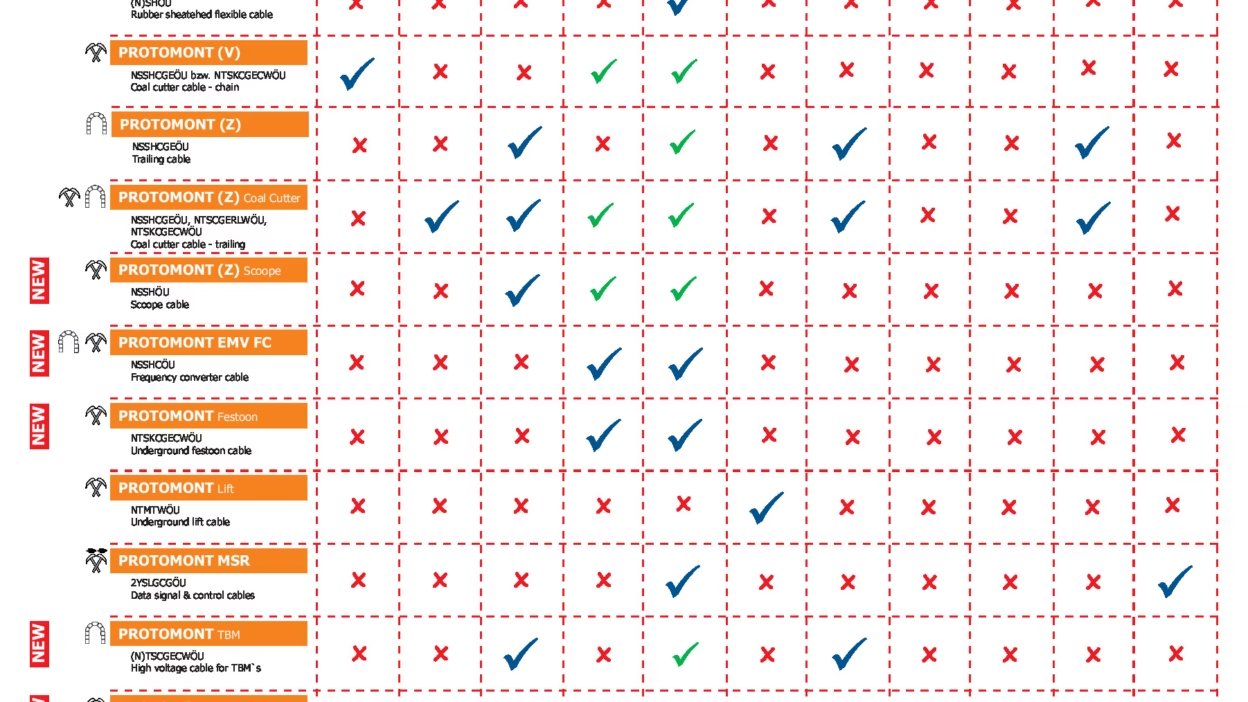
Prysmian Mining Application Systems represent a comprehensive portfolio of specialized cables engineered for the demanding environments of underground mining, tunneling operations, and opencast mining facilities. Developed by Prysmian Group, the world's largest cable manufacturer with over 140 years of expertise, these systems encompass multiple product families including PROTOLON (medium voltage flexible cables), PROTOMONT (rubber-sheathed flexible cables), OPTOFLEX (fiber optic cables), and CORDAFLEX (scraper cables).

What is Prysmian Mining Application systems ?

矿用电缆, 采煤机电缆, 拖曳电缆, 橡套电缆, 中压柔性电缆, 煤矿电缆, 隧道掘进机电缆, горнодобывающий кабель, шахтный кабель, гибкий кабель для шахт, кабель для угольных комбайнов, тянущийся кабель PROTOLON cable, PROTOMONT cable, OPTOFLEX mining cable, CORDAFLEX scraper cable, SUPROMONT power feeder cable, NTMCGCWÖU cable, NTSCGEWÖU cable, NTSCGCEWÖU cable, NSSHÖU cable, NSHÖU mining cable, NSSHCGEÖU coal cutter cable, NSHTÖU scraper cable, NYHSSYCY feeder cable, N3GHSSYCY rubber cable, NTSKGCFCWÖU festoon cable, NTMHWÖU lift cable, ZYSLGCGÖU MSR cable
The global water treatment industry represents one of the most critical infrastructure sectors, serving both municipal drinking water systems and industrial wastewater processing facilities. According to the World Bank, approximately 2.2 billion people worldwide lack access to safely managed drinking water services, driving unprecedented investment in water treatment infrastructure. The U.S. Environmental Protection Agency (EPA) estimates that water utilities in the United States alone require over $470 billion in infrastructure investment over the next two decades.
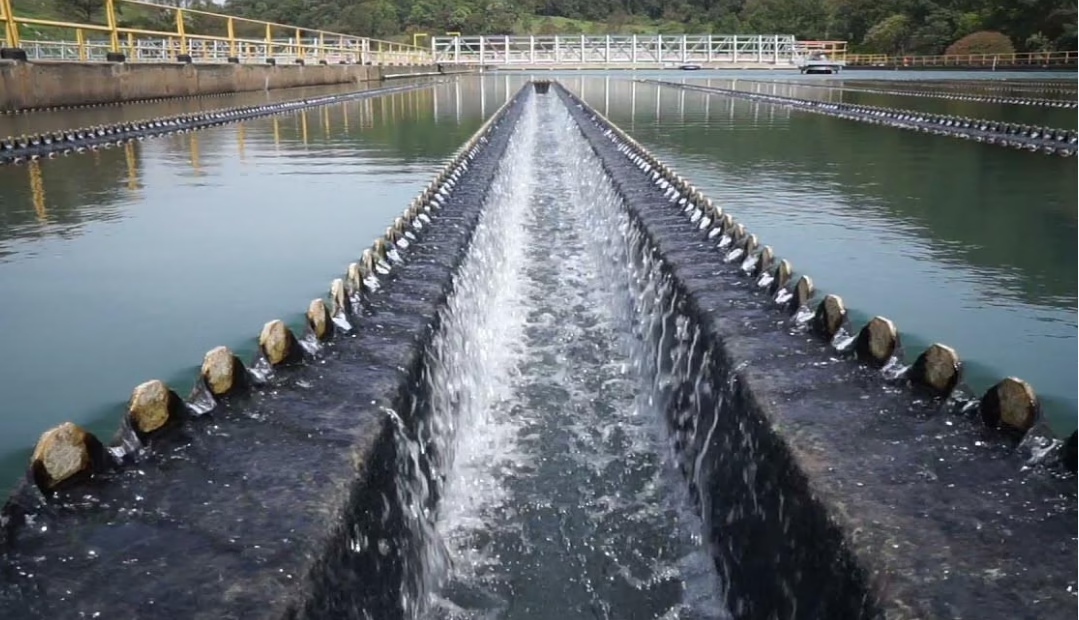
Water Treatment Cables

H07RN-F rubber flexible cable, H07RN-8-F submersible pump cable, H05RR-F light duty cable, 318-TRS rubber cable, NTSCGECEWOU 3.6/6kV submersible cable, NTSCGECEWOU 6/10kV screened cable, NTSCGECEWOU 8.7/15kV medium voltage cable, NTSCGECEWOU 12/20kV deep well cable, NTSCGEWOU 3.6/6kV unscreened cable, NTSCGEWOU 6/10kV armoured cable, NTSCGEWOU 8.7/15kV submersible, NTSCGEWOU 12/20kV pump cable, Drincable 600 WRAS approved, Drincable 800 potable water cable, Drincable 600 Flat borehole cable
Wind turbines stand tall on the landscape both onshore and offshore, harnessing natural resources to generate renewable energy. The cables used in these installations must be specifically engineered to handle unique mechanical and environmental challenges. Unlike standard industrial cables, wind turbine cables must withstand continuous torsional stress caused by the rotation of the nacelle and rotor blades, which can apply twisting forces up to ±180° per meter over millions of cycles during the turbine's 20-25 year operational lifespan. Our comprehensive range includes power cables rated from 600V to 6kV for tower, nacelle, and rotor applications, as well as control and automation cables essential for safe operation and real-time monitoring of energy production systems.

What is Wind Farm and Wind Turbine Cables?

NTSCGEWÖW 6kV cable, NTSCGEWOW 6kV torsion cable, torsion LSZH 3kV cable, torsion loop screened 1kV cable, torsion resistant LSZH cable, torsion PVC 600V cable, NA2XH 0.6/1kV cable, NA2XH 1.8/3kV cable, aluminum EPR XLEVA cable, aluminum HEPR PO cable, LiYY cable, LiHH cable, LiHCH cable, Veriflex SY cable, Veriflex CY cable, Veriflex YY cable, YSLYSY control cable, YSLCY control cable, YSLY control cable, HSLH cable, HSLCH cable, HSLHCH cable
El GAALFLEX® CONTROL 600 es un cable de control multiconductor de PVC altamente flexible, diseñado para aplicaciones industriales exigentes que requieren certificación dual según normas europeas (IEC/DIN VDE) y norteamericanas (UL/CSA). Este cable combina la robustez de los estándares alemanes VDE con la versatilidad de las certificaciones UL AWM, haciéndolo ideal para mercados globales y maquinaria de exportación.

¿Qué es GAALFLEX® CONTROL 600?

CONTROL 600 cable, PVC control cable, flexible control cable, multi-conductor control cable, IEC 60228 Class 5, DIN VDE 0281, UL AWM 2587, 600V control cable, 450/750V cable, industrial control cable, machine tool cable, IEC 60228, DIN VDE 0295, DIN VDE 0281, UL 1581, CSA AWM, HD 21.1, HD 21.2, EN 50334, EN 50265-2-1, IEC 60332-1-2, IEC 60332-3C, DIN EN 50290-2-22, VDE 0819-102,UL AWM 2587, UL AWM Style 2587, AWM style 21179, AWM style 21216, 90°C 600V cable, 105°C cable, CSA AWM I/II A/B, UL recognized cable, cUL listed cable
RS-(N)TSCGEWOEU TUNNELFLEX-TTX is a specialized medium voltage flexible power cable series available in four voltage ratings from 3.6/6 kV to 12/20 kV. These cables are engineered specifically for tunneling applications, providing reliable power supply to mobile equipment operating in harsh underground environments where there is a high risk of mechanical damage. The cable designation follows German DIN VDE nomenclature, with (N) indicating compliance with German national standards.

What is RS-(N)TSCGEWOEU TUNNELFLEX-TTX 3.6/6 to 12/20 kV Cable?

RS-(N)TSCGEWOEU cable, TUNNELFLEX-TTX cable, TUNNELFLEX-TTX 3.6/6kV, TUNNELFLEX-TTX 6/10kV, TUNNELFLEX-TTX 8.7/15kV, TUNNELFLEX-TTX 12/20kV, medium voltage tunneling cable, MV tunnel cable, DIN VDE 0295 Class 5, HEPR-MV insulation, 3GI3 classification, semi-conducting screen, PCP sheath cable, polychloroprene cable, anti-twisting braid, synthetic mesh cable, red sheath cable, tunnel boring machine cable, TBM power cable, underground mining cable, metro tunneling cable, railway tunnel cable, hydropower tunnel cable, Class 5 flexible conductor, 90°C conductor, short circuit rating, current carrying capacity, extruded screen cable, double sheath cable, mobile equipment cable, 3×25+3×25/3, 3×50+3×25/3, 3×95+3×50/3, 3×120+3×70/3, 3×185+3×95/3, 3×240+3×120/3, IEC 60502-2 cable, HD 620 cable, EPR medium voltage, micro-filtered insulation, TUNNELFLEX-TTX電纜, 中壓隧道電纜, 中壓柔性電纜, 隧道掘進機電纜, TBM電纜, HEPR-MV絕緣, 半導體屏蔽電纜, PCP護套電纜, 防扭電纜, 紅色護套電纜, 5類導體電纜, 地下採礦電纜, DIN VDE標準電纜, Anhui Feichun cable, Feichun Special Cable, 安徽飛純電纜
British Standard BS7917 covers a wide range of cable types used in fixed wiring applications in offshore units where additional fire resistant properties are required. It sets out the constructional requirements and additional tests under fire conditions. The purpose of producing BS7917 was to promote the use of cables with fire resistance in the event of fire, ensuring continued circuit integrity during emergency situations.

What is BS7917 Cable?

BS7917 cable, BS7917 fire resistant cable, BS7917 SW2, BS7917 SW3, BS7917 SW4, fire resistant offshore cable, elastomer insulated cable, EPR insulation cable, GSWB armoured cable, galvanized steel wire braid, 0.6/1kV offshore cable, 150/250V instrumentation cable, halogen free cable, LSZH marine cable, low smoke zero halogen, mica glass tape fire resistant, F0 fire rating 750°C, F1 fire rating 950°C, 3 hour fire resistance, circuit integrity cable, offshore platform cable, FPSO cable, marine vessel cable, ship wiring cable, oil platform cable, gas platform cable, tinned copper conductor, Class 5 flexible conductor, Class 2 stranded conductor, collective screen cable, individual screen cable, BS6883 cable, IEC 60331-21, IEC 60332-3-22, IEC 60754-1, oil resistant cable, flame retardant cable, heat resistant cable, offshore fixed wiring, mobile offshore unit, fixed offshore unit, TCu/MGT/EPR cable, ASHM GSWB cable, offshore crane cable, propulsion circuit cable, control instrumentation cable, emergency system cable, BS7917電纜, 防火電纜, 耐火電纜, 海上電纜, 船用電纜, 無鹵電纜, 低煙無鹵, 阻燃電纜, 耐油電纜, 海洋平台電纜, Anhui Feichun cable, Feichun Special Cable, 安徽飛純電纜