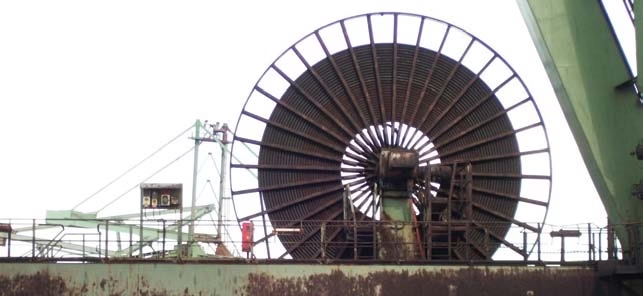
Reeling Cable

DIN VDE 0250-813 Cable

What is DIN VDE 0250-813 Cable?

DIN VDE 0250-813 represents the German national standard governing the design, construction, and performance requirements for trailing cables used in power installations serving mobile equipment and heavy industrial machinery. Published in May 1985 and maintained by the Deutsches Institut für Normung (German National Standard) in conjunction with VDE (Verband der Elektrotechnik), this comprehensive specification establishes rigorous criteria for rubber-sheathed flexible cables operating at medium voltages ranging from 0.6/1 kV to 20/35 kV.
What is JIS C 3327 Cable?

What is JIS C 3327 Cable?

JIS C 3327 represents the Japanese Industrial Standard governing the design, construction, and performance requirements for 600-volt rubber insulated flexible cables. This comprehensive standard, officially designated as “600 V Rubber Insulated Flexible Cables,” establishes rigorous specifications ensuring these cables deliver reliable electrical performance, mechanical durability, and environmental resistance across demanding industrial applications. The standard encompasses multiple cable classifications distinguished by conductor flexibility classes, insulation materials, and sheath compositions, each optimized for specific operational requirements.
What is H05RN-F Cable?

What is H05RN-F Cable? Comprehensive Technical Analysis

H05RN-F cable represents a specialized category of low-voltage rubber sheathed power cable engineered specifically for flexible trailing applications in domestic and light industrial environments. Manufactured in strict accordance with VDE 0282 Part 4 and harmonized European standards, this cable features a robust polychloroprene (PCP) outer sheath that provides exceptional resistance to weather, oil, ozone, and flame propagation. With a voltage rating of 300/500V and available in conductor cross-sectional areas of 0.75mm² and 1.0mm², the H05RN-F cable is extensively utilized in applications ranging from household immersion heaters to portable workshop tools, where environmental durability and mechanical flexibility are paramount.
What is H05GG-F Cable?

What is H05GG-F Cable?

H05GG-F cable represents a specialized advancement in flexible cable engineering, specifically designed to address the thermal challenges inherent in modern domestic appliances and portable equipment. Unlike conventional flexible cables limited to 60°C or 90°C operating temperatures, the H05GG-F cable delivers reliable electrical performance in elevated temperature environments reaching 110°C, positioning it as the essential solution for heat-generating appliances and industrial hand tools. This cable designation, standardized under European harmonized specifications EN 50525-2-21, incorporates sophisticated material science innovations that enable sustained operation under thermal conditions that would rapidly degrade traditional cable insulation systems.
H05RR-F Cable (318-TRS)

What is H05RR-F Cable (318-TRS)?

H05RR-F cable, commonly designated as 318-TRS in industrial specifications, represents a sophisticated evolution in flexible rubber-sheathed cable technology designed specifically for demanding domestic and light commercial applications. This harmonized European cable standard has emerged as the preferred solution for portable electrical equipment, combining exceptional mechanical durability with comprehensive safety compliance. According to the European Committee for Electrotechnical Standardization (CENELEC), harmonized cables like the H05RR-F ensure consistent performance and safety characteristics across all European Union member states, facilitating seamless cross-border trade and installation practices.
What is H05BN4-F Cable? Comprehensive Technical Guide to HOFR Sheath Flexible Rubber Cables for Domestic and Industrial Applications

What is H05BN4-F Cable?

H05BN4-F cable represents a specialized category of flexible rubber cables designed specifically for applications requiring exceptional heat and oil resistance combined with flame retardant properties. As part of the EN 50525-2-21 standard family for flexible cables with cross-linked elastomeric insulation, the H05BN4-F cable is engineered to meet the demanding requirements of domestic premises, commercial kitchens, and light industrial environments where cables face exposure to elevated temperatures and petroleum-based substances.
H07ZZ-F Cable

What is H07ZZ-F Cable to BS EN 50525-3-21?

H07ZZ-F cable represents a critical advancement in electrical safety engineering, specifically designed for installations where human lives could be at risk from toxic fumes and dense smoke in the event of a fire. As a Low Smoke Zero Halogen (LSZH) flexible power and control cable manufactured to BS EN 50525-3-21 standards, this cable system provides reliable 450/750V power distribution while dramatically reducing the emission of corrosive, toxic, and obscuring combustion products that have proven fatal in numerous fire incidents. In environments with high occupancy density, limited egress options, or sensitive electronic equipment, the H07ZZ-F cable serves as an essential life-safety component, ensuring that fire situations do not rapidly escalate into catastrophic events due to smoke inhalation and visibility loss.
H07BN4-F Cable (6381TQ)

What is H07BN4-F Cable (6381TQ)?

H07BN4-F cable, commonly designated as 6381TQ, represents a sophisticated engineering solution for demanding industrial applications where superior flexibility, mechanical durability, and resistance to heat, oil, and flame exposure are paramount requirements. Featuring an advanced Heat and Oil Resistant Flame Retardant Chlorosulphonated Polyethylene (HOFR CSP) sheath combined with Ethylene Propylene Rubber (EPR) insulation, this cable system has been specifically engineered to withstand the arduous conditions encountered in heavy industrial environments, mining operations, and mobile equipment applications.
H07RN-F Cable

What is H07RN-F Cable? Complete Guide to 450/750V Industrial Applications

H07RN-F cable represents a specialized category of heavy-duty flexible rubber trailing cables designed specifically for industrial applications requiring exceptional durability and flexibility. The harmonized designation H07RN-F indicates a voltage rating of 450/750V (where “H07” denotes the 450/750V classification), with “RN” signifying rubber insulation materials and “F” indicating flexible construction according to European standards.
Feichun Cable

What is Harmonised Cable (HAR Cable) HD 361 S4 ?

Harmonised European cables, commonly known as HAR cables, conform to a harmonisation document set out by CENELEC, the European Committee for Electrotechnical Standardisation. These cables represent a unified approach to cable specification across Europe, eliminating the confusion that historically arose from different national standards and designation systems. The harmonisation initiative has created a single, standardized system of cable designation codes that is recognized and accepted throughout the European Economic Area.
Feichun Cable

NEK TS 606:2009 Cable Code Designation

NEK TS 606:2009 represents the Norwegian offshore industry technical specification (TS) that has become a globally recognized standard for cables used in marine and offshore oil and gas installations. This specification covers a comprehensive range of power, instrumentation, and earth cables that are specifically designed to be halogen-free and mud-resistant, providing critical protection against hydrocarbon-laden drilling liquids commonly encountered in offshore drilling operations. The Norwegian Electrotechnical Committee (NEK), founded in 1912, manages this specification and serves as an independent organization championing electrotechnical standardization. NEK became the 21st member of the International Electrotechnical Commission (IEC) and is recognized as the national body responsible for standardization in the electrotechnical field. The organizational structure of NEK mirrors that of the IEC in the standardization domain, ensuring international compatibility and recognition.
Feichun Cable

What is Cable DIN VDE 0815/816 Code Designation?

The DIN VDE 0815 and DIN VDE 0816 standards represent critical specifications for telecommunication and data processing cables developed by the German Commission for Electrical, Electronic and Information Technologies (DKE). These comprehensive standards define the construction, performance characteristics, and designation systems for cables used in demanding environments including mining operations, industrial facilities, and telecommunications infrastructure. According to authoritative industry sources, DIN VDE 0815 specifically covers indoor wiring cables for telecommunications systems, while DIN VDE 0816 addresses outdoor cables for telecommunications systems including signal and measuring cables designed for mining applications. These standards are widely recognized throughout Europe and increasingly adopted in global mining operations due to their rigorous safety requirements and detailed specification system.
Feichun Cable

What does JIS C 3306 Cable Code Designation mean?

JIS C 3306 is the Japanese Industrial Standard specification for polyvinyl chloride (PVC) insulated flexible cables (cords) with rated voltages up to and including 300/500V.[1] This standard defines a comprehensive cable designation system used extensively in mining, industrial, and commercial applications worldwide. Understanding these code designations is essential for selecting appropriate cables that ensure safety, reliability, and compliance with international electrical standards.
(N)3GHSSYCY

Type (N)3GHSSYCY vs (N)3GHSSHCH: Comprehensive Analysis of High-Flexibility Mining Crane Cable Reels

Type (N)3GHSSYCY and Type (N)3GHSSHCH cables lies in their jacket material composition. While both cables are constructed based on DIN VDE 0250-605 standards for screened flexible cables with rubber insulation, the (N)3GHSSHCH variant incorporates halogen-free (HFFR) jacket materials, providing enhanced safety benefits in fire scenarios compared to the conventional PVC-sheathed (N)3GHSSYCY cable.
N/(N)TSCGEWOEU-W(FO)

N/(N)TSCGEWOEU-W(FO) vs NSSHOEU-J/O

Type N/(N)TSCGEWOEU-W(FO), a medium-voltage flexible trailing cable operating at 3.6/6 kV to 8.7/15 kV with optional integrated optical fiber elements, and the Type NSSHOEU-J/O, a heavy-duty low-voltage rubber sheathed cable rated at 0.6/1 kV specifically engineered for extreme mechanical stress in mining operations.
(N)TSKCGECWOEU

(N)TSKCGECWOEU-CH vs (N)TSKCGECWOEU-FN: Comprehensive Technical Analysis of High-Flexibility Crane Cable Reels for Underground Mining

In underground mining operations, the selection between cable chain systems and festoon systems represents a critical decision that directly impacts operational efficiency, safety parameters, and lifecycle costs. This comprehensive technical analysis examines two specialized medium voltage flexible power supply cables designed for underground mining facilities: the Type (N)TSKCGECWOEU-CH optimized for cable chain operations and the Type (N)TSKCGECWOEU-FN engineered for festoon system applications. Both cable types operate at a voltage range of 3.6/6 kV and comply with DIN VDE 0250 Part 813 standards, which specifically addresses trailing cables for mining applications.
NSSHOEU-J/O

Heavy-Duty Mining Cables: Technical Comparison Analysis

Type NSSHOEU-J/O cable and the Type N/(N)SSHCOEU-J/O cable. While both cable types conform to DIN VDE 0250-812 standards and share fundamental construction principles, they serve distinctly different operational requirements. The NSSHOEU-J/O represents a robust, general-purpose heavy-duty cable suitable for conventional motor power supply applications, whereas the N/(N)SSHCOEU-J/O incorporates advanced electromagnetic shielding technology specifically engineered for deployment in conjunction with variable frequency drive systems, addressing the increasingly prevalent challenge of electromagnetic interference in modern mining automation.
Reeling cable

Type N/(N)TSCGEWOEU-TR vs (N)TMCGEW11Y Cable Systems for Open-Cast and Underground Mining Applications

In the demanding environments of modern mining operations, the selection of appropriate cable systems represents a critical decision that directly impacts operational efficiency, safety, and cost-effectiveness. This comprehensive technical analysis examines two sophisticated high-flexibility crane cable reel systems designed for mining applications: the Type N/(N)TSCGEWOEU-TR trailing cable and the Type (N)TMCGEW11Y mining cable. Both systems have been engineered to meet the rigorous mechanical, electrical, and environmental demands of open-cast and underground mining operations, yet each offers distinct advantages suited to specific operational requirements.
MIning cable

Comparative Analysis: (N)TSCGEWOEU-F vs N/(N)TSCGEWOEU-W(FO) High-Flexibility Crane Cable Reels for Mining Operations

In the demanding environment of open-cast mining operations, the selection of appropriate power supply cables represents a critical decision that directly impacts operational efficiency, safety, and equipment longevity. Among the specialized cable solutions designed for these challenging applications, two cable types have emerged as industry standards for high-flexibility reeling applications: the (N)TSCGEWOEU-F and the N/(N)TSCGEWOEU-W(FO) series. These cables are specifically engineered to withstand the extreme mechanical stresses inherent in mining operations while maintaining reliable electrical performance under harsh environmental conditions.
MIning cable

(N)TMCGCWOEU Mining Cable VS (N)TMCGCW11Y High-Flexibility Crane Cable

(N)TMCGCWOEU cable designation indicates a construction employing thermoset elastomeric compounds for the outer protective sheath. The “WOEU” suffix specifically denotes the use of weather-resistant, oil-resistant elastomeric materials, typically comprising chloroprene rubber (polychloroprene – PCP designation CR or CSP) or chlorinated polyethylene (CPE). According to authoritative research on cable polymeric materials, thermoset compounds undergo irreversible cross-linking during the vulcanization process, creating three-dimensional molecular networks that exhibit exceptional stability across their operational temperature range.
(N)TMCGCW11Y

(N)TMCGCWOEU vs (N)TMCGCW11Y: Understanding the Differences in High-Flexibility Crane Cable Reels for Mining Applications

The (N)TMCGCWOEU cable features a thermoset elastomeric rubber sheath, specifically employing materials such as chloroprene rubber (Polychloroprene – PCP) or chlorinated polyethylene (CPE). According to research on polymeric materials for cable insulation and sheathing, thermoset compounds are characterized by their retention of physical properties over wide operating temperature ranges, forming irreversible chemical bonds during the curing process that enhance long-term stability.
reeling cable

Understanding Minimum Bending Radius: A Complete Guide According to VDE 0298-3

Imagine bending a garden hose too sharply. What happens? The water flow stops because the hose kinks, potentially causing permanent damage to the hose walls. The same principle applies to electrical cables, but with far more serious consequences. When we bend a cable beyond its safe limits, we risk damaging the conductors inside, cracking the insulation, and creating safety hazards that could lead to equipment failure or even fire.
FG7H1OAR

What is a Type FG7H1OAR Flexible Cable for Underground Mining

Type FG7H1OAR MT TUNNEL I PLUS represents a cutting-edge solution in medium voltage flexible cable technology specifically engineered for the demanding environments of underground mining and tunneling operations. This specialized cable combines advanced LSOH (Low Smoke Zero Halogen) technology with robust HEPR insulation, meeting the stringent requirements of IEC 60502-2 international standards for medium voltage power transmission.
(N)3GHSSHCH LSOH Cable

What is a Type (N)3GHSSHCH Low Smoke Zero Halogen LSOH Mining Cable?

Type (N)3GHSSHCH flexible cable, designated as MT TUNNEL V ATOX PLUS and engineered with Low Smoke Zero Halogen technology conforming to stringent DIN VDE 0250 Part 605 requirements, represents a fundamental advancement in underground mining fire safety. This comprehensive technical guide examines how LSOH cable technology fundamentally changes fire safety outcomes in underground environments, explores the sophisticated material science enabling zero-halogen performance, analyzes the complete cable construction and standards compliance framework, and provides essential guidance for proper installation and operation of these life-safety-critical cable systems. Understanding the engineering principles and operational characteristics of LSOH mining cables is essential for mining engineers, safety professionals, electrical contractors, and regulatory personnel responsible for protecting underground workers and ensuring operational continuity in mining and tunneling operations.
(N)3GHSSYCY

What is a Type (N)3GHSSYCY for Underground Mining?

Type (N)3GHSSYCY flexible cable, designated as MT TUNNEL V PLUS and designed according to the stringent requirements of DIN VDE 0250 Part 605, represents a specialized engineering solution addressing these critical safety and operational demands. This comprehensive technical guide examines the purpose, construction methodology, standards compliance, safety characteristics, and operational considerations for this medium-voltage cable system designed exclusively for energy supply to mobile and stationary equipment in underground mining and tunneling applications. Understanding the intricate engineering principles and safety features embedded within this cable design is essential for mining engineers, electrical contractors, safety professionals, and project managers responsible for underground infrastructure and mining operations.
(N)TSCGECECWÖU TBM CABLE

What is a Type (N)TSCGECECWÖU

Type (N)TSCGECECWÖU cable serves multiple critical functions within tunnel boring operations. The primary application involves supplying medium-voltage electrical power to the TBM’s main drive systems, hydraulic pumps, and auxiliary equipment. The cable’s flexible construction enables it to wrap and unwrap continuously on reeling drums as the machine advances through the tunnel, which may involve movements of 40 to 60 feet per day during active boring operations.
(N)TSCGECECWÖU

What is a Type (N)TSCGECECWÖU TBM (tunnel boring machine) Cable?

Type (N)TSCGECECWÖU MT BM PLUS represents a specialized evolution of mining cables engineered specifically for tunnel boring machine (TBM) reeling drum applications. The “BM” designation stands for “Boring Machine,” and the “PLUS” indicates enhanced features including integrated control conductors and a monitoring system not found in standard mining cables.
(N)TSCGECEWÖU

What is the Type (N)TSCGECEWÖU MT SUB-E PLUS Cable?

This premium submersible cable is engineered for permanent water immersion up to 300 meters depth under high mechanical stresses. The cable combines proven waterproofing technology with superior earth fault protection, making it the preferred choice for critical applications including submersible pumps, dredging machinery, floating dock infrastructure, and trailing operations in opencast mining where equipment reliability and personnel safety are paramount.
(N)TSCGECEWÖU Mining Reeling Cable

What is a Type (N)TSCGECEWÖU MINING REELING Cable

Type (N)TSCGECEWÖU Mining Reeling Cable represents a specialized category of medium voltage flexible power cables engineered specifically for the demanding conditions found in underground mining operations and material handling equipment. This cable designation, while complex in nomenclature, follows the systematic German cable naming convention established by DIN VDE standards.
(N)TSCGEWÖU Mining Reeling Cable

What is a Type (N)TSCGEWÖU Cable?

The (N)TSCGEWÖU Mining Reeling Cable MT MIN F PLUS represents a pinnacle of engineering excellence in medium voltage power transmission for the most demanding industrial applications. Engineered specifically for mining operations and material handling equipment, this cable type is designed to withstand extreme mechanical stresses while maintaining reliable electrical performance in harsh environmental conditions.
(N)TSCGECEWÖU

What is a Type (N)TSCGECEWÖU 3,6/6 – 12/20 kV MT MIN-E PLUS Mining Cable?

(N)TSCGECEWÖU MT MIN-E PLUS represents the pinnacle of mining cable engineering, combining premium-grade materials with advanced construction techniques to deliver exceptional flexibility, enhanced safety, and superior durability for the most demanding opencast mining operations. This cable is specifically designed for heavy mobile equipment including draglines, electric shovels, dredges, and blast hole drills operating under extreme mechanical stresses and severe abrasion conditions.
(N)TSCGEWÖU cable is a premium-grade, highly flexible medium voltage trailing cable specifically engineered for the most demanding applications in opencast mining operations. This robust cable is designed to power heavy mobile equipment such as draglines, electric shovels, dredges, and blast hole drills that operate under extreme mechanical stresses, severe abrasion, and harsh environmental conditions.

What is a Type (N)TSCGEWÖU 3,6/6 – 12/20 kV Highly Flexible Mining Reeling Cable?

(N)TSCGEWÖU cable is a premium-grade, highly flexible medium voltage trailing cable specifically engineered for the most demanding applications in opencast mining operations. This robust cable is designed to power heavy mobile equipment such as draglines, electric shovels, dredges, and blast hole drills that operate under extreme mechanical stresses, severe abrasion, and harsh environmental conditions.
The NTSCGEWÖU cable represents a sophisticated engineering solution designed specifically for demanding mining and heavy industrial environments. This highly flexible medium voltage reeling cable integrates advanced fiber optic technology with robust electrical conductors, making it ideal for applications requiring simultaneous power transmission and high-speed data communication in extreme operating conditions.

What is a Type NTSCGEWÖU 3,6/6 – 12/20 kV Highly Flexible Mining Reeling Cable?

The NTSCGEWÖU cable represents a sophisticated engineering solution designed specifically for demanding mining and heavy industrial environments. This highly flexible medium voltage reeling cable integrates advanced fiber optic technology with robust electrical conductors, making it ideal for applications requiring simultaneous power transmission and high-speed data communication in extreme operating conditions.