LSZH Low Smoke Zero Halogen Flexible Cable

Class 3 6600V Ethylene Propylene Rubber Insulated Polychloroprene Rubber Sheath Cable - JIS C 4353 Standard

What is 6600V 3PNCT Crane Cable? 

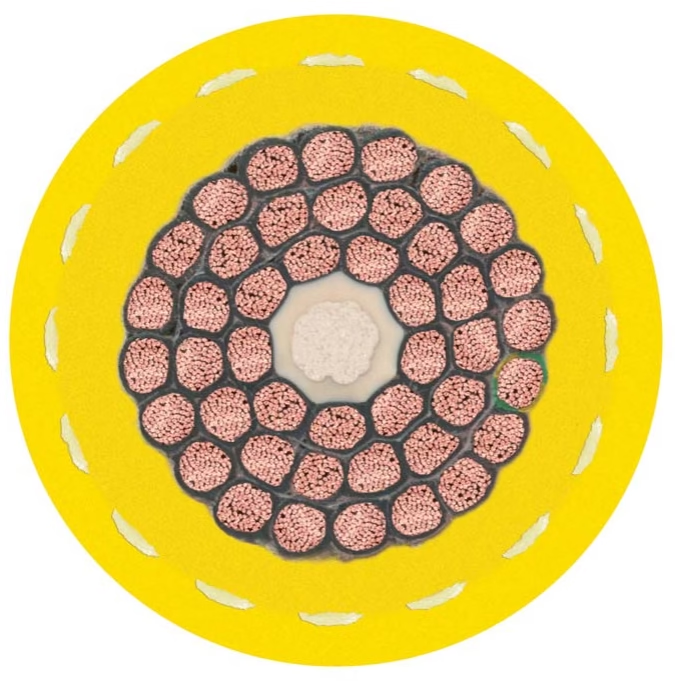
The 6600V 3PNCT crane cable represents a specialized class of high-voltage power cables specifically engineered for demanding industrial applications where continuous flexing, high mechanical stress, and environmental exposure are constant operational realities. This cable designation indicates a Class 3 flexible conductor construction rated for 6600 volts AC, featuring ethylene propylene rubber insulation and a polychloroprene rubber outer sheath, manufactured in accordance with the rigorous requirements of JIS C 4353 Japanese Industrial Standard.
What is 600V 2TC Light (600V 2PNCT) Crane Cable? Comprehensive Technical Analysis of 600V Ethylene Propylene Rubber Insulated Polychloroprene Rubber Sheath Cable

What is 600V 2TC Light (600V 2PNCT) Crane Cable?

The 600V 2TC Light (600V 2PNCT) crane cable represents a specialized category of flexible power cables designed specifically for low-voltage mobile equipment applications operating at rated voltages up to 600V. This cable features ethylene propylene rubber (EPR) insulation and polychloroprene rubber (CR) sheath, combining superior electrical performance with exceptional mechanical durability. Manufactured in accordance with JIS C 3327 Japanese Industrial Standard, this cable classification has established itself as the preferred solution for crane systems, reeling applications, and material handling equipment throughout industrial facilities worldwide.
Feichun Spreader Cable

What is JIS C 3327 SPDCT Spreader Cable for Container Cranes?

SPDCT (Spreader Cable) represents a specialized category of reeling cables designed specifically for vertical hoisting applications in container handling equipment. These cables operate under extreme mechanical stresses, including simultaneous tensile loading and torsional forces during rapid container lifting operations. Reeling cables are engineered for continuous movement under extreme conditions, particularly in maritime infrastructure where they serve as critical power transmission components for mobile machinery.
Feichun_Reeling_Cables_for_Reeling_Systems

RELCT (LV) JIS C 3327 Reeling Cables for Container Cranes

RELCT (LV) cable represents a specialized category of low-voltage flexible power cables engineered specifically for dynamic reeling applications in container handling operations within international port facilities. Operating under standard designation JIS C 3327, these cables serve as the critical power delivery conduits for automated rubber-tired gantry cranes (RTGs), ship-to-shore cranes (STS), and other containerized cargo handling equipment that operate continuously in demanding maritime environments.
FEICHUN Reeling cable

What is RELCT (MV) Reeling Cables for Container Cranes?

RELCT (MV) reeling cables serve a critical function in container crane electrification systems. Specifically, these cables are deployed to deliver electrical power from fixed power supply systems to the rotating reel mechanisms and traveling components of container handling cranes. The cable must accommodate continuous mechanical stressing from repetitive coiling and uncoiling operations while maintaining electrical integrity and safety performance.
What is Electrical Cables for Container Cranes?

What is Electrical Cables for Container Cranes?

Container cranes represent the backbone of modern port operations, handling millions of containers annually at ports worldwide. The reliable operation of these massive machines depends fundamentally on their electrical cable systems, which must endure extreme mechanical stresses, environmental challenges, and continuous operation cycles. According to industry data compiled by PEMA (Port Equipment Manufacturers Association), electrical cable failures account for approximately 15-20% of container crane downtime, representing significant operational and financial costs to port operators.
SANS 1520 Feichun Cable

CU/XLPE/LSZH/SWA/LSZH-SANS 1507 0.6/1KVBlack Sheath with White Strip Cable

The CU/XLPE/LSZH/SWA/LSZH-SANS 1507 0.6/1KV cable with black sheath and white identification strip represents a significant advancement in industrial power transmission technology. This specialized cable combines the robust mechanical protection of steel wire armour (SWA) with the critical safety features of Low Smoke Zero Halogen (LSZH) materials, making it an optimal choice for demanding applications in mining operations, petrochemical facilities, and infrastructure projects across South Africa and internationally.
SANS 1520 Feichun Cable

What is SANS 1520 Cable Part 1-2-3 Mining Cable?

The South African National Standard (SANS) 1520 represents one of the most comprehensive and rigorous cable standards for mining operations globally, specifically addressing the unique challenges faced in underground and surface mining environments. Issued by the South African Bureau of Standards (SABS), this standard has become the benchmark for flexible electrical trailing cables used in mines worldwide, ensuring both operational efficiency and worker safety in some of the most demanding industrial conditions.
Serbian Cable

What is Serbian Cable Standards (SRPS) Cable?

Serbian Power Engineering Standards (SRPS) represent a comprehensive framework of technical regulations governing electrical cables and conductors in Serbia and other regions that have adopted these specifications. SRPS standards are developed and maintained by the Institute for Standardization of Serbia (ISS), which operates as the national standardization body responsible for developing, publishing, and promoting technical standards across various industries.
DIN VDE 0281, 0282 & 0292 Cables

Complete Technical Guide to DIN VDE 0281, 0282 & 0292 Cables

DIN VDE 0281, DIN VDE 0282, and DIN VDE 0292 standards represent the cornerstone of German electrical cable specifications, developed by the Verband der Elektrotechnik, Elektronik und Informationstechnik (VDE). These standards have been harmonized with European CENELEC requirements to create a unified framework for low-voltage cable manufacturing across Europe. Understanding these standards is essential for engineers, electricians, and procurement professionals working with electrical installations in industrial, commercial, and residential environments.
CEI 20-27 CENELEC HD361 Cable

What is CEI 20-27 CENELEC HD361 Cable?

CEI 20-27 CENELEC HD361 represents a standardized cable designation system developed by the European Committee for Electrotechnical Standardisation (CENELEC) to provide uniform identification and classification of harmonized power cables and cords across European markets. This systematic coding methodology enables engineers, procurement specialists, and electrical contractors to precisely identify cable specifications including voltage ratings, insulation materials, conductor types, and sheathing compounds through a structured alphanumeric designation format.
DIN VDE 0250 German Standard Flexible Power Reeling Cable

What is DIN VDE 0250 Reeling Cables?

DIN VDE 0250 represents the globally recognized German standard for flexible electrical cables designed specifically for cranes, material handling equipment, and mobile machinery applications. As Germany remains the only country to have issued special design regulations for flexible electrical cables covering cranes and material handling equipment, this standard has achieved worldwide acceptance as the ultimate benchmark for tough rubber-sheathed flexible reeling cables.
JIS C 3410 Standard Marine Cables

What is JIS C 3410 Standard Marine Cables?

JIS C 3410 standard, formally titled “Cables and Flexible Cords for Electrical Equipment of Ships,” represents the Japanese Industrial Standard for marine electrical cables used in shipboard installations. Established and maintained by the Japanese Standards Association, this comprehensive specification was last updated in 2018 and incorporates technical requirements from multiple international standards including IEC 60092-353, IEC 60092-354, IEC 60092-360, and IEC 60092-376.
VG 95218 German Military-Grade Marine Cables

What is VG 95218 Cable?

VG 95218 represents a comprehensive German military specification governing cables and wires designed specifically for naval vessels operated by the Bundeswehr and other military organizations. Developed and maintained by the Federal Office of Bundeswehr Equipment, Information Technology and In-Service Support (Bundesamt für Ausrüstung, Informationstechnik und Nutzung der Bundeswehr, abbreviated as BAAINBw), this standard establishes stringent requirements for cable performance in the demanding maritime military environment. The specification encompasses multiple parts addressing various cable types, voltage ranges, and specialized applications, all unified by common principles of safety, reliability, and environmental resistance.
UNE 21123 Standard Cable

What is UNE 21123 Standard Cable?

UNE 21123 is a Spanish electrical cable standard developed by AENOR (Asociación Española de Normalización y Certificación), the Spanish Association for Standardisation and Certification. This standard specifies the design, construction, and cross-sectional area requirements for cables used in power distribution circuits with voltage ratings up to and including 600/1000V (0.6/1 kV).[1] As a member of ISO, IEC, and CENELEC, AENOR develops standards in conjunction with European and international conventions, ensuring that UNE 21123 cables meet both regional and global safety and performance requirements.[2] These cables are widely used in transmission, distribution, and power networks across industrial installations in Europe and beyond.
HD620 Standard Cable

What is HD620 Standard Cable?

HD620 harmonization document represents a comprehensive European standard for medium voltage power distribution cables with extruded insulation. Officially titled “Distribution cables with extruded insulation for rated voltages from 3.6/6 (7.2) kV up to and including 20.8/36 (42) kV,” this standard was developed by CENELEC (European Committee for Electrotechnical Standardization) to ensure uniformity and quality across European power distribution networks. According to authoritative industry sources, the latest iteration HD620 S3 was released by CENELEC and ratified by member countries in 2023. This standard is commonly linked to German Standard DIN VDE 0276 Part 620 and has been adopted nationally across Europe, including UNE-HD 620 in Spain, NEN-HD 620 in the Netherlands, CEI-HD 620 in Italy, and DS-HD 620 in Denmark.
DIN VDE 0250-813 Cable

What is DIN VDE 0250-813 Cable?

DIN VDE 0250-813 represents the German national standard governing the design, construction, and performance requirements for trailing cables used in power installations serving mobile equipment and heavy industrial machinery. Published in May 1985 and maintained by the Deutsches Institut für Normung (German National Standard) in conjunction with VDE (Verband der Elektrotechnik), this comprehensive specification establishes rigorous criteria for rubber-sheathed flexible cables operating at medium voltages ranging from 0.6/1 kV to 20/35 kV.
What is H05GG-F Cable?

What is H05GG-F Cable?

H05GG-F cable represents a specialized advancement in flexible cable engineering, specifically designed to address the thermal challenges inherent in modern domestic appliances and portable equipment. Unlike conventional flexible cables limited to 60°C or 90°C operating temperatures, the H05GG-F cable delivers reliable electrical performance in elevated temperature environments reaching 110°C, positioning it as the essential solution for heat-generating appliances and industrial hand tools. This cable designation, standardized under European harmonized specifications EN 50525-2-21, incorporates sophisticated material science innovations that enable sustained operation under thermal conditions that would rapidly degrade traditional cable insulation systems.
H05RR-F Cable (318-TRS)

What is H05RR-F Cable (318-TRS)?

H05RR-F cable, commonly designated as 318-TRS in industrial specifications, represents a sophisticated evolution in flexible rubber-sheathed cable technology designed specifically for demanding domestic and light commercial applications. This harmonized European cable standard has emerged as the preferred solution for portable electrical equipment, combining exceptional mechanical durability with comprehensive safety compliance. According to the European Committee for Electrotechnical Standardization (CENELEC), harmonized cables like the H05RR-F ensure consistent performance and safety characteristics across all European Union member states, facilitating seamless cross-border trade and installation practices.
H07ZZ-F Cable

What is H07ZZ-F Cable to BS EN 50525-3-21?

H07ZZ-F cable represents a critical advancement in electrical safety engineering, specifically designed for installations where human lives could be at risk from toxic fumes and dense smoke in the event of a fire. As a Low Smoke Zero Halogen (LSZH) flexible power and control cable manufactured to BS EN 50525-3-21 standards, this cable system provides reliable 450/750V power distribution while dramatically reducing the emission of corrosive, toxic, and obscuring combustion products that have proven fatal in numerous fire incidents. In environments with high occupancy density, limited egress options, or sensitive electronic equipment, the H07ZZ-F cable serves as an essential life-safety component, ensuring that fire situations do not rapidly escalate into catastrophic events due to smoke inhalation and visibility loss.
H07BN4-F Cable (6381TQ)

What is H07BN4-F Cable (6381TQ)?

H07BN4-F cable, commonly designated as 6381TQ, represents a sophisticated engineering solution for demanding industrial applications where superior flexibility, mechanical durability, and resistance to heat, oil, and flame exposure are paramount requirements. Featuring an advanced Heat and Oil Resistant Flame Retardant Chlorosulphonated Polyethylene (HOFR CSP) sheath combined with Ethylene Propylene Rubber (EPR) insulation, this cable system has been specifically engineered to withstand the arduous conditions encountered in heavy industrial environments, mining operations, and mobile equipment applications.
H07RN-F Cable

What is H07RN-F Cable? Complete Guide to 450/750V Industrial Applications

H07RN-F cable represents a specialized category of heavy-duty flexible rubber trailing cables designed specifically for industrial applications requiring exceptional durability and flexibility. The harmonized designation H07RN-F indicates a voltage rating of 450/750V (where “H07” denotes the 450/750V classification), with “RN” signifying rubber insulation materials and “F” indicating flexible construction according to European standards.
mining cable

What is Cable MIL-DTL-24643 Code Designation?

MIL-DTL-24643 is a comprehensive military specification that defines requirements for low smoke, halogen-free electric cables designed for demanding applications in naval shipboard, offshore, mining, and industrial environments. First introduced by the U.S. Navy to address critical safety concerns regarding toxicity, smoke generation, and flammability in confined spaces, this specification has become a global benchmark for high-performance cable systems.
(N)3GHSSYCY

Type (N)3GHSSYCY vs (N)3GHSSHCH: Comprehensive Analysis of High-Flexibility Mining Crane Cable Reels

Type (N)3GHSSYCY and Type (N)3GHSSHCH cables lies in their jacket material composition. While both cables are constructed based on DIN VDE 0250-605 standards for screened flexible cables with rubber insulation, the (N)3GHSSHCH variant incorporates halogen-free (HFFR) jacket materials, providing enhanced safety benefits in fire scenarios compared to the conventional PVC-sheathed (N)3GHSSYCY cable.
(N)TSKCGECWOEU

(N)TSKCGECWOEU-CH vs (N)TSKCGECWOEU-FN: Comprehensive Technical Analysis of High-Flexibility Crane Cable Reels for Underground Mining

In underground mining operations, the selection between cable chain systems and festoon systems represents a critical decision that directly impacts operational efficiency, safety parameters, and lifecycle costs. This comprehensive technical analysis examines two specialized medium voltage flexible power supply cables designed for underground mining facilities: the Type (N)TSKCGECWOEU-CH optimized for cable chain operations and the Type (N)TSKCGECWOEU-FN engineered for festoon system applications. Both cable types operate at a voltage range of 3.6/6 kV and comply with DIN VDE 0250 Part 813 standards, which specifically addresses trailing cables for mining applications.
NSSHOEU-J/O

Heavy-Duty Mining Cables: Technical Comparison Analysis

Type NSSHOEU-J/O cable and the Type N/(N)SSHCOEU-J/O cable. While both cable types conform to DIN VDE 0250-812 standards and share fundamental construction principles, they serve distinctly different operational requirements. The NSSHOEU-J/O represents a robust, general-purpose heavy-duty cable suitable for conventional motor power supply applications, whereas the N/(N)SSHCOEU-J/O incorporates advanced electromagnetic shielding technology specifically engineered for deployment in conjunction with variable frequency drive systems, addressing the increasingly prevalent challenge of electromagnetic interference in modern mining automation.
FG7H1OAR

What is a Type FG7H1OAR Flexible Cable for Underground Mining

Type FG7H1OAR MT TUNNEL I PLUS represents a cutting-edge solution in medium voltage flexible cable technology specifically engineered for the demanding environments of underground mining and tunneling operations. This specialized cable combines advanced LSOH (Low Smoke Zero Halogen) technology with robust HEPR insulation, meeting the stringent requirements of IEC 60502-2 international standards for medium voltage power transmission.
(N)3GHSSHCH LSOH Cable

What is a Type (N)3GHSSHCH Low Smoke Zero Halogen LSOH Mining Cable?

Type (N)3GHSSHCH flexible cable, designated as MT TUNNEL V ATOX PLUS and engineered with Low Smoke Zero Halogen technology conforming to stringent DIN VDE 0250 Part 605 requirements, represents a fundamental advancement in underground mining fire safety. This comprehensive technical guide examines how LSOH cable technology fundamentally changes fire safety outcomes in underground environments, explores the sophisticated material science enabling zero-halogen performance, analyzes the complete cable construction and standards compliance framework, and provides essential guidance for proper installation and operation of these life-safety-critical cable systems. Understanding the engineering principles and operational characteristics of LSOH mining cables is essential for mining engineers, safety professionals, electrical contractors, and regulatory personnel responsible for protecting underground workers and ensuring operational continuity in mining and tunneling operations.
(N)TSCGECECWÖU TBM CABLE

What is a Type (N)TSCGECECWÖU

Type (N)TSCGECECWÖU cable serves multiple critical functions within tunnel boring operations. The primary application involves supplying medium-voltage electrical power to the TBM’s main drive systems, hydraulic pumps, and auxiliary equipment. The cable’s flexible construction enables it to wrap and unwrap continuously on reeling drums as the machine advances through the tunnel, which may involve movements of 40 to 60 feet per day during active boring operations.
EPR/PUR 0.6/1kV Highly Flexible Crane Festoon Cable

What is EPR/PUR 0.6/1kV Highly Flexible Crane Festoon Cable?

EPR/PUR 0.6/1kV highly flexible crane festoon cables, also known as PURFLEX HF (C), represent a specialized category of industrial power cables engineered for demanding environments requiring exceptional flexibility, durability, and resistance to mechanical stress. These cables are specifically designed for cable reel systems, crane applications, and mobile equipment where continuous flexing, abrasion resistance, and reliable power transmission are critical. This comprehensive guide explores the technical specifications, applications, safety standards, and best practices for EPR/PUR highly flexible cables, providing essential information for engineers, procurement specialists, and maintenance professionals in industrial settings.
R-(N)TSCGEWOEU

What is R-(N)TSCGEWOEU Protolon (M)-R Cable W-9 High Voltage Round Reeling Cable?

The R-(N)TSCGEWOEU cable, marketed under the Protolon (M)-R and W-9 brand designations, represents the pinnacle of medium to high voltage reeling cable technology for extreme industrial applications. This sophisticated cable system is specifically engineered for fast-moving container cranes, heavy mining equipment, stackers, reclaimers, and ship unloaders where conventional medium voltage cables would fail.
SHTOEU-J Cable

Understanding the (N)SHTÖU (SMK) Cable

The (N)SHTÖU (SMK) cable, branded as Cordaflex SMK-V and designated as RXG-8, represents the pinnacle of engineering excellence for extreme vertical reeling applications. This premium cable features 20kN aramid reinforcement, polychloroprene (PCP) rubber sheathing, and a sophisticated protective braid constructed of polyester fibers vulcanized during manufacture to provide maximum torsional rigidity. Specifically designed for spreader operations on ship-to-shore container cranes where cables may be freely suspended up to 70 meters and subjected to extreme wind forces, high acceleration, and combined tensile and torsional stresses.
Reeling & Trailing Cables for Cranes & Mining — Feichun Special Cable Blogs

What is a YRDMY-J / YRDMCY-J Cable?C-5 PVC Round Cable Highly Flexible for Energy Guiding Chains

The YRDMY-J and YRDMCY-J cables represent cutting-edge solutions in industrial power transmission and control applications. These highly flexible PVC round cables are specifically engineered for demanding dynamic environments, including energy guiding chains (cable carriers) and festoon systems. Manufactured by Anhui Feichun Special Cable Co., Ltd., these cables combine durability, flexibility, and reliability to meet the rigorous requirements of modern industrial operations. The designation “YRDMY-J” refers to unscreened power and control cables, while “YRDMCY-J” indicates screened variants with electromagnetic interference (EMI) protection. Both types feature Class 5 flexible copper conductors and are designed to withstand millions of bending cycles in continuous-flex applications.