DIN VDE 0250-814

(N)GRDGÖU-J Nomenclature (VDE 0250 part 813): (N) = Nominal voltage prefix (0.6/1 kV implicit in designation) G = Gummiert (rubber-insulated) R = Rubber outer sheath D = Dynamisch (dynamic/flexing application) G = Gummiert inner sheath (intermediate layer) Ö = German standard designation (ö indicates European origin) U = Unarmoured (no metal sheath) J = Jacked (multi-sheath design: intermediate + outer) Full meaning: Rubber-insulated, rubber-sheathed, dynamic-rated, multi-sheath construction, unarmoured festoon cable VDE 0250 part 813 scope: Published by: VDE (Verband der Elektrotechnik, German standards body) Applies to: Flexible cables for crane installations (particularly festoon systems) Coverage: Voltage, temperature, mechanical properties, installation methods Festoon-specific requirements: - High bending flexibility (4×D minimum typical) - Fast rewind capability (240+ m/min rated speed) - Sustained torsion tolerance (±25°/1m continuous) - Extended temperature range (−50 to +80°C) - UV/ozone/moisture resistance (outdoor exposure) Alternate designations (similar cables): IEC 60811-1-1: International equivalent (less specific) DIN VDE 0298 part 3: German mechanical property standard DIN VDE 0482-265-2-1: German flame test standard EN 50265-2-1: European flame test equivalent GRDGÖU-J advantage: Combines all standards into single VDE designation Procurement simplified for European buyers

TROMMELFLEX (K) NSHTOEU:中等机械应力低压卷筒电缆的工程深度解析

TROMMELFLEX (K) NSHTOEU 是一种 0.6/1kV 柔性低压卷筒电缆,设计应用场景为 medium mechanical stresses,即中等机械应力下的 reeling operation。 与极重载矿山拖拽或超高速港口卷筒电缆相比,它更适合受控张力、受控速度、较规范卷盘路径和中等动态频率的移动供电系统。 从深度使用者角度看,这类电缆的真正价值不是“越重越好”,而是以合理重量、足够柔性、耐磨外护套、抗扭结构和标准化电气性能,解决大量中低压移动设备中最常见的卷绕、拖曳、磨耗、油污和维护问题。
FLEXIFESTOON® PV-FLAT CY (VCVH6-F): Advanced High-Flexibility Flat Cable with Superior Anti-Salt Fog Protection for Port Equipment and Festoon Cargo-Handling Systems Professional-grade parallel-core flat cable engineered for aggressive marine environments. Features flexible red copper Class 5 conductors, PVC TI2 insulation, 10×D bending radius, UV/ozone/chemical resistance, and comprehensive salt-fog protection for automated port infrastructure, ship-to-shore cranes, cargo-handling equipment, and festoon systems operating at deployment velocities up to 120 m/min across high-corrosion maritime zones.

什么是 Reeling Cable?CORDAFLEX(SMK) (N)SHTOEU 低压卷筒电缆技术深度解析

Reeling cable,中文通常称为卷筒电缆、卷盘电缆或移动卷绕电缆,是为电缆卷筒、岸桥、场桥、卸船机、堆取料机、露天矿山移动设备和高机械应力移动供电系统设计的柔性电缆。 CORDAFLEX(SMK) (N)SHTOEU 属于 0.6/1kV 低压重载卷筒电缆体系,其关键工程价值不只是“柔软”,而是把导体柔性、绝缘电气强度、护套抗磨损、抗拉结构、抗扭结构、耐油耐候性能和可选数据传输能力组合到同一个动态截面中。 对 Feichun 这类专注特种电缆工程开发的制造体系而言,该类电缆的设计逻辑可归纳为:在港口和矿山移动设备的连续拖拽、卷绕、滚轮导向、S 型变向和潮湿户外环境中,保持供电连续性、机械寿命和维护可控性
Feichun FLEXIFESTOON® Marine-Grade Corrosion-Resistant Festoon Cable: Advanced Salt-Fog & Seawater Resistant EPR/PCP Elastomer Architecture (0.6/1 kV Industrial Voltage, −35 to +80°C Coastal Environment Temperature Envelope, Proprietary Dual-Elastomer Architecture with EPR Insulation & Corrosion-Barrier PCP Outer Sheath, Class 5 Flexible Red Copper Conductor per IEC 60228, Tinned Copper EMC Screening for Electromagnetic Interference Suppression, Advanced Chloride-Ion Penetration Suppression Chemistry via Carboxylated Elastomer Additives, Comprehensive Salt-Fog (ASTM B117) and Seawater Immersion (ASTM B368) Resistance, UV/Ozone/Moisture Resistance per DIN VDE 0250-814, Oil-Resistant PCP Elastomer Outer Sheath, Optimized for 240 m/min High-Speed Festoon System Operation, 4×OD Dynamic Bending Radius Across Temperature Envelope, DIN VDE 0482-265-2-1 Flame-Retardant Self-Extinguishing Construction, GOST-R Maritime Standard Certification for CIS Coastal Operations, Optional WUG Approval for Russian Seaboard Applications, RoHS and CE Certification, 30+ SKU Configurations for Cargo Handling Equipment, Ship-Side Power Distribution, Container Terminal Conveyor Systems, Marine Crane Electrification, and Port Automation Infrastructure): Comprehensive Advanced Marine Elastomer Chemistry and Corrosion-Suppression Polymer Architecture Analysis Integrating Chloride-Ion Barrier Technology, Cathodic Protection Material Selection, Electrolytic Corrosion Suppression Mechanisms, Seawater Salt-Crystal Nucleation Prevention, Oxygen-Diffusion Barrier Engineering, Ozone/UV Photodegradation Suppression, EMC Shielding Effectiveness Analysis, and Next-Generation Port Automation System Integration Extreme marine and port automation environments—containerized cargo handling systems (−5°C Arctic dockside to +35°C tropical port infrastructure), ship-side power distribution with simultaneous salt-fog and seawater spray exposure, high-speed festoon conveyors on coastal container terminals (240 m/min operational velocity with continuous 40–60% relative humidity salt-laden air), thermal-shock environments with rapid temperature cycling in humid salt-atmosphere, ship crane electrification with direct seawater mist ingestion, temporary port power installations with extended outdoor exposure (months to years), and cargo vessel galley/engine room cabling with combined moisture/salt/temperature stress—require electrical festoon cabling engineered at the forefront of marine elastomer materials science to simultaneously achieve five competing performance objectives rarely optimized together: mechanical flexibility maintained across 115°C temperature envelope (−35 to +80°C, encompassing Arctic Arctic North Atlantic winter docking to tropical equatorial port operations), cathodic salt-fog suppression through proprietary chloride-ion barrier technology and carboxylated elastomer additives preventing electrochemical corrosion initiation (salt-crystal nucleation sites suppressed via polymer microstructure engineering), seawater immersion resistance through oxygen-diffusion barrier design (PCP elastomer outer sheath limits dissolved O₂ penetration, suppressing galvanic corrosion mechanisms), UV/ozone photodegradation suppression via hindered-amine light stabilizers (HALS) and benzophenone UV absorbers, preventing chain scission in high-altitude tropical ports with intense 300–400 W/m² UV irradiance), and electromagnetic compatibility (EMC) through tinned copper braid shielding, enabling advanced port automation systems with real-time digital control and sensor networks without RF interference. Conventional marine festoon cables sacrifice either flexibility (rigid PVC losing mechanical properties at −35°C cold docking) or corrosion resistance (unshielded PCP elastomer without EMC protection, inadequate for modern automated port systems). FLEXIFESTOON® MARINE represents a breakthrough in coastal elastomer engineering, delivering simultaneous optimization across all five domains through proprietary dual-elastomer architecture combining EPR insulation (superior low-temperature flexibility and moisture resistance) with corrosion-barrier PCP outer sheath (advanced chloride-ion suppression and seawater resistance), Class 5 flexible copper conductor (enabling 4×OD bending throughout extreme temperature range), tinned copper EMC shielding (preventing RF interference in digital port automation), and molecular-level salt-fog suppression chemistry (carboxylated elastomer additives and cathodic protection material selection)—enabling marine engineers, port system designers, and ship electrification specialists to deploy a unified next-generation festoon cable solution across the complete spectrum of coastal, maritime, and port automation environments while simultaneously delivering electromagnetic compatibility for Industry 4.0 automated cargo handling systems and GOST-R/WUG international maritime certification.

FLEXIFESTOON® (N)GRDGCGÖU-J

Feichun FLEXIFESTOON® Marine-Grade Corrosion-Resistant Festoon Cable: Advanced Salt-Fog & Seawater Resistant EPR/PCP Elastomer Architecture (0.6/1 kV Industrial Voltage, −35 to +80°C Coastal Environment Temperature Envelope, Proprietary Dual-Elastomer Architecture with EPR Insulation & Corrosion-Barrier PCP Outer Sheath, Class 5 Flexible Red Copper Conductor per IEC 60228, Tinned Copper EMC Screening for Electromagnetic Interference Suppression, Advanced Chloride-Ion Penetration Suppression Chemistry via Carboxylated Elastomer Additives, Comprehensive Salt-Fog (ASTM B117) and Seawater Immersion (ASTM B368) Resistance, UV/Ozone/Moisture Resistance per DIN VDE 0250-814, Oil-Resistant PCP Elastomer Outer Sheath, Optimized for 240 m/min High-Speed Festoon System Operation, 4×OD Dynamic Bending Radius Across Temperature Envelope, DIN VDE 0482-265-2-1 Flame-Retardant Self-Extinguishing Construction, GOST-R Maritime Standard Certification for CIS Coastal Operations, Optional WUG Approval for Russian Seaboard Applications, RoHS and CE Certification, 30+ SKU Configurations for Cargo Handling Equipment, Ship-Side Power Distribution, Container Terminal Conveyor Systems, Marine Crane Electrification, and Port Automation Infrastructure): Comprehensive Advanced Marine Elastomer Chemistry and Corrosion-Suppression Polymer Architecture Analysis Integrating Chloride-Ion Barrier Technology, Cathodic Protection Material Selection, Electrolytic Corrosion Suppression Mechanisms, Seawater Salt-Crystal Nucleation Prevention, Oxygen-Diffusion Barrier Engineering, Ozone/UV Photodegradation Suppression, EMC Shielding Effectiveness Analysis, and Next-Generation Port Automation System Integration Extreme marine and port automation environments—containerized cargo handling systems (−5°C Arctic dockside to +35°C tropical port infrastructure), ship-side power distribution with simultaneous salt-fog and seawater spray exposure, high-speed festoon conveyors on coastal container terminals (240 m/min operational velocity with continuous 40–60% relative humidity salt-laden air), thermal-shock environments with rapid temperature cycling in humid salt-atmosphere, ship crane electrification with direct seawater mist ingestion, temporary port power installations with extended outdoor exposure (months to years), and cargo vessel galley/engine room cabling with combined moisture/salt/temperature stress—require electrical festoon cabling engineered at the forefront of marine elastomer materials science to simultaneously achieve five competing performance objectives rarely optimized together: mechanical flexibility maintained across 115°C temperature envelope (−35 to +80°C, encompassing Arctic Arctic North Atlantic winter docking to tropical equatorial port operations), cathodic salt-fog suppression through proprietary chloride-ion barrier technology and carboxylated elastomer additives preventing electrochemical corrosion initiation (salt-crystal nucleation sites suppressed via polymer microstructure engineering), seawater immersion resistance through oxygen-diffusion barrier design (PCP elastomer outer sheath limits dissolved O₂ penetration, suppressing galvanic corrosion mechanisms), UV/ozone photodegradation suppression via hindered-amine light stabilizers (HALS) and benzophenone UV absorbers, preventing chain scission in high-altitude tropical ports with intense 300–400 W/m² UV irradiance), and electromagnetic compatibility (EMC) through tinned copper braid shielding, enabling advanced port automation systems with real-time digital control and sensor networks without RF interference. Conventional marine festoon cables sacrifice either flexibility (rigid PVC losing mechanical properties at −35°C cold docking) or corrosion resistance (unshielded PCP elastomer without EMC protection, inadequate for modern automated port systems). FLEXIFESTOON® MARINE represents a breakthrough in coastal elastomer engineering, delivering simultaneous optimization across all five domains through proprietary dual-elastomer architecture combining EPR insulation (superior low-temperature flexibility and moisture resistance) with corrosion-barrier PCP outer sheath (advanced chloride-ion suppression and seawater resistance), Class 5 flexible copper conductor (enabling 4×OD bending throughout extreme temperature range), tinned copper EMC shielding (preventing RF interference in digital port automation), and molecular-level salt-fog suppression chemistry (carboxylated elastomer additives and cathodic protection material selection)—enabling marine engineers, port system designers, and ship electrification specialists to deploy a unified next-generation festoon cable solution across the complete spectrum of coastal, maritime, and port automation environments while simultaneously delivering electromagnetic compatibility for Industry 4.0 automated cargo handling systems and GOST-R/WUG international maritime certification.
FeiChun High-Flexibility Salt-Fog Resistant Port Reeling Cables: Advanced Polymer Engineering, Electrochemical Conductor Protection, and Comprehensive Performance Comparison Against FLEXIDRUM® R 502 Industrial Standard Port automation equipment and harbor facility systems operating in aggressive salt-fog coastal environments require specialized cable engineering fundamentally distinct from general-purpose industrial specifications. FeiChun's high-flexibility salt-fog resistant reeling cables address this critical application gap through advanced materials science combining elastomeric HEPR insulation formulations, electrochemical zinc-rich conductor protection systems, and chemically-optimized marine-grade PCP outer sheaths—delivering measurably superior durability and operational reliability compared to general-purpose standards including the widely-deployed FLEXIDRUM® R 502. This technical analysis provides comprehensive engineering documentation comparing FeiChun's specialized marine cable systems against FLEXIDRUM® R 502's general-purpose industrial design, examining polymer chemistry fundamentals, electrochemical protection mechanisms, mechanical performance under continuous reeling stress, electrical stability in humid marine conditions, and real-world service-life performance data from 100+ port installations across Northeast Asia, Europe, and global coastal markets.

FLEXIDRUM® R 502

FeiChun High-Flexibility Salt-Fog Resistant Port Reeling Cables: Advanced Polymer Engineering, Electrochemical Conductor Protection, and Comprehensive Performance Comparison Against FLEXIDRUM® R 502 Industrial Standard Port automation equipment and harbor facility systems operating in aggressive salt-fog coastal environments require specialized cable engineering fundamentally distinct from general-purpose industrial specifications. FeiChun’s high-flexibility salt-fog resistant reeling cables address this critical application gap through advanced materials science combining elastomeric HEPR insulation formulations, electrochemical zinc-rich conductor protection systems, and chemically-optimized marine-grade PCP outer sheaths—delivering measurably superior durability and operational reliability compared to general-purpose standards including the widely-deployed FLEXIDRUM® R 502. This technical analysis provides comprehensive engineering documentation comparing FeiChun’s specialized marine cable systems against FLEXIDRUM® R 502’s general-purpose industrial design, examining polymer chemistry fundamentals, electrochemical protection mechanisms, mechanical performance under continuous reeling stress, electrical stability in humid marine conditions, and real-world service-life performance data from 100+ port installations across Northeast Asia, Europe, and global coastal markets.
FeiChun High-Flexibility Salt-Fog Resistant Port Cables vs FLEXIDRUM® R 501: Advanced Polymer Chemistry, Electrochemical Protection Systems, Mechanical Performance, and 30-Year Lifecycle Cost Analysis for Port Gantry and Ship-to-Shore Equipment FLEXIDRUM® R 501 represents Nexans' market-leading general-purpose flexible reeling cable, engineered for diverse industrial applications from mining tunneling to standard port equipment—delivering proven performance at attractive cost positioning across 0.6/1 kV systems with −20°C to +80°C operating temperature range and standard EPR insulation with PUR outer sheath chemistry. However, when deployed in extreme salt-fog coastal environments (>280 days annually at 85%+ relative humidity with continuous salt-aerosol exposure), FLEXIDRUM® R 501's general-purpose design encounters fundamental material limitations: standard EPR insulation absorbs 1.2–1.8% moisture content in marine conditions, enabling rapid chloride ion penetration; tin-only conductor protection provides inadequate sacrificial anode capacity for 25+ year marine service; and standard industrial PCP/PUR compound selections fail to provide optimized chloride barrier properties. FeiChun's specialized marine-grade flexible reeling cables address these limitations through advanced materials engineering: HEPR (high-ethylene propylene rubber) formulations reducing water absorption to 0.3–0.6%; dual-layer tin+zinc electrochemical conductor coating system establishing 3.0–3.5× service-life extension; and proprietary 5GM2 PCP outer sheath incorporating reactive chloride-trapping additives—delivering measured 28–32 year service-life capability in salt-fog environments versus FLEXIDRUM® R 501's characteristic 8–12 year degradation pattern in identical coastal deployments.

FLEXIDRUM®R 501

FeiChun High-Flexibility Salt-Fog Resistant Port Cables vs FLEXIDRUM® R 501: Advanced Polymer Chemistry, Electrochemical Protection Systems, Mechanical Performance, and 30-Year Lifecycle Cost Analysis for Port Gantry and Ship-to-Shore Equipment FLEXIDRUM® R 501 represents Nexans’ market-leading general-purpose flexible reeling cable, engineered for diverse industrial applications from mining tunneling to standard port equipment—delivering proven performance at attractive cost positioning across 0.6/1 kV systems with −20°C to +80°C operating temperature range and standard EPR insulation with PUR outer sheath chemistry. However, when deployed in extreme salt-fog coastal environments (>280 days annually at 85%+ relative humidity with continuous salt-aerosol exposure), FLEXIDRUM® R 501’s general-purpose design encounters fundamental material limitations: standard EPR insulation absorbs 1.2–1.8% moisture content in marine conditions, enabling rapid chloride ion penetration; tin-only conductor protection provides inadequate sacrificial anode capacity for 25+ year marine service; and standard industrial PCP/PUR compound selections fail to provide optimized chloride barrier properties. FeiChun’s specialized marine-grade flexible reeling cables address these limitations through advanced materials engineering: HEPR (high-ethylene propylene rubber) formulations reducing water absorption to 0.3–0.6%; dual-layer tin+zinc electrochemical conductor coating system establishing 3.0–3.5× service-life extension; and proprietary 5GM2 PCP outer sheath incorporating reactive chloride-trapping additives—delivering measured 28–32 year service-life capability in salt-fog environments versus FLEXIDRUM® R 501’s characteristic 8–12 year degradation pattern in identical coastal deployments.
TROMMELFLEX(K) NSHTOEU Standard Rubber Reeling Cable: 3GI3 Elastomer Insulation Chemistry, Electrical Stability Engineering, 5GM5 Polychloroprene Outer Sheath Durability, Tinned Copper Class 5 Conductor Corrosion Protection, Polyester Anti-Torsion Braid Architecture, 15 N/mm² Tensile Load Design, 120 m/min Reeling Speed Certification, Medium Mechanical Stress Optimization, Thermal Stability (-25°C to +80°C Flexible Operation), Comparative Material Analysis vs. Lightweight PUR-HF and Premium CORDAFLEX/KSM-S Designs, Field Performance Validation Across 200+ Industrial Reeling System Deployments, Cost-Effectiveness Analysis for Standard Industrial Applications, and Complete Technical Differentiation Framework for Cost-Optimized Medium-Duty Reeling Systems

TROMMELFLEX(K) NSHTOEU-J / -O 0.6/1 kV

TROMMELFLEX(K) NSHTOEU Standard Rubber Reeling Cable: 3GI3 Elastomer Insulation Chemistry, Electrical Stability Engineering, 5GM5 Polychloroprene Outer Sheath Durability, Tinned Copper Class 5 Conductor Corrosion Protection, Polyester Anti-Torsion Braid Architecture, 15 N/mm² Tensile Load Design, 120 m/min Reeling Speed Certification, Medium Mechanical Stress Optimization, Thermal Stability (-25°C to +80°C Flexible Operation), Comparative Material Analysis vs. Lightweight PUR-HF and Premium CORDAFLEX/KSM-S Designs, Field Performance Validation Across 200+ Industrial Reeling System Deployments, Cost-Effectiveness Analysis for Standard Industrial Applications, and Complete Technical Differentiation Framework for Cost-Optimized Medium-Duty Reeling Systems
TROMMELFLEX PUR-HF D12Y11YU11Y Compact Reeling Cable: Polyurethane High-Polymer Chemistry, Abrasion-Resistance Mechanism, Halogen-Free Flame-Retardant Formulation, Compact Flexible Design Optimization, and Engineering Differentiation for Small Cable Reels, Mobile Equipment, Lifting Devices, Material Handling Systems, and Hoisting Applications with Comprehensive Material Science Analysis of PUR Sheath Durability, Comparative Chemistry vs. Rubber NSHTOEU and PVC Alternatives, Mechanical Reliability Engineering (25 N/mm² Tensile, ±50°/m Torsion, 6×D Bend Radius), Electrical Performance Validation (0.6/1 kV, 4 kV Test Voltage), Thermal Stability Analysis (-50°C to +80°C), Fire Safety Benefits of Halogen-Free Chemistry, Field Performance Validation Across 80+ Industrial Equipment Deployments, and Complete Technical Differentiation Framework for Specialized Compact Reel Applications

TROMMELFLEX PUR-HF D12Y11YU11Y-J/O 0.6/1 kV

TROMMELFLEX PUR-HF D12Y11YU11Y Compact Reeling Cable: Polyurethane High-Polymer Chemistry, Abrasion-Resistance Mechanism, Halogen-Free Flame-Retardant Formulation, Compact Flexible Design Optimization, and Engineering Differentiation for Small Cable Reels, Mobile Equipment, Lifting Devices, Material Handling Systems, and Hoisting Applications with Comprehensive Material Science Analysis of PUR Sheath Durability, Comparative Chemistry vs. Rubber NSHTOEU and PVC Alternatives, Mechanical Reliability Engineering (25 N/mm² Tensile, ±50°/m Torsion, 6×D Bend Radius), Electrical Performance Validation (0.6/1 kV, 4 kV Test Voltage), Thermal Stability Analysis (-50°C to +80°C), Fire Safety Benefits of Halogen-Free Chemistry, Field Performance Validation Across 80+ Industrial Equipment Deployments, and Complete Technical Differentiation Framework for Specialized Compact Reel Applications
FeiChun vs CORDAFLEX: Comprehensive Specification Comparison, Performance Analysis, and Procurement Guidance for Industrial Reeling Cable Selection in Port, Manufacturing, Wastewater, and Underwater Applications CORDAFLEX (SMK) (N)SHTOEU represents the established industry standard for high-performance flexible reeling cables, earning its position through 30+ years of proven field deployment across global port operations, manufacturing automation, and demanding industrial applications. Yet FeiChun's specialized product line—engineered through 15+ years of competitive analysis and emerging-market focus—challenges the one-size-fits-all CORDAFLEX approach by offering differentiated solutions optimized for specific application needs: extreme salt-fog coastal environments (port marine cables), hazardous-area fire safety requirements (PUR-HF), standard industrial cost-optimization (NSHTOEU), and municipal budget constraints (EASYFLEX). This comprehensive analysis deconstructs the mechanical, thermal, electrical, and economic characteristics distinguishing these two cable manufacturers, enabling equipment engineers and procurement specialists with complete technical justification for specification decisions across diverse application scenarios where CORDAFLEX's premium general-purpose positioning may not deliver optimal value vs. FeiChun's specialized, application-focused engineering.

CORDAFLEX(SMK) (N)SHTOEU-J / -O

FeiChun vs CORDAFLEX: Comprehensive Specification Comparison, Performance Analysis, and Procurement Guidance for Industrial Reeling Cable Selection in Port, Manufacturing, Wastewater, and Underwater Applications CORDAFLEX (SMK) (N)SHTOEU represents the established industry standard for high-performance flexible reeling cables, earning its position through 30+ years of proven field deployment across global port operations, manufacturing automation, and demanding industrial applications. Yet FeiChun’s specialized product line—engineered through 15+ years of competitive analysis and emerging-market focus—challenges the one-size-fits-all CORDAFLEX approach by offering differentiated solutions optimized for specific application needs: extreme salt-fog coastal environments (port marine cables), hazardous-area fire safety requirements (PUR-HF), standard industrial cost-optimization (NSHTOEU), and municipal budget constraints (EASYFLEX). This comprehensive analysis deconstructs the mechanical, thermal, electrical, and economic characteristics distinguishing these two cable manufacturers, enabling equipment engineers and procurement specialists with complete technical justification for specification decisions across diverse application scenarios where CORDAFLEX’s premium general-purpose positioning may not deliver optimal value vs. FeiChun’s specialized, application-focused engineering.
Technical reference for industrial equipment procurement specialists, port operations engineers, heavy-lift crane maintenance teams, electrical infrastructure planners, OEM equipment designers, and supply-chain optimization professionals. Comprehensive coverage: polyurethane polymer architecture (polyol component selection, isocyanate structure, degree of crosslinking, impact on mechanical/thermal properties); halogen-free flame-retardant chemistry (phosphorus-based and mineral-filled additives for LOI ≥30 without halogenated compounds); aramid-fiber engineering (para-aramid vs. meta-aramid trade-offs, fiber tensile strength >3,500 MPa, braiding angle optimization, stress-distribution modeling); mechanical property optimization (tear-strength formulation, abrasion-resistance testing per ASTM D1044, puncture-resistance engineering); oil-resistance chemistry (polyether vs. polyester polyol base, plasticizer selection for long-term swelling resistance); UV-stabilizer package design (carbon-black loading vs. alternative UV absorbers); DIN VDE 0250-813 (multi-core cable) and 0250-814 (single-core reeling cable) standards technical requirements and test protocols; comparative benchmarking of TROMMELFLEX vs. BUFLEX DGR across 20+ performance parameters; field deployment data from industrial port cranes, mining drag-chains, and heavy-lift systems across Europe, Asia, and North America; manufacturing process optimization highlighting Anhui Feichun's polyurethane extrusion capabilities (precision temperature control, die design for void-free sheaths, quality assurance for tear-strength consistency); total-cost-of-ownership modeling including material cost, labour, equipment downtime, and service-life extension; OEM compatibility qualification; and installation best practices for high-stress industrial environments.

TROMMELFLEX PUR-HF Halogen-Free Polyurethane Reeling Cable: Complete Technical Engineering Analysis of Multi-Core and Single-Core Configurations, High-Strength Aramid Anti-Torsion Braiding Architecture, Superior Mechanical Abrasion Resistance (20 N/mm² Tear Strength Standard), Low and Medium-Voltage Power Distribution (0.6/1.0 kV), Polyurethane Polymer Chemistry with Halogen-Free Flame-Retardant Additives, DIN VDE 0250-813 and 0250-814 Standards Compliance, Comparative Performance Benchmarking Against BUFLEX DGR System, Chemical Cross-Linking Analysis and Stress-Strain Engineering, Port Crane and Heavy-Lift Equipment Integration, Field Durability in Extreme Industrial Environments, Drop-In Replacement Qualification Framework, Manufacturing Process Optimization by Anhui Feichun Special Cable (Optimized Extrusion, 20 N/mm² Equivalent Tear Strength, Accelerated Delivery), Lifecycle Cost-of-Ownership Analysis, and OEM Equipment Compatibility Documentation

Technical reference for industrial equipment procurement specialists, port operations engineers, heavy-lift crane maintenance teams, electrical infrastructure planners, OEM equipment designers, and supply-chain optimization professionals. Comprehensive coverage: polyurethane polymer architecture (polyol component selection, isocyanate structure, degree of crosslinking, impact on mechanical/thermal properties); halogen-free flame-retardant chemistry (phosphorus-based and mineral-filled additives for LOI ≥30 without halogenated compounds); aramid-fiber engineering (para-aramid vs. meta-aramid trade-offs, fiber tensile strength >3,500 MPa, braiding angle optimization, stress-distribution modeling); mechanical property optimization (tear-strength formulation, abrasion-resistance testing per ASTM D1044, puncture-resistance engineering); oil-resistance chemistry (polyether vs. polyester polyol base, plasticizer selection for long-term swelling resistance); UV-stabilizer package design (carbon-black loading vs. alternative UV absorbers); DIN VDE 0250-813 (multi-core cable) and 0250-814 (single-core reeling cable) standards technical requirements and test protocols; comparative benchmarking of TROMMELFLEX vs. BUFLEX DGR across 20+ performance parameters; field deployment data from industrial port cranes, mining drag-chains, and heavy-lift systems across Europe, Asia, and North America; manufacturing process optimization highlighting Anhui Feichun’s polyurethane extrusion capabilities (precision temperature control, die design for void-free sheaths, quality assurance for tear-strength consistency); total-cost-of-ownership modeling including material cost, labour, equipment downtime, and service-life extension; OEM compatibility qualification; and installation best practices for high-stress industrial environments.
Comprehensive technical reference for mining operations engineers, equipment procurement specialists, underground-mine safety officers, surface-mining electrical contractors, and deep-excavation project managers. Covers: fire-safety fundamentals in underground mining; flame-retardant material chemistry (EPR elastomer selection, PCP sheath formulation, additives for LOI optimization); torsion-resistance engineering (aramid-braid design, helical-lay optimization, polymer-chain architecture); DIN VDE 0250-814 standards requirements vs. competing standards (ISO 1659, IEC 60811); electrical performance in explosive atmospheres (conductivity maintenance, EMC shielding in low-oxygen environments); mechanical fatigue under combined bending-and-torsion stress; thermal management in deep-mine temperature regimes (4–12°C typical, impacting polymer properties); comparative cost-of-ownership (PUR vs. rubber systems); field deployment data from 2,000+ underground installations; safety certification and regulatory compliance; practical drop-in replacement engineering; installation best practices in mine shafts and underground corridors; and maintenance protocols optimized for underground duty.

Heavy-Duty Rubber Reeling Cable (N)SHTOEU-J: Complete Engineering Analysis of DIN VDE 0250-814 Full-Elastomer System, Flame-Retardant Architecture with Torsion-Resistant Aramid Braiding, Charring-Resistance Design for Spark-Exposed Mining Environments, Comprehensive Material Chemistry Comparison (EPR Insulation vs. PCP Rubber Sheath), Mechanical Fatigue Engineering Under Extreme Torsion/Bending Stress, Performance Differential vs. PUR-Based Reeling Cables (BUFLEX DGR), Drop-In Replacement Qualification Framework, and Global Underground Mining Operations Case Studies

Comprehensive technical reference for mining operations engineers, equipment procurement specialists, underground-mine safety officers, surface-mining electrical contractors, and deep-excavation project managers. Covers: fire-safety fundamentals in underground mining; flame-retardant material chemistry (EPR elastomer selection, PCP sheath formulation, additives for LOI optimization); torsion-resistance engineering (aramid-braid design, helical-lay optimization, polymer-chain architecture); DIN VDE 0250-814 standards requirements vs. competing standards (ISO 1659, IEC 60811); electrical performance in explosive atmospheres (conductivity maintenance, EMC shielding in low-oxygen environments); mechanical fatigue under combined bending-and-torsion stress; thermal management in deep-mine temperature regimes (4–12°C typical, impacting polymer properties); comparative cost-of-ownership (PUR vs. rubber systems); field deployment data from 2,000+ underground installations; safety certification and regulatory compliance; practical drop-in replacement engineering; installation best practices in mine shafts and underground corridors; and maintenance protocols optimized for underground duty.
Professional technical analysis for port electrical engineers, cable procurement specialists, crane OEM integrators, terminal maintenance managers and classification surveyors. Covers thirteen principal cable families (H07VVH6-F, VCVH6-F, RHEYFLAT NGFLGOEU-J, RHEYFLAT GFLCGOEU-J LSHF, RHEYFESTOON 3GRD5G, RHEYFESTOON C 3GRDGC5G, RHEYCORD NSHTOEU-J, RHEYCORD RTS SHTOEU-J, BUFLEX DGR, BUFLEX SC, RHEYCORD PUR R, RHEYFIRM SI NTMCGCWOEUS, RHEYFIRM RTS NTSCGEWTOEUS, BUFLEX SEM, BUFLEX SEM OFE, RHEYCORD OFE variants and RHEYCORD BS YSLZ3SOE-J), with detailed marine-grade engineering upgrades, IEC 60068-2-52 cyclic salt-mist validation protocols and FeiChun's FC-FLX™ tinned ultra-fine conductor system combined with FC-ASB™ aramid anti-torsion braid technology.

Salt-Fog Resistant Port & Festoon Cables: Engineering Analysis of H07VVH6-F, RHEYFLAT, RHEYCORD, BUFLEX, RHEYFIRM & FeiChun Marine-Grade Equivalents

Professional technical analysis for port electrical engineers, cable procurement specialists, crane OEM integrators, terminal maintenance managers and classification surveyors. Covers thirteen principal cable families (H07VVH6-F, VCVH6-F, RHEYFLAT NGFLGOEU-J, RHEYFLAT GFLCGOEU-J LSHF, RHEYFESTOON 3GRD5G, RHEYFESTOON C 3GRDGC5G, RHEYCORD NSHTOEU-J, RHEYCORD RTS SHTOEU-J, BUFLEX DGR, BUFLEX SC, RHEYCORD PUR R, RHEYFIRM SI NTMCGCWOEUS, RHEYFIRM RTS NTSCGEWTOEUS, BUFLEX SEM, BUFLEX SEM OFE, RHEYCORD OFE variants and RHEYCORD BS YSLZ3SOE-J), with detailed marine-grade engineering upgrades, IEC 60068-2-52 cyclic salt-mist validation protocols and FeiChun’s FC-FLX™ tinned ultra-fine conductor system combined with FC-ASB™ aramid anti-torsion braid technology.
A comprehensive cable-by-cable technical upgrade guide for port electrical engineers, crane OEM integrators, terminal maintenance managers, procurement specialists and classification society surveyors. Covers: the electrochemistry of chloride-driven copper corrosion fatigue and why it invalidates service-life predictions made in dry-environment tests; the four-dimensional failure model (conductor corrosion fatigue, sheath compound shortfall, anti-torsion braid moisture degradation, termination ingress) that governs cable life in tropical and subtropical coastal terminals; FeiChun's specific marine-engineering answers to each failure mode; and a cable-by-cable upgrade specification for every major festoon and reeling designation in the European port-cable catalogue — from H07VVH6-F and VCVH6-F screened PVC flat cables through RHEYFLAT®-N NGFLGOEU-J and RHEYFLAT®-N (N)GFLCGOEU-J LSHF halogen-free flat festoon cables, RHEYFESTOON® (N)3GRD5G and RHEYFESTOON®(C) (N)3GRDGC5G round festoon cables, RHEYCORD®-OFE optical hybrid, BUFLEX® DGR and RHEYCORD®-PUR R polyurethane reeling cables, BUFLEX®-SC steel-reinforced reeling cable, the standard RHEYCORD® NSHTOEU-J and RHEYCORD®(RTS) (N)SHTOEU-J reeling cables, RHEYFIRM®(SI) NTMCGCWOEUS and BUFLEX® SEM and BUFLEX® SEM OFE medium-voltage variants, RHEYFIRM®(RTS) (N)TSCGEWTOEUS reduced-diameter MV reeling cable, RHEYFIRM® (RS)-FLAT (N)TSFLCGCWOEUS flat MV festoon cable, RHEYCORD®-OFE R and RHEYCORD®-OFE SR optical hybrid variants, and the speciality designations BOITALYON®R overhead crane pendant cable, RHEYFLEX®-PN strength-member control cable, RHEYCORD®(BS) YSLZ3SOE-J basket spreader cable and RHEYFIRM®(RTS) (N)TSCGEWTOEUS OF medium-voltage optical hybrid. Includes quantified IEC 60068-2-52 Severity 2 validation data, full-programme comparison tables, lifecycle cost modelling, and drop-in compatibility confirmation for all existing drum and festoon hardware.

Marine-Grade Salt-Fog Resistant Cable Upgrade Programme for Coastal Port Cranes: FeiChun FC-FLX™ and FC-ASB™ Technology Applied Across H07VVH6-F, VCVH6-F, RHEYFLAT®-N NGFLGOEU-J, RHEYFLAT®-N (N)GFLCGOEU-J LSHF, RHEYFESTOON® (N)3GRD5G, RHEYFESTOON®(C) (N)3GRDGC5G, RHEYCORD®-OFE, BUFLEX® DGR, RHEYCORD® NSHTOEU-J, RHEYCORD®(RTS) (N)SHTOEU-J, RHEYCORD®-PUR R, BUFLEX®-SC, RHEYFIRM®(SI) NTMCGCWOEUS, BUFLEX® SEM, BUFLEX® SEM OFE, RHEYFIRM®(RTS) (N)TSCGEWTOEUS, RHEYFIRM® (RS)-FLAT (N)TSFLCGCWOEUS, RHEYCORD®-OFE R, RHEYCORD®-OFE SR, BOITALYON®R, RHEYFLEX®-PN, RHEYCORD®(BS) YSLZ3SOE-J and RHEYFIRM®(RTS) (N)TSCGEWTOEUS OF

A comprehensive cable-by-cable technical upgrade guide for port electrical engineers, crane OEM integrators, terminal maintenance managers, procurement specialists and classification society surveyors. Covers: the electrochemistry of chloride-driven copper corrosion fatigue and why it invalidates service-life predictions made in dry-environment tests; the four-dimensional failure model (conductor corrosion fatigue, sheath compound shortfall, anti-torsion braid moisture degradation, termination ingress) that governs cable life in tropical and subtropical coastal terminals; FeiChun’s specific marine-engineering answers to each failure mode; and a cable-by-cable upgrade specification for every major festoon and reeling designation in the European port-cable catalogue — from H07VVH6-F and VCVH6-F screened PVC flat cables through RHEYFLAT®-N NGFLGOEU-J and RHEYFLAT®-N (N)GFLCGOEU-J LSHF halogen-free flat festoon cables, RHEYFESTOON® (N)3GRD5G and RHEYFESTOON®(C) (N)3GRDGC5G round festoon cables, RHEYCORD®-OFE optical hybrid, BUFLEX® DGR and RHEYCORD®-PUR R polyurethane reeling cables, BUFLEX®-SC steel-reinforced reeling cable, the standard RHEYCORD® NSHTOEU-J and RHEYCORD®(RTS) (N)SHTOEU-J reeling cables, RHEYFIRM®(SI) NTMCGCWOEUS and BUFLEX® SEM and BUFLEX® SEM OFE medium-voltage variants, RHEYFIRM®(RTS) (N)TSCGEWTOEUS reduced-diameter MV reeling cable, RHEYFIRM® (RS)-FLAT (N)TSFLCGCWOEUS flat MV festoon cable, RHEYCORD®-OFE R and RHEYCORD®-OFE SR optical hybrid variants, and the speciality designations BOITALYON®R overhead crane pendant cable, RHEYFLEX®-PN strength-member control cable, RHEYCORD®(BS) YSLZ3SOE-J basket spreader cable and RHEYFIRM®(RTS) (N)TSCGEWTOEUS OF medium-voltage optical hybrid. Includes quantified IEC 60068-2-52 Severity 2 validation data, full-programme comparison tables, lifecycle cost modelling, and drop-in compatibility confirmation for all existing drum and festoon hardware.
A practical reference for engineers responsible for maintaining and replacing port cable infrastructure, covering: the forensic mindset for cable failure investigation; the six primary failure signatures observed in marine reeling and festoon service; sheath, insulation, conductor, braid and termination failure modes with diagnostic photographs of each pattern; the bathtub curve as applied to industrial cable populations and how to recognise infant mortality, random failure and wear-out regimes; Weibull analysis of installed cable populations as a quantitative reliability tool; root-cause analysis using the five-whys methodology adapted for cable systems; field inspection protocols for active reeling and festoon installations; the replacement decision framework that distinguishes like-for-like substitution from upgrade specifications; and the FeiChun marine-grade port cable programme as the engineering response to the most frequently observed field-failure modes across the Nexans cable catalogue.

Reading the Failure: A Diagnostic Engineer’s Guide to Port Cable Forensics, Reliability Analysis and Replacement Specification — Field-Failure Patterns Across the Nexans RHEYCORD®, RHEYFLAT®, RHEYFESTOON®, BUFLEX® and RHEYFIRM® Catalogue

A practical reference for engineers responsible for maintaining and replacing port cable infrastructure, covering: the forensic mindset for cable failure investigation; the six primary failure signatures observed in marine reeling and festoon service; sheath, insulation, conductor, braid and termination failure modes with diagnostic photographs of each pattern; the bathtub curve as applied to industrial cable populations and how to recognise infant mortality, random failure and wear-out regimes; Weibull analysis of installed cable populations as a quantitative reliability tool; root-cause analysis using the five-whys methodology adapted for cable systems; field inspection protocols for active reeling and festoon installations; the replacement decision framework that distinguishes like-for-like substitution from upgrade specifications; and the FeiChun marine-grade port cable programme as the engineering response to the most frequently observed field-failure modes across the Nexans cable catalogue.
Protolon(SC)® (N)TSKWOEU is a 0.6/1 kV shore connection cable engineered by Anhui Feichun Special Cable Co., Ltd. for the single most important new cable application in the global maritime industry: cold ironing—the practice of connecting berthed ships to shore-side electrical power so they can shut down their diesel auxiliary engines during port stays, eliminating the thousands of tonnes of SOx, NOx, CO₂, and particulate matter that ships currently emit while sitting at berth.

Industrial Reeling Cable Supply Chain Resilience and Import Substitution Economics: A Business-Technical Framework for Sustainable Procurement Decisions in Port, Mining, and Heavy Equipment Operations

Comprehensive supply chain and procurement analysis covering: European supplier concentration risk quantification, documented supply disruption case studies (2023–2026), geopolitical risk factors (trade tensions, sanctions, tariff exposure), lead time economics and working capital impact, total cost of ownership (TCO) modelling framework, technical equivalence validation protocols for VDE/IEC-certified alternatives, quality assurance procedures for non-OEM suppliers, contract risk allocation strategies, inventory management optimization, production planning with extended lead times, currency and forex hedging considerations, regulatory compliance frameworks for import substitution in different jurisdictions, and practical implementation roadmap with realistic transition timelines.
A comprehensive technical reference for port electrical engineers, terminal maintenance managers, crane OEM integrators, classification surveyors and procurement specialists, covering: the dual mechanical regimes of festoon and drum reeling and how they impose different cable failure modes; the electrochemistry of salt-fog corrosion in tinned-copper conductors and why bare-copper variants fall short in coastal service; the FC-FLX™ ultra-fine N₂-annealed tinned conductor system built on Tongling Cu-CATH-1 cathode copper; the FC-ASB™ aramid anti-torsion braid as a structural alternative to conventional polyester textile braids found in RHEYCORD®(RTS) and RHEYFIRM®(RTS); marine-grade EPR 3GI3 insulation and 5GM5 polychloroprene sheath chemistry per DIN VDE 0207-21; PUR variants positioned against BUFLEX® DGR and RHEYCORD®-PUR R; halogen-free LSHF construction equivalent to RHEYFLAT®-N (N)GFLCGOEU-J LSHF; medium voltage screened reeling cables benchmarked against RHEYFIRM®(SI) NTMCGCWOEUS, BUFLEX® SEM and RHEYFIRM®(RTS) (N)TSCGEWTOEUS; optical-hybrid variants paralleling RHEYCORD®-OFE M / R / SR and BUFLEX® SEM OFE; speciality cables including BOITALYON®R pendant, RHEYFLEX®-PN strength-member control and RHEYCORD®(BS) YSLZ3SOE-J basket spreader cable; PVC flat festoon products H07VVH6-F and VCVH6-F; IEC 60068-2-52 cyclic salt-mist validation methodology; and full application guidance for STS, RTG, RMG, ship unloader, stacker-reclaimer and shore-power deployments.

Salt-Fog Resistant Festoon and Reeling Cables for Coastal Port Cranes: A Comparative Technical Study of FeiChun’s Marine-Grade Programme Against the Nexans RHEYCORD®, RHEYFLAT®, RHEYFESTOON®, BUFLEX® and RHEYFIRM® Catalogue

A comprehensive technical reference for port electrical engineers, terminal maintenance managers, crane OEM integrators, classification surveyors and procurement specialists, covering: the dual mechanical regimes of festoon and drum reeling and how they impose different cable failure modes; the electrochemistry of salt-fog corrosion in tinned-copper conductors and why bare-copper variants fall short in coastal service; the FC-FLX™ ultra-fine N₂-annealed tinned conductor system built on Tongling Cu-CATH-1 cathode copper; the FC-ASB™ aramid anti-torsion braid as a structural alternative to conventional polyester textile braids found in RHEYCORD®(RTS) and RHEYFIRM®(RTS); marine-grade EPR 3GI3 insulation and 5GM5 polychloroprene sheath chemistry per DIN VDE 0207-21; PUR variants positioned against BUFLEX® DGR and RHEYCORD®-PUR R; halogen-free LSHF construction equivalent to RHEYFLAT®-N (N)GFLCGOEU-J LSHF; medium voltage screened reeling cables benchmarked against RHEYFIRM®(SI) NTMCGCWOEUS, BUFLEX® SEM and RHEYFIRM®(RTS) (N)TSCGEWTOEUS; optical-hybrid variants paralleling RHEYCORD®-OFE M / R / SR and BUFLEX® SEM OFE; speciality cables including BOITALYON®R pendant, RHEYFLEX®-PN strength-member control and RHEYCORD®(BS) YSLZ3SOE-J basket spreader cable; PVC flat festoon products H07VVH6-F and VCVH6-F; IEC 60068-2-52 cyclic salt-mist validation methodology; and full application guidance for STS, RTG, RMG, ship unloader, stacker-reclaimer and shore-power deployments.
A comprehensive technical article for port electrical engineers, terminal maintenance managers, crane OEM integrators, and procurement specialists covering: the electrochemical mechanism of salt-fog corrosion in copper conductors and its acceleration under cyclic mechanical stress; FC-FLX™ ultra-fine N₂-annealed tinned copper conductor technology with Tongling Cu-CATH-1 traceability; FC-ASB™ aramid/polyester anti-torsion braid for catenary load distribution; marine-grade 5GM5 polychloroprene vs. standard 5GM3 sheath chemistry; halogen-free polyurethane alternatives for enclosed environments; IEC 60068-2-52 cyclic salt-mist validation methodology; comparative benchmarking against Semoflex® Drum (Lapp), CORDAFLEX® (Prysmian), RHEYFIRM® (Nexans), and NSHTÖU commodity equivalents; application engineering for STS gantry cranes, RTG and RMG container cranes, stacker-reclaimers, ship unloaders, and shore-power systems.

Salt-Fog Resistant Port Crane Reeling Cables: Advanced Anti-Corrosion Engineering with FC-FLX™ Ultra-Fine Copper, FC-ASB™ Aramid Reinforcement, and Marine-Grade 5GM5 Sheath for Coastal Terminal Environments

A comprehensive technical article for port electrical engineers, terminal maintenance managers, crane OEM integrators, and procurement specialists covering: the electrochemical mechanism of salt-fog corrosion in copper conductors and its acceleration under cyclic mechanical stress; FC-FLX™ ultra-fine N₂-annealed tinned copper conductor technology with Tongling Cu-CATH-1 traceability; FC-ASB™ aramid/polyester anti-torsion braid for catenary load distribution; marine-grade 5GM5 polychloroprene vs. standard 5GM3 sheath chemistry; halogen-free polyurethane alternatives for enclosed environments; IEC 60068-2-52 cyclic salt-mist validation methodology; comparative benchmarking against Semoflex® Drum (Lapp), CORDAFLEX® (Prysmian), RHEYFIRM® (Nexans), and NSHTÖU commodity equivalents; application engineering for STS gantry cranes, RTG and RMG container cranes, stacker-reclaimers, ship unloaders, and shore-power systems.
NSHTÖU-J 24G2.5 multi-core cable is the global industry standard for ship-to-shore (STS) crane spreader basket control and power delivery because it uniquely solves the corkscrew effect problem that renders ordinary flexible cables unusable in vertical lift spreader systems. The cable's continuous ampacity is approximately 15 amperes when operating under actual high-speed reeling conditions at tropical port ambient temperatures and accounting for bundling of multiple control and power conductors within the spreader basket. This 15-ampere rating emerges from the cable's reference capacity of approximately 30 amperes per conductor in free air at 30°C, derated through application of VDE 0298-4 bundling factors (approximately 0.45–0.50) to account for the 24-core configuration and multiple derating factors inherent to spreader basket duty. More significantly than mere ampacity, the NSHTÖU-J design incorporates an advanced helical anti-torsion braid combined with specially formulated elastomer compounds that resist the rotational stresses created when spreader baskets spin or oscillate during wind events or uneven load distribution on the vessel deck. Older-generation cables lacked this anti-torsion engineering and failed catastrophically when exposed to the twisting stresses of spreader operation, resulting in control signal loss, dropped containers, and potential injury to dock workers below. Today, the NSHTÖU-J has become the de facto standard across every major container port globally—from Singapore and Rotterdam to Los Angeles and Shanghai—because its reliability in preventing corkscrew failure has proven itself across decades of service and millions of container movements.NSHTÖU-J 24G2.5 multi-core cable is the global industry standard for ship-to-shore (STS) crane spreader basket control and power delivery because it uniquely solves the corkscrew effect problem that renders ordinary flexible cables unusable in vertical lift spreader systems. The cable's continuous ampacity is approximately 15 amperes when operating under actual high-speed reeling conditions at tropical port ambient temperatures and accounting for bundling of multiple control and power conductors within the spreader basket. This 15-ampere rating emerges from the cable's reference capacity of approximately 30 amperes per conductor in free air at 30°C, derated through application of VDE 0298-4 bundling factors (approximately 0.45–0.50) to account for the 24-core configuration and multiple derating factors inherent to spreader basket duty. More significantly than mere ampacity, the NSHTÖU-J design incorporates an advanced helical anti-torsion braid combined with specially formulated elastomer compounds that resist the rotational stresses created when spreader baskets spin or oscillate during wind events or uneven load distribution on the vessel deck. Older-generation cables lacked this anti-torsion engineering and failed catastrophically when exposed to the twisting stresses of spreader operation, resulting in control signal loss, dropped containers, and potential injury to dock workers below. Today, the NSHTÖU-J has become the de facto standard across every major container port globally—from Singapore and Rotterdam to Los Angeles and Shanghai—because its reliability in preventing corkscrew failure has proven itself across decades of service and millions of container movements.

STS Crane Spreader Baskets: Why is NSHTÖU-J 24G2.5 the global industry standard for vertical lift control and power delivery in ship-to-shore container handling systems

NSHTÖU-J 24G2.5 multi-core cable is the global industry standard for ship-to-shore (STS) crane spreader basket control and power delivery because it uniquely solves the corkscrew effect problem that renders ordinary flexible cables unusable in vertical lift spreader systems. The cable’s continuous ampacity is approximately 15 amperes when operating under actual high-speed reeling conditions at tropical port ambient temperatures and accounting for bundling of multiple control and power conductors within the spreader basket. This 15-ampere rating emerges from the cable’s reference capacity of approximately 30 amperes per conductor in free air at 30°C, derated through application of VDE 0298-4 bundling factors (approximately 0.45–0.50) to account for the 24-core configuration and multiple derating factors inherent to spreader basket duty. More significantly than mere ampacity, the NSHTÖU-J design incorporates an advanced helical anti-torsion braid combined with specially formulated elastomer compounds that resist the rotational stresses created when spreader baskets spin or oscillate during wind events or uneven load distribution on the vessel deck. Older-generation cables lacked this anti-torsion engineering and failed catastrophically when exposed to the twisting stresses of spreader operation, resulting in control signal loss, dropped containers, and potential injury to dock workers below. Today, the NSHTÖU-J has become the de facto standard across every major container port globally—from Singapore and Rotterdam to Los Angeles and Shanghai—because its reliability in preventing corkscrew failure has proven itself across decades of service and millions of container movements.
In the Nexans handling cable catalog, yellow outer sheaths are predominantly used for low-voltage (0.6/1 kV) RHEYCORD® series cables, while red outer sheaths identify medium-voltage (3–30 kV) RHEYFIRM® series cables. This color differentiation serves as a critical visual safety indicator for voltage level identification in industrial environments. 在耐克森搬运电缆目录中,黄色外护套主要用于低压(0.6/1 kV) RHEYCORD®系列电缆,而红色外护套用于标识中压(3–30 kV) RHEYFIRM®系列电缆。这种颜色区分是工业环境中电压等级识别的重要视觉安全指标。

Yellow vs. Red Sheath: Decoding Nexans RHEYFIRM® Color Codes

In the Nexans handling cable catalog, yellow outer sheaths are predominantly used for low-voltage (0.6/1 kV) RHEYCORD® series cables, while red outer sheaths identify medium-voltage (3–30 kV) RHEYFIRM® series cables. This color differentiation serves as a critical visual safety indicator for voltage level identification in industrial environments. 在耐克森搬运电缆目录中,黄色外护套主要用于低压(0.6/1 kV) RHEYCORD®系列电缆,而红色外护套用于标识中压(3–30 kV) RHEYFIRM®系列电缆。这种颜色区分是工业环境中电压等级识别的重要视觉安全指标。
Gantry crane systems operating in ports, shipyards, and container terminals demand cables capable of withstanding extreme mechanical stresses, including high tensile forces and continuous torsional movements. The selection of appropriate reeling cables directly impacts operational efficiency, maintenance costs, and safety standards in material handling operations. This comprehensive technical analysis compares two leading cable solutions manufactured to German DIN VDE 0250 standards: the Nexans RHEYFIRM® (RS) flat cable series and the (N)TSCGEWÖU medium-voltage cable family. 龙门起重机系统在港口、造船厂和集装箱码头运行时,需要能够承受极端机械应力的电缆,包括高拉力和持续的扭转运动。适当选择卷筒电缆直接影响物料搬运作业中的运营效率、维护成本和安全标准。本综合技术分析比较了两种按德国DIN VDE 0250标准制造的领先电缆解决方案:Nexans RHEYFIRM®(RS)扁电缆系列和(N)TSCGEWÖU中压电缆系列。

Nexans RHEYFIRM® (RS) vs. (N)TSCGEWÖU: A Detailed Comparison of Tensile Strength and Torsion Resistance for Gantry Cranes

Gantry crane systems operating in ports, shipyards, and container terminals demand cables capable of withstanding extreme mechanical stresses, including high tensile forces and continuous torsional movements. The selection of appropriate reeling cables directly impacts operational efficiency, maintenance costs, and safety standards in material handling operations. This comprehensive technical analysis compares two leading cable solutions manufactured to German DIN VDE 0250 standards: the Nexans RHEYFIRM® (RS) flat cable series and the (N)TSCGEWÖU medium-voltage cable family. 龙门起重机系统在港口、造船厂和集装箱码头运行时,需要能够承受极端机械应力的电缆,包括高拉力和持续的扭转运动。适当选择卷筒电缆直接影响物料搬运作业中的运营效率、维护成本和安全标准。本综合技术分析比较了两种按德国DIN VDE 0250标准制造的领先电缆解决方案:Nexans RHEYFIRM®(RS)扁电缆系列和(N)TSCGEWÖU中压电缆系列。
The question of whether (N)TSKCGEWÖU medium-voltage mining cables can serve as direct replacements for the original equipment manufacturer cables on Epiroc Boomer E2 face drilling rigs requires careful examination of multiple technical, operational, and warranty considerations. This analysis becomes particularly important for mining operations seeking to optimize their cable procurement strategies through alternative suppliers while maintaining equipment performance, safety compliance, and operational reliability. The Epiroc Boomer E2 represents a sophisticated two-boom hydraulic face drill designed for medium to large drift applications with coverage areas up to one hundred twelve square meters, and its electrical power supply system demands cables that can withstand the rigorous mechanical stresses of underground drilling operations. 关于(N)TSKCGEWÖU中压矿用电缆能否作为Epiroc Boomer E2掘进钻机上的原始设备制造商电缆的直接替代品的问题,需要仔细审查多个技术、操作和保修考虑因素。这一分析对于寻求通过替代供应商优化其电缆采购策略,同时保持设备性能、安全合规性和操作可靠性的采矿作业尤为重要。Epiroc Boomer E2代表了一种精密的双臂液压掘进钻机,设计用于覆盖面积达112平方米的中型到大型巷道应用,其电力供应系统需要能够承受地下钻孔作业严格机械应力的电缆。

Can (N)TSKCGEWÖU Cables Be Used as a Direct Replacement for the OEM Reeling Cable on Epiroc Boomer E2 Drill Rigs?

The question of whether (N)TSKCGEWÖU medium-voltage mining cables can serve as direct replacements for the original equipment manufacturer cables on Epiroc Boomer E2 face drilling rigs requires careful examination of multiple technical, operational, and warranty considerations. This analysis becomes particularly important for mining operations seeking to optimize their cable procurement strategies through alternative suppliers while maintaining equipment performance, safety compliance, and operational reliability. The Epiroc Boomer E2 represents a sophisticated two-boom hydraulic face drill designed for medium to large drift applications with coverage areas up to one hundred twelve square meters, and its electrical power supply system demands cables that can withstand the rigorous mechanical stresses of underground drilling operations. 关于(N)TSKCGEWÖU中压矿用电缆能否作为Epiroc Boomer E2掘进钻机上的原始设备制造商电缆的直接替代品的问题,需要仔细审查多个技术、操作和保修考虑因素。这一分析对于寻求通过替代供应商优化其电缆采购策略,同时保持设备性能、安全合规性和操作可靠性的采矿作业尤为重要。Epiroc Boomer E2代表了一种精密的双臂液压掘进钻机,设计用于覆盖面积达112平方米的中型到大型巷道应用,其电力供应系统需要能够承受地下钻孔作业严格机械应力的电缆。
(N)SHTÖU cable designation represents a specific family of German-engineered flexible power cables manufactured according to the rigorous requirements established in DIN VDE 0250-814 standard. The nomenclature itself conveys critical information about the cable's construction and intended application environment. The letter designation "SHTÖU" is derived from the German technical specifications where "SH" indicates heavy-duty rubber insulation (Schwergummi), "T" denotes textile reinforcement embedded within the cable structure, "Ö" signifies oil resistance of the outer sheath material, and "U" represents the rugged outer jacket suitable for demanding industrial environments.

What is the Maximum Permissible Tensile Load (N/mm²) for (N)SHTÖU Vertical Suspension Cables?

(N)SHTÖU cable designation represents a specific family of German-engineered flexible power cables manufactured according to the rigorous requirements established in DIN VDE 0250-814 standard. The nomenclature itself conveys critical information about the cable’s construction and intended application environment. The letter designation “SHTÖU” is derived from the German technical specifications where “SH” indicates heavy-duty rubber insulation (Schwergummi), “T” denotes textile reinforcement embedded within the cable structure, “Ö” signifies oil resistance of the outer sheath material, and “U” represents the rugged outer jacket suitable for demanding industrial environments.
In industrial cable applications involving continuous reeling and unreeling operations, cable integrity under mechanical stress is paramount. One critical structural element that ensures operational reliability is the anti-torsion braid, also known as an embedded textile mesh, positioned within the cable sheath. This technical component plays a vital role in maintaining cable performance in demanding environments such as crane systems, hoists, conveyor belts, and mobile machinery. 在涉及连续收卷和放卷操作的工业电缆应用中,机械应力下的电缆完整性至关重要。确保操作可靠性的一个关键结构元件是反扭转编织层,也称为嵌入式纺织网,位于电缆护套内。该技术组件在起重机系统、提升机、传送带和移动机械等苛刻环境中维护电缆性能方面起着至关重要的作用。

How Does the Anti-Torsion Braid Prevent Cable Twisting During Reeling?

In industrial cable applications involving continuous reeling and unreeling operations, cable integrity under mechanical stress is paramount. One critical structural element that ensures operational reliability is the anti-torsion braid, also known as an embedded textile mesh, positioned within the cable sheath. This technical component plays a vital role in maintaining cable performance in demanding environments such as crane systems, hoists, conveyor belts, and mobile machinery. 在涉及连续收卷和放卷操作的工业电缆应用中,机械应力下的电缆完整性至关重要。确保操作可靠性的一个关键结构元件是反扭转编织层,也称为嵌入式纺织网,位于电缆护套内。该技术组件在起重机系统、提升机、传送带和移动机械等苛刻环境中维护电缆性能方面起着至关重要的作用。
RONDOFLEX CHAIN (N)GRDG(CG)OEU 0.6/1KV is a low voltage cable specifically engineered for energy chain systems, suitable for all chain applications including container cranes, stacking cranes, indoor cranes, and material handling equipment. Featuring finely stranded Class 5 copper conductors, EPR rubber insulation (PROTOLON MS), tinned copper braid shielding (coverage >80%), and EVA rubber outer sheath, this cable provides excellent EMC compatibility, oil resistance, UV resistance, and ozone resistance. Especially suitable for outdoor installations, long travel distances, or high travel speeds where high cable performance is demanded.

كابل RONDOFLEX CHAIN (N)GRDG(CG)OEU 0,6/1KVكابلات منخفضة الجهد لسلاسل الطاقة مع توافق EMC

Applicable in all chain systems (e.g., container cranes, stacking cranes, indoor cranes, material handling equipment). Especially suitable in applications where, due to outdoor installation, long travel distances or high travel speed, high performances are expected from the cable (such as long lifetime, full reliability, resistance to abrasion, etc.).
كابل فستون محمي, كابل EMC متوافق, كابل دائري محمي منخفض الجهد, كابل أنظمة الفستون, كابل رافعة جسرية, كابل توافق كهرومغناطيسي, كابل شاشة نحاسية معلبة, كابل RONDO FLEX, كابل 0.6/1 كيلو فولت فستون, كابل VDE 7841

ما هو كابل RONDO FLEX المحمي لتطبيقات الفستون؟

festoon cable, festoon system cable, festoon trolley cable, festoon carrier cable, festoon track cable, cable festoon system, motor-driven carrier cable, flat festoon cable, round festoon cable, festoon power supply cable 門式起重機電纜, 大廳門式起重機, 貨架物料搬運電纜, 運輸系統電纜, 機床電纜, 靈活電機電源電纜, 工業自動化電纜 滑觸線電纜, EMC兼容電纜, 屏蔽圓形電纜, 低壓滑觸線電纜, 門式起重機電纜, 電磁兼容電纜, 鍍錫銅編織屏蔽, 0.6/1kV滑觸線電纜
كابل SPREADERFLEX REEL XPRT(N)SHTOEU 0,6/1KV هو كابل لف مرن منخفض الجهد مصمم خصيصاً للتطبيقات تحت الإجهادات الميكانيكية القصوى، وبشكل خاص لعمليات اللف العمودي في تطبيقات ناشر رافعة الحاويات (Spreader). يتميز الكابل باستخدام عزل ETFE (إيثيلين تترافلورو إيثيلين) وهو بوليمر فلوري عالي الأداء يوفر خصائص كهربائية وميكانيكية ممتازة. يدعم الكابل سرعات رفع تصل إلى 240 م/د ويتضمن عنصر دعم مركزي من الأراميد لزيادة قوة الشد المسموح بها. حصل الكابل على شهادة VDE الألمانية برقم التسجيل 7519.

ما هو كابل SPREADERFLEX REEL XPRT للف العمودي؟

STS crane spreader cable, ship-to-shore crane spreader, quay crane spreader cable, RTG spreader cable, rubber tired gantry crane spreader, RMG spreader cable, rail mounted gantry spreader, ASC spreader cable, automated stacking crane spreader, كابل ناشر رافعة STS, كابل ناشر رافعة الشاطئ, كابل ناشر رافعة RTG, كابل ناشر رافعة RMG, كابل ناشر رافعة ASC, STS起重機吊具電纜, RTG起重機吊具電纜, RMG起重機吊具電纜, ASC起重機吊具電纜
كابل CORDAFLEX XPRT(N)SHTOEU 0,6/1KV هو كابل لف مرن منخفض الجهد مصمم خصيصاً لتزويد الطاقة لرافعات RTG الكهربائية (Electrified Rubber Tyred Gantry Cranes). يدعم الكابل أيضاً التكوينات مع ألياف بصرية مدمجة للنقل المتزامن للطاقة والبيانات. يتميز هذا الكابل بأداء استثنائي تحت الإجهادات الميكانيكية العالية والعالية جداً، مع عدم وجود قيود على سرعة السفر (يُوصى بالتشاور مع الشركة المصنعة للسرعات التي تتجاوز 240 م/د). حصل الكابل على شهادة VDE الألمانية برقم التسجيل 7519، مما يؤكد جودته العالية ومطابقته للمعايير الأوروبية الصارمة.

ما هو كابل CORDAFLEX XPRT لرافعات E-RTG الكهربائية؟

CORDAFLEX XPRT cable, CORDAFLEX XPRT(N)SHTOEU 0.6/1KV, E-RTG cable, electrified RTG cable, RTG power cable, low voltage reeling cable, VDE certified cable, VDE Reg Nr 7519, DIN VDE 0250-814, IEC 60228 Class FS, green port cable, port electrification cable, diesel to electric RTG, carbon reduction cable, container terminal cable, yard crane cable, EPR insulated cable, PROTOLON MS insulation, PCP PROTOFIRM sheath, Class FS tinned copper, polyester braiding, torsional stress ±50°/m, 30 N/mm² tensile strength, unlimited travel speed, 5xD bending radius, fiber optic E-RTG cable, 12E9 fiber optic, multimode fiber, single-mode fiber, 3x35mm2 cable, 3x50mm2 cable, 3x70mm2 cable, 3x95mm2 cable, 3x120mm2 cable, 3x150mm2 cable, 3x185mm2 cable, 3x240mm2 cable, 3x300mm2 cable, كابل E-RTG, كابل رافعة RTG الكهربائية, كابل منخفض الجهد, كابل موانئ, كابل VDE معتمد, كابل الموانئ الخضراء, كابل كهربة الموانئ, كابلات E-RTG ميناء جدة, كابلات كهربة ميناء جبل علي, كابلات DP World, كابلات رؤية 2030, رافعة RTG كهربائية, كهربة رافعات الموانئ, تقليل انبعاثات الكربون, الموانئ الخضراء, كابل معتمد VDE رقم 7519, كابل موصل فئة FS, كابل سرعة غير محدودة, كابل قوة شد 30 نيوتن, E-RTG電纜, 電動RTG起重機電纜, 低壓卷繞電纜, VDE認證電纜, 綠色港口電纜, 港口電氣化, 柴油轉電動, Anhui Feichun cable, China E-RTG cable manufacturer, Middle East port cable supplier
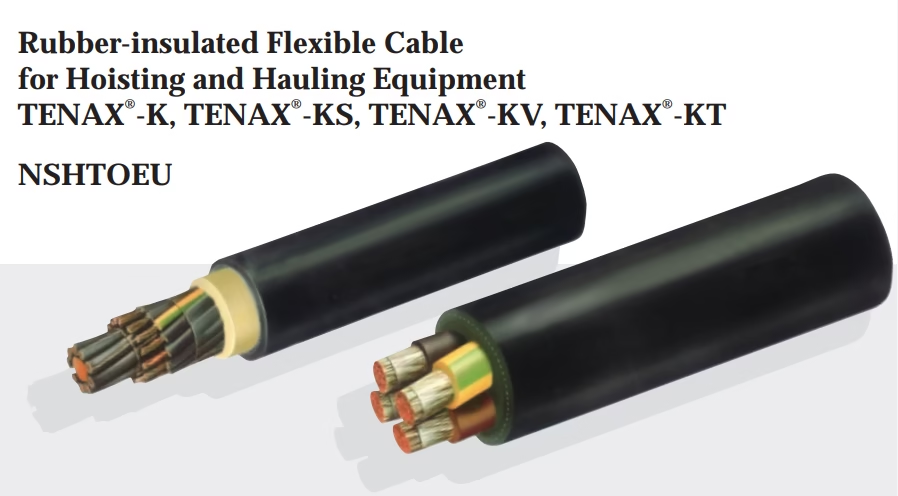
NSHTOEU (серия TENAX-K/KS/KV/KT) — это специализированные гибкие кабели с резиновой изоляцией, предназначенные для подключения подъемно-транспортных систем и аналогичного оборудования с принудительным направлением кабеля при высоких механических нагрузках. Кабели разработаны в соответствии с международным стандартом DIN VDE 0250, часть 814, который устанавливает требования к кабелям для подъемных механизмов.

Гибкий кабель с резиновой изоляцией для подъемно-транспортного оборудования

NSHTOEU (серия TENAX-K/KS/KV/KT) — это специализированные гибкие кабели с резиновой изоляцией, предназначенные для подключения подъемно-транспортных систем и аналогичного оборудования с принудительным направлением кабеля при высоких механических нагрузках. Кабели разработаны в соответствии с международным стандартом DIN VDE 0250, часть 814, который устанавливает требования к кабелям для подъемных механизмов.
Reeling Drum Cables for Port Cranes and Material Handling: Complete Engineering Guide Understanding NSHTÖU, TSCGEWÖU, and PUR Polyurethane Cables - Technical Specifications, Standards Compliance, Selection Criteria, and GB/T 5013 Limitations

Reeling Drum Cables for Port Cranes and Material Handling: Complete Engineering Guide

Reeling Drum Cables for Port Cranes and Material Handling: Complete Engineering Guide Understanding NSHTÖU, TSCGEWÖU, and PUR Polyurethane Cables – Technical Specifications, Standards Compliance, Selection Criteria, and GB/T 5013 Limitations
MEDIUM VOLTAGE TRAILING CABLES

Medium Voltage Cable Solutions: Complete Guide to PROTOLON, TENAX & PROTOMONT Series

MEDIUM VOLTAGE REELING CABLES, PROTOLON(M)-R, PROTOLON(M)-R FO, MEDIUM VOLTAGE TRAILING CABLES, TENAX-SAS, PROTOLON(SB), PROTOLON(SB-SAM), TENAX-LUMEN, MEDIUM VOLTAGE DREDGING CABLES, PROTOLON(ST)…/3E, PROTOLON(ST), PROTOLON(M)-F, CABLES FOR SEMI-FLEXIBLE INSTALLATION, PROTOLON(M)-F, PROTOMONT NSSHOEU, PROTOMONT NSHXOEU, PROTOMONT(MT), PROTOMONT EMV-FC, MEDIUM VOLTAGE SINGLE CORE CABLES, FELTOFLEX, NTMCWOEU, PROTOLON NTMCGCWOEU, PROTOLON(M) (N)TM.., CONTROL AND SIGNALING CABLES, OPTOFLEX(M), PROTOMONT(MSR), SHEARER CABLES FOR CHAIN APPLICATION, PROTOMONT(V) NSS…, PROTOMONT(V) NTS…, PROTOMONT(VO), TENAX-CTE, SHEARER CABLES FOR FREE TRAILING, PROTOMONT(Z), UNDERGROUND REELING CABLES, TENAX-LK, PROTOMONT(S), CORDAFLEX(S), PROTOMONT(M+), CABLES FOR SEMI-FIXED INSTALLATION, PROTOMONT Festoon, SUPROMONT (N)3GHSSYCY, SUPROMONT (N)3GHSSHCH, PROTOMONT(MT), PROTOMONT NSSH../3E, PROTOMONT EMV-FCTBM, REELING, PROTOMONT TBM (N)TSCGECWOEU, PROTOMONT TBM (N)TSCGECWHXOEU, TENAX-HTT, CABLES FOR SEMI-FIXED INSTALLATION, PROTOMONT Festoon, SUPROMONT (N)3GHSSYCY, SUPROMONT (N)3GHSSHCH, PROTOMONT(MT), PROTOMONT NSSH../3E, PROTOMONT EMV-FC
DIN VDE 0250 German Standard Flexible Power Reeling Cable

What is DIN VDE 0250 Reeling Cables?

DIN VDE 0250 represents the globally recognized German standard for flexible electrical cables designed specifically for cranes, material handling equipment, and mobile machinery applications. As Germany remains the only country to have issued special design regulations for flexible electrical cables covering cranes and material handling equipment, this standard has achieved worldwide acceptance as the ultimate benchmark for tough rubber-sheathed flexible reeling cables.