DIN VDE 0250-812

BASKET SPREADER 740 (YSLTOE) is engineered specifically for hoisting and control applications where mechanical flexibility and electrical reliability must coexist in marine environments. Unlike load-bearing structural cables (which prioritize tensile strength), control cables emphasize: Conductor flexibility – Repeated bending over pulleys without mechanical fatigue Insulation integrity – Voltage breakdown resistance under salt-fog corrosion Mechanical damping – Rope-like flexibility to drape naturally in spreader bar frames Environmental barrier – Outer sheath blocks salt, moisture, and UV penetration Core Design Elements: Component Material Specification Function Port Environment Benefit Conductor Flexible red copper Class 6 (IEC 60228) Carries 300/500V power; enables bending flexibility High purity copper resists galvanic corrosion Insulation PVC type YI2 (IEC 60811) Electrical isolation; voltage breakdown resistance (2 kV test) PVC with marine additives prevents salt-induced tracking Central Unit Aramide yarns (Kevlar™ equivalent) Mechanical load-bearing backup; structural integrity Aramide resists moisture & salt; absorbs vibration stress Outer Sheath PUR type 11YM1 (DIN 73377) Environmental barrier; UV/ozone/moisture protection Superior salt-fog resistance; 20+ year marine lifespan

O que é o PROTOMONT EMV-FC (N)SHXCÖEU 0,6/1KV: Análise de Engenharia Aprofundada do Cabo Flexível Blindado para Variadores e Conversores de Frequência na Mineração

O PROTOMONT EMV-FC (N)SHXCÖEU 0,6/1KV é um cabo de potência de borracha flexível, livre de halogênio e eletromagneticamente blindado, projetado como cabo de alimentação de motor para acionamentos controlados por Variadores de Frequência (VFD) e Conversores de Frequência (FC) na indústria de mineração, em frentes de obra e aplicações similares sob esforços mecânicos severos. Sua característica definidora é a combinação de três sistemas em um único corpo: condutores de cobre estanhado finamente trançados classe 5, uma blindagem de cobre estanhado trançada para compatibilidade eletromagnética (EMC) e um conjunto de borracha EPR/EVA, livre de halogênio, capaz de operar de forma flexível em equipamentos de manuseio de materiais em movimento contínuo — incluindo lanças de cabos (cable booms) e a conexão entre os carros superior e inferior — e de permanecer permanentemente submerso em água até 40°C a uma profundidade máxima de 500 metros.
LIFT-2S (European) vs. LIFT-1S UL (North American): LIFT-2S characteristics: Voltage: 300/500V (European standard, lower voltage) Temperature: −40°C to +70°C (moderate range) Standards: VDE 0482 part 265-2-1, EN 50265-2-1, IEC 60332-1-2 Design philosophy: Safety by material redundancy (2 steel cores) Steel cores: 2× cores provide mechanical backup Conductor: Class 6 (European, ~150–200 wires per mm²) Cost: Lower (proven European manufacturing) Market: Europe, Asia-Pacific, most of world LIFT-1S UL characteristics: Voltage: 600V (North American standard, higher voltage) Temperature: −25°C to +105°C (extreme range, high-temp optimized) Standards: UL 2562, UL 62, CSA C22.2 No.210.2 Design philosophy: Safety by certification (single core + redundant control) Steel core: 1× core (sufficient with nylon covering) Conductor: Class M (UL, extra fine ~300+ wires per mm²) Cost: Higher (UL testing, certification documentation) Market: North America (USA, Canada), Mexico UL 2562 specialty certification: UL 2562 scope: Elevator and Dumbwaiter Cables Specific requirements: 1. Pendant cable design (cable hangs freely, no duct support) 2. Vertical orientation (designed for gravity-loaded suspension) 3. Repeated flex cycles (cable moves up/down frequently) 4. Safety-critical function (failure = personnel risk) Consequence: More stringent than general-purpose cables Testing includes: Bend cycle fatigue, heat aging, compression resistance Test procedures (unique to UL 2562): Bend cycle test: 1,000+ cycles at minimum bending radius Cable must pass insulation resistance after cycling Heat aging: 500+ hours at 105°C continuous Tensile strength retention minimum 70% Compression: 1,000+ hours under sustained compression Cable cross-section must not exceed 5% permanent deformation LIFT-2S (no UL 2562): Tests per VDE are less stringent on fatigue/cycling Assumes cable mostly static, not repeated flex Adequate for European elevator duty (lower speed, fewer cycles) LIFT-1S UL: All UL 2562 tests passed (proven for North American elevators) Faster cycle times, more frequent motion → more fatigue stress Extra testing ensures reliability under North American elevator duty Market requirement (regulatory): Europe/International: CE mark required (European conformity) VDE/EN/IEC standards sufficient No UL certification needed (not recognized in EU) LIFT-2S is sufficient North America (USA, Canada): UL certification mandatory for elevators UL 2562 specifically for elevator cables CSA dual certification required in Canada LIFT-2S NOT acceptable (lacks UL 2562) LIFT-1S UL mandatory Cost implication: UL certification: ~$5,000–15,000 per product per region Testing duration: 3–6 months per model Documentation: Comprehensive test reports, technical files Result: LIFT-1S UL 20–30% higher cost than equivalent European cable

NSHCGEÖU KON+ST+ÜL для общего применения: тяжёлый кабель 0,6/1 kV для мобильных шахтных машин, контроля повреждений и вспомогательных цепей

NSHCGEÖU KON+ST+ÜL — это тяжёлый эластомерный кабель для подключения мобильных машин с очень высокой механической нагрузкой. По предоставленным данным он особенно применяется в шахтах для coal cutting and loading machines, а также для питания аппаратов, устройств и auxiliary electrical circuits. Конструкция объединяет три силовые жилы, двойные концентрические контрольные жилы, monitoring core, GM1b внутреннюю оболочку, гибкую броню из лужёных медных и оцинкованных стальных проволок, а также тяжёлую наружную оболочку 5GM5 жёлтого или красного цвета.
What Are UNE 22560 and UNE 22561? Scope, Definitions, and Core Purpose The UNE 22560 and UNE 22561 standards represent the final and often most underestimated element of the Spanish and Latin American underground mining cable ecosystem. Where UNE 22511 and UNE 22512 govern the power distribution cables that energize mining equipment, the 22560 and 22561 standards govern the signal, control, and interlock cables that command and protect that equipment. These are the "nervous system" cables of a mine — the communication network that tells a continuous miner when to advance and when to halt, that triggers emergency stops, that monitors hoisting rope tension on shaft equipment, that controls conveyor sequencing, and that enables the protective interlocking that prevents a piece of equipment from operating unless all safety preconditions are met. UNE 22560 formally defines flexible multi-core cables for underground mining with voltage ratings up to 500 V or 0.6/1 kV, with no metallic armour protection — designed for installation within equipment enclosures, along protected cable trays in main gate roads, or in areas where mechanical damage risk is minimal. UNE 22561 is its armoured sister standard, incorporating steel wire braid or steel tape protection, specified for installation in rough terrain areas where mechanical damage from rock fall, equipment collision, or floor contact is a credible risk. Both standards mandate that the cable be designed as a multi-core concentric stranded bundle — not the parallel-laid three or four conductors common in power cables, but rather seven, twelve, nineteen, or more individually insulated cores twisted concentrically around a central axis, allowing compact packaging of numerous independent control circuits within a single cable jacket. The distinction between these standards is not merely mechanical armour presence or absence. Control cables are tested against an entirely different set of safety criteria than power cables because their failure mode is fundamentally different. A power cable failure results in loss of energy to equipment — dangerous but localized. A control cable failure can disable the interlock system that prevents a continuous miner from advancing into unsafe ground, or can disable the emergency stop circuit that should halt a conveyor if a worker falls into it. A control cable fire, burning in a tightly bundled cable tray with other control cables, must not spread flame between cables because control cables are typically routed in shared ducts and cable carriers where one cable's ignition could cascade to adjacent circuits. Therefore, control cables are tested for bundle flame propagation (EN 60332-3) rather than single-cable flame propagation tests — a more stringent requirement that demands careful attention to outer sheath formulation and cable spacing in bundle installation.

NSSHÖU для общего применения: тяжёлый эластомерный кабель 0,6/1 kV для шахт, карьеров, тоннелей и промышленности

NSSHÖU — это гибкий силовой кабель тяжёлого исполнения для общего применения в горной добыче, карьерах, промышленных зонах, строительных площадках, сельскохозяйственных операциях и в качестве trailing cable. По предоставленным техническим данным он имеет лужёные медные жилы DIN VDE 0295 Class 5, изоляцию 3GI3, внутреннюю оболочку GM1b, наружную тяжёлую эластомерную оболочку 5GM5, а также специальные исполнения с индивидуальными экранами …3/E и концентрическим общим экраном …kon.
FLEXIFESTOON® SEOOW YELLOW represents FeiChun's entry into the low-voltage festoon and temporary power market. The nomenclature requires careful explanation to distinguish this product from the high-voltage FLEXIDRUM series: FLEXIFESTOON Product Nomenclature: FLEXIFESTOON® = Product family name Flex = Flexible (emphasis on bending & handling) Festoon = Strung overhead in continuous runs (typical festoon lighting application) SEOOW = Industry-standard designation S = Service cord (temporary, not permanent installation) E = Elastomer jacket (flexible sheath) OO = Oil-resistant conductor insulation (TPE qualifies as oil-resistant) W = Weather-resistant sheath (water, ozone, UV resistant) SEOOW is defined in: UL 62 (Standard for Flexible Cords and Cables) CSA 22.2 No. 49 (Canadian equivalent) NFPA 70 National Electrical Code (NEC) Article 400 YELLOW designation: Color: RAL 1021 (traffic yellow, high visibility) Safety significance: Yellow cords attract attention in job sites Practical purpose: Easy to identify, prevent trips/entanglement Contrast with FLEXIDRUM series: FLEXIDRUM (High-Voltage MV Cable): Voltage: 3.6 kV to 20/35 kV (power distribution) Temperature: −40 to +80°C (standard industrial) Application: Mobile mining/tunneling equipment (capital-intensive) Size: Large diameter, heavy (3–12 kg/km) FLEXIFESTOON (Low-Voltage Service Cord): Voltage: 600V (light/power temporary use) Temperature: −60 to +105°C (extreme environmental range) Application: Festoon lighting, temporary site power, outdoor events Size: Small diameter, lightweight (0.05–0.3 kg/m) Cost: Consumer/contractor-grade (not specialty industrial)

(N)SHÖU для общего применения: силовой кабель 0,6/1 kV для карьеров, конвейеров, горных и тоннельных площадок

Кабель (N)SHÖU предназначен для тяжёлых условий эксплуатации: открытые горные работы, карьеры, линии рядом с конвейерными лентами, оборудование для обработки материалов, тоннельные площадки и сходные промышленные установки. Его инженерная ценность заключается в сочетании гибкой медной жилы класса 5, эластомерной изоляции 3GI3, внутренней эластомерной оболочки и тяжёлой наружной оболочки 5GM5 жёлтого или чёрного цвета.
Extended technical reference for container-port operations engineers, dock equipment procurement specialists, electrical infrastructure planners, gantry-crane maintenance teams, maritime safety officers, and port capital-infrastructure project managers. Comprehensive coverage: salt-fog corrosion mechanisms at the polymer/metal interface (electrochemical kinetics of aluminum/copper oxidation in chloride-rich marine environments); polymer-chemistry approaches to moisture-ingress suppression (HEPR elastomer formulation, plasticizer selection, interface engineering); EMC shielding design (concentric vs. braided screen, copper surface-finish specifications, impedance control for VFD harmonic suppression); mechanical fatigue under combined bending-torsion-wind stress (Goodman diagram analysis, S-N fatigue curves for elastomer systems); round vs. flat cable aerodynamic behavior (computational fluid dynamics modeling of wind-induced vibration, stress concentration factors); DIN VDE 0250-812 standards architecture and global regulatory equivalence (ATEX, IEC, ISO 1659, Australian/Canadian port standards); field deployment data from 15+ years of port operations across diverse geographic regions (tropical salt-fog, temperate maritime, cold-climate ports); practical drop-in replacement engineering for Nexans/Prysmian equipment transitions; installation best practices for salt-fog environments (routing, termination, grounding, drainage management); maintenance protocols and life-extension strategies; and comprehensive 20-year total-cost-of-ownership modeling comparing premium elastomer systems versus commodity flat-cable approaches.

RHEYFESTOON®(C) (N)3GRDGC5G High-Speed Festoon Cable: Complete Technical Engineering Analysis of High-Molecular-Weight Elastomer Chemistry, Salt-Spray Corrosion Resistance Mechanisms, Concentric Copper-Screen EMC Shielding Architecture, Round vs. Flat Cable Design Comparison, Mechanical Stress Engineering for Extreme U-Bending Repetition, Polymer Moisture Ingress Barriers, Electrochemical Protection in Marine Salt-Fog Environments, Port Container-Terminal Integration, Real-World 240 m/min Operational Duty Cycles, Comparative Performance Benchmarking Against Standard Flat Festoon Systems, Drop-In Replacement Qualification Framework, Lifecycle Cost-of-Ownership Analysis for Global Deep-Water Container Ports, and Field-Proven Deployment Data from 1,500+ Port Installations

Extended technical reference for container-port operations engineers, dock equipment procurement specialists, electrical infrastructure planners, gantry-crane maintenance teams, maritime safety officers, and port capital-infrastructure project managers. Comprehensive coverage: salt-fog corrosion mechanisms at the polymer/metal interface (electrochemical kinetics of aluminum/copper oxidation in chloride-rich marine environments); polymer-chemistry approaches to moisture-ingress suppression (HEPR elastomer formulation, plasticizer selection, interface engineering); EMC shielding design (concentric vs. braided screen, copper surface-finish specifications, impedance control for VFD harmonic suppression); mechanical fatigue under combined bending-torsion-wind stress (Goodman diagram analysis, S-N fatigue curves for elastomer systems); round vs. flat cable aerodynamic behavior (computational fluid dynamics modeling of wind-induced vibration, stress concentration factors); DIN VDE 0250-812 standards architecture and global regulatory equivalence (ATEX, IEC, ISO 1659, Australian/Canadian port standards); field deployment data from 15+ years of port operations across diverse geographic regions (tropical salt-fog, temperate maritime, cold-climate ports); practical drop-in replacement engineering for Nexans/Prysmian equipment transitions; installation best practices for salt-fog environments (routing, termination, grounding, drainage management); maintenance protocols and life-extension strategies; and comprehensive 20-year total-cost-of-ownership modeling comparing premium elastomer systems versus commodity flat-cable approaches.
Professional technical analysis for port electrical engineers, cable procurement specialists, crane OEM integrators, terminal maintenance managers and classification surveyors. Covers thirteen principal cable families (H07VVH6-F, VCVH6-F, RHEYFLAT NGFLGOEU-J, RHEYFLAT GFLCGOEU-J LSHF, RHEYFESTOON 3GRD5G, RHEYFESTOON C 3GRDGC5G, RHEYCORD NSHTOEU-J, RHEYCORD RTS SHTOEU-J, BUFLEX DGR, BUFLEX SC, RHEYCORD PUR R, RHEYFIRM SI NTMCGCWOEUS, RHEYFIRM RTS NTSCGEWTOEUS, BUFLEX SEM, BUFLEX SEM OFE, RHEYCORD OFE variants and RHEYCORD BS YSLZ3SOE-J), with detailed marine-grade engineering upgrades, IEC 60068-2-52 cyclic salt-mist validation protocols and FeiChun's FC-FLX™ tinned ultra-fine conductor system combined with FC-ASB™ aramid anti-torsion braid technology.

Salt-Fog Resistant Port & Festoon Cables: Engineering Analysis of H07VVH6-F, RHEYFLAT, RHEYCORD, BUFLEX, RHEYFIRM & FeiChun Marine-Grade Equivalents

Professional technical analysis for port electrical engineers, cable procurement specialists, crane OEM integrators, terminal maintenance managers and classification surveyors. Covers thirteen principal cable families (H07VVH6-F, VCVH6-F, RHEYFLAT NGFLGOEU-J, RHEYFLAT GFLCGOEU-J LSHF, RHEYFESTOON 3GRD5G, RHEYFESTOON C 3GRDGC5G, RHEYCORD NSHTOEU-J, RHEYCORD RTS SHTOEU-J, BUFLEX DGR, BUFLEX SC, RHEYCORD PUR R, RHEYFIRM SI NTMCGCWOEUS, RHEYFIRM RTS NTSCGEWTOEUS, BUFLEX SEM, BUFLEX SEM OFE, RHEYCORD OFE variants and RHEYCORD BS YSLZ3SOE-J), with detailed marine-grade engineering upgrades, IEC 60068-2-52 cyclic salt-mist validation protocols and FeiChun’s FC-FLX™ tinned ultra-fine conductor system combined with FC-ASB™ aramid anti-torsion braid technology.
A comprehensive cable-by-cable technical upgrade guide for port electrical engineers, crane OEM integrators, terminal maintenance managers, procurement specialists and classification society surveyors. Covers: the electrochemistry of chloride-driven copper corrosion fatigue and why it invalidates service-life predictions made in dry-environment tests; the four-dimensional failure model (conductor corrosion fatigue, sheath compound shortfall, anti-torsion braid moisture degradation, termination ingress) that governs cable life in tropical and subtropical coastal terminals; FeiChun's specific marine-engineering answers to each failure mode; and a cable-by-cable upgrade specification for every major festoon and reeling designation in the European port-cable catalogue — from H07VVH6-F and VCVH6-F screened PVC flat cables through RHEYFLAT®-N NGFLGOEU-J and RHEYFLAT®-N (N)GFLCGOEU-J LSHF halogen-free flat festoon cables, RHEYFESTOON® (N)3GRD5G and RHEYFESTOON®(C) (N)3GRDGC5G round festoon cables, RHEYCORD®-OFE optical hybrid, BUFLEX® DGR and RHEYCORD®-PUR R polyurethane reeling cables, BUFLEX®-SC steel-reinforced reeling cable, the standard RHEYCORD® NSHTOEU-J and RHEYCORD®(RTS) (N)SHTOEU-J reeling cables, RHEYFIRM®(SI) NTMCGCWOEUS and BUFLEX® SEM and BUFLEX® SEM OFE medium-voltage variants, RHEYFIRM®(RTS) (N)TSCGEWTOEUS reduced-diameter MV reeling cable, RHEYFIRM® (RS)-FLAT (N)TSFLCGCWOEUS flat MV festoon cable, RHEYCORD®-OFE R and RHEYCORD®-OFE SR optical hybrid variants, and the speciality designations BOITALYON®R overhead crane pendant cable, RHEYFLEX®-PN strength-member control cable, RHEYCORD®(BS) YSLZ3SOE-J basket spreader cable and RHEYFIRM®(RTS) (N)TSCGEWTOEUS OF medium-voltage optical hybrid. Includes quantified IEC 60068-2-52 Severity 2 validation data, full-programme comparison tables, lifecycle cost modelling, and drop-in compatibility confirmation for all existing drum and festoon hardware.

Marine-Grade Salt-Fog Resistant Cable Upgrade Programme for Coastal Port Cranes: FeiChun FC-FLX™ and FC-ASB™ Technology Applied Across H07VVH6-F, VCVH6-F, RHEYFLAT®-N NGFLGOEU-J, RHEYFLAT®-N (N)GFLCGOEU-J LSHF, RHEYFESTOON® (N)3GRD5G, RHEYFESTOON®(C) (N)3GRDGC5G, RHEYCORD®-OFE, BUFLEX® DGR, RHEYCORD® NSHTOEU-J, RHEYCORD®(RTS) (N)SHTOEU-J, RHEYCORD®-PUR R, BUFLEX®-SC, RHEYFIRM®(SI) NTMCGCWOEUS, BUFLEX® SEM, BUFLEX® SEM OFE, RHEYFIRM®(RTS) (N)TSCGEWTOEUS, RHEYFIRM® (RS)-FLAT (N)TSFLCGCWOEUS, RHEYCORD®-OFE R, RHEYCORD®-OFE SR, BOITALYON®R, RHEYFLEX®-PN, RHEYCORD®(BS) YSLZ3SOE-J and RHEYFIRM®(RTS) (N)TSCGEWTOEUS OF

A comprehensive cable-by-cable technical upgrade guide for port electrical engineers, crane OEM integrators, terminal maintenance managers, procurement specialists and classification society surveyors. Covers: the electrochemistry of chloride-driven copper corrosion fatigue and why it invalidates service-life predictions made in dry-environment tests; the four-dimensional failure model (conductor corrosion fatigue, sheath compound shortfall, anti-torsion braid moisture degradation, termination ingress) that governs cable life in tropical and subtropical coastal terminals; FeiChun’s specific marine-engineering answers to each failure mode; and a cable-by-cable upgrade specification for every major festoon and reeling designation in the European port-cable catalogue — from H07VVH6-F and VCVH6-F screened PVC flat cables through RHEYFLAT®-N NGFLGOEU-J and RHEYFLAT®-N (N)GFLCGOEU-J LSHF halogen-free flat festoon cables, RHEYFESTOON® (N)3GRD5G and RHEYFESTOON®(C) (N)3GRDGC5G round festoon cables, RHEYCORD®-OFE optical hybrid, BUFLEX® DGR and RHEYCORD®-PUR R polyurethane reeling cables, BUFLEX®-SC steel-reinforced reeling cable, the standard RHEYCORD® NSHTOEU-J and RHEYCORD®(RTS) (N)SHTOEU-J reeling cables, RHEYFIRM®(SI) NTMCGCWOEUS and BUFLEX® SEM and BUFLEX® SEM OFE medium-voltage variants, RHEYFIRM®(RTS) (N)TSCGEWTOEUS reduced-diameter MV reeling cable, RHEYFIRM® (RS)-FLAT (N)TSFLCGCWOEUS flat MV festoon cable, RHEYCORD®-OFE R and RHEYCORD®-OFE SR optical hybrid variants, and the speciality designations BOITALYON®R overhead crane pendant cable, RHEYFLEX®-PN strength-member control cable, RHEYCORD®(BS) YSLZ3SOE-J basket spreader cable and RHEYFIRM®(RTS) (N)TSCGEWTOEUS OF medium-voltage optical hybrid. Includes quantified IEC 60068-2-52 Severity 2 validation data, full-programme comparison tables, lifecycle cost modelling, and drop-in compatibility confirmation for all existing drum and festoon hardware.
A practical reference for engineers responsible for maintaining and replacing port cable infrastructure, covering: the forensic mindset for cable failure investigation; the six primary failure signatures observed in marine reeling and festoon service; sheath, insulation, conductor, braid and termination failure modes with diagnostic photographs of each pattern; the bathtub curve as applied to industrial cable populations and how to recognise infant mortality, random failure and wear-out regimes; Weibull analysis of installed cable populations as a quantitative reliability tool; root-cause analysis using the five-whys methodology adapted for cable systems; field inspection protocols for active reeling and festoon installations; the replacement decision framework that distinguishes like-for-like substitution from upgrade specifications; and the FeiChun marine-grade port cable programme as the engineering response to the most frequently observed field-failure modes across the Nexans cable catalogue.

Reading the Failure: A Diagnostic Engineer’s Guide to Port Cable Forensics, Reliability Analysis and Replacement Specification — Field-Failure Patterns Across the Nexans RHEYCORD®, RHEYFLAT®, RHEYFESTOON®, BUFLEX® and RHEYFIRM® Catalogue

A practical reference for engineers responsible for maintaining and replacing port cable infrastructure, covering: the forensic mindset for cable failure investigation; the six primary failure signatures observed in marine reeling and festoon service; sheath, insulation, conductor, braid and termination failure modes with diagnostic photographs of each pattern; the bathtub curve as applied to industrial cable populations and how to recognise infant mortality, random failure and wear-out regimes; Weibull analysis of installed cable populations as a quantitative reliability tool; root-cause analysis using the five-whys methodology adapted for cable systems; field inspection protocols for active reeling and festoon installations; the replacement decision framework that distinguishes like-for-like substitution from upgrade specifications; and the FeiChun marine-grade port cable programme as the engineering response to the most frequently observed field-failure modes across the Nexans cable catalogue.
Protolon(SC)® (N)TSKWOEU is a 0.6/1 kV shore connection cable engineered by Anhui Feichun Special Cable Co., Ltd. for the single most important new cable application in the global maritime industry: cold ironing—the practice of connecting berthed ships to shore-side electrical power so they can shut down their diesel auxiliary engines during port stays, eliminating the thousands of tonnes of SOx, NOx, CO₂, and particulate matter that ships currently emit while sitting at berth.

Industrial Reeling Cable Supply Chain Resilience and Import Substitution Economics: A Business-Technical Framework for Sustainable Procurement Decisions in Port, Mining, and Heavy Equipment Operations

Comprehensive supply chain and procurement analysis covering: European supplier concentration risk quantification, documented supply disruption case studies (2023–2026), geopolitical risk factors (trade tensions, sanctions, tariff exposure), lead time economics and working capital impact, total cost of ownership (TCO) modelling framework, technical equivalence validation protocols for VDE/IEC-certified alternatives, quality assurance procedures for non-OEM suppliers, contract risk allocation strategies, inventory management optimization, production planning with extended lead times, currency and forex hedging considerations, regulatory compliance frameworks for import substitution in different jurisdictions, and practical implementation roadmap with realistic transition timelines.
A comprehensive technical reference for port electrical engineers, terminal maintenance managers, crane OEM integrators, classification surveyors and procurement specialists, covering: the dual mechanical regimes of festoon and drum reeling and how they impose different cable failure modes; the electrochemistry of salt-fog corrosion in tinned-copper conductors and why bare-copper variants fall short in coastal service; the FC-FLX™ ultra-fine N₂-annealed tinned conductor system built on Tongling Cu-CATH-1 cathode copper; the FC-ASB™ aramid anti-torsion braid as a structural alternative to conventional polyester textile braids found in RHEYCORD®(RTS) and RHEYFIRM®(RTS); marine-grade EPR 3GI3 insulation and 5GM5 polychloroprene sheath chemistry per DIN VDE 0207-21; PUR variants positioned against BUFLEX® DGR and RHEYCORD®-PUR R; halogen-free LSHF construction equivalent to RHEYFLAT®-N (N)GFLCGOEU-J LSHF; medium voltage screened reeling cables benchmarked against RHEYFIRM®(SI) NTMCGCWOEUS, BUFLEX® SEM and RHEYFIRM®(RTS) (N)TSCGEWTOEUS; optical-hybrid variants paralleling RHEYCORD®-OFE M / R / SR and BUFLEX® SEM OFE; speciality cables including BOITALYON®R pendant, RHEYFLEX®-PN strength-member control and RHEYCORD®(BS) YSLZ3SOE-J basket spreader cable; PVC flat festoon products H07VVH6-F and VCVH6-F; IEC 60068-2-52 cyclic salt-mist validation methodology; and full application guidance for STS, RTG, RMG, ship unloader, stacker-reclaimer and shore-power deployments.

Salt-Fog Resistant Festoon and Reeling Cables for Coastal Port Cranes: A Comparative Technical Study of FeiChun’s Marine-Grade Programme Against the Nexans RHEYCORD®, RHEYFLAT®, RHEYFESTOON®, BUFLEX® and RHEYFIRM® Catalogue

A comprehensive technical reference for port electrical engineers, terminal maintenance managers, crane OEM integrators, classification surveyors and procurement specialists, covering: the dual mechanical regimes of festoon and drum reeling and how they impose different cable failure modes; the electrochemistry of salt-fog corrosion in tinned-copper conductors and why bare-copper variants fall short in coastal service; the FC-FLX™ ultra-fine N₂-annealed tinned conductor system built on Tongling Cu-CATH-1 cathode copper; the FC-ASB™ aramid anti-torsion braid as a structural alternative to conventional polyester textile braids found in RHEYCORD®(RTS) and RHEYFIRM®(RTS); marine-grade EPR 3GI3 insulation and 5GM5 polychloroprene sheath chemistry per DIN VDE 0207-21; PUR variants positioned against BUFLEX® DGR and RHEYCORD®-PUR R; halogen-free LSHF construction equivalent to RHEYFLAT®-N (N)GFLCGOEU-J LSHF; medium voltage screened reeling cables benchmarked against RHEYFIRM®(SI) NTMCGCWOEUS, BUFLEX® SEM and RHEYFIRM®(RTS) (N)TSCGEWTOEUS; optical-hybrid variants paralleling RHEYCORD®-OFE M / R / SR and BUFLEX® SEM OFE; speciality cables including BOITALYON®R pendant, RHEYFLEX®-PN strength-member control and RHEYCORD®(BS) YSLZ3SOE-J basket spreader cable; PVC flat festoon products H07VVH6-F and VCVH6-F; IEC 60068-2-52 cyclic salt-mist validation methodology; and full application guidance for STS, RTG, RMG, ship unloader, stacker-reclaimer and shore-power deployments.
Иерархия электроэнергии в подземной угольной шахте — почему 6/10кВ магистраль необходима: Типичная архитектура: (1) Наземная главная подстанция (ГПП): базирующейся на поверхности шахты, обычно 35 кВ или 110 кВ питание от региональной электросети. ГПП содержит мощный трансформатор 35/6 кВ (трансформация высокого напряжения в среднее), главный выключатель, защитные реле. (2) Магистральный кабель 6/10 кВ (TENAX-V NSSHCGEOEU-V или КГЭЖ 6/10кВ): спускается вертикально (или наклонно) из ГПП на поверхности вниз через ствол шахты на глубину 200–1,500 метров (в зависимости от глубины выработок). Длина магистрали: 500–3,000 м типичная. Магистраль прокладывается в защитной трубе или канале (каналы "кабелепровод" железобетонные с зазорами для вентиляции). Магистраль питает несколько подземных трансформаторных подстанций. (3) Подземные трансформаторные подстанции (ТП): расположены на разных уровнях выработок (каждый уровень добычи может иметь свою ТП). Трансформатор 6/0.66 кВ (или реже 6/0.4 кВ) понижает напряжение. ТП обычно содержит: входной масляный выключатель 6 кВ, трансформатор с естественным охлаждением масло-воздух (Power rating 250–630 кВА, зависит от количества комбайнов), выходные выключатели 0.66 кВ, система защиты (реле расстояния, дифференциальные реле). (4) Локальные распределительные кабели 0.6/1.0 кВ: от ТП идут отдельные кабели (низковольтные КГЭШм 1.14кВ, как обсуждалось в предыдущей статье) к комбайнам, лебёдкам, конвейерам. Следствие: магистраль 6/10 кВ являет "хребтом" подземного электроснабжения. Потеря или отказ магистрали = полное отключение всех устройств низкого напряжения в той зоне выработок, что она питает. Поэтому надёжность магистрального кабеля критична. Замена магистрали требует полной остановки шахты на несколько дней, стоимость простоя: миллионы в сутки. Это объясняет, почему локализация магистрального TENAX-V имеет стратегическое значение для русских операторов.

TENAX-V NSSHCGEOEU-V 6/10кВ: немецкий магистральный кабель и КГЭЖ 6/10кВ русский эквивалент для подземного электроснабжения

Иерархия электроэнергии в подземной угольной шахте — почему 6/10кВ магистраль необходима: Типичная архитектура: (1) Наземная главная подстанция (ГПП): базирующейся на поверхности шахты, обычно 35 кВ или 110 кВ питание от региональной электросети. ГПП содержит мощный трансформатор 35/6 кВ (трансформация высокого напряжения в среднее), главный выключатель, защитные реле. (2) Магистральный кабель 6/10 кВ (TENAX-V NSSHCGEOEU-V или КГЭЖ 6/10кВ): спускается вертикально (или наклонно) из ГПП на поверхности вниз через ствол шахты на глубину 200–1,500 метров (в зависимости от глубины выработок). Длина магистрали: 500–3,000 м типичная. Магистраль прокладывается в защитной трубе или канале (каналы “кабелепровод” железобетонные с зазорами для вентиляции). Магистраль питает несколько подземных трансформаторных подстанций. (3) Подземные трансформаторные подстанции (ТП): расположены на разных уровнях выработок (каждый уровень добычи может иметь свою ТП). Трансформатор 6/0.66 кВ (или реже 6/0.4 кВ) понижает напряжение. ТП обычно содержит: входной масляный выключатель 6 кВ, трансформатор с естественным охлаждением масло-воздух (Power rating 250–630 кВА, зависит от количества комбайнов), выходные выключатели 0.66 кВ, система защиты (реле расстояния, дифференциальные реле). (4) Локальные распределительные кабели 0.6/1.0 кВ: от ТП идут отдельные кабели (низковольтные КГЭШм 1.14кВ, как обсуждалось в предыдущей статье) к комбайнам, лебёдкам, конвейерам. Следствие: магистраль 6/10 кВ являет “хребтом” подземного электроснабжения. Потеря или отказ магистрали = полное отключение всех устройств низкого напряжения в той зоне выработок, что она питает. Поэтому надёжность магистрального кабеля критична. Замена магистрали требует полной остановки шахты на несколько дней, стоимость простоя: миллионы в сутки. Это объясняет, почему локализация магистрального TENAX-V имеет стратегическое значение для русских операторов.
In mining pump and dewatering operations, cable selection directly impacts system reliability and operational safety. While H07RN-F Titanex (manufactured by Nexans) represents a high-quality general industrial rubber cable compliant with EN 50525-2-21/IEC 60245-4, the NSSHÖU cable manufactured per DIN VDE 0250 Part 812 offers critical advantages specifically engineered for mining environments. 在矿井泵和排水作业中,电缆选择直接影响系统可靠性和操作安全。虽然H07RN-F Titanex(Nexans生产)是符合EN 50525-2-21/IEC 60245-4标准的高品质通用工业橡胶电缆,但按DIN VDE 0250第812部分制造的NSSHÖU电缆专为矿业环境设计,具有关键优势。

H07RN-F Titanex vs. NSSHÖU: Why NSSHÖU is Superior for Mining Pump Applications

In mining pump and dewatering operations, cable selection directly impacts system reliability and operational safety. While H07RN-F Titanex (manufactured by Nexans) represents a high-quality general industrial rubber cable compliant with EN 50525-2-21/IEC 60245-4, the NSSHÖU cable manufactured per DIN VDE 0250 Part 812 offers critical advantages specifically engineered for mining environments. 在矿井泵和排水作业中,电缆选择直接影响系统可靠性和操作安全。虽然H07RN-F Titanex(Nexans生产)是符合EN 50525-2-21/IEC 60245-4标准的高品质通用工业橡胶电缆,但按DIN VDE 0250第812部分制造的NSSHÖU电缆专为矿业环境设计,具有关键优势。
(N)TSFLCGEWÖU cable designation follows German DIN VDE standards and represents a specific type of flat flexible cable designed for festoon applications. Understanding the nomenclature and specifications is essential for selecting cables that will perform optimally within Conductix-Wampfler festoon systems.

Conductix-Wampfler Festoon Systems: Choosing the Right (N)TSFLCGEWÖU Flat Cable

(N)TSFLCGEWÖU cable designation follows German DIN VDE standards and represents a specific type of flat flexible cable designed for festoon applications. Understanding the nomenclature and specifications is essential for selecting cables that will perform optimally within Conductix-Wampfler festoon systems.
Cavotec SA, headquartered in Lugano, Switzerland, is a globally recognized engineering company specializing in connection and electrification solutions for ports, airports, mining, and industrial applications. Their motorized cable reel systems are installed on thousands of cranes, ship-to-shore equipment, and material handling systems worldwide, making cable compatibility a critical consideration for maintenance and replacement operations.

Compatible Cables for Cavotec Motorized Reels: Diameter Tolerance & Weight Guide

Cavotec SA, headquartered in Lugano, Switzerland, is a globally recognized engineering company specializing in connection and electrification solutions for ports, airports, mining, and industrial applications. Their motorized cable reel systems are installed on thousands of cranes, ship-to-shore equipment, and material handling systems worldwide, making cable compatibility a critical consideration for maintenance and replacement operations.
In modern tunnel boring machine (TBM) applications, the selection of appropriate voltage ratings for cutterhead drive systems is critical for operational efficiency, safety, and equipment longevity. For Herrenknecht TBMs—the world's leading manufacturer of mechanized tunneling equipment—the standard voltage rating for cutterhead high-voltage drives is predominantly 6kV (6/10kV class) and 10kV, with 20kV systems reserved for specialized high-power applications exceeding 5MW per motor. 在现代隧道掘进机(TBM)应用中,刀盘驱动系统的电压等级选择对运行效率、安全性和设备寿命至关重要。对于海瑞克TBM——全球领先的机械化隧道设备制造商——刀盘高压驱动的标准电压等级主要为6kV(6/10kV级)和10kV,20kV系统仅用于单电机功率超过5MW的特殊高功率应用。

TBM Cutterhead High-Voltage Drives: Which Voltage Rating (6kV, 10kV, or 20kV) is Standard for Herrenknecht TBM?

In modern tunnel boring machine (TBM) applications, the selection of appropriate voltage ratings for cutterhead drive systems is critical for operational efficiency, safety, and equipment longevity. For Herrenknecht TBMs—the world’s leading manufacturer of mechanized tunneling equipment—the standard voltage rating for cutterhead high-voltage drives is predominantly 6kV (6/10kV class) and 10kV, with 20kV systems reserved for specialized high-power applications exceeding 5MW per motor. 在现代隧道掘进机(TBM)应用中,刀盘驱动系统的电压等级选择对运行效率、安全性和设备寿命至关重要。对于海瑞克TBM——全球领先的机械化隧道设备制造商——刀盘高压驱动的标准电压等级主要为6kV(6/10kV级)和10kV,20kV系统仅用于单电机功率超过5MW的特殊高功率应用。
NSSHÖU cables are designed for power supply applications in mining, quarrying, tunneling, and heavy industrial equipment where extreme mechanical stress and abrasion are expected. These cables can be installed in dry, damp, wet, and hazardous environments but are NOT suitable for drumming applications under tensile loads or for continuous robotic movement in energy chains where highly flexible cables with specific bend cycle ratings are required. NSSHÖU电缆设计用于采矿、采石、隧道和重型工业设备中的供电应用,其中预期会有极端的机械应力和磨损。这些电缆可以安装在干燥、潮湿、湿润和危险环境中,但不适合在拉力负载下的卷筒应用或需要具有特定弯曲周期额定值的高度柔性电缆的连续机器人运动的能量链中。

NSSHÖU Cable Ampacity Table: Current Rating & Correction Factors at 50°C Ambient Temperature

NSSHÖU cables are designed for power supply applications in mining, quarrying, tunneling, and heavy industrial equipment where extreme mechanical stress and abrasion are expected. These cables can be installed in dry, damp, wet, and hazardous environments but are NOT suitable for drumming applications under tensile loads or for continuous robotic movement in energy chains where highly flexible cables with specific bend cycle ratings are required. NSSHÖU电缆设计用于采矿、采石、隧道和重型工业设备中的供电应用,其中预期会有极端的机械应力和磨损。这些电缆可以安装在干燥、潮湿、湿润和危险环境中,但不适合在拉力负载下的卷筒应用或需要具有特定弯曲周期额定值的高度柔性电缆的连续机器人运动的能量链中。
H07RN-F to NSSHÖU represents not just a viable replacement but potentially a significant improvement in pump system reliability. This technical analysis will guide you through each aspect of this decision-making process, providing the engineering knowledge needed to make an informed choice for your specific dewatering application.

Can I Replace Standard H07RN-F Cable with NSSHÖU for Heavy-Duty Mining Dewatering Pumps?

H07RN-F to NSSHÖU represents not just a viable replacement but potentially a significant improvement in pump system reliability. This technical analysis will guide you through each aspect of this decision-making process, providing the engineering knowledge needed to make an informed choice for your specific dewatering application.
The choice of conductor material in electrical cables represents a critical engineering decision that directly impacts cable longevity, performance, and safety. German VDE standards, particularly DIN VDE 0250, specify tinned copper conductors for rubber-insulated cables such as NSSHÖU, while PVC-insulated cables commonly utilize bare (plain) copper conductors. This technical distinction arises from fundamental differences in material chemistry and vulcanization processes. 电缆导体材料的选择是一项关键的工程决策,直接影响电缆的寿命、性能和安全性。德国VDE标准,特别是DIN VDE 0250,规定橡胶绝缘电缆(如NSSHÖU)必须使用镀锡铜导体,而PVC绝缘电缆通常使用裸铜导体。这一技术区别源于材料化学和硫化工艺的根本差异。

Tinned Copper: Why Do VDE Standards Typically Require Tinned Copper Conductors for Rubber Cables Like NSSHÖU, Whereas PVC Cables Often Use Bare Copper?

The choice of conductor material in electrical cables represents a critical engineering decision that directly impacts cable longevity, performance, and safety. German VDE standards, particularly DIN VDE 0250, specify tinned copper conductors for rubber-insulated cables such as NSSHÖU, while PVC-insulated cables commonly utilize bare (plain) copper conductors. This technical distinction arises from fundamental differences in material chemistry and vulcanization processes. 电缆导体材料的选择是一项关键的工程决策,直接影响电缆的寿命、性能和安全性。德国VDE标准,特别是DIN VDE 0250,规定橡胶绝缘电缆(如NSSHÖU)必须使用镀锡铜导体,而PVC绝缘电缆通常使用裸铜导体。这一技术区别源于材料化学和硫化工艺的根本差异。
VDE 0250 rubber cables are required to comply with IEC 60332-1 flame retardancy testing, which evaluates the vertical flame propagation characteristics of single insulated wires and cables under fire conditions. This standard establishes that the cable must self-extinguish after flame removal and the charred zone must not extend within 50mm of the upper mounting clamp. Most VDE 0250 rubber cables constructed with flame-retardant materials such as chloroprene rubber (CR/Neoprene) or compounds with flame-retardant additives are designed to pass this critical fire safety test.[1][2] VDE 0250橡胶电缆必须符合IEC 60332-1阻燃测试要求,该测试评估单根绝缘电线电缆在火灾条件下的垂直火焰蔓延特性。该标准规定电缆在移除火焰后必须自熄,且碳化区域不得延伸至上固定夹具50mm范围内。大多数采用阻燃材料(如氯丁橡胶或添加阻燃剂的化合物)制造的VDE 0250橡胶电缆均设计为通过此关键防火安全测试。

What is the Requirement for Flame Retardancy (IEC 60332-1) in Standard VDE 0250 Rubber Cables?

VDE 0250 rubber cables are required to comply with IEC 60332-1 flame retardancy testing, which evaluates the vertical flame propagation characteristics of single insulated wires and cables under fire conditions. This standard establishes that the cable must self-extinguish after flame removal and the charred zone must not extend within 50mm of the upper mounting clamp. Most VDE 0250 rubber cables constructed with flame-retardant materials such as chloroprene rubber (CR/Neoprene) or compounds with flame-retardant additives are designed to pass this critical fire safety test.[1][2] VDE 0250橡胶电缆必须符合IEC 60332-1阻燃测试要求,该测试评估单根绝缘电线电缆在火灾条件下的垂直火焰蔓延特性。该标准规定电缆在移除火焰后必须自熄,且碳化区域不得延伸至上固定夹具50mm范围内。大多数采用阻燃材料(如氯丁橡胶或添加阻燃剂的化合物)制造的VDE 0250橡胶电缆均设计为通过此关键防火安全测试。
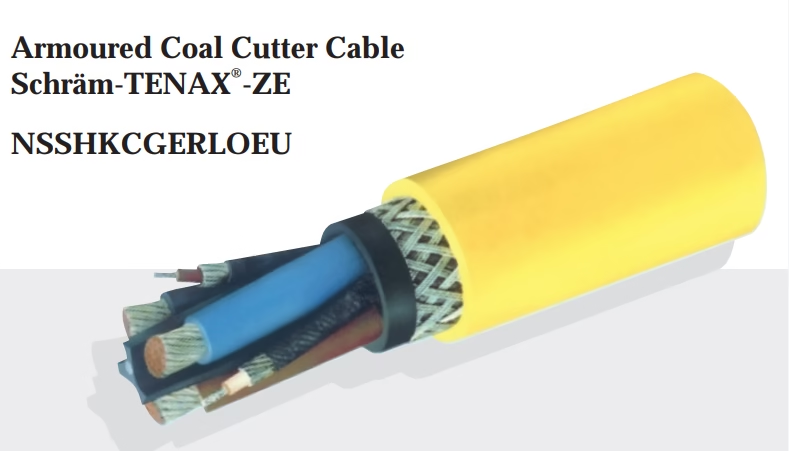
NSSHKCGERLOEU (Schräm-TENAX -ZE) — это специализированный бронированный гибкий кабель, разработанный для подключения мобильных машин, работающих в условиях чрезвычайно высоких механических нагрузок. Кабель предназначен преимущественно для горнодобывающей промышленности, в частности для угольных комбайнов типа Schräm (Schräm-Maschinen), и соответствует требованиям международного стандарта DIN VDE 0250, часть 812.

Бронированный кабель для угольных комбайнов

NSSHKCGERLOEU, Schräm-TENAX -ZE, бронированный кабель для угольных комбайнов, кабель NSSHKCGERLOEU, кабель для комбайна, гибкий шахтный кабель, горнодобывающий кабель, кабель для добычи угля, кабель устойчивый к сдавливанию, кабель стальная оплетка, кабель для LHD, намоточный кабель, кабель DIN VDE 0250-812, кабель DIN VDE 0472-818, огнестойкий шахтный кабель, маслостойкий кабель, кабель EPR изоляция, кабель 0.6/1 kV, морозостойкий шахтный кабель, кабель для угольного комбайна, кабель для очистного комбайна, кабель для проходческого комбайна, кабель с пилотными жилами, кабель обнаружение повреждений, кабель замыкание на землю, armoured coal cutter cable, mining flexible cable, coal shearer cable, LHD reeling cable, squeezing resistant cable, 煤機電纜, 鎧裝採煤機電纜, 礦用電纜, 鏟運機電纜, 安徽飛純電纜, Anhui Feichun cable, China mining cable manufacturer
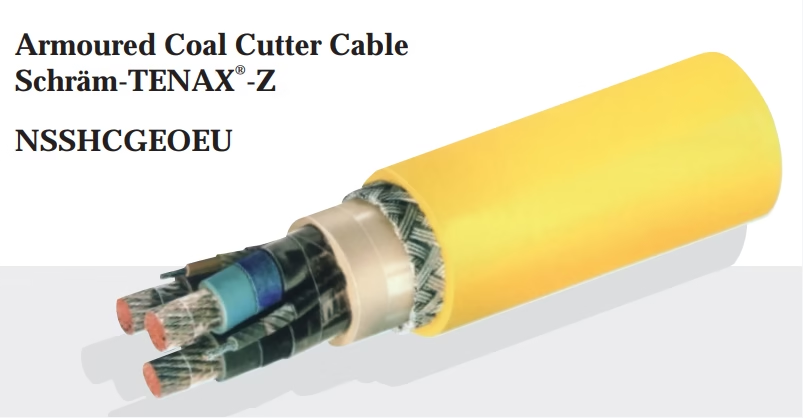
NSSHCGEOEU — это специализированный бронированный гибкий кабель, предназначенный для подключения мобильных машин, эксплуатируемых в условиях экстремальных механических нагрузок, преимущественно в горнодобывающей промышленности. Кабель разработан в соответствии с международным стандартом DIN VDE 0250, часть 812, который устанавливает требования к конструкции, электрическим характеристикам и механической прочности кабелей для угольных комбайнов.

Schräm-TENAX® -Z NSSHCGEOEU

бронированный кабель для угольных комбайнов, кабель NSSHCGEOEU, кабель для горнодобывающего оборудования, кабель для угольных шахт, гибкий шахтный кабель, кабель для комбайна, резиновый кабель для шахт, кабель EPR изоляция, кабель 0.6/1 kV горный, кабель для LHD погрузчика, кабель медно-стальная броня, кабель концентрический экран, силовой кабель для шахт
NSSHCGEOEU кабель, Schräm-TENAX кабель, кабель для угольных комбайнов, кабель угольного комбайна, кабель для шрам-машины, кабель экстремального изгиба, кабель 1.5D радиус изгиба, кабель 2.5D радиус изгиба, гибкий горнодобывающий кабель, особо гибкий кабель, кабель DIN VDE 0250-812, кабель 0.6/1 кВ угольный комбайн, горнодобывающий кабель для комбайнов, кабель для подземной добычи угля, кабель с мониторингом изоляции, экранированный кабель с мониторингом, кабель EPR изоляция высокой прочности, термостойкий резиновый кабель, кабель с медно-стальным проводником, кабель с лужёной медью, кабель усиленного заземления, маслостойкий кабель угольный, огнестойкий гибкий кабель, кабель устойчивый к истиранию, жёлтый кабель 5GM5, хлоропреновая оболочка кабель, кабель низкого растягивающего напряжения, кабель высокой механической прочности, кабель особо тонкопроволочный, фазоконцентрический экран мониторинга, общеконцентрический заземляющий проводник, кабель 3x16/16 KON, кабель 3x25/16 KON, кабель 3x35/16 KON, кабель 3x50/25 KON, кабель 3x70/35 KON, кабель 3x95/50 KON, кабель 2 ST + ÜL, кабель 3 ST + 3 ÜL, контрольные жилы растяжение сжатие, индуктивно сбалансированный мониторинг, кабель для очистных комбайнов, кабель для проходческих комбайнов, кабель СНГ Россия угольный, кабель Казахстан угольный, кабель Беларусь, китайский производитель кабеля комбайн, Anhui Feichun кабель угольный, кабель ГОСТ угольный комбайн

NSSHCGEOEU — Кабель для Угольных Комбайнов Schräm-TENAX®-V

NSSHCGEOEU кабель, Schräm-TENAX кабель, кабель для угольных комбайнов, кабель угольного комбайна, кабель для шрам-машины, кабель экстремального изгиба, кабель 1.5D радиус изгиба, кабель 2.5D радиус изгиба, гибкий горнодобывающий кабель, особо гибкий кабель, кабель DIN VDE 0250-812, кабель 0.6/1 кВ угольный комбайн, горнодобывающий кабель для комбайнов, кабель для подземной добычи угля, кабель с мониторингом изоляции, экранированный кабель с мониторингом, кабель EPR изоляция высокой прочности, термостойкий резиновый кабель, кабель с медно-стальным проводником, кабель с лужёной медью, кабель усиленного заземления, маслостойкий кабель угольный, огнестойкий гибкий кабель, кабель устойчивый к истиранию, жёлтый кабель 5GM5, хлоропреновая оболочка кабель, кабель низкого растягивающего напряжения, кабель высокой механической прочности, кабель особо тонкопроволочный, фазоконцентрический экран мониторинга, общеконцентрический заземляющий проводник, кабель 3×16/16 KON, кабель 3×25/16 KON, кабель 3×35/16 KON, кабель 3×50/25 KON, кабель 3×70/35 KON, кабель 3×95/50 KON, кабель 2 ST + ÜL, кабель 3 ST + 3 ÜL, контрольные жилы растяжение сжатие, индуктивно сбалансированный мониторинг, кабель для очистных комбайнов, кабель для проходческих комбайнов, кабель СНГ Россия угольный, кабель Казахстан угольный, кабель Беларусь, китайский производитель кабеля комбайн, Anhui Feichun кабель угольный, кабель ГОСТ угольный комбайн
NSSHCGEOEU (TENAX®-Streb) — это специализированный кабель забойного освещения, разработанный для подключения осветительного оборудования и стационарных приводов в условиях высоких механических нагрузок, преимущественно в горнодобывающей промышленности. Кабель соответствует международному стандарту DIN VDE 0250, часть 812 и оснащён уникальной системой мониторинга, состоящей из фазоконцентрического проводника мониторинга и общеконцентрического заземляющего проводника. Эта конструкция позволяет непрерывно контролировать кабель на наличие дефектов изоляции и повреждений от внешних воздействий, что даёт возможность использовать кабели в шахтах без дополнительной механической защиты.

NSSHCGEOEU — Кабель Забойного Освещения с Проводником Мониторинга

NSSHCGEOEU кабель, TENAX-Streb кабель, кабель забойного освещения, кабель для забойного освещения, кабель для шахтного освещения, кабель с проводником мониторинга, экранированный кабель с мониторингом, кабель DIN VDE 0250-812, кабель 0.6/1 кВ, горнодобывающий кабель освещения, кабель для подземного освещения, кабель для стационарных приводов, кабель с концентрическим заземлением, кабель EPR изоляция 3GI3, термостойкий резиновый кабель, кабель с медно-стальным проводником, кабель с лужёной медью, маслостойкий кабель, огнестойкий гибкий кабель, кабель устойчивый к истиранию, жёлтый кабель 5GM5, хлоропреновая оболочка кабель, кабель без механической защиты, кабель мониторинга изоляции, фазоконцентрический мониторинг, общеконцентрический заземляющий проводник, кабель для горных выработок, шахтный кабель освещения, кабель 3×6/6 KON, кабель с контрольными жилами, кабель ÜL проводник мониторинга, кабель St контрольная жила, резиновый кабель освещения, промышленный кабель освещения, кабель для тяжёлых условий, кабель высокой механической нагрузки, гибкий кабель для шахт, кабель для угольных шахт, кабель для рудников, кабель СНГ Россия, кабель Казахстан, кабель Беларусь, китайский производитель кабеля освещения, Anhui Feichun кабель, кабель ГОСТ, кабель мониторинга в реальном времени, кабель контроля изоляции, облегчённый шахтный кабель, стандартный шахтный кабель
тяжелонагруженный кабель, гибкий кабель с резиновой изоляцией, резиновый гибкий кабель, горный кабель, шахтный кабель, кабель для горнодобычи, кабель для карьера, промышленный силовой кабель, кабель 0.6/1кВ, кабель 1кВ резиновый

Что такое тяжелонагруженный гибкий кабель с резиновой изоляцией NSSHOEU-O (NSSHÖU-O) и NSSHOEU-J (NSSHÖU-J)?

NSSHOEU, NSSHÖU, NSSHOEU-O, NSSHOEU-J, NSSHÖU-O, NSSHÖU-J, кабель NSSHOEU, кабель NSSHÖU, NSSHOEU 4×25, NSSHOEU 4×35, NSSHOEU 4×50, NSSHOEU 4×70, NSSHOEU 3×70/35, NSSHOEU 3×95/50, NSSHOEU 3×120/70, NSSHOEU 1×50, NSSHOEU 1×70, NSSHOEU 1×95, NSSHOEU 1×120, NSSHOEU 5×6, NSSHOEU 5×10, NSSHOEU 5×16
PROTOMONT SSHOEU 0.6/1KV, PROTOMONT (N)SSHOEU, (N)SSHOEU mining cable, NSSHOEU 0.6/1KV cable, SSHOEU low voltage mining cable, PROTOMONT MT mining cable, N-SSHOEU flexible cable, low voltage mining cable 0.6/1kV, heavy duty rubber mining cable, 礦用低壓電纜 0.6/1KV, PROTOMONT 礦用電纜, SSHOEU 柔性電纜

What is PROTOMONT (N)SSHOEU 0.6/1KV Mining & Tunneling Semi-flexible Cable?

PROTOMONT SSHOEU 0.6/1KV, PROTOMONT (N)SSHOEU, (N)SSHOEU mining cable, NSSHOEU 0.6/1KV cable, SSHOEU low voltage mining cable, PROTOMONT MT mining cable, N-SSHOEU flexible cable, low voltage mining cable 0.6/1kV, heavy duty rubber mining cable, 礦用低壓電纜 0.6/1KV, PROTOMONT 礦用電纜, SSHOEU 柔性電纜
(N)SSHOEU PUR 0.6/1KV is a halogen-free low voltage flexible cable designed for semi-flexible use and fixed installation in demanding environments. The polyurethane (PUR) sheath provides superior abrasion resistance compared to standard rubber cables. (N)SSHOEU PUR 0.6/1KV 是一款無鹵素低壓柔性電纜,專為惡劣環境中的半柔性使用和固定安裝而設計。聚氨酯(PUR)護套比標準橡膠電纜具有更優越的耐磨性。

(N)SSHOEU PUR 0.6/1KV Semi-Flexible Installation Cable

(N)SSHOEU PUR 0.6/1KV is a halogen-free low voltage flexible cable designed for semi-flexible use and fixed installation in demanding environments. The polyurethane (PUR) sheath provides superior abrasion resistance compared to standard rubber cables. (N)SSHOEU PUR 0.6/1KV 是一款無鹵素低壓柔性電纜,專為惡劣環境中的半柔性使用和固定安裝而設計。聚氨酯(PUR)護套比標準橡膠電纜具有更優越的耐磨性。
PROTOMONT (V) NSSHCGEOEU LWL series represents advanced power transmission solutions engineered specifically for the demanding underground mining environment. These cables serve as power supply connections for coal cutting machines, continuous miners, and other mobile equipment. The "(V)" designation indicates cables designed for use in cable protection chains (cable handlers) that trail behind machinery and absorb substantial tensile forces during operation.

PROTOMONT (V) NSSHCGEOEU LWL 0.6/1KV

PROTOMONT (V) NSSHCGEOEU LWL series represents advanced power transmission solutions engineered specifically for the demanding underground mining environment. These cables serve as power supply connections for coal cutting machines, continuous miners, and other mobile equipment. The “(V)” designation indicates cables designed for use in cable protection chains (cable handlers) that trail behind machinery and absorb substantial tensile forces during operation.
PROTOMONT(Z) NSSHCGEOEU 0.6/1KV coal cutter cable represents the pinnacle of engineering for underground mining operations. These cables are specifically designed as power supply connection cables for mobile equipment in underground machine applications. (Z)-Coal-Cutter cables are engineered for free trailing operation and, due to their special construction, may be trailed for considerable distances behind the machine during operation. The robust design ensures reliable power transmission even under extreme mechanical stress conditions encountered in mining environments. Primary applications include coal shearers, roadheaders, tunnel boring machines (TBMs), and load-haul-dump vehicles (LHDs/scoops). The cable's exceptional flexibility and durability make it indispensable for modern mining operations worldwide.

PROTOMONT(Z) NSSHCGEOEU0.6/1KV Coal Cutter Cables

PROTOMONT(Z) NSSHCGEOEU 0.6/1KV coal cutter cable represents the pinnacle of engineering for underground mining operations. These cables are specifically designed as power supply connection cables for mobile equipment in underground machine applications. (Z)-Coal-Cutter cables are engineered for free trailing operation and, due to their special construction, may be trailed for considerable distances behind the machine during operation. The robust design ensures reliable power transmission even under extreme mechanical stress conditions encountered in mining environments. Primary applications include coal shearers, roadheaders, tunnel boring machines (TBMs), and load-haul-dump vehicles (LHDs/scoops). The cable’s exceptional flexibility and durability make it indispensable for modern mining operations worldwide.
PROTOMONT(Z) NSSHKCGEOEU represents a highly specialized category of coal cutter cables engineered for free trailing operation in underground mining environments. The "(Z)" designation indicates this cable is specifically designed for trailing applications, where it must be trailed for considerable distances behind mobile mining machinery during operation. Unlike standard industrial cables, these are constructed to withstand extreme mechanical stresses including repeated bending, high tensile forces, impact, and crushing loads commonly encountered in coal mining operations.

PROTOMONT(Z) NSSHKCGEOEU 0.6/1KV Coal Cutter Cables for Trailing Operations

PROTOMONT(Z) NSSHKCGEOEU represents a highly specialized category of coal cutter cables engineered for free trailing operation in underground mining environments. The “(Z)” designation indicates this cable is specifically designed for trailing applications, where it must be trailed for considerable distances behind mobile mining machinery during operation. Unlike standard industrial cables, these are constructed to withstand extreme mechanical stresses including repeated bending, high tensile forces, impact, and crushing loads commonly encountered in coal mining operations.
PROTOMONT(MT) (N)SHOEU

PROTOMONT(MT) (N)SHOEU 1 kV Light & Flexible Rubber Cable

The designation (N)SHOEU within the German VDE cable nomenclature system identifies a specific cable construction optimized for applications requiring exceptional flexibility and reduced weight while maintaining robust environmental protection characteristics essential for industrial and mining applications. The single “S” designation, distinguishing (N)SHOEU from the double “SS” in NSSHOEU variants, signifies Strapazierfähig (heavy-duty) rather than Spezial Strapazierfähig (special heavy-duty), indicating an optimized balance between mechanical strength and flexibility. This optimization enables (N)SHOEU cables to achieve approximately fifteen to twenty-five percent weight reduction compared to NSSHOEU equivalents while maintaining adequate mechanical properties for applications not subjected to the most extreme stress conditions characteristic of coal cutter cable chain operations or heavy continuous miner trailing cable applications.