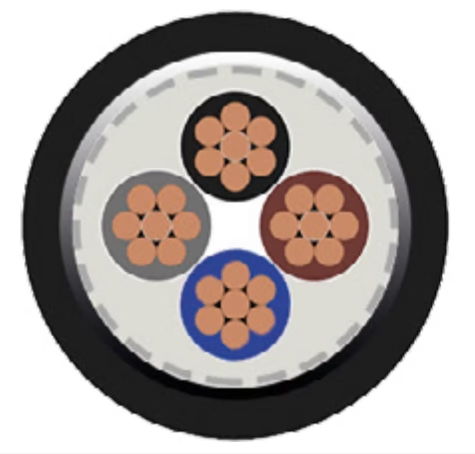
substation cable

PV-FLAT H05VVH6-F/LIFT is engineered for one of the most demanding electrical environments on Earth: nuclear power plants and high-radiation medical imaging facilities. Unlike standard cables, which degrade rapidly when exposed to ionizing radiation, this cable withstands 80 mrad (80 million rads) of cumulative radiation dose—equivalent to 20+ years in a high-radiation zone. Nuclear and medical facility elevators operate in harsh radiation environments where: Gamma radiation (¹³⁷Cs, ⁶⁰Co sources)—degrades polymer chains in cable insulation, causing brittleness and electrical breakdown Neutron radiation (from reactor cores)—causes atomic transmutation in copper conductors, increasing electrical resistance X-ray radiation (medical imaging rooms, CT scanners)—accelerates polymer cross-linking, reducing mechanical flexibility Extreme temperature cycling (−40°C cryogenic zones to +80°C during equipment failure scenarios) Hydrogen generation (from reactor cooling water radiolysis)—corrosive to standard insulation compounds The PV-FLAT's parallel-core flat architecture is specifically designed for confined elevator cable routing in nuclear containment buildings and medical facility basements, where space is extremely limited and cable management is critical for safety systems.

(N)TSCGEWÖU-FO High Voltage & Data Composite Cable | VDE 0250 | EAC Ex & GOST Fire | Russia Energy

An engineering-grade technical reference for Russian Federation energy infrastructure, electrical power transmission and distribution systems, oil and gas operational control networks, renewable energy installations, and SCADA (Supervisory Control and Data Acquisition) telemetry systems requiring simultaneous high-voltage power delivery and real-time monitoring data transmission across extended geographic distances. This document explains the hybrid high-voltage copper-conductor and single-mode optical-fiber composite architecture that enables simultaneous delivery of multi-megawatt electrical power through primary high-voltage cores while transmitting continuous streams of remote monitoring, metering, and safety-critical control data through integrated optical fibers that are completely immune to the electromagnetic noise present in high-voltage utility environments. The document establishes performance specifications and certification compliance for 6–35 kV rated voltage operation across Russian Federation energy sector infrastructure, and provides field integration guidance for seamless deployment into utility-scale power systems and distributed energy networks.
The dielectric constant of the 3GI3 elastomeric insulation used in (N)3GHSSYCY 3x150+3x25/3 cable is approximately 6.2 to 6.8 at standard reference frequency of 1 kHz, with typical measured value around 6.5 for new cable material. The insulation breakdown voltage (also called dielectric strength or withstand voltage) exceeds 30 kV when measured under controlled laboratory conditions on fresh cable samples with 8 mm insulation thickness, typically achieving 32–38 kV before electrical breakdown occurs.

Dielectric Constant Specs: What is the exact dielectric constant and insulation breakdown voltage for (N)3GHSSYCY 3×150+3×25/3 medium-voltage cable in long VFD motor runs? 

The dielectric constant of the 3GI3 elastomeric insulation used in (N)3GHSSYCY 3×150+3×25/3 cable is approximately 6.2 to 6.8 at standard reference frequency of 1 kHz, with typical measured value around 6.5 for new cable material. The insulation breakdown voltage (also called dielectric strength or withstand voltage) exceeds 30 kV when measured under controlled laboratory conditions on fresh cable samples with 8 mm insulation thickness, typically achieving 32–38 kV before electrical breakdown occurs.
(N)TSCGEWÖU 3x240+3x120/3 6/10kV ultra-large medium-voltage reeling cable weighs approximately 12,100 kg per kilometer (approximately 8,100 lbs per 1,000 feet), with the copper conductor content comprising approximately 8,064 kg/km of this total weight. The remaining approximately 4,036 kg/km (approximately 33.4% of total weight) consists of insulation materials (EPR), protective layers (bedding material, anti-torsion braid reinforcement), inner protective jacket, and the outer rubber sheath material. This extreme weight—roughly equivalent to a fully-loaded large truck per kilometer of cable—represents the cumulative consequence of the cable's enormous conductor cross-sections: three main phase conductors of 240 mm² each (totaling 720 mm² of copper for power carrying) plus three split earth conductors of 120 mm² each (totaling 360 mm² additional copper for grounding and load distribution). The 12,100 kg/km specification establishes the cable as one of the world's heaviest industrial power cables, comparable in weight only to cables serving ultra-massive applications such as deep-water offshore drilling umbilicals, gigantic bucket-wheel excavators, or electrified super-heavy mining draglines. Understanding this weight is not an academic exercise but rather a critical factor for project managers, procurement engineers, and logistics specialists, because the extreme weight directly determines shipping container capacity, handling equipment requirements at origin and destination ports, reel design specifications, and the total cost of ownership including transportation costs that can exceed 20–30% of the cable's material cost.

How Much Does (N)TSCGEWÖU 3×240+3×120/3 6/10kV Flexible Cable Weigh Per Kilometer?

(N)TSCGEWÖU 3×240+3×120/3 6/10kV ultra-large medium-voltage reeling cable weighs approximately 12,100 kg per kilometer (approximately 8,100 lbs per 1,000 feet), with the copper conductor content comprising approximately 8,064 kg/km of this total weight. The remaining approximately 4,036 kg/km (approximately 33.4% of total weight) consists of insulation materials (EPR), protective layers (bedding material, anti-torsion braid reinforcement), inner protective jacket, and the outer rubber sheath material. This extreme weight—roughly equivalent to a fully-loaded large truck per kilometer of cable—represents the cumulative consequence of the cable’s enormous conductor cross-sections: three main phase conductors of 240 mm² each (totaling 720 mm² of copper for power carrying) plus three split earth conductors of 120 mm² each (totaling 360 mm² additional copper for grounding and load distribution). The 12,100 kg/km specification establishes the cable as one of the world’s heaviest industrial power cables, comparable in weight only to cables serving ultra-massive applications such as deep-water offshore drilling umbilicals, gigantic bucket-wheel excavators, or electrified super-heavy mining draglines. Understanding this weight is not an academic exercise but rather a critical factor for project managers, procurement engineers, and logistics specialists, because the extreme weight directly determines shipping container capacity, handling equipment requirements at origin and destination ports, reel design specifications, and the total cost of ownership including transportation costs that can exceed 20–30% of the cable’s material cost.
The nominal outer diameter of NSHTÖU-J 4G50 (four 50 mm² power conductors plus one integrated green/yellow earth conductor, five total) is approximately 42.0–48.0 mm, whereas the equivalent 4x50 configuration (four 50 mm² power conductors only, four total, no dedicated earth conductor) is nominally approximately 38.5–44.5 mm, representing an outer diameter differential of roughly 3.5–4.0 mm in nominal specification ranges. This diameter increase in the 4G50 configuration reflects the spatial and mechanical requirements necessary to integrate the additional green/yellow earth conductor into the cable cross-section while maintaining proper insulation distances between all conductors, adequate mechanical spacing to distribute stress during high-speed reeling operations, and structural integrity under the extreme tensile loads encountered in port cranes, mining draglines, and industrial lifting applications. The 4G50 configuration typically exhibits copper content of approximately 1,920 kg/km (including the earth conductor), while 4x50 exhibits approximately 1,680–1,750 kg/km (earth conductor copper excluded), and total cable weight differs by approximately 300–400 kg/km, reflecting the substantial additional material required to safely integrate the fifth conductor. Both configurations comply with DIN VDE 0250-814 requirements for heavy-duty rubber reeling cables, but they serve different grounding architecture philosophies: the 4G50 is integrated-earth design (ground circuit built into the cable cross-section), while the 4x50 typically requires external earth/ground conductors or relies on external armor or cable tray grounding, making it more suitable for installations where ground paths can be established through equipment frames or external conductors.

What is the Outer Diameter Difference Between 4G50 and 4×50 in NSHTÖU-J 0.6/1kV Cable Specifications?

The nominal outer diameter of NSHTÖU-J 4G50 (four 50 mm² power conductors plus one integrated green/yellow earth conductor, five total) is approximately 42.0–48.0 mm, whereas the equivalent 4×50 configuration (four 50 mm² power conductors only, four total, no dedicated earth conductor) is nominally approximately 38.5–44.5 mm, representing an outer diameter differential of roughly 3.5–4.0 mm in nominal specification ranges. This diameter increase in the 4G50 configuration reflects the spatial and mechanical requirements necessary to integrate the additional green/yellow earth conductor into the cable cross-section while maintaining proper insulation distances between all conductors, adequate mechanical spacing to distribute stress during high-speed reeling operations, and structural integrity under the extreme tensile loads encountered in port cranes, mining draglines, and industrial lifting applications. The 4G50 configuration typically exhibits copper content of approximately 1,920 kg/km (including the earth conductor), while 4×50 exhibits approximately 1,680–1,750 kg/km (earth conductor copper excluded), and total cable weight differs by approximately 300–400 kg/km, reflecting the substantial additional material required to safely integrate the fifth conductor. Both configurations comply with DIN VDE 0250-814 requirements for heavy-duty rubber reeling cables, but they serve different grounding architecture philosophies: the 4G50 is integrated-earth design (ground circuit built into the cable cross-section), while the 4×50 typically requires external earth/ground conductors or relies on external armor or cable tray grounding, making it more suitable for installations where ground paths can be established through equipment frames or external conductors.
The nominal outer diameter of a Type SHD-GC 3/C 350 MCM 15kV flexible mining trailing cable is approximately 73 mm (2.87 inches), with a maximum permissible outer diameter of approximately 74.9 mm (2.95 inches) per ICEA S-75-381 and NEMA WC-58 standards. The approximate weight of this specific cable geometry is 10,900 kg/km (7,300 lbs/1000 ft). It features three 350 MCM (177 mm² equivalent) main power conductors rated for 435 amperes continuous operation, supplemented by two 2/0 AWG earth conductors and one 6 AWG ground-check monitoring conductor for enhanced mining safety systems. The distinction between nominal (design target) and maximum (allowable limit) outer diameter is critical for mining operations because reel systems, conduit systems, and terminal connectors are engineered based on these dimensional constraints. A cable that exceeds the maximum outer diameter will not fit into equipment designed for the nominal specification, creating logistics delays and operational disruptions that cost far more than any cable savings.

What is the Maximum Outer Diameter of Type SHD-GC 3/C 350 MCM 15kV Mining Cable?

The nominal outer diameter of a Type SHD-GC 3/C 350 MCM 15kV flexible mining trailing cable is approximately 73 mm (2.87 inches), with a maximum permissible outer diameter of approximately 74.9 mm (2.95 inches) per ICEA S-75-381 and NEMA WC-58 standards. The approximate weight of this specific cable geometry is 10,900 kg/km (7,300 lbs/1000 ft). It features three 350 MCM (177 mm² equivalent) main power conductors rated for 435 amperes continuous operation, supplemented by two 2/0 AWG earth conductors and one 6 AWG ground-check monitoring conductor for enhanced mining safety systems. The distinction between nominal (design target) and maximum (allowable limit) outer diameter is critical for mining operations because reel systems, conduit systems, and terminal connectors are engineered based on these dimensional constraints. A cable that exceeds the maximum outer diameter will not fit into equipment designed for the nominal specification, creating logistics delays and operational disruptions that cost far more than any cable savings.
Nexans RHEYFIRM (RS) 12/20kV is a premium-tier medium-voltage reeling cable specifically engineered for high-speed, high-stress port machinery and industrial heavy-load applications. The cable's design reflects Nexans' deep expertise in marine and dockside equipment, incorporating proprietary RHEYCLEAN insulation chemistry and reinforced anti-torsion braid architecture that together enable reliable operation in environments where cable flexing occurs thousands of times per day at speeds exceeding 200 meters per minute. However, RHEYFIRM cables command premium pricing that reflects both their proven field performance and Nexans' brand positioning. For procurement teams managing large cable quantities, facing extended supply lead times, or constrained by budget limitations, the search for a functionally equivalent alternative is not a search for a compromise. Rather, it is a systematic evaluation of competing engineering approaches that achieve the same electrical safety, mechanical durability, and environmental resilience through different manufacturing philosophies. This guide addresses the practical reality that excellent medium-voltage reeling cables are manufactured by multiple established European and global suppliers. Helukabel (Germany), SAB Kabel (Germany), Prysmian (Italy/France), Feichun (China), and other manufacturers produce cables that meet or exceed RHEYFIRM's performance specifications while offering cost savings between 15–35%, faster regional delivery, or better availability for Asia-Pacific projects.

Cost-Effective Replacement for Nexans RHEYFIRM (RS) 3×50+3×25/3 12/20kV

Nexans RHEYFIRM (RS) 12/20kV is a premium-tier medium-voltage reeling cable specifically engineered for high-speed, high-stress port machinery and industrial heavy-load applications. The cable’s design reflects Nexans’ deep expertise in marine and dockside equipment, incorporating proprietary RHEYCLEAN insulation chemistry and reinforced anti-torsion braid architecture that together enable reliable operation in environments where cable flexing occurs thousands of times per day at speeds exceeding 200 meters per minute. However, RHEYFIRM cables command premium pricing that reflects both their proven field performance and Nexans’ brand positioning. For procurement teams managing large cable quantities, facing extended supply lead times, or constrained by budget limitations, the search for a functionally equivalent alternative is not a search for a compromise. Rather, it is a systematic evaluation of competing engineering approaches that achieve the same electrical safety, mechanical durability, and environmental resilience through different manufacturing philosophies. This guide addresses the practical reality that excellent medium-voltage reeling cables are manufactured by multiple established European and global suppliers. Helukabel (Germany), SAB Kabel (Germany), Prysmian (Italy/France), Feichun (China), and other manufacturers produce cables that meet or exceed RHEYFIRM’s performance specifications while offering cost savings between 15–35%, faster regional delivery, or better availability for Asia-Pacific projects.
The question of whether a Type 450 33kV cable requires a bending radius of twelve times or fifteen times its overall diameter when installed on a monospiral reel is not merely an academic exercise but a critical consideration that directly impacts cable longevity, system reliability, and operational safety in medium-voltage power distribution networks. Understanding the correct specification requires examining the interplay between international standards, cable construction characteristics, and the specific mechanical conditions imposed by monospiral reel systems. Type 450 33kV电缆在单螺旋卷筒上安装时,其弯曲半径是需要12倍还是15倍外径,这不仅仅是一个学术问题,而是直接影响电缆寿命、系统可靠性和中压配电网络运行安全的关键考虑因素。理解正确的规范需要研究国际标准、电缆结构特性以及单螺旋卷筒系统施加的特定机械条件之间的相互作用。

Bending Radius for Type 450 33kV Cables on Monospiral Reels: 12xOD or 15xOD?

The question of whether a Type 450 33kV cable requires a bending radius of twelve times or fifteen times its overall diameter when installed on a monospiral reel is not merely an academic exercise but a critical consideration that directly impacts cable longevity, system reliability, and operational safety in medium-voltage power distribution networks. Understanding the correct specification requires examining the interplay between international standards, cable construction characteristics, and the specific mechanical conditions imposed by monospiral reel systems. Type 450 33kV电缆在单螺旋卷筒上安装时,其弯曲半径是需要12倍还是15倍外径,这不仅仅是一个学术问题,而是直接影响电缆寿命、系统可靠性和中压配电网络运行安全的关键考虑因素。理解正确的规范需要研究国际标准、电缆结构特性以及单螺旋卷筒系统施加的特定机械条件之间的相互作用。
(N)TSKCGEWÖU specifications. This protective layer serves multiple critical functions within the cable assembly, with mechanical stress redistribution being among its most important roles. According to research published by Sibelco, the bedding compound is defined as the material applied around insulated conductors to maintain their position and provide bedding for protective armoring.[1] This layer functions as an intermediary component positioned between the laid-up cores and the metallic armor, creating what cable engineers describe as a separation sheath that fundamentally alters how mechanical forces are distributed throughout the cable structure.

Inner Sheath Function: Mechanical Stress Redistribution in (N)TSKCGEWÖU Cables

(N)TSKCGEWÖU specifications. This protective layer serves multiple critical functions within the cable assembly, with mechanical stress redistribution being among its most important roles. According to research published by Sibelco, the bedding compound is defined as the material applied around insulated conductors to maintain their position and provide bedding for protective armoring.[1] This layer functions as an intermediary component positioned between the laid-up cores and the metallic armor, creating what cable engineers describe as a separation sheath that fundamentally alters how mechanical forces are distributed throughout the cable structure.
The international nature of power infrastructure means that MV cables are specified using various national nomenclatures and standards. While the German DIN VDE nomenclature (such as N2XSY, NA2XSH) has become widely recognized across Europe, British Standards (BS6622, BS7835, BS7870), French (NF C 33-226), Spanish (RHZ1), Portuguese (XHIOE, LXHIOV), and other national specifications remain essential for projects in their respective regions.

What is Medium Voltage Cable?

(N)TSCGEWÖU cable, (N)TMCGEWÖU cable, (N)TSCGECECWÖU cable, (N)3GHSSHCH cable, (N)3GHSSYCY cable, N2XSY cable, N2XSH cable, NA2XSY cable, NA2XSH cable, N2XS2Y cable, N2XS(F)2Y cable, N2XS(FL)2Y cable, NA2XS2Y cable, NA2XS(F)2Y cable, NA2XS(FL)2Y cable, N2XSEY cable, NA2XSEY cable, N2XS(F)H cable, N2XS(FL)H cable, NA2XS(F)H cable, NA2XS(FL)H cable
PE cable, polyethylene cable, XLPE cable, medium voltage cable, N2XS2Y, NA2XS2Y, N2XS(F)2Y, N2XS(FL)2Y, BS 6622 cable, MDPE cable, HDPE cable, 6/10kV cable, 12/20kV cable, 18/30kV cable, underground cable, direct burial cable, duct grade cable, IEC 60502, VDE 0276, copper conductor cable, aluminium cable, waterblock cable, UV resistant cable, Cat 6 PE cable, Cat 5E external cable, oil resistant cable, industrial power cable, railway cable, mining cable, petrochemical cable, 聚乙烯电缆, 中压电缆, PE電纜, cable de polietileno, cable XLPE, outdoor power cable, MV cable manufacturer, Anhui Feichun cable, 安徽飞纯电缆, special cable manufacturer China

What is PE Cable?

N2XS2Y cable, NA2XS2Y cable, N2XS(F)2Y cable, N2XS(FL)2Y cable, NA2XS(F)2Y cable, NA2XS(FL)2Y cable, NY2Y cable, NAY2Y cable, BS 6622 cable, A2XS(F)2Y cable, A2XS(FL)2Y cable, PE cable, polyethylenMDPE cable, HDPE cable, XLPE insulated cable, PE sheathed cable, polyethylene insulation cable, cross-linked polyethylene cable, thermoplastic cable sheathe cable, XLPE cable, medium voltage cable, power cable, outdoor cable, underground cable, MV cable specifications
Solar cables (also known as photovoltaic or PV cables) are specialized cables designed to interconnect the various components of photovoltaic power generation systems. These cables cover the full range of connections from solar panels to combiner boxes, inverters, transformers, and ultimately to local grid substations. Manufactured in accordance with EN 50618 (the current European harmonised standard, designated H1Z2Z2-K), modern solar cables are engineered to withstand severe environmental conditions including extreme UV exposure, wide temperature variations, moisture, and mechanical stress over an anticipated service life of approximately 25 years.

What are Solar Cables?

solar cable、PV cable、H1Z2Z2-K、EN 50618、NAYY cable、photovoltaic cable、TUV solar cable、aluminium solar cable、N2XY cable、N2XH cable、NA2XY cable、RZ1-K cable、NA2XH cable、NA2X2Y cable、NA2XSY cable、RZ1-K AS cable
Armoured cables, commonly referred to as SWA (Steel Wire Armoured) or AWA (Aluminium Wire Armoured) cables, are robust power cables designed with metallic armour protection for demanding installation environments. The armour provides mechanical protection where physical stress could damage the cable, such as direct burial underground, outdoor installations, or industrial environments. These cables are manufactured in accordance with British, European, and International standards including BS 5467, BS 6724, BS 6622, BS 7835, and IEC 60502.

What are Armoured Cables SWA & AWA?

SWA cable, AWA cable, armoured cable, steel wire armoured, aluminium wire armoured, BS 5467, BS 6724, BS 6622, BS 7835, IEC 60502, BASEC approved, XLPE cable, LSZH cable, underground cable, 0.6/1kV, 11kV cable, 33kV cable, N2XRY, NYFGBY, power cable, industrial cable, direct burial, 鎧裝電纜, 鋼絲鎧裝, cable blindado
SANS 1507 standard, published by the South African Bureau of Standards (SABS), specifies requirements for electrical cables with extruded solid dielectric insulation designed for fixed installation. This comprehensive standard covers cables with voltage ratings from 300/500V to 1.9/3.3kV, encompassing wiring cables, distribution cables, and service cables used throughout South Africa and many other African nations.

What is SANS 1507 Cable?

南非标准电缆, 南非標準電纜, SANS电缆, SANS電纜, 配电电缆, 配電電纜, 钢丝铠装电缆, 鋼絲鎧裝電纜, 交联聚乙烯电缆, 交聯聚乙烯電纜, 矿用电缆, 礦用電纜, mining cable, industrial distribution cable, commercial building cable, power utility cable, substation cable, switchgear cable, infrastructure cable, SANS 1507, SANS 1507-3, SANS 1507-4, SANS Type 41, SANS Type 61a, 640/1100V cable, 1kV distribution cable, XLPE insulation, PVC insulation, steel wire armour, SWA cable, SABS cable, South African standard, direct burial cable, mining cable, industrial cable, copper conductor, aluminium conductor, armoured distribution cable, XLPE-SWA-PVC, PVC-SWA-PVC, IEC 60502-1, IEC 60228, African power cable, underground cable, service cable, Class 2 conductor, 90°C cable, halogen-free cable, SANS 1520, Eskom, cable manufacturer China, 南非標準電纜, 配電電纜, 鋼絲鎧裝, cable de distribución, cable blindado
The NF C 33-226 standard cables, designated as FR-N20XA8E (12/20kV) and FR-N30XA8E (18/30kV), represent the French reference specification for medium voltage (MV) power distribution cables. These cables are commonly referred to as "HTA cables" (Haute Tension A) in France and are engineered for critical power infrastructure applications requiring exceptional reliability and performance.

What is NF C 33-226 Cables FR-N20XA8E & FR-N30XA8E -R/AR?

NF C 33-226, FR-N20XA8E, FR-N30XA8E, FR-N20XA8E-R, FR-N20XA8E-AR, FR-N30XA8E-R, FR-N30XA8E-AR, 12/20kV cable, 18/30kV cable, IEC 60502-2, medium voltage cable, XLPE insulation cable, MV cable, HTA cable, copper conductor cable, aluminium conductor cable, direct burial cable, underground power cable, French standard cable, NF C 33-226 cable specification, XLPE medium voltage cable, Class 2 stranded conductor, semi-conductive screen, water blocking tape, MDPE sheath, primary distribution cable, secondary distribution cable, power cable China manufacturer, 中压电缆, 中壓電纜, cable media tensión, cable de distribución, NF C33-226, 24kV cable, 36kV cable, industrial power cable, substation cable, ring main unit cable, trefoil cable, triplex cable, single core MV cable, cable current rating, cable ampacity, halogen free cable, AD7 water resistant, European MV cable, utility power cable, renewable energy cable, XLPE 90°C rating, cable datasheet, MV cable price, special cable manufacturer
IEC 60840 is an internationally recognized standard developed by the International Electrotechnical Commission (IEC) that defines the test methods and performance requirements for high-voltage power cable systems with extruded insulation. The standard applies to systems designed for rated voltages above 30 kV (Um = 36 kV) up to and including 150 kV (Um = 170 kV), making it the essential reference for cables used in power transmission infrastructure, grid interconnections, and large-scale industrial energy networks.

What is IEC 60840 Cable?

IEC 60840 is an internationally recognized standard developed by the International Electrotechnical Commission (IEC) that defines the test methods and performance requirements for high-voltage power cable systems with extruded insulation. The standard applies to systems designed for rated voltages above 30 kV (Um = 36 kV) up to and including 150 kV (Um = 170 kV), making it the essential reference for cables used in power transmission infrastructure, grid interconnections, and large-scale industrial energy networks.
IEC 60502 is an international standard published by the International Electrotechnical Commission (IEC) that sets out the specification for power cables with extruded insulation. The standard covers cables with voltage ratings from 1 kV (Um = 1.2 kV) up to 30 kV (Um = 36 kV), designed for fixed installations such as distribution networks and industrial installations. This widely recognized standard serves as a primary reference for cable manufacturers worldwide and forms the basis for numerous national and regional cable standards.

What is IEC 60502 Cable?

IEC 60502 對導體類型、絕緣材料和護套化合物提供了詳細規格。絕緣材料包括 PVC(最高溫度 70°C)、XLPE、EPR 和 HEPR(均為最高 90°C)。導體類別包括第 1 類(實心)、第 2 類(絞合)和第 5 類(柔性),尺寸範圍從 1.5 mm² 到 1600 mm²。護套化合物包括 PVC、PE 和用於防火敏感區域的無鹵素材料。XLPE 絕緣的標稱厚度從 0.6/1 kV 的 1.0 mm 到 18/30 kV 的 8.0 mm 不等。
DIN VDE 0276 is the widely used German standard for cables with extruded insulation used in power distribution systems. Developed by the VDE (Verband der Elektrotechnik, Elektronik und Informationstechnik e.V.), this comprehensive standard covers a significant percentage of power cables used across the European continent, establishing construction requirements, dimensional specifications, and test methods for both low voltage (0.6/1 kV) and medium voltage (up to 18/30 kV) power cables.

What is DIN VDE 0276 Cable?

VDE 0276 電纜的技術規格對於正確選擇和安裝至關重要。XLPE 絕緣電纜允許的連續工作溫度高達 90°C,短路溫度可達 250°C,優於 PVC 絕緣電纜的 70°C 和 160°C。導體採用符合 IEC 60228 第 2 類標準的絞合壓縮圓形銅或鋁導體。導體屏蔽層為擠出的半導電材料,最小厚度 0.3mm,在 90°C 時體積電阻率不超過 500 Ω·m。彎曲半徑要求根據電纜類型不同而變化:無金屬護套電纜為 15 倍外徑,帶鋁護套電纜為 30 倍外徑。
BS6622 is the British Standard specification for single-core and multicore cables with extruded cross-linked polyethylene (XLPE) insulation for rated voltages from 6.35/11kV up to 19/33kV. These medium voltage (MV) cables are specifically designed for power distribution networks, underground installations, and cable ducting applications. The standard ensures consistent quality, safety, and performance across all compliant products.

What is BS6622 Cable?

BS6622 cable specification, BS6622 cable datasheet, BS6622 cable price, BS6622 cable manufacturer, BS6622 cable supplier China, 19/33kV XLPE cable, 33kV armoured cable, medium voltage cable for underground, BS6622 three core cable, BS6622 single core cable, XLPE/PVC/SWA/PVC cable, BS6622 cable dimensions, BS6622 cable weight per meter, BS6622 cable current carrying capacity,BS6622電纜, 中壓電纜, 交聯聚乙烯電纜, XLPE電纜, 鎧裝電纜, 鋼絲鎧裝電纜, 鋁絲鎧裝電纜, 地下電纜, 直埋電纜, 配電電纜, 11kV電纜, 33kV電纜, 中壓配電電纜, 特種電纜, 電力電纜
British Standard BS7870-4.10 specifies requirements for medium voltage (MV) polymeric insulated cables manufactured specifically for use by distribution and generation utility industry sectors. These single core cables are designed for primary power distribution, connecting sub-mains to local networks where the final connection occurs. They form the foundation of electricity supply from distribution mains worldwide.

What is BS7870-4.10 Cable?

BS7870-4.10電纜, BS7870電纜, 中壓電纜, MV電纜, 11kV電纜, 33kV電纜, 22kV電纜, XLPE電纜, 配電電纜, 公用事業電纜, DNO電纜, 一次配電電纜, 單芯中壓電纜, 聚合物絕緣電纜, 電力配電電纜, 電網電纜, 地下電纜, MDPE護套電纜, LSZH中壓電纜, 銅中壓電纜, 鋁中壓電纜, 三芯絞合電纜, 無鎧裝中壓電纜, 屏蔽中壓電纜 BS7870-4.10, BS7870 cable, medium voltage cable, MV cable, 11kV cable, 33kV cable, 22kV cable, XLPE cable, distribution cable, utility cable, DNO cable, primary distribution cable, single core MV cable, polymeric insulated cable, power distribution cable, grid cable, underground cable, MDPE sheath cable
BS 6622 cable, XLPE insulation, AWA armour, SWA cable, medium voltage cable, 11kV cable, 33kV power cable, underground cable, direct burial cable

What is BS 7870-4.10 TRIPLEX Cable?

BS 7870-4.10 TRIPLEX cable represents a specialized category of medium voltage power distribution cables designed specifically for utility and industrial applications. According to the British Standards Institution, BS 7870-4.10 specifies requirements for distribution cables with extruded insulation rated from 11 kV to 33 kV. The TRIPLEX formation consists of three single-core cables laid together, providing a more efficient installation solution compared to individually pulled single-core cables.
N2XS(FL)H cable, medium voltage cable, XLPE insulated cable, IEC 60502-2, LSZH cable, waterblocking cable, 12/20kV power cable, Feichun Cable, CPR compliant cable

What is N2XS(FL)H Medium Voltage Power Cable?

N2XS(FL)H cable designation represents a sophisticated medium voltage power distribution cable engineered for demanding industrial and infrastructure applications. This cable type combines cross-linked polyethylene (XLPE) insulation with a Low Smoke Zero Halogen (LSZH) outer sheath and incorporates dual-layer waterblocking technology, making it suitable for both internal and external installations where fire safety and environmental protection are paramount.
CEI 20-27 CENELEC HD361 Cable

What is CEI 20-27 CENELEC HD361 Cable?

CEI 20-27 CENELEC HD361 represents a standardized cable designation system developed by the European Committee for Electrotechnical Standardisation (CENELEC) to provide uniform identification and classification of harmonized power cables and cords across European markets. This systematic coding methodology enables engineers, procurement specialists, and electrical contractors to precisely identify cable specifications including voltage ratings, insulation materials, conductor types, and sheathing compounds through a structured alphanumeric designation format.