oil resistance

飞纯 Type 209 是飞纯电缆基于 AS/NZS 1802:2003 卷筒与拖曳电缆 体系设计的矿用柔性馈电与拖曳电缆系列,电压范围覆盖 1.1 至 11KV。根据产品资料,Type 209 系列电缆主要作为矿山机械柔性馈电电缆使用,更适合作为拖曳电缆而不是高频卷筒电缆。较小规格适用于钻机、手持工具和移动设备。 这一定义是理解 Type 209 的关键。Type 209 不是普通工业橡套软电缆,也不只是单纯的矿山供电线。它的核心定位是 矿山机械柔性馈电电缆,也就是为矿山机械提供可移动、可拖曳、可适应复杂作业路径的供电系统。同时,它更适合作为 拖曳电缆,即跟随设备移动的电缆,而不是长期高频卷绕使用的卷筒电缆。

什么是 NTMTWOEU 0.6/1kV Mine Hoist Cables

NTMTWOEU 0.6/1kV Mine Hoist Cables 是 Feichun 面向地下矿山用户操作式矿井提升机、升降机和悬吊控制系统开发的专用矿山电缆。资料说明,该电缆用作 suspended cable,用于 underground mines 中 user-operated mine hoists 或 lifts 的 intrinsically safe control,并带 telephonic connection。其工程核心不是普通动力输送,而是将控制导体、电话型屏蔽 pilot、中心钢承力元件、抗扭纺织编织和 5GM5 外护套组合成一根适合垂直悬吊、人员操作、通信联络和安全控制的矿山提升机电缆。
La vida útil de los cables móviles de carrete, festón y canasta depende, en gran medida, de la instalación y del diseño del sistema de enrollado. Este manual abarca radios de curvatura, guías, protección de tensión, anclaje, selección de carrete y eliminación de torsión, junto con los métodos eléctricos de capacidad de corriente, reducción (derating), caída de tensión y cortocircuito.

O que é a Família TUNNELFLEX: Análise de Engenharia Aprofundada dos Cabos Flexíveis de Baixa e Média Tensão para Mineração e Tunelamento

A família TUNNELFLEX é uma plataforma de cabos flexíveis para a alimentação de equipamentos móveis com alto risco de dano mecânico em mineração e tunelamento. Ela é organizada em torno de uma mesma filosofia — condutores de cobre classe 5 de construção especial para serviço móvel e bainhas de altíssima resistência mecânica — declinada em três respostas distintas: o TUNNELFLEX-PUR 0,6/1 kV, sem proteção anti-torção, para deflexão em um único plano; o TUNNELFLEX-R/PUR 0,6/1 kV, com uma malha sintética anti-torção que habilita o cabo a tolerar torção; e o TUNNELFLEX-TX RS-(N)TSCGEWOEU de média tensão, de 3,6/6 a 12/20 kV, com isolação HEPR-MV e blindagens semicondutoras para o controle de campo elétrico exigido pela média tensão. Em conjunto, a família cobre desde a alimentação de máquinas auxiliares até o acionamento de equipamentos pesados de escavação de túnel em 20 kV.
BASKET SPREADER 740 (YSLTOE) is engineered specifically for hoisting and control applications where mechanical flexibility and electrical reliability must coexist in marine environments. Unlike load-bearing structural cables (which prioritize tensile strength), control cables emphasize: Conductor flexibility – Repeated bending over pulleys without mechanical fatigue Insulation integrity – Voltage breakdown resistance under salt-fog corrosion Mechanical damping – Rope-like flexibility to drape naturally in spreader bar frames Environmental barrier – Outer sheath blocks salt, moisture, and UV penetration Core Design Elements: Component Material Specification Function Port Environment Benefit Conductor Flexible red copper Class 6 (IEC 60228) Carries 300/500V power; enables bending flexibility High purity copper resists galvanic corrosion Insulation PVC type YI2 (IEC 60811) Electrical isolation; voltage breakdown resistance (2 kV test) PVC with marine additives prevents salt-induced tracking Central Unit Aramide yarns (Kevlar™ equivalent) Mechanical load-bearing backup; structural integrity Aramide resists moisture & salt; absorbs vibration stress Outer Sheath PUR type 11YM1 (DIN 73377) Environmental barrier; UV/ozone/moisture protection Superior salt-fog resistance; 20+ year marine lifespan

O que é o PROTOMONT EMV-FC (N)SHXCÖEU 0,6/1KV: Análise de Engenharia Aprofundada do Cabo Flexível Blindado para Variadores e Conversores de Frequência na Mineração

O PROTOMONT EMV-FC (N)SHXCÖEU 0,6/1KV é um cabo de potência de borracha flexível, livre de halogênio e eletromagneticamente blindado, projetado como cabo de alimentação de motor para acionamentos controlados por Variadores de Frequência (VFD) e Conversores de Frequência (FC) na indústria de mineração, em frentes de obra e aplicações similares sob esforços mecânicos severos. Sua característica definidora é a combinação de três sistemas em um único corpo: condutores de cobre estanhado finamente trançados classe 5, uma blindagem de cobre estanhado trançada para compatibilidade eletromagnética (EMC) e um conjunto de borracha EPR/EVA, livre de halogênio, capaz de operar de forma flexível em equipamentos de manuseio de materiais em movimento contínuo — incluindo lanças de cabos (cable booms) e a conexão entre os carros superior e inferior — e de permanecer permanentemente submerso em água até 40°C a uma profundidade máxima de 500 metros.
Hybrid Cable Innovation: Dual-Voltage Architecture for Building Lifts The FLEXIDRUM® BASKET LIFT 731 represents a revolutionary engineering approach to hoisting cables for building construction lifts. Unlike traditional single-voltage cables that require separate control and power conductors, the 731 integrates dual-voltage capability (300/500V control + 0.6/1kV power) into a single hybrid structure. This hybrid design is specifically engineered for modern building hoist systems operating in construction environments, where: Control circuits (300/500V) manage speed control, safety interlocks, load monitoring, and emergency descent systems Power circuits (0.6/1kV) drive the main hoist motor (typically 15–50 kW capacity) Single cable run simplifies installation—no separate routing for control vs. power, reducing labor costs ~30% Space efficiency eliminates need for dual-cable management on building facades Safety redundancy through separate insulation layers ensures control circuit failure doesn't disable power monitoring The BASKET LIFT 731's architecture is distinctly different from port crane cables (SPREADER 740/750) and terrestrial industrial cables, reflecting the unique requirements of vertical construction lift systems where personnel safety depends on reliable signal transmission alongside high-power motor control.

O que é o TENAX-SAS (N)TSCGEWOEU 3,6/6 kV: uma análise técnica aprofundada do cabo de média tensão de alta flexibilidade, alta resistência à tração e elevada resistência à abrasão para equipamentos móveis pesados de mineração

O TENAX-SAS (N)TSCGEWOEU 3,6/6 kV é um cabo de média tensão concebido para trailing e reeling em condições mecânicas severas, como pás elétricas, shovels, draglines e outros equipamentos móveis de grande porte em mineração. Seu valor técnico não está apenas na classe de tensão, mas no equilíbrio entre flexibilidade extrema em baixas temperaturas, robustez de bainha, resistência à tração contínua, integridade elétrica do sistema semicondutivo e estabilidade estrutural sob abrasão, torção, flexão repetitiva e deslocamentos contínuos sobre terreno agressivo.
Marine & Port Drag Cable — High-Flexibility Saltwater-Resistant System A comprehensive engineering dissection of heavy-duty marine drag cables for port equipment, container terminals, and offshore platforms — from conductor architecture and EPR insulation to steel wire armour (M2) design rationale, galvanic corrosion protection mechanisms, environmental compliance, and validated performance benchmarking against Nexans Eproneo Port and Prysmian marine systems.

O que é PROTOLON (M) R-(N)TSCGEWOEU Arctic -50C 6/10KV: Análise Técnica do Cabo de Média Tensão para Enrolamento Flexível até -50°C

O PROTOLON (M) R-(N)TSCGEWOEU Arctic -50C 6/10KV é um cabo flexível de média tensão para enrolamento, desenvolvido para grandes máquinas móveis de manuseio de material em minas a céu aberto, como escavadeiras elétricas, dumpers e britadores móveis. Sua característica decisiva é a capacidade de operar de forma totalmente flexível até -50°C, mantendo a arquitetura de cabo de carretel para altas solicitações mecânicas: condutores de cobre classe FS, sistema isolante EPR PROTOLON, camadas semicondutoras, condutor de proteção dividido em três interstícios, reforço de poliéster e capa externa PCP resistente a abrasão, óleo, ozônio, radiação UV e água do mar.
C PUR Design Integration: FLEXIFESTOON PUR characteristics (inherited): Outer sheath: PUR (polyurethane, compact) Insulation: Special TPE (superior elongation) Central unit: Textile (mechanical support) Weight: 25–30% lighter than standard rubber Diameter: 15–20% smaller than rubber equivalent Cost: +15–25% premium over rubber Service life: 10–15 years (extended) Screened design addition (new): Screen: Tinned copper braid (EMC shielding) Coverage: 80–90% (good EMC performance) Diameter impact: +2–3 mm (screen adds ~3 mm to diameter) Weight impact: +500 kg/km (braid + outer sheath) Cost: Additional +10–15% for screen layer Combined C PUR result: vs. Unscreened PUR (FLEXIFESTOON PUR): FLEXIFESTOON PUR: Minimal diameter/weight, no EMC C PUR: Slightly larger (screen added), excellent EMC Choice: PUR for maximum compactness (non-EMI environments) C PUR for VFD motors, confined spaces with EMC requirements vs. Standard rubber screened (GRDGCGÖU-J): GRDGCGÖU-J: Standard diameter, heavy, rubber durability C PUR: Compact diameter, lightweight, superior oil/chemical resistance Choice: GRDGCGÖU-J for simple temporary festoon C PUR for permanent industrial machine tool installation Nomenclature: FLEXIFESTOON® = Product family (flexible cable) C = Screen (copper braid, "C" from German "Schirm") PUR = Material (polyurethane jacket) Result: "FLEXIFESTOON C PUR" = Screened compact polyurethane cable

O que é PROTOLON (M) R-(N)TSCGEWOEU LWL 6/10KV: Análise Técnica do Cabo de Média Tensão para Enrolamento com Fibra Óptica Integrada

O PROTOLON (M) R-(N)TSCGEWOEU LWL 6/10KV é um cabo flexível de média tensão para enrolamento, projetado para grandes máquinas móveis de manuseio de material, como escavadeiras elétricas, dumpers, britadores móveis, equipamentos de mineração a céu aberto, empilhadeiras e recuperadoras de minério, shiploaders, descarregadores de navios e sistemas de pátio de granéis. Sua particularidade está em combinar, dentro de uma única seção transversal, alimentação elétrica de 6/10 kV, condutores de proteção divididos, blindagem semicondutora, isolação EPR, reforço mecânico por trança de poliéster, capa externa PCP resistente à abrasão e um elemento óptico LWL para comunicação imune a interferência eletromagnética.
H07RN-F: Advanced High-Flexibility Salt-Fog Resistant Port Cable Engineering Solution Specialized rubber-sheathed electrical cable engineered for extreme maritime and coastal port environments. H07RN-F combines superior mechanical flexibility (4×D minimum fixed-laying bending radius, 6×D flexible-application capability) with comprehensive salt-fog environmental resistance, enabling reliable 450/750V power distribution and control signaling in container gantry systems, ship loaders, and port automation infrastructure where conventional cables fail within 6–12 months of deployment.

Technical Data для mining и tunnelling cables: буквенная кодировка, свойства материалов, радиусы изгиба, сопротивление, токовая нагрузка и причины отказов

Этот технический раздел объединяет letter coding of cable types, механические свойства изоляционных и оболочечных материалов по DIN VDE 0207, минимальные радиусы изгиба, сопротивление и токовые нагрузки проводников mining cables, корректирующие коэффициенты температуры, причины отказов tunnelling cables, типовые ошибки splice / termination и правила обращения с кабельными барабанами.
FLEXIFESTOON® SEOOW YELLOW represents FeiChun's entry into the low-voltage festoon and temporary power market. The nomenclature requires careful explanation to distinguish this product from the high-voltage FLEXIDRUM series: FLEXIFESTOON Product Nomenclature: FLEXIFESTOON® = Product family name Flex = Flexible (emphasis on bending & handling) Festoon = Strung overhead in continuous runs (typical festoon lighting application) SEOOW = Industry-standard designation S = Service cord (temporary, not permanent installation) E = Elastomer jacket (flexible sheath) OO = Oil-resistant conductor insulation (TPE qualifies as oil-resistant) W = Weather-resistant sheath (water, ozone, UV resistant) SEOOW is defined in: UL 62 (Standard for Flexible Cords and Cables) CSA 22.2 No. 49 (Canadian equivalent) NFPA 70 National Electrical Code (NEC) Article 400 YELLOW designation: Color: RAL 1021 (traffic yellow, high visibility) Safety significance: Yellow cords attract attention in job sites Practical purpose: Easy to identify, prevent trips/entanglement Contrast with FLEXIDRUM series: FLEXIDRUM (High-Voltage MV Cable): Voltage: 3.6 kV to 20/35 kV (power distribution) Temperature: −40 to +80°C (standard industrial) Application: Mobile mining/tunneling equipment (capital-intensive) Size: Large diameter, heavy (3–12 kg/km) FLEXIFESTOON (Low-Voltage Service Cord): Voltage: 600V (light/power temporary use) Temperature: −60 to +105°C (extreme environmental range) Application: Festoon lighting, temporary site power, outdoor events Size: Small diameter, lightweight (0.05–0.3 kg/m) Cost: Consumer/contractor-grade (not specialty industrial)

Что такое PANZERLITE 0,6/1 kV: полный инженерный обзор контрольного кабеля вертикального применения с двойной полиуретановой оболочкой

PANZERLITE 0,6/1 kV — это особо тяжёлый контрольный кабель для вертикального применения, разработанный для подвижных систем, где одновременно действуют растягивающая нагрузка, кручение, изгиб, ускорение, торможение, вибрация и ограничение по массе. Его ключевая особенность — сочетание малого диаметра, сниженного веса, высокой гибкости, рабочей скорости до 240 м/мин и высокой механической стойкости. Конструкция построена на сверхгибких медных жилах, тонкой специальной технополимерной изоляции, арамидном центральном несущем элементе, двойной полиуретановой оболочке и антикрутильной текстильной оплётке.
C PUR Design Integration: FLEXIFESTOON PUR characteristics (inherited): Outer sheath: PUR (polyurethane, compact) Insulation: Special TPE (superior elongation) Central unit: Textile (mechanical support) Weight: 25–30% lighter than standard rubber Diameter: 15–20% smaller than rubber equivalent Cost: +15–25% premium over rubber Service life: 10–15 years (extended) Screened design addition (new): Screen: Tinned copper braid (EMC shielding) Coverage: 80–90% (good EMC performance) Diameter impact: +2–3 mm (screen adds ~3 mm to diameter) Weight impact: +500 kg/km (braid + outer sheath) Cost: Additional +10–15% for screen layer Combined C PUR result: vs. Unscreened PUR (FLEXIFESTOON PUR): FLEXIFESTOON PUR: Minimal diameter/weight, no EMC C PUR: Slightly larger (screen added), excellent EMC Choice: PUR for maximum compactness (non-EMI environments) C PUR for VFD motors, confined spaces with EMC requirements vs. Standard rubber screened (GRDGCGÖU-J): GRDGCGÖU-J: Standard diameter, heavy, rubber durability C PUR: Compact diameter, lightweight, superior oil/chemical resistance Choice: GRDGCGÖU-J for simple temporary festoon C PUR for permanent industrial machine tool installation Nomenclature: FLEXIFESTOON® = Product family (flexible cable) C = Screen (copper braid, "C" from German "Schirm") PUR = Material (polyurethane jacket) Result: "FLEXIFESTOON C PUR" = Screened compact polyurethane cable

Что такое ÖLFLEX® TRAY 600 SC CY: экранированный гибкий одножильный кабель UL 2277 для motor power supply, WTG и EMC-sensitive outdoor applications

ÖLFLEX® TRAY 600 SC CY — это экранированный гибкий одножильный кабель с UL certificate, разработанный для motor power supply, wind turbine generators, industrial machinery, plant engineering, HVAC, stage applications, outdoor use и EMC-sensitive environments. Его техническая архитектура объединяет fine wire IEC 60228 class 5 conductor, special PVC insulation based on UL 83 THW-2, tinned copper wire braid, black special PVC outer sheath, UL 2277 Flexible Motor Supply Cable certification, WTTC 1000V, IEC 600/1000V, 4000V test voltage, UL FT4 flame retardance, UL 90°C WET, oil resistance, UV resistance, ozone resistance and salty spray resistance. Для Feichun такая конструкция особенно интересна как инженерный эталон экранированного гибкого motor supply cable; для портовых кранов, шахтных машин и тяжёлых подвижных установок к этой логике добавляется отдельная проверка растягивающих нагрузок, износостойкости оболочки, динамического изгиба, torsion fatigue и условий обслуживания.
FLEXIFESTOON® SEOOW YELLOW represents FeiChun's entry into the low-voltage festoon and temporary power market. The nomenclature requires careful explanation to distinguish this product from the high-voltage FLEXIDRUM series: FLEXIFESTOON Product Nomenclature: FLEXIFESTOON® = Product family name Flex = Flexible (emphasis on bending & handling) Festoon = Strung overhead in continuous runs (typical festoon lighting application) SEOOW = Industry-standard designation S = Service cord (temporary, not permanent installation) E = Elastomer jacket (flexible sheath) OO = Oil-resistant conductor insulation (TPE qualifies as oil-resistant) W = Weather-resistant sheath (water, ozone, UV resistant) SEOOW is defined in: UL 62 (Standard for Flexible Cords and Cables) CSA 22.2 No. 49 (Canadian equivalent) NFPA 70 National Electrical Code (NEC) Article 400 YELLOW designation: Color: RAL 1021 (traffic yellow, high visibility) Safety significance: Yellow cords attract attention in job sites Practical purpose: Easy to identify, prevent trips/entanglement Contrast with FLEXIDRUM series: FLEXIDRUM (High-Voltage MV Cable): Voltage: 3.6 kV to 20/35 kV (power distribution) Temperature: −40 to +80°C (standard industrial) Application: Mobile mining/tunneling equipment (capital-intensive) Size: Large diameter, heavy (3–12 kg/km) FLEXIFESTOON (Low-Voltage Service Cord): Voltage: 600V (light/power temporary use) Temperature: −60 to +105°C (extreme environmental range) Application: Festoon lighting, temporary site power, outdoor events Size: Small diameter, lightweight (0.05–0.3 kg/m) Cost: Consumer/contractor-grade (not specialty industrial)

Что такое ÖLFLEX® TRAY 600 SC: инженерный анализ гибкого одножильного кабеля UL 2277 Flexible Motor Supply Cable

ÖLFLEX® TRAY 600 SC — это гибкий одножильный кабель с UL-сертификацией, предназначенный для motor power supply, plant engineering, industrial machinery, heating and air-conditioning systems, stage applications, outdoor use и wind turbine generator applications. По предоставленным данным он сочетает специальную ПВХ-изоляцию на базе UL 83 THW-2, специальную чёрную ПВХ-наружную оболочку, класс 5 тонкопроволочной медной жилы, UL 90°C WET rating, sunlight resistance, oil resistance, ozone resistance, salty spray resistance и улучшенные огнестойкие характеристики.
FLEXIDRUM® NSHTÖU (V): High-Flexibility Salt-Spray-Resistant Festoon Cable for Dynamic Port Terminal Applications Engineered for continuous rapid-deployment and high-cycling harbour equipment, FLEXIDRUM® NSHTÖU (V) combines tinned Class 5 flexible copper conductor, Kevlar central reinforcement, fire-resistant EPR insulation, and oil-resistant rubber outer sheath to deliver unmatched reliability in extreme salt-spray marine environments. Rated for 180 m/min maximum deployment speed, −25 to +90°C temperature stability, and 0.6/1 kV nominal specifications across 3–44 core configurations (0.5–10 mm² cross-section range), this advanced festoon solution provides comprehensive protection against corrosion, thermal cycling, mechanical flex-fatigue, and rapid-reeling stress for harbour cranes, container-handling spreader systems, dock-automation equipment, and specialized port terminal infrastructure.

How to Choose Between PUR and PCP Outer Sheaths for Mobile Mining Equipment

Polyurethane (PUR) is a synthetic polymer created by reacting isocyanates with polyols. The resulting material is elastomeric (rubber-like) but chemically distinct from traditional natural or synthetic rubbers. PUR’s unique chemistry confers exceptional performance characteristics that have made it the material of choice for premium industrial cables over the past two decades. The key distinguishing feature of polyurethane is its resistance to oil, fuel, and ozone. When exposed to diesel fuel, mineral oil, or synthetic hydraulic fluids, PUR remains stable — it does not swell, soften, or lose mechanical properties. This makes PUR ideal for cables operating near machinery that leaks or splashes fuel and hydraulic fluids, a common condition in mobile mining equipment operating in open-pit environments. Polyurethane also offers superior temperature stability. Modern mining-grade PUR is specified for continuous operation at 70–80°C (with short-term excursions to 90°C possible) and maintains acceptable mechanical properties down to -40°C (whereas PCP becomes brittle at such low temperatures). This wide temperature range is particularly valuable for open-pit mining operations in extreme climates: high-altitude copper mines in the Andes (where nighttime temperatures plunge to -20°C and daytime temperatures exceed 80°C) and arid desert mines where ground temperatures exceed 60°C. The historical development of PUR cables in the mining industry reflects a gradual transition from PCP-dominated specifications (1960s–1990s) toward PUR adoption (2000s onward) as mining operations became more mechanized and equipment became more temperature-sensitive. Modern variable frequency drives (VFDs) and sophisticated control systems tolerate less cable degradation than older mechanical equipment, making the superior temperature stability of PUR increasingly valuable.
FLEXIFESTOON® SOOW EPDM/CPE Marine-Grade: Salt-Fog Resistant Heavy-Duty Rubber Port Cable for STS Cranes, RTG/RMG Gantries, and Ship-to-Shore Power Systems Feichun's FLEXIFESTOON® SOOW EPDM/CPE Marine-Grade represents a chemistry-driven upgrade of the proven UL/CSA SOOW platform, specifically re-engineered for the corrosive salt-fog, hydrocarbon-spray, and ozone-rich microclimate of modern container terminals and quayside cargo handling. The cable consolidates four engineering imperatives into a single rubber-jacketed architecture: a marine-grade EPDM ethylene-propylene-diene insulation system providing exceptional dielectric stability under prolonged moisture immersion; a chlorinated polyethylene (CPE) outer sheath whose chlorine backbone delivers inherent halide-resistance, hydrolysis stability, and ozone immunity surpassing standard thermoplastic compounds; finely-stranded Class K bunched red copper conductors per ASTM B-174 enabling 4×D minimum bending radius and >2 million flex-cycle service in dynamic festoon and reeling applications; and full multi-jurisdictional certification including UL Standard 62, CSA 22.2 No. 49, NEC Article 400, NEC 501.140 Class I Division 1 and 2, FT2 vertical flame propagation, and MSHA P-7K-123456 mining approval — supporting global port deployment from the Port of Long Beach to Jebel Ali, Rotterdam Maasvlakte II, and Yangshan Phase IV automated terminals.

FLEXIFESTOON® SOOW

FLEXIFESTOON® SOOW EPDM/CPE Marine-Grade: Salt-Fog Resistant Heavy-Duty Rubber Port Cable for STS Cranes, RTG/RMG Gantries, and Ship-to-Shore Power Systems Feichun’s FLEXIFESTOON® SOOW EPDM/CPE Marine-Grade represents a chemistry-driven upgrade of the proven UL/CSA SOOW platform, specifically re-engineered for the corrosive salt-fog, hydrocarbon-spray, and ozone-rich microclimate of modern container terminals and quayside cargo handling. The cable consolidates four engineering imperatives into a single rubber-jacketed architecture: a marine-grade EPDM ethylene-propylene-diene insulation system providing exceptional dielectric stability under prolonged moisture immersion; a chlorinated polyethylene (CPE) outer sheath whose chlorine backbone delivers inherent halide-resistance, hydrolysis stability, and ozone immunity surpassing standard thermoplastic compounds; finely-stranded Class K bunched red copper conductors per ASTM B-174 enabling 4×D minimum bending radius and >2 million flex-cycle service in dynamic festoon and reeling applications; and full multi-jurisdictional certification including UL Standard 62, CSA 22.2 No. 49, NEC Article 400, NEC 501.140 Class I Division 1 and 2, FT2 vertical flame propagation, and MSHA P-7K-123456 mining approval — supporting global port deployment from the Port of Long Beach to Jebel Ali, Rotterdam Maasvlakte II, and Yangshan Phase IV automated terminals.
FLEXIDRUM® MEDIUM FLAT: Advanced High-Flexibility Salt-Fog Resistant Port Cable System Specialized reeling-flat power cable engineered for extreme maritime environments combining flexible tinned copper conductors (IEC 60228 Class 5), proprietary EPR insulation chemistry, hydrophobic semi-conductive interfaces, and specialized red outer-sheath PCP compound with integrated volatile-corrosion-inhibitor (VCI) technology. Designed for rapid cable-reel deployment systems in dredging, submersible pump, and floating crane applications requiring superior electrochemical corrosion immunity and compact outer-diameter efficiency across 3.6/6 kV through 8.7/15 kV voltage platforms.

FLAT (N)TSFLCGCWOEUS Reeling flat cables

FLEXIDRUM® MEDIUM FLAT: Advanced High-Flexibility Salt-Fog Resistant Port Cable System Specialized reeling-flat power cable engineered for extreme maritime environments combining flexible tinned copper conductors (IEC 60228 Class 5), proprietary EPR insulation chemistry, hydrophobic semi-conductive interfaces, and specialized red outer-sheath PCP compound with integrated volatile-corrosion-inhibitor (VCI) technology. Designed for rapid cable-reel deployment systems in dredging, submersible pump, and floating crane applications requiring superior electrochemical corrosion immunity and compact outer-diameter efficiency across 3.6/6 kV through 8.7/15 kV voltage platforms.
(N)TSCGEWÖU Nomenclature Breakdown: (N) = "Nennspannung" (Nominal voltage designation) Indicates multi-voltage family (3.6/6 kV baseline, expandable to 20/35 kV) T = "Drei" implicitly (Three-phase implied in TSC configuration) SC = "S" (Stromleiter? Schirmung? Sheath-related) "C" (Conductor classification, typically Class 5 flexibility) Together: Three-core conductor family designation GE = "Gummi Elastomer" (Rubber Elastomer) Explicitly denotes EPR insulation (not polyethylene, not XLPE) German standard preference: EPR for MV reeling (vs. XLPE for fixed cables) WÖU = "Werkstoff/Öl/Umlauf" (Material/Oil/Circulation?) OR historically: VDE/UL approval markers? Likely: W = Werkstoff (special material formulation) Ö = Öl-resistenz (oil resistance capability) U = Universal or Umlauf (circulation/reeling capability) Combined meaning: (N)TSCGEWÖU = "Nominal-voltage Three-phase Single-conductor-core family, Gummi Elastomer insulation, Werkstoff-spezial (special material), Oil-resistant, Universal reeling" Design Philosophy Encoded: - Modular voltage architecture (one design, 3.6–20/35 kV options) - Three-phase power + distributed earth (TSC = not symmetric 3+3, but mixed) - EPR elastomer base (not synthetic XLPE) - Enhanced material formulation (not commodity grade) - Mobile/reeling-centric (forced guidance compatible) - Multi-environment tolerance (oil, moisture, temperature extremes)

(N)TSCGEWÖU Mining Trailing Cable

(N)TSCGEWÖU Nomenclature Breakdown: (N) = “Nennspannung” (Nominal voltage designation) Indicates multi-voltage family (3.6/6 kV baseline, expandable to 20/35 kV) T = “Drei” implicitly (Three-phase implied in TSC configuration) SC = “S” (Stromleiter? Schirmung? Sheath-related) “C” (Conductor classification, typically Class 5 flexibility) Together: Three-core conductor family designation GE = “Gummi Elastomer” (Rubber Elastomer) Explicitly denotes EPR insulation (not polyethylene, not XLPE) German standard preference: EPR for MV reeling (vs. XLPE for fixed cables) WÖU = “Werkstoff/Öl/Umlauf” (Material/Oil/Circulation?) OR historically: VDE/UL approval markers? Likely: W = Werkstoff (special material formulation) Ö = Öl-resistenz (oil resistance capability) U = Universal or Umlauf (circulation/reeling capability) Combined meaning: (N)TSCGEWÖU = “Nominal-voltage Three-phase Single-conductor-core family, Gummi Elastomer insulation, Werkstoff-spezial (special material), Oil-resistant, Universal reeling” Design Philosophy Encoded: – Modular voltage architecture (one design, 3.6–20/35 kV options) – Three-phase power + distributed earth (TSC = not symmetric 3+3, but mixed) – EPR elastomer base (not synthetic XLPE) – Enhanced material formulation (not commodity grade) – Mobile/reeling-centric (forced guidance compatible) – Multi-environment tolerance (oil, moisture, temperature extremes)
FLEXIDRUM® R 902 Optical Fiber Hybrid Cable: Integrated Power-Plus-Fiber-Optics Multi-Core Cable for Mining Excavators and Real-Time Data Transmission Revolutionary hybrid power-and-optical-fiber cable engineered for mining excavators and outdoor industrial equipment, FLEXIDRUM® R 902 integrates 6-fiber optics (multimode 62.5/125µm) with Class 5 flexible red copper power conductors (up to 3×300 mm²), advanced EPR insulation, semi-conductive protective layers, and specialized UV/ozone/moisture-resistant PUR sheath. Rated for 3.6/6 kV to 12/20 kV deployment, featuring 120 m/min speed capability with reduced weight and diameter—enabling real-time data communication from excavators, loaders, and remote mining equipment while maintaining full electrical power distribution in one unified integrated cable system.

FLEXIDRUM® MEDIUM R 902 OPTICAL FIBER

FLEXIDRUM® R 902 Optical Fiber Hybrid Cable: Integrated Power-Plus-Fiber-Optics Multi-Core Cable for Mining Excavators and Real-Time Data Transmission Revolutionary hybrid power-and-optical-fiber cable engineered for mining excavators and outdoor industrial equipment, FLEXIDRUM® R 902 integrates 6-fiber optics (multimode 62.5/125µm) with Class 5 flexible red copper power conductors (up to 3×300 mm²), advanced EPR insulation, semi-conductive protective layers, and specialized UV/ozone/moisture-resistant PUR sheath. Rated for 3.6/6 kV to 12/20 kV deployment, featuring 120 m/min speed capability with reduced weight and diameter—enabling real-time data communication from excavators, loaders, and remote mining equipment while maintaining full electrical power distribution in one unified integrated cable system.
FLEXIDRUM® R 502: Advanced Heavy-Duty Industrial Cable with PUR Polyurethane Sheath and GAALTHERM® 530 Insulation for Motor Hoist, Transport Systems, and High-Mechanical-Stress Farm Equipment Engineered for extreme mechanical stress and industrial machinery applications, FLEXIDRUM® R 502 combines flexible Class 5 tinned or red copper conductor, GAALTHERM® 530 thermoplastic insulation, optional anti-twisting textile reinforcement, and advanced polyurethane (PUR) outer sheath to deliver unmatched durability in demanding heavy-duty environments. Rated for 180 m/min maximum speed (with anti-twisting protection), −40 to +90°C temperature stability, and superior UV/chemical/oil resistance across 3–42 core configurations (0.5–10 mm² cross-section range and specialized multi-core power configurations), this robust cable solution provides comprehensive protection against mechanical fatigue, thermal cycling, environmental degradation, and rapid-deployment stress for motor reel hoists, transport systems, movable motors, agricultural equipment, and specialized heavy-machinery infrastructure.

FLEXIDRUM® R 502

FLEXIDRUM® R 502: Advanced Heavy-Duty Industrial Cable with PUR Polyurethane Sheath and GAALTHERM® 530 Insulation for Motor Hoist, Transport Systems, and High-Mechanical-Stress Farm Equipment Engineered for extreme mechanical stress and industrial machinery applications, FLEXIDRUM® R 502 combines flexible Class 5 tinned or red copper conductor, GAALTHERM® 530 thermoplastic insulation, optional anti-twisting textile reinforcement, and advanced polyurethane (PUR) outer sheath to deliver unmatched durability in demanding heavy-duty environments. Rated for 180 m/min maximum speed (with anti-twisting protection), −40 to +90°C temperature stability, and superior UV/chemical/oil resistance across 3–42 core configurations (0.5–10 mm² cross-section range and specialized multi-core power configurations), this robust cable solution provides comprehensive protection against mechanical fatigue, thermal cycling, environmental degradation, and rapid-deployment stress for motor reel hoists, transport systems, movable motors, agricultural equipment, and specialized heavy-machinery infrastructure.
GAALFLEX® VFD 2XSLCHK-J: CPR-Compliant Oil-Resistant Halogen-Free Variable Frequency Drive Inverter Connection Cable for European Building and Industrial Applications with Oil-Exposure Environments, Higher-Temperature Industrial Systems, and Mining Operations (0.6/1 kV Nominal Voltage, 4 kV Test Voltage, CPR EU 305/2011 + EN 50575:2014+A1:2016 Compliance with Dca-S1b,d2,a1 Fire Classification [Enhanced Performance: Low Smoke, Zero Halogen, Minimal Toxicity, Limited Corrosive Gases], Comprehensive Dual-Configuration Portfolio [4-Core and 3+3 Earth Conductor Versions Plus New 7-Core Option], 1.5–300 mm² Conductor Range Enabling Complete VFD Specification Across Industrial Applications, Flexible Class 5 Red Copper per IEC 60228, Special XLPE [Cross-Linked Polyethylene] Halogen-Free Insulation with Oil Resistance per IEC 60811-404, Low Corrosive Gas Emission per IEC 60754-2, Low Smoke Density per IEC 61034-1-2, Aluminum Tape + PETP Foil + Tinned Copper Braid Triple-Layer Shielding, Low Mutual Capacitance [70–410 nF/km] Minimizing Cross-Talk, Low Coupling Resistance [Max 250 Ω/km] Supporting Low-Impedance Control, Black Halogen-Free PVC Outer Sheath with UV Resistance for Outdoor Industrial Deployment, Temperature Range −40 to +90°C [Fixed Laying] or −15 to +90°C [Flexible Application] with +90°C Conductor and +250°C Short-Circuit Capability Enabling High-Temperature Industrial Facilities, Mining Application Suitability per DIN VDE 0250, Electromagnetic Compatibility per EN 55011 / DIN VDE 0875 / EN 61800-3, Self-Extinguishing and Flame-Retardant per DIN VDE 0482-265-2-1 / EN 50265-2-1 / IEC 60332-1-2 / DIN VDE 0482 part 266-4-2 / EN 50266-4-2 / IEC 60332-3-24, Insulation Resistance 200+ MΩ·km, Radiation Resistance to 80×10⁶ cJ/kg, Oil-Resistant Construction Eliminating Cable Degradation in Petrochemical/Automotive/Food Processing Environments, Halogen-Free Zero-Halogen Construction Eliminating Toxic Chlorine/Fluorine Emissions During Fire, RoHS and CE Approved, and Complete European and International Compliance Enabling Building Code Acceptance and Professional VFD System Integration in High-Temperature Oil-Exposure Environments)

GAALFLEX® VFD 2XSLCHK-J

GAALFLEX® VFD 2XSLCHK-J: CPR-Compliant Oil-Resistant Halogen-Free Variable Frequency Drive Inverter Connection Cable for European Building and Industrial Applications with Oil-Exposure Environments, Higher-Temperature Industrial Systems, and Mining Operations (0.6/1 kV Nominal Voltage, 4 kV Test Voltage, CPR EU 305/2011 + EN 50575:2014+A1:2016 Compliance with Dca-S1b,d2,a1 Fire Classification [Enhanced Performance: Low Smoke, Zero Halogen, Minimal Toxicity, Limited Corrosive Gases], Comprehensive Dual-Configuration Portfolio [4-Core and 3+3 Earth Conductor Versions Plus New 7-Core Option], 1.5–300 mm² Conductor Range Enabling Complete VFD Specification Across Industrial Applications, Flexible Class 5 Red Copper per IEC 60228, Special XLPE [Cross-Linked Polyethylene] Halogen-Free Insulation with Oil Resistance per IEC 60811-404, Low Corrosive Gas Emission per IEC 60754-2, Low Smoke Density per IEC 61034-1-2, Aluminum Tape + PETP Foil + Tinned Copper Braid Triple-Layer Shielding, Low Mutual Capacitance [70–410 nF/km] Minimizing Cross-Talk, Low Coupling Resistance [Max 250 Ω/km] Supporting Low-Impedance Control, Black Halogen-Free PVC Outer Sheath with UV Resistance for Outdoor Industrial Deployment, Temperature Range −40 to +90°C [Fixed Laying] or −15 to +90°C [Flexible Application] with +90°C Conductor and +250°C Short-Circuit Capability Enabling High-Temperature Industrial Facilities, Mining Application Suitability per DIN VDE 0250, Electromagnetic Compatibility per EN 55011 / DIN VDE 0875 / EN 61800-3, Self-Extinguishing and Flame-Retardant per DIN VDE 0482-265-2-1 / EN 50265-2-1 / IEC 60332-1-2 / DIN VDE 0482 part 266-4-2 / EN 50266-4-2 / IEC 60332-3-24, Insulation Resistance 200+ MΩ·km, Radiation Resistance to 80×10⁶ cJ/kg, Oil-Resistant Construction Eliminating Cable Degradation in Petrochemical/Automotive/Food Processing Environments, Halogen-Free Zero-Halogen Construction Eliminating Toxic Chlorine/Fluorine Emissions During Fire, RoHS and CE Approved, and Complete European and International Compliance Enabling Building Code Acceptance and Professional VFD System Integration in High-Temperature Oil-Exposure Environments)
GAALFLEX® CONTROL 600 MTW: Type MTW Industrial Machinery Multi-Core Control Cable for North American Manufacturing Environments (UL 600V [CSA 1000V Option] Nominal Voltage, 4 kV Test Voltage, Comprehensive 3–50 Multi-Core Portfolio with 1–35 mm² Continuous Cross-Section Range Enabling Complete Machinery Control Specification Without Product Fragmentation, Cable-Tray-Rated Flexible Architecture Enabling Overhead Routing in Industrial Facilities and Manufacturing Floors, Impact and Crushing Resistance per UL 1277 Supporting Machinery Vibration Environments and Equipment Mechanical Stress, NFPA 79 Industrial Machinery Certification Enabling Direct Integration into Manufacturing Equipment OEM Systems, Small 4×D Fixed-Laying Bending Radius Enabling Tight Equipment Room and Machinery Routing, Special PVC/Nylon Compound Insulation Optimized for Industrial Durability and Oil Resistance, Grey (RAL 7001) Outer Sheath, Black EN 50334 Numbered Cores (2–5 Cores) or DIN VDE 0293-308 Color-Coded Cores (from 6 Cores) plus Green-Yellow Earth Protection (from 3 Cores), Layered Stranding Architecture Supporting Mechanical Flexibility and Durability, UL VW-1 and CSA FT1-FT2 Flame-Retardant Certification, Temperature Range −40 to +90°C Fixed Installation / −25 to +90°C Flexible Deployment Optimized for North American Climate Variations, Complete North American Industrial Compliance Enabling Machinery OEM Acceptance, UL AWM Style 2587/21216 Certification, RoHS and CE Certification, Engineered for North American Industrial Machinery Electrical Distribution, Cable-Tray Installations, Manufacturing Equipment Interconnection, Industrial Plant Control Systems, Heavy Equipment Operations, and Applications Where Type MTW Certification, Cable-Tray Rating, Complete Multi-Core Standardization, Impact and Crushing Durability, NFPA 79 Industrial Machinery Compliance, and Professional Industrial Machinery Reliability Are Mission-Critical Requirements)

GAALFLEX® CONTROL 600 MTW CY Lean

GAALFLEX® CONTROL 600 MTW: Type MTW Industrial Machinery Multi-Core Control Cable for North American Manufacturing Environments (UL 600V [CSA 1000V Option] Nominal Voltage, 4 kV Test Voltage, Comprehensive 3–50 Multi-Core Portfolio with 1–35 mm² Continuous Cross-Section Range Enabling Complete Machinery Control Specification Without Product Fragmentation, Cable-Tray-Rated Flexible Architecture Enabling Overhead Routing in Industrial Facilities and Manufacturing Floors, Impact and Crushing Resistance per UL 1277 Supporting Machinery Vibration Environments and Equipment Mechanical Stress, NFPA 79 Industrial Machinery Certification Enabling Direct Integration into Manufacturing Equipment OEM Systems, Small 4×D Fixed-Laying Bending Radius Enabling Tight Equipment Room and Machinery Routing, Special PVC/Nylon Compound Insulation Optimized for Industrial Durability and Oil Resistance, Grey (RAL 7001) Outer Sheath, Black EN 50334 Numbered Cores (2–5 Cores) or DIN VDE 0293-308 Color-Coded Cores (from 6 Cores) plus Green-Yellow Earth Protection (from 3 Cores), Layered Stranding Architecture Supporting Mechanical Flexibility and Durability, UL VW-1 and CSA FT1-FT2 Flame-Retardant Certification, Temperature Range −40 to +90°C Fixed Installation / −25 to +90°C Flexible Deployment Optimized for North American Climate Variations, Complete North American Industrial Compliance Enabling Machinery OEM Acceptance, UL AWM Style 2587/21216 Certification, RoHS and CE Certification, Engineered for North American Industrial Machinery Electrical Distribution, Cable-Tray Installations, Manufacturing Equipment Interconnection, Industrial Plant Control Systems, Heavy Equipment Operations, and Applications Where Type MTW Certification, Cable-Tray Rating, Complete Multi-Core Standardization, Impact and Crushing Durability, NFPA 79 Industrial Machinery Compliance, and Professional Industrial Machinery Reliability Are Mission-Critical Requirements)

GAALFLEX® CONTROL 600 MTW

GAALFLEX® CONTROL 600 MTW: Type MTW Industrial Machinery Multi-Core Control Cable for North American Manufacturing Environments (UL 600V [CSA 1000V Option] Nominal Voltage, 4 kV Test Voltage, Comprehensive 3–50 Multi-Core Portfolio with 1–35 mm² Continuous Cross-Section Range Enabling Complete Machinery Control Specification Without Product Fragmentation, Cable-Tray-Rated Flexible Architecture Enabling Overhead Routing in Industrial Facilities and Manufacturing Floors, Impact and Crushing Resistance per UL 1277 Supporting Machinery Vibration Environments and Equipment Mechanical Stress, NFPA 79 Industrial Machinery Certification Enabling Direct Integration into Manufacturing Equipment OEM Systems, Small 4×D Fixed-Laying Bending Radius Enabling Tight Equipment Room and Machinery Routing, Special PVC/Nylon Compound Insulation Optimized for Industrial Durability and Oil Resistance, Grey (RAL 7001) Outer Sheath, Black EN 50334 Numbered Cores (2–5 Cores) or DIN VDE 0293-308 Color-Coded Cores (from 6 Cores) plus Green-Yellow Earth Protection (from 3 Cores), Layered Stranding Architecture Supporting Mechanical Flexibility and Durability, UL VW-1 and CSA FT1-FT2 Flame-Retardant Certification, Temperature Range −40 to +90°C Fixed Installation / −25 to +90°C Flexible Deployment Optimized for North American Climate Variations, Complete North American Industrial Compliance Enabling Machinery OEM Acceptance, UL AWM Style 2587/21216 Certification, RoHS and CE Certification, Engineered for North American Industrial Machinery Electrical Distribution, Cable-Tray Installations, Manufacturing Equipment Interconnection, Industrial Plant Control Systems, Heavy Equipment Operations, and Applications Where Type MTW Certification, Cable-Tray Rating, Complete Multi-Core Standardization, Impact and Crushing Durability, NFPA 79 Industrial Machinery Compliance, and Professional Industrial Machinery Reliability Are Mission-Critical Requirements)
GAALFLEX® CONTROL 1000 SC CY: Radiation-Hardened Single-Core Shielded Control Cable for Nuclear Power Plants and Medical Linear Accelerator Facilities (0.6/1 kV Nominal Voltage, 4 kV Test Voltage per DIN VDE 0281, 80 Mrad Cumulative Radiation Tolerance per Industry Standards Enabling Integration into Extreme Radiation Environments Including Nuclear Reactor Containment, Medical Linear Accelerator Beam-Shaping Rooms, and Gamma Sterilization Facilities, Class 5 Flexible Red Bare Copper per IEC 60228, PVC Type TI2 Insulation, Tinned-Copper-Braid Overall Screen Achieving ≥80 dB EMI Shielding, Black (RAL 9005) PVC Type TM2 Outer Sheath, Dual Color Options: Black Conductor or Green-Yellow Earth Protection Conductor, Chemical and UV Resistance Enabling Deployment in Outdoor Facility Perimeters and Industrial Processing Environments, Oil Resistance per DIN VDE 0473 and IEC 60811-2-1, Flame-Retardant and Self-Extinguishing per DIN VDE 0482, Temperature Range −40 to +80°C Fixed Installation / −5 to +80°C Flexible Deployment, 10×D Minimum Bending Radius, Maximum Short-Circuit Temperature +250°C, Standardized Cross-Section Portfolio Spanning 6 mm² Through 240 mm² per Single Core Enabling Complete Radiation-Hardened Electrical Integration from Small Control Circuits Through Large Power Distribution, RoHS and CE Certified, Engineered for Nuclear Facility Electrical Integration, Medical Linear Accelerator Control Systems, Gamma Sterilization Industrial Facilities, Extreme Radiation-Environment Signal and Power Distribution, and Mission-Critical Installations Where Cumulative Radiation Hardness and Shielded Single-Core Integrity Are Non-Negotiable Requirements)

GAALFLEX® CONTROL 1000 SC CY

GAALFLEX® CONTROL 1000 SC CY: Radiation-Hardened Single-Core Shielded Control Cable for Nuclear Power Plants and Medical Linear Accelerator Facilities (0.6/1 kV Nominal Voltage, 4 kV Test Voltage per DIN VDE 0281, 80 Mrad Cumulative Radiation Tolerance per Industry Standards Enabling Integration into Extreme Radiation Environments Including Nuclear Reactor Containment, Medical Linear Accelerator Beam-Shaping Rooms, and Gamma Sterilization Facilities, Class 5 Flexible Red Bare Copper per IEC 60228, PVC Type TI2 Insulation, Tinned-Copper-Braid Overall Screen Achieving ≥80 dB EMI Shielding, Black (RAL 9005) PVC Type TM2 Outer Sheath, Dual Color Options: Black Conductor or Green-Yellow Earth Protection Conductor, Chemical and UV Resistance Enabling Deployment in Outdoor Facility Perimeters and Industrial Processing Environments, Oil Resistance per DIN VDE 0473 and IEC 60811-2-1, Flame-Retardant and Self-Extinguishing per DIN VDE 0482, Temperature Range −40 to +80°C Fixed Installation / −5 to +80°C Flexible Deployment, 10×D Minimum Bending Radius, Maximum Short-Circuit Temperature +250°C, Standardized Cross-Section Portfolio Spanning 6 mm² Through 240 mm² per Single Core Enabling Complete Radiation-Hardened Electrical Integration from Small Control Circuits Through Large Power Distribution, RoHS and CE Certified, Engineered for Nuclear Facility Electrical Integration, Medical Linear Accelerator Control Systems, Gamma Sterilization Industrial Facilities, Extreme Radiation-Environment Signal and Power Distribution, and Mission-Critical Installations Where Cumulative Radiation Hardness and Shielded Single-Core Integrity Are Non-Negotiable Requirements)
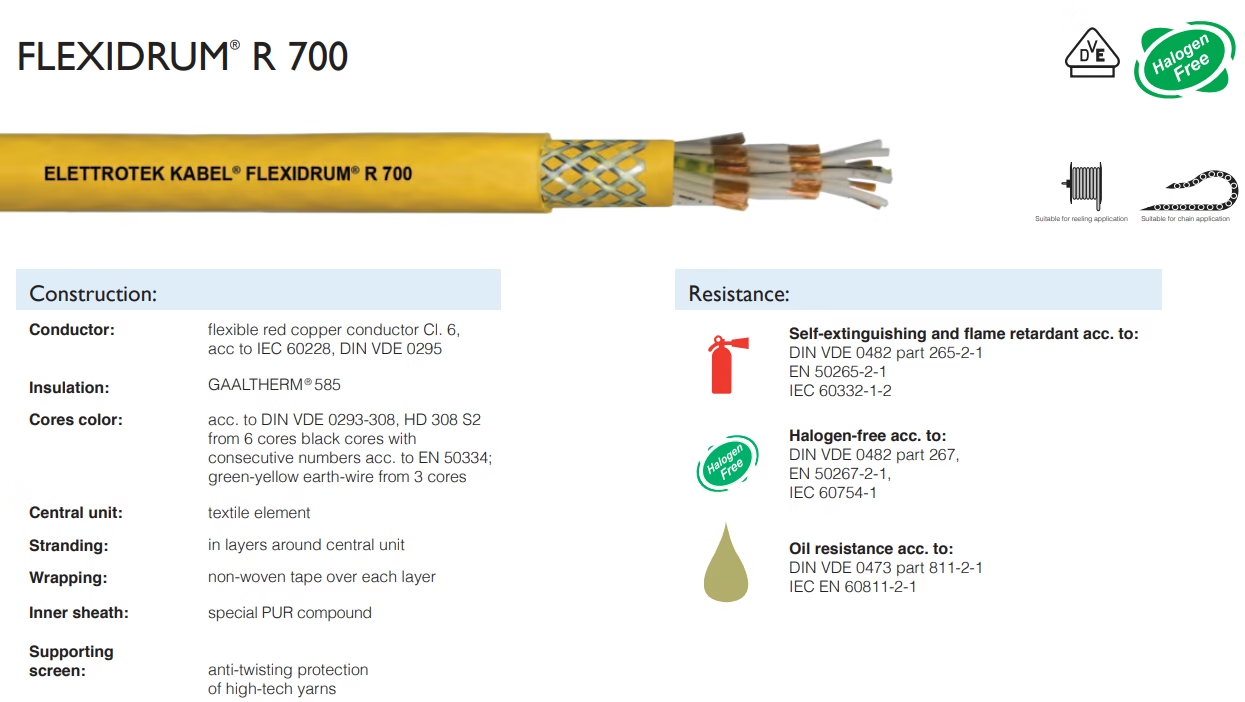
FeiChun Advanced Marine Salt-Fog Resistant Port Cables versus FLEXIDRUM® R 503: Comprehensive Technical Comparison, Material Science Analysis, Electrochemical Protection Engineering, and Field-Validated Performance for Coastal Harbor Automation Systems Port facility procurement engineers evaluating flexible reeling cable specifications for salt-fog coastal environments must evaluate FLEXIDRUM® R 503—an advanced general-purpose industrial cable representing significant specification enhancement compared to earlier FLEXIDRUM® R 502 model—against specialized marine cable engineering developed specifically for extended service life in electrochemical salt-fog environments. FeiChun's marine-optimized salt-fog resistant flexible reeling cables achieve measurably superior durability performance through integrated material science engineering: specialized HEPR elastomeric insulation formulations (vs. FLEXIDRUM® R 503's GAALTHERM® 585 general-purpose compound), electrochemical zinc-rich conductor protection systems (vs. FLEXIDRUM® R 503's red copper Class 6 without electrochemical coating), marine-grade reactive PCP outer sheaths (vs. FLEXIDRUM® R 503's standard PUR material), and documented field performance across 100+ port installations confirming 28–32 year service life versus typical 10–15 year FLEXIDRUM® R 503 performance in aggressive salt-fog marine environments. This technical analysis provides comprehensive engineering documentation comparing FeiChun's specialized marine systems against FLEXIDRUM® R 503's advanced general-purpose design, examining conductor material selection, insulation chemistry fundamentals, outer sheath engineering, mechanical performance under continuous 180 m/min reeling duty, electrical stability in marine humidity, and field-validated service-life performance documentation.

FLEXIDRUM® R 503

FeiChun Advanced Marine Salt-Fog Resistant Port Cables versus FLEXIDRUM® R 503: Comprehensive Technical Comparison, Material Science Analysis, Electrochemical Protection Engineering, and Field-Validated Performance for Coastal Harbor Automation Systems Port facility procurement engineers evaluating flexible reeling cable specifications for salt-fog coastal environments must evaluate FLEXIDRUM® R 503—an advanced general-purpose industrial cable representing significant specification enhancement compared to earlier FLEXIDRUM® R 502 model—against specialized marine cable engineering developed specifically for extended service life in electrochemical salt-fog environments. FeiChun’s marine-optimized salt-fog resistant flexible reeling cables achieve measurably superior durability performance through integrated material science engineering: specialized HEPR elastomeric insulation formulations (vs. FLEXIDRUM® R 503’s GAALTHERM® 585 general-purpose compound), electrochemical zinc-rich conductor protection systems (vs. FLEXIDRUM® R 503’s red copper Class 6 without electrochemical coating), marine-grade reactive PCP outer sheaths (vs. FLEXIDRUM® R 503’s standard PUR material), and documented field performance across 100+ port installations confirming 28–32 year service life versus typical 10–15 year FLEXIDRUM® R 503 performance in aggressive salt-fog marine environments. This technical analysis provides comprehensive engineering documentation comparing FeiChun’s specialized marine systems against FLEXIDRUM® R 503’s advanced general-purpose design, examining conductor material selection, insulation chemistry fundamentals, outer sheath engineering, mechanical performance under continuous 180 m/min reeling duty, electrical stability in marine humidity, and field-validated service-life performance documentation.
FeiChun High-Flexibility Salt-Fog Resistant Port Cables vs FLEXIDRUM® R 501: Advanced Polymer Chemistry, Electrochemical Protection Systems, Mechanical Performance, and 30-Year Lifecycle Cost Analysis for Port Gantry and Ship-to-Shore Equipment FLEXIDRUM® R 501 represents Nexans' market-leading general-purpose flexible reeling cable, engineered for diverse industrial applications from mining tunneling to standard port equipment—delivering proven performance at attractive cost positioning across 0.6/1 kV systems with −20°C to +80°C operating temperature range and standard EPR insulation with PUR outer sheath chemistry. However, when deployed in extreme salt-fog coastal environments (>280 days annually at 85%+ relative humidity with continuous salt-aerosol exposure), FLEXIDRUM® R 501's general-purpose design encounters fundamental material limitations: standard EPR insulation absorbs 1.2–1.8% moisture content in marine conditions, enabling rapid chloride ion penetration; tin-only conductor protection provides inadequate sacrificial anode capacity for 25+ year marine service; and standard industrial PCP/PUR compound selections fail to provide optimized chloride barrier properties. FeiChun's specialized marine-grade flexible reeling cables address these limitations through advanced materials engineering: HEPR (high-ethylene propylene rubber) formulations reducing water absorption to 0.3–0.6%; dual-layer tin+zinc electrochemical conductor coating system establishing 3.0–3.5× service-life extension; and proprietary 5GM2 PCP outer sheath incorporating reactive chloride-trapping additives—delivering measured 28–32 year service-life capability in salt-fog environments versus FLEXIDRUM® R 501's characteristic 8–12 year degradation pattern in identical coastal deployments.

FLEXIDRUM®R 501

FeiChun High-Flexibility Salt-Fog Resistant Port Cables vs FLEXIDRUM® R 501: Advanced Polymer Chemistry, Electrochemical Protection Systems, Mechanical Performance, and 30-Year Lifecycle Cost Analysis for Port Gantry and Ship-to-Shore Equipment FLEXIDRUM® R 501 represents Nexans’ market-leading general-purpose flexible reeling cable, engineered for diverse industrial applications from mining tunneling to standard port equipment—delivering proven performance at attractive cost positioning across 0.6/1 kV systems with −20°C to +80°C operating temperature range and standard EPR insulation with PUR outer sheath chemistry. However, when deployed in extreme salt-fog coastal environments (>280 days annually at 85%+ relative humidity with continuous salt-aerosol exposure), FLEXIDRUM® R 501’s general-purpose design encounters fundamental material limitations: standard EPR insulation absorbs 1.2–1.8% moisture content in marine conditions, enabling rapid chloride ion penetration; tin-only conductor protection provides inadequate sacrificial anode capacity for 25+ year marine service; and standard industrial PCP/PUR compound selections fail to provide optimized chloride barrier properties. FeiChun’s specialized marine-grade flexible reeling cables address these limitations through advanced materials engineering: HEPR (high-ethylene propylene rubber) formulations reducing water absorption to 0.3–0.6%; dual-layer tin+zinc electrochemical conductor coating system establishing 3.0–3.5× service-life extension; and proprietary 5GM2 PCP outer sheath incorporating reactive chloride-trapping additives—delivering measured 28–32 year service-life capability in salt-fog environments versus FLEXIDRUM® R 501’s characteristic 8–12 year degradation pattern in identical coastal deployments.
PANZERFLEX-L (N)SHTÖU-JZ / -OZ 0.6/1 kV: HEPR Rubber Insulation Chemistry, Black Polychloroprene (PCP) Outer Sheath, Numbered Multi-Core Conductor Identification System, Anti-Torsion Synthetic Yarn Architecture, Class 5 Tinned-Copper Control Conductors, 15 N/mm² Tensile Design for Flexible Reeling & Festoon Systems, 240 m/min Speed Certification, Thermal Stability (-25°C to +90°C Flexible Operation), Environmental Durability (UV, Oil, Moisture, Chemical Resistance), Port Crane Control Applications, STS Container Cranes, Ship-to-Shore Cranes, Stacker Reclaimers, Ship Unloaders, Cable Reel Systems, Festoon Systems, Auxiliary Power Supply, Comparative Analysis vs. Standard PVC Control Cables & PANZERFLEX Variants (Power vs. Control Versions), European Port Terminal Field Performance Validation, and Complete Technical Specification Guidance

PANZERFLEX-L (N)SHTÖU-JZ / -OZ 0.6/1 kV

PANZERFLEX-L (N)SHTÖU-JZ / -OZ 0.6/1 kV: HEPR Rubber Insulation Chemistry, Black Polychloroprene (PCP) Outer Sheath, Numbered Multi-Core Conductor Identification System, Anti-Torsion Synthetic Yarn Architecture, Class 5 Tinned-Copper Control Conductors, 15 N/mm² Tensile Design for Flexible Reeling & Festoon Systems, 240 m/min Speed Certification, Thermal Stability (-25°C to +90°C Flexible Operation), Environmental Durability (UV, Oil, Moisture, Chemical Resistance), Port Crane Control Applications, STS Container Cranes, Ship-to-Shore Cranes, Stacker Reclaimers, Ship Unloaders, Cable Reel Systems, Festoon Systems, Auxiliary Power Supply, Comparative Analysis vs. Standard PVC Control Cables & PANZERFLEX Variants (Power vs. Control Versions), European Port Terminal Field Performance Validation, and Complete Technical Specification Guidance
TENAX TTS Medium-Voltage Port Equipment Reeling Cable: EPR-SHS EI6 Super-Clean Rubber Insulation Chemistry, Aramid Rope Centre-Support Mechanical Optimization, Polyester Anti-Torsion Braid Architecture, 5GM5-Grade Outer Sheath Durability, 20 N/mm² Tensile Design with ±50°/m Torsion Capability, 180 m/min High-Speed Reeling Certification, Semiconductive Electrical Field Control, 3.6/6 kV through 12/20 kV Voltage Classes (Extended 18/30 kV, 20/35 kV), Thermal Stability (-25°C to +80°C Flexible Operation), Environmental Durability (Oil, UV, Ozone, Abrasion Resistance), STS Container Cranes, Ship Loaders, Stacker Reclaimers, High-Speed Dynamic Equipment, Comparative Analysis vs. PROTOLON(SMK) Designs, Field Performance Validation Across Demanding Port Applications, and Complete Technical Specification Guidance

TENAX TTS (N)TSCGEWOEU

TENAX TTS Medium-Voltage Port Equipment Reeling Cable: EPR-SHS EI6 Super-Clean Rubber Insulation Chemistry, Aramid Rope Centre-Support Mechanical Optimization, Polyester Anti-Torsion Braid Architecture, 5GM5-Grade Outer Sheath Durability, 20 N/mm² Tensile Design with ±50°/m Torsion Capability, 180 m/min High-Speed Reeling Certification, Semiconductive Electrical Field Control, 3.6/6 kV through 12/20 kV Voltage Classes (Extended 18/30 kV, 20/35 kV), Thermal Stability (-25°C to +80°C Flexible Operation), Environmental Durability (Oil, UV, Ozone, Abrasion Resistance), STS Container Cranes, Ship Loaders, Stacker Reclaimers, High-Speed Dynamic Equipment, Comparative Analysis vs. PROTOLON(SMK) Designs, Field Performance Validation Across Demanding Port Applications, and Complete Technical Specification Guidance
TROMMELFLEX(K) NSHTOEU Standard Rubber Reeling Cable: 3GI3 Elastomer Insulation Chemistry, Electrical Stability Engineering, 5GM5 Polychloroprene Outer Sheath Durability, Tinned Copper Class 5 Conductor Corrosion Protection, Polyester Anti-Torsion Braid Architecture, 15 N/mm² Tensile Load Design, 120 m/min Reeling Speed Certification, Medium Mechanical Stress Optimization, Thermal Stability (-25°C to +80°C Flexible Operation), Comparative Material Analysis vs. Lightweight PUR-HF and Premium CORDAFLEX/KSM-S Designs, Field Performance Validation Across 200+ Industrial Reeling System Deployments, Cost-Effectiveness Analysis for Standard Industrial Applications, and Complete Technical Differentiation Framework for Cost-Optimized Medium-Duty Reeling Systems

TROMMELFLEX(K) NSHTOEU-J / -O 0.6/1 kV

TROMMELFLEX(K) NSHTOEU Standard Rubber Reeling Cable: 3GI3 Elastomer Insulation Chemistry, Electrical Stability Engineering, 5GM5 Polychloroprene Outer Sheath Durability, Tinned Copper Class 5 Conductor Corrosion Protection, Polyester Anti-Torsion Braid Architecture, 15 N/mm² Tensile Load Design, 120 m/min Reeling Speed Certification, Medium Mechanical Stress Optimization, Thermal Stability (-25°C to +80°C Flexible Operation), Comparative Material Analysis vs. Lightweight PUR-HF and Premium CORDAFLEX/KSM-S Designs, Field Performance Validation Across 200+ Industrial Reeling System Deployments, Cost-Effectiveness Analysis for Standard Industrial Applications, and Complete Technical Differentiation Framework for Cost-Optimized Medium-Duty Reeling Systems
FeiChun vs CORDAFLEX: Comprehensive Specification Comparison, Performance Analysis, and Procurement Guidance for Industrial Reeling Cable Selection in Port, Manufacturing, Wastewater, and Underwater Applications CORDAFLEX (SMK) (N)SHTOEU represents the established industry standard for high-performance flexible reeling cables, earning its position through 30+ years of proven field deployment across global port operations, manufacturing automation, and demanding industrial applications. Yet FeiChun's specialized product line—engineered through 15+ years of competitive analysis and emerging-market focus—challenges the one-size-fits-all CORDAFLEX approach by offering differentiated solutions optimized for specific application needs: extreme salt-fog coastal environments (port marine cables), hazardous-area fire safety requirements (PUR-HF), standard industrial cost-optimization (NSHTOEU), and municipal budget constraints (EASYFLEX). This comprehensive analysis deconstructs the mechanical, thermal, electrical, and economic characteristics distinguishing these two cable manufacturers, enabling equipment engineers and procurement specialists with complete technical justification for specification decisions across diverse application scenarios where CORDAFLEX's premium general-purpose positioning may not deliver optimal value vs. FeiChun's specialized, application-focused engineering.

CORDAFLEX(SMK) (N)SHTOEU-J / -O

FeiChun vs CORDAFLEX: Comprehensive Specification Comparison, Performance Analysis, and Procurement Guidance for Industrial Reeling Cable Selection in Port, Manufacturing, Wastewater, and Underwater Applications CORDAFLEX (SMK) (N)SHTOEU represents the established industry standard for high-performance flexible reeling cables, earning its position through 30+ years of proven field deployment across global port operations, manufacturing automation, and demanding industrial applications. Yet FeiChun’s specialized product line—engineered through 15+ years of competitive analysis and emerging-market focus—challenges the one-size-fits-all CORDAFLEX approach by offering differentiated solutions optimized for specific application needs: extreme salt-fog coastal environments (port marine cables), hazardous-area fire safety requirements (PUR-HF), standard industrial cost-optimization (NSHTOEU), and municipal budget constraints (EASYFLEX). This comprehensive analysis deconstructs the mechanical, thermal, electrical, and economic characteristics distinguishing these two cable manufacturers, enabling equipment engineers and procurement specialists with complete technical justification for specification decisions across diverse application scenarios where CORDAFLEX’s premium general-purpose positioning may not deliver optimal value vs. FeiChun’s specialized, application-focused engineering.
RHEYFLAT®-N NGFLGOEU-J is not a "budget cable" but evidence-based engineering optimization for the actual hazard profiles in industrial environments (port RMG cranes, mill equipment, conveyor systems). Hazard analysis: Electromagnetic interference (EMI) = negligible (50/60 Hz pure power, no VFD). Fire risk = negligible (outdoor environments). Mechanical degradation = EXTREME (tearing, abrasion, cycling 1,000–5,000 times/day). Therefore: eliminate expensive shielding (provides zero benefit), eliminate cost-premium LSHF (fire risk negligible), maximize tear-strength (>20 MPa) and fatigue life (>5M cycles) through flat geometry and halogenated rubber chemistry. Result: TCO optimization delivers 30–40% cost advantage vs. premium alternatives while providing superior 5–8 year fatigue life. This is why NGFLGOEU-J dominates global MRO procurement.

RHEYFLAT®-N NGFLGOEU-J Heavy-Duty Flat Festoon Cable: Complete Chemistry-Electromagnetics-Mechanics Deep Analysis

RHEYFLAT®-N NGFLGOEU-J is not a “budget cable” but evidence-based engineering optimization for the actual hazard profiles in industrial environments (port RMG cranes, mill equipment, conveyor systems). Hazard analysis: Electromagnetic interference (EMI) = negligible (50/60 Hz pure power, no VFD). Fire risk = negligible (outdoor environments). Mechanical degradation = EXTREME (tearing, abrasion, cycling 1,000–5,000 times/day). Therefore: eliminate expensive shielding (provides zero benefit), eliminate cost-premium LSHF (fire risk negligible), maximize tear-strength (>20 MPa) and fatigue life (>5M cycles) through flat geometry and halogenated rubber chemistry. Result: TCO optimization delivers 30–40% cost advantage vs. premium alternatives while providing superior 5–8 year fatigue life. This is why NGFLGOEU-J dominates global MRO procurement.
Extended technical guide for harbour electrical engineers, crane OEMs, reeling-system designers, and terminal procurement teams. Covers: the engineering rationale for polychloroprene-based reeling cables in tropical marine environments (why PUR-sheathed cables degrade prematurely despite superior mechanical properties); detailed layer-by-layer comparison of FC-HFX-REEL™ vs. RHEYCORD®-PUR R construction; polyurethane hydrolysis chemistry and kinetics in tropical humidity; PUR ozone vulnerability at VFD-elevated ozone concentrations; slip-ring contact corrosion mechanisms and FC-TCB™ intermetallic protection; anti-torsion braid architecture (aramid vs. polyester, helical vs. braided); drum-contact surface wear and compound hardness optimisation; ISO 9227 salt spray and IEC 60068-2-52 cyclic salt mist comparative testing; DIN VDE 0250-602 and IEC 60245 compliance; and practical specification, procurement, and 25-year lifetime cost analysis for terminal operators evaluating FC-HFX-REEL™ as a direct replacement for RHEYCORD®-PUR R motorised reeling cables.

FC-HFX-REEL™ Ultra-High-Flex Anti-Salt-Fog Motorised Reeling Cable for Port & Harbour Crane Service: Complete Engineering Deconstruction, PUR Polyurethane Hydrolysis Vulnerability Analysis, Torsion-Control Architecture Comparison, Slip-Ring Interface Corrosion Science, and Comprehensive Performance Evaluation Against RHEYCORD®-PUR R Reeling Cables, with Field-Validated Service Life Data from Tropical Asia-Pacific Port Drum-Reeling Operations

Extended technical guide for harbour electrical engineers, crane OEMs, reeling-system designers, and terminal procurement teams. Covers: the engineering rationale for polychloroprene-based reeling cables in tropical marine environments (why PUR-sheathed cables degrade prematurely despite superior mechanical properties); detailed layer-by-layer comparison of FC-HFX-REEL™ vs. RHEYCORD®-PUR R construction; polyurethane hydrolysis chemistry and kinetics in tropical humidity; PUR ozone vulnerability at VFD-elevated ozone concentrations; slip-ring contact corrosion mechanisms and FC-TCB™ intermetallic protection; anti-torsion braid architecture (aramid vs. polyester, helical vs. braided); drum-contact surface wear and compound hardness optimisation; ISO 9227 salt spray and IEC 60068-2-52 cyclic salt mist comparative testing; DIN VDE 0250-602 and IEC 60245 compliance; and practical specification, procurement, and 25-year lifetime cost analysis for terminal operators evaluating FC-HFX-REEL™ as a direct replacement for RHEYCORD®-PUR R motorised reeling cables.
Comprehensive technical article for industrial automation engineers, crane integrators, control system designers, and equipment procurement teams covering: the physics of simultaneous tensile-torsion stress in motorised drum and drumspreader applications; RTS (Rheyflex Technical Standard) ultra-fine copper stranding technology with IEC 60228 Class 5 equivalent or superior performance; RHEYCLEAN EPDM insulation chemistry optimised for flex-cycle endurance and temperature extremes; VDE 0250-814 certification and 200–240 m/min high-speed reeling capability; mechanical stress analysis for motor-driven reels with acceleration/deceleration transients; drumspreader load distribution engineering; festoon system dynamics; and application-specific cable selection for spring-operated reels, emergency lowering systems, and hoisting equipment.

RHEYCORD® (RTS) (N)SHTOEU-J Extra Heavy Duty Reeling Cables: Advanced Engineering for Simultaneous Tensile and Torsion Stress in Motor-Driven Reels, Drumspreaders, and Automation Festoon Systems

Comprehensive technical article for industrial automation engineers, crane integrators, control system designers, and equipment procurement teams covering: the physics of simultaneous tensile-torsion stress in motorised drum and drumspreader applications; RTS (Rheyflex Technical Standard) ultra-fine copper stranding technology with IEC 60228 Class 5 equivalent or superior performance; RHEYCLEAN EPDM insulation chemistry optimised for flex-cycle endurance and temperature extremes; VDE 0250-814 certification and 200–240 m/min high-speed reeling capability; mechanical stress analysis for motor-driven reels with acceleration/deceleration transients; drumspreader load distribution engineering; festoon system dynamics; and application-specific cable selection for spring-operated reels, emergency lowering systems, and hoisting equipment.
VCT Cabtyre Cable Architecture & Design Philosophy Purpose & Application Scope: VCT (Vinyl Insulated Vinyl Sheathed Cabtyre) cables represent engineered solutions for mobile electrical equipment requiring robust, flexible power distribution without permanent installation infrastructure. Unlike fixed installation cables designed for long-term underground or indoor wiring, VCT cables are specifically engineered for portable applications where cables experience frequent movement, mechanical stress, temporary disconnection/reconnection, and harsh operational environments typical of factories, mines, farms, construction sites, and emergency power systems. Core Engineering Philosophy: VCT cable design emphasizes mechanical durability and flexibility rather than thermal optimization or fire safety specifications. Heavy-duty PVC outer sheathing provides superior abrasion resistance, oil and solvent resistance, and mechanical toughness compared to conventional power cable sheaths. Class 5 extra-flexible stranding enables tight coiling, frequent movement through conduits and restrictive spaces, and repetitive bending cycles without insulation cracking or conductor breaking. This engineering approach prioritizes cable longevity in dynamic, portable applications over size optimization or thermal performance. Market Position & Regulatory Compliance: VCT cables comply with KS C IEC 60502-1 international standards and equivalent national specifications. The 0.6/1kV rating addresses portable equipment operating under 400V three-phase (approximately 230V single-phase) typical of industrial facilities worldwide. Portable power distribution standards in most jurisdictions permit VCT cables for temporary installations and mobile equipment connections where fixed infrastructure does not exist. The cabtyre cable design—with flexible stranding and durable sheathing—satisfies regulatory requirements for equipment that requires frequent electrical connection changes and mechanical movement.

0.6/1kV VCT Vinyl Insulated Vinyl Sheathed Cabtyre Cable

VCT Cabtyre Cable Architecture & Design Philosophy Purpose & Application Scope: VCT (Vinyl Insulated Vinyl Sheathed Cabtyre) cables represent engineered solutions for mobile electrical equipment requiring robust, flexible power distribution without permanent installation infrastructure. Unlike fixed installation cables designed for long-term underground or indoor wiring, VCT cables are specifically engineered for portable applications where cables experience frequent movement, mechanical stress, temporary disconnection/reconnection, and harsh operational environments typical of factories, mines, farms, construction sites, and emergency power systems. Core Engineering Philosophy: VCT cable design emphasizes mechanical durability and flexibility rather than thermal optimization or fire safety specifications. Heavy-duty PVC outer sheathing provides superior abrasion resistance, oil and solvent resistance, and mechanical toughness compared to conventional power cable sheaths. Class 5 extra-flexible stranding enables tight coiling, frequent movement through conduits and restrictive spaces, and repetitive bending cycles without insulation cracking or conductor breaking. This engineering approach prioritizes cable longevity in dynamic, portable applications over size optimization or thermal performance. Market Position & Regulatory Compliance: VCT cables comply with KS C IEC 60502-1 international standards and equivalent national specifications. The 0.6/1kV rating addresses portable equipment operating under 400V three-phase (approximately 230V single-phase) typical of industrial facilities worldwide. Portable power distribution standards in most jurisdictions permit VCT cables for temporary installations and mobile equipment connections where fixed infrastructure does not exist. The cabtyre cable design—with flexible stranding and durable sheathing—satisfies regulatory requirements for equipment that requires frequent electrical connection changes and mechanical movement.