NTSCGEWÖU cable

(N)TSCGEWÖU 3x185+3x35/3 6/10kV cables in large-scale mining operations, the outer diameter is not merely a specification number—it is a critical interface parameter determining whether the cable fits your reel system, passes through underground shaft collars, mates with terminal connectors, and allows proper tension management during deployment and retrieval.

What is the Exact Outer Diameter of (N)TSCGEWÖU 3×185+3×35/3 6/10kV Reeling Cable?

(N)TSCGEWÖU 3×185+3×35/3 6/10kV cables in large-scale mining operations, the outer diameter is not merely a specification number—it is a critical interface parameter determining whether the cable fits your reel system, passes through underground shaft collars, mates with terminal connectors, and allows proper tension management during deployment and retrieval.
In heavy-duty industrial cables — the kind used in port container cranes, mining draglines, tunnel boring machines, and steel-mill transfer cars — visual identification of cable status is a serious safety concern. Operators need to know at a glance whether a cable is energized, which phase it carries, or simply where it runs in a dark, congested environment. Embedding small LED indicators directly into the cable sheath is one solution, but doing so raises an immediate engineering question: how do you power those LEDs? 在重型工业电缆(如港口集装箱起重机、矿山拖拽线、隧道掘进机和钢厂转运车使用的电缆)中,电缆状态的可视化识别是一个严肃的安全问题。将 LED 指示灯嵌入电缆护套是一种解决方案,但随之而来的工程难题是:如何为这些 LED 供电?

Inductive Harvesting: How Does the Magnetic Field of the Power Cores Induce Current to Light Up LEDs Without Physical Electrical Connection?

In heavy-duty industrial cables — the kind used in port container cranes, mining draglines, tunnel boring machines, and steel-mill transfer cars — visual identification of cable status is a serious safety concern. Operators need to know at a glance whether a cable is energized, which phase it carries, or simply where it runs in a dark, congested environment. Embedding small LED indicators directly into the cable sheath is one solution, but doing so raises an immediate engineering question: how do you power those LEDs? 在重型工业电缆(如港口集装箱起重机、矿山拖拽线、隧道掘进机和钢厂转运车使用的电缆)中,电缆状态的可视化识别是一个严肃的安全问题。将 LED 指示灯嵌入电缆护套是一种解决方案,但随之而来的工程难题是:如何为这些 LED 供电?
In modern port operations and heavy machinery applications, reeling cable performance at high speeds has become a critical factor for operational efficiency and equipment reliability. This technical analysis examines whether generic (N)TSCGEWÖU cables can achieve the same performance standards as Nexans RHEYFIRM® cables, particularly at the 240 meters per minute (m/min) reeling speed threshold. 在现代港口作业和重型机械应用中,高速卷取电缆性能已成为运行效率和设备可靠性的关键因素。本技术分析检验了通用(N)TSCGEWÖU电缆能否达到与Nexans RHEYFIRM®电缆相同的性能标准,特别是在240米/分钟(m/min)卷取速度阈值下。

Speed Rating: Can Generic (N)TSCGEWÖU Match the 240m/min Reeling Speed Capability of Nexans RHEYFIRM®?

In modern port operations and heavy machinery applications, reeling cable performance at high speeds has become a critical factor for operational efficiency and equipment reliability. This technical analysis examines whether generic (N)TSCGEWÖU cables can achieve the same performance standards as Nexans RHEYFIRM® cables, particularly at the 240 meters per minute (m/min) reeling speed threshold. 在现代港口作业和重型机械应用中,高速卷取电缆性能已成为运行效率和设备可靠性的关键因素。本技术分析检验了通用(N)TSCGEWÖU电缆能否达到与Nexans RHEYFIRM®电缆相同的性能标准,特别是在240米/分钟(m/min)卷取速度阈值下。
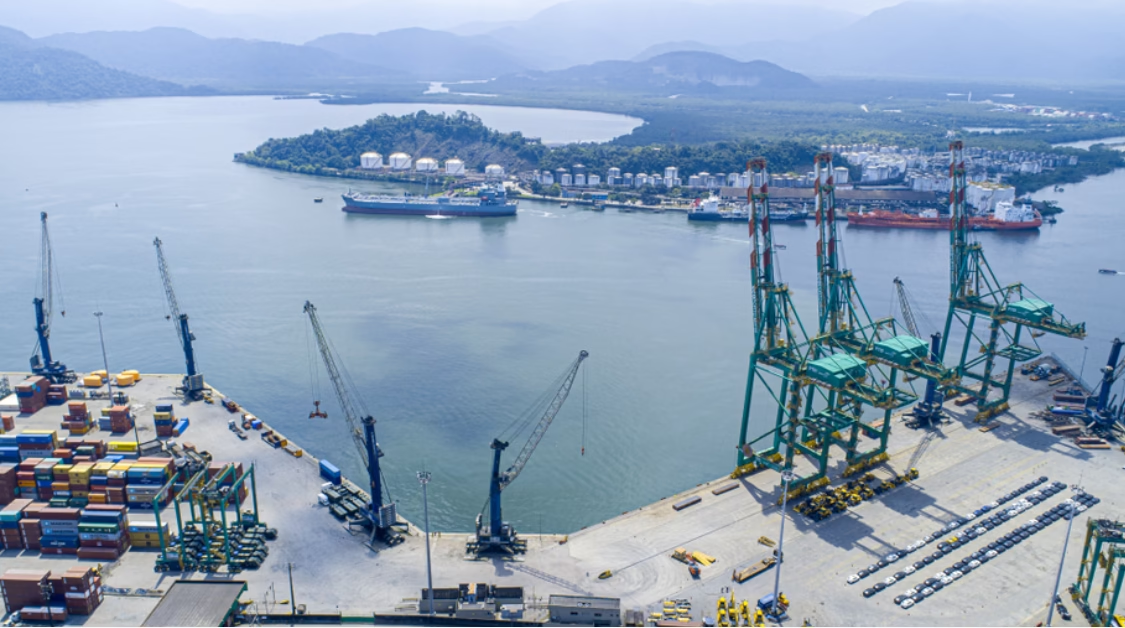
Gantry crane systems operating in ports, shipyards, and container terminals demand cables capable of withstanding extreme mechanical stresses, including high tensile forces and continuous torsional movements. The selection of appropriate reeling cables directly impacts operational efficiency, maintenance costs, and safety standards in material handling operations. This comprehensive technical analysis compares two leading cable solutions manufactured to German DIN VDE 0250 standards: the Nexans RHEYFIRM® (RS) flat cable series and the (N)TSCGEWÖU medium-voltage cable family. 龙门起重机系统在港口、造船厂和集装箱码头运行时,需要能够承受极端机械应力的电缆,包括高拉力和持续的扭转运动。适当选择卷筒电缆直接影响物料搬运作业中的运营效率、维护成本和安全标准。本综合技术分析比较了两种按德国DIN VDE 0250标准制造的领先电缆解决方案:Nexans RHEYFIRM®(RS)扁电缆系列和(N)TSCGEWÖU中压电缆系列。

Nexans RHEYFIRM® (RS) vs. (N)TSCGEWÖU: A Detailed Comparison of Tensile Strength and Torsion Resistance for Gantry Cranes

Gantry crane systems operating in ports, shipyards, and container terminals demand cables capable of withstanding extreme mechanical stresses, including high tensile forces and continuous torsional movements. The selection of appropriate reeling cables directly impacts operational efficiency, maintenance costs, and safety standards in material handling operations. This comprehensive technical analysis compares two leading cable solutions manufactured to German DIN VDE 0250 standards: the Nexans RHEYFIRM® (RS) flat cable series and the (N)TSCGEWÖU medium-voltage cable family. 龙门起重机系统在港口、造船厂和集装箱码头运行时,需要能够承受极端机械应力的电缆,包括高拉力和持续的扭转运动。适当选择卷筒电缆直接影响物料搬运作业中的运营效率、维护成本和安全标准。本综合技术分析比较了两种按德国DIN VDE 0250标准制造的领先电缆解决方案:Nexans RHEYFIRM®(RS)扁电缆系列和(N)TSCGEWÖU中压电缆系列。
Selecting the optimal reeling cable for motor-driven drum applications requires careful evaluation of mechanical properties, particularly tensile strength. This technical document provides an evidence-based comparison between the German-standard (N)TSCGEWÖU flexible reeling cable and the premium Nexans RHEYFIRM-RS heavy-duty reeling cable. Both products serve similar industrial functions but employ distinct engineering approaches that result in measurable performance differences. 为电动卷筒应用选择最佳卷筒电缆需要仔细评估机械性能,尤其是抗拉强度。本技术文档对德国标准(N)TSCGEWÖU柔性卷筒电缆与高端Nexans RHEYFIRM-RS重载卷筒电缆进行循证对比。两种产品服务于相似工业功能,但采用不同工程方法,产生可量化的性能差异。

Nexans RHEYFIRM Series: (N)TSCGEWÖU vs. RHEYFIRM-RS — Tensile Strength Analysis

Selecting the optimal reeling cable for motor-driven drum applications requires careful evaluation of mechanical properties, particularly tensile strength. This technical document provides an evidence-based comparison between the German-standard (N)TSCGEWÖU flexible reeling cable and the premium Nexans RHEYFIRM-RS heavy-duty reeling cable. Both products serve similar industrial functions but employ distinct engineering approaches that result in measurable performance differences. 为电动卷筒应用选择最佳卷筒电缆需要仔细评估机械性能,尤其是抗拉强度。本技术文档对德国标准(N)TSCGEWÖU柔性卷筒电缆与高端Nexans RHEYFIRM-RS重载卷筒电缆进行循证对比。两种产品服务于相似工业功能,但采用不同工程方法,产生可量化的性能差异。
In modern tunnel boring machine (TBM) applications, the selection of appropriate voltage ratings for cutterhead drive systems is critical for operational efficiency, safety, and equipment longevity. For Herrenknecht TBMs—the world's leading manufacturer of mechanized tunneling equipment—the standard voltage rating for cutterhead high-voltage drives is predominantly 6kV (6/10kV class) and 10kV, with 20kV systems reserved for specialized high-power applications exceeding 5MW per motor. 在现代隧道掘进机(TBM)应用中,刀盘驱动系统的电压等级选择对运行效率、安全性和设备寿命至关重要。对于海瑞克TBM——全球领先的机械化隧道设备制造商——刀盘高压驱动的标准电压等级主要为6kV(6/10kV级)和10kV,20kV系统仅用于单电机功率超过5MW的特殊高功率应用。

TBM Cutterhead High-Voltage Drives: Which Voltage Rating (6kV, 10kV, or 20kV) is Standard for Herrenknecht TBM?

In modern tunnel boring machine (TBM) applications, the selection of appropriate voltage ratings for cutterhead drive systems is critical for operational efficiency, safety, and equipment longevity. For Herrenknecht TBMs—the world’s leading manufacturer of mechanized tunneling equipment—the standard voltage rating for cutterhead high-voltage drives is predominantly 6kV (6/10kV class) and 10kV, with 20kV systems reserved for specialized high-power applications exceeding 5MW per motor. 在现代隧道掘进机(TBM)应用中,刀盘驱动系统的电压等级选择对运行效率、安全性和设备寿命至关重要。对于海瑞克TBM——全球领先的机械化隧道设备制造商——刀盘高压驱动的标准电压等级主要为6kV(6/10kV级)和10kV,20kV系统仅用于单电机功率超过5MW的特殊高功率应用。
Determining the appropriate cable size for the main reel power supply of a Sandvik DD421 Development Jumbo requires a comprehensive analysis of the equipment's electrical power requirements, operational characteristics, and the specific technical parameters of German mining cable standards. The Sandvik DD421 is a two-boom electro-hydraulic development drill designed for fast and accurate drilling in tunneling and drifting operations covering cross-sectional areas from eight to sixty square meters. Understanding the relationship between this equipment's power consumption profile and the current-carrying capacity of (N)TSCGEWÖU medium-voltage trailing cables is essential for ensuring safe, reliable, and efficient operation in demanding underground mining environments.

Sandvik DD421: Which (N)TSCGEWÖU Cable Size is Suitable for the Main Reel of a Sandvik DD421 Development Jumbo?

Determining the appropriate cable size for the main reel power supply of a Sandvik DD421 Development Jumbo requires a comprehensive analysis of the equipment’s electrical power requirements, operational characteristics, and the specific technical parameters of German mining cable standards. The Sandvik DD421 is a two-boom electro-hydraulic development drill designed for fast and accurate drilling in tunneling and drifting operations covering cross-sectional areas from eight to sixty square meters. Understanding the relationship between this equipment’s power consumption profile and the current-carrying capacity of (N)TSCGEWÖU medium-voltage trailing cables is essential for ensuring safe, reliable, and efficient operation in demanding underground mining environments.
(N)TSCGEWÖU cable series represents a category of medium voltage flexible mining, drilling and tunneling cables primarily designed to meet DIN VDE 0250-813 specifications. (N)TSCGEWÖU电缆系列代表一类中压柔性采矿、钻井和隧道电缆,主要设计满足DIN VDE 0250-813规范 These cables are widely used internationally for power distribution to heavy-duty mining equipment in surface and underground installations. However, exporting these cables to the Russian Federation and other CIS countries requires compliance with GOST-R certification standards, which operate under a distinct regulatory framework from European DIN VDE standards.

GOST-R: Do (N)TSCGEWÖU Cables Meet the GOST-R Certification Requirements for the Russian/CIS Mining Market?

(N)TSCGEWÖU cable series represents a category of medium voltage flexible mining, drilling and tunneling cables primarily designed to meet DIN VDE 0250-813 specifications. (N)TSCGEWÖU电缆系列代表一类中压柔性采矿、钻井和隧道电缆,主要设计满足DIN VDE 0250-813规范 These cables are widely used internationally for power distribution to heavy-duty mining equipment in surface and underground installations. However, exporting these cables to the Russian Federation and other CIS countries requires compliance with GOST-R certification standards, which operate under a distinct regulatory framework from European DIN VDE standards.
Cold shrink technology represents a revolutionary advancement in medium voltage cable termination methods, offering significant advantages over traditional heat shrink applications. Developed over 40 years ago by 3M, this technology has become the industry standard for reliable and efficient cable terminations ranging from 5 kV to 145 kV applications. The cold shrink method eliminates the need for heat guns, torches, or special installation equipment, thereby reducing installation time and improving safety on site. 冷缩技术是中压电缆终端连接方法的革命性进步,与传统热缩应用相比具有显著优势。该技术由3M公司在40多年前开发,现已成为5kV至145kV应用中可靠高效电缆终端的行业标准。冷缩方法无需热风枪、火炬或特殊安装设备,从而减少了安装时间并提高了现场安全性。

Step-by-Step Guide: How to Terminate (N)TSCGEWÖU 10kV Cable using a Cold Shrink Termination Kit

Cold shrink technology represents a revolutionary advancement in medium voltage cable termination methods, offering significant advantages over traditional heat shrink applications. Developed over 40 years ago by 3M, this technology has become the industry standard for reliable and efficient cable terminations ranging from 5 kV to 145 kV applications. The cold shrink method eliminates the need for heat guns, torches, or special installation equipment, thereby reducing installation time and improving safety on site. 冷缩技术是中压电缆终端连接方法的革命性进步,与传统热缩应用相比具有显著优势。该技术由3M公司在40多年前开发,现已成为5kV至145kV应用中可靠高效电缆终端的行业标准。冷缩方法无需热风枪、火炬或特殊安装设备,从而减少了安装时间并提高了现场安全性。
Variable frequency drives represent critical components in modern industrial automation systems, enabling precise control of AC motor speed and torque through pulse width modulation technology. According to research from Nexans, VFD systems inherently create challenging operating conditions including high voltage spikes, electromagnetic interference, and radio frequency noise that standard power cables cannot adequately manage.[1] The selection of appropriate VFD-rated cables becomes essential for system reliability and longevity. 变频驱动器是现代工业自动化系统中的关键部件,通过脉宽调制技术实现对交流电机转速和扭矩的精确控制。根据耐克森公司的研究,变频系统固有地产生具有挑战性的运行条件,包括高电压尖峰、电磁干扰和射频噪声,标准电力电缆无法充分管理。选择合适的变频额定电缆对系统可靠性和使用寿命至关重要。

VFD Cable Compatibility Analysis

Variable frequency drives represent critical components in modern industrial automation systems, enabling precise control of AC motor speed and torque through pulse width modulation technology. According to research from Nexans, VFD systems inherently create challenging operating conditions including high voltage spikes, electromagnetic interference, and radio frequency noise that standard power cables cannot adequately manage.[1] The selection of appropriate VFD-rated cables becomes essential for system reliability and longevity. 变频驱动器是现代工业自动化系统中的关键部件,通过脉宽调制技术实现对交流电机转速和扭矩的精确控制。根据耐克森公司的研究,变频系统固有地产生具有挑战性的运行条件,包括高电压尖峰、电磁干扰和射频噪声,标准电力电缆无法充分管理。选择合适的变频额定电缆对系统可靠性和使用寿命至关重要。
(N)TSCGEWÖU cable designation represents a specialized category of medium-voltage flexible power cables manufactured according to the stringent requirements of German standard DIN VDE 0250-813. These cables are specifically engineered for demanding applications in underground mining operations, tunnelling projects, and heavy industrial installations where conventional power cables would fail under the combined stresses of mechanical loading, chemical exposure, and harsh environmental conditions. The nomenclature follows German cable designation conventions where "T" indicates fine-stranded conductors for maximum flexibility, "SC" denotes semiconductive screening layers, "G" represents flexible insulation compound, "E" signifies earth conductors, "W" indicates oil-resistant properties, and "Ö" confirms oil and chemical resistance of the outer sheath.

Ampacity Derating: How Much Current Can (N)TSCGEWÖU Carry When Wound in 3 Layers on a Drum?

(N)TSCGEWÖU cable designation represents a specialized category of medium-voltage flexible power cables manufactured according to the stringent requirements of German standard DIN VDE 0250-813. These cables are specifically engineered for demanding applications in underground mining operations, tunnelling projects, and heavy industrial installations where conventional power cables would fail under the combined stresses of mechanical loading, chemical exposure, and harsh environmental conditions. The nomenclature follows German cable designation conventions where “T” indicates fine-stranded conductors for maximum flexibility, “SC” denotes semiconductive screening layers, “G” represents flexible insulation compound, “E” signifies earth conductors, “W” indicates oil-resistant properties, and “Ö” confirms oil and chemical resistance of the outer sheath.
(N)TSCGEWÖU medium voltage reeling cable represents a specialized engineering solution designed for extreme mechanical stress applications in mining, material handling, and heavy industrial operations. When evaluating performance in Arctic environments with sustained temperatures of negative forty degrees Celsius, the cable's construction and material specifications demonstrate compliance with international cold performance standards, making it technically suitable for continuous operation in such demanding conditions.

Can (N)TSCGEWÖU Cables Handle Continuous Operation in -40°C Arctic Environments (Cold Impact Test)?

(N)TSCGEWÖU medium voltage reeling cable represents a specialized engineering solution designed for extreme mechanical stress applications in mining, material handling, and heavy industrial operations. When evaluating performance in Arctic environments with sustained temperatures of negative forty degrees Celsius, the cable’s construction and material specifications demonstrate compliance with international cold performance standards, making it technically suitable for continuous operation in such demanding conditions.
Gantry cranes represent essential material handling equipment in ports, shipyards, industrial facilities, and construction sites worldwide. These towering structures facilitate the movement of heavy containers, steel components, machinery, and bulk materials with remarkable efficiency. The electrical cables that power these massive machines must endure some of the most demanding operating conditions in industrial applications, including continuous flexing, high tensile loads, environmental exposure, and millions of bending cycles over their operational lifetime.

What is the Expected Service Life of (N)TSCGEWÖU Cables on a High-Tension Gantry Crane Reel?

Gantry cranes represent essential material handling equipment in ports, shipyards, industrial facilities, and construction sites worldwide. These towering structures facilitate the movement of heavy containers, steel components, machinery, and bulk materials with remarkable efficiency. The electrical cables that power these massive machines must endure some of the most demanding operating conditions in industrial applications, including continuous flexing, high tensile loads, environmental exposure, and millions of bending cycles over their operational lifetime.
Mining operations worldwide face a critical procurement decision when selecting medium voltage reeling and trailing cables for mobile equipment such as excavators, draglines, and continuous miners. The choice between premium brand-name cables like PROTOLON and generic alternatives conforming to the same NTSCGEWÖU specification represents a significant investment decision with long-term operational and safety implications.

PROTOLON (Proprietary) vs. Generic NTSCGEWÖU: Is the Premium Price for Brand-Name Mining Cables Justified?

Mining operations worldwide face a critical procurement decision when selecting medium voltage reeling and trailing cables for mobile equipment such as excavators, draglines, and continuous miners. The choice between premium brand-name cables like PROTOLON and generic alternatives conforming to the same NTSCGEWÖU specification represents a significant investment decision with long-term operational and safety implications.
The Australian AS/NZS 2802 Type 440 cable and the German DIN VDE 0250-813 (N)TSCGEWÖU cable both serve draglines, excavators, and mobile mining equipment. However, their ultraviolet resistance characteristics differ significantly based on sheath material composition and regional design priorities. Understanding these differences enables mining engineers to select optimal cables for Pilbara mining operations where equipment operates continuously under intense solar radiation. 本对比分析研究了两种领先的露天采矿用卷筒电缆标准。澳大利亚AS/NZS 2802 440型电缆和德国DIN VDE 0250-813 (N)TSCGEWÖU电缆都适用于拉铲、挖掘机和移动采矿设备。然而,它们的抗紫外线特性基于护套材料成分和区域设计优先级存在显著差异。

Type 440 (Australia) vs. (N)TSCGEWÖU (VDE): Which reeling cable offers better UV resistance for the Pilbara region?

The Australian AS/NZS 2802 Type 440 cable and the German DIN VDE 0250-813 (N)TSCGEWÖU cable both serve draglines, excavators, and mobile mining equipment. However, their ultraviolet resistance characteristics differ significantly based on sheath material composition and regional design priorities. Understanding these differences enables mining engineers to select optimal cables for Pilbara mining operations where equipment operates continuously under intense solar radiation. 本对比分析研究了两种领先的露天采矿用卷筒电缆标准。澳大利亚AS/NZS 2802 440型电缆和德国DIN VDE 0250-813 (N)TSCGEWÖU电缆都适用于拉铲、挖掘机和移动采矿设备。然而,它们的抗紫外线特性基于护套材料成分和区域设计优先级存在显著差异。
In demanding industrial applications such as mining operations, crane systems, and material handling equipment, the selection of appropriate cable sheath materials directly influences operational reliability and safety. The sheath represents the cable's first line of defense against mechanical stress, environmental degradation, and electrical hazards. This technical analysis examines how Ethylene Vinyl Acetate (EVA) sheath compounds improve the performance characteristics of NTSCGEWÖU-type trailing and reeling cables compared to standard Chlorinated Polyethylene (CPE) constructions, particularly regarding voltage withstand capabilities and vertical installation requirements.

Proof Voltage and Vertical Clamping Performance: EVA vs. CPE Cable Sheaths

In demanding industrial applications such as mining operations, crane systems, and material handling equipment, the selection of appropriate cable sheath materials directly influences operational reliability and safety. The sheath represents the cable’s first line of defense against mechanical stress, environmental degradation, and electrical hazards. This technical analysis examines how Ethylene Vinyl Acetate (EVA) sheath compounds improve the performance characteristics of NTSCGEWÖU-type trailing and reeling cables compared to standard Chlorinated Polyethylene (CPE) constructions, particularly regarding voltage withstand capabilities and vertical installation requirements.
(N)TSCGEWÖU cable designation represents specialized mining and industrial cables designed for applications requiring robust environmental protection and reliable electrical performance. Proper verification of sheath conductivity ensures effective equipotential bonding and prevents dangerous voltage potentials that could lead to ignition sources in classified areas. 在存在易燃气体、蒸汽或可燃粉尘的危险场所,电缆外护套的完整性和导电性在维持安全接地系统方面起着关键作用。(N)TSCGEWÖU电缆标识代表专为需要强大环境保护和可靠电气性能的应用而设计的专用矿用和工业电缆。正确验证护套导电性可确保有效的等电位连接,并防止可能导致分类区域点火源的危险电压电位。

Sheath Conductivity: How do you verify the conductivity of the outer sheath on (N)TSCGEWÖU cables for safety grounding in hazardous areas?

(N)TSCGEWÖU cable designation represents specialized mining and industrial cables designed for applications requiring robust environmental protection and reliable electrical performance. Proper verification of sheath conductivity ensures effective equipotential bonding and prevents dangerous voltage potentials that could lead to ignition sources in classified areas. 在存在易燃气体、蒸汽或可燃粉尘的危险场所,电缆外护套的完整性和导电性在维持安全接地系统方面起着关键作用。(N)TSCGEWÖU电缆标识代表专为需要强大环境保护和可靠电气性能的应用而设计的专用矿用和工业电缆。正确验证护套导电性可确保有效的等电位连接,并防止可能导致分类区域点火源的危险电压电位。
NTSCGEWÖU mining cables manufactured according to DIN VDE 0250-813 specifications and operating at medium voltages ranging from six kilovolts to twelve kilovolts phase-to-phase, partial discharge testing serves multiple critical functions throughout the cable lifecycle. During factory acceptance testing, partial discharge measurements verify that cable manufacturing processes have produced insulation systems free from voids, contamination, or workmanship defects that could lead to premature failure. During field commissioning after cable installation, partial discharge testing validates that termination and splicing work has been executed properly without introducing stress concentrations or gaps that would initiate discharge activity. Throughout service life, periodic partial discharge measurements enable condition-based maintenance programs that identify cables experiencing insulation deterioration before catastrophic failures occur, allowing planned replacements during scheduled outages rather than emergency repairs following unexpected breakdowns.

What are the acceptance criteria for Partial Discharge (PD) measurements on (N)TSCGEWÖU medium voltage cables (typically < 20 pC)?

NTSCGEWÖU mining cables manufactured according to DIN VDE 0250-813 specifications and operating at medium voltages ranging from six kilovolts to twelve kilovolts phase-to-phase, partial discharge testing serves multiple critical functions throughout the cable lifecycle. During factory acceptance testing, partial discharge measurements verify that cable manufacturing processes have produced insulation systems free from voids, contamination, or workmanship defects that could lead to premature failure. During field commissioning after cable installation, partial discharge testing validates that termination and splicing work has been executed properly without introducing stress concentrations or gaps that would initiate discharge activity. Throughout service life, periodic partial discharge measurements enable condition-based maintenance programs that identify cables experiencing insulation deterioration before catastrophic failures occur, allowing planned replacements during scheduled outages rather than emergency repairs following unexpected breakdowns.
(N)TSCGEWÖU cable designation follows VDE naming conventions, where each letter represents specific cable characteristics. These medium-voltage cables are specifically engineered for power distribution to heavy-duty equipment in mining and industrial applications, available in voltage ratings of 3.6/6kV, 6/10kV, 8.7/15kV, and 12/20kV. The cable features tinned copper conductors (Class 5 according to DIN VDE 0295), rubber insulation (3GI3 compound per DIN VDE 0207 Part 20), and a heavy-duty elastomer outer sheath (5GM5 compound per DIN VDE 0207 Part 21).

Cold Impact Test: How (N)TSCGEWÖU Cables Are Certified as “Cold Resistant” at -40°C Under VDE Guidelines

(N)TSCGEWÖU cable designation follows VDE naming conventions, where each letter represents specific cable characteristics. These medium-voltage cables are specifically engineered for power distribution to heavy-duty equipment in mining and industrial applications, available in voltage ratings of 3.6/6kV, 6/10kV, 8.7/15kV, and 12/20kV. The cable features tinned copper conductors (Class 5 according to DIN VDE 0295), rubber insulation (3GI3 compound per DIN VDE 0207 Part 20), and a heavy-duty elastomer outer sheath (5GM5 compound per DIN VDE 0207 Part 21).
NSSHKCGEOEU (Schräm-TENAX®-VE) — это специализированный кабель для угольных комбайнов с уникальной системой обнаружения повреждений от раздавливания. Кабель соответствует стандартам DIN VDE 0250, часть 812 и DIN VDE 0472, часть 818 («Поведение при сжимающей нагрузке»), что гарантирует обнаружение повреждений от раздавливания как замыканий на землю с максимальной надёжностью. Инновационная конструкция с центральным разделителем-корзиной из проводящей резины и распределённым заземляющим проводником обеспечивает превосходную защиту при экстремальных механических нагрузках, характерных для работы угольных комбайнов.

How do EMC-compliant VDE cables like (N)2XCCY differ structurally from standard screened mining cables like (N)TSCGEWÖU?

The distinction between EMC-compliant distribution cables such as the N2XCCY series manufactured according to DIN VDE 0276-620 standards and heavy-duty mining cables like the NTSCGEWÖU series designed per DIN VDE 0250-813 specifications reveals how cable construction must adapt to specific electromagnetic environments and mechanical demands. Understanding these structural differences provides essential insight for engineers specifying cables in installations where electromagnetic interference control is paramount alongside mechanical reliability.
(N)TSCGEWÖU cable type represents a specialized category of medium-voltage power cables designed for demanding applications in mining, tunneling, harbor cranes, and heavy-duty industrial environments. These cables feature 3GI3 grade Ethylene-Propylene Rubber (EPR) insulation, which must maintain dielectric integrity under extreme mechanical stress, moisture exposure, and electrical field conditions. Understanding the aging behavior of the dielectric loss factor (tan delta, tan δ) is critical for predictive maintenance and ensuring operational safety in these mission-critical applications.

Tan Delta Aging: How does the dielectric loss factor (Tan Delta) of 3GI3 insulation in (N)TSCGEWÖU cables change with long-term aging?

(N)TSCGEWÖU cable type represents a specialized category of medium-voltage power cables designed for demanding applications in mining, tunneling, harbor cranes, and heavy-duty industrial environments. These cables feature 3GI3 grade Ethylene-Propylene Rubber (EPR) insulation, which must maintain dielectric integrity under extreme mechanical stress, moisture exposure, and electrical field conditions. Understanding the aging behavior of the dielectric loss factor (tan delta, tan δ) is critical for predictive maintenance and ensuring operational safety in these mission-critical applications.
The (N)TSCGEWÖU cable manufactured to DIN VDE 0250-813 and the standard power cable manufactured to IEC 60502-2 serve fundamentally different purposes despite both being medium voltage cables. The most critical distinction lies in their mechanical durability design philosophy: VDE 0250 mining cables are engineered for continuous dynamic stress in mobile applications, while IEC 60502-2 cables are optimized for static fixed installations. 按照DIN VDE 0250-813标准生产的(N)TSCGEWÖU电缆与按照IEC 60502-2标准生产的标准电力电缆,尽管都是中压电缆,但其根本用途完全不同。最关键的区别在于它们的机械耐久性设计理念:VDE 0250矿用电缆是为移动应用中的持续动态应力而设计的,而IEC 60502-2电缆则针对静态固定安装进行了优化。

(N)TSCGEWÖU vs. IEC 60502-2: What is the Fundamental Difference in Mechanical Durability?

The (N)TSCGEWÖU cable manufactured to DIN VDE 0250-813 and the standard power cable manufactured to IEC 60502-2 serve fundamentally different purposes despite both being medium voltage cables. The most critical distinction lies in their mechanical durability design philosophy: VDE 0250 mining cables are engineered for continuous dynamic stress in mobile applications, while IEC 60502-2 cables are optimized for static fixed installations. 按照DIN VDE 0250-813标准生产的(N)TSCGEWÖU电缆与按照IEC 60502-2标准生产的标准电力电缆,尽管都是中压电缆,但其根本用途完全不同。最关键的区别在于它们的机械耐久性设计理念:VDE 0250矿用电缆是为移动应用中的持续动态应力而设计的,而IEC 60502-2电缆则针对静态固定安装进行了优化。
Medium voltage reeling cables conforming to DIN VDE 0250-813 employ a systematic letter coding system that communicates precise information about cable construction, materials, and performance characteristics. Within this nomenclature, each letter position corresponds to a specific structural element or material property, enabling engineers to identify critical design features at a glance.[1][2] 符合DIN VDE 0250-813标准的中压卷筒电缆采用系统性的字母编码系统,传达电缆结构、材料和性能特性的精确信息。在该命名法中,每个字母位置对应特定的结构元素或材料属性,使工程师能够一目了然地识别关键设计特征。

What Does the Letter “C” Indicate in (N)TSCGEWÖU Versus “K” in (N)TSKCGEWÖU?

Medium voltage reeling cables conforming to DIN VDE 0250-813 employ a systematic letter coding system that communicates precise information about cable construction, materials, and performance characteristics. Within this nomenclature, each letter position corresponds to a specific structural element or material property, enabling engineers to identify critical design features at a glance.[1][2] 符合DIN VDE 0250-813标准的中压卷筒电缆采用系统性的字母编码系统,传达电缆结构、材料和性能特性的精确信息。在该命名法中,每个字母位置对应特定的结构元素或材料属性,使工程师能够一目了然地识别关键设计特征。
NTSCGEWÖU and NTMCGEWÖU cables represent critical technical solutions for powering mobile machinery in mining, heavy industry, and material handling environments. Both cable types are manufactured according to the German DIN VDE 0250 standard, which is globally recognized as the definitive benchmark for tough rubber-sheathed flexible cables designed for cranes and material handling equipment. The fundamental distinction lies in their sheath construction: the "S" in NTSCGEWÖU indicates a double rubber sheath (Schwer = heavy-duty) providing enhanced mechanical protection for reeling applications, while "M" in NTMCGEWÖU denotes a single sheath with single-core design optimized for short-length medium voltage connections. According to industry specifications, Germany remains the only country to have issued special design regulations for flexible electrical cables covering cranes and material handling equipment, making DIN VDE 0250 the ultimate international standard for these demanding applications.

كيف تختار بين NTSCGEWÖU و NTMCGEWÖU للآلات المتحركة؟

NTSCGEWÖU and NTMCGEWÖU cables represent critical technical solutions for powering mobile machinery in mining, heavy industry, and material handling environments. Both cable types are manufactured according to the German DIN VDE 0250 standard, which is globally recognized as the definitive benchmark for tough rubber-sheathed flexible cables designed for cranes and material handling equipment. The fundamental distinction lies in their sheath construction: the “S” in NTSCGEWÖU indicates a double rubber sheath (Schwer = heavy-duty) providing enhanced mechanical protection for reeling applications, while “M” in NTMCGEWÖU denotes a single sheath with single-core design optimized for short-length medium voltage connections. According to industry specifications, Germany remains the only country to have issued special design regulations for flexible electrical cables covering cranes and material handling equipment, making DIN VDE 0250 the ultimate international standard for these demanding applications.
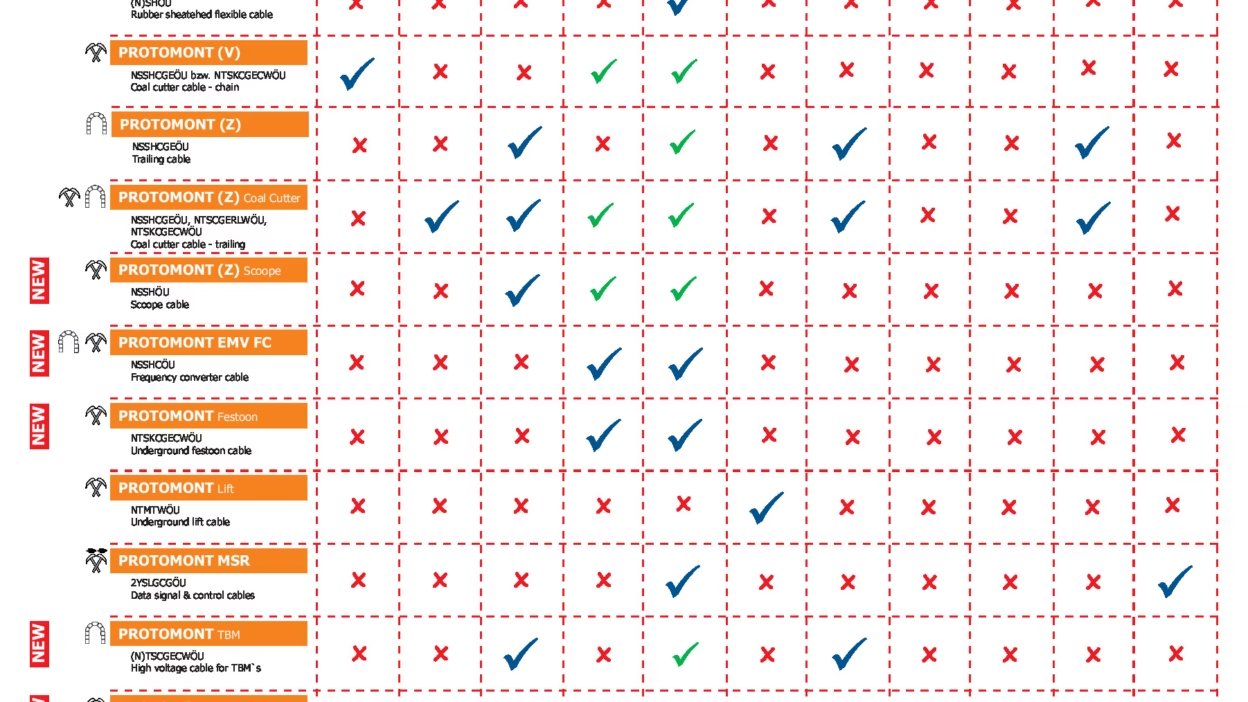
Prysmian Mining Application Systems represent a comprehensive portfolio of specialized cables engineered for the demanding environments of underground mining, tunneling operations, and opencast mining facilities. Developed by Prysmian Group, the world's largest cable manufacturer with over 140 years of expertise, these systems encompass multiple product families including PROTOLON (medium voltage flexible cables), PROTOMONT (rubber-sheathed flexible cables), OPTOFLEX (fiber optic cables), and CORDAFLEX (scraper cables).

What is Prysmian Mining Application systems ?

矿用电缆, 采煤机电缆, 拖曳电缆, 橡套电缆, 中压柔性电缆, 煤矿电缆, 隧道掘进机电缆, горнодобывающий кабель, шахтный кабель, гибкий кабель для шахт, кабель для угольных комбайнов, тянущийся кабель PROTOLON cable, PROTOMONT cable, OPTOFLEX mining cable, CORDAFLEX scraper cable, SUPROMONT power feeder cable, NTMCGCWÖU cable, NTSCGEWÖU cable, NTSCGCEWÖU cable, NSSHÖU cable, NSHÖU mining cable, NSSHCGEÖU coal cutter cable, NSHTÖU scraper cable, NYHSSYCY feeder cable, N3GHSSYCY rubber cable, NTSKGCFCWÖU festoon cable, NTMHWÖU lift cable, ZYSLGCGÖU MSR cable
Mining, drilling, and tunnelling cables represent a specialized category of electrical cables engineered to withstand the extreme conditions found in extractive industry operations. Unlike standard industrial cables, these cables must endure continuous mechanical stress from reeling and unreeling operations, exposure to ultraviolet radiation in surface mining, salt-water submersion in offshore drilling, contact with oils and greases from machinery, and the abrasive conditions of underground environments. The demanding nature of these applications requires cables with exceptional durability, flexibility, and resistance to environmental factors that would rapidly degrade conventional cables.

What is Mining, Drilling & Tunnelling Cable? Solutions for Surface, Sub-Surface & Underground Operations

(N)3GHSSHCH – 3.6/6kV, 6/10kV, 8.7/15kV, 12/20kV (N)3GHSSYCY – 3.6/6kV, 6/10kV, 8.7/15kV, 12/20kV (N)SSCHÖU-J – 0.6/1kV (N)SHÖU O/J – 0.6/1kV NSSHÖU O/J – 0.6/1kV NSSHÖU 3E – 0.6/1kV NSSHÖU 3E + ST – 0.6/1kV (N)TMCGEWÖU – 3.6/6kV to 18/30kV (N)TSCGEWÖU – 3.6/6kV to 18/30kV (N)TSCGEWÖU ZH – 3.6/6kV to 12/20kV (N)TSCGEWÖU ATB – 3.6/6kV to 12/20kV (N)TSCGEWÖU FO – 3.6/6kV to 12/20kV (N)TSCGEWÖU Submersible – 3.6/6kV to 12/20kV (N)TSKCGEWÖU – 3.6/6kV to 18/30kV (N)TSCGECEWÖU – 3.6/6kV to 12/20kV (N)TSCGECEWÖU ATB – 3.6/6kV to 12/20kV (N)TSCGECEWÖU ATB GCC – 1.8/3kV to 12/20kV (N)TSCGECEWÖU Submersible – 3.6/6kV to 12/20kV (N)TSCGECECWÖU – 3.6/6kV to 12/20kV (N)TSCGECECWÖU ZH – 3.6/6kV to 12/20kV R-(N)TSCGEWÖU + FO – 3.6/6kV to 12/20kV
Crane cables represent a specialized category of heavy-duty flexible cables designed to power and control cranes, hoists, festoons, conveyors, and gantries. Used extensively across heavy industry including mining, marine ports, steel mills, and container terminals, these cables must be exceptionally robust and capable of handling both torsional (twisting) and tensile (pulling) stresses simultaneously. Unlike standard industrial cables, crane cables experience constant reeling, unreeling, and multi-directional movement, requiring specialized constructions with reinforced components and premium materials.

What are Crane Cables?

NTSCGEWÖU cable, TSCGEWÖU cable, TSKCGEWÖU cable, medium voltage crane, MV reeling cable, 6kV crane cable, 10kV crane cable, 20kV crane cable, anti-torsion cable, ATB cable, crane cable, crane power cable, hoist cable, gantry cable, lifting cable, overhead crane cable, tower crane cable, port crane cable, material handling cable, heavy duty crane cable
Mining, drilling, and tunnelling cables represent the most demanding category of industrial cables, designed to operate in some of the harshest environments on earth. These heavy-duty power, control, and instrumentation cables serve mine operators worldwide for both static infrastructure and dynamic equipment applications. Manufactured in accordance with international standards including IEC 60502, BS EN 60332, BS EN 60811, BS EN 60754, and VDE 0295, mining cables must withstand mechanical stress, oil and grease exposure, water immersion, and in underground applications, provide critical fire safety through reduced smoke and fume emissions.

What are Mining, Drilling & Tunnelling Cables?

NSSHÖU cable, NSSHOU cable, NSHÖU cable, NSHOU cable, NSSCHOU cable, NSHTÖU cable, NTSCGEWÖU cable, NTSCGEWOU cable, NTMCGEWÖU cable, N3GHSSYCY cable, N3GHSSHCH cable,Type 61 cable, Type 63 cable, Type 611 cable, Type 622 cable, Type 633 cable, Type 66 cable,Type 240 cable, Type 241 cable, Type 245 cable, Type 450 cable, Type 455 cable, Type 260 cable, Type 275 cable, Type 409 cable, Type 440 cable, Type 441 cable,
NSHTÖU Standard Reeling Cable General-purpose low voltage reeling cable for RTG main power distribution and RMG trolley festoon applications. Features robust chloroprene rubber (CR) outer sheath providing excellent weather, oil, and abrasion resistance for outdoor port environments.

Gantry Crane Cable Systems: Complete Technical Guide for RTG and RMG Container Terminals

Beyond mechanical flexibility, EPR demonstrates superior resistance to thermal aging compared to PVC alternatives. Spreader cables, hanging vertically in outdoor service, experience continuous UV radiation exposure along their entire suspended length. EPR compounds formulated for outdoor cable service incorporate carbon black and antioxidant additives that protect against UV-induced degradation, maintaining insulation integrity and mechanical properties over decades of exposure. The material also resists ozone attack, another common degradation mechanism for elastomeric materials in outdoor industrial environments where electrical equipment generates ozone as a byproduct of corona discharge and sparking.
Reeling Drum Cables for Port Cranes and Material Handling: Complete Engineering Guide Understanding NSHTÖU, TSCGEWÖU, and PUR Polyurethane Cables - Technical Specifications, Standards Compliance, Selection Criteria, and GB/T 5013 Limitations

Reeling Drum Cables for Port Cranes and Material Handling: Complete Engineering Guide

Reeling Drum Cables for Port Cranes and Material Handling: Complete Engineering Guide Understanding NSHTÖU, TSCGEWÖU, and PUR Polyurethane Cables – Technical Specifications, Standards Compliance, Selection Criteria, and GB/T 5013 Limitations