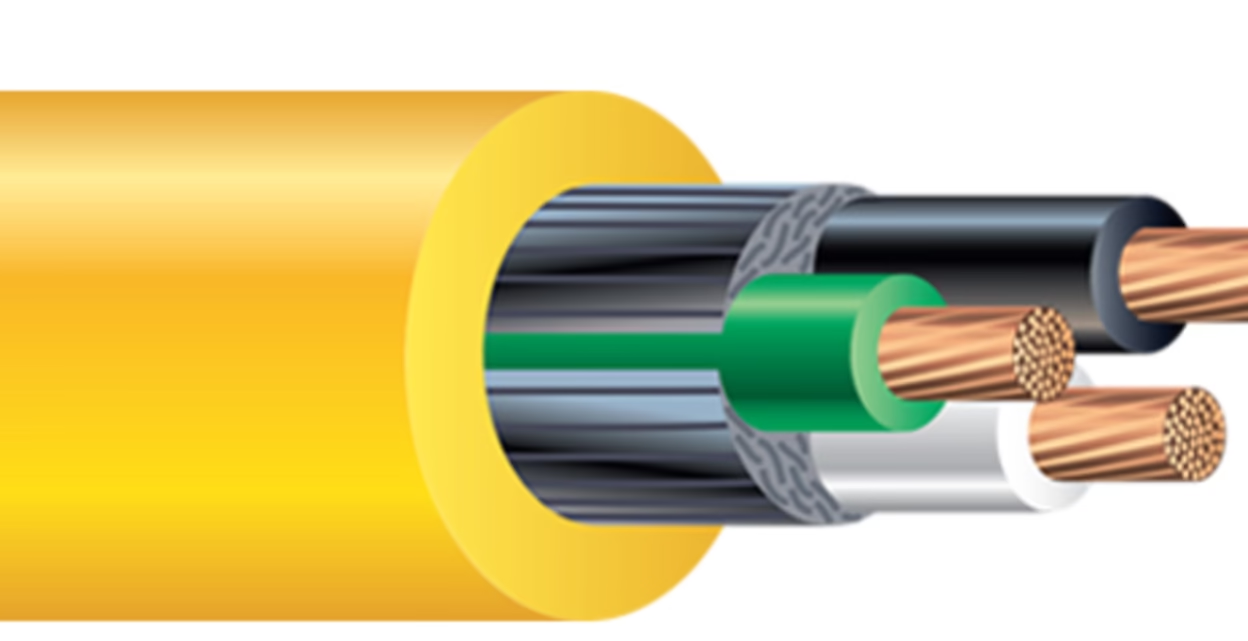
MSHA approved cable

cable selection directly impacts equipment reliability, operational safety, and cost efficiency. While Diesel Locomotive Cable (DLO) and Type W cables share similar voltage ratings and environmental resistance, their fundamental design philosophies serve distinctly different operational requirements. This technical analysis examines why DLO cable, despite its robust construction and premium materials, is frequently rejected for dynamic mining applications involving continuous movement equipment such as shuttle cars, draglines, and continuous miners.

DLO Cable vs. Type W: Why is Diesel Locomotive Cable often rejected for dynamic mining applications?

cable selection directly impacts equipment reliability, operational safety, and cost efficiency. While Diesel Locomotive Cable (DLO) and Type W cables share similar voltage ratings and environmental resistance, their fundamental design philosophies serve distinctly different operational requirements. This technical analysis examines why DLO cable, despite its robust construction and premium materials, is frequently rejected for dynamic mining applications involving continuous movement equipment such as shuttle cars, draglines, and continuous miners.
The determination of current carrying capacity (ampacity) for mining and trailing cables represents a critical engineering consideration that directly impacts operational safety and equipment performance. Two dominant international approaches govern these calculations: the German VDE 0298-4 standard applied to (N)TSCGEWÖU-type cables, and the North American NEC methodology utilizing ICEA S-75-381 (ANSI/NEMA WC-58) for Type SHD-GC cables. 矿用及拖曳电缆的载流量确定是直接影响运行安全和设备性能的关键工程考量。两种主导的国际方法管理这些计算:适用于(N)TSCGEWÖU型电缆的德国VDE 0298-4标准,以及使用ICEA S-75-381 (ANSI/NEMA WC-58)标准的北美NEC方法用于Type SHD-GC电缆。

Ampacity Calculation: How Does the Current Carrying Capacity for (N)TSCGEWÖU in VDE 0298-4 Differ from the NEC Method Used for Type SHD-GC?

The determination of current carrying capacity (ampacity) for mining and trailing cables represents a critical engineering consideration that directly impacts operational safety and equipment performance. Two dominant international approaches govern these calculations: the German VDE 0298-4 standard applied to (N)TSCGEWÖU-type cables, and the North American NEC methodology utilizing ICEA S-75-381 (ANSI/NEMA WC-58) for Type SHD-GC cables. 矿用及拖曳电缆的载流量确定是直接影响运行安全和设备性能的关键工程考量。两种主导的国际方法管理这些计算:适用于(N)TSCGEWÖU型电缆的德国VDE 0298-4标准,以及使用ICEA S-75-381 (ANSI/NEMA WC-58)标准的北美NEC方法用于Type SHD-GC电缆。
How do you select conductor size for high-current tunnelling equipment and cable reels?

كيفية اختيار مقاس الموصل لمعدات الأنفاق عالية التيار وبكرات الكابلات؟

Selecting the correct conductor size for cables used in tunnel boring equipment and cable reels is critical for ensuring safety and operational efficiency. These cables are subjected to extreme conditions including high currents, mechanical stress, and elevated temperatures. According to International Electrotechnical Commission (IEC) standards, conductor selection must consider ampacity, voltage drop, short-circuit capacity, and environmental factors.
Mining and drilling cables are among the most critical components in underground operations and oil/gas fields. According to IEEE 525 and IEC 60502-1 standards, proper installation can extend cable life by up to 40%. Statistics from the Mine Safety and Health Administration (MSHA) indicate that approximately 60-70% of cable failures result from installation errors and improper handling.

ما هي أخطاء التركيب الشائعة التي تقلل من عمر كابلات التعدين والحفر؟

mining cable, mining cable installation, mining cable failure, drilling cable, ESP cable, electric submersible pump cable, underground mining cable, trailing cable, SHD-GC mining cable, Type W portable cable, mining power cable, coal mine cable, rubber sheathed mining cable, flexible mining cable, armored mining cable, mining cable bend radius, cable installation mistakes, cable life extension, mining cable maintenance, mining electrical cable
Abrasion resistance and tear strength are among the most critical mechanical properties to evaluate when selecting tunnelling cables and tunnel boring machine (TBM) cables. These cables are exposed to extremely harsh conditions including continuous friction with rocks and debris, repeated dynamic movement, and high mechanical stress, requiring sheath materials with superior abrasion and tear resistance. According to international testing standards such as ISO 34-1 for tear strength and DIN 53516 for abrasion resistance, proper assessment ensures that cables will perform reliably throughout their service life in demanding underground environments. The selection of appropriate sheath materials—whether TPU (Thermoplastic Polyurethane), PUR (Polyurethane Rubber), CPE (Chlorinated Polyethylene), or EPR (Ethylene Propylene Rubber)—directly impacts cable longevity, safety, and operational efficiency.

كيف تُقيّم مقاومة التآكل وقوة التمزق لاختيار كابلات الأنفاق؟

TPU cable sheath, thermoplastic polyurethane cable, PUR cable jacket, polyurethane rubber sheath, CPE cable jacket, chlorinated polyethylene sheath, EPR insulation cable, EPDM rubber cable, neoprene cable sheath, chloroprene rubber cable, XLPE insulated cable, rubber sheathed flexible cable, halogen free cable sheath, LSZH mining cable
Mining cables require specific storage conditions to maintain insulation integrity and performance characteristics. Temperature, humidity, UV exposure, and chemical contact all affect cable lifespan and reliability. Industry standards recommend storage in dry, well-ventilated warehouses with controlled environmental conditions. The optimal storage temperature range is 5°C to 30°C (41°F to 86°F), with relative humidity not exceeding 75%. Cables should be protected from direct sunlight to prevent premature aging of the insulation layer. According to cable handling guidelines, storage periods should not exceed 18-24 months under normal conditions, with periodic rotation of stock recommended every 3 months.

ما هي أسلم طريقة لتخزين ومناولة وفحص كابلات التعدين قبل التركيب؟

Proper storage, handling, and inspection of mining cables are critical factors in ensuring operational safety and reliable performance in harsh industrial environments. According to the Mine Safety and Health Administration (MSHA) regulations under 30 CFR Part 75 and Part 77, all underground trailing cables must be MSHA-approved as flame resistant and undergo rigorous inspection before deployment. Failure to properly manage cables can result in insulation degradation, moisture absorption, mechanical damage, and ultimately catastrophic failures including electrical fires, equipment damage, and personnel injuries. This comprehensive guide outlines industry best practices based on international standards including IEC 60502, IEEE 400, and MT818-2009.
Mining, drilling, and tunnelling cables are specialized heavy-duty electrical cables engineered specifically for the harsh conditions found in underground mining operations, drilling sites, and tunnel construction facilities. These industrial-grade cables are designed to withstand extreme mechanical stress, chemical exposure, moisture, and temperature variations while maintaining reliable power transmission and ensuring safety in demanding underground environments. According to international standards including IEC 60502 and MSHA regulations, these cables form the electrical backbone of modern mining and underground construction operations.

ما هي كابلات التعدين والحفر والأنفاق؟ وأين تُستخدم تحت الأرض؟

Mining, drilling, and tunnelling cables are specialized heavy-duty electrical cables engineered specifically for the harsh conditions found in underground mining operations, drilling sites, and tunnel construction facilities. These industrial-grade cables are designed to withstand extreme mechanical stress, chemical exposure, moisture, and temperature variations while maintaining reliable power transmission and ensuring safety in demanding underground environments. According to international standards including IEC 60502 and MSHA regulations, these cables form the electrical backbone of modern mining and underground construction operations.
NSSHCGEOEU кабель, Schräm-TENAX кабель, кабель для угольных комбайнов, кабель угольного комбайна, кабель для шрам-машины, кабель экстремального изгиба, кабель 1.5D радиус изгиба, кабель 2.5D радиус изгиба, гибкий горнодобывающий кабель, особо гибкий кабель, кабель DIN VDE 0250-812, кабель 0.6/1 кВ угольный комбайн, горнодобывающий кабель для комбайнов, кабель для подземной добычи угля, кабель с мониторингом изоляции, экранированный кабель с мониторингом, кабель EPR изоляция высокой прочности, термостойкий резиновый кабель, кабель с медно-стальным проводником, кабель с лужёной медью, кабель усиленного заземления, маслостойкий кабель угольный, огнестойкий гибкий кабель, кабель устойчивый к истиранию, жёлтый кабель 5GM5, хлоропреновая оболочка кабель, кабель низкого растягивающего напряжения, кабель высокой механической прочности, кабель особо тонкопроволочный, фазоконцентрический экран мониторинга, общеконцентрический заземляющий проводник, кабель 3x16/16 KON, кабель 3x25/16 KON, кабель 3x35/16 KON, кабель 3x50/25 KON, кабель 3x70/35 KON, кабель 3x95/50 KON, кабель 2 ST + ÜL, кабель 3 ST + 3 ÜL, контрольные жилы растяжение сжатие, индуктивно сбалансированный мониторинг, кабель для очистных комбайнов, кабель для проходческих комбайнов, кабель СНГ Россия угольный, кабель Казахстан угольный, кабель Беларусь, китайский производитель кабеля комбайн, Anhui Feichun кабель угольный, кабель ГОСТ угольный комбайн

NSSHCGEOEU — Кабель для Угольных Комбайнов Schräm-TENAX®-V

NSSHCGEOEU кабель, Schräm-TENAX кабель, кабель для угольных комбайнов, кабель угольного комбайна, кабель для шрам-машины, кабель экстремального изгиба, кабель 1.5D радиус изгиба, кабель 2.5D радиус изгиба, гибкий горнодобывающий кабель, особо гибкий кабель, кабель DIN VDE 0250-812, кабель 0.6/1 кВ угольный комбайн, горнодобывающий кабель для комбайнов, кабель для подземной добычи угля, кабель с мониторингом изоляции, экранированный кабель с мониторингом, кабель EPR изоляция высокой прочности, термостойкий резиновый кабель, кабель с медно-стальным проводником, кабель с лужёной медью, кабель усиленного заземления, маслостойкий кабель угольный, огнестойкий гибкий кабель, кабель устойчивый к истиранию, жёлтый кабель 5GM5, хлоропреновая оболочка кабель, кабель низкого растягивающего напряжения, кабель высокой механической прочности, кабель особо тонкопроволочный, фазоконцентрический экран мониторинга, общеконцентрический заземляющий проводник, кабель 3×16/16 KON, кабель 3×25/16 KON, кабель 3×35/16 KON, кабель 3×50/25 KON, кабель 3×70/35 KON, кабель 3×95/50 KON, кабель 2 ST + ÜL, кабель 3 ST + 3 ÜL, контрольные жилы растяжение сжатие, индуктивно сбалансированный мониторинг, кабель для очистных комбайнов, кабель для проходческих комбайнов, кабель СНГ Россия угольный, кабель Казахстан угольный, кабель Беларусь, китайский производитель кабеля комбайн, Anhui Feichun кабель угольный, кабель ГОСТ угольный комбайн
NSSHCGEOEU (TENAX®-Streb) — это специализированный кабель забойного освещения, разработанный для подключения осветительного оборудования и стационарных приводов в условиях высоких механических нагрузок, преимущественно в горнодобывающей промышленности. Кабель соответствует международному стандарту DIN VDE 0250, часть 812 и оснащён уникальной системой мониторинга, состоящей из фазоконцентрического проводника мониторинга и общеконцентрического заземляющего проводника. Эта конструкция позволяет непрерывно контролировать кабель на наличие дефектов изоляции и повреждений от внешних воздействий, что даёт возможность использовать кабели в шахтах без дополнительной механической защиты.

NSSHCGEOEU — Кабель Забойного Освещения с Проводником Мониторинга

NSSHCGEOEU кабель, TENAX-Streb кабель, кабель забойного освещения, кабель для забойного освещения, кабель для шахтного освещения, кабель с проводником мониторинга, экранированный кабель с мониторингом, кабель DIN VDE 0250-812, кабель 0.6/1 кВ, горнодобывающий кабель освещения, кабель для подземного освещения, кабель для стационарных приводов, кабель с концентрическим заземлением, кабель EPR изоляция 3GI3, термостойкий резиновый кабель, кабель с медно-стальным проводником, кабель с лужёной медью, маслостойкий кабель, огнестойкий гибкий кабель, кабель устойчивый к истиранию, жёлтый кабель 5GM5, хлоропреновая оболочка кабель, кабель без механической защиты, кабель мониторинга изоляции, фазоконцентрический мониторинг, общеконцентрический заземляющий проводник, кабель для горных выработок, шахтный кабель освещения, кабель 3×6/6 KON, кабель с контрольными жилами, кабель ÜL проводник мониторинга, кабель St контрольная жила, резиновый кабель освещения, промышленный кабель освещения, кабель для тяжёлых условий, кабель высокой механической нагрузки, гибкий кабель для шахт, кабель для угольных шахт, кабель для рудников, кабель СНГ Россия, кабель Казахстан, кабель Беларусь, китайский производитель кабеля освещения, Anhui Feichun кабель, кабель ГОСТ, кабель мониторинга в реальном времени, кабель контроля изоляции, облегчённый шахтный кабель, стандартный шахтный кабель
Mining, drilling, and tunnelling cables represent a specialized category of electrical cables engineered to withstand the extreme conditions found in extractive industry operations. Unlike standard industrial cables, these cables must endure continuous mechanical stress from reeling and unreeling operations, exposure to ultraviolet radiation in surface mining, salt-water submersion in offshore drilling, contact with oils and greases from machinery, and the abrasive conditions of underground environments. The demanding nature of these applications requires cables with exceptional durability, flexibility, and resistance to environmental factors that would rapidly degrade conventional cables.

What is Mining, Drilling & Tunnelling Cable? Solutions for Surface, Sub-Surface & Underground Operations

(N)3GHSSHCH – 3.6/6kV, 6/10kV, 8.7/15kV, 12/20kV (N)3GHSSYCY – 3.6/6kV, 6/10kV, 8.7/15kV, 12/20kV (N)SSCHÖU-J – 0.6/1kV (N)SHÖU O/J – 0.6/1kV NSSHÖU O/J – 0.6/1kV NSSHÖU 3E – 0.6/1kV NSSHÖU 3E + ST – 0.6/1kV (N)TMCGEWÖU – 3.6/6kV to 18/30kV (N)TSCGEWÖU – 3.6/6kV to 18/30kV (N)TSCGEWÖU ZH – 3.6/6kV to 12/20kV (N)TSCGEWÖU ATB – 3.6/6kV to 12/20kV (N)TSCGEWÖU FO – 3.6/6kV to 12/20kV (N)TSCGEWÖU Submersible – 3.6/6kV to 12/20kV (N)TSKCGEWÖU – 3.6/6kV to 18/30kV (N)TSCGECEWÖU – 3.6/6kV to 12/20kV (N)TSCGECEWÖU ATB – 3.6/6kV to 12/20kV (N)TSCGECEWÖU ATB GCC – 1.8/3kV to 12/20kV (N)TSCGECEWÖU Submersible – 3.6/6kV to 12/20kV (N)TSCGECECWÖU – 3.6/6kV to 12/20kV (N)TSCGECECWÖU ZH – 3.6/6kV to 12/20kV R-(N)TSCGEWÖU + FO – 3.6/6kV to 12/20kV
PROTOMONT(Z) NSSHCGEOEU 0.6/1KV coal cutter cable represents the pinnacle of engineering for underground mining operations. These cables are specifically designed as power supply connection cables for mobile equipment in underground machine applications. (Z)-Coal-Cutter cables are engineered for free trailing operation and, due to their special construction, may be trailed for considerable distances behind the machine during operation. The robust design ensures reliable power transmission even under extreme mechanical stress conditions encountered in mining environments. Primary applications include coal shearers, roadheaders, tunnel boring machines (TBMs), and load-haul-dump vehicles (LHDs/scoops). The cable's exceptional flexibility and durability make it indispensable for modern mining operations worldwide.

PROTOMONT(Z) NSSHCGEOEU0.6/1KV Coal Cutter Cables

PROTOMONT(Z) NSSHCGEOEU 0.6/1KV coal cutter cable represents the pinnacle of engineering for underground mining operations. These cables are specifically designed as power supply connection cables for mobile equipment in underground machine applications. (Z)-Coal-Cutter cables are engineered for free trailing operation and, due to their special construction, may be trailed for considerable distances behind the machine during operation. The robust design ensures reliable power transmission even under extreme mechanical stress conditions encountered in mining environments. Primary applications include coal shearers, roadheaders, tunnel boring machines (TBMs), and load-haul-dump vehicles (LHDs/scoops). The cable’s exceptional flexibility and durability make it indispensable for modern mining operations worldwide.
DLO TORSIONFLEX RHH/RHW-2 represents an advanced category of portable power cables specifically engineered for demanding industrial applications, including wind turbine installations where torsional flexibility and multi-environment performance are critical requirements. This cable type combines the proven durability of Diesel Locomotive (DLO) construction with enhanced torsion resistance, making it uniquely suited for wind energy systems where cables must accommodate continuous nacelle rotation while maintaining electrical integrity.

What is DLO TORSIONFLEX RHH/RHW-2 2000V Wind Turbine Cable?

DLO TORSIONFLEX RHH/RHW-2 represents an advanced category of portable power cables specifically engineered for demanding industrial applications, including wind turbine installations where torsional flexibility and multi-environment performance are critical requirements. This cable type combines the proven durability of Diesel Locomotive (DLO) construction with enhanced torsion resistance, making it uniquely suited for wind energy systems where cables must accommodate continuous nacelle rotation while maintaining electrical integrity.
Complete Guide to UL 1650:2025 Portable Power Cable Type G, Type G-GC, Type W, MP-GC & SHD-GC Mining Cables — Technical Specifications, Compliance Standards, Safety Guidelines and Applications

Complete Guide to UL 1650:2025 Portable Power Cable

UL 1650, UL 1650:2025, portable power cable, mining cable, Type G cable, Type G-GC cable, Type W cable, MP-GC cable, SHD-GC cable, MSHA approved cable, EPR insulation, CPE jacket, trailing cable, mining equipment cable UL 1650 is the primary safety standard for portable power cables used in industrial and mining applications across North America. The UL 1650:2025 edition, published by Underwriters Laboratories and ANSI approved in November 2025, establishes comprehensive requirements for portable power cables designed for use in accordance with the National Electrical Code (NFPA 70).[1] This standard covers various types of portable power cables including Type G, Type G-GC, Type W, MP-GC, and SHD-GC cables that are essential for powering mobile and stationary mining equipment in both surface and underground operations. The cables manufactured under UL 1650 must undergo rigorous testing per UL 2556 (Wire and Cable Test Methods) to ensure safety and reliability in demanding industrial environments.[2]
PROTOLON(M) R-(N)TSCGEWOEU represents a sophisticated class of medium voltage flexible reeling cables specifically engineered for the most demanding applications in open-cast mining and material handling operations. These cables are designed to power large mobile equipment including excavators, dumpers, mobile crushers, and bucket-wheel excavators under extreme mechanical stresses. This comprehensive technical guide examines the construction, specifications, standards compliance, applications, and operational characteristics of this specialized cable system manufactured by Anhui Feichun Special Cable Co., Ltd.

PROTOLON(M) R-(N)TSCGEWOEU 6 kV – 35 kV: The Ultimate Flexible MV Reeling Cable for Heavy Mining Equipment

ROTOLON(M) R-(N)TSCGEWOEU cable designation follows the standardized German nomenclature system established under DIN VDE 0250 Part 813, which specifically addresses medium voltage reeling cables for mining and heavy industrial applications. The designation breaks down as follows: (N) – Indicates the presence of a concentric conductor arrangement with integrated earth conductors T – Tinned copper conductors for enhanced corrosion resistance S – Semiconductive screening layers for electric field control C – Cradle separator core arrangement for structural integrity G – EPR (Ethylene Propylene Rubber) insulation compound E – EPR-based inner sheath W – Anti-torsion woven braid reinforcement O – Oil-resistant outer sheath E – Enhanced elastomer outer sheath material U – Reinforced construction for extreme mechanical loads According to industry specifications from Reeling Cable, these cables are rated for voltage ranges from 3.6/6 kV up to 18/30 kV (with some variants reaching 20/35 kV), making them suitable for a comprehensive range of mining equipment power requirements.
PROTOMONT(V) NTSKCGECWOEU MV Chain Cable Advanced Double Screen Technology with Cold Removable Semi-Conductive Layer for Underground Mining Applications

PROTOMONT(V) NTSKCGECWOEU MV Chain Cable

PROTOMONT(V) NTSKCGECWOEU represents a pinnacle achievement in mining cable technology, specifically engineered for medium voltage chain cable applications in underground coal mining operations. This advanced cable system integrates double screen technology with cold removable semi-conductive layers, delivering unprecedented reliability in the most demanding underground environments where mechanical stress, temperature extremes, and continuous operation are standard requirements.
H05RR-F Cable

What is H05RR-F Cable?

H05RR-F cables excel in underground mining environments where they serve as power supply conductors for mobile equipment and fixed installations. The constant movement of mining equipment creates significant abrasion challenges for trailing cables, requiring advanced polymer compounds with high abrasion indices and specialized insulation materials with superior flex memory[24]. These cables are specifically designed for coal cutters operating in cable chains (cable handlers) and similar face equipment, where they must withstand continuous flexing, mechanical stress, and exposure to moisture and dust.
What is PROTOMONT NSSHOEU 1 kV Low Voltage Flexible Rubber Cable? A Comprehensive Technical Guide to Heavy-Duty Mining and Industrial Flexible Cables with EPR Insulation for Extreme Environments

What is PROTOMONT NSSHOEU 1 kV Low Voltage Flexible Rubber Cable?

PROTOMONT NSSHOEU series represents a category of heavy-duty, low voltage flexible rubber cables engineered specifically for demanding industrial environments. These cables are designed to provide reliable power transmission in applications where conventional cables would fail due to extreme mechanical stress, environmental exposure, or chemical contact. The designation NSSHOEU follows German cable nomenclature standards where each letter indicates specific construction characteristics. The cables are manufactured according to DIN VDE 0250-812 specifications, which define requirements for rubber-insulated flexible cables used in power installations. According to industry standards, these cables are engineered for environments where high levels of mechanical stress and abrasion are expected, making them essential for modern mining, construction, and industrial operations.
NTMCGCWOEU 1x240_25 KON, 12_20kV

What is PROTOLON(SB) NTSCGEWOEU 6 kV – 20 kV Cable for Excavators in Open-Cast Mining?

PROTOLON(SB) NTSCGEWOEU cable represents a specialized category of medium voltage trailing cables engineered specifically for the most demanding mining applications. As power supply and connection cables for large material handling machines such as excavators in open-cast mines, these cables must withstand extremely high mechanical stresses where abrasion and chaffing stresses are expected in trailing operation.
R(N)TSCGEWOU

Mining Cable Applications: Extra Heavy Duty Solutions for Extreme Global Mining Conditions

Mining operations worldwide demand the most reliable and durable electrical cable solutions available. Extra heavy duty mining cables with specialized outer jackets have consistently exceeded performance expectations in the most severe mining conditions across Europe, North America, South America, Australia, and Asia, establishing themselves as the industry standard for stringent mining applications. These cables represent critical infrastructure components that power essential mining equipment from underground continuous miners to massive surface draglines, operating reliably in environments characterized by extreme mechanical stress, chemical exposure, moisture, and temperature variations.
MP-GC

Understanding CSA C22.2 NO. 96.1:16 (R2021) – Mine Power Feeder Cables: Type MP and Type MP-GC Comprehensive Guide

CSA C22.2 NO. 96.1:16 (R2021) represents the fourth edition of the Canadian mine power feeder cable standard, issued by CSA Group under the Canadian Electrical Code, Part II. This comprehensive standard establishes rigorous construction and testing requirements for unarmoured mine power feeder cables utilized in power distribution systems within mining operations. The standard was reaffirmed in 2021, confirming its continued relevance and applicability to modern mining electrical infrastructure.
TYPE 409 mining cables represent a specialized category of flexible trailing cables designed to meet the rigorous demands of surface mining, underground mining operations, and general industrial applications where movable plant requires reliable electrical power supply. Manufactured in compliance with the AS/NZS 2802:2000 standard, these Class 2 heavy-duty cables feature ethylene propylene rubber (EPR) insulation, composite copper and polyester braid screening, and elastomeric sheath construction. Available in voltage ratings from 1.1 kilovolts up to 22 kilovolts, TYPE 409 cables serve as the electrical lifeline for machinery ranging from handheld drills and pumps to massive dragline excavators and shovels.

TYPE 409 1.1 to 22kV Mining Cables to AS/NZS 2802:2000

The engineering sophistication of TYPE 409 cables reflects decades of development in mining cable technology, incorporating semiconductive screening systems, central cradle separators, and interstitial pilot conductors that work together to ensure safe and reliable operation in extreme environmental conditions. The cables must withstand extraordinary mechanical stresses, continuous flexing, abrasion from dust and debris, exposure to oils and chemicals, ultraviolet radiation, and temperature extremes while maintaining electrical integrity and personnel safety.
MSHA Mining Cable: Comprehensive Technical Guide Professional Mining Power Cables Complying with US Mine Safety & Health Administration Standards

MSHA Mining Cable: Comprehensive Technical Guide

MSHA mining cables represent a specialized category of industrial power cables specifically designed, tested, and approved for use in mining operations under regulations established by the United States Mine Safety and Health Administration (MSHA). These cables serve critical functions in both underground and surface mining environments, delivering electrical power to mobile equipment, continuous miners, draglines, shuttle cars, and various other mining machinery while maintaining the highest standards of safety in potentially hazardous atmospheres.