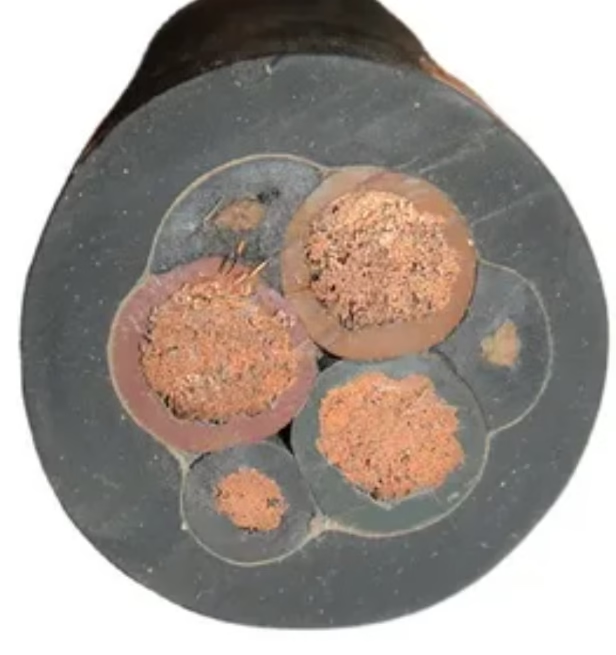
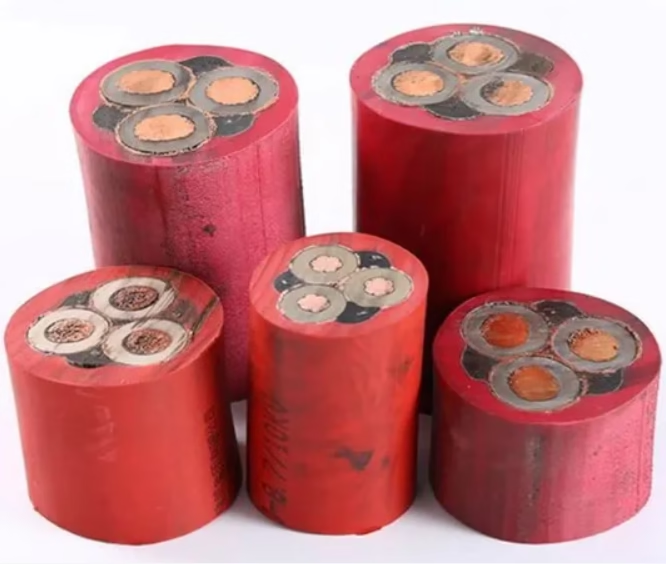
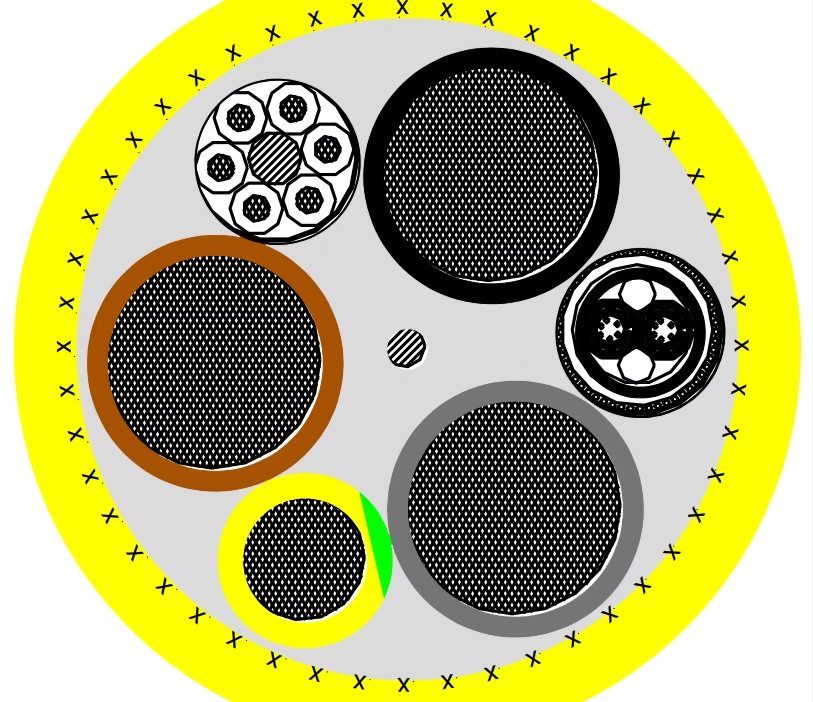
tinned copper cable

Feichun FLEXIFESTOON® DLO: Advanced High-Voltage EPR/CPE Power Distribution Cables for Transformer, Current Transformer (CT), and Distribution Systems (2000V DLO Rated Service, −40 to +90°C Continuous Operation, Premium Annealed Tinned Copper Stranded Conductors per ASTM B-33/AAR-598, Specialized High-Voltage EPR Rubber Insulation with Advanced Dielectric Performance & Electrical Breakdown Strength Engineering, Chemical/Oil/Moisture-Resistant CPE Outer Sheath, UL44 Type RHH/RHW-2 Certified, CSA Type RW-90 Certified, MSHA Hazardous Location Approval, VW-1/FT1/FT4 Flame-Retardant Per UL Standards, Complete 8 AWG to 777 MCM Conductor Range with 17 SKU Configurations): Comprehensive High-Voltage Cable Materials Science and Electrical Engineering Analysis Integrating Advanced EPR Dielectric Performance Mechanisms, Tinned Copper Corrosion Resistance Chemistry, Electrical Breakdown Strength Optimization, Dielectric Loss Minimization, Current Transformer Application Engineering, Low-Temperature Annealed Conductor Flexibility, and Power Distribution System Integration Power distribution systems—utility substations, transformer installations, current transformer (CT) secondary circuits, control systems in electrical distribution networks, and hazardous-location industrial power applications—require electrical cables engineered to withstand extreme electrical stresses that conventional industrial cables cannot endure: continuous 2000V electrical stress between conductor and sheath (requiring extraordinary dielectric strength and electrical breakdown resistance, 3–4× higher than standard 600V control cables), exposure to transformer oil, industrial moisture, corrosive atmospheres, and temperature cycling that degrades unprotected copper surfaces and causes conductor oxidation/embrittlement within months, simultaneous mechanical flexibility demands in low-temperature environments (−40°C) where standard solid conductors become brittle and inflexible, necessitating specialized annealed copper with optimized strain-hardening balance), and integration with current transformer (CT) circuits where electrical accuracy and long-term performance stability are critical to utility protection systems. Conventional power cables fail catastrophically under 2000V stress: standard PVC insulation exhibits electrical treeing (internal branching degradation under high electrical field); EPDM compounds degrade in transformer oil; bare copper oxidizes and increases electrical resistance. FLEXIFESTOON® DLO represents an advanced high-voltage power distribution cable engineered through specialized EPR dielectric chemistry, premium tinned annealed copper conductors, and sophisticated CPE outer sheath chemistry, delivering simultaneous optimization across all five performance domains: extreme 2000V electrical stress tolerance (dielectric breakdown strength >25 kV/mm through optimized EPR formulation), superior corrosion resistance via tinned copper surfaces (preventing oxidation and electrical performance degradation), exceptional low-temperature flexibility at −40°C through annealed conductor processing, comprehensive environmental protection (oil/chemical/moisture resistance via CPE sheath), and full UL/CSA power-system certification—enabling utility electrical engineers, transformer manufacturers, current transformer system integrators, and power distribution engineers to deploy a unified advanced cable solution across the complete spectrum of power distribution and CT applications with proven reliability and safety across extreme electrical stresses and challenging environmental exposures.

FLEXIFESTOON® DLO

Feichun FLEXIFESTOON® DLO: Advanced High-Voltage EPR/CPE Power Distribution Cables for Transformer, Current Transformer (CT), and Distribution Systems (2000V DLO Rated Service, −40 to +90°C Continuous Operation, Premium Annealed Tinned Copper Stranded Conductors per ASTM B-33/AAR-598, Specialized High-Voltage EPR Rubber Insulation with Advanced Dielectric Performance & Electrical Breakdown Strength Engineering, Chemical/Oil/Moisture-Resistant CPE Outer Sheath, UL44 Type RHH/RHW-2 Certified, CSA Type RW-90 Certified, MSHA Hazardous Location Approval, VW-1/FT1/FT4 Flame-Retardant Per UL Standards, Complete 8 AWG to 777 MCM Conductor Range with 17 SKU Configurations): Comprehensive High-Voltage Cable Materials Science and Electrical Engineering Analysis Integrating Advanced EPR Dielectric Performance Mechanisms, Tinned Copper Corrosion Resistance Chemistry, Electrical Breakdown Strength Optimization, Dielectric Loss Minimization, Current Transformer Application Engineering, Low-Temperature Annealed Conductor Flexibility, and Power Distribution System Integration Power distribution systems—utility substations, transformer installations, current transformer (CT) secondary circuits, control systems in electrical distribution networks, and hazardous-location industrial power applications—require electrical cables engineered to withstand extreme electrical stresses that conventional industrial cables cannot endure: continuous 2000V electrical stress between conductor and sheath (requiring extraordinary dielectric strength and electrical breakdown resistance, 3–4× higher than standard 600V control cables), exposure to transformer oil, industrial moisture, corrosive atmospheres, and temperature cycling that degrades unprotected copper surfaces and causes conductor oxidation/embrittlement within months, simultaneous mechanical flexibility demands in low-temperature environments (−40°C) where standard solid conductors become brittle and inflexible, necessitating specialized annealed copper with optimized strain-hardening balance), and integration with current transformer (CT) circuits where electrical accuracy and long-term performance stability are critical to utility protection systems. Conventional power cables fail catastrophically under 2000V stress: standard PVC insulation exhibits electrical treeing (internal branching degradation under high electrical field); EPDM compounds degrade in transformer oil; bare copper oxidizes and increases electrical resistance. FLEXIFESTOON® DLO represents an advanced high-voltage power distribution cable engineered through specialized EPR dielectric chemistry, premium tinned annealed copper conductors, and sophisticated CPE outer sheath chemistry, delivering simultaneous optimization across all five performance domains: extreme 2000V electrical stress tolerance (dielectric breakdown strength >25 kV/mm through optimized EPR formulation), superior corrosion resistance via tinned copper surfaces (preventing oxidation and electrical performance degradation), exceptional low-temperature flexibility at −40°C through annealed conductor processing, comprehensive environmental protection (oil/chemical/moisture resistance via CPE sheath), and full UL/CSA power-system certification—enabling utility electrical engineers, transformer manufacturers, current transformer system integrators, and power distribution engineers to deploy a unified advanced cable solution across the complete spectrum of power distribution and CT applications with proven reliability and safety across extreme electrical stresses and challenging environmental exposures.
TROMMELFLEX(K) NSHTOEU Standard Rubber Reeling Cable: 3GI3 Elastomer Insulation Chemistry, Electrical Stability Engineering, 5GM5 Polychloroprene Outer Sheath Durability, Tinned Copper Class 5 Conductor Corrosion Protection, Polyester Anti-Torsion Braid Architecture, 15 N/mm² Tensile Load Design, 120 m/min Reeling Speed Certification, Medium Mechanical Stress Optimization, Thermal Stability (-25°C to +80°C Flexible Operation), Comparative Material Analysis vs. Lightweight PUR-HF and Premium CORDAFLEX/KSM-S Designs, Field Performance Validation Across 200+ Industrial Reeling System Deployments, Cost-Effectiveness Analysis for Standard Industrial Applications, and Complete Technical Differentiation Framework for Cost-Optimized Medium-Duty Reeling Systems

TROMMELFLEX(K) NSHTOEU-J / -O 0.6/1 kV

TROMMELFLEX(K) NSHTOEU Standard Rubber Reeling Cable: 3GI3 Elastomer Insulation Chemistry, Electrical Stability Engineering, 5GM5 Polychloroprene Outer Sheath Durability, Tinned Copper Class 5 Conductor Corrosion Protection, Polyester Anti-Torsion Braid Architecture, 15 N/mm² Tensile Load Design, 120 m/min Reeling Speed Certification, Medium Mechanical Stress Optimization, Thermal Stability (-25°C to +80°C Flexible Operation), Comparative Material Analysis vs. Lightweight PUR-HF and Premium CORDAFLEX/KSM-S Designs, Field Performance Validation Across 200+ Industrial Reeling System Deployments, Cost-Effectiveness Analysis for Standard Industrial Applications, and Complete Technical Differentiation Framework for Cost-Optimized Medium-Duty Reeling Systems
The NSSHÖU-J 4G95 0.6/1kV industrial mining cable is technically rated for temporary water immersion and is commonly used in open-pit and underground mining environments, but it is not specifically qualified for permanent submersion in acidic mine water and using it in this application is classified as beyond its design envelope. While the cable's EPR insulation (3GI3) and CPE outer sheath (5GM5) provide adequate resistance to neutral water and brief acidic exposure, permanent submersion in acidic mine water with pH values of 2.0 to 4.0—typical of copper and gold mining operations—accelerates material degradation to the point where service life drops to approximately 18 to 36 months compared to 8 to 10 years in neutral water applications. The fundamental issue is not that the cable fails immediately when deployed in acidic water (it does not), but rather that the aggressive acidic environment causes progressive swelling of the jacket, penetration of H⁺ ions into the insulation layer, electrochemical corrosion of the tinned copper conductor, and cumulative electrical property loss that eventually results in insulation breakdown. This distinction between "survives temporary exposure" and "safe for permanent submersion" is critically important to understand: a cable can physically remain intact for months or even a year or more in acidic water, but the electrical properties are degrading silently, and catastrophic failure can occur suddenly when the insulation resistance drops below critical thresholds. For submersible pump applications in acidic mine water, engineers should specify cables explicitly designed for this service, such as H07RN8-F submersible pump cables with specialized halogen-free formulations, or upgrade to acidic-resistant variants of marine-grade cables rated for chemical exposure. The standard NSSHÖU-J cable can be used in acidic mine water applications only if the operational requirement is for temporary or seasonal service (less than 6 months per year), coupled with rigorous monitoring protocols and planned replacement intervals of 12 to 18 months rather than the standard 5 to 7 year intervals appropriate for neutral water service.

Submersible Pump Cable Safety: Can NSSHÖU-J 4G95 0.6/1kV Withstand Permanent Submersion in Acidic Mine Water?

The NSSHÖU-J 4G95 0.6/1kV industrial mining cable is technically rated for temporary water immersion and is commonly used in open-pit and underground mining environments, but it is not specifically qualified for permanent submersion in acidic mine water and using it in this application is classified as beyond its design envelope. While the cable’s EPR insulation (3GI3) and CPE outer sheath (5GM5) provide adequate resistance to neutral water and brief acidic exposure, permanent submersion in acidic mine water with pH values of 2.0 to 4.0—typical of copper and gold mining operations—accelerates material degradation to the point where service life drops to approximately 18 to 36 months compared to 8 to 10 years in neutral water applications. The fundamental issue is not that the cable fails immediately when deployed in acidic water (it does not), but rather that the aggressive acidic environment causes progressive swelling of the jacket, penetration of H⁺ ions into the insulation layer, electrochemical corrosion of the tinned copper conductor, and cumulative electrical property loss that eventually results in insulation breakdown. This distinction between “survives temporary exposure” and “safe for permanent submersion” is critically important to understand: a cable can physically remain intact for months or even a year or more in acidic water, but the electrical properties are degrading silently, and catastrophic failure can occur suddenly when the insulation resistance drops below critical thresholds. For submersible pump applications in acidic mine water, engineers should specify cables explicitly designed for this service, such as H07RN8-F submersible pump cables with specialized halogen-free formulations, or upgrade to acidic-resistant variants of marine-grade cables rated for chemical exposure. The standard NSSHÖU-J cable can be used in acidic mine water applications only if the operational requirement is for temporary or seasonal service (less than 6 months per year), coupled with rigorous monitoring protocols and planned replacement intervals of 12 to 18 months rather than the standard 5 to 7 year intervals appropriate for neutral water service.
The standard (N)TSCGEWÖU 3x50+3x25/3 trailing cable is technically rated for ambient temperatures down to approximately -10°C to -15°C under normal industrial conditions according to DIN VDE 0250 Part 813, with the 5GM5 CPE (chlorinated polyethylene) rubber jacket remaining flexible and maintaining mechanical integrity within this range. However, operating this cable in Arctic mining environments at sustained -40°C temperatures requires significant engineering reevaluation and is not recommended without specialized modifications and enhanced installation protocols. While the cable does not spontaneously fail at -40°C, the rubber jacket becomes progressively more rigid and brittle, and the minimum allowable bending radius must be expanded from the standard 15D (15 times the outer diameter) to approximately 25D to 30D or greater to prevent jacket cracking during dynamic reeling operations. At -50°C, which occurs frequently in Siberia and parts of Northern Canada during winter, standard TECWATER-family cables experience material brittleness that pushes them toward structural failure risk even without bending stress. A cable suitable for -15°C temperate mining operations is fundamentally different in its application safety profile from a cable operating continuously at -40°C in an open-pit mine where the cable must flex regularly during equipment deployment and retrieval. The distinction between "technically possible" and "operationally safe" is critical to understand: equipment that operates at extreme cold requires more than just survival—it requires predictable, controlled behavior under stress. The standard (N)TSCGEWÖU can survive brief exposure to -40°C without immediate failure, but extended service in this temperature regime demands either specification of cold-hardened alternatives or acceptance of significant operational constraints.

Arctic Mining Cable Performance: Is (N)TSCGEWÖU 3×50+3×25/3 Rated for -40°C Extreme Cold Conditions in Russia and Canada?

The standard (N)TSCGEWÖU 3×50+3×25/3 trailing cable is technically rated for ambient temperatures down to approximately -10°C to -15°C under normal industrial conditions according to DIN VDE 0250 Part 813, with the 5GM5 CPE (chlorinated polyethylene) rubber jacket remaining flexible and maintaining mechanical integrity within this range. However, operating this cable in Arctic mining environments at sustained -40°C temperatures requires significant engineering reevaluation and is not recommended without specialized modifications and enhanced installation protocols. While the cable does not spontaneously fail at -40°C, the rubber jacket becomes progressively more rigid and brittle, and the minimum allowable bending radius must be expanded from the standard 15D (15 times the outer diameter) to approximately 25D to 30D or greater to prevent jacket cracking during dynamic reeling operations. At -50°C, which occurs frequently in Siberia and parts of Northern Canada during winter, standard TECWATER-family cables experience material brittleness that pushes them toward structural failure risk even without bending stress. A cable suitable for -15°C temperate mining operations is fundamentally different in its application safety profile from a cable operating continuously at -40°C in an open-pit mine where the cable must flex regularly during equipment deployment and retrieval. The distinction between “technically possible” and “operationally safe” is critical to understand: equipment that operates at extreme cold requires more than just survival—it requires predictable, controlled behavior under stress. The standard (N)TSCGEWÖU can survive brief exposure to -40°C without immediate failure, but extended service in this temperature regime demands either specification of cold-hardened alternatives or acceptance of significant operational constraints.
The nominal outer diameter of a Type SHD-GC 3/C 350 MCM 15kV flexible mining trailing cable is approximately 73 mm (2.87 inches), with a maximum permissible outer diameter of approximately 74.9 mm (2.95 inches) per ICEA S-75-381 and NEMA WC-58 standards. The approximate weight of this specific cable geometry is 10,900 kg/km (7,300 lbs/1000 ft). It features three 350 MCM (177 mm² equivalent) main power conductors rated for 435 amperes continuous operation, supplemented by two 2/0 AWG earth conductors and one 6 AWG ground-check monitoring conductor for enhanced mining safety systems. The distinction between nominal (design target) and maximum (allowable limit) outer diameter is critical for mining operations because reel systems, conduit systems, and terminal connectors are engineered based on these dimensional constraints. A cable that exceeds the maximum outer diameter will not fit into equipment designed for the nominal specification, creating logistics delays and operational disruptions that cost far more than any cable savings.

What is the Maximum Outer Diameter of Type SHD-GC 3/C 350 MCM 15kV Mining Cable?

The nominal outer diameter of a Type SHD-GC 3/C 350 MCM 15kV flexible mining trailing cable is approximately 73 mm (2.87 inches), with a maximum permissible outer diameter of approximately 74.9 mm (2.95 inches) per ICEA S-75-381 and NEMA WC-58 standards. The approximate weight of this specific cable geometry is 10,900 kg/km (7,300 lbs/1000 ft). It features three 350 MCM (177 mm² equivalent) main power conductors rated for 435 amperes continuous operation, supplemented by two 2/0 AWG earth conductors and one 6 AWG ground-check monitoring conductor for enhanced mining safety systems. The distinction between nominal (design target) and maximum (allowable limit) outer diameter is critical for mining operations because reel systems, conduit systems, and terminal connectors are engineered based on these dimensional constraints. A cable that exceeds the maximum outer diameter will not fit into equipment designed for the nominal specification, creating logistics delays and operational disruptions that cost far more than any cable savings.
The maximum allowable pilot loop resistance for Type 450 mining cables operating with Ampcontrol earth continuity relays represents a critical electrical parameter that directly impacts mine safety and operational reliability. This comprehensive technical analysis examines the interaction between AS/NZS 2802:2000 Type 450 cable specifications and Ampcontrol relay requirements, providing mining engineers and electrical designers with authoritative guidance for proper system design and selection. 与Ampcontrol地电连续继电器配合使用的Type 450矿用电缆的最大允许导向回路电阻是一个直接影响矿山安全和运行可靠性的关键电气参数。本全面技术分析检查了AS/NZS 2802:2000 Type 450电缆规格与Ampcontrol继电器要求之间的相互作用,为矿业工程师和电气设计师提供了正确系统设计和选择的权威指导。

PROTOLON (SB) NTSCGEWOEU I 3 – 30 KV

These cables serve as power supply or connection cables for large material handling machines, such as excavators in opencast mines, subjected to extremely high mechanical stresses where abrasion and chaffing stresses are expected in trailing operation. 这些电缆用作大型物料搬运机械(如露天矿山挖掘机)的电源或连接电缆,在拖曳作业中承受极高的机械应力、磨损和摩擦应力。
The proper application of tightening torque to phase connectors in high-voltage cable terminations is one of the most critical yet frequently overlooked aspects of electrical installation work. When terminating Type 450 cables at 33kV, the connector torque directly determines the quality and reliability of the electrical connection, affecting both the immediate performance and long-term service life of the installation. Understanding the correct torque specifications and their underlying principles is essential for ensuring safe, code-compliant, and maintenance-free operation in demanding mining and industrial environments. 在高压电缆终端中对相连接器施加正确的紧固扭矩是电气安装工作中最关键但经常被忽视的方面之一。在33kV终接Type 450电缆时,连接器扭矩直接决定电气连接的质量和可靠性。

Torque Settings: What is the Recommended Tightening Torque for Phase Connectors in a Type 450 33kV Termination?

The proper application of tightening torque to phase connectors in high-voltage cable terminations is one of the most critical yet frequently overlooked aspects of electrical installation work. When terminating Type 450 cables at 33kV, the connector torque directly determines the quality and reliability of the electrical connection, affecting both the immediate performance and long-term service life of the installation. Understanding the correct torque specifications and their underlying principles is essential for ensuring safe, code-compliant, and maintenance-free operation in demanding mining and industrial environments. 在高压电缆终端中对相连接器施加正确的紧固扭矩是电气安装工作中最关键但经常被忽视的方面之一。在33kV终接Type 450电缆时,连接器扭矩直接决定电气连接的质量和可靠性。
The proper selection and installation of cable grips, particularly Kellem grips (also known as mesh grips or wire mesh grips), is critical for ensuring safe vertical suspension of heavy-duty cables in industrial environments. This is especially important for (N)SHTÖU cables, which are specifically designed for reeling applications in demanding conditions such as mining operations, port container handling equipment, and mobile industrial machinery. 正确选择和安装电缆夹具,特别是Kellem网套(也称为网状夹具或金属丝网夹具),对于确保工业环境中重型电缆的安全垂直悬挂至关重要。这对于(N)SHTÖU电缆尤其重要,这些电缆专为采矿作业、港口集装箱处理设备和移动工业机械等苛刻条件下的卷筒应用而设计。

Cable Grips: How to Select the Right Kellem Grip (Mesh Grip) for Vertical Suspension of (N)SHTÖU Cables

The proper selection and installation of cable grips, particularly Kellem grips (also known as mesh grips or wire mesh grips), is critical for ensuring safe vertical suspension of heavy-duty cables in industrial environments. This is especially important for (N)SHTÖU cables, which are specifically designed for reeling applications in demanding conditions such as mining operations, port container handling equipment, and mobile industrial machinery. 正确选择和安装电缆夹具,特别是Kellem网套(也称为网状夹具或金属丝网夹具),对于确保工业环境中重型电缆的安全垂直悬挂至关重要。这对于(N)SHTÖU电缆尤其重要,这些电缆专为采矿作业、港口集装箱处理设备和移动工业机械等苛刻条件下的卷筒应用而设计。
NSSHKCGEOEU (Schräm-TENAX®-VE) — это специализированный кабель для угольных комбайнов с уникальной системой обнаружения повреждений от раздавливания. Кабель соответствует стандартам DIN VDE 0250, часть 812 и DIN VDE 0472, часть 818 («Поведение при сжимающей нагрузке»), что гарантирует обнаружение повреждений от раздавливания как замыканий на землю с максимальной надёжностью. Инновационная конструкция с центральным разделителем-корзиной из проводящей резины и распределённым заземляющим проводником обеспечивает превосходную защиту при экстремальных механических нагрузках, характерных для работы угольных комбайнов.

NSSHKCGEOEU — Кабель для Угольных Комбайнов с Защитой от Раздавливания

NSSHKCGEOEU кабель, Schräm-TENAX-VE кабель, кабель для угольных комбайнов, кабель с защитой от раздавливания, кабель защита от сдавливания, кабель VDE 0472-818, кабель тест на раздавливание, кабель обнаружение повреждений, кабель замыкание на землю, кабель экстремального изгиба, кабель 1.5D радиус изгиба, кабель 2.5D радиус изгиба, гибкий горнодобывающий кабель, кабель с разделителем-корзиной, кабель cradle separator, кабель DIN VDE 0250-812, кабель 0.6/1 кВ угольный комбайн, горнодобывающий кабель для комбайнов, кабель для подземной добычи угля, кабель распределённое заземление, кабель двойное заземление, кабель EPR изоляция высокой прочности, термостойкий резиновый кабель, кабель с медно-стальным проводником, кабель с лужёной медью, кабель проводящая резина, маслостойкий кабель угольный, огнестойкий гибкий кабель, жёлтый кабель 5GM5, хлоропреновая оболочка кабель, кабель низкого растягивающего напряжения, кабель высокой механической прочности, кабель особо тонкопроволочный, кабель противонавивка, кабель 3×16 + 3x(ST+16/3), кабель 3×25 + 3x(ST+16/3), кабель 3×35 + 3x(ST+16/3), кабель 3×50 + 3x(ST+25/3), кабель 3×70 + 3x(ST+35/3), кабель 3×95 + 3x(ST+50/3), контрольные жилы растяжение сжатие, кабель для очистных комбайнов, кабель для проходческих комбайнов, безопасный кабель для шахт, кабель защита от обрушения кровли, кабель СНГ Россия угольный, китайский производитель кабеля комбайн, Anhui Feichun кабель угольный
NSSHCGEOEU кабель, Schräm-TENAX кабель, кабель для угольных комбайнов, кабель угольного комбайна, кабель для шрам-машины, кабель экстремального изгиба, кабель 1.5D радиус изгиба, кабель 2.5D радиус изгиба, гибкий горнодобывающий кабель, особо гибкий кабель, кабель DIN VDE 0250-812, кабель 0.6/1 кВ угольный комбайн, горнодобывающий кабель для комбайнов, кабель для подземной добычи угля, кабель с мониторингом изоляции, экранированный кабель с мониторингом, кабель EPR изоляция высокой прочности, термостойкий резиновый кабель, кабель с медно-стальным проводником, кабель с лужёной медью, кабель усиленного заземления, маслостойкий кабель угольный, огнестойкий гибкий кабель, кабель устойчивый к истиранию, жёлтый кабель 5GM5, хлоропреновая оболочка кабель, кабель низкого растягивающего напряжения, кабель высокой механической прочности, кабель особо тонкопроволочный, фазоконцентрический экран мониторинга, общеконцентрический заземляющий проводник, кабель 3x16/16 KON, кабель 3x25/16 KON, кабель 3x35/16 KON, кабель 3x50/25 KON, кабель 3x70/35 KON, кабель 3x95/50 KON, кабель 2 ST + ÜL, кабель 3 ST + 3 ÜL, контрольные жилы растяжение сжатие, индуктивно сбалансированный мониторинг, кабель для очистных комбайнов, кабель для проходческих комбайнов, кабель СНГ Россия угольный, кабель Казахстан угольный, кабель Беларусь, китайский производитель кабеля комбайн, Anhui Feichun кабель угольный, кабель ГОСТ угольный комбайн

NSSHCGEOEU — Кабель для Угольных Комбайнов Schräm-TENAX®-V

NSSHCGEOEU кабель, Schräm-TENAX кабель, кабель для угольных комбайнов, кабель угольного комбайна, кабель для шрам-машины, кабель экстремального изгиба, кабель 1.5D радиус изгиба, кабель 2.5D радиус изгиба, гибкий горнодобывающий кабель, особо гибкий кабель, кабель DIN VDE 0250-812, кабель 0.6/1 кВ угольный комбайн, горнодобывающий кабель для комбайнов, кабель для подземной добычи угля, кабель с мониторингом изоляции, экранированный кабель с мониторингом, кабель EPR изоляция высокой прочности, термостойкий резиновый кабель, кабель с медно-стальным проводником, кабель с лужёной медью, кабель усиленного заземления, маслостойкий кабель угольный, огнестойкий гибкий кабель, кабель устойчивый к истиранию, жёлтый кабель 5GM5, хлоропреновая оболочка кабель, кабель низкого растягивающего напряжения, кабель высокой механической прочности, кабель особо тонкопроволочный, фазоконцентрический экран мониторинга, общеконцентрический заземляющий проводник, кабель 3×16/16 KON, кабель 3×25/16 KON, кабель 3×35/16 KON, кабель 3×50/25 KON, кабель 3×70/35 KON, кабель 3×95/50 KON, кабель 2 ST + ÜL, кабель 3 ST + 3 ÜL, контрольные жилы растяжение сжатие, индуктивно сбалансированный мониторинг, кабель для очистных комбайнов, кабель для проходческих комбайнов, кабель СНГ Россия угольный, кабель Казахстан угольный, кабель Беларусь, китайский производитель кабеля комбайн, Anhui Feichun кабель угольный, кабель ГОСТ угольный комбайн
NSSHCGEOEU (TENAX®-Streb) — это специализированный кабель забойного освещения, разработанный для подключения осветительного оборудования и стационарных приводов в условиях высоких механических нагрузок, преимущественно в горнодобывающей промышленности. Кабель соответствует международному стандарту DIN VDE 0250, часть 812 и оснащён уникальной системой мониторинга, состоящей из фазоконцентрического проводника мониторинга и общеконцентрического заземляющего проводника. Эта конструкция позволяет непрерывно контролировать кабель на наличие дефектов изоляции и повреждений от внешних воздействий, что даёт возможность использовать кабели в шахтах без дополнительной механической защиты.

NSSHCGEOEU — Кабель Забойного Освещения с Проводником Мониторинга

NSSHCGEOEU кабель, TENAX-Streb кабель, кабель забойного освещения, кабель для забойного освещения, кабель для шахтного освещения, кабель с проводником мониторинга, экранированный кабель с мониторингом, кабель DIN VDE 0250-812, кабель 0.6/1 кВ, горнодобывающий кабель освещения, кабель для подземного освещения, кабель для стационарных приводов, кабель с концентрическим заземлением, кабель EPR изоляция 3GI3, термостойкий резиновый кабель, кабель с медно-стальным проводником, кабель с лужёной медью, маслостойкий кабель, огнестойкий гибкий кабель, кабель устойчивый к истиранию, жёлтый кабель 5GM5, хлоропреновая оболочка кабель, кабель без механической защиты, кабель мониторинга изоляции, фазоконцентрический мониторинг, общеконцентрический заземляющий проводник, кабель для горных выработок, шахтный кабель освещения, кабель 3×6/6 KON, кабель с контрольными жилами, кабель ÜL проводник мониторинга, кабель St контрольная жила, резиновый кабель освещения, промышленный кабель освещения, кабель для тяжёлых условий, кабель высокой механической нагрузки, гибкий кабель для шахт, кабель для угольных шахт, кабель для рудников, кабель СНГ Россия, кабель Казахстан, кабель Беларусь, китайский производитель кабеля освещения, Anhui Feichun кабель, кабель ГОСТ, кабель мониторинга в реальном времени, кабель контроля изоляции, облегчённый шахтный кабель, стандартный шахтный кабель
Кабель H07RN-F / A07RN-F имеет сложную многослойную конструкцию, разработанную для максимальной долговечности и электрических характеристик. Проводник состоит из тонкоскрученных медных проволок (лужёных для сечений до 10мм²), соответствующих требованиям гибкости класса 5 по IEC 60228. Изоляционный слой выполнен из этиленпропиленовой резиновой смеси класса EI4 — в частности, наша запатентованная формула TENAX®-O — обеспечивает исключительную озоностойкость, УФ-стабильность и устраняет необходимость дополнительной защиты жил в точках подключения.

Что такое гибкий кабель с резиновой изоляцией гармонизированной конструкции TENAX®-O H07RN-F A07RN-F?

Кабель H07RN-F / A07RN-F имеет сложную многослойную конструкцию, разработанную для максимальной долговечности и электрических характеристик. Проводник состоит из тонкоскрученных медных проволок (лужёных для сечений до 10мм²), соответствующих требованиям гибкости класса 5 по IEC 60228. Изоляционный слой выполнен из этиленпропиленовой резиновой смеси класса EI4 — в частности, наша запатентованная формула TENAX®-O — обеспечивает исключительную озоностойкость, УФ-стабильность и устраняет необходимость дополнительной защиты жил в точках подключения.
Кабели марки КОГРВЭШ предназначены для присоединения шахтного бурильного электроинструмента на номинальное переменное напряжение 660В частоты 50 Гц с изолированной нейтралью. Кабели могут эксплуатироваться в подземных помещениях и шахтах с повышенной влажностью воздуха, в которых возможно длительное наличие воды или частая конденсация влаги. Электропроводящие экраны по изоляции жил обеспечивают опережающее отключение системы электроснабжения при повреждении кабеля, предупреждая возможный взрыв метана в шахтах.

КОГРВЭШ & КОГРВЭШ-Т

КОГРВЭШ, КОГРВЭШ-Т, KOGRVESH, KOGRVESH-T, кабель КОГРВЭШ, кабель КОГРВЭШ-Т, шахтный буровой кабель, mining drill cable, drilling equipment cable, гибкий шахтный кабель КОГРВЭШ, экранированный буровой кабель, шахтный электроинструмент кабель, 矿用钻机电缆, 礦用鑽機電纜, КОГРВЭШ 3×1.5, КОГРВЭШ 3×2.5, КОГРВЭШ 3×4, КОГРВЭШ 3×6
Кабель силовой шахтный и экскаваторный необходим для подключения горнодобывающего оборудования, экскаваторов и другого землеройного оборудования, электроинструментов, а также для проведения горных взрывных работ. Шахтные кабели используют для всех типов шахт: угольные, соляные, сланцевые, а также подходят для открытых карьерных разработок. Кабели эксплуатируются на напряжении переменного тока 660, 1140, 6000 В.

What is Кабель для шахт?

КГЭШ, КГЭШ-1140, КГЭ, КГЭ-6, КГЭ-Т, КГЭ-ХЛ, КГЭ-ХЛ-6, КГЭС, КГЭТ, КГВШ, КГРШ, КШВГТ, ЭВБВ, ЭВБВ-6, ЭВТ-1140, ЭВТ-6000, кабель КГЭШ, кабель КГЭ, кабель ЭВБВ, шахтный кабель КГЭШ, экскаваторный кабель, mining cable KGESH, excavator cable KGE, KGESH cable, KGE cable, EVBV cable
BS6708, mining cable, quarry cable, trailing cable, EPR cable, SWA cable, coal cutter cable, excavator cable, 礦用電纜, 採石場電纜, 拖曳電纜

What is BS6708 Cable?

British Standard BS6708 sets out the requirements for flexible trailing cables where used in mining operations and quarries. These cables are often referred to as trailing cables, quarry cables, or auxiliary cables and have applications with a wide range of dynamic mining equipment including excavators, coal-cutters, crushing machines, and shuttle cars. flexible trailing cable, mine cable, EPR mining cable, SWA mining cable, chloroprene cable, coal cutter cable, excavator cable, shuttle car cable, crushing machine cable, coal face cable, Type 7 mining cable, Type 7M cable, Type 7S cable, Type 11 cable, Type 20 cable, Type 21 cable, Type 307 cable, Type 331 cable, Type 621 cable, Type 631 cable, 640/1100V mining cable, 1.9/3.3kV mining cable
MSHA Mining Cable: Comprehensive Technical Guide Professional Mining Power Cables Complying with US Mine Safety & Health Administration Standards

MSHA Mining Cable: Comprehensive Technical Guide

MSHA mining cables represent a specialized category of industrial power cables specifically designed, tested, and approved for use in mining operations under regulations established by the United States Mine Safety and Health Administration (MSHA). These cables serve critical functions in both underground and surface mining environments, delivering electrical power to mobile equipment, continuous miners, draglines, shuttle cars, and various other mining machinery while maintaining the highest standards of safety in potentially hazardous atmospheres.
CEI 20-27 CENELEC HD361 Cable

What is CEI 20-27 CENELEC HD361 Cable?

CEI 20-27 CENELEC HD361 represents a standardized cable designation system developed by the European Committee for Electrotechnical Standardisation (CENELEC) to provide uniform identification and classification of harmonized power cables and cords across European markets. This systematic coding methodology enables engineers, procurement specialists, and electrical contractors to precisely identify cable specifications including voltage ratings, insulation materials, conductor types, and sheathing compounds through a structured alphanumeric designation format.