PCP sheath cable

UNE 22511 — formally titled "Cables flexibles para minería subterránea con tensiones de 1,8/3 kV con aislamiento de caucho, sin armadura" (Flexible cables for underground mining, 1.8/3 kV, rubber-insulated, unarmoured) — is the definitive Spanish standard for heavy-duty power cables connecting underground mobile mining equipment to fixed electrical distribution networks. Published and maintained by AENOR (Asociación Española de Normalización y Certificación), it operates as a specialized overlay on IEC 60502-1, extending that base standard's electrical requirements with the stringent mechanical, safety, and flame-retardancy requirements specific to enclosed underground environments. Despite its Spanish origin, UNE 22511 enjoys a geographic reach far exceeding Iberia. The standard has been adopted — formally or by reference — across the major Spanish-speaking mining economies: Chile, Peru, Colombia, Bolivia, and Mexico, where AENOR-certified cables are accepted by national mining safety regulators as the primary qualification pathway for underground mobile equipment power supply cables. In Chile alone, UNE 22511 cables are installed across dozens of operations including major copper and coal mines. The standard's engineering DNA can be described in a single imperative: extreme dynamic flexibility combined with superior resistance to combined torsional and bending fatigue. This is not merely a performance aspiration — it is a structural requirement that shapes every material choice and geometric decision in the cable's construction. The logic proceeds as follows: Underground mobile equipment (continuous miners, shearers, shuttle cars) moves continuously and repeatedly during operation, dragging its power cable behind it or winding and unwinding it from a cable reel. This motion imposes cyclic bending, axial tension, and torsional loads on the cable simultaneously — a multi-axis fatigue regime of a severity not encountered in any other industrial cable application. Standard fixed-installation cables, even those classified as "flexible," are not designed for this loading regime and will fail in fatigue within weeks to months when installed in drag duty. Therefore, every structural element of a UNE 22511 cable — conductor wire diameter, insulation compound, earth core geometry, armour exclusion, sheath specification — is selected to maximize multi-axis fatigue endurance, not any single performance parameter. ⛏ The Founding Engineering Principle UNE 22511 is an unarmoured drag cable standard. The deliberate absence of any metallic armour — which might superficially seem to reduce robustness — is in fact the defining engineering choice that makes the standard viable. Steel wire or tape armour in a continuously torsionally-loaded cable acts as a progressive-failure torsional spring: each twist cycle accumulates irreversible plastic strain in the armour wires, leading to wire fractures within 10,000–30,000 cycles. For a shuttle car cable experiencing 80,000+ torsional cycles per year, armour represents not additional protection but a built-in scheduled failure mechanism. The UNE 22511 design eliminates this failure mode at source.

什么是 RS-(N)TSCGEWOEU-TUNNELFLEX-TTX from 3,6/6 to 12/20kV:带抗扭保护中压隧道移动设备电缆技术解析

RS-(N)TSCGEWOEU-TUNNELFLEX-TTX 是一种面向隧道移动设备供电的中压柔性动力电缆,覆盖 3,6/6kV、6/10kV、8,7/15kV 和 12/20kV 电压等级。它用于高机械损伤风险环境中的移动设备供电,结构中增加了 Open mesh of synthetic yarns 合成纱开放网状抗扭编织层,因此相比无抗扭保护结构,它更适合存在扭转控制需求、卷筒运动更复杂、移动路径更严苛的中压供电场景。
КГ-ХЛ (Кабель Гибкий, исполнение ХЛ — flexible cable, cold-rated variant) per GOST 24334-80 is Russia's ubiquitous heavy-duty flexible rubber-sheathed cable, deployed across every sector of Russian heavy industry from mining to oil & gas to port operations. The ХЛ suffix designates the cold-rated compound formulation, enabling dynamic operation down to −60°C — a specification born from the operational reality of Murmansk, Norilsk, Dudinka, and Vladivostok. In its intended application — powering portable industrial equipment via manual cable handling or simple festoon systems — КГ-ХЛ performs admirably. But on the motorized reeling drums of portal cranes, ship-to-shore (STS) cranes, rail-mounted gantry (RMG) cranes, and rubber-tyred gantry (RTG) cranes, КГ-ХЛ fails prematurely and catastrophically through a specific mechanism: corkscrewing — the progressive helical deformation of the cable caused by core migration under combined axial tension and cyclic bending. Typical service life of КГ-ХЛ on a portal crane drum: 4–8 months. Typical service life of NSHTÖU-J on the same drum: 18–36 months. The difference is the anti-torsion braid — a single structural layer that КГ-ХЛ does not have and cannot be retrofitted with.

Reeling Cable Upgrade: Swapping КГ-ХЛ (KG-HL) for VDE 0250 NSHTÖU-J on Russian Portal CranesComplete Engineering & Procurement Guide

КГ-ХЛ (Кабель Гибкий, исполнение ХЛ — flexible cable, cold-rated variant) per GOST 24334-80 is Russia’s ubiquitous heavy-duty flexible rubber-sheathed cable, deployed across every sector of Russian heavy industry from mining to oil & gas to port operations. The ХЛ suffix designates the cold-rated compound formulation, enabling dynamic operation down to −60°C — a specification born from the operational reality of Murmansk, Norilsk, Dudinka, and Vladivostok. In its intended application — powering portable industrial equipment via manual cable handling or simple festoon systems — КГ-ХЛ performs admirably. But on the motorized reeling drums of portal cranes, ship-to-shore (STS) cranes, rail-mounted gantry (RMG) cranes, and rubber-tyred gantry (RTG) cranes, КГ-ХЛ fails prematurely and catastrophically through a specific mechanism: corkscrewing — the progressive helical deformation of the cable caused by core migration under combined axial tension and cyclic bending. Typical service life of КГ-ХЛ on a portal crane drum: 4–8 months. Typical service life of NSHTÖU-J on the same drum: 18–36 months. The difference is the anti-torsion braid — a single structural layer that КГ-ХЛ does not have and cannot be retrofitted with.
Type 7S cables are specifically engineered for mining applications where equipment must operate in wet, chemically hostile, and mechanically demanding underground environments. The designation "7S" indicates a cable designed for high mechanical stress combined with submersion protection—the perfect specification for permanent dewatering pump installations in deep mine shafts. Type 7S电缆专门为必须在潮湿、化学腐蚀性和机械要求苛刻的地下环境中运行的采矿应用而设计。术语"7S"表示一种为高机械应力结合浸没保护而设计的电缆——是深矿井永久降水泵安装的完美规范。

Dewatering Pumps: Is Type 7S 1.1kV 3x50mm² Suitable for Permanent Submerged Connections?

Type 7S cables are specifically engineered for mining applications where equipment must operate in wet, chemically hostile, and mechanically demanding underground environments. The designation “7S” indicates a cable designed for high mechanical stress combined with submersion protection—the perfect specification for permanent dewatering pump installations in deep mine shafts. Type 7S电缆专门为必须在潮湿、化学腐蚀性和机械要求苛刻的地下环境中运行的采矿应用而设计。术语”7S”表示一种为高机械应力结合浸没保护而设计的电缆——是深矿井永久降水泵安装的完美规范。
Deep well dewatering represents a critical infrastructure operation across Australian mining, civil construction, and agriculture. Whether managing groundwater in coal mining operations, controlling water in tunnel boring, or extracting water from agricultural boreholes, submersible pump systems must operate reliably in extreme conditions: complete water immersion, elevated hydrostatic pressures (depths of 50–200 meters), temperature variations, and potential contamination with minerals or abrasive particulates. 深井降水代表澳洲采矿、土木施工和农业的关键基础设施运营。无论是管理煤矿地下水、隧道掘进中的水控制,还是从农业水井中提取水,潜水泵系统必须在极端条件下可靠运行:完全浸水、升高的静水压力(50-200米深度)、温度变化和矿物或磨料污染的可能性。 Submersible Pump Power Demand: Modern submersible pumps for dewatering typically operate at 380–400V three-phase systems (standard Australian industrial voltage) with power ratings of 5–100 kW for typical deep well applications. The pump motor, submerged at depth, requires continuous reliable power delivered through an electrical cable that must withstand constant water contact, hydraulic pressure, and mechanical stress from pump vibration. Cable Deployment Challenge: The cable is lowered into the well and left in place—sometimes for years during extended dewatering operations. The cable cannot be easily inspected or replaced during operation, requiring specification at extreme safety margins for both electrical and mechanical properties. Cable failure mid-operation creates immediate emergency because the pump cannot be operated without power.

Submersible Pumps in AU: Specifying H07RN-F (Upgraded to 1.1/1.1kV) for Deep Well Dewatering

Deep well dewatering represents a critical infrastructure operation across Australian mining, civil construction, and agriculture. Whether managing groundwater in coal mining operations, controlling water in tunnel boring, or extracting water from agricultural boreholes, submersible pump systems must operate reliably in extreme conditions: complete water immersion, elevated hydrostatic pressures (depths of 50–200 meters), temperature variations, and potential contamination with minerals or abrasive particulates. 深井降水代表澳洲采矿、土木施工和农业的关键基础设施运营。无论是管理煤矿地下水、隧道掘进中的水控制,还是从农业水井中提取水,潜水泵系统必须在极端条件下可靠运行:完全浸水、升高的静水压力(50-200米深度)、温度变化和矿物或磨料污染的可能性。 Submersible Pump Power Demand: Modern submersible pumps for dewatering typically operate at 380–400V three-phase systems (standard Australian industrial voltage) with power ratings of 5–100 kW for typical deep well applications. The pump motor, submerged at depth, requires continuous reliable power delivered through an electrical cable that must withstand constant water contact, hydraulic pressure, and mechanical stress from pump vibration. Cable Deployment Challenge: The cable is lowered into the well and left in place—sometimes for years during extended dewatering operations. The cable cannot be easily inspected or replaced during operation, requiring specification at extreme safety margins for both electrical and mechanical properties. Cable failure mid-operation creates immediate emergency because the pump cannot be operated without power.
New Zealand's mining, quarrying, and port operations operate under a fundamentally different electrical paradigm than most of the global industrial market. While the international standard for general-purpose industrial flexible cables is 0.6/1kV (defined in IEC 60811 and IEC 60332), New Zealand's local standards—specifically AS/NZS 1802 (Underground Trailing Cables) and AS/NZS 2802 (Reeling and Trailing Cables)—mandate 1.1/1.1kV voltage rating for any cable subject to repeated mechanical stress, flexing, or dynamic operation. This voltage upgrade is not a marketing preference or a conservative over-specification. It is a regulatory requirement rooted in decades of practical experience managing cable failure rates in New Zealand's harsh mining and industrial environments. 新西兰的采矿、采石和港口运营在根本上遵循与全球工业市场不同的电气范式。虽然通用工业柔性电缆的国际标准是0.6/1kV(由IEC 60811和IEC 60332定义),但新西兰的本地标准——特别是AS/NZS 1802(地下拖曳电缆)和AS/NZS 2802(卷筒和拖曳电缆)——对任何受重复机械应力、弯曲或动态操作的电缆都要求1.1/1.1kV电压等级。这种电压升级不是营销偏好或保守的过度规格。这是一项监管要求,基于数十年管理新西兰恶劣采矿和工业环境中电缆失效率的实际经验。

1.1/1.1kV vs 0.6/1kV: The Crucial Voltage Difference for Reeling Cables in New Zealand

New Zealand’s mining, quarrying, and port operations operate under a fundamentally different electrical paradigm than most of the global industrial market. While the international standard for general-purpose industrial flexible cables is 0.6/1kV (defined in IEC 60811 and IEC 60332), New Zealand’s local standards—specifically AS/NZS 1802 (Underground Trailing Cables) and AS/NZS 2802 (Reeling and Trailing Cables)—mandate 1.1/1.1kV voltage rating for any cable subject to repeated mechanical stress, flexing, or dynamic operation. This voltage upgrade is not a marketing preference or a conservative over-specification. It is a regulatory requirement rooted in decades of practical experience managing cable failure rates in New Zealand’s harsh mining and industrial environments. 新西兰的采矿、采石和港口运营在根本上遵循与全球工业市场不同的电气范式。虽然通用工业柔性电缆的国际标准是0.6/1kV(由IEC 60811和IEC 60332定义),但新西兰的本地标准——特别是AS/NZS 1802(地下拖曳电缆)和AS/NZS 2802(卷筒和拖曳电缆)——对任何受重复机械应力、弯曲或动态操作的电缆都要求1.1/1.1kV电压等级。这种电压升级不是营销偏好或保守的过度规格。这是一项监管要求,基于数十年管理新西兰恶劣采矿和工业环境中电缆失效率的实际经验。
The type designation (N)TSCGEH3S follows the German DIN VDE cable nomenclature system, which uses sequential letters to encode every aspect of a cable's construction, insulation material, and intended service conditions. Under DIN VDE 0292, the leading N (in parentheses) indicates the cable is manufactured to a recognized VDE type standard with permissible manufacturer variations, while subsequent characters specify the conductor type, shielding, elastomeric insulation, and special functional elements embedded in the cable assembly. 型号标识 (N)TSCGEH3S 遵循德国 DIN VDE 电缆命名规范,每个字母依次编码了电缆的结构、绝缘材料及适用工况。括号中的"N"表示该型号依据 VDE 标准制造,允许制造商做出一定的变型设计。

Power Source: How Are the Electroluminescent (EL) Strings in (N)TSCGEH3S Powered?

The type designation (N)TSCGEH3S follows the German DIN VDE cable nomenclature system, which uses sequential letters to encode every aspect of a cable’s construction, insulation material, and intended service conditions. Under DIN VDE 0292, the leading N (in parentheses) indicates the cable is manufactured to a recognized VDE type standard with permissible manufacturer variations, while subsequent characters specify the conductor type, shielding, elastomeric insulation, and special functional elements embedded in the cable assembly. 型号标识 (N)TSCGEH3S 遵循德国 DIN VDE 电缆命名规范,每个字母依次编码了电缆的结构、绝缘材料及适用工况。括号中的”N”表示该型号依据 VDE 标准制造,允许制造商做出一定的变型设计。
Underground Load-Haul-Dump (LHD) loaders represent the backbone of modern underground mining operations, performing the critical function of excavating, transporting, and depositing ore within confined tunnel environments. These machines operate under extreme conditions including continuous mechanical stress from reeling and unreeling operations, exposure to abrasive rock surfaces, high humidity levels often exceeding 90% relative humidity, and temperatures ranging from -25°C to +90°C in various mining environments worldwide. 地下铲运机(LHD)装载机代表了现代地下采矿作业的核心,执行在狭窄隧道环境中挖掘、运输和卸载矿石的关键功能。这些机器在极端条件下运行,包括卷绕和展开作业产生的持续机械应力、暴露于磨蚀性岩石表面、通常超过90%相对湿度的高湿环境,以及全球各种采矿环境中从-25°C到+90°C的温度范围。

Sandvik LH517 & LH621 Loaders: Why Type 241 Cables Last Longer in Shuttle Operations

Underground Load-Haul-Dump (LHD) loaders represent the backbone of modern underground mining operations, performing the critical function of excavating, transporting, and depositing ore within confined tunnel environments. These machines operate under extreme conditions including continuous mechanical stress from reeling and unreeling operations, exposure to abrasive rock surfaces, high humidity levels often exceeding 90% relative humidity, and temperatures ranging from -25°C to +90°C in various mining environments worldwide. 地下铲运机(LHD)装载机代表了现代地下采矿作业的核心,执行在狭窄隧道环境中挖掘、运输和卸载矿石的关键功能。这些机器在极端条件下运行,包括卷绕和展开作业产生的持续机械应力、暴露于磨蚀性岩石表面、通常超过90%相对湿度的高湿环境,以及全球各种采矿环境中从-25°C到+90°C的温度范围。
Selecting the optimal reeling cable for motor-driven drum applications requires careful evaluation of mechanical properties, particularly tensile strength. This technical document provides an evidence-based comparison between the German-standard (N)TSCGEWÖU flexible reeling cable and the premium Nexans RHEYFIRM-RS heavy-duty reeling cable. Both products serve similar industrial functions but employ distinct engineering approaches that result in measurable performance differences. 为电动卷筒应用选择最佳卷筒电缆需要仔细评估机械性能,尤其是抗拉强度。本技术文档对德国标准(N)TSCGEWÖU柔性卷筒电缆与高端Nexans RHEYFIRM-RS重载卷筒电缆进行循证对比。两种产品服务于相似工业功能,但采用不同工程方法,产生可量化的性能差异。

Nexans RHEYFIRM Series: (N)TSCGEWÖU vs. RHEYFIRM-RS — Tensile Strength Analysis

Selecting the optimal reeling cable for motor-driven drum applications requires careful evaluation of mechanical properties, particularly tensile strength. This technical document provides an evidence-based comparison between the German-standard (N)TSCGEWÖU flexible reeling cable and the premium Nexans RHEYFIRM-RS heavy-duty reeling cable. Both products serve similar industrial functions but employ distinct engineering approaches that result in measurable performance differences. 为电动卷筒应用选择最佳卷筒电缆需要仔细评估机械性能,尤其是抗拉强度。本技术文档对德国标准(N)TSCGEWÖU柔性卷筒电缆与高端Nexans RHEYFIRM-RS重载卷筒电缆进行循证对比。两种产品服务于相似工业功能,但采用不同工程方法,产生可量化的性能差异。
In demanding industrial environments such as ports, steel plants, mining facilities, and automated material handling systems, reeling cables must withstand extreme mechanical stress. Tensile strength—the maximum load a cable can bear before failure—is a critical specification when selecting cables for crane systems, spreaders, and mobile machinery. 在港口、钢铁厂、矿山及自动化物流系统等苛刻工业环境中,卷筒电缆必须承受极端机械应力。抗拉强度——电缆断裂前所能承受的最大载荷——是选择起重机、吊具及移动设备用电缆时的关键技术指标。 This technical comparison examines two industry-leading reeling cable types: the (N)TSCGEWÖU (a German-standard flexible reeling cable conforming to DIN VDE specifications) and the Nexans RHEYFIRM-RS (a premium heavy-duty cable from Nexans Germany). Both are engineered for motor-driven cable reels, but differ in construction philosophy and performance characteristics. 本文深入对比两种行业领先的卷筒电缆:符合DIN VDE规范的德国标准柔性卷筒电缆(N)TSCGEWÖU,以及来自Nexans德国的高端重载电缆RHEYFIRM-RS。两者均专为电动卷筒设计,但在结构理念和性能特性上各有差异。

Comparison: (N)TSCGEWÖU vs. Nexans RHEYFIRM-RS

In demanding industrial environments such as ports, steel plants, mining facilities, and automated material handling systems, reeling cables must withstand extreme mechanical stress. Tensile strength—the maximum load a cable can bear before failure—is a critical specification when selecting cables for crane systems, spreaders, and mobile machinery. 在港口、钢铁厂、矿山及自动化物流系统等苛刻工业环境中,卷筒电缆必须承受极端机械应力。抗拉强度——电缆断裂前所能承受的最大载荷——是选择起重机、吊具及移动设备用电缆时的关键技术指标。 This technical comparison examines two industry-leading reeling cable types: the (N)TSCGEWÖU (a German-standard flexible reeling cable conforming to DIN VDE specifications) and the Nexans RHEYFIRM-RS (a premium heavy-duty cable from Nexans Germany). Both are engineered for motor-driven cable reels, but differ in construction philosophy and performance characteristics. 本文深入对比两种行业领先的卷筒电缆:符合DIN VDE规范的德国标准柔性卷筒电缆(N)TSCGEWÖU,以及来自Nexans德国的高端重载电缆RHEYFIRM-RS。两者均专为电动卷筒设计,但在结构理念和性能特性上各有差异。
In surface mining and general underground mining operations excluding coal, heavy mobile equipment such as draglines, electric shovels, and drilling rigs rely on reeling cable systems to maintain continuous power delivery during movement and repositioning. These reeling drum applications subject cables to severe mechanical stresses including crushing forces as cable layers compress against each other during winding operations. The selection between Type 440 and Type 441 cables manufactured to AS/NZS 2802 standards represents a critical engineering decision that directly impacts equipment reliability, operational safety, and maintenance costs. 在不包括煤炭的露天采矿和一般地下采矿作业中,挖掘机、电铲和钻机等重型移动设备依赖卷取电缆系统在移动和重新定位期间保持连续供电。

Mining Reeling Cables: Why Type 441 with Interstitial Earth Outperforms Type 440 Under High Crushing Forces

In surface mining and general underground mining operations excluding coal, heavy mobile equipment such as draglines, electric shovels, and drilling rigs rely on reeling cable systems to maintain continuous power delivery during movement and repositioning. These reeling drum applications subject cables to severe mechanical stresses including crushing forces as cable layers compress against each other during winding operations. The selection between Type 440 and Type 441 cables manufactured to AS/NZS 2802 standards represents a critical engineering decision that directly impacts equipment reliability, operational safety, and maintenance costs. 在不包括煤炭的露天采矿和一般地下采矿作业中,挖掘机、电铲和钻机等重型移动设备依赖卷取电缆系统在移动和重新定位期间保持连续供电。
Type 241 mining cables represent a specialized category of flexible power cables designed for demanding underground mining applications, continuous miner feeders, and pump supply systems operating at voltages from 1.1kV to 11kV. These cables are manufactured to comply with AS/NZS 1802:2003 standards and incorporate sophisticated screening systems that balance electrical performance, mechanical flexibility, and safety requirements.[1] (241型矿用电缆是专为严苛的地下采矿应用、连续采矿机馈线和泵供电系统设计的柔性电力电缆,工作电压为1.1kV至11kV)

Composite Screen: How does the copper/nylon braid screen in Type 241 cables handle fault currents compared to a full metallic screen?

Type 241 mining cables represent a specialized category of flexible power cables designed for demanding underground mining applications, continuous miner feeders, and pump supply systems operating at voltages from 1.1kV to 11kV. These cables are manufactured to comply with AS/NZS 1802:2003 standards and incorporate sophisticated screening systems that balance electrical performance, mechanical flexibility, and safety requirements.[1] (241型矿用电缆是专为严苛的地下采矿应用、连续采矿机馈线和泵供电系统设计的柔性电力电缆,工作电压为1.1kV至11kV)
PROTOMONT(Z) NSSHKCGEOEU 0.6/1KV is a coal cutter cable designed for free trailing operations in underground mining applications, used as power supply connection cable for mobile equipment such as coal shearers, roadheaders, TBMs, or scoops (LHDs). The (Z) Coal-Cutter cables are specifically designed for free trailing operation and, due to their special galvanized steel wire braiding construction, may be trailed for considerable distances behind the machine during operation. Features very finely stranded tinned copper conductors (Class FS), EPR rubber insulation (PROTOLON 3GI3), galvanized steel wire braiding armour, and polychloroprene (PCP) outer sheath (PROTOFIRM 5GM5). Offers up to 36,000N tensile strength and 150m/min travel speed. Certified by MSHA P-189-4, EAC, and Bosnia-Herzegovina BAS.

كابل PROTOMONT(Z) NSSHKCGEOEU 0,6/1KVكابلات قاطعات الفحم لعمليات السحب الحر – التعدين تحت الأرض

PROTOMONT(Z) NSSHKCGEOEU 0.6/1KV 是專為地下採礦作業中的自由拖曳操作設計的採煤機電纜,用於連接採煤機、掘進機、隧道掘進機(TBM)或鏟運機(LHD)等移動設備。(Z)型採煤機電纜專為自由拖曳操作設計,由於其特殊的鍍鋅鋼絲編織結構,可在設備後方拖曳相當長的距離。該電纜採用極細絞鍍錫銅導體(FS類)、EPR橡膠絕緣(PROTOLON 3GI3)、鍍鋅鋼絲編織鎧裝、氯丁橡膠外護套(PROTOFIRM 5GM5)。具有高達36,000N的拉伸強度和150m/min的移動速度。獲得MSHA P-189-4、EAC及波黑BAS等國際認證。
كابل PROTOLON SMRT-LWL(N)TSCGEWOEU 8,7/15KV هو كابل لف مرن متوسط الجهد مصمم للتطبيقات تحت الإجهادات الميكانيكية المتوسطة. يشمل ذلك سرعات السفر المعتدلة، وأحمال الشد الديناميكية، والتغييرات المتعددة في الاتجاه إلى مستويات مختلفة، والتموج عند المرور فوق البكرات، وإجهادات الالتواء. يُعد هذا الكابل الخيار الأمثل للتطبيقات التي لا تتطلب الأداء القصوى لسلسلة XPRT ولكنها تحتاج إلى موثوقية أعلى من الكابلات القياسية. تتميز سلسلة SMRT بموصلات نحاسية عارية (غير معلبة) من الفئة 5 والتي توفر توازناً ممتازاً بين المرونة والتكلفة.

ما هو كابل PROTOLON SMRT-LWL متوسط الجهد للف؟

الكلمات المفتاحية الأساسية كابل متوسط الجهد, كابل الألياف البصرية, كابل لف الرافعات, كابل رافعة الحاويات, كابل صناعي متوسط الأداء, كابل مقاوم للالتواء, كابل مقاوم لمياه البحر, كابل موانئ, كابل مرن, كابل EPR, كابل 8.7/15 كيلو فولت, كابل PROTOLON SMRT, كابل سلسلة SMRT, كابل الإجهاد الميكانيكي المتوسط, كابل موصل نحاسي عاري
ما هو كابل PROTOLON XPRT-LWL متوسط الجهد للف مع الألياف البصرية؟ كابل لف مرن متوسط الجهد مع ألياف بصرية مدمجة للنقل المشترك للطاقة والبيانات

ما هو كابل PROTOLON XPRT-LWL متوسط الجهد للف مع الألياف البصرية؟

كابل متوسط الجهد, كابل الألياف البصرية, كابل لف الرافعات, كابل رافعة الحاويات, كابل صناعي, كابل مقاوم للالتواء, كابل مقاوم لمياه البحر, كابل موانئ, كابل مرن, كابل EPR, كابل 6/10 كيلو فولت, كابل PROTOLON
كابل PROTOLON (FL)-LWL(N)TSFLCGEWOEU 8,7/15KV هو كابل لف مسطح مرن متوسط الجهد مع ألياف بصرية مدمجة للنقل المشترك للطاقة والبيانات. صُمم هذا الكابل للتطبيقات التي تتعرض لإجهادات ميكانيكية عالية مثل أحمال الشد الديناميكية، والتغييرات المتعددة في الاتجاه ضمن مستوى واحد، والمرور فوق البكرات. يُستخدم بشكل رئيسي للمعدات المتحركة مثل رافعات الحاويات سريعة الحركة والمعدات المتحركة الكبيرة.

ما هو كابل PROTOLON (FL)-LWL المسطح متوسط الجهد مع الألياف البصرية؟

PROTOLON FL-LWL cable, PROTOLON (FL)-LWL(N)TSFLCGEWOEU 8.7/15KV, medium voltage flat reeling cable, fiber optic reeling cable, 15KV cable with fiber optics, DIN VDE 0250-813 cable, IEC 60228 conductor, container crane cable, STS crane cable, RTG crane power cable, gantry crane cable, port equipment cable, harbor crane cable, rail mounted gantry cable, EPR insulated cable, PROTOLON HS insulation, polychloroprene cable, PCP sheath cable, Class 5 copper conductor, oil resistant MV cable, ozone resistant cable, UV resistant industrial cable, flame retardant cable IEC 60332-1-2, multimode fiber cable, single-mode fiber cable, G62.5/125 optical fiber, G50/125 fiber optic, E9/125 single mode, hybrid power data cable, 3x35mm2 cable, 3x50mm2 cable, 3x70mm2 cable, Anhui Feichun cable, China cable manufacturer, special cable supplier, reeling drum cable, cable reel system, high tensile strength cable, dynamic load cable, roller operation cable, extreme temperature cable -50°C to +80°C, كابل متوسط الجهد مع الألياف البصرية, كابل رافعة الحاويات, كابل صناعي مقاوم للحرارة, 中壓扁平卷繞電纜, 光纖複合電力電纜, 起重機專用電纜, 港口自動化電纜, Industry 4.0 cable, smart port automation, automated storage retrieval cable, mining equipment cable, mobile equipment power cable, VDE 0298-4 current rating, CENELEC HD 22.16, ITU-T fiber standard, CIGRE cable guidelines, professional cable installation, factory assembled fiber optic cable
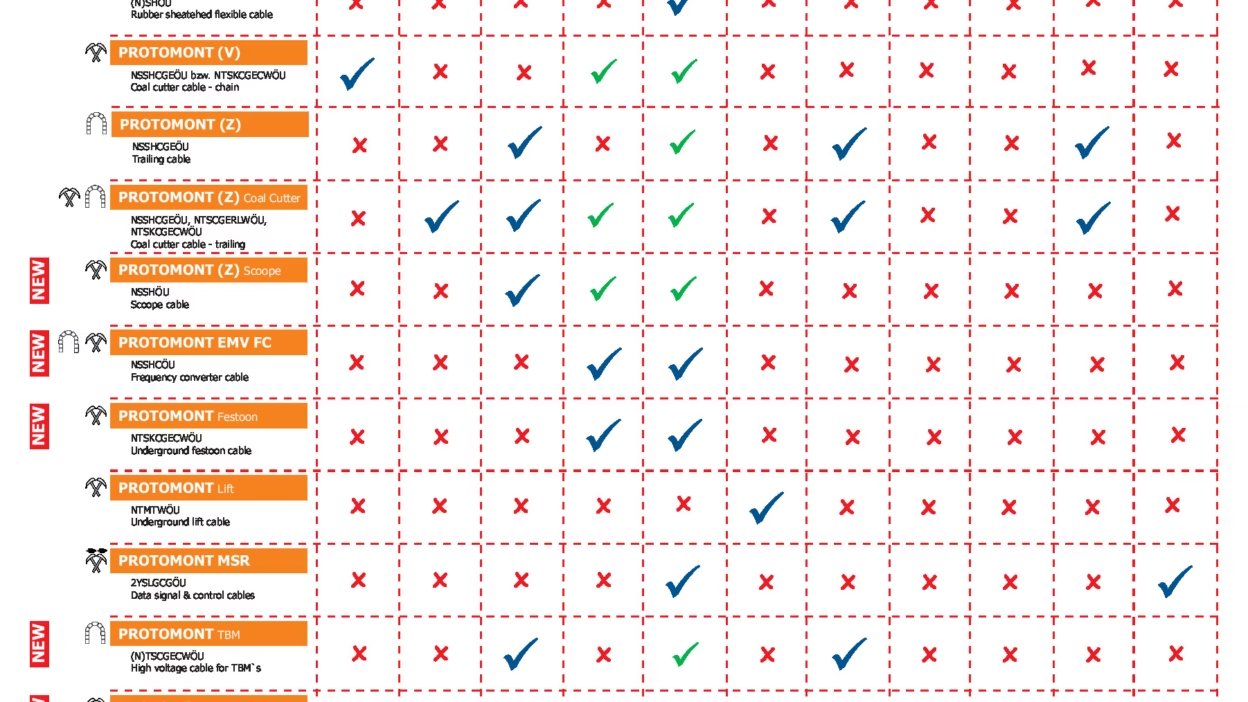
Prysmian Mining Application Systems represent a comprehensive portfolio of specialized cables engineered for the demanding environments of underground mining, tunneling operations, and opencast mining facilities. Developed by Prysmian Group, the world's largest cable manufacturer with over 140 years of expertise, these systems encompass multiple product families including PROTOLON (medium voltage flexible cables), PROTOMONT (rubber-sheathed flexible cables), OPTOFLEX (fiber optic cables), and CORDAFLEX (scraper cables).

What is Prysmian Mining Application systems ?

矿用电缆, 采煤机电缆, 拖曳电缆, 橡套电缆, 中压柔性电缆, 煤矿电缆, 隧道掘进机电缆, горнодобывающий кабель, шахтный кабель, гибкий кабель для шахт, кабель для угольных комбайнов, тянущийся кабель PROTOLON cable, PROTOMONT cable, OPTOFLEX mining cable, CORDAFLEX scraper cable, SUPROMONT power feeder cable, NTMCGCWÖU cable, NTSCGEWÖU cable, NTSCGCEWÖU cable, NSSHÖU cable, NSHÖU mining cable, NSSHCGEÖU coal cutter cable, NSHTÖU scraper cable, NYHSSYCY feeder cable, N3GHSSYCY rubber cable, NTSKGCFCWÖU festoon cable, NTMHWÖU lift cable, ZYSLGCGÖU MSR cable
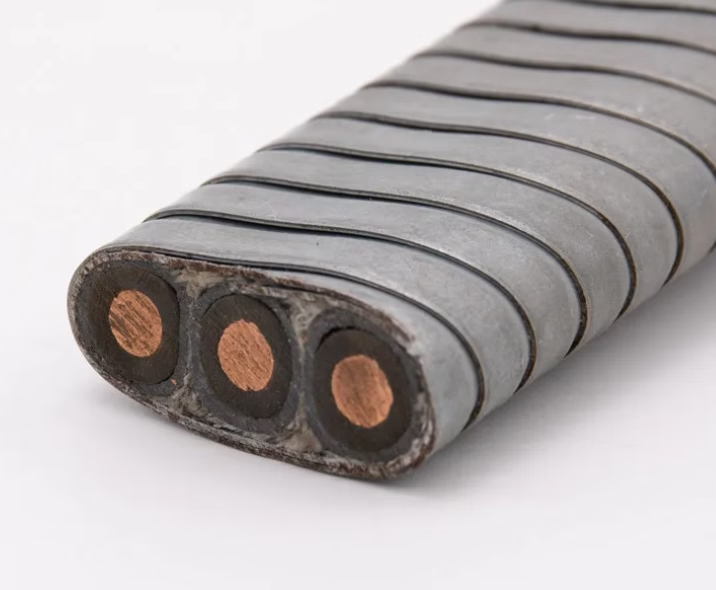
Submersible and pump cables are specialized electrical cables designed for permanent operation underwater, connecting electrical motor equipment in both process and potable water applications. According to IEC standards and VDE specifications, these cables must demonstrate exceptional water resistance, flexibility under pressure, and chemical compatibility with their operating environment. The cables support diverse industries from food processing to water treatment, mining, and aquatic installations.

What are Submersible & Pump Cables?

(N)SHÖU O/J 0.6/1kV, NSSHÖU O/J 0.6/1kV, NSSHÖU 3E 0.6/1kV, NSSHÖU 3E + ST 0.6/1kV, (N)SSCHÖU-J 0.6/1kV, (N)TSCGECEWÖU 3.6/6kV, (N)TSCGECEWÖU 6/10kV, (N)TSCGECEWÖU 8.7/15kV, (N)TSCGECEWÖU 12/20kV (N)TSCGEWÖU 3.6/6kV, (N)TSCGEWÖU 6/10kV, (N)TSCGEWÖU 8.7/15kV, (N)TSCGEWÖU 12/20kV, H07RN-8-F (10m), Pump Cable 300 (300m), Drincable 600 (600m), Drincable 600 Flat (600m), Drincable 800 (800m)
RS-(N)TSCGEWOEU TUNNELFLEX-TTX is a specialized medium voltage flexible power cable series available in four voltage ratings from 3.6/6 kV to 12/20 kV. These cables are engineered specifically for tunneling applications, providing reliable power supply to mobile equipment operating in harsh underground environments where there is a high risk of mechanical damage. The cable designation follows German DIN VDE nomenclature, with (N) indicating compliance with German national standards.

What is RS-(N)TSCGEWOEU TUNNELFLEX-TTX 3.6/6 to 12/20 kV Cable?

RS-(N)TSCGEWOEU cable, TUNNELFLEX-TTX cable, TUNNELFLEX-TTX 3.6/6kV, TUNNELFLEX-TTX 6/10kV, TUNNELFLEX-TTX 8.7/15kV, TUNNELFLEX-TTX 12/20kV, medium voltage tunneling cable, MV tunnel cable, DIN VDE 0295 Class 5, HEPR-MV insulation, 3GI3 classification, semi-conducting screen, PCP sheath cable, polychloroprene cable, anti-twisting braid, synthetic mesh cable, red sheath cable, tunnel boring machine cable, TBM power cable, underground mining cable, metro tunneling cable, railway tunnel cable, hydropower tunnel cable, Class 5 flexible conductor, 90°C conductor, short circuit rating, current carrying capacity, extruded screen cable, double sheath cable, mobile equipment cable, 3×25+3×25/3, 3×50+3×25/3, 3×95+3×50/3, 3×120+3×70/3, 3×185+3×95/3, 3×240+3×120/3, IEC 60502-2 cable, HD 620 cable, EPR medium voltage, micro-filtered insulation, TUNNELFLEX-TTX電纜, 中壓隧道電纜, 中壓柔性電纜, 隧道掘進機電纜, TBM電纜, HEPR-MV絕緣, 半導體屏蔽電纜, PCP護套電纜, 防扭電纜, 紅色護套電纜, 5類導體電纜, 地下採礦電纜, DIN VDE標準電纜, Anhui Feichun cable, Feichun Special Cable, 安徽飛純電纜
PROTOMONT TBM (N)TSCGECWOEU 6/10KV represents the pinnacle of medium voltage reeling cable technology specifically engineered for Tunnel Boring Machines (TBMs). As documented in professional reeling cable technical resources[1], these specialized cables serve as the critical power supply lifeline for TBM operations in underground mines and tunnel construction sites, enabling continuous boring operations while accommodating the machine's forward progression through the cable reeling system.

What is PROTOMONT TBM (N)TSCGECWOEU 6/10KV TBM Reeling Cable?

PROTOMONT TBM (N)TSCGECWOEU 6/10KV represents the pinnacle of medium voltage reeling cable technology specifically engineered for Tunnel Boring Machines (TBMs). As documented in professional reeling cable technical resources[1], these specialized cables serve as the critical power supply lifeline for TBM operations in underground mines and tunnel construction sites, enabling continuous boring operations while accommodating the machine’s forward progression through the cable reeling system.
PROTOLON (SB-SAM) (N)TSCGEWOEU 6/10KV represents advanced medium voltage trailing cable technology with optimized wall-thickness design. This specialized cable serves as the primary power supply and connection solution for large material handling machines operating in demanding open-cast mining environments.

PROTOLON (SB-SAM) (N)TSCGEWOEU 6/10KV

PROTOLON (SB-SAM) (N)TSCGEWOEU 6/10KV represents advanced medium voltage trailing cable technology with optimized wall-thickness design. This specialized cable serves as the primary power supply and connection solution for large material handling machines operating in demanding open-cast mining environments.
PROTOMONT(Z) NSSHCGEOEU 0.6/1KV coal cutter cable represents the pinnacle of engineering for underground mining operations. These cables are specifically designed as power supply connection cables for mobile equipment in underground machine applications. (Z)-Coal-Cutter cables are engineered for free trailing operation and, due to their special construction, may be trailed for considerable distances behind the machine during operation. The robust design ensures reliable power transmission even under extreme mechanical stress conditions encountered in mining environments. Primary applications include coal shearers, roadheaders, tunnel boring machines (TBMs), and load-haul-dump vehicles (LHDs/scoops). The cable's exceptional flexibility and durability make it indispensable for modern mining operations worldwide.

PROTOMONT(Z) NSSHCGEOEU0.6/1KV Coal Cutter Cables

PROTOMONT(Z) NSSHCGEOEU 0.6/1KV coal cutter cable represents the pinnacle of engineering for underground mining operations. These cables are specifically designed as power supply connection cables for mobile equipment in underground machine applications. (Z)-Coal-Cutter cables are engineered for free trailing operation and, due to their special construction, may be trailed for considerable distances behind the machine during operation. The robust design ensures reliable power transmission even under extreme mechanical stress conditions encountered in mining environments. Primary applications include coal shearers, roadheaders, tunnel boring machines (TBMs), and load-haul-dump vehicles (LHDs/scoops). The cable’s exceptional flexibility and durability make it indispensable for modern mining operations worldwide.
TYPE 209 and TYPE 210 mining cables represent critical power distribution infrastructure specifically engineered for the demanding environments of underground coal mining and surface mining operations throughout Australia and New Zealand.

TYPE 209 & TYPE 210 Australian Mining Cables

TYPE 209 and TYPE 210 mining cables represent critical power distribution infrastructure specifically engineered for the demanding environments of underground coal mining and surface mining operations throughout Australia and New Zealand.