mining cable selection guide

The Type 2S 11kV 3x95mm² cable has a base ampacity of 285 amperes when installed in free air at 40°C ambient temperature. However, in a typical underground mine substation where three or more feeder cables are installed side-by-side on a cable ladder, the practical usable current is reduced to approximately 228 amperes through application of temperature and grouping derating factors. This 228 A figure is the number that should govern your design calculations and equipment sizing for the substation feeder. Type 2S 11kV 3x95mm² 电缆在 40°C 环境温度的自由空气中安装时,其基础载流量为 285 安培。但在地下矿山变电站中,三根或更多馈电电缆并排安装在电缆桥架上的典型情况下,通过应用温度和编组降额系数,实际可用电流减少至约 228 安培。这个 228 A 的数字应该管理您的设计计算和变电站馈电的设备选型。
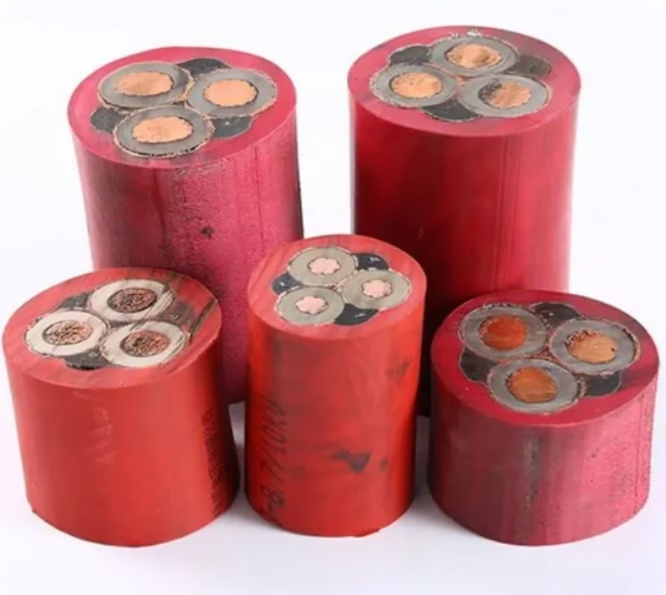
Ampacity Derating: Sizing Type 2S 11kV 3x95mm² for Underground Mine Substations (Ambient 40°C)

The Type 2S 11kV 3x95mm² cable has a base ampacity of 285 amperes when installed in free air at 40°C ambient temperature. However, in a typical underground mine substation where three or more feeder cables are installed side-by-side on a cable ladder, the practical usable current is reduced to approximately 228 amperes through application of temperature and grouping derating factors. This 228 A figure is the number that should govern your design calculations and equipment sizing for the substation feeder. Type 2S 11kV 3x95mm² 电缆在 40°C 环境温度的自由空气中安装时,其基础载流量为 285 安培。但在地下矿山变电站中,三根或更多馈电电缆并排安装在电缆桥架上的典型情况下,通过应用温度和编组降额系数,实际可用电流减少至约 228 安培。这个 228 A 的数字应该管理您的设计计算和变电站馈电的设备选型。
Corkscrewing — also referred to as Z-kinking or the "pigtail" effect — is among the most frequently encountered failure modes in dynamic reeling applications. When a Type 440 cable repeatedly exhibits helical deformation after even modest operating hours, the root cause almost never lies in a single variable. It is instead a compounding interaction of design, installation, and operating conditions. (软电缆在卷盘运行中出现螺旋变形,通常称为"软木塞效应"或Z型褶皱,是Type 440型动态卷盘电缆最常见的失效模式之一。)

Why Your Reeling Cable Keeps “Corkscrewing”:Diagnosis & Solutions for Type 440

Corkscrewing — also referred to as Z-kinking or the “pigtail” effect — is among the most frequently encountered failure modes in dynamic reeling applications. When a Type 440 cable repeatedly exhibits helical deformation after even modest operating hours, the root cause almost never lies in a single variable. It is instead a compounding interaction of design, installation, and operating conditions. (软电缆在卷盘运行中出现螺旋变形,通常称为”软木塞效应”或Z型褶皱,是Type 440型动态卷盘电缆最常见的失效模式之一。)
H07RN-F to NSSHÖU represents not just a viable replacement but potentially a significant improvement in pump system reliability. This technical analysis will guide you through each aspect of this decision-making process, providing the engineering knowledge needed to make an informed choice for your specific dewatering application.

Can I Replace Standard H07RN-F Cable with NSSHÖU for Heavy-Duty Mining Dewatering Pumps?

H07RN-F to NSSHÖU represents not just a viable replacement but potentially a significant improvement in pump system reliability. This technical analysis will guide you through each aspect of this decision-making process, providing the engineering knowledge needed to make an informed choice for your specific dewatering application.
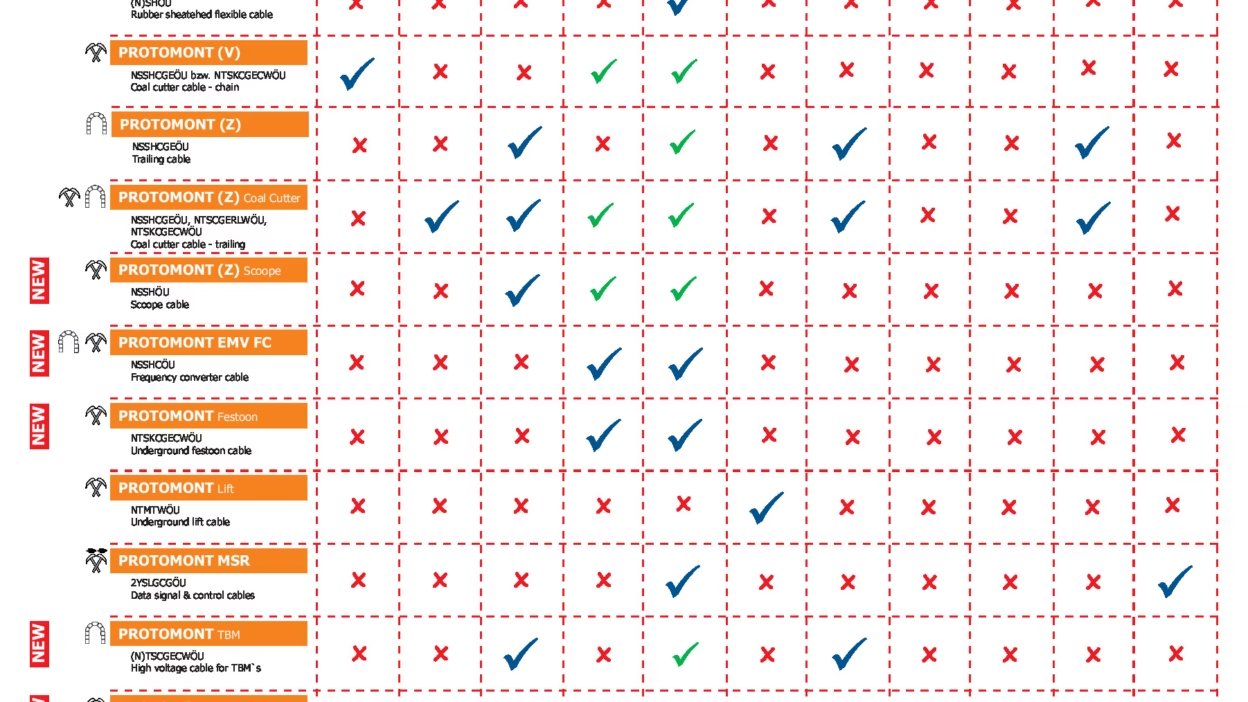
Prysmian Mining Application Systems represent a comprehensive portfolio of specialized cables engineered for the demanding environments of underground mining, tunneling operations, and opencast mining facilities. Developed by Prysmian Group, the world's largest cable manufacturer with over 140 years of expertise, these systems encompass multiple product families including PROTOLON (medium voltage flexible cables), PROTOMONT (rubber-sheathed flexible cables), OPTOFLEX (fiber optic cables), and CORDAFLEX (scraper cables).

What is Prysmian Mining Application systems ?

矿用电缆, 采煤机电缆, 拖曳电缆, 橡套电缆, 中压柔性电缆, 煤矿电缆, 隧道掘进机电缆, горнодобывающий кабель, шахтный кабель, гибкий кабель для шахт, кабель для угольных комбайнов, тянущийся кабель PROTOLON cable, PROTOMONT cable, OPTOFLEX mining cable, CORDAFLEX scraper cable, SUPROMONT power feeder cable, NTMCGCWÖU cable, NTSCGEWÖU cable, NTSCGCEWÖU cable, NSSHÖU cable, NSHÖU mining cable, NSSHCGEÖU coal cutter cable, NSHTÖU scraper cable, NYHSSYCY feeder cable, N3GHSSYCY rubber cable, NTSKGCFCWÖU festoon cable, NTMHWÖU lift cable, ZYSLGCGÖU MSR cable
Type 14 BS 6708 Trailing Cable

What is Type 14 BS 6708 Trailing Cable?

BS 6708 Type 14 Trailing Cable represents a specialized engineering solution within the British Standard family of mining cables, specifically designed for power distribution to excavating and crushing machines in underground coal mines and surface quarrying operations. This cable type features a unique configuration that balances electromagnetic protection with cost efficiency and simplified installation. 🔑 Critical Distinguishing Feature Unlike Type 11 cables where all cores are screened, Type 14 features screened phase cores only, with the pilot core and earth core intentionally left unscreened. This design choice provides specific advantages in fault current handling and cable weight optimization while maintaining essential EMI protection for power conductors. According to BS 6708:1998 classification, Type 14 belongs to the family of non-armoured cables with individually metallic screened cores rated at 640/1100 V, specifically designated for use with coalface cutters and similar mining machinery. The standard encompasses Types 7, 7M, 7S, 11, 14, and 16, each with distinct screening configurations optimized for specific operational requirements.
BS 6708 Type 11 Trailing Cable

What is BS 6708 Type 11 Trailing Cable?

BS 6708 Type 11 Trailing Cable represents a pinnacle of electrical engineering specifically designed for the demanding conditions of underground coal mining and surface quarrying operations. This specialized cable serves as the electrical lifeline for coalface cutters, shuttle cars, and similar face equipment, where reliability and safety are non-negotiable requirements.
Type 7 Mining Cable to BS 6708

What is Type 7 Mining Cable to BS 6708?

Type 7 mining cables represent a critical category of flexible trailing cables designed specifically for the demanding conditions encountered in underground coal mining operations. These cables conform to the rigorous requirements established by British Standard BS 6708, which has become an internationally recognized benchmark for mining cable safety and performance. The standard was developed through decades of mining industry experience and addresses the unique electrical and mechanical challenges present in potentially explosive underground environments. According to BSI Knowledge, BS 6708 specifications establish comprehensive requirements for flexible cables used at mines and quarries, ensuring that these critical power transmission components meet stringent safety and performance criteria. The Type 7 designation specifically identifies non-armoured cables with individually metallic screened cores rated at 640/1100V, engineered for both fixed installation and flexible operation in coal face cutting equipment.
TYPE 209 and TYPE 210 mining cables represent critical power distribution infrastructure specifically engineered for the demanding environments of underground coal mining and surface mining operations throughout Australia and New Zealand.

TYPE 209 & TYPE 210 Australian Mining Cables

TYPE 209 and TYPE 210 mining cables represent critical power distribution infrastructure specifically engineered for the demanding environments of underground coal mining and surface mining operations throughout Australia and New Zealand.
TYPE 240 1.1 to 11kV AS/NZS 1802:2003, AS/NZS 2802:2000 Australia Mining Cable

What is Type 240 Mining Cable ?

TYPE 240 cables serve as essential power supply conductors for critical mining equipment in underground coal mining operations. The cable’s robust construction and electrical characteristics make it particularly suitable for powering continuous miners, longwall shearer systems, hydraulic pump stations, shuttle cars, and various mobile mining machinery that operate in challenging underground environments.