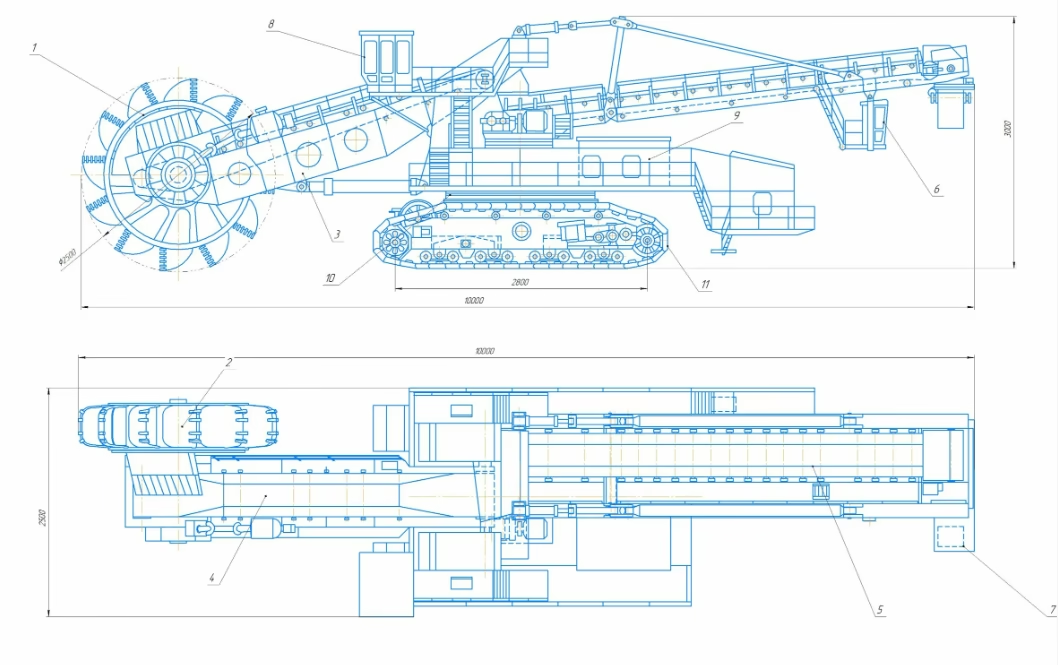
excavator trailing cable

Comprehensive professional guide to the TYPE 450-LED — the world's first self-powered LED illuminated mining cable for slow reeling and trailing applications — covering electromagnetic induction energy harvesting technology (zero external DC supply, zero gate end box modifications, zero additional switchgear), proprietary translucent extra heavy duty FR-TPU outer sheath with 3–5× abrasion resistance over conventional elastomer, integrated multi-layer surge protection architecture (magnetic saturation, TVS diodes, Zener/LDO regulation, PTC resettable fuses), aramid stress-isolation braiding for LED circuit mechanical protection, full AS/NZS 2802:2000 and AS/NZS 1802:2003 compliance, intrinsic safety certification per AS/NZS 60079.11 for methane and coal dust atmospheres, voltage ratings from 3.3 kV through 33 kV (the only illuminated mining cable available at 22 kV and 33 kV globally), conductor sizes from 25 mm² to 150 mm², and plug-and-play deployment as a direct drop-in replacement for standard Type 450 cables — with detailed dimensional and electrical data, operational advantages for dragline tail-rope spreads, excavator bench areas, wharf crane aprons, underground coal mining, and open-cut surface mining, plus direct factory procurement from Anhui Feichun Special Cable Co., Ltd.

TYPE 450-LED Self-Powered Illuminated Mining Cable Manufacturer

Comprehensive professional guide to the TYPE 450-LED — the world’s first self-powered LED illuminated mining cable for slow reeling and trailing applications — covering electromagnetic induction energy harvesting technology (zero external DC supply, zero gate end box modifications, zero additional switchgear), proprietary translucent extra heavy duty FR-TPU outer sheath with 3–5× abrasion resistance over conventional elastomer, integrated multi-layer surge protection architecture (magnetic saturation, TVS diodes, Zener/LDO regulation, PTC resettable fuses), aramid stress-isolation braiding for LED circuit mechanical protection, full AS/NZS 2802:2000 and AS/NZS 1802:2003 compliance, intrinsic safety certification per AS/NZS 60079.11 for methane and coal dust atmospheres, voltage ratings from 3.3 kV through 33 kV (the only illuminated mining cable available at 22 kV and 33 kV globally), conductor sizes from 25 mm² to 150 mm², and plug-and-play deployment as a direct drop-in replacement for standard Type 450 cables — with detailed dimensional and electrical data, operational advantages for dragline tail-rope spreads, excavator bench areas, wharf crane aprons, underground coal mining, and open-cut surface mining, plus direct factory procurement from Anhui Feichun Special Cable Co., Ltd.
Много менеджеров и неэлектрических инженеров попадают в эту ловушку, потому что номинальное напряжение кабеля кажется подходящим: GOST 6kV — это номинальное напряжение сети, а VDE 3.6/6kV имеет 6kV в обозначении. Вывод кажется логичным: "6kV = 6kV, подходит". Это смертельная ошибка. Причина ошибки в системе двойной номинации VDE (U₀/U): • VDE 3.6/6kV означает: U₀ = 3,6 кВ (напряжение фаза-земля), U = 6,0 кВ (напряжение фаза-фаза) • Изоляция кабеля рассчитана на U₀ = 3,6 кВ • GOST 6kV означает: номинальное напряжение сети 6,0 кВ фаза-фаза • В системе IT (изолированная нейтраль) при однофазном КЗ: напряжение неповреждённых фаз мгновенно переходит из 3,6 кВ в 6,0 кВ • Кабель получает 6,0 кВ на изоляцию, рассчитанную на 3,6 кВ → ПРОБОЙ

Voltage Matching Trap: Why VDE 3.6/6kV Cables Fail Catastrophically on GOST 6kV IT Mining GridsA Critical Insulation Breakdown Risk Analysis

Много менеджеров и неэлектрических инженеров попадают в эту ловушку, потому что номинальное напряжение кабеля кажется подходящим: GOST 6kV — это номинальное напряжение сети, а VDE 3.6/6kV имеет 6kV в обозначении. Вывод кажется логичным: “6kV = 6kV, подходит”. Это смертельная ошибка. Причина ошибки в системе двойной номинации VDE (U₀/U): • VDE 3.6/6kV означает: U₀ = 3,6 кВ (напряжение фаза-земля), U = 6,0 кВ (напряжение фаза-фаза) • Изоляция кабеля рассчитана на U₀ = 3,6 кВ • GOST 6kV означает: номинальное напряжение сети 6,0 кВ фаза-фаза • В системе IT (изолированная нейтраль) при однофазном КЗ: напряжение неповреждённых фаз мгновенно переходит из 3,6 кВ в 6,0 кВ • Кабель получает 6,0 кВ на изоляцию, рассчитанную на 3,6 кВ → ПРОБОЙ
Сибирский и Дальневосточный федеральные округа России — от Кузбасса на западе до Магаданской области на востоке — включают более 400 горнодобывающих предприятий открытого и подземного типа: угольные разрезы Кемеровской области (СУЭК, Кузбассразрезуголь), золотодобывающие предприятия Красноярского края и Магадана (Полюс, Полиметалл), алмазные рудники Якутии (АЛРОСА), медно-никелевые предприятия Норильского промышленного района (Норникель) и железорудные карьеры Иркутской области. Суммарное потребление гибких экранированных кабелей среднего напряжения 6кВ (марки КГЭ-ХЛ, КГЭШ-ХЛ) оценивается в 1 200–2 000 отрезков в год — при этом производство сосредоточено на трёх заводах в Центральной России: Кольчугинский завод «Электрокабель» (Владимирская область), ОАО «Камкабель» (Пермский край) и ЗАО «Уралкабель» (Екатеринбург). Логистическое плечо от этих заводов до потребителей в Якутии или Магадане составляет 5 000–8 000 км, добавляя 2–4 недели к сроку поставки только на транспортировку. В пиковые периоды полный цикл «заказ → доставка на рудник» для КГЭ-ХЛ 6кВ 3×95мм² растягивается с номинальных 10–12 недель до 16–22 недель.

VDE 0250 vs ГОСТ: Может ли (N)TSCGEWÖU 6/10kV заменить российский КГЭ-ХЛ 6кВ в сибирских рудниках?Полное инженерно-закупочное руководство

Сибирский и Дальневосточный федеральные округа России — от Кузбасса на западе до Магаданской области на востоке — включают более 400 горнодобывающих предприятий открытого и подземного типа: угольные разрезы Кемеровской области (СУЭК, Кузбассразрезуголь), золотодобывающие предприятия Красноярского края и Магадана (Полюс, Полиметалл), алмазные рудники Якутии (АЛРОСА), медно-никелевые предприятия Норильского промышленного района (Норникель) и железорудные карьеры Иркутской области. Суммарное потребление гибких экранированных кабелей среднего напряжения 6кВ (марки КГЭ-ХЛ, КГЭШ-ХЛ) оценивается в 1 200–2 000 отрезков в год — при этом производство сосредоточено на трёх заводах в Центральной России: Кольчугинский завод «Электрокабель» (Владимирская область), ОАО «Камкабель» (Пермский край) и ЗАО «Уралкабель» (Екатеринбург). Логистическое плечо от этих заводов до потребителей в Якутии или Магадане составляет 5 000–8 000 км, добавляя 2–4 недели к сроку поставки только на транспортировку. В пиковые периоды полный цикл «заказ → доставка на рудник» для КГЭ-ХЛ 6кВ 3×95мм² растягивается с номинальных 10–12 недель до 16–22 недель.
Dragline Scale and Power Demand: Modern electric draglines (such as Bucyrus-Erie, Komatsu, or Hitachi models) are among the largest mobile equipment ever built—some models weighing 13,000+ tonnes with buckets exceeding 200+ cubic meters. A typical dragline requires continuous 6 or 10 kV three-phase power supply delivering 1–3 megawatts. This power is distributed from mobile substations positioned near the dragline, connected via flexible trailing cables spanning 500–1,500 meters. 现代电动拉铲(如Bucyrus-Erie、小松或日立型号)是世界上最大的移动设备之一——某些型号重达13000多吨,斗容超过200立方米。典型拉铲需要持续的6或10 kV三相电源供应,功率为1-3兆瓦。此电源由位于拉铲附近的移动变电站分配,通过跨越500-1500米的柔性拖曳电缆连接。 Arctic Mining Geography: Draglines operate in extreme environments: Siberian Russia (winter temperatures -40°C to -60°C), Canadian Arctic (similar extremes), Mongolia (up to -50°C), and high-altitude operations in Peru or Tibet where thin air and cold combine to degrade cable performance. Standard European or North American cable designs are inadequate for these conditions.

Dragline Power Specs: Ampacity and Weight for КГЭ-ХЛ 3×150+1×50+1×10 6/10kV Heavy-Duty Trailing Cable

Dragline Scale and Power Demand: Modern electric draglines (such as Bucyrus-Erie, Komatsu, or Hitachi models) are among the largest mobile equipment ever built—some models weighing 13,000+ tonnes with buckets exceeding 200+ cubic meters. A typical dragline requires continuous 6 or 10 kV three-phase power supply delivering 1–3 megawatts. This power is distributed from mobile substations positioned near the dragline, connected via flexible trailing cables spanning 500–1,500 meters. 现代电动拉铲(如Bucyrus-Erie、小松或日立型号)是世界上最大的移动设备之一——某些型号重达13000多吨,斗容超过200立方米。典型拉铲需要持续的6或10 kV三相电源供应,功率为1-3兆瓦。此电源由位于拉铲附近的移动变电站分配,通过跨越500-1500米的柔性拖曳电缆连接。 Arctic Mining Geography: Draglines operate in extreme environments: Siberian Russia (winter temperatures -40°C to -60°C), Canadian Arctic (similar extremes), Mongolia (up to -50°C), and high-altitude operations in Peru or Tibet where thin air and cold combine to degrade cable performance. Standard European or North American cable designs are inadequate for these conditions.
The minimum bending radius for the (N)TSKCGEWÖU 3x95+3x16/3 3.6/6kV cable ranges from a minimum of approximately 348 millimeters for fixed installations to a maximum of 1,160 millimeters for S-curve transitions and forced-bend applications, with the most common reeling drum application falling in the 725–870 millimeter range. However, these numbers are meaningful only if you understand what they represent, why different installation types require different radii, and what happens to your cable if you bend it tighter than the specified limit. 最小弯曲半径范围从固定敷设的 348 毫米到 S 型转弯的 1,160 毫米不等,卷筒应用通常为 725–870 毫米。

Minimum Bending Radius: How Tight Can You Bend a (N)TSKCGEWÖU 3×95+3×16/3 3.6/6kV Cable?

The minimum bending radius for the (N)TSKCGEWÖU 3×95+3×16/3 3.6/6kV cable ranges from a minimum of approximately 348 millimeters for fixed installations to a maximum of 1,160 millimeters for S-curve transitions and forced-bend applications, with the most common reeling drum application falling in the 725–870 millimeter range. However, these numbers are meaningful only if you understand what they represent, why different installation types require different radii, and what happens to your cable if you bend it tighter than the specified limit. 最小弯曲半径范围从固定敷设的 348 毫米到 S 型转弯的 1,160 毫米不等,卷筒应用通常为 725–870 毫米。
Type 409 cables represent a specialized category of flexible mining cables designed specifically for demanding applications in material handling equipment, surface mining operations, and industrial environments. These cables are manufactured according to the Australian and New Zealand Standard AS/NZS 2802:2000, which establishes rigorous requirements for reeling and trailing cables used in mining and general industrial applications outside underground coal mining environments. (409型电缆是专为物料搬运设备、露天采矿作业和工业环境中的高要求应用而设计的一类特种柔性矿用电缆。这些电缆按照澳大利亚和新西兰标准AS/NZS 2802:2000制造,该标准对用于煤矿井下以外的采矿和一般工业应用的卷筒电缆和拖曳电缆制定了严格要求。)

TENAX-PUR (N)TSCGEH3S I 6 – 10 KV

TENAX-PUR is a premium medium voltage trailing cable engineered specifically for power supply to large mobile mining equipment such as shovels and draglines. The cable features an extremely robust polyurethane (PUR) outer sheath that delivers exceptional performance against abrasion and tearing, maintaining full flexibility even in extreme cold conditions down to -50°C. Available in orange, yellow, or custom colors to meet specific operational requirements. TENAX-PUR 是一种专为大型移动采矿设备(如电铲和拉斗铲)供电而设计的优质中压拖曳电缆。该电缆采用极其坚固的聚氨酯(PUR)外护套,在磨损和撕裂方面提供卓越的性能,即使在低至-50°C的极端寒冷条件下也能保持充分的柔韧性。可提供橙色、黄色或定制颜色以满足特定操作要求。
MYP cables must obtain MA (煤安) certification before they can be legally used in Chinese coal mines. The MA mark, administered by the National Coal Mine Safety Mark Office (煤矿安全标志办公室), represents mandatory safety certification for all underground coal mining equipment and materials. MYP cables, as mobile power supply cables for coal mining machinery, fall under the strictly regulated product categories defined in the Mining Product Safety Sign Management Catalog and must comply with Chinese national standards MT 818 series and GB 12972.[1][2] 是的,MYP电缆在中国煤矿使用前必须获得MA(煤安)认证。由国家煤矿安全标志办公室管理的MA标志,代表了所有井下煤矿设备和材料的强制性安全认证。MYP电缆作为煤矿机械的移动电源电缆,属于《矿用产品安全标志管理目录》中严格管制的产品类别,必须符合中国国家标准MT 818系列和GB 12972。

PROTOLON (M)R-(N)TSCGEWOEU 6-35 KV

(M)R-(N)TSCGEWOEU series represents a highly engineered family of medium voltage flexible reeling cables specifically designed for demanding applications in open-cast mining operations and heavy industrial environments. These cables are manufactured according to the stringent requirements of DIN VDE 0250-813 standard, which is recognized globally as the definitive specification for flexible trailing cables used in heavy industrial applications where extreme mechanical stresses are expected. PROTOLON系列电缆专为露天矿山的大型物料搬运设备(如挖掘机、卸料车、移动式破碎机)设计,能够承受极高的机械应力,适用于单螺旋卷筒和圆柱形卷筒的灵活卷绕操作。
When engineers first encounter the AS/NZS 2802 standard for electric reeling and trailing cables used in mining and general industrial applications, a seemingly contradictory requirement immediately stands out. The standard mandates the exclusive use of electrolytic multiple-stranded circular flexible tinned copper wire conductors, explicitly rejecting aluminium despite its well-documented weight advantages. Given that aluminium weighs approximately 30 percent of copper's mass for equivalent electrical resistance, this specification appears counterintuitive, particularly for mobile mining equipment where weight reduction directly translates to improved fuel efficiency, reduced structural loading, and enhanced operational flexibility. 当工程师首次接触AS/NZS 2802标准时,用于采矿和一般工业应用的电动卷筒和拖缆,一个看似矛盾的要求立即凸显出来。该标准强制要求专门使用电解多股圆形柔性镀锡铜线导体,明确拒绝使用铝材,尽管铝的重量优势有充分记录。

Aluminium Conductors: Why Are Aluminium Conductors Strictly Prohibited in AS/NZS 2802 Trailing Cables Despite the Weight Savings?

When engineers first encounter the AS/NZS 2802 standard for electric reeling and trailing cables used in mining and general industrial applications, a seemingly contradictory requirement immediately stands out. The standard mandates the exclusive use of electrolytic multiple-stranded circular flexible tinned copper wire conductors, explicitly rejecting aluminium despite its well-documented weight advantages. Given that aluminium weighs approximately 30 percent of copper’s mass for equivalent electrical resistance, this specification appears counterintuitive, particularly for mobile mining equipment where weight reduction directly translates to improved fuel efficiency, reduced structural loading, and enhanced operational flexibility. 当工程师首次接触AS/NZS 2802标准时,用于采矿和一般工业应用的电动卷筒和拖缆,一个看似矛盾的要求立即凸显出来。该标准强制要求专门使用电解多股圆形柔性镀锡铜线导体,明确拒绝使用铝材,尽管铝的重量优势有充分记录。
Comprehensive Technical Analysis of Chlorinated Polyethylene (CPE) vs Chlorosulphonated Polyethylene (CSP) Sheath Performance Under Extreme UV Radiation in Pilbara Region Mining Operations 氯化聚乙烯(CPE)与氯磺化聚乙烯(CSP)护套在皮尔巴拉地区采矿作业极端紫外线辐射下性能的综合技术分析

UV Resistance in Type 441 Mining Cables: Does CPE Sheath Meet “Extremely High UV” Requirements of Australian Surface Mines?

Comprehensive Technical Analysis of Chlorinated Polyethylene (CPE) vs Chlorosulphonated Polyethylene (CSP) Sheath Performance Under Extreme UV Radiation in Pilbara Region Mining Operations 氯化聚乙烯(CPE)与氯磺化聚乙烯(CSP)护套在皮尔巴拉地区采矿作业极端紫外线辐射下性能的综合技术分析
In the demanding world of surface mining operations, dragline excavators and mobile material handling equipment rely on high-voltage flexible cables to deliver continuous electrical power as these massive machines traverse mining sites. The choice between Type 450 and Type 455 cables manufactured to AS/NZS 2802:2000 standards represents a critical engineering decision that directly impacts equipment reliability, operational costs, and cable service life. Both cable types are designed for voltage ratings from 3.3 kilovolts to 33 kilovolts, with operational temperatures spanning from negative 25 degrees Celsius to positive 90 degrees Celsius, making them suitable for the diverse environmental conditions encountered in Australian mining operations

Dragline Cables 22kV/33kV: Type 450 vs Type 455 — Which Design Delivers Superior Longevity for Reeling and Trailing Applications?

In the demanding world of surface mining operations, dragline excavators and mobile material handling equipment rely on high-voltage flexible cables to deliver continuous electrical power as these massive machines traverse mining sites. The choice between Type 450 and Type 455 cables manufactured to AS/NZS 2802:2000 standards represents a critical engineering decision that directly impacts equipment reliability, operational costs, and cable service life. Both cable types are designed for voltage ratings from 3.3 kilovolts to 33 kilovolts, with operational temperatures spanning from negative 25 degrees Celsius to positive 90 degrees Celsius, making them suitable for the diverse environmental conditions encountered in Australian mining operations
(N)TSCGEWÖU cable series represents a category of medium voltage flexible mining, drilling and tunneling cables primarily designed to meet DIN VDE 0250-813 specifications. (N)TSCGEWÖU电缆系列代表一类中压柔性采矿、钻井和隧道电缆,主要设计满足DIN VDE 0250-813规范 These cables are widely used internationally for power distribution to heavy-duty mining equipment in surface and underground installations. However, exporting these cables to the Russian Federation and other CIS countries requires compliance with GOST-R certification standards, which operate under a distinct regulatory framework from European DIN VDE standards.

GOST-R: Do (N)TSCGEWÖU Cables Meet the GOST-R Certification Requirements for the Russian/CIS Mining Market?

(N)TSCGEWÖU cable series represents a category of medium voltage flexible mining, drilling and tunneling cables primarily designed to meet DIN VDE 0250-813 specifications. (N)TSCGEWÖU电缆系列代表一类中压柔性采矿、钻井和隧道电缆,主要设计满足DIN VDE 0250-813规范 These cables are widely used internationally for power distribution to heavy-duty mining equipment in surface and underground installations. However, exporting these cables to the Russian Federation and other CIS countries requires compliance with GOST-R certification standards, which operate under a distinct regulatory framework from European DIN VDE standards.
Cable ampacity derating represents a fundamental consideration in electrical system design, particularly for mobile equipment and crane applications where environmental conditions deviate significantly from standard reference values. The ampacity, or current-carrying capacity, of a conductor must be adjusted based on actual installation conditions to prevent insulation degradation, ensure safety compliance, and maintain system reliability over the operational lifetime of the installation. 电缆载流量降额是电气系统设计中的一个基本考虑因素,特别是对于移动设备和起重机应用,其中环境条件显著偏离标准参考值。导体的载流量或电流承载能力必须根据实际安装条件进行调整,以防止绝缘退化,确保安全合规性,并在安装的整个使用寿命期间保持系统可靠性。

Ampacity Derating: What Causes “Z-kinking” in (N)TSFLCGEWÖU Flat Cables, and How to Adjust Festoon Trolleys?

Cable ampacity derating represents a fundamental consideration in electrical system design, particularly for mobile equipment and crane applications where environmental conditions deviate significantly from standard reference values. The ampacity, or current-carrying capacity, of a conductor must be adjusted based on actual installation conditions to prevent insulation degradation, ensure safety compliance, and maintain system reliability over the operational lifetime of the installation. 电缆载流量降额是电气系统设计中的一个基本考虑因素,特别是对于移动设备和起重机应用,其中环境条件显著偏离标准参考值。导体的载流量或电流承载能力必须根据实际安装条件进行调整,以防止绝缘退化,确保安全合规性,并在安装的整个使用寿命期间保持系统可靠性。
Type 440 reeling cables represent a critical component in mining and industrial power distribution systems, specifically designed for flexible trailing applications according to AS/NZS 2802:2000 standards. These metal-screened power cables feature three pilot cores and operate across voltage ratings from 1.1 kilovolts to 11 kilovolts, supplying reliable electrical power to mobile mining equipment such as draglines, excavators, and materials handling machinery. Despite their robust construction with EPR insulation and high abrasion resistance, these cables remain vulnerable to a particularly destructive failure mode known as corkscrewing, which can compromise both electrical performance and mechanical integrity during operation.

How does “Corkscrewing” destroy Type 440 reeling cables, and how to prevent it during installation?

Type 440 reeling cables represent a critical component in mining and industrial power distribution systems, specifically designed for flexible trailing applications according to AS/NZS 2802:2000 standards. These metal-screened power cables feature three pilot cores and operate across voltage ratings from 1.1 kilovolts to 11 kilovolts, supplying reliable electrical power to mobile mining equipment such as draglines, excavators, and materials handling machinery. Despite their robust construction with EPR insulation and high abrasion resistance, these cables remain vulnerable to a particularly destructive failure mode known as corkscrewing, which can compromise both electrical performance and mechanical integrity during operation.
Mining operations worldwide face a critical procurement decision when selecting medium voltage reeling and trailing cables for mobile equipment such as excavators, draglines, and continuous miners. The choice between premium brand-name cables like PROTOLON and generic alternatives conforming to the same NTSCGEWÖU specification represents a significant investment decision with long-term operational and safety implications.

PROTOLON (Proprietary) vs. Generic NTSCGEWÖU: Is the Premium Price for Brand-Name Mining Cables Justified?

Mining operations worldwide face a critical procurement decision when selecting medium voltage reeling and trailing cables for mobile equipment such as excavators, draglines, and continuous miners. The choice between premium brand-name cables like PROTOLON and generic alternatives conforming to the same NTSCGEWÖU specification represents a significant investment decision with long-term operational and safety implications.
The determination of current carrying capacity (ampacity) for mining and trailing cables represents a critical engineering consideration that directly impacts operational safety and equipment performance. Two dominant international approaches govern these calculations: the German VDE 0298-4 standard applied to (N)TSCGEWÖU-type cables, and the North American NEC methodology utilizing ICEA S-75-381 (ANSI/NEMA WC-58) for Type SHD-GC cables. 矿用及拖曳电缆的载流量确定是直接影响运行安全和设备性能的关键工程考量。两种主导的国际方法管理这些计算:适用于(N)TSCGEWÖU型电缆的德国VDE 0298-4标准,以及使用ICEA S-75-381 (ANSI/NEMA WC-58)标准的北美NEC方法用于Type SHD-GC电缆。

Ampacity Calculation: How Does the Current Carrying Capacity for (N)TSCGEWÖU in VDE 0298-4 Differ from the NEC Method Used for Type SHD-GC?

The determination of current carrying capacity (ampacity) for mining and trailing cables represents a critical engineering consideration that directly impacts operational safety and equipment performance. Two dominant international approaches govern these calculations: the German VDE 0298-4 standard applied to (N)TSCGEWÖU-type cables, and the North American NEC methodology utilizing ICEA S-75-381 (ANSI/NEMA WC-58) for Type SHD-GC cables. 矿用及拖曳电缆的载流量确定是直接影响运行安全和设备性能的关键工程考量。两种主导的国际方法管理这些计算:适用于(N)TSCGEWÖU型电缆的德国VDE 0298-4标准,以及使用ICEA S-75-381 (ANSI/NEMA WC-58)标准的北美NEC方法用于Type SHD-GC电缆。
PROTOMONT(VO) (N)TSKCGEWOEU 1.8/3KV is a medium-voltage coal cutter cable designed for power supply connection to mobile equipment and machines in underground mining applications. The (VO) Coal cutter cables are specifically engineered for use in cable protection chains (cable handler), which are trailed behind the machine and absorb the occurring tensile forces. Featuring finely stranded tinned copper conductors (Class FS), EPR rubber insulation (PROTOLON 3GI3), semi-conductive NBR easy-strip layer, and chlorinated polyethylene (CM/CPE) outer sheath (PROTOFIRM >5GM5), with double-concentric control/PE conductor elements in the outer interstices. Certified by GOST-R/-K/-B (Russia) and MA China.

كابل PROTOMONT(VO) (N)TSKCGEWOEU 1,8/3KVكابلات قاطعات الفحم للتشغيل بسلاسل الحماية – التعدين تحت الأرض

Used as power supply connection cable for mobile equipment and machines in underground mining applications, such as coal cutting machines, etc. (VO) Coal cutter cables are designed for use in cable protection chains (cable handler), which are trailed behind the machine and which absorb the thereby occurring tensile forces. Suitable for shearer loaders, continuous miners, loading machines, shuttle cars, and other underground coal mining mobile equipment.
BS6708, mining cable, quarry cable, trailing cable, EPR cable, SWA cable, coal cutter cable, excavator cable, 礦用電纜, 採石場電纜, 拖曳電纜

What is BS6708 Cable?

British Standard BS6708 sets out the requirements for flexible trailing cables where used in mining operations and quarries. These cables are often referred to as trailing cables, quarry cables, or auxiliary cables and have applications with a wide range of dynamic mining equipment including excavators, coal-cutters, crushing machines, and shuttle cars. flexible trailing cable, mine cable, EPR mining cable, SWA mining cable, chloroprene cable, coal cutter cable, excavator cable, shuttle car cable, crushing machine cable, coal face cable, Type 7 mining cable, Type 7M cable, Type 7S cable, Type 11 cable, Type 20 cable, Type 21 cable, Type 307 cable, Type 331 cable, Type 621 cable, Type 631 cable, 640/1100V mining cable, 1.9/3.3kV mining cable
PROTOMONT SSHOEU 0.6/1KV, PROTOMONT (N)SSHOEU, (N)SSHOEU mining cable, NSSHOEU 0.6/1KV cable, SSHOEU low voltage mining cable, PROTOMONT MT mining cable, N-SSHOEU flexible cable, low voltage mining cable 0.6/1kV, heavy duty rubber mining cable, 礦用低壓電纜 0.6/1KV, PROTOMONT 礦用電纜, SSHOEU 柔性電纜

What is PROTOMONT (N)SSHOEU 0.6/1KV Mining & Tunneling Semi-flexible Cable?

PROTOMONT SSHOEU 0.6/1KV, PROTOMONT (N)SSHOEU, (N)SSHOEU mining cable, NSSHOEU 0.6/1KV cable, SSHOEU low voltage mining cable, PROTOMONT MT mining cable, N-SSHOEU flexible cable, low voltage mining cable 0.6/1kV, heavy duty rubber mining cable, 礦用低壓電纜 0.6/1KV, PROTOMONT 礦用電纜, SSHOEU 柔性電纜
PROTOLON (M) F-(N)TSCGEWOEU 6/10KV is a medium voltage flexible cable engineered for semi-flexible installation in demanding mining and tunneling applications. This cable represents the pinnacle of German engineering excellence, designed specifically for environments where mechanical stress, chemical exposure, and continuous operation are standard operating conditions.

What is PROTOLON (M) F-(N)TSCGEWOEU 6/10KV Mining & Tunneling Semi-flexible Cable?

PROTOLON (M) F-(N)TSCGEWOEU 6/10KV is a medium voltage flexible cable engineered for semi-flexible installation in demanding mining and tunneling applications. This cable represents the pinnacle of German engineering excellence, designed specifically for environments where mechanical stress, chemical exposure, and continuous operation are standard operating conditions.
EPN 78 3,6/6 kV is a medium voltage (MV) flexible reeling cable specifically engineered for open-cast mining operations. This cable features a three-core design with three protective-earth conductors positioned in the outer interstices, providing reliable grounding protection for heavy mobile equipment. The designation "EPN 78" follows the Serbian/Yugoslav cable designation system (SRPS N.C5.374), indicating its robust construction for demanding mining environments.

What is EPN 78 3,6/6 kV Mining & Tunneling MV Flexible Reeling Cable?

EPN 78 3,6/6 kV is a medium voltage (MV) flexible reeling cable specifically engineered for open-cast mining operations. This cable features a three-core design with three protective-earth conductors positioned in the outer interstices, providing reliable grounding protection for heavy mobile equipment. The designation “EPN 78” follows the Serbian/Yugoslav cable designation system (SRPS N.C5.374), indicating its robust construction for demanding mining environments.
PROTOLON (M) R-(N)TSCGEWOEU LWL 6/10KV is a highly specialized medium voltage (MV) reeling cable engineered for the demanding conditions of open-cast mining and tunneling operations. This cable integrates fiber-optic elements for simultaneous power transmission and high-speed data communication, making it essential for modern automated mining equipment including excavators, dumpers, and mobile crushers.

What is PROTOLON (M) R-(N)TSCGEWOEU LWL 6/10KV Mining & Tunneling MV Reeling Cable?

PROTOLON (M) R-(N)TSCGEWOEU LWL 6/10KV is a highly specialized medium voltage (MV) reeling cable engineered for the demanding conditions of open-cast mining and tunneling operations. This cable integrates fiber-optic elements for simultaneous power transmission and high-speed data communication, making it essential for modern automated mining equipment including excavators, dumpers, and mobile crushers.
VERSOLEX® 90°C Multicore is a premium-grade flexible power cable engineered for demanding commercial and industrial applications. Featuring multicore flexible copper conductors rated at 0.6/1kV, this cable utilizes X-90 (cross-linked polyethylene) insulation combined with TPE-90 (thermoplastic elastomer) sheathing, manufactured in compliance with AS/NZS 3191 and AS/NZS 5000.1 standards where applicable.

What is VERSOLEX® 90°C MULTICORE Cable?

VERSOLEX® cable series represents a specialized category of flexible power cables specifically designed to withstand the mechanical stresses inherent in commercial and industrial installations. As documented in technical specifications from major cable manufacturers, this cable family delivers robust performance characteristics that make it suitable for applications requiring frequent flexing, resistance to environmental stressors, and reliable power transmission at elevated operating temperatures up to 90°C.
heavy-duty rubber cables represent a critical category for applications requiring exceptional mechanical strength, flexibility, and environmental resistance. This comprehensive technical guide examines three closely related cable types that dominate international markets for portable power transmission: the Chinese standard GB/T 5013 YC (Heavy-Duty General Rubber Cable) rated at 450/750V, the enhanced YCW variant with oil and weather resistance, and the European harmonized H07RN-F cable that serves as the international equivalent.

GB/T 5013 YC & YCW Heavy-Duty Rubber Cables and H07RN-F: Comprehensive Technical Analysis

heavy-duty rubber cables represent a critical category for applications requiring exceptional mechanical strength, flexibility, and environmental resistance. This comprehensive technical guide examines three closely related cable types that dominate international markets for portable power transmission: the Chinese standard GB/T 5013 YC (Heavy-Duty General Rubber Cable) rated at 450/750V, the enhanced YCW variant with oil and weather resistance, and the European harmonized H07RN-F cable that serves as the international equivalent.
PROTOLON SB-SAM specifications

PROTOLON(SB-SAM) (N)TSCGEWOEU 6 kV – 20 kV: Advanced Mining Cable Technology for Extreme Conditions

PROTOLON(SB-SAM) (N)TSCGEWOEU represents the latest evolution in medium voltage trailing cable technology, specifically engineered for power supply and connection applications in large material handling machines operating in opencast mining environments. This advanced cable system incorporates bare electrolytic copper conductors with enhanced flexibility characteristics, proprietary PROTOLON insulation technology that exceeds type 3GI3 specifications, and a sophisticated pilot conductor integration for advanced monitoring and control applications. According to comprehensive research from Amplex Mining, mining cables serving large-scale excavators face severe physical punishment including constant abrasion against rock surfaces, crushing forces from equipment, impacts from falling debris, and frequent flexing as mobile equipment moves across challenging terrain.[1] The PROTOLON(SB-SAM) designation represents a specialized variant incorporating advanced material technologies to address these extreme operational requirements while maintaining superior electrical performance characteristics.
NTMCGCWOEU 1x240_25 KON, 12_20kV

What is PROTOLON(SB) NTSCGEWOEU 6 kV – 20 kV Cable for Excavators in Open-Cast Mining?

PROTOLON(SB) NTSCGEWOEU cable represents a specialized category of medium voltage trailing cables engineered specifically for the most demanding mining applications. As power supply and connection cables for large material handling machines such as excavators in open-cast mines, these cables must withstand extremely high mechanical stresses where abrasion and chaffing stresses are expected in trailing operation.
What is TYPE 450 1.1 to 33kV Mining Cables to AS/NZS 2802:2000?

What is TYPE 450 1.1 to 33kV Mining Cables to AS/NZS 2802:2000?

TYPE 450 cables occupy a critical position within this standard as Class 2 cables, distinguished by their incorporation of semiconductive screening systems essential for medium to high voltage applications. The designation “Type 450” refers to the cable’s construction classification within AS/NZS 2802:2000, with the numeric suffix (450.3, 450.6, 450.11, 450.22, 450.33) indicating the voltage rating in kilovolts. These cables are specifically engineered for slow reeling and trailing applications where equipment such as draglines, excavators, and wharf cranes requires flexible power connections that can withstand thousands of reeling cycles while maintaining electrical integrity and mechanical reliability.
TYPE 409 mining cables represent a specialized category of flexible trailing cables designed to meet the rigorous demands of surface mining, underground mining operations, and general industrial applications where movable plant requires reliable electrical power supply. Manufactured in compliance with the AS/NZS 2802:2000 standard, these Class 2 heavy-duty cables feature ethylene propylene rubber (EPR) insulation, composite copper and polyester braid screening, and elastomeric sheath construction. Available in voltage ratings from 1.1 kilovolts up to 22 kilovolts, TYPE 409 cables serve as the electrical lifeline for machinery ranging from handheld drills and pumps to massive dragline excavators and shovels.

TYPE 409 1.1 to 22kV Mining Cables to AS/NZS 2802:2000

The engineering sophistication of TYPE 409 cables reflects decades of development in mining cable technology, incorporating semiconductive screening systems, central cradle separators, and interstitial pilot conductors that work together to ensure safe and reliable operation in extreme environmental conditions. The cables must withstand extraordinary mechanical stresses, continuous flexing, abrasion from dust and debris, exposure to oils and chemicals, ultraviolet radiation, and temperature extremes while maintaining electrical integrity and personnel safety.
Polish Mining Cable

What is YHKGXSekyn, YHKGXSekFtZnyn, YHKGXSekFtyn, YHKGXSekFitlyn, YHKGXSekFoyn, and YHKGXSekFpyn Polish Mining Cable ?

Polish Mining Cable Code Designation System represents a comprehensive nomenclature standard used extensively throughout European mining operations, particularly in Poland’s extensive coal, copper, and mineral extraction industries. This systematic coding methodology enables engineers and procurement specialists to precisely specify cable configurations through alphanumeric designations that encode critical construction parameters, material specifications, and performance characteristics.