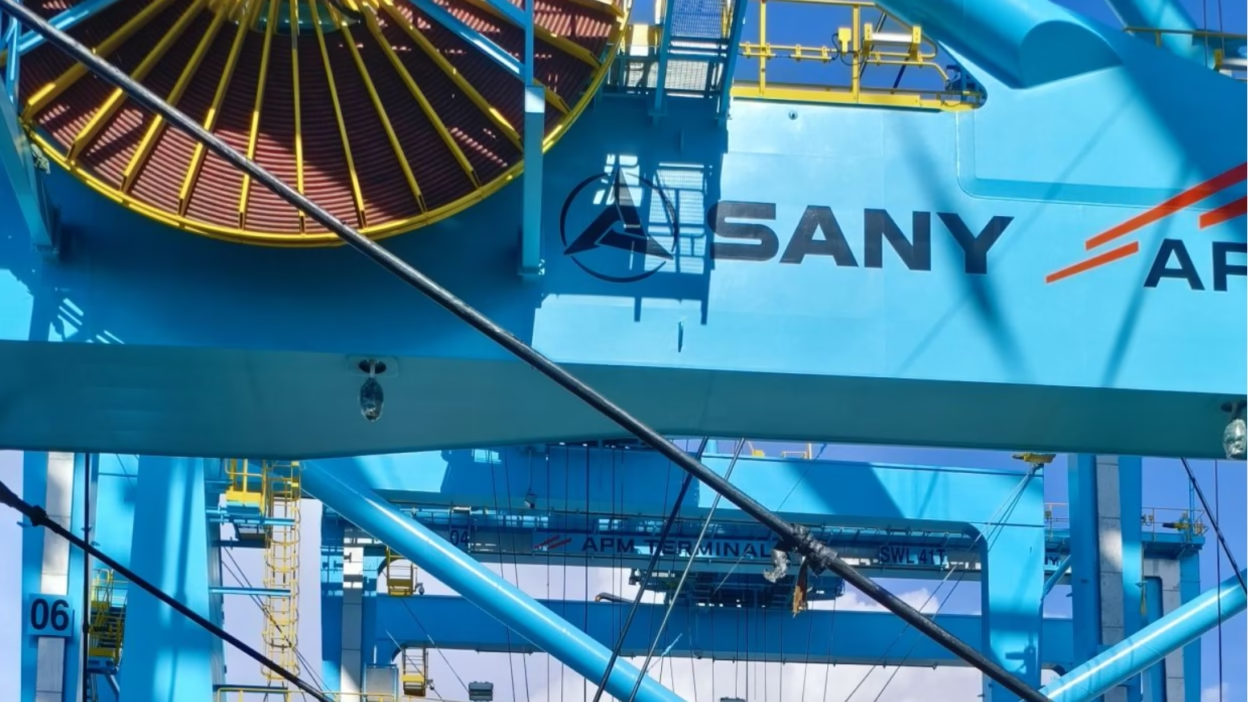
conveyor belt cable

Full technical breakdown Lapp ÖLFLEX CLASSIC 110 CY 300/500V: shielded multi-core control cable for CNC machine tools, conveyor systems, automation panels. Characteristic transparent PVC outer sheath allows visual inspection of tinned copper braid shield integrity. "CY" designates copper shield (copperScreen) protecting low-voltage control signals from electromagnetic interference (EMC) from nearby power cables, frequency converters, welding equipment, RF sources. Standard configurations: 2–100 cores, 0.5–35 mm² sections with digital marking (black cores + white numbers) + yellow-green earth. Conductor class 5 per VDE 0295 (maximum flexibility), min. bending radius 20× OD in mobile applications. Special PVC insulation (Lapp composition) provides -5°C to +70°C (mobile) / -40°C to +80°C (fixed). Flame retardant IEC 60332-1-2 (self-extinguishing). Tinned copper braid shield density ~85%, effective EMI suppression 50 Hz to several MHz. Transparent sheath is Lapp trademark — allows visual shield inspection without cutting. Russian alternatives: КГВВЭ (usually black/grey sheath, color-coded cores), МКЭШВ (small sections). European standard YSLYCY-JZ from Helukabel, TKD, Faber. FeiChun YSLYCY-JZ — full drop-in equivalent with transparent PVC, digital marking, 85%+ copper braid.

ÖLFLEX CLASSIC 110 CY Экранированный контрольный кабель: прозрачная ПВХ и медная оплётка для защиты от ЭМС — FeiChun YSLYCY-JZ, аналоги Lapp

Full technical breakdown Lapp ÖLFLEX CLASSIC 110 CY 300/500V: shielded multi-core control cable for CNC machine tools, conveyor systems, automation panels. Characteristic transparent PVC outer sheath allows visual inspection of tinned copper braid shield integrity. “CY” designates copper shield (copperScreen) protecting low-voltage control signals from electromagnetic interference (EMC) from nearby power cables, frequency converters, welding equipment, RF sources. Standard configurations: 2–100 cores, 0.5–35 mm² sections with digital marking (black cores + white numbers) + yellow-green earth. Conductor class 5 per VDE 0295 (maximum flexibility), min. bending radius 20× OD in mobile applications. Special PVC insulation (Lapp composition) provides -5°C to +70°C (mobile) / -40°C to +80°C (fixed). Flame retardant IEC 60332-1-2 (self-extinguishing). Tinned copper braid shield density ~85%, effective EMI suppression 50 Hz to several MHz. Transparent sheath is Lapp trademark — allows visual shield inspection without cutting. Russian alternatives: КГВВЭ (usually black/grey sheath, color-coded cores), МКЭШВ (small sections). European standard YSLYCY-JZ from Helukabel, TKD, Faber. FeiChun YSLYCY-JZ — full drop-in equivalent with transparent PVC, digital marking, 85%+ copper braid.
Российская марка КПГ-ХЛ может быть сбивающей с толку, потому что в разных источниках её описывают по-разному. На самом деле в России существует три разных плоских кабеля для гибких приложений, и их часто путают: КГЭ-ХЛ (горный кабель гибкий экранированный) — в основном круглый профиль, диаметр 60–75мм для сечений 95–150мм². Используется для буровых и экскаваторных приложений (см. нашу предыдущую статью о сибирских рудниках). КПГ-ХЛ (кабель плоский гибкий холодостойкий) — истинно плоский профиль с сечением примерно 12–30мм толщины и 200–400мм ширины в зависимости от количества проводников и их сечения. Это кабель для портальных кранов, мостовых кранов и фестун-систем. КПГП-ХЛ (кабель плоский гибкий полиэтиленовый холодостойкий) — плоский профиль с полиэтиленовой изоляцией (вместо HEPR), обычно меньшего сечения, 2.5–6мм². Немецкий NGFLGÖU-J по VDE 0250-809 — это истинно плоский гибкий кабель для скользящего контакта в фестун-системах промышленных кранов. По функциональности и форме он почти идентичен КПГ-ХЛ, но с критической разницей в материалах оболочки.

Flat Cable Cross-Reference: Replacing КПГ-ХЛ with VDE 0250 NGFLGÖU-J Festoon CablesComplete Engineering & Selection Guide

Российская марка КПГ-ХЛ может быть сбивающей с толку, потому что в разных источниках её описывают по-разному. На самом деле в России существует три разных плоских кабеля для гибких приложений, и их часто путают: КГЭ-ХЛ (горный кабель гибкий экранированный) — в основном круглый профиль, диаметр 60–75мм для сечений 95–150мм². Используется для буровых и экскаваторных приложений (см. нашу предыдущую статью о сибирских рудниках). КПГ-ХЛ (кабель плоский гибкий холодостойкий) — истинно плоский профиль с сечением примерно 12–30мм толщины и 200–400мм ширины в зависимости от количества проводников и их сечения. Это кабель для портальных кранов, мостовых кранов и фестун-систем. КПГП-ХЛ (кабель плоский гибкий полиэтиленовый холодостойкий) — плоский профиль с полиэтиленовой изоляцией (вместо HEPR), обычно меньшего сечения, 2.5–6мм². Немецкий NGFLGÖU-J по VDE 0250-809 — это истинно плоский гибкий кабель для скользящего контакта в фестун-системах промышленных кранов. По функциональности и форме он почти идентичен КПГ-ХЛ, но с критической разницей в материалах оболочки.
4G16 (3 power cores + 1 earth core, 16 mm²) AWG 6 equivalent Outer diameter: 25.5-32.3 mm (nominal 26.5 mm) Copper weight: 614.4 kg/km Total weight: 1200-1380 kg/km Current carrying capacity: 82A (30°C free air) Rated voltage: 0.6/1 kV Conductor: Bare copper or tinned copper, Class 5 (flexible) Temperature range: -25°C to +80°C (mobile/flexing), -40°C to +80°C (fixed) Min bending radius: 8 × OD (about 215 mm) Materials: EPR insulation, dual-layer Neoprene sheath with anti-torsion braid Heavy-duty reeling cable for ports, mining, mobile equipment

Flame Retardant Ratings: Does NSHTÖU-J 4G16 meet IEC 60332-1-2 single wire flame tests?

4G16 (3 power cores + 1 earth core, 16 mm²) AWG 6 equivalent Outer diameter: 25.5-32.3 mm (nominal 26.5 mm) Copper weight: 614.4 kg/km Total weight: 1200-1380 kg/km Current carrying capacity: 82A (30°C free air) Rated voltage: 0.6/1 kV Conductor: Bare copper or tinned copper, Class 5 (flexible) Temperature range: -25°C to +80°C (mobile/flexing), -40°C to +80°C (fixed) Min bending radius: 8 × OD (about 215 mm) Materials: EPR insulation, dual-layer Neoprene sheath with anti-torsion braid Heavy-duty reeling cable for ports, mining, mobile equipment
The maximum pulling tension for NSHTÖU-J 5G16 0.6/1kV cable is absolutely limited to 1,200 newtons of axial tensile load under the VDE 0250-814 standard specification. This maximum is calculated as 15 N/mm² tensile stress multiplied by the total cross-sectional area of the five main copper conductors (five cores × 16 mm² = 80 mm² total), yielding 15 × 80 = 1,200 newtons. This is not a casual guideline or general recommendation—it is the absolute mechanical failure point beyond which the copper conductors begin plastic deformation and eventual rupture. For practical field deployment, however, the safe operating pulling tension should be substantially lower, typically in the range of 600–900 newtons depending on the specific installation scenario, representing a safety factor of 1.3–2.0 applied against the 1,200 newton absolute maximum. The reasoning is straightforward: you never want to operate consistently at the edge of mechanical failure, where even small unanticipated additional loads could cause catastrophic failure. Instead, you design systems to operate comfortably within safe margins where occasional transient overloads can be tolerated without damage.

Maximum Pulling Tension: What is the exact maximum safe pulling load and tensile strength specification for NSHTÖU-J 5G16 0.6/1kV low-voltage reeling cables in heavy machinery and port crane applications?

The maximum pulling tension for NSHTÖU-J 5G16 0.6/1kV cable is absolutely limited to 1,200 newtons of axial tensile load under the VDE 0250-814 standard specification. This maximum is calculated as 15 N/mm² tensile stress multiplied by the total cross-sectional area of the five main copper conductors (five cores × 16 mm² = 80 mm² total), yielding 15 × 80 = 1,200 newtons. This is not a casual guideline or general recommendation—it is the absolute mechanical failure point beyond which the copper conductors begin plastic deformation and eventual rupture. For practical field deployment, however, the safe operating pulling tension should be substantially lower, typically in the range of 600–900 newtons depending on the specific installation scenario, representing a safety factor of 1.3–2.0 applied against the 1,200 newton absolute maximum. The reasoning is straightforward: you never want to operate consistently at the edge of mechanical failure, where even small unanticipated additional loads could cause catastrophic failure. Instead, you design systems to operate comfortably within safe margins where occasional transient overloads can be tolerated without damage.
The 1-second short-circuit current rating for an NSHTÖU-J 4G95 0.6/1kV low-voltage heavy-duty reeling cable is approximately 8,500 to 10,200 amperes when the cable is new and at reference condition (20°C conductor temperature, single conductor in free air, no mechanical stress or aging degradation).

Short-Circuit Rating: What is the 1-second short-circuit current for NSHTÖU-J 4G95 0.6/1kV heavy-duty reeling cable? 

The 1-second short-circuit current rating for an NSHTÖU-J 4G95 0.6/1kV low-voltage heavy-duty reeling cable is approximately 8,500 to 10,200 amperes when the cable is new and at reference condition (20°C conductor temperature, single conductor in free air, no mechanical stress or aging degradation).
The continuous current carrying capacity of an (N)TSCGEWÖU 3x50+3x25/3 12/20kV cable wound in three compacted layers on a standard industrial reel is approximately 85 to 110 amperes depending on ambient temperature, mechanical stress conditions, and reel cooling characteristics. This represents a significant reduction from the cable's reference rating of 202 amperes, which is established under ideal laboratory conditions (30°C ambient, single conductor run in free air, no mechanical tension or twisting). The dramatic derating from 202 A to 85–110 A reflects the thermal constraint imposed by the compact three-layer geometry, where the inner layers of wound cable are thermally insulated by outer layers, preventing efficient dissipation of I²R resistive losses to the surrounding environment. The cable features three 50 mm² Class 2 stranded tinned copper main power conductors and a symmetrical 3×25 mm² grounding conductor architecture (the "3+3" design), weighing approximately 1,850 kg/km of copper content and 3,550–3,650 kg/km total weight, with proven torsional twist resistance to ±100°/m and maximum tensile load capability of 3,000 newtons per phase conductor.

Derating Factors: Current carrying capacity of (N)TSCGEWÖU 3×50+3×25/3 12/20kV wound in 3 layers on a reel

The continuous current carrying capacity of an (N)TSCGEWÖU 3×50+3×25/3 12/20kV cable wound in three compacted layers on a standard industrial reel is approximately 85 to 110 amperes depending on ambient temperature, mechanical stress conditions, and reel cooling characteristics. This represents a significant reduction from the cable’s reference rating of 202 amperes, which is established under ideal laboratory conditions (30°C ambient, single conductor run in free air, no mechanical tension or twisting). The dramatic derating from 202 A to 85–110 A reflects the thermal constraint imposed by the compact three-layer geometry, where the inner layers of wound cable are thermally insulated by outer layers, preventing efficient dissipation of I²R resistive losses to the surrounding environment. The cable features three 50 mm² Class 2 stranded tinned copper main power conductors and a symmetrical 3×25 mm² grounding conductor architecture (the “3+3” design), weighing approximately 1,850 kg/km of copper content and 3,550–3,650 kg/km total weight, with proven torsional twist resistance to ±100°/m and maximum tensile load capability of 3,000 newtons per phase conductor.
(N)TMCGEH3S矿用电缆介绍 The (N)TMCGEH3S represents a sophisticated medium voltage trailing cable specifically engineered for demanding open-pit mining operations. Developed in accordance with DIN VDE 0250 Part 813 standards and Nexans specifications, this polyurethane-sheathed cable combines exceptional mechanical durability with advanced electrical performance characteristics. The integration of self-illuminating LED visual monitoring technology transforms this cable into an intelligent power transmission solution that provides real-time operational status indication. (N)TMCGEH3S是一种专为苛刻露天采矿作业设计的复杂中压拖曳电缆。该电缆按照DIN VDE 0250第813部分标准和Nexans规范开发,聚氨酯护套电缆将卓越的机械耐久性与先进的电气性能特性相结合。集成自发光LED视觉监测技术使该电缆成为能够提供实时运行状态指示的智能电力传输解决方案。

(N)TMCGEH3S Self-Illuminating Mining Cable: Can LED Brightness Indicate Voltage Level or Load Status?

(N)TMCGEH3S represents a sophisticated medium voltage trailing cable specifically engineered for demanding open-pit mining operations. Developed in accordance with DIN VDE 0250 Part 813 standards and Nexans specifications, this polyurethane-sheathed cable combines exceptional mechanical durability with advanced electrical performance characteristics. The integration of self-illuminating LED visual monitoring technology transforms this cable into an intelligent power transmission solution that provides real-time operational status indication. (N)TMCGEH3S是一种专为苛刻露天采矿作业设计的复杂中压拖曳电缆。该电缆按照DIN VDE 0250第813部分标准和Nexans规范开发,聚氨酯护套电缆将卓越的机械耐久性与先进的电气性能特性相结合。集成自发光LED视觉监测技术使该电缆成为能够提供实时运行状态指示的智能电力传输解决方案。
The selection of appropriate submersible pump cables for acidic mine water dewatering applications represents a critical engineering decision that directly impacts operational safety, equipment longevity, and maintenance costs. While Type 441 cables may appear suitable for general submersible pump applications, the harsh chemical environment of acidic mine water typically necessitates the use of specialized EPR (Ethylene Propylene Rubber) or CSP (Chlorosulfonated Polyethylene) insulated cables specifically engineered for corrosive conditions. 为酸性矿井水脱水应用选择合适的潜水泵电缆是一项关键的工程决策,直接影响运行安全、设备寿命和维护成本。虽然441型电缆可能适用于一般潜水泵应用,但酸性矿井水的恶劣化学环境通常需要使用专门设计用于腐蚀性条件的EPR(乙丙橡胶)或CSP(氯磺化聚乙烯)绝缘电缆。

TUNNELFLEX-R-PUR HF with Antitwisting Protection 1 KV

TUNNELFLEX-R-PUR HF represents a specialized category of halogen-free, flame-retardant flexible power cables engineered specifically for the demanding requirements of underground mining and tunneling operations. This cable combines advanced polyurethane (PUR) sheathing technology with integrated antitwisting protection to deliver exceptional mechanical durability, environmental resistance, and most importantly, enhanced safety through its halogen-free construction that significantly reduces toxic gas emissions during fire incidents. TUNNELFLEX-R-PUR HF电缆是专为地下采矿和隧道作业的苛刻要求而设计的无卤阻燃柔性电力电缆。该电缆结合了先进的聚氨酯护套技术和集成的防扭转保护,提供卓越的机械耐久性、环境抵抗力,以及通过无卤结构在火灾事故中显著减少有毒气体排放的增强安全性。
In modern tunnel boring machine (TBM) applications, the selection of appropriate voltage ratings for cutterhead drive systems is critical for operational efficiency, safety, and equipment longevity. For Herrenknecht TBMs—the world's leading manufacturer of mechanized tunneling equipment—the standard voltage rating for cutterhead high-voltage drives is predominantly 6kV (6/10kV class) and 10kV, with 20kV systems reserved for specialized high-power applications exceeding 5MW per motor. 在现代隧道掘进机(TBM)应用中,刀盘驱动系统的电压等级选择对运行效率、安全性和设备寿命至关重要。对于海瑞克TBM——全球领先的机械化隧道设备制造商——刀盘高压驱动的标准电压等级主要为6kV(6/10kV级)和10kV,20kV系统仅用于单电机功率超过5MW的特殊高功率应用。

TBM Cutterhead High-Voltage Drives: Which Voltage Rating (6kV, 10kV, or 20kV) is Standard for Herrenknecht TBM?

In modern tunnel boring machine (TBM) applications, the selection of appropriate voltage ratings for cutterhead drive systems is critical for operational efficiency, safety, and equipment longevity. For Herrenknecht TBMs—the world’s leading manufacturer of mechanized tunneling equipment—the standard voltage rating for cutterhead high-voltage drives is predominantly 6kV (6/10kV class) and 10kV, with 20kV systems reserved for specialized high-power applications exceeding 5MW per motor. 在现代隧道掘进机(TBM)应用中,刀盘驱动系统的电压等级选择对运行效率、安全性和设备寿命至关重要。对于海瑞克TBM——全球领先的机械化隧道设备制造商——刀盘高压驱动的标准电压等级主要为6kV(6/10kV级)和10kV,20kV系统仅用于单电机功率超过5MW的特殊高功率应用。
Type 440 reeling cables represent a critical component in mining and industrial power distribution systems, specifically designed for flexible trailing applications according to AS/NZS 2802:2000 standards. These metal-screened power cables feature three pilot cores and operate across voltage ratings from 1.1 kilovolts to 11 kilovolts, supplying reliable electrical power to mobile mining equipment such as draglines, excavators, and materials handling machinery. Despite their robust construction with EPR insulation and high abrasion resistance, these cables remain vulnerable to a particularly destructive failure mode known as corkscrewing, which can compromise both electrical performance and mechanical integrity during operation.

How does “Corkscrewing” destroy Type 440 reeling cables, and how to prevent it during installation?

Type 440 reeling cables represent a critical component in mining and industrial power distribution systems, specifically designed for flexible trailing applications according to AS/NZS 2802:2000 standards. These metal-screened power cables feature three pilot cores and operate across voltage ratings from 1.1 kilovolts to 11 kilovolts, supplying reliable electrical power to mobile mining equipment such as draglines, excavators, and materials handling machinery. Despite their robust construction with EPR insulation and high abrasion resistance, these cables remain vulnerable to a particularly destructive failure mode known as corkscrewing, which can compromise both electrical performance and mechanical integrity during operation.
Mining operations worldwide face a critical procurement decision when selecting medium voltage reeling and trailing cables for mobile equipment such as excavators, draglines, and continuous miners. The choice between premium brand-name cables like PROTOLON and generic alternatives conforming to the same NTSCGEWÖU specification represents a significant investment decision with long-term operational and safety implications.

PROTOLON (Proprietary) vs. Generic NTSCGEWÖU: Is the Premium Price for Brand-Name Mining Cables Justified?

Mining operations worldwide face a critical procurement decision when selecting medium voltage reeling and trailing cables for mobile equipment such as excavators, draglines, and continuous miners. The choice between premium brand-name cables like PROTOLON and generic alternatives conforming to the same NTSCGEWÖU specification represents a significant investment decision with long-term operational and safety implications.
The German DIN VDE cable designation system provides engineers and procurement specialists with a comprehensive coding methodology that communicates essential cable characteristics through standardized letter and number sequences. Within this system, the symbol Ö (pronounced "Oe" in romanized form) represents one of the most critical performance indicators for cables deployed in demanding industrial applications.[1][2] 德国DIN VDE电缆标识系统为工程师和采购专家提供了一套全面的编码方法,通过标准化的字母和数字序列传达电缆的基本特性。在该系统中,符号"Ö"(罗马化读作"Oe")代表在苛刻工业应用中部署的电缆最关键的性能指标之一。

What is the Meaning of the Symbol “Ö” (or “Oe”) in VDE Cable Codes, and Why is it Critical for Industrial Environments?

The German DIN VDE cable designation system provides engineers and procurement specialists with a comprehensive coding methodology that communicates essential cable characteristics through standardized letter and number sequences. Within this system, the symbol Ö (pronounced “Oe” in romanized form) represents one of the most critical performance indicators for cables deployed in demanding industrial applications.[1][2] 德国DIN VDE电缆标识系统为工程师和采购专家提供了一套全面的编码方法,通过标准化的字母和数字序列传达电缆的基本特性。在该系统中,符号”Ö”(罗马化读作”Oe”)代表在苛刻工业应用中部署的电缆最关键的性能指标之一。
How do you select conductor size for high-current tunnelling equipment and cable reels?

كيفية اختيار مقاس الموصل لمعدات الأنفاق عالية التيار وبكرات الكابلات؟

Selecting the correct conductor size for cables used in tunnel boring equipment and cable reels is critical for ensuring safety and operational efficiency. These cables are subjected to extreme conditions including high currents, mechanical stress, and elevated temperatures. According to International Electrotechnical Commission (IEC) standards, conductor selection must consider ampacity, voltage drop, short-circuit capacity, and environmental factors.
Prysmian Mining Application Systems represent a comprehensive portfolio of specialized cables engineered for the demanding environments of underground mining, tunneling operations, and opencast mining facilities. Developed by Prysmian Group, the world's largest cable manufacturer with over 140 years of expertise, these systems encompass multiple product families including PROTOLON (medium voltage flexible cables), PROTOMONT (rubber-sheathed flexible cables), OPTOFLEX (fiber optic cables), and CORDAFLEX (scraper cables).

What is Prysmian Mining Application systems ?

矿用电缆, 采煤机电缆, 拖曳电缆, 橡套电缆, 中压柔性电缆, 煤矿电缆, 隧道掘进机电缆, горнодобывающий кабель, шахтный кабель, гибкий кабель для шахт, кабель для угольных комбайнов, тянущийся кабель PROTOLON cable, PROTOMONT cable, OPTOFLEX mining cable, CORDAFLEX scraper cable, SUPROMONT power feeder cable, NTMCGCWÖU cable, NTSCGEWÖU cable, NTSCGCEWÖU cable, NSSHÖU cable, NSHÖU mining cable, NSSHCGEÖU coal cutter cable, NSHTÖU scraper cable, NYHSSYCY feeder cable, N3GHSSYCY rubber cable, NTSKGCFCWÖU festoon cable, NTMHWÖU lift cable, ZYSLGCGÖU MSR cable
N2XCEYRRGY cable, N2XCEHRRGH mining cable, N2XCEYFFGY shaft cable, N2XCEHFFGH 35kV cable, N3GSEYRRGY EPR cable, N3GSEHRRGH rubber sheath cable, N3GSEYFFGY mine cable, N3GSEHFFGH underground cable, N3GHSSHCH gallery cable, DM2N mining cable, NSHOEU trailing cable, SSHOEU flexible cable, POWERMINE XP cable, NSSHCGEOEU-Z reeling cable, BUFLEX-M mining cable, TSKCGECWOEUSS cable, SHT trailing cable

What is Mining Shaft, Gallery, Trailing and Reeling Cable?

N2XCEYRRGY cable, N2XCEHRRGH mining cable, N2XCEYFFGY shaft cable, N2XCEHFFGH 35kV cable, N3GSEYRRGY EPR cable, N3GSEHRRGH rubber sheath cable, N3GSEYFFGY mine cable, N3GSEHFFGH underground cable, N3GHSSHCH gallery cable, DM2N mining cable, NSHOEU trailing cable, SSHOEU flexible cable, POWERMINE XP cable, NSSHCGEOEU-Z reeling cable, BUFLEX-M mining cable, TSKCGECWOEUSS cable, SHT trailing cable
BS6708, mining cable, quarry cable, trailing cable, EPR cable, SWA cable, coal cutter cable, excavator cable, 礦用電纜, 採石場電纜, 拖曳電纜

What is BS6708 Cable?

British Standard BS6708 sets out the requirements for flexible trailing cables where used in mining operations and quarries. These cables are often referred to as trailing cables, quarry cables, or auxiliary cables and have applications with a wide range of dynamic mining equipment including excavators, coal-cutters, crushing machines, and shuttle cars. flexible trailing cable, mine cable, EPR mining cable, SWA mining cable, chloroprene cable, coal cutter cable, excavator cable, shuttle car cable, crushing machine cable, coal face cable, Type 7 mining cable, Type 7M cable, Type 7S cable, Type 11 cable, Type 20 cable, Type 21 cable, Type 307 cable, Type 331 cable, Type 621 cable, Type 631 cable, 640/1100V mining cable, 1.9/3.3kV mining cable
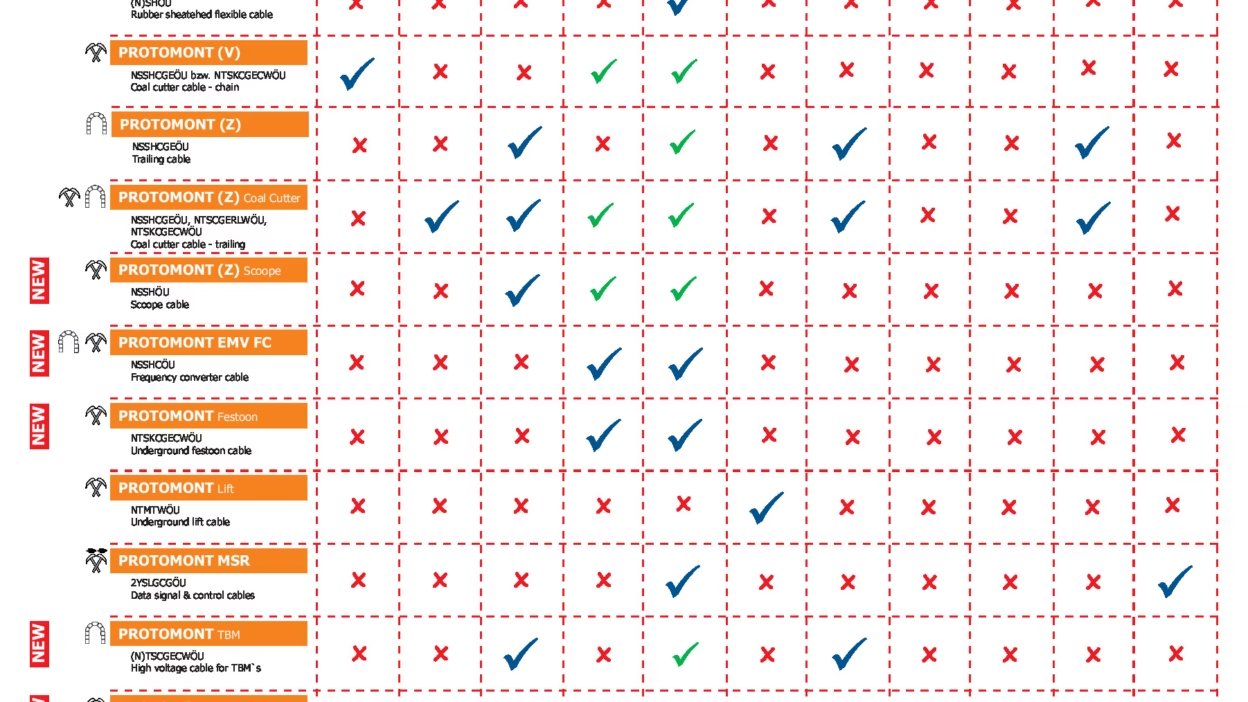
PROTOMONT(MSR) 2YSLGCGOEU 250/250V represents a specialized category of control, signaling, and bus cables engineered specifically for electrical and electronic equipment in mining installations. As documented in professional mining cable resources[1], these cables feature the transmission characteristics necessary for measured value processing, process data handling, and automation units in demanding open-cast mining applications.

What is PROTOMONT(MSR) 2YSLGCGOEU 250/250V Control & Signaling Cable?

PROTOMONT(MSR) 2YSLGCGOEU 250/250V represents a specialized category of control, signaling, and bus cables engineered specifically for electrical and electronic equipment in mining installations. As documented in professional mining cable resources[1], these cables feature the transmission characteristics necessary for measured value processing, process data handling, and automation units in demanding open-cast mining applications.
PROTOMONT(MT) (N)SHOEU

PROTOMONT(MT) (N)SHOEU 1 kV

PROTOMONT MT SHOEU cable, light flexible mining cable, conveyor belt cable, submersible pump 500m, upper lower car connection, shiftable unit cable, material handling cable, cable suspension, water resistant mining cable
PROTOMONT(MT) (N)SHOEU

PROTOMONT(MT) (N)SHOEU 1 kV Light & Flexible Rubber Cable

The designation (N)SHOEU within the German VDE cable nomenclature system identifies a specific cable construction optimized for applications requiring exceptional flexibility and reduced weight while maintaining robust environmental protection characteristics essential for industrial and mining applications. The single “S” designation, distinguishing (N)SHOEU from the double “SS” in NSSHOEU variants, signifies Strapazierfähig (heavy-duty) rather than Spezial Strapazierfähig (special heavy-duty), indicating an optimized balance between mechanical strength and flexibility. This optimization enables (N)SHOEU cables to achieve approximately fifteen to twenty-five percent weight reduction compared to NSSHOEU equivalents while maintaining adequate mechanical properties for applications not subjected to the most extreme stress conditions characteristic of coal cutter cable chain operations or heavy continuous miner trailing cable applications.
What is PROTOMONT(MT) (N)SSHOEU 1 kV? Complete Technical Guide Comprehensive specifications, applications, safety standards, and technical parameters for heavy-duty rubber-sheathed flexible mining and tunneling cables | Anhui Feichun Special Cable Co., Ltd. (安徽飞纯特种电缆有限公司)

What is PROTOMONT(MT) (N)SSHOEU 1 kV? Complete Technical Guide

PROTOMONT(MT) (N)SSHOEU represents a specialized category of rubber-sheathed flexible cables engineered specifically for mining and tunneling applications where heavy mechanical stress is a constant operational challenge. These cables serve as essential power transmission components in some of the world’s most demanding industrial environments, from underground coal mines to surface excavation operations. Mining environments present unique challenges that standard industrial cables cannot withstand. As noted in industry research, mining cables must endure severe physical punishment including constant abrasion against rock surfaces, crushing forces from equipment, impacts from falling debris, and frequent flexing as mobile equipment moves. The PROTOMONT(MT) (N)SSHOEU cable line addresses these challenges through sophisticated engineering and advanced material selection. Manufactured in accordance with DIN VDE 0250 part 812 standards and carrying VDE-REG F546 certification, this cable represents the pinnacle of German engineering excellence applied to mining cable technology. The designation “(N)SSHOEU” provides valuable information about the cable’s construction characteristics, indicating compliance with national and international standards, special sheathing for severe service conditions, and European standard compliance.
What is PROTOMONT NSSHOEU 1 kV Low Voltage Flexible Rubber Cable? A Comprehensive Technical Guide to Heavy-Duty Mining and Industrial Flexible Cables with EPR Insulation for Extreme Environments

What is PROTOMONT NSSHOEU 1 kV Low Voltage Flexible Rubber Cable?

PROTOMONT NSHXOEU series represents an advanced category of low voltage flexible rubber cables specifically engineered for demanding mining and industrial environments. These cables feature a specialized EVA-based outer sheath compound (5GM3) combined with EPR (Ethylene Propylene Rubber) insulation, providing an optimal balance of flexibility, durability, and environmental resistance for medium mechanical stress applications. The designation NSHXOEU follows the German cable nomenclature system established by DIN VDE standards, where each letter indicates specific construction characteristics. The “X” in the designation indicates the halogen-reduced EVA sheath compound, while “H” denotes the heavy-duty rubber construction suitable for harsh environments. According to Eland Cables, DIN VDE 0250 has achieved global recognition as the ultimate standard for tough rubber sheathed flexible cables, particularly for mining and material handling equipment.
What is PROTOMONT NSSHOEU 1 kV Low Voltage Flexible Rubber Cable? A Comprehensive Technical Guide to Heavy-Duty Mining and Industrial Flexible Cables with EPR Insulation for Extreme Environments

What is PROTOMONT NSSHOEU 1 kV Low Voltage Flexible Rubber Cable?

PROTOMONT NSSHOEU series represents a category of heavy-duty, low voltage flexible rubber cables engineered specifically for demanding industrial environments. These cables are designed to provide reliable power transmission in applications where conventional cables would fail due to extreme mechanical stress, environmental exposure, or chemical contact. The designation NSSHOEU follows German cable nomenclature standards where each letter indicates specific construction characteristics. The cables are manufactured according to DIN VDE 0250-812 specifications, which define requirements for rubber-insulated flexible cables used in power installations. According to industry standards, these cables are engineered for environments where high levels of mechanical stress and abrasion are expected, making them essential for modern mining, construction, and industrial operations.
PROTOLON(M) F(N)TSCGEWOEU Cable

What is PROTOLON(M) F(N)TSCGEWOEU Cable?

PROTOLON(M) F(N)TSCGEWOEU represents a premium series of medium voltage trailing cables specifically engineered for demanding industrial applications. These cables feature advanced EPR (Ethylene Propylene Rubber) insulation technology, delivering exceptional performance in voltage ranges from 3.6/6 kV to 20/35 kV. The PROTOLON compound provides superior electrical insulation properties and mechanical resilience compared to standard EPR formulations.
PROTOLON(M) F(N)TSCGEWOEU 3 kV – 30 kV Medium Voltage Flexible Cables High-Performance EPR-Insulated Trailing Cables for Semiflexible Installation in Mining, Material Handling, and Industrial Applications

PROTOLON(M) F(N)TSCGEWOEU 3 kV – 30 kV Medium Voltage Flexible Cables

PROTOLON(M) F(N)TSCGEWOEU series represents a specialized family of medium voltage flexible cables designed for demanding industrial environments where conventional fixed installation cables prove inadequate. These cables are engineered specifically for semiflexible installation applications, combining the durability required for mobile equipment with the electrical performance characteristics essential for medium voltage power distribution systems operating between 3 kV and 30 kV. According to the International Electrotechnical Commission, medium voltage cables are critical components in power distribution systems, with IEC 60502-2 establishing comprehensive requirements for cables rated from 6 kV (Um = 7.2 kV) up to 30 kV (Um = 36 kV), ensuring rigorous safety and performance standards across diverse industrial applications. The PROTOLON(M) F(N)TSCGEWOEU cable series is engineered to meet and exceed these stringent international requirements while addressing the specific mechanical demands of mobile and reeling applications.
Polish Mining Cable

What is YHKGXSekyn, YHKGXSekFtZnyn, YHKGXSekFtyn, YHKGXSekFitlyn, YHKGXSekFoyn, and YHKGXSekFpyn Polish Mining Cable ?

Polish Mining Cable Code Designation System represents a comprehensive nomenclature standard used extensively throughout European mining operations, particularly in Poland’s extensive coal, copper, and mineral extraction industries. This systematic coding methodology enables engineers and procurement specialists to precisely specify cable configurations through alphanumeric designations that encode critical construction parameters, material specifications, and performance characteristics.