Anhui Feichun

Technical reference for industrial equipment procurement specialists, port operations engineers, heavy-lift crane maintenance teams, electrical infrastructure planners, OEM equipment designers, and supply-chain optimization professionals. Comprehensive coverage: polyurethane polymer architecture (polyol component selection, isocyanate structure, degree of crosslinking, impact on mechanical/thermal properties); halogen-free flame-retardant chemistry (phosphorus-based and mineral-filled additives for LOI ≥30 without halogenated compounds); aramid-fiber engineering (para-aramid vs. meta-aramid trade-offs, fiber tensile strength >3,500 MPa, braiding angle optimization, stress-distribution modeling); mechanical property optimization (tear-strength formulation, abrasion-resistance testing per ASTM D1044, puncture-resistance engineering); oil-resistance chemistry (polyether vs. polyester polyol base, plasticizer selection for long-term swelling resistance); UV-stabilizer package design (carbon-black loading vs. alternative UV absorbers); DIN VDE 0250-813 (multi-core cable) and 0250-814 (single-core reeling cable) standards technical requirements and test protocols; comparative benchmarking of TROMMELFLEX vs. BUFLEX DGR across 20+ performance parameters; field deployment data from industrial port cranes, mining drag-chains, and heavy-lift systems across Europe, Asia, and North America; manufacturing process optimization highlighting Anhui Feichun's polyurethane extrusion capabilities (precision temperature control, die design for void-free sheaths, quality assurance for tear-strength consistency); total-cost-of-ownership modeling including material cost, labour, equipment downtime, and service-life extension; OEM compatibility qualification; and installation best practices for high-stress industrial environments.

TROMMELFLEX PUR-HF Halogen-Free Polyurethane Reeling Cable: Complete Technical Engineering Analysis of Multi-Core and Single-Core Configurations, High-Strength Aramid Anti-Torsion Braiding Architecture, Superior Mechanical Abrasion Resistance (20 N/mm² Tear Strength Standard), Low and Medium-Voltage Power Distribution (0.6/1.0 kV), Polyurethane Polymer Chemistry with Halogen-Free Flame-Retardant Additives, DIN VDE 0250-813 and 0250-814 Standards Compliance, Comparative Performance Benchmarking Against BUFLEX DGR System, Chemical Cross-Linking Analysis and Stress-Strain Engineering, Port Crane and Heavy-Lift Equipment Integration, Field Durability in Extreme Industrial Environments, Drop-In Replacement Qualification Framework, Manufacturing Process Optimization by Anhui Feichun Special Cable (Optimized Extrusion, 20 N/mm² Equivalent Tear Strength, Accelerated Delivery), Lifecycle Cost-of-Ownership Analysis, and OEM Equipment Compatibility Documentation

Technical reference for industrial equipment procurement specialists, port operations engineers, heavy-lift crane maintenance teams, electrical infrastructure planners, OEM equipment designers, and supply-chain optimization professionals. Comprehensive coverage: polyurethane polymer architecture (polyol component selection, isocyanate structure, degree of crosslinking, impact on mechanical/thermal properties); halogen-free flame-retardant chemistry (phosphorus-based and mineral-filled additives for LOI ≥30 without halogenated compounds); aramid-fiber engineering (para-aramid vs. meta-aramid trade-offs, fiber tensile strength >3,500 MPa, braiding angle optimization, stress-distribution modeling); mechanical property optimization (tear-strength formulation, abrasion-resistance testing per ASTM D1044, puncture-resistance engineering); oil-resistance chemistry (polyether vs. polyester polyol base, plasticizer selection for long-term swelling resistance); UV-stabilizer package design (carbon-black loading vs. alternative UV absorbers); DIN VDE 0250-813 (multi-core cable) and 0250-814 (single-core reeling cable) standards technical requirements and test protocols; comparative benchmarking of TROMMELFLEX vs. BUFLEX DGR across 20+ performance parameters; field deployment data from industrial port cranes, mining drag-chains, and heavy-lift systems across Europe, Asia, and North America; manufacturing process optimization highlighting Anhui Feichun’s polyurethane extrusion capabilities (precision temperature control, die design for void-free sheaths, quality assurance for tear-strength consistency); total-cost-of-ownership modeling including material cost, labour, equipment downtime, and service-life extension; OEM compatibility qualification; and installation best practices for high-stress industrial environments.
RHEYFLAT®-N NGFLGOEU-J is not a "budget cable" but evidence-based engineering optimization for the actual hazard profiles in industrial environments (port RMG cranes, mill equipment, conveyor systems). Hazard analysis: Electromagnetic interference (EMI) = negligible (50/60 Hz pure power, no VFD). Fire risk = negligible (outdoor environments). Mechanical degradation = EXTREME (tearing, abrasion, cycling 1,000–5,000 times/day). Therefore: eliminate expensive shielding (provides zero benefit), eliminate cost-premium LSHF (fire risk negligible), maximize tear-strength (>20 MPa) and fatigue life (>5M cycles) through flat geometry and halogenated rubber chemistry. Result: TCO optimization delivers 30–40% cost advantage vs. premium alternatives while providing superior 5–8 year fatigue life. This is why NGFLGOEU-J dominates global MRO procurement.

RHEYFLAT®-N NGFLGOEU-J Heavy-Duty Flat Festoon Cable: Complete Chemistry-Electromagnetics-Mechanics Deep Analysis

RHEYFLAT®-N NGFLGOEU-J is not a “budget cable” but evidence-based engineering optimization for the actual hazard profiles in industrial environments (port RMG cranes, mill equipment, conveyor systems). Hazard analysis: Electromagnetic interference (EMI) = negligible (50/60 Hz pure power, no VFD). Fire risk = negligible (outdoor environments). Mechanical degradation = EXTREME (tearing, abrasion, cycling 1,000–5,000 times/day). Therefore: eliminate expensive shielding (provides zero benefit), eliminate cost-premium LSHF (fire risk negligible), maximize tear-strength (>20 MPa) and fatigue life (>5M cycles) through flat geometry and halogenated rubber chemistry. Result: TCO optimization delivers 30–40% cost advantage vs. premium alternatives while providing superior 5–8 year fatigue life. This is why NGFLGOEU-J dominates global MRO procurement.
RHEYFESTOON® (N)3GRD5G's missing "(C)" (concentric shielding in VDE 0250-812 nomenclature) is not cost-cutting, but precision engineering optimization. Shielding adds material cost (USD 0.8–1.5/meter), weight (+20–35%), and flexibility constraints. For 50/60 Hz pure power transmission, shielding provides zero functional benefit. Load currents (100–600 A) and voltage drops (

RHEYFESTOON® (N)3GRD5G: Chemistry-Electromagnetics-Mechanics Deep Analysis

RHEYFESTOON® (N)3GRD5G’s missing “(C)” (concentric shielding in VDE 0250-812 nomenclature) is not cost-cutting, but precision engineering optimization. Shielding adds material cost (USD 0.8–1.5/meter), weight (+20–35%), and flexibility constraints. For 50/60 Hz pure power transmission, shielding provides zero functional benefit. Load currents (100–600 A) and voltage drops (
Extended technical reference for container-port operations engineers, dock equipment procurement specialists, electrical infrastructure planners, gantry-crane maintenance teams, maritime safety officers, and port capital-infrastructure project managers. Comprehensive coverage: salt-fog corrosion mechanisms at the polymer/metal interface (electrochemical kinetics of aluminum/copper oxidation in chloride-rich marine environments); polymer-chemistry approaches to moisture-ingress suppression (HEPR elastomer formulation, plasticizer selection, interface engineering); EMC shielding design (concentric vs. braided screen, copper surface-finish specifications, impedance control for VFD harmonic suppression); mechanical fatigue under combined bending-torsion-wind stress (Goodman diagram analysis, S-N fatigue curves for elastomer systems); round vs. flat cable aerodynamic behavior (computational fluid dynamics modeling of wind-induced vibration, stress concentration factors); DIN VDE 0250-812 standards architecture and global regulatory equivalence (ATEX, IEC, ISO 1659, Australian/Canadian port standards); field deployment data from 15+ years of port operations across diverse geographic regions (tropical salt-fog, temperate maritime, cold-climate ports); practical drop-in replacement engineering for Nexans/Prysmian equipment transitions; installation best practices for salt-fog environments (routing, termination, grounding, drainage management); maintenance protocols and life-extension strategies; and comprehensive 20-year total-cost-of-ownership modeling comparing premium elastomer systems versus commodity flat-cable approaches.

RHEYFESTOON®(C) (N)3GRDGC5G High-Speed Festoon Cable: Complete Technical Engineering Analysis of High-Molecular-Weight Elastomer Chemistry, Salt-Spray Corrosion Resistance Mechanisms, Concentric Copper-Screen EMC Shielding Architecture, Round vs. Flat Cable Design Comparison, Mechanical Stress Engineering for Extreme U-Bending Repetition, Polymer Moisture Ingress Barriers, Electrochemical Protection in Marine Salt-Fog Environments, Port Container-Terminal Integration, Real-World 240 m/min Operational Duty Cycles, Comparative Performance Benchmarking Against Standard Flat Festoon Systems, Drop-In Replacement Qualification Framework, Lifecycle Cost-of-Ownership Analysis for Global Deep-Water Container Ports, and Field-Proven Deployment Data from 1,500+ Port Installations

Extended technical reference for container-port operations engineers, dock equipment procurement specialists, electrical infrastructure planners, gantry-crane maintenance teams, maritime safety officers, and port capital-infrastructure project managers. Comprehensive coverage: salt-fog corrosion mechanisms at the polymer/metal interface (electrochemical kinetics of aluminum/copper oxidation in chloride-rich marine environments); polymer-chemistry approaches to moisture-ingress suppression (HEPR elastomer formulation, plasticizer selection, interface engineering); EMC shielding design (concentric vs. braided screen, copper surface-finish specifications, impedance control for VFD harmonic suppression); mechanical fatigue under combined bending-torsion-wind stress (Goodman diagram analysis, S-N fatigue curves for elastomer systems); round vs. flat cable aerodynamic behavior (computational fluid dynamics modeling of wind-induced vibration, stress concentration factors); DIN VDE 0250-812 standards architecture and global regulatory equivalence (ATEX, IEC, ISO 1659, Australian/Canadian port standards); field deployment data from 15+ years of port operations across diverse geographic regions (tropical salt-fog, temperate maritime, cold-climate ports); practical drop-in replacement engineering for Nexans/Prysmian equipment transitions; installation best practices for salt-fog environments (routing, termination, grounding, drainage management); maintenance protocols and life-extension strategies; and comprehensive 20-year total-cost-of-ownership modeling comparing premium elastomer systems versus commodity flat-cable approaches.
Single-mode fibres confine optical propagation to the fundamental LP₀₁ mode only — light travels essentially parallel to the fibre axis with minimal modal dispersion. Core: 9 μm diameter; cladding: 125 μm; cutoff wavelength: ~1,260 nm (ensuring only fundamental mode at 1,310/1,550 nm telecom bands). Advantage in reeling service: Modal dispersion (temporal spreading from different modes arriving at different velocities) is completely eliminated, enabling high-speed data (10–100 Gbps) over extended distances without signal degradation. For mission-critical automated port cranes transmitting high-definition video from STS gantry cameras, SMF is essential. Challenge: SMF is mechanically fragile — the 9 μm core is minuscule; any microbend creates mode coupling (fundamental mode energy leaks to radiated/cladding modes), causing signal loss. RHEYCORD®-OFE loose-tube jelly-fill is engineered to minimize mechanical stress on SMF.

RHEYCORD®-OFE Dynamic Optical Fibre Reeling Cable: Photonics-Electromagnetics-Materials Physics Deep-Dive

Single-mode fibres confine optical propagation to the fundamental LP₀₁ mode only — light travels essentially parallel to the fibre axis with minimal modal dispersion. Core: 9 μm diameter; cladding: 125 μm; cutoff wavelength: ~1,260 nm (ensuring only fundamental mode at 1,310/1,550 nm telecom bands). Advantage in reeling service: Modal dispersion (temporal spreading from different modes arriving at different velocities) is completely eliminated, enabling high-speed data (10–100 Gbps) over extended distances without signal degradation. For mission-critical automated port cranes transmitting high-definition video from STS gantry cameras, SMF is essential. Challenge: SMF is mechanically fragile — the 9 μm core is minuscule; any microbend creates mode coupling (fundamental mode energy leaks to radiated/cladding modes), causing signal loss. RHEYCORD®-OFE loose-tube jelly-fill is engineered to minimize mechanical stress on SMF.
Comprehensive technical reference for mining operations engineers, equipment procurement specialists, underground-mine safety officers, surface-mining electrical contractors, and deep-excavation project managers. Covers: fire-safety fundamentals in underground mining; flame-retardant material chemistry (EPR elastomer selection, PCP sheath formulation, additives for LOI optimization); torsion-resistance engineering (aramid-braid design, helical-lay optimization, polymer-chain architecture); DIN VDE 0250-814 standards requirements vs. competing standards (ISO 1659, IEC 60811); electrical performance in explosive atmospheres (conductivity maintenance, EMC shielding in low-oxygen environments); mechanical fatigue under combined bending-and-torsion stress; thermal management in deep-mine temperature regimes (4–12°C typical, impacting polymer properties); comparative cost-of-ownership (PUR vs. rubber systems); field deployment data from 2,000+ underground installations; safety certification and regulatory compliance; practical drop-in replacement engineering; installation best practices in mine shafts and underground corridors; and maintenance protocols optimized for underground duty.

Heavy-Duty Rubber Reeling Cable (N)SHTOEU-J: Complete Engineering Analysis of DIN VDE 0250-814 Full-Elastomer System, Flame-Retardant Architecture with Torsion-Resistant Aramid Braiding, Charring-Resistance Design for Spark-Exposed Mining Environments, Comprehensive Material Chemistry Comparison (EPR Insulation vs. PCP Rubber Sheath), Mechanical Fatigue Engineering Under Extreme Torsion/Bending Stress, Performance Differential vs. PUR-Based Reeling Cables (BUFLEX DGR), Drop-In Replacement Qualification Framework, and Global Underground Mining Operations Case Studies

Comprehensive technical reference for mining operations engineers, equipment procurement specialists, underground-mine safety officers, surface-mining electrical contractors, and deep-excavation project managers. Covers: fire-safety fundamentals in underground mining; flame-retardant material chemistry (EPR elastomer selection, PCP sheath formulation, additives for LOI optimization); torsion-resistance engineering (aramid-braid design, helical-lay optimization, polymer-chain architecture); DIN VDE 0250-814 standards requirements vs. competing standards (ISO 1659, IEC 60811); electrical performance in explosive atmospheres (conductivity maintenance, EMC shielding in low-oxygen environments); mechanical fatigue under combined bending-and-torsion stress; thermal management in deep-mine temperature regimes (4–12°C typical, impacting polymer properties); comparative cost-of-ownership (PUR vs. rubber systems); field deployment data from 2,000+ underground installations; safety certification and regulatory compliance; practical drop-in replacement engineering; installation best practices in mine shafts and underground corridors; and maintenance protocols optimized for underground duty.
Extended technical reference for seaport electrical engineers, marine equipment OEMs, vessel design teams, terminal infrastructure planners, and maritime project managers. Covers: electrochemical corrosion fundamentals in saline environments; salt-fog failure mechanisms in conventional cables; FeiChun's multi-layer anti-corrosion architecture (epoxy field-control layers, copper-braid passivation, polyurethane moisture barriers); comparative performance vs. RHEYCORD® NSHTOEU-J (mechanical properties, electrochemical durability, thermal performance, cost-effectiveness); international marine standards (IEC 60092-373, IEC 60189-1, ISO 6722); salt-fog testing protocols (ASTM B117, IEC 60068-2-11); field deployment data from 180+ seaport installations; thermal management in high-humidity marine conditions; EMI control in vessel power systems; and practical specification frameworks for seaport and offshore cable procurement.

Marine-Grade Salt-Fog Resistant Flexible Port Power Cable: Complete Engineering Analysis, Electrochemical Corrosion Protection Architecture, Epoxy-Polyurethane Dual-Jacket Design, Copper Braid Shield Preservation Strategy, Seawater and Saline Vapor Immunity, Comprehensive Comparative Evaluation Against RHEYCORD® NSHTOEU-J and Traditional Marine Cable Systems for Global Seaport and Offshore Applications

Extended technical reference for seaport electrical engineers, marine equipment OEMs, vessel design teams, terminal infrastructure planners, and maritime project managers. Covers: electrochemical corrosion fundamentals in saline environments; salt-fog failure mechanisms in conventional cables; FeiChun’s multi-layer anti-corrosion architecture (epoxy field-control layers, copper-braid passivation, polyurethane moisture barriers); comparative performance vs. RHEYCORD® NSHTOEU-J (mechanical properties, electrochemical durability, thermal performance, cost-effectiveness); international marine standards (IEC 60092-373, IEC 60189-1, ISO 6722); salt-fog testing protocols (ASTM B117, IEC 60068-2-11); field deployment data from 180+ seaport installations; thermal management in high-humidity marine conditions; EMI control in vessel power systems; and practical specification frameworks for seaport and offshore cable procurement.
Extended technical guide for harbour electrical engineers, crane OEMs, and terminal procurement teams comparing polychloroprene-based reeling cable platforms for tropical marine service. Covers: the (N)SHTOEU-J designation decoded element-by-element; the (RTS) torsion-stabilised architecture and its polyester-braid hygroscopic vulnerability; standard 5GM3/5GM5 polychloroprene compound limitations versus FC-CSR™ enhanced chemistry in synergistic UV–ozone–salt-fog attack; multi-layer drum winding mechanics and inter-layer compression stress; earth conductor (J) corrosion vulnerability at termination interfaces; Class 5 vs. Class 6 conductor stranding for high-cycle reeling fatigue; standard tin vs. FC-TCB™ intermetallic coating at slip-ring contacts; ISO 9227 and IEC 60068-2-52 comparative salt-fog testing; and practical specification, procurement, and 25-year lifetime cost analysis for port operators selecting between standard-grade and marine-enhanced polychloroprene reeling cable platforms.

FC-HFX-REEL™ Ultra-High-Flex Anti-Salt-Fog Motorised Reeling Cable vs. RHEYCORD®(RTS) (N)SHTOEU-J: Standard Polychloroprene Compound Limitations in Tropical C5-M Service, (RTS) Torsion-Stabilised Architecture Deconstruction, Multi-Layer Drum Winding Stress Analysis, Earth-Conductor (J) Engineering, Slip-Ring Corrosion Science, and Comprehensive Field Performance Comparison from Asia-Pacific Port Drum-Reeling Operations

Extended technical guide for harbour electrical engineers, crane OEMs, and terminal procurement teams comparing polychloroprene-based reeling cable platforms for tropical marine service. Covers: the (N)SHTOEU-J designation decoded element-by-element; the (RTS) torsion-stabilised architecture and its polyester-braid hygroscopic vulnerability; standard 5GM3/5GM5 polychloroprene compound limitations versus FC-CSR™ enhanced chemistry in synergistic UV–ozone–salt-fog attack; multi-layer drum winding mechanics and inter-layer compression stress; earth conductor (J) corrosion vulnerability at termination interfaces; Class 5 vs. Class 6 conductor stranding for high-cycle reeling fatigue; standard tin vs. FC-TCB™ intermetallic coating at slip-ring contacts; ISO 9227 and IEC 60068-2-52 comparative salt-fog testing; and practical specification, procurement, and 25-year lifetime cost analysis for port operators selecting between standard-grade and marine-enhanced polychloroprene reeling cable platforms.
Extended technical guide for harbour electrical engineers, crane OEMs, reeling-system designers, and terminal procurement teams. Covers: the engineering rationale for polychloroprene-based reeling cables in tropical marine environments (why PUR-sheathed cables degrade prematurely despite superior mechanical properties); detailed layer-by-layer comparison of FC-HFX-REEL™ vs. RHEYCORD®-PUR R construction; polyurethane hydrolysis chemistry and kinetics in tropical humidity; PUR ozone vulnerability at VFD-elevated ozone concentrations; slip-ring contact corrosion mechanisms and FC-TCB™ intermetallic protection; anti-torsion braid architecture (aramid vs. polyester, helical vs. braided); drum-contact surface wear and compound hardness optimisation; ISO 9227 salt spray and IEC 60068-2-52 cyclic salt mist comparative testing; DIN VDE 0250-602 and IEC 60245 compliance; and practical specification, procurement, and 25-year lifetime cost analysis for terminal operators evaluating FC-HFX-REEL™ as a direct replacement for RHEYCORD®-PUR R motorised reeling cables.

FC-HFX-REEL™ Ultra-High-Flex Anti-Salt-Fog Motorised Reeling Cable for Port & Harbour Crane Service: Complete Engineering Deconstruction, PUR Polyurethane Hydrolysis Vulnerability Analysis, Torsion-Control Architecture Comparison, Slip-Ring Interface Corrosion Science, and Comprehensive Performance Evaluation Against RHEYCORD®-PUR R Reeling Cables, with Field-Validated Service Life Data from Tropical Asia-Pacific Port Drum-Reeling Operations

Extended technical guide for harbour electrical engineers, crane OEMs, reeling-system designers, and terminal procurement teams. Covers: the engineering rationale for polychloroprene-based reeling cables in tropical marine environments (why PUR-sheathed cables degrade prematurely despite superior mechanical properties); detailed layer-by-layer comparison of FC-HFX-REEL™ vs. RHEYCORD®-PUR R construction; polyurethane hydrolysis chemistry and kinetics in tropical humidity; PUR ozone vulnerability at VFD-elevated ozone concentrations; slip-ring contact corrosion mechanisms and FC-TCB™ intermetallic protection; anti-torsion braid architecture (aramid vs. polyester, helical vs. braided); drum-contact surface wear and compound hardness optimisation; ISO 9227 salt spray and IEC 60068-2-52 cyclic salt mist comparative testing; DIN VDE 0250-602 and IEC 60245 compliance; and practical specification, procurement, and 25-year lifetime cost analysis for terminal operators evaluating FC-HFX-REEL™ as a direct replacement for RHEYCORD®-PUR R motorised reeling cables.
Extended technical guide for mining engineers, port equipment designers, electrical system integrators, and heavy-equipment OEMs. Covers: the physics of mechanical fatigue in high-speed reeling systems; BUFLEX® SC conductor architecture (IEC 60228 Class 5 ultra-fine stranding, lay-angle optimisation for bending compliance); EPR insulation design with semi-conductive field-control layers for efficient 1.8–24 kV electric-field distribution; copper-braid electromagnetic shielding and its interaction with high-current conduction; signature red PUR jacket chemistry (abrasion resistance, tear strength, UV stability, oil resistance); mechanical performance specifications (minimum bend radius, tensile load capacity, cyclic-flexure endurance); thermal management in continuous high-current operation (current rating derating as function of ambient temperature and installation method); comparative analysis of single-core vs. multi-core approaches; environmental durability (arctic cold, tropical heat, mine dust, coastal salt-fog); and practical specification and procurement frameworks for mining and port operator deployment.

BUFLEX® SC Single-Core Medium-Voltage Ultra-Flexible Reeling Cable: Complete Engineering Analysis, Advanced Conductor Architecture, EPR Insulation with Electrostatic Field Control, PUR Jacket Superior Abrasion & Tear Resistance, Mechanical Fatigue Engineering, Extreme Environment Durability, and Comprehensive Comparative Evaluation Against Multi-Core Industrial Cable Alternatives for Mining and Heavy Port Equipment

Extended technical guide for mining engineers, port equipment designers, electrical system integrators, and heavy-equipment OEMs. Covers: the physics of mechanical fatigue in high-speed reeling systems; BUFLEX® SC conductor architecture (IEC 60228 Class 5 ultra-fine stranding, lay-angle optimisation for bending compliance); EPR insulation design with semi-conductive field-control layers for efficient 1.8–24 kV electric-field distribution; copper-braid electromagnetic shielding and its interaction with high-current conduction; signature red PUR jacket chemistry (abrasion resistance, tear strength, UV stability, oil resistance); mechanical performance specifications (minimum bend radius, tensile load capacity, cyclic-flexure endurance); thermal management in continuous high-current operation (current rating derating as function of ambient temperature and installation method); comparative analysis of single-core vs. multi-core approaches; environmental durability (arctic cold, tropical heat, mine dust, coastal salt-fog); and practical specification and procurement frameworks for mining and port operator deployment.
Extended technical guide for port equipment engineers, smart port systems designers, equipment OEMs, and port automation specialists. Covers: the business case for integrated monitoring in port operations (equipment failure cost, maintenance response time, safety compliance); BUFLEX® SEM architecture (multi-conductor design, impedance matching, shielding strategies); BUFLEX® SEM OFE optical fibre integration (single-mode vs. multi-mode fibre selection, bend-loss mitigation, termination reliability); real-time sensor data collection systems (SHM architecture, IoT platform integration, edge computing); predictive maintenance algorithms and ROI models; comparative cost analysis of integrated vs. separate-system approaches; Industrial 4.0 and IIoT platform integration; safety interlocks and remote control architectures; cold-temperature and tropical performance specifications; and practical deployment frameworks for retrofit and new-build port equipment.

BUFLEX® SEM & BUFLEX® SEM OFE Integrated Optical Fibre Power Cable: Complete Engineering Analysis, Real-Time Equipment Monitoring, Predictive Maintenance, Industrial 4.0 IoT Integration, Hybrid Power-Data-Fibre Architecture, Comprehensive Comparative Evaluation Against Separate Power & Fibre Systems, and Practical Deployment Framework for Smart Port Operations

Extended technical guide for port equipment engineers, smart port systems designers, equipment OEMs, and port automation specialists. Covers: the business case for integrated monitoring in port operations (equipment failure cost, maintenance response time, safety compliance); BUFLEX® SEM architecture (multi-conductor design, impedance matching, shielding strategies); BUFLEX® SEM OFE optical fibre integration (single-mode vs. multi-mode fibre selection, bend-loss mitigation, termination reliability); real-time sensor data collection systems (SHM architecture, IoT platform integration, edge computing); predictive maintenance algorithms and ROI models; comparative cost analysis of integrated vs. separate-system approaches; Industrial 4.0 and IIoT platform integration; safety interlocks and remote control architectures; cold-temperature and tropical performance specifications; and practical deployment frameworks for retrofit and new-build port equipment.
Extended technical guide for harbour electrical engineers, crane OEMs, terminal procurement teams, and festoon/reeling system designers specifying round crane cables for marine service. Covers: the engineering rationale for marine-grade round festoon cable specification (why the RHEYFIRM®(SI) NTMCGCWOEUS platform degrades prematurely in tropical C5-M environments); detailed layer-by-layer deconstruction of FC-HFX-RND™ construction; the NTMCGCWOEUS designation decoded (material identity, construction standard, and design-era limitations); the critical role of round-cable sheath uniformity in chloride barrier performance and how RHEYFIRM®(SI)'s standard polychloroprene compound underperforms against FC-CSR™ enhanced chemistry; slip-ring contact corrosion in motorised reeling variants; festoon trolley lateral loading and sheath abrasion mechanisms; ISO 9227 salt spray and IEC 60068-2-52 cyclic salt mist testing methodology; comparative evaluation across 24 critical performance parameters; and practical specification, procurement, and lifetime cost analysis frameworks for port operators evaluating FC-HFX-RND™ as a direct replacement for RHEYFIRM®(SI) NTMCGCWOEUS round crane cables.

FC-HFX-RND™ Ultra-High-Flex Anti-Salt-Fog Round Festoon & Crane Cable for Port & Harbour Service: Complete Engineering Deconstruction, Round-Cable Architecture Optimisation for Marine Festoon, Reeling & Pendant Duty, Salt-Fog Corrosion Resistance Analysis, and Comprehensive Performance Comparison Against RHEYFIRM®(SI) NTMCGCWOEUS Round Crane Cables, with Field-Validated Service Life Data from Tropical Asia-Pacific Port Operations

Extended technical guide for harbour electrical engineers, crane OEMs, terminal procurement teams, and festoon/reeling system designers specifying round crane cables for marine service. Covers: the engineering rationale for marine-grade round festoon cable specification (why the RHEYFIRM®(SI) NTMCGCWOEUS platform degrades prematurely in tropical C5-M environments); detailed layer-by-layer deconstruction of FC-HFX-RND™ construction; the NTMCGCWOEUS designation decoded (material identity, construction standard, and design-era limitations); the critical role of round-cable sheath uniformity in chloride barrier performance and how RHEYFIRM®(SI)’s standard polychloroprene compound underperforms against FC-CSR™ enhanced chemistry; slip-ring contact corrosion in motorised reeling variants; festoon trolley lateral loading and sheath abrasion mechanisms; ISO 9227 salt spray and IEC 60068-2-52 cyclic salt mist testing methodology; comparative evaluation across 24 critical performance parameters; and practical specification, procurement, and lifetime cost analysis frameworks for port operators evaluating FC-HFX-RND™ as a direct replacement for RHEYFIRM®(SI) NTMCGCWOEUS round crane cables.
Extended technical guide for port electrical engineers, fire safety officers, crane OEMs, and terminal procurement teams covering: the fire safety rationale for halogen-free construction in enclosed port environments — hydrogen chloride toxicity, electronic equipment corrosion, and smoke obscuration during fire events; complete nomenclature decoding of the YSLZ3SOE-J designation per German VDE convention; TPE (thermoplastic elastomer) insulation and sheathing compound chemistry and why it differs fundamentally from thermoset rubber (EPR, EPDM, CR) used in standard reeling cables; mechanical performance analysis of TPE versus EPDM in dynamic reeling applications — flex-cycle endurance, tensile strength, tear resistance, and cold-temperature flexibility; vertical free-fall basket operation mechanics — catenary stress, coiling geometry, impact loading, and why basket spreader cables require different engineering than drum-wound reeling cables; IEC 60332-3 (flame propagation in bunched cables), IEC 61034 (smoke density measurement), and IEC 60754-2 (gas acidity by pH and conductivity) compliance analysis; salt fog performance limitations of TPE compounds (400–700 hours per ISO 9227) versus polychloroprene alternatives (800–1,500 hours); comparative evaluation against RHEYCORD® NSHTOEU-J (standard CR reeling), RHEYCORD®(RTS) (N)SHTOEU-J (premium CR reeling), RHEYCORD®-OFE SR (oil-resistant CR spreader), and CORDAFLEX® SMK-V (aramid-core vertical spreader); and FeiChun FC-RHEYCORD-BS marine-grade halogen-free equivalent with enhanced moisture barrier, FC-FLX™ tinned conductors, and aramid strength member for coastal service.

RHEYCORD®(BS) YSLZ3SOE-J — The Halogen-Free Basket Spreader Reeling Cable for Fire-Regulated Port Environments: TPE Construction Analysis, Vertical Free-Fall Basket Engineering, IEC 60332-3 / IEC 61034 / IEC 60754-2 Fire Safety Compliance, Salt Fog Performance Trade-Offs in Harbour Service, and Comparative Evaluation Against RHEYCORD® NSHTOEU-J, RHEYCORD®(RTS), RHEYCORD®-OFE SR, and CORDAFLEX® SMK-V with FeiChun FC-RHEYCORD-BS Marine-Grade Enhanced Equivalent

Extended technical guide for port electrical engineers, fire safety officers, crane OEMs, and terminal procurement teams covering: the fire safety rationale for halogen-free construction in enclosed port environments — hydrogen chloride toxicity, electronic equipment corrosion, and smoke obscuration during fire events; complete nomenclature decoding of the YSLZ3SOE-J designation per German VDE convention; TPE (thermoplastic elastomer) insulation and sheathing compound chemistry and why it differs fundamentally from thermoset rubber (EPR, EPDM, CR) used in standard reeling cables; mechanical performance analysis of TPE versus EPDM in dynamic reeling applications — flex-cycle endurance, tensile strength, tear resistance, and cold-temperature flexibility; vertical free-fall basket operation mechanics — catenary stress, coiling geometry, impact loading, and why basket spreader cables require different engineering than drum-wound reeling cables; IEC 60332-3 (flame propagation in bunched cables), IEC 61034 (smoke density measurement), and IEC 60754-2 (gas acidity by pH and conductivity) compliance analysis; salt fog performance limitations of TPE compounds (400–700 hours per ISO 9227) versus polychloroprene alternatives (800–1,500 hours); comparative evaluation against RHEYCORD® NSHTOEU-J (standard CR reeling), RHEYCORD®(RTS) (N)SHTOEU-J (premium CR reeling), RHEYCORD®-OFE SR (oil-resistant CR spreader), and CORDAFLEX® SMK-V (aramid-core vertical spreader); and FeiChun FC-RHEYCORD-BS marine-grade halogen-free equivalent with enhanced moisture barrier, FC-FLX™ tinned conductors, and aramid strength member for coastal service.
A comprehensive cable-by-cable technical upgrade guide for port electrical engineers, crane OEM integrators, terminal maintenance managers, procurement specialists and classification society surveyors. Covers: the electrochemistry of chloride-driven copper corrosion fatigue and why it invalidates service-life predictions made in dry-environment tests; the four-dimensional failure model (conductor corrosion fatigue, sheath compound shortfall, anti-torsion braid moisture degradation, termination ingress) that governs cable life in tropical and subtropical coastal terminals; FeiChun's specific marine-engineering answers to each failure mode; and a cable-by-cable upgrade specification for every major festoon and reeling designation in the European port-cable catalogue — from H07VVH6-F and VCVH6-F screened PVC flat cables through RHEYFLAT®-N NGFLGOEU-J and RHEYFLAT®-N (N)GFLCGOEU-J LSHF halogen-free flat festoon cables, RHEYFESTOON® (N)3GRD5G and RHEYFESTOON®(C) (N)3GRDGC5G round festoon cables, RHEYCORD®-OFE optical hybrid, BUFLEX® DGR and RHEYCORD®-PUR R polyurethane reeling cables, BUFLEX®-SC steel-reinforced reeling cable, the standard RHEYCORD® NSHTOEU-J and RHEYCORD®(RTS) (N)SHTOEU-J reeling cables, RHEYFIRM®(SI) NTMCGCWOEUS and BUFLEX® SEM and BUFLEX® SEM OFE medium-voltage variants, RHEYFIRM®(RTS) (N)TSCGEWTOEUS reduced-diameter MV reeling cable, RHEYFIRM® (RS)-FLAT (N)TSFLCGCWOEUS flat MV festoon cable, RHEYCORD®-OFE R and RHEYCORD®-OFE SR optical hybrid variants, and the speciality designations BOITALYON®R overhead crane pendant cable, RHEYFLEX®-PN strength-member control cable, RHEYCORD®(BS) YSLZ3SOE-J basket spreader cable and RHEYFIRM®(RTS) (N)TSCGEWTOEUS OF medium-voltage optical hybrid. Includes quantified IEC 60068-2-52 Severity 2 validation data, full-programme comparison tables, lifecycle cost modelling, and drop-in compatibility confirmation for all existing drum and festoon hardware.

Marine-Grade Salt-Fog Resistant Cable Upgrade Programme for Coastal Port Cranes: FeiChun FC-FLX™ and FC-ASB™ Technology Applied Across H07VVH6-F, VCVH6-F, RHEYFLAT®-N NGFLGOEU-J, RHEYFLAT®-N (N)GFLCGOEU-J LSHF, RHEYFESTOON® (N)3GRD5G, RHEYFESTOON®(C) (N)3GRDGC5G, RHEYCORD®-OFE, BUFLEX® DGR, RHEYCORD® NSHTOEU-J, RHEYCORD®(RTS) (N)SHTOEU-J, RHEYCORD®-PUR R, BUFLEX®-SC, RHEYFIRM®(SI) NTMCGCWOEUS, BUFLEX® SEM, BUFLEX® SEM OFE, RHEYFIRM®(RTS) (N)TSCGEWTOEUS, RHEYFIRM® (RS)-FLAT (N)TSFLCGCWOEUS, RHEYCORD®-OFE R, RHEYCORD®-OFE SR, BOITALYON®R, RHEYFLEX®-PN, RHEYCORD®(BS) YSLZ3SOE-J and RHEYFIRM®(RTS) (N)TSCGEWTOEUS OF

A comprehensive cable-by-cable technical upgrade guide for port electrical engineers, crane OEM integrators, terminal maintenance managers, procurement specialists and classification society surveyors. Covers: the electrochemistry of chloride-driven copper corrosion fatigue and why it invalidates service-life predictions made in dry-environment tests; the four-dimensional failure model (conductor corrosion fatigue, sheath compound shortfall, anti-torsion braid moisture degradation, termination ingress) that governs cable life in tropical and subtropical coastal terminals; FeiChun’s specific marine-engineering answers to each failure mode; and a cable-by-cable upgrade specification for every major festoon and reeling designation in the European port-cable catalogue — from H07VVH6-F and VCVH6-F screened PVC flat cables through RHEYFLAT®-N NGFLGOEU-J and RHEYFLAT®-N (N)GFLCGOEU-J LSHF halogen-free flat festoon cables, RHEYFESTOON® (N)3GRD5G and RHEYFESTOON®(C) (N)3GRDGC5G round festoon cables, RHEYCORD®-OFE optical hybrid, BUFLEX® DGR and RHEYCORD®-PUR R polyurethane reeling cables, BUFLEX®-SC steel-reinforced reeling cable, the standard RHEYCORD® NSHTOEU-J and RHEYCORD®(RTS) (N)SHTOEU-J reeling cables, RHEYFIRM®(SI) NTMCGCWOEUS and BUFLEX® SEM and BUFLEX® SEM OFE medium-voltage variants, RHEYFIRM®(RTS) (N)TSCGEWTOEUS reduced-diameter MV reeling cable, RHEYFIRM® (RS)-FLAT (N)TSFLCGCWOEUS flat MV festoon cable, RHEYCORD®-OFE R and RHEYCORD®-OFE SR optical hybrid variants, and the speciality designations BOITALYON®R overhead crane pendant cable, RHEYFLEX®-PN strength-member control cable, RHEYCORD®(BS) YSLZ3SOE-J basket spreader cable and RHEYFIRM®(RTS) (N)TSCGEWTOEUS OF medium-voltage optical hybrid. Includes quantified IEC 60068-2-52 Severity 2 validation data, full-programme comparison tables, lifecycle cost modelling, and drop-in compatibility confirmation for all existing drum and festoon hardware.
A practical reference for engineers responsible for maintaining and replacing port cable infrastructure, covering: the forensic mindset for cable failure investigation; the six primary failure signatures observed in marine reeling and festoon service; sheath, insulation, conductor, braid and termination failure modes with diagnostic photographs of each pattern; the bathtub curve as applied to industrial cable populations and how to recognise infant mortality, random failure and wear-out regimes; Weibull analysis of installed cable populations as a quantitative reliability tool; root-cause analysis using the five-whys methodology adapted for cable systems; field inspection protocols for active reeling and festoon installations; the replacement decision framework that distinguishes like-for-like substitution from upgrade specifications; and the FeiChun marine-grade port cable programme as the engineering response to the most frequently observed field-failure modes across the Nexans cable catalogue.

Reading the Failure: A Diagnostic Engineer’s Guide to Port Cable Forensics, Reliability Analysis and Replacement Specification — Field-Failure Patterns Across the Nexans RHEYCORD®, RHEYFLAT®, RHEYFESTOON®, BUFLEX® and RHEYFIRM® Catalogue

A practical reference for engineers responsible for maintaining and replacing port cable infrastructure, covering: the forensic mindset for cable failure investigation; the six primary failure signatures observed in marine reeling and festoon service; sheath, insulation, conductor, braid and termination failure modes with diagnostic photographs of each pattern; the bathtub curve as applied to industrial cable populations and how to recognise infant mortality, random failure and wear-out regimes; Weibull analysis of installed cable populations as a quantitative reliability tool; root-cause analysis using the five-whys methodology adapted for cable systems; field inspection protocols for active reeling and festoon installations; the replacement decision framework that distinguishes like-for-like substitution from upgrade specifications; and the FeiChun marine-grade port cable programme as the engineering response to the most frequently observed field-failure modes across the Nexans cable catalogue.
Protolon(SC)® (N)TSKWOEU is a 0.6/1 kV shore connection cable engineered by Anhui Feichun Special Cable Co., Ltd. for the single most important new cable application in the global maritime industry: cold ironing—the practice of connecting berthed ships to shore-side electrical power so they can shut down their diesel auxiliary engines during port stays, eliminating the thousands of tonnes of SOx, NOx, CO₂, and particulate matter that ships currently emit while sitting at berth.

Industrial Reeling Cable Supply Chain Resilience and Import Substitution Economics: A Business-Technical Framework for Sustainable Procurement Decisions in Port, Mining, and Heavy Equipment Operations

Comprehensive supply chain and procurement analysis covering: European supplier concentration risk quantification, documented supply disruption case studies (2023–2026), geopolitical risk factors (trade tensions, sanctions, tariff exposure), lead time economics and working capital impact, total cost of ownership (TCO) modelling framework, technical equivalence validation protocols for VDE/IEC-certified alternatives, quality assurance procedures for non-OEM suppliers, contract risk allocation strategies, inventory management optimization, production planning with extended lead times, currency and forex hedging considerations, regulatory compliance frameworks for import substitution in different jurisdictions, and practical implementation roadmap with realistic transition timelines.
A comprehensive technical reference for port electrical engineers, terminal maintenance managers, crane OEM integrators, classification surveyors and procurement specialists, covering: the dual mechanical regimes of festoon and drum reeling and how they impose different cable failure modes; the electrochemistry of salt-fog corrosion in tinned-copper conductors and why bare-copper variants fall short in coastal service; the FC-FLX™ ultra-fine N₂-annealed tinned conductor system built on Tongling Cu-CATH-1 cathode copper; the FC-ASB™ aramid anti-torsion braid as a structural alternative to conventional polyester textile braids found in RHEYCORD®(RTS) and RHEYFIRM®(RTS); marine-grade EPR 3GI3 insulation and 5GM5 polychloroprene sheath chemistry per DIN VDE 0207-21; PUR variants positioned against BUFLEX® DGR and RHEYCORD®-PUR R; halogen-free LSHF construction equivalent to RHEYFLAT®-N (N)GFLCGOEU-J LSHF; medium voltage screened reeling cables benchmarked against RHEYFIRM®(SI) NTMCGCWOEUS, BUFLEX® SEM and RHEYFIRM®(RTS) (N)TSCGEWTOEUS; optical-hybrid variants paralleling RHEYCORD®-OFE M / R / SR and BUFLEX® SEM OFE; speciality cables including BOITALYON®R pendant, RHEYFLEX®-PN strength-member control and RHEYCORD®(BS) YSLZ3SOE-J basket spreader cable; PVC flat festoon products H07VVH6-F and VCVH6-F; IEC 60068-2-52 cyclic salt-mist validation methodology; and full application guidance for STS, RTG, RMG, ship unloader, stacker-reclaimer and shore-power deployments.

Salt-Fog Resistant Festoon and Reeling Cables for Coastal Port Cranes: A Comparative Technical Study of FeiChun’s Marine-Grade Programme Against the Nexans RHEYCORD®, RHEYFLAT®, RHEYFESTOON®, BUFLEX® and RHEYFIRM® Catalogue

A comprehensive technical reference for port electrical engineers, terminal maintenance managers, crane OEM integrators, classification surveyors and procurement specialists, covering: the dual mechanical regimes of festoon and drum reeling and how they impose different cable failure modes; the electrochemistry of salt-fog corrosion in tinned-copper conductors and why bare-copper variants fall short in coastal service; the FC-FLX™ ultra-fine N₂-annealed tinned conductor system built on Tongling Cu-CATH-1 cathode copper; the FC-ASB™ aramid anti-torsion braid as a structural alternative to conventional polyester textile braids found in RHEYCORD®(RTS) and RHEYFIRM®(RTS); marine-grade EPR 3GI3 insulation and 5GM5 polychloroprene sheath chemistry per DIN VDE 0207-21; PUR variants positioned against BUFLEX® DGR and RHEYCORD®-PUR R; halogen-free LSHF construction equivalent to RHEYFLAT®-N (N)GFLCGOEU-J LSHF; medium voltage screened reeling cables benchmarked against RHEYFIRM®(SI) NTMCGCWOEUS, BUFLEX® SEM and RHEYFIRM®(RTS) (N)TSCGEWTOEUS; optical-hybrid variants paralleling RHEYCORD®-OFE M / R / SR and BUFLEX® SEM OFE; speciality cables including BOITALYON®R pendant, RHEYFLEX®-PN strength-member control and RHEYCORD®(BS) YSLZ3SOE-J basket spreader cable; PVC flat festoon products H07VVH6-F and VCVH6-F; IEC 60068-2-52 cyclic salt-mist validation methodology; and full application guidance for STS, RTG, RMG, ship unloader, stacker-reclaimer and shore-power deployments.
Permítame comenzar este documento con una reflexión que, aunque pueda parecer obvia al leerla, frecuentemente se pasa por alto en la gestión diaria de las operaciones mineras. El cable minero portátil es, probablemente, el componente eléctrico que más fácilmente puede iniciar un accidente serio en una operación minera, y al mismo tiempo, es el componente al que menos atención formal de ingeniería suele dedicársele durante el diseño de procedimientos operacionales. Esta asimetría entre el potencial de daño y la atención recibida es precisamente la brecha que este documento busca ayudar a cerrar. Piense un momento en los otros elementos del sistema eléctrico minero. Las subestaciones tienen diseño formal, protocolos de acceso restringido, planes de mantenimiento programado, personal especializado para intervenirlas y procedimientos de bloqueo estrictos. Los transformadores tienen placas de características visibles, procedimientos de muestreo de aceite, pruebas dieléctricas periódicas con frecuencia definida. Los interruptores de potencia tienen curvas de coordinación, pruebas de inyección de corriente secundaria, registros cronológicos de maniobras. Sin embargo, cuando llegamos al cable portátil —el elemento que el personal literalmente toca con las manos, que se arrastra por el piso de la mina, que se enrolla y desenrolla miles de veces, que es atropellado accidentalmente por equipos móviles— encontramos frecuentemente una ausencia notable de rigor sistemático comparable al que se aplica a los otros elementos.

Cable Minero Seguro: Prácticas Integrales de Seguridad, Manejo, Almacenamiento, Despliegue, Empalme y Mantenimiento de Cables Mineros de Potencia en Operaciones de Superficie y Subterráneas

Permítame comenzar este documento con una reflexión que, aunque pueda parecer obvia al leerla, frecuentemente se pasa por alto en la gestión diaria de las operaciones mineras. El cable minero portátil es, probablemente, el componente eléctrico que más fácilmente puede iniciar un accidente serio en una operación minera, y al mismo tiempo, es el componente al que menos atención formal de ingeniería suele dedicársele durante el diseño de procedimientos operacionales. Esta asimetría entre el potencial de daño y la atención recibida es precisamente la brecha que este documento busca ayudar a cerrar. Piense un momento en los otros elementos del sistema eléctrico minero. Las subestaciones tienen diseño formal, protocolos de acceso restringido, planes de mantenimiento programado, personal especializado para intervenirlas y procedimientos de bloqueo estrictos. Los transformadores tienen placas de características visibles, procedimientos de muestreo de aceite, pruebas dieléctricas periódicas con frecuencia definida. Los interruptores de potencia tienen curvas de coordinación, pruebas de inyección de corriente secundaria, registros cronológicos de maniobras. Sin embargo, cuando llegamos al cable portátil —el elemento que el personal literalmente toca con las manos, que se arrastra por el piso de la mina, que se enrolla y desenrolla miles de veces, que es atropellado accidentalmente por equipos móviles— encontramos frecuentemente una ausencia notable de rigor sistemático comparable al que se aplica a los otros elementos.
Серия TENAX® представляет собой семейство высокопроизводительных тяговых кабелей среднего напряжения, разработанных в соответствии со стандартом DIN VDE 0250, часть 813 для подключения крупного мобильного оборудования в условиях экстремальных механических нагрузок. Базовая конструкция TENAX-T является стандартным решением для барабанной намотки, на основе которой разработаны специализированные модификации для конкретных условий эксплуатации.

Что такое тяговые кабели серии TENAX® — T, TT, TZ, N (NTS…WOEU)?

Серия TENAX® представляет собой семейство высокопроизводительных тяговых кабелей среднего напряжения, разработанных в соответствии со стандартом DIN VDE 0250, часть 813 для подключения крупного мобильного оборудования в условиях экстремальных механических нагрузок. Базовая конструкция TENAX-T является стандартным решением для барабанной намотки, на основе которой разработаны специализированные модификации для конкретных условий эксплуатации.
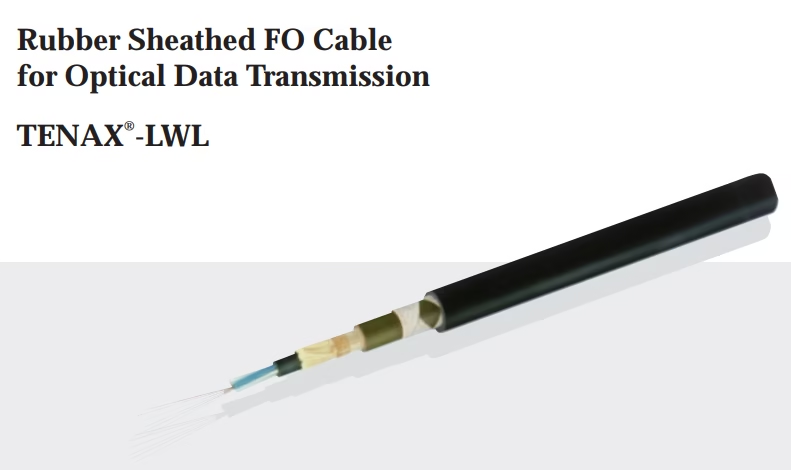
TENAX®-LWL представляет собой высокопроизводительный резиновый оптоволоконный кабель, специально разработанный для надёжной передачи данных и сигналов в экстремальных условиях эксплуатации. Данный кабель сочетает в себе передовые оптические технологии с усиленной механической защитой, что делает его идеальным решением для промышленных применений, где требуется высокая устойчивость к механическим нагрузкам, температурным колебаниям и агрессивным средам.

Что такое резиновый оптоволоконный кабель TENAX-LWL для передачи оптических данных?

TENAX-LWL, rubber sheathed fiber optic cable, industrial fiber optic cable, optical data transmission cable, 50/125 multimode fiber, graded index fiber cable, DIN VDE 0207, DIN VDE 0207-21, ITU-T G.651.1, IEC 60793-2-10, ISO/IEC 11801, TIA-492AAAB, Kevlar reinforced fiber cable, aramid strength member, CSP compound cable, chlorosulfonated polyethylene, crane fiber optic cable, conveyor fiber optic cable, materials handling cable, industrial automation cable, mining fiber optic cable, reeling fiber optic cable, 2000N tensile strength, high bandwidth fiber cable, EMI resistant fiber optic, anti-twist fiber cable, temperature resistant fiber cable, оптоволоконный кабель, промышленный оптический кабель, 工業光纖電纜, 橡膠護套光纖電纜, Anhui Feichun cable, 安徽飞纯电缆, special cable manufacturer, heavy duty fiber optic, outdoor fiber optic cable, flexible fiber optic cable, ST connector fiber cable, SC connector industrial, factory terminated fiber, pigtail fiber optic, VDE certified cable, German standard fiber cable, OM2 industrial fiber, multimode optical cable, high tensile fiber optic, low attenuation fiber, UV resistant fiber cable, ozone resistant cable
NSSHCGEOEU кабель, Schräm-TENAX кабель, кабель для угольных комбайнов, кабель угольного комбайна, кабель для шрам-машины, кабель экстремального изгиба, кабель 1.5D радиус изгиба, кабель 2.5D радиус изгиба, гибкий горнодобывающий кабель, особо гибкий кабель, кабель DIN VDE 0250-812, кабель 0.6/1 кВ угольный комбайн, горнодобывающий кабель для комбайнов, кабель для подземной добычи угля, кабель с мониторингом изоляции, экранированный кабель с мониторингом, кабель EPR изоляция высокой прочности, термостойкий резиновый кабель, кабель с медно-стальным проводником, кабель с лужёной медью, кабель усиленного заземления, маслостойкий кабель угольный, огнестойкий гибкий кабель, кабель устойчивый к истиранию, жёлтый кабель 5GM5, хлоропреновая оболочка кабель, кабель низкого растягивающего напряжения, кабель высокой механической прочности, кабель особо тонкопроволочный, фазоконцентрический экран мониторинга, общеконцентрический заземляющий проводник, кабель 3x16/16 KON, кабель 3x25/16 KON, кабель 3x35/16 KON, кабель 3x50/25 KON, кабель 3x70/35 KON, кабель 3x95/50 KON, кабель 2 ST + ÜL, кабель 3 ST + 3 ÜL, контрольные жилы растяжение сжатие, индуктивно сбалансированный мониторинг, кабель для очистных комбайнов, кабель для проходческих комбайнов, кабель СНГ Россия угольный, кабель Казахстан угольный, кабель Беларусь, китайский производитель кабеля комбайн, Anhui Feichun кабель угольный, кабель ГОСТ угольный комбайн

NSSHCGEOEU — Кабель для Угольных Комбайнов Schräm-TENAX®-V

NSSHCGEOEU кабель, Schräm-TENAX кабель, кабель для угольных комбайнов, кабель угольного комбайна, кабель для шрам-машины, кабель экстремального изгиба, кабель 1.5D радиус изгиба, кабель 2.5D радиус изгиба, гибкий горнодобывающий кабель, особо гибкий кабель, кабель DIN VDE 0250-812, кабель 0.6/1 кВ угольный комбайн, горнодобывающий кабель для комбайнов, кабель для подземной добычи угля, кабель с мониторингом изоляции, экранированный кабель с мониторингом, кабель EPR изоляция высокой прочности, термостойкий резиновый кабель, кабель с медно-стальным проводником, кабель с лужёной медью, кабель усиленного заземления, маслостойкий кабель угольный, огнестойкий гибкий кабель, кабель устойчивый к истиранию, жёлтый кабель 5GM5, хлоропреновая оболочка кабель, кабель низкого растягивающего напряжения, кабель высокой механической прочности, кабель особо тонкопроволочный, фазоконцентрический экран мониторинга, общеконцентрический заземляющий проводник, кабель 3×16/16 KON, кабель 3×25/16 KON, кабель 3×35/16 KON, кабель 3×50/25 KON, кабель 3×70/35 KON, кабель 3×95/50 KON, кабель 2 ST + ÜL, кабель 3 ST + 3 ÜL, контрольные жилы растяжение сжатие, индуктивно сбалансированный мониторинг, кабель для очистных комбайнов, кабель для проходческих комбайнов, кабель СНГ Россия угольный, кабель Казахстан угольный, кабель Беларусь, китайский производитель кабеля комбайн, Anhui Feichun кабель угольный, кабель ГОСТ угольный комбайн
Кабели марки КОГРВЭШ предназначены для присоединения шахтного бурильного электроинструмента на номинальное переменное напряжение 660В частоты 50 Гц с изолированной нейтралью. Кабели могут эксплуатироваться в подземных помещениях и шахтах с повышенной влажностью воздуха, в которых возможно длительное наличие воды или частая конденсация влаги. Электропроводящие экраны по изоляции жил обеспечивают опережающее отключение системы электроснабжения при повреждении кабеля, предупреждая возможный взрыв метана в шахтах.

КОГРВЭШ & КОГРВЭШ-Т

КОГРВЭШ, КОГРВЭШ-Т, KOGRVESH, KOGRVESH-T, кабель КОГРВЭШ, кабель КОГРВЭШ-Т, шахтный буровой кабель, mining drill cable, drilling equipment cable, гибкий шахтный кабель КОГРВЭШ, экранированный буровой кабель, шахтный электроинструмент кабель, 矿用钻机电缆, 礦用鑽機電纜, КОГРВЭШ 3×1.5, КОГРВЭШ 3×2.5, КОГРВЭШ 3×4, КОГРВЭШ 3×6
Кабель силовой шахтный и экскаваторный необходим для подключения горнодобывающего оборудования, экскаваторов и другого землеройного оборудования, электроинструментов, а также для проведения горных взрывных работ. Шахтные кабели используют для всех типов шахт: угольные, соляные, сланцевые, а также подходят для открытых карьерных разработок. Кабели эксплуатируются на напряжении переменного тока 660, 1140, 6000 В.

What is Кабель для шахт?

КГЭШ, КГЭШ-1140, КГЭ, КГЭ-6, КГЭ-Т, КГЭ-ХЛ, КГЭ-ХЛ-6, КГЭС, КГЭТ, КГВШ, КГРШ, КШВГТ, ЭВБВ, ЭВБВ-6, ЭВТ-1140, ЭВТ-6000, кабель КГЭШ, кабель КГЭ, кабель ЭВБВ, шахтный кабель КГЭШ, экскаваторный кабель, mining cable KGESH, excavator cable KGE, KGESH cable, KGE cable, EVBV cable
Кабели марки КГЭШ предназначены для присоединения угольных комбайнов, передвижных машин и механизмов при подземных горных работах к электрическим сетям на номинальное напряжение переменного тока до 1140 В частотой 50 Гц на основных жилах и до 220 В на вспомогательной жиле. Кабели могут эксплуатироваться в подземных помещениях и шахтах с повышенной влажностью воздуха, в которых возможно длительное наличие воды или частая конденсация влаги.

Кабель КГЭШ 3х4+1х2,5+3х1,5, 1 кВ

КГЭШ, КГЭШ 3х4+1х2.5+3х1.5, КГЭШ 1кВ, кабель КГЭШ, КГЭШ cable, mining cable КГЭШ, KGESH cable, KGESH 3×4, flexible mining cable КГЭШ, shielded mining cable, экранированный кабель КГЭШ, гибкий шахтный кабель, 矿用电缆КГЭШ, 礦用電纜КГЭШ, КГЭШ 3х4 цена, КГЭШ характеристики
Shipwiring and offshore platform cables represent a specialized category of marine cables designed to perform reliably in the most demanding environments on earth—at sea. These cables must withstand extreme temperature variations (from Arctic cold to engine room heat), constant exposure to humidity, salt water, oils, acids, and drilling muds, while maintaining electrical integrity for power, control, signal, instrumentation, and communication applications. The primary international standards governing these cables include NEK 606 (Norwegian standard for offshore floating platforms), IEC 60092 (electrical installations in ships), BS 6883 (fixed wiring in offshore units), and BS 7917 (fire resistant cables for offshore applications).

What are Shipwiring & Offshore Platform Cables?

NEK 606 cable, BFOU cable, RFOU cable, NEK 606 BFOU, NEK 606 RFOU, offshore platform cable, MUD resistant cable, Norwegian offshore cable, floating platform cable, FPSO cable, marine cable, offshore cable, shipwiring cable, ship cable, offshore platform cable, marine power cable, ship electrical cable, naval cable, maritime cable, at-sea cable,RFOU P101, BFOU P105, RFOU S101, RFOU S102, BFOU S103, BFOU S104, UX P108, RFOU P102, RFOU P103, RFOU P104, RFOU P112, RFOU P113
EV & PHEV Automotive Cables encompass two distinct but interconnected categories: vehicle wiring cables that form the internal electrical systems of electric, hybrid, and traditional combustion vehicles, and EV charging cables that enable the growing network of charging infrastructure. Vehicle wiring cables follow stringent international standards including ISO 6722 (European) and SAE J1128 (American) to ensure reliable performance under the demanding conditions of automotive applications—extreme temperatures, vibration, oil exposure, and tight installation spaces. EV charging cables must meet IEC 62196 and IEC 61851 standards for safe, high-power energy transfer.

What are EV & PHEV Automotive Cables?

EV cable, electric vehicle cable, PHEV cable, hybrid vehicle cable, EV charging cable, electric car cable, automotive cable, vehicle wiring, car cable, auto cable, H05BZ5-F cable, H07BZ5-F cable, Mode 4 cable, DC charging cable, EV charger cable, Type 2 cable, CCS cable, CHAdeMO cable, fast charging cable, DC fast charge cable, FLRY cable, FLRY-A cable, FLRY-B cable, FLRYY cable, ISO 6722 cable, automotive wire, car wiring, vehicle wiring, thin wall cable, reduced wall cable, FLR cable, FLR2X cable, FLR4Y cable, FLR5Y cable, FLR6Y cable, FLR7Y cable, FLR9Y cable, FLR12Y cable, FLR13Y cable, high temperature automotive, engine bay cable
Solar cables (also known as photovoltaic or PV cables) are specialized cables designed to interconnect the various components of photovoltaic power generation systems. These cables cover the full range of connections from solar panels to combiner boxes, inverters, transformers, and ultimately to local grid substations. Manufactured in accordance with EN 50618 (the current European harmonised standard, designated H1Z2Z2-K), modern solar cables are engineered to withstand severe environmental conditions including extreme UV exposure, wide temperature variations, moisture, and mechanical stress over an anticipated service life of approximately 25 years.

What are Solar Cables?

solar cable、PV cable、H1Z2Z2-K、EN 50618、NAYY cable、photovoltaic cable、TUV solar cable、aluminium solar cable、N2XY cable、N2XH cable、NA2XY cable、RZ1-K cable、NA2XH cable、NA2X2Y cable、NA2XSY cable、RZ1-K AS cable
Mining, drilling, and tunnelling cables represent the most demanding category of industrial cables, designed to operate in some of the harshest environments on earth. These heavy-duty power, control, and instrumentation cables serve mine operators worldwide for both static infrastructure and dynamic equipment applications. Manufactured in accordance with international standards including IEC 60502, BS EN 60332, BS EN 60811, BS EN 60754, and VDE 0295, mining cables must withstand mechanical stress, oil and grease exposure, water immersion, and in underground applications, provide critical fire safety through reduced smoke and fume emissions.

What are Mining, Drilling & Tunnelling Cables?

NSSHÖU cable, NSSHOU cable, NSHÖU cable, NSHOU cable, NSSCHOU cable, NSHTÖU cable, NTSCGEWÖU cable, NTSCGEWOU cable, NTMCGEWÖU cable, N3GHSSYCY cable, N3GHSSHCH cable,Type 61 cable, Type 63 cable, Type 611 cable, Type 622 cable, Type 633 cable, Type 66 cable,Type 240 cable, Type 241 cable, Type 245 cable, Type 450 cable, Type 455 cable, Type 260 cable, Type 275 cable, Type 409 cable, Type 440 cable, Type 441 cable,