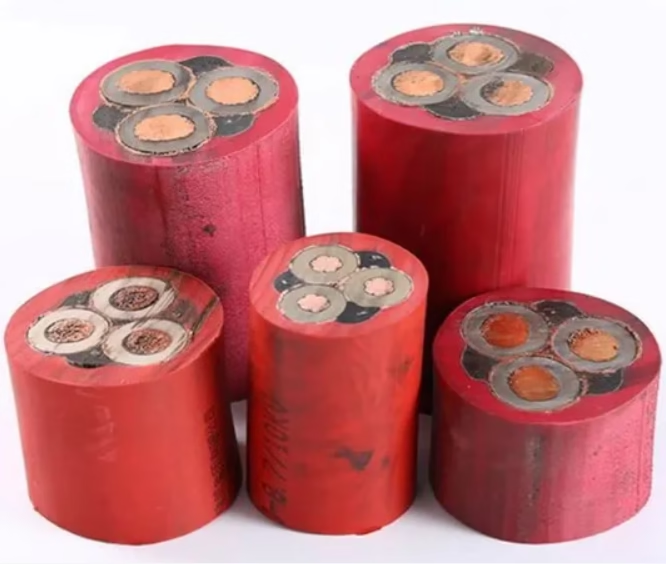
шахтный кабель

BASKET SPREADER 740 (YSLTOE) is engineered specifically for hoisting and control applications where mechanical flexibility and electrical reliability must coexist in marine environments. Unlike load-bearing structural cables (which prioritize tensile strength), control cables emphasize: Conductor flexibility – Repeated bending over pulleys without mechanical fatigue Insulation integrity – Voltage breakdown resistance under salt-fog corrosion Mechanical damping – Rope-like flexibility to drape naturally in spreader bar frames Environmental barrier – Outer sheath blocks salt, moisture, and UV penetration Core Design Elements: Component Material Specification Function Port Environment Benefit Conductor Flexible red copper Class 6 (IEC 60228) Carries 300/500V power; enables bending flexibility High purity copper resists galvanic corrosion Insulation PVC type YI2 (IEC 60811) Electrical isolation; voltage breakdown resistance (2 kV test) PVC with marine additives prevents salt-induced tracking Central Unit Aramide yarns (Kevlar™ equivalent) Mechanical load-bearing backup; structural integrity Aramide resists moisture & salt; absorbs vibration stress Outer Sheath PUR type 11YM1 (DIN 73377) Environmental barrier; UV/ozone/moisture protection Superior salt-fog resistance; 20+ year marine lifespan

NTSKCGECWÖU: тяжёлый trailing cable для mobile electrical equipment, coal cutting machines и экстремальных изгибов в steel / plastic track chains

NTSKCGECWÖU — это средневольтный эластомерный кабель для подключения мобильного электрического оборудования в шахтах и тоннелях. По предоставленным данным он особенно подходит для coal cutting machines, прежде всего при extreme bending loads внутри steel or plastic track chains. Конструкция включает лужёные медные жилы DIN VDE 0295 Class 5, 3GI3 EPR и semiconductive rubber, cradle separator с контрольной проволокой, electrical field control, ST KON / ÜL KON элементы, GM1b inner sheath, гибкую броню из лужёной меди и оцинкованной стали, а также красную наружную оболочку 5GM5.
LIFT-2S (European) vs. LIFT-1S UL (North American): LIFT-2S characteristics: Voltage: 300/500V (European standard, lower voltage) Temperature: −40°C to +70°C (moderate range) Standards: VDE 0482 part 265-2-1, EN 50265-2-1, IEC 60332-1-2 Design philosophy: Safety by material redundancy (2 steel cores) Steel cores: 2× cores provide mechanical backup Conductor: Class 6 (European, ~150–200 wires per mm²) Cost: Lower (proven European manufacturing) Market: Europe, Asia-Pacific, most of world LIFT-1S UL characteristics: Voltage: 600V (North American standard, higher voltage) Temperature: −25°C to +105°C (extreme range, high-temp optimized) Standards: UL 2562, UL 62, CSA C22.2 No.210.2 Design philosophy: Safety by certification (single core + redundant control) Steel core: 1× core (sufficient with nylon covering) Conductor: Class M (UL, extra fine ~300+ wires per mm²) Cost: Higher (UL testing, certification documentation) Market: North America (USA, Canada), Mexico UL 2562 specialty certification: UL 2562 scope: Elevator and Dumbwaiter Cables Specific requirements: 1. Pendant cable design (cable hangs freely, no duct support) 2. Vertical orientation (designed for gravity-loaded suspension) 3. Repeated flex cycles (cable moves up/down frequently) 4. Safety-critical function (failure = personnel risk) Consequence: More stringent than general-purpose cables Testing includes: Bend cycle fatigue, heat aging, compression resistance Test procedures (unique to UL 2562): Bend cycle test: 1,000+ cycles at minimum bending radius Cable must pass insulation resistance after cycling Heat aging: 500+ hours at 105°C continuous Tensile strength retention minimum 70% Compression: 1,000+ hours under sustained compression Cable cross-section must not exceed 5% permanent deformation LIFT-2S (no UL 2562): Tests per VDE are less stringent on fatigue/cycling Assumes cable mostly static, not repeated flex Adequate for European elevator duty (lower speed, fewer cycles) LIFT-1S UL: All UL 2562 tests passed (proven for North American elevators) Faster cycle times, more frequent motion → more fatigue stress Extra testing ensures reliability under North American elevator duty Market requirement (regulatory): Europe/International: CE mark required (European conformity) VDE/EN/IEC standards sufficient No UL certification needed (not recognized in EU) LIFT-2S is sufficient North America (USA, Canada): UL certification mandatory for elevators UL 2562 specifically for elevator cables CSA dual certification required in Canada LIFT-2S NOT acceptable (lacks UL 2562) LIFT-1S UL mandatory Cost implication: UL certification: ~$5,000–15,000 per product per region Testing duration: 3–6 months per model Documentation: Comprehensive test reports, technical files Result: LIFT-1S UL 20–30% higher cost than equivalent European cable

NSHCGEÖU KON+ST+ÜL для общего применения: тяжёлый кабель 0,6/1 kV для мобильных шахтных машин, контроля повреждений и вспомогательных цепей

NSHCGEÖU KON+ST+ÜL — это тяжёлый эластомерный кабель для подключения мобильных машин с очень высокой механической нагрузкой. По предоставленным данным он особенно применяется в шахтах для coal cutting and loading machines, а также для питания аппаратов, устройств и auxiliary electrical circuits. Конструкция объединяет три силовые жилы, двойные концентрические контрольные жилы, monitoring core, GM1b внутреннюю оболочку, гибкую броню из лужёных медных и оцинкованных стальных проволок, а также тяжёлую наружную оболочку 5GM5 жёлтого или красного цвета.
LIFT-2S (European) vs. LIFT-1S UL (North American): LIFT-2S characteristics: Voltage: 300/500V (European standard, lower voltage) Temperature: −40°C to +70°C (moderate range) Standards: VDE 0482 part 265-2-1, EN 50265-2-1, IEC 60332-1-2 Design philosophy: Safety by material redundancy (2 steel cores) Steel cores: 2× cores provide mechanical backup Conductor: Class 6 (European, ~150–200 wires per mm²) Cost: Lower (proven European manufacturing) Market: Europe, Asia-Pacific, most of world LIFT-1S UL characteristics: Voltage: 600V (North American standard, higher voltage) Temperature: −25°C to +105°C (extreme range, high-temp optimized) Standards: UL 2562, UL 62, CSA C22.2 No.210.2 Design philosophy: Safety by certification (single core + redundant control) Steel core: 1× core (sufficient with nylon covering) Conductor: Class M (UL, extra fine ~300+ wires per mm²) Cost: Higher (UL testing, certification documentation) Market: North America (USA, Canada), Mexico UL 2562 specialty certification: UL 2562 scope: Elevator and Dumbwaiter Cables Specific requirements: 1. Pendant cable design (cable hangs freely, no duct support) 2. Vertical orientation (designed for gravity-loaded suspension) 3. Repeated flex cycles (cable moves up/down frequently) 4. Safety-critical function (failure = personnel risk) Consequence: More stringent than general-purpose cables Testing includes: Bend cycle fatigue, heat aging, compression resistance Test procedures (unique to UL 2562): Bend cycle test: 1,000+ cycles at minimum bending radius Cable must pass insulation resistance after cycling Heat aging: 500+ hours at 105°C continuous Tensile strength retention minimum 70% Compression: 1,000+ hours under sustained compression Cable cross-section must not exceed 5% permanent deformation LIFT-2S (no UL 2562): Tests per VDE are less stringent on fatigue/cycling Assumes cable mostly static, not repeated flex Adequate for European elevator duty (lower speed, fewer cycles) LIFT-1S UL: All UL 2562 tests passed (proven for North American elevators) Faster cycle times, more frequent motion → more fatigue stress Extra testing ensures reliability under North American elevator duty Market requirement (regulatory): Europe/International: CE mark required (European conformity) VDE/EN/IEC standards sufficient No UL certification needed (not recognized in EU) LIFT-2S is sufficient North America (USA, Canada): UL certification mandatory for elevators UL 2562 specifically for elevator cables CSA dual certification required in Canada LIFT-2S NOT acceptable (lacks UL 2562) LIFT-1S UL mandatory Cost implication: UL certification: ~$5,000–15,000 per product per region Testing duration: 3–6 months per model Documentation: Comprehensive test reports, technical files Result: LIFT-1S UL 20–30% higher cost than equivalent European cable

Что такое PANZERFLEX-L 0,6/1 kV – Power: инженерный обзор гибкого силового кабеля для Mining, Cable Reels и Festoon Systems

PANZERFLEX-L 0,6/1 kV — это гибкий низковольтный силовой кабель для подключения подвижных частей машин, станков, перегрузочного оборудования и горнодобывающей техники. Его конструкция рассчитана на высокие механические нагрузки, частый изгиб, торсионные воздействия, быстрое движение и сильные ускорения в системах питания на кабельных барабанах и festoon systems. В отличие от обычного rubber power cable, PANZERFLEX-L объединяет гибкий лужёный медный проводник class 5 IEC 60228, HEPR-изоляцию повышенной стойкости, полихлоропреновые оболочки и антискручивающую защиту из синтетических нитей между внутренней и наружной оболочкой.
FLEXIFESTOON® SEOOW YELLOW represents FeiChun's entry into the low-voltage festoon and temporary power market. The nomenclature requires careful explanation to distinguish this product from the high-voltage FLEXIDRUM series: FLEXIFESTOON Product Nomenclature: FLEXIFESTOON® = Product family name Flex = Flexible (emphasis on bending & handling) Festoon = Strung overhead in continuous runs (typical festoon lighting application) SEOOW = Industry-standard designation S = Service cord (temporary, not permanent installation) E = Elastomer jacket (flexible sheath) OO = Oil-resistant conductor insulation (TPE qualifies as oil-resistant) W = Weather-resistant sheath (water, ozone, UV resistant) SEOOW is defined in: UL 62 (Standard for Flexible Cords and Cables) CSA 22.2 No. 49 (Canadian equivalent) NFPA 70 National Electrical Code (NEC) Article 400 YELLOW designation: Color: RAL 1021 (traffic yellow, high visibility) Safety significance: Yellow cords attract attention in job sites Practical purpose: Easy to identify, prevent trips/entanglement Contrast with FLEXIDRUM series: FLEXIDRUM (High-Voltage MV Cable): Voltage: 3.6 kV to 20/35 kV (power distribution) Temperature: −40 to +80°C (standard industrial) Application: Mobile mining/tunneling equipment (capital-intensive) Size: Large diameter, heavy (3–12 kg/km) FLEXIFESTOON (Low-Voltage Service Cord): Voltage: 600V (light/power temporary use) Temperature: −60 to +105°C (extreme environmental range) Application: Festoon lighting, temporary site power, outdoor events Size: Small diameter, lightweight (0.05–0.3 kg/m) Cost: Consumer/contractor-grade (not specialty industrial)

TUNNELFLEX-PUR / TUNNELFLEX-R/PUR 0,6/1 kV — гибкий силовой кабель для шахт, тоннелей и мобильного оборудования

TUNNELFLEX-PUR и TUNNELFLEX-R/PUR предназначены для питания мобильного оборудования в горнодобывающей промышленности и тоннельном строительстве. Кабель рассчитан на тяжёлые условия, где присутствует высокий риск механического повреждения, истирания и разрыва наружной оболочки. Конструкция применяется там, где кабель отклоняется преимущественно в одной плоскости. Максимальная скорость движения — 60 м/мин.
FLEXIFESTOON® SEOOW YELLOW represents FeiChun's entry into the low-voltage festoon and temporary power market. The nomenclature requires careful explanation to distinguish this product from the high-voltage FLEXIDRUM series: FLEXIFESTOON Product Nomenclature: FLEXIFESTOON® = Product family name Flex = Flexible (emphasis on bending & handling) Festoon = Strung overhead in continuous runs (typical festoon lighting application) SEOOW = Industry-standard designation S = Service cord (temporary, not permanent installation) E = Elastomer jacket (flexible sheath) OO = Oil-resistant conductor insulation (TPE qualifies as oil-resistant) W = Weather-resistant sheath (water, ozone, UV resistant) SEOOW is defined in: UL 62 (Standard for Flexible Cords and Cables) CSA 22.2 No. 49 (Canadian equivalent) NFPA 70 National Electrical Code (NEC) Article 400 YELLOW designation: Color: RAL 1021 (traffic yellow, high visibility) Safety significance: Yellow cords attract attention in job sites Practical purpose: Easy to identify, prevent trips/entanglement Contrast with FLEXIDRUM series: FLEXIDRUM (High-Voltage MV Cable): Voltage: 3.6 kV to 20/35 kV (power distribution) Temperature: −40 to +80°C (standard industrial) Application: Mobile mining/tunneling equipment (capital-intensive) Size: Large diameter, heavy (3–12 kg/km) FLEXIFESTOON (Low-Voltage Service Cord): Voltage: 600V (light/power temporary use) Temperature: −60 to +105°C (extreme environmental range) Application: Festoon lighting, temporary site power, outdoor events Size: Small diameter, lightweight (0.05–0.3 kg/m) Cost: Consumer/contractor-grade (not specialty industrial)

FG7ORPu-TUNNELFLEX 0,6/1 kV — гибкий силовой кабель для шахт, тоннелей и мобильного оборудования

TUNNELFLEX предназначен для питания мобильного оборудования в горнодобывающей промышленности и тоннельных работах, где существует высокий риск механического повреждения кабеля. Кабель применяется в условиях, где изгиб происходит только в одной плоскости. Максимальная скорость движения — до 60 м/мин.
Spreader Bar Cable Application: What is a spreader bar? Container crane context: Gantry crane positioned at dock Overhead hoist mechanism: Winch + trolley system Spreader bar: Attachment point below hoist Function: Grips container corners, distributes load, tilts container for placement Spreader bar structure: Framework: Steel tubes/beams forming rectangular frame Lifting points: 4 corner attachment rings (one per container corner) Electrical system: Motor-driven locks, position sensors, lighting Cables: Power supply for motors + control signals for locking mechanism Cable location (spreader bar): Vertical run (primary): From crane hoist (top) down 20–40 m to spreader bar (bottom) Function: Supply power for: - Corner lock solenoids (release container locks) - Position feedback sensors (confirm locks engaged) - Optional: Spreader bar lighting (visibility during operation) Simultaneous function: Act as partial mechanical support (share load with main hoist cable) Horizontal distribution (on spreader bar): From entry point distributed across spreader frame Supply all four corner lock motors Branching: May split into smaller branches (4× circuits to corners) Mechanical load: Cable must withstand: Static tension: Weight of container payload (20–40 tons distributed) Dynamic loads: Jerking during load acceleration, swinging in wind Thermal: Tropical port environment, direct sun, saltwater spray Abrasion: Rubbing against spreader frame during operation Cable design philosophy: Dual function (unique): Electrical function: Deliver 300/500V power for locking system Mechanical function: Share load-bearing (not primary structure, but support role) Different from: Pure electrical cables (festoon, lifting): Electrical function only Pure mechanical ropes: Mechanical function only BASKET SPREADER 730: Both functions integrated Speed specification rationale: 160 m/min (relatively slow): Container crane cycle time: ~45–60 seconds per lift Descent distance: 20–40 m Descent speed: 20–40 m ÷ 45–60 sec = 0.33–0.9 m/s = 20–54 m/min Average speed: ~30 m/min (loading) + 20 m/min (discharge) = 25 m/min 160 m/min specification: 6–8× safety margin on speed Design: Allows for fast emergency ascent if needed Why not higher speed? Mechanical load constraint: Heavy cable (4000 N = ~400 kg equivalent) Inertia: Accelerating 400 kg + spreader bar + container inertia takes time Structural: Crane frame limits acceleration rates (safety interlocks) Result: 160 m/min is practical maximum for loaded spreader bar

Что такое Flexible Power and Control Flat Cables in line with CEI 20-19 Part 4 Table 1: FLEXIFLAT 450/750 V

FLEXIFLAT 450/750 V (N)GFLGÖU-J / (N)GFLGÖU-JZ — это гибкие плоские силовые и контрольные кабели для подвижного оборудования, где кабель одновременно испытывает многократный изгиб, продольное растяжение, истирание, контакт с направляющими, роликами, кабельными тележками и тяжёлой промышленной средой. Для Feichun такая конструкция особенно важна в шахтных машинах, портовой механизации, перегружателях, конвейерных системах, крановых тележках и мобильных приводах, где круглый кабель не всегда оптимален по укладке, высоте пакета и контролю движения.
Full technical breakdown Prysmian PROTOMONT 6/10 kV high-voltage version: specialized main feeder cable underground/open pit extreme-cold regions (Norilsk nickel, Magadan gold, Yakutia diamonds). Operating temperature standard -40°C, extreme variant -60°C (record minimum working conditions Earth). Contains semiconducting (graphite) screens inner/outer insulation (electric field leveling 6/10 kV), concentric monitoring electrode (KON) 50–70 mm² (IMD high-voltage systems), three-layer vulcanized structure (flexibility extreme temps). Russian GOST equivalent КГЭЖ ХЛ 6/10 kV with RTI-2 polymer compounds (Sibkabel/Kamkabel extreme-cold module). Norilsk feeder 8 km underground (-40°C pit floor typical). Magadan 69°N latitude, open/underground mixed, winter -50°C. Yakutia ALROSA diamonds, combined extraction, -55°C extremum. EAC certification with -60°C cold validation, Rostekhnadzor extreme-climate approval. Cost PROTOMONT gray-market €2,200–2,800/km vs КГЭЖ ХЛ Sibkabel €800–950/km (65–70% savings). Long-term supply strategy fundamental northern extraction infrastructure.

PROTOMONT (M) FC (N)SHOE-J 6/10кВ: экстремальный высоковольтный кабель Норильска-Магадана-Якутии и КГЭЖ ХЛ 6/10кВ русский эквивалент

Full technical breakdown Prysmian PROTOMONT 6/10 kV high-voltage version: specialized main feeder cable underground/open pit extreme-cold regions (Norilsk nickel, Magadan gold, Yakutia diamonds). Operating temperature standard -40°C, extreme variant -60°C (record minimum working conditions Earth). Contains semiconducting (graphite) screens inner/outer insulation (electric field leveling 6/10 kV), concentric monitoring electrode (KON) 50–70 mm² (IMD high-voltage systems), three-layer vulcanized structure (flexibility extreme temps). Russian GOST equivalent КГЭЖ ХЛ 6/10 kV with RTI-2 polymer compounds (Sibkabel/Kamkabel extreme-cold module). Norilsk feeder 8 km underground (-40°C pit floor typical). Magadan 69°N latitude, open/underground mixed, winter -50°C. Yakutia ALROSA diamonds, combined extraction, -55°C extremum. EAC certification with -60°C cold validation, Rostekhnadzor extreme-climate approval. Cost PROTOMONT gray-market €2,200–2,800/km vs КГЭЖ ХЛ Sibkabel €800–950/km (65–70% savings). Long-term supply strategy fundamental northern extraction infrastructure.
тяжелонагруженный кабель, гибкий кабель с резиновой изоляцией, резиновый гибкий кабель, горный кабель, шахтный кабель, кабель для горнодобычи, кабель для карьера, промышленный силовой кабель, кабель 0.6/1кВ, кабель 1кВ резиновый

Что такое тяжелонагруженный гибкий кабель с резиновой изоляцией NSSHOEU-O (NSSHÖU-O) и NSSHOEU-J (NSSHÖU-J)?

NSSHOEU, NSSHÖU, NSSHOEU-O, NSSHOEU-J, NSSHÖU-O, NSSHÖU-J, кабель NSSHOEU, кабель NSSHÖU, NSSHOEU 4×25, NSSHOEU 4×35, NSSHOEU 4×50, NSSHOEU 4×70, NSSHOEU 3×70/35, NSSHOEU 3×95/50, NSSHOEU 3×120/70, NSSHOEU 1×50, NSSHOEU 1×70, NSSHOEU 1×95, NSSHOEU 1×120, NSSHOEU 5×6, NSSHOEU 5×10, NSSHOEU 5×16
Кабель силовой шахтный и экскаваторный необходим для подключения горнодобывающего оборудования, экскаваторов и другого землеройного оборудования, электроинструментов, а также для проведения горных взрывных работ. Шахтные кабели используют для всех типов шахт: угольные, соляные, сланцевые, а также подходят для открытых карьерных разработок. Кабели эксплуатируются на напряжении переменного тока 660, 1140, 6000 В.

What is Кабель для шахт?

КГЭШ, КГЭШ-1140, КГЭ, КГЭ-6, КГЭ-Т, КГЭ-ХЛ, КГЭ-ХЛ-6, КГЭС, КГЭТ, КГВШ, КГРШ, КШВГТ, ЭВБВ, ЭВБВ-6, ЭВТ-1140, ЭВТ-6000, кабель КГЭШ, кабель КГЭ, кабель ЭВБВ, шахтный кабель КГЭШ, экскаваторный кабель, mining cable KGESH, excavator cable KGE, KGESH cable, KGE cable, EVBV cable
Кабели марки КГЭШ предназначены для присоединения угольных комбайнов, передвижных машин и механизмов при подземных горных работах к электрическим сетям на номинальное напряжение переменного тока до 1140 В частотой 50 Гц на основных жилах и до 220 В на вспомогательной жиле. Кабели могут эксплуатироваться в подземных помещениях и шахтах с повышенной влажностью воздуха, в которых возможно длительное наличие воды или частая конденсация влаги.

Кабель КГЭШ 3х4+1х2,5+3х1,5, 1 кВ

КГЭШ, КГЭШ 3х4+1х2.5+3х1.5, КГЭШ 1кВ, кабель КГЭШ, КГЭШ cable, mining cable КГЭШ, KGESH cable, KGESH 3×4, flexible mining cable КГЭШ, shielded mining cable, экранированный кабель КГЭШ, гибкий шахтный кабель, 矿用电缆КГЭШ, 礦用電纜КГЭШ, КГЭШ 3х4 цена, КГЭШ характеристики
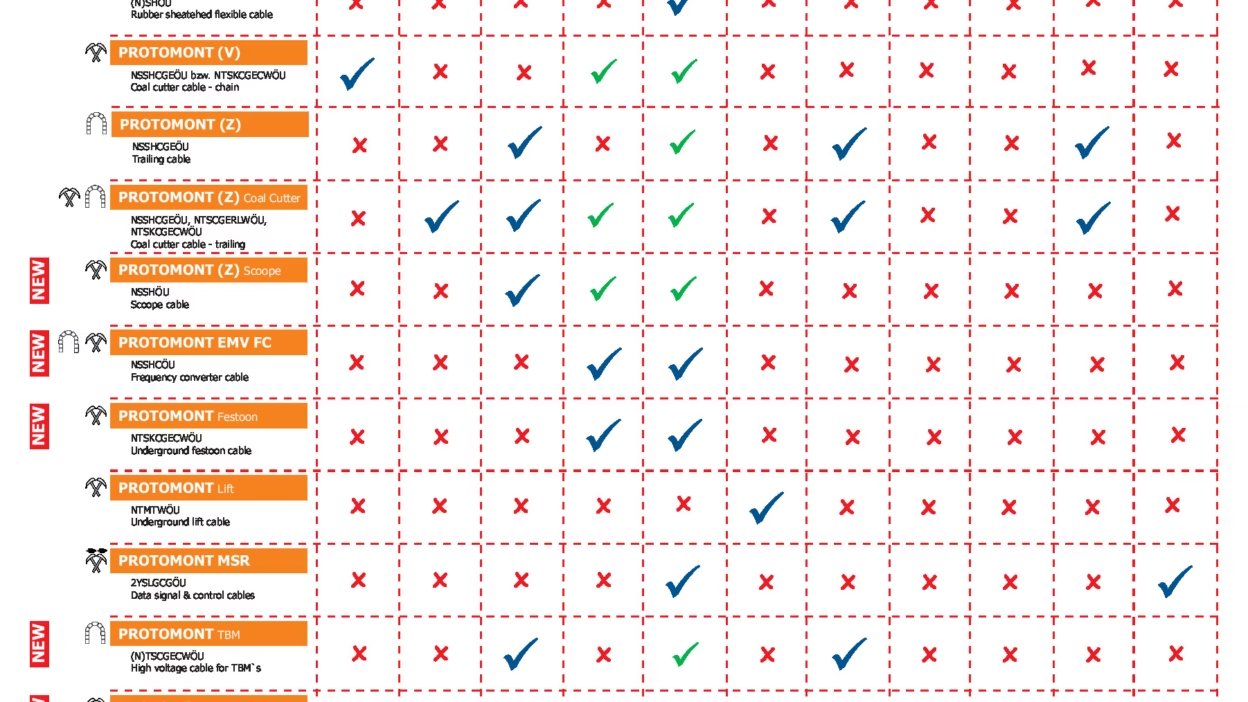
Prysmian Mining Application Systems represent a comprehensive portfolio of specialized cables engineered for the demanding environments of underground mining, tunneling operations, and opencast mining facilities. Developed by Prysmian Group, the world's largest cable manufacturer with over 140 years of expertise, these systems encompass multiple product families including PROTOLON (medium voltage flexible cables), PROTOMONT (rubber-sheathed flexible cables), OPTOFLEX (fiber optic cables), and CORDAFLEX (scraper cables).

What is Prysmian Mining Application systems ?

矿用电缆, 采煤机电缆, 拖曳电缆, 橡套电缆, 中压柔性电缆, 煤矿电缆, 隧道掘进机电缆, горнодобывающий кабель, шахтный кабель, гибкий кабель для шахт, кабель для угольных комбайнов, тянущийся кабель PROTOLON cable, PROTOMONT cable, OPTOFLEX mining cable, CORDAFLEX scraper cable, SUPROMONT power feeder cable, NTMCGCWÖU cable, NTSCGEWÖU cable, NTSCGCEWÖU cable, NSSHÖU cable, NSHÖU mining cable, NSSHCGEÖU coal cutter cable, NSHTÖU scraper cable, NYHSSYCY feeder cable, N3GHSSYCY rubber cable, NTSKGCFCWÖU festoon cable, NTMHWÖU lift cable, ZYSLGCGÖU MSR cable