Характеристики и цена: гибкий кабель PROTOLON (SB) 3×50+2×25/2+1×16st 6/10 kV
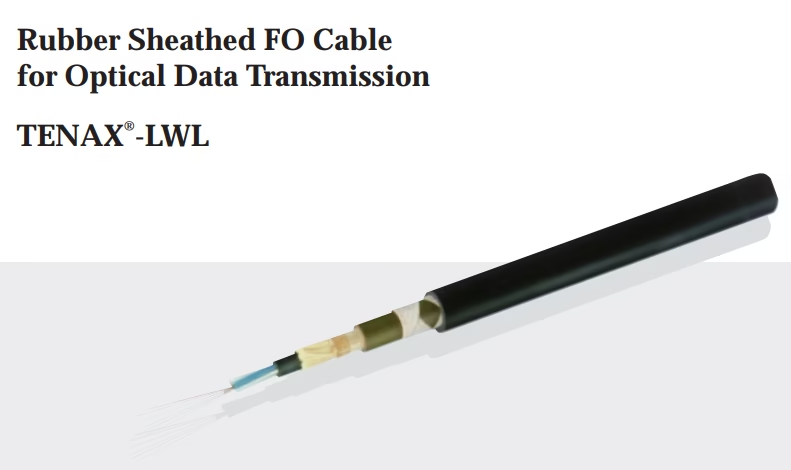
Complete specifications and comparative pricing analysis Prysmian PROTOLON (SB) (N)TSCGEWOEU 6/10 kV, configuration 3×50+2×(25/2)+1×16st: OD 45.4–48.4 mm, weight ~3,550 kg/km, copper index ~1,834 kg/km, current 183 A @ 30°C, bending 12×OD, speed 120 m/min, tensile 2,250 N, temp -25/+80°C flexing. Construction: tinned copper class 5, PROTOLON HS EPR (≥3GI3), cold-strippable semiconductive screens, split earth 2×(25/2) electromagnetic symmetry, control core 16st, GM1b inner + anti-torsion braid, chloroprene 5GM5 outer. Pricing: Prysmian original €800–1,200/km, Feichun FC-PLN €350–480/km (55–65% savings), Russian КГЭШ-Т €400–550/km. 5-year TCO calculator for port cranes and excavators. DIN VDE 0250-813. EAC, GOST-R, CE certified.






![КШВЭБбШв-6 kV Material Science Deep-Dive: PVC vs XLPE Thermal Aging & Lifespan Physics 20 PVC Linear Chain Architecture—Structural Vulnerability: Polyvinyl chloride (PVC) consists of linear polymer backbone: −[CH₂−CHCl]−n−, where each carbon-chlorine bond (C−Cl) is polar. PVC chosen historically for cables due to: (1) easy extrusion (processing temp ~200°C), (2) inherent flame retardancy (chlorine atoms suppress combustion), (3) low cost. However, linear structure has critical weakness: polymer chains held together only by van der Waals forces + few covalent cross-links (vs XLPE which is heavily cross-linked via peroxide or electron beam). Consequence: thermal energy at elevated temperature (60–80°C) causes thermal motion to exceed van der Waals bond energy, enabling chain slip + bond breakage. Thermal Oxidation Cascade—Free Radical Chain Reaction: At 70°C (GOST PVC design limit in mines): (1) Heat causes C−H bond scission (bond dissociation energy ~350 kJ/mol), generating alkyl radicals R•, (2) R• + O₂ (from air + moisture) → peroxyl radical ROO•, (3) ROO• + polymer chain → hydroxyl group −OH + new radical, (4) Repeat step 3 creates chain reaction (one broken bond triggers cascade), (5) Net result: polymer backbone breaks into smaller fragments (molecular weight drops), material becomes brittle. Oxidation rate: approximately ∝ exp(E_a/RT) per Arrhenius law, so 10°C increase ~2–3× oxidation rate.](https://feichuncables.com/blog/wp-content/uploads/image-1013-929x702.avif)