Common Problems Encountered in Cable Applications

Deep underground mining operations depend on sophisticated systems for moving workers, equipment, and materials between the surface and mining zones that may be hundreds of meters below ground level. One of the most critical systems in these operations is the basket or cage suspension system that safely lowers and raises workers and cargo through vertical mine shafts. These systems rely on flexible (N)SHTÖU cables to deliver electrical power for lighting, ventilation, and communication equipment in the basket, while the mechanical support for the basket itself is provided by separate wire ropes or cables. The electrical cables must be suspended alongside the main support ropes, and this suspension relies on devices called mesh grips — specialized clamping devices that gently but firmly grip the cable without damaging its insulation or internal conductors.

(N)SHTÖU (Vertical): Selecting the Right Mesh Grip Size for Mine Shaft Basket Cables

Deep underground mining operations depend on sophisticated systems for moving workers, equipment, and materials between the surface and mining zones that may be hundreds of meters below ground level. One of the most critical systems in these operations is the basket or cage suspension system that safely lowers and raises workers and cargo through vertical mine shafts. These systems rely on flexible (N)SHTÖU cables to deliver electrical power for lighting, ventilation, and communication equipment in the basket, while the mechanical support for the basket itself is provided by separate wire ropes or cables. The electrical cables must be suspended alongside the main support ropes, and this suspension relies on devices called mesh grips — specialized clamping devices that gently but firmly grip the cable without damaging its insulation or internal conductors.
The critical difference between NSHTÖU-J and NSHTÖU-O is whether this safety pathway is provided within the cable itself. Understanding this distinction is not merely an academic exercise in cable naming conventions — it is a matter of worker safety that requires proper engineering knowledge to implement correctly.

NSHTÖU-O vs. NSHTÖU-J: The Green/Yellow Earth Conductor in Mining Hoists

The critical difference between NSHTÖU-J and NSHTÖU-O is whether this safety pathway is provided within the cable itself. Understanding this distinction is not merely an academic exercise in cable naming conventions — it is a matter of worker safety that requires proper engineering knowledge to implement correctly.
When electrical engineers and equipment operators discuss the capacity of a dragline or shovel reeling cable, they often refer to a specification that seems disconnected from the typical electrical characteristics — the maximum permissible tensile load, expressed in units of pounds per thousand circular mills (lbs/mcm). This specification is fundamentally different from ampacity (which measures the cable's ability to safely carry electrical current) or voltage rating (which specifies the insulation quality). Instead, tensile load capacity describes the maximum mechanical force that the cable can withstand before the metallic conductors themselves begin to yield, stretch, or break. For a reeling cable used on heavy dragline or shovel equipment, this mechanical specification is often more critical to equipment safety and service life than the electrical specifications, because the cable is typically exposed to enormous pulling forces that can exceed the weight of the equipment being supported.

Type SHD-GC (Reeling): Maximum Permissible Tensile Load for Heavy-Duty Dragline Cable Reels

When electrical engineers and equipment operators discuss the capacity of a dragline or shovel reeling cable, they often refer to a specification that seems disconnected from the typical electrical characteristics — the maximum permissible tensile load, expressed in units of pounds per thousand circular mills (lbs/mcm). This specification is fundamentally different from ampacity (which measures the cable’s ability to safely carry electrical current) or voltage rating (which specifies the insulation quality). Instead, tensile load capacity describes the maximum mechanical force that the cable can withstand before the metallic conductors themselves begin to yield, stretch, or break. For a reeling cable used on heavy dragline or shovel equipment, this mechanical specification is often more critical to equipment safety and service life than the electrical specifications, because the cable is typically exposed to enormous pulling forces that can exceed the weight of the equipment being supported.
Australia's iron ore ports operate under some of the world's most challenging environmental conditions for electrical equipment. Along the western coast where iron ore handling facilities concentrate — particularly in the Pilbara region and ports such as Port Hedland and Port Dampier — outdoor equipment is exposed to intense ultraviolet (UV) radiation, salt spray, high humidity, and atmospheric ozone generated by photochemical reactions in the air. Unlike mechanical damage, which operators can see and immediately respond to, UV and ozone degradation of cable outer sheaths occurs invisibly and progressively, weakening the insulation and mechanical integrity of trailing and reeling cables over months or years until catastrophic failure occurs. A 22 kV reeling cable serving a quayside crane, electric rope shovel, or dragline in an Australian iron ore port may spend 80 to 100 percent of its operational life outdoors, unshaded, with only brief periods of protection during maintenance shutdowns or storage. Prysmian Group and other leading cable manufacturers have documented that in tropical and subtropical coastal environments, conventional black polychloroprene (PCP) or chlorinated polyethylene (CPE) sheaths can lose 30 to 50 percent of their original tensile strength within 12 to 24 months of continuous outdoor exposure, while tearing energy and elongation-at-break characteristics degrade even more rapidly. This degradation directly translates to increased risk of cable cracking, puncture, and sheath failure during flexing, dragging, or impact — precisely the stresses experienced by reeling cables on active port machinery. 在澳洲铁矿港口,传统PCP或CPE护套的抗拉强度可在12至24个月内下降30至50%。

Protolon® (SM) vs. Type 450: Which 22kV Reeling Cable Offers Superior UV and Ozone Resistance for Australian Iron Ore Ports?

Australia’s iron ore ports operate under some of the world’s most challenging environmental conditions for electrical equipment. Along the western coast where iron ore handling facilities concentrate — particularly in the Pilbara region and ports such as Port Hedland and Port Dampier — outdoor equipment is exposed to intense ultraviolet (UV) radiation, salt spray, high humidity, and atmospheric ozone generated by photochemical reactions in the air. Unlike mechanical damage, which operators can see and immediately respond to, UV and ozone degradation of cable outer sheaths occurs invisibly and progressively, weakening the insulation and mechanical integrity of trailing and reeling cables over months or years until catastrophic failure occurs. A 22 kV reeling cable serving a quayside crane, electric rope shovel, or dragline in an Australian iron ore port may spend 80 to 100 percent of its operational life outdoors, unshaded, with only brief periods of protection during maintenance shutdowns or storage. Prysmian Group and other leading cable manufacturers have documented that in tropical and subtropical coastal environments, conventional black polychloroprene (PCP) or chlorinated polyethylene (CPE) sheaths can lose 30 to 50 percent of their original tensile strength within 12 to 24 months of continuous outdoor exposure, while tearing energy and elongation-at-break characteristics degrade even more rapidly. This degradation directly translates to increased risk of cable cracking, puncture, and sheath failure during flexing, dragging, or impact — precisely the stresses experienced by reeling cables on active port machinery. 在澳洲铁矿港口,传统PCP或CPE护套的抗拉强度可在12至24个月内下降30至50%。
For the past several decades, industrial equipment operators have maintained strict separation between two completely different cable systems: power cables to deliver electrical energy, and data/communication cables to transmit control signals, telemetry, and monitoring information. A large mining excavator, for example, might require a 50 mm² power trailing cable and a separate, smaller-diameter communication cable running in parallel through the same cable tray. This separation imposed logistical inefficiencies, redundancy in installation labor, and increased complexity when coordinating maintenance or upgrades. Modern industrial automation, predictive maintenance systems, and real-time equipment monitoring have created a compelling case for convergence: combining power and high-speed data transmission within a single cable. This is precisely what (N)TSCGEWÖU-FO cables accomplish. The designation "-FO" (Fiber Optic) indicates that this cable carries not only the three-phase medium-voltage power (typically 6/10 kV or 12/20 kV) that the equipment needs to operate, but also 6, 12, or even 18 channels of high-speed optical fiber that can transmit control signals, sensor data, and video feeds from the excavator, stacker-reclaimer, or other equipment back to a central control station at the shore or mining office. 现代工业自动化推动了电力与数据传输的融合,(N)TSCGEWÖU-FO电缆在单一电缆中结合了中压电力和高速光纤通信。

(N)TSCGEWÖU-FO: Preventing Fiber Optic Breakage in High-Stress Reeling Environments

For the past several decades, industrial equipment operators have maintained strict separation between two completely different cable systems: power cables to deliver electrical energy, and data/communication cables to transmit control signals, telemetry, and monitoring information. A large mining excavator, for example, might require a 50 mm² power trailing cable and a separate, smaller-diameter communication cable running in parallel through the same cable tray. This separation imposed logistical inefficiencies, redundancy in installation labor, and increased complexity when coordinating maintenance or upgrades. Modern industrial automation, predictive maintenance systems, and real-time equipment monitoring have created a compelling case for convergence: combining power and high-speed data transmission within a single cable. This is precisely what (N)TSCGEWÖU-FO cables accomplish. The designation “-FO” (Fiber Optic) indicates that this cable carries not only the three-phase medium-voltage power (typically 6/10 kV or 12/20 kV) that the equipment needs to operate, but also 6, 12, or even 18 channels of high-speed optical fiber that can transmit control signals, sensor data, and video feeds from the excavator, stacker-reclaimer, or other equipment back to a central control station at the shore or mining office. 现代工业自动化推动了电力与数据传输的融合,(N)TSCGEWÖU-FO电缆在单一电缆中结合了中压电力和高速光纤通信。
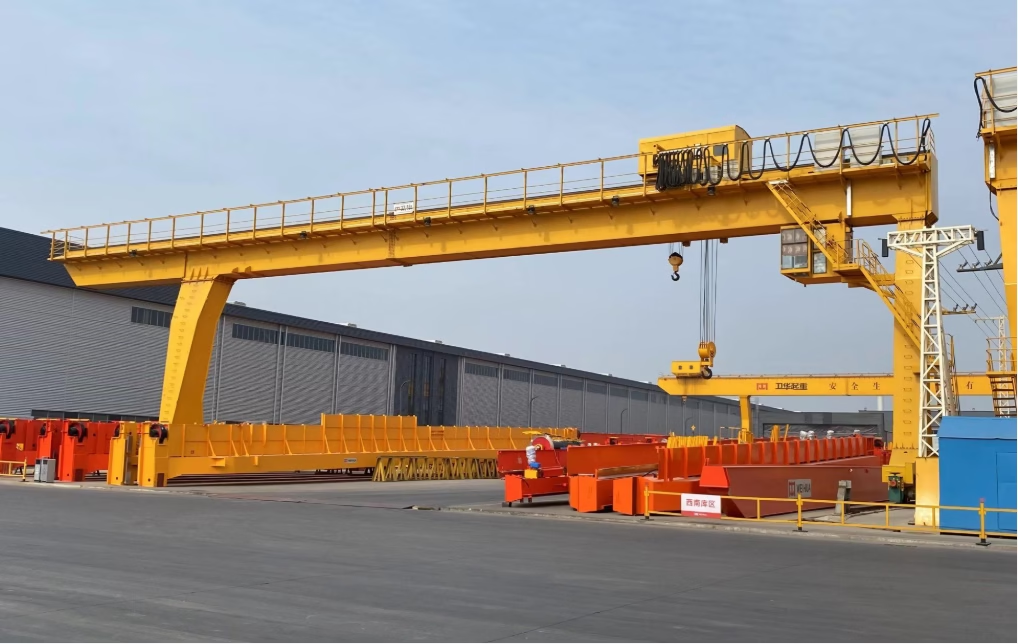
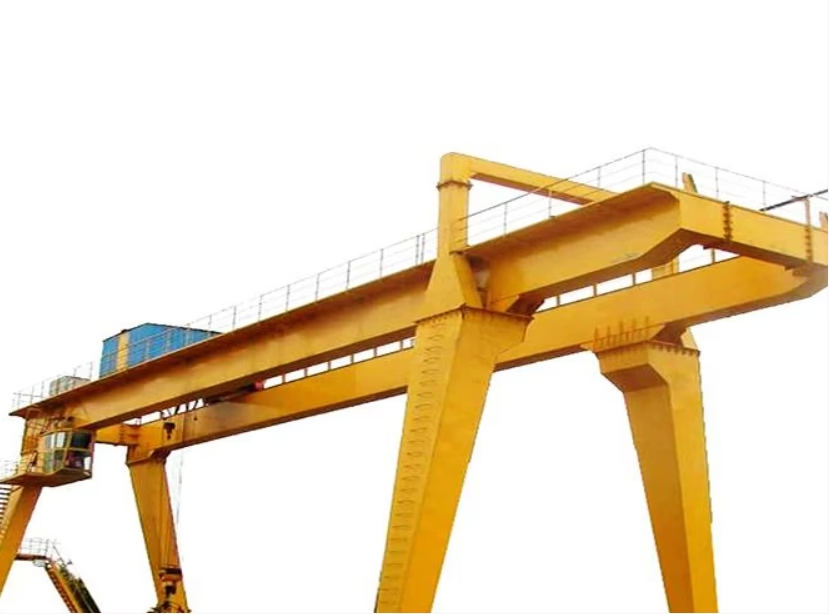
Rail-mounted gantry (RMG) cranes are the largest and most powerful material handling systems in modern container ports and intermodal yards. Unlike traditional spreader cranes that hang from a fixed trolley, RMG cranes are completely self-contained electromechanical systems mounted on wheels that roll along parallel steel rails, spanning the entire width of a container yard. The electrical architecture of an RMG is fundamentally different from other port equipment, and this difference cascades into specific requirements for power transmission cables. RMG是现代集装箱港口最大最强的物料搬运系统。其完全自推进的电气架构对电缆提出了特殊要求。

Rheyfirm® (RS) 20kV: Migration Strategy for RMG Crane Cable Replacement

Rail-mounted gantry (RMG) cranes are the largest and most powerful material handling systems in modern container ports and intermodal yards. Unlike traditional spreader cranes that hang from a fixed trolley, RMG cranes are completely self-contained electromechanical systems mounted on wheels that roll along parallel steel rails, spanning the entire width of a container yard. The electrical architecture of an RMG is fundamentally different from other port equipment, and this difference cascades into specific requirements for power transmission cables. RMG是现代集装箱港口最大最强的物料搬运系统。其完全自推进的电气架构对电缆提出了特殊要求。
In the standardized designation system for medium-voltage reeling cables, the letter "K" in (N)TSKCGEWÖU stands for the German word "Kombination," which in this context means that the cable's earth (grounding) conductors are intentionally split and symmetrically distributed throughout the cable's cross-section, rather than being concentrated in a single conductor or asymmetrically placed. This small designation change — from (N)TSCGEWÖU to (N)TSKCGEWÖU — signals a fundamental rethinking of how the cable responds to mechanical stress, how it manages electrical currents, and critically, how it performs over thousands of duty cycles on monospiral (single-spiral) reeling drums. "K"代表Kombination,意指地线被分裂并对称分布在电缆横截面各处,而非集中在单个导体中。

(N)TSKCGEWÖU vs. (N)TSCGEWÖU: Why Splittable Earth Design Is Mandatory for Monospiral Reeling Drums

In the standardized designation system for medium-voltage reeling cables, the letter “K” in (N)TSKCGEWÖU stands for the German word “Kombination,” which in this context means that the cable’s earth (grounding) conductors are intentionally split and symmetrically distributed throughout the cable’s cross-section, rather than being concentrated in a single conductor or asymmetrically placed. This small designation change — from (N)TSCGEWÖU to (N)TSKCGEWÖU — signals a fundamental rethinking of how the cable responds to mechanical stress, how it manages electrical currents, and critically, how it performs over thousands of duty cycles on monospiral (single-spiral) reeling drums. “K”代表Kombination,意指地线被分裂并对称分布在电缆横截面各处,而非集中在单个导体中。
In the design of lifting equipment — gantry cranes, hoists, spreaders, and material handlers — the cable reel drum is one of the largest, heaviest, and most expensive mechanical components. A crane's reel drum must be large enough to safely bend and unbend the cable thousands of times per day without introducing permanent damage, metal fatigue in the cable's conductors, or accelerated insulation degradation. Equipment engineers would naturally prefer smaller reel drums because they save weight, cost, and manufacturing complexity. However, the cable must bend to a minimum radius that the conductor and insulation materials can withstand without failure. That constraint — the cable's minimum bending radius specification — directly determines the smallest economically feasible reel drum diameter. 电缆的最小弯曲半径规范直接决定了可行的卷筒最小直径,这会影响整个设备的成本、重量和尺寸。

Trommelflex (K) NSHTÖU-J: Minimum Bending Radius Advantages Over Generic NSHTÖU Cables

In the design of lifting equipment — gantry cranes, hoists, spreaders, and material handlers — the cable reel drum is one of the largest, heaviest, and most expensive mechanical components. A crane’s reel drum must be large enough to safely bend and unbend the cable thousands of times per day without introducing permanent damage, metal fatigue in the cable’s conductors, or accelerated insulation degradation. Equipment engineers would naturally prefer smaller reel drums because they save weight, cost, and manufacturing complexity. However, the cable must bend to a minimum radius that the conductor and insulation materials can withstand without failure. That constraint — the cable’s minimum bending radius specification — directly determines the smallest economically feasible reel drum diameter. 电缆的最小弯曲半径规范直接决定了可行的卷筒最小直径,这会影响整个设备的成本、重量和尺寸。
A pervasive misconception exists among electrical engineers and procurement specialists working with reeling cables for port machinery and heavy mining equipment: the belief that Panzerflex and (N)TSCGEWÖU represent two fundamentally different technical approaches or competing product lines. In reality, this confusion stems from a misunderstanding of how industrial cable standards and branding intersect. To clarify this relationship requires understanding what each term actually represents. 在与港口机械和重型采矿设备卷筒电缆合作的电气工程师和采购专家中存在一个普遍的误解:认为 Panzerflex 和 (N)TSCGEWÖU 代表两种根本不同的技术路线或竞争产品线。事实上,这种混淆源于对工业电缆标准和品牌如何相交的误解。澄清这种关系需要理解每个术语实际代表什么。

Prysmian Panzerflex vs. (N)TSCGEWÖU: Which Reeling Cable Should You Choose for Port and Mining Equipment?

A pervasive misconception exists among electrical engineers and procurement specialists working with reeling cables for port machinery and heavy mining equipment: the belief that Panzerflex and (N)TSCGEWÖU represent two fundamentally different technical approaches or competing product lines. In reality, this confusion stems from a misunderstanding of how industrial cable standards and branding intersect. To clarify this relationship requires understanding what each term actually represents. 在与港口机械和重型采矿设备卷筒电缆合作的电气工程师和采购专家中存在一个普遍的误解:认为 Panzerflex 和 (N)TSCGEWÖU 代表两种根本不同的技术路线或竞争产品线。事实上,这种混淆源于对工业电缆标准和品牌如何相交的误解。澄清这种关系需要理解每个术语实际代表什么。
Walk into the procurement office of any major container port or container handling facility, and you will almost certainly encounter discussions about reeling cables for cranes. The conversation often centers around one particular product family: Draka's Buflex XTREME series. Since its introduction in the early 2000s, Buflex XTREME has become the de facto standard for high-speed, space-constrained applications across port machinery—rubber tyred gantry cranes (RTG), ship-to-shore cranes (STS), and mobile harbor equipment. The cable family has earned this reputation through genuine technical excellence: an exceptionally compact outer diameter, remarkable flexibility, and proven durability under continuous flexing stress. Yet despite—or perhaps because of—this market dominance, Buflex XTREME presents a formidable procurement challenge for port operators, especially those managing budgets across multiple facilities in different regions.

Draka Buflex XTREME Replacement Guide: High-Performance Reeling Cables for Port Cranes with Superior Cost-Effectiveness and Fast Delivery

Walk into the procurement office of any major container port or container handling facility, and you will almost certainly encounter discussions about reeling cables for cranes. The conversation often centers around one particular product family: Draka’s Buflex XTREME series. Since its introduction in the early 2000s, Buflex XTREME has become the de facto standard for high-speed, space-constrained applications across port machinery—rubber tyred gantry cranes (RTG), ship-to-shore cranes (STS), and mobile harbor equipment. The cable family has earned this reputation through genuine technical excellence: an exceptionally compact outer diameter, remarkable flexibility, and proven durability under continuous flexing stress. Yet despite—or perhaps because of—this market dominance, Buflex XTREME presents a formidable procurement challenge for port operators, especially those managing budgets across multiple facilities in different regions.
Comprehensive technical guide to Prysmian Bostrig Type P (600V-1000V) armored power cables: conductor flexibility, cross-linked polyolefin insulation, tinned copper braided armor, flame retardance testing, and ampacity calculations for offshore drilling, subsea, and marine power applications.

Prysmian Bostrig Type P Cross-Reference: Equivalent Marine Cables with Faster Lead Times and Superior Flexibility for Offshore Power Distribution

Comprehensive technical guide to Prysmian Bostrig Type P (600V-1000V) armored power cables: conductor flexibility, cross-linked polyolefin insulation, tinned copper braided armor, flame retardance testing, and ampacity calculations for offshore drilling, subsea, and marine power applications.
When a marine electrical engineer opens a cable specification document for a 15 kV Type MMV cable, among the first technical parameters to be scrutinized is the notation of insulation level: either 100% or 133%. To the uninitiated, these seemingly abstract percentages might appear to be arbitrary marketing designations. In reality, they represent a profound engineering distinction rooted in power system grounding philosophy and the way electrical stress distributes across the cable insulation during both normal operation and fault conditions. Understanding this distinction is essential for anyone responsible for specifying cables for offshore platforms, FPSOs, or dynamic positioning vessels, because choosing the wrong insulation level can result in premature cable failures, cascading electrical faults, and operational disasters.

Understanding 100% vs. 133% Insulation Levels in Type MMV 15kV Marine Cables

When a marine electrical engineer opens a cable specification document for a 15 kV Type MMV cable, among the first technical parameters to be scrutinized is the notation of insulation level: either 100% or 133%. To the uninitiated, these seemingly abstract percentages might appear to be arbitrary marketing designations. In reality, they represent a profound engineering distinction rooted in power system grounding philosophy and the way electrical stress distributes across the cable insulation during both normal operation and fault conditions. Understanding this distinction is essential for anyone responsible for specifying cables for offshore platforms, FPSOs, or dynamic positioning vessels, because choosing the wrong insulation level can result in premature cable failures, cascading electrical faults, and operational disasters.
IEC 60092-354 mandates LSZH materials—typically halogen-free compounds based on thermoplastic polyethylene (HTPE), ethylene vinyl acetate (EVA), or polyurethane (PU). These materials meet stringent EN 61034 smoke emission criteria: less than 50% optical density when tested in a closed chamber, and minimal evolution of corrosive gases (measured as hydrochloric acid equivalent per EN 50267-2-1). For additional mechanical protection, ship cables are almost always specified with armoring: a steel wire or steel tape wrapping applied over the jacket.

IEC 60092 MV Cables vs. IEEE 1580 Type MMV: A Specifier’s Guide for Shipboard Power Distribution

IEC 60092-354 mandates LSZH materials—typically halogen-free compounds based on thermoplastic polyethylene (HTPE), ethylene vinyl acetate (EVA), or polyurethane (PU). These materials meet stringent EN 61034 smoke emission criteria: less than 50% optical density when tested in a closed chamber, and minimal evolution of corrosive gases (measured as hydrochloric acid equivalent per EN 50267-2-1). For additional mechanical protection, ship cables are almost always specified with armoring: a steel wire or steel tape wrapping applied over the jacket.
An offshore wind farm's electrical heart lies at its platform-mounted substation, often called an Offshore Substation (OSS) or offshore switching station. This facility sits 80 to 300 kilometers from shore, atop a jacket or floating foundation, constantly exposed to salt spray, extreme vibration from wind turbines, temperature swings, and corrosive humidity. The OSS's role is to gather power from dozens of wind turbines—each feeding in 10 to 15 megawatts—and consolidate that energy through a series of transformers and medium-voltage (MV) switchgear before feeding it via subsea cable to the onshore grid connection point. 海上风电场的电气心脏位于平台安装的变电站,通常称为海上变电站(OSS)或海上开关站。该设施位于离岸 80 至 300 公里处,坐落在导管架或浮式基础上,持续暴露于盐雾、风力发电机极端振动、温度波动和腐蚀性湿度。OSS 的作用是汇集来自数十台风力发电机的电力——每台 10 至 15 兆瓦——通过一系列变压器和中压(MV)开关柜进行整合,然后通过海底电缆输送到陆上并网点。

Type MMV 37-105 Cables (5kV–15kV): Powering Offshore Wind Electrical Substations with Flexible, High-Voltage Marine Integrity

An offshore wind farm’s electrical heart lies at its platform-mounted substation, often called an Offshore Substation (OSS) or offshore switching station. This facility sits 80 to 300 kilometers from shore, atop a jacket or floating foundation, constantly exposed to salt spray, extreme vibration from wind turbines, temperature swings, and corrosive humidity. The OSS’s role is to gather power from dozens of wind turbines—each feeding in 10 to 15 megawatts—and consolidate that energy through a series of transformers and medium-voltage (MV) switchgear before feeding it via subsea cable to the onshore grid connection point. 海上风电场的电气心脏位于平台安装的变电站,通常称为海上变电站(OSS)或海上开关站。该设施位于离岸 80 至 300 公里处,坐落在导管架或浮式基础上,持续暴露于盐雾、风力发电机极端振动、温度波动和腐蚀性湿度。OSS 的作用是汇集来自数十台风力发电机的电力——每台 10 至 15 兆瓦——通过一系列变压器和中压(MV)开关柜进行整合,然后通过海底电缆输送到陆上并网点。
Offshore drilling mud pumps represent some of the most mission-critical equipment on modern drilling platforms. These pumps are driven by variable frequency drive (VFD) systems that optimize power consumption and equipment performance through sophisticated electronic switching, yet this advanced power control technology introduces an insidious threat: VFD-induced electrical discharge machining (EDM) damage to motor bearings, known as fluting. When mud pumps experience unexpected bearing failure due to EDM fluting, unplanned downtime costs platform operators hundreds of thousands of dollars per day in lost production capacity.

Type MMV-VFD (15kV): Managing High-Frequency EMI in Medium Voltage Offshore Drives

Offshore drilling mud pumps represent some of the most mission-critical equipment on modern drilling platforms. These pumps are driven by variable frequency drive (VFD) systems that optimize power consumption and equipment performance through sophisticated electronic switching, yet this advanced power control technology introduces an insidious threat: VFD-induced electrical discharge machining (EDM) damage to motor bearings, known as fluting. When mud pumps experience unexpected bearing failure due to EDM fluting, unplanned downtime costs platform operators hundreds of thousands of dollars per day in lost production capacity.

2kV Type P VFD Cables: Preventing Motor Bearing Damage on Offshore Mud Pumps

Offshore drilling mud pumps represent some of the most mission-critical equipment on modern drilling platforms. These pumps are driven by variable frequency drive (VFD) systems that optimize power consumption and equipment performance through sophisticated electronic switching, yet this advanced power control technology introduces an insidious threat: VFD-induced electrical discharge machining (EDM) damage to motor bearings, known as fluting. When mud pumps experience unexpected bearing failure due to EDM fluting, unplanned downtime costs platform operators hundreds of thousands of dollars per day in lost production capacity.
In the competitive landscape of international offshore project bidding, electrical engineers and procurement managers face a fundamental tension: delivering mission-critical power distribution systems while simultaneously optimizing capital expenditure. The emergence of cost-effective Type P cable designs (经济型 Type P 电缆设计) addresses this tension directly. These unarmored marine power cables, fully compliant with IEEE 1580 offshore cable specifications (IEEE 1580 海上电缆标准), deliver measurable cost reductions across material procurement, logistics, and installation phases while maintaining rigorous electrical and safety performance standards. This installation guide addresses the engineering rationale behind cost-effective, unarmored Type P cable specifications and provides procurement teams with objective decision criteria for determining when these configurations are appropriate for their specific offshore applications.

Type P Cost-Effective Offshore Power Cables: Budget-Optimized Design for Global Drilling and Platform Applications

In the competitive landscape of international offshore project bidding, electrical engineers and procurement managers face a fundamental tension: delivering mission-critical power distribution systems while simultaneously optimizing capital expenditure. The emergence of cost-effective Type P cable designs (经济型 Type P 电缆设计) addresses this tension directly. These unarmored marine power cables, fully compliant with IEEE 1580 offshore cable specifications (IEEE 1580 海上电缆标准), deliver measurable cost reductions across material procurement, logistics, and installation phases while maintaining rigorous electrical and safety performance standards. This installation guide addresses the engineering rationale behind cost-effective, unarmored Type P cable specifications and provides procurement teams with objective decision criteria for determining when these configurations are appropriate for their specific offshore applications.
The GEXOL 37-102 cable family, manufactured by Nexans AmerCable (由Nexans AmerCable制造), represents a sophisticated engineering solution that bridges North American marine cable standards with international protection requirements for hazardous location installations. Understanding the specific engineering principles that govern the "Armored & Sheathed (BS)" configuration is essential for electrical engineers and procurement specialists tasked with specifying cables for Zone 1 explosion-proof environments (防爆 1 区环境), particularly in offshore drilling platforms, subsea installations, and petrochemical facilities.

GEXOL 37-102 Armored & Sheathed (BS): Installation Guide for Explosion Proof Zone 1 

The GEXOL 37-102 cable family, manufactured by Nexans AmerCable (由Nexans AmerCable制造), represents a sophisticated engineering solution that bridges North American marine cable standards with international protection requirements for hazardous location installations. Understanding the specific engineering principles that govern the “Armored & Sheathed (BS)” configuration is essential for electrical engineers and procurement specialists tasked with specifying cables for Zone 1 explosion-proof environments (防爆 1 区环境), particularly in offshore drilling platforms, subsea installations, and petrochemical facilities.
The selection of industrial power cables represents one of the most critical engineering decisions in drilling operations, whether on land or offshore. Two cable types dominate this application space: the Type SHD-GC (重型屏蔽接地检查电缆), designed primarily for mobile mining and terrestrial drilling equipment, and the Type P (海洋平台电缆), engineered specifically for harsh offshore and fixed platform environments. Though both cables operate at similar voltage ratings, they embody fundamentally different design philosophies that reflect the distinct mechanical, electrical, and safety demands of their respective application domains.

Type SHD-GC vs. Type P: Selecting the Right Trailing Cable for Land and Offshore Drilling 

The selection of industrial power cables represents one of the most critical engineering decisions in drilling operations, whether on land or offshore. Two cable types dominate this application space: the Type SHD-GC (重型屏蔽接地检查电缆), designed primarily for mobile mining and terrestrial drilling equipment, and the Type P (海洋平台电缆), engineered specifically for harsh offshore and fixed platform environments. Though both cables operate at similar voltage ratings, they embody fundamentally different design philosophies that reflect the distinct mechanical, electrical, and safety demands of their respective application domains.
Electric rope shovels represent the backbone of modern large-scale surface mining operations, with the Caterpillar 7495 series standing as one of the industry's most prominent examples. These massive machines, capable of handling 100-tonne dipper payloads with 56 cubic meter buckets, operate continuously in 24-hour mining cycles where nighttime operations present unique safety challenges. The integration of luminous trailing cables designed to DIN VDE 0250-813 standards, particularly the (N)TSCGEH3S configuration, delivers measurable improvements in operator visibility, equipment safety, and operational efficiency during critical night-shift periods when ambient lighting conditions are most compromised. (电动绳索铲代表现代大型露天采矿作业的支柱,卡特彼勒7495系列作为行业最突出的例子之一。这些能够处理100吨斗容量、56立方米铲斗的大型机器,在24小时采矿周期中持续运行,夜间作业呈现独特的安全挑战。集成按DIN VDE 0250-813标准设计的发光拖曳电缆,特别是(N)TSCGEH3S配置,在环境照明条件最受限的关键夜班期间,为操作员可见性、设备安全和运营效率提供可衡量的改进。)

Electric Shovels: (N)TSCGEH3S for CAT 7495 – Benefits of Luminous Cables for Night-Shift Shovel Operations

Electric rope shovels represent the backbone of modern large-scale surface mining operations, with the Caterpillar 7495 series standing as one of the industry’s most prominent examples. These massive machines, capable of handling 100-tonne dipper payloads with 56 cubic meter buckets, operate continuously in 24-hour mining cycles where nighttime operations present unique safety challenges. The integration of luminous trailing cables designed to DIN VDE 0250-813 standards, particularly the (N)TSCGEH3S configuration, delivers measurable improvements in operator visibility, equipment safety, and operational efficiency during critical night-shift periods when ambient lighting conditions are most compromised. (电动绳索铲代表现代大型露天采矿作业的支柱,卡特彼勒7495系列作为行业最突出的例子之一。这些能够处理100吨斗容量、56立方米铲斗的大型机器,在24小时采矿周期中持续运行,夜间作业呈现独特的安全挑战。集成按DIN VDE 0250-813标准设计的发光拖曳电缆,特别是(N)TSCGEH3S配置,在环境照明条件最受限的关键夜班期间,为操作员可见性、设备安全和运营效率提供可衡量的改进。)
Mining operations face persistent safety challenges, with powered haulage accidents accounting for approximately 50% of all mining-related fatalities annually in the United States. Among these incidents, haul truck-related accidents remain the most prevalent, with six out of twenty-eight mining fatalities in 2017 and six out of twenty-seven in 2018 being directly attributed to haul truck operations. The introduction of self-illuminating LED-integrated mining cables represents a transformative advancement in collision avoidance technology, specifically addressing the critical issue of cable run-over accidents in low-visibility environments. (矿山作业面临持续的安全挑战,在美国,动力运输事故约占所有矿山相关死亡事故的50%。在这些事故中,运输卡车相关事故最为普遍,2017年28起矿山死亡事故中有6起、2018年27起中有6起直接归因于运输卡车作业。自发光LED集成矿用电缆的引入代表了防碰撞技术的变革性进步,专门解决低能见度环境中电缆碾压事故的关键问题。)

How Much Does Active Cable Illumination Reduce the Risk of Run-Over Accidents by Haul Trucks in Open-Pit Mines?

Mining operations face persistent safety challenges, with powered haulage accidents accounting for approximately 50% of all mining-related fatalities annually in the United States. Among these incidents, haul truck-related accidents remain the most prevalent, with six out of twenty-eight mining fatalities in 2017 and six out of twenty-seven in 2018 being directly attributed to haul truck operations. The introduction of self-illuminating LED-integrated mining cables represents a transformative advancement in collision avoidance technology, specifically addressing the critical issue of cable run-over accidents in low-visibility environments. (矿山作业面临持续的安全挑战,在美国,动力运输事故约占所有矿山相关死亡事故的50%。在这些事故中,运输卡车相关事故最为普遍,2017年28起矿山死亡事故中有6起、2018年27起中有6起直接归因于运输卡车作业。自发光LED集成矿用电缆的引入代表了防碰撞技术的变革性进步,专门解决低能见度环境中电缆碾压事故的关键问题。)
When engineers first encounter the concept of a self-illuminating mining cable — such as the (N)TSCGEH3S / TENAX-LUMEN type — one of the most natural questions that arises is about the transparent outer sheath. Traditional mining trailing cables use opaque black polychloroprene (PCP, also known as neoprene or CR) or chlorinated polyethylene (CPE) outer jackets. These materials have decades of proven thermal performance data. Replacing them with a crystal-clear thermoplastic polyurethane (TPU) immediately raises the concern: does the change in sheath material and color affect how much current the cable can safely carry? This is not a trivial question. The ampacity (current-carrying capacity) of a power cable is fundamentally a thermal problem. Every ampere of current flowing through the conductor generates I²R heat losses. That heat must travel outward through every layer of the cable — insulation, screens, inner sheath, monitoring shield, and finally the outer sheath — before being dissipated to the surrounding environment by convection and radiation. If any layer in this thermal chain acts as a better or worse insulator, or if the cable surface radiates heat more or less efficiently, the maximum allowable current changes. 载流量本质上是一个热学问题:导体中的I²R热量必须穿过每一层传导到外部环境——如果任何层的热性能改变,最大允许电流就会变化。When engineers first encounter the concept of a self-illuminating mining cable — such as the (N)TSCGEH3S / TENAX-LUMEN type — one of the most natural questions that arises is about the transparent outer sheath. Traditional mining trailing cables use opaque black polychloroprene (PCP, also known as neoprene or CR) or chlorinated polyethylene (CPE) outer jackets. These materials have decades of proven thermal performance data. Replacing them with a crystal-clear thermoplastic polyurethane (TPU) immediately raises the concern: does the change in sheath material and color affect how much current the cable can safely carry? This is not a trivial question. The ampacity (current-carrying capacity) of a power cable is fundamentally a thermal problem. Every ampere of current flowing through the conductor generates I²R heat losses. That heat must travel outward through every layer of the cable — insulation, screens, inner sheath, monitoring shield, and finally the outer sheath — before being dissipated to the surrounding environment by convection and radiation. If any layer in this thermal chain acts as a better or worse insulator, or if the cable surface radiates heat more or less efficiently, the maximum allowable current changes. 载流量本质上是一个热学问题:导体中的I²R热量必须穿过每一层传导到外部环境——如果任何层的热性能改变,最大允许电流就会变化。

Heat Dissipation: Does the TPU Transparent Sheath Affect the Ampacity of the Cable Compared to Black Rubber?

When engineers first encounter the concept of a self-illuminating mining cable — such as the (N)TSCGEH3S / TENAX-LUMEN type — one of the most natural questions that arises is about the transparent outer sheath. Traditional mining trailing cables use opaque black polychloroprene (PCP, also known as neoprene or CR) or chlorinated polyethylene (CPE) outer jackets. These materials have decades of proven thermal performance data. Replacing them with a crystal-clear thermoplastic polyurethane (TPU) immediately raises the concern: does the change in sheath material and color affect how much current the cable can safely carry? This is not a trivial question. The ampacity (current-carrying capacity) of a power cable is fundamentally a thermal problem. Every ampere of current flowing through the conductor generates I²R heat losses. That heat must travel outward through every layer of the cable — insulation, screens, inner sheath, monitoring shield, and finally the outer sheath — before being dissipated to the surrounding environment by convection and radiation. If any layer in this thermal chain acts as a better or worse insulator, or if the cable surface radiates heat more or less efficiently, the maximum allowable current changes. 载流量本质上是一个热学问题:导体中的I²R热量必须穿过每一层传导到外部环境——如果任何层的热性能改变,最大允许电流就会变化。
Consider a medium-voltage mining trailing cable — for instance, an (N)TMCGEH3S rated 6/10 kV — carrying hundreds of amperes of alternating current through its three power cores to an electric rope shovel in an open-pit mine. Somewhere inside the same cable, a tiny LED glows steadily, making the cable visible to operators in darkness. Yet that LED has no wire, no contact, no physical electrical connection to the power cores. How is this possible? 设想一根中压矿用拖拽电缆——例如额定 6/10 kV 的 (N)TMCGEH3S——通过三根动力线芯向露天矿的电铲输送数百安培的交流电。在同一根电缆内部某处,一颗微小的 LED 稳定发光,使电缆在黑暗中对操作人员可见。但该 LED 与动力线芯之间没有导线、没有触点、没有任何物理电气连接。这是如何做到的?

Inductive Harvesting: How Does the Magnetic Field of the Power Cores Induce Current to Light Up LEDs Without Physical Electrical Connection?

Consider a medium-voltage mining trailing cable — for instance, an (N)TMCGEH3S rated 6/10 kV — carrying hundreds of amperes of alternating current through its three power cores to an electric rope shovel in an open-pit mine. Somewhere inside the same cable, a tiny LED glows steadily, making the cable visible to operators in darkness. Yet that LED has no wire, no contact, no physical electrical connection to the power cores. How is this possible? 设想一根中压矿用拖拽电缆——例如额定 6/10 kV 的 (N)TMCGEH3S——通过三根动力线芯向露天矿的电铲输送数百安培的交流电。在同一根电缆内部某处,一颗微小的 LED 稳定发光,使电缆在黑暗中对操作人员可见。但该 LED 与动力线芯之间没有导线、没有触点、没有任何物理电气连接。这是如何做到的?
In large-scale open-pit mines and underground operations, heavy mobile equipment — electric rope shovels, walking draglines, blast-hole drill rigs, and haul trucks — operates around the clock, including night shifts and in environments with zero natural light. Trailing power cables that supply electricity to this equipment lie across haul roads and bench floors, often spanning hundreds or even thousands of meters. When operators cannot see these cables, the result is crushover damage, unplanned downtime, and in the worst cases, life-threatening electrical faults. Cable damage from equipment runover is one of the most persistent operational challenges in surface mining. Each crush event can take a mine's primary production asset offline for hours or even days while the cable is repaired or replaced, and a damaged medium-voltage cable carrying 6 kV to 25 kV poses a serious arc-flash and electrocution hazard to any personnel nearby. According to Prysmian Group, the origin of many unplanned mining interruptions is related to power cable damage caused by equipment crushing during movement, particularly due to visibility restrictions. 据普睿司曼集团介绍,许多矿山非计划停机的根源是设备移动过程中因能见度受限导致的电力电缆压损。

Safety in the Dark: Why Active LED Mining Cables Are Replacing Reflective Tape

In large-scale open-pit mines and underground operations, heavy mobile equipment — electric rope shovels, walking draglines, blast-hole drill rigs, and haul trucks — operates around the clock, including night shifts and in environments with zero natural light. Trailing power cables that supply electricity to this equipment lie across haul roads and bench floors, often spanning hundreds or even thousands of meters. When operators cannot see these cables, the result is crushover damage, unplanned downtime, and in the worst cases, life-threatening electrical faults. Cable damage from equipment runover is one of the most persistent operational challenges in surface mining. Each crush event can take a mine’s primary production asset offline for hours or even days while the cable is repaired or replaced, and a damaged medium-voltage cable carrying 6 kV to 25 kV poses a serious arc-flash and electrocution hazard to any personnel nearby. According to Prysmian Group, the origin of many unplanned mining interruptions is related to power cable damage caused by equipment crushing during movement, particularly due to visibility restrictions. 据普睿司曼集团介绍,许多矿山非计划停机的根源是设备移动过程中因能见度受限导致的电力电缆压损。
Open-pit mining operations run around the clock, often in low-light conditions where trailing cables — the lifelines of mobile equipment — become nearly invisible on the ground. When heavy machinery such as draglines, shovels, or belt-wagon systems traverse active pit areas, undetected cables are at risk of being crushed or severed. The consequences extend beyond costly cable replacement: unplanned downtime, arc-flash hazards, and direct threats to personnel safety all stem from a single visibility failure. 露天矿山全天候运营,常在低光照条件下作业。此时拖拽电缆——移动设备的生命线——几乎不可见。重型机械(如拉铲、电铲或皮带车系统)经过作业区域时,未被发现的电缆面临被碾压或切断的风险。后果不仅是高昂的电缆更换费用,还包括计划外停机、电弧闪光危险以及对人员安全的直接威胁。

TENAX-LUMEN Alternative: High-Visibility (N)TMCGEH3S Cables for Safer Mines

Open-pit mining operations run around the clock, often in low-light conditions where trailing cables — the lifelines of mobile equipment — become nearly invisible on the ground. When heavy machinery such as draglines, shovels, or belt-wagon systems traverse active pit areas, undetected cables are at risk of being crushed or severed. The consequences extend beyond costly cable replacement: unplanned downtime, arc-flash hazards, and direct threats to personnel safety all stem from a single visibility failure. 露天矿山全天候运营,常在低光照条件下作业。此时拖拽电缆——移动设备的生命线——几乎不可见。重型机械(如拉铲、电铲或皮带车系统)经过作业区域时,未被发现的电缆面临被碾压或切断的风险。后果不仅是高昂的电缆更换费用,还包括计划外停机、电弧闪光危险以及对人员安全的直接威胁。
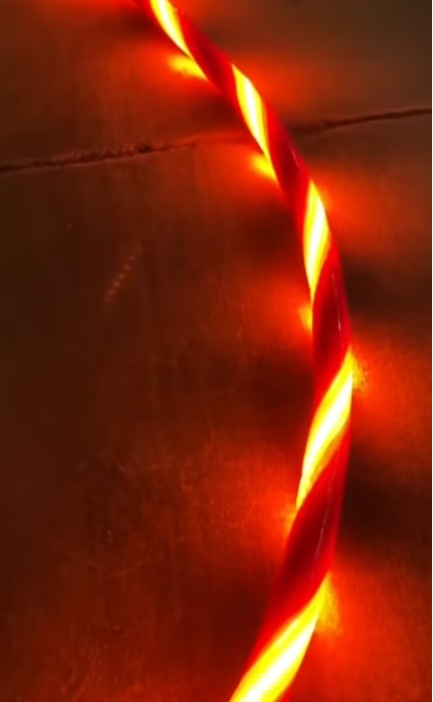
The (N)TSCGEH3S, commercially known under the TENAX-LUMEN product family originally developed by Prysmian Group in Germany, represents a breakthrough solution: a self-luminous medium-voltage trailing cable that glows visibly in darkness — even when de-energized — thanks to integrated electroluminescent (EL) or LED elements embedded beneath a transparent thermoplastic polyurethane (TPU) outer sheath. (N)TSCGEH3S 是一种自发光中压拖曳电缆,即使在断电状态下也能在黑暗中清晰可见,其发光元件嵌入透明TPU外护套之下。

What is (N)TSCGEH3S?The Ultimate Guide to Self-Illuminating Mining Cables

The (N)TSCGEH3S, commercially known under the TENAX-LUMEN product family originally developed by Prysmian Group in Germany, represents a breakthrough solution: a self-luminous medium-voltage trailing cable that glows visibly in darkness — even when de-energized — thanks to integrated electroluminescent (EL) or LED elements embedded beneath a transparent thermoplastic polyurethane (TPU) outer sheath. (N)TSCGEH3S 是一种自发光中压拖曳电缆,即使在断电状态下也能在黑暗中清晰可见,其发光元件嵌入透明TPU外护套之下。
Modern mining operations increasingly rely on self-illuminating cables to improve safety visibility in underground environments. By embedding LED strip lights directly within the transparent or translucent thermoplastic polyurethane (TPU) outer jacket of a trailing or reeling cable, operators gain continuous visual confirmation of cable routing, reduce tripping hazards, and can detect cable damage more readily. Anhui Feichun Special Cable Co., Ltd. has pioneered this approach in its SHD-GC LED Mining Cable series, integrating constant-current LED strips into cables rated from 2 kV to 25 kV for both underground and open-pit operations. 现代矿山作业越来越依赖于自发光电缆来提高地下环境的安全可见度。通过将LED灯带直接嵌入拖曳或卷缆的透明/半透明热塑性聚氨酯(TPU)外护套中,操作人员可持续确认电缆走向路线、降低绊倒风险,并更容易检测电缆损坏。安徽飞纯特种电缆有限公司在其SHD-GC LED矿用电缆系列中率先采用了该技术。

Service Life: What Is the Expected Lifespan of Embedded LED Strips Inside a Mining Cable Under Constant Flexing?

Modern mining operations increasingly rely on self-illuminating cables to improve safety visibility in underground environments. By embedding LED strip lights directly within the transparent or translucent thermoplastic polyurethane (TPU) outer jacket of a trailing or reeling cable, operators gain continuous visual confirmation of cable routing, reduce tripping hazards, and can detect cable damage more readily. Anhui Feichun Special Cable Co., Ltd. has pioneered this approach in its SHD-GC LED Mining Cable series, integrating constant-current LED strips into cables rated from 2 kV to 25 kV for both underground and open-pit operations. 现代矿山作业越来越依赖于自发光电缆来提高地下环境的安全可见度。通过将LED灯带直接嵌入拖曳或卷缆的透明/半透明热塑性聚氨酯(TPU)外护套中,操作人员可持续确认电缆走向路线、降低绊倒风险,并更容易检测电缆损坏。安徽飞纯特种电缆有限公司在其SHD-GC LED矿用电缆系列中率先采用了该技术。
In heavy-duty industrial cables — the kind used in port container cranes, mining draglines, tunnel boring machines, and steel-mill transfer cars — visual identification of cable status is a serious safety concern. Operators need to know at a glance whether a cable is energized, which phase it carries, or simply where it runs in a dark, congested environment. Embedding small LED indicators directly into the cable sheath is one solution, but doing so raises an immediate engineering question: how do you power those LEDs? 在重型工业电缆(如港口集装箱起重机、矿山拖拽线、隧道掘进机和钢厂转运车使用的电缆)中,电缆状态的可视化识别是一个严肃的安全问题。将 LED 指示灯嵌入电缆护套是一种解决方案,但随之而来的工程难题是:如何为这些 LED 供电?

Inductive Harvesting: How Does the Magnetic Field of the Power Cores Induce Current to Light Up LEDs Without Physical Electrical Connection?

In heavy-duty industrial cables — the kind used in port container cranes, mining draglines, tunnel boring machines, and steel-mill transfer cars — visual identification of cable status is a serious safety concern. Operators need to know at a glance whether a cable is energized, which phase it carries, or simply where it runs in a dark, congested environment. Embedding small LED indicators directly into the cable sheath is one solution, but doing so raises an immediate engineering question: how do you power those LEDs? 在重型工业电缆(如港口集装箱起重机、矿山拖拽线、隧道掘进机和钢厂转运车使用的电缆)中,电缆状态的可视化识别是一个严肃的安全问题。将 LED 指示灯嵌入电缆护套是一种解决方案,但随之而来的工程难题是:如何为这些 LED 供电?
The type designation (N)TSCGEH3S follows the German DIN VDE cable nomenclature system, which uses sequential letters to encode every aspect of a cable's construction, insulation material, and intended service conditions. Under DIN VDE 0292, the leading N (in parentheses) indicates the cable is manufactured to a recognized VDE type standard with permissible manufacturer variations, while subsequent characters specify the conductor type, shielding, elastomeric insulation, and special functional elements embedded in the cable assembly. 型号标识 (N)TSCGEH3S 遵循德国 DIN VDE 电缆命名规范,每个字母依次编码了电缆的结构、绝缘材料及适用工况。括号中的"N"表示该型号依据 VDE 标准制造,允许制造商做出一定的变型设计。

Power Source: How Are the Electroluminescent (EL) Strings in (N)TSCGEH3S Powered?

The type designation (N)TSCGEH3S follows the German DIN VDE cable nomenclature system, which uses sequential letters to encode every aspect of a cable’s construction, insulation material, and intended service conditions. Under DIN VDE 0292, the leading N (in parentheses) indicates the cable is manufactured to a recognized VDE type standard with permissible manufacturer variations, while subsequent characters specify the conductor type, shielding, elastomeric insulation, and special functional elements embedded in the cable assembly. 型号标识 (N)TSCGEH3S 遵循德国 DIN VDE 电缆命名规范,每个字母依次编码了电缆的结构、绝缘材料及适用工况。括号中的”N”表示该型号依据 VDE 标准制造,允许制造商做出一定的变型设计。
Cable visibility in mining operations represents a critical safety factor that directly impacts operational efficiency and worker protection. Underground and surface mining environments present unique challenges including low-light conditions, dust, and the presence of heavy mobile equipment. (电缆可视性是矿山作业中直接影响运营效率和工人安全的关键因素。) Two primary technologies have emerged to address cable visibility challenges: passive reflective coatings and active illumination systems. This technical comparison examines both approaches to assist mining engineers in selecting appropriate solutions for their operational requirements.

FeiChun Reflective vs. Luminous Mining CableTF Kable Reflective Technology vs. TENAX-LUMEN Active Illumination

Cable visibility in mining operations represents a critical safety factor that directly impacts operational efficiency and worker protection. Underground and surface mining environments present unique challenges including low-light conditions, dust, and the presence of heavy mobile equipment. (电缆可视性是矿山作业中直接影响运营效率和工人安全的关键因素。) Two primary technologies have emerged to address cable visibility challenges: passive reflective coatings and active illumination systems. This technical comparison examines both approaches to assist mining engineers in selecting appropriate solutions for their operational requirements.
Load-Haul-Dump (LHD) loaders are the backbone of underground ore movement—more than 75% of the world's underground metal mines rely on LHDs for material handling. Electric-motor LHD units typically operate at medium voltages of 380–550 V (and up to 3.3/6.6 kV for larger units), drawing power through flexible trailing cables that must reel and unreel as the machine moves through narrow, irregular headings. In the permanent darkness of underground drifts, these cables face an acute visibility problem: personnel and equipment cannot easily see trailing cables on the ground, leading to run-over damage, unplanned outages, and serious safety hazards.

FeiChun (N)TMCGEH3S: Specifications for Active LED Medium Voltage Trailing Cables for Underground LHDs

Load-Haul-Dump (LHD) loaders are the backbone of underground ore movement—more than 75% of the world’s underground metal mines rely on LHDs for material handling. Electric-motor LHD units typically operate at medium voltages of 380–550 V (and up to 3.3/6.6 kV for larger units), drawing power through flexible trailing cables that must reel and unreel as the machine moves through narrow, irregular headings. In the permanent darkness of underground drifts, these cables face an acute visibility problem: personnel and equipment cannot easily see trailing cables on the ground, leading to run-over damage, unplanned outages, and serious safety hazards.
In the German DIN VDE cable designation system — widely considered the most comprehensive national nomenclature for industrial cables in the world — every letter and number encodes a specific material, construction feature, or functional characteristic. This convention, governed by standards such as DIN VDE 0292 (Type Designation Codes) and DIN VDE 0250 Part 813 (flexible reeling and trailing cables), allows an engineer to identify a cable's conductor type, insulation, screening, protective earth, sheath, and special integrations simply by reading its alphanumeric type code. 在德国 DIN VDE 电缆命名体系中——被公认为全球工业电缆领域最完善的国家级命名规范——每一个字母和数字都编码了特定的材料、结构特征或功能属性。该体系由 DIN VDE 0292(型号代码标准)和 DIN VDE 0250 第 813 部分(柔性卷筒与拖曳电缆)等标准统一管理。

TENAX-LUMEN (N)TSCGEH3S — What Does Each Letter in the Code Stand For?

In the German DIN VDE cable designation system — widely considered the most comprehensive national nomenclature for industrial cables in the world — every letter and number encodes a specific material, construction feature, or functional characteristic. This convention, governed by standards such as DIN VDE 0292 (Type Designation Codes) and DIN VDE 0250 Part 813 (flexible reeling and trailing cables), allows an engineer to identify a cable’s conductor type, insulation, screening, protective earth, sheath, and special integrations simply by reading its alphanumeric type code. 在德国 DIN VDE 电缆命名体系中——被公认为全球工业电缆领域最完善的国家级命名规范——每一个字母和数字都编码了特定的材料、结构特征或功能属性。该体系由 DIN VDE 0292(型号代码标准)和 DIN VDE 0250 第 813 部分(柔性卷筒与拖曳电缆)等标准统一管理。
In large-scale open-pit mining, unplanned cable damage caused by low-visibility equipment movement is a leading source of operational downtime and safety incidents. The TENAX-LUMEN self-illuminating trailing cable—designated (N)TSCGEH3S—was developed by Prysmian Group precisely to address this problem. It embeds active electroluminescent (EL) lighting elements under a transparent polyurethane (TPU) outer sheath, making the cable visible in complete darkness even when it is not energized. But an essential question arises for mine electrical engineers: does adding self-illumination change the cable's core mechanical and electrical characteristics compared to the well-established (N)TSCGEWÖU standard rubber trailing cable?

TENAX-LUMEN vs. Standard (N)TSCGEWÖU: Is the (N)TSCGEH3S Self-Illuminating Cable Mechanically Identical to Standard Rubber Reeling Cables?

In large-scale open-pit mining, unplanned cable damage caused by low-visibility equipment movement is a leading source of operational downtime and safety incidents. The TENAX-LUMEN self-illuminating trailing cable—designated (N)TSCGEH3S—was developed by Prysmian Group precisely to address this problem. It embeds active electroluminescent (EL) lighting elements under a transparent polyurethane (TPU) outer sheath, making the cable visible in complete darkness even when it is not energized. But an essential question arises for mine electrical engineers: does adding self-illumination change the cable’s core mechanical and electrical characteristics compared to the well-established (N)TSCGEWÖU standard rubber trailing cable?