trailing cable

(N)TSCGEWÖU 3x185+3x35/3 medium voltage flexible mining cable typically weighs between 8,500 and 10,200 kilograms per kilometer, depending on the specific construction variant, insulation thickness, sheathing materials, and whether additional features such as anti-torsion braiding or fiber optic cores are incorporated. This weight range represents the complete cable assembly including all conductors, insulation layers, screening, inner and outer sheaths, and structural elements required for demanding mining and industrial applications. (N)TSCGEWÖU 3x185+3x35/3中压柔性采矿电缆的重量通常在每公里8,500至10,200千克之间,具体取决于特定的结构变型、绝缘厚度、护套材料,以及是否包含防扭转编织或光纤芯等附加功能。

Weight Calculator: What is the Approximate Weight per Meter (kg/km) of (N)TSCGEWÖU 3×185+3×35/3?

(N)TSCGEWÖU 3×185+3×35/3 medium voltage flexible mining cable typically weighs between 8,500 and 10,200 kilograms per kilometer, depending on the specific construction variant, insulation thickness, sheathing materials, and whether additional features such as anti-torsion braiding or fiber optic cores are incorporated. This weight range represents the complete cable assembly including all conductors, insulation layers, screening, inner and outer sheaths, and structural elements required for demanding mining and industrial applications. (N)TSCGEWÖU 3×185+3×35/3中压柔性采矿电缆的重量通常在每公里8,500至10,200千克之间,具体取决于特定的结构变型、绝缘厚度、护套材料,以及是否包含防扭转编织或光纤芯等附加功能。
When working with Type G-GC portable power cables, one of the most frequently asked questions by installers and maintenance technicians concerns the proper connection of the ground check conductor, often called the pilot wire. This seemingly simple question touches on one of the most critical safety systems in mining and heavy industrial electrical installations. Understanding not just where this wire connects, but why it exists and how it functions as part of a comprehensive ground fault protection system, is essential for anyone working with mining equipment electrical systems. 在使用Type G-GC便携式电源电缆时,安装人员和维护技术人员最常问的问题之一是关于接地检查导体(通常称为导线)的正确连接。这个看似简单的问题涉及到采矿和重工业电气安装中最关键的安全系统之一。

Connection Guide: Wiring a Type G-GC Plug – Where Does the Ground Check Wire Go?

When working with Type G-GC portable power cables, one of the most frequently asked questions by installers and maintenance technicians concerns the proper connection of the ground check conductor, often called the pilot wire. This seemingly simple question touches on one of the most critical safety systems in mining and heavy industrial electrical installations. Understanding not just where this wire connects, but why it exists and how it functions as part of a comprehensive ground fault protection system, is essential for anyone working with mining equipment electrical systems. 在使用Type G-GC便携式电源电缆时,安装人员和维护技术人员最常问的问题之一是关于接地检查导体(通常称为导线)的正确连接。这个看似简单的问题涉及到采矿和重工业电气安装中最关键的安全系统之一。
Before we can properly discuss earthing techniques, we need to build a solid understanding of what (N)TSCGECEWÖU cables are and why their semiconductive screens require such careful attention. These cables represent one of the most sophisticated designs in medium voltage flexible power transmission, and understanding their construction will help you see why proper earthing is not just important but absolutely critical for safe operation.

How to properly earth the semiconductive screen of an (N)TSCGECEWÖU cable to prevent arcing?

Before we can properly discuss earthing techniques, we need to build a solid understanding of what (N)TSCGECEWÖU cables are and why their semiconductive screens require such careful attention. These cables represent one of the most sophisticated designs in medium voltage flexible power transmission, and understanding their construction will help you see why proper earthing is not just important but absolutely critical for safe operation.
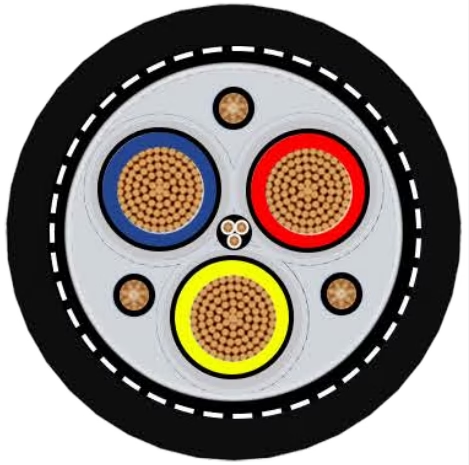
When you look at a modern mining cable cross-section, you'll notice it contains more than just the power conductors that deliver electricity to mining equipment. Among these additional elements are one or more pilot cores—specialized conductors that serve critical safety and monitoring functions. While these pilot cores might seem like simple extra wires at first glance, they represent sophisticated monitoring infrastructure that enables mining operations to detect dangerous conditions before they cause injuries, equipment damage, or production interruptions.1 当您查看现代矿用电缆横截面时,您会注意到它包含的不仅仅是向采矿设备输送电力的电力导体。在这些附加元件中有一个或多个引导芯——服务于关键安全和监控功能的专用导体。

Digital Monitoring: Using Pilot Cores for Real-Time Temperature and Damage Detection

When you look at a modern mining cable cross-section, you’ll notice it contains more than just the power conductors that deliver electricity to mining equipment. Among these additional elements are one or more pilot cores—specialized conductors that serve critical safety and monitoring functions. While these pilot cores might seem like simple extra wires at first glance, they represent sophisticated monitoring infrastructure that enables mining operations to detect dangerous conditions before they cause injuries, equipment damage, or production interruptions.1 当您查看现代矿用电缆横截面时,您会注意到它包含的不仅仅是向采矿设备输送电力的电力导体。在这些附加元件中有一个或多个引导芯——服务于关键安全和监控功能的专用导体。
cable selection directly impacts equipment reliability, operational safety, and cost efficiency. While Diesel Locomotive Cable (DLO) and Type W cables share similar voltage ratings and environmental resistance, their fundamental design philosophies serve distinctly different operational requirements. This technical analysis examines why DLO cable, despite its robust construction and premium materials, is frequently rejected for dynamic mining applications involving continuous movement equipment such as shuttle cars, draglines, and continuous miners.

DLO Cable vs. Type W: Why is Diesel Locomotive Cable often rejected for dynamic mining applications?

cable selection directly impacts equipment reliability, operational safety, and cost efficiency. While Diesel Locomotive Cable (DLO) and Type W cables share similar voltage ratings and environmental resistance, their fundamental design philosophies serve distinctly different operational requirements. This technical analysis examines why DLO cable, despite its robust construction and premium materials, is frequently rejected for dynamic mining applications involving continuous movement equipment such as shuttle cars, draglines, and continuous miners.
When specifying medium-voltage mining cables for international projects, engineers frequently encounter seemingly incompatible voltage ratings between European VDE standards and Commonwealth AS/NZS standards. A common point of confusion arises when comparing the 3.6/6kV rating found in DIN VDE 0250-813 flexible mining cables with the 3.3/3.3kV rating specified for AS/NZS 2802 Type 441 cables used extensively in Australian, New Zealand, and South African mining operations. 在为国际项目指定中压矿用电缆时,工程师经常遇到欧洲VDE标准与英联邦AS/NZS标准之间看似不兼容的电压等级。一个常见的困惑点是比较DIN VDE 0250-813柔性矿用电缆中的3.6/6kV额定电压与澳大利亚、新西兰和南非采矿作业广泛使用的AS/NZS 2802 Type 441电缆规定的3.3/3.3kV额定电压。

Voltage Rating Comparison: How Does the 3.6/6kV Rating in VDE 0250 Standards Compare to the 3.3/3.3kV Rating Used for Type 441 Cables in Commonwealth Mining?

When specifying medium-voltage mining cables for international projects, engineers frequently encounter seemingly incompatible voltage ratings between European VDE standards and Commonwealth AS/NZS standards. A common point of confusion arises when comparing the 3.6/6kV rating found in DIN VDE 0250-813 flexible mining cables with the 3.3/3.3kV rating specified for AS/NZS 2802 Type 441 cables used extensively in Australian, New Zealand, and South African mining operations. 在为国际项目指定中压矿用电缆时,工程师经常遇到欧洲VDE标准与英联邦AS/NZS标准之间看似不兼容的电压等级。一个常见的困惑点是比较DIN VDE 0250-813柔性矿用电缆中的3.6/6kV额定电压与澳大利亚、新西兰和南非采矿作业广泛使用的AS/NZS 2802 Type 441电缆规定的3.3/3.3kV额定电压。
In the design of medium voltage mining and reeling cables such as the (N)TSCGECEWÖU, the short-circuit temperature rating of the insulation material fundamentally determines the cable's fault current withstand capability. The 3GI3 EPR (Ethylene Propylene Rubber) compound specified in DIN VDE 0207 Part 20 has a maximum permissible short-circuit temperature of 250°C, which directly influences how engineers must size the metallic screen to safely conduct earth fault currents without thermal damage. 在设计诸如(N)TSCGECEWÖU等中压矿用和卷筒电缆时,绝缘材料的短路温度额定值从根本上决定了电缆的故障电流承受能力。DIN VDE 0207第20部分规定的3GI3 EPR(乙丙橡胶)化合物的最大允许短路温度为250°C,这直接影响工程师必须如何确定金属屏蔽层的尺寸,以安全传导接地故障电流而不会造成热损坏。

Short-Circuit Rating: Why is the Short-Circuit Temperature for 3GI3 EPR-Insulated VDE Cables Set at 250°C, and How Does This Impact Screen Sizing for (N)TSCGECEWÖU?

In the design of medium voltage mining and reeling cables such as the (N)TSCGECEWÖU, the short-circuit temperature rating of the insulation material fundamentally determines the cable’s fault current withstand capability. The 3GI3 EPR (Ethylene Propylene Rubber) compound specified in DIN VDE 0207 Part 20 has a maximum permissible short-circuit temperature of 250°C, which directly influences how engineers must size the metallic screen to safely conduct earth fault currents without thermal damage. 在设计诸如(N)TSCGECEWÖU等中压矿用和卷筒电缆时,绝缘材料的短路温度额定值从根本上决定了电缆的故障电流承受能力。DIN VDE 0207第20部分规定的3GI3 EPR(乙丙橡胶)化合物的最大允许短路温度为250°C,这直接影响工程师必须如何确定金属屏蔽层的尺寸,以安全传导接地故障电流而不会造成热损坏。
The (N)TSCGEWÖU cable manufactured to DIN VDE 0250-813 and the standard power cable manufactured to IEC 60502-2 serve fundamentally different purposes despite both being medium voltage cables. The most critical distinction lies in their mechanical durability design philosophy: VDE 0250 mining cables are engineered for continuous dynamic stress in mobile applications, while IEC 60502-2 cables are optimized for static fixed installations. 按照DIN VDE 0250-813标准生产的(N)TSCGEWÖU电缆与按照IEC 60502-2标准生产的标准电力电缆,尽管都是中压电缆,但其根本用途完全不同。最关键的区别在于它们的机械耐久性设计理念:VDE 0250矿用电缆是为移动应用中的持续动态应力而设计的,而IEC 60502-2电缆则针对静态固定安装进行了优化。

(N)TSCGEWÖU vs. IEC 60502-2: What is the Fundamental Difference in Mechanical Durability?

The (N)TSCGEWÖU cable manufactured to DIN VDE 0250-813 and the standard power cable manufactured to IEC 60502-2 serve fundamentally different purposes despite both being medium voltage cables. The most critical distinction lies in their mechanical durability design philosophy: VDE 0250 mining cables are engineered for continuous dynamic stress in mobile applications, while IEC 60502-2 cables are optimized for static fixed installations. 按照DIN VDE 0250-813标准生产的(N)TSCGEWÖU电缆与按照IEC 60502-2标准生产的标准电力电缆,尽管都是中压电缆,但其根本用途完全不同。最关键的区别在于它们的机械耐久性设计理念:VDE 0250矿用电缆是为移动应用中的持续动态应力而设计的,而IEC 60502-2电缆则针对静态固定安装进行了优化。
The tunnelling and underground mining industries have traditionally relied on heavy-duty rubber-sheathed cables manufactured according to DIN VDE 0250 standards. However, a significant shift is occurring as polyurethane (PUR) sheathed cables, designated with the VDE code "11Y" and "12Y" (for TPE-E variants), are increasingly specified for demanding tunnel boring machine (TBM) applications and underground operations. 隧道和地下采矿行业传统上依赖于按照DIN VDE 0250标准生产的重型橡胶护套电缆。然而,随着聚氨酯(PUR)护套电缆(VDE代码为"11Y",TPE-E变体为"12Y")在隧道掘进机(TBM)和地下作业等高要求应用中越来越多被指定使用,一个重大转变正在发生。

Why Are Polyurethane (PUR) Sheathed Cables Becoming Popular Alternatives to Standard VDE Rubber Cables in Tunnelling?

The tunnelling and underground mining industries have traditionally relied on heavy-duty rubber-sheathed cables manufactured according to DIN VDE 0250 standards. However, a significant shift is occurring as polyurethane (PUR) sheathed cables, designated with the VDE code “11Y” and “12Y” (for TPE-E variants), are increasingly specified for demanding tunnel boring machine (TBM) applications and underground operations. 隧道和地下采矿行业传统上依赖于按照DIN VDE 0250标准生产的重型橡胶护套电缆。然而,随着聚氨酯(PUR)护套电缆(VDE代码为”11Y”,TPE-E变体为”12Y”)在隧道掘进机(TBM)和地下作业等高要求应用中越来越多被指定使用,一个重大转变正在发生。
In industrial cable applications involving continuous reeling and unreeling operations, cable integrity under mechanical stress is paramount. One critical structural element that ensures operational reliability is the anti-torsion braid, also known as an embedded textile mesh, positioned within the cable sheath. This technical component plays a vital role in maintaining cable performance in demanding environments such as crane systems, hoists, conveyor belts, and mobile machinery. 在涉及连续收卷和放卷操作的工业电缆应用中,机械应力下的电缆完整性至关重要。确保操作可靠性的一个关键结构元件是反扭转编织层,也称为嵌入式纺织网,位于电缆护套内。该技术组件在起重机系统、提升机、传送带和移动机械等苛刻环境中维护电缆性能方面起着至关重要的作用。

How Does the Anti-Torsion Braid Prevent Cable Twisting During Reeling?

In industrial cable applications involving continuous reeling and unreeling operations, cable integrity under mechanical stress is paramount. One critical structural element that ensures operational reliability is the anti-torsion braid, also known as an embedded textile mesh, positioned within the cable sheath. This technical component plays a vital role in maintaining cable performance in demanding environments such as crane systems, hoists, conveyor belts, and mobile machinery. 在涉及连续收卷和放卷操作的工业电缆应用中,机械应力下的电缆完整性至关重要。确保操作可靠性的一个关键结构元件是反扭转编织层,也称为嵌入式纺织网,位于电缆护套内。该技术组件在起重机系统、提升机、传送带和移动机械等苛刻环境中维护电缆性能方面起着至关重要的作用。
In the international cable industry, the letter "N" at the beginning of a cable designation carries significant technical and regulatory meaning. However, many engineers encounter confusion when comparing cables marked with N (without brackets) versus (N) (with brackets). This distinction is fundamental to understanding whether a cable is manufactured to German national standards or European harmonised standards. 在国际电缆行业中,电缆型号开头的字母"N"具有重要的技术和法规含义。然而,许多工程师在比较标有N(不带括号)和(N)(带括号)的电缆时会感到困惑。这种区别对于理解电缆是按照德国国家标准还是欧洲协调标准制造的至关重要。

What Does the Letter “(N)” in Brackets Signify in Cables Like (N)TSCGEWÖU Compared to Cables Without Brackets “N”?

In the international cable industry, the letter “N” at the beginning of a cable designation carries significant technical and regulatory meaning. However, many engineers encounter confusion when comparing cables marked with N (without brackets) versus (N) (with brackets). This distinction is fundamental to understanding whether a cable is manufactured to German national standards or European harmonised standards. 在国际电缆行业中,电缆型号开头的字母”N”具有重要的技术和法规含义。然而,许多工程师在比较标有N(不带括号)和(N)(带括号)的电缆时会感到困惑。这种区别对于理解电缆是按照德国国家标准还是欧洲协调标准制造的至关重要。
How do you select conductor size for high-current tunnelling equipment and cable reels?

كيفية اختيار مقاس الموصل لمعدات الأنفاق عالية التيار وبكرات الكابلات؟

Selecting the correct conductor size for cables used in tunnel boring equipment and cable reels is critical for ensuring safety and operational efficiency. These cables are subjected to extreme conditions including high currents, mechanical stress, and elevated temperatures. According to International Electrotechnical Commission (IEC) standards, conductor selection must consider ampacity, voltage drop, short-circuit capacity, and environmental factors.
Mining and drilling cables are among the most critical components in underground operations and oil/gas fields. According to IEEE 525 and IEC 60502-1 standards, proper installation can extend cable life by up to 40%. Statistics from the Mine Safety and Health Administration (MSHA) indicate that approximately 60-70% of cable failures result from installation errors and improper handling.

ما هي أخطاء التركيب الشائعة التي تقلل من عمر كابلات التعدين والحفر؟

mining cable, mining cable installation, mining cable failure, drilling cable, ESP cable, electric submersible pump cable, underground mining cable, trailing cable, SHD-GC mining cable, Type W portable cable, mining power cable, coal mine cable, rubber sheathed mining cable, flexible mining cable, armored mining cable, mining cable bend radius, cable installation mistakes, cable life extension, mining cable maintenance, mining electrical cable
Overheating and insulation damage are among the most dangerous problems facing underground mining cables, potentially leading to catastrophic fires, costly production interruptions, and serious worker injuries. According to U.S. Mine Safety and Health Administration (MSHA) statistics, electrical cable failures are a leading cause of fires in underground mines, with over 200 incidents annually related to cable overheating. Mining cables face harsh operating conditions including high ambient temperatures (40-50°C), high humidity (>90% RH), continuously varying loads, and mechanical stress from pulling and bending. Maintaining cable integrity requires an integrated system of monitoring and preventive maintenance according to IEC 60502, IEEE 400.2, and NETA MTS standards. The thermal degradation of EPR and XLPE insulation follows the Arrhenius equation, where every 10°C increase above rated temperature approximately halves the insulation's service life. Understanding the root causes of overheating and implementing systematic diagnostic procedures is essential for preventing failures and ensuring safe, reliable power distribution in underground mining operations.

كيف يمكنك استكشاف أعطال السخونة الزائدة وتلف العزل في كابلات التعدين تحت الأرض؟

mining cable overheating, insulation damage, cable troubleshooting, partial discharge test, insulation resistance, thermal imaging, VLF testing, IEEE 400.2, IEC 60270, MSHA cable, underground mining, fault diagnosis, preventive maintenance, hot spot detection, electrical treeing, كابلات التعدين, 礦用電纜故障, infrared thermography, megger test, polarization index
Shielding is one of the most critical structural elements in medium and high voltage mining cables, performing multiple vital functions that extend far beyond electromagnetic interference (EMI) protection. According to the U.S. Mine Safety and Health Administration (MSHA) regulations and IEC 60502 standards, shielding forms the first line of defense against ground faults, current leakage, and electromagnetic interference in harsh industrial environments. The letter "C" in German cable designations (such as NTSCGEWÖU) indicates the presence of a copper wire braided screen, while "CY" refers to compact copper shielding that provides 85% to 95% surface coverage, ensuring maximum protection in critical applications. In mining environments where equipment operates with variable frequency drives (VFDs), high-power motors, and sensitive monitoring systems, proper shielding is essential for both electrical safety and operational reliability. The IEEE 1580 standard for marine cables and ICEA S-75-381 for mining cables both specify detailed requirements for shielding construction and performance.

ما وظيفة التدريع في كابلات التعدين ومتى يكون تدريع CY ضرورياً؟

mining cable shielding, CY shielding, copper wire braid screen, EMI protection, MSHA cable, IEC 60502, DIN VDE 0250, ground fault protection, semiconductive layer, partial discharge, underground mining cable, trailing cable, VFD cable shielded, كابلات التعدين المدرعة, 礦用電纜屏蔽, electromagnetic interference, NTSCGEWÖU, NTMCGEWÖU, shield grounding
Mining, drilling, and tunnelling cables are specialized heavy-duty electrical cables engineered specifically for the harsh conditions found in underground mining operations, drilling sites, and tunnel construction facilities. These industrial-grade cables are designed to withstand extreme mechanical stress, chemical exposure, moisture, and temperature variations while maintaining reliable power transmission and ensuring safety in demanding underground environments. According to international standards including IEC 60502 and MSHA regulations, these cables form the electrical backbone of modern mining and underground construction operations.

ما هي كابلات التعدين والحفر والأنفاق؟ وأين تُستخدم تحت الأرض؟

Mining, drilling, and tunnelling cables are specialized heavy-duty electrical cables engineered specifically for the harsh conditions found in underground mining operations, drilling sites, and tunnel construction facilities. These industrial-grade cables are designed to withstand extreme mechanical stress, chemical exposure, moisture, and temperature variations while maintaining reliable power transmission and ensuring safety in demanding underground environments. According to international standards including IEC 60502 and MSHA regulations, these cables form the electrical backbone of modern mining and underground construction operations.
PROTOMONT(Z) NSSHKCGEOEU 0.6/1KV is a coal cutter cable designed for free trailing operations in underground mining applications, used as power supply connection cable for mobile equipment such as coal shearers, roadheaders, TBMs, or scoops (LHDs). The (Z) Coal-Cutter cables are specifically designed for free trailing operation and, due to their special galvanized steel wire braiding construction, may be trailed for considerable distances behind the machine during operation. Features very finely stranded tinned copper conductors (Class FS), EPR rubber insulation (PROTOLON 3GI3), galvanized steel wire braiding armour, and polychloroprene (PCP) outer sheath (PROTOFIRM 5GM5). Offers up to 36,000N tensile strength and 150m/min travel speed. Certified by MSHA P-189-4, EAC, and Bosnia-Herzegovina BAS.

كابل PROTOMONT(Z) NSSHKCGEOEU 0,6/1KVكابلات قاطعات الفحم لعمليات السحب الحر – التعدين تحت الأرض

PROTOMONT(Z) NSSHKCGEOEU 0.6/1KV 是專為地下採礦作業中的自由拖曳操作設計的採煤機電纜,用於連接採煤機、掘進機、隧道掘進機(TBM)或鏟運機(LHD)等移動設備。(Z)型採煤機電纜專為自由拖曳操作設計,由於其特殊的鍍鋅鋼絲編織結構,可在設備後方拖曳相當長的距離。該電纜採用極細絞鍍錫銅導體(FS類)、EPR橡膠絕緣(PROTOLON 3GI3)、鍍鋅鋼絲編織鎧裝、氯丁橡膠外護套(PROTOFIRM 5GM5)。具有高達36,000N的拉伸強度和150m/min的移動速度。獲得MSHA P-189-4、EAC及波黑BAS等國際認證。
H07VVH6-F 450/750V 是一種符合歐洲協調標準 EN 50214 的扁平柔性電纜,專為行車起重機、電梯、葫蘆吊和輸送系統設計。該電纜採用柔性銅導體(IEC 60228 第5類)和PVC絕緣護套,最大自由懸掛長度可達35米,移動速度高達1.6米/秒。扁平設計允許電纜在空間有限的應用中堆疊使用,彎曲半徑小於圓形電纜。

كابل H07VVH6-F 450/750 Vكابل PVC مسطح مرن للرافعات المتنقلة والرافعات الشوكية

H07VVH6-F 450/750V 是一種符合歐洲協調標準 EN 50214 的扁平柔性電纜,專為行車起重機、電梯、葫蘆吊和輸送系統設計。該電纜採用柔性銅導體(IEC 60228 第5類)和PVC絕緣護套,最大自由懸掛長度可達35米,移動速度高達1.6米/秒。扁平設計允許電纜在空間有限的應用中堆疊使用,彎曲半徑小於圓形電纜。
Серия TENAX® представляет собой семейство высокопроизводительных тяговых кабелей среднего напряжения, разработанных в соответствии со стандартом DIN VDE 0250, часть 813 для подключения крупного мобильного оборудования в условиях экстремальных механических нагрузок. Базовая конструкция TENAX-T является стандартным решением для барабанной намотки, на основе которой разработаны специализированные модификации для конкретных условий эксплуатации.

Что такое тяговые кабели серии TENAX® — T, TT, TZ, N (NTS…WOEU)?

Серия TENAX® представляет собой семейство высокопроизводительных тяговых кабелей среднего напряжения, разработанных в соответствии со стандартом DIN VDE 0250, часть 813 для подключения крупного мобильного оборудования в условиях экстремальных механических нагрузок. Базовая конструкция TENAX-T является стандартным решением для барабанной намотки, на основе которой разработаны специализированные модификации для конкретных условий эксплуатации.
N3GHSSYCY — это экранированный высоковольтный гибкий кабель промышленного класса, специально разработанный для подключения мобильного оборудования в шахтах и подземных выработках со взрывоопасной средой. Кабель соответствует международному стандарту DIN VDE 0250, часть 605 и выпускается в двух номинальных напряжениях: 3.6/6 кВ и 6/10 кВ. Особенностью конструкции является наличие фазоконцентрического заземляющего проводника и общего концентрического экрана мониторинга, которые в сочетании со схемой высоковольтной защиты позволяют контролировать кабель на наличие дефектов изоляции и повреждений от внешних воздействий.

Что такое тяговый кабель среднего напряжения (N)TS…WOEU?

(N)TSCGEWOEU — это высокопроизводительный гибкий тяговый кабель среднего напряжения, разработанный в соответствии со стандартом DIN VDE 0250, часть 813 для подключения крупного передвижного оборудования, работающего в условиях экстремальных механических нагрузок. Данный кабель представляет собой стандартную конструкцию серии TENAX-T, оптимизированную для применения в открытых горных разработках, на экскаваторах, самосвалах и дробилках.
N2XCEYRRGY cable, N2XCEHRRGH mining cable, N2XCEYFFGY shaft cable, N2XCEHFFGH 35kV cable, N3GSEYRRGY EPR cable, N3GSEHRRGH rubber sheath cable, N3GSEYFFGY mine cable, N3GSEHFFGH underground cable, N3GHSSHCH gallery cable, DM2N mining cable, NSHOEU trailing cable, SSHOEU flexible cable, POWERMINE XP cable, NSSHCGEOEU-Z reeling cable, BUFLEX-M mining cable, TSKCGECWOEUSS cable, SHT trailing cable

What is Mining Shaft, Gallery, Trailing and Reeling Cable?

N2XCEYRRGY cable, N2XCEHRRGH mining cable, N2XCEYFFGY shaft cable, N2XCEHFFGH 35kV cable, N3GSEYRRGY EPR cable, N3GSEHRRGH rubber sheath cable, N3GSEYFFGY mine cable, N3GSEHFFGH underground cable, N3GHSSHCH gallery cable, DM2N mining cable, NSHOEU trailing cable, SSHOEU flexible cable, POWERMINE XP cable, NSSHCGEOEU-Z reeling cable, BUFLEX-M mining cable, TSKCGECWOEUSS cable, SHT trailing cable
Mining, drilling, and tunnelling cables represent a specialized category of electrical cables engineered to withstand the extreme conditions found in extractive industry operations. Unlike standard industrial cables, these cables must endure continuous mechanical stress from reeling and unreeling operations, exposure to ultraviolet radiation in surface mining, salt-water submersion in offshore drilling, contact with oils and greases from machinery, and the abrasive conditions of underground environments. The demanding nature of these applications requires cables with exceptional durability, flexibility, and resistance to environmental factors that would rapidly degrade conventional cables.

What is Mining, Drilling & Tunnelling Cable? Solutions for Surface, Sub-Surface & Underground Operations

(N)3GHSSHCH – 3.6/6kV, 6/10kV, 8.7/15kV, 12/20kV (N)3GHSSYCY – 3.6/6kV, 6/10kV, 8.7/15kV, 12/20kV (N)SSCHÖU-J – 0.6/1kV (N)SHÖU O/J – 0.6/1kV NSSHÖU O/J – 0.6/1kV NSSHÖU 3E – 0.6/1kV NSSHÖU 3E + ST – 0.6/1kV (N)TMCGEWÖU – 3.6/6kV to 18/30kV (N)TSCGEWÖU – 3.6/6kV to 18/30kV (N)TSCGEWÖU ZH – 3.6/6kV to 12/20kV (N)TSCGEWÖU ATB – 3.6/6kV to 12/20kV (N)TSCGEWÖU FO – 3.6/6kV to 12/20kV (N)TSCGEWÖU Submersible – 3.6/6kV to 12/20kV (N)TSKCGEWÖU – 3.6/6kV to 18/30kV (N)TSCGECEWÖU – 3.6/6kV to 12/20kV (N)TSCGECEWÖU ATB – 3.6/6kV to 12/20kV (N)TSCGECEWÖU ATB GCC – 1.8/3kV to 12/20kV (N)TSCGECEWÖU Submersible – 3.6/6kV to 12/20kV (N)TSCGECECWÖU – 3.6/6kV to 12/20kV (N)TSCGECECWÖU ZH – 3.6/6kV to 12/20kV R-(N)TSCGEWÖU + FO – 3.6/6kV to 12/20kV
Wind turbines stand tall on the landscape both onshore and offshore, harnessing natural resources to generate renewable energy. The cables used in these installations must be specifically engineered to handle unique mechanical and environmental challenges. Unlike standard industrial cables, wind turbine cables must withstand continuous torsional stress caused by the rotation of the nacelle and rotor blades, which can apply twisting forces up to ±180° per meter over millions of cycles during the turbine's 20-25 year operational lifespan. Our comprehensive range includes power cables rated from 600V to 6kV for tower, nacelle, and rotor applications, as well as control and automation cables essential for safe operation and real-time monitoring of energy production systems.

What is Wind Farm and Wind Turbine Cables?

NTSCGEWÖW 6kV cable, NTSCGEWOW 6kV torsion cable, torsion LSZH 3kV cable, torsion loop screened 1kV cable, torsion resistant LSZH cable, torsion PVC 600V cable, NA2XH 0.6/1kV cable, NA2XH 1.8/3kV cable, aluminum EPR XLEVA cable, aluminum HEPR PO cable, LiYY cable, LiHH cable, LiHCH cable, Veriflex SY cable, Veriflex CY cable, Veriflex YY cable, YSLYSY control cable, YSLCY control cable, YSLY control cable, HSLH cable, HSLCH cable, HSLHCH cable
Mining, drilling, and tunnelling cables represent the most demanding category of industrial cables, designed to operate in some of the harshest environments on earth. These heavy-duty power, control, and instrumentation cables serve mine operators worldwide for both static infrastructure and dynamic equipment applications. Manufactured in accordance with international standards including IEC 60502, BS EN 60332, BS EN 60811, BS EN 60754, and VDE 0295, mining cables must withstand mechanical stress, oil and grease exposure, water immersion, and in underground applications, provide critical fire safety through reduced smoke and fume emissions.

What are Mining, Drilling & Tunnelling Cables?

NSSHÖU cable, NSSHOU cable, NSHÖU cable, NSHOU cable, NSSCHOU cable, NSHTÖU cable, NTSCGEWÖU cable, NTSCGEWOU cable, NTMCGEWÖU cable, N3GHSSYCY cable, N3GHSSHCH cable,Type 61 cable, Type 63 cable, Type 611 cable, Type 622 cable, Type 633 cable, Type 66 cable,Type 240 cable, Type 241 cable, Type 245 cable, Type 450 cable, Type 455 cable, Type 260 cable, Type 275 cable, Type 409 cable, Type 440 cable, Type 441 cable,
The 6/10kV voltage rating represents one of the most widely used medium voltage cable classifications for power distribution networks worldwide. These cables serve as the backbone of industrial power systems, connecting generation units to distribution networks and providing power to manufacturing plants, commercial buildings, and infrastructure projects. The 6/10kV designation indicates cables designed for systems where the phase-to-earth voltage (U₀) is 6kV and the phase-to-phase voltage (U) is 10kV, with a maximum system voltage (Um) of 12kV according to IEC 60502-2.

What is 6/10kV Cable?

(N)3GHSSHCH – 3.6/6kV and 6/10kV Cable (N)3GHSSYCY – 3.6/6kV and 6/10kV Cable (N)TMCGEWÖU – 3.6/6kV, 6/10kV, 8.7/15kV Cable (N)TSCGECECWÖU – 3.6/6kV and 6/10kV Cable (N)TSCGECECWÖU – 3.6/6kV and 6/10kV ZH Cable (N)TSCGECEWÖU – 3.6/6kV and 6/10kV Cable (N)TSCGECEWÖU – 3.6/6kV and 6/10kV ATB Cable (N)TSCGECEWÖU – 1.8/3kV, 3.6/6kV and 6/10kV ATB Cable (Ground Check Conductor) (N)TSCGECEWÖU – 3.6/6kV and 6/10kV Submersible Cable (N)TSCGEWÖU – 3.6/6kV, 6/10kV, 8.7/15kV, 12/20kV, 18/30kV Cable (N)TSCGEWÖU – 3.6/6kV and 6/10kV FO Cable R-(N)TSCGEWÖU + FO Cable 3.6/6kV to 12/20kV (N)TSCGEWÖU – 3.6/6kV and 6/10kV ATB Cable (N)TSCGEWÖU – 3.6/6kV and 6/10kV ZH Cable (N)TSCGEWÖU – 3.6/6kV and 6/10kV Submersible Cable (N)TSKCGEWÖU Cable
EN 50525 cable, H07V-K cable, H07RN-F cable, H05VV-F cable, 6491X cable, 6491B cable, tri-rated cable, H07V2-K, H05V2-K, 318Y cable, 2491X cable, 2192Y cable, H07Z1-K LSZH cable, H03VV-F cable, H05RR-F cable, H07BN4-F 6381TQ, H01N2-D welding cable, H05S-K silicone cable, EN 50525-2-11, EN 50525-2-21, EN 50525-2-31, EN 50525-3-31, BS6500 replacement, CENELEC harmonized cable, low voltage cable 450/750V, European cable standard, PVC insulated cable, LSZH cable specification, elastomeric cable industrial, flexible thermoplastic cable, cable para instalación fija, cable libre de halógenos, cable de silicona alta temperatura, cable soldadura EN 50525, norma europea cables, cable armonizado CENELEC, cable baja tensión 750V, especificación cable EN 50525, cable industrial pesado H07RN-F, cable doméstico H05VV-F, cable tri-rated automotriz, EN 50525電纜, 歐洲統一電纜標準, 低壓電纜450/750V, LSZH無鹵電纜, 矽膠高溫電纜, 工業用橡膠電纜

¿Qué es el Cable EN 50525?

EN 50525 cable, H07V-K cable, H07RN-F cable, H05VV-F cable, 6491X cable, 6491B cable, tri-rated cable, H07V2-K, H05V2-K, 318Y cable, 2491X cable, 2192Y cable, H07Z1-K LSZH cable, H03VV-F cable, H05RR-F cable, H07BN4-F 6381TQ, H01N2-D welding cable, H05S-K silicone cable, EN 50525-2-11, EN 50525-2-21, EN 50525-2-31, EN 50525-3-31, BS6500 replacement, CENELEC harmonized cable, low voltage cable 450/750V, European cable standard, PVC insulated cable, LSZH cable specification, elastomeric cable industrial, flexible thermoplastic cable, cable para instalación fija, cable libre de halógenos, cable de silicona alta temperatura, cable soldadura EN 50525, norma europea cables, cable armonizado CENELEC, cable baja tensión 750V, especificación cable EN 50525, cable industrial pesado H07RN-F, cable doméstico H05VV-F, cable tri-rated automotriz, EN 50525電纜, 歐洲統一電纜標準, 低壓電纜450/750V, LSZH無鹵電纜, 矽膠高溫電纜, 工業用橡膠電纜
High-performance polyurethane sheathed flexible power cables for mining and tunneling applications. Available in two variants: standard version without anti-twisting protection (TUNNELFLEX-PUR) and enhanced version with synthetic mesh anti-twisting protection (TUNNELFLEX-R/PUR).

What is TUNNELFLEX-PUR&TUNNELFLEX-R/PUR 0.6/1kV Cable?

TUNNELFLEX-PUR and TUNNELFLEX-R/PUR are specialized 0.6/1kV flexible power cables engineered for mining and tunneling applications. These cables provide reliable power supply to mobile equipment operating in harsh underground environments where there is a high risk of mechanical damage. The TUNNELFLEX cable series is suitable for applications where it is deflected in one plane only, with a maximum operating speed of 60 m/min.