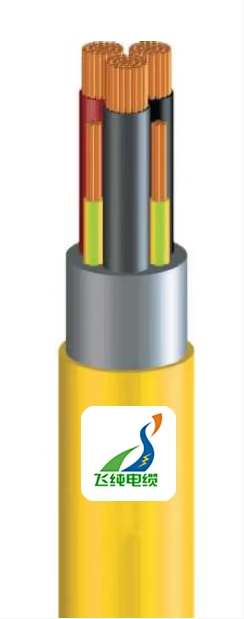
trailing cable

FG7ORPu-TUNNELFLEX is a specialized 0.6/1kV flexible power cable engineered specifically for mining and tunneling applications. This cable provides reliable power supply to mobile equipment operating in harsh underground environments where there is a high risk of mechanical damage. The TUNNELFLEX cable is suitable for applications where it is deflected in one plane only, with a maximum operating speed of 60 m/min.

What is FG7ORPu-TUNNELFLEX 0.6/1kV Cable?

FG7ORPu-TUNNELFLEX is a specialized 0.6/1kV flexible power cable engineered specifically for mining and tunneling applications. This cable provides reliable power supply to mobile equipment operating in harsh underground environments where there is a high risk of mechanical damage. The TUNNELFLEX cable is suitable for applications where it is deflected in one plane only, with a maximum operating speed of 60 m/min.
H07RN-F cable, H05RR-F cable, H07ZZ-F cable, H07BN4-F cable, H07RN8-F cable, H05BB-F cable, H05BQ-F cable, H07BB-F cable, H07BQ-F cable, H05GG-F cable, H05SS-F cable

What is BS7919 Cable?

BS7919 cable, BS7919 flexible cable, BS EN 50525 cable, industrial flexible cable, rubber flexible cable, heavy duty cable 450/750V,H07RN-F cable, H05RR-F cable, H07ZZ-F cable, H07BN4-F cable, H07RN8-F cable, H05BB-F cable, H05BQ-F cable, H07BB-F cable, H07BQ-F cable, H05GG-F cable, H05SS-F cable,BS7919電纜, 柔性橡膠電纜, 工業柔性電纜, 重型橡膠電纜, 耐油電纜, 阻燃柔性電纜, 港口機械電纜, 起重機電纜, 移動電源電纜, H07RN-F橡膠電纜, 450/750V柔性電纜, 氯丁橡膠護套電纜, EPR絕緣電纜, 多芯柔性電纜, 拖曳電纜, 卷筒電纜
BS6708, mining cable, quarry cable, trailing cable, EPR cable, SWA cable, coal cutter cable, excavator cable, 礦用電纜, 採石場電纜, 拖曳電纜

What is BS6708 Cable?

British Standard BS6708 sets out the requirements for flexible trailing cables where used in mining operations and quarries. These cables are often referred to as trailing cables, quarry cables, or auxiliary cables and have applications with a wide range of dynamic mining equipment including excavators, coal-cutters, crushing machines, and shuttle cars. flexible trailing cable, mine cable, EPR mining cable, SWA mining cable, chloroprene cable, coal cutter cable, excavator cable, shuttle car cable, crushing machine cable, coal face cable, Type 7 mining cable, Type 7M cable, Type 7S cable, Type 11 cable, Type 20 cable, Type 21 cable, Type 307 cable, Type 331 cable, Type 621 cable, Type 631 cable, 640/1100V mining cable, 1.9/3.3kV mining cable
PROTOMONT(Z) NSSHKCGEOEU represents a highly specialized category of coal cutter cables engineered for free trailing operation in underground mining environments. The "(Z)" designation indicates this cable is specifically designed for trailing applications, where it must be trailed for considerable distances behind mobile mining machinery during operation. Unlike standard industrial cables, these are constructed to withstand extreme mechanical stresses including repeated bending, high tensile forces, impact, and crushing loads commonly encountered in coal mining operations.

PROTOMONT(Z) NSSHKCGEOEU 0.6/1KV Coal Cutter Cables for Trailing Operations

PROTOMONT(Z) NSSHKCGEOEU represents a highly specialized category of coal cutter cables engineered for free trailing operation in underground mining environments. The “(Z)” designation indicates this cable is specifically designed for trailing applications, where it must be trailed for considerable distances behind mobile mining machinery during operation. Unlike standard industrial cables, these are constructed to withstand extreme mechanical stresses including repeated bending, high tensile forces, impact, and crushing loads commonly encountered in coal mining operations.
SINGLE CORE represents an advanced low smoke zero halogen (LSZH) power cable engineered by Anhui Feichun Special Cable Co., Ltd. for demanding industrial applications where fire safety, thermal performance, and electrical reliability are paramount. This cable series is manufactured in full compliance with Australian and New Zealand standards

What is ENVIROLEX® 110°C  SINGLE CORE?

SINGLE CORE cable is specifically engineered for applications requiring enhanced thermal performance and superior fire safety characteristics. The 110°C continuous operating temperature rating provides a significant thermal margin compared to standard 90°C rated cables, allowing for higher current density and more compact installations.
Complete Guide to UL 1650:2025 Portable Power Cable Type G, Type G-GC, Type W, MP-GC & SHD-GC Mining Cables — Technical Specifications, Compliance Standards, Safety Guidelines and Applications

Complete Guide to UL 1650:2025 Portable Power Cable

UL 1650, UL 1650:2025, portable power cable, mining cable, Type G cable, Type G-GC cable, Type W cable, MP-GC cable, SHD-GC cable, MSHA approved cable, EPR insulation, CPE jacket, trailing cable, mining equipment cable UL 1650 is the primary safety standard for portable power cables used in industrial and mining applications across North America. The UL 1650:2025 edition, published by Underwriters Laboratories and ANSI approved in November 2025, establishes comprehensive requirements for portable power cables designed for use in accordance with the National Electrical Code (NFPA 70).[1] This standard covers various types of portable power cables including Type G, Type G-GC, Type W, MP-GC, and SHD-GC cables that are essential for powering mobile and stationary mining equipment in both surface and underground operations. The cables manufactured under UL 1650 must undergo rigorous testing per UL 2556 (Wire and Cable Test Methods) to ensure safety and reliability in demanding industrial environments.[2]
PROTOLON(M) R-(N)TSCGEWOEU represents a sophisticated class of medium voltage flexible reeling cables specifically engineered for the most demanding applications in open-cast mining and material handling operations. These cables are designed to power large mobile equipment including excavators, dumpers, mobile crushers, and bucket-wheel excavators under extreme mechanical stresses. This comprehensive technical guide examines the construction, specifications, standards compliance, applications, and operational characteristics of this specialized cable system manufactured by Anhui Feichun Special Cable Co., Ltd.

PROTOLON(M) R-(N)TSCGEWOEU 6 kV – 35 kV: The Ultimate Flexible MV Reeling Cable for Heavy Mining Equipment

ROTOLON(M) R-(N)TSCGEWOEU cable designation follows the standardized German nomenclature system established under DIN VDE 0250 Part 813, which specifically addresses medium voltage reeling cables for mining and heavy industrial applications. The designation breaks down as follows: (N) – Indicates the presence of a concentric conductor arrangement with integrated earth conductors T – Tinned copper conductors for enhanced corrosion resistance S – Semiconductive screening layers for electric field control C – Cradle separator core arrangement for structural integrity G – EPR (Ethylene Propylene Rubber) insulation compound E – EPR-based inner sheath W – Anti-torsion woven braid reinforcement O – Oil-resistant outer sheath E – Enhanced elastomer outer sheath material U – Reinforced construction for extreme mechanical loads According to industry specifications from Reeling Cable, these cables are rated for voltage ranges from 3.6/6 kV up to 18/30 kV (with some variants reaching 20/35 kV), making them suitable for a comprehensive range of mining equipment power requirements.
H05RR-F Cable

What is H05RR-F Cable?

H05RR-F cables excel in underground mining environments where they serve as power supply conductors for mobile equipment and fixed installations. The constant movement of mining equipment creates significant abrasion challenges for trailing cables, requiring advanced polymer compounds with high abrasion indices and specialized insulation materials with superior flex memory[24]. These cables are specifically designed for coal cutters operating in cable chains (cable handlers) and similar face equipment, where they must withstand continuous flexing, mechanical stress, and exposure to moisture and dust.
What is PROTOMONT(MT) (N)SSHOEU 1 kV? Complete Technical Guide Comprehensive specifications, applications, safety standards, and technical parameters for heavy-duty rubber-sheathed flexible mining and tunneling cables | Anhui Feichun Special Cable Co., Ltd. (安徽飞纯特种电缆有限公司)

What is PROTOMONT(MT) (N)SSHOEU 1 kV? Complete Technical Guide

PROTOMONT(MT) (N)SSHOEU represents a specialized category of rubber-sheathed flexible cables engineered specifically for mining and tunneling applications where heavy mechanical stress is a constant operational challenge. These cables serve as essential power transmission components in some of the world’s most demanding industrial environments, from underground coal mines to surface excavation operations. Mining environments present unique challenges that standard industrial cables cannot withstand. As noted in industry research, mining cables must endure severe physical punishment including constant abrasion against rock surfaces, crushing forces from equipment, impacts from falling debris, and frequent flexing as mobile equipment moves. The PROTOMONT(MT) (N)SSHOEU cable line addresses these challenges through sophisticated engineering and advanced material selection. Manufactured in accordance with DIN VDE 0250 part 812 standards and carrying VDE-REG F546 certification, this cable represents the pinnacle of German engineering excellence applied to mining cable technology. The designation “(N)SSHOEU” provides valuable information about the cable’s construction characteristics, indicating compliance with national and international standards, special sheathing for severe service conditions, and European standard compliance.
PROTOLON(M) F(N)TSCGEWOEU 3 kV – 30 kV Medium Voltage Flexible Cables High-Performance EPR-Insulated Trailing Cables for Semiflexible Installation in Mining, Material Handling, and Industrial Applications

PROTOLON(M) F(N)TSCGEWOEU 3 kV – 30 kV Medium Voltage Flexible Cables

PROTOLON(M) F(N)TSCGEWOEU series represents a specialized family of medium voltage flexible cables designed for demanding industrial environments where conventional fixed installation cables prove inadequate. These cables are engineered specifically for semiflexible installation applications, combining the durability required for mobile equipment with the electrical performance characteristics essential for medium voltage power distribution systems operating between 3 kV and 30 kV. According to the International Electrotechnical Commission, medium voltage cables are critical components in power distribution systems, with IEC 60502-2 establishing comprehensive requirements for cables rated from 6 kV (Um = 7.2 kV) up to 30 kV (Um = 36 kV), ensuring rigorous safety and performance standards across diverse industrial applications. The PROTOLON(M) F(N)TSCGEWOEU cable series is engineered to meet and exceed these stringent international requirements while addressing the specific mechanical demands of mobile and reeling applications.
NTMCGCWOEU 1x240_25 KON, 12_20kV

What is PROTOLON(SB) NTSCGEWOEU 6 kV – 20 kV Cable for Excavators in Open-Cast Mining?

PROTOLON(SB) NTSCGEWOEU cable represents a specialized category of medium voltage trailing cables engineered specifically for the most demanding mining applications. As power supply and connection cables for large material handling machines such as excavators in open-cast mines, these cables must withstand extremely high mechanical stresses where abrasion and chaffing stresses are expected in trailing operation.
R(N)TSCGEWOU

Mining Cable Applications: Extra Heavy Duty Solutions for Extreme Global Mining Conditions

Mining operations worldwide demand the most reliable and durable electrical cable solutions available. Extra heavy duty mining cables with specialized outer jackets have consistently exceeded performance expectations in the most severe mining conditions across Europe, North America, South America, Australia, and Asia, establishing themselves as the industry standard for stringent mining applications. These cables represent critical infrastructure components that power essential mining equipment from underground continuous miners to massive surface draglines, operating reliably in environments characterized by extreme mechanical stress, chemical exposure, moisture, and temperature variations.
Type 7 Mining Cable to BS 6708

What is Type 7 Mining Cable to BS 6708?

Type 7 mining cables represent a critical category of flexible trailing cables designed specifically for the demanding conditions encountered in underground coal mining operations. These cables conform to the rigorous requirements established by British Standard BS 6708, which has become an internationally recognized benchmark for mining cable safety and performance. The standard was developed through decades of mining industry experience and addresses the unique electrical and mechanical challenges present in potentially explosive underground environments. According to BSI Knowledge, BS 6708 specifications establish comprehensive requirements for flexible cables used at mines and quarries, ensuring that these critical power transmission components meet stringent safety and performance criteria. The Type 7 designation specifically identifies non-armoured cables with individually metallic screened cores rated at 640/1100V, engineered for both fixed installation and flexible operation in coal face cutting equipment.
TYPE 455 mining cables represent an optimized category of Class 2 heavy-duty elastomer-sheathed cables specifically engineered for applications demanding minimal cable diameter and reduced weight per meter while maintaining comprehensive electrical protection. Manufactured in strict accordance with AS/NZS 2802:2000 standards, these cables are designed for voltage ratings from 1.1 kilovolts to 11 kilovolts, with a construction philosophy emphasizing reduced insulation thickness and elimination of cradle separators to achieve lower overall mass and diameter. The incorporation of two earth conductors and one pilot conductor positioned in outer interstices, combined with EPR insulation and semiconductive screening systems, makes these cables particularly well-suited for stacker reclaimer installations, dragline operations, and other slow reeling applications where cable weight directly impacts equipment performance and operational efficiency. The design represents a strategic balance between electrical performance requirements and mechanical handling considerations, offering mining operations a purpose-built solution for specific application scenarios where traditional heavier cable constructions would impose unacceptable operational constraints.

What is TYPE 455 1.1 to 11kV Mining Cables to AS/NZS 2802:2000?

TYPE 455 mining cables represent an optimized category of Class 2 heavy-duty elastomer-sheathed cables specifically engineered for applications demanding minimal cable diameter and reduced weight per meter while maintaining comprehensive electrical protection. Manufactured in strict accordance with AS/NZS 2802:2000 standards, these cables are designed for voltage ratings from 1.1 kilovolts to 11 kilovolts, with a construction philosophy emphasizing reduced insulation thickness and elimination of cradle separators to achieve lower overall mass and diameter. The incorporation of two earth conductors and one pilot conductor positioned in outer interstices, combined with EPR insulation and semiconductive screening systems, makes these cables particularly well-suited for stacker reclaimer installations, dragline operations, and other slow reeling applications where cable weight directly impacts equipment performance and operational efficiency. The design represents a strategic balance between electrical performance requirements and mechanical handling considerations, offering mining operations a purpose-built solution for specific application scenarios where traditional heavier cable constructions would impose unacceptable operational constraints.
What is TYPE 450 1.1 to 33kV Mining Cables to AS/NZS 2802:2000?

What is TYPE 450 1.1 to 33kV Mining Cables to AS/NZS 2802:2000?

TYPE 450 cables occupy a critical position within this standard as Class 2 cables, distinguished by their incorporation of semiconductive screening systems essential for medium to high voltage applications. The designation “Type 450” refers to the cable’s construction classification within AS/NZS 2802:2000, with the numeric suffix (450.3, 450.6, 450.11, 450.22, 450.33) indicating the voltage rating in kilovolts. These cables are specifically engineered for slow reeling and trailing applications where equipment such as draglines, excavators, and wharf cranes requires flexible power connections that can withstand thousands of reeling cycles while maintaining electrical integrity and mechanical reliability.
TYPE 260 Heavy-Duty Mining Cable: Comprehensive Technical Analysis

TYPE 260 Heavy-Duty Mining Cable: Comprehensive Technical Analysis

TYPE 260 mining cable represents a pinnacle of engineering excellence in the domain of heavy-duty electrical power transmission for mining operations. This pliable armoured cable, designed in strict accordance with Australian and New Zealand standards AS/NZS 1802:2003 and AS/NZS 2802:2000, serves as a critical feeder cable in demanding mining environments where exceptional impact resistance and mechanical durability are paramount operational requirements.
TYPE 209 and TYPE 210 mining cables represent critical power distribution infrastructure specifically engineered for the demanding environments of underground coal mining and surface mining operations throughout Australia and New Zealand.

TYPE 209 & TYPE 210 Australian Mining Cables

TYPE 209 and TYPE 210 mining cables represent critical power distribution infrastructure specifically engineered for the demanding environments of underground coal mining and surface mining operations throughout Australia and New Zealand.
The 600V 2TC-RB crane cable represents a specialized category of rubber-insulated flexible cables engineered specifically for mobile machinery applications in demanding industrial environments. The designation "2TC-RB" identifies this as a Class 2 conductor construction featuring tin-coated copper strands, ethylene propylene rubber (EPR) insulation, and a robust polychloroprene rubber (also known as neoprene) outer sheath.

What is 600V 2TC-RB Crane Cable?

The 600V 2TC-RB crane cable represents a specialized category of rubber-insulated flexible cables engineered specifically for mobile machinery applications in demanding industrial environments. The designation “2TC-RB” identifies this as a Class 2 conductor construction featuring tin-coated copper strands, ethylene propylene rubber (EPR) insulation, and a robust polychloroprene rubber (also known as neoprene) outer sheath.
Class 3 6600V Ethylene Propylene Rubber Insulated Polychloroprene Rubber Sheath Cable - JIS C 4353 Standard

What is 6600V 3PNCT Crane Cable? 

The 6600V 3PNCT crane cable represents a specialized class of high-voltage power cables specifically engineered for demanding industrial applications where continuous flexing, high mechanical stress, and environmental exposure are constant operational realities. This cable designation indicates a Class 3 flexible conductor construction rated for 6600 volts AC, featuring ethylene propylene rubber insulation and a polychloroprene rubber outer sheath, manufactured in accordance with the rigorous requirements of JIS C 4353 Japanese Industrial Standard.
Polish Mining Cable

What is YHKGXSekyn, YHKGXSekFtZnyn, YHKGXSekFtyn, YHKGXSekFitlyn, YHKGXSekFoyn, and YHKGXSekFpyn Polish Mining Cable ?

Polish Mining Cable Code Designation System represents a comprehensive nomenclature standard used extensively throughout European mining operations, particularly in Poland’s extensive coal, copper, and mineral extraction industries. This systematic coding methodology enables engineers and procurement specialists to precisely specify cable configurations through alphanumeric designations that encode critical construction parameters, material specifications, and performance characteristics.
CEI 20-27 CENELEC HD361 Cable

What is CEI 20-27 CENELEC HD361 Cable?

CEI 20-27 CENELEC HD361 represents a standardized cable designation system developed by the European Committee for Electrotechnical Standardisation (CENELEC) to provide uniform identification and classification of harmonized power cables and cords across European markets. This systematic coding methodology enables engineers, procurement specialists, and electrical contractors to precisely identify cable specifications including voltage ratings, insulation materials, conductor types, and sheathing compounds through a structured alphanumeric designation format.