surface mining cable

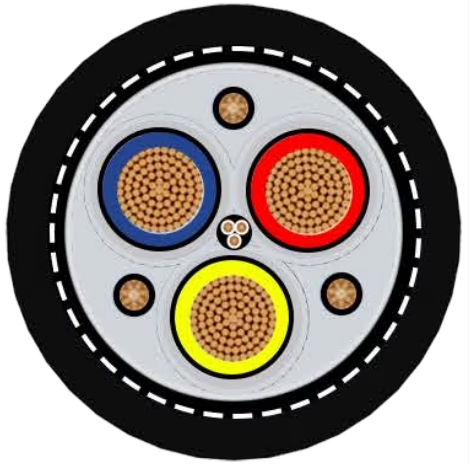
When you look at a modern mining cable cross-section, you'll notice it contains more than just the power conductors that deliver electricity to mining equipment. Among these additional elements are one or more pilot cores—specialized conductors that serve critical safety and monitoring functions. While these pilot cores might seem like simple extra wires at first glance, they represent sophisticated monitoring infrastructure that enables mining operations to detect dangerous conditions before they cause injuries, equipment damage, or production interruptions.1 当您查看现代矿用电缆横截面时,您会注意到它包含的不仅仅是向采矿设备输送电力的电力导体。在这些附加元件中有一个或多个引导芯——服务于关键安全和监控功能的专用导体。

Digital Monitoring: Using Pilot Cores for Real-Time Temperature and Damage Detection

When you look at a modern mining cable cross-section, you’ll notice it contains more than just the power conductors that deliver electricity to mining equipment. Among these additional elements are one or more pilot cores—specialized conductors that serve critical safety and monitoring functions. While these pilot cores might seem like simple extra wires at first glance, they represent sophisticated monitoring infrastructure that enables mining operations to detect dangerous conditions before they cause injuries, equipment damage, or production interruptions.1 当您查看现代矿用电缆横截面时,您会注意到它包含的不仅仅是向采矿设备输送电力的电力导体。在这些附加元件中有一个或多个引导芯——服务于关键安全和监控功能的专用导体。
Type SHD-GC cable represents a critical component in mining and heavy industrial applications, designed specifically for environments where both flexibility and maximum protection are paramount. This shielded mining cable features Ethylene Propylene Diene Monomer (EPDM) or Ethylene Propylene Rubber (EPR) insulation, providing exceptional resistance to moisture, heat, and abrasion. The cable is commonly deployed in mobile mining equipment, continuous mining machines, longwall mining systems, and other demanding industrial settings where power reliability and safety cannot be compromised.

Minimum Bending Radius: How Tight Can You Bend a Type SHD-GC Cable Without Damaging the EPDM Insulation?

Type SHD-GC cable represents a critical component in mining and heavy industrial applications, designed specifically for environments where both flexibility and maximum protection are paramount. This shielded mining cable features Ethylene Propylene Diene Monomer (EPDM) or Ethylene Propylene Rubber (EPR) insulation, providing exceptional resistance to moisture, heat, and abrasion. The cable is commonly deployed in mobile mining equipment, continuous mining machines, longwall mining systems, and other demanding industrial settings where power reliability and safety cannot be compromised.
Type 440 reeling cables represent a critical component in mining and industrial power distribution systems, specifically designed for flexible trailing applications according to AS/NZS 2802:2000 standards. These metal-screened power cables feature three pilot cores and operate across voltage ratings from 1.1 kilovolts to 11 kilovolts, supplying reliable electrical power to mobile mining equipment such as draglines, excavators, and materials handling machinery. Despite their robust construction with EPR insulation and high abrasion resistance, these cables remain vulnerable to a particularly destructive failure mode known as corkscrewing, which can compromise both electrical performance and mechanical integrity during operation.

How does “Corkscrewing” destroy Type 440 reeling cables, and how to prevent it during installation?

Type 440 reeling cables represent a critical component in mining and industrial power distribution systems, specifically designed for flexible trailing applications according to AS/NZS 2802:2000 standards. These metal-screened power cables feature three pilot cores and operate across voltage ratings from 1.1 kilovolts to 11 kilovolts, supplying reliable electrical power to mobile mining equipment such as draglines, excavators, and materials handling machinery. Despite their robust construction with EPR insulation and high abrasion resistance, these cables remain vulnerable to a particularly destructive failure mode known as corkscrewing, which can compromise both electrical performance and mechanical integrity during operation.
Mining operations worldwide face a critical procurement decision when selecting medium voltage reeling and trailing cables for mobile equipment such as excavators, draglines, and continuous miners. The choice between premium brand-name cables like PROTOLON and generic alternatives conforming to the same NTSCGEWÖU specification represents a significant investment decision with long-term operational and safety implications.

PROTOLON (Proprietary) vs. Generic NTSCGEWÖU: Is the Premium Price for Brand-Name Mining Cables Justified?

Mining operations worldwide face a critical procurement decision when selecting medium voltage reeling and trailing cables for mobile equipment such as excavators, draglines, and continuous miners. The choice between premium brand-name cables like PROTOLON and generic alternatives conforming to the same NTSCGEWÖU specification represents a significant investment decision with long-term operational and safety implications.
cable selection directly impacts equipment reliability, operational safety, and cost efficiency. While Diesel Locomotive Cable (DLO) and Type W cables share similar voltage ratings and environmental resistance, their fundamental design philosophies serve distinctly different operational requirements. This technical analysis examines why DLO cable, despite its robust construction and premium materials, is frequently rejected for dynamic mining applications involving continuous movement equipment such as shuttle cars, draglines, and continuous miners.

DLO Cable vs. Type W: Why is Diesel Locomotive Cable often rejected for dynamic mining applications?

cable selection directly impacts equipment reliability, operational safety, and cost efficiency. While Diesel Locomotive Cable (DLO) and Type W cables share similar voltage ratings and environmental resistance, their fundamental design philosophies serve distinctly different operational requirements. This technical analysis examines why DLO cable, despite its robust construction and premium materials, is frequently rejected for dynamic mining applications involving continuous movement equipment such as shuttle cars, draglines, and continuous miners.
NTSCGEWÖU mining cables manufactured according to DIN VDE 0250-813 specifications and operating at medium voltages ranging from six kilovolts to twelve kilovolts phase-to-phase, partial discharge testing serves multiple critical functions throughout the cable lifecycle. During factory acceptance testing, partial discharge measurements verify that cable manufacturing processes have produced insulation systems free from voids, contamination, or workmanship defects that could lead to premature failure. During field commissioning after cable installation, partial discharge testing validates that termination and splicing work has been executed properly without introducing stress concentrations or gaps that would initiate discharge activity. Throughout service life, periodic partial discharge measurements enable condition-based maintenance programs that identify cables experiencing insulation deterioration before catastrophic failures occur, allowing planned replacements during scheduled outages rather than emergency repairs following unexpected breakdowns.

What are the acceptance criteria for Partial Discharge (PD) measurements on (N)TSCGEWÖU medium voltage cables (typically < 20 pC)?

NTSCGEWÖU mining cables manufactured according to DIN VDE 0250-813 specifications and operating at medium voltages ranging from six kilovolts to twelve kilovolts phase-to-phase, partial discharge testing serves multiple critical functions throughout the cable lifecycle. During factory acceptance testing, partial discharge measurements verify that cable manufacturing processes have produced insulation systems free from voids, contamination, or workmanship defects that could lead to premature failure. During field commissioning after cable installation, partial discharge testing validates that termination and splicing work has been executed properly without introducing stress concentrations or gaps that would initiate discharge activity. Throughout service life, periodic partial discharge measurements enable condition-based maintenance programs that identify cables experiencing insulation deterioration before catastrophic failures occur, allowing planned replacements during scheduled outages rather than emergency repairs following unexpected breakdowns.
NTSCGEWÖU mining cables manufactured according to DIN VDE 0250-813 specifications, compliance with both testing standards proves essential. These flexible medium voltage trailing cables operate in mining environments where they may be installed individually in some areas while grouped together with other power and control cables in vertical shafts, along drift walls, or within cable trays in other locations. Understanding the distinct test procedures, pass criteria, and fire behavior mechanisms addressed by each standard enables proper cable specification and installation practices that minimize fire risk throughout mining facilities.

Flame Test Comparison: What is the difference between VDE 0482-332-1-2 (Single Wire) and VDE 0482-266-2-4 (Bunched Cable) flame tests for (N)TSCGEWÖU?

NTSCGEWÖU mining cables manufactured according to DIN VDE 0250-813 specifications, compliance with both testing standards proves essential. These flexible medium voltage trailing cables operate in mining environments where they may be installed individually in some areas while grouped together with other power and control cables in vertical shafts, along drift walls, or within cable trays in other locations. Understanding the distinct test procedures, pass criteria, and fire behavior mechanisms addressed by each standard enables proper cable specification and installation practices that minimize fire risk throughout mining facilities.
Ozone resistance represents one of the most critical yet frequently overlooked material performance requirements for elastomeric power cables operating in demanding outdoor environments. This characteristic becomes particularly important for mining cables manufactured with rubber insulation and sheathing compounds, where exposure to atmospheric ozone can initiate premature degradation mechanisms that compromise both electrical performance and mechanical integrity. The DIN VDE 0472-805 standard, titled "Testing of cables, wires and flexible cords; Ozone resistance," establishes comprehensive test procedures for evaluating whether cable materials can withstand ozone exposure without developing the characteristic surface cracking that signals material breakdown.

What is the “Ozone Resistance” test procedure defined in VDE 0472, and why is it critical for (N)TSCGEWÖU cables in open-pit mines?

Ozone resistance represents one of the most critical yet frequently overlooked material performance requirements for elastomeric power cables operating in demanding outdoor environments. This characteristic becomes particularly important for mining cables manufactured with rubber insulation and sheathing compounds, where exposure to atmospheric ozone can initiate premature degradation mechanisms that compromise both electrical performance and mechanical integrity. The DIN VDE 0472-805 standard, titled “Testing of cables, wires and flexible cords; Ozone resistance,” establishes comprehensive test procedures for evaluating whether cable materials can withstand ozone exposure without developing the characteristic surface cracking that signals material breakdown.
The determination of current carrying capacity (ampacity) for mining and trailing cables represents a critical engineering consideration that directly impacts operational safety and equipment performance. Two dominant international approaches govern these calculations: the German VDE 0298-4 standard applied to (N)TSCGEWÖU-type cables, and the North American NEC methodology utilizing ICEA S-75-381 (ANSI/NEMA WC-58) for Type SHD-GC cables. 矿用及拖曳电缆的载流量确定是直接影响运行安全和设备性能的关键工程考量。两种主导的国际方法管理这些计算:适用于(N)TSCGEWÖU型电缆的德国VDE 0298-4标准,以及使用ICEA S-75-381 (ANSI/NEMA WC-58)标准的北美NEC方法用于Type SHD-GC电缆。

Ampacity Calculation: How Does the Current Carrying Capacity for (N)TSCGEWÖU in VDE 0298-4 Differ from the NEC Method Used for Type SHD-GC?

The determination of current carrying capacity (ampacity) for mining and trailing cables represents a critical engineering consideration that directly impacts operational safety and equipment performance. Two dominant international approaches govern these calculations: the German VDE 0298-4 standard applied to (N)TSCGEWÖU-type cables, and the North American NEC methodology utilizing ICEA S-75-381 (ANSI/NEMA WC-58) for Type SHD-GC cables. 矿用及拖曳电缆的载流量确定是直接影响运行安全和设备性能的关键工程考量。两种主导的国际方法管理这些计算:适用于(N)TSCGEWÖU型电缆的德国VDE 0298-4标准,以及使用ICEA S-75-381 (ANSI/NEMA WC-58)标准的北美NEC方法用于Type SHD-GC电缆。
In VDE mining cable standards, particularly DIN VDE 0250-813 and DIN VDE 0250-814, the outer sheath color serves as a critical visual identifier that indicates the cable's intended application environment and specific performance characteristics. The red sheath is the standard color for open-pit (surface) mining cables manufactured with PCP (Polychloroprene) compound type 5GM5, providing maximum UV resistance and high visibility in outdoor environments. Black sheaths are typically used for underground mining and general industrial applications where UV protection is less critical. Yellow sheaths indicate either high-visibility safety cables or specialized trailing cables for coal cutting machines, also commonly manufactured with premium TPU (Thermoplastic Polyurethane) compounds for extreme abrasion resistance.[1][2][3] 在VDE矿用电缆标准中,特别是DIN VDE 0250-813和DIN VDE 0250-814,外护套颜色是关键的视觉标识符,指示电缆的预期应用环境和特定性能特性。红色护套是使用PCP(氯丁橡胶)5GM5型化合物制造的露天(地面)矿用电缆的标准颜色,提供最大的抗紫外线能力和户外环境的高可见性。黑色护套通常用于井下矿业和对紫外线防护要求较低的一般工业应用。黄色护套表示高可见性安全电缆或用于采煤机的专用拖曳电缆,通常也采用优质TPU(热塑性聚氨酯)化合物制造以获得极高的耐磨性。

What Does the “Red” Sheath Typically Indicate for VDE Mining Cables Versus a “Black” or “Yellow” Sheath?

In VDE mining cable standards, particularly DIN VDE 0250-813 and DIN VDE 0250-814, the outer sheath color serves as a critical visual identifier that indicates the cable’s intended application environment and specific performance characteristics. The red sheath is the standard color for open-pit (surface) mining cables manufactured with PCP (Polychloroprene) compound type 5GM5, providing maximum UV resistance and high visibility in outdoor environments. Black sheaths are typically used for underground mining and general industrial applications where UV protection is less critical. Yellow sheaths indicate either high-visibility safety cables or specialized trailing cables for coal cutting machines, also commonly manufactured with premium TPU (Thermoplastic Polyurethane) compounds for extreme abrasion resistance.[1][2][3] 在VDE矿用电缆标准中,特别是DIN VDE 0250-813和DIN VDE 0250-814,外护套颜色是关键的视觉标识符,指示电缆的预期应用环境和特定性能特性。红色护套是使用PCP(氯丁橡胶)5GM5型化合物制造的露天(地面)矿用电缆的标准颜色,提供最大的抗紫外线能力和户外环境的高可见性。黑色护套通常用于井下矿业和对紫外线防护要求较低的一般工业应用。黄色护套表示高可见性安全电缆或用于采煤机的专用拖曳电缆,通常也采用优质TPU(热塑性聚氨酯)化合物制造以获得极高的耐磨性。
The tunnelling and underground mining industries have traditionally relied on heavy-duty rubber-sheathed cables manufactured according to DIN VDE 0250 standards. However, a significant shift is occurring as polyurethane (PUR) sheathed cables, designated with the VDE code "11Y" and "12Y" (for TPE-E variants), are increasingly specified for demanding tunnel boring machine (TBM) applications and underground operations. 隧道和地下采矿行业传统上依赖于按照DIN VDE 0250标准生产的重型橡胶护套电缆。然而,随着聚氨酯(PUR)护套电缆(VDE代码为"11Y",TPE-E变体为"12Y")在隧道掘进机(TBM)和地下作业等高要求应用中越来越多被指定使用,一个重大转变正在发生。

Why Are Polyurethane (PUR) Sheathed Cables Becoming Popular Alternatives to Standard VDE Rubber Cables in Tunnelling?

The tunnelling and underground mining industries have traditionally relied on heavy-duty rubber-sheathed cables manufactured according to DIN VDE 0250 standards. However, a significant shift is occurring as polyurethane (PUR) sheathed cables, designated with the VDE code “11Y” and “12Y” (for TPE-E variants), are increasingly specified for demanding tunnel boring machine (TBM) applications and underground operations. 隧道和地下采矿行业传统上依赖于按照DIN VDE 0250标准生产的重型橡胶护套电缆。然而,随着聚氨酯(PUR)护套电缆(VDE代码为”11Y”,TPE-E变体为”12Y”)在隧道掘进机(TBM)和地下作业等高要求应用中越来越多被指定使用,一个重大转变正在发生。
NTSCGEWÖU and NTMCGEWÖU cables represent critical technical solutions for powering mobile machinery in mining, heavy industry, and material handling environments. Both cable types are manufactured according to the German DIN VDE 0250 standard, which is globally recognized as the definitive benchmark for tough rubber-sheathed flexible cables designed for cranes and material handling equipment. The fundamental distinction lies in their sheath construction: the "S" in NTSCGEWÖU indicates a double rubber sheath (Schwer = heavy-duty) providing enhanced mechanical protection for reeling applications, while "M" in NTMCGEWÖU denotes a single sheath with single-core design optimized for short-length medium voltage connections. According to industry specifications, Germany remains the only country to have issued special design regulations for flexible electrical cables covering cranes and material handling equipment, making DIN VDE 0250 the ultimate international standard for these demanding applications.

كيف تختار بين NTSCGEWÖU و NTMCGEWÖU للآلات المتحركة؟

NTSCGEWÖU and NTMCGEWÖU cables represent critical technical solutions for powering mobile machinery in mining, heavy industry, and material handling environments. Both cable types are manufactured according to the German DIN VDE 0250 standard, which is globally recognized as the definitive benchmark for tough rubber-sheathed flexible cables designed for cranes and material handling equipment. The fundamental distinction lies in their sheath construction: the “S” in NTSCGEWÖU indicates a double rubber sheath (Schwer = heavy-duty) providing enhanced mechanical protection for reeling applications, while “M” in NTMCGEWÖU denotes a single sheath with single-core design optimized for short-length medium voltage connections. According to industry specifications, Germany remains the only country to have issued special design regulations for flexible electrical cables covering cranes and material handling equipment, making DIN VDE 0250 the ultimate international standard for these demanding applications.
Mining cables require specific storage conditions to maintain insulation integrity and performance characteristics. Temperature, humidity, UV exposure, and chemical contact all affect cable lifespan and reliability. Industry standards recommend storage in dry, well-ventilated warehouses with controlled environmental conditions. The optimal storage temperature range is 5°C to 30°C (41°F to 86°F), with relative humidity not exceeding 75%. Cables should be protected from direct sunlight to prevent premature aging of the insulation layer. According to cable handling guidelines, storage periods should not exceed 18-24 months under normal conditions, with periodic rotation of stock recommended every 3 months.

ما هي أسلم طريقة لتخزين ومناولة وفحص كابلات التعدين قبل التركيب؟

Proper storage, handling, and inspection of mining cables are critical factors in ensuring operational safety and reliable performance in harsh industrial environments. According to the Mine Safety and Health Administration (MSHA) regulations under 30 CFR Part 75 and Part 77, all underground trailing cables must be MSHA-approved as flame resistant and undergo rigorous inspection before deployment. Failure to properly manage cables can result in insulation degradation, moisture absorption, mechanical damage, and ultimately catastrophic failures including electrical fires, equipment damage, and personnel injuries. This comprehensive guide outlines industry best practices based on international standards including IEC 60502, IEEE 400, and MT818-2009.
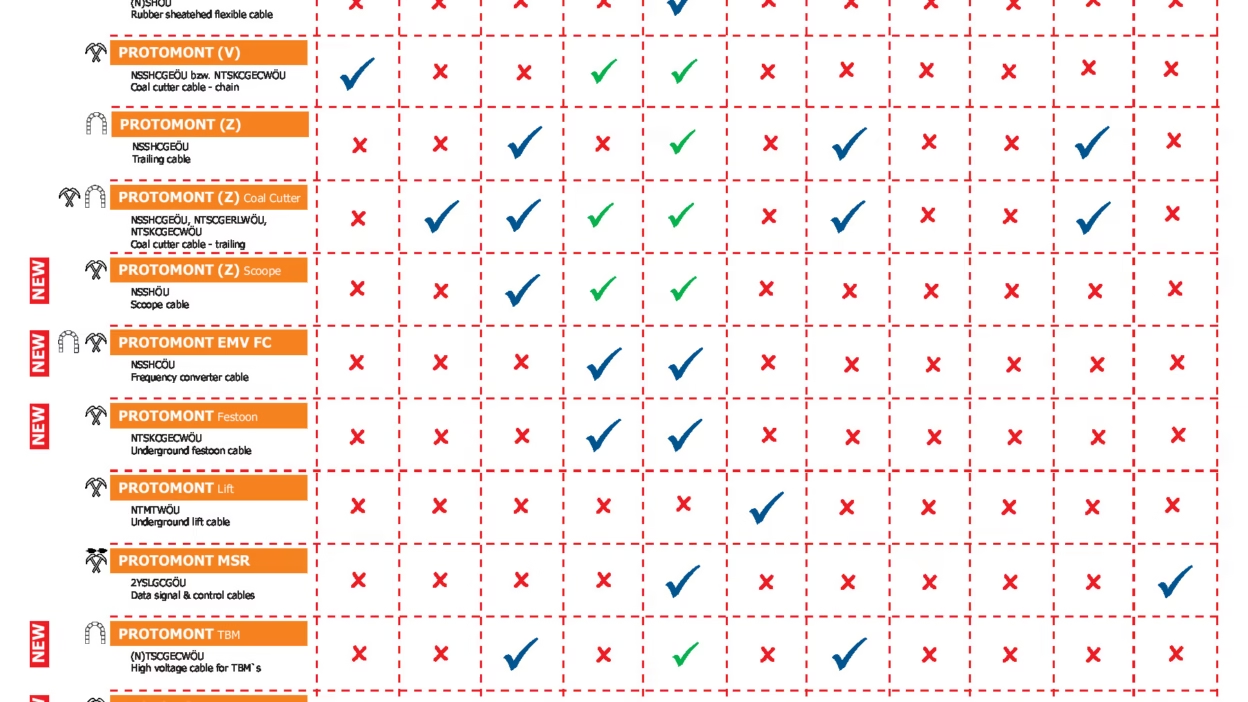
Prysmian Mining Application Systems represent a comprehensive portfolio of specialized cables engineered for the demanding environments of underground mining, tunneling operations, and opencast mining facilities. Developed by Prysmian Group, the world's largest cable manufacturer with over 140 years of expertise, these systems encompass multiple product families including PROTOLON (medium voltage flexible cables), PROTOMONT (rubber-sheathed flexible cables), OPTOFLEX (fiber optic cables), and CORDAFLEX (scraper cables).

What is Prysmian Mining Application systems ?

矿用电缆, 采煤机电缆, 拖曳电缆, 橡套电缆, 中压柔性电缆, 煤矿电缆, 隧道掘进机电缆, горнодобывающий кабель, шахтный кабель, гибкий кабель для шахт, кабель для угольных комбайнов, тянущийся кабель PROTOLON cable, PROTOMONT cable, OPTOFLEX mining cable, CORDAFLEX scraper cable, SUPROMONT power feeder cable, NTMCGCWÖU cable, NTSCGEWÖU cable, NTSCGCEWÖU cable, NSSHÖU cable, NSHÖU mining cable, NSSHCGEÖU coal cutter cable, NSHTÖU scraper cable, NYHSSYCY feeder cable, N3GHSSYCY rubber cable, NTSKGCFCWÖU festoon cable, NTMHWÖU lift cable, ZYSLGCGÖU MSR cable
The RHEYFIRM(RTS) R-(N)TSCGEWTOEUS represents the pinnacle of medium-voltage reeling cable technology, engineered specifically for demanding industrial applications where power transmission, control signals, and fiber optic communication must be integrated into a single, highly flexible cable assembly. Manufactured in strict compliance with DIN VDE 0250 Part 813, this cable series delivers reliable performance at voltage ratings from 8.7/15 kV up to 18/30 kV, with travel speeds reaching 180 m/min on modern cable reeling systems. The designation follows the German VDE nomenclature where "RHEYFIRM" indicates the manufacturer's product line, "(RTS)" denotes the reinforced tensile system, and the alphanumeric string describes the complete cable construction including screening, insulation type, and special features.

What is RHEYFIRM(RTS) R-(N)TSCGEWTOEUS Cable?

The RHEYFIRM(RTS) R-(N)TSCGEWTOEUS represents the pinnacle of medium-voltage reeling cable technology, engineered specifically for demanding industrial applications where power transmission, control signals, and fiber optic communication must be integrated into a single, highly flexible cable assembly. Manufactured in strict compliance with DIN VDE 0250 Part 813, this cable series delivers reliable performance at voltage ratings from 8.7/15 kV up to 18/30 kV, with travel speeds reaching 180 m/min on modern cable reeling systems. The designation follows the German VDE nomenclature where “RHEYFIRM” indicates the manufacturer’s product line, “(RTS)” denotes the reinforced tensile system, and the alphanumeric string describes the complete cable construction including screening, insulation type, and special features.
N2XCEYRRGY cable, N2XCEHRRGH mining cable, N2XCEYFFGY shaft cable, N2XCEHFFGH 35kV cable, N3GSEYRRGY EPR cable, N3GSEHRRGH rubber sheath cable, N3GSEYFFGY mine cable, N3GSEHFFGH underground cable, N3GHSSHCH gallery cable, DM2N mining cable, NSHOEU trailing cable, SSHOEU flexible cable, POWERMINE XP cable, NSSHCGEOEU-Z reeling cable, BUFLEX-M mining cable, TSKCGECWOEUSS cable, SHT trailing cable

What is Mining Shaft, Gallery, Trailing and Reeling Cable?

N2XCEYRRGY cable, N2XCEHRRGH mining cable, N2XCEYFFGY shaft cable, N2XCEHFFGH 35kV cable, N3GSEYRRGY EPR cable, N3GSEHRRGH rubber sheath cable, N3GSEYFFGY mine cable, N3GSEHFFGH underground cable, N3GHSSHCH gallery cable, DM2N mining cable, NSHOEU trailing cable, SSHOEU flexible cable, POWERMINE XP cable, NSSHCGEOEU-Z reeling cable, BUFLEX-M mining cable, TSKCGECWOEUSS cable, SHT trailing cable
Mining, drilling, and tunnelling cables represent a specialized category of electrical cables engineered to withstand the extreme conditions found in extractive industry operations. Unlike standard industrial cables, these cables must endure continuous mechanical stress from reeling and unreeling operations, exposure to ultraviolet radiation in surface mining, salt-water submersion in offshore drilling, contact with oils and greases from machinery, and the abrasive conditions of underground environments. The demanding nature of these applications requires cables with exceptional durability, flexibility, and resistance to environmental factors that would rapidly degrade conventional cables.

What is Mining, Drilling & Tunnelling Cable? Solutions for Surface, Sub-Surface & Underground Operations

(N)3GHSSHCH – 3.6/6kV, 6/10kV, 8.7/15kV, 12/20kV (N)3GHSSYCY – 3.6/6kV, 6/10kV, 8.7/15kV, 12/20kV (N)SSCHÖU-J – 0.6/1kV (N)SHÖU O/J – 0.6/1kV NSSHÖU O/J – 0.6/1kV NSSHÖU 3E – 0.6/1kV NSSHÖU 3E + ST – 0.6/1kV (N)TMCGEWÖU – 3.6/6kV to 18/30kV (N)TSCGEWÖU – 3.6/6kV to 18/30kV (N)TSCGEWÖU ZH – 3.6/6kV to 12/20kV (N)TSCGEWÖU ATB – 3.6/6kV to 12/20kV (N)TSCGEWÖU FO – 3.6/6kV to 12/20kV (N)TSCGEWÖU Submersible – 3.6/6kV to 12/20kV (N)TSKCGEWÖU – 3.6/6kV to 18/30kV (N)TSCGECEWÖU – 3.6/6kV to 12/20kV (N)TSCGECEWÖU ATB – 3.6/6kV to 12/20kV (N)TSCGECEWÖU ATB GCC – 1.8/3kV to 12/20kV (N)TSCGECEWÖU Submersible – 3.6/6kV to 12/20kV (N)TSCGECECWÖU – 3.6/6kV to 12/20kV (N)TSCGECECWÖU ZH – 3.6/6kV to 12/20kV R-(N)TSCGEWÖU + FO – 3.6/6kV to 12/20kV
Mining, drilling, and tunnelling cables represent the most demanding category of industrial cables, designed to operate in some of the harshest environments on earth. These heavy-duty power, control, and instrumentation cables serve mine operators worldwide for both static infrastructure and dynamic equipment applications. Manufactured in accordance with international standards including IEC 60502, BS EN 60332, BS EN 60811, BS EN 60754, and VDE 0295, mining cables must withstand mechanical stress, oil and grease exposure, water immersion, and in underground applications, provide critical fire safety through reduced smoke and fume emissions.

What are Mining, Drilling & Tunnelling Cables?

NSSHÖU cable, NSSHOU cable, NSHÖU cable, NSHOU cable, NSSCHOU cable, NSHTÖU cable, NTSCGEWÖU cable, NTSCGEWOU cable, NTMCGEWÖU cable, N3GHSSYCY cable, N3GHSSHCH cable,Type 61 cable, Type 63 cable, Type 611 cable, Type 622 cable, Type 633 cable, Type 66 cable,Type 240 cable, Type 241 cable, Type 245 cable, Type 450 cable, Type 455 cable, Type 260 cable, Type 275 cable, Type 409 cable, Type 440 cable, Type 441 cable,
PANZERFLEX-ELX MV is a premium medium voltage flexible reeling power cable series available in four voltage ratings from 3.6/6 kV to 12/20 kV. These cables represent the state-of-the-art in high-voltage flexible cable technology, specifically designed for mining operations and bulk material handling applications where equipment requires reliable power supply during continuous movement. The symmetrical design combined with narrow production tolerances ensures very low electromagnetic interference, making these cables ideal for sensitive industrial environments.

What is PANZERFLEX-ELX MV 3.6/6 to 12/20 kV Cable?

PANZERFLEX-ELX MV cable, PANZERFLEX-ELX MV 3.6/6kV, PANZERFLEX-ELX MV 6/10kV, PANZERFLEX-ELX MV 8.7/15kV, PANZERFLEX-ELX MV 12/20kV, reeling cable, medium voltage reeling cable, stacker reclaimer cable, ship to shore crane cable, STS crane cable, container crane cable, RTG crane cable, excavator cable, festoon system cable, cable reel system, mining reeling cable, bulk material handling cable, IEC 60228 Class 5, VDE 0250 part 813, DIN VDE 0298, HEPR insulation, micro-filtered HEPR, 3GI3 classification, 5GM3 compound, tinned copper conductor, polychloroprene sheath, PCP sheath, textile braid, anti-twisting cable, red sheath cable, 180 m/min reeling, 120 m/min festoon, high speed reeling, 90°C conductor, -40°C fixed installation, -30°C flexible, 250°C short circuit, low EMI cable, symmetrical design, 3×25+3×25/3, 3×50+3×25/3, 3×95+3×50/3, 3×120+3×70/3, 3×185+3×95/3, 3×240+3×120/3, PANZERFLEX-ELX MV電纜, 中壓卷筒電纜, 卷筒電纜, 堆料機電纜, 取料機電纜, 岸橋電纜, 集裝箱起重機電纜, 挖掘機電纜, 滑觸線電纜, 採礦電纜, 物料處理電纜, 鍍錫銅導體電纜, 防扭電纜, 高速卷繞電纜, 港口起重機電纜, Anhui Feichun cable, Feichun Special Cable, 安徽飛純電纜
BS6708, mining cable, quarry cable, trailing cable, EPR cable, SWA cable, coal cutter cable, excavator cable, 礦用電纜, 採石場電纜, 拖曳電纜

What is BS6708 Cable?

British Standard BS6708 sets out the requirements for flexible trailing cables where used in mining operations and quarries. These cables are often referred to as trailing cables, quarry cables, or auxiliary cables and have applications with a wide range of dynamic mining equipment including excavators, coal-cutters, crushing machines, and shuttle cars. flexible trailing cable, mine cable, EPR mining cable, SWA mining cable, chloroprene cable, coal cutter cable, excavator cable, shuttle car cable, crushing machine cable, coal face cable, Type 7 mining cable, Type 7M cable, Type 7S cable, Type 11 cable, Type 20 cable, Type 21 cable, Type 307 cable, Type 331 cable, Type 621 cable, Type 631 cable, 640/1100V mining cable, 1.9/3.3kV mining cable
PROTOMONT SSHOEU 0.6/1KV, PROTOMONT (N)SSHOEU, (N)SSHOEU mining cable, NSSHOEU 0.6/1KV cable, SSHOEU low voltage mining cable, PROTOMONT MT mining cable, N-SSHOEU flexible cable, low voltage mining cable 0.6/1kV, heavy duty rubber mining cable, 礦用低壓電纜 0.6/1KV, PROTOMONT 礦用電纜, SSHOEU 柔性電纜

What is PROTOMONT (N)SSHOEU 0.6/1KV Mining & Tunneling Semi-flexible Cable?

PROTOMONT SSHOEU 0.6/1KV, PROTOMONT (N)SSHOEU, (N)SSHOEU mining cable, NSSHOEU 0.6/1KV cable, SSHOEU low voltage mining cable, PROTOMONT MT mining cable, N-SSHOEU flexible cable, low voltage mining cable 0.6/1kV, heavy duty rubber mining cable, 礦用低壓電纜 0.6/1KV, PROTOMONT 礦用電纜, SSHOEU 柔性電纜
EPN 78 3,6/6 kV is a medium voltage (MV) flexible reeling cable specifically engineered for open-cast mining operations. This cable features a three-core design with three protective-earth conductors positioned in the outer interstices, providing reliable grounding protection for heavy mobile equipment. The designation "EPN 78" follows the Serbian/Yugoslav cable designation system (SRPS N.C5.374), indicating its robust construction for demanding mining environments.

What is EPN 78 3,6/6 kV Mining & Tunneling MV Flexible Reeling Cable?

EPN 78 3,6/6 kV is a medium voltage (MV) flexible reeling cable specifically engineered for open-cast mining operations. This cable features a three-core design with three protective-earth conductors positioned in the outer interstices, providing reliable grounding protection for heavy mobile equipment. The designation “EPN 78” follows the Serbian/Yugoslav cable designation system (SRPS N.C5.374), indicating its robust construction for demanding mining environments.
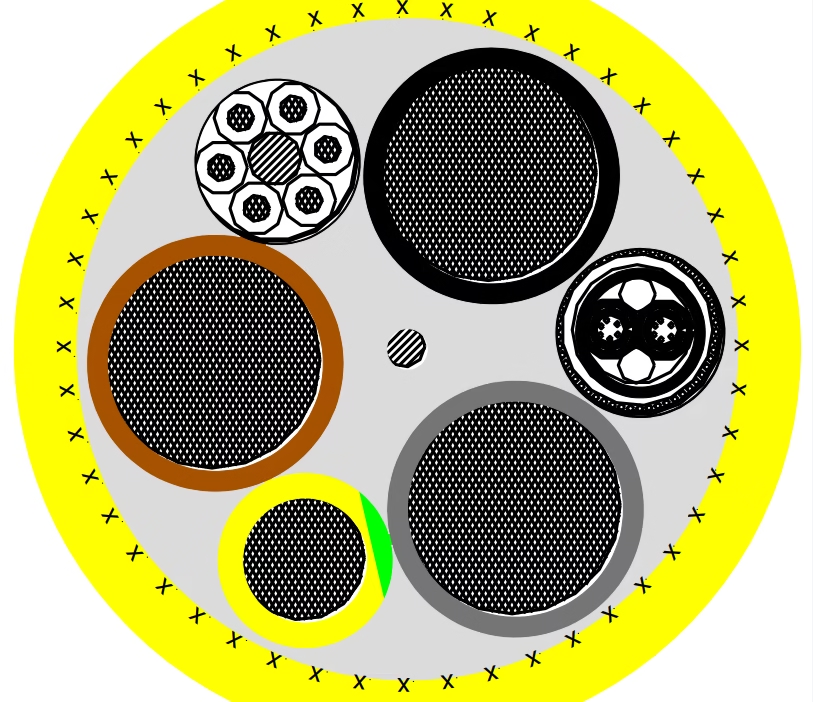
PROTOLON (M) R-(N)TSCGEWOEU LWL 6/10KV is a highly specialized medium voltage (MV) reeling cable engineered for the demanding conditions of open-cast mining and tunneling operations. This cable integrates fiber-optic elements for simultaneous power transmission and high-speed data communication, making it essential for modern automated mining equipment including excavators, dumpers, and mobile crushers.

What is PROTOLON (M) R-(N)TSCGEWOEU LWL 6/10KV Mining & Tunneling MV Reeling Cable?

PROTOLON (M) R-(N)TSCGEWOEU LWL 6/10KV is a highly specialized medium voltage (MV) reeling cable engineered for the demanding conditions of open-cast mining and tunneling operations. This cable integrates fiber-optic elements for simultaneous power transmission and high-speed data communication, making it essential for modern automated mining equipment including excavators, dumpers, and mobile crushers.
NTSCGEWÖW cable, torsion cable, wind turbine cable, EPR insulation, loop cable, mining trailing cable, medium voltage torsion cable

What is NTSCGEWÖW Cable?

The NTSCGEWÖW cable (also written as NTSCGEWOEW when substituting the umlaut for ‘OE’) represents a specialized category of medium voltage power cables engineered specifically to withstand torsional stresses inherent in dynamic industrial applications. This cable designation follows the standardized German DIN VDE nomenclature system, with each letter indicating specific construction characteristics optimized for rotational stress environments.
Complete Guide to UL 1650:2025 Portable Power Cable Type G, Type G-GC, Type W, MP-GC & SHD-GC Mining Cables — Technical Specifications, Compliance Standards, Safety Guidelines and Applications

Complete Guide to UL 1650:2025 Portable Power Cable

UL 1650, UL 1650:2025, portable power cable, mining cable, Type G cable, Type G-GC cable, Type W cable, MP-GC cable, SHD-GC cable, MSHA approved cable, EPR insulation, CPE jacket, trailing cable, mining equipment cable UL 1650 is the primary safety standard for portable power cables used in industrial and mining applications across North America. The UL 1650:2025 edition, published by Underwriters Laboratories and ANSI approved in November 2025, establishes comprehensive requirements for portable power cables designed for use in accordance with the National Electrical Code (NFPA 70).[1] This standard covers various types of portable power cables including Type G, Type G-GC, Type W, MP-GC, and SHD-GC cables that are essential for powering mobile and stationary mining equipment in both surface and underground operations. The cables manufactured under UL 1650 must undergo rigorous testing per UL 2556 (Wire and Cable Test Methods) to ensure safety and reliability in demanding industrial environments.[2]
PROTOMONT NSSHOEU .../3E 1 kV: Technical Guide for Tripartite Earth Conductor Mining Cables with Enhanced Ground Fault Protection for Underground Mining, Tunneling, and Quarry Applications

PROTOMONT NSSHOEU …/3E 1 kV

PROTOMONT NSSHOEU 3E cable, tripartite earth conductor, triple earth system, mining cable 3E, copper core shield cable, VDE 0118 mining cable, ground fault protection cable, underground mining power, drilling rig cable, distribution board cable
PROTOMONT(MT) (N)SHOEU

PROTOMONT(MT) (N)SHOEU 1 kV Light & Flexible Rubber Cable

The designation (N)SHOEU within the German VDE cable nomenclature system identifies a specific cable construction optimized for applications requiring exceptional flexibility and reduced weight while maintaining robust environmental protection characteristics essential for industrial and mining applications. The single “S” designation, distinguishing (N)SHOEU from the double “SS” in NSSHOEU variants, signifies Strapazierfähig (heavy-duty) rather than Spezial Strapazierfähig (special heavy-duty), indicating an optimized balance between mechanical strength and flexibility. This optimization enables (N)SHOEU cables to achieve approximately fifteen to twenty-five percent weight reduction compared to NSSHOEU equivalents while maintaining adequate mechanical properties for applications not subjected to the most extreme stress conditions characteristic of coal cutter cable chain operations or heavy continuous miner trailing cable applications.
(N)SSHCOEU 1 kV: Comprehensive Engineering Guide to Variable Frequency Converter Cables for Mining and Material Handling Applications

PROTOMONT EMV-FC (N)SSHCOEU 1 kV:

PROTOMONT EMV-FC (N)SSHCOEU represents a highly specialized category of screened, low-voltage flexible cables engineered specifically for motor power supply applications in variable frequency converter (VFC) controlled drives within the mining industry, construction sites, and material handling operations. This comprehensive technical analysis examines the unique electromagnetic compatibility (EMC) requirements, construction methodologies, operational parameters, and application-specific considerations that distinguish these cables from conventional mining power cables. Manufactured by Anhui Feichun Special Cable Co., Ltd., these cables address the critical challenges of electromagnetic interference, mechanical stress resistance, and submersible operation that characterize modern automated mining equipment powered by frequency converter technology.
PROTOLON(M) R-(N)TSCGEWOEU represents a sophisticated class of medium voltage flexible reeling cables specifically engineered for the most demanding applications in open-cast mining and material handling operations. These cables are designed to power large mobile equipment including excavators, dumpers, mobile crushers, and bucket-wheel excavators under extreme mechanical stresses. This comprehensive technical guide examines the construction, specifications, standards compliance, applications, and operational characteristics of this specialized cable system manufactured by Anhui Feichun Special Cable Co., Ltd.

PROTOLON(M) R-(N)TSCGEWOEU 6 kV – 35 kV: The Ultimate Flexible MV Reeling Cable for Heavy Mining Equipment

ROTOLON(M) R-(N)TSCGEWOEU cable designation follows the standardized German nomenclature system established under DIN VDE 0250 Part 813, which specifically addresses medium voltage reeling cables for mining and heavy industrial applications. The designation breaks down as follows: (N) – Indicates the presence of a concentric conductor arrangement with integrated earth conductors T – Tinned copper conductors for enhanced corrosion resistance S – Semiconductive screening layers for electric field control C – Cradle separator core arrangement for structural integrity G – EPR (Ethylene Propylene Rubber) insulation compound E – EPR-based inner sheath W – Anti-torsion woven braid reinforcement O – Oil-resistant outer sheath E – Enhanced elastomer outer sheath material U – Reinforced construction for extreme mechanical loads According to industry specifications from Reeling Cable, these cables are rated for voltage ranges from 3.6/6 kV up to 18/30 kV (with some variants reaching 20/35 kV), making them suitable for a comprehensive range of mining equipment power requirements.
What is PROTOMONT NSSHOEU 1 kV Low Voltage Flexible Rubber Cable? A Comprehensive Technical Guide to Heavy-Duty Mining and Industrial Flexible Cables with EPR Insulation for Extreme Environments

What is PROTOMONT NSSHOEU 1 kV Low Voltage Flexible Rubber Cable?

PROTOMONT NSSHOEU series represents a category of heavy-duty, low voltage flexible rubber cables engineered specifically for demanding industrial environments. These cables are designed to provide reliable power transmission in applications where conventional cables would fail due to extreme mechanical stress, environmental exposure, or chemical contact. The designation NSSHOEU follows German cable nomenclature standards where each letter indicates specific construction characteristics. The cables are manufactured according to DIN VDE 0250-812 specifications, which define requirements for rubber-insulated flexible cables used in power installations. According to industry standards, these cables are engineered for environments where high levels of mechanical stress and abrasion are expected, making them essential for modern mining, construction, and industrial operations.
NTMCGCWOEU 1x240_25 KON, 12_20kV

What is PROTOLON(SB) NTSCGEWOEU 6 kV – 20 kV Cable for Excavators in Open-Cast Mining?

PROTOLON(SB) NTSCGEWOEU cable represents a specialized category of medium voltage trailing cables engineered specifically for the most demanding mining applications. As power supply and connection cables for large material handling machines such as excavators in open-cast mines, these cables must withstand extremely high mechanical stresses where abrasion and chaffing stresses are expected in trailing operation.
PROTOLON(M) R-(N)TSCGEWOEU FO represents a sophisticated engineering solution that combines medium voltage power transmission with integrated fiber-optic communication capabilities in a single cable design. This innovative reeling cable is specifically engineered for demanding industrial applications where large mobile equipment requires simultaneous electrical power supply and high-speed data transmission under extreme mechanical stress conditions. The cable is manufactured according to the stringent requirements of DIN VDE 0250-813 standard, which is recognized globally as the definitive specification for flexible trailing cables used in heavy industrial applications.

What is PROTOLON(M) R-(N)TSCGEWOEU FO 6 kV – 35 kV Medium Voltage Reeling Cable with Integrated Fiber-Optics?

PROTOLON(M) R-(N)TSCGEWOEU FO represents a sophisticated engineering solution that combines medium voltage power transmission with integrated fiber-optic communication capabilities in a single cable design. This innovative reeling cable is specifically engineered for demanding industrial applications where large mobile equipment requires simultaneous electrical power supply and high-speed data transmission under extreme mechanical stress conditions. The cable is manufactured according to the stringent requirements of DIN VDE 0250-813 standard, which is recognized globally as the definitive specification for flexible trailing cables used in heavy industrial applications.