submersible cable

FLEXIDRUM® MEDIUM RS (N)TSCGEWÖU: Advanced High-Flexibility Salt-Fog Resistant Port Cable Professional-grade high-flexibility submersible and overhead power cable engineered for extreme saltwater port environments, combining minimized bending radius (12×D drum deployment), superior salt-fog corrosion resistance, and UV/ozone/moisture immunity across 3.6/6 kV to 12/20 kV voltage platforms. Purpose-designed for dredgers, marine pumps, port cranes, and harbor equipment requiring proven long-service-life durability in corrosive maritime climates. Port Infrastructure Cable Evolution: Specialized Anti-Corrosion Engineering for Harsh Maritime Environments Conventional power distribution cables deployed in salt-fog maritime environments encounter accelerated degradation mechanisms: halide-induced electrochemical corrosion of copper conductor-surface oxidation states, osmotic water ingress through outer-sheath micro-fractures, photochemical UV-degradation of polymer matrix structures, and ozone-oxidation polymer cross-linking embrittlement. Standard FLEXIDRUM® cables (unspecialized polymeric sheathing) experience ~35–50% loss of mechanical tensile strength within 7–10 years of continuous port-operation exposure, necessitating premature replacement cycles and unanticipated maintenance disruptions in mission-critical dredging and port-equipment installations. The FLEXIDRUM® MEDIUM RS (N)TSCGEWÖU represents a materials-chemistry and sheath-architecture breakthrough, integrating: (1) specialized PCP outer-sheath compound incorporating proprietary salt-fog-inhibition chemistry (sodium-chloride penetration resistance rated 2× superior to standard PCP formulations per IEC testing protocols), (2) advanced multi-layer semi-conductive screen interfaces with hydrophobic molecular structure preventing electrochemical corrosion pathways on tinned copper conductors, (3) integrated UV/ozone absorption additives reducing polymer chain-scission degradation by ~60% over 15+ year service intervals, and (4) optimized flexibility architecture enabling 12×D drum deployment radius (vs. 15×D and higher for conventional specialized cables) critical for mobile dredging equipment requiring frequent redeployment across geographically distributed port facilities.

RS (N)TSCGEWÖU

FLEXIDRUM® MEDIUM RS (N)TSCGEWÖU: Advanced High-Flexibility Salt-Fog Resistant Port Cable Professional-grade high-flexibility submersible and overhead power cable engineered for extreme saltwater port environments, combining minimized bending radius (12×D drum deployment), superior salt-fog corrosion resistance, and UV/ozone/moisture immunity across 3.6/6 kV to 12/20 kV voltage platforms. Purpose-designed for dredgers, marine pumps, port cranes, and harbor equipment requiring proven long-service-life durability in corrosive maritime climates. Port Infrastructure Cable Evolution: Specialized Anti-Corrosion Engineering for Harsh Maritime Environments Conventional power distribution cables deployed in salt-fog maritime environments encounter accelerated degradation mechanisms: halide-induced electrochemical corrosion of copper conductor-surface oxidation states, osmotic water ingress through outer-sheath micro-fractures, photochemical UV-degradation of polymer matrix structures, and ozone-oxidation polymer cross-linking embrittlement. Standard FLEXIDRUM® cables (unspecialized polymeric sheathing) experience ~35–50% loss of mechanical tensile strength within 7–10 years of continuous port-operation exposure, necessitating premature replacement cycles and unanticipated maintenance disruptions in mission-critical dredging and port-equipment installations. The FLEXIDRUM® MEDIUM RS (N)TSCGEWÖU represents a materials-chemistry and sheath-architecture breakthrough, integrating: (1) specialized PCP outer-sheath compound incorporating proprietary salt-fog-inhibition chemistry (sodium-chloride penetration resistance rated 2× superior to standard PCP formulations per IEC testing protocols), (2) advanced multi-layer semi-conductive screen interfaces with hydrophobic molecular structure preventing electrochemical corrosion pathways on tinned copper conductors, (3) integrated UV/ozone absorption additives reducing polymer chain-scission degradation by ~60% over 15+ year service intervals, and (4) optimized flexibility architecture enabling 12×D drum deployment radius (vs. 15×D and higher for conventional specialized cables) critical for mobile dredging equipment requiring frequent redeployment across geographically distributed port facilities.
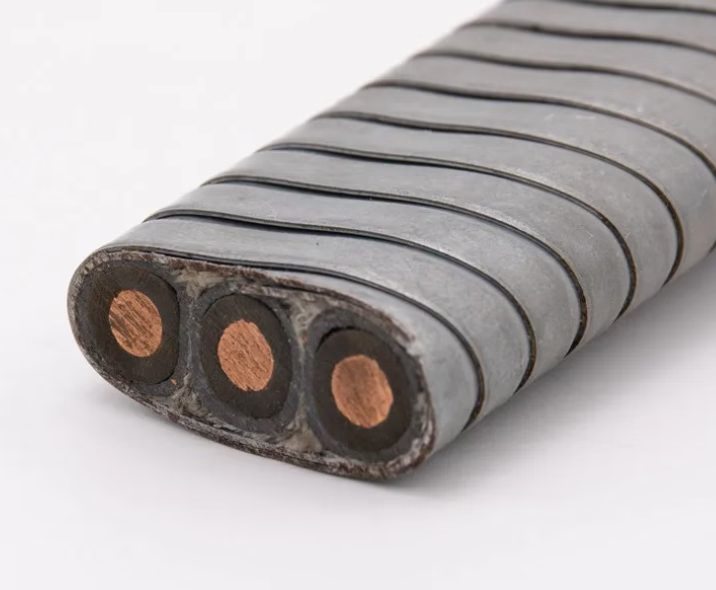
FLEXIDRUM® MEDIUM (N)TSCGEWÖU WATER: Professional Submersible Water-Resistant Cable for Dredgers, Pumps, Waste-Water Systems, and Extended-Voltage Submersed Applications Purpose-engineered submersible cable delivering exceptional durability and electrical performance in aggressive water environments. FLEXIDRUM® MEDIUM (N)TSCGEWÖU WATER combines Class 5 ultra-flexible tinned copper conductors (IEC 60228), advanced EPR insulation technology, and specialized water-resistant outer sheath (PCP Type 5GM3) to achieve 15+ year service life in demanding applications including dredger equipment, submersible pump systems, waste-water treatment facilities, and brackish/salt-water environments. Extended voltage platform (1.8/3 kV through 18/30 kV nominal) accommodates complete industrial water-system electrical hierarchies with unified cable platform.

FLEXIDRUM® MEDIUM (N)TSCGEWÖU WATER

FLEXIDRUM® MEDIUM (N)TSCGEWÖU WATER: Professional Submersible Water-Resistant Cable for Dredgers, Pumps, Waste-Water Systems, and Extended-Voltage Submersed Applications Purpose-engineered submersible cable delivering exceptional durability and electrical performance in aggressive water environments. FLEXIDRUM® MEDIUM (N)TSCGEWÖU WATER combines Class 5 ultra-flexible tinned copper conductors (IEC 60228), advanced EPR insulation technology, and specialized water-resistant outer sheath (PCP Type 5GM3) to achieve 15+ year service life in demanding applications including dredger equipment, submersible pump systems, waste-water treatment facilities, and brackish/salt-water environments. Extended voltage platform (1.8/3 kV through 18/30 kV nominal) accommodates complete industrial water-system electrical hierarchies with unified cable platform.
Type W 4/C 2/0 AWG 2000V portable power cables represent the heavy-duty backbone of North American mining operations, temporary power distribution systems, and construction equipment supply chains. These cables deliver 237 amperes continuously while withstanding the mechanical abuse, thermal cycling, oil exposure, and moisture ingress endemic to underground mining, drilling rig operations, and industrial emergency power applications. The designation "Type W" codifies a specific engineering philosophy: maximum flexibility through extreme copper stranding (259 to 342 fine wires per conductor), robust outer sheathing rated for tractor drag and ground abrasion, and flame-retardant chemistry meeting the rigorous MSHA standards that govern underground coal mining environments.

Sourcing Type W 4/C 2/0 AWG 2000V: Generic Equivalents Meeting MSHA Standards

Type W 4/C 2/0 AWG 2000V portable power cables represent the heavy-duty backbone of North American mining operations, temporary power distribution systems, and construction equipment supply chains. These cables deliver 237 amperes continuously while withstanding the mechanical abuse, thermal cycling, oil exposure, and moisture ingress endemic to underground mining, drilling rig operations, and industrial emergency power applications. The designation “Type W” codifies a specific engineering philosophy: maximum flexibility through extreme copper stranding (259 to 342 fine wires per conductor), robust outer sheathing rated for tractor drag and ground abrasion, and flame-retardant chemistry meeting the rigorous MSHA standards that govern underground coal mining environments.
Ampacity is the maximum electric current that a conductor can safely carry continuously without exceeding a specified temperature limit, usually 90°C for power cables used in mining and industrial applications. The word itself is a contraction of "ampere" and "capacity," and it represents a fundamental constraint imposed by the physics of electrical resistance and heat dissipation. Understanding ampacity is not an academic exercise — it is the critical foundation for ensuring that your mining equipment receives reliable power, that cables do not overheat and fail prematurely, and that your operation avoids unplanned downtime due to cable damage or failure. 载流量是导体在不超过指定温度限值(通常为90°C)的条件下能连续安全承载的最大电流。

Ampacity Rating Guide: How Much Current Can a Type SHD-GC 3/C 4/0 AWG 8kV Cable Handle?

Ampacity is the maximum electric current that a conductor can safely carry continuously without exceeding a specified temperature limit, usually 90°C for power cables used in mining and industrial applications. The word itself is a contraction of “ampere” and “capacity,” and it represents a fundamental constraint imposed by the physics of electrical resistance and heat dissipation. Understanding ampacity is not an academic exercise — it is the critical foundation for ensuring that your mining equipment receives reliable power, that cables do not overheat and fail prematurely, and that your operation avoids unplanned downtime due to cable damage or failure. 载流量是导体在不超过指定温度限值(通常为90°C)的条件下能连续安全承载的最大电流。
NEK 606 UX/UX(I) Technical Specifications Table The comprehensive specifications table below presents the complete range of commercially available conductor sizes for NEK 606 cables. This data encompasses the critical parameters that electrical engineers require when conducting load calculations, short-circuit analysis, and installation planning for offshore electrical systems. All ampacity values reference the baseline condition of 45°C ambient temperature in free air, single conductor installation per IEC 60092-352 standards.

Troubleshooting NEK 606 UX/UX(I) Mud-Resistant Grounding Cables on Offshore Platforms

NEK 606 UX/UX(I) Technical Specifications Table The comprehensive specifications table below presents the complete range of commercially available conductor sizes for NEK 606 cables. This data encompasses the critical parameters that electrical engineers require when conducting load calculations, short-circuit analysis, and installation planning for offshore electrical systems. All ampacity values reference the baseline condition of 45°C ambient temperature in free air, single conductor installation per IEC 60092-352 standards.
NSSHÖU cables are designed for power supply applications in mining, quarrying, tunneling, and heavy industrial equipment where extreme mechanical stress and abrasion are expected. These cables can be installed in dry, damp, wet, and hazardous environments but are NOT suitable for drumming applications under tensile loads or for continuous robotic movement in energy chains where highly flexible cables with specific bend cycle ratings are required. NSSHÖU电缆设计用于采矿、采石、隧道和重型工业设备中的供电应用,其中预期会有极端的机械应力和磨损。这些电缆可以安装在干燥、潮湿、湿润和危险环境中,但不适合在拉力负载下的卷筒应用或需要具有特定弯曲周期额定值的高度柔性电缆的连续机器人运动的能量链中。

NSSHÖU Cable Ampacity Table: Current Rating & Correction Factors at 50°C Ambient Temperature

NSSHÖU cables are designed for power supply applications in mining, quarrying, tunneling, and heavy industrial equipment where extreme mechanical stress and abrasion are expected. These cables can be installed in dry, damp, wet, and hazardous environments but are NOT suitable for drumming applications under tensile loads or for continuous robotic movement in energy chains where highly flexible cables with specific bend cycle ratings are required. NSSHÖU电缆设计用于采矿、采石、隧道和重型工业设备中的供电应用,其中预期会有极端的机械应力和磨损。这些电缆可以安装在干燥、潮湿、湿润和危险环境中,但不适合在拉力负载下的卷筒应用或需要具有特定弯曲周期额定值的高度柔性电缆的连续机器人运动的能量链中。
The choice of conductor material in electrical cables represents a critical engineering decision that directly impacts cable longevity, performance, and safety. German VDE standards, particularly DIN VDE 0250, specify tinned copper conductors for rubber-insulated cables such as NSSHÖU, while PVC-insulated cables commonly utilize bare (plain) copper conductors. This technical distinction arises from fundamental differences in material chemistry and vulcanization processes. 电缆导体材料的选择是一项关键的工程决策,直接影响电缆的寿命、性能和安全性。德国VDE标准,特别是DIN VDE 0250,规定橡胶绝缘电缆(如NSSHÖU)必须使用镀锡铜导体,而PVC绝缘电缆通常使用裸铜导体。这一技术区别源于材料化学和硫化工艺的根本差异。

Tinned Copper: Why Do VDE Standards Typically Require Tinned Copper Conductors for Rubber Cables Like NSSHÖU, Whereas PVC Cables Often Use Bare Copper?

The choice of conductor material in electrical cables represents a critical engineering decision that directly impacts cable longevity, performance, and safety. German VDE standards, particularly DIN VDE 0250, specify tinned copper conductors for rubber-insulated cables such as NSSHÖU, while PVC-insulated cables commonly utilize bare (plain) copper conductors. This technical distinction arises from fundamental differences in material chemistry and vulcanization processes. 电缆导体材料的选择是一项关键的工程决策,直接影响电缆的寿命、性能和安全性。德国VDE标准,特别是DIN VDE 0250,规定橡胶绝缘电缆(如NSSHÖU)必须使用镀锡铜导体,而PVC绝缘电缆通常使用裸铜导体。这一技术区别源于材料化学和硫化工艺的根本差异。
The tunnelling and underground mining industries have traditionally relied on heavy-duty rubber-sheathed cables manufactured according to DIN VDE 0250 standards. However, a significant shift is occurring as polyurethane (PUR) sheathed cables, designated with the VDE code "11Y" and "12Y" (for TPE-E variants), are increasingly specified for demanding tunnel boring machine (TBM) applications and underground operations. 隧道和地下采矿行业传统上依赖于按照DIN VDE 0250标准生产的重型橡胶护套电缆。然而,随着聚氨酯(PUR)护套电缆(VDE代码为"11Y",TPE-E变体为"12Y")在隧道掘进机(TBM)和地下作业等高要求应用中越来越多被指定使用,一个重大转变正在发生。

Why Are Polyurethane (PUR) Sheathed Cables Becoming Popular Alternatives to Standard VDE Rubber Cables in Tunnelling?

The tunnelling and underground mining industries have traditionally relied on heavy-duty rubber-sheathed cables manufactured according to DIN VDE 0250 standards. However, a significant shift is occurring as polyurethane (PUR) sheathed cables, designated with the VDE code “11Y” and “12Y” (for TPE-E variants), are increasingly specified for demanding tunnel boring machine (TBM) applications and underground operations. 隧道和地下采矿行业传统上依赖于按照DIN VDE 0250标准生产的重型橡胶护套电缆。然而,随着聚氨酯(PUR)护套电缆(VDE代码为”11Y”,TPE-E变体为”12Y”)在隧道掘进机(TBM)和地下作业等高要求应用中越来越多被指定使用,一个重大转变正在发生。
كابل TROMMELFLEX PUR-HF D12Y11YU11Y 0,6/1KV هو كابل لف مرن منخفض الجهد بغلاف البولي يوريثان (PUR) مصمم للتطبيقات تحت الإجهادات الميكانيكية العالية. يتميز هذا الكابل بخاصية فريدة تجعله مناسباً للاستخدام الدائم في الماء (ليس ماء الشرب) حتى عمق غطس 50 متر. يوفر الكابل أداءً استثنائياً في البيئات الصناعية القاسية مع مقاومة الالتواء ±50 درجة لكل متر وسرعة سفر تصل إلى 180 متر في الدقيقة. التصميم الخالي من الهالوجين يجعله مثالياً للتطبيقات التي تتطلب معايير سلامة عالية من الحرائق.

ما هو كابل TROMMELFLEX PUR-HF للف منخفض الجهد بغلاف البولي يوريثان؟

يُستخدم هذا الكابل في مجموعة واسعة من التطبيقات الصناعية التي تتطلب أداءً عالياً في الظروف القاسية. تشمل التطبيقات الرئيسية: رافعات الموانئ والأرصفة البحرية، معدات الغطس والمنصات البحرية، أنظمة اللف والفستون، رافعات البناء والمستودعات، معدات التعدين، وتطبيقات المعالجة الصناعية. الخاصية الفريدة للاستخدام تحت الماء تجعله مثالياً لتطبيقات الموانئ في منطقة الخليج العربي حيث تتعرض المعدات للبيئة البحرية المالحة. التصميم الخالي من الهالوجين يجعله مناسباً للأنفاق والمباني المغلقة حيث السلامة من الحرائق أولوية قصوى.
Mining, drilling, and tunnelling cables represent a specialized category of electrical cables engineered to withstand the extreme conditions found in extractive industry operations. Unlike standard industrial cables, these cables must endure continuous mechanical stress from reeling and unreeling operations, exposure to ultraviolet radiation in surface mining, salt-water submersion in offshore drilling, contact with oils and greases from machinery, and the abrasive conditions of underground environments. The demanding nature of these applications requires cables with exceptional durability, flexibility, and resistance to environmental factors that would rapidly degrade conventional cables.

What is Mining, Drilling & Tunnelling Cable? Solutions for Surface, Sub-Surface & Underground Operations

(N)3GHSSHCH – 3.6/6kV, 6/10kV, 8.7/15kV, 12/20kV (N)3GHSSYCY – 3.6/6kV, 6/10kV, 8.7/15kV, 12/20kV (N)SSCHÖU-J – 0.6/1kV (N)SHÖU O/J – 0.6/1kV NSSHÖU O/J – 0.6/1kV NSSHÖU 3E – 0.6/1kV NSSHÖU 3E + ST – 0.6/1kV (N)TMCGEWÖU – 3.6/6kV to 18/30kV (N)TSCGEWÖU – 3.6/6kV to 18/30kV (N)TSCGEWÖU ZH – 3.6/6kV to 12/20kV (N)TSCGEWÖU ATB – 3.6/6kV to 12/20kV (N)TSCGEWÖU FO – 3.6/6kV to 12/20kV (N)TSCGEWÖU Submersible – 3.6/6kV to 12/20kV (N)TSKCGEWÖU – 3.6/6kV to 18/30kV (N)TSCGECEWÖU – 3.6/6kV to 12/20kV (N)TSCGECEWÖU ATB – 3.6/6kV to 12/20kV (N)TSCGECEWÖU ATB GCC – 1.8/3kV to 12/20kV (N)TSCGECEWÖU Submersible – 3.6/6kV to 12/20kV (N)TSCGECECWÖU – 3.6/6kV to 12/20kV (N)TSCGECECWÖU ZH – 3.6/6kV to 12/20kV R-(N)TSCGEWÖU + FO – 3.6/6kV to 12/20kV
Submersible and pump cables are specialized electrical cables designed for permanent operation underwater, connecting electrical motor equipment in both process and potable water applications. According to IEC standards and VDE specifications, these cables must demonstrate exceptional water resistance, flexibility under pressure, and chemical compatibility with their operating environment. The cables support diverse industries from food processing to water treatment, mining, and aquatic installations.

What are Submersible & Pump Cables?

(N)SHÖU O/J 0.6/1kV, NSSHÖU O/J 0.6/1kV, NSSHÖU 3E 0.6/1kV, NSSHÖU 3E + ST 0.6/1kV, (N)SSCHÖU-J 0.6/1kV, (N)TSCGECEWÖU 3.6/6kV, (N)TSCGECEWÖU 6/10kV, (N)TSCGECEWÖU 8.7/15kV, (N)TSCGECEWÖU 12/20kV (N)TSCGEWÖU 3.6/6kV, (N)TSCGEWÖU 6/10kV, (N)TSCGEWÖU 8.7/15kV, (N)TSCGEWÖU 12/20kV, H07RN-8-F (10m), Pump Cable 300 (300m), Drincable 600 (600m), Drincable 600 Flat (600m), Drincable 800 (800m)
The 6/10kV voltage rating represents one of the most widely used medium voltage cable classifications for power distribution networks worldwide. These cables serve as the backbone of industrial power systems, connecting generation units to distribution networks and providing power to manufacturing plants, commercial buildings, and infrastructure projects. The 6/10kV designation indicates cables designed for systems where the phase-to-earth voltage (U₀) is 6kV and the phase-to-phase voltage (U) is 10kV, with a maximum system voltage (Um) of 12kV according to IEC 60502-2.

What is 6/10kV Cable?

(N)3GHSSHCH – 3.6/6kV and 6/10kV Cable (N)3GHSSYCY – 3.6/6kV and 6/10kV Cable (N)TMCGEWÖU – 3.6/6kV, 6/10kV, 8.7/15kV Cable (N)TSCGECECWÖU – 3.6/6kV and 6/10kV Cable (N)TSCGECECWÖU – 3.6/6kV and 6/10kV ZH Cable (N)TSCGECEWÖU – 3.6/6kV and 6/10kV Cable (N)TSCGECEWÖU – 3.6/6kV and 6/10kV ATB Cable (N)TSCGECEWÖU – 1.8/3kV, 3.6/6kV and 6/10kV ATB Cable (Ground Check Conductor) (N)TSCGECEWÖU – 3.6/6kV and 6/10kV Submersible Cable (N)TSCGEWÖU – 3.6/6kV, 6/10kV, 8.7/15kV, 12/20kV, 18/30kV Cable (N)TSCGEWÖU – 3.6/6kV and 6/10kV FO Cable R-(N)TSCGEWÖU + FO Cable 3.6/6kV to 12/20kV (N)TSCGEWÖU – 3.6/6kV and 6/10kV ATB Cable (N)TSCGEWÖU – 3.6/6kV and 6/10kV ZH Cable (N)TSCGEWÖU – 3.6/6kV and 6/10kV Submersible Cable (N)TSKCGEWÖU Cable
(N)SSHOEU PUR 0.6/1KV is a halogen-free low voltage flexible cable designed for semi-flexible use and fixed installation in demanding environments. The polyurethane (PUR) sheath provides superior abrasion resistance compared to standard rubber cables. (N)SSHOEU PUR 0.6/1KV 是一款無鹵素低壓柔性電纜,專為惡劣環境中的半柔性使用和固定安裝而設計。聚氨酯(PUR)護套比標準橡膠電纜具有更優越的耐磨性。

(N)SSHOEU PUR 0.6/1KV Semi-Flexible Installation Cable

(N)SSHOEU PUR 0.6/1KV is a halogen-free low voltage flexible cable designed for semi-flexible use and fixed installation in demanding environments. The polyurethane (PUR) sheath provides superior abrasion resistance compared to standard rubber cables. (N)SSHOEU PUR 0.6/1KV 是一款無鹵素低壓柔性電纜,專為惡劣環境中的半柔性使用和固定安裝而設計。聚氨酯(PUR)護套比標準橡膠電纜具有更優越的耐磨性。
Complete Guide to UL 1650:2025 Portable Power Cable Type G, Type G-GC, Type W, MP-GC & SHD-GC Mining Cables — Technical Specifications, Compliance Standards, Safety Guidelines and Applications

Complete Guide to UL 1650:2025 Portable Power Cable

UL 1650, UL 1650:2025, portable power cable, mining cable, Type G cable, Type G-GC cable, Type W cable, MP-GC cable, SHD-GC cable, MSHA approved cable, EPR insulation, CPE jacket, trailing cable, mining equipment cable UL 1650 is the primary safety standard for portable power cables used in industrial and mining applications across North America. The UL 1650:2025 edition, published by Underwriters Laboratories and ANSI approved in November 2025, establishes comprehensive requirements for portable power cables designed for use in accordance with the National Electrical Code (NFPA 70).[1] This standard covers various types of portable power cables including Type G, Type G-GC, Type W, MP-GC, and SHD-GC cables that are essential for powering mobile and stationary mining equipment in both surface and underground operations. The cables manufactured under UL 1650 must undergo rigorous testing per UL 2556 (Wire and Cable Test Methods) to ensure safety and reliability in demanding industrial environments.[2]
CEI 20-27 CENELEC HD361 Cable

What is CEI 20-27 CENELEC HD361 Cable?

CEI 20-27 CENELEC HD361 represents a standardized cable designation system developed by the European Committee for Electrotechnical Standardisation (CENELEC) to provide uniform identification and classification of harmonized power cables and cords across European markets. This systematic coding methodology enables engineers, procurement specialists, and electrical contractors to precisely identify cable specifications including voltage ratings, insulation materials, conductor types, and sheathing compounds through a structured alphanumeric designation format.