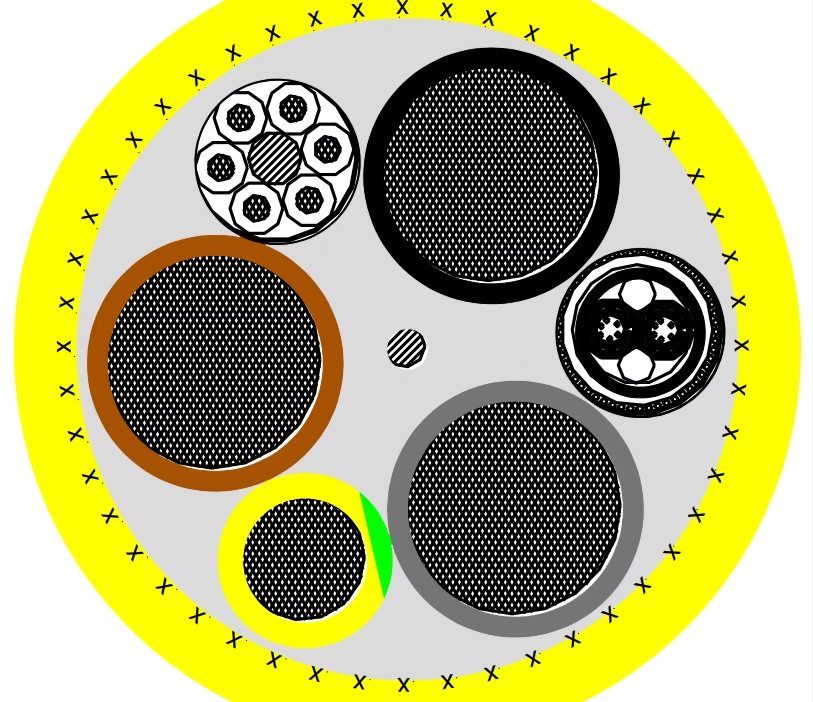
New Zealand TBMs: Equivalent Specs for (N)TSCGECEWÖU 3×50+3×25/3 6.6/6.6kV Tunneling Cable
For New Zealand TBM (Tunnel Boring Machine) and underground infrastructure projects, specifying cables presents a critical engineering decision: use European VDE-standard cables (readily available from major suppliers like Prysmian, Nexans) or specify local AS/NZS-compliant equivalents. The (N)TSCGECEWÖU 3×50+3×25/3 6.6/6.6kV cable from German manufacturers represents excellent European engineering, but direct application in New Zealand requires technical translation to local regulatory standards.
对于新西兰盾构机(TBM)和地下基础设施项目,规范电缆规格呈现关键工程决策:使用欧洲VDE标准电缆(易从Prysmian、Nexans等主要供应商获得)或规范本地AS/NZS兼容等效品。德国制造商的(N)TSCGECEWÖU 3×50+3×25/3 6.6/6.6kV电缆代表卓越的欧洲工程,但在新西兰的直接应用需要技术转化为当地监管标准。

![Longwall mining represents the most productive underground coal extraction method available to modern mining operations, with a single longwall face capable of producing over 5,000 tonnes of coal per hour in optimized installations. At the heart of this productivity lies the longwall shearer, a massive mobile machine that travels back and forth along the coal face, cutting coal with rotating drums while advancing through seam heights ranging from 1.6 to 7 meters. The power cables supplying electricity to these shearers operate in one of the most mechanically demanding cable applications in industrial engineering, subjected to continuous motion within cable chain systems (often referred to as "Bretby chains"), constant vibration from cutting operations, tight bending radii as the shearer traverses the face, and the harsh environmental conditions characteristic of underground coal mining.[1] (长壁开采代表了现代采矿作业可用的最具生产力的地下煤炭开采方法,单个长壁工作面在优化安装中每小时可生产超过5000吨煤炭)](https://feichuncables.com/blog/wp-content/uploads/image-665-1006x702.avif "Longwall Shearer: What are the advantages of using Type 241 over Type 275 for high-vibration longwall shearer power supplies? 3")
![The operational profile of handheld drilling equipment demands cables that can withstand millions of flex cycles without mechanical or electrical failure. A handheld rock drill or roof bolter may be repositioned dozens of times per hour during active operation, with each repositioning imposing multiple flex cycles on the trailing cable. Over the lifetime of the cable, this translates to extreme flex cycle demands that far exceed those imposed on cables serving more stationary equipment. The AS/NZS 1802:2003 standard recognizes this requirement by specifying Type 209 cables as "more suitable as a trailing cable rather than for reeling" and noting that "smaller cables are used for drills and hand held tools and equipment."[9] (手持钻孔设备的操作特性要求电缆能够承受数百万次弯曲循环而不发生机械或电气故障)](https://feichuncables.com/blog/wp-content/uploads/image-663.avif "Hand-Held Borers: Why is Type 209 (Individually Screened) Mandatory for Handheld Drilling Equipment Instead of Type 275? 4")
![Type 241 mining cables represent a specialized category of flexible power cables designed for demanding underground mining applications, continuous miner feeders, and pump supply systems operating at voltages from 1.1kV to 11kV. These cables are manufactured to comply with AS/NZS 1802:2003 standards and incorporate sophisticated screening systems that balance electrical performance, mechanical flexibility, and safety requirements.[1] (241型矿用电缆是专为严苛的地下采矿应用、连续采矿机馈线和泵供电系统设计的柔性电力电缆,工作电压为1.1kV至11kV)](https://feichuncables.com/blog/wp-content/uploads/image-662.avif "Composite Screen: How does the copper/nylon braid screen in Type 241 cables handle fault currents compared to a full metallic screen? 5")