IEC 60092-353

GAALFLEX® VFD NYCWY: 600V/1000V European Standard Power Cable with Concentric Copper Conductor Shielding, Underground Direct-Burial Installation Capability, Frequency Converter Integration, Control Impulse & Test Data Transmission, 2–4 Cores, 10–240 mm² Solid/Stranded Red Copper, PVC DIV4 Insulation, Corrugated Copper Wire + Tape Screening, Self-Extinguishing Flame-Retardant, DIN VDE 0276/IEC 60502 Compliance, Utility Substation & Subscriber Network Deployment | European Underground Utility VFD Power Cable UL-certified European standard 600V/1000V underground direct-burial power cable with unique concentric copper conductor shielding combining solid or stranded red copper with PVC DIV4 insulation, corrugated copper wire + tape concentric shielding, and professional utility-grade grounding continuity—addressing underground direct-burial specification (subscriber networks, power stations), dual-voltage power distribution (600V/1000V), frequency converter system integration, control signal and test data transmission, utility substation infrastructure, and comprehensive European underground power distribution infrastructure simultaneously.

Барабанные кабели FEICHUN серии SHD-GC для портовых кранов с VFD-приводами: торсионная устойчивость, многослойное EMC-экранирование и тепловое моделирование намоточных систем

Глубокий инженерный анализ собственной разработки FEICHUN — серии барабанных (reeling) кабелей конструкции SHD-GC с тройной полупроводящей экранирующей системой, специально оптимизированной для совместной работы с частотными преобразователями мощностью 200–630 кВт, типичными для современных STS-кранов post-Panamax поколения и автоматизированных контейнерных перегружателей ASC. Документ включает анализ торсионных напряжений при намотке на барабан, расчёт допустимой токовой нагрузки в коаксиально-намотанной конфигурации по модели Неера-Макграта, обоснование трёхуровневой экранирующей конструкции против синфазных токов VFD, прямое инструментальное сравнение с эталонными решениями Prysmian Tecwind, Nexans DrumFlex, Helukabel REELING-PUR и Lapp ÖLFLEX CRANE VFD. Предназначен для проектировщиков электрического хозяйства контейнерных терминалов, инженеров служб эксплуатации перегрузочной техники и специалистов по электромагнитной совместимости портовых электроустановок.
Large three-phase AC motors drove continuous-duty equipment (conveyor systems, pump stations, ventilation fans) with straightforward on/off control via contactor switches. The control circuits were simple, the equipment was robust and forgiving of electrical noise, and cable specifications focused purely on mechanical durability and basic electrical protection. Modern underground mining operations operate in a fundamentally different electrical environment. Variable frequency drives (VFDs) regulate motor speeds to match load requirements, reducing energy consumption and extending equipment life. Programmable logic controllers (PLCs) and distributed control systems (DCS) automate equipment sequencing and mine ventilation. Wireless monitoring systems track equipment health, environmental conditions, and safety parameters. The mine's electrical environment has become as electrically complex as an industrial manufacturing facility, except that everything must operate underground in the presence of conductive dust, moisture, and metallic ore particles that create unintended current paths and electromagnetic noise sources.

Барабанные кабели FEICHUN серии SHD-GC для портовых кранов с VFD-приводами: торсионная устойчивость, многослойное EMC-экранирование и тепловое моделирование намоточных систем

Глубокий инженерный анализ собственной разработки FEICHUN — серии барабанных (reeling) кабелей конструкции SHD-GC с тройной полупроводящей экранирующей системой, специально оптимизированной для совместной работы с частотными преобразователями мощностью 200–630 кВт, типичными для современных STS-кранов post-Panamax поколения и автоматизированных контейнерных перегружателей ASC. Документ включает анализ торсионных напряжений при намотке на барабан, расчёт допустимой токовой нагрузки в коаксиально-намотанной конфигурации по модели Неера-Макграта, обоснование трёхуровневой экранирующей конструкции против синфазных токов VFD, прямое инструментальное сравнение с эталонными решениями Prysmian Tecwind, Nexans DrumFlex, Helukabel REELING-PUR и Lapp ÖLFLEX CRANE VFD. Предназначен для проектировщиков электрического хозяйства контейнерных терминалов, инженеров служб эксплуатации перегрузочной техники и специалистов по электромагнитной совместимости портовых электроустановок.
Nominal Voltage 3.6/6 kV Up to 12/20 kV available Max Speed 300 m/min Industry leading + ±25°/m Conductor Type Bare Copper Class 5, IEC 60228 standard Bending Radii 6×D to 20×D 7-level classification system Operating Temp −50 to +80°C Fixed, −35°C flexible Weight Profile 2.5–12.1 kg/km Compact 4-series range

Портовый высокогибкий кабель FEICHUN с защитой от соляного тумана: технологическая платформа для STS, RTG и RMG-кранов морских контейнерных терминалов

Углублённый инженерный анализ собственной разработки FEICHUN — серии портовых высокогибких кабелей с многоуровневой системой защиты от хлоридной коррозии, гидролиза полимерной оболочки и комбинированных циклических механических воздействий, характерных для эксплуатации на открытых причалах морских контейнерных и наливных терминалов. Технология включает четырёхступенчатую антикоррозионную систему: токопроводящую жилу из лужёной меди, полупроводящий разделительный слой, особо плотную изоляцию EPDM с пероксидной сшивкой и наружную оболочку из гидролизостойкого полиэфирного полиуретана (PE-PUR) с пакетом UV/HALS/антифунгальных стабилизаторов. Документ предназначен для инженеров портовой инфраструктуры, специалистов по эксплуатации перегрузочной техники, проектных организаций и технических служб контейнерных терминалов.
Полный технический анализ специализированного морозостойкого кабеля RHEYFIRM (N)TSCGEWÖU-K компании Feichun для портовых систем Дальнего Востока России (Хабаровск, Владивосток, Петропавловск-Камчатский, Магадан) и Арктических регионов. Кабель соответствует ХЛ-60 (холодостойкость до -50°C) с гарантированной гибкостью и механическим ресурсом в условиях ледяной среды, трёхжильная конфигурация 3×120 мм² (три фазы 380 В) + 3×70 мм² (трёхжильное заземление/нейтраль) для высокомощных портовых лебёдок. Номинальное напряжение 1000 В переменного тока, морская защита класса C5-M (720 часов солевого тумана при -40°C), испытание на холодное растяжение ХЛ-60 (≥350% удлинение при -40°C), механический ресурс 30+ млн циклов даже в криогенных условиях, удлинение при разрыве 320–420%, отсутствие хрупкого разрушения при экстремальном охлаждении, сертификация ГОСТ 22483-2012 (ХЛ), IEC 60245-2, DNV, ABS. Совокупная экономия владения 35–45% по сравнению с европейскими альтернативами благодаря оптимизации под российские стандарты и климат.

Альтернатива CORDAFLEX (SMK) 3×35+3G16: оптовые цены на крановый кабель EPR/PUR от завода FEICHUN

Технико-коммерческий анализ заводской альтернативы немецкому крановому кабелю CORDAFLEX (SMK) производства SAB Bröckskes для festoon-систем портальных, мостовых и козловых кранов. Конструкция 3×35+3G16 с этиленпропиленовой резиновой изоляцией (EPR), полиуретановой оболочкой (PUR), центральным силовым элементом из арамидных волокон и шестью раздельно функциональными жилами. Прямое сравнение с CORDAFLEX SMK, Helukabel JZ-600, Lapp ÖLFLEX CRANE F, гибкая ценовая сетка от 500 до 50000 метров, OEM-маркировка под брендом заказчика, прямые контейнерные поставки FCA Шанхай / CIF Санкт-Петербург / DAP Москва.
FLEXIDRUM® R 502: Advanced Heavy-Duty Industrial Cable with PUR Polyurethane Sheath and GAALTHERM® 530 Insulation for Motor Hoist, Transport Systems, and High-Mechanical-Stress Farm Equipment Engineered for extreme mechanical stress and industrial machinery applications, FLEXIDRUM® R 502 combines flexible Class 5 tinned or red copper conductor, GAALTHERM® 530 thermoplastic insulation, optional anti-twisting textile reinforcement, and advanced polyurethane (PUR) outer sheath to deliver unmatched durability in demanding heavy-duty environments. Rated for 180 m/min maximum speed (with anti-twisting protection), −40 to +90°C temperature stability, and superior UV/chemical/oil resistance across 3–42 core configurations (0.5–10 mm² cross-section range and specialized multi-core power configurations), this robust cable solution provides comprehensive protection against mechanical fatigue, thermal cycling, environmental degradation, and rapid-deployment stress for motor reel hoists, transport systems, movable motors, agricultural equipment, and specialized heavy-machinery infrastructure.

Портовый кабель FEICHUN: Инженерное превосходство в условиях экстремальной морской коррозии

Комплексный технический анализ высокопластичного конструкционного кабеля FEICHUN для портальных кранов, крановых тележек и систем festoon в условиях морской среды класса C4-C5 (ISO 12944-2). Исследование охватывает молекулярную инженерию полиуретановой оболочки с блок-сополимером SBS, электрохимические механизмы анодной защиты медного экрана, трибологические характеристики абразивного износа и практическое применение на крупнейших портовых терминалах Азии и Европы. Прямое сравнение с европейскими аналогами Lapp ÖLFLEX CRANE, Helukabel, Nexans и обоснование технико-экономического преимущества для портовых операторов.
GAALFLEX® CONTROL 1000 H SC: Fire-Safe Zero-Halogen Single-Core Green-Yellow Grounding and Earth-Protection Cable for Critical Infrastructure and Maritime Installations (0.6/1 kV Nominal Voltage, 4 kV Test Voltage per DIN VDE 0281, Class 2 Stranded Red Bare Copper per IEC 60228 and DIN VDE 0295, Halogen-Free Type HM4 Polyolefin Insulation per IEC 60092-353 Maritime Electrical Standard, Permanent Green-Yellow Color Identification Meeting International Earth-Protection Standards, Rigid Installation 8×D Minimum Bending Radius for Fixed Conduit Routing / Flexible Installation 16×D for Temporary and Equipment-Connection Applications, Halogen-Free Chemistry per DIN VDE 0482 and IEC 60754-1 Ensuring Zero Halogenated Acid Gas Release During Fire Events, Low-Smoke-Density Performance per IEC 61034 and Low-Corrosive-Gas Characteristics per IEC 60754-2 Enabling Simultaneous Fire-Safety and Equipment-Protection Objectives, Flame-Retardant and Self-Extinguishing per DIN VDE 0482 EN 50265-2-1 and IEC 60332-1-2 With Enhanced Flame-Test Performance per IEC 60332-3, Ozone and Silicon-Free Formulation Enabling Reliable Deployment in Harsh Outdoor Environments and Extreme-Temperature Conditions (−35 to +85°C Fixed / −5 to +85°C Flexible), Standardized Cross-Section Portfolio Spanning 1.5 mm² Through 120 mm² per Single Core Enabling Equipment Grounding from Smallest Control Panels Through Large Industrial Machinery and Utility-Scale Infrastructure Systems, RoHS and CE Certified, Engineered for Critical-Infrastructure Grounding Systems, Maritime Vessel Electrical Integration, Temporary and Permanent Ground Installations, Equipment Earth Protection, Utility-Scale Grounding Trunk Lines, and Fire-Critical Electrical Systems Where Single-Core Earth-Protection Integrity and Zero-Halogen Fire Safety Are Non-Negotiable Requirements)

GAALFLEX® CONTROL 1000 H SC

GAALFLEX® CONTROL 1000 H SC: Fire-Safe Zero-Halogen Single-Core Green-Yellow Grounding and Earth-Protection Cable for Critical Infrastructure and Maritime Installations (0.6/1 kV Nominal Voltage, 4 kV Test Voltage per DIN VDE 0281, Class 2 Stranded Red Bare Copper per IEC 60228 and DIN VDE 0295, Halogen-Free Type HM4 Polyolefin Insulation per IEC 60092-353 Maritime Electrical Standard, Permanent Green-Yellow Color Identification Meeting International Earth-Protection Standards, Rigid Installation 8×D Minimum Bending Radius for Fixed Conduit Routing / Flexible Installation 16×D for Temporary and Equipment-Connection Applications, Halogen-Free Chemistry per DIN VDE 0482 and IEC 60754-1 Ensuring Zero Halogenated Acid Gas Release During Fire Events, Low-Smoke-Density Performance per IEC 61034 and Low-Corrosive-Gas Characteristics per IEC 60754-2 Enabling Simultaneous Fire-Safety and Equipment-Protection Objectives, Flame-Retardant and Self-Extinguishing per DIN VDE 0482 EN 50265-2-1 and IEC 60332-1-2 With Enhanced Flame-Test Performance per IEC 60332-3, Ozone and Silicon-Free Formulation Enabling Reliable Deployment in Harsh Outdoor Environments and Extreme-Temperature Conditions (−35 to +85°C Fixed / −5 to +85°C Flexible), Standardized Cross-Section Portfolio Spanning 1.5 mm² Through 120 mm² per Single Core Enabling Equipment Grounding from Smallest Control Panels Through Large Industrial Machinery and Utility-Scale Infrastructure Systems, RoHS and CE Certified, Engineered for Critical-Infrastructure Grounding Systems, Maritime Vessel Electrical Integration, Temporary and Permanent Ground Installations, Equipment Earth Protection, Utility-Scale Grounding Trunk Lines, and Fire-Critical Electrical Systems Where Single-Core Earth-Protection Integrity and Zero-Halogen Fire Safety Are Non-Negotiable Requirements)
NEK 606 RFOU 0.6/1kV P1/P8 cable is specifically designed with mud-resistant SHF2 MUD heat-set thermoset outer sheath and is rated to withstand prolonged exposure to ester-based drilling mud, making it suitable for continuous mud-zone service typically lasting 5 to 7 years before material property degradation requires cable replacement or service assessment. The cable's heat-set thermoset formulation provides superior resistance to synthetic ester drilling fluids compared to standard elastomeric jackets, as the cross-linked polymer structure exhibits swelling rates of approximately 20 to 35 percent in typical ester-based drilling muds, compared to 50 to 80 percent swelling in non-resistant elastomers. However, the term "mud resistant" represents a carefully defined performance envelope, not unlimited exposure—the cable is qualified for service in drilling mud zones where the cable may be splashed, partially immersed, or in periodic contact with mud over operational periods measured in years, but not for continuous full immersion in mud-filled drilling riser pipes or mud tanks where exposure conditions exceed the design assumptions underlying the material formulation. In such extreme immersion scenarios, service life may be reduced to 2 to 4 years depending on temperature, pressure, and the specific chemical composition of the drilling mud system. Understanding the distinction between standard mud-zone service (where the cable experiences periodic mud contact in the operational envelope for which P1/P8 is certified) and extreme continuous immersion scenarios (where cable selection must be upgraded or enhanced) is critical to avoiding premature field failures. For typical offshore drilling platforms, FPSO systems, and subsea support vessel applications operating in the North Sea, Southeast Asia, or West African waters, the NEK 606 RFOU P1/P8 provides reliable, field-proven performance that meets or exceeds the mud-zone cable specifications of major offshore operators including DNV GL, Lloyds Register, and the American Petroleum Institute.

Mud Resistance of NEK 606 RFOU 0.6/1kV P1/P8: Can This Offshore Cable Withstand Prolonged Exposure to Ester-Based Drilling Mud?

NEK 606 RFOU 0.6/1kV P1/P8 cable is specifically designed with mud-resistant SHF2 MUD heat-set thermoset outer sheath and is rated to withstand prolonged exposure to ester-based drilling mud, making it suitable for continuous mud-zone service typically lasting 5 to 7 years before material property degradation requires cable replacement or service assessment. The cable’s heat-set thermoset formulation provides superior resistance to synthetic ester drilling fluids compared to standard elastomeric jackets, as the cross-linked polymer structure exhibits swelling rates of approximately 20 to 35 percent in typical ester-based drilling muds, compared to 50 to 80 percent swelling in non-resistant elastomers. However, the term “mud resistant” represents a carefully defined performance envelope, not unlimited exposure—the cable is qualified for service in drilling mud zones where the cable may be splashed, partially immersed, or in periodic contact with mud over operational periods measured in years, but not for continuous full immersion in mud-filled drilling riser pipes or mud tanks where exposure conditions exceed the design assumptions underlying the material formulation. In such extreme immersion scenarios, service life may be reduced to 2 to 4 years depending on temperature, pressure, and the specific chemical composition of the drilling mud system. Understanding the distinction between standard mud-zone service (where the cable experiences periodic mud contact in the operational envelope for which P1/P8 is certified) and extreme continuous immersion scenarios (where cable selection must be upgraded or enhanced) is critical to avoiding premature field failures. For typical offshore drilling platforms, FPSO systems, and subsea support vessel applications operating in the North Sea, Southeast Asia, or West African waters, the NEK 606 RFOU P1/P8 provides reliable, field-proven performance that meets or exceeds the mud-zone cable specifications of major offshore operators including DNV GL, Lloyds Register, and the American Petroleum Institute.
The ampacity of NEK 606 RFOU 0.6/1kV 4G120 mm² cable in free air at the NEK 606 standard reference condition (45°C ambient, 90°C conductor temperature) is approximately 260 amperes for a single cable installed on an open support structure with unrestricted air circulation. When this same cable is installed in a two-tier (double-banked) configuration where one 4G120 cable sits directly above another with minimal vertical spacing (typical spacing 50–100 mm between outer sheaths), the ampacity of each cable must be derated to approximately 200–215 amperes, representing a derating factor of about 0.78–0.82 or roughly an 18–22% reduction from the free-air rating. When three cables are stacked vertically (three-tier configuration), the derating becomes more severe: the bottom cable sees approximately 0.68–0.72 factor (177–187 A), the middle cable experiences approximately 0.70–0.74 factor (182–192 A), and the top cable maintains approximately 0.80–0.85 factor (208–221 A). The fundamental reason for these derating reductions is that vertically stacked cables cannot dissipate heat as effectively as cables in free air because the upper cables partially shield the lower cables from direct air circulation, creating a thermally interactive system where the waste heat from upper cables warms the ambient environment around lower cables, reducing their cooling effectiveness and thereby their safe operating current capacity.

Double-Banked Cable Trays: What is the ampacity derating factor for NEK 606 RFOU 0.6/1kV 4G120 mm² cables installed in vertically stacked (double-banked) offshore platform configurations?

The ampacity of NEK 606 RFOU 0.6/1kV 4G120 mm² cable in free air at the NEK 606 standard reference condition (45°C ambient, 90°C conductor temperature) is approximately 260 amperes for a single cable installed on an open support structure with unrestricted air circulation. When this same cable is installed in a two-tier (double-banked) configuration where one 4G120 cable sits directly above another with minimal vertical spacing (typical spacing 50–100 mm between outer sheaths), the ampacity of each cable must be derated to approximately 200–215 amperes, representing a derating factor of about 0.78–0.82 or roughly an 18–22% reduction from the free-air rating. When three cables are stacked vertically (three-tier configuration), the derating becomes more severe: the bottom cable sees approximately 0.68–0.72 factor (177–187 A), the middle cable experiences approximately 0.70–0.74 factor (182–192 A), and the top cable maintains approximately 0.80–0.85 factor (208–221 A). The fundamental reason for these derating reductions is that vertically stacked cables cannot dissipate heat as effectively as cables in free air because the upper cables partially shield the lower cables from direct air circulation, creating a thermally interactive system where the waste heat from upper cables warms the ambient environment around lower cables, reducing their cooling effectiveness and thereby their safe operating current capacity.
BFOU 0.6/1kV P5/P12 fire-resistant offshore power cable with 3 × 95 mm² tinned copper conductors is approximately 45 mm (1.77 inches), with a standard tolerance window of ±2.0 mm producing a permissible range of 43.0–47.0 mm. This specification is critical for cable gland selection because offshore and marine cable glands are manufactured with specific bore diameters engineered to accommodate this dimensional range. The approximate total weight of this cable is 4,950 kg/km (3,330 lbs/1000 ft), with copper content approximately 3,350 kg/km. It features three 95 mm² Class 2 tinned copper main power conductors, a halogen-free EPR insulation system, a critical mica tape fire-resistance layer rated for 830°C continuous operation (IEC 60331 certified), tinned copper wire braid armor providing mechanical protection and electromagnetic shielding, and an SHF2 halogen-free thermosetting outer sheath rated for extreme marine and subsea conditions.

Cable Gland Sizing: Finding the OD Tolerance for BFOU 0.6/1kV P5/P12 3×95 mm² Offshore Power Cable

BFOU 0.6/1kV P5/P12 fire-resistant offshore power cable with 3 × 95 mm² tinned copper conductors is approximately 45 mm (1.77 inches), with a standard tolerance window of ±2.0 mm producing a permissible range of 43.0–47.0 mm. This specification is critical for cable gland selection because offshore and marine cable glands are manufactured with specific bore diameters engineered to accommodate this dimensional range. The approximate total weight of this cable is 4,950 kg/km (3,330 lbs/1000 ft), with copper content approximately 3,350 kg/km. It features three 95 mm² Class 2 tinned copper main power conductors, a halogen-free EPR insulation system, a critical mica tape fire-resistance layer rated for 830°C continuous operation (IEC 60331 certified), tinned copper wire braid armor providing mechanical protection and electromagnetic shielding, and an SHF2 halogen-free thermosetting outer sheath rated for extreme marine and subsea conditions.
Technical deep-dive into MPRXCX and MGCH medium-voltage marine cables for floating production storage and offloading vessels: XLPE vs. EPR insulation systems, DNV type-approval, ampacity calculations, EMI shielding design, and flame-retardant jacket specifications for FPSO electrical systems.

MPRXCX / MGCH Equivalents: Finding DNV Approved Medium Voltage Cables for FPSOs with Optimized XLPE and EPR Insulation Systems

Technical deep-dive into MPRXCX and MGCH medium-voltage marine cables for floating production storage and offloading vessels: XLPE vs. EPR insulation systems, DNV type-approval, ampacity calculations, EMI shielding design, and flame-retardant jacket specifications for FPSO electrical systems.
NEK 606 UX/UX(I) Technical Specifications Table The comprehensive specifications table below presents the complete range of commercially available conductor sizes for NEK 606 cables. This data encompasses the critical parameters that electrical engineers require when conducting load calculations, short-circuit analysis, and installation planning for offshore electrical systems. All ampacity values reference the baseline condition of 45°C ambient temperature in free air, single conductor installation per IEC 60092-352 standards.

Troubleshooting NEK 606 UX/UX(I) Mud-Resistant Grounding Cables on Offshore Platforms

NEK 606 UX/UX(I) Technical Specifications Table The comprehensive specifications table below presents the complete range of commercially available conductor sizes for NEK 606 cables. This data encompasses the critical parameters that electrical engineers require when conducting load calculations, short-circuit analysis, and installation planning for offshore electrical systems. All ampacity values reference the baseline condition of 45°C ambient temperature in free air, single conductor installation per IEC 60092-352 standards.
The European and American approaches to cable engineering reflect fundamentally different environmental threat models. BFOU cables manufactured to NEK 606 specifications incorporate halogen-free insulation, SHF2 H-M compound sheathing, and mica glass tape (MGT) as a fire barrier, enabling uninterrupted power delivery during fire situations in accordance with IEC 60331-21. This design prioritizes survival of critical systems during extreme thermal events—a recognized hazard in confined spaces such as engine rooms and living quarters aboard offshore vessels.

Why Your BFOU Cable Needs a Type N Jacket Upgrade?

The European and American approaches to cable engineering reflect fundamentally different environmental threat models. BFOU cables manufactured to NEK 606 specifications incorporate halogen-free insulation, SHF2 H-M compound sheathing, and mica glass tape (MGT) as a fire barrier, enabling uninterrupted power delivery during fire situations in accordance with IEC 60331-21. This design prioritizes survival of critical systems during extreme thermal events—a recognized hazard in confined spaces such as engine rooms and living quarters aboard offshore vessels.
Shipwiring and offshore platform cables represent a specialized category of marine cables designed to perform reliably in the most demanding environments on earth—at sea. These cables must withstand extreme temperature variations (from Arctic cold to engine room heat), constant exposure to humidity, salt water, oils, acids, and drilling muds, while maintaining electrical integrity for power, control, signal, instrumentation, and communication applications. The primary international standards governing these cables include NEK 606 (Norwegian standard for offshore floating platforms), IEC 60092 (electrical installations in ships), BS 6883 (fixed wiring in offshore units), and BS 7917 (fire resistant cables for offshore applications).

What are Shipwiring & Offshore Platform Cables?

NEK 606 cable, BFOU cable, RFOU cable, NEK 606 BFOU, NEK 606 RFOU, offshore platform cable, MUD resistant cable, Norwegian offshore cable, floating platform cable, FPSO cable, marine cable, offshore cable, shipwiring cable, ship cable, offshore platform cable, marine power cable, ship electrical cable, naval cable, maritime cable, at-sea cable,RFOU P101, BFOU P105, RFOU S101, RFOU S102, BFOU S103, BFOU S104, UX P108, RFOU P102, RFOU P103, RFOU P104, RFOU P112, RFOU P113
NEK TS 606 is the Norwegian offshore industry technical specification (TS) covering a range of power, instrumentation and earth cables that are halogen free and/or MUD resistant, protecting them against the type of hydrocarbon-laden drilling liquid used in drilling operations which can have an adverse effect on cable sheathing materials. Originally published in 1993 by the Norwegian Electrotechnical Committee (NEK) as a successor to the 'Recommended Practice for Specification of Cables' of the Norwegian Oil Industry Association, NEK 606 has evolved to become an internationally accepted standard for offshore cable applications.

What is NEK 606 Cable?

NEK 606, NEK TS 606, NEK 606 cable, offshore cable, BFOU cable, RFOU cable, Norwegian offshore standard, oil gas cable, mud resistant cable, fire resistant cable, halogen free cable, offshore power cable, offshore instrumentation cable, marine cable
IEC 60092 is the international standard for electrical installations in ships and fixed/mobile marine applications. Ship wiring is covered by various national standards such as BS 6883 (British) and NEK 606 (Norwegian), and subject to third-party accreditations including Lloyd's Register, DNV (Det Norske Veritas), and ABS (American Bureau of Shipping). As an international standard, IEC 60092 covers power and instrumentation cables for use on ships and in mobile marine environments.

What is IEC 60092 Cable?

IEC 60092 cable, marine cable, shipboard cable, offshore cable, BS 6883 cable, NEK 606 cable, BFOU cable, RFOU cable, 657TQ cable, 658TQ cable, fire resistant marine cable, flame retardant cable, ship wiring, offshore platform cable, Lloyd’s Register approved, DNV certified, halogen free cable, LSZH marine cable, MUD resistant cable, IEC 60092-353, IEC 60092-354, IEC 60092-376, SW4 cable, EPR insulated, TCWB armoured, instrumentation cable, control cable, emergency power cable, oil rig cable, Feichun cable
DNV (Det Norske Veritas) is an international accredited registrar and classification society headquartered in Høvik, Norway. As one of the world's leading classification societies, DNV provides certification, verification, and risk management services for the maritime, oil & gas, renewable energy, and other industries. DNV approved cables are electrical cables that have been tested, verified, and certified by DNV to meet stringent safety, quality, and performance standards for use in marine and offshore applications.

What is DNV Approved Cable?

offshore platform cable, drilling platform cable, oil rig cable, FPSO cable, jackup rig cable, semi-submersible cable, drillship cable, offshore wind farm cable, wind turbine cable, subsea cable, underwater cable, shipboard wiring cable, ship electrical cable, naval vessel cable, cruise ship cable, ferry cable, offshore substation cable, offshore power distribution, marine electrical installation
DIN VDE 0250 German Standard Flexible Power Reeling Cable

What is DIN VDE 0250 Reeling Cables?

DIN VDE 0250 represents the globally recognized German standard for flexible electrical cables designed specifically for cranes, material handling equipment, and mobile machinery applications. As Germany remains the only country to have issued special design regulations for flexible electrical cables covering cranes and material handling equipment, this standard has achieved worldwide acceptance as the ultimate benchmark for tough rubber-sheathed flexible reeling cables.
JIS C 3410 Standard Marine Cables

What is JIS C 3410 Standard Marine Cables?

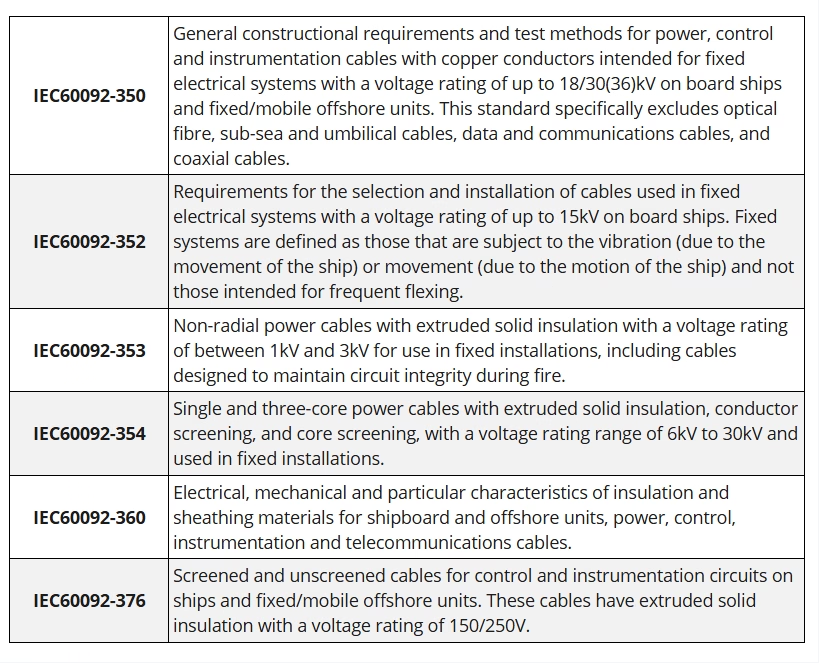
JIS C 3410 standard, formally titled “Cables and Flexible Cords for Electrical Equipment of Ships,” represents the Japanese Industrial Standard for marine electrical cables used in shipboard installations. Established and maintained by the Japanese Standards Association, this comprehensive specification was last updated in 2018 and incorporates technical requirements from multiple international standards including IEC 60092-353, IEC 60092-354, IEC 60092-360, and IEC 60092-376.
VG 95218 German Military-Grade Marine Cables

What is VG 95218 Cable?

VG 95218 represents a comprehensive German military specification governing cables and wires designed specifically for naval vessels operated by the Bundeswehr and other military organizations. Developed and maintained by the Federal Office of Bundeswehr Equipment, Information Technology and In-Service Support (Bundesamt für Ausrüstung, Informationstechnik und Nutzung der Bundeswehr, abbreviated as BAAINBw), this standard establishes stringent requirements for cable performance in the demanding maritime military environment. The specification encompasses multiple parts addressing various cable types, voltage ranges, and specialized applications, all unified by common principles of safety, reliability, and environmental resistance.