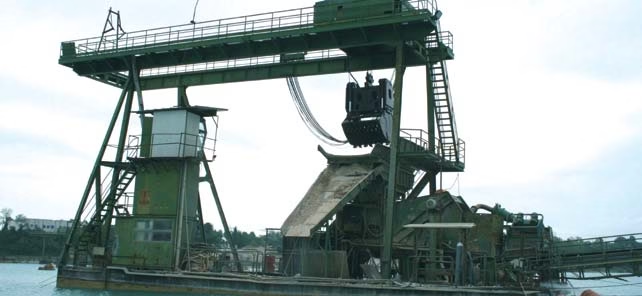
Harmonized Rubber Cable for Underwater Applications

What is JIS C 3327 Cable?

What is JIS C 3327 Cable?

JIS C 3327 represents the Japanese Industrial Standard governing the design, construction, and performance requirements for 600-volt rubber insulated flexible cables. This comprehensive standard, officially designated as “600 V Rubber Insulated Flexible Cables,” establishes rigorous specifications ensuring these cables deliver reliable electrical performance, mechanical durability, and environmental resistance across demanding industrial applications. The standard encompasses multiple cable classifications distinguished by conductor flexibility classes, insulation materials, and sheath compositions, each optimized for specific operational requirements.
H05RR-F Cable (318-TRS)

What is H05RR-F Cable (318-TRS)?

H05RR-F cable, commonly designated as 318-TRS in industrial specifications, represents a sophisticated evolution in flexible rubber-sheathed cable technology designed specifically for demanding domestic and light commercial applications. This harmonized European cable standard has emerged as the preferred solution for portable electrical equipment, combining exceptional mechanical durability with comprehensive safety compliance. According to the European Committee for Electrotechnical Standardization (CENELEC), harmonized cables like the H05RR-F ensure consistent performance and safety characteristics across all European Union member states, facilitating seamless cross-border trade and installation practices.
What is H05BN4-F Cable? Comprehensive Technical Guide to HOFR Sheath Flexible Rubber Cables for Domestic and Industrial Applications

What is H05BN4-F Cable?

H05BN4-F cable represents a specialized category of flexible rubber cables designed specifically for applications requiring exceptional heat and oil resistance combined with flame retardant properties. As part of the EN 50525-2-21 standard family for flexible cables with cross-linked elastomeric insulation, the H05BN4-F cable is engineered to meet the demanding requirements of domestic premises, commercial kitchens, and light industrial environments where cables face exposure to elevated temperatures and petroleum-based substances.
(N)TSCGECEWÖU

What is the Type (N)TSCGECEWÖU MT SUB-E PLUS Cable?

This premium submersible cable is engineered for permanent water immersion up to 300 meters depth under high mechanical stresses. The cable combines proven waterproofing technology with superior earth fault protection, making it the preferred choice for critical applications including submersible pumps, dredging machinery, floating dock infrastructure, and trailing operations in opencast mining where equipment reliability and personnel safety are paramount.
Type (N)TSCGEWÖU Submersible Mining Cable MT SUB PLUS

What is a Type (N)TSCGEWÖU Flexible energy supply Cable for immersion up to 300 m depth?

Type (N)TSCGEWÖU Cable represents the pinnacle of submersible cable engineering, specifically designed for permanent immersion in water under extreme mechanical stresses. Designated as MT SUB PLUS, this specialized medium voltage cable is engineered for underwater applications where conventional cables would fail within hours or days of submersion.
R-(N)TSCGEWOEU

What is R-(N)TSCGEWOEU Protolon (M)-R Cable W-9 High Voltage Round Reeling Cable?

The R-(N)TSCGEWOEU cable, marketed under the Protolon (M)-R and W-9 brand designations, represents the pinnacle of medium to high voltage reeling cable technology for extreme industrial applications. This sophisticated cable system is specifically engineered for fast-moving container cranes, heavy mining equipment, stackers, reclaimers, and ship unloaders where conventional medium voltage cables would fail.
Reeling & Trailing Cables for Cranes & Mining — Feichun Special Cable Blogs

DIN VDE 0250 vs BS 6708-6116 BCS 295: Comprehensive Mining Cable Standards Comparison

Mining operations worldwide demand electrical cables that can withstand extreme conditions, mechanical stress, and potentially explosive atmospheres. Two primary international standards govern flexible mining cable specifications: the German DIN VDE 0250 and the British BS 6708 series (including BS 6116 and BCS 295 specifications). Understanding the differences and correspondences between these standards is crucial for mining engineers, procurement specialists, and electrical contractors working on international projects. This comprehensive guide analyzes both standards to help you make informed decisions about cable selection for mining applications.
Reeling & Trailing Cables for Cranes & Mining — Feichun Special Cable Blogs

What Are the Differences Between the Various Cable Types in International Standards?

International mining operations require specialized cables complying with diverse regional standards including European VDE, British BS, Australian AS/NZS, and International IEC specifications. This comprehensive technical guide examines the critical differences between major international standard mining cable types, covering construction specifications, material requirements, compliance frameworks, electrical characteristics, safety requirements, and optimal applications across global mining operations in Europe, Australia, Asia, Africa, and South America.
VDE 0250

DIN VDE 0250

DIN VDE 0250
DIN-VDE-0250-812

DIN VDE 0250 Part 812 NSSHÖU Rubber Insulated Flexible Cables

DIN VDE 0250 p.812 superseded VDE 0250/03.69 §812 with a transition period ending October 31, 1985. This standard eliminated the 6kV rated voltage construction and established the current NSSHÖU specifications as an independent standard within the DIN VDE 0250 series.