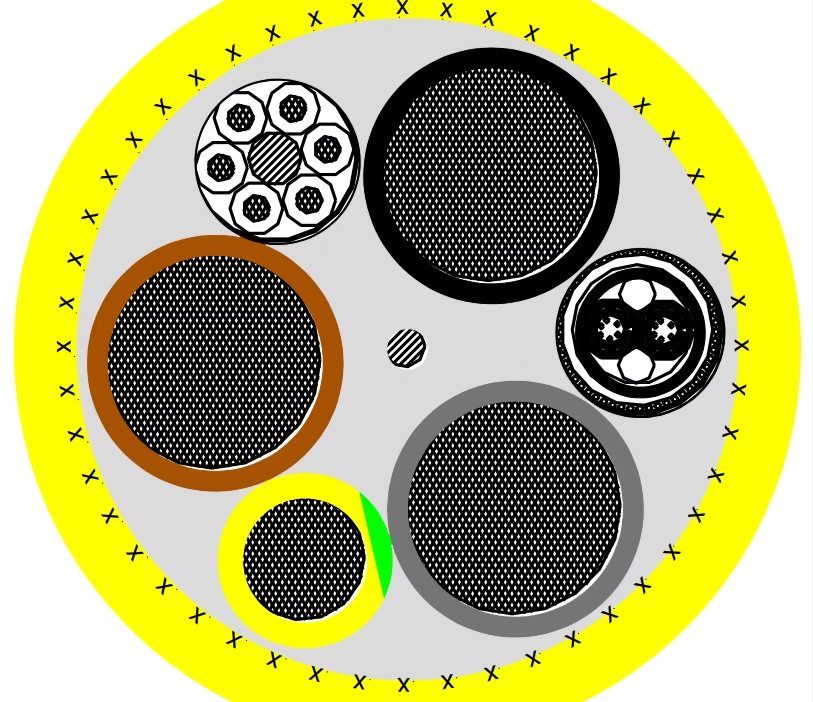
AS/NZS 1802 (Australian/New Zealand Standard 1802) establishes the technical requirements for flexible mining cables used in underground and open-pit mining operations across Australia, New Zealand, and the broader Pacific region. Type 241 within this standard designates unarmoured flexible power cables rated at 0.6/1 kV with a Class 5 copper conductor, suitable for mobile mining equipment and drag cable applications. The standard was initially published in 1993 and has been progressively updated (most recently 2019) to incorporate advances in materials science and safety requirements.
AS/NZS 1802 Type 241 employs a single-core earth architecture: the cable contains one dedicated protective earth conductor of specified cross-section, positioned at a fixed location within the cable cross-section (typically at the “6 o’clock” position relative to the three phase conductors at 12, 4, and 8 o’clock). This single-core design reflects a pragmatic engineering philosophy: the earth conductor is sized to carry fault currents, provide equipotential grounding for equipment frames, and enable protective relay operation in the event of phase-to-frame faults.
Direct Answer: Standard VDE 0.6/1kV cables are not suitable for Australian 1000V IT earthing systems. The cable will be overstressed during single-phase earth fault conditions and will likely fail, creating safety hazards and equipment damage. Australian law and engineering practice mandate 1.1/1.1kV or equivalent rated cables for this application. Using undersized cables violates workplace safety regulations and manufacturer warranties.
直接答案:标准VDE 0.6/1kV电缆不适合澳洲1000V IT接地系统。在单相接地故障条件下,电缆会受到过应力,并可能失效,造成安全隐患和设备损坏。澳洲法律和工程实践要求在这种应用中使用1.1/1.1kV或等效额定值的电缆。使用规格不足的电缆违反工作场所安全法规和制造商保修。
Why? The answer lies in how Australian systems define voltage stress during fault conditions. When a single-phase earth fault occurs on an Australian IT earthing system, the insulation of a 0.6/1kV cable experiences 1000V stress—far exceeding its 600V phase-to-earth design rating. Insulation breakdown follows within minutes.
ThyssenKrupp manufactures some of the world’s largest bulk material handling equipment, including stacker reclaimers that can handle thousands of tons of material (iron ore, coal, phosphate) daily in open-pit mining and port environments. These massive machines—often exceeding 50+ meters in height and 300+ meters in length—require electrical power in the megawatt range (5–15 MW typical for large stacker reclaimers) delivered via heavy-duty reeling cables that can withstand continuous deployment and rapid retraction.
蒂森克虏伯制造世界上一些最大的散货搬运设备,包括能够每天处理数千吨物料(铁矿石、煤炭、磷酸盐)的堆取料机,在露天采矿和港口环境中运行。这些庞大机器——通常超过50米高、300多米长——需要兆瓦级电力(典型大型堆取料机5-15兆瓦),通过能够承受连续部署和快速收回的重型卷筒电缆传输。
System Architecture: A large stacker reclaimer comprises: (1) main structure (steel boom, buckets, conveyor systems), (2) electric motors (ranging from 300 kW to several megawatts), (3) reeling drum system with cable capacity 1000+ meters, (4) high-speed gearbox and transmission system enabling 120–160 m/min travel speed. The electrical power system typically operates at 6.6kV nominal (sometimes 11kV for the largest systems), with power distribution from the mine substation to the mobile reclaimer through trailing cables that must flex continuously.
Why European 0.6/1kV cables must be upgraded to 1.1/1.1kV in Australian and New Zealand markets. IT earthing system insulation requirements, 4G95 conductor specification, 5600–6470 kg/km total weight, 3648 kg/km copper content, 260–295A ampacity, 50.8–58.0mm outer diameter, port crane and mining reeling applications, VDE 0250 and AS/NZS standard compliance, procurement verification guide.
Australia’s mining industry operates under some of the world’s most demanding conditions, requiring specialised electrical infrastructure that meets rigorous safety and performance standards. As the largest supplier of medium voltage cables in Australia, Nexans Olex has an extensive range of cables from 3.8/6.6kV to 19/33kV manufactured in Victoria to Australian Standard AS/NZS 1429.1. This technical guide examines both fixed installation XLPE cables and flexible Type 275 mining cables for applications in underground and surface mining operations.
澳大利亚采矿业在全球最严苛的条件下运营,需要符合严格安全和性能标准的专业电气基础设施。本技术指南对比分析固定安装XLPE电缆与柔性Type 275矿用电缆在地下及露天采矿中的应用。
Type 450 cables are Australian-standard reeling and trailing cables designed specifically for mining applications. Defined under AS/NZS 1802 (formerly AS 1802), these cables feature robust construction capable of withstanding the harsh conditions of underground and surface mining environments. The “Type 450” designation indicates cables rated for 450/750V operation in mining applications.
In the global cable manufacturing industry, voltage ratings represent a fundamental specification that determines a cable’s safe operating parameters and application suitability. When examining low-voltage mining cables, a notable discrepancy emerges between international standards and those used in Australia and New Zealand. While the International Electrotechnical Commission (IEC) designates low-voltage power cables with a rating of 0.6/1kV under IEC 60502-1, Australian mining standards specify a 1.1/1.1kV rating for equivalent applications. This distinction is not arbitrary but reflects careful consideration of mining-specific operational requirements, safety margins, and the unique characteristics of Australia’s mining infrastructure.
在全球电缆制造行业中,电压等级是决定电缆安全运行参数和应用适用性的基本规格。在研究低压矿用电缆时,国际标准与澳大利亚和新西兰使用的标准之间存在明显差异。国际电工委员会(IEC)根据IEC 60502-1标准将低压电力电缆的额定值指定为0.6/1kV,而澳大利亚矿用标准对于同等应用规定了1.1/1.1kV的额定值。这种区别并非随意,而是反映了对矿山特定运行要求、安全裕度以及澳大利亚矿业基础设施独特特征的仔细考虑。
In surface mining and general underground mining operations excluding coal, heavy mobile equipment such as draglines, electric shovels, and drilling rigs rely on reeling cable systems to maintain continuous power delivery during movement and repositioning. These reeling drum applications subject cables to severe mechanical stresses including crushing forces as cable layers compress against each other during winding operations. The selection between Type 440 and Type 441 cables manufactured to AS/NZS 2802 standards represents a critical engineering decision that directly impacts equipment reliability, operational safety, and maintenance costs.
在不包括煤炭的露天采矿和一般地下采矿作业中,挖掘机、电铲和钻机等重型移动设备依赖卷取电缆系统在移动和重新定位期间保持连续供电。
Underground coal mining operations in Australia present unique electrical safety challenges that require specialized cable systems and protection strategies. The presence of methane gas, coal dust, confined spaces, and high humidity creates an environment where electrical faults can potentially trigger catastrophic explosions. To mitigate these risks, Australian coal mines employ earth fault limitation systems that restrict fault currents to very low levels, typically 5 amperes (5A) for systems below 4,000 volts.
澳大利亚地下煤矿作业面临独特的电气安全挑战,需要专门的电缆系统和保护策略。甲烷气体、煤尘、狭窄空间和高湿度的存在造就了一个电气故障可能引发灾难性爆炸的环境。为降低这些风险,澳大利亚煤矿采用接地故障限制系统,将故障电流限制在非常低的水平,对于4000伏以下的系统,通常为5安培(5A)。
The operational profile of handheld drilling equipment demands cables that can withstand millions of flex cycles without mechanical or electrical failure. A handheld rock drill or roof bolter may be repositioned dozens of times per hour during active operation, with each repositioning imposing multiple flex cycles on the trailing cable. Over the lifetime of the cable, this translates to extreme flex cycle demands that far exceed those imposed on cables serving more stationary equipment. The AS/NZS 1802:2003 standard recognizes this requirement by specifying Type 209 cables as “more suitable as a trailing cable rather than for reeling” and noting that “smaller cables are used for drills and hand held tools and equipment.”[9] (手持钻孔设备的操作特性要求电缆能够承受数百万次弯曲循环而不发生机械或电气故障)
Type 241 mining cables represent a specialized category of flexible power cables designed for demanding underground mining applications, continuous miner feeders, and pump supply systems operating at voltages from 1.1kV to 11kV. These cables are manufactured to comply with AS/NZS 1802:2003 standards and incorporate sophisticated screening systems that balance electrical performance, mechanical flexibility, and safety requirements.[1] (241型矿用电缆是专为严苛的地下采矿应用、连续采矿机馈线和泵供电系统设计的柔性电力电缆,工作电压为1.1kV至11kV)
Understanding production lead times versus stock availability is critical for mining operations planning equipment deployment and maintenance schedules. Type 455 mining cables represent specialized power transmission solutions designed for reeling and trailing applications in demanding mining environments. This analysis examines typical production timeframes for Type 455 22kV configurations compared to immediate stock availability options.
了解生产交货期与库存可用性对于矿山运营规划设备部署和维护计划至关重要。455型矿用电缆是专为矿山环境中的卷筒和拖拽应用设计的特种动力传输解决方案。本分析比较了455型22kV电缆的典型生产时间与即时库存选项。
NSSHÖU cable, NSSHOU cable, NSHÖU cable, NSHOU cable, NSSCHOU cable, NSHTÖU cable, NTSCGEWÖU cable, NTSCGEWOU cable, NTMCGEWÖU cable, N3GHSSYCY cable, N3GHSSHCH cable,Type 61 cable, Type 63 cable, Type 611 cable, Type 622 cable, Type 633 cable, Type 66 cable,Type 240 cable, Type 241 cable, Type 245 cable, Type 450 cable, Type 455 cable, Type 260 cable, Type 275 cable, Type 409 cable, Type 440 cable, Type 441 cable,
BS 6708 TYPE 7, 7M, 7S, and 11 are British Standard flexible trailing cables designed specifically for underground mining operations. These cables are suitable for both fixed installation and flexible operation as power supply cables to motors, distribution boards, and similar equipment in coal mining environments.
Underground mining electrical installations present extraordinary challenges distinguishing them from conventional industrial power distribution applications. The confined space constraints of underground workings limit access for cable installation and maintenance operations. The presence of moisture, whether from groundwater infiltration, ventilation condensation, or wet mining processes, creates persistent electrical insulation challenges. The mechanical stress imposed by coal cutting equipment, continuous miner operations, and mobile machinery movements subjects cables to continuous flexing, abrasion, and impact loading that would rapidly destroy standard industrial cables. The potential presence of explosive atmospheres in coal mines necessitates stringent electrical safety requirements preventing ignition sources. According to operational experience documented by Australian mining operations specialists, cable failures represent one of the leading causes of unplanned production interruptions in underground mining operations, with properly specified and installed cable systems demonstrating service lives of five to eight years compared to six to eighteen months for inadequately specified alternatives.
PROTOMONT EMV-FC (N)SSHCOEU represents a highly specialized category of screened, low-voltage flexible cables engineered specifically for motor power supply applications in variable frequency converter (VFC) controlled drives within the mining industry, construction sites, and material handling operations. This comprehensive technical analysis examines the unique electromagnetic compatibility (EMC) requirements, construction methodologies, operational parameters, and application-specific considerations that distinguish these cables from conventional mining power cables. Manufactured by Anhui Feichun Special Cable Co., Ltd., these cables address the critical challenges of electromagnetic interference, mechanical stress resistance, and submersible operation that characterize modern automated mining equipment powered by frequency converter technology.
ROTOLON(M) R-(N)TSCGEWOEU cable designation follows the standardized German nomenclature system established under DIN VDE 0250 Part 813, which specifically addresses medium voltage reeling cables for mining and heavy industrial applications. The designation breaks down as follows:
(N) – Indicates the presence of a concentric conductor arrangement with integrated earth conductors
T – Tinned copper conductors for enhanced corrosion resistance
S – Semiconductive screening layers for electric field control
C – Cradle separator core arrangement for structural integrity
G – EPR (Ethylene Propylene Rubber) insulation compound
E – EPR-based inner sheath
W – Anti-torsion woven braid reinforcement
O – Oil-resistant outer sheath
E – Enhanced elastomer outer sheath material
U – Reinforced construction for extreme mechanical loads
According to industry specifications from Reeling Cable, these cables are rated for voltage ranges from 3.6/6 kV up to 18/30 kV (with some variants reaching 20/35 kV), making them suitable for a comprehensive range of mining equipment power requirements.
Type 7 mining cables represent a critical category of flexible trailing cables designed specifically for the demanding conditions encountered in underground coal mining operations. These cables conform to the rigorous requirements established by British Standard BS 6708, which has become an internationally recognized benchmark for mining cable safety and performance. The standard was developed through decades of mining industry experience and addresses the unique electrical and mechanical challenges present in potentially explosive underground environments.
According to BSI Knowledge, BS 6708 specifications establish comprehensive requirements for flexible cables used at mines and quarries, ensuring that these critical power transmission components meet stringent safety and performance criteria. The Type 7 designation specifically identifies non-armoured cables with individually metallic screened cores rated at 640/1100V, engineered for both fixed installation and flexible operation in coal face cutting equipment.
TYPE 455 mining cables represent an optimized category of Class 2 heavy-duty elastomer-sheathed cables specifically engineered for applications demanding minimal cable diameter and reduced weight per meter while maintaining comprehensive electrical protection. Manufactured in strict accordance with AS/NZS 2802:2000 standards, these cables are designed for voltage ratings from 1.1 kilovolts to 11 kilovolts, with a construction philosophy emphasizing reduced insulation thickness and elimination of cradle separators to achieve lower overall mass and diameter. The incorporation of two earth conductors and one pilot conductor positioned in outer interstices, combined with EPR insulation and semiconductive screening systems, makes these cables particularly well-suited for stacker reclaimer installations, dragline operations, and other slow reeling applications where cable weight directly impacts equipment performance and operational efficiency. The design represents a strategic balance between electrical performance requirements and mechanical handling considerations, offering mining operations a purpose-built solution for specific application scenarios where traditional heavier cable constructions would impose unacceptable operational constraints.
TYPE 450 cables occupy a critical position within this standard as Class 2 cables, distinguished by their incorporation of semiconductive screening systems essential for medium to high voltage applications. The designation “Type 450” refers to the cable’s construction classification within AS/NZS 2802:2000, with the numeric suffix (450.3, 450.6, 450.11, 450.22, 450.33) indicating the voltage rating in kilovolts. These cables are specifically engineered for slow reeling and trailing applications where equipment such as draglines, excavators, and wharf cranes requires flexible power connections that can withstand thousands of reeling cycles while maintaining electrical integrity and mechanical reliability.
TYPE 412 1.1kV mining cable represents a specialized category of heavy-duty armoured power cable engineered specifically for demanding mining operations where maximum mechanical protection and high impact resistance are paramount. Manufactured in strict compliance with the AS/NZS 2802:2000 standard, these cables serve as feeder conductors in applications where equipment damage from external impacts, crushing forces, and severe environmental conditions poses significant operational risks.
The engineering sophistication of TYPE 409 cables reflects decades of development in mining cable technology, incorporating semiconductive screening systems, central cradle separators, and interstitial pilot conductors that work together to ensure safe and reliable operation in extreme environmental conditions. The cables must withstand extraordinary mechanical stresses, continuous flexing, abrasion from dust and debris, exposure to oils and chemicals, ultraviolet radiation, and temperature extremes while maintaining electrical integrity and personnel safety.
TYPE 241 mining cables represent a specialized category of elastomer-insulated, semiconductive-screened power cables specifically engineered for the demanding operational conditions encountered in underground coal mining environments.
TYPE 275 mining cable represents a specialized category of flexible reeling cables engineered specifically for the demanding requirements of underground coal mining operations and surface mining applications. Manufactured in strict accordance with AS/NZS 1802:2003 and AS/NZS 2802:2000 standards, this cable is designed to deliver reliable power transmission to shuttle cars, mobile pumping equipment, and other heavy-duty mining machinery subjected to continuous mechanical stress and harsh environmental conditions.
TYPE 260 mining cable represents a pinnacle of engineering excellence in the domain of heavy-duty electrical power transmission for mining operations. This pliable armoured cable, designed in strict accordance with Australian and New Zealand standards AS/NZS 1802:2003 and AS/NZS 2802:2000, serves as a critical feeder cable in demanding mining environments where exceptional impact resistance and mechanical durability are paramount operational requirements.


![The operational profile of handheld drilling equipment demands cables that can withstand millions of flex cycles without mechanical or electrical failure. A handheld rock drill or roof bolter may be repositioned dozens of times per hour during active operation, with each repositioning imposing multiple flex cycles on the trailing cable. Over the lifetime of the cable, this translates to extreme flex cycle demands that far exceed those imposed on cables serving more stationary equipment. The AS/NZS 1802:2003 standard recognizes this requirement by specifying Type 209 cables as "more suitable as a trailing cable rather than for reeling" and noting that "smaller cables are used for drills and hand held tools and equipment."[9] (手持钻孔设备的操作特性要求电缆能够承受数百万次弯曲循环而不发生机械或电气故障)](https://feichuncables.com/blog/wp-content/uploads/image-663.avif "Hand-Held Borers: Why is Type 209 (Individually Screened) Mandatory for Handheld Drilling Equipment Instead of Type 275? 15")
![Type 241 mining cables represent a specialized category of flexible power cables designed for demanding underground mining applications, continuous miner feeders, and pump supply systems operating at voltages from 1.1kV to 11kV. These cables are manufactured to comply with AS/NZS 1802:2003 standards and incorporate sophisticated screening systems that balance electrical performance, mechanical flexibility, and safety requirements.[1] (241型矿用电缆是专为严苛的地下采矿应用、连续采矿机馈线和泵供电系统设计的柔性电力电缆,工作电压为1.1kV至11kV)](https://feichuncables.com/blog/wp-content/uploads/image-662.avif "Composite Screen: How does the copper/nylon braid screen in Type 241 cables handle fault currents compared to a full metallic screen? 16")