DIN VDE 0250 Mining Cable

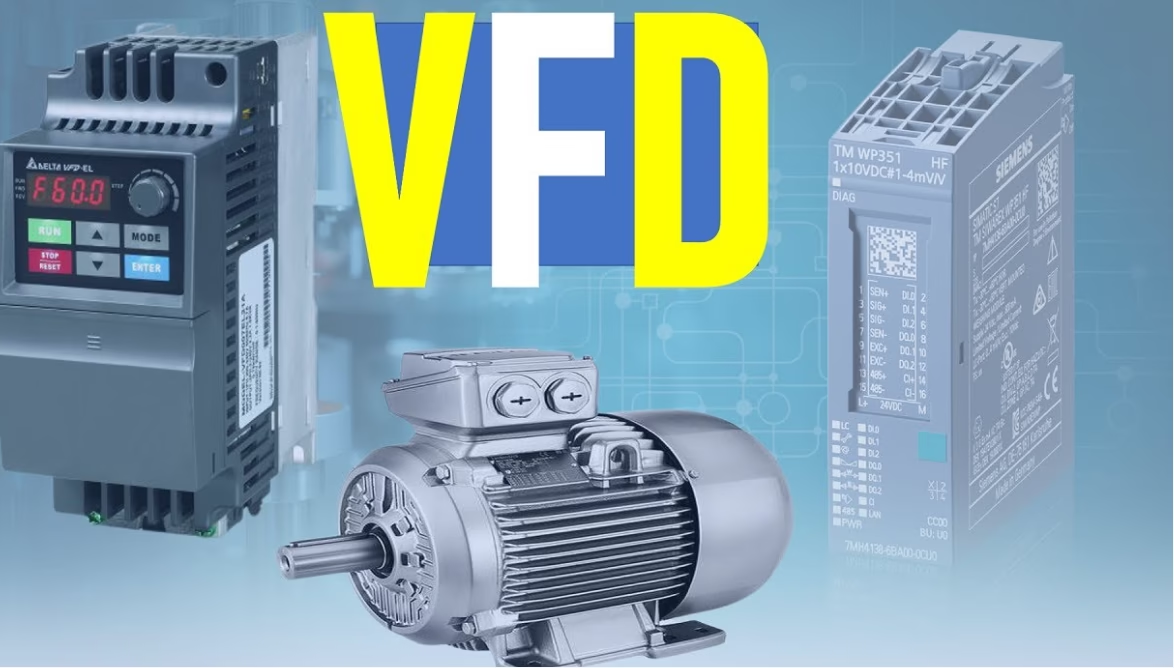
In the industrial drive systems community, a troubling pattern has emerged over the past 15–20 years: motors operating with variable frequency drives (VFDs) are failing prematurely at rates far exceeding what was experienced with motors running on direct line power. The most common failure mode is not overheating, not insulation breakdown, but rather bearing pitting—a surface degradation of the rolling elements and races in motor bearings that develops progressively until the bearing becomes non-functional. Engineers initially thought this was merely a cable size issue or a thermal management problem. More careful investigation revealed the true cause: electromagnetic phenomena unique to high-frequency PWM switching were creating conditions that slowly eroded bearing surfaces through electrical discharge machining (EDM). The solution required not larger cables or better cooling, but specifically engineered cables with symmetric conductor geometry and dual shielding designed to control the electromagnetic environment inside the motor. Understanding this problem and its solution requires learning about electromagnetic phenomena that many motor engineers were never formally taught—the behavior of common-mode voltage, shaft voltage, and capacitive coupling in high-frequency environments. This is not obscure physics for academics; it is practical engineering knowledge that determines whether motors survive their design life or fail prematurely after 2–3 years of operation.

VFD Motor Bearings: Why do Siemens variable frequency drives require (N)3GHSSYCY 3×150+3×25 to prevent bearing pitting?

In the industrial drive systems community, a troubling pattern has emerged over the past 15–20 years: motors operating with variable frequency drives (VFDs) are failing prematurely at rates far exceeding what was experienced with motors running on direct line power. The most common failure mode is not overheating, not insulation breakdown, but rather bearing pitting—a surface degradation of the rolling elements and races in motor bearings that develops progressively until the bearing becomes non-functional. Engineers initially thought this was merely a cable size issue or a thermal management problem. More careful investigation revealed the true cause: electromagnetic phenomena unique to high-frequency PWM switching were creating conditions that slowly eroded bearing surfaces through electrical discharge machining (EDM). The solution required not larger cables or better cooling, but specifically engineered cables with symmetric conductor geometry and dual shielding designed to control the electromagnetic environment inside the motor. Understanding this problem and its solution requires learning about electromagnetic phenomena that many motor engineers were never formally taught—the behavior of common-mode voltage, shaft voltage, and capacitive coupling in high-frequency environments. This is not obscure physics for academics; it is practical engineering knowledge that determines whether motors survive their design life or fail prematurely after 2–3 years of operation.
The straightforward answer to whether (N)TCEWÖU 3x95 cables can survive the constant ±100°/m torsional stress inside a wind tower nacelle is: yes, absolutely—this cable type is specifically engineered for exactly this application and has demonstrated performance exceeding two million torsion cycles without failure. The (N)TCEWÖU designation itself is not arbitrary—it explicitly identifies cables designed for wind turbine applications where continuous twisting from the yaw system is the defining operating condition. This cable type achieves torsion tolerance through a fundamentally different design philosophy than conventional cables. Rather than attempting to rigidly prevent any twisting through mechanical constraint, the (N)TCEWÖU accomplishes tolerance through materials science and cable construction that allows controlled slippage of conductors during rotation, distributing torsional stress evenly across all cable components and preventing the stress concentration that destroys conventional cables. Understanding how this engineering works requires studying the physics of torsion, examining why conventional cables fail under these conditions, and learning how (N)TCEWÖU's special construction mitigates each failure mechanism.

Wind Turbine Drip Loops: Can (N)TCEWÖU 3×95 survive the constant +/- 100°/m torsion inside a wind tower nacelle?

The straightforward answer to whether (N)TCEWÖU 3×95 cables can survive the constant ±100°/m torsional stress inside a wind tower nacelle is: yes, absolutely—this cable type is specifically engineered for exactly this application and has demonstrated performance exceeding two million torsion cycles without failure. The (N)TCEWÖU designation itself is not arbitrary—it explicitly identifies cables designed for wind turbine applications where continuous twisting from the yaw system is the defining operating condition. This cable type achieves torsion tolerance through a fundamentally different design philosophy than conventional cables. Rather than attempting to rigidly prevent any twisting through mechanical constraint, the (N)TCEWÖU accomplishes tolerance through materials science and cable construction that allows controlled slippage of conductors during rotation, distributing torsional stress evenly across all cable components and preventing the stress concentration that destroys conventional cables. Understanding how this engineering works requires studying the physics of torsion, examining why conventional cables fail under these conditions, and learning how (N)TCEWÖU’s special construction mitigates each failure mechanism.
The straightforward answer to whether flat (N)TSFLCGEWÖU cables are superior to round cables for overhead crane festoon systems is: yes, absolutely—flat cables are genuinely better for festoon service in nearly every measurable way. The flat architecture delivers real engineering advantages in space efficiency, thermal performance, and mechanical reliability that address fundamental limitations of round cables in repetitive reeling applications. However, there is a critical and commonly overlooked distinction that separates successful flat cable installations from catastrophic failures: the extremely heavy 4x185 flat cable cannot be installed on standard C-track systems—it absolutely requires upgrade to heavy-duty I-beam or H-beam track systems rated for the cable's mass and tension. Many engineers and crane manufacturers have attempted the false economy of installing maximum-capacity flat cables on minimum-weight track systems, resulting in track deformation, trolley wheel failure, and serious safety hazards. Understanding why flat cables are superior and understanding why proper system specification is essential for safe operation are two sides of the same engineering decision.

Overhead Crane Festoons: Is flat (N)TSFLCGEWÖU 4×185 better than round cable for high-speed trolleys?

The straightforward answer to whether flat (N)TSFLCGEWÖU cables are superior to round cables for overhead crane festoon systems is: yes, absolutely—flat cables are genuinely better for festoon service in nearly every measurable way. The flat architecture delivers real engineering advantages in space efficiency, thermal performance, and mechanical reliability that address fundamental limitations of round cables in repetitive reeling applications. However, there is a critical and commonly overlooked distinction that separates successful flat cable installations from catastrophic failures: the extremely heavy 4×185 flat cable cannot be installed on standard C-track systems—it absolutely requires upgrade to heavy-duty I-beam or H-beam track systems rated for the cable’s mass and tension. Many engineers and crane manufacturers have attempted the false economy of installing maximum-capacity flat cables on minimum-weight track systems, resulting in track deformation, trolley wheel failure, and serious safety hazards. Understanding why flat cables are superior and understanding why proper system specification is essential for safe operation are two sides of the same engineering decision.
The maximum pulling tension for NSHTÖU-J 5G16 0.6/1kV cable is absolutely limited to 1,200 newtons of axial tensile load under the VDE 0250-814 standard specification. This maximum is calculated as 15 N/mm² tensile stress multiplied by the total cross-sectional area of the five main copper conductors (five cores × 16 mm² = 80 mm² total), yielding 15 × 80 = 1,200 newtons. This is not a casual guideline or general recommendation—it is the absolute mechanical failure point beyond which the copper conductors begin plastic deformation and eventual rupture. For practical field deployment, however, the safe operating pulling tension should be substantially lower, typically in the range of 600–900 newtons depending on the specific installation scenario, representing a safety factor of 1.3–2.0 applied against the 1,200 newton absolute maximum. The reasoning is straightforward: you never want to operate consistently at the edge of mechanical failure, where even small unanticipated additional loads could cause catastrophic failure. Instead, you design systems to operate comfortably within safe margins where occasional transient overloads can be tolerated without damage.

Maximum Pulling Tension: What is the exact maximum safe pulling load and tensile strength specification for NSHTÖU-J 5G16 0.6/1kV low-voltage reeling cables in heavy machinery and port crane applications?

The maximum pulling tension for NSHTÖU-J 5G16 0.6/1kV cable is absolutely limited to 1,200 newtons of axial tensile load under the VDE 0250-814 standard specification. This maximum is calculated as 15 N/mm² tensile stress multiplied by the total cross-sectional area of the five main copper conductors (five cores × 16 mm² = 80 mm² total), yielding 15 × 80 = 1,200 newtons. This is not a casual guideline or general recommendation—it is the absolute mechanical failure point beyond which the copper conductors begin plastic deformation and eventual rupture. For practical field deployment, however, the safe operating pulling tension should be substantially lower, typically in the range of 600–900 newtons depending on the specific installation scenario, representing a safety factor of 1.3–2.0 applied against the 1,200 newton absolute maximum. The reasoning is straightforward: you never want to operate consistently at the edge of mechanical failure, where even small unanticipated additional loads could cause catastrophic failure. Instead, you design systems to operate comfortably within safe margins where occasional transient overloads can be tolerated without damage.
The shield transfer impedance (STI) for (N)TSCGECEWÖU 12/20kV cables with individual concentric copper screens is approximately 0.005–0.012 Ω/m at 50/60 Hz power frequency, representing the electrical impedance that coupling currents encounter as they attempt to penetrate the copper screen and reach the main conductor. At higher frequencies relevant to VFD variable switching (around 10 kHz), the STI increases slightly to approximately 0.008–0.015 Ω/m due to skin-effect limitations in the copper conductors. At even higher frequencies extending into the megahertz range (1–10 MHz) where harmonic emissions and EMI are most problematic, the STI rises further to approximately 0.02–0.08 Ω/m depending on the copper screen material properties and frequency-dependent conductor resistance. The shielding effectiveness, measured as the attenuation in decibels (dB) of external electromagnetic fields trying to couple energy into the cable conductors, is typically 60–80 dB at 100 kHz and remains above 40 dB even at 1 MHz, demonstrating excellent EMI rejection across the industrial frequency range. These metrics establish that individual concentric copper screens provide substantially superior EMC performance compared to traditional overall braided screens, particularly in reducing conducted emissions in VFD-driven machinery where rapid voltage switching and harmonic currents create severe electromagnetic stress on nearby control cables and sensitive electronic systems.

Shield Transfer Impedance: What are the exact EMC performance parameters and screening effectiveness metrics for (N)TSCGECEWÖU 12/20kV individually screened medium-voltage flexible cables in industrial and VFD applications? 

The shield transfer impedance (STI) for (N)TSCGECEWÖU 12/20kV cables with individual concentric copper screens is approximately 0.005–0.012 Ω/m at 50/60 Hz power frequency, representing the electrical impedance that coupling currents encounter as they attempt to penetrate the copper screen and reach the main conductor. At higher frequencies relevant to VFD variable switching (around 10 kHz), the STI increases slightly to approximately 0.008–0.015 Ω/m due to skin-effect limitations in the copper conductors. At even higher frequencies extending into the megahertz range (1–10 MHz) where harmonic emissions and EMI are most problematic, the STI rises further to approximately 0.02–0.08 Ω/m depending on the copper screen material properties and frequency-dependent conductor resistance. The shielding effectiveness, measured as the attenuation in decibels (dB) of external electromagnetic fields trying to couple energy into the cable conductors, is typically 60–80 dB at 100 kHz and remains above 40 dB even at 1 MHz, demonstrating excellent EMI rejection across the industrial frequency range. These metrics establish that individual concentric copper screens provide substantially superior EMC performance compared to traditional overall braided screens, particularly in reducing conducted emissions in VFD-driven machinery where rapid voltage switching and harmonic currents create severe electromagnetic stress on nearby control cables and sensitive electronic systems.
Type SHD-GC 3/C #1 AWG 8kV trailing cable is approximately 0.410 Ohms/km at 20°C reference temperature for a single conductor, calculated from the copper's material resistivity combined with the #1 AWG conductor cross-section (approximately 42.4 mm² or 53,486 circular mils). This resistance value increases to approximately 0.495 Ohms/km at 90°C operating temperature due to copper's positive temperature coefficient of resistance. For a complete three-phase circuit using this cable type, the total circuit resistance including all three phase conductors but excluding the ground return path is approximately 0.410 Ohms/km at 20°C or 0.495 Ohms/km at 90°C. When operating a mine shovel or dragline drawing 150–160 amperes over a typical 1,000-meter (1 km) cable run from the mine substation to the equipment, the three-phase voltage drop across this cable is approximately 55–70 volts at the reference condition, representing a drop of roughly 0.75–1.0% from the 8,000-volt nominal supply. This voltage drop magnitude is acceptable for most mining equipment applications and remains within typical power system design standards that permit up to 2–3% voltage drop on secondary feeder circuits. The physical mechanism behind this resistance is the collision of free electrons within the copper lattice structure, where random thermal motion of atoms creates an effective "friction" that opposes electron flow, converting electrical energy into heat at a rate proportional to I²R.

Voltage Drop Calculation: What is the DC resistance (Ohms/km) for Type SHD-GC 3/C #1 AWG 8kV trailing cable? 

Type SHD-GC 3/C #1 AWG 8kV trailing cable is approximately 0.410 Ohms/km at 20°C reference temperature for a single conductor, calculated from the copper’s material resistivity combined with the #1 AWG conductor cross-section (approximately 42.4 mm² or 53,486 circular mils). This resistance value increases to approximately 0.495 Ohms/km at 90°C operating temperature due to copper’s positive temperature coefficient of resistance. For a complete three-phase circuit using this cable type, the total circuit resistance including all three phase conductors but excluding the ground return path is approximately 0.410 Ohms/km at 20°C or 0.495 Ohms/km at 90°C. When operating a mine shovel or dragline drawing 150–160 amperes over a typical 1,000-meter (1 km) cable run from the mine substation to the equipment, the three-phase voltage drop across this cable is approximately 55–70 volts at the reference condition, representing a drop of roughly 0.75–1.0% from the 8,000-volt nominal supply. This voltage drop magnitude is acceptable for most mining equipment applications and remains within typical power system design standards that permit up to 2–3% voltage drop on secondary feeder circuits. The physical mechanism behind this resistance is the collision of free electrons within the copper lattice structure, where random thermal motion of atoms creates an effective “friction” that opposes electron flow, converting electrical energy into heat at a rate proportional to I²R.
The 1-second short-circuit current rating for an NSHTÖU-J 4G95 0.6/1kV low-voltage heavy-duty reeling cable is approximately 8,500 to 10,200 amperes when the cable is new and at reference condition (20°C conductor temperature, single conductor in free air, no mechanical stress or aging degradation).

Short-Circuit Rating: What is the 1-second short-circuit current for NSHTÖU-J 4G95 0.6/1kV heavy-duty reeling cable? 

The 1-second short-circuit current rating for an NSHTÖU-J 4G95 0.6/1kV low-voltage heavy-duty reeling cable is approximately 8,500 to 10,200 amperes when the cable is new and at reference condition (20°C conductor temperature, single conductor in free air, no mechanical stress or aging degradation).
The continuous current carrying capacity of an (N)TSCGEWÖU 3x50+3x25/3 12/20kV cable wound in three compacted layers on a standard industrial reel is approximately 85 to 110 amperes depending on ambient temperature, mechanical stress conditions, and reel cooling characteristics. This represents a significant reduction from the cable's reference rating of 202 amperes, which is established under ideal laboratory conditions (30°C ambient, single conductor run in free air, no mechanical tension or twisting). The dramatic derating from 202 A to 85–110 A reflects the thermal constraint imposed by the compact three-layer geometry, where the inner layers of wound cable are thermally insulated by outer layers, preventing efficient dissipation of I²R resistive losses to the surrounding environment. The cable features three 50 mm² Class 2 stranded tinned copper main power conductors and a symmetrical 3×25 mm² grounding conductor architecture (the "3+3" design), weighing approximately 1,850 kg/km of copper content and 3,550–3,650 kg/km total weight, with proven torsional twist resistance to ±100°/m and maximum tensile load capability of 3,000 newtons per phase conductor.

Derating Factors: Current carrying capacity of (N)TSCGEWÖU 3×50+3×25/3 12/20kV wound in 3 layers on a reel

The continuous current carrying capacity of an (N)TSCGEWÖU 3×50+3×25/3 12/20kV cable wound in three compacted layers on a standard industrial reel is approximately 85 to 110 amperes depending on ambient temperature, mechanical stress conditions, and reel cooling characteristics. This represents a significant reduction from the cable’s reference rating of 202 amperes, which is established under ideal laboratory conditions (30°C ambient, single conductor run in free air, no mechanical tension or twisting). The dramatic derating from 202 A to 85–110 A reflects the thermal constraint imposed by the compact three-layer geometry, where the inner layers of wound cable are thermally insulated by outer layers, preventing efficient dissipation of I²R resistive losses to the surrounding environment. The cable features three 50 mm² Class 2 stranded tinned copper main power conductors and a symmetrical 3×25 mm² grounding conductor architecture (the “3+3” design), weighing approximately 1,850 kg/km of copper content and 3,550–3,650 kg/km total weight, with proven torsional twist resistance to ±100°/m and maximum tensile load capability of 3,000 newtons per phase conductor.
(N)TSCGEWÖU 3x240+3x120/3 6/10kV ultra-large medium-voltage reeling cable weighs approximately 12,100 kg per kilometer (approximately 8,100 lbs per 1,000 feet), with the copper conductor content comprising approximately 8,064 kg/km of this total weight. The remaining approximately 4,036 kg/km (approximately 33.4% of total weight) consists of insulation materials (EPR), protective layers (bedding material, anti-torsion braid reinforcement), inner protective jacket, and the outer rubber sheath material. This extreme weight—roughly equivalent to a fully-loaded large truck per kilometer of cable—represents the cumulative consequence of the cable's enormous conductor cross-sections: three main phase conductors of 240 mm² each (totaling 720 mm² of copper for power carrying) plus three split earth conductors of 120 mm² each (totaling 360 mm² additional copper for grounding and load distribution). The 12,100 kg/km specification establishes the cable as one of the world's heaviest industrial power cables, comparable in weight only to cables serving ultra-massive applications such as deep-water offshore drilling umbilicals, gigantic bucket-wheel excavators, or electrified super-heavy mining draglines. Understanding this weight is not an academic exercise but rather a critical factor for project managers, procurement engineers, and logistics specialists, because the extreme weight directly determines shipping container capacity, handling equipment requirements at origin and destination ports, reel design specifications, and the total cost of ownership including transportation costs that can exceed 20–30% of the cable's material cost.

How Much Does (N)TSCGEWÖU 3×240+3×120/3 6/10kV Flexible Cable Weigh Per Kilometer?

(N)TSCGEWÖU 3×240+3×120/3 6/10kV ultra-large medium-voltage reeling cable weighs approximately 12,100 kg per kilometer (approximately 8,100 lbs per 1,000 feet), with the copper conductor content comprising approximately 8,064 kg/km of this total weight. The remaining approximately 4,036 kg/km (approximately 33.4% of total weight) consists of insulation materials (EPR), protective layers (bedding material, anti-torsion braid reinforcement), inner protective jacket, and the outer rubber sheath material. This extreme weight—roughly equivalent to a fully-loaded large truck per kilometer of cable—represents the cumulative consequence of the cable’s enormous conductor cross-sections: three main phase conductors of 240 mm² each (totaling 720 mm² of copper for power carrying) plus three split earth conductors of 120 mm² each (totaling 360 mm² additional copper for grounding and load distribution). The 12,100 kg/km specification establishes the cable as one of the world’s heaviest industrial power cables, comparable in weight only to cables serving ultra-massive applications such as deep-water offshore drilling umbilicals, gigantic bucket-wheel excavators, or electrified super-heavy mining draglines. Understanding this weight is not an academic exercise but rather a critical factor for project managers, procurement engineers, and logistics specialists, because the extreme weight directly determines shipping container capacity, handling equipment requirements at origin and destination ports, reel design specifications, and the total cost of ownership including transportation costs that can exceed 20–30% of the cable’s material cost.
(N)TSCGEWÖU 3x185+3x35/3 6/10kV cables in large-scale mining operations, the outer diameter is not merely a specification number—it is a critical interface parameter determining whether the cable fits your reel system, passes through underground shaft collars, mates with terminal connectors, and allows proper tension management during deployment and retrieval.

What is the Exact Outer Diameter of (N)TSCGEWÖU 3×185+3×35/3 6/10kV Reeling Cable?

(N)TSCGEWÖU 3×185+3×35/3 6/10kV cables in large-scale mining operations, the outer diameter is not merely a specification number—it is a critical interface parameter determining whether the cable fits your reel system, passes through underground shaft collars, mates with terminal connectors, and allows proper tension management during deployment and retrieval.
Prysmian PROTOLON (SM) 3x150+3x25/3 6/10kV is a specialized high-voltage reeling cable engineered for environments where mechanical stress, torsional loading, and cable flexibility are as critical as electrical performance. Unlike standard medium-voltage power cables, PROTOLON cables are designed for continuous reeling and unreeling—the cable must bend, twist, and flex thousands of times over their service life without insulation cracking, conductor breakage, or protective conductor separation.

Cross-Reference Guide: Exact Equivalents for Prysmian PROTOLON (SM) 3×150+3×25/3 6/10kV

Prysmian PROTOLON (SM) 3×150+3×25/3 6/10kV is a specialized high-voltage reeling cable engineered for environments where mechanical stress, torsional loading, and cable flexibility are as critical as electrical performance. Unlike standard medium-voltage power cables, PROTOLON cables are designed for continuous reeling and unreeling—the cable must bend, twist, and flex thousands of times over their service life without insulation cracking, conductor breakage, or protective conductor separation.
The corkscrew effect, also known as birdcaging or helical twist deformation, represents one of the most catastrophic failure modes in medium-voltage reeling cables. It occurs when a cable develops a permanent spiral distortion that resembles the twisted form of a corkscrew or the expanded form of a wire cage — hence the colorful industrial terminology. Unlike simple insulation cracking or conductor breakage, which may occur at a localized point, corkscrew deformation is a systemic problem that compromises the cable's structural integrity across its entire length or in extended sections. To understand what causes this failure, we must first recognize that a cable is not a monolithic object but rather a carefully engineered composite structure with multiple layers of conductors, insulation, and sheathing, all held in precise geometric alignment through precise manufacturing. When the cable is wound onto a reel and subjected to mechanical stress, that geometric alignment can be disrupted. The conductor strands, which are wound in a helical pattern, can slip out of position. The insulation layer, which must flex repeatedly without tearing, can separate from the conductors it insulates. The outer sheath, which protects everything inside, can develop stress cracks that accelerate moisture ingress and corrosion. The corkscrew effect amplifies all of these problems simultaneously.

Corkscrew Effect: Top 3 Installation Mistakes Causing (N)TSCGEWÖU Cable Failure

The corkscrew effect, also known as birdcaging or helical twist deformation, represents one of the most catastrophic failure modes in medium-voltage reeling cables. It occurs when a cable develops a permanent spiral distortion that resembles the twisted form of a corkscrew or the expanded form of a wire cage — hence the colorful industrial terminology. Unlike simple insulation cracking or conductor breakage, which may occur at a localized point, corkscrew deformation is a systemic problem that compromises the cable’s structural integrity across its entire length or in extended sections. To understand what causes this failure, we must first recognize that a cable is not a monolithic object but rather a carefully engineered composite structure with multiple layers of conductors, insulation, and sheathing, all held in precise geometric alignment through precise manufacturing. When the cable is wound onto a reel and subjected to mechanical stress, that geometric alignment can be disrupted. The conductor strands, which are wound in a helical pattern, can slip out of position. The insulation layer, which must flex repeatedly without tearing, can separate from the conductors it insulates. The outer sheath, which protects everything inside, can develop stress cracks that accelerate moisture ingress and corrosion. The corkscrew effect amplifies all of these problems simultaneously.
Spring-driven reels represent a mechanical cable management system where a large coiled spring provides the retracting force that automatically winds electrical cable back onto a drum after equipment has been operated or material handlers have moved. Unlike powered motor-driven reels (which can maintain consistent tension), spring reels operate under variable mechanical stress — the tension changes as the spring unwinds during deployment and rewinds during retraction. This mechanical reality creates a unique set of demands on the power cable itself, demands that generic multipurpose cables may not fully satisfy. The question of whether to use standard H07RN-F cable (a versatile, general-purpose heavy-duty rubber cable rated for 450/750 V applications) or to invest in NSHTÖU (a specialized reel drum cable engineered specifically for winding and unwinding cycles) is one that electrical engineers and procurement teams encounter regularly. The answer depends on understanding not just the electrical characteristics of each cable type, but also their mechanical behavior during coiling, their resistance to torsional stress, and their long-term fatigue durability under the specific application's duty cycle.

Spring-Driven Reels: Sizing Generic H07RN-F vs. NSHTÖU for Low-Tension Applications

Spring-driven reels represent a mechanical cable management system where a large coiled spring provides the retracting force that automatically winds electrical cable back onto a drum after equipment has been operated or material handlers have moved. Unlike powered motor-driven reels (which can maintain consistent tension), spring reels operate under variable mechanical stress — the tension changes as the spring unwinds during deployment and rewinds during retraction. This mechanical reality creates a unique set of demands on the power cable itself, demands that generic multipurpose cables may not fully satisfy. The question of whether to use standard H07RN-F cable (a versatile, general-purpose heavy-duty rubber cable rated for 450/750 V applications) or to invest in NSHTÖU (a specialized reel drum cable engineered specifically for winding and unwinding cycles) is one that electrical engineers and procurement teams encounter regularly. The answer depends on understanding not just the electrical characteristics of each cable type, but also their mechanical behavior during coiling, their resistance to torsional stress, and their long-term fatigue durability under the specific application’s duty cycle.
Scrap metal recycling yards represent one of the most mechanically punishing environments for industrial electrical cables. Unlike controlled manufacturing facilities or even mining operations where equipment operates within defined parameters and spaces, scrap yards combine continuous mechanical abuse, unpredictable sharp debris, contamination with oils and cutting fluids, and the psychological pressure of near-zero downtime expectations. An electromagnet suspended from a reeling cable must lift payloads of 20 to 40 metric tons repeatedly throughout the day, while the cable itself is dragged across jagged metal shards, torn aluminum siding, concrete floors embedded with sharp steel fragments, and rusted edge conditions that would immediately puncture or notch a conventional rubber sheath. When a notch forms on a neoprene (CR) cable—which happens within weeks in aggressive scrap environments—the material's inherent brittleness means that continued mechanical flexing and abrasion at that point of weakness leads to catastrophic tearing and complete cable failure. Polyurethane (PUR) cables like LAPP ÖLFLEX® CRANE PUR were specifically engineered to resist this exact failure mode through fundamentally different material physics.

LAPP ÖLFLEX® CRANE PUR vs. Neoprene (CR): Is Polyurethane Really Superior for Scrap Yard Lifting Magnet Cables?

Scrap metal recycling yards represent one of the most mechanically punishing environments for industrial electrical cables. Unlike controlled manufacturing facilities or even mining operations where equipment operates within defined parameters and spaces, scrap yards combine continuous mechanical abuse, unpredictable sharp debris, contamination with oils and cutting fluids, and the psychological pressure of near-zero downtime expectations. An electromagnet suspended from a reeling cable must lift payloads of 20 to 40 metric tons repeatedly throughout the day, while the cable itself is dragged across jagged metal shards, torn aluminum siding, concrete floors embedded with sharp steel fragments, and rusted edge conditions that would immediately puncture or notch a conventional rubber sheath. When a notch forms on a neoprene (CR) cable—which happens within weeks in aggressive scrap environments—the material’s inherent brittleness means that continued mechanical flexing and abrasion at that point of weakness leads to catastrophic tearing and complete cable failure. Polyurethane (PUR) cables like LAPP ÖLFLEX® CRANE PUR were specifically engineered to resist this exact failure mode through fundamentally different material physics.
The critical difference between NSHTÖU-J and NSHTÖU-O is whether this safety pathway is provided within the cable itself. Understanding this distinction is not merely an academic exercise in cable naming conventions — it is a matter of worker safety that requires proper engineering knowledge to implement correctly.

NSHTÖU-O vs. NSHTÖU-J: The Green/Yellow Earth Conductor in Mining Hoists

The critical difference between NSHTÖU-J and NSHTÖU-O is whether this safety pathway is provided within the cable itself. Understanding this distinction is not merely an academic exercise in cable naming conventions — it is a matter of worker safety that requires proper engineering knowledge to implement correctly.
Australia's iron ore ports operate under some of the world's most challenging environmental conditions for electrical equipment. Along the western coast where iron ore handling facilities concentrate — particularly in the Pilbara region and ports such as Port Hedland and Port Dampier — outdoor equipment is exposed to intense ultraviolet (UV) radiation, salt spray, high humidity, and atmospheric ozone generated by photochemical reactions in the air. Unlike mechanical damage, which operators can see and immediately respond to, UV and ozone degradation of cable outer sheaths occurs invisibly and progressively, weakening the insulation and mechanical integrity of trailing and reeling cables over months or years until catastrophic failure occurs. A 22 kV reeling cable serving a quayside crane, electric rope shovel, or dragline in an Australian iron ore port may spend 80 to 100 percent of its operational life outdoors, unshaded, with only brief periods of protection during maintenance shutdowns or storage. Prysmian Group and other leading cable manufacturers have documented that in tropical and subtropical coastal environments, conventional black polychloroprene (PCP) or chlorinated polyethylene (CPE) sheaths can lose 30 to 50 percent of their original tensile strength within 12 to 24 months of continuous outdoor exposure, while tearing energy and elongation-at-break characteristics degrade even more rapidly. This degradation directly translates to increased risk of cable cracking, puncture, and sheath failure during flexing, dragging, or impact — precisely the stresses experienced by reeling cables on active port machinery. 在澳洲铁矿港口,传统PCP或CPE护套的抗拉强度可在12至24个月内下降30至50%。

Protolon® (SM) vs. Type 450: Which 22kV Reeling Cable Offers Superior UV and Ozone Resistance for Australian Iron Ore Ports?

Australia’s iron ore ports operate under some of the world’s most challenging environmental conditions for electrical equipment. Along the western coast where iron ore handling facilities concentrate — particularly in the Pilbara region and ports such as Port Hedland and Port Dampier — outdoor equipment is exposed to intense ultraviolet (UV) radiation, salt spray, high humidity, and atmospheric ozone generated by photochemical reactions in the air. Unlike mechanical damage, which operators can see and immediately respond to, UV and ozone degradation of cable outer sheaths occurs invisibly and progressively, weakening the insulation and mechanical integrity of trailing and reeling cables over months or years until catastrophic failure occurs. A 22 kV reeling cable serving a quayside crane, electric rope shovel, or dragline in an Australian iron ore port may spend 80 to 100 percent of its operational life outdoors, unshaded, with only brief periods of protection during maintenance shutdowns or storage. Prysmian Group and other leading cable manufacturers have documented that in tropical and subtropical coastal environments, conventional black polychloroprene (PCP) or chlorinated polyethylene (CPE) sheaths can lose 30 to 50 percent of their original tensile strength within 12 to 24 months of continuous outdoor exposure, while tearing energy and elongation-at-break characteristics degrade even more rapidly. This degradation directly translates to increased risk of cable cracking, puncture, and sheath failure during flexing, dragging, or impact — precisely the stresses experienced by reeling cables on active port machinery. 在澳洲铁矿港口,传统PCP或CPE护套的抗拉强度可在12至24个月内下降30至50%。
Load-Haul-Dump (LHD) loaders are the backbone of underground ore movement—more than 75% of the world's underground metal mines rely on LHDs for material handling. Electric-motor LHD units typically operate at medium voltages of 380–550 V (and up to 3.3/6.6 kV for larger units), drawing power through flexible trailing cables that must reel and unreel as the machine moves through narrow, irregular headings. In the permanent darkness of underground drifts, these cables face an acute visibility problem: personnel and equipment cannot easily see trailing cables on the ground, leading to run-over damage, unplanned outages, and serious safety hazards.

FeiChun (N)TMCGEH3S: Specifications for Active LED Medium Voltage Trailing Cables for Underground LHDs

Load-Haul-Dump (LHD) loaders are the backbone of underground ore movement—more than 75% of the world’s underground metal mines rely on LHDs for material handling. Electric-motor LHD units typically operate at medium voltages of 380–550 V (and up to 3.3/6.6 kV for larger units), drawing power through flexible trailing cables that must reel and unreel as the machine moves through narrow, irregular headings. In the permanent darkness of underground drifts, these cables face an acute visibility problem: personnel and equipment cannot easily see trailing cables on the ground, leading to run-over damage, unplanned outages, and serious safety hazards.
In large-scale open-pit mining, unplanned cable damage caused by low-visibility equipment movement is a leading source of operational downtime and safety incidents. The TENAX-LUMEN self-illuminating trailing cable—designated (N)TSCGEH3S—was developed by Prysmian Group precisely to address this problem. It embeds active electroluminescent (EL) lighting elements under a transparent polyurethane (TPU) outer sheath, making the cable visible in complete darkness even when it is not energized. But an essential question arises for mine electrical engineers: does adding self-illumination change the cable's core mechanical and electrical characteristics compared to the well-established (N)TSCGEWÖU standard rubber trailing cable?

TENAX-LUMEN vs. Standard (N)TSCGEWÖU: Is the (N)TSCGEH3S Self-Illuminating Cable Mechanically Identical to Standard Rubber Reeling Cables?

In large-scale open-pit mining, unplanned cable damage caused by low-visibility equipment movement is a leading source of operational downtime and safety incidents. The TENAX-LUMEN self-illuminating trailing cable—designated (N)TSCGEH3S—was developed by Prysmian Group precisely to address this problem. It embeds active electroluminescent (EL) lighting elements under a transparent polyurethane (TPU) outer sheath, making the cable visible in complete darkness even when it is not energized. But an essential question arises for mine electrical engineers: does adding self-illumination change the cable’s core mechanical and electrical characteristics compared to the well-established (N)TSCGEWÖU standard rubber trailing cable?
In mining pump and dewatering operations, cable selection directly impacts system reliability and operational safety. While H07RN-F Titanex (manufactured by Nexans) represents a high-quality general industrial rubber cable compliant with EN 50525-2-21/IEC 60245-4, the NSSHÖU cable manufactured per DIN VDE 0250 Part 812 offers critical advantages specifically engineered for mining environments. 在矿井泵和排水作业中,电缆选择直接影响系统可靠性和操作安全。虽然H07RN-F Titanex(Nexans生产)是符合EN 50525-2-21/IEC 60245-4标准的高品质通用工业橡胶电缆,但按DIN VDE 0250第812部分制造的NSSHÖU电缆专为矿业环境设计,具有关键优势。

H07RN-F Titanex vs. NSSHÖU: Why NSSHÖU is Superior for Mining Pump Applications

In mining pump and dewatering operations, cable selection directly impacts system reliability and operational safety. While H07RN-F Titanex (manufactured by Nexans) represents a high-quality general industrial rubber cable compliant with EN 50525-2-21/IEC 60245-4, the NSSHÖU cable manufactured per DIN VDE 0250 Part 812 offers critical advantages specifically engineered for mining environments. 在矿井泵和排水作业中,电缆选择直接影响系统可靠性和操作安全。虽然H07RN-F Titanex(Nexans生产)是符合EN 50525-2-21/IEC 60245-4标准的高品质通用工业橡胶电缆,但按DIN VDE 0250第812部分制造的NSSHÖU电缆专为矿业环境设计,具有关键优势。
Single core cables are engineered for distribution of electrical power with nominal voltages ranging from 1.8/3kV to 36kV and beyond. From a design point of view, medium-voltage cables are of three types: single-core cable, three single-core cables laid-up, and three-core cable. This technical guide examines two prominent cable solutions for demanding industrial applications requiring high flexibility and electrical performance. 单芯电缆专为输配电系统设计,额定电压从1.8/3kV至36kV及以上。本技术指南对比分析两种适用于高柔性工业应用的电缆方案。

Single Core Cables: Nexans RHEYCLEAN® (MV) vs. (N)TSCGEWÖU Single Core

Single core cables are engineered for distribution of electrical power with nominal voltages ranging from 1.8/3kV to 36kV and beyond. From a design point of view, medium-voltage cables are of three types: single-core cable, three single-core cables laid-up, and three-core cable. This technical guide examines two prominent cable solutions for demanding industrial applications requiring high flexibility and electrical performance. 单芯电缆专为输配电系统设计,额定电压从1.8/3kV至36kV及以上。本技术指南对比分析两种适用于高柔性工业应用的电缆方案。
Variable Frequency Drives (VFDs) have become the standard method for controlling hoist and crane motors in modern industrial environments, replacing older two-speed winding and contactor-based systems. VFD-controlled motors deliver smoother acceleration and deceleration, precise multi-speed operation, and significant energy savings — but they also impose unique electrical stresses on the cables connecting the drive to the motor. High-frequency switching transients, voltage spikes caused by IGBT commutation, and elevated electromagnetic interference (EMI) all demand cables specifically engineered for the environment. (变频器已成为现代工业起重电机控制的标准方式,取代了传统的双速绕组和接触器系统。变频电机带来更平稳的启停控制,但也对连接电缆提出了独特的电气要求。)

Screened Flat Cables: Equivalent Alternatives to Nexans RHEYFLAT®-CP (Shielded) for VFD-Driven Hoist Motors

Variable Frequency Drives (VFDs) have become the standard method for controlling hoist and crane motors in modern industrial environments, replacing older two-speed winding and contactor-based systems. VFD-controlled motors deliver smoother acceleration and deceleration, precise multi-speed operation, and significant energy savings — but they also impose unique electrical stresses on the cables connecting the drive to the motor. High-frequency switching transients, voltage spikes caused by IGBT commutation, and elevated electromagnetic interference (EMI) all demand cables specifically engineered for the environment. (变频器已成为现代工业起重电机控制的标准方式,取代了传统的双速绕组和接触器系统。变频电机带来更平稳的启停控制,但也对连接电缆提出了独特的电气要求。)
In indoor overhead crane (bridge crane) installations, flat festoon cables serve as the lifeline that delivers electrical power and control signals from a fixed junction point to the moving crane bridge or trolley. Two cable designations frequently appear in procurement specifications across Europe and Asia: the Nexans-branded RHEYFLAT®-N NGFLGOEU-J and the generic-designation (N)GFLGöu (also written NGFLGöu or NGFLGOEU). Although both designations ultimately trace back to the same DIN VDE construction philosophy, meaningful differences in material formulation, quality control, and brand-specific optimizations can influence service life, maintenance intervals, and total cost of ownership.

Nexans RHEYFLAT®-N vs. (N)GFLGöu: Which Flat Cable Is More Suitable for Indoor Overhead Crane Festoon Systems?

In indoor overhead crane (bridge crane) installations, flat festoon cables serve as the lifeline that delivers electrical power and control signals from a fixed junction point to the moving crane bridge or trolley. Two cable designations frequently appear in procurement specifications across Europe and Asia: the Nexans-branded RHEYFLAT®-N NGFLGOEU-J and the generic-designation (N)GFLGöu (also written NGFLGöu or NGFLGOEU). Although both designations ultimately trace back to the same DIN VDE construction philosophy, meaningful differences in material formulation, quality control, and brand-specific optimizations can influence service life, maintenance intervals, and total cost of ownership.
RHEYFIRM® cable series, developed by Nexans, represents the industry benchmark for high-voltage reeling cables in demanding crane and material handling applications. Within this series, the distinction between splittable earth configurations (designated with "S" variants) and standard configurations using the (N)TSKCGEWÖU designation has significant technical and operational implications. This analysis examines whether generic splittable earth reeling cables can serve as direct replacements for Nexans' proprietary "S" series cables.

RHEYFIRM® (S) Splittable vs. Standard (N)TSKCGEWÖU: Can Generic Splittable Earth Reeling Cables Replace Nexans “S” Series?

RHEYFIRM® cable series, developed by Nexans, represents the industry benchmark for high-voltage reeling cables in demanding crane and material handling applications. Within this series, the distinction between splittable earth configurations (designated with “S” variants) and standard configurations using the (N)TSKCGEWÖU designation has significant technical and operational implications. This analysis examines whether generic splittable earth reeling cables can serve as direct replacements for Nexans’ proprietary “S” series cables.
TENAX-LUMEN represents a breakthrough in mining cable safety technology. This self-illuminating medium voltage trailing cable features embedded electroluminescent strings that provide 360° continuous illumination, ensuring cable visibility in complete darkness. The cable remains visible even when not energized, dramatically improving safety for personnel and equipment in mining operations where lighting may be compromised or unavailable. TENAX-LUMEN代表了矿用电缆安全技术的突破。这种自发光中压拖曳电缆具有嵌入式电致发光线,提供360°连续照明,确保在完全黑暗中电缆的可见性。即使在未通电的情况下,电缆仍然可见,大大提高了在照明可能受损或不可用的矿业作业中人员和设备的安全性。

TENAX-LUMEN (N)TSCGH3S I 6 – 10 KV

TENAX-LUMEN represents a breakthrough in mining cable safety technology. This self-illuminating medium voltage trailing cable features embedded electroluminescent strings that provide 360° continuous illumination, ensuring cable visibility in complete darkness. The cable remains visible even when not energized, dramatically improving safety for personnel and equipment in mining operations where lighting may be compromised or unavailable. TENAX-LUMEN代表了矿用电缆安全技术的突破。这种自发光中压拖曳电缆具有嵌入式电致发光线,提供360°连续照明,确保在完全黑暗中电缆的可见性。即使在未通电的情况下,电缆仍然可见,大大提高了在照明可能受损或不可用的矿业作业中人员和设备的安全性。
Type 409 cables represent a specialized category of flexible mining cables designed specifically for demanding applications in material handling equipment, surface mining operations, and industrial environments. These cables are manufactured according to the Australian and New Zealand Standard AS/NZS 2802:2000, which establishes rigorous requirements for reeling and trailing cables used in mining and general industrial applications outside underground coal mining environments. (409型电缆是专为物料搬运设备、露天采矿作业和工业环境中的高要求应用而设计的一类特种柔性矿用电缆。这些电缆按照澳大利亚和新西兰标准AS/NZS 2802:2000制造,该标准对用于煤矿井下以外的采矿和一般工业应用的卷筒电缆和拖曳电缆制定了严格要求。)

TENAX-PUR (N)TSCGEH3S I 6 – 10 KV

TENAX-PUR is a premium medium voltage trailing cable engineered specifically for power supply to large mobile mining equipment such as shovels and draglines. The cable features an extremely robust polyurethane (PUR) outer sheath that delivers exceptional performance against abrasion and tearing, maintaining full flexibility even in extreme cold conditions down to -50°C. Available in orange, yellow, or custom colors to meet specific operational requirements. TENAX-PUR 是一种专为大型移动采矿设备(如电铲和拉斗铲)供电而设计的优质中压拖曳电缆。该电缆采用极其坚固的聚氨酯(PUR)外护套,在磨损和撕裂方面提供卓越的性能,即使在低至-50°C的极端寒冷条件下也能保持充分的柔韧性。可提供橙色、黄色或定制颜色以满足特定操作要求。
MYP cables must obtain MA (煤安) certification before they can be legally used in Chinese coal mines. The MA mark, administered by the National Coal Mine Safety Mark Office (煤矿安全标志办公室), represents mandatory safety certification for all underground coal mining equipment and materials. MYP cables, as mobile power supply cables for coal mining machinery, fall under the strictly regulated product categories defined in the Mining Product Safety Sign Management Catalog and must comply with Chinese national standards MT 818 series and GB 12972.[1][2] 是的,MYP电缆在中国煤矿使用前必须获得MA(煤安)认证。由国家煤矿安全标志办公室管理的MA标志,代表了所有井下煤矿设备和材料的强制性安全认证。MYP电缆作为煤矿机械的移动电源电缆,属于《矿用产品安全标志管理目录》中严格管制的产品类别,必须符合中国国家标准MT 818系列和GB 12972。

PROTOLON (SB-SAM) (N)TSCGEWOEU I 6 – 20 KV

NTSCGEWOEU cable, (N)TSCGEWOEU specifications, PROTOLON mining cable, SB-SAM cable, DIN VDE 0250-813 trailing cable, EN 50525-2-21 flexible cable, opencast mining cable 6kV, opencast mining cable 10kV, opencast mining cable 20kV, medium voltage trailing cable, excavator power cable, bucket wheel excavator cable, EPR rubber mining cable, polychloroprene sheath cable, IEC 60332-1-2 flame retardant, mining equipment cable 6/10kV, mining equipment cable 12/20kV, dragline cable specifications, material handling cable, heavy duty mining cable, abrasion resistant mining cable, UV resistant mining cable, oil resistant power cable, trailing cable for excavators, reeling cable mining, flexible mining cable specifications, crosslinked elastomeric insulation, semi-conductive EPR cable, DIN VDE 0298-3 mechanical parameters, GOST certificate mining cable, Russian mining cable certification, tinned copper conductor cable, split earth conductor cable, polyester braiding cable, PCP outer sheath cable, mining cable 3×25 mm2, mining cable 3×240 mm2, torsional stress cable, cable for opencast mines, cable for surface mining, Anhui Feichun cable, Feichun mining cable, China mining cable manufacturer, special cable manufacturer, cable for crushing machines, cable for coal cutters, cable for conveyor systems
The selection of appropriate submersible pump cables for acidic mine water dewatering applications represents a critical engineering decision that directly impacts operational safety, equipment longevity, and maintenance costs. While Type 441 cables may appear suitable for general submersible pump applications, the harsh chemical environment of acidic mine water typically necessitates the use of specialized EPR (Ethylene Propylene Rubber) or CSP (Chlorosulfonated Polyethylene) insulated cables specifically engineered for corrosive conditions. 为酸性矿井水脱水应用选择合适的潜水泵电缆是一项关键的工程决策,直接影响运行安全、设备寿命和维护成本。虽然441型电缆可能适用于一般潜水泵应用,但酸性矿井水的恶劣化学环境通常需要使用专门设计用于腐蚀性条件的EPR(乙丙橡胶)或CSP(氯磺化聚乙烯)绝缘电缆。

TUNNELFLEX-R-PUR HF with Antitwisting Protection 1 KV

TUNNELFLEX-R-PUR HF represents a specialized category of halogen-free, flame-retardant flexible power cables engineered specifically for the demanding requirements of underground mining and tunneling operations. This cable combines advanced polyurethane (PUR) sheathing technology with integrated antitwisting protection to deliver exceptional mechanical durability, environmental resistance, and most importantly, enhanced safety through its halogen-free construction that significantly reduces toxic gas emissions during fire incidents. TUNNELFLEX-R-PUR HF电缆是专为地下采矿和隧道作业的苛刻要求而设计的无卤阻燃柔性电力电缆。该电缆结合了先进的聚氨酯护套技术和集成的防扭转保护,提供卓越的机械耐久性、环境抵抗力,以及通过无卤结构在火灾事故中显著减少有毒气体排放的增强安全性。
The question of whether NSSHÖU cables require CE marking for European surface mining operations involves a nuanced understanding of European Union electrical equipment regulations. NSSHÖU cables, manufactured according to the German standard DIN VDE 0250 Part 812, are heavy-duty rubber-sheathed flexible cables specifically designed for mining and industrial applications where extreme mechanical stress, abrasion resistance, and environmental durability are essential operational requirements. NSSHÖU电缆在欧洲露天采矿作业中是否需要CE标志的问题涉及对欧盟电气设备法规的细致理解。NSSHÖU电缆根据德国标准DIN VDE 0250第812部分制造,是专门为采矿和工业应用设计的重型橡胶护套柔性电缆,在这些应用中,极端的机械应力、耐磨性和环境耐久性是基本的操作要求。

TUNNELFLEX-PUR HF WITHOUT ANTITWISTING PROTECTION I 1 KV

TUNNELFLEX-PUR HF represents a specialized category of halogen-free flexible power cables engineered for mobile equipment operating in mining and tunnelling environments where high mechanical damage risk is inherent. This cable variant, manufactured without antitwisting protection elements, is optimally designed for applications where cable deflection occurs predominantly in a single plane, eliminating the need for complex anti-torsion structures while maintaining robust mechanical performance and safety characteristics critical to underground operations. 该电缆为无卤柔性电力电缆,专为存在高机械损伤风险的采矿和隧道移动设备供电而设计。由于没有抗扭保护,适用于仅在单一平面内偏转的应用场合,最大运行速度为60米/分钟。
To appreciate the ingenious engineering behind Type 440 cable design, we must first understand the mechanical challenges that mining cables face in their demanding service environment. Imagine a heavy-duty power cable trailing behind a massive dragline excavator as it moves across an open-pit mine. This cable must deliver reliable electrical power while simultaneously withstanding crushing forces when the excavator's tracks pass over it, resisting abrasion from sharp rock surfaces, and maintaining flexibility through countless cycles of bending and twisting movements. 要理解Type 440电缆设计背后的巧妙工程,我们必须首先了解矿用电缆在苛刻服务环境中面临的机械挑战。想象一根重型电力电缆拖在大型拉铲挖掘机后面,当它在露天矿中移动时,这根电缆必须提供可靠的电力,同时承受挖掘机履带经过时的压碎力、抵抗尖锐岩石表面的磨损,并在无数次弯曲和扭转运动中保持柔韧性。

TROMMELFLEX-M-PUR BRAIDED D2X11Y 1 KV

TROMMELFLEX-M-PUR represents a specialized category of flexible low voltage reeling cables engineered specifically for the demanding conditions of underground mining and tunneling operations. This cable features optimized dimensions and a flame-retardant, halogen-free polyurethane outer sheath, making it ideal for power supply to mobile underground equipment including drilling machines, Load-Haul-Dump (LHD) loaders, and scoops that operate under frequently changing dynamic loads during reeling operations. TROMMELFLEX-M-PUR电缆是专为地下采矿和隧道作业的苛刻条件而设计的特种柔性低压卷筒电缆。该电缆具有优化的尺寸设计和阻燃、无卤聚氨酯外护套,特别适合为钻机、装载-运输-卸载(LHD)装载机和铲运机等移动地下设备提供电力,这些设备在卷绕操作中承受频繁变化的动态负载。
When international cable manufacturers consider entering the Colombian market, particularly for mining applications, they encounter a comprehensive regulatory framework that may initially seem complex but serves a vital purpose. The Reglamento Técnico de Instalaciones Eléctricas, universally known by its Spanish acronym RETIE, represents Colombia's mandatory technical regulation governing all electrical installations and products. 当国际电缆制造商考虑进入哥伦比亚市场时,特别是针对矿业应用,他们会遇到一个全面的监管框架 Understanding RETIE is not merely a bureaucratic exercise but rather the foundation for successfully participating in one of South America's most dynamic electrical markets.

TROMMELFLEX-M-PUR D2X11Y I 1 KV

TROMMELFLEX-M-PUR represents a specialized class of flexible low voltage reeling cables engineered specifically for underground mining and tunnelling operations. This cable features optimized dimensions and incorporates a flame retardant, halogen-free polyurethane outer sheath, making it particularly suitable for demanding industrial environments where both mechanical durability and safety are paramount. The cable’s design addresses the unique challenges encountered in mining applications, where equipment must withstand frequent dynamic loads, abrasive conditions, and the rigorous demands of continuous reeling operations on drilling machines, scoops, and load-haul-dump vehicles. 卷筒柔性电缆专为地下采矿和隧道设备设计,具有优化的尺寸和阻燃无卤聚氨酯外护套。该电缆适用于钻机、铲运机和装载设备的频繁动态负载和卷筒操作。
To appreciate the ingenious engineering behind Type 440 cable design, we must first understand the mechanical challenges that mining cables face in their demanding service environment. Imagine a heavy-duty power cable trailing behind a massive dragline excavator as it moves across an open-pit mine. This cable must deliver reliable electrical power while simultaneously withstanding crushing forces when the excavator's tracks pass over it, resisting abrasion from sharp rock surfaces, and maintaining flexibility through countless cycles of bending and twisting movements. 要理解Type 440电缆设计背后的巧妙工程,我们必须首先了解矿用电缆在苛刻服务环境中面临的机械挑战。想象一根重型电力电缆拖在大型拉铲挖掘机后面,当它在露天矿中移动时,这根电缆必须提供可靠的电力,同时承受挖掘机履带经过时的压碎力、抵抗尖锐岩石表面的磨损,并在无数次弯曲和扭转运动中保持柔韧性。

PROTOLON (M) R-(N)TSCGEWOEU LWL 6-35 KV

PROTOLON (M)R-(N)TSCGEWOEU LWL series represents a cutting-edge advancement in mining cable technology, combining high-voltage power transmission with integrated fiber-optic communication capabilities in a single, ruggedized cable design. This innovative hybrid cable system addresses the growing demand for real-time data transmission and monitoring in modern mining operations, where mobile equipment requires simultaneous electrical power supply and high-speed data communication under extreme mechanical stress conditions. PROTOLON LWL系列电缆将高压电力传输与集成光纤通信功能融合于单一坚固电缆设计中,满足现代矿山作业中对实时数据传输和监控的日益增长需求。该创新混合电缆系统使移动设备能够在极端机械应力条件下同时获得电力供应和高速数据通信。
MYP cables must obtain MA (煤安) certification before they can be legally used in Chinese coal mines. The MA mark, administered by the National Coal Mine Safety Mark Office (煤矿安全标志办公室), represents mandatory safety certification for all underground coal mining equipment and materials. MYP cables, as mobile power supply cables for coal mining machinery, fall under the strictly regulated product categories defined in the Mining Product Safety Sign Management Catalog and must comply with Chinese national standards MT 818 series and GB 12972.[1][2] 是的,MYP电缆在中国煤矿使用前必须获得MA(煤安)认证。由国家煤矿安全标志办公室管理的MA标志,代表了所有井下煤矿设备和材料的强制性安全认证。MYP电缆作为煤矿机械的移动电源电缆,属于《矿用产品安全标志管理目录》中严格管制的产品类别,必须符合中国国家标准MT 818系列和GB 12972。

PROTOLON (M)R-(N)TSCGEWOEU 6-35 KV

(M)R-(N)TSCGEWOEU series represents a highly engineered family of medium voltage flexible reeling cables specifically designed for demanding applications in open-cast mining operations and heavy industrial environments. These cables are manufactured according to the stringent requirements of DIN VDE 0250-813 standard, which is recognized globally as the definitive specification for flexible trailing cables used in heavy industrial applications where extreme mechanical stresses are expected. PROTOLON系列电缆专为露天矿山的大型物料搬运设备(如挖掘机、卸料车、移动式破碎机)设计,能够承受极高的机械应力,适用于单螺旋卷筒和圆柱形卷筒的灵活卷绕操作。
Executive Summary: As global resource extraction expands into Arctic and subarctic regions, electrical infrastructure must withstand temperatures that regularly plunge below -40°C. The (N)TSCGEWÖU cable family represents specialized medium-voltage flexible cables engineered specifically for extreme mechanical and environmental stresses in mining, drilling, and tunneling operations. Understanding cold impact ratings and temperature performance specifications is critical for project engineers, procurement specialists, and operations managers working on Siberian oil and gas projects, Arctic mining operations, and other extreme cold installations. This comprehensive guide examines the technical requirements, testing standards, and material considerations essential for cable selection in environments where standard cables would fail catastrophically. 执行摘要:随着全球资源开采扩展到北极和亚北极地区,电气基础设施必须承受经常低于-40°C的温度。(N)TSCGEWÖU电缆系列代表专门为采矿、钻探和隧道作业中的极端机械和环境应力而设计的中压柔性电缆。了解冷冲击等级和温度性能规格对于从事西伯利亚油气项目、北极采矿作业和其他极冷装置的项目工程师、采购专家和运营管理人员至关重要。

Understanding “Cold Impact” Ratings: (N)TSCGEWÖU Cables for -40°C Siberian Projects

Executive Summary: As global resource extraction expands into Arctic and subarctic regions, electrical infrastructure must withstand temperatures that regularly plunge below -40°C. The (N)TSCGEWÖU cable family represents specialized medium-voltage flexible cables engineered specifically for extreme mechanical and environmental stresses in mining, drilling, and tunneling operations. Understanding cold impact ratings and temperature performance specifications is critical for project engineers, procurement specialists, and operations managers working on Siberian oil and gas projects, Arctic mining operations, and other extreme cold installations. This comprehensive guide examines the technical requirements, testing standards, and material considerations essential for cable selection in environments where standard cables would fail catastrophically. 执行摘要:随着全球资源开采扩展到北极和亚北极地区,电气基础设施必须承受经常低于-40°C的温度。(N)TSCGEWÖU电缆系列代表专门为采矿、钻探和隧道作业中的极端机械和环境应力而设计的中压柔性电缆。了解冷冲击等级和温度性能规格对于从事西伯利亚油气项目、北极采矿作业和其他极冷装置的项目工程师、采购专家和运营管理人员至关重要。