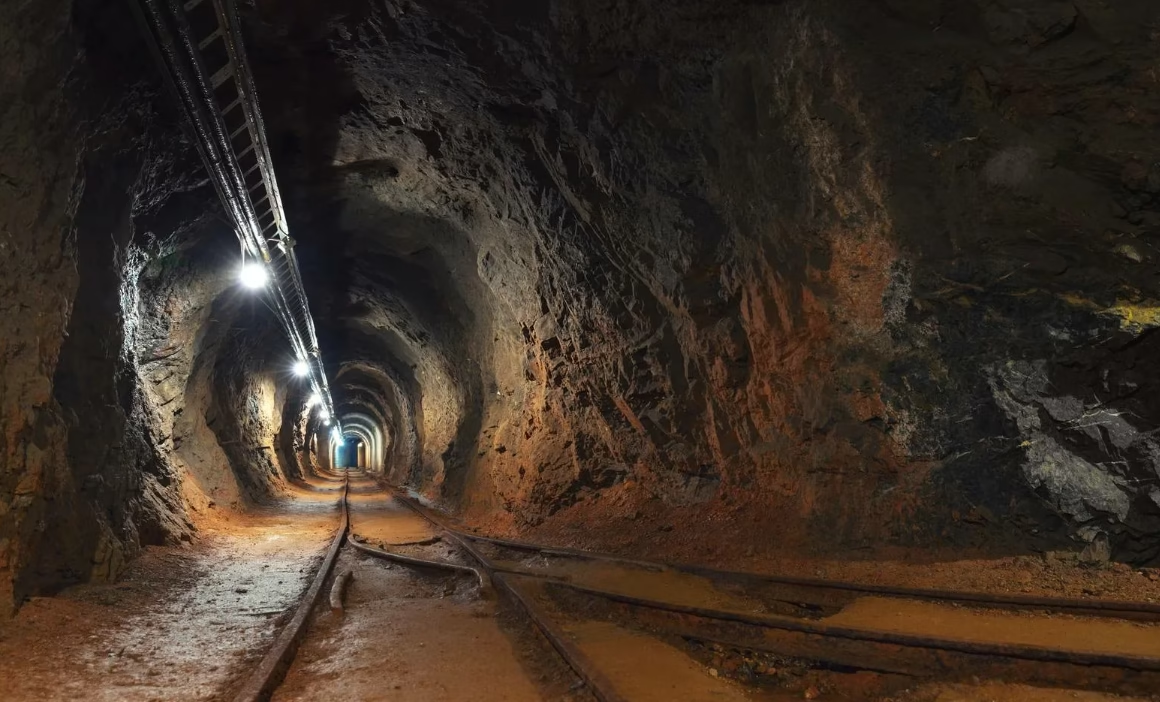
AS/NZS 1802 – Reeling cables for underground mining

Dragline Scale and Power Demand: Modern electric draglines (such as Bucyrus-Erie, Komatsu, or Hitachi models) are among the largest mobile equipment ever built—some models weighing 13,000+ tonnes with buckets exceeding 200+ cubic meters. A typical dragline requires continuous 6 or 10 kV three-phase power supply delivering 1–3 megawatts. This power is distributed from mobile substations positioned near the dragline, connected via flexible trailing cables spanning 500–1,500 meters. 现代电动拉铲(如Bucyrus-Erie、小松或日立型号)是世界上最大的移动设备之一——某些型号重达13000多吨,斗容超过200立方米。典型拉铲需要持续的6或10 kV三相电源供应,功率为1-3兆瓦。此电源由位于拉铲附近的移动变电站分配,通过跨越500-1500米的柔性拖曳电缆连接。 Arctic Mining Geography: Draglines operate in extreme environments: Siberian Russia (winter temperatures -40°C to -60°C), Canadian Arctic (similar extremes), Mongolia (up to -50°C), and high-altitude operations in Peru or Tibet where thin air and cold combine to degrade cable performance. Standard European or North American cable designs are inadequate for these conditions.

Dragline Power Specs: Ampacity and Weight for КГЭ-ХЛ 3×150+1×50+1×10 6/10kV Heavy-Duty Trailing Cable

Dragline Scale and Power Demand: Modern electric draglines (such as Bucyrus-Erie, Komatsu, or Hitachi models) are among the largest mobile equipment ever built—some models weighing 13,000+ tonnes with buckets exceeding 200+ cubic meters. A typical dragline requires continuous 6 or 10 kV three-phase power supply delivering 1–3 megawatts. This power is distributed from mobile substations positioned near the dragline, connected via flexible trailing cables spanning 500–1,500 meters. 现代电动拉铲(如Bucyrus-Erie、小松或日立型号)是世界上最大的移动设备之一——某些型号重达13000多吨,斗容超过200立方米。典型拉铲需要持续的6或10 kV三相电源供应,功率为1-3兆瓦。此电源由位于拉铲附近的移动变电站分配,通过跨越500-1500米的柔性拖曳电缆连接。 Arctic Mining Geography: Draglines operate in extreme environments: Siberian Russia (winter temperatures -40°C to -60°C), Canadian Arctic (similar extremes), Mongolia (up to -50°C), and high-altitude operations in Peru or Tibet where thin air and cold combine to degrade cable performance. Standard European or North American cable designs are inadequate for these conditions.
Joy Shuttle Car Operating Cycle: Joy Global's shuttle cars are core materials transport vehicles in underground coal mines. A typical operational cycle involves: (1) Advancing into mine face (unreeling cable under constant speed tension), (2) Loading ore/waste into bucket, (3) Sharp turns and direction changes (rapid torsional and bending stress), (4) Reversing to dump point (rapid cable reeling, highest tension conditions), (5) Return to face under load (sustained tension, speeds 50–100 m/min). A single shift can involve 80–120 complete cycles. Joy Global穿梭车是地下煤矿的核心运输工具。典型运行周期包括:(1)推进到矿面(在恒定速度张力下放线),(2)装载矿石/废料,(3)急转弯和方向改变(快速扭转和弯曲应力),(4)倒车至卸点(快速收线,最高张力条件),(5)负载返回(持续张力,速度50-100 m/min)。单班可完成80-120个完整周期。 Cable Stress Combination: Unlike stationary installations where cables experience steady-state thermal and electrical stress, shuttle car cables experience: (1) Cyclic tensile loading (alternating between low idle tension and high reeling tension), (2) Torsional twisting during turns (multiple revolutions per shift), (3) Sharp bending around reel drum edges (radius-limited deflection), (4) Thermal cycling (ambient underground temperature 15–25°C during operation, cold surface storage -5°C to -20°C).

Joy Shuttle Car Tension Ratings: Maximum Safe Pulling Load for Type 275 3.3/3.3kV 3x50mm² Cables

Joy Shuttle Car Operating Cycle: Joy Global’s shuttle cars are core materials transport vehicles in underground coal mines. A typical operational cycle involves: (1) Advancing into mine face (unreeling cable under constant speed tension), (2) Loading ore/waste into bucket, (3) Sharp turns and direction changes (rapid torsional and bending stress), (4) Reversing to dump point (rapid cable reeling, highest tension conditions), (5) Return to face under load (sustained tension, speeds 50–100 m/min). A single shift can involve 80–120 complete cycles. Joy Global穿梭车是地下煤矿的核心运输工具。典型运行周期包括:(1)推进到矿面(在恒定速度张力下放线),(2)装载矿石/废料,(3)急转弯和方向改变(快速扭转和弯曲应力),(4)倒车至卸点(快速收线,最高张力条件),(5)负载返回(持续张力,速度50-100 m/min)。单班可完成80-120个完整周期。 Cable Stress Combination: Unlike stationary installations where cables experience steady-state thermal and electrical stress, shuttle car cables experience: (1) Cyclic tensile loading (alternating between low idle tension and high reeling tension), (2) Torsional twisting during turns (multiple revolutions per shift), (3) Sharp bending around reel drum edges (radius-limited deflection), (4) Thermal cycling (ambient underground temperature 15–25°C during operation, cold surface storage -5°C to -20°C).
Project Magnitude: Rio Tinto's Oyu Tolgoi underground expansion is one of the world's largest block caving mine projects. The underground mine currently extends 1,300+ meters below surface, with expansion workings reaching 1,500+ meters depth. The power distribution network includes underground substations feeding: (1) Electric load-haul-dump (LHD) fleets, (2) Continuous mining equipment and drill jumbos, (3) Conveyor systems and material handling, (4) Dewatering pumps, (5) Ventilation systems. 力拓奥尤陶勒盖地下扩建是全球最大的自然崩落法矿井项目之一。地下矿山目前已延伸地表下1300多米,扩建工作延伸到1500多米深度。配电网络包括为以下系统供电的地下变电站:(1)电动铲运机(LHD)队,(2)连续采矿设备和凿岩台车,(3)传送带系统和物料处理,(4)排水泵,(5)通风系统。 11kV Primary Distribution Role: The 11kV distribution tier is the primary feeder for underground mobile substations, which then step voltage down to 3.3kV for equipment power circuits. Multiple 11kV feeders distribute power across different mining levels (extraction level, haulage level, ventilation shafts). Each feeder may be 500–2,000 meters long, running through risky terrain where cables experience mechanical stress from falling rock, ground movement, and environmental extremes.

Oyu Tolgoi Expansion: Ampacity and Mechanical Suitability of 11kV AS/NZS Mining Cables

Project Magnitude: Rio Tinto’s Oyu Tolgoi underground expansion is one of the world’s largest block caving mine projects. The underground mine currently extends 1,300+ meters below surface, with expansion workings reaching 1,500+ meters depth. The power distribution network includes underground substations feeding: (1) Electric load-haul-dump (LHD) fleets, (2) Continuous mining equipment and drill jumbos, (3) Conveyor systems and material handling, (4) Dewatering pumps, (5) Ventilation systems. 力拓奥尤陶勒盖地下扩建是全球最大的自然崩落法矿井项目之一。地下矿山目前已延伸地表下1300多米,扩建工作延伸到1500多米深度。配电网络包括为以下系统供电的地下变电站:(1)电动铲运机(LHD)队,(2)连续采矿设备和凿岩台车,(3)传送带系统和物料处理,(4)排水泵,(5)通风系统。 11kV Primary Distribution Role: The 11kV distribution tier is the primary feeder for underground mobile substations, which then step voltage down to 3.3kV for equipment power circuits. Multiple 11kV feeders distribute power across different mining levels (extraction level, haulage level, ventilation shafts). Each feeder may be 500–2,000 meters long, running through risky terrain where cables experience mechanical stress from falling rock, ground movement, and environmental extremes.
Major Projects and Players: Central Asia's copper mining sector includes massive operations: (1) KAZ Minerals' Bozshakol, Saryshagan, and Aktogay projects in Kazakhstan, (2) Uzbek Copper's operations in Uzbekistan, (3) International consortium projects (Rio Tinto, Sumitomo, Japanese/European partnerships). These operations are characterized by: modern infrastructure, international EPC (Engineering-Procurement-Construction) contractor involvement, and explicit AS/NZS 1802 compliance requirements in RFQ specifications. 中亚铜矿项目包括大规模运营:(1)哈萨克斯坦KAZ矿物公司的Bozshakol、Saryshagan和Aktogay项目,(2)乌兹别克斯坦铜矿公司的运营,(3)国际联合体项目(Rio Tinto、住友、日本/欧洲合作)。这些运营的特点是:现代基础设施、国际EPC承包商参与、RFQ规范中明确的AS/NZS 1802合规要求。 RFQ Specification Trend: Central Asian buyers increasingly specify AS/NZS 1802 Type 241 cables rather than simply "equivalent" designs, because they understand the cable is for long-term (15–20 year) asset life and international operational continuity. Unlike developing-market buyers who may accept price-optimized designs, Central Asian EPC contractors demand proven, certified-equivalent cables that can be serviced anywhere globally. Sourcing Challenge for Asian Manufacturers: Most Australian cable manufacturers cannot meet the 12–18 month continuous order volumes that Central Asian projects demand (often 500–2,000 km of cable total). This creates a market opportunity: Chinese and Indian manufacturers can undercut Australian prices by 25–40% while maintaining AS/NZS compliance—IF they can credibly prove factory-direct equivalence.

Central Asia Mining RFQ: Factory-Direct Equivalent to Australian Type 241 Cables for Copper Projects

Major Projects and Players: Central Asia’s copper mining sector includes massive operations: (1) KAZ Minerals’ Bozshakol, Saryshagan, and Aktogay projects in Kazakhstan, (2) Uzbek Copper’s operations in Uzbekistan, (3) International consortium projects (Rio Tinto, Sumitomo, Japanese/European partnerships). These operations are characterized by: modern infrastructure, international EPC (Engineering-Procurement-Construction) contractor involvement, and explicit AS/NZS 1802 compliance requirements in RFQ specifications. 中亚铜矿项目包括大规模运营:(1)哈萨克斯坦KAZ矿物公司的Bozshakol、Saryshagan和Aktogay项目,(2)乌兹别克斯坦铜矿公司的运营,(3)国际联合体项目(Rio Tinto、住友、日本/欧洲合作)。这些运营的特点是:现代基础设施、国际EPC承包商参与、RFQ规范中明确的AS/NZS 1802合规要求。 RFQ Specification Trend: Central Asian buyers increasingly specify AS/NZS 1802 Type 241 cables rather than simply “equivalent” designs, because they understand the cable is for long-term (15–20 year) asset life and international operational continuity. Unlike developing-market buyers who may accept price-optimized designs, Central Asian EPC contractors demand proven, certified-equivalent cables that can be serviced anywhere globally. Sourcing Challenge for Asian Manufacturers: Most Australian cable manufacturers cannot meet the 12–18 month continuous order volumes that Central Asian projects demand (often 500–2,000 km of cable total). This creates a market opportunity: Chinese and Indian manufacturers can undercut Australian prices by 25–40% while maintaining AS/NZS compliance—IF they can credibly prove factory-direct equivalence.
The Design Temperature Assumption: AS/NZS 1802 mining cable standards were developed for Australian and New Zealand mining conditions, where minimum ambient temperatures rarely drop below -10°C to -15°C. The standard's base material specifications (PCP chloroprene jacket, standard EPR insulation) were formulated for this relatively temperate range. A cable certified to AS/NZS 1802 specifications is guaranteed to function correctly from 0°C to 60°C (typical service range), with an operating floor around -20°C at absolute minimum. AS/NZS 1802矿用电缆标准是为澳大利亚和新西兰矿业条件而开发的,最低环境温度很少低于-10°C至-15°C。该标准的基础材料规范(PCP氯丁橡胶护套、标准EPR绝缘)针对这个相对温暖的范围而配制。根据AS/NZS 1802规范认证的电缆保证在0°C至60°C范围内正确工作,绝对最低工作温度约为-20°C。

Cold Bend Performance: Modifying AS/NZS Mining Cables for -40°C Operation in Mongolia

The Design Temperature Assumption: AS/NZS 1802 mining cable standards were developed for Australian and New Zealand mining conditions, where minimum ambient temperatures rarely drop below -10°C to -15°C. The standard’s base material specifications (PCP chloroprene jacket, standard EPR insulation) were formulated for this relatively temperate range. A cable certified to AS/NZS 1802 specifications is guaranteed to function correctly from 0°C to 60°C (typical service range), with an operating floor around -20°C at absolute minimum. AS/NZS 1802矿用电缆标准是为澳大利亚和新西兰矿业条件而开发的,最低环境温度很少低于-10°C至-15°C。该标准的基础材料规范(PCP氯丁橡胶护套、标准EPR绝缘)针对这个相对温暖的范围而配制。根据AS/NZS 1802规范认证的电缆保证在0°C至60°C范围内正确工作,绝对最低工作温度约为-20°C。
The Crucial Clarification: Oyu Tolgoi operates in two fundamentally different electrical environments that must be clearly understood: (1) Surface operations and equipment transition zones (-40°C to +50°C, dry/cold storage, arctic conditions), and (2) Deep underground block cave extraction levels (15°C to 30°C, high humidity, wet/muddy conditions, geothermally warmed). 关键澄清:奥尤陶勒盖在两个根本不同的电气环境中运营,必须明确理解:(1)地面作业和设备过渡区(-40°C至+50°C,干燥/冷库存储,北极条件),(2)深层地下自然崩落法采矿区(15°C至30°C,高湿度,潮湿/泥泞条件,地热升温)。 The Engineering Error Many Make: It is tempting to assume that since Oyu Tolgoi is in Mongolia (with harsh winter conditions), all cables should be Arctic Grade throughout the mining operation. This is fundamentally incorrect. The underground extraction level, located 1,300+ meters deep, operates in a completely different thermal and humidity regime than the surface—more similar to tropical underground mining conditions than arctic conditions.

Block Cave Power Supply: Choosing AS/NZS Type 275 Reeling Cables for Oyu Tolgoi Underground Systems

The Crucial Clarification: Oyu Tolgoi operates in two fundamentally different electrical environments that must be clearly understood: (1) Surface operations and equipment transition zones (-40°C to +50°C, dry/cold storage, arctic conditions), and (2) Deep underground block cave extraction levels (15°C to 30°C, high humidity, wet/muddy conditions, geothermally warmed). 关键澄清:奥尤陶勒盖在两个根本不同的电气环境中运营,必须明确理解:(1)地面作业和设备过渡区(-40°C至+50°C,干燥/冷库存储,北极条件),(2)深层地下自然崩落法采矿区(15°C至30°C,高湿度,潮湿/泥泞条件,地热升温)。 The Engineering Error Many Make: It is tempting to assume that since Oyu Tolgoi is in Mongolia (with harsh winter conditions), all cables should be Arctic Grade throughout the mining operation. This is fundamentally incorrect. The underground extraction level, located 1,300+ meters deep, operates in a completely different thermal and humidity regime than the surface—more similar to tropical underground mining conditions than arctic conditions.
The Gobi Desert in southern Mongolia, where Oyu Tolgoi and other mining operations are located, experiences one of the most thermally extreme climates on Earth. Winter temperatures regularly drop to -35°C to -45°C, with recorded extremes approaching -50°C. Conversely, summer surface temperatures exceed +45°C, and cables exposed to direct solar radiation can reach +55°C to +65°C. This represents a temperature differential of 95–115°C between winter lows and summer highs—far exceeding the thermal cycling experienced in most mining regions globally. 蒙古南部戈壁沙漠,奥尤陶勒盖等矿区所在地,经历全球最极端的热气候之一。冬季温度经常降至-35°C至-45°C,记录低温接近-50°C。反之,夏季地表温度超过+45°C,直接暴露在太阳辐射下的电缆可达+55°C至+65°C。这代表冬季低温和夏季高温之间温度差异95-115°C,远远超过全球大多数矿区经历的热循环。 The Cable Deployment Context: Rio Tinto's 6.6kV trailing cables at Oyu Tolgoi power large electric shovels, electric drill jumbos, and load-haul-dump (LHD) equipment. These cables experience: (1) Winter deployment at -40°C where equipment must operate continuously despite extreme cold, (2) Coiling on equipment reels in -40°C conditions with high mechanical tension, (3) Summer storage in surface conditions where cables experience +50°C+ heat exposure, (4) Repeated thermal cycling as equipment moves between underground (warmer) and surface (colder or hotter) locations.

Rio Tinto Mongolia Cable Specs: Preventing Jacket Cracking on 6.6kV Mining Cables in Gobi Desert Extreme Climate

The Gobi Desert in southern Mongolia, where Oyu Tolgoi and other mining operations are located, experiences one of the most thermally extreme climates on Earth. Winter temperatures regularly drop to -35°C to -45°C, with recorded extremes approaching -50°C. Conversely, summer surface temperatures exceed +45°C, and cables exposed to direct solar radiation can reach +55°C to +65°C. This represents a temperature differential of 95–115°C between winter lows and summer highs—far exceeding the thermal cycling experienced in most mining regions globally. 蒙古南部戈壁沙漠,奥尤陶勒盖等矿区所在地,经历全球最极端的热气候之一。冬季温度经常降至-35°C至-45°C,记录低温接近-50°C。反之,夏季地表温度超过+45°C,直接暴露在太阳辐射下的电缆可达+55°C至+65°C。这代表冬季低温和夏季高温之间温度差异95-115°C,远远超过全球大多数矿区经历的热循环。 The Cable Deployment Context: Rio Tinto’s 6.6kV trailing cables at Oyu Tolgoi power large electric shovels, electric drill jumbos, and load-haul-dump (LHD) equipment. These cables experience: (1) Winter deployment at -40°C where equipment must operate continuously despite extreme cold, (2) Coiling on equipment reels in -40°C conditions with high mechanical tension, (3) Summer storage in surface conditions where cables experience +50°C+ heat exposure, (4) Repeated thermal cycling as equipment moves between underground (warmer) and surface (colder or hotter) locations.
The surface of the Oyu Tolgoi site in southern Mongolia regularly experiences winter temperatures dropping to -35°C to -45°C. Underground development workings in ventilation shafts and transition zones between the deep underground operations (where temperatures warm to 15–20°C due to geothermal gradient) and surface facilities experience the worst of both worlds: temperatures fluctuating between -40°C and +10°C within hours as equipment movements create temporary temperature swings. 奥尤陶勒盖位于蒙古南部,地表冬季温度经常降至-35°C至-45°C。通风竖井和地下作业(深部地温升至15-20°C)与地面设施之间过渡区域的地下开发工作经历最坏的情况:数小时内温度在-40°C和+10°C之间波动,因为设备移动产生临时温度波动。 Cable Deployment Locations: Arctic Grade Type 241 11/11kV 3x50mm² cables are deployed in four primary locations: (1) Surface cable runs feeding portable substations in the open pit winter environment (-40°C sustained), (2) Ventilation shaft risers where cables experience extreme temperature gradients, (3) Underground main feeder connections to load-haul-dump (LHD) equipment in transition zones (fluctuating -20°C to +15°C), (4) Mobile substation interconnects requiring frequent reeling and repositioning in arctic conditions.

Oyu Tolgoi Extreme Conditions: Arctic Grade Type 241 11/11kV 3x50mm² Field Operations, Failure Prevention, and Emergency Protocols

The surface of the Oyu Tolgoi site in southern Mongolia regularly experiences winter temperatures dropping to -35°C to -45°C. Underground development workings in ventilation shafts and transition zones between the deep underground operations (where temperatures warm to 15–20°C due to geothermal gradient) and surface facilities experience the worst of both worlds: temperatures fluctuating between -40°C and +10°C within hours as equipment movements create temporary temperature swings. 奥尤陶勒盖位于蒙古南部,地表冬季温度经常降至-35°C至-45°C。通风竖井和地下作业(深部地温升至15-20°C)与地面设施之间过渡区域的地下开发工作经历最坏的情况:数小时内温度在-40°C和+10°C之间波动,因为设备移动产生临时温度波动。 Cable Deployment Locations: Arctic Grade Type 241 11/11kV 3x50mm² cables are deployed in four primary locations: (1) Surface cable runs feeding portable substations in the open pit winter environment (-40°C sustained), (2) Ventilation shaft risers where cables experience extreme temperature gradients, (3) Underground main feeder connections to load-haul-dump (LHD) equipment in transition zones (fluctuating -20°C to +15°C), (4) Mobile substation interconnects requiring frequent reeling and repositioning in arctic conditions.
The Dangerous Misconception: When Indonesian coal contractors (PAMA, BUMA, Thiess Indonesia) begin sourcing cable replacements for aging Olex (Nexans) systems, there is a common but catastrophic confusion: conflating Type 260 (pliable armoured feeder cable) with shuttle car trailing cables. This error, if executed in procurement, will result in: (1) Physical incompatibility with shuttle car reels, (2) Equipment damage within days of deployment, (3) Potential explosive electrical failures underground, (4) Massive operational downtime and safety hazards.

Indonesian Coal Contractors: Type 260 vs Type 275—Critical Clarification for Drop-in Shuttle Car Cable Equivalents

The Dangerous Misconception: When Indonesian coal contractors (PAMA, BUMA, Thiess Indonesia) begin sourcing cable replacements for aging Olex (Nexans) systems, there is a common but catastrophic confusion: conflating Type 260 (pliable armoured feeder cable) with shuttle car trailing cables. This error, if executed in procurement, will result in: (1) Physical incompatibility with shuttle car reels, (2) Equipment damage within days of deployment, (3) Potential explosive electrical failures underground, (4) Massive operational downtime and safety hazards.
Papua New Guinea's gold mining operations (Lihir, Porgera, Ok Tedi) are situated in one of the world's most environmentally aggressive regions. The combination of equatorial rainfall (400+ mm annually), persistent high humidity (85–100% year-round), elevated ambient temperatures (30–50°C), and chemically aggressive mine water create a testing ground for cable materials. 巴布亚新几内亚的金矿作业(Lihir、Porgera、Ok Tedi)位于全球环境最具侵蚀性的地区之一。赤道降雨(每年400毫米以上)、持续高湿度(全年85-100%)、升高的环境温度(30-50°C)和化学活性强的矿井水,创造了电缆材料的严酷测试环境。 Environmental Stress Factors: (1) Absolute humidity exceeding 30 g/m³ (compared to 10–15 g/m³ in temperate climates), (2) Mine water pH often 3–6 (acidic, rich in sulfates and dissolved metal oxides), (3) Temperature cycling from 32°C surface to 48°C in underground passages, (4) Continuous condensation on cable surfaces when equipment moves between temperature zones.

Papua New Guinea Gold Mines: High-Humidity Specifications for Type 275 3.3/3.3kV 3x50mm² Reeling Cables

Papua New Guinea’s gold mining operations (Lihir, Porgera, Ok Tedi) are situated in one of the world’s most environmentally aggressive regions. The combination of equatorial rainfall (400+ mm annually), persistent high humidity (85–100% year-round), elevated ambient temperatures (30–50°C), and chemically aggressive mine water create a testing ground for cable materials. 巴布亚新几内亚的金矿作业(Lihir、Porgera、Ok Tedi)位于全球环境最具侵蚀性的地区之一。赤道降雨(每年400毫米以上)、持续高湿度(全年85-100%)、升高的环境温度(30-50°C)和化学活性强的矿井水,创造了电缆材料的严酷测试环境。 Environmental Stress Factors: (1) Absolute humidity exceeding 30 g/m³ (compared to 10–15 g/m³ in temperate climates), (2) Mine water pH often 3–6 (acidic, rich in sulfates and dissolved metal oxides), (3) Temperature cycling from 32°C surface to 48°C in underground passages, (4) Continuous condensation on cable surfaces when equipment moves between temperature zones.
The Grasberg copper-gold mine in Indonesia, operated by PT Freeport Indonesia, is one of the world's largest and most technically complex hard rock mining operations. In recent years, the operation has transitioned to block cave mining (caving by gravity) to achieve depth-efficient extraction of ore from depths exceeding 1,000 meters. This transition creates unprecedented electrical infrastructure demands. 印尼自由港公司(PT Freeport Indonesia)运营的格拉斯伯格铜金矿是全球最大、技术最复杂的硬岩矿山之一。近年来,该矿区已过渡到自然崩落法(通过重力采矿),以实现深度超过1000米的矿石的深度高效开采。这一转变对电气基础设施提出了前所未有的要求。 Operational Context: Block cave mining requires large mobile substations, underground primary crushers, and heavy-duty drilling equipment (drill jumbos) to be positioned and repositioned continuously throughout the deep mine workings. Each of these installations demands flexible high-voltage power distribution cables capable of surviving: (1) Acidic sulfide-rich groundwater exposure, (2) Extreme mechanical abrasion from sharp porphyry rock fragments, (3) Continuous flexing and reeling during equipment repositioning, (4) High-voltage electrical stress at 11kV.

Grasberg Block Cave: Sourcing AS/NZS 1802 Type 241 11/11kV 3x95mm² for Indonesia Copper Mines

The Grasberg copper-gold mine in Indonesia, operated by PT Freeport Indonesia, is one of the world’s largest and most technically complex hard rock mining operations. In recent years, the operation has transitioned to block cave mining (caving by gravity) to achieve depth-efficient extraction of ore from depths exceeding 1,000 meters. This transition creates unprecedented electrical infrastructure demands. 印尼自由港公司(PT Freeport Indonesia)运营的格拉斯伯格铜金矿是全球最大、技术最复杂的硬岩矿山之一。近年来,该矿区已过渡到自然崩落法(通过重力采矿),以实现深度超过1000米的矿石的深度高效开采。这一转变对电气基础设施提出了前所未有的要求。 Operational Context: Block cave mining requires large mobile substations, underground primary crushers, and heavy-duty drilling equipment (drill jumbos) to be positioned and repositioned continuously throughout the deep mine workings. Each of these installations demands flexible high-voltage power distribution cables capable of surviving: (1) Acidic sulfide-rich groundwater exposure, (2) Extreme mechanical abrasion from sharp porphyry rock fragments, (3) Continuous flexing and reeling during equipment repositioning, (4) High-voltage electrical stress at 11kV.
The safest way to write this page is not to pretend that Rio Tinto has publicly released a project call-off for this exact cable. The stronger and more credible angle is this: under Oyu Tolgoi Underground-style conditions, Arctic-grade Type 241 11/11kV 3x50mm² is a rational engineering specification direction. That distinction matters. A serious mining page should never fake project-specific approval language that has not been published. What it should do is explain the logic clearly. Oyu Tolgoi Underground is a world-class block-caving copper-gold project in Mongolia’s South Gobi. The site sees a harsh thermal range, with hot summers and deep winter exposure. Standard Type 241 mining cable is designed to AS/NZS 1802 and is publicly described for applications such as continuous miners, pump feeders, monorails supplying DCBs and longwalls. Electrically and structurally, that makes it a very credible candidate architecture for underground mining distribution circuits. But when winter ambient moves below the standard low-temperature threshold, the correct engineering response is not to abandon Type 241 altogether. The correct response is to specify an Arctic-grade low-temperature sheath and insulation system built on the Type 241 platform.

Oyu Tolgoi Underground: Specifying Arctic-Grade Type 241 11/11kV 3x50mm² for Mongolian Winters

The safest way to write this page is not to pretend that Rio Tinto has publicly released a project call-off for this exact cable. The stronger and more credible angle is this: under Oyu Tolgoi Underground-style conditions, Arctic-grade Type 241 11/11kV 3x50mm² is a rational engineering specification direction. That distinction matters. A serious mining page should never fake project-specific approval language that has not been published. What it should do is explain the logic clearly. Oyu Tolgoi Underground is a world-class block-caving copper-gold project in Mongolia’s South Gobi. The site sees a harsh thermal range, with hot summers and deep winter exposure. Standard Type 241 mining cable is designed to AS/NZS 1802 and is publicly described for applications such as continuous miners, pump feeders, monorails supplying DCBs and longwalls. Electrically and structurally, that makes it a very credible candidate architecture for underground mining distribution circuits. But when winter ambient moves below the standard low-temperature threshold, the correct engineering response is not to abandon Type 241 altogether. The correct response is to specify an Arctic-grade low-temperature sheath and insulation system built on the Type 241 platform.
If your Central Asian underground coal mining project operates within an engineering and procurement ecosystem dominated by Australian consulting firms, English-language design specifications, AS/NZS standards documentation, and requires compatibility with continuous mining equipment protected by pilot-core-dependent relays, then Type 241 (AS/NZS 1802) is your correct choice. Type 241 provides the electrical architecture, pilot conductor continuity, and protective logic integration that Australian mining engineers expect. If your project operates in Kazakhstan, Mongolia, Uzbekistan, or Kyrgyzstan with Russian or Russian-influenced technical standards, local certification bodies that recognize GOST compliance, local maintenance teams trained on GOST equipment, Russian-language technical documentation, and primary focus on cost-effective 6kV power delivery in extreme cold environments, then КГЭ-ХЛ (GOST 31945-2012) is likely the more practical choice. КГЭ-ХЛ integrates seamlessly into Russian-standard electrical systems and is purpose-engineered for the minus forty to minus sixty degree Celsius temperatures endemic to Central Asian winters. 如果您的中亚地下煤矿项目由澳洲咨询公司主导、英文设计规范、AS/NZS标准文件和对连续采煤机保护逻辑兼容性有特殊要求,那么 Type 241(AS/NZS 1802)是正确选择。如果您的项目在哈萨克斯坦、蒙古、乌兹别克斯坦或吉尔吉斯斯坦,采用俄标或俄标影响的技术体系,本地认证机构认可GOST合规,本地维护团队熟悉GOST设备,主要关注极寒下的成本有效6kV供电,那么КГЭ-ХЛ(ГОСТ 31945-2012)是更实用的选择。

AS/NZS Type 241 vs. GOST КГЭ-ХЛ: Choosing the Right Standard for Underground Coal Mines in Central Asia

If your Central Asian underground coal mining project operates within an engineering and procurement ecosystem dominated by Australian consulting firms, English-language design specifications, AS/NZS standards documentation, and requires compatibility with continuous mining equipment protected by pilot-core-dependent relays, then Type 241 (AS/NZS 1802) is your correct choice. Type 241 provides the electrical architecture, pilot conductor continuity, and protective logic integration that Australian mining engineers expect. If your project operates in Kazakhstan, Mongolia, Uzbekistan, or Kyrgyzstan with Russian or Russian-influenced technical standards, local certification bodies that recognize GOST compliance, local maintenance teams trained on GOST equipment, Russian-language technical documentation, and primary focus on cost-effective 6kV power delivery in extreme cold environments, then КГЭ-ХЛ (GOST 31945-2012) is likely the more practical choice. КГЭ-ХЛ integrates seamlessly into Russian-standard electrical systems and is purpose-engineered for the minus forty to minus sixty degree Celsius temperatures endemic to Central Asian winters. 如果您的中亚地下煤矿项目由澳洲咨询公司主导、英文设计规范、AS/NZS标准文件和对连续采煤机保护逻辑兼容性有特殊要求,那么 Type 241(AS/NZS 1802)是正确选择。如果您的项目在哈萨克斯坦、蒙古、乌兹别克斯坦或吉尔吉斯斯坦,采用俄标或俄标影响的技术体系,本地认证机构认可GOST合规,本地维护团队熟悉GOST设备,主要关注极寒下的成本有效6kV供电,那么КГЭ-ХЛ(ГОСТ 31945-2012)是更实用的选择。
If you are procuring Type 275 3.3kV 3x95mm² mining cables for Mongolian operations and relying on standard AS/NZS 1802 formulations without Arctic Grade modification, you will experience outer sheath cracking within days to weeks of deployment during Mongolian winter. The answer to your question is unambiguous: yes, standard cables will fail, and the failure is not marginal—it is catastrophic. The cracking will progress from hairline fissures to complete jacket failure within a timeframe measured in operational shifts, not months. This is not a theoretical risk or a worst-case scenario. It is an engineering certainty rooted in fundamental material science physics. 如果您正在为蒙古国运营采购 Type 275 3.3kV 3x95mm² 矿用电缆,并依赖于标准 AS/NZS 1802 配方而没有极地级修改,您将在蒙古冬季部署后的几天到几周内经历外护套开裂。答案是明确的:是的,标准电缆会失效,且失效不是边际的—这是灾难性的。开裂将在以运营班次而不是月份衡量的时间框架内从细微裂纹发展为完全护套失效。这不是理论风险或最坏情况场景。它是根植于基本材料科学物理的工程必然。

Cold Weather Reeling: Does Type 275 3.3kV 3x95mm² Outer Sheath Crack in Mongolian Winters?

If you are procuring Type 275 3.3kV 3x95mm² mining cables for Mongolian operations and relying on standard AS/NZS 1802 formulations without Arctic Grade modification, you will experience outer sheath cracking within days to weeks of deployment during Mongolian winter. The answer to your question is unambiguous: yes, standard cables will fail, and the failure is not marginal—it is catastrophic. The cracking will progress from hairline fissures to complete jacket failure within a timeframe measured in operational shifts, not months. This is not a theoretical risk or a worst-case scenario. It is an engineering certainty rooted in fundamental material science physics. 如果您正在为蒙古国运营采购 Type 275 3.3kV 3x95mm² 矿用电缆,并依赖于标准 AS/NZS 1802 配方而没有极地级修改,您将在蒙古冬季部署后的几天到几周内经历外护套开裂。答案是明确的:是的,标准电缆会失效,且失效不是边际的—这是灾难性的。开裂将在以运营班次而不是月份衡量的时间框架内从细微裂纹发展为完全护套失效。这不是理论风险或最坏情况场景。它是根植于基本材料科学物理的工程必然。
To understand why the Oyu Tolgoi copper mining project—operated by Rio Tinto in the Gobi Desert of southern Mongolia—demands a specialized Arctic Grade version of AS/NZS 1802 Type 241 cable, you must first grasp the fundamental reality of extreme cold mining: the same materials that remain pliable and safe at temperate conditions can transform into brittle, dangerous substances when subjected to temperatures dropping to minus forty degrees Celsius. A standard Type 241 trailing cable, engineered for operational environments of minus twenty or minus twenty-five degrees, becomes not merely less effective but actively hazardous when deployed in Oyu Tolgoi's winter conditions. 要理解为什么力拓在蒙古戈壁南部运营的奥尤陶勒盖铜矿项目需要专门的极地级版本AS/NZS 1802 Type 241电缆,您必须首先掌握极端严寒采矿的基本现实:在温和条件下保持柔韧和安全的相同材料,当温度下降到负四十摄氏度时,可能转变为脆性、危险的物质。标准的Type 241拖曳电缆在负二十或负二十五度的运行环境中设计,但当在奥尤陶勒盖的冬季条件下使用时,不仅效能下降,而且变得主动危险。

Oyu Tolgoi Standard: Sourcing -40°C Arctic Grade AS/NZS 1802 Type 241 11kV for Mongolian Copper Mines

To understand why the Oyu Tolgoi copper mining project—operated by Rio Tinto in the Gobi Desert of southern Mongolia—demands a specialized Arctic Grade version of AS/NZS 1802 Type 241 cable, you must first grasp the fundamental reality of extreme cold mining: the same materials that remain pliable and safe at temperate conditions can transform into brittle, dangerous substances when subjected to temperatures dropping to minus forty degrees Celsius. A standard Type 241 trailing cable, engineered for operational environments of minus twenty or minus twenty-five degrees, becomes not merely less effective but actively hazardous when deployed in Oyu Tolgoi’s winter conditions. 要理解为什么力拓在蒙古戈壁南部运营的奥尤陶勒盖铜矿项目需要专门的极地级版本AS/NZS 1802 Type 241电缆,您必须首先掌握极端严寒采矿的基本现实:在温和条件下保持柔韧和安全的相同材料,当温度下降到负四十摄氏度时,可能转变为脆性、危险的物质。标准的Type 241拖曳电缆在负二十或负二十五度的运行环境中设计,但当在奥尤陶勒盖的冬季条件下使用时,不仅效能下降,而且变得主动危险。
In underground coal mining across Australia and New Zealand, selecting between AS/NZS 1802 and AS/NZS 1972 is not a matter of personal preference or cost optimization—it is a matter of electrical safety compliance and regulatory requirement. The decision tree, however, is surprisingly straightforward once you understand the single fundamental principle that separates these two standards: whether your equipment moves while energized. 在澳大利亚和新西兰的地下煤矿电气设计中,在AS/NZS 1802和AS/NZS 1972之间选择不是个人偏好或成本优化的问题——这是电气安全合规性和监管要求的问题。然而,一旦您理解分离这两个标准的单一基本原则,决策树就会变得出奇地直接:您的设备在通电时是否移动。

AS/NZS 1802 vs AS/NZS 1972: Which Australian Standard Applies to Your Underground Mining Equipment?

In underground coal mining across Australia and New Zealand, selecting between AS/NZS 1802 and AS/NZS 1972 is not a matter of personal preference or cost optimization—it is a matter of electrical safety compliance and regulatory requirement. The decision tree, however, is surprisingly straightforward once you understand the single fundamental principle that separates these two standards: whether your equipment moves while energized. 在澳大利亚和新西兰的地下煤矿电气设计中,在AS/NZS 1802和AS/NZS 1972之间选择不是个人偏好或成本优化的问题——这是电气安全合规性和监管要求的问题。然而,一旦您理解分离这两个标准的单一基本原则,决策树就会变得出奇地直接:您的设备在通电时是否移动。
Type 7S cables are specifically engineered for mining applications where equipment must operate in wet, chemically hostile, and mechanically demanding underground environments. The designation "7S" indicates a cable designed for high mechanical stress combined with submersion protection—the perfect specification for permanent dewatering pump installations in deep mine shafts. Type 7S电缆专门为必须在潮湿、化学腐蚀性和机械要求苛刻的地下环境中运行的采矿应用而设计。术语"7S"表示一种为高机械应力结合浸没保护而设计的电缆——是深矿井永久降水泵安装的完美规范。

Dewatering Pumps: Is Type 7S 1.1kV 3x50mm² Suitable for Permanent Submerged Connections?

Type 7S cables are specifically engineered for mining applications where equipment must operate in wet, chemically hostile, and mechanically demanding underground environments. The designation “7S” indicates a cable designed for high mechanical stress combined with submersion protection—the perfect specification for permanent dewatering pump installations in deep mine shafts. Type 7S电缆专门为必须在潮湿、化学腐蚀性和机械要求苛刻的地下环境中运行的采矿应用而设计。术语”7S”表示一种为高机械应力结合浸没保护而设计的电缆——是深矿井永久降水泵安装的完美规范。
Type 7S is a single-core, flexible mining machine cable designed for direct connection to motor terminals and equipment in high-vibration underground environments. When a specification calls for "Type 7S 3.3kV 3x70mm²," it refers to three separate, individual single-core cables (each one being 1x70mm² in cross-section), which are installed in trefoil formation (arranged in a triangular pattern) to create a complete three-phase power system for a conveyor drive motor. Each single core has its own 360-degree copper screening layer, Class 5 extra-flexible stranded conductors, and a signature glass fiber braid reinforcement layer that provides superior vibration and thermal resistance. This combination makes Type 7S the preferred cable choice for main conveyor systems in underground coal mines, where the motor is subject to continuous high-frequency vibration, the terminal space is confined, and flexibility is essential for reliable long-term operation.

Conveyor Belt Power: Specifying Type 7S 3.3kV 3x70mm² for Underground Coal Conveyors

Type 7S is a single-core, flexible mining machine cable designed for direct connection to motor terminals and equipment in high-vibration underground environments. When a specification calls for “Type 7S 3.3kV 3x70mm²,” it refers to three separate, individual single-core cables (each one being 1x70mm² in cross-section), which are installed in trefoil formation (arranged in a triangular pattern) to create a complete three-phase power system for a conveyor drive motor. Each single core has its own 360-degree copper screening layer, Class 5 extra-flexible stranded conductors, and a signature glass fiber braid reinforcement layer that provides superior vibration and thermal resistance. This combination makes Type 7S the preferred cable choice for main conveyor systems in underground coal mines, where the motor is subject to continuous high-frequency vibration, the terminal space is confined, and flexibility is essential for reliable long-term operation.
A pilot core is a small-diameter, individually insulated conductor that runs the full length of a Type 3S mining cable alongside the power conductors and earth cores. Its purpose is to carry a low-voltage supervisory signal from the substation to the remote equipment and back, allowing a monitoring relay at the substation to continuously verify that the cable's earth return path (the path through which fault currents flow to ground) remains intact and unbroken. In a Type 3S 6.6kV 3x150mm² cable, the pilot core is typically 10–25 mm² in cross-sectional area (much smaller than the 150 mm² power conductors), has its own color-coded insulation to distinguish it from the two earth cores, and is the critical difference that transforms a cable from simple power delivery (Type 2S) into a safety-monitored system (Type 3S). For equipment like continuous miners, pump stations, or large longwall systems that operate far from direct visual supervision, the pilot core provides the electrical equivalent of a "safety tether"—if that tether breaks, the system knows immediately and can shut down before a dangerous fault condition develops.

Earth Fault Monitoring: Identifying Pilot Cores in Type 3S 6.6kV 3x150mm² Feeder Cables

AS/NZS 1972, AS/NZS 1972 Type 3S, Type 3S cable, Type 3S 6.6kV, 6.6kV mining cable, earth fault monitoring mining, earth continuity monitoring, pilot core identification, 3x150mm2 mining cable, 150mm2 6.6kV cable, AS/NZS 2081, AS/NZS mining standards, underground coal mine cable, SWA mining cable, individual screen cable, XLPE insulated mining cable, medium voltage mining cable, mine power feeder, electrical safety mining, earth return path, interstitial pilot core, 300 MCM mining cable, AWG equivalent mining cable, cable outer diameter, mining cable copper weight, 6.6kV ampacity, cable selection mining, mine substation feeder, electrical engineering mining, Prysmian mining cable, Olex Type 3S, earth fault relay, mining cable specifications, semi-fixed mining cable, flame retardant PVC sheath, heavy duty mine cable, AS/NZS 1972 vs Type 2S, cable cross section 150mm2, pilot circuit monitoring, high voltage cable splicing, mining cable termination, earth core sizing, short circuit rating mining, mining infrastructure electrical, AS/NZS 3008 ampacity, underground equipment power supply, machine cable underground, mining cable technical data, fault protection mining, pilot wire relay
A Type 2S 3.3kV XLPE mining cable with a 3×95mm² conductor cross-section has two completely independent short circuit ratings: the phase conductor short circuit rating of approximately 13.6 kiloamperes (meaning the three phase conductors can withstand a three-phase symmetrical fault current of 13.6 kA for up to one second before reaching their 250°C thermal limit), and the earth screen fault capacity of approximately 5.0 kiloamperes (meaning the individual copper or copper-alloy screening layer surrounding each phase conductor can safely conduct a phase-to-earth fault current of 5.0 kA for the duration of a protective relay response, typically 50–100 milliseconds). These two ratings are not alternatives or overlapping specifications—they describe different physical paths through which fault current flows, different insulation stress scenarios, and different design objectives. Understanding why these two ratings exist, how they differ, and how they interact with mine protection systems is essential for any electrical engineer designing or specifying cable systems in underground coal mines.

Short Circuit Rating: Earth Screen Fault Capacity for AS/NZS 1972 Type 2S XLPE Cables

A Type 2S 3.3kV XLPE mining cable with a 3×95mm² conductor cross-section has two completely independent short circuit ratings: the phase conductor short circuit rating of approximately 13.6 kiloamperes (meaning the three phase conductors can withstand a three-phase symmetrical fault current of 13.6 kA for up to one second before reaching their 250°C thermal limit), and the earth screen fault capacity of approximately 5.0 kiloamperes (meaning the individual copper or copper-alloy screening layer surrounding each phase conductor can safely conduct a phase-to-earth fault current of 5.0 kA for the duration of a protective relay response, typically 50–100 milliseconds). These two ratings are not alternatives or overlapping specifications—they describe different physical paths through which fault current flows, different insulation stress scenarios, and different design objectives. Understanding why these two ratings exist, how they differ, and how they interact with mine protection systems is essential for any electrical engineer designing or specifying cable systems in underground coal mines.
The Type 2S 11kV 3x95mm² cable has a base ampacity of 285 amperes when installed in free air at 40°C ambient temperature. However, in a typical underground mine substation where three or more feeder cables are installed side-by-side on a cable ladder, the practical usable current is reduced to approximately 228 amperes through application of temperature and grouping derating factors. This 228 A figure is the number that should govern your design calculations and equipment sizing for the substation feeder. Type 2S 11kV 3x95mm² 电缆在 40°C 环境温度的自由空气中安装时,其基础载流量为 285 安培。但在地下矿山变电站中,三根或更多馈电电缆并排安装在电缆桥架上的典型情况下,通过应用温度和编组降额系数,实际可用电流减少至约 228 安培。这个 228 A 的数字应该管理您的设计计算和变电站馈电的设备选型。

Ampacity Derating: Sizing Type 2S 11kV 3x95mm² for Underground Mine Substations (Ambient 40°C)

The Type 2S 11kV 3x95mm² cable has a base ampacity of 285 amperes when installed in free air at 40°C ambient temperature. However, in a typical underground mine substation where three or more feeder cables are installed side-by-side on a cable ladder, the practical usable current is reduced to approximately 228 amperes through application of temperature and grouping derating factors. This 228 A figure is the number that should govern your design calculations and equipment sizing for the substation feeder. Type 2S 11kV 3x95mm² 电缆在 40°C 环境温度的自由空气中安装时,其基础载流量为 285 安培。但在地下矿山变电站中,三根或更多馈电电缆并排安装在电缆桥架上的典型情况下,通过应用温度和编组降额系数,实际可用电流减少至约 228 安培。这个 228 A 的数字应该管理您的设计计算和变电站馈电的设备选型。
Feichun AS/NZS 1972 Type 2S 3.3kV cables can serve as direct drop-in replacements for Olex Nexans Versolex Type 2S mining cables, provided that the specifications are matched cross-section for cross-section and that the installation environment confirms compliance with AS/NZS 1972 requirements. However, this replacement is not automatic or universal. It requires careful verification of your existing Olex cable specifications, comparison against Feichun's equivalent product line, validation of termination compatibility, and confirmation that your mining site's electrical protection systems (earth leakage relays, neutral earthing resistors, and protection settings) are appropriately configured for the replacement cable's impedance characteristics.

Drop-in SWA Replacement for Olex Versolex Type 2S 3.3kV Underground Power Cable

Feichun AS/NZS 1972 Type 2S 3.3kV cables can serve as direct drop-in replacements for Olex Nexans Versolex Type 2S mining cables, provided that the specifications are matched cross-section for cross-section and that the installation environment confirms compliance with AS/NZS 1972 requirements. However, this replacement is not automatic or universal. It requires careful verification of your existing Olex cable specifications, comparison against Feichun’s equivalent product line, validation of termination compatibility, and confirmation that your mining site’s electrical protection systems (earth leakage relays, neutral earthing resistors, and protection settings) are appropriately configured for the replacement cable’s impedance characteristics.
The nominal weight of a Type 3S 3.3kV 3x240mm² steel wire armoured cable is approximately 13,200 to 13,800 kilograms per kilometer (kg/km), or roughly 13.2 to 13.8 kilograms per linear meter. For practical planning purposes, engineers working with Feichun's Type 3S 3x240mm² product should design logistics and installation equipment assuming 13.5 kg/m as the midpoint value. This is not a lightweight cable—a single 1,000-meter feeder run will weigh 13,500 kilograms (13.5 tonnes), demanding heavy-duty mechanical handling equipment and careful transport planning from the moment the cable leaves the manufacturing facility. Type 3S 3.3kV 3x240mm² 钢丝铠装电缆的标称重量约为 13,200 至 13,800 千克/公里 (kg/km),或粗略计算每线性米约 13.2 至 13.8 公斤。 为了实际规划目的,与 Feichun 的 Type 3S 3x240mm² 产品合作的工程师应该以 13.5 kg/m 作为中点值来设计物流和安装设备。这不是一根轻型电缆——单个 1,000 米的馈电敷设将重达 13,500 公斤(13.5 吨),从电缆离开制造厂的那一刻起就需要重型机械处理设备和仔细的运输规划。

Weight & Logistics: Calculating kg/km for Heavy-Duty Type 3S 3.3kV 3x240mm² Steel Wire Armoured Cables

The nominal weight of a Type 3S 3.3kV 3x240mm² steel wire armoured cable is approximately 13,200 to 13,800 kilograms per kilometer (kg/km), or roughly 13.2 to 13.8 kilograms per linear meter. For practical planning purposes, engineers working with Feichun’s Type 3S 3x240mm² product should design logistics and installation equipment assuming 13.5 kg/m as the midpoint value. This is not a lightweight cable—a single 1,000-meter feeder run will weigh 13,500 kilograms (13.5 tonnes), demanding heavy-duty mechanical handling equipment and careful transport planning from the moment the cable leaves the manufacturing facility. Type 3S 3.3kV 3x240mm² 钢丝铠装电缆的标称重量约为 13,200 至 13,800 千克/公里 (kg/km),或粗略计算每线性米约 13.2 至 13.8 公斤。 为了实际规划目的,与 Feichun 的 Type 3S 3x240mm² 产品合作的工程师应该以 13.5 kg/m 作为中点值来设计物流和安装设备。这不是一根轻型电缆——单个 1,000 米的馈电敷设将重达 13,500 公斤(13.5 吨),从电缆离开制造厂的那一刻起就需要重型机械处理设备和仔细的运输规划。
The nominal outer diameter (OD) of an AS/NZS 1972 Type 2S 11kV 3x185mm² feeder cable is 76.0 to 80.0 millimeters (3.0 to 3.15 inches). The typical design center for Feichun's Type 2S 3x185mm² product is approximately 78.6 mm. This measurement is taken across the outermost surface of the flame-retardant PVC sheath, which forms the final protective layer after the galvanized steel wire armour (SWA) and inner insulation geometry. 澳标 AS/NZS 1972 Type 2S 11kV 3x185mm² 馈电电缆的标称外径为 76.0 至 80.0 毫米(3.0 至 3.15 英寸)。 Feichun Type 2S 3x185mm² 产品的典型设计中心约为 78.6 mm。该测量是在钢丝铠装 (SWA) 和内层绝缘几何结构之后,在阻燃 PVC 外护套的最外表面进行的。 This 76–80 mm range is not arbitrary—it represents the accumulated thicknesses of multiple cable components layered concentrically around the three power conductors. To understand where this dimension comes from, an electrical engineer planning a mine installation must understand the contribution of each layer.

Outer Diameter Specs: What is the Nominal OD for AS/NZS 1972 Type 2S 11kV 3x185mm² Feeder Cable?

The nominal outer diameter (OD) of an AS/NZS 1972 Type 2S 11kV 3x185mm² feeder cable is 76.0 to 80.0 millimeters (3.0 to 3.15 inches). The typical design center for Feichun’s Type 2S 3x185mm² product is approximately 78.6 mm. This measurement is taken across the outermost surface of the flame-retardant PVC sheath, which forms the final protective layer after the galvanized steel wire armour (SWA) and inner insulation geometry. 澳标 AS/NZS 1972 Type 2S 11kV 3x185mm² 馈电电缆的标称外径为 76.0 至 80.0 毫米(3.0 至 3.15 英寸)。 Feichun Type 2S 3x185mm² 产品的典型设计中心约为 78.6 mm。该测量是在钢丝铠装 (SWA) 和内层绝缘几何结构之后,在阻燃 PVC 外护套的最外表面进行的。 This 76–80 mm range is not arbitrary—it represents the accumulated thicknesses of multiple cable components layered concentrically around the three power conductors. To understand where this dimension comes from, an electrical engineer planning a mine installation must understand the contribution of each layer.
Direct Answer: Standard (N)TSCGEWÖU cables based on DIN VDE 0250-813 are not compliant with AS/NZS 1802 underground coal mining standards. The non-compliance is not merely a matter of standard jurisdiction—it reflects fundamental physical and electrical differences in cable structure, particularly regarding pilot core design and semiconductive cradle technology. 直接答案:基于DIN VDE 0250-813的标准(N)TSCGEWÖU电缆不符合AS/NZS 1802井下煤矿标准。非合规性不仅仅是标准管辖权的问题——它反映了电缆结构的根本物理和电气差异,特别是关于导引线设计和半导体支架技术。 Consequence: Using (N)TSCGEWÖU cables on Australian or New Zealand underground coal mining equipment violates workplace safety regulations and mining electrical codes. It also renders the equipment's earth fault detection system non-functional, eliminating critical protection against explosion and electrical hazards.

Is (N)TSCGEWÖU Compliant with AS/NZS 1802 Coal Mining Standards? Understanding the Pilot Core Issue

Direct Answer: Standard (N)TSCGEWÖU cables based on DIN VDE 0250-813 are not compliant with AS/NZS 1802 underground coal mining standards. The non-compliance is not merely a matter of standard jurisdiction—it reflects fundamental physical and electrical differences in cable structure, particularly regarding pilot core design and semiconductive cradle technology. 直接答案:基于DIN VDE 0250-813的标准(N)TSCGEWÖU电缆不符合AS/NZS 1802井下煤矿标准。非合规性不仅仅是标准管辖权的问题——它反映了电缆结构的根本物理和电气差异,特别是关于导引线设计和半导体支架技术。 Consequence: Using (N)TSCGEWÖU cables on Australian or New Zealand underground coal mining equipment violates workplace safety regulations and mining electrical codes. It also renders the equipment’s earth fault detection system non-functional, eliminating critical protection against explosion and electrical hazards.
Direct Answer: Standard VDE 0.6/1kV cables are not suitable for Australian 1000V IT earthing systems. The cable will be overstressed during single-phase earth fault conditions and will likely fail, creating safety hazards and equipment damage. Australian law and engineering practice mandate 1.1/1.1kV or equivalent rated cables for this application. Using undersized cables violates workplace safety regulations and manufacturer warranties. 直接答案:标准VDE 0.6/1kV电缆不适合澳洲1000V IT接地系统。在单相接地故障条件下,电缆会受到过应力,并可能失效,造成安全隐患和设备损坏。澳洲法律和工程实践要求在这种应用中使用1.1/1.1kV或等效额定值的电缆。使用规格不足的电缆违反工作场所安全法规和制造商保修。 Why? The answer lies in how Australian systems define voltage stress during fault conditions. When a single-phase earth fault occurs on an Australian IT earthing system, the insulation of a 0.6/1kV cable experiences 1000V stress—far exceeding its 600V phase-to-earth design rating. Insulation breakdown follows within minutes.

Can I Use a 0.6/1kV VDE Cable on a 1000V Australian System? Spoiler: Why 1.1/1.1kV is Required

Direct Answer: Standard VDE 0.6/1kV cables are not suitable for Australian 1000V IT earthing systems. The cable will be overstressed during single-phase earth fault conditions and will likely fail, creating safety hazards and equipment damage. Australian law and engineering practice mandate 1.1/1.1kV or equivalent rated cables for this application. Using undersized cables violates workplace safety regulations and manufacturer warranties. 直接答案:标准VDE 0.6/1kV电缆不适合澳洲1000V IT接地系统。在单相接地故障条件下,电缆会受到过应力,并可能失效,造成安全隐患和设备损坏。澳洲法律和工程实践要求在这种应用中使用1.1/1.1kV或等效额定值的电缆。使用规格不足的电缆违反工作场所安全法规和制造商保修。 Why? The answer lies in how Australian systems define voltage stress during fault conditions. When a single-phase earth fault occurs on an Australian IT earthing system, the insulation of a 0.6/1kV cable experiences 1000V stress—far exceeding its 600V phase-to-earth design rating. Insulation breakdown follows within minutes.
ThyssenKrupp manufactures some of the world's largest bulk material handling equipment, including stacker reclaimers that can handle thousands of tons of material (iron ore, coal, phosphate) daily in open-pit mining and port environments. These massive machines—often exceeding 50+ meters in height and 300+ meters in length—require electrical power in the megawatt range (5–15 MW typical for large stacker reclaimers) delivered via heavy-duty reeling cables that can withstand continuous deployment and rapid retraction. 蒂森克虏伯制造世界上一些最大的散货搬运设备,包括能够每天处理数千吨物料(铁矿石、煤炭、磷酸盐)的堆取料机,在露天采矿和港口环境中运行。这些庞大机器——通常超过50米高、300多米长——需要兆瓦级电力(典型大型堆取料机5-15兆瓦),通过能够承受连续部署和快速收回的重型卷筒电缆传输。 System Architecture: A large stacker reclaimer comprises: (1) main structure (steel boom, buckets, conveyor systems), (2) electric motors (ranging from 300 kW to several megawatts), (3) reeling drum system with cable capacity 1000+ meters, (4) high-speed gearbox and transmission system enabling 120–160 m/min travel speed. The electrical power system typically operates at 6.6kV nominal (sometimes 11kV for the largest systems), with power distribution from the mine substation to the mobile reclaimer through trailing cables that must flex continuously.

ThyssenKrupp Stacker Reclaimers: Matching VDE Mechanicals with 6.6/6.6kV Australian Voltages

ThyssenKrupp manufactures some of the world’s largest bulk material handling equipment, including stacker reclaimers that can handle thousands of tons of material (iron ore, coal, phosphate) daily in open-pit mining and port environments. These massive machines—often exceeding 50+ meters in height and 300+ meters in length—require electrical power in the megawatt range (5–15 MW typical for large stacker reclaimers) delivered via heavy-duty reeling cables that can withstand continuous deployment and rapid retraction. 蒂森克虏伯制造世界上一些最大的散货搬运设备,包括能够每天处理数千吨物料(铁矿石、煤炭、磷酸盐)的堆取料机,在露天采矿和港口环境中运行。这些庞大机器——通常超过50米高、300多米长——需要兆瓦级电力(典型大型堆取料机5-15兆瓦),通过能够承受连续部署和快速收回的重型卷筒电缆传输。 System Architecture: A large stacker reclaimer comprises: (1) main structure (steel boom, buckets, conveyor systems), (2) electric motors (ranging from 300 kW to several megawatts), (3) reeling drum system with cable capacity 1000+ meters, (4) high-speed gearbox and transmission system enabling 120–160 m/min travel speed. The electrical power system typically operates at 6.6kV nominal (sometimes 11kV for the largest systems), with power distribution from the mine substation to the mobile reclaimer through trailing cables that must flex continuously.
Sandvik Load-Haul-Dump (LHD) underground loaders represent the workhorse of modern Australian coal mining operations. Models including the LH514E, LH621E, and larger variants operate 24/7 in underground environments, continuously loading ore or coal into fixed haulage systems. These electrically powered machines (increasingly replacing diesel engines) require reliable power delivery through trailing cables that can withstand continuous reeling, mechanical shock from ore impact, and the harsh underground environment. 山特维克装运卸(LHD)井下铲运机代表现代澳洲煤矿运营的主力军。包括LH514E、LH621E和更大型号的车型在地下环境中24/7运行,持续将矿石或煤炭装入固定运输系统。这些电动机械(越来越多地替代柴油发动机)需要可靠的电力传输,通过能够承受连续卷筒、矿石冲击机械冲击和恶劣地下环境的拖曳电缆。

Sandvik Underground Loaders: Sourcing 3.3/3.3kV European Trailing Cables for Australian Coal Mines

Sandvik Load-Haul-Dump (LHD) underground loaders represent the workhorse of modern Australian coal mining operations. Models including the LH514E, LH621E, and larger variants operate 24/7 in underground environments, continuously loading ore or coal into fixed haulage systems. These electrically powered machines (increasingly replacing diesel engines) require reliable power delivery through trailing cables that can withstand continuous reeling, mechanical shock from ore impact, and the harsh underground environment. 山特维克装运卸(LHD)井下铲运机代表现代澳洲煤矿运营的主力军。包括LH514E、LH621E和更大型号的车型在地下环境中24/7运行,持续将矿石或煤炭装入固定运输系统。这些电动机械(越来越多地替代柴油发动机)需要可靠的电力传输,通过能够承受连续卷筒、矿石冲击机械冲击和恶劣地下环境的拖曳电缆。
Liebherr manufactures some of the world's largest and most sophisticated cranes, including Ship-to-Shore (STS) gantry cranes, Rubber Tyred Gantry (RTG) cranes, mobile harbor cranes, and specialized lifting equipment for ports, mining, and heavy industry. These cranes represent the pinnacle of engineering sophistication—and their electrical power systems reflect this advanced design. Most Liebherr cranes operating in Australia specify 1.1kV nominal systems, reflecting Australian IT earthing system philosophy and mining industry requirements. 利勃海尔制造世界上一些最大和最复杂的起重机,包括船对岸(STS)门式起重机、橡胶轮胎门式(RTG)起重机、移动港口起重机和港口、采矿和重工业专用提升设备。这些起重机代表工程精进的最高境界——其电气动力系统反映了这种先进设计。澳洲运营的大多数利勃海尔起重机规范为1.1kV额定值系统,反映了澳洲IT接地系统理念和采矿工业要求。 STS Gantry Cranes: Liebherr STS cranes for container ports (e.g., Sydney, Melbourne, Brisbane) operate at 1.1kV nominal, with power demands up to 500+ kW for hoist and trolley motors. The reeling drum cables must deliver reliable power across frequent 150–200 meter spans with minimal voltage drop. RTG Cranes: Liebherr RTGs for container terminals use 1.1kV systems with 300–400 kW power demand. These mobile cranes require high flexibility—cables are deployed and retracted thousands of times annually during equipment repositioning and container handling operations. Mining Cranes: Liebherr also manufactures specialized mining cranes for ore handling and excavator support. These systems operate at 1.1kV with continuous duty requirements and demanding environmental exposure (dust, temperature extremes, moisture).

Liebherr Crane Cables: Finding AS/NZS Compliant 1.1/1.1kV Replacements for German Reeling Drums

Liebherr manufactures some of the world’s largest and most sophisticated cranes, including Ship-to-Shore (STS) gantry cranes, Rubber Tyred Gantry (RTG) cranes, mobile harbor cranes, and specialized lifting equipment for ports, mining, and heavy industry. These cranes represent the pinnacle of engineering sophistication—and their electrical power systems reflect this advanced design. Most Liebherr cranes operating in Australia specify 1.1kV nominal systems, reflecting Australian IT earthing system philosophy and mining industry requirements. 利勃海尔制造世界上一些最大和最复杂的起重机,包括船对岸(STS)门式起重机、橡胶轮胎门式(RTG)起重机、移动港口起重机和港口、采矿和重工业专用提升设备。这些起重机代表工程精进的最高境界——其电气动力系统反映了这种先进设计。澳洲运营的大多数利勃海尔起重机规范为1.1kV额定值系统,反映了澳洲IT接地系统理念和采矿工业要求。 STS Gantry Cranes: Liebherr STS cranes for container ports (e.g., Sydney, Melbourne, Brisbane) operate at 1.1kV nominal, with power demands up to 500+ kW for hoist and trolley motors. The reeling drum cables must deliver reliable power across frequent 150–200 meter spans with minimal voltage drop. RTG Cranes: Liebherr RTGs for container terminals use 1.1kV systems with 300–400 kW power demand. These mobile cranes require high flexibility—cables are deployed and retracted thousands of times annually during equipment repositioning and container handling operations. Mining Cranes: Liebherr also manufactures specialized mining cranes for ore handling and excavator support. These systems operate at 1.1kV with continuous duty requirements and demanding environmental exposure (dust, temperature extremes, moisture).
Deep well dewatering represents a critical infrastructure operation across Australian mining, civil construction, and agriculture. Whether managing groundwater in coal mining operations, controlling water in tunnel boring, or extracting water from agricultural boreholes, submersible pump systems must operate reliably in extreme conditions: complete water immersion, elevated hydrostatic pressures (depths of 50–200 meters), temperature variations, and potential contamination with minerals or abrasive particulates. 深井降水代表澳洲采矿、土木施工和农业的关键基础设施运营。无论是管理煤矿地下水、隧道掘进中的水控制,还是从农业水井中提取水,潜水泵系统必须在极端条件下可靠运行:完全浸水、升高的静水压力(50-200米深度)、温度变化和矿物或磨料污染的可能性。 Submersible Pump Power Demand: Modern submersible pumps for dewatering typically operate at 380–400V three-phase systems (standard Australian industrial voltage) with power ratings of 5–100 kW for typical deep well applications. The pump motor, submerged at depth, requires continuous reliable power delivered through an electrical cable that must withstand constant water contact, hydraulic pressure, and mechanical stress from pump vibration. Cable Deployment Challenge: The cable is lowered into the well and left in place—sometimes for years during extended dewatering operations. The cable cannot be easily inspected or replaced during operation, requiring specification at extreme safety margins for both electrical and mechanical properties. Cable failure mid-operation creates immediate emergency because the pump cannot be operated without power.

Submersible Pumps in AU: Specifying H07RN-F (Upgraded to 1.1/1.1kV) for Deep Well Dewatering

Deep well dewatering represents a critical infrastructure operation across Australian mining, civil construction, and agriculture. Whether managing groundwater in coal mining operations, controlling water in tunnel boring, or extracting water from agricultural boreholes, submersible pump systems must operate reliably in extreme conditions: complete water immersion, elevated hydrostatic pressures (depths of 50–200 meters), temperature variations, and potential contamination with minerals or abrasive particulates. 深井降水代表澳洲采矿、土木施工和农业的关键基础设施运营。无论是管理煤矿地下水、隧道掘进中的水控制,还是从农业水井中提取水,潜水泵系统必须在极端条件下可靠运行:完全浸水、升高的静水压力(50-200米深度)、温度变化和矿物或磨料污染的可能性。 Submersible Pump Power Demand: Modern submersible pumps for dewatering typically operate at 380–400V three-phase systems (standard Australian industrial voltage) with power ratings of 5–100 kW for typical deep well applications. The pump motor, submerged at depth, requires continuous reliable power delivered through an electrical cable that must withstand constant water contact, hydraulic pressure, and mechanical stress from pump vibration. Cable Deployment Challenge: The cable is lowered into the well and left in place—sometimes for years during extended dewatering operations. The cable cannot be easily inspected or replaced during operation, requiring specification at extreme safety margins for both electrical and mechanical properties. Cable failure mid-operation creates immediate emergency because the pump cannot be operated without power.
A dragline excavator represents one of the largest continuous-duty electrical machines on Earth. Modern draglines (typical bucket capacity 100–150 cubic meters) routinely excavate 100,000+ tons of overburden daily from coal and metallic mines. A single large dragline requires continuous electrical power input of 5–10 megawatts to operate the bucket hoist mechanism, drag mechanism, swing drive, and positioning systems. This extraordinary power demand requires high-voltage transmission (typically 11kV or higher) to minimize resistive losses and keep conductor sizes manageable. 拉铲挖掘机代表地球上最大的连续负荷电机之一。现代拉铲(典型斗容量100-150立方米)经常从煤炭和金属矿山每天挖掘100,000多吨覆盖层。单个大型拉铲需要连续电力输入5-10兆瓦来操作斗提升机构、拖拽机构、摇摆驱动和定位系统。这种非凡的功率需求需要高压传输(通常11kV或更高)以最小化电阻损耗并保持导体大小可管理。

High-Voltage Draglines: Specifications for (N)TSCGEWÖU 3×185+3×35/3 11/11kV Australian Specs

A dragline excavator represents one of the largest continuous-duty electrical machines on Earth. Modern draglines (typical bucket capacity 100–150 cubic meters) routinely excavate 100,000+ tons of overburden daily from coal and metallic mines. A single large dragline requires continuous electrical power input of 5–10 megawatts to operate the bucket hoist mechanism, drag mechanism, swing drive, and positioning systems. This extraordinary power demand requires high-voltage transmission (typically 11kV or higher) to minimize resistive losses and keep conductor sizes manageable. 拉铲挖掘机代表地球上最大的连续负荷电机之一。现代拉铲(典型斗容量100-150立方米)经常从煤炭和金属矿山每天挖掘100,000多吨覆盖层。单个大型拉铲需要连续电力输入5-10兆瓦来操作斗提升机构、拖拽机构、摇摆驱动和定位系统。这种非凡的功率需求需要高压传输(通常11kV或更高)以最小化电阻损耗并保持导体大小可管理。
Australian mining operations—particularly surface mining and port material handling equipment—rely on festoon systems for continuous power delivery to mobile equipment. A festoon system consists of a stationary overhead cable strung on support structures, with a traveling contact (festoon carriage) that maintains electrical contact with the cable while moving horizontally. The cable must be engineered for continuous flexing, high mechanical stress, and reliable power delivery across distances of 100–500 meters. 澳洲采矿运营——特别是露天采矿和港口物料搬运设备——依赖滑车系统为移动设备提供连续电力。滑车系统由静止的架空电缆组成,支撑在支撑结构上,移动接触件(滑车架)在水平移动时保持与电缆的电气接触。电缆必须设计为可连续弯曲、承受高机械应力、跨越100-500米距离可靠供电。 Continuous Reeling Environment: Unlike trailing cables deployed once and left in place, festoon cables are continuously reeled—moving forward during equipment operation and retracted for repositioning. This creates 10,000–30,000 flex cycles annually. Cable design must accommodate both continuous forward motion (requiring low tension) and rapid retraction (requiring high-speed reeling capacity and mechanical strength).

AS/NZS Upgraded Festoons: Sizing (N)TSFLCGEWÖU 4×120 3.3/3.3kV Flat Reeling Cables

Australian mining operations—particularly surface mining and port material handling equipment—rely on festoon systems for continuous power delivery to mobile equipment. A festoon system consists of a stationary overhead cable strung on support structures, with a traveling contact (festoon carriage) that maintains electrical contact with the cable while moving horizontally. The cable must be engineered for continuous flexing, high mechanical stress, and reliable power delivery across distances of 100–500 meters. 澳洲采矿运营——特别是露天采矿和港口物料搬运设备——依赖滑车系统为移动设备提供连续电力。滑车系统由静止的架空电缆组成,支撑在支撑结构上,移动接触件(滑车架)在水平移动时保持与电缆的电气接触。电缆必须设计为可连续弯曲、承受高机械应力、跨越100-500米距离可靠供电。 Continuous Reeling Environment: Unlike trailing cables deployed once and left in place, festoon cables are continuously reeled—moving forward during equipment operation and retracted for repositioning. This creates 10,000–30,000 flex cycles annually. Cable design must accommodate both continuous forward motion (requiring low tension) and rapid retraction (requiring high-speed reeling capacity and mechanical strength).
The Pilbara region of Western Australia hosts some of the world's largest iron ore mines operated by BHP, Rio Tinto, and Fortescue. The mining environment is defined by extremes: surface temperatures regularly exceed 45–50°C during summer months, UV radiation intensity is among the highest in Australia, iron ore is extraordinarily hard and sharp-edged (causing accelerated cable abrasion), and equipment operates in remote locations with minimal maintenance infrastructure. 澳洲西部皮尔巴拉地区拥有世界上一些最大的铁矿,由必和必拓、力拓和富瑞斯经营。采矿环境由极端条件定义:夏季地表温度常超45–50°C,紫外线强度是澳洲最高的,铁矿石异常坚硬且边缘锋利(导致电缆加速磨损),设备在维护基础设施最少的偏远位置运行。 Bucket Wheel Excavator Operations: A bucket wheel excavator (BWE) is a massive rotating machine that mines iron ore by continuous removal of overburden and ore. A typical Pilbara BWE operates 24/7 during mine production, with bucket wheel rotation speeds creating enormous dynamic electrical loads. A single large BWE power demand can reach 5–8 megawatts, requiring 22kV or higher voltage transmission from the main mine substation to the mobile machine. Cable Deployment Requirements: BWE power cables are deployed as trailing cables—the cable unrolls from a reeling drum as the BWE advances through the mine pit, accumulating 500+ meters of cable length during extended operation. When the excavator repositions, the cable must be rapidly re-wound under high tension. This extreme dynamic flexing (20,000–50,000 cycles per year) combined with harsh environmental exposure (temperature, UV, abrasion) creates unprecedented cable engineering challenges.

Pilbara Iron Ore Standard: Sourcing (N)TSKCGEWÖU 3×240+3×120/3 22/22kV for Bucket Wheel Excavators

The Pilbara region of Western Australia hosts some of the world’s largest iron ore mines operated by BHP, Rio Tinto, and Fortescue. The mining environment is defined by extremes: surface temperatures regularly exceed 45–50°C during summer months, UV radiation intensity is among the highest in Australia, iron ore is extraordinarily hard and sharp-edged (causing accelerated cable abrasion), and equipment operates in remote locations with minimal maintenance infrastructure. 澳洲西部皮尔巴拉地区拥有世界上一些最大的铁矿,由必和必拓、力拓和富瑞斯经营。采矿环境由极端条件定义:夏季地表温度常超45–50°C,紫外线强度是澳洲最高的,铁矿石异常坚硬且边缘锋利(导致电缆加速磨损),设备在维护基础设施最少的偏远位置运行。 Bucket Wheel Excavator Operations: A bucket wheel excavator (BWE) is a massive rotating machine that mines iron ore by continuous removal of overburden and ore. A typical Pilbara BWE operates 24/7 during mine production, with bucket wheel rotation speeds creating enormous dynamic electrical loads. A single large BWE power demand can reach 5–8 megawatts, requiring 22kV or higher voltage transmission from the main mine substation to the mobile machine. Cable Deployment Requirements: BWE power cables are deployed as trailing cables—the cable unrolls from a reeling drum as the BWE advances through the mine pit, accumulating 500+ meters of cable length during extended operation. When the excavator repositions, the cable must be rapidly re-wound under high tension. This extreme dynamic flexing (20,000–50,000 cycles per year) combined with harsh environmental exposure (temperature, UV, abrasion) creates unprecedented cable engineering challenges.