shuttle car trailing cable

This distinction is not academic. Every year, mining operations, port facilities, and industrial plants experience cable failures because an engineer or procurement team specified a trailing cable where a reeling cable was needed, or vice versa. The cables may share similar voltage ratings, conductor sizes, and even visual appearance—but they are engineered to solve fundamentally different mechanical problems. A trailing cable installed on a reeling drum will fatigue and fail within weeks. A reeling cable dragged across a mine floor will be cut, crushed, and destroyed within days. Understanding the engineering rationale behind each cable type is essential for anyone involved in cable specification, procurement, or installation for mining and heavy industrial applications. 这一区别绝非学术问题。每年都有矿山、港口和工业厂房因在需要卷筒电缆的场合错误使用了拖曳电缆(或反之)而发生电缆失效。两种电缆可能共享相似的电压等级、导体截面甚至外观——但它们的工程设计解决的是截然不同的机械问题。将拖曳电缆安装在卷筒上会在数周内导致疲劳断裂;将卷筒电缆在矿井地面拖拽会在数天内被切割和压碎。 This article provides the complete engineering foundation for understanding the differences. It is written for electrical engineers, mine electrical supervisors, procurement specialists, and equipment operators who must select the correct cable type for their specific application. Every comparison, every specification value, and every material choice described below is grounded in the physical reality of how these cables operate—and fail—in the field.

Reeling Cable vs Trailing Cable: Complete Engineering Comparison for Mining & Heavy Industry

This distinction is not academic. Every year, mining operations, port facilities, and industrial plants experience cable failures because an engineer or procurement team specified a trailing cable where a reeling cable was needed, or vice versa. The cables may share similar voltage ratings, conductor sizes, and even visual appearance—but they are engineered to solve fundamentally different mechanical problems. A trailing cable installed on a reeling drum will fatigue and fail within weeks. A reeling cable dragged across a mine floor will be cut, crushed, and destroyed within days. Understanding the engineering rationale behind each cable type is essential for anyone involved in cable specification, procurement, or installation for mining and heavy industrial applications. 这一区别绝非学术问题。每年都有矿山、港口和工业厂房因在需要卷筒电缆的场合错误使用了拖曳电缆(或反之)而发生电缆失效。两种电缆可能共享相似的电压等级、导体截面甚至外观——但它们的工程设计解决的是截然不同的机械问题。将拖曳电缆安装在卷筒上会在数周内导致疲劳断裂;将卷筒电缆在矿井地面拖拽会在数天内被切割和压碎。 This article provides the complete engineering foundation for understanding the differences. It is written for electrical engineers, mine electrical supervisors, procurement specialists, and equipment operators who must select the correct cable type for their specific application. Every comparison, every specification value, and every material choice described below is grounded in the physical reality of how these cables operate—and fail—in the field.
Joy Shuttle Car Operating Cycle: Joy Global's shuttle cars are core materials transport vehicles in underground coal mines. A typical operational cycle involves: (1) Advancing into mine face (unreeling cable under constant speed tension), (2) Loading ore/waste into bucket, (3) Sharp turns and direction changes (rapid torsional and bending stress), (4) Reversing to dump point (rapid cable reeling, highest tension conditions), (5) Return to face under load (sustained tension, speeds 50–100 m/min). A single shift can involve 80–120 complete cycles. Joy Global穿梭车是地下煤矿的核心运输工具。典型运行周期包括:(1)推进到矿面(在恒定速度张力下放线),(2)装载矿石/废料,(3)急转弯和方向改变(快速扭转和弯曲应力),(4)倒车至卸点(快速收线,最高张力条件),(5)负载返回(持续张力,速度50-100 m/min)。单班可完成80-120个完整周期。 Cable Stress Combination: Unlike stationary installations where cables experience steady-state thermal and electrical stress, shuttle car cables experience: (1) Cyclic tensile loading (alternating between low idle tension and high reeling tension), (2) Torsional twisting during turns (multiple revolutions per shift), (3) Sharp bending around reel drum edges (radius-limited deflection), (4) Thermal cycling (ambient underground temperature 15–25°C during operation, cold surface storage -5°C to -20°C).

Joy Shuttle Car Tension Ratings: Maximum Safe Pulling Load for Type 275 3.3/3.3kV 3x50mm² Cables

Joy Shuttle Car Operating Cycle: Joy Global’s shuttle cars are core materials transport vehicles in underground coal mines. A typical operational cycle involves: (1) Advancing into mine face (unreeling cable under constant speed tension), (2) Loading ore/waste into bucket, (3) Sharp turns and direction changes (rapid torsional and bending stress), (4) Reversing to dump point (rapid cable reeling, highest tension conditions), (5) Return to face under load (sustained tension, speeds 50–100 m/min). A single shift can involve 80–120 complete cycles. Joy Global穿梭车是地下煤矿的核心运输工具。典型运行周期包括:(1)推进到矿面(在恒定速度张力下放线),(2)装载矿石/废料,(3)急转弯和方向改变(快速扭转和弯曲应力),(4)倒车至卸点(快速收线,最高张力条件),(5)负载返回(持续张力,速度50-100 m/min)。单班可完成80-120个完整周期。 Cable Stress Combination: Unlike stationary installations where cables experience steady-state thermal and electrical stress, shuttle car cables experience: (1) Cyclic tensile loading (alternating between low idle tension and high reeling tension), (2) Torsional twisting during turns (multiple revolutions per shift), (3) Sharp bending around reel drum edges (radius-limited deflection), (4) Thermal cycling (ambient underground temperature 15–25°C during operation, cold surface storage -5°C to -20°C).
Papua New Guinea's gold mining operations (Lihir, Porgera, Ok Tedi) are situated in one of the world's most environmentally aggressive regions. The combination of equatorial rainfall (400+ mm annually), persistent high humidity (85–100% year-round), elevated ambient temperatures (30–50°C), and chemically aggressive mine water create a testing ground for cable materials. 巴布亚新几内亚的金矿作业(Lihir、Porgera、Ok Tedi)位于全球环境最具侵蚀性的地区之一。赤道降雨(每年400毫米以上)、持续高湿度(全年85-100%)、升高的环境温度(30-50°C)和化学活性强的矿井水,创造了电缆材料的严酷测试环境。 Environmental Stress Factors: (1) Absolute humidity exceeding 30 g/m³ (compared to 10–15 g/m³ in temperate climates), (2) Mine water pH often 3–6 (acidic, rich in sulfates and dissolved metal oxides), (3) Temperature cycling from 32°C surface to 48°C in underground passages, (4) Continuous condensation on cable surfaces when equipment moves between temperature zones.

Papua New Guinea Gold Mines: High-Humidity Specifications for Type 275 3.3/3.3kV 3x50mm² Reeling Cables

Papua New Guinea’s gold mining operations (Lihir, Porgera, Ok Tedi) are situated in one of the world’s most environmentally aggressive regions. The combination of equatorial rainfall (400+ mm annually), persistent high humidity (85–100% year-round), elevated ambient temperatures (30–50°C), and chemically aggressive mine water create a testing ground for cable materials. 巴布亚新几内亚的金矿作业(Lihir、Porgera、Ok Tedi)位于全球环境最具侵蚀性的地区之一。赤道降雨(每年400毫米以上)、持续高湿度(全年85-100%)、升高的环境温度(30-50°C)和化学活性强的矿井水,创造了电缆材料的严酷测试环境。 Environmental Stress Factors: (1) Absolute humidity exceeding 30 g/m³ (compared to 10–15 g/m³ in temperate climates), (2) Mine water pH often 3–6 (acidic, rich in sulfates and dissolved metal oxides), (3) Temperature cycling from 32°C surface to 48°C in underground passages, (4) Continuous condensation on cable surfaces when equipment moves between temperature zones.
Direct Answer: Standard (N)TSCGEWÖU cables based on DIN VDE 0250-813 are not compliant with AS/NZS 1802 underground coal mining standards. The non-compliance is not merely a matter of standard jurisdiction—it reflects fundamental physical and electrical differences in cable structure, particularly regarding pilot core design and semiconductive cradle technology. 直接答案:基于DIN VDE 0250-813的标准(N)TSCGEWÖU电缆不符合AS/NZS 1802井下煤矿标准。非合规性不仅仅是标准管辖权的问题——它反映了电缆结构的根本物理和电气差异,特别是关于导引线设计和半导体支架技术。 Consequence: Using (N)TSCGEWÖU cables on Australian or New Zealand underground coal mining equipment violates workplace safety regulations and mining electrical codes. It also renders the equipment's earth fault detection system non-functional, eliminating critical protection against explosion and electrical hazards.

Is (N)TSCGEWÖU Compliant with AS/NZS 1802 Coal Mining Standards? Understanding the Pilot Core Issue

Direct Answer: Standard (N)TSCGEWÖU cables based on DIN VDE 0250-813 are not compliant with AS/NZS 1802 underground coal mining standards. The non-compliance is not merely a matter of standard jurisdiction—it reflects fundamental physical and electrical differences in cable structure, particularly regarding pilot core design and semiconductive cradle technology. 直接答案:基于DIN VDE 0250-813的标准(N)TSCGEWÖU电缆不符合AS/NZS 1802井下煤矿标准。非合规性不仅仅是标准管辖权的问题——它反映了电缆结构的根本物理和电气差异,特别是关于导引线设计和半导体支架技术。 Consequence: Using (N)TSCGEWÖU cables on Australian or New Zealand underground coal mining equipment violates workplace safety regulations and mining electrical codes. It also renders the equipment’s earth fault detection system non-functional, eliminating critical protection against explosion and electrical hazards.
Modern mining operations increasingly rely on self-illuminating cables to improve safety visibility in underground environments. By embedding LED strip lights directly within the transparent or translucent thermoplastic polyurethane (TPU) outer jacket of a trailing or reeling cable, operators gain continuous visual confirmation of cable routing, reduce tripping hazards, and can detect cable damage more readily. Anhui Feichun Special Cable Co., Ltd. has pioneered this approach in its SHD-GC LED Mining Cable series, integrating constant-current LED strips into cables rated from 2 kV to 25 kV for both underground and open-pit operations. 现代矿山作业越来越依赖于自发光电缆来提高地下环境的安全可见度。通过将LED灯带直接嵌入拖曳或卷缆的透明/半透明热塑性聚氨酯(TPU)外护套中,操作人员可持续确认电缆走向路线、降低绊倒风险,并更容易检测电缆损坏。安徽飞纯特种电缆有限公司在其SHD-GC LED矿用电缆系列中率先采用了该技术。

Service Life: What Is the Expected Lifespan of Embedded LED Strips Inside a Mining Cable Under Constant Flexing?

Modern mining operations increasingly rely on self-illuminating cables to improve safety visibility in underground environments. By embedding LED strip lights directly within the transparent or translucent thermoplastic polyurethane (TPU) outer jacket of a trailing or reeling cable, operators gain continuous visual confirmation of cable routing, reduce tripping hazards, and can detect cable damage more readily. Anhui Feichun Special Cable Co., Ltd. has pioneered this approach in its SHD-GC LED Mining Cable series, integrating constant-current LED strips into cables rated from 2 kV to 25 kV for both underground and open-pit operations. 现代矿山作业越来越依赖于自发光电缆来提高地下环境的安全可见度。通过将LED灯带直接嵌入拖曳或卷缆的透明/半透明热塑性聚氨酯(TPU)外护套中,操作人员可持续确认电缆走向路线、降低绊倒风险,并更容易检测电缆损坏。安徽飞纯特种电缆有限公司在其SHD-GC LED矿用电缆系列中率先采用了该技术。
Type W and Type G-GC cables represent two of the most critical portable power cable designs for mining and heavy industrial applications. Both cable types are engineered to withstand extreme mechanical stress, chemical exposure, and demanding electrical requirements while maintaining safety compliance with the Mine Safety and Health Administration (MSHA) regulations under 30 CFR Part 75 and Part 77. Type W和Type G-GC电缆是矿业和重工业应用中最关键的两种便携式电力电缆设计。这两种电缆均经过工程设计,能够承受极端的机械应力、化学暴露和苛刻的电气要求,同时保持符合美国矿山安全与健康管理局(MSHA)根据30 CFR第75和77部分制定的安全合规要求。

Type W vs. Type G-GC: The Definitive Guide to Ground Check Conductors for MSHA Compliance

Type W and Type G-GC cables represent two of the most critical portable power cable designs for mining and heavy industrial applications. Both cable types are engineered to withstand extreme mechanical stress, chemical exposure, and demanding electrical requirements while maintaining safety compliance with the Mine Safety and Health Administration (MSHA) regulations under 30 CFR Part 75 and Part 77. Type W和Type G-GC电缆是矿业和重工业应用中最关键的两种便携式电力电缆设计。这两种电缆均经过工程设计,能够承受极端的机械应力、化学暴露和苛刻的电气要求,同时保持符合美国矿山安全与健康管理局(MSHA)根据30 CFR第75和77部分制定的安全合规要求。
Type SHD-GC (Shielded, High-voltage, with a Grounding Conductor) cables represent the industry standard for high-voltage portable power distribution in surface and underground mining operations. These cables are manufactured according to ICEA S-75-381/NEMA WC 58 standards and must comply with MSHA 30 CFR Part 7 flame resistance requirements for use in mining environments. SHD-GC型(带接地导体的屏蔽高压)电缆代表了露天和地下采矿作业中高压便携式配电的行业标准。这些电缆根据ICEA S-75-381/NEMA WC 58标准制造,并必须符合MSHA 30 CFR第7部分的阻燃要求,方可用于采矿环境。

Coupler Compatibility: Matching Type SHD-GC Cables with Patton & Cooke 15kV Connectors

Type SHD-GC (Shielded, High-voltage, with a Grounding Conductor) cables represent the industry standard for high-voltage portable power distribution in surface and underground mining operations. These cables are manufactured according to ICEA S-75-381/NEMA WC 58 standards and must comply with MSHA 30 CFR Part 7 flame resistance requirements for use in mining environments. SHD-GC型(带接地导体的屏蔽高压)电缆代表了露天和地下采矿作业中高压便携式配电的行业标准。这些电缆根据ICEA S-75-381/NEMA WC 58标准制造,并必须符合MSHA 30 CFR第7部分的阻燃要求,方可用于采矿环境。
AS/NZS 1802 standard specifies requirements for electric cables used in underground coal mines in Australia and New Zealand. Type 441 cables, as defined within this standard, are trailing cables designed for reeling and trailing applications in mining equipment such as continuous miners, shuttle cars, and roof bolters. Anhui Feichun Special Cable Co., Ltd. manufactures Type 441 cables that provide equivalent performance to established brands like Olex Versolex, fully compliant with AS/NZS 1802 certification requirements.

Olex Versolex Equivalent: AS/NZS 1802 Certified Type 441 Cables for Australian Coal Mining

AS/NZS 1802 standard specifies requirements for electric cables used in underground coal mines in Australia and New Zealand. Type 441 cables, as defined within this standard, are trailing cables designed for reeling and trailing applications in mining equipment such as continuous miners, shuttle cars, and roof bolters. Anhui Feichun Special Cable Co., Ltd. manufactures Type 441 cables that provide equivalent performance to established brands like Olex Versolex, fully compliant with AS/NZS 1802 certification requirements.
AmerCable, now part of the Prysmian Group following the 2016 acquisition of General Cable (which had acquired AmerCable in 2011), has manufactured the Tiger Brand line since the 1970s. Tiger Brand cables have earned their reputation through consistent performance in the harshest mining environments, including underground coal mines, surface mining operations, and heavy industrial facilities. AmerCable自1970年代开始生产虎牌系列电缆,现已成为普睿司曼集团的一部分(2016年普睿司曼收购了通用电缆公司,后者于2011年收购了AmerCable)。虎牌电缆因在最恶劣的采矿环境中表现出色而赢得声誉,包括地下煤矿、露天采矿作业和重型工业设施。

AmerCable Tiger Brand: Can I Interchange AmerCable Tiger Brand Type W with Standard Type W Portable Power Cable?

AmerCable, now part of the Prysmian Group following the 2016 acquisition of General Cable (which had acquired AmerCable in 2011), has manufactured the Tiger Brand line since the 1970s. Tiger Brand cables have earned their reputation through consistent performance in the harshest mining environments, including underground coal mines, surface mining operations, and heavy industrial facilities. AmerCable自1970年代开始生产虎牌系列电缆,现已成为普睿司曼集团的一部分(2016年普睿司曼收购了通用电缆公司,后者于2011年收购了AmerCable)。虎牌电缆因在最恶劣的采矿环境中表现出色而赢得声誉,包括地下煤矿、露天采矿作业和重型工业设施。
Underground coal mining operations in Australia present unique electrical safety challenges that require specialized cable systems and protection strategies. The presence of methane gas, coal dust, confined spaces, and high humidity creates an environment where electrical faults can potentially trigger catastrophic explosions. To mitigate these risks, Australian coal mines employ earth fault limitation systems that restrict fault currents to very low levels, typically 5 amperes (5A) for systems below 4,000 volts. 澳大利亚地下煤矿作业面临独特的电气安全挑战,需要专门的电缆系统和保护策略。甲烷气体、煤尘、狭窄空间和高湿度的存在造就了一个电气故障可能引发灾难性爆炸的环境。为降低这些风险,澳大利亚煤矿采用接地故障限制系统,将故障电流限制在非常低的水平,对于4000伏以下的系统,通常为5安培(5A)。

Earth Fault Limitation: How Does the 5A Earth Fault Limit in Australian Coal Mines Affect the Sizing of Earth Conductors in Type 241 Cables?

Underground coal mining operations in Australia present unique electrical safety challenges that require specialized cable systems and protection strategies. The presence of methane gas, coal dust, confined spaces, and high humidity creates an environment where electrical faults can potentially trigger catastrophic explosions. To mitigate these risks, Australian coal mines employ earth fault limitation systems that restrict fault currents to very low levels, typically 5 amperes (5A) for systems below 4,000 volts. 澳大利亚地下煤矿作业面临独特的电气安全挑战,需要专门的电缆系统和保护策略。甲烷气体、煤尘、狭窄空间和高湿度的存在造就了一个电气故障可能引发灾难性爆炸的环境。为降低这些风险,澳大利亚煤矿采用接地故障限制系统,将故障电流限制在非常低的水平,对于4000伏以下的系统,通常为5安培(5A)。
Before we dive into the technical differences between Type 241 and Type 260 cables, let's take a moment to understand shuttle cars themselves and why cable selection matters so much for these critical mining vehicles. Think of shuttle cars as the workhorses of underground coal mining operations. These are large, heavy-duty battery-electric or trailing-cable powered vehicles designed to transport coal from the continuous miner working at the coal face to either feeder breakers, mine cars, or belt conveyor systems located some distance away. The shuttle car essentially acts as a mobile bridge between the mining equipment that's actively cutting coal and the permanent conveying infrastructure that will carry that coal to the surface. 在深入了解241型和260型电缆之间的技术差异之前,让我们花点时间了解穿梭车本身,以及为什么电缆选择对这些关键采矿车辆如此重要。可以将穿梭车视为地下煤矿作业的主力。这些是大型重型电池电动或拖缆供电车辆,设计用于将煤炭从在煤层工作面工作的连续采煤机运输到位于一定距离外的给料破碎机、矿车或带式输送机系统。穿梭车本质上充当正在切割煤炭的采矿设备与将煤炭运送到地面的永久输送基础设施之间的移动桥梁。

Type 241 vs. Type 260 Mining Cables: Understanding Construction Differences and Application Selection for Shuttle Car Operations

Before we dive into the technical differences between Type 241 and Type 260 cables, let’s take a moment to understand shuttle cars themselves and why cable selection matters so much for these critical mining vehicles. Think of shuttle cars as the workhorses of underground coal mining operations. These are large, heavy-duty battery-electric or trailing-cable powered vehicles designed to transport coal from the continuous miner working at the coal face to either feeder breakers, mine cars, or belt conveyor systems located some distance away. The shuttle car essentially acts as a mobile bridge between the mining equipment that’s actively cutting coal and the permanent conveying infrastructure that will carry that coal to the surface. 在深入了解241型和260型电缆之间的技术差异之前,让我们花点时间了解穿梭车本身,以及为什么电缆选择对这些关键采矿车辆如此重要。可以将穿梭车视为地下煤矿作业的主力。这些是大型重型电池电动或拖缆供电车辆,设计用于将煤炭从在煤层工作面工作的连续采煤机运输到位于一定距离外的给料破碎机、矿车或带式输送机系统。穿梭车本质上充当正在切割煤炭的采矿设备与将煤炭运送到地面的永久输送基础设施之间的移动桥梁。
cable selection directly impacts equipment reliability, operational safety, and cost efficiency. While Diesel Locomotive Cable (DLO) and Type W cables share similar voltage ratings and environmental resistance, their fundamental design philosophies serve distinctly different operational requirements. This technical analysis examines why DLO cable, despite its robust construction and premium materials, is frequently rejected for dynamic mining applications involving continuous movement equipment such as shuttle cars, draglines, and continuous miners.

DLO Cable vs. Type W: Why is Diesel Locomotive Cable often rejected for dynamic mining applications?

cable selection directly impacts equipment reliability, operational safety, and cost efficiency. While Diesel Locomotive Cable (DLO) and Type W cables share similar voltage ratings and environmental resistance, their fundamental design philosophies serve distinctly different operational requirements. This technical analysis examines why DLO cable, despite its robust construction and premium materials, is frequently rejected for dynamic mining applications involving continuous movement equipment such as shuttle cars, draglines, and continuous miners.
(N)TSKCGEWÖU designation represents a sophisticated medium-voltage flexible mining cable engineered according to DIN VDE 0250 Part 813 standards, incorporating a distinctive feature that differentiates it from standard trailing cables: a central support element with integrated Kevlar (aramid fiber) reinforcement. The "K" in the designation specifically denotes the presence of this Kevlar-reinforced cradle separator, which serves as the structural backbone of the cable assembly. (N)TSKCGEWÖU命名代表按照DIN VDE 0250第813部分标准设计的精密中压柔性矿用电缆,其具有区别于标准拖曳电缆的独特特征:带有集成凯夫拉(芳纶纤维)加强的中心支撑元件。命名中的"K"特别表示存在这种凯夫拉加强的托架分离器,它作为电缆组件的结构骨干。

Support Element Function: The Specific Purpose of the Central “Support Element” (Dummy Core) in (N)TSKCGEWÖU Cable Designs for Mechanical Stability

(N)TSKCGEWÖU designation represents a sophisticated medium-voltage flexible mining cable engineered according to DIN VDE 0250 Part 813 standards, incorporating a distinctive feature that differentiates it from standard trailing cables: a central support element with integrated Kevlar (aramid fiber) reinforcement. The “K” in the designation specifically denotes the presence of this Kevlar-reinforced cradle separator, which serves as the structural backbone of the cable assembly. (N)TSKCGEWÖU命名代表按照DIN VDE 0250第813部分标准设计的精密中压柔性矿用电缆,其具有区别于标准拖曳电缆的独特特征:带有集成凯夫拉(芳纶纤维)加强的中心支撑元件。命名中的”K”特别表示存在这种凯夫拉加强的托架分离器,它作为电缆组件的结构骨干。
In VDE mining cable standards, particularly DIN VDE 0250-813 and DIN VDE 0250-814, the outer sheath color serves as a critical visual identifier that indicates the cable's intended application environment and specific performance characteristics. The red sheath is the standard color for open-pit (surface) mining cables manufactured with PCP (Polychloroprene) compound type 5GM5, providing maximum UV resistance and high visibility in outdoor environments. Black sheaths are typically used for underground mining and general industrial applications where UV protection is less critical. Yellow sheaths indicate either high-visibility safety cables or specialized trailing cables for coal cutting machines, also commonly manufactured with premium TPU (Thermoplastic Polyurethane) compounds for extreme abrasion resistance.[1][2][3] 在VDE矿用电缆标准中,特别是DIN VDE 0250-813和DIN VDE 0250-814,外护套颜色是关键的视觉标识符,指示电缆的预期应用环境和特定性能特性。红色护套是使用PCP(氯丁橡胶)5GM5型化合物制造的露天(地面)矿用电缆的标准颜色,提供最大的抗紫外线能力和户外环境的高可见性。黑色护套通常用于井下矿业和对紫外线防护要求较低的一般工业应用。黄色护套表示高可见性安全电缆或用于采煤机的专用拖曳电缆,通常也采用优质TPU(热塑性聚氨酯)化合物制造以获得极高的耐磨性。

What Does the “Red” Sheath Typically Indicate for VDE Mining Cables Versus a “Black” or “Yellow” Sheath?

In VDE mining cable standards, particularly DIN VDE 0250-813 and DIN VDE 0250-814, the outer sheath color serves as a critical visual identifier that indicates the cable’s intended application environment and specific performance characteristics. The red sheath is the standard color for open-pit (surface) mining cables manufactured with PCP (Polychloroprene) compound type 5GM5, providing maximum UV resistance and high visibility in outdoor environments. Black sheaths are typically used for underground mining and general industrial applications where UV protection is less critical. Yellow sheaths indicate either high-visibility safety cables or specialized trailing cables for coal cutting machines, also commonly manufactured with premium TPU (Thermoplastic Polyurethane) compounds for extreme abrasion resistance.[1][2][3] 在VDE矿用电缆标准中,特别是DIN VDE 0250-813和DIN VDE 0250-814,外护套颜色是关键的视觉标识符,指示电缆的预期应用环境和特定性能特性。红色护套是使用PCP(氯丁橡胶)5GM5型化合物制造的露天(地面)矿用电缆的标准颜色,提供最大的抗紫外线能力和户外环境的高可见性。黑色护套通常用于井下矿业和对紫外线防护要求较低的一般工业应用。黄色护套表示高可见性安全电缆或用于采煤机的专用拖曳电缆,通常也采用优质TPU(热塑性聚氨酯)化合物制造以获得极高的耐磨性。
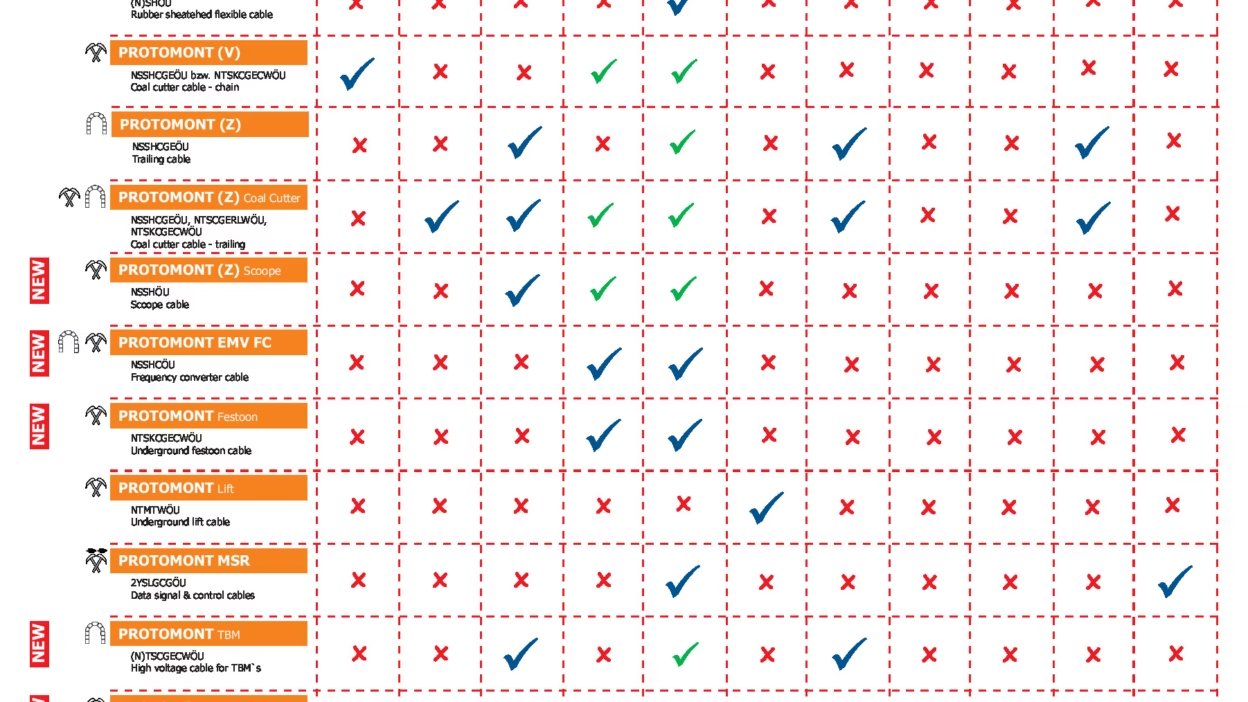
Prysmian Mining Application Systems represent a comprehensive portfolio of specialized cables engineered for the demanding environments of underground mining, tunneling operations, and opencast mining facilities. Developed by Prysmian Group, the world's largest cable manufacturer with over 140 years of expertise, these systems encompass multiple product families including PROTOLON (medium voltage flexible cables), PROTOMONT (rubber-sheathed flexible cables), OPTOFLEX (fiber optic cables), and CORDAFLEX (scraper cables).

What is Prysmian Mining Application systems ?

矿用电缆, 采煤机电缆, 拖曳电缆, 橡套电缆, 中压柔性电缆, 煤矿电缆, 隧道掘进机电缆, горнодобывающий кабель, шахтный кабель, гибкий кабель для шахт, кабель для угольных комбайнов, тянущийся кабель PROTOLON cable, PROTOMONT cable, OPTOFLEX mining cable, CORDAFLEX scraper cable, SUPROMONT power feeder cable, NTMCGCWÖU cable, NTSCGEWÖU cable, NTSCGCEWÖU cable, NSSHÖU cable, NSHÖU mining cable, NSSHCGEÖU coal cutter cable, NSHTÖU scraper cable, NYHSSYCY feeder cable, N3GHSSYCY rubber cable, NTSKGCFCWÖU festoon cable, NTMHWÖU lift cable, ZYSLGCGÖU MSR cable
BS6708, mining cable, quarry cable, trailing cable, EPR cable, SWA cable, coal cutter cable, excavator cable, 礦用電纜, 採石場電纜, 拖曳電纜

What is BS6708 Cable?

British Standard BS6708 sets out the requirements for flexible trailing cables where used in mining operations and quarries. These cables are often referred to as trailing cables, quarry cables, or auxiliary cables and have applications with a wide range of dynamic mining equipment including excavators, coal-cutters, crushing machines, and shuttle cars. flexible trailing cable, mine cable, EPR mining cable, SWA mining cable, chloroprene cable, coal cutter cable, excavator cable, shuttle car cable, crushing machine cable, coal face cable, Type 7 mining cable, Type 7M cable, Type 7S cable, Type 11 cable, Type 20 cable, Type 21 cable, Type 307 cable, Type 331 cable, Type 621 cable, Type 631 cable, 640/1100V mining cable, 1.9/3.3kV mining cable
Type 14 BS 6708 Trailing Cable

What is Type 14 BS 6708 Trailing Cable?

BS 6708 Type 14 Trailing Cable represents a specialized engineering solution within the British Standard family of mining cables, specifically designed for power distribution to excavating and crushing machines in underground coal mines and surface quarrying operations. This cable type features a unique configuration that balances electromagnetic protection with cost efficiency and simplified installation. 🔑 Critical Distinguishing Feature Unlike Type 11 cables where all cores are screened, Type 14 features screened phase cores only, with the pilot core and earth core intentionally left unscreened. This design choice provides specific advantages in fault current handling and cable weight optimization while maintaining essential EMI protection for power conductors. According to BS 6708:1998 classification, Type 14 belongs to the family of non-armoured cables with individually metallic screened cores rated at 640/1100 V, specifically designated for use with coalface cutters and similar mining machinery. The standard encompasses Types 7, 7M, 7S, 11, 14, and 16, each with distinct screening configurations optimized for specific operational requirements.
BS 6708 Type 11 Trailing Cable

What is BS 6708 Type 11 Trailing Cable?

BS 6708 Type 11 Trailing Cable represents a pinnacle of electrical engineering specifically designed for the demanding conditions of underground coal mining and surface quarrying operations. This specialized cable serves as the electrical lifeline for coalface cutters, shuttle cars, and similar face equipment, where reliability and safety are non-negotiable requirements.