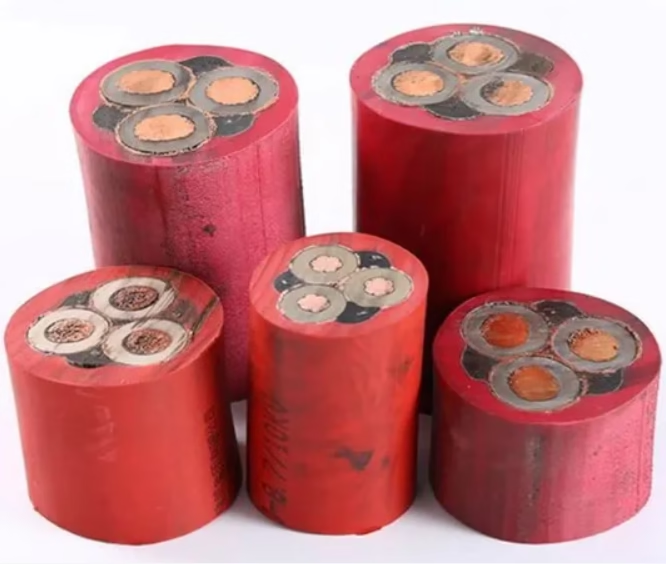
shielded mining cable

Large three-phase AC motors drove continuous-duty equipment (conveyor systems, pump stations, ventilation fans) with straightforward on/off control via contactor switches. The control circuits were simple, the equipment was robust and forgiving of electrical noise, and cable specifications focused purely on mechanical durability and basic electrical protection. Modern underground mining operations operate in a fundamentally different electrical environment. Variable frequency drives (VFDs) regulate motor speeds to match load requirements, reducing energy consumption and extending equipment life. Programmable logic controllers (PLCs) and distributed control systems (DCS) automate equipment sequencing and mine ventilation. Wireless monitoring systems track equipment health, environmental conditions, and safety parameters. The mine's electrical environment has become as electrically complex as an industrial manufacturing facility, except that everything must operate underground in the presence of conductive dust, moisture, and metallic ore particles that create unintended current paths and electromagnetic noise sources.

Understanding UNE 22513-1 (DS1N) Requirements for Underground Mines

Large three-phase AC motors drove continuous-duty equipment (conveyor systems, pump stations, ventilation fans) with straightforward on/off control via contactor switches. The control circuits were simple, the equipment was robust and forgiving of electrical noise, and cable specifications focused purely on mechanical durability and basic electrical protection. Modern underground mining operations operate in a fundamentally different electrical environment. Variable frequency drives (VFDs) regulate motor speeds to match load requirements, reducing energy consumption and extending equipment life. Programmable logic controllers (PLCs) and distributed control systems (DCS) automate equipment sequencing and mine ventilation. Wireless monitoring systems track equipment health, environmental conditions, and safety parameters. The mine’s electrical environment has become as electrically complex as an industrial manufacturing facility, except that everything must operate underground in the presence of conductive dust, moisture, and metallic ore particles that create unintended current paths and electromagnetic noise sources.
DS1N (also designated UNE 22513-1) represents an evolved generation of mining cable technology designed specifically for environments where electromagnetic interference (EMI) and signal integrity are as critical as mechanical durability. The standard specifies cables that combine the proven mechanical robustness of UNE 22511/22512 designs with the electromagnetic shielding technology required for control systems, signal circuits, and power distribution in complex underground installations. The defining characteristic of DS1N is the integration of a metal braid shield — typically tinned copper wire woven at high density around the cable core — combined with a symmetric earth architecture (3×S1 + 3×S2 distribution) that provides both electrical protection and mechanical balance. This combination addresses a critical operational requirement in modern mining: reducing noise and crosstalk in environments where control signals must coexist with high-power switching equipment, variable frequency drives, and long distribution runs to remote equipment.

Type DS1N Mining Cable

DS1N (also designated UNE 22513-1) represents an evolved generation of mining cable technology designed specifically for environments where electromagnetic interference (EMI) and signal integrity are as critical as mechanical durability. The standard specifies cables that combine the proven mechanical robustness of UNE 22511/22512 designs with the electromagnetic shielding technology required for control systems, signal circuits, and power distribution in complex underground installations. The defining characteristic of DS1N is the integration of a metal braid shield — typically tinned copper wire woven at high density around the cable core — combined with a symmetric earth architecture (3×S1 + 3×S2 distribution) that provides both electrical protection and mechanical balance. This combination addresses a critical operational requirement in modern mining: reducing noise and crosstalk in environments where control signals must coexist with high-power switching equipment, variable frequency drives, and long distribution runs to remote equipment.
Full technical breakdown Tele-Fonika OnGce 3x70+16+2x10 0.6/1kV: heavy-duty mining trailing cable for coal face machinery, LHD loaders, conveyor systems, underground infrastructure. "OnGce" = Opona (protective sheath) + nG (flame non-propagating) + c (rubber insulation) + e (screened) — complete European mine safety standard. Class 5 copper stranding (~0.20 mm wire) enables bending radius 8–12× OD. EPR insulation with conductive rubber screens above phase conductors for spark-free operation. Neoprene outer sheath (high-pressure extruded) resists tearing from rock edges and sharp underground obstacles. Temperature -25°C to +90°C. FeiChun Underground Mining Cable 0.6/1kV 3x70+16+2x10 — full functional equivalent using identical Class 5 copper, EPR insulation, conductive screens, high-pressure neoprene extrusion, certified for direct replacement in European-spec mining equipment.

Аналог шахтного кабеля OnGce: Замена польского кабеля 3×70+16+2×10 0.6/1kV в РФ и СНГ — инженерия подземной безопасности и надёжности — FeiChun Mining Cable

Full technical breakdown Tele-Fonika OnGce 3×70+16+2×10 0.6/1kV: heavy-duty mining trailing cable for coal face machinery, LHD loaders, conveyor systems, underground infrastructure. “OnGce” = Opona (protective sheath) + nG (flame non-propagating) + c (rubber insulation) + e (screened) — complete European mine safety standard. Class 5 copper stranding (~0.20 mm wire) enables bending radius 8–12× OD. EPR insulation with conductive rubber screens above phase conductors for spark-free operation. Neoprene outer sheath (high-pressure extruded) resists tearing from rock edges and sharp underground obstacles. Temperature -25°C to +90°C. FeiChun Underground Mining Cable 0.6/1kV 3×70+16+2×10 — full functional equivalent using identical Class 5 copper, EPR insulation, conductive screens, high-pressure neoprene extrusion, certified for direct replacement in European-spec mining equipment.
The continuous ampacity of (N)TSCGEWÖU 3x120+3x70/3 12/20kV flexible reeling cable is 360 amperes when operating as a single conductor run in free air at the reference condition of 30°C ambient temperature and 90°C conductor operating temperature according to VDE 0250-813 and DIN VDE 0298-4 standards. For tunnel boring machine cutterhead power supply applications where the cable is installed in the constrained environment of a TBM backup gantry system—bundled alongside control cables, communication lines, and other power feeders—and subjected to frequent mechanical stress from dragging and reeling operations, the practical safe ampacity derates to approximately 260–285 amperes depending on specific installation geometry, tunnel temperature profile, and frequency of mechanical cycling. These two ampacity values represent the boundary between theoretical maximum current capacity and the practical operating limit for reliable power delivery to a 2–3 megawatt main cutterhead drive motor in a hard-rock tunneling or soft-ground excavation system. Understanding where these values come from and how they apply to specific TBM configurations is essential for preventing unexpected power loss to the cutterhead, which could force a full machine shutdown and result in schedule delays of weeks or months in confined underground construction.

TBM Cutterhead Power Supply: How to correctly size (N)TSCGEWÖU 3×120+3×70/3 12/20kV flexible reeling cable for tunnel boring machine main drive systems 

The continuous ampacity of (N)TSCGEWÖU 3×120+3×70/3 12/20kV flexible reeling cable is 360 amperes when operating as a single conductor run in free air at the reference condition of 30°C ambient temperature and 90°C conductor operating temperature according to VDE 0250-813 and DIN VDE 0298-4 standards. For tunnel boring machine cutterhead power supply applications where the cable is installed in the constrained environment of a TBM backup gantry system—bundled alongside control cables, communication lines, and other power feeders—and subjected to frequent mechanical stress from dragging and reeling operations, the practical safe ampacity derates to approximately 260–285 amperes depending on specific installation geometry, tunnel temperature profile, and frequency of mechanical cycling. These two ampacity values represent the boundary between theoretical maximum current capacity and the practical operating limit for reliable power delivery to a 2–3 megawatt main cutterhead drive motor in a hard-rock tunneling or soft-ground excavation system. Understanding where these values come from and how they apply to specific TBM configurations is essential for preventing unexpected power loss to the cutterhead, which could force a full machine shutdown and result in schedule delays of weeks or months in confined underground construction.
Type SHD-GC 3/C 250 MCM 25kV cable has a specified minimum bending radius of 8 times the outer diameter (8 × D), which for this cable translates to approximately 880 millimeters (34.6 inches) based on the typical outer diameter range of 104–110 millimeters. This specification is the absolute minimum radius that the cable can tolerate during installation, reel configuration, and static deployment without incurring unacceptable insulation stress and mechanical damage. However, this 8× specification applies specifically to static installation conditions—situations where the cable is being wound onto a reel, routed through permanent guide equipment, or deployed at rest or under steady-state tension. When the cable enters active operational service on a shovel or dragline where it experiences dynamic motion, rapid acceleration and deceleration, shock loads from bucket impacts, and thermal cycling from solar heating and cooling cycles, the effective operational bending radius constraints become more restrictive. In these dynamic conditions, the safe operating bending radius should be treated as closer to 10–12 times the outer diameter depending on the severity of the mechanical duty, the magnitude of pulling tension applied simultaneously, and the ambient temperature extremes of the mining location.

Static vs. Dynamic Bending Radius: What is the correct minimum bending radius for Type SHD-GC 3/C 250 MCM 25kV shovel cables during installation and operational deployment in open-pit mining?

Type SHD-GC 3/C 250 MCM 25kV cable has a specified minimum bending radius of 8 times the outer diameter (8 × D), which for this cable translates to approximately 880 millimeters (34.6 inches) based on the typical outer diameter range of 104–110 millimeters. This specification is the absolute minimum radius that the cable can tolerate during installation, reel configuration, and static deployment without incurring unacceptable insulation stress and mechanical damage. However, this 8× specification applies specifically to static installation conditions—situations where the cable is being wound onto a reel, routed through permanent guide equipment, or deployed at rest or under steady-state tension. When the cable enters active operational service on a shovel or dragline where it experiences dynamic motion, rapid acceleration and deceleration, shock loads from bucket impacts, and thermal cycling from solar heating and cooling cycles, the effective operational bending radius constraints become more restrictive. In these dynamic conditions, the safe operating bending radius should be treated as closer to 10–12 times the outer diameter depending on the severity of the mechanical duty, the magnitude of pulling tension applied simultaneously, and the ambient temperature extremes of the mining location.
Ampacity is the maximum electric current that a conductor can safely carry continuously without exceeding a specified temperature limit, usually 90°C for power cables used in mining and industrial applications. The word itself is a contraction of "ampere" and "capacity," and it represents a fundamental constraint imposed by the physics of electrical resistance and heat dissipation. Understanding ampacity is not an academic exercise — it is the critical foundation for ensuring that your mining equipment receives reliable power, that cables do not overheat and fail prematurely, and that your operation avoids unplanned downtime due to cable damage or failure. 载流量是导体在不超过指定温度限值(通常为90°C)的条件下能连续安全承载的最大电流。

Ampacity Rating Guide: How Much Current Can a Type SHD-GC 3/C 4/0 AWG 8kV Cable Handle?

Ampacity is the maximum electric current that a conductor can safely carry continuously without exceeding a specified temperature limit, usually 90°C for power cables used in mining and industrial applications. The word itself is a contraction of “ampere” and “capacity,” and it represents a fundamental constraint imposed by the physics of electrical resistance and heat dissipation. Understanding ampacity is not an academic exercise — it is the critical foundation for ensuring that your mining equipment receives reliable power, that cables do not overheat and fail prematurely, and that your operation avoids unplanned downtime due to cable damage or failure. 载流量是导体在不超过指定温度限值(通常为90°C)的条件下能连续安全承载的最大电流。
When electrical engineers and equipment operators discuss the capacity of a dragline or shovel reeling cable, they often refer to a specification that seems disconnected from the typical electrical characteristics — the maximum permissible tensile load, expressed in units of pounds per thousand circular mills (lbs/mcm). This specification is fundamentally different from ampacity (which measures the cable's ability to safely carry electrical current) or voltage rating (which specifies the insulation quality). Instead, tensile load capacity describes the maximum mechanical force that the cable can withstand before the metallic conductors themselves begin to yield, stretch, or break. For a reeling cable used on heavy dragline or shovel equipment, this mechanical specification is often more critical to equipment safety and service life than the electrical specifications, because the cable is typically exposed to enormous pulling forces that can exceed the weight of the equipment being supported.

Type SHD-GC (Reeling): Maximum Permissible Tensile Load for Heavy-Duty Dragline Cable Reels

When electrical engineers and equipment operators discuss the capacity of a dragline or shovel reeling cable, they often refer to a specification that seems disconnected from the typical electrical characteristics — the maximum permissible tensile load, expressed in units of pounds per thousand circular mills (lbs/mcm). This specification is fundamentally different from ampacity (which measures the cable’s ability to safely carry electrical current) or voltage rating (which specifies the insulation quality). Instead, tensile load capacity describes the maximum mechanical force that the cable can withstand before the metallic conductors themselves begin to yield, stretch, or break. For a reeling cable used on heavy dragline or shovel equipment, this mechanical specification is often more critical to equipment safety and service life than the electrical specifications, because the cable is typically exposed to enormous pulling forces that can exceed the weight of the equipment being supported.
(N)TMCGEH3S矿用电缆介绍 The (N)TMCGEH3S represents a sophisticated medium voltage trailing cable specifically engineered for demanding open-pit mining operations. Developed in accordance with DIN VDE 0250 Part 813 standards and Nexans specifications, this polyurethane-sheathed cable combines exceptional mechanical durability with advanced electrical performance characteristics. The integration of self-illuminating LED visual monitoring technology transforms this cable into an intelligent power transmission solution that provides real-time operational status indication. (N)TMCGEH3S是一种专为苛刻露天采矿作业设计的复杂中压拖曳电缆。该电缆按照DIN VDE 0250第813部分标准和Nexans规范开发,聚氨酯护套电缆将卓越的机械耐久性与先进的电气性能特性相结合。集成自发光LED视觉监测技术使该电缆成为能够提供实时运行状态指示的智能电力传输解决方案。

(N)TMCGEH3S Self-Illuminating Mining Cable: Can LED Brightness Indicate Voltage Level or Load Status?

(N)TMCGEH3S represents a sophisticated medium voltage trailing cable specifically engineered for demanding open-pit mining operations. Developed in accordance with DIN VDE 0250 Part 813 standards and Nexans specifications, this polyurethane-sheathed cable combines exceptional mechanical durability with advanced electrical performance characteristics. The integration of self-illuminating LED visual monitoring technology transforms this cable into an intelligent power transmission solution that provides real-time operational status indication. (N)TMCGEH3S是一种专为苛刻露天采矿作业设计的复杂中压拖曳电缆。该电缆按照DIN VDE 0250第813部分标准和Nexans规范开发,聚氨酯护套电缆将卓越的机械耐久性与先进的电气性能特性相结合。集成自发光LED视觉监测技术使该电缆成为能够提供实时运行状态指示的智能电力传输解决方案。
how does LED mining cable work, self-illuminating cable electromagnetic induction, 360 degree visibility trailing cable for draglines, transparent TPU jacket vs CPE jacket mining cable, MSHA approved LED visibility cable, helical wound LED strip mining cable, cable runover prevention technology, ground check monitoring system mining, induction powered self-illuminating cable, best mining cable for night operations, visible cable for underground mining, high voltage trailing cable with LED, shovel trailing cable downtime reduction, mining cable visibility in low light conditions, electromagnetic field powered LED, self-sufficient LED visual monitoring system, cable damage cost reduction mining, how to prevent trailing cable runovers

Self-Illuminating Mining Cable: 360° Visibility Through Helical Stranding of LED Light Elements

how does LED mining cable work, self-illuminating cable electromagnetic induction, 360 degree visibility trailing cable for draglines, transparent TPU jacket vs CPE jacket mining cable, MSHA approved LED visibility cable, helical wound LED strip mining cable, cable runover prevention technology, ground check monitoring system mining, induction powered self-illuminating cable, best mining cable for night operations, visible cable for underground mining, high voltage trailing cable with LED, shovel trailing cable downtime reduction, mining cable visibility in low light conditions, electromagnetic field powered LED, self-sufficient LED visual monitoring system, cable damage cost reduction mining, how to prevent trailing cable runovers
Type SHD-GC cables rated from 2kV to 25kV are now available with embedded self-sufficient LED monitoring pilots. This innovative technology represents a significant advancement in mining cable safety, utilizing electromagnetic induction to power LED illumination without requiring external power connections or batteries. (是的,2kV至25kV额定电压的SHD-GC型电缆现已配备自发光LED监测指示系统。该创新技术利用电磁感应原理为LED供电,无需外部电源连接或电池。)

FeiChun SHD-GC with Embedded LED Monitoring PilotsType SHD-GC Cables (2kV – 25kV) with Self-Sufficient Illumination Technology

Type SHD-GC cables rated from 2kV to 25kV are now available with embedded self-sufficient LED monitoring pilots. This innovative technology represents a significant advancement in mining cable safety, utilizing electromagnetic induction to power LED illumination without requiring external power connections or batteries. (是的,2kV至25kV额定电压的SHD-GC型电缆现已配备自发光LED监测指示系统。该创新技术利用电磁感应原理为LED供电,无需外部电源连接或电池。)
AmerCable's Tiger® Brand Type SHD-GC mining cables have established themselves as industry benchmarks for portable power applications in surface and underground mining operations. A frequently asked question among mining equipment managers and procurement specialists is whether generic alternatives exist that can match the exact specifications mandated by ICEA S-75-381/NEMA WC-58 standards. This technical analysis examines the standard requirements, construction specifications, and critical parameters that define true equivalency, providing procurement teams with the knowledge needed to evaluate alternative suppliers confidently. AmerCable的Tiger®品牌Type SHD-GC矿用电缆已确立为地表和地下采矿作业便携式电力应用的行业基准。采矿设备管理者和采购专家经常询问的一个问题是,是否存在能够匹配ICEA S-75-381/NEMA WC-58标准规定的精确规格的通用替代品。本技术分析研究了定义真正等效性的标准要求、结构规格和关键参数,为采购团队提供评估替代供应商所需的知识。

Tiger Brand Type SHD-GC: Is There a Generic Alternative That Meets the Exact ICEA S-75-381 Specs of AmerCable?

AmerCable’s Tiger® Brand Type SHD-GC mining cables have established themselves as industry benchmarks for portable power applications in surface and underground mining operations. A frequently asked question among mining equipment managers and procurement specialists is whether generic alternatives exist that can match the exact specifications mandated by ICEA S-75-381/NEMA WC-58 standards. This technical analysis examines the standard requirements, construction specifications, and critical parameters that define true equivalency, providing procurement teams with the knowledge needed to evaluate alternative suppliers confidently. AmerCable的Tiger®品牌Type SHD-GC矿用电缆已确立为地表和地下采矿作业便携式电力应用的行业基准。采矿设备管理者和采购专家经常询问的一个问题是,是否存在能够匹配ICEA S-75-381/NEMA WC-58标准规定的精确规格的通用替代品。本技术分析研究了定义真正等效性的标准要求、结构规格和关键参数,为采购团队提供评估替代供应商所需的知识。
The selection of appropriate trailing cables for surface mining draglines represents a critical engineering decision that directly impacts operational efficiency, safety, and total cost of ownership. Dragline excavators, among the largest mobile land machines in operation, require specialized heavy-duty trailing cables capable of delivering high-voltage power (typically 2 kV to 35 kV) while withstanding extreme mechanical stresses including constant flexing, crushing forces, abrasion, and environmental exposure to ultraviolet radiation, temperature extremes, and moisture. This technical analysis examines the comparative merits of Nexans AmerCable's Tiger Brand premium mold-cured cables versus generic Type SHD-GC alternatives, focusing specifically on the critical importance of jacket construction technology in determining long-term performance and reliability in surface mining dragline applications.

Nexans AmerCable Tiger Brand vs. Type SHD-GC: Finding a Compatible Mold-Cured Jacket Cable for Surface Mining Draglines

The selection of appropriate trailing cables for surface mining draglines represents a critical engineering decision that directly impacts operational efficiency, safety, and total cost of ownership. Dragline excavators, among the largest mobile land machines in operation, require specialized heavy-duty trailing cables capable of delivering high-voltage power (typically 2 kV to 35 kV) while withstanding extreme mechanical stresses including constant flexing, crushing forces, abrasion, and environmental exposure to ultraviolet radiation, temperature extremes, and moisture. This technical analysis examines the comparative merits of Nexans AmerCable’s Tiger Brand premium mold-cured cables versus generic Type SHD-GC alternatives, focusing specifically on the critical importance of jacket construction technology in determining long-term performance and reliability in surface mining dragline applications.
Type SHD-GC (Shielded, High-voltage, with a Grounding Conductor) cables represent the industry standard for high-voltage portable power distribution in surface and underground mining operations. These cables are manufactured according to ICEA S-75-381/NEMA WC 58 standards and must comply with MSHA 30 CFR Part 7 flame resistance requirements for use in mining environments. SHD-GC型(带接地导体的屏蔽高压)电缆代表了露天和地下采矿作业中高压便携式配电的行业标准。这些电缆根据ICEA S-75-381/NEMA WC 58标准制造,并必须符合MSHA 30 CFR第7部分的阻燃要求,方可用于采矿环境。

Coupler Compatibility: Matching Type SHD-GC Cables with Patton & Cooke 15kV Connectors

Type SHD-GC (Shielded, High-voltage, with a Grounding Conductor) cables represent the industry standard for high-voltage portable power distribution in surface and underground mining operations. These cables are manufactured according to ICEA S-75-381/NEMA WC 58 standards and must comply with MSHA 30 CFR Part 7 flame resistance requirements for use in mining environments. SHD-GC型(带接地导体的屏蔽高压)电缆代表了露天和地下采矿作业中高压便携式配电的行业标准。这些电缆根据ICEA S-75-381/NEMA WC 58标准制造,并必须符合MSHA 30 CFR第7部分的阻燃要求,方可用于采矿环境。
(N)TSCGEWÖU cable series represents a category of medium voltage flexible mining, drilling and tunneling cables primarily designed to meet DIN VDE 0250-813 specifications. (N)TSCGEWÖU电缆系列代表一类中压柔性采矿、钻井和隧道电缆,主要设计满足DIN VDE 0250-813规范 These cables are widely used internationally for power distribution to heavy-duty mining equipment in surface and underground installations. However, exporting these cables to the Russian Federation and other CIS countries requires compliance with GOST-R certification standards, which operate under a distinct regulatory framework from European DIN VDE standards.

GOST-R: Do (N)TSCGEWÖU Cables Meet the GOST-R Certification Requirements for the Russian/CIS Mining Market?

(N)TSCGEWÖU cable series represents a category of medium voltage flexible mining, drilling and tunneling cables primarily designed to meet DIN VDE 0250-813 specifications. (N)TSCGEWÖU电缆系列代表一类中压柔性采矿、钻井和隧道电缆,主要设计满足DIN VDE 0250-813规范 These cables are widely used internationally for power distribution to heavy-duty mining equipment in surface and underground installations. However, exporting these cables to the Russian Federation and other CIS countries requires compliance with GOST-R certification standards, which operate under a distinct regulatory framework from European DIN VDE standards.
N3GHSSYCY cable designation represents a sophisticated medium voltage mining cable specifically engineered for hazardous underground environments. This nomenclature follows the German VDE (Verband der Elektrotechnik) standardization system, where each letter and number conveys critical information about the cable's construction and intended application. Understanding this designation system is essential for engineers, procurement specialists, and safety officers working in mining and tunneling operations. N3GHSSYCY电缆名称代表专门为危险地下环境设计的复杂中压矿用电缆。该命名法遵循德国VDE(电气工程协会)标准化系统,其中每个字母和数字都传达有关电缆结构和预期应用的关键信息。了解该命名系统对于从事采矿和隧道作业的工程师、采购专家和安全官员至关重要。

N3GHSSYCY Cable Datasheet: Technical Specification Downloads & Resources

N3GHSSYCY cable designation represents a sophisticated medium voltage mining cable specifically engineered for hazardous underground environments. This nomenclature follows the German VDE (Verband der Elektrotechnik) standardization system, where each letter and number conveys critical information about the cable’s construction and intended application. Understanding this designation system is essential for engineers, procurement specialists, and safety officers working in mining and tunneling operations. N3GHSSYCY电缆名称代表专门为危险地下环境设计的复杂中压矿用电缆。该命名法遵循德国VDE(电气工程协会)标准化系统,其中每个字母和数字都传达有关电缆结构和预期应用的关键信息。了解该命名系统对于从事采矿和隧道作业的工程师、采购专家和安全官员至关重要。
Type SHD-GC cables represent a specialized category of shielded medium voltage mining cables designed for the most demanding industrial applications. These cables are specifically engineered for use in mining operations where they must withstand extensive abrasion, impact, vibration, tension, and cut-through conditions that commonly cause standard cable failures. The designation "SHD-GC" indicates Super Heavy Duty with Ground Check capability, making them essential for applications such as continuous mining machines, longwall systems, blast hole drillers, shovels, draglines, and other mobile mining equipment.

What is the correct Pothead compound filling procedure for Type SHD-GC medium voltage couplers?

Type SHD-GC cables represent a specialized category of shielded medium voltage mining cables designed for the most demanding industrial applications. These cables are specifically engineered for use in mining operations where they must withstand extensive abrasion, impact, vibration, tension, and cut-through conditions that commonly cause standard cable failures. The designation “SHD-GC” indicates Super Heavy Duty with Ground Check capability, making them essential for applications such as continuous mining machines, longwall systems, blast hole drillers, shovels, draglines, and other mobile mining equipment.
Type SHD-GC cable represents a critical component in mining and heavy industrial applications, designed specifically for environments where both flexibility and maximum protection are paramount. This shielded mining cable features Ethylene Propylene Diene Monomer (EPDM) or Ethylene Propylene Rubber (EPR) insulation, providing exceptional resistance to moisture, heat, and abrasion. The cable is commonly deployed in mobile mining equipment, continuous mining machines, longwall mining systems, and other demanding industrial settings where power reliability and safety cannot be compromised.

Minimum Bending Radius: How Tight Can You Bend a Type SHD-GC Cable Without Damaging the EPDM Insulation?

Type SHD-GC cable represents a critical component in mining and heavy industrial applications, designed specifically for environments where both flexibility and maximum protection are paramount. This shielded mining cable features Ethylene Propylene Diene Monomer (EPDM) or Ethylene Propylene Rubber (EPR) insulation, providing exceptional resistance to moisture, heat, and abrasion. The cable is commonly deployed in mobile mining equipment, continuous mining machines, longwall mining systems, and other demanding industrial settings where power reliability and safety cannot be compromised.
Кабель силовой шахтный и экскаваторный необходим для подключения горнодобывающего оборудования, экскаваторов и другого землеройного оборудования, электроинструментов, а также для проведения горных взрывных работ. Шахтные кабели используют для всех типов шахт: угольные, соляные, сланцевые, а также подходят для открытых карьерных разработок. Кабели эксплуатируются на напряжении переменного тока 660, 1140, 6000 В.

What is Кабель для шахт?

КГЭШ, КГЭШ-1140, КГЭ, КГЭ-6, КГЭ-Т, КГЭ-ХЛ, КГЭ-ХЛ-6, КГЭС, КГЭТ, КГВШ, КГРШ, КШВГТ, ЭВБВ, ЭВБВ-6, ЭВТ-1140, ЭВТ-6000, кабель КГЭШ, кабель КГЭ, кабель ЭВБВ, шахтный кабель КГЭШ, экскаваторный кабель, mining cable KGESH, excavator cable KGE, KGESH cable, KGE cable, EVBV cable
Кабели марки КГЭШ предназначены для присоединения угольных комбайнов, передвижных машин и механизмов при подземных горных работах к электрическим сетям на номинальное напряжение переменного тока до 1140 В частотой 50 Гц на основных жилах и до 220 В на вспомогательной жиле. Кабели могут эксплуатироваться в подземных помещениях и шахтах с повышенной влажностью воздуха, в которых возможно длительное наличие воды или частая конденсация влаги.

Кабель КГЭШ 3х4+1х2,5+3х1,5, 1 кВ

КГЭШ, КГЭШ 3х4+1х2.5+3х1.5, КГЭШ 1кВ, кабель КГЭШ, КГЭШ cable, mining cable КГЭШ, KGESH cable, KGESH 3×4, flexible mining cable КГЭШ, shielded mining cable, экранированный кабель КГЭШ, гибкий шахтный кабель, 矿用电缆КГЭШ, 礦用電纜КГЭШ, КГЭШ 3х4 цена, КГЭШ характеристики
ANSI/NEMA WC 58 / ICEA S-75-381: Portable and Power Feeder Cables for Mining Applications

ANSI/NEMA WC 58 / ICEA S-75-381: Portable and Power Feeder Cables for Mining Applications

ANSI/NEMA WC 58 / ICEA S-75-381 standard represents one of the most comprehensive specifications for portable and power feeder cables used in mining environments. According to industry analysis, this standard represents one of the most rigorous cable specifications ever developed, specifically addressing the unique challenges encountered in both surface and underground mining operations where equipment reliability directly impacts production efficiency and worker safety.
MSHA Mining Cable: Comprehensive Technical Guide Professional Mining Power Cables Complying with US Mine Safety & Health Administration Standards

MSHA Mining Cable: Comprehensive Technical Guide

MSHA mining cables represent a specialized category of industrial power cables specifically designed, tested, and approved for use in mining operations under regulations established by the United States Mine Safety and Health Administration (MSHA). These cables serve critical functions in both underground and surface mining environments, delivering electrical power to mobile equipment, continuous miners, draglines, shuttle cars, and various other mining machinery while maintaining the highest standards of safety in potentially hazardous atmospheres.