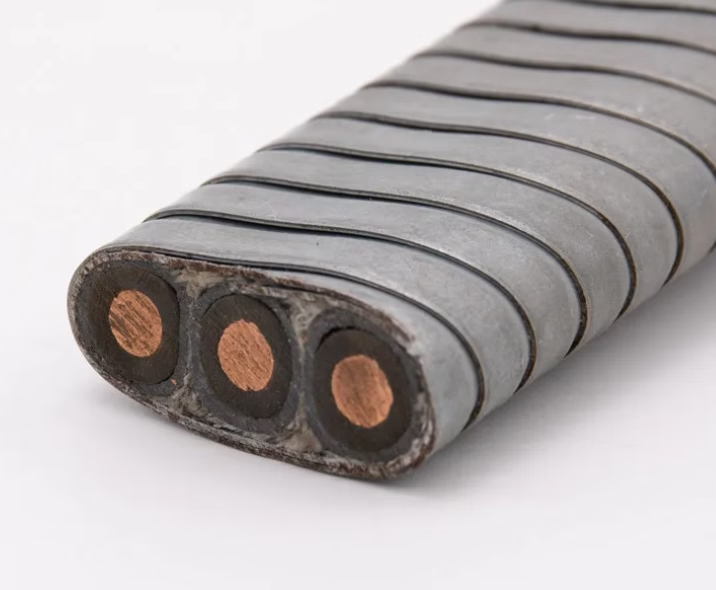
NTSCGEWOU cable

Complete Technical Guide to Heavy-Duty Reeling Cables for Ship-to-Shore (STS) Container Cranes, Rubber-Tired Gantry (RTG/RMG) Systems, and Mining Bucket Wheel Excavators. VDE 0250-813/814 Standards, Anti-Torsion Engineering Strategy, EPR 3GI3 Insulation, 5GM5 Neoprene Heavy-Duty Sheath, Tensile Strength Analysis, High-Speed Reeling Operation, Dynamic Load Management, Global Supply Chain Procurement, and Factory-Direct Equivalence to Premium European Brands. 港口集装箱起重机、轮胎式门式起重机(RTG/RMG)系统和采矿铲斗轮挖掘机重型卷筒电缆的完整技术指南。VDE 0250-813/814标准、防扭转工程策略、EPR 3GI3绝缘、5GM5氯丁橡胶重型护套、拉伸强度分析、高速卷筒操作、动态负荷管理、全球供应链采购和与高端欧洲品牌的工厂直接等效。

Crane Reeling Cables for Port and Mining Equipment: VDE Engineering, Mechanical Stress Performance, and Supply Chain Optimization

Complete Technical Guide to Heavy-Duty Reeling Cables for Ship-to-Shore (STS) Container Cranes, Rubber-Tired Gantry (RTG/RMG) Systems, and Mining Bucket Wheel Excavators. VDE 0250-813/814 Standards, Anti-Torsion Engineering Strategy, EPR 3GI3 Insulation, 5GM5 Neoprene Heavy-Duty Sheath, Tensile Strength Analysis, High-Speed Reeling Operation, Dynamic Load Management, Global Supply Chain Procurement, and Factory-Direct Equivalence to Premium European Brands. 港口集装箱起重机、轮胎式门式起重机(RTG/RMG)系统和采矿铲斗轮挖掘机重型卷筒电缆的完整技术指南。VDE 0250-813/814标准、防扭转工程策略、EPR 3GI3绝缘、5GM5氯丁橡胶重型护套、拉伸强度分析、高速卷筒操作、动态负荷管理、全球供应链采购和与高端欧洲品牌的工厂直接等效。
Complete decoding of (N)TSCGEWÖU / (N)TSCGEWOEU per DIN VDE 0250: (N) VDE-compliant normtype, T Tagebau/trailing, S semiconductive screen, C concentric copper screen, G rubber, E EPR insulation, W weather/abrasion-resistant sheath, Ö oil-resistant, U flame-retardant. Layer-by-layer construction, notation variants, size table 3×16–3×185 mm² at 3.6/6–8.7/15 kV, comparison with PROTOLON (SB)/(SMK) and Russian КГЭШ-Т, applications in BWE excavators, STS/RTG cranes, TBM. 50-keyword procurement reference table.

Расшифровка маркировки кабеля (N)TSCGEWÖU: каждая буква — инженерный анализ по DIN VDE

Complete decoding of (N)TSCGEWÖU / (N)TSCGEWOEU per DIN VDE 0250: (N) VDE-compliant normtype, T Tagebau/trailing, S semiconductive screen, C concentric copper screen, G rubber, E EPR insulation, W weather/abrasion-resistant sheath, Ö oil-resistant, U flame-retardant. Layer-by-layer construction, notation variants, size table 3×16–3×185 mm² at 3.6/6–8.7/15 kV, comparison with PROTOLON (SB)/(SMK) and Russian КГЭШ-Т, applications in BWE excavators, STS/RTG cranes, TBM. 50-keyword procurement reference table.
Сибирский и Дальневосточный федеральные округа России — от Кузбасса на западе до Магаданской области на востоке — включают более 400 горнодобывающих предприятий открытого и подземного типа: угольные разрезы Кемеровской области (СУЭК, Кузбассразрезуголь), золотодобывающие предприятия Красноярского края и Магадана (Полюс, Полиметалл), алмазные рудники Якутии (АЛРОСА), медно-никелевые предприятия Норильского промышленного района (Норникель) и железорудные карьеры Иркутской области. Суммарное потребление гибких экранированных кабелей среднего напряжения 6кВ (марки КГЭ-ХЛ, КГЭШ-ХЛ) оценивается в 1 200–2 000 отрезков в год — при этом производство сосредоточено на трёх заводах в Центральной России: Кольчугинский завод «Электрокабель» (Владимирская область), ОАО «Камкабель» (Пермский край) и ЗАО «Уралкабель» (Екатеринбург). Логистическое плечо от этих заводов до потребителей в Якутии или Магадане составляет 5 000–8 000 км, добавляя 2–4 недели к сроку поставки только на транспортировку. В пиковые периоды полный цикл «заказ → доставка на рудник» для КГЭ-ХЛ 6кВ 3×95мм² растягивается с номинальных 10–12 недель до 16–22 недель.

VDE 0250 vs ГОСТ: Может ли (N)TSCGEWÖU 6/10kV заменить российский КГЭ-ХЛ 6кВ в сибирских рудниках?Полное инженерно-закупочное руководство

Сибирский и Дальневосточный федеральные округа России — от Кузбасса на западе до Магаданской области на востоке — включают более 400 горнодобывающих предприятий открытого и подземного типа: угольные разрезы Кемеровской области (СУЭК, Кузбассразрезуголь), золотодобывающие предприятия Красноярского края и Магадана (Полюс, Полиметалл), алмазные рудники Якутии (АЛРОСА), медно-никелевые предприятия Норильского промышленного района (Норникель) и железорудные карьеры Иркутской области. Суммарное потребление гибких экранированных кабелей среднего напряжения 6кВ (марки КГЭ-ХЛ, КГЭШ-ХЛ) оценивается в 1 200–2 000 отрезков в год — при этом производство сосредоточено на трёх заводах в Центральной России: Кольчугинский завод «Электрокабель» (Владимирская область), ОАО «Камкабель» (Пермский край) и ЗАО «Уралкабель» (Екатеринбург). Логистическое плечо от этих заводов до потребителей в Якутии или Магадане составляет 5 000–8 000 км, добавляя 2–4 недели к сроку поставки только на транспортировку. В пиковые периоды полный цикл «заказ → доставка на рудник» для КГЭ-ХЛ 6кВ 3×95мм² растягивается с номинальных 10–12 недель до 16–22 недель.
Direct Answer: Standard (N)TSCGEWÖU cables based on DIN VDE 0250-813 are not compliant with AS/NZS 1802 underground coal mining standards. The non-compliance is not merely a matter of standard jurisdiction—it reflects fundamental physical and electrical differences in cable structure, particularly regarding pilot core design and semiconductive cradle technology. 直接答案:基于DIN VDE 0250-813的标准(N)TSCGEWÖU电缆不符合AS/NZS 1802井下煤矿标准。非合规性不仅仅是标准管辖权的问题——它反映了电缆结构的根本物理和电气差异,特别是关于导引线设计和半导体支架技术。 Consequence: Using (N)TSCGEWÖU cables on Australian or New Zealand underground coal mining equipment violates workplace safety regulations and mining electrical codes. It also renders the equipment's earth fault detection system non-functional, eliminating critical protection against explosion and electrical hazards.

Is (N)TSCGEWÖU Compliant with AS/NZS 1802 Coal Mining Standards? Understanding the Pilot Core Issue

Direct Answer: Standard (N)TSCGEWÖU cables based on DIN VDE 0250-813 are not compliant with AS/NZS 1802 underground coal mining standards. The non-compliance is not merely a matter of standard jurisdiction—it reflects fundamental physical and electrical differences in cable structure, particularly regarding pilot core design and semiconductive cradle technology. 直接答案:基于DIN VDE 0250-813的标准(N)TSCGEWÖU电缆不符合AS/NZS 1802井下煤矿标准。非合规性不仅仅是标准管辖权的问题——它反映了电缆结构的根本物理和电气差异,特别是关于导引线设计和半导体支架技术。 Consequence: Using (N)TSCGEWÖU cables on Australian or New Zealand underground coal mining equipment violates workplace safety regulations and mining electrical codes. It also renders the equipment’s earth fault detection system non-functional, eliminating critical protection against explosion and electrical hazards.
When German-manufactured mining equipment—whether a dragline excavator, tunnel boring machine (TBM), or electric shovel—arrives in Australia, it typically specifies power cable ratings according to German VDE standards, most commonly the (N)TSCGEWÖU 12/20kV trailing cable per DIN VDE 0250-813. However, Australian mining networks typically operate at 11/11kV (in IT earthing—isolated or high-impedance grounded neutral systems). This apparent voltage mismatch—12/20kV German specification versus 11/11kV Australian network—creates immediate questions: Can German 12/20kV cables be used directly on Australian 11/11kV systems? What is the technical equivalence? How are AS/NZS 2802 Type 241 and Type 275 cables related to German specifications? 当德国制造的采矿设备——无论是挖掘机、隧道掘进机(TBM)还是电动铲斗——抵达澳洲时,它通常根据德国VDE标准规定电源电缆等级,最常见的是DIN VDE 0250-813的(N)TSCGEWÖU 12/20kV拖曳电缆。然而,澳洲采矿网络通常在11/11kV下运行(在IT接地——隔离或高阻接地中性系统中)。这种表面上的电压不匹配——12/20kV德国规范与11/11kV澳洲网络——立即引发问题:德国12/20kV电缆是否可以直接在澳洲11/11kV系统上使用?技术等效性是什么?AS/NZS 2802 Type 241和Type 275电缆与德国规范有什么关系?

European Machinery in Australia: Sourcing 11/11kV Equivalents for 12/20kV German Trailing Cables

When German-manufactured mining equipment—whether a dragline excavator, tunnel boring machine (TBM), or electric shovel—arrives in Australia, it typically specifies power cable ratings according to German VDE standards, most commonly the (N)TSCGEWÖU 12/20kV trailing cable per DIN VDE 0250-813. However, Australian mining networks typically operate at 11/11kV (in IT earthing—isolated or high-impedance grounded neutral systems). This apparent voltage mismatch—12/20kV German specification versus 11/11kV Australian network—creates immediate questions: Can German 12/20kV cables be used directly on Australian 11/11kV systems? What is the technical equivalence? How are AS/NZS 2802 Type 241 and Type 275 cables related to German specifications? 当德国制造的采矿设备——无论是挖掘机、隧道掘进机(TBM)还是电动铲斗——抵达澳洲时,它通常根据德国VDE标准规定电源电缆等级,最常见的是DIN VDE 0250-813的(N)TSCGEWÖU 12/20kV拖曳电缆。然而,澳洲采矿网络通常在11/11kV下运行(在IT接地——隔离或高阻接地中性系统中)。这种表面上的电压不匹配——12/20kV德国规范与11/11kV澳洲网络——立即引发问题:德国12/20kV电缆是否可以直接在澳洲11/11kV系统上使用?技术等效性是什么?AS/NZS 2802 Type 241和Type 275电缆与德国规范有什么关系?
Yes, a highly capable cable manufacturer can absolutely engineer generic (N)TSCGEWÖU flexible reeling cables to match or even exceed the 20/35kV (36kV maximum equipment voltage) rating of Nexans' RHEYFIRM® brand premium products. However, the critical phrase here is "highly capable manufacturer"—not every cable producer has the technical depth, quality control infrastructure, and engineering expertise to successfully execute a 20/35kV design. The fundamental cable construction—Class 5 tinned copper conductors, semi-conductive rubber inner and outer layers, EPR (ethylene propylene rubber) insulation, and a heavy-duty CPE or chloroprene outer sheath—is well understood and exists within the established scope of DIN VDE 0250-813 mining cable standards. While the traditional (N)TSCGEWÖU specification typically covers voltages up to 18/30kV, the engineering principles that govern the construction are equally applicable to 20/35kV ratings. The transition from 18/30kV to 20/35kV is not a revolutionary leap requiring entirely new materials or manufacturing processes—it is an evolutionary engineering optimization that competent manufacturers have been executing for decades. What distinguishes a genuinely compliant 20/35kV generic (N)TSCGEWÖU from a merely relabeled 18/30kV cable masquerading as 20/35kV is the application of three fundamental engineering disciplines. First, the insulation thickness must be increased according to rigorous electrical stress calculations based on IEC 60502-2 high-voltage standards, accounting for the higher electrical field strength that 20/35kV imposes on the dielectric material. Second, the semi-conductive layers must be engineered with exquisite precision to control the electric field distribution and prevent partial discharge (PD) inception, which is the primary failure mechanism for high-voltage cables subjected to continuous stress. Third, the outer sheath material must be selected and formulated from premium compounds with superior mechanical durability to withstand not only the normal environmental stresses of mining operations but also any electrical stress-related damage that might be induced by the higher voltage rating. The answer, therefore, is yes—but only when manufacturers invest in the engineering rigor and quality control discipline that the 20/35kV rating genuinely demands.

RHEYFIRM® 30kV vs. Generic (N)TSCGEWÖU: Can Standard Manufacturers Match Nexans’ 20/35kV Rating?

Yes, a highly capable cable manufacturer can absolutely engineer generic (N)TSCGEWÖU flexible reeling cables to match or even exceed the 20/35kV (36kV maximum equipment voltage) rating of Nexans’ RHEYFIRM® brand premium products. However, the critical phrase here is “highly capable manufacturer”—not every cable producer has the technical depth, quality control infrastructure, and engineering expertise to successfully execute a 20/35kV design. The fundamental cable construction—Class 5 tinned copper conductors, semi-conductive rubber inner and outer layers, EPR (ethylene propylene rubber) insulation, and a heavy-duty CPE or chloroprene outer sheath—is well understood and exists within the established scope of DIN VDE 0250-813 mining cable standards. While the traditional (N)TSCGEWÖU specification typically covers voltages up to 18/30kV, the engineering principles that govern the construction are equally applicable to 20/35kV ratings. The transition from 18/30kV to 20/35kV is not a revolutionary leap requiring entirely new materials or manufacturing processes—it is an evolutionary engineering optimization that competent manufacturers have been executing for decades. What distinguishes a genuinely compliant 20/35kV generic (N)TSCGEWÖU from a merely relabeled 18/30kV cable masquerading as 20/35kV is the application of three fundamental engineering disciplines. First, the insulation thickness must be increased according to rigorous electrical stress calculations based on IEC 60502-2 high-voltage standards, accounting for the higher electrical field strength that 20/35kV imposes on the dielectric material. Second, the semi-conductive layers must be engineered with exquisite precision to control the electric field distribution and prevent partial discharge (PD) inception, which is the primary failure mechanism for high-voltage cables subjected to continuous stress. Third, the outer sheath material must be selected and formulated from premium compounds with superior mechanical durability to withstand not only the normal environmental stresses of mining operations but also any electrical stress-related damage that might be induced by the higher voltage rating. The answer, therefore, is yes—but only when manufacturers invest in the engineering rigor and quality control discipline that the 20/35kV rating genuinely demands.
The (N)TSCGEWÖU 3x95+3x50/3 6/10kV reeling cable, which represents a three-conductor medium-voltage power cable with three equally-sized 50 mm² grounding conductors distributed around the cable circumference, achieves a maximum continuous operating conductor temperature of 90°C according to DIN VDE 0250-813 and VDE 0298-4 standards. This 90°C temperature rating represents the absolute upper limit at which the cable can be operated indefinitely without experiencing accelerated insulation degradation or mechanical property loss. The three-phase power conductors, each with 95 mm² copper cross-section (approximately AWG 3/0), are designed to operate continuously at this 90°C conductor temperature under normal load conditions without exceeding the safe design envelope established by European electrical standards. Regarding the theoretical 125°C overload temperature: high-quality EPR (ethylene propylene rubber, type 3GI3) insulation can theoretically tolerate brief exposure to temperatures of 125°C to 130°C during emergency overload conditions lasting no more than 100 hours per year or 5 seconds for short-circuit faults. However, DIN VDE 0250-813 and VDE 0298-4 do not officially recommend 125°C as a design basis for the (N)TSCGEWÖU cable, particularly because this cable is a flexible reeling cable subject to frequent mechanical stress, dynamic bending, and repeated thermal cycling. Operating routinely at elevated temperatures significantly accelerates the rubber jacketing's aging process, dramatically reducing the cable's mechanical flexibility and service life in the demanding coil-wound configurations typical of dragline and excavator equipment. The professional engineering recommendation is clear: design all (N)TSCGEWÖU installations for 90°C operation as the safe design maximum, treat any sustained operation above 90°C as an emergency condition requiring immediate investigation, and never use 125°C as a routine design basis without explicit written approval from both the cable manufacturer and the equipment operator.

Maximum Conductor Temperature: Is (N)TSCGEWÖU 3×95+3×50/3 Rated for 90°C or 125°C Overload?

The (N)TSCGEWÖU 3×95+3×50/3 6/10kV reeling cable, which represents a three-conductor medium-voltage power cable with three equally-sized 50 mm² grounding conductors distributed around the cable circumference, achieves a maximum continuous operating conductor temperature of 90°C according to DIN VDE 0250-813 and VDE 0298-4 standards. This 90°C temperature rating represents the absolute upper limit at which the cable can be operated indefinitely without experiencing accelerated insulation degradation or mechanical property loss. The three-phase power conductors, each with 95 mm² copper cross-section (approximately AWG 3/0), are designed to operate continuously at this 90°C conductor temperature under normal load conditions without exceeding the safe design envelope established by European electrical standards. Regarding the theoretical 125°C overload temperature: high-quality EPR (ethylene propylene rubber, type 3GI3) insulation can theoretically tolerate brief exposure to temperatures of 125°C to 130°C during emergency overload conditions lasting no more than 100 hours per year or 5 seconds for short-circuit faults. However, DIN VDE 0250-813 and VDE 0298-4 do not officially recommend 125°C as a design basis for the (N)TSCGEWÖU cable, particularly because this cable is a flexible reeling cable subject to frequent mechanical stress, dynamic bending, and repeated thermal cycling. Operating routinely at elevated temperatures significantly accelerates the rubber jacketing’s aging process, dramatically reducing the cable’s mechanical flexibility and service life in the demanding coil-wound configurations typical of dragline and excavator equipment. The professional engineering recommendation is clear: design all (N)TSCGEWÖU installations for 90°C operation as the safe design maximum, treat any sustained operation above 90°C as an emergency condition requiring immediate investigation, and never use 125°C as a routine design basis without explicit written approval from both the cable manufacturer and the equipment operator.
The continuous ampacity of (N)TSCGEWÖU 3x120+3x70/3 12/20kV flexible reeling cable is 360 amperes when operating as a single conductor run in free air at the reference condition of 30°C ambient temperature and 90°C conductor operating temperature according to VDE 0250-813 and DIN VDE 0298-4 standards. For tunnel boring machine cutterhead power supply applications where the cable is installed in the constrained environment of a TBM backup gantry system—bundled alongside control cables, communication lines, and other power feeders—and subjected to frequent mechanical stress from dragging and reeling operations, the practical safe ampacity derates to approximately 260–285 amperes depending on specific installation geometry, tunnel temperature profile, and frequency of mechanical cycling. These two ampacity values represent the boundary between theoretical maximum current capacity and the practical operating limit for reliable power delivery to a 2–3 megawatt main cutterhead drive motor in a hard-rock tunneling or soft-ground excavation system. Understanding where these values come from and how they apply to specific TBM configurations is essential for preventing unexpected power loss to the cutterhead, which could force a full machine shutdown and result in schedule delays of weeks or months in confined underground construction.

TBM Cutterhead Power Supply: How to correctly size (N)TSCGEWÖU 3×120+3×70/3 12/20kV flexible reeling cable for tunnel boring machine main drive systems 

The continuous ampacity of (N)TSCGEWÖU 3×120+3×70/3 12/20kV flexible reeling cable is 360 amperes when operating as a single conductor run in free air at the reference condition of 30°C ambient temperature and 90°C conductor operating temperature according to VDE 0250-813 and DIN VDE 0298-4 standards. For tunnel boring machine cutterhead power supply applications where the cable is installed in the constrained environment of a TBM backup gantry system—bundled alongside control cables, communication lines, and other power feeders—and subjected to frequent mechanical stress from dragging and reeling operations, the practical safe ampacity derates to approximately 260–285 amperes depending on specific installation geometry, tunnel temperature profile, and frequency of mechanical cycling. These two ampacity values represent the boundary between theoretical maximum current capacity and the practical operating limit for reliable power delivery to a 2–3 megawatt main cutterhead drive motor in a hard-rock tunneling or soft-ground excavation system. Understanding where these values come from and how they apply to specific TBM configurations is essential for preventing unexpected power loss to the cutterhead, which could force a full machine shutdown and result in schedule delays of weeks or months in confined underground construction.
The type designation (N)TSCGEH3S follows the German DIN VDE cable nomenclature system, which uses sequential letters to encode every aspect of a cable's construction, insulation material, and intended service conditions. Under DIN VDE 0292, the leading N (in parentheses) indicates the cable is manufactured to a recognized VDE type standard with permissible manufacturer variations, while subsequent characters specify the conductor type, shielding, elastomeric insulation, and special functional elements embedded in the cable assembly. 型号标识 (N)TSCGEH3S 遵循德国 DIN VDE 电缆命名规范,每个字母依次编码了电缆的结构、绝缘材料及适用工况。括号中的"N"表示该型号依据 VDE 标准制造,允许制造商做出一定的变型设计。

Power Source: How Are the Electroluminescent (EL) Strings in (N)TSCGEH3S Powered?

The type designation (N)TSCGEH3S follows the German DIN VDE cable nomenclature system, which uses sequential letters to encode every aspect of a cable’s construction, insulation material, and intended service conditions. Under DIN VDE 0292, the leading N (in parentheses) indicates the cable is manufactured to a recognized VDE type standard with permissible manufacturer variations, while subsequent characters specify the conductor type, shielding, elastomeric insulation, and special functional elements embedded in the cable assembly. 型号标识 (N)TSCGEH3S 遵循德国 DIN VDE 电缆命名规范,每个字母依次编码了电缆的结构、绝缘材料及适用工况。括号中的”N”表示该型号依据 VDE 标准制造,允许制造商做出一定的变型设计。
Single core cables are engineered for distribution of electrical power with nominal voltages ranging from 1.8/3kV to 36kV and beyond. From a design point of view, medium-voltage cables are of three types: single-core cable, three single-core cables laid-up, and three-core cable. This technical guide examines two prominent cable solutions for demanding industrial applications requiring high flexibility and electrical performance. 单芯电缆专为输配电系统设计,额定电压从1.8/3kV至36kV及以上。本技术指南对比分析两种适用于高柔性工业应用的电缆方案。

Single Core Cables: Nexans RHEYCLEAN® (MV) vs. (N)TSCGEWÖU Single Core

Single core cables are engineered for distribution of electrical power with nominal voltages ranging from 1.8/3kV to 36kV and beyond. From a design point of view, medium-voltage cables are of three types: single-core cable, three single-core cables laid-up, and three-core cable. This technical guide examines two prominent cable solutions for demanding industrial applications requiring high flexibility and electrical performance. 单芯电缆专为输配电系统设计,额定电压从1.8/3kV至36kV及以上。本技术指南对比分析两种适用于高柔性工业应用的电缆方案。
(N)TSCGEWÖU 3x185+3x35/3 medium voltage flexible mining cable typically weighs between 8,500 and 10,200 kilograms per kilometer, depending on the specific construction variant, insulation thickness, sheathing materials, and whether additional features such as anti-torsion braiding or fiber optic cores are incorporated. This weight range represents the complete cable assembly including all conductors, insulation layers, screening, inner and outer sheaths, and structural elements required for demanding mining and industrial applications. (N)TSCGEWÖU 3x185+3x35/3中压柔性采矿电缆的重量通常在每公里8,500至10,200千克之间,具体取决于特定的结构变型、绝缘厚度、护套材料,以及是否包含防扭转编织或光纤芯等附加功能。

Weight Calculator: What is the Approximate Weight per Meter (kg/km) of (N)TSCGEWÖU 3×185+3×35/3?

(N)TSCGEWÖU 3×185+3×35/3 medium voltage flexible mining cable typically weighs between 8,500 and 10,200 kilograms per kilometer, depending on the specific construction variant, insulation thickness, sheathing materials, and whether additional features such as anti-torsion braiding or fiber optic cores are incorporated. This weight range represents the complete cable assembly including all conductors, insulation layers, screening, inner and outer sheaths, and structural elements required for demanding mining and industrial applications. (N)TSCGEWÖU 3×185+3×35/3中压柔性采矿电缆的重量通常在每公里8,500至10,200千克之间,具体取决于特定的结构变型、绝缘厚度、护套材料,以及是否包含防扭转编织或光纤芯等附加功能。
The determination of current carrying capacity (ampacity) for mining and trailing cables represents a critical engineering consideration that directly impacts operational safety and equipment performance. Two dominant international approaches govern these calculations: the German VDE 0298-4 standard applied to (N)TSCGEWÖU-type cables, and the North American NEC methodology utilizing ICEA S-75-381 (ANSI/NEMA WC-58) for Type SHD-GC cables. 矿用及拖曳电缆的载流量确定是直接影响运行安全和设备性能的关键工程考量。两种主导的国际方法管理这些计算:适用于(N)TSCGEWÖU型电缆的德国VDE 0298-4标准,以及使用ICEA S-75-381 (ANSI/NEMA WC-58)标准的北美NEC方法用于Type SHD-GC电缆。

Ampacity Calculation: How Does the Current Carrying Capacity for (N)TSCGEWÖU in VDE 0298-4 Differ from the NEC Method Used for Type SHD-GC?

The determination of current carrying capacity (ampacity) for mining and trailing cables represents a critical engineering consideration that directly impacts operational safety and equipment performance. Two dominant international approaches govern these calculations: the German VDE 0298-4 standard applied to (N)TSCGEWÖU-type cables, and the North American NEC methodology utilizing ICEA S-75-381 (ANSI/NEMA WC-58) for Type SHD-GC cables. 矿用及拖曳电缆的载流量确定是直接影响运行安全和设备性能的关键工程考量。两种主导的国际方法管理这些计算:适用于(N)TSCGEWÖU型电缆的德国VDE 0298-4标准,以及使用ICEA S-75-381 (ANSI/NEMA WC-58)标准的北美NEC方法用于Type SHD-GC电缆。
Mining, drilling, and tunnelling cables represent the most specialized and complex cables in the electrical cable industry, requiring strict safety and performance standards to ensure reliable operation in hazardous underground environments. As of 2026, the primary international standards include: MSHA (Mine Safety and Health Administration) standards per 30 CFR Part 18 for U.S. operations, IEC international standards for flame retardance (IEC 60332) and fire resistance (IEC 60331), Australian AS/NZS standards (1802 and 2802), German DIN VDE standards (0250), and American ICEA standards (S-75-381). The January 2025 MSHA final rule incorporated eight ANSI-approved voluntary consensus standards (ANSI 60079 series) for explosive atmospheres, offering manufacturers more flexibility in testing and approval requirements while maintaining safety protections against fire and explosion hazards in gassy mines.

ما هي الاختبارات والمعايير التي يجب أن تستوفيها كابلات التعدين والحفر والأنفاق في عام 2026؟

採礦、鑽探和隧道電纜是電纜行業中最專業和最複雜的電纜類型,需要嚴格的安全和性能標準,以確保在危險的地下環境中可靠運行。截至2026年,主要的國際標準包括:美國MSHA(礦山安全與健康管理局)標準(30 CFR Part 18)、IEC國際阻燃標準(IEC 60332)和耐火標準(IEC 60331)、澳大利亞AS/NZS標準(1802和2802)、德國DIN VDE標準(0250)以及美國ICEA標準(S-75-381)
Abrasion resistance and tear strength are among the most critical mechanical properties to evaluate when selecting tunnelling cables and tunnel boring machine (TBM) cables. These cables are exposed to extremely harsh conditions including continuous friction with rocks and debris, repeated dynamic movement, and high mechanical stress, requiring sheath materials with superior abrasion and tear resistance. According to international testing standards such as ISO 34-1 for tear strength and DIN 53516 for abrasion resistance, proper assessment ensures that cables will perform reliably throughout their service life in demanding underground environments. The selection of appropriate sheath materials—whether TPU (Thermoplastic Polyurethane), PUR (Polyurethane Rubber), CPE (Chlorinated Polyethylene), or EPR (Ethylene Propylene Rubber)—directly impacts cable longevity, safety, and operational efficiency.

كيف تُقيّم مقاومة التآكل وقوة التمزق لاختيار كابلات الأنفاق؟

TPU cable sheath, thermoplastic polyurethane cable, PUR cable jacket, polyurethane rubber sheath, CPE cable jacket, chlorinated polyethylene sheath, EPR insulation cable, EPDM rubber cable, neoprene cable sheath, chloroprene rubber cable, XLPE insulated cable, rubber sheathed flexible cable, halogen free cable sheath, LSZH mining cable
Submersible and pump cables are specialized electrical cables designed for permanent operation underwater, connecting electrical motor equipment in both process and potable water applications. According to IEC standards and VDE specifications, these cables must demonstrate exceptional water resistance, flexibility under pressure, and chemical compatibility with their operating environment. The cables support diverse industries from food processing to water treatment, mining, and aquatic installations.

What are Submersible & Pump Cables?

(N)SHÖU O/J 0.6/1kV, NSSHÖU O/J 0.6/1kV, NSSHÖU 3E 0.6/1kV, NSSHÖU 3E + ST 0.6/1kV, (N)SSCHÖU-J 0.6/1kV, (N)TSCGECEWÖU 3.6/6kV, (N)TSCGECEWÖU 6/10kV, (N)TSCGECEWÖU 8.7/15kV, (N)TSCGECEWÖU 12/20kV (N)TSCGEWÖU 3.6/6kV, (N)TSCGEWÖU 6/10kV, (N)TSCGEWÖU 8.7/15kV, (N)TSCGEWÖU 12/20kV, H07RN-8-F (10m), Pump Cable 300 (300m), Drincable 600 (600m), Drincable 600 Flat (600m), Drincable 800 (800m)
Mining, drilling, and tunnelling cables represent the most demanding category of industrial cables, designed to operate in some of the harshest environments on earth. These heavy-duty power, control, and instrumentation cables serve mine operators worldwide for both static infrastructure and dynamic equipment applications. Manufactured in accordance with international standards including IEC 60502, BS EN 60332, BS EN 60811, BS EN 60754, and VDE 0295, mining cables must withstand mechanical stress, oil and grease exposure, water immersion, and in underground applications, provide critical fire safety through reduced smoke and fume emissions.

What are Mining, Drilling & Tunnelling Cables?

NSSHÖU cable, NSSHOU cable, NSHÖU cable, NSHOU cable, NSSCHOU cable, NSHTÖU cable, NTSCGEWÖU cable, NTSCGEWOU cable, NTMCGEWÖU cable, N3GHSSYCY cable, N3GHSSHCH cable,Type 61 cable, Type 63 cable, Type 611 cable, Type 622 cable, Type 633 cable, Type 66 cable,Type 240 cable, Type 241 cable, Type 245 cable, Type 450 cable, Type 455 cable, Type 260 cable, Type 275 cable, Type 409 cable, Type 440 cable, Type 441 cable,