mining flexible cable

UNE 22511 — formally titled "Cables flexibles para minería subterránea con tensiones de 1,8/3 kV con aislamiento de caucho, sin armadura" (Flexible cables for underground mining, 1.8/3 kV, rubber-insulated, unarmoured) — is the definitive Spanish standard for heavy-duty power cables connecting underground mobile mining equipment to fixed electrical distribution networks. Published and maintained by AENOR (Asociación Española de Normalización y Certificación), it operates as a specialized overlay on IEC 60502-1, extending that base standard's electrical requirements with the stringent mechanical, safety, and flame-retardancy requirements specific to enclosed underground environments. Despite its Spanish origin, UNE 22511 enjoys a geographic reach far exceeding Iberia. The standard has been adopted — formally or by reference — across the major Spanish-speaking mining economies: Chile, Peru, Colombia, Bolivia, and Mexico, where AENOR-certified cables are accepted by national mining safety regulators as the primary qualification pathway for underground mobile equipment power supply cables. In Chile alone, UNE 22511 cables are installed across dozens of operations including major copper and coal mines. The standard's engineering DNA can be described in a single imperative: extreme dynamic flexibility combined with superior resistance to combined torsional and bending fatigue. This is not merely a performance aspiration — it is a structural requirement that shapes every material choice and geometric decision in the cable's construction. The logic proceeds as follows: Underground mobile equipment (continuous miners, shearers, shuttle cars) moves continuously and repeatedly during operation, dragging its power cable behind it or winding and unwinding it from a cable reel. This motion imposes cyclic bending, axial tension, and torsional loads on the cable simultaneously — a multi-axis fatigue regime of a severity not encountered in any other industrial cable application. Standard fixed-installation cables, even those classified as "flexible," are not designed for this loading regime and will fail in fatigue within weeks to months when installed in drag duty. Therefore, every structural element of a UNE 22511 cable — conductor wire diameter, insulation compound, earth core geometry, armour exclusion, sheath specification — is selected to maximize multi-axis fatigue endurance, not any single performance parameter. ⛏ The Founding Engineering Principle UNE 22511 is an unarmoured drag cable standard. The deliberate absence of any metallic armour — which might superficially seem to reduce robustness — is in fact the defining engineering choice that makes the standard viable. Steel wire or tape armour in a continuously torsionally-loaded cable acts as a progressive-failure torsional spring: each twist cycle accumulates irreversible plastic strain in the armour wires, leading to wire fractures within 10,000–30,000 cycles. For a shuttle car cable experiencing 80,000+ torsional cycles per year, armour represents not additional protection but a built-in scheduled failure mechanism. The UNE 22511 design eliminates this failure mode at source.
UNE 22511 Mining Cable

UNE 22511 — formally titled “Cables flexibles para minería subterránea con tensiones de 1,8/3 kV con aislamiento de caucho, sin armadura” (Flexible cables for underground mining, 1.8/3 kV, rubber-insulated, unarmoured) — is the definitive Spanish standard for heavy-duty power cables connecting underground mobile mining equipment to fixed electrical distribution networks. Published and maintained by AENOR (Asociación Española de Normalización y Certificación), it operates as a specialized overlay on IEC 60502-1, extending that base standard’s electrical requirements with the stringent mechanical, safety, and flame-retardancy requirements specific to enclosed underground environments. Despite its Spanish origin, UNE 22511 enjoys a geographic reach far exceeding Iberia. The standard has been adopted — formally or by reference — across the major Spanish-speaking mining economies: Chile, Peru, Colombia, Bolivia, and Mexico, where AENOR-certified cables are accepted by national mining safety regulators as the primary qualification pathway for underground mobile equipment power supply cables. In Chile alone, UNE 22511 cables are installed across dozens of operations including major copper and coal mines. The standard’s engineering DNA can be described in a single imperative: extreme dynamic flexibility combined with superior resistance to combined torsional and bending fatigue. This is not merely a performance aspiration — it is a structural requirement that shapes every material choice and geometric decision in the cable’s construction. The logic proceeds as follows: Underground mobile equipment (continuous miners, shearers, shuttle cars) moves continuously and repeatedly during operation, dragging its power cable behind it or winding and unwinding it from a cable reel. This motion imposes cyclic bending, axial tension, and torsional loads on the cable simultaneously — a multi-axis fatigue regime of a severity not encountered in any other industrial cable application. Standard fixed-installation cables, even those classified as “flexible,” are not designed for this loading regime and will fail in fatigue within weeks to months when installed in drag duty. Therefore, every structural element of a UNE 22511 cable — conductor wire diameter, insulation compound, earth core geometry, armour exclusion, sheath specification — is selected to maximize multi-axis fatigue endurance, not any single performance parameter. ⛏ The Founding Engineering Principle UNE 22511 is an unarmoured drag cable standard. The deliberate absence of any metallic armour — which might superficially seem to reduce robustness — is in fact the defining engineering choice that makes the standard viable. Steel wire or tape armour in a continuously torsionally-loaded cable acts as a progressive-failure torsional spring: each twist cycle accumulates irreversible plastic strain in the armour wires, leading to wire fractures within 10,000–30,000 cycles. For a shuttle car cable experiencing 80,000+ torsional cycles per year, armour represents not additional protection but a built-in scheduled failure mechanism. The UNE 22511 design eliminates this failure mode at source.
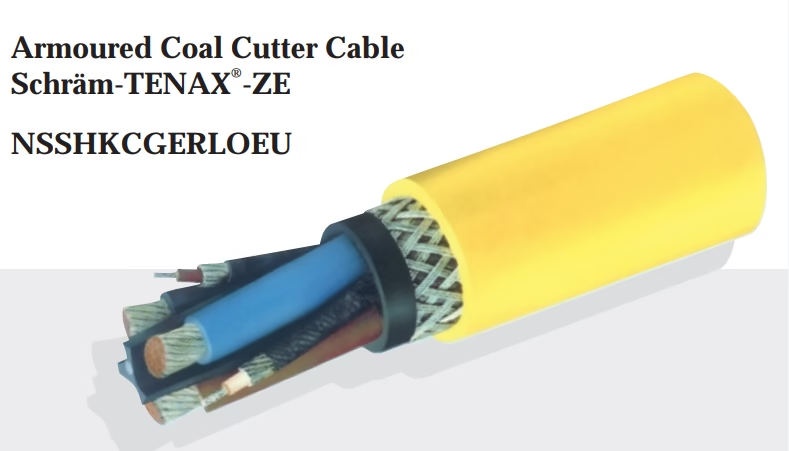
NSSHKCGERLOEU (Schräm-TENAX -ZE) — это специализированный бронированный гибкий кабель, разработанный для подключения мобильных машин, работающих в условиях чрезвычайно высоких механических нагрузок. Кабель предназначен преимущественно для горнодобывающей промышленности, в частности для угольных комбайнов типа Schräm (Schräm-Maschinen), и соответствует требованиям международного стандарта DIN VDE 0250, часть 812.

Бронированный кабель для угольных комбайнов

NSSHKCGERLOEU, Schräm-TENAX -ZE, бронированный кабель для угольных комбайнов, кабель NSSHKCGERLOEU, кабель для комбайна, гибкий шахтный кабель, горнодобывающий кабель, кабель для добычи угля, кабель устойчивый к сдавливанию, кабель стальная оплетка, кабель для LHD, намоточный кабель, кабель DIN VDE 0250-812, кабель DIN VDE 0472-818, огнестойкий шахтный кабель, маслостойкий кабель, кабель EPR изоляция, кабель 0.6/1 kV, морозостойкий шахтный кабель, кабель для угольного комбайна, кабель для очистного комбайна, кабель для проходческого комбайна, кабель с пилотными жилами, кабель обнаружение повреждений, кабель замыкание на землю, armoured coal cutter cable, mining flexible cable, coal shearer cable, LHD reeling cable, squeezing resistant cable, 煤機電纜, 鎧裝採煤機電纜, 礦用電纜, 鏟運機電纜, 安徽飛純電纜, Anhui Feichun cable, China mining cable manufacturer
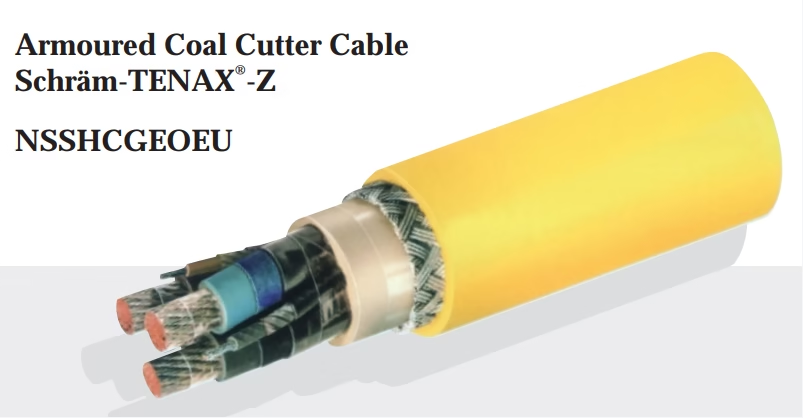
NSSHCGEOEU — это специализированный бронированный гибкий кабель, предназначенный для подключения мобильных машин, эксплуатируемых в условиях экстремальных механических нагрузок, преимущественно в горнодобывающей промышленности. Кабель разработан в соответствии с международным стандартом DIN VDE 0250, часть 812, который устанавливает требования к конструкции, электрическим характеристикам и механической прочности кабелей для угольных комбайнов.

Schräm-TENAX® -Z NSSHCGEOEU

бронированный кабель для угольных комбайнов, кабель NSSHCGEOEU, кабель для горнодобывающего оборудования, кабель для угольных шахт, гибкий шахтный кабель, кабель для комбайна, резиновый кабель для шахт, кабель EPR изоляция, кабель 0.6/1 kV горный, кабель для LHD погрузчика, кабель медно-стальная броня, кабель концентрический экран, силовой кабель для шахт
N3GHSSYCY — это экранированный высоковольтный гибкий кабель промышленного класса, специально разработанный для подключения мобильного оборудования в шахтах и подземных выработках со взрывоопасной средой. Кабель соответствует международному стандарту DIN VDE 0250, часть 605 и выпускается в двух номинальных напряжениях: 3.6/6 кВ и 6/10 кВ. Особенностью конструкции является наличие фазоконцентрического заземляющего проводника и общего концентрического экрана мониторинга, которые в сочетании со схемой высоковольтной защиты позволяют контролировать кабель на наличие дефектов изоляции и повреждений от внешних воздействий.

N3GHSSYCY — Экранированный Высоковольтный Кабель с Резиновой Изоляцией и ПВХ Оболочкой

N3GHSSYCY кабель, высоковольтный кабель, экранированный кабель, кабель с резиновой изоляцией, кабель с ПВХ оболочкой, кабель DIN VDE 0250-605, кабель 3.6/6 кВ, кабель 6/10 кВ, горнодобывающий кабель высокого напряжения, кабель для шахт, кабель для подземных выработок, кабель для взрывоопасных зон, кабель EPR изоляция, кабель с экраном мониторинга, кабель с заземляющим экраном, кабель со стальной бронёй, кабель с контрольными жилами, кабель с литыми терминациями, гибкий высоковольтный кабель, кабель для тоннелестроения, кабель для трансформаторов, кабель низкой ёмкости, кабель для сетей 10 кВ, кабель для сетей 5 кВ, кабель тройной экструзии, кабель с медной оплёткой, кабель с оцинкованной стальной бронёй, красный кабель ПВХ YM5, кабель 3×25 N3GHSSYCY, кабель 3×35 N3GHSSYCY, кабель 3×50 N3GHSSYCY, кабель 3×70 N3GHSSYCY, кабель 3×95 N3GHSSYCY, кабель с фазоконцентрическим заземлением, кабель для мобильного оборудования, кабель для контейнерной укладки, высоковольтный кабель для горнодобычи, кабель для подземных работ СНГ, экранированный силовой кабель, кабель с двойным экраном, кабель мониторинга изоляции, высоковольтный резиновый кабель, кабель для опасных сред, промышленный высоковольтный кабель, кабель для передвижных установок, кабель Россия, кабель Казахстан, кабель Беларусь, китайский производитель высоковольтного кабеля, Anhui Feichun кабель, кабель ГОСТ 16442, кабель IEC 60502
тяжелонагруженный кабель, гибкий кабель с резиновой изоляцией, резиновый гибкий кабель, горный кабель, шахтный кабель, кабель для горнодобычи, кабель для карьера, промышленный силовой кабель, кабель 0.6/1кВ, кабель 1кВ резиновый

Что такое тяжелонагруженный гибкий кабель с резиновой изоляцией NSSHOEU-O (NSSHÖU-O) и NSSHOEU-J (NSSHÖU-J)?

NSSHOEU, NSSHÖU, NSSHOEU-O, NSSHOEU-J, NSSHÖU-O, NSSHÖU-J, кабель NSSHOEU, кабель NSSHÖU, NSSHOEU 4×25, NSSHOEU 4×35, NSSHOEU 4×50, NSSHOEU 4×70, NSSHOEU 3×70/35, NSSHOEU 3×95/50, NSSHOEU 3×120/70, NSSHOEU 1×50, NSSHOEU 1×70, NSSHOEU 1×95, NSSHOEU 1×120, NSSHOEU 5×6, NSSHOEU 5×10, NSSHOEU 5×16
H07RN-F cable, H05RR-F cable, H07ZZ-F cable, H07BN4-F cable, H07RN8-F cable, H05BB-F cable, H05BQ-F cable, H07BB-F cable, H07BQ-F cable, H05GG-F cable, H05SS-F cable

What is BS7919 Cable?

BS7919 cable, BS7919 flexible cable, BS EN 50525 cable, industrial flexible cable, rubber flexible cable, heavy duty cable 450/750V,H07RN-F cable, H05RR-F cable, H07ZZ-F cable, H07BN4-F cable, H07RN8-F cable, H05BB-F cable, H05BQ-F cable, H07BB-F cable, H07BQ-F cable, H05GG-F cable, H05SS-F cable,BS7919電纜, 柔性橡膠電纜, 工業柔性電纜, 重型橡膠電纜, 耐油電纜, 阻燃柔性電纜, 港口機械電纜, 起重機電纜, 移動電源電纜, H07RN-F橡膠電纜, 450/750V柔性電纜, 氯丁橡膠護套電纜, EPR絕緣電纜, 多芯柔性電纜, 拖曳電纜, 卷筒電纜
PROTOMONT(MT) (N)SHOEU

PROTOMONT(MT) (N)SHOEU 1 kV Light & Flexible Rubber Cable

The designation (N)SHOEU within the German VDE cable nomenclature system identifies a specific cable construction optimized for applications requiring exceptional flexibility and reduced weight while maintaining robust environmental protection characteristics essential for industrial and mining applications. The single “S” designation, distinguishing (N)SHOEU from the double “SS” in NSSHOEU variants, signifies Strapazierfähig (heavy-duty) rather than Spezial Strapazierfähig (special heavy-duty), indicating an optimized balance between mechanical strength and flexibility. This optimization enables (N)SHOEU cables to achieve approximately fifteen to twenty-five percent weight reduction compared to NSSHOEU equivalents while maintaining adequate mechanical properties for applications not subjected to the most extreme stress conditions characteristic of coal cutter cable chain operations or heavy continuous miner trailing cable applications.
What is PROTOMONT NSSHOEU 1 kV Low Voltage Flexible Rubber Cable? A Comprehensive Technical Guide to Heavy-Duty Mining and Industrial Flexible Cables with EPR Insulation for Extreme Environments

What is PROTOMONT NSSHOEU 1 kV Low Voltage Flexible Rubber Cable?

PROTOMONT NSSHOEU series represents a category of heavy-duty, low voltage flexible rubber cables engineered specifically for demanding industrial environments. These cables are designed to provide reliable power transmission in applications where conventional cables would fail due to extreme mechanical stress, environmental exposure, or chemical contact. The designation NSSHOEU follows German cable nomenclature standards where each letter indicates specific construction characteristics. The cables are manufactured according to DIN VDE 0250-812 specifications, which define requirements for rubber-insulated flexible cables used in power installations. According to industry standards, these cables are engineered for environments where high levels of mechanical stress and abrasion are expected, making them essential for modern mining, construction, and industrial operations.