Flexible Reeling Cable

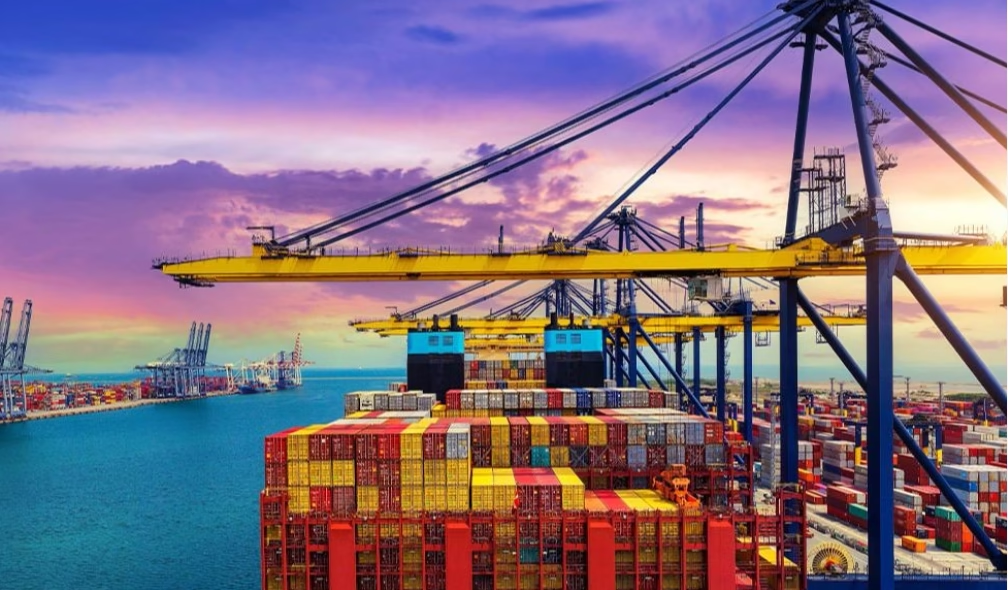
FLEXIDRUM® MEDIUM FLAT: Advanced High-Flexibility Salt-Fog Resistant Port Cable System Specialized reeling-flat power cable engineered for extreme maritime environments combining flexible tinned copper conductors (IEC 60228 Class 5), proprietary EPR insulation chemistry, hydrophobic semi-conductive interfaces, and specialized red outer-sheath PCP compound with integrated volatile-corrosion-inhibitor (VCI) technology. Designed for rapid cable-reel deployment systems in dredging, submersible pump, and floating crane applications requiring superior electrochemical corrosion immunity and compact outer-diameter efficiency across 3.6/6 kV through 8.7/15 kV voltage platforms.

FLAT (N)TSFLCGCWOEUS Reeling flat cables

FLEXIDRUM® MEDIUM FLAT: Advanced High-Flexibility Salt-Fog Resistant Port Cable System Specialized reeling-flat power cable engineered for extreme maritime environments combining flexible tinned copper conductors (IEC 60228 Class 5), proprietary EPR insulation chemistry, hydrophobic semi-conductive interfaces, and specialized red outer-sheath PCP compound with integrated volatile-corrosion-inhibitor (VCI) technology. Designed for rapid cable-reel deployment systems in dredging, submersible pump, and floating crane applications requiring superior electrochemical corrosion immunity and compact outer-diameter efficiency across 3.6/6 kV through 8.7/15 kV voltage platforms.
FeiChun High-Flexibility Salt-Fog Resistant Port Cables vs FLEXIDRUM® R 501: Advanced Polymer Chemistry, Electrochemical Protection Systems, Mechanical Performance, and 30-Year Lifecycle Cost Analysis for Port Gantry and Ship-to-Shore Equipment FLEXIDRUM® R 501 represents Nexans' market-leading general-purpose flexible reeling cable, engineered for diverse industrial applications from mining tunneling to standard port equipment—delivering proven performance at attractive cost positioning across 0.6/1 kV systems with −20°C to +80°C operating temperature range and standard EPR insulation with PUR outer sheath chemistry. However, when deployed in extreme salt-fog coastal environments (>280 days annually at 85%+ relative humidity with continuous salt-aerosol exposure), FLEXIDRUM® R 501's general-purpose design encounters fundamental material limitations: standard EPR insulation absorbs 1.2–1.8% moisture content in marine conditions, enabling rapid chloride ion penetration; tin-only conductor protection provides inadequate sacrificial anode capacity for 25+ year marine service; and standard industrial PCP/PUR compound selections fail to provide optimized chloride barrier properties. FeiChun's specialized marine-grade flexible reeling cables address these limitations through advanced materials engineering: HEPR (high-ethylene propylene rubber) formulations reducing water absorption to 0.3–0.6%; dual-layer tin+zinc electrochemical conductor coating system establishing 3.0–3.5× service-life extension; and proprietary 5GM2 PCP outer sheath incorporating reactive chloride-trapping additives—delivering measured 28–32 year service-life capability in salt-fog environments versus FLEXIDRUM® R 501's characteristic 8–12 year degradation pattern in identical coastal deployments.

FLEXIDRUM®R 501

FeiChun High-Flexibility Salt-Fog Resistant Port Cables vs FLEXIDRUM® R 501: Advanced Polymer Chemistry, Electrochemical Protection Systems, Mechanical Performance, and 30-Year Lifecycle Cost Analysis for Port Gantry and Ship-to-Shore Equipment FLEXIDRUM® R 501 represents Nexans’ market-leading general-purpose flexible reeling cable, engineered for diverse industrial applications from mining tunneling to standard port equipment—delivering proven performance at attractive cost positioning across 0.6/1 kV systems with −20°C to +80°C operating temperature range and standard EPR insulation with PUR outer sheath chemistry. However, when deployed in extreme salt-fog coastal environments (>280 days annually at 85%+ relative humidity with continuous salt-aerosol exposure), FLEXIDRUM® R 501’s general-purpose design encounters fundamental material limitations: standard EPR insulation absorbs 1.2–1.8% moisture content in marine conditions, enabling rapid chloride ion penetration; tin-only conductor protection provides inadequate sacrificial anode capacity for 25+ year marine service; and standard industrial PCP/PUR compound selections fail to provide optimized chloride barrier properties. FeiChun’s specialized marine-grade flexible reeling cables address these limitations through advanced materials engineering: HEPR (high-ethylene propylene rubber) formulations reducing water absorption to 0.3–0.6%; dual-layer tin+zinc electrochemical conductor coating system establishing 3.0–3.5× service-life extension; and proprietary 5GM2 PCP outer sheath incorporating reactive chloride-trapping additives—delivering measured 28–32 year service-life capability in salt-fog environments versus FLEXIDRUM® R 501’s characteristic 8–12 year degradation pattern in identical coastal deployments.
Port Facility Cable Procurement Guide: Complete Cross-Section Selection Matrix and Comparative Engineering Analysis of FeiChun Salt-Fog Resistant Cables versus FLEXIDRUM® (V) for Harbor Gantry Cranes, Ship-to-Shore Equipment, Container Handling, and Coastal Automation Systems Port facility procurement teams face a critical decision when specifying flexible reeling cable systems for equipment ranging from small winch controls (1.5 mm² conductor cross-sections) to massive ship-to-shore gantry systems requiring 240 mm² and beyond. The cable selection process requires more than simple cost comparison—it demands understanding how conductor cross-sectional area affects thermal behavior, voltage drop, mechanical stress distribution, and degradation kinetics in salt-fog marine environments. This procurement guide deconstructs how cable cross-section selection interacts with high-molecular polymer chemistry, electrochemical properties, electrical performance characteristics, and chemical durability mechanisms, enabling port engineers to specify optimal cable solutions aligned with specific application voltage, current, and environmental requirements rather than defaulting to general-purpose alternatives that may deliver either excessive capability or inadequate salt-fog resistance.

FLEXIDRUM®NSHTÖU (V)

Port Facility Cable Procurement Guide: Complete Cross-Section Selection Matrix and Comparative Engineering Analysis of FeiChun Salt-Fog Resistant Cables versus FLEXIDRUM® (V) for Harbor Gantry Cranes, Ship-to-Shore Equipment, Container Handling, and Coastal Automation Systems Port facility procurement teams face a critical decision when specifying flexible reeling cable systems for equipment ranging from small winch controls (1.5 mm² conductor cross-sections) to massive ship-to-shore gantry systems requiring 240 mm² and beyond. The cable selection process requires more than simple cost comparison—it demands understanding how conductor cross-sectional area affects thermal behavior, voltage drop, mechanical stress distribution, and degradation kinetics in salt-fog marine environments. This procurement guide deconstructs how cable cross-section selection interacts with high-molecular polymer chemistry, electrochemical properties, electrical performance characteristics, and chemical durability mechanisms, enabling port engineers to specify optimal cable solutions aligned with specific application voltage, current, and environmental requirements rather than defaulting to general-purpose alternatives that may deliver either excessive capability or inadequate salt-fog resistance.
FeiChun vs CORDAFLEX: Comprehensive Specification Comparison, Performance Analysis, and Procurement Guidance for Industrial Reeling Cable Selection in Port, Manufacturing, Wastewater, and Underwater Applications CORDAFLEX (SMK) (N)SHTOEU represents the established industry standard for high-performance flexible reeling cables, earning its position through 30+ years of proven field deployment across global port operations, manufacturing automation, and demanding industrial applications. Yet FeiChun's specialized product line—engineered through 15+ years of competitive analysis and emerging-market focus—challenges the one-size-fits-all CORDAFLEX approach by offering differentiated solutions optimized for specific application needs: extreme salt-fog coastal environments (port marine cables), hazardous-area fire safety requirements (PUR-HF), standard industrial cost-optimization (NSHTOEU), and municipal budget constraints (EASYFLEX). This comprehensive analysis deconstructs the mechanical, thermal, electrical, and economic characteristics distinguishing these two cable manufacturers, enabling equipment engineers and procurement specialists with complete technical justification for specification decisions across diverse application scenarios where CORDAFLEX's premium general-purpose positioning may not deliver optimal value vs. FeiChun's specialized, application-focused engineering.

CORDAFLEX(SMK) (N)SHTOEU-J / -O

FeiChun vs CORDAFLEX: Comprehensive Specification Comparison, Performance Analysis, and Procurement Guidance for Industrial Reeling Cable Selection in Port, Manufacturing, Wastewater, and Underwater Applications CORDAFLEX (SMK) (N)SHTOEU represents the established industry standard for high-performance flexible reeling cables, earning its position through 30+ years of proven field deployment across global port operations, manufacturing automation, and demanding industrial applications. Yet FeiChun’s specialized product line—engineered through 15+ years of competitive analysis and emerging-market focus—challenges the one-size-fits-all CORDAFLEX approach by offering differentiated solutions optimized for specific application needs: extreme salt-fog coastal environments (port marine cables), hazardous-area fire safety requirements (PUR-HF), standard industrial cost-optimization (NSHTOEU), and municipal budget constraints (EASYFLEX). This comprehensive analysis deconstructs the mechanical, thermal, electrical, and economic characteristics distinguishing these two cable manufacturers, enabling equipment engineers and procurement specialists with complete technical justification for specification decisions across diverse application scenarios where CORDAFLEX’s premium general-purpose positioning may not deliver optimal value vs. FeiChun’s specialized, application-focused engineering.
Yes, properly-specified generic (N)TSCGEWÖU 3x70+3x35/3 6/10kV cables can reliably replace Sandvik OEM cables on underground load-haul-dump loaders, with realistic cost savings of 20 to 40 percent over the cable's service life, provided that five critical verification steps are completed before installation. The generic cable must have an outer diameter not exceeding 59.1 millimeters (matching or staying within the original cable's drum clearance envelope), must feature verified anti-torsion braid rated for minimum ±25° per meter torsional resistance (preventing corkscrewing failures), must specify an outer jacket of either premium 5GM5 elastomer or polyurethane formulation confirmed for underground abrasion resistance (not standard CPE), must carry a maximum tensile load rating of at least 3,150 to 4,200 newtons (matching Sandvik's duty cycle), and must include complete technical documentation of insulation thickness and conductor stranding patterns (enabling proper splicing compatibility). Additionally, the cable supplier must provide type-test certification according to DIN VDE 0250-813 and ideally field-proven performance data from comparable underground mining installations. When these five criteria are met, field experience from underground mines across Scandinavia, North America, and Australia demonstrates that properly-specified generic cables achieve service lives of 3 to 5 years—matching or occasionally exceeding OEM cable longevity—while reducing procurement costs by $80,000 to $150,000 per cable depending on the specific LHD model and regional pricing. However, many suppliers offering cables under the "(N)TSCGEWÖU" designation do not actually meet these technical requirements. Low-cost variants that compromise on anti-torsion structure, use inadequate jacket material, or provide incomplete documentation will fail within 6 to 12 months of underground operation, creating safety hazards and erasing the cost savings through premium pricing for emergency replacement cables and associated downtime. Therefore, the straightforward answer "yes, generic cables can work" comes with an essential caveat: success requires rigorous verification of the specific generic cable specification before procurement, not blind assumption that any product bearing the (N)TSCGEWÖU designation meets the technical requirements of underground LHD operation.

Underground LHD Loaders: Replacing OEM Sandvik Cables with Generic (N)TSCGEWÖU 3×70+3×35/3

Yes, properly-specified generic (N)TSCGEWÖU 3×70+3×35/3 6/10kV cables can reliably replace Sandvik OEM cables on underground load-haul-dump loaders, with realistic cost savings of 20 to 40 percent over the cable’s service life, provided that five critical verification steps are completed before installation. The generic cable must have an outer diameter not exceeding 59.1 millimeters (matching or staying within the original cable’s drum clearance envelope), must feature verified anti-torsion braid rated for minimum ±25° per meter torsional resistance (preventing corkscrewing failures), must specify an outer jacket of either premium 5GM5 elastomer or polyurethane formulation confirmed for underground abrasion resistance (not standard CPE), must carry a maximum tensile load rating of at least 3,150 to 4,200 newtons (matching Sandvik’s duty cycle), and must include complete technical documentation of insulation thickness and conductor stranding patterns (enabling proper splicing compatibility). Additionally, the cable supplier must provide type-test certification according to DIN VDE 0250-813 and ideally field-proven performance data from comparable underground mining installations. When these five criteria are met, field experience from underground mines across Scandinavia, North America, and Australia demonstrates that properly-specified generic cables achieve service lives of 3 to 5 years—matching or occasionally exceeding OEM cable longevity—while reducing procurement costs by $80,000 to $150,000 per cable depending on the specific LHD model and regional pricing. However, many suppliers offering cables under the “(N)TSCGEWÖU” designation do not actually meet these technical requirements. Low-cost variants that compromise on anti-torsion structure, use inadequate jacket material, or provide incomplete documentation will fail within 6 to 12 months of underground operation, creating safety hazards and erasing the cost savings through premium pricing for emergency replacement cables and associated downtime. Therefore, the straightforward answer “yes, generic cables can work” comes with an essential caveat: success requires rigorous verification of the specific generic cable specification before procurement, not blind assumption that any product bearing the (N)TSCGEWÖU designation meets the technical requirements of underground LHD operation.
Nexans RHEYFIRM (RS) 12/20kV is a premium-tier medium-voltage reeling cable specifically engineered for high-speed, high-stress port machinery and industrial heavy-load applications. The cable's design reflects Nexans' deep expertise in marine and dockside equipment, incorporating proprietary RHEYCLEAN insulation chemistry and reinforced anti-torsion braid architecture that together enable reliable operation in environments where cable flexing occurs thousands of times per day at speeds exceeding 200 meters per minute. However, RHEYFIRM cables command premium pricing that reflects both their proven field performance and Nexans' brand positioning. For procurement teams managing large cable quantities, facing extended supply lead times, or constrained by budget limitations, the search for a functionally equivalent alternative is not a search for a compromise. Rather, it is a systematic evaluation of competing engineering approaches that achieve the same electrical safety, mechanical durability, and environmental resilience through different manufacturing philosophies. This guide addresses the practical reality that excellent medium-voltage reeling cables are manufactured by multiple established European and global suppliers. Helukabel (Germany), SAB Kabel (Germany), Prysmian (Italy/France), Feichun (China), and other manufacturers produce cables that meet or exceed RHEYFIRM's performance specifications while offering cost savings between 15–35%, faster regional delivery, or better availability for Asia-Pacific projects.

Cost-Effective Replacement for Nexans RHEYFIRM (RS) 3×50+3×25/3 12/20kV

Nexans RHEYFIRM (RS) 12/20kV is a premium-tier medium-voltage reeling cable specifically engineered for high-speed, high-stress port machinery and industrial heavy-load applications. The cable’s design reflects Nexans’ deep expertise in marine and dockside equipment, incorporating proprietary RHEYCLEAN insulation chemistry and reinforced anti-torsion braid architecture that together enable reliable operation in environments where cable flexing occurs thousands of times per day at speeds exceeding 200 meters per minute. However, RHEYFIRM cables command premium pricing that reflects both their proven field performance and Nexans’ brand positioning. For procurement teams managing large cable quantities, facing extended supply lead times, or constrained by budget limitations, the search for a functionally equivalent alternative is not a search for a compromise. Rather, it is a systematic evaluation of competing engineering approaches that achieve the same electrical safety, mechanical durability, and environmental resilience through different manufacturing philosophies. This guide addresses the practical reality that excellent medium-voltage reeling cables are manufactured by multiple established European and global suppliers. Helukabel (Germany), SAB Kabel (Germany), Prysmian (Italy/France), Feichun (China), and other manufacturers produce cables that meet or exceed RHEYFIRM’s performance specifications while offering cost savings between 15–35%, faster regional delivery, or better availability for Asia-Pacific projects.
Scrap metal recycling yards represent one of the most mechanically punishing environments for industrial electrical cables. Unlike controlled manufacturing facilities or even mining operations where equipment operates within defined parameters and spaces, scrap yards combine continuous mechanical abuse, unpredictable sharp debris, contamination with oils and cutting fluids, and the psychological pressure of near-zero downtime expectations. An electromagnet suspended from a reeling cable must lift payloads of 20 to 40 metric tons repeatedly throughout the day, while the cable itself is dragged across jagged metal shards, torn aluminum siding, concrete floors embedded with sharp steel fragments, and rusted edge conditions that would immediately puncture or notch a conventional rubber sheath. When a notch forms on a neoprene (CR) cable—which happens within weeks in aggressive scrap environments—the material's inherent brittleness means that continued mechanical flexing and abrasion at that point of weakness leads to catastrophic tearing and complete cable failure. Polyurethane (PUR) cables like LAPP ÖLFLEX® CRANE PUR were specifically engineered to resist this exact failure mode through fundamentally different material physics.

LAPP ÖLFLEX® CRANE PUR vs. Neoprene (CR): Is Polyurethane Really Superior for Scrap Yard Lifting Magnet Cables?

Scrap metal recycling yards represent one of the most mechanically punishing environments for industrial electrical cables. Unlike controlled manufacturing facilities or even mining operations where equipment operates within defined parameters and spaces, scrap yards combine continuous mechanical abuse, unpredictable sharp debris, contamination with oils and cutting fluids, and the psychological pressure of near-zero downtime expectations. An electromagnet suspended from a reeling cable must lift payloads of 20 to 40 metric tons repeatedly throughout the day, while the cable itself is dragged across jagged metal shards, torn aluminum siding, concrete floors embedded with sharp steel fragments, and rusted edge conditions that would immediately puncture or notch a conventional rubber sheath. When a notch forms on a neoprene (CR) cable—which happens within weeks in aggressive scrap environments—the material’s inherent brittleness means that continued mechanical flexing and abrasion at that point of weakness leads to catastrophic tearing and complete cable failure. Polyurethane (PUR) cables like LAPP ÖLFLEX® CRANE PUR were specifically engineered to resist this exact failure mode through fundamentally different material physics.
The selection of appropriate submersible pump cables for acidic mine water dewatering applications represents a critical engineering decision that directly impacts operational safety, equipment longevity, and maintenance costs. While Type 441 cables may appear suitable for general submersible pump applications, the harsh chemical environment of acidic mine water typically necessitates the use of specialized EPR (Ethylene Propylene Rubber) or CSP (Chlorosulfonated Polyethylene) insulated cables specifically engineered for corrosive conditions. 为酸性矿井水脱水应用选择合适的潜水泵电缆是一项关键的工程决策,直接影响运行安全、设备寿命和维护成本。虽然441型电缆可能适用于一般潜水泵应用,但酸性矿井水的恶劣化学环境通常需要使用专门设计用于腐蚀性条件的EPR(乙丙橡胶)或CSP(氯磺化聚乙烯)绝缘电缆。

TUNNELFLEX-R-PUR HF with Antitwisting Protection 1 KV

TUNNELFLEX-R-PUR HF represents a specialized category of halogen-free, flame-retardant flexible power cables engineered specifically for the demanding requirements of underground mining and tunneling operations. This cable combines advanced polyurethane (PUR) sheathing technology with integrated antitwisting protection to deliver exceptional mechanical durability, environmental resistance, and most importantly, enhanced safety through its halogen-free construction that significantly reduces toxic gas emissions during fire incidents. TUNNELFLEX-R-PUR HF电缆是专为地下采矿和隧道作业的苛刻要求而设计的无卤阻燃柔性电力电缆。该电缆结合了先进的聚氨酯护套技术和集成的防扭转保护,提供卓越的机械耐久性、环境抵抗力,以及通过无卤结构在火灾事故中显著减少有毒气体排放的增强安全性。
When international cable manufacturers consider entering the Colombian market, particularly for mining applications, they encounter a comprehensive regulatory framework that may initially seem complex but serves a vital purpose. The Reglamento Técnico de Instalaciones Eléctricas, universally known by its Spanish acronym RETIE, represents Colombia's mandatory technical regulation governing all electrical installations and products. 当国际电缆制造商考虑进入哥伦比亚市场时,特别是针对矿业应用,他们会遇到一个全面的监管框架 Understanding RETIE is not merely a bureaucratic exercise but rather the foundation for successfully participating in one of South America's most dynamic electrical markets.

TROMMELFLEX-M-PUR D2X11Y I 1 KV

TROMMELFLEX-M-PUR represents a specialized class of flexible low voltage reeling cables engineered specifically for underground mining and tunnelling operations. This cable features optimized dimensions and incorporates a flame retardant, halogen-free polyurethane outer sheath, making it particularly suitable for demanding industrial environments where both mechanical durability and safety are paramount. The cable’s design addresses the unique challenges encountered in mining applications, where equipment must withstand frequent dynamic loads, abrasive conditions, and the rigorous demands of continuous reeling operations on drilling machines, scoops, and load-haul-dump vehicles. 卷筒柔性电缆专为地下采矿和隧道设备设计,具有优化的尺寸和阻燃无卤聚氨酯外护套。该电缆适用于钻机、铲运机和装载设备的频繁动态负载和卷筒操作。
Cavotec SA, headquartered in Lugano, Switzerland, is a globally recognized engineering company specializing in connection and electrification solutions for ports, airports, mining, and industrial applications. Their motorized cable reel systems are installed on thousands of cranes, ship-to-shore equipment, and material handling systems worldwide, making cable compatibility a critical consideration for maintenance and replacement operations.

Compatible Cables for Cavotec Motorized Reels: Diameter Tolerance & Weight Guide

Cavotec SA, headquartered in Lugano, Switzerland, is a globally recognized engineering company specializing in connection and electrification solutions for ports, airports, mining, and industrial applications. Their motorized cable reel systems are installed on thousands of cranes, ship-to-shore equipment, and material handling systems worldwide, making cable compatibility a critical consideration for maintenance and replacement operations.
When engineers first encounter the AS/NZS 2802 standard for electric reeling and trailing cables used in mining and general industrial applications, a seemingly contradictory requirement immediately stands out. The standard mandates the exclusive use of electrolytic multiple-stranded circular flexible tinned copper wire conductors, explicitly rejecting aluminium despite its well-documented weight advantages. Given that aluminium weighs approximately 30 percent of copper's mass for equivalent electrical resistance, this specification appears counterintuitive, particularly for mobile mining equipment where weight reduction directly translates to improved fuel efficiency, reduced structural loading, and enhanced operational flexibility. 当工程师首次接触AS/NZS 2802标准时,用于采矿和一般工业应用的电动卷筒和拖缆,一个看似矛盾的要求立即凸显出来。该标准强制要求专门使用电解多股圆形柔性镀锡铜线导体,明确拒绝使用铝材,尽管铝的重量优势有充分记录。

Aluminium Conductors: Why Are Aluminium Conductors Strictly Prohibited in AS/NZS 2802 Trailing Cables Despite the Weight Savings?

When engineers first encounter the AS/NZS 2802 standard for electric reeling and trailing cables used in mining and general industrial applications, a seemingly contradictory requirement immediately stands out. The standard mandates the exclusive use of electrolytic multiple-stranded circular flexible tinned copper wire conductors, explicitly rejecting aluminium despite its well-documented weight advantages. Given that aluminium weighs approximately 30 percent of copper’s mass for equivalent electrical resistance, this specification appears counterintuitive, particularly for mobile mining equipment where weight reduction directly translates to improved fuel efficiency, reduced structural loading, and enhanced operational flexibility. 当工程师首次接触AS/NZS 2802标准时,用于采矿和一般工业应用的电动卷筒和拖缆,一个看似矛盾的要求立即凸显出来。该标准强制要求专门使用电解多股圆形柔性镀锡铜线导体,明确拒绝使用铝材,尽管铝的重量优势有充分记录。
Before we dive into the technical differences between Type 241 and Type 260 cables, let's take a moment to understand shuttle cars themselves and why cable selection matters so much for these critical mining vehicles. Think of shuttle cars as the workhorses of underground coal mining operations. These are large, heavy-duty battery-electric or trailing-cable powered vehicles designed to transport coal from the continuous miner working at the coal face to either feeder breakers, mine cars, or belt conveyor systems located some distance away. The shuttle car essentially acts as a mobile bridge between the mining equipment that's actively cutting coal and the permanent conveying infrastructure that will carry that coal to the surface. 在深入了解241型和260型电缆之间的技术差异之前,让我们花点时间了解穿梭车本身,以及为什么电缆选择对这些关键采矿车辆如此重要。可以将穿梭车视为地下煤矿作业的主力。这些是大型重型电池电动或拖缆供电车辆,设计用于将煤炭从在煤层工作面工作的连续采煤机运输到位于一定距离外的给料破碎机、矿车或带式输送机系统。穿梭车本质上充当正在切割煤炭的采矿设备与将煤炭运送到地面的永久输送基础设施之间的移动桥梁。

Type 241 vs. Type 260 Mining Cables: Understanding Construction Differences and Application Selection for Shuttle Car Operations

Before we dive into the technical differences between Type 241 and Type 260 cables, let’s take a moment to understand shuttle cars themselves and why cable selection matters so much for these critical mining vehicles. Think of shuttle cars as the workhorses of underground coal mining operations. These are large, heavy-duty battery-electric or trailing-cable powered vehicles designed to transport coal from the continuous miner working at the coal face to either feeder breakers, mine cars, or belt conveyor systems located some distance away. The shuttle car essentially acts as a mobile bridge between the mining equipment that’s actively cutting coal and the permanent conveying infrastructure that will carry that coal to the surface. 在深入了解241型和260型电缆之间的技术差异之前,让我们花点时间了解穿梭车本身,以及为什么电缆选择对这些关键采矿车辆如此重要。可以将穿梭车视为地下煤矿作业的主力。这些是大型重型电池电动或拖缆供电车辆,设计用于将煤炭从在煤层工作面工作的连续采煤机运输到位于一定距离外的给料破碎机、矿车或带式输送机系统。穿梭车本质上充当正在切割煤炭的采矿设备与将煤炭运送到地面的永久输送基础设施之间的移动桥梁。
(N)TSCGEWÖU 3x185+3x35/3 medium voltage flexible mining cable typically weighs between 8,500 and 10,200 kilograms per kilometer, depending on the specific construction variant, insulation thickness, sheathing materials, and whether additional features such as anti-torsion braiding or fiber optic cores are incorporated. This weight range represents the complete cable assembly including all conductors, insulation layers, screening, inner and outer sheaths, and structural elements required for demanding mining and industrial applications. (N)TSCGEWÖU 3x185+3x35/3中压柔性采矿电缆的重量通常在每公里8,500至10,200千克之间,具体取决于特定的结构变型、绝缘厚度、护套材料,以及是否包含防扭转编织或光纤芯等附加功能。

Weight Calculator: What is the Approximate Weight per Meter (kg/km) of (N)TSCGEWÖU 3×185+3×35/3?

(N)TSCGEWÖU 3×185+3×35/3 medium voltage flexible mining cable typically weighs between 8,500 and 10,200 kilograms per kilometer, depending on the specific construction variant, insulation thickness, sheathing materials, and whether additional features such as anti-torsion braiding or fiber optic cores are incorporated. This weight range represents the complete cable assembly including all conductors, insulation layers, screening, inner and outer sheaths, and structural elements required for demanding mining and industrial applications. (N)TSCGEWÖU 3×185+3×35/3中压柔性采矿电缆的重量通常在每公里8,500至10,200千克之间,具体取决于特定的结构变型、绝缘厚度、护套材料,以及是否包含防扭转编织或光纤芯等附加功能。
Mining operations worldwide face a critical procurement decision when selecting medium voltage reeling and trailing cables for mobile equipment such as excavators, draglines, and continuous miners. The choice between premium brand-name cables like PROTOLON and generic alternatives conforming to the same NTSCGEWÖU specification represents a significant investment decision with long-term operational and safety implications.

PROTOLON (Proprietary) vs. Generic NTSCGEWÖU: Is the Premium Price for Brand-Name Mining Cables Justified?

Mining operations worldwide face a critical procurement decision when selecting medium voltage reeling and trailing cables for mobile equipment such as excavators, draglines, and continuous miners. The choice between premium brand-name cables like PROTOLON and generic alternatives conforming to the same NTSCGEWÖU specification represents a significant investment decision with long-term operational and safety implications.
VDE vertical cable installation, NTSCGEWÖU cable specifications, DIN VDE 0250 mining cable, sheath creepage prevention, vertical shaft cable support, cable clamping distance standards, NEC 300.19 vertical conductor support, polychloprene rubber cable, heavy duty mining cable, submersible cable installation, vertical cable support spacing, cable support clamp design, mining cable installation guide, flexible reeling cable, DIN VDE 0298 cable application, rubber insulated mining cable, steel wire armored cable support, vertical raceway cable installation, creepage distance electrical safety, IEC 60664-1 clearance standards, cable sheath migration, gravitational cable stress, elevator shaft cable installation, power cable vertical mounting, cable support intervals, mining cable standards, armored cable vertical installation, cable pulling techniques vertical, flexible cable vertical support, industrial cable installation best practices, heavy cable weight distribution, cable thermal expansion vertical, mining cable VDE compliance, vertical cable strain relief, cable installation torque specifications, rubber sheath cable properties, chloroprene cable sheath, EPR insulated cable, vertical cable inspection procedures, cable support safety devices, mining cable manufacturer China, special cable Anhui, custom mining cables, vertical cable engineering, cable installation planning, high voltage vertical cable, medium voltage mining cable, cable mechanical support design, cable snaking vertical installation, anti-creepage cable support

VDE Recommendations for Vertical Shaft Cable Installation: Preventing Sheath Creepage in (N)TSCGEWÖU Cables

VDE vertical cable installation, NTSCGEWÖU cable specifications, DIN VDE 0250 mining cable, sheath creepage prevention, vertical shaft cable support, cable clamping distance standards, NEC 300.19 vertical conductor support, polychloprene rubber cable, heavy duty mining cable, submersible cable installation, vertical cable support spacing, cable support clamp design, mining cable installation guide, flexible reeling cable, DIN VDE 0298 cable application, rubber insulated mining cable, steel wire armored cable support, vertical raceway cable installation, creepage distance electrical safety, IEC 60664-1 clearance standards, cable sheath migration, gravitational cable stress, elevator shaft cable installation, power cable vertical mounting, cable support intervals, mining cable standards, armored cable vertical installation, cable pulling techniques vertical, flexible cable vertical support, industrial cable installation best practices, heavy cable weight distribution, cable thermal expansion vertical, mining cable VDE compliance, vertical cable strain relief, cable installation torque specifications, rubber sheath cable properties, chloroprene cable sheath, EPR insulated cable, vertical cable inspection procedures, cable support safety devices, mining cable manufacturer China, special cable Anhui, custom mining cables, vertical cable engineering, cable installation planning, high voltage vertical cable, medium voltage mining cable, cable mechanical support design, cable snaking vertical installation, anti-creepage cable support
PROTOLON (M) R-(N)TSCGEWOEU LWL 6/10KV is a highly specialized medium voltage (MV) reeling cable engineered for the demanding conditions of open-cast mining and tunneling operations. This cable integrates fiber-optic elements for simultaneous power transmission and high-speed data communication, making it essential for modern automated mining equipment including excavators, dumpers, and mobile crushers.

What is PROTOLON (M) R-(N)TSCGEWOEU LWL 6/10KV Mining & Tunneling MV Reeling Cable?

PROTOLON (M) R-(N)TSCGEWOEU LWL 6/10KV is a highly specialized medium voltage (MV) reeling cable engineered for the demanding conditions of open-cast mining and tunneling operations. This cable integrates fiber-optic elements for simultaneous power transmission and high-speed data communication, making it essential for modern automated mining equipment including excavators, dumpers, and mobile crushers.
PROTOLON(M) F(N)TSCGEWOEU 3 kV – 30 kV Medium Voltage Flexible Cables High-Performance EPR-Insulated Trailing Cables for Semiflexible Installation in Mining, Material Handling, and Industrial Applications

PROTOLON(M) F(N)TSCGEWOEU 3 kV – 30 kV Medium Voltage Flexible Cables

PROTOLON(M) F(N)TSCGEWOEU series represents a specialized family of medium voltage flexible cables designed for demanding industrial environments where conventional fixed installation cables prove inadequate. These cables are engineered specifically for semiflexible installation applications, combining the durability required for mobile equipment with the electrical performance characteristics essential for medium voltage power distribution systems operating between 3 kV and 30 kV. According to the International Electrotechnical Commission, medium voltage cables are critical components in power distribution systems, with IEC 60502-2 establishing comprehensive requirements for cables rated from 6 kV (Um = 7.2 kV) up to 30 kV (Um = 36 kV), ensuring rigorous safety and performance standards across diverse industrial applications. The PROTOLON(M) F(N)TSCGEWOEU cable series is engineered to meet and exceed these stringent international requirements while addressing the specific mechanical demands of mobile and reeling applications.
What is TYPE 450 1.1 to 33kV Mining Cables to AS/NZS 2802:2000?

What is TYPE 450 1.1 to 33kV Mining Cables to AS/NZS 2802:2000?

TYPE 450 cables occupy a critical position within this standard as Class 2 cables, distinguished by their incorporation of semiconductive screening systems essential for medium to high voltage applications. The designation “Type 450” refers to the cable’s construction classification within AS/NZS 2802:2000, with the numeric suffix (450.3, 450.6, 450.11, 450.22, 450.33) indicating the voltage rating in kilovolts. These cables are specifically engineered for slow reeling and trailing applications where equipment such as draglines, excavators, and wharf cranes requires flexible power connections that can withstand thousands of reeling cycles while maintaining electrical integrity and mechanical reliability.
What is TYPE 440 1.1 to 11KV Mining Cable to AS/NZS 2802:2000?

What is TYPE 440 1.1 to 11KV Mining Cable to AS/NZS 2802:2000?

TYPE 440 mining cables represent a specialized category of heavy-duty flexible trailing cables designed specifically for power distribution in mining operations. These cables serve as the electrical lifelines of mining operations, delivering power to mobile machinery and equipment across voltage ranges from 1.1kV to 22kV.
TYPE 275 mining cable

TYPE 275 1.1kV AS/NZS 1802:2003, AS/NZS 2802:2000 Australian Mining Cable

TYPE 275 mining cable represents a specialized category of flexible reeling cables engineered specifically for the demanding requirements of underground coal mining operations and surface mining applications. Manufactured in strict accordance with AS/NZS 1802:2003 and AS/NZS 2802:2000 standards, this cable is designed to deliver reliable power transmission to shuttle cars, mobile pumping equipment, and other heavy-duty mining machinery subjected to continuous mechanical stress and harsh environmental conditions.
Mining Cable

What is UNE 22510:1996 Mining Cables?

UNE 22510:1996 is a Spanish national standard published by the Spanish Association for Standardization and Certification (AENOR) that specifies comprehensive requirements for electric cables designed for underground mining operations. This standard, classified under ICS categories 29.060.20 (Cables) and 73.100.99 (Other mining equipment), establishes rigorous guidelines for cable construction, performance, and safety in hazardous mining environments.
DIN VDE 0250 German Standard Flexible Power Reeling Cable

What is DIN VDE 0250 Reeling Cables?

DIN VDE 0250 represents the globally recognized German standard for flexible electrical cables designed specifically for cranes, material handling equipment, and mobile machinery applications. As Germany remains the only country to have issued special design regulations for flexible electrical cables covering cranes and material handling equipment, this standard has achieved worldwide acceptance as the ultimate benchmark for tough rubber-sheathed flexible reeling cables.