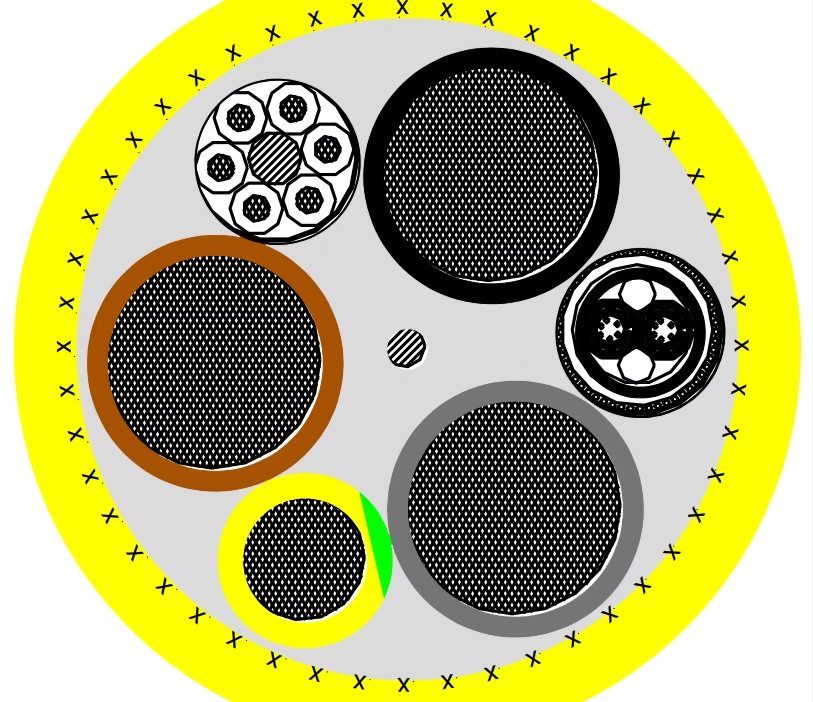
Данная серия включает специальные гибкие кабели для тяжёлых условий эксплуатации: шахтные trailing cables, reeling cables, drag chain cables, festoon cables, водостойкие кабели для насосов, кабели для вертикальных стволов, туннельных и дноуглубительных работ, а также силовые, контрольные и коммуникационные конструкции. В линейке представлены решения с силовыми жилами, защитно-заземляющими проводниками, ground check, контрольными элементами, fiber optic module, экранами, полупроводящими слоями, полиамидным армированием и особо прочными оболочками из CR, CPE, TPU и специальных термореактивных компаундов.
Comprehensive professional guide to the TYPE 441-LED — a world-first self-powered LED illuminated trailing and reeling cable manufactured to AS/NZS 2802:2000 — covering the complete technology behind electromagnetic induction energy harvesting (≥ 3.3 kV variants) and internal solid-state capacitive shunt (1.1 kV variants) that powers an integrated warning-red (620–630 nm) LED strip through a proprietary translucent flame-retardant thermoplastic polyurethane (FR-TPU) outer sheath, delivering continuous high-visibility cable path delineation in underground coal mines without any external DC power supply, gate end box modifications, or additional switchgear: detailed breakdown of the integrated multi-layer surge protection system (magnetic saturation pickup coil, TVS diodes, Zener/LDO regulation, PTC resettable fuses on polyimide FPC with epoxy/silicone IP68+ potting and aramid stress-isolation braid), translucent FR-TPU sheath technology (3–5× abrasion resistance vs conventional CPE/CR chloroprene rubber, halogen-free flame retardancy to AS/NZS 1802 Cl. 13.2, UV/ozone/chemical resistance), full Australian and international standards compliance (AS/NZS 2802:2000, AS/NZS 1802:2003, AS/NZS 60079.11 intrinsic safety, AS/NZS 3808 Group I methane, IEC 60502), dimensional and electrical data across 1.1 kV / 3.3 kV / 6.6 kV / 11 kV voltage classes with conductor sizes from 6 mm² to 150 mm², and the operational benefits of plug-and-play deployment for mine operators seeking to improve underground roadway visibility, personnel safety during ventilation-failure and smoke scenarios, and energisation status indication for LOTO (lock-out/tag-out) procedures — manufactured by Anhui Feichun Special Cable Co., Ltd., a dedicated mining cable specialist with proven AS/NZS 2802 manufacturing capability, in-house EPR compounding, continuous vulcanization, and dynamic flexing test infrastructure.
Direct Answer: Standard VDE 0.6/1kV cables are not suitable for Australian 1000V IT earthing systems. The cable will be overstressed during single-phase earth fault conditions and will likely fail, creating safety hazards and equipment damage. Australian law and engineering practice mandate 1.1/1.1kV or equivalent rated cables for this application. Using undersized cables violates workplace safety regulations and manufacturer warranties.
直接答案:标准VDE 0.6/1kV电缆不适合澳洲1000V IT接地系统。在单相接地故障条件下,电缆会受到过应力,并可能失效,造成安全隐患和设备损坏。澳洲法律和工程实践要求在这种应用中使用1.1/1.1kV或等效额定值的电缆。使用规格不足的电缆违反工作场所安全法规和制造商保修。
Why? The answer lies in how Australian systems define voltage stress during fault conditions. When a single-phase earth fault occurs on an Australian IT earthing system, the insulation of a 0.6/1kV cable experiences 1000V stress—far exceeding its 600V phase-to-earth design rating. Insulation breakdown follows within minutes.
A dragline excavator represents one of the largest continuous-duty electrical machines on Earth. Modern draglines (typical bucket capacity 100–150 cubic meters) routinely excavate 100,000+ tons of overburden daily from coal and metallic mines. A single large dragline requires continuous electrical power input of 5–10 megawatts to operate the bucket hoist mechanism, drag mechanism, swing drive, and positioning systems. This extraordinary power demand requires high-voltage transmission (typically 11kV or higher) to minimize resistive losses and keep conductor sizes manageable.
拉铲挖掘机代表地球上最大的连续负荷电机之一。现代拉铲(典型斗容量100-150立方米)经常从煤炭和金属矿山每天挖掘100,000多吨覆盖层。单个大型拉铲需要连续电力输入5-10兆瓦来操作斗提升机构、拖拽机构、摇摆驱动和定位系统。这种非凡的功率需求需要高压传输(通常11kV或更高)以最小化电阻损耗并保持导体大小可管理。
For New Zealand TBM (Tunnel Boring Machine) and underground infrastructure projects, specifying cables presents a critical engineering decision: use European VDE-standard cables (readily available from major suppliers like Prysmian, Nexans) or specify local AS/NZS-compliant equivalents. The (N)TSCGECEWÖU 3×50+3×25/3 6.6/6.6kV cable from German manufacturers represents excellent European engineering, but direct application in New Zealand requires technical translation to local regulatory standards.
对于新西兰盾构机(TBM)和地下基础设施项目,规范电缆规格呈现关键工程决策:使用欧洲VDE标准电缆(易从Prysmian、Nexans等主要供应商获得)或规范本地AS/NZS兼容等效品。德国制造商的(N)TSCGECEWÖU 3×50+3×25/3 6.6/6.6kV电缆代表卓越的欧洲工程,但在新西兰的直接应用需要技术转化为当地监管标准。
When international mining equipment manufacturers—such as Liebherr for draglines, Caterpillar for longwall systems, or Sandvik for continuous miners—design equipment with power cable specifications, they typically reference European standards. The de facto standard for heavy-duty mining cables across Europe is the 3.6/6kV (U0/U) specification, which appears on virtually every major mining equipment nameplate manufactured in Germany, Switzerland, or Scandinavia. Equipment arrives in Australian ports with factory-supplied 3.6/6kV cables or with rigid specifications demanding 3.6/6kV replacement cables. Yet when Australian mining engineers and electrical inspectors evaluate these specifications against local regulatory requirements, they universally reject them. The cables must be replaced with 3.3/3.3kV hybrid specifications, creating costly project delays, adding unexpected procurement cycles, and forcing equipment owners to source custom cables.
Derating is one of the most important — and most frequently misunderstood — concepts in electrical cable engineering. Many engineers view derating as an administrative requirement imposed by standards, something to be looked up in a table and applied mechanically. In reality, derating exists because of a fundamental physical law: the rate at which a cable can dissipate heat is directly proportional to the surface area exposed to the surrounding air or cooling medium, and inversely proportional to the thermal resistance of the insulating materials surrounding the conductors.
A stacker-reclaimer at a Newcastle coal export facility began experiencing intermittent loss of load cell signals, causing the control system to alarm and sometimes force the equipment into manual operation. Initial inspection found no obvious cable damage, and preliminary multimeter continuity tests showed the pilot conductors intact. However, when the equipment was operated at full speed during testing, the pilot conductor resistance measurement jumped from approximately 8 ohms to 45 ohms, demonstrating clear intermittency. A TDR test located the fault at approximately 450 meters along a 600-meter cable run. Detailed microscopic analysis of a cable section removed from the fault location revealed fatigue-induced microfractures in multiple copper strands within the pilot core. The root cause was identified as excessive vibration from poorly lubricated reeling drum bearings. The cable was successfully spliced at the fault location using a mid-cable connector kit, and bearing maintenance was performed to address the underlying vibration problem. The repaired cable has since operated successfully for over three years without additional pilot core failures.
Australia’s iron ore ports operate under some of the world’s most challenging environmental conditions for electrical equipment. Along the western coast where iron ore handling facilities concentrate — particularly in the Pilbara region and ports such as Port Hedland and Port Dampier — outdoor equipment is exposed to intense ultraviolet (UV) radiation, salt spray, high humidity, and atmospheric ozone generated by photochemical reactions in the air. Unlike mechanical damage, which operators can see and immediately respond to, UV and ozone degradation of cable outer sheaths occurs invisibly and progressively, weakening the insulation and mechanical integrity of trailing and reeling cables over months or years until catastrophic failure occurs.
A 22 kV reeling cable serving a quayside crane, electric rope shovel, or dragline in an Australian iron ore port may spend 80 to 100 percent of its operational life outdoors, unshaded, with only brief periods of protection during maintenance shutdowns or storage. Prysmian Group and other leading cable manufacturers have documented that in tropical and subtropical coastal environments, conventional black polychloroprene (PCP) or chlorinated polyethylene (CPE) sheaths can lose 30 to 50 percent of their original tensile strength within 12 to 24 months of continuous outdoor exposure, while tearing energy and elongation-at-break characteristics degrade even more rapidly. This degradation directly translates to increased risk of cable cracking, puncture, and sheath failure during flexing, dragging, or impact — precisely the stresses experienced by reeling cables on active port machinery. 在澳洲铁矿港口,传统PCP或CPE护套的抗拉强度可在12至24个月内下降30至50%。
The question of whether Type 440 mining cables can be manufactured with custom yellow outer sheaths for voltage identification at 1000V (1.1kV) installations represents a critical intersection of technical capability, regulatory compliance, and practical mining site requirements. Type 440 cables, governed primarily by the AS/NZS 2802:2000 standard, are flexible rubber trailing cables specifically engineered for surface mining, underground mining operations, and general industrial applications where movable equipment requires reliable electrical power supply systems.
关于440型矿用电缆能否为1000V(1.1kV)安装定制黄色外护套以进行电压识别的问题,代表了技术能力、法规合规性和实际矿场需求的关键交叉点。440型电缆主要受AS/NZS 2802:2000标准管辖,是专为露天采矿、地下采矿作业以及移动设备需要可靠电力供应系统的一般工业应用而设计的柔性橡胶拖曳电缆。
In the global cable manufacturing industry, voltage ratings represent a fundamental specification that determines a cable’s safe operating parameters and application suitability. When examining low-voltage mining cables, a notable discrepancy emerges between international standards and those used in Australia and New Zealand. While the International Electrotechnical Commission (IEC) designates low-voltage power cables with a rating of 0.6/1kV under IEC 60502-1, Australian mining standards specify a 1.1/1.1kV rating for equivalent applications. This distinction is not arbitrary but reflects careful consideration of mining-specific operational requirements, safety margins, and the unique characteristics of Australia’s mining infrastructure.
在全球电缆制造行业中,电压等级是决定电缆安全运行参数和应用适用性的基本规格。在研究低压矿用电缆时,国际标准与澳大利亚和新西兰使用的标准之间存在明显差异。国际电工委员会(IEC)根据IEC 60502-1标准将低压电力电缆的额定值指定为0.6/1kV,而澳大利亚矿用标准对于同等应用规定了1.1/1.1kV的额定值。这种区别并非随意,而是反映了对矿山特定运行要求、安全裕度以及澳大利亚矿业基础设施独特特征的仔细考虑。
The maximum allowable pilot loop resistance for Type 450 mining cables operating with Ampcontrol earth continuity relays represents a critical electrical parameter that directly impacts mine safety and operational reliability. This comprehensive technical analysis examines the interaction between AS/NZS 2802:2000 Type 450 cable specifications and Ampcontrol relay requirements, providing mining engineers and electrical designers with authoritative guidance for proper system design and selection. 与Ampcontrol地电连续继电器配合使用的Type 450矿用电缆的最大允许导向回路电阻是一个直接影响矿山安全和运行可靠性的关键电气参数。本全面技术分析检查了AS/NZS 2802:2000 Type 450电缆规格与Ampcontrol继电器要求之间的相互作用,为矿业工程师和电气设计师提供了正确系统设计和选择的权威指导。
Before we dive into the technical differences between Type 241 and Type 260 cables, let’s take a moment to understand shuttle cars themselves and why cable selection matters so much for these critical mining vehicles. Think of shuttle cars as the workhorses of underground coal mining operations. These are large, heavy-duty battery-electric or trailing-cable powered vehicles designed to transport coal from the continuous miner working at the coal face to either feeder breakers, mine cars, or belt conveyor systems located some distance away. The shuttle car essentially acts as a mobile bridge between the mining equipment that’s actively cutting coal and the permanent conveying infrastructure that will carry that coal to the surface.
在深入了解241型和260型电缆之间的技术差异之前,让我们花点时间了解穿梭车本身,以及为什么电缆选择对这些关键采矿车辆如此重要。可以将穿梭车视为地下煤矿作业的主力。这些是大型重型电池电动或拖缆供电车辆,设计用于将煤炭从在煤层工作面工作的连续采煤机运输到位于一定距离外的给料破碎机、矿车或带式输送机系统。穿梭车本质上充当正在切割煤炭的采矿设备与将煤炭运送到地面的永久输送基础设施之间的移动桥梁。
When you look at a modern mining cable cross-section, you’ll notice it contains more than just the power conductors that deliver electricity to mining equipment. Among these additional elements are one or more pilot cores—specialized conductors that serve critical safety and monitoring functions. While these pilot cores might seem like simple extra wires at first glance, they represent sophisticated monitoring infrastructure that enables mining operations to detect dangerous conditions before they cause injuries, equipment damage, or production interruptions.1
当您查看现代矿用电缆横截面时,您会注意到它包含的不仅仅是向采矿设备输送电力的电力导体。在这些附加元件中有一个或多个引导芯——服务于关键安全和监控功能的专用导体。
Hard-rock mining operations present some of the most severe mechanical challenges for cable materials in any industrial environment. Unlike coal mining where the surrounding geology consists of relatively softer sedimentary rock formations, hard-rock mining for metals such as gold, copper, platinum, iron ore, and other valuable minerals involves working with extremely abrasive geological materials. Granite, basalt, quartzite, and metamorphic rocks create an environment where cables are constantly subjected to cutting, gouging, and grinding forces that can rapidly destroy inadequately protected cable sheaths.1
硬岩采矿作业对电缆材料在任何工业环境中都提出了一些最严峻的机械挑战。与煤矿开采周围地质由相对较软的沉积岩层组成不同,开采金、铜、铂、铁矿石和其他贵重矿物的硬岩采矿涉及与极具磨蚀性的地质材料一起工作。
The Australian AS/NZS 2802 Type 440 cable and the German DIN VDE 0250-813 (N)TSCGEWÖU cable both serve draglines, excavators, and mobile mining equipment. However, their ultraviolet resistance characteristics differ significantly based on sheath material composition and regional design priorities. Understanding these differences enables mining engineers to select optimal cables for Pilbara mining operations where equipment operates continuously under intense solar radiation. 本对比分析研究了两种领先的露天采矿用卷筒电缆标准。澳大利亚AS/NZS 2802 440型电缆和德国DIN VDE 0250-813 (N)TSCGEWÖU电缆都适用于拉铲、挖掘机和移动采矿设备。然而,它们的抗紫外线特性基于护套材料成分和区域设计优先级存在显著差异。