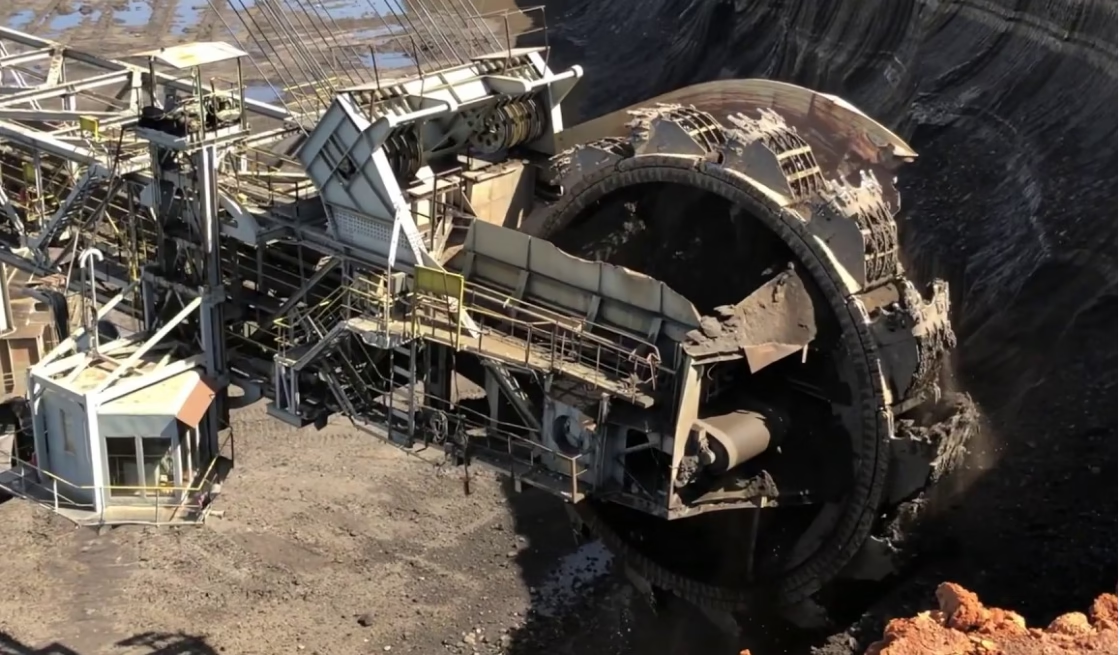
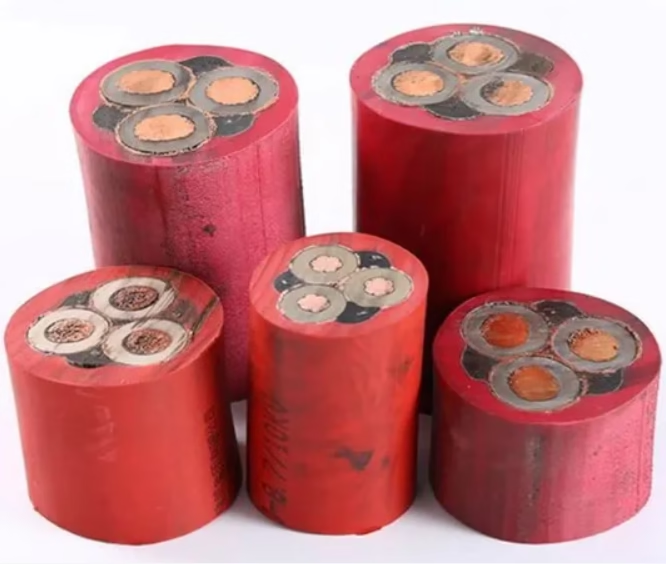
arctic mining cable

Marine & Port Drag Cable — High-Flexibility Saltwater-Resistant System A comprehensive engineering dissection of heavy-duty marine drag cables for port equipment, container terminals, and offshore platforms — from conductor architecture and EPR insulation to steel wire armour (M2) design rationale, galvanic corrosion protection mechanisms, environmental compliance, and validated performance benchmarking against Nexans Eproneo Port and Prysmian marine systems.

O que é PROTOLON (M) R-(N)TSCGEWOEU Arctic -50C 6/10KV: Análise Técnica do Cabo de Média Tensão para Enrolamento Flexível até -50°C

O PROTOLON (M) R-(N)TSCGEWOEU Arctic -50C 6/10KV é um cabo flexível de média tensão para enrolamento, desenvolvido para grandes máquinas móveis de manuseio de material em minas a céu aberto, como escavadeiras elétricas, dumpers e britadores móveis. Sua característica decisiva é a capacidade de operar de forma totalmente flexível até -50°C, mantendo a arquitetura de cabo de carretel para altas solicitações mecânicas: condutores de cobre classe FS, sistema isolante EPR PROTOLON, camadas semicondutoras, condutor de proteção dividido em três interstícios, reforço de poliéster e capa externa PCP resistente a abrasão, óleo, ozônio, radiação UV e água do mar.
Advanced High-Flexibility Salt-Fog Resistant Port Cable: Engineering Excellence for Extreme Maritime Environments A comprehensive technical deep-dive into Feichun's purpose-engineered high-flexibility port cable platform combining advanced electrochemical conductor protection, specialized EPR insulation, proprietary hydrophobic semi-conductive interfaces, and innovative outer-sheath chemistry—delivering extended service-life durability (12–15+ years field-validated) for demanding dredging, pumping, and floating-crane applications operating in harsh tropical and subtropical saltwater port facilities worldwide.

(N)TSCGEWÖU-FO Fiber-Optic Arctic Mining Cable | −60 °C Tested | VDE 0250 | EAC Ex & GOST Fire | Russia

An engineering-grade technical reference for Arctic mining operations, remote resource-extraction infrastructure, and safety-critical control systems requiring real-time monitoring and telemetry in extreme sub-Arctic conditions across the Russian Federation and EAEU member states. This document explains the hybrid copper-conductor and single-mode optical-fiber architecture that enables both primary power delivery and simultaneous high-bandwidth data transmission, documents the electromagnetic immunity advantages of optical isolation in high-voltage mining environments, and establishes the performance and certification framework for seamless integration into intelligent mining equipment systems operating continuously at −60 °C in Siberian deep mines and Arctic resource-extraction facilities.
Полный технический анализ специализированного морозостойкого кабеля RHEYFIRM (N)TSCGEWÖU-K компании Feichun для портовых систем Дальнего Востока России (Хабаровск, Владивосток, Петропавловск-Камчатский, Магадан) и Арктических регионов. Кабель соответствует ХЛ-60 (холодостойкость до -50°C) с гарантированной гибкостью и механическим ресурсом в условиях ледяной среды, трёхжильная конфигурация 3×120 мм² (три фазы 380 В) + 3×70 мм² (трёхжильное заземление/нейтраль) для высокомощных портовых лебёдок. Номинальное напряжение 1000 В переменного тока, морская защита класса C5-M (720 часов солевого тумана при -40°C), испытание на холодное растяжение ХЛ-60 (≥350% удлинение при -40°C), механический ресурс 30+ млн циклов даже в криогенных условиях, удлинение при разрыве 320–420%, отсутствие хрупкого разрушения при экстремальном охлаждении, сертификация ГОСТ 22483-2012 (ХЛ), IEC 60245-2, DNV, ABS. Совокупная экономия владения 35–45% по сравнению с европейскими альтернативами благодаря оптимизации под российские стандарты и климат.

(N)SHTÖU Reeling Cable | −60°C Arctic Rated | VDE 0250 | EAC Ex & GOST Fire | Russia Export

An engineering-grade technical reference for Arctic mining equipment OEMs, resource-extraction operations in Siberian and sub-Arctic regions, liquefied-natural-gas (LNG) facility equipment manufacturers, and electrical system designers specifying trailing and reeling cables for permanent operation at extreme low temperatures in the Russian Federation and EAEU Arctic territories. This document explains the materials science and electrical engineering behind extreme-temperature cable design, documents the field-performance advantages of cryogenic-rated construction versus conventional cables, details the EAC Ex intrinsic-safety certification pathway that enables safe operation in explosive atmospheres (coal mines, natural-gas facilities), and establishes the pre-certification framework for seamless Russian Arctic export and deployment.
FLEXIFESTOON® PV-FLAT UL: High-Flexibility Salt-Fog Resistant Flat Festoon Cable for Port Operations, Marine Equipment, and Harbor Automation Systems Feichun's FLEXIFESTOON® PV-FLAT UL establishes a new performance paradigm for port-duty electrical infrastructure by combining three critical engineering requirements into unified cable architecture: extreme mechanical flexibility enabling 5×D minimum bending radius and 120 m/min festoon deployment on container gantries and ship loaders; comprehensive salt-fog environmental resistance through specialized PVC compound formulation with enhanced corrosion inhibitors surviving ASTM B117 salt-spray testing protocols characteristic of extreme coastal and offshore environments; and verified 600V/2000V dual-voltage certification (UL 1581, CSA approved) supporting both power distribution and precision automation signal transmission across the world's most demanding port and maritime cargo-handling operations.

NSSHÖU Heavy-Duty Mining Cable | VDE 0250 | Pre-Certified EAC & GOST | Smooth Russia Project Delivery

An engineering-grade technical reference for mining equipment OEMs, rope shovel and dragline manufacturers, mining project engineers, and equipment procurement specialists selecting robust trailing cables for underground and surface mining operations in the Russian Federation and EAEU member states. This document explains the structural and material engineering behind NSSHÖU heavy-duty construction, compares performance against conventional mining cables and international alternatives, and details the pre-certification path for Russian regulatory compliance and seamless project delivery.
Feichun FLEXIFESTOON® PV-FLAT UL (600V, UL VW-1/CSA FT4 Certified) North American Industrial Festoon Control Cables: Extended Temperature 105°C PVC Compound Formulation for High-Flexibility Automation Systems (600V Rated Voltage, 2000V Dielectric Test, UL VW-1 Vertical Flame Test & CSA FT4 Compliance, −40°C to +105°C Arctic-to-Thermal Service Temperature Envelope, High-Flexibility Dynamic Dual-Axis Motion Architecture, 120 m/min Certified Speed Rating for Solar Tracking & Industrial Robotic Systems, 18 Complete Product SKU Configurations 4–12 Cores, AWG 2–16 Conductor Range, UL Festoon/AWM 105°C & CSA Festoon 105°C Dual Certification, Yellow/Black PVC Sheath Options, Oil-Resistant & Cold-Resistant Formulation, RoHS/CE Compliance): Comprehensive Technical Analysis Integrating Polymer Thermal Stability Chemistry, Extended Temperature PVC Insulation Science, North American UL/CSA Certification Standards, Industrial Automation System Integration, & Comparative Performance Benchmarking Against European & Asian Festoon Cable Specifications Industrial automation infrastructure across North America—Variable Frequency Drive (VFD) control systems, robotic manufacturing environments, solar tracking platforms, material handling systems, and Arctic region installations—demands electrical cabling fundamentally different from standard commodity industrial specifications: sustained elevated conductor temperatures (up to +90°C continuous, +105°C short-duration thermal transients) from high-power motor control electronics and concentrated solar heating on exposed cable trays, extreme thermal cycling from sub-arctic nighttime minimums (−40 °C arctic installations, −20 °C extended winter operations) to +105 °C daytime peak heating, inducing expansion-contraction stress on PVC insulation polymer chains and accelerating mechanical fatigue at conductor-insulation interfaces, mandatory UL/CSA dual certification requirements across North American electrical codes (National Electrical Code NEC, Canadian Electrical Code CEC, plant-level requirements from IEEE/NFPA standards), and continuous mechanical flexure from dual-axis motion systems (5–20 million bending cycles per year from solar tracker repositioning, robotic arm cycling, and conveyor system reeling). Conventional industrial control cables (600V commodity PVC, 60–70 °C temperature rating) fail catastrophically under sustained 90–105 °C thermal stress, suffering rapid insulation embrittlement through free-radical oxidation at elevated temperature, accelerated plasticizer migration (DHF—dioctyl hexanedioate, diisononyl cyclohexane-1,2-dicarboxylate) leading to tensile strength collapse, and premature conductor strand fracture under fatigue-assisted creep failure mechanisms. FLEXIFESTOON® PV-FLAT UL (600V, 105°C) represents a specialized North American industrial engineering platform achieving simultaneous optimization across the complete UL/CSA certified voltage spectrum (600V nominal—matching standard North American three-phase motor control and solar inverter voltage ratings across IEEE 1547 distributed generation systems) through proprietary extended-temperature PVC formulation chemistry incorporating hindered amine light stabilizers (HALS), hindered phenolic antioxidants, and advanced thermal stabilization package (4.5–6.0 wt% premium additive loading vs. commodity 0.5–1.0 wt%) delivering sustained mechanical integrity across −40 to +105 °C continuous operational envelope, UL VW-1 vertical flame propagation certification and CSA FT4 flame retardancy rating ensuring fire safety across hazardous industrial zones, high-flexibility festoon architecture (5× outer diameter minimum bending radius per DIN VDE 0298) enabling integrated motion control for dual-axis solar trackers and 6-axis robotic arm systems, yellow and black sheath options optimizing electrical safety visibility and thermal properties, and comprehensive 18-SKU product portfolio spanning 4–12 core configurations and AWG 2–16 conductor range—providing industrial automation engineers and renewable energy system integrators with specialized festoon cabling optimized for North American UL/CSA regulated markets across Arctic mining operations, tropical solar farms, temperate manufacturing facilities, and global deployment requiring extended-temperature performance and dual North American certification across 10–15 year system operational lives.

FLEXIFESTOON® PV-FLAT UL

Feichun FLEXIFESTOON® PV-FLAT UL (600V, UL VW-1/CSA FT4 Certified) North American Industrial Festoon Control Cables: Extended Temperature 105°C PVC Compound Formulation for High-Flexibility Automation Systems (600V Rated Voltage, 2000V Dielectric Test, UL VW-1 Vertical Flame Test & CSA FT4 Compliance, −40°C to +105°C Arctic-to-Thermal Service Temperature Envelope, High-Flexibility Dynamic Dual-Axis Motion Architecture, 120 m/min Certified Speed Rating for Solar Tracking & Industrial Robotic Systems, 18 Complete Product SKU Configurations 4–12 Cores, AWG 2–16 Conductor Range, UL Festoon/AWM 105°C & CSA Festoon 105°C Dual Certification, Yellow/Black PVC Sheath Options, Oil-Resistant & Cold-Resistant Formulation, RoHS/CE Compliance): Comprehensive Technical Analysis Integrating Polymer Thermal Stability Chemistry, Extended Temperature PVC Insulation Science, North American UL/CSA Certification Standards, Industrial Automation System Integration, & Comparative Performance Benchmarking Against European & Asian Festoon Cable Specifications Industrial automation infrastructure across North America—Variable Frequency Drive (VFD) control systems, robotic manufacturing environments, solar tracking platforms, material handling systems, and Arctic region installations—demands electrical cabling fundamentally different from standard commodity industrial specifications: sustained elevated conductor temperatures (up to +90°C continuous, +105°C short-duration thermal transients) from high-power motor control electronics and concentrated solar heating on exposed cable trays, extreme thermal cycling from sub-arctic nighttime minimums (−40 °C arctic installations, −20 °C extended winter operations) to +105 °C daytime peak heating, inducing expansion-contraction stress on PVC insulation polymer chains and accelerating mechanical fatigue at conductor-insulation interfaces, mandatory UL/CSA dual certification requirements across North American electrical codes (National Electrical Code NEC, Canadian Electrical Code CEC, plant-level requirements from IEEE/NFPA standards), and continuous mechanical flexure from dual-axis motion systems (5–20 million bending cycles per year from solar tracker repositioning, robotic arm cycling, and conveyor system reeling). Conventional industrial control cables (600V commodity PVC, 60–70 °C temperature rating) fail catastrophically under sustained 90–105 °C thermal stress, suffering rapid insulation embrittlement through free-radical oxidation at elevated temperature, accelerated plasticizer migration (DHF—dioctyl hexanedioate, diisononyl cyclohexane-1,2-dicarboxylate) leading to tensile strength collapse, and premature conductor strand fracture under fatigue-assisted creep failure mechanisms. FLEXIFESTOON® PV-FLAT UL (600V, 105°C) represents a specialized North American industrial engineering platform achieving simultaneous optimization across the complete UL/CSA certified voltage spectrum (600V nominal—matching standard North American three-phase motor control and solar inverter voltage ratings across IEEE 1547 distributed generation systems) through proprietary extended-temperature PVC formulation chemistry incorporating hindered amine light stabilizers (HALS), hindered phenolic antioxidants, and advanced thermal stabilization package (4.5–6.0 wt% premium additive loading vs. commodity 0.5–1.0 wt%) delivering sustained mechanical integrity across −40 to +105 °C continuous operational envelope, UL VW-1 vertical flame propagation certification and CSA FT4 flame retardancy rating ensuring fire safety across hazardous industrial zones, high-flexibility festoon architecture (5× outer diameter minimum bending radius per DIN VDE 0298) enabling integrated motion control for dual-axis solar trackers and 6-axis robotic arm systems, yellow and black sheath options optimizing electrical safety visibility and thermal properties, and comprehensive 18-SKU product portfolio spanning 4–12 core configurations and AWG 2–16 conductor range—providing industrial automation engineers and renewable energy system integrators with specialized festoon cabling optimized for North American UL/CSA regulated markets across Arctic mining operations, tropical solar farms, temperate manufacturing facilities, and global deployment requiring extended-temperature performance and dual North American certification across 10–15 year system operational lives.
FeiChun Advanced Anti-Twisting Salt-Fog Resistant Port Cable Systems versus FLEXIDRUM® MEDIUM (N)TSCGEWÖU (3.6/6 kV to 20/35 kV): Comprehensive Technical Analysis, Tinned Copper Conductor Corrosion Resistance in Salt-Fog Environments, Synthetic Fiber Anti-Twisting Protection Architecture & Coastal Durability, Reel-Deployment Mechanical Stress Management & Fatigue Mechanisms, High-Speed Unspooling Effects (180 m/min Maximum Deployment Velocity), Torsional Stress Distribution (±25°/m Continuous Twist Capability), Low-Temperature Extension Operation (-45°C Cold Version), Dynamic Bending & Twist-Fatigue Cyclic Loading, Integrated Electrochemical-Mechanical Protection for Mobile Equipment, Field-Validated Performance from Mining Excavators & Coastal Mobile Cranes in C4-C5M Environments, and Complete Technical Framework for Port Equipment Requiring Simultaneous Dynamic Mechanical Reliability & Salt-Fog Environmental Durability Across 15–25 Year Service Life in Continuous Reel-Deployment Applications Modern port and coastal heavy-equipment systems increasingly employ anti-twisting reel-deployment cables for mobile cranes, mining excavators, tunneling machinery, and dynamic equipment requiring simultaneous high-voltage power delivery and flexible mechanical deployment. FLEXIDRUM® MEDIUM (N)TSCGEWÖU represents advanced industrial anti-twisting cable design combining 3-phase flexible power conductors (red copper Class 5) with specialized tinned-copper earth conductors, synthetic-fiber anti-twisting reinforcement, and optimized construction for reel and festoon applications supporting equipment with 180 m/min maximum deployment velocity and ±25°/m torsional capability. Specification encompasses voltage ratings from 3.6/6 kV through 20/35 kV, temperature operation from -40°C fixed laying to -30°C flexible installation (-45°C optional cold version), reduced weight and diameter optimization for reel deployment efficiency, and specialized construction supporting high-speed unspooling and dynamic mechanical stress typical of mobile equipment in industrial port environments. However, standard industrial anti-twisting cable design optimizes mechanical anti-twist performance (synthetic fiber reinforcement, stranded conductor arrangement) assuming moderate environmental exposure where salt-water moisture penetration and electrochemical corrosion remain secondary concerns. C4-C5M coastal salt-fog environments present fundamental challenge to standard anti-twist architecture: synthetic fiber anti-twisting reinforcement absorbs moisture and experiences degradation mechanisms distinct from traditional metal stranding, tinned-copper earth conductors oxidize and lose mechanical properties in marine environments, and high-speed unspooling combined with moisture-saturated conditions accelerates insulation fatigue leading to premature failure. FeiChun's anti-twisting salt-fog resistant systems address these challenges through: advanced tinned-copper formulations with enhanced corrosion resistance, specialized synthetic-fiber anti-twist reinforcement employing marine-grade polymers and moisture barriers, optimized reel-deployment mechanical architecture managing torsional stress while integrating electrochemical protection, and integrated low-temperature performance maintaining mechanical properties across -50°C to +80°C operating extremes. This comprehensive technical analysis documents dynamic mobile-equipment cable challenges specific to coastal deployment, examines mechanical degradation mechanisms in salt-fog environments, details synthetic-fiber anti-twist durability optimization, compares FeiChun anti-twist salt-fog systems against FLEXIDRUM® MEDIUM (N)TSCGEWÖU specifications, and provides engineering guidance for mobile equipment infrastructure requiring extended service life in aggressive C4-C5M coastal conditions.

FLEXIDRUM® MEDIUM (N)TSCGEWÖU

FeiChun Advanced Anti-Twisting Salt-Fog Resistant Port Cable Systems versus FLEXIDRUM® MEDIUM (N)TSCGEWÖU (3.6/6 kV to 20/35 kV): Comprehensive Technical Analysis, Tinned Copper Conductor Corrosion Resistance in Salt-Fog Environments, Synthetic Fiber Anti-Twisting Protection Architecture & Coastal Durability, Reel-Deployment Mechanical Stress Management & Fatigue Mechanisms, High-Speed Unspooling Effects (180 m/min Maximum Deployment Velocity), Torsional Stress Distribution (±25°/m Continuous Twist Capability), Low-Temperature Extension Operation (-45°C Cold Version), Dynamic Bending & Twist-Fatigue Cyclic Loading, Integrated Electrochemical-Mechanical Protection for Mobile Equipment, Field-Validated Performance from Mining Excavators & Coastal Mobile Cranes in C4-C5M Environments, and Complete Technical Framework for Port Equipment Requiring Simultaneous Dynamic Mechanical Reliability & Salt-Fog Environmental Durability Across 15–25 Year Service Life in Continuous Reel-Deployment Applications Modern port and coastal heavy-equipment systems increasingly employ anti-twisting reel-deployment cables for mobile cranes, mining excavators, tunneling machinery, and dynamic equipment requiring simultaneous high-voltage power delivery and flexible mechanical deployment. FLEXIDRUM® MEDIUM (N)TSCGEWÖU represents advanced industrial anti-twisting cable design combining 3-phase flexible power conductors (red copper Class 5) with specialized tinned-copper earth conductors, synthetic-fiber anti-twisting reinforcement, and optimized construction for reel and festoon applications supporting equipment with 180 m/min maximum deployment velocity and ±25°/m torsional capability. Specification encompasses voltage ratings from 3.6/6 kV through 20/35 kV, temperature operation from -40°C fixed laying to -30°C flexible installation (-45°C optional cold version), reduced weight and diameter optimization for reel deployment efficiency, and specialized construction supporting high-speed unspooling and dynamic mechanical stress typical of mobile equipment in industrial port environments. However, standard industrial anti-twisting cable design optimizes mechanical anti-twist performance (synthetic fiber reinforcement, stranded conductor arrangement) assuming moderate environmental exposure where salt-water moisture penetration and electrochemical corrosion remain secondary concerns. C4-C5M coastal salt-fog environments present fundamental challenge to standard anti-twist architecture: synthetic fiber anti-twisting reinforcement absorbs moisture and experiences degradation mechanisms distinct from traditional metal stranding, tinned-copper earth conductors oxidize and lose mechanical properties in marine environments, and high-speed unspooling combined with moisture-saturated conditions accelerates insulation fatigue leading to premature failure. FeiChun’s anti-twisting salt-fog resistant systems address these challenges through: advanced tinned-copper formulations with enhanced corrosion resistance, specialized synthetic-fiber anti-twist reinforcement employing marine-grade polymers and moisture barriers, optimized reel-deployment mechanical architecture managing torsional stress while integrating electrochemical protection, and integrated low-temperature performance maintaining mechanical properties across -50°C to +80°C operating extremes. This comprehensive technical analysis documents dynamic mobile-equipment cable challenges specific to coastal deployment, examines mechanical degradation mechanisms in salt-fog environments, details synthetic-fiber anti-twist durability optimization, compares FeiChun anti-twist salt-fog systems against FLEXIDRUM® MEDIUM (N)TSCGEWÖU specifications, and provides engineering guidance for mobile equipment infrastructure requiring extended service life in aggressive C4-C5M coastal conditions.
Comprehensive technical breakdown of OnGdek TF Kable 6/10kV barrel cable for bucket wheel excavators, draglines in Kuzbass open-pit mining: dynamic reeling under high tension at 120 m/min, -40°C arctic operation, Kevlar helical anti-torsion cord prevents spiral conductor collapse, Arctic neoprene (5GM5) outer sheath maintains flex at -45°C, EPR 3GI3 insulation resists thermal cycling. Nomenclature: O=Sheath, n=flame-retardant, G=rubber insulation, e=screened, d=dynamic barrel reeling, k=Kevlar cord guard. OnGdek ≈ German (N)TSCGEWÖU 6/10kV with Polish helical-collapse prevention. FeiChun NTSCGEWÖU-Reeling Cable and Russian КГЭЖ-ХЛ GOST — verified alternatives with -45°C cold-flex rubber and kord reinforcement.

Экскаваторный кабель OnGdek (TF Kable): Полный разбор барабанного кабеля 6/10kV и премиум-замены для Кузбасса, Чукотки, Урала при сибирских морозах -45°C

Comprehensive technical breakdown of OnGdek TF Kable 6/10kV barrel cable for bucket wheel excavators, draglines in Kuzbass open-pit mining: dynamic reeling under high tension at 120 m/min, -40°C arctic operation, Kevlar helical anti-torsion cord prevents spiral conductor collapse, Arctic neoprene (5GM5) outer sheath maintains flex at -45°C, EPR 3GI3 insulation resists thermal cycling. Nomenclature: O=Sheath, n=flame-retardant, G=rubber insulation, e=screened, d=dynamic barrel reeling, k=Kevlar cord guard. OnGdek ≈ German (N)TSCGEWÖU 6/10kV with Polish helical-collapse prevention. FeiChun NTSCGEWÖU-Reeling Cable and Russian КГЭЖ-ХЛ GOST — verified alternatives with -45°C cold-flex rubber and kord reinforcement.
RHEYFIRM® (XT) "Extreme" is a specialized arctic-grade flexible reeling cable engineered specifically for continuous dynamic operation in permafrost mining zones and open-pit operations where temperatures fall to -50°C (-58°F), whereas RHEYFIRM® (RS) standard versions are designed for conventional industrial and port environments operating down to approximately -25°C to -35°C maximum. The XT extreme variant differs from the RS standard version through four fundamental structural and chemical modifications. First, the outer jacket compound transitions from standard chlorinated rubber (5GM5 formulation) to an ultra-low-temperature advanced elastomer or specialized cold-resistant polyurethane (PUR) blend that remains flexible and resistant to crystallization and embrittlement even when exposed to -50°C arctic blasts. Second, the internal structure incorporates enhanced cold-adapted synthetic anti-torsion braids fabricated from Kevlar and Aramid fibers instead of conventional braid materials, which maintain their reinforcement properties at extreme temperatures where standard materials would lose rigidity. Third, the insulation material evolves from standard EPR (ethylene propylene rubber) to an optimized cold-flexible EPR formulation that prevents micro-cracking around copper conductors under severe thermal stress. Fourth, the cable incorporates specialized core lubrication systems and internal slip-layers designed to reduce friction between conductor wires at sub-zero temperatures, where natural friction increases dramatically and would otherwise cause internal conductor fatigue and snapping. The result is a cable system that remains mechanically robust and electrically reliable for continuous high-speed reeling (up to 190 meters per minute) on frozen ground and ice-covered surfaces in the harshest mining environments on Earth. The electrical specifications remain identical to RS standard cables (same voltage ratings, same current capacity), but the physical behavior and mechanical reliability at extreme cold are fundamentally different. You should specify RHEYFIRM® (XT) when your mining operation is located in permafrost regions, when winter operations regularly experience temperatures below -40°C, when continuous reeling stress is combined with sub-zero conditions, and when cable failure could result in equipment shutdown in a remote arctic location where emergency replacement is logistically impossible.

RHEYFIRM® (XT): How Does the “Extreme” Version Differ from Standard (RS) for Operations in -50°C Arctic Mines?

RHEYFIRM® (XT) “Extreme” is a specialized arctic-grade flexible reeling cable engineered specifically for continuous dynamic operation in permafrost mining zones and open-pit operations where temperatures fall to -50°C (-58°F), whereas RHEYFIRM® (RS) standard versions are designed for conventional industrial and port environments operating down to approximately -25°C to -35°C maximum. The XT extreme variant differs from the RS standard version through four fundamental structural and chemical modifications. First, the outer jacket compound transitions from standard chlorinated rubber (5GM5 formulation) to an ultra-low-temperature advanced elastomer or specialized cold-resistant polyurethane (PUR) blend that remains flexible and resistant to crystallization and embrittlement even when exposed to -50°C arctic blasts. Second, the internal structure incorporates enhanced cold-adapted synthetic anti-torsion braids fabricated from Kevlar and Aramid fibers instead of conventional braid materials, which maintain their reinforcement properties at extreme temperatures where standard materials would lose rigidity. Third, the insulation material evolves from standard EPR (ethylene propylene rubber) to an optimized cold-flexible EPR formulation that prevents micro-cracking around copper conductors under severe thermal stress. Fourth, the cable incorporates specialized core lubrication systems and internal slip-layers designed to reduce friction between conductor wires at sub-zero temperatures, where natural friction increases dramatically and would otherwise cause internal conductor fatigue and snapping. The result is a cable system that remains mechanically robust and electrically reliable for continuous high-speed reeling (up to 190 meters per minute) on frozen ground and ice-covered surfaces in the harshest mining environments on Earth. The electrical specifications remain identical to RS standard cables (same voltage ratings, same current capacity), but the physical behavior and mechanical reliability at extreme cold are fundamentally different. You should specify RHEYFIRM® (XT) when your mining operation is located in permafrost regions, when winter operations regularly experience temperatures below -40°C, when continuous reeling stress is combined with sub-zero conditions, and when cable failure could result in equipment shutdown in a remote arctic location where emergency replacement is logistically impossible.
Let us begin by establishing what we mean by "standard" or "RS" (Regular Service) mining cables. These cables represent the baseline specification for mining operations in what we might call "normal" industrial environments—regions where winter temperatures might drop to minus 25 or minus 40 degrees Celsius, but where sustained exposure to minus 50 degrees Celsius or colder represents an exceptional rather than routine condition. Standard mining cables manufactured to specifications like ICEA S-75-381/NEMA WC-58 typically specify cold bend capability down to -40°C, which handles the vast majority of mining operations worldwide, including winter operations in Canada, northern United States, northern Europe, and parts of Russia.

How Does the “Extreme” Version Differ from Standard (RS) for Operations in -50°C Arctic Mines?

Let us begin by establishing what we mean by “standard” or “RS” (Regular Service) mining cables. These cables represent the baseline specification for mining operations in what we might call “normal” industrial environments—regions where winter temperatures might drop to minus 25 or minus 40 degrees Celsius, but where sustained exposure to minus 50 degrees Celsius or colder represents an exceptional rather than routine condition. Standard mining cables manufactured to specifications like ICEA S-75-381/NEMA WC-58 typically specify cold bend capability down to -40°C, which handles the vast majority of mining operations worldwide, including winter operations in Canada, northern United States, northern Europe, and parts of Russia.
RHEYFIRM® represents Nexans' premium brand of flexible medium voltage reeling cables designed for high and extreme mechanical stress applications. These cables are engineered especially for torsional stress and high reeling speeds, with capability for deflection into different planes. The choice between standard (RS) and reduced diameter (RTS) versions significantly impacts reel capacity, installation flexibility, and overall system performance in space-constrained environments. RHEYFIRM®是Nexans针对高强度机械应力应用设计的优质柔性中压卷筒电缆品牌,专为扭转应力和高速卷绕工况设计。标准型(RS)与减径型(RTS)的选择对卷筒容量和系统性能有重要影响。

RHEYFIRM® (RS) vs. RHEYFIRM® (RTS): When Should You Choose the “Reduced Diameter” Version?

RHEYFIRM® represents Nexans’ premium brand of flexible medium voltage reeling cables designed for high and extreme mechanical stress applications. These cables are engineered especially for torsional stress and high reeling speeds, with capability for deflection into different planes. The choice between standard (RS) and reduced diameter (RTS) versions significantly impacts reel capacity, installation flexibility, and overall system performance in space-constrained environments. RHEYFIRM®是Nexans针对高强度机械应力应用设计的优质柔性中压卷筒电缆品牌,专为扭转应力和高速卷绕工况设计。标准型(RS)与减径型(RTS)的选择对卷筒容量和系统性能有重要影响。
To understand why cable sheaths in underground coal mines must be electrically conductive, we need to first explore the fundamental physics of static electricity and why it poses such an extraordinary danger in mining environments. This requirement, mandated by AS/NZS 1802:2018, is not merely a technical specification but rather a critical safety measure that has evolved from decades of mining experience and, unfortunately, from lessons learned through tragic accidents. 要理解为什么地下煤矿中的电缆护套必须具有导电性,我们首先需要探讨静电的基本物理原理,以及为什么它在采矿环境中构成如此巨大的危险。AS/NZS 1802:2018要求的这一规定不仅仅是一个技术规范,而是一项从数十年的采矿经验以及不幸的事故教训中演变而来的关键安全措施。

TENAX-SAS (N)TSCGEWOEU I 6 – 35 KV

As power supply cable to large mobile equipment in mines, specifically designed for trailing cable applications with shovels and draglines. The outer sheath is extremely robust and tough against abrasion and tearing, maintaining full flexibility in operation down to -50°C. 用作矿山大型移动设备的电源电缆,专为挖掘机和拉铲的拖曳电缆应用而设计。外护套极其坚固耐磨损和撕裂,在低至-50°C的温度下保持完全的柔韧性。
Type 409 cables represent a specialized category of flexible mining cables designed specifically for demanding applications in material handling equipment, surface mining operations, and industrial environments. These cables are manufactured according to the Australian and New Zealand Standard AS/NZS 2802:2000, which establishes rigorous requirements for reeling and trailing cables used in mining and general industrial applications outside underground coal mining environments. (409型电缆是专为物料搬运设备、露天采矿作业和工业环境中的高要求应用而设计的一类特种柔性矿用电缆。这些电缆按照澳大利亚和新西兰标准AS/NZS 2802:2000制造,该标准对用于煤矿井下以外的采矿和一般工业应用的卷筒电缆和拖曳电缆制定了严格要求。)

TENAX-PUR (N)TSCGEH3S I 6 – 10 KV

TENAX-PUR is a premium medium voltage trailing cable engineered specifically for power supply to large mobile mining equipment such as shovels and draglines. The cable features an extremely robust polyurethane (PUR) outer sheath that delivers exceptional performance against abrasion and tearing, maintaining full flexibility even in extreme cold conditions down to -50°C. Available in orange, yellow, or custom colors to meet specific operational requirements. TENAX-PUR 是一种专为大型移动采矿设备(如电铲和拉斗铲)供电而设计的优质中压拖曳电缆。该电缆采用极其坚固的聚氨酯(PUR)外护套,在磨损和撕裂方面提供卓越的性能,即使在低至-50°C的极端寒冷条件下也能保持充分的柔韧性。可提供橙色、黄色或定制颜色以满足特定操作要求。
The maximum allowable pilot loop resistance for Type 450 mining cables operating with Ampcontrol earth continuity relays represents a critical electrical parameter that directly impacts mine safety and operational reliability. This comprehensive technical analysis examines the interaction between AS/NZS 2802:2000 Type 450 cable specifications and Ampcontrol relay requirements, providing mining engineers and electrical designers with authoritative guidance for proper system design and selection. 与Ampcontrol地电连续继电器配合使用的Type 450矿用电缆的最大允许导向回路电阻是一个直接影响矿山安全和运行可靠性的关键电气参数。本全面技术分析检查了AS/NZS 2802:2000 Type 450电缆规格与Ampcontrol继电器要求之间的相互作用,为矿业工程师和电气设计师提供了正确系统设计和选择的权威指导。

PROTOLON (SB) NTSCGEWOEU I 3 – 30 KV

These cables serve as power supply or connection cables for large material handling machines, such as excavators in opencast mines, subjected to extremely high mechanical stresses where abrasion and chaffing stresses are expected in trailing operation. 这些电缆用作大型物料搬运机械(如露天矿山挖掘机)的电源或连接电缆,在拖曳作业中承受极高的机械应力、磨损和摩擦应力。
Executive Summary: As global resource extraction expands into Arctic and subarctic regions, electrical infrastructure must withstand temperatures that regularly plunge below -40°C. The (N)TSCGEWÖU cable family represents specialized medium-voltage flexible cables engineered specifically for extreme mechanical and environmental stresses in mining, drilling, and tunneling operations. Understanding cold impact ratings and temperature performance specifications is critical for project engineers, procurement specialists, and operations managers working on Siberian oil and gas projects, Arctic mining operations, and other extreme cold installations. This comprehensive guide examines the technical requirements, testing standards, and material considerations essential for cable selection in environments where standard cables would fail catastrophically. 执行摘要:随着全球资源开采扩展到北极和亚北极地区,电气基础设施必须承受经常低于-40°C的温度。(N)TSCGEWÖU电缆系列代表专门为采矿、钻探和隧道作业中的极端机械和环境应力而设计的中压柔性电缆。了解冷冲击等级和温度性能规格对于从事西伯利亚油气项目、北极采矿作业和其他极冷装置的项目工程师、采购专家和运营管理人员至关重要。

Understanding “Cold Impact” Ratings: (N)TSCGEWÖU Cables for -40°C Siberian Projects

Executive Summary: As global resource extraction expands into Arctic and subarctic regions, electrical infrastructure must withstand temperatures that regularly plunge below -40°C. The (N)TSCGEWÖU cable family represents specialized medium-voltage flexible cables engineered specifically for extreme mechanical and environmental stresses in mining, drilling, and tunneling operations. Understanding cold impact ratings and temperature performance specifications is critical for project engineers, procurement specialists, and operations managers working on Siberian oil and gas projects, Arctic mining operations, and other extreme cold installations. This comprehensive guide examines the technical requirements, testing standards, and material considerations essential for cable selection in environments where standard cables would fail catastrophically. 执行摘要:随着全球资源开采扩展到北极和亚北极地区,电气基础设施必须承受经常低于-40°C的温度。(N)TSCGEWÖU电缆系列代表专门为采矿、钻探和隧道作业中的极端机械和环境应力而设计的中压柔性电缆。了解冷冲击等级和温度性能规格对于从事西伯利亚油气项目、北极采矿作业和其他极冷装置的项目工程师、采购专家和运营管理人员至关重要。
The Liebherr R 9800 is one of the world's largest hydraulic mining excavators, manufactured by Liebherr Mining Equipment in Colmar, France. With an operating weight of approximately 810 metric tons and bucket capacities ranging from 42 m³ (backhoe) to 47.5 m³ (face shovel), this machine is designed for the most demanding open-pit mining operations worldwide, including extreme cold regions such as Siberia, Yakutia, and Northern Russia where temperatures can plunge to -50°C or below. 利勃海尔R 9800是全球最大的液压采矿挖掘机之一,运行重量约810公吨,铲斗容量从42立方米到47.5立方米。该设备专为全球最苛刻的露天采矿作业设计,包括西伯利亚、雅库特和俄罗斯北部等极寒地区,那里的温度可降至-50°C或更低。

Liebherr R 9800: Cold-Weather Cable Requirements for Russian Winter Operations (-50°C)

The Liebherr R 9800 is one of the world’s largest hydraulic mining excavators, manufactured by Liebherr Mining Equipment in Colmar, France. With an operating weight of approximately 810 metric tons and bucket capacities ranging from 42 m³ (backhoe) to 47.5 m³ (face shovel), this machine is designed for the most demanding open-pit mining operations worldwide, including extreme cold regions such as Siberia, Yakutia, and Northern Russia where temperatures can plunge to -50°C or below. 利勃海尔R 9800是全球最大的液压采矿挖掘机之一,运行重量约810公吨,铲斗容量从42立方米到47.5立方米。该设备专为全球最苛刻的露天采矿作业设计,包括西伯利亚、雅库特和俄罗斯北部等极寒地区,那里的温度可降至-50°C或更低。
(N)TSCGEWÖU medium voltage reeling cable represents a specialized engineering solution designed for extreme mechanical stress applications in mining, material handling, and heavy industrial operations. When evaluating performance in Arctic environments with sustained temperatures of negative forty degrees Celsius, the cable's construction and material specifications demonstrate compliance with international cold performance standards, making it technically suitable for continuous operation in such demanding conditions.

Can (N)TSCGEWÖU Cables Handle Continuous Operation in -40°C Arctic Environments (Cold Impact Test)?

(N)TSCGEWÖU medium voltage reeling cable represents a specialized engineering solution designed for extreme mechanical stress applications in mining, material handling, and heavy industrial operations. When evaluating performance in Arctic environments with sustained temperatures of negative forty degrees Celsius, the cable’s construction and material specifications demonstrate compliance with international cold performance standards, making it technically suitable for continuous operation in such demanding conditions.
Type 440 reeling cables represent a critical component in mining and industrial power distribution systems, specifically designed for flexible trailing applications according to AS/NZS 2802:2000 standards. These metal-screened power cables feature three pilot cores and operate across voltage ratings from 1.1 kilovolts to 11 kilovolts, supplying reliable electrical power to mobile mining equipment such as draglines, excavators, and materials handling machinery. Despite their robust construction with EPR insulation and high abrasion resistance, these cables remain vulnerable to a particularly destructive failure mode known as corkscrewing, which can compromise both electrical performance and mechanical integrity during operation.

How does “Corkscrewing” destroy Type 440 reeling cables, and how to prevent it during installation?

Type 440 reeling cables represent a critical component in mining and industrial power distribution systems, specifically designed for flexible trailing applications according to AS/NZS 2802:2000 standards. These metal-screened power cables feature three pilot cores and operate across voltage ratings from 1.1 kilovolts to 11 kilovolts, supplying reliable electrical power to mobile mining equipment such as draglines, excavators, and materials handling machinery. Despite their robust construction with EPR insulation and high abrasion resistance, these cables remain vulnerable to a particularly destructive failure mode known as corkscrewing, which can compromise both electrical performance and mechanical integrity during operation.
Кабель силовой шахтный и экскаваторный необходим для подключения горнодобывающего оборудования, экскаваторов и другого землеройного оборудования, электроинструментов, а также для проведения горных взрывных работ. Шахтные кабели используют для всех типов шахт: угольные, соляные, сланцевые, а также подходят для открытых карьерных разработок. Кабели эксплуатируются на напряжении переменного тока 660, 1140, 6000 В.

What is Кабель для шахт?

КГЭШ, КГЭШ-1140, КГЭ, КГЭ-6, КГЭ-Т, КГЭ-ХЛ, КГЭ-ХЛ-6, КГЭС, КГЭТ, КГВШ, КГРШ, КШВГТ, ЭВБВ, ЭВБВ-6, ЭВТ-1140, ЭВТ-6000, кабель КГЭШ, кабель КГЭ, кабель ЭВБВ, шахтный кабель КГЭШ, экскаваторный кабель, mining cable KGESH, excavator cable KGE, KGESH cable, KGE cable, EVBV cable
PROTOLON (M) R-(N)TSCGEWOEU Arctic -50°C 6/10KV is an advanced medium voltage reeling cable specifically engineered for extreme cold climate mining operations. This cable maintains full flexibility and mechanical performance down to -50°C, making it ideal for Arctic regions, Siberian mines, Canadian northern territories, and other extreme cold environments where conventional cables become brittle and fail.

What is PROTOLON (M) R-(N)TSCGEWOEU Arctic -50°C 6/10KV Mining MV Reeling Cable?

PROTOLON (M) R-(N)TSCGEWOEU Arctic -50°C 6/10KV is an advanced medium voltage reeling cable specifically engineered for extreme cold climate mining operations. This cable maintains full flexibility and mechanical performance down to -50°C, making it ideal for Arctic regions, Siberian mines, Canadian northern territories, and other extreme cold environments where conventional cables become brittle and fail.
NTMCGCWOEU 1x240_25 KON, 12_20kV

What is PROTOLON(SB) NTSCGEWOEU 6 kV – 20 kV Cable for Excavators in Open-Cast Mining?

PROTOLON(SB) NTSCGEWOEU cable represents a specialized category of medium voltage trailing cables engineered specifically for the most demanding mining applications. As power supply and connection cables for large material handling machines such as excavators in open-cast mines, these cables must withstand extremely high mechanical stresses where abrasion and chaffing stresses are expected in trailing operation.
What is MV Cable for Trailing Applications Cold Flexible to -50°C TENAX-SAS NTSCGEWOEU 6kV – 20kV?

What is MV Cable for Trailing Applications Cold Flexible to -50°C TENAX-SAS NTSCGEWOEU 6kV – 20kV?

TENAX-SAS NTSCGEWOEU series represents a specialized category of medium voltage flexible trailing cables engineered specifically for the demanding operational environments found in open-pit mining operations. These cables are designed to power large mobile mining equipment including draglines, electric rope shovels, excavators, and material handling machinery operating under extreme mechanical stress and harsh environmental conditions.
CSA C22.2 NO. 96:23 - Portable Power Cables Comprehensive Technical Analysis and Application Guide

CSA C22.2 NO. 96:23 – Portable Power Cables

CSA C22.2 NO. 96:23 represents the twelfth edition of the Canadian portable power cable standard, published as a National Standard of Canada by CSA Group under the Canadian Electrical Code, Part II. This standard supersedes all previous editions dating back to 1951, with the 2023 edition incorporating significant technical updates and expanded cable categories to address evolving industrial requirements.