拖曳电缆

AS/NZS 1802 电缆型号

AS/NZS 1802/2802 矿用卷筒/拖曳电缆选型计算器:载流量、电压降、短路热稳定一页算清

面向电气工程师的 AS/NZS 1802/2802 电缆工具箱:从负载电流、卷筒降额到功率因数补偿和年损耗,快速形成选型依据
飞纯 Type 440 是一种用于机械和设备电源连接的 柔性馈电拖曳电缆。 产品电压范围覆盖 1.1KV 至 22KV, 可服务不同电压等级和导体截面的矿山机械供电系统。 Type 440 的核心结构特点是设置 三根较大规格的间隙 Pilot 芯线, 同时采用中央半导电 PCP 托架隔离结构。 中央托架用于支撑内部结构并保护三根动力线芯, 三根 Pilot 则可用于设备控制、监测或保护回路。 电缆还设置复合屏蔽接地导体。 该结构由镀锡退火铜编织与聚酯纱交织组成, 在动力线芯外形成复合屏蔽,并承担接地导体功能。

飞纯 Type 440 1.1 至 22KV:配备三根大型 Pilot 的矿用柔性馈电拖曳电缆技术解析

飞纯 Type 440 系列主要用作机械和设备的柔性馈电拖曳电缆。 电缆配置三根较大规格的间隙 Pilot 芯线, 并在中心采用半导电 PCP 托架隔离结构, 用于支撑和保护三根动力线芯。
飞纯 Type 245 是基于 AS/NZS 1802:2003 卷筒与拖曳电缆 标准体系设计的矿用非常柔性长壁采煤机电缆,电压范围覆盖 1.1 至 6.6KV。根据产品资料,该电缆主要用作长壁采煤机电缆,也可用于连续采煤机和长壁外围电缆。 Type 245 的关键结构特征是 三根中央可伸长 Pilot / 控制芯线。这三根中央 Pilot 芯线可用于 接地连续性监测 和 控制回路。对于长壁采煤机来说,电缆不仅要传输动力电能,还要承担设备控制、保护联锁、接地连续性确认和移动工况下的安全监测任务。

飞纯 Type 245 1.1 至 6.6KV:基于 AS/NZS 1802:2003 的澳洲矿用长壁采煤机电缆技术解析

飞纯矿用电缆 Type 245 是一种非常柔软的矿用电缆,主要用作长壁采煤机电缆,也适用于连续采煤机和长壁外围电缆。该电缆含有三根中央 Pilot 芯线,可用于接地连续性监测和控制回路,适合长壁采煤系统中对柔性、保护、监测和控制可靠性要求较高的移动供电场景。
飞纯 Type 209 是飞纯电缆基于 AS/NZS 1802:2003 卷筒与拖曳电缆 体系设计的矿用柔性馈电与拖曳电缆系列,电压范围覆盖 1.1 至 11KV。根据产品资料,Type 209 系列电缆主要作为矿山机械柔性馈电电缆使用,更适合作为拖曳电缆而不是高频卷筒电缆。较小规格适用于钻机、手持工具和移动设备。 这一定义是理解 Type 209 的关键。Type 209 不是普通工业橡套软电缆,也不只是单纯的矿山供电线。它的核心定位是 矿山机械柔性馈电电缆,也就是为矿山机械提供可移动、可拖曳、可适应复杂作业路径的供电系统。同时,它更适合作为 拖曳电缆,即跟随设备移动的电缆,而不是长期高频卷绕使用的卷筒电缆。

飞纯 Type 209 1.1 至 11KV:基于 AS/NZS 1802:2003 的澳洲矿用柔性馈电与拖曳电缆技术解析

飞纯 Type 209 是飞纯电缆基于 AS/NZS 1802:2003 卷筒与拖曳电缆 体系设计的矿用柔性馈电与拖曳电缆系列,电压范围覆盖 1.1 至 11KV。根据产品资料,Type 209 系列电缆主要作为矿山机械柔性馈电电缆使用,更适合作为拖曳电缆而不是高频卷筒电缆。较小规格适用于钻机、手持工具和移动设备。 这一定义是理解 Type 209 的关键。Type 209 不是普通工业橡套软电缆,也不只是单纯的矿山供电线。它的核心定位是 矿山机械柔性馈电电缆,也就是为矿山机械提供可移动、可拖曳、可适应复杂作业路径的供电系统。同时,它更适合作为 拖曳电缆,即跟随设备移动的电缆,而不是长期高频卷绕使用的卷筒电缆。
What Are UNE 22560 and UNE 22561? Scope, Definitions, and Core Purpose The UNE 22560 and UNE 22561 standards represent the final and often most underestimated element of the Spanish and Latin American underground mining cable ecosystem. Where UNE 22511 and UNE 22512 govern the power distribution cables that energize mining equipment, the 22560 and 22561 standards govern the signal, control, and interlock cables that command and protect that equipment. These are the "nervous system" cables of a mine — the communication network that tells a continuous miner when to advance and when to halt, that triggers emergency stops, that monitors hoisting rope tension on shaft equipment, that controls conveyor sequencing, and that enables the protective interlocking that prevents a piece of equipment from operating unless all safety preconditions are met. UNE 22560 formally defines flexible multi-core cables for underground mining with voltage ratings up to 500 V or 0.6/1 kV, with no metallic armour protection — designed for installation within equipment enclosures, along protected cable trays in main gate roads, or in areas where mechanical damage risk is minimal. UNE 22561 is its armoured sister standard, incorporating steel wire braid or steel tape protection, specified for installation in rough terrain areas where mechanical damage from rock fall, equipment collision, or floor contact is a credible risk. Both standards mandate that the cable be designed as a multi-core concentric stranded bundle — not the parallel-laid three or four conductors common in power cables, but rather seven, twelve, nineteen, or more individually insulated cores twisted concentrically around a central axis, allowing compact packaging of numerous independent control circuits within a single cable jacket. The distinction between these standards is not merely mechanical armour presence or absence. Control cables are tested against an entirely different set of safety criteria than power cables because their failure mode is fundamentally different. A power cable failure results in loss of energy to equipment — dangerous but localized. A control cable failure can disable the interlock system that prevents a continuous miner from advancing into unsafe ground, or can disable the emergency stop circuit that should halt a conveyor if a worker falls into it. A control cable fire, burning in a tightly bundled cable tray with other control cables, must not spread flame between cables because control cables are typically routed in shared ducts and cable carriers where one cable's ignition could cascade to adjacent circuits. Therefore, control cables are tested for bundle flame propagation (EN 60332-3) rather than single-cable flame propagation tests — a more stringent requirement that demands careful attention to outer sheath formulation and cable spacing in bundle installation.

NSSHÖU для общего применения: тяжёлый эластомерный кабель 0,6/1 kV для шахт, карьеров, тоннелей и промышленности

NSSHÖU — это гибкий силовой кабель тяжёлого исполнения для общего применения в горной добыче, карьерах, промышленных зонах, строительных площадках, сельскохозяйственных операциях и в качестве trailing cable. По предоставленным техническим данным он имеет лужёные медные жилы DIN VDE 0295 Class 5, изоляцию 3GI3, внутреннюю оболочку GM1b, наружную тяжёлую эластомерную оболочку 5GM5, а также специальные исполнения с индивидуальными экранами …3/E и концентрическим общим экраном …kon.
UNE 22511 — formally titled "Cables flexibles para minería subterránea con tensiones de 1,8/3 kV con aislamiento de caucho, sin armadura" (Flexible cables for underground mining, 1.8/3 kV, rubber-insulated, unarmoured) — is the definitive Spanish standard for heavy-duty power cables connecting underground mobile mining equipment to fixed electrical distribution networks. Published and maintained by AENOR (Asociación Española de Normalización y Certificación), it operates as a specialized overlay on IEC 60502-1, extending that base standard's electrical requirements with the stringent mechanical, safety, and flame-retardancy requirements specific to enclosed underground environments. Despite its Spanish origin, UNE 22511 enjoys a geographic reach far exceeding Iberia. The standard has been adopted — formally or by reference — across the major Spanish-speaking mining economies: Chile, Peru, Colombia, Bolivia, and Mexico, where AENOR-certified cables are accepted by national mining safety regulators as the primary qualification pathway for underground mobile equipment power supply cables. In Chile alone, UNE 22511 cables are installed across dozens of operations including major copper and coal mines. The standard's engineering DNA can be described in a single imperative: extreme dynamic flexibility combined with superior resistance to combined torsional and bending fatigue. This is not merely a performance aspiration — it is a structural requirement that shapes every material choice and geometric decision in the cable's construction. The logic proceeds as follows: Underground mobile equipment (continuous miners, shearers, shuttle cars) moves continuously and repeatedly during operation, dragging its power cable behind it or winding and unwinding it from a cable reel. This motion imposes cyclic bending, axial tension, and torsional loads on the cable simultaneously — a multi-axis fatigue regime of a severity not encountered in any other industrial cable application. Standard fixed-installation cables, even those classified as "flexible," are not designed for this loading regime and will fail in fatigue within weeks to months when installed in drag duty. Therefore, every structural element of a UNE 22511 cable — conductor wire diameter, insulation compound, earth core geometry, armour exclusion, sheath specification — is selected to maximize multi-axis fatigue endurance, not any single performance parameter. ⛏ The Founding Engineering Principle UNE 22511 is an unarmoured drag cable standard. The deliberate absence of any metallic armour — which might superficially seem to reduce robustness — is in fact the defining engineering choice that makes the standard viable. Steel wire or tape armour in a continuously torsionally-loaded cable acts as a progressive-failure torsional spring: each twist cycle accumulates irreversible plastic strain in the armour wires, leading to wire fractures within 10,000–30,000 cycles. For a shuttle car cable experiencing 80,000+ torsional cycles per year, armour represents not additional protection but a built-in scheduled failure mechanism. The UNE 22511 design eliminates this failure mode at source.

PROTOMONT、PROTOLON、TENAX、CORDAFLEX、NSSHOEU、TUNNELFLEX、MINEMASTER、SHD-GC、G-GC、MT 818 与光纤电缆工程指南

在矿山、隧道和散料输送行业,mining cable 并不是一种单一产品,而是一张工程地图:卷筒电缆、拖曳电缆、馈电电缆、固定敷设电缆、隧道电缆、疏浚与潜水泵电缆、ground-check 电缆、光纤通信电缆以及 OEM 定制电缆系统都属于其中。一个矿山项目可能同时使用 LHD 低压 0.6/1 kV 卷筒电缆、露天挖掘机中压拖曳电缆、TBM 6/10 至 18/30 kV 中压卷筒电缆、隧道固定馈电电缆和矿山自动化光纤网络。因此,正确选型不是先问品牌名称,而是先问应用:电缆如何运动、如何弯曲、如何接地、承担什么电压、适用哪个区域标准、护套会受到什么环境攻击。
(N)TMCGEH3S矿用电缆介绍 The (N)TMCGEH3S represents a sophisticated medium voltage trailing cable specifically engineered for demanding open-pit mining operations. Developed in accordance with DIN VDE 0250 Part 813 standards and Nexans specifications, this polyurethane-sheathed cable combines exceptional mechanical durability with advanced electrical performance characteristics. The integration of self-illuminating LED visual monitoring technology transforms this cable into an intelligent power transmission solution that provides real-time operational status indication. (N)TMCGEH3S是一种专为苛刻露天采矿作业设计的复杂中压拖曳电缆。该电缆按照DIN VDE 0250第813部分标准和Nexans规范开发,聚氨酯护套电缆将卓越的机械耐久性与先进的电气性能特性相结合。集成自发光LED视觉监测技术使该电缆成为能够提供实时运行状态指示的智能电力传输解决方案。

(N)TMCGEH3S Self-Illuminating Mining Cable: Can LED Brightness Indicate Voltage Level or Load Status?

(N)TMCGEH3S represents a sophisticated medium voltage trailing cable specifically engineered for demanding open-pit mining operations. Developed in accordance with DIN VDE 0250 Part 813 standards and Nexans specifications, this polyurethane-sheathed cable combines exceptional mechanical durability with advanced electrical performance characteristics. The integration of self-illuminating LED visual monitoring technology transforms this cable into an intelligent power transmission solution that provides real-time operational status indication. (N)TMCGEH3S是一种专为苛刻露天采矿作业设计的复杂中压拖曳电缆。该电缆按照DIN VDE 0250第813部分标准和Nexans规范开发,聚氨酯护套电缆将卓越的机械耐久性与先进的电气性能特性相结合。集成自发光LED视觉监测技术使该电缆成为能够提供实时运行状态指示的智能电力传输解决方案。
how does LED mining cable work, self-illuminating cable electromagnetic induction, 360 degree visibility trailing cable for draglines, transparent TPU jacket vs CPE jacket mining cable, MSHA approved LED visibility cable, helical wound LED strip mining cable, cable runover prevention technology, ground check monitoring system mining, induction powered self-illuminating cable, best mining cable for night operations, visible cable for underground mining, high voltage trailing cable with LED, shovel trailing cable downtime reduction, mining cable visibility in low light conditions, electromagnetic field powered LED, self-sufficient LED visual monitoring system, cable damage cost reduction mining, how to prevent trailing cable runovers

Self-Illuminating Mining Cable: 360° Visibility Through Helical Stranding of LED Light Elements

how does LED mining cable work, self-illuminating cable electromagnetic induction, 360 degree visibility trailing cable for draglines, transparent TPU jacket vs CPE jacket mining cable, MSHA approved LED visibility cable, helical wound LED strip mining cable, cable runover prevention technology, ground check monitoring system mining, induction powered self-illuminating cable, best mining cable for night operations, visible cable for underground mining, high voltage trailing cable with LED, shovel trailing cable downtime reduction, mining cable visibility in low light conditions, electromagnetic field powered LED, self-sufficient LED visual monitoring system, cable damage cost reduction mining, how to prevent trailing cable runovers
Variable Frequency Drive (VFD) cables require specialized screening (shielding) constructions to manage electromagnetic interference (EMI) generated by pulse-width modulation (PWM) switching. The cable's screening system serves two critical functions: containing radiated electrical noise that could interfere with nearby equipment, and providing a low-impedance path for common-mode currents to return to the drive ground.

Olex Varolex vs (N)3GHSSYCY: VFD Cable Screening Differences

Variable Frequency Drive (VFD) cables require specialized screening (shielding) constructions to manage electromagnetic interference (EMI) generated by pulse-width modulation (PWM) switching. The cable’s screening system serves two critical functions: containing radiated electrical noise that could interfere with nearby equipment, and providing a low-impedance path for common-mode currents to return to the drive ground.
Australia's mining industry operates under some of the world's most demanding conditions, requiring specialised electrical infrastructure that meets rigorous safety and performance standards. As the largest supplier of medium voltage cables in Australia, Nexans Olex has an extensive range of cables from 3.8/6.6kV to 19/33kV manufactured in Victoria to Australian Standard AS/NZS 1429.1. This technical guide examines both fixed installation XLPE cables and flexible Type 275 mining cables for applications in underground and surface mining operations. 澳大利亚采矿业在全球最严苛的条件下运营,需要符合严格安全和性能标准的专业电气基础设施。本技术指南对比分析固定安装XLPE电缆与柔性Type 275矿用电缆在地下及露天采矿中的应用。

Single Core Cables: Nexans Olex Instalex vs Alternative Type 275 Cables

Australia’s mining industry operates under some of the world’s most demanding conditions, requiring specialised electrical infrastructure that meets rigorous safety and performance standards. As the largest supplier of medium voltage cables in Australia, Nexans Olex has an extensive range of cables from 3.8/6.6kV to 19/33kV manufactured in Victoria to Australian Standard AS/NZS 1429.1. This technical guide examines both fixed installation XLPE cables and flexible Type 275 mining cables for applications in underground and surface mining operations. 澳大利亚采矿业在全球最严苛的条件下运营,需要符合严格安全和性能标准的专业电气基础设施。本技术指南对比分析固定安装XLPE电缆与柔性Type 275矿用电缆在地下及露天采矿中的应用。
Single core cables are engineered for distribution of electrical power with nominal voltages ranging from 1.8/3kV to 36kV and beyond. From a design point of view, medium-voltage cables are of three types: single-core cable, three single-core cables laid-up, and three-core cable. This technical guide examines two prominent cable solutions for demanding industrial applications requiring high flexibility and electrical performance. 单芯电缆专为输配电系统设计,额定电压从1.8/3kV至36kV及以上。本技术指南对比分析两种适用于高柔性工业应用的电缆方案。

Single Core Cables: Nexans RHEYCLEAN® (MV) vs. (N)TSCGEWÖU Single Core

Single core cables are engineered for distribution of electrical power with nominal voltages ranging from 1.8/3kV to 36kV and beyond. From a design point of view, medium-voltage cables are of three types: single-core cable, three single-core cables laid-up, and three-core cable. This technical guide examines two prominent cable solutions for demanding industrial applications requiring high flexibility and electrical performance. 单芯电缆专为输配电系统设计,额定电压从1.8/3kV至36kV及以上。本技术指南对比分析两种适用于高柔性工业应用的电缆方案。
To appreciate the ingenious engineering behind Type 440 cable design, we must first understand the mechanical challenges that mining cables face in their demanding service environment. Imagine a heavy-duty power cable trailing behind a massive dragline excavator as it moves across an open-pit mine. This cable must deliver reliable electrical power while simultaneously withstanding crushing forces when the excavator's tracks pass over it, resisting abrasion from sharp rock surfaces, and maintaining flexibility through countless cycles of bending and twisting movements. 要理解Type 440电缆设计背后的巧妙工程,我们必须首先了解矿用电缆在苛刻服务环境中面临的机械挑战。想象一根重型电力电缆拖在大型拉铲挖掘机后面,当它在露天矿中移动时,这根电缆必须提供可靠的电力,同时承受挖掘机履带经过时的压碎力、抵抗尖锐岩石表面的磨损,并在无数次弯曲和扭转运动中保持柔韧性。

TROMMELFLEX-M-PUR BRAIDED D2X11Y 1 KV

TROMMELFLEX-M-PUR represents a specialized category of flexible low voltage reeling cables engineered specifically for the demanding conditions of underground mining and tunneling operations. This cable features optimized dimensions and a flame-retardant, halogen-free polyurethane outer sheath, making it ideal for power supply to mobile underground equipment including drilling machines, Load-Haul-Dump (LHD) loaders, and scoops that operate under frequently changing dynamic loads during reeling operations. TROMMELFLEX-M-PUR电缆是专为地下采矿和隧道作业的苛刻条件而设计的特种柔性低压卷筒电缆。该电缆具有优化的尺寸设计和阻燃、无卤聚氨酯外护套,特别适合为钻机、装载-运输-卸载(LHD)装载机和铲运机等移动地下设备提供电力,这些设备在卷绕操作中承受频繁变化的动态负载。
Type 241 cables form part of the portfolio of international mining equipment cables for general and underground mining applications including mine power feeder cables for continuous miners, connecting pump cables, longwall supply, and mine equipment power supply cables. 241型电缆是国际矿用设备电缆系列的组成部分,广泛应用于连续采煤机供电、泵站连接、长壁工作面供电等场景。Type 241 cables form part of the portfolio of international mining equipment cables for general and underground mining applications including mine power feeder cables for continuous miners, connecting pump cables, longwall supply, and mine equipment power supply cables. 241型电缆是国际矿用设备电缆系列的组成部分,广泛应用于连续采煤机供电、泵站连接、长壁工作面供电等场景。

Splicing Type 241 Mining Cables: AS/NZS 1747 Repair Standards Explained

Type 241 cables form part of the portfolio of international mining equipment cables for general and underground mining applications including mine power feeder cables for continuous miners, connecting pump cables, longwall supply, and mine equipment power supply cables. 241型电缆是国际矿用设备电缆系列的组成部分,广泛应用于连续采煤机供电、泵站连接、长壁工作面供电等场景。
Type 409 cables represent a specialized category of flexible mining cables designed specifically for demanding applications in material handling equipment, surface mining operations, and industrial environments. These cables are manufactured according to the Australian and New Zealand Standard AS/NZS 2802:2000, which establishes rigorous requirements for reeling and trailing cables used in mining and general industrial applications outside underground coal mining environments. (409型电缆是专为物料搬运设备、露天采矿作业和工业环境中的高要求应用而设计的一类特种柔性矿用电缆。这些电缆按照澳大利亚和新西兰标准AS/NZS 2802:2000制造,该标准对用于煤矿井下以外的采矿和一般工业应用的卷筒电缆和拖曳电缆制定了严格要求。)

Stacker Reclaimers: What is the Minimum Bending Radius for Type 409 Cables Used on High-Speed Stacker-Reclaimer Drums?

Type 409 cables represent a specialized category of flexible mining cables designed specifically for demanding applications in material handling equipment, surface mining operations, and industrial environments. These cables are manufactured according to the Australian and New Zealand Standard AS/NZS 2802:2000, which establishes rigorous requirements for reeling and trailing cables used in mining and general industrial applications outside underground coal mining environments. (409型电缆是专为物料搬运设备、露天采矿作业和工业环境中的高要求应用而设计的一类特种柔性矿用电缆。这些电缆按照澳大利亚和新西兰标准AS/NZS 2802:2000制造,该标准对用于煤矿井下以外的采矿和一般工业应用的卷筒电缆和拖曳电缆制定了严格要求。)
cable selection directly impacts equipment reliability, operational safety, and cost efficiency. While Diesel Locomotive Cable (DLO) and Type W cables share similar voltage ratings and environmental resistance, their fundamental design philosophies serve distinctly different operational requirements. This technical analysis examines why DLO cable, despite its robust construction and premium materials, is frequently rejected for dynamic mining applications involving continuous movement equipment such as shuttle cars, draglines, and continuous miners.

DLO Cable vs. Type W: Why is Diesel Locomotive Cable often rejected for dynamic mining applications?

cable selection directly impacts equipment reliability, operational safety, and cost efficiency. While Diesel Locomotive Cable (DLO) and Type W cables share similar voltage ratings and environmental resistance, their fundamental design philosophies serve distinctly different operational requirements. This technical analysis examines why DLO cable, despite its robust construction and premium materials, is frequently rejected for dynamic mining applications involving continuous movement equipment such as shuttle cars, draglines, and continuous miners.
The (N)TSCGEWÖU cable manufactured to DIN VDE 0250-813 and the standard power cable manufactured to IEC 60502-2 serve fundamentally different purposes despite both being medium voltage cables. The most critical distinction lies in their mechanical durability design philosophy: VDE 0250 mining cables are engineered for continuous dynamic stress in mobile applications, while IEC 60502-2 cables are optimized for static fixed installations. 按照DIN VDE 0250-813标准生产的(N)TSCGEWÖU电缆与按照IEC 60502-2标准生产的标准电力电缆,尽管都是中压电缆,但其根本用途完全不同。最关键的区别在于它们的机械耐久性设计理念:VDE 0250矿用电缆是为移动应用中的持续动态应力而设计的,而IEC 60502-2电缆则针对静态固定安装进行了优化。

(N)TSCGEWÖU vs. IEC 60502-2: What is the Fundamental Difference in Mechanical Durability?

The (N)TSCGEWÖU cable manufactured to DIN VDE 0250-813 and the standard power cable manufactured to IEC 60502-2 serve fundamentally different purposes despite both being medium voltage cables. The most critical distinction lies in their mechanical durability design philosophy: VDE 0250 mining cables are engineered for continuous dynamic stress in mobile applications, while IEC 60502-2 cables are optimized for static fixed installations. 按照DIN VDE 0250-813标准生产的(N)TSCGEWÖU电缆与按照IEC 60502-2标准生产的标准电力电缆,尽管都是中压电缆,但其根本用途完全不同。最关键的区别在于它们的机械耐久性设计理念:VDE 0250矿用电缆是为移动应用中的持续动态应力而设计的,而IEC 60502-2电缆则针对静态固定安装进行了优化。
The tunnelling and underground mining industries have traditionally relied on heavy-duty rubber-sheathed cables manufactured according to DIN VDE 0250 standards. However, a significant shift is occurring as polyurethane (PUR) sheathed cables, designated with the VDE code "11Y" and "12Y" (for TPE-E variants), are increasingly specified for demanding tunnel boring machine (TBM) applications and underground operations. 隧道和地下采矿行业传统上依赖于按照DIN VDE 0250标准生产的重型橡胶护套电缆。然而,随着聚氨酯(PUR)护套电缆(VDE代码为"11Y",TPE-E变体为"12Y")在隧道掘进机(TBM)和地下作业等高要求应用中越来越多被指定使用,一个重大转变正在发生。

Why Are Polyurethane (PUR) Sheathed Cables Becoming Popular Alternatives to Standard VDE Rubber Cables in Tunnelling?

The tunnelling and underground mining industries have traditionally relied on heavy-duty rubber-sheathed cables manufactured according to DIN VDE 0250 standards. However, a significant shift is occurring as polyurethane (PUR) sheathed cables, designated with the VDE code “11Y” and “12Y” (for TPE-E variants), are increasingly specified for demanding tunnel boring machine (TBM) applications and underground operations. 隧道和地下采矿行业传统上依赖于按照DIN VDE 0250标准生产的重型橡胶护套电缆。然而,随着聚氨酯(PUR)护套电缆(VDE代码为”11Y”,TPE-E变体为”12Y”)在隧道掘进机(TBM)和地下作业等高要求应用中越来越多被指定使用,一个重大转变正在发生。
In the international cable industry, the letter "N" at the beginning of a cable designation carries significant technical and regulatory meaning. However, many engineers encounter confusion when comparing cables marked with N (without brackets) versus (N) (with brackets). This distinction is fundamental to understanding whether a cable is manufactured to German national standards or European harmonised standards. 在国际电缆行业中,电缆型号开头的字母"N"具有重要的技术和法规含义。然而,许多工程师在比较标有N(不带括号)和(N)(带括号)的电缆时会感到困惑。这种区别对于理解电缆是按照德国国家标准还是欧洲协调标准制造的至关重要。

What Does the Letter “(N)” in Brackets Signify in Cables Like (N)TSCGEWÖU Compared to Cables Without Brackets “N”?

In the international cable industry, the letter “N” at the beginning of a cable designation carries significant technical and regulatory meaning. However, many engineers encounter confusion when comparing cables marked with N (without brackets) versus (N) (with brackets). This distinction is fundamental to understanding whether a cable is manufactured to German national standards or European harmonised standards. 在国际电缆行业中,电缆型号开头的字母”N”具有重要的技术和法规含义。然而,许多工程师在比较标有N(不带括号)和(N)(带括号)的电缆时会感到困惑。这种区别对于理解电缆是按照德国国家标准还是欧洲协调标准制造的至关重要。
Mining and drilling cables are among the most critical components in underground operations and oil/gas fields. According to IEEE 525 and IEC 60502-1 standards, proper installation can extend cable life by up to 40%. Statistics from the Mine Safety and Health Administration (MSHA) indicate that approximately 60-70% of cable failures result from installation errors and improper handling.

ما هي أخطاء التركيب الشائعة التي تقلل من عمر كابلات التعدين والحفر؟

mining cable, mining cable installation, mining cable failure, drilling cable, ESP cable, electric submersible pump cable, underground mining cable, trailing cable, SHD-GC mining cable, Type W portable cable, mining power cable, coal mine cable, rubber sheathed mining cable, flexible mining cable, armored mining cable, mining cable bend radius, cable installation mistakes, cable life extension, mining cable maintenance, mining electrical cable
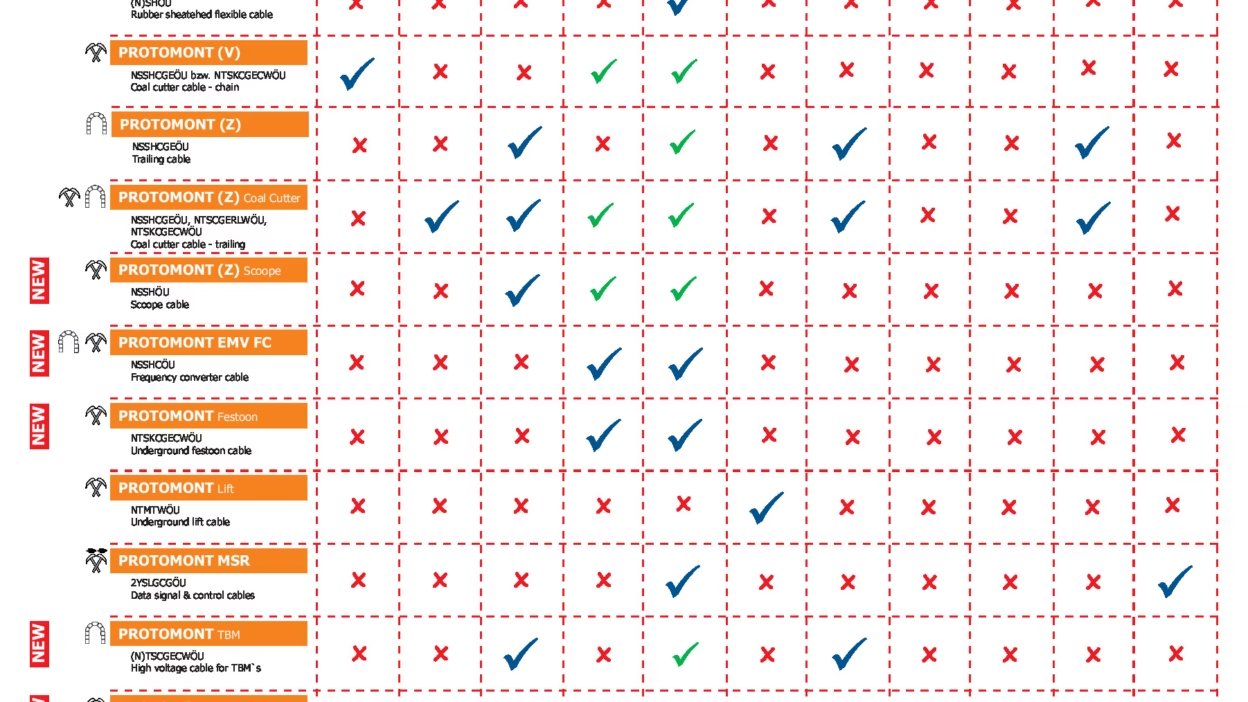
Prysmian Mining Application Systems represent a comprehensive portfolio of specialized cables engineered for the demanding environments of underground mining, tunneling operations, and opencast mining facilities. Developed by Prysmian Group, the world's largest cable manufacturer with over 140 years of expertise, these systems encompass multiple product families including PROTOLON (medium voltage flexible cables), PROTOMONT (rubber-sheathed flexible cables), OPTOFLEX (fiber optic cables), and CORDAFLEX (scraper cables).

What is Prysmian Mining Application systems ?

矿用电缆, 采煤机电缆, 拖曳电缆, 橡套电缆, 中压柔性电缆, 煤矿电缆, 隧道掘进机电缆, горнодобывающий кабель, шахтный кабель, гибкий кабель для шахт, кабель для угольных комбайнов, тянущийся кабель PROTOLON cable, PROTOMONT cable, OPTOFLEX mining cable, CORDAFLEX scraper cable, SUPROMONT power feeder cable, NTMCGCWÖU cable, NTSCGEWÖU cable, NTSCGCEWÖU cable, NSSHÖU cable, NSHÖU mining cable, NSSHCGEÖU coal cutter cable, NSHTÖU scraper cable, NYHSSYCY feeder cable, N3GHSSYCY rubber cable, NTSKGCFCWÖU festoon cable, NTMHWÖU lift cable, ZYSLGCGÖU MSR cable
Mining, drilling, and tunnelling cables represent the most demanding category of industrial cables, designed to operate in some of the harshest environments on earth. These heavy-duty power, control, and instrumentation cables serve mine operators worldwide for both static infrastructure and dynamic equipment applications. Manufactured in accordance with international standards including IEC 60502, BS EN 60332, BS EN 60811, BS EN 60754, and VDE 0295, mining cables must withstand mechanical stress, oil and grease exposure, water immersion, and in underground applications, provide critical fire safety through reduced smoke and fume emissions.

What are Mining, Drilling & Tunnelling Cables?

NSSHÖU cable, NSSHOU cable, NSHÖU cable, NSHOU cable, NSSCHOU cable, NSHTÖU cable, NTSCGEWÖU cable, NTSCGEWOU cable, NTMCGEWÖU cable, N3GHSSYCY cable, N3GHSSHCH cable,Type 61 cable, Type 63 cable, Type 611 cable, Type 622 cable, Type 633 cable, Type 66 cable,Type 240 cable, Type 241 cable, Type 245 cable, Type 450 cable, Type 455 cable, Type 260 cable, Type 275 cable, Type 409 cable, Type 440 cable, Type 441 cable,