Mining Trailing Cable

Type SHD-GC 3/C #1 AWG 8kV trailing cable has a DC resistance of approximately 0.161 ohms per kilometer measured at the reference temperature of 20°C (68°F). This DC resistance value represents the pure ohmic resistance of the copper conductor when direct current flows through it—a condition that occurs in short-circuit analysis and DC testing procedures. However, when this same cable carries the alternating current typical of mining equipment operations (at the standard operating temperature of 90°C), the AC resistance increases to approximately 0.363 ohms per kilometer due to the combined effects of temperature rise and skin effect phenomena. The substantial difference between 0.161 Ω/km (DC, 20°C) and 0.363 Ω/km (AC, 90°C)—more than a 2.25 times increase—demonstrates a critical principle that engineers must account for in real-world voltage drop calculations: laboratory DC resistance values are not directly applicable to field voltage drop analysis. The cable features three 107.2 mm² (1 AWG equivalent) phase conductors of Class 5 tinned copper, with an additional ground-check conductor for continuous monitoring of cable integrity during operation, an outer diameter of approximately 53–58 mm, and a total weight of approximately 6,200–6,800 kg/km. Understanding both the DC baseline resistance and the elevated AC resistance at operating temperature is essential for accurately predicting voltage drop over long cable runs in open-pit mining operations where power distribution distances frequently exceed 500 meters.
Voltage Drop Calculation: Resistance (Ohms/km) for Type SHD-GC 3/C #1 AWG 8kV Trailing Cable

Type SHD-GC 3/C #1 AWG 8kV trailing cable has a DC resistance of approximately 0.161 ohms per kilometer measured at the reference temperature of 20°C (68°F). This DC resistance value represents the pure ohmic resistance of the copper conductor when direct current flows through it—a condition that occurs in short-circuit analysis and DC testing procedures. However, when this same cable carries the alternating current typical of mining equipment operations (at the standard operating temperature of 90°C), the AC resistance increases to approximately 0.363 ohms per kilometer due to the combined effects of temperature rise and skin effect phenomena. The substantial difference between 0.161 Ω/km (DC, 20°C) and 0.363 Ω/km (AC, 90°C)—more than a 2.25 times increase—demonstrates a critical principle that engineers must account for in real-world voltage drop calculations: laboratory DC resistance values are not directly applicable to field voltage drop analysis. The cable features three 107.2 mm² (1 AWG equivalent) phase conductors of Class 5 tinned copper, with an additional ground-check conductor for continuous monitoring of cable integrity during operation, an outer diameter of approximately 53–58 mm, and a total weight of approximately 6,200–6,800 kg/km. Understanding both the DC baseline resistance and the elevated AC resistance at operating temperature is essential for accurately predicting voltage drop over long cable runs in open-pit mining operations where power distribution distances frequently exceed 500 meters.
Before diving into the technical details of Type 440 cable design, it is absolutely essential that you understand a fundamental standards distinction that is widely misunderstood throughout the Australian mining and port industries: AS/NZS 1802 applies specifically and exclusively to underground coal mining, not to surface coal terminal operations. The correct standard for stacker-reclaimer cables in Australian coal terminals is AS/NZS 2802, which governs reeling and trailing cables for mining and general industrial use on surface installations. This distinction is not a technicality—it reflects fundamentally different engineering requirements driven by dramatically different operating environments. A cable that is perfectly acceptable for underground coal mining conditions may be completely inadequate and unsafe for surface coal terminal service, which is why understanding this standards distinction is the foundation for all proper Type 440 cable specification and installation.

Stacker-Reclaimers: Why AS/NZS 2802 Type 440 3x95mm² is strictly required for long-travel reeling in Australian coal terminals

Before diving into the technical details of Type 440 cable design, it is absolutely essential that you understand a fundamental standards distinction that is widely misunderstood throughout the Australian mining and port industries: AS/NZS 1802 applies specifically and exclusively to underground coal mining, not to surface coal terminal operations. The correct standard for stacker-reclaimer cables in Australian coal terminals is AS/NZS 2802, which governs reeling and trailing cables for mining and general industrial use on surface installations. This distinction is not a technicality—it reflects fundamentally different engineering requirements driven by dramatically different operating environments. A cable that is perfectly acceptable for underground coal mining conditions may be completely inadequate and unsafe for surface coal terminal service, which is why understanding this standards distinction is the foundation for all proper Type 440 cable specification and installation.
The straightforward answer to whether quality generic (N)TMCGEWÖU 3x70+3x35/3 cables can safely replace expensive Sandvik OEM cables on underground LHD loaders is: yes, absolutely—provided that proper specification, compatibility verification, and installation procedures are carefully implemented. The continuous ampacity rating of 246 amperes at 30°C ambient temperature represents the maximum electrical current capacity for the cable under controlled installation conditions. In realistic underground mining duty cycles where the cable is subjected to frequent reeling stress, confined-space temperature conditions, and vibration from underground machinery, the effective design ampacity reduces through cumulative derating to approximately 195–215 amperes depending on specific mine conditions. These ratings demonstrate that a quality generic cable engineered to VDE 0250-813 and DIN VDE 0298-4 standards provides equivalent electrical performance to expensive OEM cables, often at 40–60% lower acquisition cost. The key distinction between OEM cables and quality generic cables is not electrical performance—it is supply chain, brand markup, and proprietary connector systems. A well-engineered generic cable provides the same copper conductors, similar insulation quality, and equivalent current-carrying capacity as the OEM equivalent. The cost savings from generic cable selection are real and substantial, but they must be paired with careful attention to mechanical compatibility, proper termination procedures, and quality field installation to realize the full cost advantage without reliability penalties.

Underground LHD Loaders: Can you reliably replace OEM Sandvik cables with quality generic (N)TMCGEWÖU 3×70+3×35/3 cables? 

The straightforward answer to whether quality generic (N)TMCGEWÖU 3×70+3×35/3 cables can safely replace expensive Sandvik OEM cables on underground LHD loaders is: yes, absolutely—provided that proper specification, compatibility verification, and installation procedures are carefully implemented. The continuous ampacity rating of 246 amperes at 30°C ambient temperature represents the maximum electrical current capacity for the cable under controlled installation conditions. In realistic underground mining duty cycles where the cable is subjected to frequent reeling stress, confined-space temperature conditions, and vibration from underground machinery, the effective design ampacity reduces through cumulative derating to approximately 195–215 amperes depending on specific mine conditions. These ratings demonstrate that a quality generic cable engineered to VDE 0250-813 and DIN VDE 0298-4 standards provides equivalent electrical performance to expensive OEM cables, often at 40–60% lower acquisition cost. The key distinction between OEM cables and quality generic cables is not electrical performance—it is supply chain, brand markup, and proprietary connector systems. A well-engineered generic cable provides the same copper conductors, similar insulation quality, and equivalent current-carrying capacity as the OEM equivalent. The cost savings from generic cable selection are real and substantial, but they must be paired with careful attention to mechanical compatibility, proper termination procedures, and quality field installation to realize the full cost advantage without reliability penalties.
The straightforward answer to whether Type SHD-GC 3/C 250 MCM 25kV cable can handle continuous dragging on sharp granite rocks is: not completely immune—it must be combined with physical protection. The 400-ampere continuous rating at 40°C ambient represents the maximum electrical current capacity under controlled installation conditions. However, the cable's 25 kV service capability and class-leading durability of the extra-heavy-duty CPE or TPU jacket cannot overcome the fundamental physics of sharp granite edges acting like cutting blades under thousands of tons of dynamic dragging tension. When a cable is dragged repeatedly across sharp granite surfaces, the pulling tension (often 5,000–8,000 newtons for large draglines) creates extremely high localized shear stress at every point where the cable edge contacts the rock. Over hours and days of continuous operation, this shear stress gradually thins the outer sheath, cutting through the protective layers, damaging the inner copper shield, allowing moisture and conductive mud to penetrate the insulation, and inevitably leading to partial discharge, electrical tracking, and eventually cable failure or catastrophic blowout at 25 kV. No cable jacket material—no matter how premium the grade—can indefinitely withstand continuous contact with sharp, hard-rock surfaces under high mechanical tension.

Draglines & Shovels: Can Type SHD-GC 3/C 250 MCM 25kV handle continuous dragging on sharp granite rocks?

The straightforward answer to whether Type SHD-GC 3/C 250 MCM 25kV cable can handle continuous dragging on sharp granite rocks is: not completely immune—it must be combined with physical protection. The 400-ampere continuous rating at 40°C ambient represents the maximum electrical current capacity under controlled installation conditions. However, the cable’s 25 kV service capability and class-leading durability of the extra-heavy-duty CPE or TPU jacket cannot overcome the fundamental physics of sharp granite edges acting like cutting blades under thousands of tons of dynamic dragging tension. When a cable is dragged repeatedly across sharp granite surfaces, the pulling tension (often 5,000–8,000 newtons for large draglines) creates extremely high localized shear stress at every point where the cable edge contacts the rock. Over hours and days of continuous operation, this shear stress gradually thins the outer sheath, cutting through the protective layers, damaging the inner copper shield, allowing moisture and conductive mud to penetrate the insulation, and inevitably leading to partial discharge, electrical tracking, and eventually cable failure or catastrophic blowout at 25 kV. No cable jacket material—no matter how premium the grade—can indefinitely withstand continuous contact with sharp, hard-rock surfaces under high mechanical tension.
Type SHD-GC 3/C #1 AWG 8kV trailing cable is approximately 0.410 Ohms/km at 20°C reference temperature for a single conductor, calculated from the copper's material resistivity combined with the #1 AWG conductor cross-section (approximately 42.4 mm² or 53,486 circular mils). This resistance value increases to approximately 0.495 Ohms/km at 90°C operating temperature due to copper's positive temperature coefficient of resistance. For a complete three-phase circuit using this cable type, the total circuit resistance including all three phase conductors but excluding the ground return path is approximately 0.410 Ohms/km at 20°C or 0.495 Ohms/km at 90°C. When operating a mine shovel or dragline drawing 150–160 amperes over a typical 1,000-meter (1 km) cable run from the mine substation to the equipment, the three-phase voltage drop across this cable is approximately 55–70 volts at the reference condition, representing a drop of roughly 0.75–1.0% from the 8,000-volt nominal supply. This voltage drop magnitude is acceptable for most mining equipment applications and remains within typical power system design standards that permit up to 2–3% voltage drop on secondary feeder circuits. The physical mechanism behind this resistance is the collision of free electrons within the copper lattice structure, where random thermal motion of atoms creates an effective "friction" that opposes electron flow, converting electrical energy into heat at a rate proportional to I²R.

Voltage Drop Calculation: What is the DC resistance (Ohms/km) for Type SHD-GC 3/C #1 AWG 8kV trailing cable? 

Type SHD-GC 3/C #1 AWG 8kV trailing cable is approximately 0.410 Ohms/km at 20°C reference temperature for a single conductor, calculated from the copper’s material resistivity combined with the #1 AWG conductor cross-section (approximately 42.4 mm² or 53,486 circular mils). This resistance value increases to approximately 0.495 Ohms/km at 90°C operating temperature due to copper’s positive temperature coefficient of resistance. For a complete three-phase circuit using this cable type, the total circuit resistance including all three phase conductors but excluding the ground return path is approximately 0.410 Ohms/km at 20°C or 0.495 Ohms/km at 90°C. When operating a mine shovel or dragline drawing 150–160 amperes over a typical 1,000-meter (1 km) cable run from the mine substation to the equipment, the three-phase voltage drop across this cable is approximately 55–70 volts at the reference condition, representing a drop of roughly 0.75–1.0% from the 8,000-volt nominal supply. This voltage drop magnitude is acceptable for most mining equipment applications and remains within typical power system design standards that permit up to 2–3% voltage drop on secondary feeder circuits. The physical mechanism behind this resistance is the collision of free electrons within the copper lattice structure, where random thermal motion of atoms creates an effective “friction” that opposes electron flow, converting electrical energy into heat at a rate proportional to I²R.
The 1-second short-circuit current rating for an NSHTÖU-J 4G95 0.6/1kV low-voltage heavy-duty reeling cable is approximately 8,500 to 10,200 amperes when the cable is new and at reference condition (20°C conductor temperature, single conductor in free air, no mechanical stress or aging degradation).

Short-Circuit Rating: What is the 1-second short-circuit current for NSHTÖU-J 4G95 0.6/1kV heavy-duty reeling cable? 

The 1-second short-circuit current rating for an NSHTÖU-J 4G95 0.6/1kV low-voltage heavy-duty reeling cable is approximately 8,500 to 10,200 amperes when the cable is new and at reference condition (20°C conductor temperature, single conductor in free air, no mechanical stress or aging degradation).
(N)TSKCGEWÖU 3x150+3x25/3 3.6/6kV cable with split three-part earth conductor is approximately 65 mm (2.56 inches), with a standard tolerance window of ±3.0 mm producing a permissible range of 62.0–68.0 mm. The inner jacket (the intermediate protective layer between the insulation and outer sheath) typically has a nominal thickness of approximately 0.8–1.0 mm, contributing to overall diameter build-up but not typically measured as a separate "inner diameter" in engineering specifications because the inner jacket is not a defined outer boundary—it is a layer embedded within the cable structure. The outer jacket (the final thermosetting rubber compound layer) has a nominal thickness of approximately 2.5–3.0 mm, providing the cable's mechanical interface with the environment. The approximate total weight of this cable is 8,200 kg/km (5,510 lbs/1000 ft), with copper content approximately 4,560 kg/km. It features three 150 mm² Class 5 tinned copper main phase conductors, three strategically distributed 25/3 mm² split earth conductors for electromagnetic symmetry, a 3GI3 high-dielectric EPR insulation system rated for continuous 90°C operation, an anti-torsion braid reinforcement layer, and a 5GM5 thermosetting halogen-free outer sheath providing extreme abrasion and tear resistance.

What is the Inner and Outer Jacket Diameter of (N)TSKCGEWÖU 3×150+3×25/3 3.6/6kV Splittable Earth Cable?

(N)TSKCGEWÖU 3×150+3×25/3 3.6/6kV cable with split three-part earth conductor is approximately 65 mm (2.56 inches), with a standard tolerance window of ±3.0 mm producing a permissible range of 62.0–68.0 mm. The inner jacket (the intermediate protective layer between the insulation and outer sheath) typically has a nominal thickness of approximately 0.8–1.0 mm, contributing to overall diameter build-up but not typically measured as a separate “inner diameter” in engineering specifications because the inner jacket is not a defined outer boundary—it is a layer embedded within the cable structure. The outer jacket (the final thermosetting rubber compound layer) has a nominal thickness of approximately 2.5–3.0 mm, providing the cable’s mechanical interface with the environment. The approximate total weight of this cable is 8,200 kg/km (5,510 lbs/1000 ft), with copper content approximately 4,560 kg/km. It features three 150 mm² Class 5 tinned copper main phase conductors, three strategically distributed 25/3 mm² split earth conductors for electromagnetic symmetry, a 3GI3 high-dielectric EPR insulation system rated for continuous 90°C operation, an anti-torsion braid reinforcement layer, and a 5GM5 thermosetting halogen-free outer sheath providing extreme abrasion and tear resistance.
The nominal outer diameter of a Type SHD-GC 3/C 350 MCM 15kV flexible mining trailing cable is approximately 73 mm (2.87 inches), with a maximum permissible outer diameter of approximately 74.9 mm (2.95 inches) per ICEA S-75-381 and NEMA WC-58 standards. The approximate weight of this specific cable geometry is 10,900 kg/km (7,300 lbs/1000 ft). It features three 350 MCM (177 mm² equivalent) main power conductors rated for 435 amperes continuous operation, supplemented by two 2/0 AWG earth conductors and one 6 AWG ground-check monitoring conductor for enhanced mining safety systems. The distinction between nominal (design target) and maximum (allowable limit) outer diameter is critical for mining operations because reel systems, conduit systems, and terminal connectors are engineered based on these dimensional constraints. A cable that exceeds the maximum outer diameter will not fit into equipment designed for the nominal specification, creating logistics delays and operational disruptions that cost far more than any cable savings.

What is the Maximum Outer Diameter of Type SHD-GC 3/C 350 MCM 15kV Mining Cable?

The nominal outer diameter of a Type SHD-GC 3/C 350 MCM 15kV flexible mining trailing cable is approximately 73 mm (2.87 inches), with a maximum permissible outer diameter of approximately 74.9 mm (2.95 inches) per ICEA S-75-381 and NEMA WC-58 standards. The approximate weight of this specific cable geometry is 10,900 kg/km (7,300 lbs/1000 ft). It features three 350 MCM (177 mm² equivalent) main power conductors rated for 435 amperes continuous operation, supplemented by two 2/0 AWG earth conductors and one 6 AWG ground-check monitoring conductor for enhanced mining safety systems. The distinction between nominal (design target) and maximum (allowable limit) outer diameter is critical for mining operations because reel systems, conduit systems, and terminal connectors are engineered based on these dimensional constraints. A cable that exceeds the maximum outer diameter will not fit into equipment designed for the nominal specification, creating logistics delays and operational disruptions that cost far more than any cable savings.
Type W 4/C 2/0 AWG 2000V portable power cables represent the heavy-duty backbone of North American mining operations, temporary power distribution systems, and construction equipment supply chains. These cables deliver 237 amperes continuously while withstanding the mechanical abuse, thermal cycling, oil exposure, and moisture ingress endemic to underground mining, drilling rig operations, and industrial emergency power applications. The designation "Type W" codifies a specific engineering philosophy: maximum flexibility through extreme copper stranding (259 to 342 fine wires per conductor), robust outer sheathing rated for tractor drag and ground abrasion, and flame-retardant chemistry meeting the rigorous MSHA standards that govern underground coal mining environments.

Sourcing Type W 4/C 2/0 AWG 2000V: Generic Equivalents Meeting MSHA Standards

Type W 4/C 2/0 AWG 2000V portable power cables represent the heavy-duty backbone of North American mining operations, temporary power distribution systems, and construction equipment supply chains. These cables deliver 237 amperes continuously while withstanding the mechanical abuse, thermal cycling, oil exposure, and moisture ingress endemic to underground mining, drilling rig operations, and industrial emergency power applications. The designation “Type W” codifies a specific engineering philosophy: maximum flexibility through extreme copper stranding (259 to 342 fine wires per conductor), robust outer sheathing rated for tractor drag and ground abrasion, and flame-retardant chemistry meeting the rigorous MSHA standards that govern underground coal mining environments.
A bucket wheel excavator is a remarkable piece of mining equipment: a massive rotating wheel fitted with buckets that continuously scoops material from a mining face, lifts it high into the air, and deposits it onto a conveyor system. The electrical cables that power such equipment face challenges that are fundamentally different from the cables used in stationary equipment or even in traditional draglines and shovels. As the main bucket wheel rotates continuously — sometimes for 12 to 20 hours per day — the flexible power cables that deliver electricity to drive motors must rotate with the wheel while simultaneously being wound and unwound through the cable reel system that connects the mobile equipment to the fixed power supply. This simultaneous rotation and reeling creates torsional stress — twisting force — that attempts to spiral the cable around its own axis. A standard single-sheath cable, designed primarily to withstand tension and bending, will gradually degrade under this torsional loading, with internal conductors ultimately fracturing and failing. A properly designed double-sheath cable with an anti-torsion braid can withstand decades of this continuous torsional punishment without degradation. Understanding why this distinction matters is the key to extending cable life and preventing expensive equipment failures.

(N)TSKCGEWÖU Double-Sheath Design: Why Anti-Torsion Braid is Critical for Bucket Wheel Excavators

A bucket wheel excavator is a remarkable piece of mining equipment: a massive rotating wheel fitted with buckets that continuously scoops material from a mining face, lifts it high into the air, and deposits it onto a conveyor system. The electrical cables that power such equipment face challenges that are fundamentally different from the cables used in stationary equipment or even in traditional draglines and shovels. As the main bucket wheel rotates continuously — sometimes for 12 to 20 hours per day — the flexible power cables that deliver electricity to drive motors must rotate with the wheel while simultaneously being wound and unwound through the cable reel system that connects the mobile equipment to the fixed power supply. This simultaneous rotation and reeling creates torsional stress — twisting force — that attempts to spiral the cable around its own axis. A standard single-sheath cable, designed primarily to withstand tension and bending, will gradually degrade under this torsional loading, with internal conductors ultimately fracturing and failing. A properly designed double-sheath cable with an anti-torsion braid can withstand decades of this continuous torsional punishment without degradation. Understanding why this distinction matters is the key to extending cable life and preventing expensive equipment failures.
The selection of industrial power cables represents one of the most critical engineering decisions in drilling operations, whether on land or offshore. Two cable types dominate this application space: the Type SHD-GC (重型屏蔽接地检查电缆), designed primarily for mobile mining and terrestrial drilling equipment, and the Type P (海洋平台电缆), engineered specifically for harsh offshore and fixed platform environments. Though both cables operate at similar voltage ratings, they embody fundamentally different design philosophies that reflect the distinct mechanical, electrical, and safety demands of their respective application domains.

Type SHD-GC vs. Type P: Selecting the Right Trailing Cable for Land and Offshore Drilling 

The selection of industrial power cables represents one of the most critical engineering decisions in drilling operations, whether on land or offshore. Two cable types dominate this application space: the Type SHD-GC (重型屏蔽接地检查电缆), designed primarily for mobile mining and terrestrial drilling equipment, and the Type P (海洋平台电缆), engineered specifically for harsh offshore and fixed platform environments. Though both cables operate at similar voltage ratings, they embody fundamentally different design philosophies that reflect the distinct mechanical, electrical, and safety demands of their respective application domains.
Electric rope shovels represent the backbone of modern large-scale surface mining operations, with the Caterpillar 7495 series standing as one of the industry's most prominent examples. These massive machines, capable of handling 100-tonne dipper payloads with 56 cubic meter buckets, operate continuously in 24-hour mining cycles where nighttime operations present unique safety challenges. The integration of luminous trailing cables designed to DIN VDE 0250-813 standards, particularly the (N)TSCGEH3S configuration, delivers measurable improvements in operator visibility, equipment safety, and operational efficiency during critical night-shift periods when ambient lighting conditions are most compromised. (电动绳索铲代表现代大型露天采矿作业的支柱,卡特彼勒7495系列作为行业最突出的例子之一。这些能够处理100吨斗容量、56立方米铲斗的大型机器,在24小时采矿周期中持续运行,夜间作业呈现独特的安全挑战。集成按DIN VDE 0250-813标准设计的发光拖曳电缆,特别是(N)TSCGEH3S配置,在环境照明条件最受限的关键夜班期间,为操作员可见性、设备安全和运营效率提供可衡量的改进。)

Electric Shovels: (N)TSCGEH3S for CAT 7495 – Benefits of Luminous Cables for Night-Shift Shovel Operations

Electric rope shovels represent the backbone of modern large-scale surface mining operations, with the Caterpillar 7495 series standing as one of the industry’s most prominent examples. These massive machines, capable of handling 100-tonne dipper payloads with 56 cubic meter buckets, operate continuously in 24-hour mining cycles where nighttime operations present unique safety challenges. The integration of luminous trailing cables designed to DIN VDE 0250-813 standards, particularly the (N)TSCGEH3S configuration, delivers measurable improvements in operator visibility, equipment safety, and operational efficiency during critical night-shift periods when ambient lighting conditions are most compromised. (电动绳索铲代表现代大型露天采矿作业的支柱,卡特彼勒7495系列作为行业最突出的例子之一。这些能够处理100吨斗容量、56立方米铲斗的大型机器,在24小时采矿周期中持续运行,夜间作业呈现独特的安全挑战。集成按DIN VDE 0250-813标准设计的发光拖曳电缆,特别是(N)TSCGEH3S配置,在环境照明条件最受限的关键夜班期间,为操作员可见性、设备安全和运营效率提供可衡量的改进。)
Mining operations face persistent safety challenges, with powered haulage accidents accounting for approximately 50% of all mining-related fatalities annually in the United States. Among these incidents, haul truck-related accidents remain the most prevalent, with six out of twenty-eight mining fatalities in 2017 and six out of twenty-seven in 2018 being directly attributed to haul truck operations. The introduction of self-illuminating LED-integrated mining cables represents a transformative advancement in collision avoidance technology, specifically addressing the critical issue of cable run-over accidents in low-visibility environments. (矿山作业面临持续的安全挑战,在美国,动力运输事故约占所有矿山相关死亡事故的50%。在这些事故中,运输卡车相关事故最为普遍,2017年28起矿山死亡事故中有6起、2018年27起中有6起直接归因于运输卡车作业。自发光LED集成矿用电缆的引入代表了防碰撞技术的变革性进步,专门解决低能见度环境中电缆碾压事故的关键问题。)

How Much Does Active Cable Illumination Reduce the Risk of Run-Over Accidents by Haul Trucks in Open-Pit Mines?

Mining operations face persistent safety challenges, with powered haulage accidents accounting for approximately 50% of all mining-related fatalities annually in the United States. Among these incidents, haul truck-related accidents remain the most prevalent, with six out of twenty-eight mining fatalities in 2017 and six out of twenty-seven in 2018 being directly attributed to haul truck operations. The introduction of self-illuminating LED-integrated mining cables represents a transformative advancement in collision avoidance technology, specifically addressing the critical issue of cable run-over accidents in low-visibility environments. (矿山作业面临持续的安全挑战,在美国,动力运输事故约占所有矿山相关死亡事故的50%。在这些事故中,运输卡车相关事故最为普遍,2017年28起矿山死亡事故中有6起、2018年27起中有6起直接归因于运输卡车作业。自发光LED集成矿用电缆的引入代表了防碰撞技术的变革性进步,专门解决低能见度环境中电缆碾压事故的关键问题。)
(N)TMCGEH3S矿用电缆介绍 The (N)TMCGEH3S represents a sophisticated medium voltage trailing cable specifically engineered for demanding open-pit mining operations. Developed in accordance with DIN VDE 0250 Part 813 standards and Nexans specifications, this polyurethane-sheathed cable combines exceptional mechanical durability with advanced electrical performance characteristics. The integration of self-illuminating LED visual monitoring technology transforms this cable into an intelligent power transmission solution that provides real-time operational status indication. (N)TMCGEH3S是一种专为苛刻露天采矿作业设计的复杂中压拖曳电缆。该电缆按照DIN VDE 0250第813部分标准和Nexans规范开发,聚氨酯护套电缆将卓越的机械耐久性与先进的电气性能特性相结合。集成自发光LED视觉监测技术使该电缆成为能够提供实时运行状态指示的智能电力传输解决方案。

(N)TMCGEH3S Self-Illuminating Mining Cable: Can LED Brightness Indicate Voltage Level or Load Status?

(N)TMCGEH3S represents a sophisticated medium voltage trailing cable specifically engineered for demanding open-pit mining operations. Developed in accordance with DIN VDE 0250 Part 813 standards and Nexans specifications, this polyurethane-sheathed cable combines exceptional mechanical durability with advanced electrical performance characteristics. The integration of self-illuminating LED visual monitoring technology transforms this cable into an intelligent power transmission solution that provides real-time operational status indication. (N)TMCGEH3S是一种专为苛刻露天采矿作业设计的复杂中压拖曳电缆。该电缆按照DIN VDE 0250第813部分标准和Nexans规范开发,聚氨酯护套电缆将卓越的机械耐久性与先进的电气性能特性相结合。集成自发光LED视觉监测技术使该电缆成为能够提供实时运行状态指示的智能电力传输解决方案。
how does LED mining cable work, self-illuminating cable electromagnetic induction, 360 degree visibility trailing cable for draglines, transparent TPU jacket vs CPE jacket mining cable, MSHA approved LED visibility cable, helical wound LED strip mining cable, cable runover prevention technology, ground check monitoring system mining, induction powered self-illuminating cable, best mining cable for night operations, visible cable for underground mining, high voltage trailing cable with LED, shovel trailing cable downtime reduction, mining cable visibility in low light conditions, electromagnetic field powered LED, self-sufficient LED visual monitoring system, cable damage cost reduction mining, how to prevent trailing cable runovers

Self-Illuminating Mining Cable: 360° Visibility Through Helical Stranding of LED Light Elements

how does LED mining cable work, self-illuminating cable electromagnetic induction, 360 degree visibility trailing cable for draglines, transparent TPU jacket vs CPE jacket mining cable, MSHA approved LED visibility cable, helical wound LED strip mining cable, cable runover prevention technology, ground check monitoring system mining, induction powered self-illuminating cable, best mining cable for night operations, visible cable for underground mining, high voltage trailing cable with LED, shovel trailing cable downtime reduction, mining cable visibility in low light conditions, electromagnetic field powered LED, self-sufficient LED visual monitoring system, cable damage cost reduction mining, how to prevent trailing cable runovers
When engineers first encounter the concept of a self-illuminating mining cable — such as the (N)TSCGEH3S / TENAX-LUMEN type — one of the most natural questions that arises is about the transparent outer sheath. Traditional mining trailing cables use opaque black polychloroprene (PCP, also known as neoprene or CR) or chlorinated polyethylene (CPE) outer jackets. These materials have decades of proven thermal performance data. Replacing them with a crystal-clear thermoplastic polyurethane (TPU) immediately raises the concern: does the change in sheath material and color affect how much current the cable can safely carry? This is not a trivial question. The ampacity (current-carrying capacity) of a power cable is fundamentally a thermal problem. Every ampere of current flowing through the conductor generates I²R heat losses. That heat must travel outward through every layer of the cable — insulation, screens, inner sheath, monitoring shield, and finally the outer sheath — before being dissipated to the surrounding environment by convection and radiation. If any layer in this thermal chain acts as a better or worse insulator, or if the cable surface radiates heat more or less efficiently, the maximum allowable current changes. 载流量本质上是一个热学问题:导体中的I²R热量必须穿过每一层传导到外部环境——如果任何层的热性能改变,最大允许电流就会变化。When engineers first encounter the concept of a self-illuminating mining cable — such as the (N)TSCGEH3S / TENAX-LUMEN type — one of the most natural questions that arises is about the transparent outer sheath. Traditional mining trailing cables use opaque black polychloroprene (PCP, also known as neoprene or CR) or chlorinated polyethylene (CPE) outer jackets. These materials have decades of proven thermal performance data. Replacing them with a crystal-clear thermoplastic polyurethane (TPU) immediately raises the concern: does the change in sheath material and color affect how much current the cable can safely carry? This is not a trivial question. The ampacity (current-carrying capacity) of a power cable is fundamentally a thermal problem. Every ampere of current flowing through the conductor generates I²R heat losses. That heat must travel outward through every layer of the cable — insulation, screens, inner sheath, monitoring shield, and finally the outer sheath — before being dissipated to the surrounding environment by convection and radiation. If any layer in this thermal chain acts as a better or worse insulator, or if the cable surface radiates heat more or less efficiently, the maximum allowable current changes. 载流量本质上是一个热学问题:导体中的I²R热量必须穿过每一层传导到外部环境——如果任何层的热性能改变,最大允许电流就会变化。

Heat Dissipation: Does the TPU Transparent Sheath Affect the Ampacity of the Cable Compared to Black Rubber?

When engineers first encounter the concept of a self-illuminating mining cable — such as the (N)TSCGEH3S / TENAX-LUMEN type — one of the most natural questions that arises is about the transparent outer sheath. Traditional mining trailing cables use opaque black polychloroprene (PCP, also known as neoprene or CR) or chlorinated polyethylene (CPE) outer jackets. These materials have decades of proven thermal performance data. Replacing them with a crystal-clear thermoplastic polyurethane (TPU) immediately raises the concern: does the change in sheath material and color affect how much current the cable can safely carry? This is not a trivial question. The ampacity (current-carrying capacity) of a power cable is fundamentally a thermal problem. Every ampere of current flowing through the conductor generates I²R heat losses. That heat must travel outward through every layer of the cable — insulation, screens, inner sheath, monitoring shield, and finally the outer sheath — before being dissipated to the surrounding environment by convection and radiation. If any layer in this thermal chain acts as a better or worse insulator, or if the cable surface radiates heat more or less efficiently, the maximum allowable current changes. 载流量本质上是一个热学问题:导体中的I²R热量必须穿过每一层传导到外部环境——如果任何层的热性能改变,最大允许电流就会变化。
Consider a medium-voltage mining trailing cable — for instance, an (N)TMCGEH3S rated 6/10 kV — carrying hundreds of amperes of alternating current through its three power cores to an electric rope shovel in an open-pit mine. Somewhere inside the same cable, a tiny LED glows steadily, making the cable visible to operators in darkness. Yet that LED has no wire, no contact, no physical electrical connection to the power cores. How is this possible? 设想一根中压矿用拖拽电缆——例如额定 6/10 kV 的 (N)TMCGEH3S——通过三根动力线芯向露天矿的电铲输送数百安培的交流电。在同一根电缆内部某处,一颗微小的 LED 稳定发光,使电缆在黑暗中对操作人员可见。但该 LED 与动力线芯之间没有导线、没有触点、没有任何物理电气连接。这是如何做到的?

Inductive Harvesting: How Does the Magnetic Field of the Power Cores Induce Current to Light Up LEDs Without Physical Electrical Connection?

Consider a medium-voltage mining trailing cable — for instance, an (N)TMCGEH3S rated 6/10 kV — carrying hundreds of amperes of alternating current through its three power cores to an electric rope shovel in an open-pit mine. Somewhere inside the same cable, a tiny LED glows steadily, making the cable visible to operators in darkness. Yet that LED has no wire, no contact, no physical electrical connection to the power cores. How is this possible? 设想一根中压矿用拖拽电缆——例如额定 6/10 kV 的 (N)TMCGEH3S——通过三根动力线芯向露天矿的电铲输送数百安培的交流电。在同一根电缆内部某处,一颗微小的 LED 稳定发光,使电缆在黑暗中对操作人员可见。但该 LED 与动力线芯之间没有导线、没有触点、没有任何物理电气连接。这是如何做到的?
In large-scale open-pit mines and underground operations, heavy mobile equipment — electric rope shovels, walking draglines, blast-hole drill rigs, and haul trucks — operates around the clock, including night shifts and in environments with zero natural light. Trailing power cables that supply electricity to this equipment lie across haul roads and bench floors, often spanning hundreds or even thousands of meters. When operators cannot see these cables, the result is crushover damage, unplanned downtime, and in the worst cases, life-threatening electrical faults. Cable damage from equipment runover is one of the most persistent operational challenges in surface mining. Each crush event can take a mine's primary production asset offline for hours or even days while the cable is repaired or replaced, and a damaged medium-voltage cable carrying 6 kV to 25 kV poses a serious arc-flash and electrocution hazard to any personnel nearby. According to Prysmian Group, the origin of many unplanned mining interruptions is related to power cable damage caused by equipment crushing during movement, particularly due to visibility restrictions. 据普睿司曼集团介绍,许多矿山非计划停机的根源是设备移动过程中因能见度受限导致的电力电缆压损。

Safety in the Dark: Why Active LED Mining Cables Are Replacing Reflective Tape

In large-scale open-pit mines and underground operations, heavy mobile equipment — electric rope shovels, walking draglines, blast-hole drill rigs, and haul trucks — operates around the clock, including night shifts and in environments with zero natural light. Trailing power cables that supply electricity to this equipment lie across haul roads and bench floors, often spanning hundreds or even thousands of meters. When operators cannot see these cables, the result is crushover damage, unplanned downtime, and in the worst cases, life-threatening electrical faults. Cable damage from equipment runover is one of the most persistent operational challenges in surface mining. Each crush event can take a mine’s primary production asset offline for hours or even days while the cable is repaired or replaced, and a damaged medium-voltage cable carrying 6 kV to 25 kV poses a serious arc-flash and electrocution hazard to any personnel nearby. According to Prysmian Group, the origin of many unplanned mining interruptions is related to power cable damage caused by equipment crushing during movement, particularly due to visibility restrictions. 据普睿司曼集团介绍,许多矿山非计划停机的根源是设备移动过程中因能见度受限导致的电力电缆压损。
Open-pit mining operations run around the clock, often in low-light conditions where trailing cables — the lifelines of mobile equipment — become nearly invisible on the ground. When heavy machinery such as draglines, shovels, or belt-wagon systems traverse active pit areas, undetected cables are at risk of being crushed or severed. The consequences extend beyond costly cable replacement: unplanned downtime, arc-flash hazards, and direct threats to personnel safety all stem from a single visibility failure. 露天矿山全天候运营,常在低光照条件下作业。此时拖拽电缆——移动设备的生命线——几乎不可见。重型机械(如拉铲、电铲或皮带车系统)经过作业区域时,未被发现的电缆面临被碾压或切断的风险。后果不仅是高昂的电缆更换费用,还包括计划外停机、电弧闪光危险以及对人员安全的直接威胁。

TENAX-LUMEN Alternative: High-Visibility (N)TMCGEH3S Cables for Safer Mines

Open-pit mining operations run around the clock, often in low-light conditions where trailing cables — the lifelines of mobile equipment — become nearly invisible on the ground. When heavy machinery such as draglines, shovels, or belt-wagon systems traverse active pit areas, undetected cables are at risk of being crushed or severed. The consequences extend beyond costly cable replacement: unplanned downtime, arc-flash hazards, and direct threats to personnel safety all stem from a single visibility failure. 露天矿山全天候运营,常在低光照条件下作业。此时拖拽电缆——移动设备的生命线——几乎不可见。重型机械(如拉铲、电铲或皮带车系统)经过作业区域时,未被发现的电缆面临被碾压或切断的风险。后果不仅是高昂的电缆更换费用,还包括计划外停机、电弧闪光危险以及对人员安全的直接威胁。
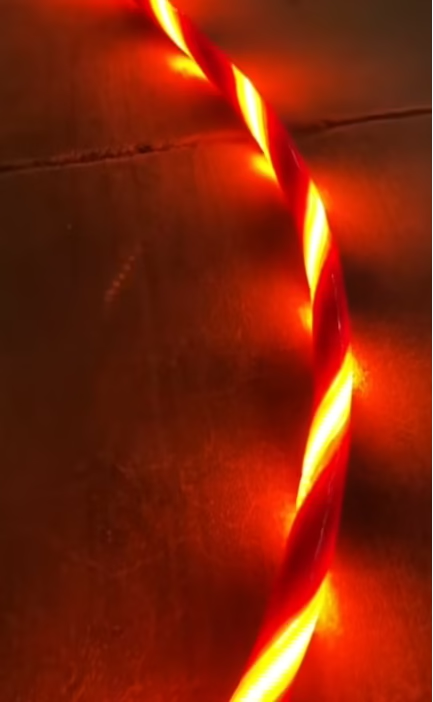
The (N)TSCGEH3S, commercially known under the TENAX-LUMEN product family originally developed by Prysmian Group in Germany, represents a breakthrough solution: a self-luminous medium-voltage trailing cable that glows visibly in darkness — even when de-energized — thanks to integrated electroluminescent (EL) or LED elements embedded beneath a transparent thermoplastic polyurethane (TPU) outer sheath. (N)TSCGEH3S 是一种自发光中压拖曳电缆,即使在断电状态下也能在黑暗中清晰可见,其发光元件嵌入透明TPU外护套之下。

What is (N)TSCGEH3S?The Ultimate Guide to Self-Illuminating Mining Cables

The (N)TSCGEH3S, commercially known under the TENAX-LUMEN product family originally developed by Prysmian Group in Germany, represents a breakthrough solution: a self-luminous medium-voltage trailing cable that glows visibly in darkness — even when de-energized — thanks to integrated electroluminescent (EL) or LED elements embedded beneath a transparent thermoplastic polyurethane (TPU) outer sheath. (N)TSCGEH3S 是一种自发光中压拖曳电缆,即使在断电状态下也能在黑暗中清晰可见,其发光元件嵌入透明TPU外护套之下。
Modern mining operations increasingly rely on self-illuminating cables to improve safety visibility in underground environments. By embedding LED strip lights directly within the transparent or translucent thermoplastic polyurethane (TPU) outer jacket of a trailing or reeling cable, operators gain continuous visual confirmation of cable routing, reduce tripping hazards, and can detect cable damage more readily. Anhui Feichun Special Cable Co., Ltd. has pioneered this approach in its SHD-GC LED Mining Cable series, integrating constant-current LED strips into cables rated from 2 kV to 25 kV for both underground and open-pit operations. 现代矿山作业越来越依赖于自发光电缆来提高地下环境的安全可见度。通过将LED灯带直接嵌入拖曳或卷缆的透明/半透明热塑性聚氨酯(TPU)外护套中,操作人员可持续确认电缆走向路线、降低绊倒风险,并更容易检测电缆损坏。安徽飞纯特种电缆有限公司在其SHD-GC LED矿用电缆系列中率先采用了该技术。

Service Life: What Is the Expected Lifespan of Embedded LED Strips Inside a Mining Cable Under Constant Flexing?

Modern mining operations increasingly rely on self-illuminating cables to improve safety visibility in underground environments. By embedding LED strip lights directly within the transparent or translucent thermoplastic polyurethane (TPU) outer jacket of a trailing or reeling cable, operators gain continuous visual confirmation of cable routing, reduce tripping hazards, and can detect cable damage more readily. Anhui Feichun Special Cable Co., Ltd. has pioneered this approach in its SHD-GC LED Mining Cable series, integrating constant-current LED strips into cables rated from 2 kV to 25 kV for both underground and open-pit operations. 现代矿山作业越来越依赖于自发光电缆来提高地下环境的安全可见度。通过将LED灯带直接嵌入拖曳或卷缆的透明/半透明热塑性聚氨酯(TPU)外护套中,操作人员可持续确认电缆走向路线、降低绊倒风险,并更容易检测电缆损坏。安徽飞纯特种电缆有限公司在其SHD-GC LED矿用电缆系列中率先采用了该技术。
In heavy-duty industrial cables — the kind used in port container cranes, mining draglines, tunnel boring machines, and steel-mill transfer cars — visual identification of cable status is a serious safety concern. Operators need to know at a glance whether a cable is energized, which phase it carries, or simply where it runs in a dark, congested environment. Embedding small LED indicators directly into the cable sheath is one solution, but doing so raises an immediate engineering question: how do you power those LEDs? 在重型工业电缆(如港口集装箱起重机、矿山拖拽线、隧道掘进机和钢厂转运车使用的电缆)中,电缆状态的可视化识别是一个严肃的安全问题。将 LED 指示灯嵌入电缆护套是一种解决方案,但随之而来的工程难题是:如何为这些 LED 供电?

Inductive Harvesting: How Does the Magnetic Field of the Power Cores Induce Current to Light Up LEDs Without Physical Electrical Connection?

In heavy-duty industrial cables — the kind used in port container cranes, mining draglines, tunnel boring machines, and steel-mill transfer cars — visual identification of cable status is a serious safety concern. Operators need to know at a glance whether a cable is energized, which phase it carries, or simply where it runs in a dark, congested environment. Embedding small LED indicators directly into the cable sheath is one solution, but doing so raises an immediate engineering question: how do you power those LEDs? 在重型工业电缆(如港口集装箱起重机、矿山拖拽线、隧道掘进机和钢厂转运车使用的电缆)中,电缆状态的可视化识别是一个严肃的安全问题。将 LED 指示灯嵌入电缆护套是一种解决方案,但随之而来的工程难题是:如何为这些 LED 供电?
The type designation (N)TSCGEH3S follows the German DIN VDE cable nomenclature system, which uses sequential letters to encode every aspect of a cable's construction, insulation material, and intended service conditions. Under DIN VDE 0292, the leading N (in parentheses) indicates the cable is manufactured to a recognized VDE type standard with permissible manufacturer variations, while subsequent characters specify the conductor type, shielding, elastomeric insulation, and special functional elements embedded in the cable assembly. 型号标识 (N)TSCGEH3S 遵循德国 DIN VDE 电缆命名规范,每个字母依次编码了电缆的结构、绝缘材料及适用工况。括号中的"N"表示该型号依据 VDE 标准制造,允许制造商做出一定的变型设计。

Power Source: How Are the Electroluminescent (EL) Strings in (N)TSCGEH3S Powered?

The type designation (N)TSCGEH3S follows the German DIN VDE cable nomenclature system, which uses sequential letters to encode every aspect of a cable’s construction, insulation material, and intended service conditions. Under DIN VDE 0292, the leading N (in parentheses) indicates the cable is manufactured to a recognized VDE type standard with permissible manufacturer variations, while subsequent characters specify the conductor type, shielding, elastomeric insulation, and special functional elements embedded in the cable assembly. 型号标识 (N)TSCGEH3S 遵循德国 DIN VDE 电缆命名规范,每个字母依次编码了电缆的结构、绝缘材料及适用工况。括号中的”N”表示该型号依据 VDE 标准制造,允许制造商做出一定的变型设计。
Luminous cables represent an innovative category in the special cable industry, integrating LED lighting elements within the cable structure to provide both electrical transmission and visual illumination functions. The selection of sheath materials is critical for these cables, as the outer jacket must simultaneously protect the internal conductors while allowing light transmission from embedded LED components.

FeiChun Transparent Sheath: Why Luminous Cables Use Transparent TPU Instead of Black PCP

Luminous cables represent an innovative category in the special cable industry, integrating LED lighting elements within the cable structure to provide both electrical transmission and visual illumination functions. The selection of sheath materials is critical for these cables, as the outer jacket must simultaneously protect the internal conductors while allowing light transmission from embedded LED components.
Type SHD-GC cables rated from 2kV to 25kV are now available with embedded self-sufficient LED monitoring pilots. This innovative technology represents a significant advancement in mining cable safety, utilizing electromagnetic induction to power LED illumination without requiring external power connections or batteries. (是的,2kV至25kV额定电压的SHD-GC型电缆现已配备自发光LED监测指示系统。该创新技术利用电磁感应原理为LED供电,无需外部电源连接或电池。)

FeiChun SHD-GC with Embedded LED Monitoring PilotsType SHD-GC Cables (2kV – 25kV) with Self-Sufficient Illumination Technology

Type SHD-GC cables rated from 2kV to 25kV are now available with embedded self-sufficient LED monitoring pilots. This innovative technology represents a significant advancement in mining cable safety, utilizing electromagnetic induction to power LED illumination without requiring external power connections or batteries. (是的,2kV至25kV额定电压的SHD-GC型电缆现已配备自发光LED监测指示系统。该创新技术利用电磁感应原理为LED供电,无需外部电源连接或电池。)
Cable visibility in mining operations represents a critical safety factor that directly impacts operational efficiency and worker protection. Underground and surface mining environments present unique challenges including low-light conditions, dust, and the presence of heavy mobile equipment. (电缆可视性是矿山作业中直接影响运营效率和工人安全的关键因素。) Two primary technologies have emerged to address cable visibility challenges: passive reflective coatings and active illumination systems. This technical comparison examines both approaches to assist mining engineers in selecting appropriate solutions for their operational requirements.

FeiChun Reflective vs. Luminous Mining CableTF Kable Reflective Technology vs. TENAX-LUMEN Active Illumination

Cable visibility in mining operations represents a critical safety factor that directly impacts operational efficiency and worker protection. Underground and surface mining environments present unique challenges including low-light conditions, dust, and the presence of heavy mobile equipment. (电缆可视性是矿山作业中直接影响运营效率和工人安全的关键因素。) Two primary technologies have emerged to address cable visibility challenges: passive reflective coatings and active illumination systems. This technical comparison examines both approaches to assist mining engineers in selecting appropriate solutions for their operational requirements.
Load-Haul-Dump (LHD) loaders are the backbone of underground ore movement—more than 75% of the world's underground metal mines rely on LHDs for material handling. Electric-motor LHD units typically operate at medium voltages of 380–550 V (and up to 3.3/6.6 kV for larger units), drawing power through flexible trailing cables that must reel and unreel as the machine moves through narrow, irregular headings. In the permanent darkness of underground drifts, these cables face an acute visibility problem: personnel and equipment cannot easily see trailing cables on the ground, leading to run-over damage, unplanned outages, and serious safety hazards.

FeiChun (N)TMCGEH3S: Specifications for Active LED Medium Voltage Trailing Cables for Underground LHDs

Load-Haul-Dump (LHD) loaders are the backbone of underground ore movement—more than 75% of the world’s underground metal mines rely on LHDs for material handling. Electric-motor LHD units typically operate at medium voltages of 380–550 V (and up to 3.3/6.6 kV for larger units), drawing power through flexible trailing cables that must reel and unreel as the machine moves through narrow, irregular headings. In the permanent darkness of underground drifts, these cables face an acute visibility problem: personnel and equipment cannot easily see trailing cables on the ground, leading to run-over damage, unplanned outages, and serious safety hazards.
In the German DIN VDE cable designation system — widely considered the most comprehensive national nomenclature for industrial cables in the world — every letter and number encodes a specific material, construction feature, or functional characteristic. This convention, governed by standards such as DIN VDE 0292 (Type Designation Codes) and DIN VDE 0250 Part 813 (flexible reeling and trailing cables), allows an engineer to identify a cable's conductor type, insulation, screening, protective earth, sheath, and special integrations simply by reading its alphanumeric type code. 在德国 DIN VDE 电缆命名体系中——被公认为全球工业电缆领域最完善的国家级命名规范——每一个字母和数字都编码了特定的材料、结构特征或功能属性。该体系由 DIN VDE 0292(型号代码标准)和 DIN VDE 0250 第 813 部分(柔性卷筒与拖曳电缆)等标准统一管理。

TENAX-LUMEN (N)TSCGEH3S — What Does Each Letter in the Code Stand For?

In the German DIN VDE cable designation system — widely considered the most comprehensive national nomenclature for industrial cables in the world — every letter and number encodes a specific material, construction feature, or functional characteristic. This convention, governed by standards such as DIN VDE 0292 (Type Designation Codes) and DIN VDE 0250 Part 813 (flexible reeling and trailing cables), allows an engineer to identify a cable’s conductor type, insulation, screening, protective earth, sheath, and special integrations simply by reading its alphanumeric type code. 在德国 DIN VDE 电缆命名体系中——被公认为全球工业电缆领域最完善的国家级命名规范——每一个字母和数字都编码了特定的材料、结构特征或功能属性。该体系由 DIN VDE 0292(型号代码标准)和 DIN VDE 0250 第 813 部分(柔性卷筒与拖曳电缆)等标准统一管理。
The distinctive bright orange color of high-voltage cables in electric vehicles is not merely aesthetic — it is a critical safety identification requirement mandated by international standards. SAE J1673 and related standards specify that all conductors and cable assemblies operating at voltages above 60 V DC (or 30 V AC) in electric and hybrid vehicles must be sheathed in orange insulation or jacketing. This high-visibility color serves as an immediate visual warning to technicians, emergency responders (firefighters, paramedics), and maintenance personnel that the cable carries lethal voltage levels. In the underground mining context, where cable damage from rock fall, equipment collision, or abrasion is a real hazard, the orange identification becomes doubly important for preventing accidental contact with live conductors. (电动车辆中高压电缆的显眼橙色不仅仅是美观——它是国际标准强制要求的关键安全标识。SAE J1673及相关标准规定,电动和混合动力车辆中所有工作电压超过60 V DC的导体和电缆组件必须使用橙色绝缘或护套。橙色在井下采矿环境中尤为重要,可防止人员意外接触带电导体。)

BEV Wiring: High-Voltage Orange Shielded Cables for Sandvik & Epiroc Electric Loaders

The distinctive bright orange color of high-voltage cables in electric vehicles is not merely aesthetic — it is a critical safety identification requirement mandated by international standards. SAE J1673 and related standards specify that all conductors and cable assemblies operating at voltages above 60 V DC (or 30 V AC) in electric and hybrid vehicles must be sheathed in orange insulation or jacketing. This high-visibility color serves as an immediate visual warning to technicians, emergency responders (firefighters, paramedics), and maintenance personnel that the cable carries lethal voltage levels. In the underground mining context, where cable damage from rock fall, equipment collision, or abrasion is a real hazard, the orange identification becomes doubly important for preventing accidental contact with live conductors. (电动车辆中高压电缆的显眼橙色不仅仅是美观——它是国际标准强制要求的关键安全标识。SAE J1673及相关标准规定,电动和混合动力车辆中所有工作电压超过60 V DC的导体和电缆组件必须使用橙色绝缘或护套。橙色在井下采矿环境中尤为重要,可防止人员意外接触带电导体。)
The concept dates back to the 1980s and was first deployed commercially at the Chino Mine in New Mexico in 1967 using earlier-generation systems. Modern trolley assist has seen major renewed interest since the mid-2010s as mining companies pursue decarbonization targets. Caterpillar completed a two-year pilot at Boliden's Aitik copper mine in Sweden, and Komatsu — partnering with Wabtec — deployed trolley-equipped 830E-5 trucks at Copper Mountain Mine in British Columbia, Canada. 这一概念可追溯至20世纪80年代,于1967年在美国新墨西哥州奇诺矿首次商业部署。随着矿业公司推进脱碳目标,现代架线助力技术自2010年代中期以来重新受到广泛关注。卡特彼勒在瑞典博利登Aitik铜矿完成了为期两年的试点,小松与Wabtec合作在加拿大不列颠哥伦比亚省铜山矿部署了配备架线系统的830E-5卡车。

Pantograph Cables: What Cable Type Is Required for Komatsu/CAT Trolley Assist Trucks Connecting to Overhead Lines?

The concept dates back to the 1980s and was first deployed commercially at the Chino Mine in New Mexico in 1967 using earlier-generation systems. Modern trolley assist has seen major renewed interest since the mid-2010s as mining companies pursue decarbonization targets. Caterpillar completed a two-year pilot at Boliden’s Aitik copper mine in Sweden, and Komatsu — partnering with Wabtec — deployed trolley-equipped 830E-5 trucks at Copper Mountain Mine in British Columbia, Canada. 这一概念可追溯至20世纪80年代,于1967年在美国新墨西哥州奇诺矿首次商业部署。随着矿业公司推进脱碳目标,现代架线助力技术自2010年代中期以来重新受到广泛关注。卡特彼勒在瑞典博利登Aitik铜矿完成了为期两年的试点,小松与Wabtec合作在加拿大不列颠哥伦比亚省铜山矿部署了配备架线系统的830E-5卡车。
In mining pump and dewatering operations, cable selection directly impacts system reliability and operational safety. While H07RN-F Titanex (manufactured by Nexans) represents a high-quality general industrial rubber cable compliant with EN 50525-2-21/IEC 60245-4, the NSSHÖU cable manufactured per DIN VDE 0250 Part 812 offers critical advantages specifically engineered for mining environments. 在矿井泵和排水作业中,电缆选择直接影响系统可靠性和操作安全。虽然H07RN-F Titanex(Nexans生产)是符合EN 50525-2-21/IEC 60245-4标准的高品质通用工业橡胶电缆,但按DIN VDE 0250第812部分制造的NSSHÖU电缆专为矿业环境设计,具有关键优势。

H07RN-F Titanex vs. NSSHÖU: Why NSSHÖU is Superior for Mining Pump Applications

In mining pump and dewatering operations, cable selection directly impacts system reliability and operational safety. While H07RN-F Titanex (manufactured by Nexans) represents a high-quality general industrial rubber cable compliant with EN 50525-2-21/IEC 60245-4, the NSSHÖU cable manufactured per DIN VDE 0250 Part 812 offers critical advantages specifically engineered for mining environments. 在矿井泵和排水作业中,电缆选择直接影响系统可靠性和操作安全。虽然H07RN-F Titanex(Nexans生产)是符合EN 50525-2-21/IEC 60245-4标准的高品质通用工业橡胶电缆,但按DIN VDE 0250第812部分制造的NSSHÖU电缆专为矿业环境设计,具有关键优势。
Electrical cables deployed in polar regions, northern mining sites, and cryogenic industrial facilities must retain mechanical flexibility at temperatures far below the freezing point of water. While standard Chlorinated Polyethylene (CPE) jacketing provides excellent flame retardance, oil resistance, and UV stability, it becomes increasingly stiff as ambient temperatures drop below approximately −25 °C. This presents a serious engineering challenge: a rigid cable jacket cannot be routed, bent around pulleys, or connected to moving machinery without risking cracks, insulation damage, or total conductor exposure. (在极地、北方矿区及低温工业环境中运行的电缆必须在远低于 0 °C 的温度下保持机械柔性。标准 CPE 护套虽具有优异的阻燃、耐油和耐紫外线性能,但在约 −25 °C 以下会变得僵硬,给布线、弯曲和动态连接带来开裂风险。)

Cold Flex Technology: AmerCable Arctic Brand vs. Standard CPE — What Plasticizer Is Used for −60 °C Flexibility?

Electrical cables deployed in polar regions, northern mining sites, and cryogenic industrial facilities must retain mechanical flexibility at temperatures far below the freezing point of water. While standard Chlorinated Polyethylene (CPE) jacketing provides excellent flame retardance, oil resistance, and UV stability, it becomes increasingly stiff as ambient temperatures drop below approximately −25 °C. This presents a serious engineering challenge: a rigid cable jacket cannot be routed, bent around pulleys, or connected to moving machinery without risking cracks, insulation damage, or total conductor exposure. (在极地、北方矿区及低温工业环境中运行的电缆必须在远低于 0 °C 的温度下保持机械柔性。标准 CPE 护套虽具有优异的阻燃、耐油和耐紫外线性能,但在约 −25 °C 以下会变得僵硬,给布线、弯曲和动态连接带来开裂风险。)
Type G-GC portable power cables represent an essential category of mining and industrial cables featuring a distinctive safety component: the ground check (pilot) conductor. This yellow-insulated conductor provides continuous monitoring of the grounding circuit's integrity, enabling fail-safe ground check systems to automatically de-energize equipment when grounding continuity is compromised. Understanding the specifications of ground check conductors, and how they compare between major manufacturers like AmerCable (Nexans) and General Cable (Prysmian), is critical for equipment compatibility, safety compliance, and procurement decisions. Type G-GC便携式电力电缆是矿用和工业电缆的重要类别,具有独特的安全组件:接地检测(先导)导体。这种黄色绝缘导体提供对接地回路完整性的持续监测,使故障安全接地检测系统能够在接地连续性受损时自动断开设备电源。了解接地检测导体的规格,以及AmerCable(Nexans)和General Cable(Prysmian)等主要制造商之间的对比,对于设备兼容性、安全合规和采购决策至关重要。

AmerCable G-GC (3-Conductor): Comparing the Ground Check Pilot Size of AmerCable vs. General Cable (Prysmian)

Type G-GC portable power cables represent an essential category of mining and industrial cables featuring a distinctive safety component: the ground check (pilot) conductor. This yellow-insulated conductor provides continuous monitoring of the grounding circuit’s integrity, enabling fail-safe ground check systems to automatically de-energize equipment when grounding continuity is compromised. Understanding the specifications of ground check conductors, and how they compare between major manufacturers like AmerCable (Nexans) and General Cable (Prysmian), is critical for equipment compatibility, safety compliance, and procurement decisions. Type G-GC便携式电力电缆是矿用和工业电缆的重要类别,具有独特的安全组件:接地检测(先导)导体。这种黄色绝缘导体提供对接地回路完整性的持续监测,使故障安全接地检测系统能够在接地连续性受损时自动断开设备电源。了解接地检测导体的规格,以及AmerCable(Nexans)和General Cable(Prysmian)等主要制造商之间的对比,对于设备兼容性、安全合规和采购决策至关重要。