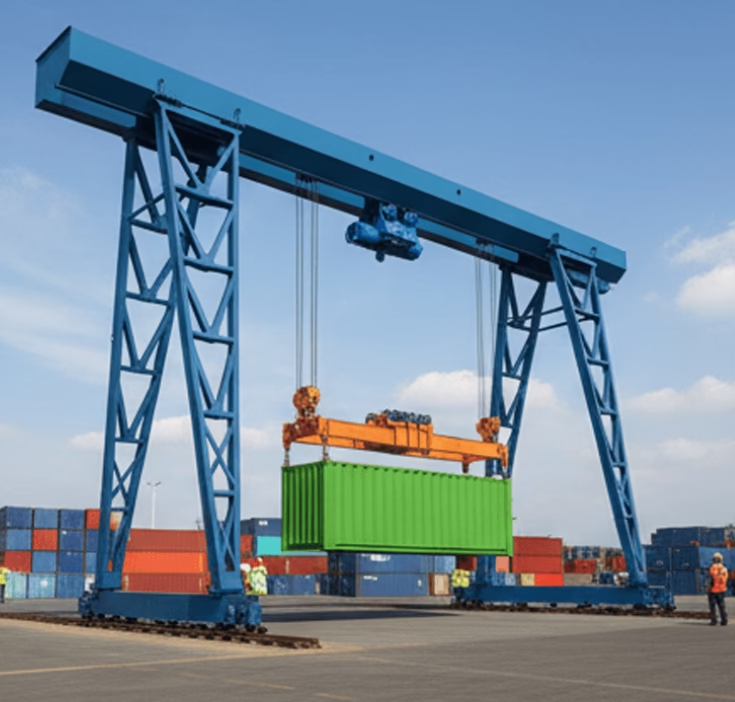
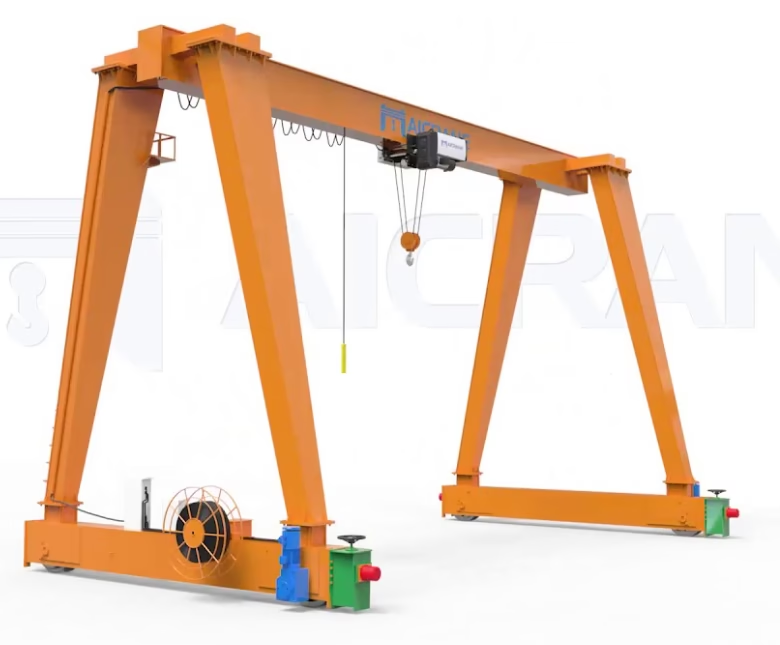
Festoon Cable

WS-FSTN-2PNCT is the foundation cable of the WALSTOON festoon system product family — a high-performance, unshielded, rubber-insulated flexible cable engineered for the demanding mechanical and environmental conditions of port gantry cranes, ship unloaders, cable chain systems, and industrial overhead cranes. With the widest configuration range in the WALSTOON product line — from single-conductor 250 mm² power cables capable of carrying hundreds of amperes to compact 30-core × 0.75 mm² multi-circuit control cables — the WS-FSTN-2PNCT addresses every power distribution and discrete control requirement on a crane festoon system.

WALSTOON® WS-FSTN-2PNCT Festoon System Flexible Cable

WS-FSTN-2PNCT is the foundation cable of the WALSTOON festoon system product family — a high-performance, unshielded, rubber-insulated flexible cable engineered for the demanding mechanical and environmental conditions of port gantry cranes, ship unloaders, cable chain systems, and industrial overhead cranes. With the widest configuration range in the WALSTOON product line — from single-conductor 250 mm² power cables capable of carrying hundreds of amperes to compact 30-core × 0.75 mm² multi-circuit control cables — the WS-FSTN-2PNCT addresses every power distribution and discrete control requirement on a crane festoon system.
WS-FSTN-2PNCT-SB is a comprehensive-range festoon system flexible cable designed to meet the diverse wiring requirements of port gantry cranes, ship unloaders, cable chain systems, and industrial overhead crane applications. While its sibling product — the WS-FSTN-2PNCT-PSB — features Kevlar® para-aramid fibre reinforcement for extreme tensile applications, the WS-FSTN-2PNCT-SB focuses on delivering the widest possible range of core configurations with reliable tinned copper shield braiding, covering everything from compact 2-core signal cables to high-density 30-core multi-circuit cables and paired-core variants for balanced signal transmission.

WALSTOON® WS-FSTN-2PNCT-SB Festoon System Flexible Cable

WS-FSTN-2PNCT-SB is a comprehensive-range festoon system flexible cable designed to meet the diverse wiring requirements of port gantry cranes, ship unloaders, cable chain systems, and industrial overhead crane applications. While its sibling product — the WS-FSTN-2PNCT-PSB — features Kevlar® para-aramid fibre reinforcement for extreme tensile applications, the WS-FSTN-2PNCT-SB focuses on delivering the widest possible range of core configurations with reliable tinned copper shield braiding, covering everything from compact 2-core signal cables to high-density 30-core multi-circuit cables and paired-core variants for balanced signal transmission.
Festoon cables on port gantry cranes and ship unloaders endure some of the most punishing operating conditions in industrial cable engineering. Every time the crane trolley travels along its rail, the festoon cable is dragged, flexed, accelerated, and decelerated across spans of 100–300 metres. The cable must support its own suspended weight between trolley hangers, absorb dynamic shock loads during emergency stops, withstand continuous wind-induced vibration in exposed coastal environments, and resist the corrosive effects of saltwater spray, UV radiation, and airborne industrial contaminants — all while maintaining electrical continuity and signal integrity for safety-critical crane control systems.

WALSTOON® WS-FSTN-2PNCT-PSB Festoon System Flexible Cable

AC 600V Festoon System Flexible Cable with Kevlar® Para-Aramid Fibre Braided Tensile Reinforcement Layer, JIS C 3327 Compliant, −40°C to +90°C Operating Range, Oil-Resistant, Flame-Retardant — Engineered for Port Gantry Cranes, Ship-to-Shore Unloaders, Container Handling Equipment, and Heavy-Duty Cable Chain Applications
The H07RN-F cable represents the pinnacle of industrial-grade rubber insulated cable design, engineered for demanding applications where extreme flexibility, superior environmental resistance, and uncompromising reliability are non-negotiable. Developed per DIN EN 50525-2-21 (VDE 0285-525-2-21), the H07RN-F combines advanced vulcanization technology with chloroprene (CR) EM2 elastomer sheath composition to deliver exceptional performance across construction sites, industrial machinery, marine installations, and professional electrical systems.

TRIFLEX Plus H07RN-F®

The H07RN-F cable represents the pinnacle of industrial-grade rubber insulated cable design, engineered for demanding applications where extreme flexibility, superior environmental resistance, and uncompromising reliability are non-negotiable. Developed per DIN EN 50525-2-21 (VDE 0285-525-2-21), the H07RN-F combines advanced vulcanization technology with chloroprene (CR) EM2 elastomer sheath composition to deliver exceptional performance across construction sites, industrial machinery, marine installations, and professional electrical systems.
Not every STS crane needs ETFE insulation, 56 cores, or integrated fiber optics. The vast majority of the world's operational STS crane fleet — thousands of cranes at hundreds of terminals — uses a simple, proven, 36-core control cable on the spreader reel. That cable is the Cordaflex® (N)SHTOEU (SMK)-V-S: a single-configuration workhorse with basic EPR insulation that every port electrician can strip and terminate using standard tools, a 36×2.5 + protective conductor core count that covers the circuit requirements of standard (non-automated) spreaders, and a construction that shares the premium vertical-rated architecture (Class FS, aramide, PCP rubber, ±50°/m torsion) of its more exotic siblings.

Cordaflex® (N)SHTOEU (SMK)-V-S

Not every STS crane needs ETFE insulation, 56 cores, or integrated fiber optics. The vast majority of the world’s operational STS crane fleet — thousands of cranes at hundreds of terminals — uses a simple, proven, 36-core control cable on the spreader reel. That cable is the Cordaflex® (N)SHTOEU (SMK)-V-S: a single-configuration workhorse with basic EPR insulation that every port electrician can strip and terminate using standard tools, a 36×2.5 + protective conductor core count that covers the circuit requirements of standard (non-automated) spreaders, and a construction that shares the premium vertical-rated architecture (Class FS, aramide, PCP rubber, ±50°/m torsion) of its more exotic siblings.
If there is one cable designation that every port electrical engineer recognises globally, it is NSHTÖU. The TROMMELFLEX® (K) (N)SHTOEU-J is the definitive embodiment of this designation — a DIN VDE 0250-814 standard drum reeling cable with EPR 3GI3 insulation, 5GM3 neoprene construction, and the broadest configuration range of any single cable family in the Klaus Faber portfolio: 24 configurations spanning 8 cross-sections from 1.5 mm² to 150 mm², with core counts from 4 to 30, ampacities from 23 A to 404 A, and weights from 372 kg/km to 8,706 kg/km

TROMMELFLEX® (K) (N)SHTOEU

If there is one cable designation that every port electrical engineer recognises globally, it is NSHTÖU. The TROMMELFLEX® (K) (N)SHTOEU-J is the definitive embodiment of this designation — a DIN VDE 0250-814 standard drum reeling cable with EPR 3GI3 insulation, 5GM3 neoprene construction, and the broadest configuration range of any single cable family in the Klaus Faber portfolio: 24 configurations spanning 8 cross-sections from 1.5 mm² to 150 mm², with core counts from 4 to 30, ampacities from 23 A to 404 A, and weights from 372 kg/km to 8,706 kg/km
BiTcrane® (N)3GRD5G is not one cable—it is an entire festoon cable system. With over 40 standard configurations spanning four distinct product families—single-core power, multi-core control, three-phase motor power, and paired signal cables—BiTcrane provides every cable type needed to build a complete crane festoon electrical system from a single manufacturer, a single specification, a single rubber compound system, and a single 240 m/min speed rating.

BiTcrane® (N)3GRD5G

BiTcrane® (N)3GRD5G is not one cable—it is an entire festoon cable system. With over 40 standard configurations spanning four distinct product families—single-core power, multi-core control, three-phase motor power, and paired signal cables—BiTcrane provides every cable type needed to build a complete crane festoon electrical system from a single manufacturer, a single specification, a single rubber compound system, and a single 240 m/min speed rating.
Nexans Rheyfestoon® (N)3GRDCG5G is the cable that exists because modern cranes are too fast and too electrically noisy for standard festoon cables. It is a 0.6/1 kV EMC-screened power and control festoon cable engineered by Anhui Feichun Special Cable Co., Ltd. per VDE 0250-812 that achieves two specifications no other festoon cable in production can match simultaneously: 240 m/min festoon operating speed—50% faster than the 160 m/min typical for premium festoon cables—and 80% tinned copper braid screen coverage for complete electromagnetic compatibility in the VFD-saturated electrical environments of modern automated cranes.

Nexans Rheyfestoon®(N)3GRDCG5G

Nexans Rheyfestoon® (N)3GRDCG5G is the cable that exists because modern cranes are too fast and too electrically noisy for standard festoon cables. It is a 0.6/1 kV EMC-screened power and control festoon cable engineered by Anhui Feichun Special Cable Co., Ltd. per VDE 0250-812 that achieves two specifications no other festoon cable in production can match simultaneously: 240 m/min festoon operating speed—50% faster than the 160 m/min typical for premium festoon cables—and 80% tinned copper braid screen coverage for complete electromagnetic compatibility in the VFD-saturated electrical environments of modern automated cranes.
To understand bending radius in the context of electrical cables, imagine a cable being bent around a curved path. The bending radius is the radius of curvature of that path—specifically, it measures the distance from the center point of the curve to the centerline of the cable as it follows the curve. For a cable being routed around a small pulley or through a tight corner in a power chain, the bending radius is the radius of the pulley or corner curve. The reason bending radius matters profoundly is that when a cable bends, the material on the inside of the curve is compressed and the material on the outside is stretched. This creates mechanical stress throughout the cable's cross-section. The conductors on the inside of the bend are under compressive stress, while those on the outside are under tensile stress. The insulation around the conductors experiences similar stress. If the bending is too tight—if the radius of curvature is too small—the mechanical stress exceeds what the conductor strands and insulation materials can tolerate, leading to permanent deformation, cracking of the insulation, or even breaking of individual conductor strands. Over time, repeated bending at excessive stress levels leads to progressive damage accumulation and eventual cable failure. The specified minimum bending radius is the tightest curve the cable can safely navigate repeatedly without suffering mechanical damage. Understanding this distinction is essential for mechanical and electrical engineers designing cable routing systems for moving equipment.

Bending Radius Guide: How Tight Can You Bend ÖLFLEX FD 855 P 18G1.5 Continuous Flex Cable?

To understand bending radius in the context of electrical cables, imagine a cable being bent around a curved path. The bending radius is the radius of curvature of that path—specifically, it measures the distance from the center point of the curve to the centerline of the cable as it follows the curve. For a cable being routed around a small pulley or through a tight corner in a power chain, the bending radius is the radius of the pulley or corner curve. The reason bending radius matters profoundly is that when a cable bends, the material on the inside of the curve is compressed and the material on the outside is stretched. This creates mechanical stress throughout the cable’s cross-section. The conductors on the inside of the bend are under compressive stress, while those on the outside are under tensile stress. The insulation around the conductors experiences similar stress. If the bending is too tight—if the radius of curvature is too small—the mechanical stress exceeds what the conductor strands and insulation materials can tolerate, leading to permanent deformation, cracking of the insulation, or even breaking of individual conductor strands. Over time, repeated bending at excessive stress levels leads to progressive damage accumulation and eventual cable failure. The specified minimum bending radius is the tightest curve the cable can safely navigate repeatedly without suffering mechanical damage. Understanding this distinction is essential for mechanical and electrical engineers designing cable routing systems for moving equipment.
The nominal outer diameter of NSHTÖU-J 4G50 (four 50 mm² power conductors plus one integrated green/yellow earth conductor, five total) is approximately 42.0–48.0 mm, whereas the equivalent 4x50 configuration (four 50 mm² power conductors only, four total, no dedicated earth conductor) is nominally approximately 38.5–44.5 mm, representing an outer diameter differential of roughly 3.5–4.0 mm in nominal specification ranges. This diameter increase in the 4G50 configuration reflects the spatial and mechanical requirements necessary to integrate the additional green/yellow earth conductor into the cable cross-section while maintaining proper insulation distances between all conductors, adequate mechanical spacing to distribute stress during high-speed reeling operations, and structural integrity under the extreme tensile loads encountered in port cranes, mining draglines, and industrial lifting applications. The 4G50 configuration typically exhibits copper content of approximately 1,920 kg/km (including the earth conductor), while 4x50 exhibits approximately 1,680–1,750 kg/km (earth conductor copper excluded), and total cable weight differs by approximately 300–400 kg/km, reflecting the substantial additional material required to safely integrate the fifth conductor. Both configurations comply with DIN VDE 0250-814 requirements for heavy-duty rubber reeling cables, but they serve different grounding architecture philosophies: the 4G50 is integrated-earth design (ground circuit built into the cable cross-section), while the 4x50 typically requires external earth/ground conductors or relies on external armor or cable tray grounding, making it more suitable for installations where ground paths can be established through equipment frames or external conductors.

What is the Outer Diameter Difference Between 4G50 and 4×50 in NSHTÖU-J 0.6/1kV Cable Specifications?

The nominal outer diameter of NSHTÖU-J 4G50 (four 50 mm² power conductors plus one integrated green/yellow earth conductor, five total) is approximately 42.0–48.0 mm, whereas the equivalent 4×50 configuration (four 50 mm² power conductors only, four total, no dedicated earth conductor) is nominally approximately 38.5–44.5 mm, representing an outer diameter differential of roughly 3.5–4.0 mm in nominal specification ranges. This diameter increase in the 4G50 configuration reflects the spatial and mechanical requirements necessary to integrate the additional green/yellow earth conductor into the cable cross-section while maintaining proper insulation distances between all conductors, adequate mechanical spacing to distribute stress during high-speed reeling operations, and structural integrity under the extreme tensile loads encountered in port cranes, mining draglines, and industrial lifting applications. The 4G50 configuration typically exhibits copper content of approximately 1,920 kg/km (including the earth conductor), while 4×50 exhibits approximately 1,680–1,750 kg/km (earth conductor copper excluded), and total cable weight differs by approximately 300–400 kg/km, reflecting the substantial additional material required to safely integrate the fifth conductor. Both configurations comply with DIN VDE 0250-814 requirements for heavy-duty rubber reeling cables, but they serve different grounding architecture philosophies: the 4G50 is integrated-earth design (ground circuit built into the cable cross-section), while the 4×50 typically requires external earth/ground conductors or relies on external armor or cable tray grounding, making it more suitable for installations where ground paths can be established through equipment frames or external conductors.
The nominal width of a (N)TSFLCGEWÖU 4x120 0.6/1kV shielded flat trailing cable is approximately 91 mm (3.58 inches), with a tolerance window of ±3.5 mm producing a permissible range of 87.5–94.5 mm. The nominal thickness is approximately 27.5 mm (1.08 inches), with a tolerance window of ±1.5 mm producing a permissible range of 26.0–29.0 mm. The approximate total weight of this cable is 8,200 kg/km (5,500 lbs/1000 ft), with copper weight approximately 5,250 kg/km. It features four 120 mm² main power conductors rated for 321 amperes continuous operation at 30°C ambient, supplemented by individual copper braid shielding on each conductor for electromagnetic compatibility (EMC) with variable-frequency drives and other sensitive equipment. The distinction between width and thickness for flat cables differs fundamentally from round cable specifications because flat cables do not have a single outer diameter. Instead, engineers must manage two dimensions simultaneously, and these dimensions directly determine whether the cable will fit into festoon track systems, contact shoe assemblies, and guidance rail configurations commonly deployed in overhead crane systems and automated material handling equipment.

What is the Width and Thickness of (N)TSFLCGEWÖU 4×120 0.6/1kV Shielded Flat Cable?

The nominal width of a (N)TSFLCGEWÖU 4×120 0.6/1kV shielded flat trailing cable is approximately 91 mm (3.58 inches), with a tolerance window of ±3.5 mm producing a permissible range of 87.5–94.5 mm. The nominal thickness is approximately 27.5 mm (1.08 inches), with a tolerance window of ±1.5 mm producing a permissible range of 26.0–29.0 mm. The approximate total weight of this cable is 8,200 kg/km (5,500 lbs/1000 ft), with copper weight approximately 5,250 kg/km. It features four 120 mm² main power conductors rated for 321 amperes continuous operation at 30°C ambient, supplemented by individual copper braid shielding on each conductor for electromagnetic compatibility (EMC) with variable-frequency drives and other sensitive equipment. The distinction between width and thickness for flat cables differs fundamentally from round cable specifications because flat cables do not have a single outer diameter. Instead, engineers must manage two dimensions simultaneously, and these dimensions directly determine whether the cable will fit into festoon track systems, contact shoe assemblies, and guidance rail configurations commonly deployed in overhead crane systems and automated material handling equipment.
The corkscrew effect, also known as birdcaging or helical twist deformation, represents one of the most catastrophic failure modes in medium-voltage reeling cables. It occurs when a cable develops a permanent spiral distortion that resembles the twisted form of a corkscrew or the expanded form of a wire cage — hence the colorful industrial terminology. Unlike simple insulation cracking or conductor breakage, which may occur at a localized point, corkscrew deformation is a systemic problem that compromises the cable's structural integrity across its entire length or in extended sections. To understand what causes this failure, we must first recognize that a cable is not a monolithic object but rather a carefully engineered composite structure with multiple layers of conductors, insulation, and sheathing, all held in precise geometric alignment through precise manufacturing. When the cable is wound onto a reel and subjected to mechanical stress, that geometric alignment can be disrupted. The conductor strands, which are wound in a helical pattern, can slip out of position. The insulation layer, which must flex repeatedly without tearing, can separate from the conductors it insulates. The outer sheath, which protects everything inside, can develop stress cracks that accelerate moisture ingress and corrosion. The corkscrew effect amplifies all of these problems simultaneously.

Corkscrew Effect: Top 3 Installation Mistakes Causing (N)TSCGEWÖU Cable Failure

The corkscrew effect, also known as birdcaging or helical twist deformation, represents one of the most catastrophic failure modes in medium-voltage reeling cables. It occurs when a cable develops a permanent spiral distortion that resembles the twisted form of a corkscrew or the expanded form of a wire cage — hence the colorful industrial terminology. Unlike simple insulation cracking or conductor breakage, which may occur at a localized point, corkscrew deformation is a systemic problem that compromises the cable’s structural integrity across its entire length or in extended sections. To understand what causes this failure, we must first recognize that a cable is not a monolithic object but rather a carefully engineered composite structure with multiple layers of conductors, insulation, and sheathing, all held in precise geometric alignment through precise manufacturing. When the cable is wound onto a reel and subjected to mechanical stress, that geometric alignment can be disrupted. The conductor strands, which are wound in a helical pattern, can slip out of position. The insulation layer, which must flex repeatedly without tearing, can separate from the conductors it insulates. The outer sheath, which protects everything inside, can develop stress cracks that accelerate moisture ingress and corrosion. The corkscrew effect amplifies all of these problems simultaneously.
Stacker cranes (Regalbediengeräte, RBG) are the core material-handling machines inside automated storage and retrieval systems (AS/RS). Operating within narrow aisles at heights that can exceed 40 m and horizontal travel speeds beyond 4 m/s, these machines demand flat cables that combine high-cycle bending endurance, precise positional tracking via integrated fibre optics, and robust EMC screening — all while supporting their own weight over vertical cable drops of 30 m or more. 堆垛机(Regalbediengeräte, RBG)是自动化立体仓库(AS/RS)的核心物料搬运设备。在窄巷道内运行,高度可超过 40 米,水平行进速度超过 4 m/s,这些设备对扁平电缆提出了极高要求:高周期弯曲耐久性、通过集成光纤实现精确位置追踪、以及可靠的 EMC 屏蔽 —— 同时还需承受 30 米以上垂直电缆自重。

Stacker Cranes: Nexans RHEYFLAT®-T (with Suspension Unit) vs. (N)TSFLCGEWÖU with External Strain Relief

Stacker cranes (Regalbediengeräte, RBG) are the core material-handling machines inside automated storage and retrieval systems (AS/RS). Operating within narrow aisles at heights that can exceed 40 m and horizontal travel speeds beyond 4 m/s, these machines demand flat cables that combine high-cycle bending endurance, precise positional tracking via integrated fibre optics, and robust EMC screening — all while supporting their own weight over vertical cable drops of 30 m or more. 堆垛机(Regalbediengeräte, RBG)是自动化立体仓库(AS/RS)的核心物料搬运设备。在窄巷道内运行,高度可超过 40 米,水平行进速度超过 4 m/s,这些设备对扁平电缆提出了极高要求:高周期弯曲耐久性、通过集成光纤实现精确位置追踪、以及可靠的 EMC 屏蔽 —— 同时还需承受 30 米以上垂直电缆自重。
Modern port and industrial automation systems demand more than just reliable power transmission—they require real-time data communication capabilities integrated directly into their power cables. This is where fiber optic reeling cables become essential. These specialized cables combine medium voltage power conductors with optical fiber elements, enabling simultaneous power delivery and high-speed data transmission for sophisticated control systems, SCADA networks, and automated crane operations. 现代港口和工业自动化系统不仅需要可靠的电力传输,还需要将实时数据通信能力直接集成到电力电缆中。这就是光纤卷取电缆变得至关重要的地方。这些专用电缆将中压电力导体与光纤元件结合,实现同时供电和高速数据传输,用于复杂的控制系统、SCADA网络和自动化起重机操作。

Optical Fiber Integration: Nexans RHEYFIRM®-FO vs. (N)TSCGEWÖU-FO

Modern port and industrial automation systems demand more than just reliable power transmission—they require real-time data communication capabilities integrated directly into their power cables. This is where fiber optic reeling cables become essential. These specialized cables combine medium voltage power conductors with optical fiber elements, enabling simultaneous power delivery and high-speed data transmission for sophisticated control systems, SCADA networks, and automated crane operations. 现代港口和工业自动化系统不仅需要可靠的电力传输,还需要将实时数据通信能力直接集成到电力电缆中。这就是光纤卷取电缆变得至关重要的地方。这些专用电缆将中压电力导体与光纤元件结合,实现同时供电和高速数据传输,用于复杂的控制系统、SCADA网络和自动化起重机操作。
In heavy-duty industrial cable applications such as crane operations, mining equipment, and reeling systems, the outer sheath compound represents a critical factor determining cable service life and operational reliability. The cable sheath serves as the primary defense against mechanical wear, environmental exposure, and chemical attack. Among industry-standard materials, VDE 5GM5 heavy-duty rubber compound has established itself as a benchmark for demanding applications requiring superior abrasion resistance. (在起重机操作、采矿设备和卷筒系统等重型工业电缆应用中,外护套化合物是决定电缆使用寿命和运行可靠性的关键因素。)

Sheath Abrasion Resistance: How Nexans Premium Compounds Compare to Standard VDE 5GM5 Heavy-Duty Rubber

In heavy-duty industrial cable applications such as crane operations, mining equipment, and reeling systems, the outer sheath compound represents a critical factor determining cable service life and operational reliability. The cable sheath serves as the primary defense against mechanical wear, environmental exposure, and chemical attack. Among industry-standard materials, VDE 5GM5 heavy-duty rubber compound has established itself as a benchmark for demanding applications requiring superior abrasion resistance. (在起重机操作、采矿设备和卷筒系统等重型工业电缆应用中,外护套化合物是决定电缆使用寿命和运行可靠性的关键因素。)
Indoor overhead cranes, gantry cranes, and material handling systems require specialized flat cables that can withstand constant flexing, bending, and mechanical stress while delivering reliable power and control signals. Unlike round cables, flat cables offer distinct advantages in space-constrained festoon systems: they allow for smaller bending radii, enable more compact stacking in cable carriers, and reduce wind resistance in moving applications. The choice between branded products like Lapp ÖLFLEX CRANE and VDE-designated generic alternatives such as (N)TSFLCGEWÖU or NGFLGÖU cables significantly impacts both initial costs and long-term operational reliability. (室内桥式起重机、龙门起重机和物料搬运系统需要专用扁平电缆,能够承受持续的弯曲、曲折和机械应力,同时提供可靠的电力和控制信号。与圆形电缆不同,扁平电缆在空间受限的滑触线系统中具有明显优势:它们允许更小的弯曲半径,能够在电缆拖链中更紧凑地堆叠,并减少移动应用中的风阻。在Lapp ÖLFLEX CRANE等品牌产品和(N)TSFLCGEWÖU或NGFLGÖU电缆等VDE指定的通用替代品之间进行选择,会显著影响初始成本和长期运营可靠性。) The German VDE (Verband der Elektrotechnik) standards provide a comprehensive framework for cable designation and performance requirements. Cables manufactured according to VDE 0250 standards for festoon and crane applications must meet stringent mechanical, electrical, and environmental specifications. Understanding the designation codes and how they compare to proprietary products is essential for making informed purchasing decisions. (德国VDE(德国电气工程师协会)标准为电缆指定和性能要求提供了全面的框架。根据VDE 0250标准制造的滑触线和起重机应用电缆必须满足严格的机械、电气和环境规格。了解指定代码以及它们与专有产品的比较对于做出明智的采购决策至关重要。)

Lapp ÖLFLEX CRANE vs. (N)TSFLCGEWÖU 

Indoor overhead cranes, gantry cranes, and material handling systems require specialized flat cables that can withstand constant flexing, bending, and mechanical stress while delivering reliable power and control signals. Unlike round cables, flat cables offer distinct advantages in space-constrained festoon systems: they allow for smaller bending radii, enable more compact stacking in cable carriers, and reduce wind resistance in moving applications. The choice between branded products like Lapp ÖLFLEX CRANE and VDE-designated generic alternatives such as (N)TSFLCGEWÖU or NGFLGÖU cables significantly impacts both initial costs and long-term operational reliability. (室内桥式起重机、龙门起重机和物料搬运系统需要专用扁平电缆,能够承受持续的弯曲、曲折和机械应力,同时提供可靠的电力和控制信号。与圆形电缆不同,扁平电缆在空间受限的滑触线系统中具有明显优势:它们允许更小的弯曲半径,能够在电缆拖链中更紧凑地堆叠,并减少移动应用中的风阻。在Lapp ÖLFLEX CRANE等品牌产品和(N)TSFLCGEWÖU或NGFLGÖU电缆等VDE指定的通用替代品之间进行选择,会显著影响初始成本和长期运营可靠性。) The German VDE (Verband der Elektrotechnik) standards provide a comprehensive framework for cable designation and performance requirements. Cables manufactured according to VDE 0250 standards for festoon and crane applications must meet stringent mechanical, electrical, and environmental specifications. Understanding the designation codes and how they compare to proprietary products is essential for making informed purchasing decisions. (德国VDE(德国电气工程师协会)标准为电缆指定和性能要求提供了全面的框架。根据VDE 0250标准制造的滑触线和起重机应用电缆必须满足严格的机械、电气和环境规格。了解指定代码以及它们与专有产品的比较对于做出明智的采购决策至关重要。)
(N)SHTÖU cable is a flexible rubber-sheathed cable specifically engineered for reeling and festoon applications in cranes, hoists, and other material handling equipment. According to DIN VDE 0250-814 and harmonized standard HD 22.10 S2, these cables feature exceptional mechanical resilience and are rated for continuous flexing operations under demanding industrial conditions. (N)SHTÖU电缆是专为起重机、提升机及其他物料搬运设备的卷筒和悬链系统设计的柔性橡胶护套电缆。根据DIN VDE 0250-814及协调标准HD 22.10 S2,这类电缆具有出色的机械弹性,适用于严苛工业环境下的连续弯曲操作。

How to Properly Strain-Relieve Vertical Suspension Cables ((N)SHTÖU) Using Kellem Grips

(N)SHTÖU cable is a flexible rubber-sheathed cable specifically engineered for reeling and festoon applications in cranes, hoists, and other material handling equipment. According to DIN VDE 0250-814 and harmonized standard HD 22.10 S2, these cables feature exceptional mechanical resilience and are rated for continuous flexing operations under demanding industrial conditions. (N)SHTÖU电缆是专为起重机、提升机及其他物料搬运设备的卷筒和悬链系统设计的柔性橡胶护套电缆。根据DIN VDE 0250-814及协调标准HD 22.10 S2,这类电缆具有出色的机械弹性,适用于严苛工业环境下的连续弯曲操作。
Festoon systems are critical components in industrial applications where power, control, and data cables must travel with moving equipment such as overhead cranes, gantry cranes, automated storage and retrieval systems (AS/RS), and material handling equipment. The selection of appropriate flat cables for these systems directly impacts operational reliability, maintenance costs, and system longevity.

Draka Buflex vs. (N)TSFLCGEWÖU: Which Flat Cable is Best for Festoon Systems?

Festoon systems are critical components in industrial applications where power, control, and data cables must travel with moving equipment such as overhead cranes, gantry cranes, automated storage and retrieval systems (AS/RS), and material handling equipment. The selection of appropriate flat cables for these systems directly impacts operational reliability, maintenance costs, and system longevity.
For a 500-meter length of Type 440 11kV mining cable, the required shipping drum dimensions are fundamentally determined by the cable's minimum bend radius and physical dimensions. Based on industry standards from AS/NZS 2802:2000 and IEC 60502-2, proper drum sizing ensures cable integrity during transportation and prevents damage to the cable's internal structure, particularly the semiconductive screens and EPR insulation critical for medium voltage applications. 对于500米长的Type 440 11kV矿用电缆,所需的运输卷筒尺寸主要由电缆的最小弯曲半径和物理尺寸决定。根据AS/NZS 2802:2000和IEC 60502-2的行业标准,正确的卷筒尺寸可确保运输过程中的电缆完整性,并防止损坏电缆的内部结构,特别是对中压应用至关重要的半导体屏蔽层和EPR绝缘层。

Drum Dimensions for Type 440 11kV Cable: Engineering Specification Guide

For a 500-meter length of Type 440 11kV mining cable, the required shipping drum dimensions are fundamentally determined by the cable’s minimum bend radius and physical dimensions. Based on industry standards from AS/NZS 2802:2000 and IEC 60502-2, proper drum sizing ensures cable integrity during transportation and prevents damage to the cable’s internal structure, particularly the semiconductive screens and EPR insulation critical for medium voltage applications. 对于500米长的Type 440 11kV矿用电缆,所需的运输卷筒尺寸主要由电缆的最小弯曲半径和物理尺寸决定。根据AS/NZS 2802:2000和IEC 60502-2的行业标准,正确的卷筒尺寸可确保运输过程中的电缆完整性,并防止损坏电缆的内部结构,特别是对中压应用至关重要的半导体屏蔽层和EPR绝缘层。
(N)TSCGEWÖU 3x185+3x35/3 medium voltage flexible mining cable typically weighs between 8,500 and 10,200 kilograms per kilometer, depending on the specific construction variant, insulation thickness, sheathing materials, and whether additional features such as anti-torsion braiding or fiber optic cores are incorporated. This weight range represents the complete cable assembly including all conductors, insulation layers, screening, inner and outer sheaths, and structural elements required for demanding mining and industrial applications. (N)TSCGEWÖU 3x185+3x35/3中压柔性采矿电缆的重量通常在每公里8,500至10,200千克之间,具体取决于特定的结构变型、绝缘厚度、护套材料,以及是否包含防扭转编织或光纤芯等附加功能。

Weight Calculator: What is the Approximate Weight per Meter (kg/km) of (N)TSCGEWÖU 3×185+3×35/3?

(N)TSCGEWÖU 3×185+3×35/3 medium voltage flexible mining cable typically weighs between 8,500 and 10,200 kilograms per kilometer, depending on the specific construction variant, insulation thickness, sheathing materials, and whether additional features such as anti-torsion braiding or fiber optic cores are incorporated. This weight range represents the complete cable assembly including all conductors, insulation layers, screening, inner and outer sheaths, and structural elements required for demanding mining and industrial applications. (N)TSCGEWÖU 3×185+3×35/3中压柔性采矿电缆的重量通常在每公里8,500至10,200千克之间,具体取决于特定的结构变型、绝缘厚度、护套材料,以及是否包含防扭转编织或光纤芯等附加功能。
Before we dive deeply into techniques for removing the bonded semiconductive layer from (N)TSCGEWÖU cables, I need to address something important about the question itself. The title asks about comparing shaving tool methods versus heat methods. This comparison suggests that both approaches might be viable alternatives that professionals choose between based on preference or circumstances. However, after extensive review of industry practices, manufacturer guidelines, and professional standards from organizations including utility companies, cable accessory manufacturers, and electrical standards bodies, I must be clear: heat is not a standard or recommended method for removing bonded semiconductive screens from medium voltage cables.

How to strip the bonded semi-con layer on (N)TSCGEWÖU cables without damaging the insulation (Shaving Tool vs. Heat)?

Before we dive deeply into techniques for removing the bonded semiconductive layer from (N)TSCGEWÖU cables, I need to address something important about the question itself. The title asks about comparing shaving tool methods versus heat methods. This comparison suggests that both approaches might be viable alternatives that professionals choose between based on preference or circumstances. However, after extensive review of industry practices, manufacturer guidelines, and professional standards from organizations including utility companies, cable accessory manufacturers, and electrical standards bodies, I must be clear: heat is not a standard or recommended method for removing bonded semiconductive screens from medium voltage cables.
Before we can properly discuss earthing techniques, we need to build a solid understanding of what (N)TSCGECEWÖU cables are and why their semiconductive screens require such careful attention. These cables represent one of the most sophisticated designs in medium voltage flexible power transmission, and understanding their construction will help you see why proper earthing is not just important but absolutely critical for safe operation.

How to properly earth the semiconductive screen of an (N)TSCGECEWÖU cable to prevent arcing?

Before we can properly discuss earthing techniques, we need to build a solid understanding of what (N)TSCGECEWÖU cables are and why their semiconductive screens require such careful attention. These cables represent one of the most sophisticated designs in medium voltage flexible power transmission, and understanding their construction will help you see why proper earthing is not just important but absolutely critical for safe operation.
The proper selection and installation of cable grips, particularly Kellem grips (also known as mesh grips or wire mesh grips), is critical for ensuring safe vertical suspension of heavy-duty cables in industrial environments. This is especially important for (N)SHTÖU cables, which are specifically designed for reeling applications in demanding conditions such as mining operations, port container handling equipment, and mobile industrial machinery. 正确选择和安装电缆夹具,特别是Kellem网套(也称为网状夹具或金属丝网夹具),对于确保工业环境中重型电缆的安全垂直悬挂至关重要。这对于(N)SHTÖU电缆尤其重要,这些电缆专为采矿作业、港口集装箱处理设备和移动工业机械等苛刻条件下的卷筒应用而设计。

Cable Grips: How to Select the Right Kellem Grip (Mesh Grip) for Vertical Suspension of (N)SHTÖU Cables

The proper selection and installation of cable grips, particularly Kellem grips (also known as mesh grips or wire mesh grips), is critical for ensuring safe vertical suspension of heavy-duty cables in industrial environments. This is especially important for (N)SHTÖU cables, which are specifically designed for reeling applications in demanding conditions such as mining operations, port container handling equipment, and mobile industrial machinery. 正确选择和安装电缆夹具,特别是Kellem网套(也称为网状夹具或金属丝网夹具),对于确保工业环境中重型电缆的安全垂直悬挂至关重要。这对于(N)SHTÖU电缆尤其重要,这些电缆专为采矿作业、港口集装箱处理设备和移动工业机械等苛刻条件下的卷筒应用而设计。
When you look at a modern mining cable cross-section, you'll notice it contains more than just the power conductors that deliver electricity to mining equipment. Among these additional elements are one or more pilot cores—specialized conductors that serve critical safety and monitoring functions. While these pilot cores might seem like simple extra wires at first glance, they represent sophisticated monitoring infrastructure that enables mining operations to detect dangerous conditions before they cause injuries, equipment damage, or production interruptions.1 当您查看现代矿用电缆横截面时,您会注意到它包含的不仅仅是向采矿设备输送电力的电力导体。在这些附加元件中有一个或多个引导芯——服务于关键安全和监控功能的专用导体。

Digital Monitoring: Using Pilot Cores for Real-Time Temperature and Damage Detection

When you look at a modern mining cable cross-section, you’ll notice it contains more than just the power conductors that deliver electricity to mining equipment. Among these additional elements are one or more pilot cores—specialized conductors that serve critical safety and monitoring functions. While these pilot cores might seem like simple extra wires at first glance, they represent sophisticated monitoring infrastructure that enables mining operations to detect dangerous conditions before they cause injuries, equipment damage, or production interruptions.1 当您查看现代矿用电缆横截面时,您会注意到它包含的不仅仅是向采矿设备输送电力的电力导体。在这些附加元件中有一个或多个引导芯——服务于关键安全和监控功能的专用导体。
Cable ampacity derating represents a fundamental consideration in electrical system design, particularly for mobile equipment and crane applications where environmental conditions deviate significantly from standard reference values. The ampacity, or current-carrying capacity, of a conductor must be adjusted based on actual installation conditions to prevent insulation degradation, ensure safety compliance, and maintain system reliability over the operational lifetime of the installation. 电缆载流量降额是电气系统设计中的一个基本考虑因素,特别是对于移动设备和起重机应用,其中环境条件显著偏离标准参考值。导体的载流量或电流承载能力必须根据实际安装条件进行调整,以防止绝缘退化,确保安全合规性,并在安装的整个使用寿命期间保持系统可靠性。

Ampacity Derating: What Causes “Z-kinking” in (N)TSFLCGEWÖU Flat Cables, and How to Adjust Festoon Trolleys?

Cable ampacity derating represents a fundamental consideration in electrical system design, particularly for mobile equipment and crane applications where environmental conditions deviate significantly from standard reference values. The ampacity, or current-carrying capacity, of a conductor must be adjusted based on actual installation conditions to prevent insulation degradation, ensure safety compliance, and maintain system reliability over the operational lifetime of the installation. 电缆载流量降额是电气系统设计中的一个基本考虑因素,特别是对于移动设备和起重机应用,其中环境条件显著偏离标准参考值。导体的载流量或电流承载能力必须根据实际安装条件进行调整,以防止绝缘退化,确保安全合规性,并在安装的整个使用寿命期间保持系统可靠性。
NSSHÖU cables represent a specialized category of heavy-duty rubber mining cables designed to operate in the most demanding industrial environments. These cables conform to VDE 0250 part 812 specifications, which establish rigorous requirements for cables subjected to high mechanical stress during mining operations, construction equipment applications, and mobile machinery installations. The outer sheath of NSSHÖU cables provides critical protection against abrasion, cutting, tearing, oil penetration, and water ingress, making its integrity essential for maintaining safe electrical performance and achieving IP67 water resistance ratings.

How to Repair a Torn Outer Sheath on NSSHÖU Cable to Maintain IP67 Water Resistance

NSSHÖU cables represent a specialized category of heavy-duty rubber mining cables designed to operate in the most demanding industrial environments. These cables conform to VDE 0250 part 812 specifications, which establish rigorous requirements for cables subjected to high mechanical stress during mining operations, construction equipment applications, and mobile machinery installations. The outer sheath of NSSHÖU cables provides critical protection against abrasion, cutting, tearing, oil penetration, and water ingress, making its integrity essential for maintaining safe electrical performance and achieving IP67 water resistance ratings.
(N)TSCGEWÖU cable designation represents a specialized category of medium-voltage flexible power cables manufactured according to the stringent requirements of German standard DIN VDE 0250-813. These cables are specifically engineered for demanding applications in underground mining operations, tunnelling projects, and heavy industrial installations where conventional power cables would fail under the combined stresses of mechanical loading, chemical exposure, and harsh environmental conditions. The nomenclature follows German cable designation conventions where "T" indicates fine-stranded conductors for maximum flexibility, "SC" denotes semiconductive screening layers, "G" represents flexible insulation compound, "E" signifies earth conductors, "W" indicates oil-resistant properties, and "Ö" confirms oil and chemical resistance of the outer sheath.

Ampacity Derating: How Much Current Can (N)TSCGEWÖU Carry When Wound in 3 Layers on a Drum?

(N)TSCGEWÖU cable designation represents a specialized category of medium-voltage flexible power cables manufactured according to the stringent requirements of German standard DIN VDE 0250-813. These cables are specifically engineered for demanding applications in underground mining operations, tunnelling projects, and heavy industrial installations where conventional power cables would fail under the combined stresses of mechanical loading, chemical exposure, and harsh environmental conditions. The nomenclature follows German cable designation conventions where “T” indicates fine-stranded conductors for maximum flexibility, “SC” denotes semiconductive screening layers, “G” represents flexible insulation compound, “E” signifies earth conductors, “W” indicates oil-resistant properties, and “Ö” confirms oil and chemical resistance of the outer sheath.
Mining operations worldwide face a critical procurement decision when selecting medium voltage reeling and trailing cables for mobile equipment such as excavators, draglines, and continuous miners. The choice between premium brand-name cables like PROTOLON and generic alternatives conforming to the same NTSCGEWÖU specification represents a significant investment decision with long-term operational and safety implications.

PROTOLON (Proprietary) vs. Generic NTSCGEWÖU: Is the Premium Price for Brand-Name Mining Cables Justified?

Mining operations worldwide face a critical procurement decision when selecting medium voltage reeling and trailing cables for mobile equipment such as excavators, draglines, and continuous miners. The choice between premium brand-name cables like PROTOLON and generic alternatives conforming to the same NTSCGEWÖU specification represents a significant investment decision with long-term operational and safety implications.
The Australian AS/NZS 2802 Type 440 cable and the German DIN VDE 0250-813 (N)TSCGEWÖU cable both serve draglines, excavators, and mobile mining equipment. However, their ultraviolet resistance characteristics differ significantly based on sheath material composition and regional design priorities. Understanding these differences enables mining engineers to select optimal cables for Pilbara mining operations where equipment operates continuously under intense solar radiation. 本对比分析研究了两种领先的露天采矿用卷筒电缆标准。澳大利亚AS/NZS 2802 440型电缆和德国DIN VDE 0250-813 (N)TSCGEWÖU电缆都适用于拉铲、挖掘机和移动采矿设备。然而,它们的抗紫外线特性基于护套材料成分和区域设计优先级存在显著差异。

Type 440 (Australia) vs. (N)TSCGEWÖU (VDE): Which reeling cable offers better UV resistance for the Pilbara region?

The Australian AS/NZS 2802 Type 440 cable and the German DIN VDE 0250-813 (N)TSCGEWÖU cable both serve draglines, excavators, and mobile mining equipment. However, their ultraviolet resistance characteristics differ significantly based on sheath material composition and regional design priorities. Understanding these differences enables mining engineers to select optimal cables for Pilbara mining operations where equipment operates continuously under intense solar radiation. 本对比分析研究了两种领先的露天采矿用卷筒电缆标准。澳大利亚AS/NZS 2802 440型电缆和德国DIN VDE 0250-813 (N)TSCGEWÖU电缆都适用于拉铲、挖掘机和移动采矿设备。然而,它们的抗紫外线特性基于护套材料成分和区域设计优先级存在显著差异。
Port crane operations demand robust electrical infrastructure capable of withstanding harsh marine environments, continuous mechanical stress, and high-speed travel requirements. The selection between NGFLGÖU unscreened flat festoon cable and NGFLCGÖU screened flat festoon cable represents a critical engineering decision that impacts operational reliability, electromagnetic compatibility, maintenance intervals, and total cost of ownership. This technical comparison evaluates both cable types across multiple performance parameters specific to container handling equipment, ship-to-shore cranes, rubber-tired gantry cranes, and automated stacking cranes operating in modern port terminals.

NGFLGÖU vs. NGFLCGÖU: Which Flat Cable is Superior for High-Speed Festoon Systems in Ports?

Port crane operations demand robust electrical infrastructure capable of withstanding harsh marine environments, continuous mechanical stress, and high-speed travel requirements. The selection between NGFLGÖU unscreened flat festoon cable and NGFLCGÖU screened flat festoon cable represents a critical engineering decision that impacts operational reliability, electromagnetic compatibility, maintenance intervals, and total cost of ownership. This technical comparison evaluates both cable types across multiple performance parameters specific to container handling equipment, ship-to-shore cranes, rubber-tired gantry cranes, and automated stacking cranes operating in modern port terminals.
In VDE mining cable standards, particularly DIN VDE 0250-813 and DIN VDE 0250-814, the outer sheath color serves as a critical visual identifier that indicates the cable's intended application environment and specific performance characteristics. The red sheath is the standard color for open-pit (surface) mining cables manufactured with PCP (Polychloroprene) compound type 5GM5, providing maximum UV resistance and high visibility in outdoor environments. Black sheaths are typically used for underground mining and general industrial applications where UV protection is less critical. Yellow sheaths indicate either high-visibility safety cables or specialized trailing cables for coal cutting machines, also commonly manufactured with premium TPU (Thermoplastic Polyurethane) compounds for extreme abrasion resistance.[1][2][3] 在VDE矿用电缆标准中,特别是DIN VDE 0250-813和DIN VDE 0250-814,外护套颜色是关键的视觉标识符,指示电缆的预期应用环境和特定性能特性。红色护套是使用PCP(氯丁橡胶)5GM5型化合物制造的露天(地面)矿用电缆的标准颜色,提供最大的抗紫外线能力和户外环境的高可见性。黑色护套通常用于井下矿业和对紫外线防护要求较低的一般工业应用。黄色护套表示高可见性安全电缆或用于采煤机的专用拖曳电缆,通常也采用优质TPU(热塑性聚氨酯)化合物制造以获得极高的耐磨性。

What Does the “Red” Sheath Typically Indicate for VDE Mining Cables Versus a “Black” or “Yellow” Sheath?

In VDE mining cable standards, particularly DIN VDE 0250-813 and DIN VDE 0250-814, the outer sheath color serves as a critical visual identifier that indicates the cable’s intended application environment and specific performance characteristics. The red sheath is the standard color for open-pit (surface) mining cables manufactured with PCP (Polychloroprene) compound type 5GM5, providing maximum UV resistance and high visibility in outdoor environments. Black sheaths are typically used for underground mining and general industrial applications where UV protection is less critical. Yellow sheaths indicate either high-visibility safety cables or specialized trailing cables for coal cutting machines, also commonly manufactured with premium TPU (Thermoplastic Polyurethane) compounds for extreme abrasion resistance.[1][2][3] 在VDE矿用电缆标准中,特别是DIN VDE 0250-813和DIN VDE 0250-814,外护套颜色是关键的视觉标识符,指示电缆的预期应用环境和特定性能特性。红色护套是使用PCP(氯丁橡胶)5GM5型化合物制造的露天(地面)矿用电缆的标准颜色,提供最大的抗紫外线能力和户外环境的高可见性。黑色护套通常用于井下矿业和对紫外线防护要求较低的一般工业应用。黄色护套表示高可见性安全电缆或用于采煤机的专用拖曳电缆,通常也采用优质TPU(热塑性聚氨酯)化合物制造以获得极高的耐磨性。
Inner semi-conductive layer purpose, VDE 0250 medium voltage cable, partial discharge prevention, corona discharge in cables, electrical field stress control, 6kV rubber cable construction, Anhui Feichun Special Cable, stranded conductor air voids, triple extrusion process, (N)TSCGEWÖU semi-con layer, IEC 60502-2 standard, semiconductor shielding, high voltage insulation breakdown, electrical treeing prevention, 3.6/6kV to 18/30kV cable design, rubber cable manufacturing, Faraday cage effect in cables, extruded semi-conducting screen

Why does VDE 0250 mandate an inner semi-conductive layer for all rubber cables rated 6kV and above?

Inner semi-conductive layer purpose, VDE 0250 medium voltage cable, partial discharge prevention, corona discharge in cables, electrical field stress control, 6kV rubber cable construction, Anhui Feichun Special Cable, stranded conductor air voids, triple extrusion process, (N)TSCGEWÖU semi-con layer, IEC 60502-2 standard, semiconductor shielding, high voltage insulation breakdown, electrical treeing prevention, 3.6/6kV to 18/30kV cable design, rubber cable manufacturing, Faraday cage effect in cables, extruded semi-conducting screen