rodent resistant cable

Mining operations depend on extensive underground cable networks to distribute power, transmit control signals, and maintain communication systems across vast subterranean infrastructure. These buried cable installations face unique environmental challenges that differ significantly from surface installations, and among the most destructive threats are biological attacks from termites and rodents. While these creatures evolved to consume natural materials, modern cable construction using synthetic polymers can inadvertently attract or fail to deter these persistent pests, leading to catastrophic system failures that jeopardize both operational continuity and worker safety.

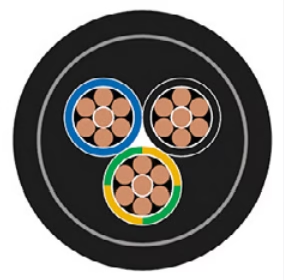
Termite & Rodent Proof Mining Cables: Nylon Sheath vs. Steel Tape Armor Options

Mining operations depend on extensive underground cable networks to distribute power, transmit control signals, and maintain communication systems across vast subterranean infrastructure. These buried cable installations face unique environmental challenges that differ significantly from surface installations, and among the most destructive threats are biological attacks from termites and rodents. While these creatures evolved to consume natural materials, modern cable construction using synthetic polymers can inadvertently attract or fail to deter these persistent pests, leading to catastrophic system failures that jeopardize both operational continuity and worker safety.
NF C32-322 is a French national standard (Norme Française) that specifies requirements for armoured low voltage power cables. These cables, commonly designated as U-1000 RVFV (copper conductor) and U-1000 ARVFV (aluminium conductor), are widely used rigid industrial cables designed for installations requiring mechanical protection. They represent the armoured equivalent of the NF C32-321 unarmoured cables.

What is NF C32-322 Cable?

NF C32-322, U-1000 RVFV, U-1000 ARVFV, U-1000 XAV, NF C32 322, RVFV cable, ARVFV cable, French standard armoured cable, 0.6/1kV cable, 1kV armoured cable, 600/1000V cable, low voltage armoured cable, LV power cable, 1000V industrial cable, NF C32-322 standard, NF C32-070 C2, IEC 60502-1, IEC 60228, IEC 60332-1-2, French cable standard, Norme Française cable, AFNOR cable standard, flame retardant cable,低压电缆, 低壓電纜, 铠装电缆, 鎧裝電纜, 交联聚乙烯电缆, 交聯聚乙烯電纜, 钢带铠装, 鋼帶鎧裝, 法国标准电缆, 法國標準電纜, 工业电缆, 工業電纜, 直埋电缆, 直埋電纜
Z-XOTKtsdDb represents a specialized category of outdoor fiber optic cables engineered for telecommunication infrastructure in wind energy installations. This fully dielectric, glass yarn reinforced loose tube cable provides the backbone for Supervisory Control and Data Acquisition (SCADA) systems that monitor and control wind turbine operations across entire wind farm networks.

What is Z-XOTKtsdDb Glass Yarn Reinforced Fiber Optic Cable?

Z-XOTKtsdDb represents a specialized category of outdoor fiber optic cables engineered for telecommunication infrastructure in wind energy installations. This fully dielectric, glass yarn reinforced loose tube cable provides the backbone for Supervisory Control and Data Acquisition (SCADA) systems that monitor and control wind turbine operations across entire wind farm networks.
CEI 20-27 CENELEC HD361 Cable

What is CEI 20-27 CENELEC HD361 Cable?

CEI 20-27 CENELEC HD361 represents a standardized cable designation system developed by the European Committee for Electrotechnical Standardisation (CENELEC) to provide uniform identification and classification of harmonized power cables and cords across European markets. This systematic coding methodology enables engineers, procurement specialists, and electrical contractors to precisely identify cable specifications including voltage ratings, insulation materials, conductor types, and sheathing compounds through a structured alphanumeric designation format.