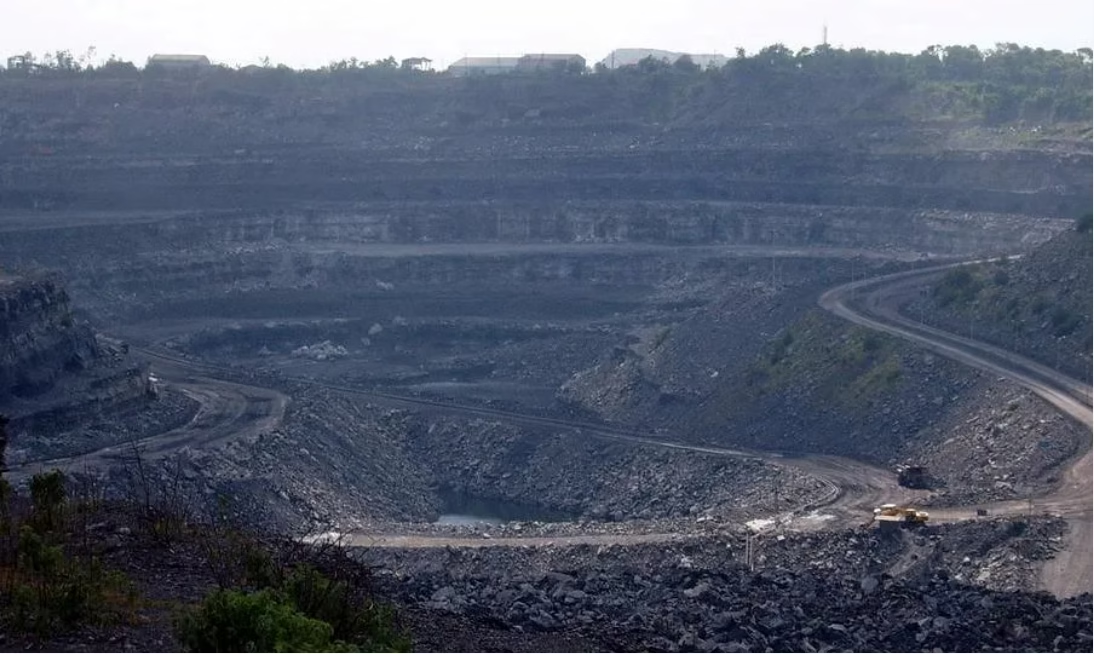
mobile mining equipment

UNE 22511, published and maintained by AENOR (Asociación Española de Normalización y Certificación), is the definitive Spanish standard for heavy-duty power cables connecting underground mobile mining equipment to fixed electrical distribution networks. Operating as a specialized overlay on IEC 60502-1, it extends that base standard's electrical requirements with stringent mechanical, safety, and flame-retardancy requirements specific to enclosed underground environments. Despite its Spanish origin, UNE 22511 enjoys adoption across the major Spanish-speaking mining economies: Chile, Peru, Colombia, Bolivia, and Mexico, where AENOR-certified cables are accepted by national mining safety regulators as the primary qualification pathway for underground mobile equipment power supply cables.

飞纯矿用电缆 MYP / MC 通过俄罗斯 FSC 和欧洲 ATEX 严苛测试与认证!

矿山是电缆应用中最严苛的环境之一。井下空间狭窄,设备移动频繁,煤尘和可燃气体可能形成爆炸性环境;露天矿则可能长期遭遇低温、雨雪、泥浆、紫外线、油污和机械拖拽。电缆一旦发生护套开裂、绝缘损伤、过热、燃烧或电弧风险,影响的不只是设备停机,还可能触发人员安全、消防安全和爆炸危险控制问题。 飞纯矿用电缆 MYP / MC 的价值,正是在这种高风险场景下体现出来:它不是为普通室内布线而设计,而是面向矿山动力连接、移动设备、采煤机、掘进机、输送系统、移动变电站和高机械应力供电系统而构建的安全电缆方案。
FLEXIDRUM® NSHTÖU (V): High-Flexibility Salt-Spray-Resistant Festoon Cable for Dynamic Port Terminal Applications Engineered for continuous rapid-deployment and high-cycling harbour equipment, FLEXIDRUM® NSHTÖU (V) combines tinned Class 5 flexible copper conductor, Kevlar central reinforcement, fire-resistant EPR insulation, and oil-resistant rubber outer sheath to deliver unmatched reliability in extreme salt-spray marine environments. Rated for 180 m/min maximum deployment speed, −25 to +90°C temperature stability, and 0.6/1 kV nominal specifications across 3–44 core configurations (0.5–10 mm² cross-section range), this advanced festoon solution provides comprehensive protection against corrosion, thermal cycling, mechanical flex-fatigue, and rapid-reeling stress for harbour cranes, container-handling spreader systems, dock-automation equipment, and specialized port terminal infrastructure.

How to Choose Between PUR and PCP Outer Sheaths for Mobile Mining Equipment

Polyurethane (PUR) is a synthetic polymer created by reacting isocyanates with polyols. The resulting material is elastomeric (rubber-like) but chemically distinct from traditional natural or synthetic rubbers. PUR’s unique chemistry confers exceptional performance characteristics that have made it the material of choice for premium industrial cables over the past two decades. The key distinguishing feature of polyurethane is its resistance to oil, fuel, and ozone. When exposed to diesel fuel, mineral oil, or synthetic hydraulic fluids, PUR remains stable — it does not swell, soften, or lose mechanical properties. This makes PUR ideal for cables operating near machinery that leaks or splashes fuel and hydraulic fluids, a common condition in mobile mining equipment operating in open-pit environments. Polyurethane also offers superior temperature stability. Modern mining-grade PUR is specified for continuous operation at 70–80°C (with short-term excursions to 90°C possible) and maintains acceptable mechanical properties down to -40°C (whereas PCP becomes brittle at such low temperatures). This wide temperature range is particularly valuable for open-pit mining operations in extreme climates: high-altitude copper mines in the Andes (where nighttime temperatures plunge to -20°C and daytime temperatures exceed 80°C) and arid desert mines where ground temperatures exceed 60°C. The historical development of PUR cables in the mining industry reflects a gradual transition from PCP-dominated specifications (1960s–1990s) toward PUR adoption (2000s onward) as mining operations became more mechanized and equipment became more temperature-sensitive. Modern variable frequency drives (VFDs) and sophisticated control systems tolerate less cable degradation than older mechanical equipment, making the superior temperature stability of PUR increasingly valuable.
Nexans PANZERFLEX is the commercial product designation for high-flexibility mining reeling cables manufactured to German (VDE 0250-813) and international (IEC 60502-1) specifications. The product line is aimed specifically at European and Latin American underground mining operations, where it commands the market leadership position for continuous miner, shearer, and shuttle car drag cables. PANZERFLEX is not a single cable specification but rather a family of products: PANZERFLEX-R for rubber-insulated designs, PANZERFLEX-P for PUR-sheathed designs, and variants distinguished by voltage rating (0.6/1 kV, 1.8/3 kV) and core configuration. (N)TSCGEWÖU is the German VDE cable designation that describes the same functional class: a 0.6/1 kV, Class 5 flexible copper conductor, EPR insulation, unarmoured cable suitable for mobile mining equipment. The "(N)" prefix indicates "new" or "current" specification, distinguishing it from obsolete predecessors. This designation is widely used in German, Austrian, and Central European mining specifications, particularly in coal mining where German equipment vendors historically dominated the market. Technically, PANZERFLEX and (N)TSCGEWÖU are designed to satisfy identical functional requirements and electrical performance levels. Both must pass IEC 60502-1 qualification testing, both are specified for 0.6/1 kV operation, both support Class 5 conductor architecture for maximum torsional flexibility, and both employ EPR insulation for mining durability. The designations differ only in nomenclature: one is a commercial product name from a multinational manufacturer, the other is a German standards designation used in technical specifications and procurement documents.

Nexans PANZERFLEX vs. (N)TSCGEWÖU: A Comprehensive Equivalent Guide

Nexans PANZERFLEX is the commercial product designation for high-flexibility mining reeling cables manufactured to German (VDE 0250-813) and international (IEC 60502-1) specifications. The product line is aimed specifically at European and Latin American underground mining operations, where it commands the market leadership position for continuous miner, shearer, and shuttle car drag cables. PANZERFLEX is not a single cable specification but rather a family of products: PANZERFLEX-R for rubber-insulated designs, PANZERFLEX-P for PUR-sheathed designs, and variants distinguished by voltage rating (0.6/1 kV, 1.8/3 kV) and core configuration. (N)TSCGEWÖU is the German VDE cable designation that describes the same functional class: a 0.6/1 kV, Class 5 flexible copper conductor, EPR insulation, unarmoured cable suitable for mobile mining equipment. The “(N)” prefix indicates “new” or “current” specification, distinguishing it from obsolete predecessors. This designation is widely used in German, Austrian, and Central European mining specifications, particularly in coal mining where German equipment vendors historically dominated the market. Technically, PANZERFLEX and (N)TSCGEWÖU are designed to satisfy identical functional requirements and electrical performance levels. Both must pass IEC 60502-1 qualification testing, both are specified for 0.6/1 kV operation, both support Class 5 conductor architecture for maximum torsional flexibility, and both employ EPR insulation for mining durability. The designations differ only in nomenclature: one is a commercial product name from a multinational manufacturer, the other is a German standards designation used in technical specifications and procurement documents.
FLEXIDRUM® MEDIUM SHD GC: Advanced Flexible Power Cable for Mobile Mining and Industrial Equipment Comprehensive technical engineering guide to FLEXIDRUM® MEDIUM SHD GC (2 kV to 25 kV AC power distribution cable), purpose-engineered for flexible installation on cable-reel systems, mobile mining equipment, longwall miners, loaders, drills, shovels, conveyors, pumps, and industrial machinery requiring simultaneous power delivery, ground conductor functionality, and ground-check monitoring across demanding extraction and materials-handling environments.

SHD GC Cable ICEA S-75-381 or CSA C22.2 No. 96-17

FLEXIDRUM® MEDIUM SHD GC: Advanced Flexible Power Cable for Mobile Mining and Industrial Equipment Comprehensive technical engineering guide to FLEXIDRUM® MEDIUM SHD GC (2 kV to 25 kV AC power distribution cable), purpose-engineered for flexible installation on cable-reel systems, mobile mining equipment, longwall miners, loaders, drills, shovels, conveyors, pumps, and industrial machinery requiring simultaneous power delivery, ground conductor functionality, and ground-check monitoring across demanding extraction and materials-handling environments.
(N)TSKCGEWÖU 3x150+3x25/3 3.6/6kV cable with split three-part earth conductor is approximately 65 mm (2.56 inches), with a standard tolerance window of ±3.0 mm producing a permissible range of 62.0–68.0 mm. The inner jacket (the intermediate protective layer between the insulation and outer sheath) typically has a nominal thickness of approximately 0.8–1.0 mm, contributing to overall diameter build-up but not typically measured as a separate "inner diameter" in engineering specifications because the inner jacket is not a defined outer boundary—it is a layer embedded within the cable structure. The outer jacket (the final thermosetting rubber compound layer) has a nominal thickness of approximately 2.5–3.0 mm, providing the cable's mechanical interface with the environment. The approximate total weight of this cable is 8,200 kg/km (5,510 lbs/1000 ft), with copper content approximately 4,560 kg/km. It features three 150 mm² Class 5 tinned copper main phase conductors, three strategically distributed 25/3 mm² split earth conductors for electromagnetic symmetry, a 3GI3 high-dielectric EPR insulation system rated for continuous 90°C operation, an anti-torsion braid reinforcement layer, and a 5GM5 thermosetting halogen-free outer sheath providing extreme abrasion and tear resistance.

What is the Inner and Outer Jacket Diameter of (N)TSKCGEWÖU 3×150+3×25/3 3.6/6kV Splittable Earth Cable?

(N)TSKCGEWÖU 3×150+3×25/3 3.6/6kV cable with split three-part earth conductor is approximately 65 mm (2.56 inches), with a standard tolerance window of ±3.0 mm producing a permissible range of 62.0–68.0 mm. The inner jacket (the intermediate protective layer between the insulation and outer sheath) typically has a nominal thickness of approximately 0.8–1.0 mm, contributing to overall diameter build-up but not typically measured as a separate “inner diameter” in engineering specifications because the inner jacket is not a defined outer boundary—it is a layer embedded within the cable structure. The outer jacket (the final thermosetting rubber compound layer) has a nominal thickness of approximately 2.5–3.0 mm, providing the cable’s mechanical interface with the environment. The approximate total weight of this cable is 8,200 kg/km (5,510 lbs/1000 ft), with copper content approximately 4,560 kg/km. It features three 150 mm² Class 5 tinned copper main phase conductors, three strategically distributed 25/3 mm² split earth conductors for electromagnetic symmetry, a 3GI3 high-dielectric EPR insulation system rated for continuous 90°C operation, an anti-torsion braid reinforcement layer, and a 5GM5 thermosetting halogen-free outer sheath providing extreme abrasion and tear resistance.
The selection of appropriate submersible pump cables for acidic mine water dewatering applications represents a critical engineering decision that directly impacts operational safety, equipment longevity, and maintenance costs. While Type 441 cables may appear suitable for general submersible pump applications, the harsh chemical environment of acidic mine water typically necessitates the use of specialized EPR (Ethylene Propylene Rubber) or CSP (Chlorosulfonated Polyethylene) insulated cables specifically engineered for corrosive conditions. 为酸性矿井水脱水应用选择合适的潜水泵电缆是一项关键的工程决策,直接影响运行安全、设备寿命和维护成本。虽然441型电缆可能适用于一般潜水泵应用,但酸性矿井水的恶劣化学环境通常需要使用专门设计用于腐蚀性条件的EPR(乙丙橡胶)或CSP(氯磺化聚乙烯)绝缘电缆。

TUNNELFLEX-R-PUR HF with Antitwisting Protection 1 KV

TUNNELFLEX-R-PUR HF represents a specialized category of halogen-free, flame-retardant flexible power cables engineered specifically for the demanding requirements of underground mining and tunneling operations. This cable combines advanced polyurethane (PUR) sheathing technology with integrated antitwisting protection to deliver exceptional mechanical durability, environmental resistance, and most importantly, enhanced safety through its halogen-free construction that significantly reduces toxic gas emissions during fire incidents. TUNNELFLEX-R-PUR HF电缆是专为地下采矿和隧道作业的苛刻要求而设计的无卤阻燃柔性电力电缆。该电缆结合了先进的聚氨酯护套技术和集成的防扭转保护,提供卓越的机械耐久性、环境抵抗力,以及通过无卤结构在火灾事故中显著减少有毒气体排放的增强安全性。
TSCGECEWÖU, NTSCGECEWÖU, TSKCGECWOEU, TSCGEWOEU, NSSHOEU, NTSCGEWOEU-CH, German mining cable, DIN cable, VDE cable, German cable standard, coal cutter cable CH, festoon cable FN, trailing cable W, screened cable designation, EPR mining cable

Joy Global (Komatsu) 7LS Longwall Shearer: (N)TSCGECEWÖU Drag Chain Cable Robustness Analysis

TSCGECEWÖU, NTSCGECEWÖU, TSKCGECWOEU, TSCGEWOEU, NSSHOEU, NTSCGEWOEU-CH, German mining cable, DIN cable, VDE cable, German cable standard, coal cutter cable CH, festoon cable FN, trailing cable W, screened cable designation, EPR mining cable
Understanding the thermal short-circuit current limits of cable earth screens represents a critical aspect of mining cable design and electrical system safety. When a fault occurs in a mining electrical system, massive currents can flow through the cable's protective earth screen, generating intense heat that must be contained without damaging the cable's insulation or compromising its structural integrity. For Type 209 mining cables, which serve as flexible feeders to machinery in demanding underground coal mining environments, accurately calculating these thermal limits ensures that the composite earth screen can safely carry fault currents until protective devices clear the fault. 了解电缆地线屏蔽的热短路电流限制是矿用电缆设计和电气系统安全的关键方面。当矿山电气系统发生故障时,巨大的电流可能通过电缆的保护性地线屏蔽流动,产生必须在不损坏电缆绝缘或损害其结构完整性的情况下控制的强热。对于作为苛刻地下煤矿环境中机械柔性馈线的Type 209矿用电缆,准确计算这些热限制确保复合地线屏蔽能够安全承载故障电流,直到保护装置清除故障。

Short Circuit Rating: How to Calculate the Thermal Short-Circuit Limit for the Earth Screen of a Type 209 Cable

Understanding the thermal short-circuit current limits of cable earth screens represents a critical aspect of mining cable design and electrical system safety. When a fault occurs in a mining electrical system, massive currents can flow through the cable’s protective earth screen, generating intense heat that must be contained without damaging the cable’s insulation or compromising its structural integrity. For Type 209 mining cables, which serve as flexible feeders to machinery in demanding underground coal mining environments, accurately calculating these thermal limits ensures that the composite earth screen can safely carry fault currents until protective devices clear the fault. 了解电缆地线屏蔽的热短路电流限制是矿用电缆设计和电气系统安全的关键方面。当矿山电气系统发生故障时,巨大的电流可能通过电缆的保护性地线屏蔽流动,产生必须在不损坏电缆绝缘或损害其结构完整性的情况下控制的强热。对于作为苛刻地下煤矿环境中机械柔性馈线的Type 209矿用电缆,准确计算这些热限制确保复合地线屏蔽能够安全承载故障电流,直到保护装置清除故障。
In the global cable manufacturing industry, voltage ratings represent a fundamental specification that determines a cable's safe operating parameters and application suitability. When examining low-voltage mining cables, a notable discrepancy emerges between international standards and those used in Australia and New Zealand. While the International Electrotechnical Commission (IEC) designates low-voltage power cables with a rating of 0.6/1kV under IEC 60502-1, Australian mining standards specify a 1.1/1.1kV rating for equivalent applications. This distinction is not arbitrary but reflects careful consideration of mining-specific operational requirements, safety margins, and the unique characteristics of Australia's mining infrastructure. 在全球电缆制造行业中,电压等级是决定电缆安全运行参数和应用适用性的基本规格。在研究低压矿用电缆时,国际标准与澳大利亚和新西兰使用的标准之间存在明显差异。国际电工委员会(IEC)根据IEC 60502-1标准将低压电力电缆的额定值指定为0.6/1kV,而澳大利亚矿用标准对于同等应用规定了1.1/1.1kV的额定值。这种区别并非随意,而是反映了对矿山特定运行要求、安全裕度以及澳大利亚矿业基础设施独特特征的仔细考虑。

Voltage Rating: Why Australian Standards Use 1.1/1.1kV Rating for LV Mining Cables Instead of the IEC Standard 0.6/1kV?

In the global cable manufacturing industry, voltage ratings represent a fundamental specification that determines a cable’s safe operating parameters and application suitability. When examining low-voltage mining cables, a notable discrepancy emerges between international standards and those used in Australia and New Zealand. While the International Electrotechnical Commission (IEC) designates low-voltage power cables with a rating of 0.6/1kV under IEC 60502-1, Australian mining standards specify a 1.1/1.1kV rating for equivalent applications. This distinction is not arbitrary but reflects careful consideration of mining-specific operational requirements, safety margins, and the unique characteristics of Australia’s mining infrastructure. 在全球电缆制造行业中,电压等级是决定电缆安全运行参数和应用适用性的基本规格。在研究低压矿用电缆时,国际标准与澳大利亚和新西兰使用的标准之间存在明显差异。国际电工委员会(IEC)根据IEC 60502-1标准将低压电力电缆的额定值指定为0.6/1kV,而澳大利亚矿用标准对于同等应用规定了1.1/1.1kV的额定值。这种区别并非随意,而是反映了对矿山特定运行要求、安全裕度以及澳大利亚矿业基础设施独特特征的仔细考虑。
Before we dive into the technical differences between Type 241 and Type 260 cables, let's take a moment to understand shuttle cars themselves and why cable selection matters so much for these critical mining vehicles. Think of shuttle cars as the workhorses of underground coal mining operations. These are large, heavy-duty battery-electric or trailing-cable powered vehicles designed to transport coal from the continuous miner working at the coal face to either feeder breakers, mine cars, or belt conveyor systems located some distance away. The shuttle car essentially acts as a mobile bridge between the mining equipment that's actively cutting coal and the permanent conveying infrastructure that will carry that coal to the surface. 在深入了解241型和260型电缆之间的技术差异之前,让我们花点时间了解穿梭车本身,以及为什么电缆选择对这些关键采矿车辆如此重要。可以将穿梭车视为地下煤矿作业的主力。这些是大型重型电池电动或拖缆供电车辆,设计用于将煤炭从在煤层工作面工作的连续采煤机运输到位于一定距离外的给料破碎机、矿车或带式输送机系统。穿梭车本质上充当正在切割煤炭的采矿设备与将煤炭运送到地面的永久输送基础设施之间的移动桥梁。

Type 241 vs. Type 260 Mining Cables: Understanding Construction Differences and Application Selection for Shuttle Car Operations

Before we dive into the technical differences between Type 241 and Type 260 cables, let’s take a moment to understand shuttle cars themselves and why cable selection matters so much for these critical mining vehicles. Think of shuttle cars as the workhorses of underground coal mining operations. These are large, heavy-duty battery-electric or trailing-cable powered vehicles designed to transport coal from the continuous miner working at the coal face to either feeder breakers, mine cars, or belt conveyor systems located some distance away. The shuttle car essentially acts as a mobile bridge between the mining equipment that’s actively cutting coal and the permanent conveying infrastructure that will carry that coal to the surface. 在深入了解241型和260型电缆之间的技术差异之前,让我们花点时间了解穿梭车本身,以及为什么电缆选择对这些关键采矿车辆如此重要。可以将穿梭车视为地下煤矿作业的主力。这些是大型重型电池电动或拖缆供电车辆,设计用于将煤炭从在煤层工作面工作的连续采煤机运输到位于一定距离外的给料破碎机、矿车或带式输送机系统。穿梭车本质上充当正在切割煤炭的采矿设备与将煤炭运送到地面的永久输送基础设施之间的移动桥梁。
Understanding Mine Safety and Health Administration approval markings on Type W portable power cables is essential for compliance with United States underground mining regulations. The P-136-MSHA designation represents a specific manufacturer approval code combined with MSHA certification, indicating that a cable has successfully passed rigorous flame resistance testing and meets federal safety standards for underground mining applications. This comprehensive guide examines MSHA approval requirements, explains the significance of manufacturer-specific approval numbers, and clarifies when Type W cables require MSHA certification for legal underground deployment. 了解W型便携式电力电缆上的矿山安全与健康管理局(MSHA)认证标识对于符合美国地下采矿法规至关重要。P-136-MSHA标识代表特定制造商批准代码与MSHA认证的组合,表明电缆已成功通过严格的阻燃测试并符合地下采矿应用的联邦安全标准。本指南详细介绍了MSHA批准要求,解释了制造商特定批准编号的意义,并阐明了W型电缆何时需要MSHA认证才能合法地下部署。

MSHA Approval: Does Your Type W Cable Carry the P-136-MSHA Marking?

Understanding Mine Safety and Health Administration approval markings on Type W portable power cables is essential for compliance with United States underground mining regulations. The P-136-MSHA designation represents a specific manufacturer approval code combined with MSHA certification, indicating that a cable has successfully passed rigorous flame resistance testing and meets federal safety standards for underground mining applications. This comprehensive guide examines MSHA approval requirements, explains the significance of manufacturer-specific approval numbers, and clarifies when Type W cables require MSHA certification for legal underground deployment. 了解W型便携式电力电缆上的矿山安全与健康管理局(MSHA)认证标识对于符合美国地下采矿法规至关重要。P-136-MSHA标识代表特定制造商批准代码与MSHA认证的组合,表明电缆已成功通过严格的阻燃测试并符合地下采矿应用的联邦安全标准。本指南详细介绍了MSHA批准要求,解释了制造商特定批准编号的意义,并阐明了W型电缆何时需要MSHA认证才能合法地下部署。
Proper cable gland selection for Type W mining cables requires precise understanding of outer diameter tolerances and dimensional specifications. The outer diameter of a cable is subject to manufacturing variations that must be accounted for when selecting cable glands to ensure proper sealing, strain relief, and mechanical protection. For Type W 4/0 AWG cables, which are commonly used in mining and heavy industrial applications, understanding these tolerances is critical for reliable installation and long-term performance. Type W矿用电缆的正确电缆接头选型需要精确了解外径公差和尺寸规格。电缆的外径受制造变化的影响,在选择电缆接头时必须考虑这些因素,以确保正确的密封、应变释放和机械保护。对于Type W 4/0 AWG电缆(通常用于采矿和重工业应用),了解这些公差对于可靠安装和长期性能至关重要。

Type W 4/0 AWG Cable: Diameter Tolerance & Gland Selection Technical Guide

Proper cable gland selection for Type W mining cables requires precise understanding of outer diameter tolerances and dimensional specifications. The outer diameter of a cable is subject to manufacturing variations that must be accounted for when selecting cable glands to ensure proper sealing, strain relief, and mechanical protection. For Type W 4/0 AWG cables, which are commonly used in mining and heavy industrial applications, understanding these tolerances is critical for reliable installation and long-term performance. Type W矿用电缆的正确电缆接头选型需要精确了解外径公差和尺寸规格。电缆的外径受制造变化的影响,在选择电缆接头时必须考虑这些因素,以确保正确的密封、应变释放和机械保护。对于Type W 4/0 AWG电缆(通常用于采矿和重工业应用),了解这些公差对于可靠安装和长期性能至关重要。
When working with Type G-GC portable power cables, one of the most frequently asked questions by installers and maintenance technicians concerns the proper connection of the ground check conductor, often called the pilot wire. This seemingly simple question touches on one of the most critical safety systems in mining and heavy industrial electrical installations. Understanding not just where this wire connects, but why it exists and how it functions as part of a comprehensive ground fault protection system, is essential for anyone working with mining equipment electrical systems. 在使用Type G-GC便携式电源电缆时,安装人员和维护技术人员最常问的问题之一是关于接地检查导体(通常称为导线)的正确连接。这个看似简单的问题涉及到采矿和重工业电气安装中最关键的安全系统之一。

Connection Guide: Wiring a Type G-GC Plug – Where Does the Ground Check Wire Go?

When working with Type G-GC portable power cables, one of the most frequently asked questions by installers and maintenance technicians concerns the proper connection of the ground check conductor, often called the pilot wire. This seemingly simple question touches on one of the most critical safety systems in mining and heavy industrial electrical installations. Understanding not just where this wire connects, but why it exists and how it functions as part of a comprehensive ground fault protection system, is essential for anyone working with mining equipment electrical systems. 在使用Type G-GC便携式电源电缆时,安装人员和维护技术人员最常问的问题之一是关于接地检查导体(通常称为导线)的正确连接。这个看似简单的问题涉及到采矿和重工业电气安装中最关键的安全系统之一。
PROTOMONT NTSKCGECWOEU 6 kV Festoon: Technical Guide for Mobile Transformer and Shiftable Unit Festoon Cable Systems in Underground Mining

PROTOMONT NTSKCGECWOEU 6 kV Festoon

PROTOMONT NTSKCGECWOEU festoon, 6 kV festoon cable, mobile transformer festoon, shiftable unit power, underground festoon system, trolley carrier cable, overhead festoon cable, mining festoon power, VDE 0250-813 cable, catenary festoon cable
PROTOMONT EMV-FC (N)SSHCOEU 1 kV: Technical Guide for Variable Frequency Drive Cables with EMC Shielding and Submersible Capability for Mining Material Handling Equipment

PROTOMONT EMV-FC (N)SSHCOEU 1 kV

PROTOMONT EMV-FC cable, SSHCOEU VFD cable, variable frequency drive cable, frequency converter cable, EMC shielded motor cable, submersible mining cable, cable boom power, upper lower car connection, VFD mining cable
What is TYPE 450 1.1 to 33kV Mining Cables to AS/NZS 2802:2000?

What is TYPE 450 1.1 to 33kV Mining Cables to AS/NZS 2802:2000?

TYPE 450 cables occupy a critical position within this standard as Class 2 cables, distinguished by their incorporation of semiconductive screening systems essential for medium to high voltage applications. The designation “Type 450” refers to the cable’s construction classification within AS/NZS 2802:2000, with the numeric suffix (450.3, 450.6, 450.11, 450.22, 450.33) indicating the voltage rating in kilovolts. These cables are specifically engineered for slow reeling and trailing applications where equipment such as draglines, excavators, and wharf cranes requires flexible power connections that can withstand thousands of reeling cycles while maintaining electrical integrity and mechanical reliability.