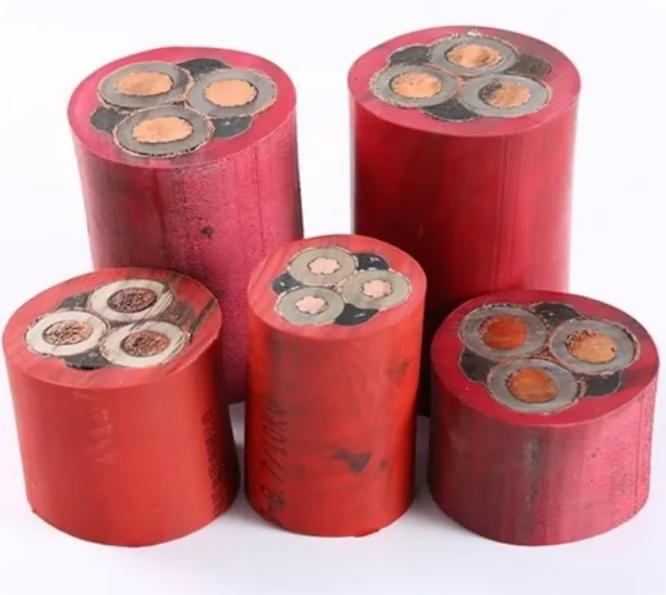
Mining Cables

Proper cable sizing is critical for safe and efficient operation of medium voltage mining equipment. When connecting Type SHD-GC cables to Patton & Cooke 15kV cable couplers, precise matching of conductor size to termination grommet specifications ensures optimal electrical performance, mechanical reliability, and long-term safety in demanding mining environments. 正确的电缆尺寸选择对于中压采矿设备的安全高效运行至关重要。将SHD-GC型电缆连接到帕顿与库克15kV电缆耦合器时,精确匹配导体尺寸与终端护套规格可确保在苛刻的采矿环境中实现最佳电气性能、机械可靠性和长期安全性。
Patton & Cooke Cable Sizing: Matching Type SHD-GC to 15kV Coupler Grommets

Proper cable sizing is critical for safe and efficient operation of medium voltage mining equipment. When connecting Type SHD-GC cables to Patton & Cooke 15kV cable couplers, precise matching of conductor size to termination grommet specifications ensures optimal electrical performance, mechanical reliability, and long-term safety in demanding mining environments. 正确的电缆尺寸选择对于中压采矿设备的安全高效运行至关重要。将SHD-GC型电缆连接到帕顿与库克15kV电缆耦合器时,精确匹配导体尺寸与终端护套规格可确保在苛刻的采矿环境中实现最佳电气性能、机械可靠性和长期安全性。
Sumitomo Electric Industries represents one of the world's most respected cable manufacturers, with a heritage spanning over 120 years since its founding in 1897. The company's origins trace back even further to the Sumitomo group's copper refining operations that began during the 17th century. According to historical records from Encyclopedia.com, Sumitomo's involvement in copper refining naturally led the company into cable and wire production when Japan's industrialization during the Meiji Restoration created urgent demand for electrical infrastructure. In 1897, Sumitomo purchased a facility near Osaka from the Japan Copper Manufacturing Company, retooling it to produce cable and wire using copper from the company's rich Besshi mine. This facility became the foundation of what would eventually become Sumitomo Electric Wire and Cable Works, incorporated as an independent company in 1920. 住友电气工业代表了世界上最受尊敬的电缆制造商之一,自1897年成立以来拥有超过120年的传统。该公司的起源可以追溯到住友集团在17世纪开始的铜精炼业务。

Sumitomo Mining Cables: Compatible Replacements for Japanese Specification Machinery

Sumitomo Electric Industries represents one of the world’s most respected cable manufacturers, with a heritage spanning over 120 years since its founding in 1897. The company’s origins trace back even further to the Sumitomo group’s copper refining operations that began during the 17th century. According to historical records from Encyclopedia.com, Sumitomo’s involvement in copper refining naturally led the company into cable and wire production when Japan’s industrialization during the Meiji Restoration created urgent demand for electrical infrastructure. In 1897, Sumitomo purchased a facility near Osaka from the Japan Copper Manufacturing Company, retooling it to produce cable and wire using copper from the company’s rich Besshi mine. This facility became the foundation of what would eventually become Sumitomo Electric Wire and Cable Works, incorporated as an independent company in 1920. 住友电气工业代表了世界上最受尊敬的电缆制造商之一,自1897年成立以来拥有超过120年的传统。该公司的起源可以追溯到住友集团在17世纪开始的铜精炼业务。
Portable cords in industrial settings face relentless abuse on a daily basis. From construction sites where cables are run over by heavy equipment, to manufacturing facilities where they're exposed to oils and chemicals, to mining operations with constant mechanical stress, these cables must endure conditions that would destroy ordinary extension cords within weeks. The demand is clear: cables must be both exceptionally heavy-duty and highly flexible to handle rough and continuous applications without failure. (工业环境中的便携式电缆每天都面临无情的滥用。从电缆被重型设备碾压的建筑工地,到暴露于油和化学品的制造设施,再到持续机械应力的采矿作业,这些电缆必须承受在几周内就会摧毁普通延长线的条件。需求很明确:电缆必须既异常坚固又高度柔韧,以应对粗暴和持续的应用而不失效。)

TPC Wire Super-Trex Equivalent: Heavy Duty Cord

Portable cords in industrial settings face relentless abuse on a daily basis. From construction sites where cables are run over by heavy equipment, to manufacturing facilities where they’re exposed to oils and chemicals, to mining operations with constant mechanical stress, these cables must endure conditions that would destroy ordinary extension cords within weeks. The demand is clear: cables must be both exceptionally heavy-duty and highly flexible to handle rough and continuous applications without failure. (工业环境中的便携式电缆每天都面临无情的滥用。从电缆被重型设备碾压的建筑工地,到暴露于油和化学品的制造设施,再到持续机械应力的采矿作业,这些电缆必须承受在几周内就会摧毁普通延长线的条件。需求很明确:电缆必须既异常坚固又高度柔韧,以应对粗暴和持续的应用而不失效。)
Flexible rubber cables represent a critical category of industrial power transmission cables specifically engineered for demanding applications requiring exceptional mechanical flexibility combined with robust environmental protection. These cables utilize synthetic rubber insulation and sheathing materials to deliver superior performance in mobile equipment, submersible pumps, generators, and industrial machinery operating under harsh conditions. According to the International Electrotechnical Commission standard IEC 60245, rubber insulated cables are designed for use in power installations operating at nominal voltages up to and including 450/750V, with specialized constructions available for 0.6/1kV applications requiring enhanced durability. 柔性橡胶电缆代表了工业电力传输电缆的关键类别,专门设计用于需要卓越机械柔韧性与强大环境保护相结合的苛刻应用。这些电缆采用合成橡胶绝缘和护套材料,在移动设备、潜水泵、发电机和在恶劣条件下运行的工业机械中提供卓越性能。

Top Cable Xtrem DN-F Alternative: High Performance Rubber Cables for Pumps & Generators

Flexible rubber cables represent a critical category of industrial power transmission cables specifically engineered for demanding applications requiring exceptional mechanical flexibility combined with robust environmental protection. These cables utilize synthetic rubber insulation and sheathing materials to deliver superior performance in mobile equipment, submersible pumps, generators, and industrial machinery operating under harsh conditions. According to the International Electrotechnical Commission standard IEC 60245, rubber insulated cables are designed for use in power installations operating at nominal voltages up to and including 450/750V, with specialized constructions available for 0.6/1kV applications requiring enhanced durability. 柔性橡胶电缆代表了工业电力传输电缆的关键类别,专门设计用于需要卓越机械柔韧性与强大环境保护相结合的苛刻应用。这些电缆采用合成橡胶绝缘和护套材料,在移动设备、潜水泵、发电机和在恶劣条件下运行的工业机械中提供卓越性能。
Arctic mining operations in Canada and Russia represent some of the most challenging environments for electrical infrastructure. With temperatures regularly plummeting to -50°C (-58°F) or lower, standard cables suffer from critical failures including sheath cracking, insulation brittleness, and loss of flexibility. (加拿大和俄罗斯的北极采矿作业代表着电气基础设施面临的最具挑战性的环境。温度经常降至-50°C或更低,标准电缆会出现护套开裂、绝缘层脆化和失去柔韧性等严重故障。) The Arctic region contains significant mineral deposits, with Russia producing approximately 80% of its oil and 90% of its gas in high northern latitudes, while Canada continues to develop major mining projects including iron ore deposits 300 miles inside the Arctic Circle. (北极地区蕴藏着大量矿产资源,俄罗斯在高纬度北部地区生产约80%的石油和90%的天然气,而加拿大继续开发位于北极圈内300英里处的大型铁矿项目。)

Arctic Mining Cables for Extreme Cold Environments

Arctic mining operations in Canada and Russia represent some of the most challenging environments for electrical infrastructure. With temperatures regularly plummeting to -50°C (-58°F) or lower, standard cables suffer from critical failures including sheath cracking, insulation brittleness, and loss of flexibility. (加拿大和俄罗斯的北极采矿作业代表着电气基础设施面临的最具挑战性的环境。温度经常降至-50°C或更低,标准电缆会出现护套开裂、绝缘层脆化和失去柔韧性等严重故障。) The Arctic region contains significant mineral deposits, with Russia producing approximately 80% of its oil and 90% of its gas in high northern latitudes, while Canada continues to develop major mining projects including iron ore deposits 300 miles inside the Arctic Circle. (北极地区蕴藏着大量矿产资源,俄罗斯在高纬度北部地区生产约80%的石油和90%的天然气,而加拿大继续开发位于北极圈内300英里处的大型铁矿项目。)
Acid Mine Drainage represents one of the most challenging environmental conditions for electrical infrastructure in mining operations. AMD occurs when sulfide minerals, particularly pyrite, are exposed to oxygen and water during mining activities, producing sulfuric acid through oxidation reactions. According to research from the United States Geological Survey, AMD environments typically exhibit pH levels ranging from 2 to 4, with extreme cases documented as low as pH 0.5 to 0.9 at facilities such as the Richmond Mine in California. 酸性矿井排水(AMD)是采矿作业中电气基础设施面临的最具挑战性的环境条件之一。当硫化矿物(特别是黄铁矿)在采矿活动中暴露于氧气和水中时,通过氧化反应产生硫酸,从而形成AMD。

Acid Mine Drainage (AMD): Cables that Withstand pH < 3.0 Sulfuric Acid Exposure

Acid Mine Drainage represents one of the most challenging environmental conditions for electrical infrastructure in mining operations. AMD occurs when sulfide minerals, particularly pyrite, are exposed to oxygen and water during mining activities, producing sulfuric acid through oxidation reactions. According to research from the United States Geological Survey, AMD environments typically exhibit pH levels ranging from 2 to 4, with extreme cases documented as low as pH 0.5 to 0.9 at facilities such as the Richmond Mine in California. 酸性矿井排水(AMD)是采矿作业中电气基础设施面临的最具挑战性的环境条件之一。当硫化矿物(特别是黄铁矿)在采矿活动中暴露于氧气和水中时,通过氧化反应产生硫酸,从而形成AMD。
Mining operations in extreme high-altitude environments such as the Andes Mountains and the Tibetan Plateau present unique challenges for electrical cable systems. At elevations around 4000 meters (13,123 feet) above sea level, reduced atmospheric pressure significantly affects the thermal performance and current-carrying capacity of power cables. This technical document provides engineering guidance on proper cable derating calculations for mining installations operating under these demanding conditions. 安第斯山脉和青藏高原等极端高海拔环境中的采矿作业对电缆系统提出了独特挑战。在海拔约4000米处,大气压力降低显著影响电力电缆的热性能和载流能力。本技术文件为在这些苛刻条件下运行的采矿设施提供关于适当电缆降额计算的工程指导。

High Altitude Mining Cable Systems: De-rating Calculations for Operations at 4000m Above Sea Level

Mining operations in extreme high-altitude environments such as the Andes Mountains and the Tibetan Plateau present unique challenges for electrical cable systems. At elevations around 4000 meters (13,123 feet) above sea level, reduced atmospheric pressure significantly affects the thermal performance and current-carrying capacity of power cables. This technical document provides engineering guidance on proper cable derating calculations for mining installations operating under these demanding conditions. 安第斯山脉和青藏高原等极端高海拔环境中的采矿作业对电缆系统提出了独特挑战。在海拔约4000米处,大气压力降低显著影响电力电缆的热性能和载流能力。本技术文件为在这些苛刻条件下运行的采矿设施提供关于适当电缆降额计算的工程指导。
Deep sea mining represents one of humanity's most ambitious technological frontiers, targeting mineral resources at ocean depths that would have been unimaginable just decades ago. The International Seabed Authority (ISA) has granted 31 exploration licenses as of 2024, including 19 for polymetallic nodules primarily in the Clarion-Clipperton Zone (CCZ) of the Pacific Ocean, where deposits lie at depths of 4,000 to 6,000 meters below the surface [1][2]. These nodules contain economically critical metals including copper, nickel, cobalt, and manganese, with the CCZ alone estimated to hold over 21 billion metric tons of nodules. 深海采矿系统由生产支持船、深海集矿机器人、提升管道系统和最关键的脐带电缆组成。Deep sea mining systems consist of production support vessels (PSVs), subsea collector vehicles, riser and lift systems (RALS), and most critically, umbilical power cables that must transmit electrical power, control signals, and data communications across vertical distances exceeding 5,000 meters. The Chinese submersible Striver reached the Mariana Trench at 10,909 meters depth in 2020, demonstrating that engineering solutions for ultra-deep operations are technologically feasible, though commercially scaled mining operations remain in the exploratory phase [3][4].

Deep Sea Mining & Dredging: Submersible Power Cables Rated for 500m+ Depth

Deep sea mining represents one of humanity’s most ambitious technological frontiers, targeting mineral resources at ocean depths that would have been unimaginable just decades ago. The International Seabed Authority (ISA) has granted 31 exploration licenses as of 2024, including 19 for polymetallic nodules primarily in the Clarion-Clipperton Zone (CCZ) of the Pacific Ocean, where deposits lie at depths of 4,000 to 6,000 meters below the surface [1][2]. These nodules contain economically critical metals including copper, nickel, cobalt, and manganese, with the CCZ alone estimated to hold over 21 billion metric tons of nodules. 深海采矿系统由生产支持船、深海集矿机器人、提升管道系统和最关键的脐带电缆组成。Deep sea mining systems consist of production support vessels (PSVs), subsea collector vehicles, riser and lift systems (RALS), and most critically, umbilical power cables that must transmit electrical power, control signals, and data communications across vertical distances exceeding 5,000 meters. The Chinese submersible Striver reached the Mariana Trench at 10,909 meters depth in 2020, demonstrating that engineering solutions for ultra-deep operations are technologically feasible, though commercially scaled mining operations remain in the exploratory phase [3][4].
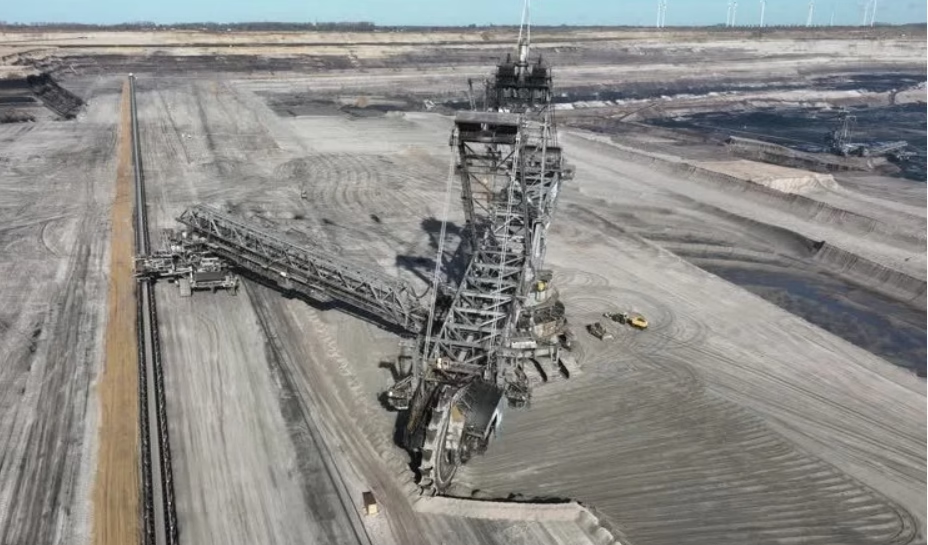
Bucket wheel excavators represent the pinnacle of continuous mining machinery, combining exceptional scale with remarkable engineering precision. These colossal machines, primarily manufactured by TAKRAF (formerly an East German Kombinat, now part of the Tenova Group) and ThyssenKrupp, have revolutionized surface mining operations since their introduction in the 1920s. Modern bucket wheel excavators serve as the primary overburden removal equipment in large-scale open-pit mining operations, capable of excavating thousands of tons of material per hour with continuous, uninterrupted operation. The operational principle of these machines centers on a large rotating wheel equipped with multiple buckets that continuously scoop material as the wheel rotates. Unlike batch-loading equipment such as traditional excavators or draglines, bucket wheel excavators provide truly continuous material flow, making them ideally suited for high-volume operations where consistent production rates are paramount. The excavated material transfers through the boom system to discharge conveyors, creating an integrated material handling chain that can extend for kilometers across mining sites.

Bucket Wheel Excavators (Takraf/ThyssenKrupp): Managing Cable Tension on Massive Reels

Bucket wheel excavators represent the pinnacle of continuous mining machinery, combining exceptional scale with remarkable engineering precision. These colossal machines, primarily manufactured by TAKRAF (formerly an East German Kombinat, now part of the Tenova Group) and ThyssenKrupp, have revolutionized surface mining operations since their introduction in the 1920s. Modern bucket wheel excavators serve as the primary overburden removal equipment in large-scale open-pit mining operations, capable of excavating thousands of tons of material per hour with continuous, uninterrupted operation. The operational principle of these machines centers on a large rotating wheel equipped with multiple buckets that continuously scoop material as the wheel rotates. Unlike batch-loading equipment such as traditional excavators or draglines, bucket wheel excavators provide truly continuous material flow, making them ideally suited for high-volume operations where consistent production rates are paramount. The excavated material transfers through the boom system to discharge conveyors, creating an integrated material handling chain that can extend for kilometers across mining sites.
Potash and salt mining operations present one of the most chemically aggressive environments for electrical infrastructure. Unlike conventional mining operations where mechanical wear dominates cable failure modes, potash mines create a uniquely hostile chemical environment that systematically attacks standard cable materials through multiple corrosion pathways. Understanding why cables fail in these conditions requires examining the specific chemistry of the mining environment and how it interacts with different cable sheath materials. 钾盐矿是世界上最重要的化肥生产基地,但同时也是电缆系统面临最严峻腐蚀环境的场所之一。Potash mines are among the world's most important fertilizer production sites, but they also present one of the most severe corrosive environments for cable systems. The high chloride content, combined with moisture, hydrogen sulfide, and elevated temperatures, creates conditions that rapidly degrade standard rubber cable sheaths

Potash & Salt Mines: Why Standard Rubber Cables Fail and How to Choose Corrosion Resistant Sheaths

Potash and salt mining operations present one of the most chemically aggressive environments for electrical infrastructure. Unlike conventional mining operations where mechanical wear dominates cable failure modes, potash mines create a uniquely hostile chemical environment that systematically attacks standard cable materials through multiple corrosion pathways. Understanding why cables fail in these conditions requires examining the specific chemistry of the mining environment and how it interacts with different cable sheath materials. 钾盐矿是世界上最重要的化肥生产基地,但同时也是电缆系统面临最严峻腐蚀环境的场所之一。Potash mines are among the world’s most important fertilizer production sites, but they also present one of the most severe corrosive environments for cable systems. The high chloride content, combined with moisture, hydrogen sulfide, and elevated temperatures, creates conditions that rapidly degrade standard rubber cable sheaths
Overland conveyor systems represent critical infrastructure for bulk material handling across mining, quarrying, and heavy industrial operations. When these systems extend beyond 5 kilometers, the selection of appropriate power distribution cables becomes a paramount engineering decision that directly impacts operational reliability, maintenance costs, and system longevity. According to industry standards published by the International Electrotechnical Commission, power cables for such applications must meet rigorous mechanical and electrical performance criteria to withstand the demanding operational environment. This technical analysis examines two primary cable architectures utilized in extended overland conveyor applications: armoured cables and flexible cables. Each design philosophy addresses specific operational requirements, with armoured configurations prioritizing mechanical protection for fixed installations, while flexible designs accommodate dynamic loading and continuous motion requirements. The selection between these cable types fundamentally depends on installation methodology, environmental conditions, mechanical stress profiles, and long-term operational economics.

Overland Conveyor Systems: Armoured vs. Flexible Cables for 5km+ Power Distribution

Overland conveyor systems represent critical infrastructure for bulk material handling across mining, quarrying, and heavy industrial operations. When these systems extend beyond 5 kilometers, the selection of appropriate power distribution cables becomes a paramount engineering decision that directly impacts operational reliability, maintenance costs, and system longevity. According to industry standards published by the International Electrotechnical Commission, power cables for such applications must meet rigorous mechanical and electrical performance criteria to withstand the demanding operational environment. This technical analysis examines two primary cable architectures utilized in extended overland conveyor applications: armoured cables and flexible cables. Each design philosophy addresses specific operational requirements, with armoured configurations prioritizing mechanical protection for fixed installations, while flexible designs accommodate dynamic loading and continuous motion requirements. The selection between these cable types fundamentally depends on installation methodology, environmental conditions, mechanical stress profiles, and long-term operational economics.
The Liebherr T 284 represents the pinnacle of ultra-class mining truck engineering, with a payload capacity of 360 tonnes (397 short tons) and groundbreaking electrification capabilities through its Trolley Assist System. This diesel-electric haul truck utilizes overhead pantograph connections to draw power from fixed electrical infrastructure, achieving remarkable operational efficiency gains while significantly reducing carbon emissions in mining operations. 根据利勃海尔官方数据,T 284 是 360 吨级中最轻且最具承载能力的超级矿用卡车,通过架空接触网供电系统实现了燃料消耗降低 90% 以上的突破性成果。According to Liebherr's official documentation, the T 284 achieves over 90% reduction in diesel fuel consumption when operating under trolley assist mode, with speed-on-grade improvements reaching up to 100% compared to diesel-only operation

Liebherr T 284 Mining Truck: Grid Connection Cables for Trolley Assist Lines

The Liebherr T 284 represents the pinnacle of ultra-class mining truck engineering, with a payload capacity of 360 tonnes (397 short tons) and groundbreaking electrification capabilities through its Trolley Assist System. This diesel-electric haul truck utilizes overhead pantograph connections to draw power from fixed electrical infrastructure, achieving remarkable operational efficiency gains while significantly reducing carbon emissions in mining operations. 根据利勃海尔官方数据,T 284 是 360 吨级中最轻且最具承载能力的超级矿用卡车,通过架空接触网供电系统实现了燃料消耗降低 90% 以上的突破性成果。According to Liebherr’s official documentation, the T 284 achieves over 90% reduction in diesel fuel consumption when operating under trolley assist mode, with speed-on-grade improvements reaching up to 100% compared to diesel-only operation
Metso Lokotrack mobile crushing and screening plants have been a leading solution in the aggregates production and recycling industries since their introduction in 1985. These track-mounted machines combine complete mobility with high crushing capacity, enabling operations to process materials efficiently at production sites or move between locations with minimal setup time. The Lokotrack series includes jaw crushers (LT Series), cone crushers, and horizontal/vertical shaft impact (HSI/VSI) crushers designed for primary, secondary, and tertiary crushing applications. 美卓Lokotrack移动破碎和筛分设备自1985年推出以来,一直是骨料生产和回收行业的领先解决方案。这些履带式设备将完全的移动性与高破碎产能相结合,能够在生产现场高效处理物料,或以最短的安装时间在不同地点之间转移。

Metso Mobile Crushers (Lokotrack): Vibration Resistant Power Cables for Portable Plants

Metso Lokotrack mobile crushing and screening plants have been a leading solution in the aggregates production and recycling industries since their introduction in 1985. These track-mounted machines combine complete mobility with high crushing capacity, enabling operations to process materials efficiently at production sites or move between locations with minimal setup time. The Lokotrack series includes jaw crushers (LT Series), cone crushers, and horizontal/vertical shaft impact (HSI/VSI) crushers designed for primary, secondary, and tertiary crushing applications. 美卓Lokotrack移动破碎和筛分设备自1985年推出以来,一直是骨料生产和回收行业的领先解决方案。这些履带式设备将完全的移动性与高破碎产能相结合,能够在生产现场高效处理物料,或以最短的安装时间在不同地点之间转移。
Overview 概述: The Komatsu 930E is an ultra-class electric drive mining truck with a 320-ton (290 metric ton) payload capacity, widely deployed in large-scale copper, gold, iron ore, and coal mining operations worldwide. The trolley assist system enables these trucks to draw external DC power through overhead catenary lines via pantograph connections, significantly reducing diesel consumption and emissions while increasing productivity. 小松930E是一款超大型电驱动矿用卡车,载重量达320吨(290公吨),广泛应用于全球大型铜矿、金矿、铁矿和煤矿开采作业。电车辅助系统使这些卡车能够通过受电弓连接从架空接触网获取外部直流电源,显著降低柴油消耗和排放,同时提高生产效率。

Komatsu 930E Electric Drive Truck: Trolley Assist Cable Systems

Overview 概述: The Komatsu 930E is an ultra-class electric drive mining truck with a 320-ton (290 metric ton) payload capacity, widely deployed in large-scale copper, gold, iron ore, and coal mining operations worldwide. The trolley assist system enables these trucks to draw external DC power through overhead catenary lines via pantograph connections, significantly reducing diesel consumption and emissions while increasing productivity. 小松930E是一款超大型电驱动矿用卡车,载重量达320吨(290公吨),广泛应用于全球大型铜矿、金矿、铁矿和煤矿开采作业。电车辅助系统使这些卡车能够通过受电弓连接从架空接触网获取外部直流电源,显著降低柴油消耗和排放,同时提高生产效率。
Underground mining operations demand exceptional reliability from every component, and the electrical cable powering Load-Haul-Dump (LHD) equipment is no exception. The Caterpillar R1700 (15-tonne capacity) and R2900 XE (18.5-tonne capacity) represent the latest generation of underground loaders, featuring advanced diesel-electric and battery-electric powertrains designed for maximum productivity and reduced emissions. Selecting the appropriate reeling cable—whether Type W or Type G-GC—directly impacts equipment uptime, operational safety, and total cost of ownership. 地下采矿作业对每个组件都要求极高的可靠性,为铲运机(LHD)设备供电的电缆也不例外。卡特彼勒R1700(15吨容量)和R2900 XE(18.5吨容量)代表了最新一代地下装载机,选择合适的卷筒电缆直接影响设备正常运行时间、操作安全性和总拥有成本。

Caterpillar R1700/R2900 Underground Loader: Selecting the Best Reeling Cable (Type W vs Type G-GC)

Underground mining operations demand exceptional reliability from every component, and the electrical cable powering Load-Haul-Dump (LHD) equipment is no exception. The Caterpillar R1700 (15-tonne capacity) and R2900 XE (18.5-tonne capacity) represent the latest generation of underground loaders, featuring advanced diesel-electric and battery-electric powertrains designed for maximum productivity and reduced emissions. Selecting the appropriate reeling cable—whether Type W or Type G-GC—directly impacts equipment uptime, operational safety, and total cost of ownership. 地下采矿作业对每个组件都要求极高的可靠性,为铲运机(LHD)设备供电的电缆也不例外。卡特彼勒R1700(15吨容量)和R2900 XE(18.5吨容量)代表了最新一代地下装载机,选择合适的卷筒电缆直接影响设备正常运行时间、操作安全性和总拥有成本。
Type W and Type G-GC cables represent two of the most critical portable power cable designs for mining and heavy industrial applications. Both cable types are engineered to withstand extreme mechanical stress, chemical exposure, and demanding electrical requirements while maintaining safety compliance with the Mine Safety and Health Administration (MSHA) regulations under 30 CFR Part 75 and Part 77. Type W和Type G-GC电缆是矿业和重工业应用中最关键的两种便携式电力电缆设计。这两种电缆均经过工程设计,能够承受极端的机械应力、化学暴露和苛刻的电气要求,同时保持符合美国矿山安全与健康管理局(MSHA)根据30 CFR第75和77部分制定的安全合规要求。

Type W vs. Type G-GC: The Definitive Guide to Ground Check Conductors for MSHA Compliance

Type W and Type G-GC cables represent two of the most critical portable power cable designs for mining and heavy industrial applications. Both cable types are engineered to withstand extreme mechanical stress, chemical exposure, and demanding electrical requirements while maintaining safety compliance with the Mine Safety and Health Administration (MSHA) regulations under 30 CFR Part 75 and Part 77. Type W和Type G-GC电缆是矿业和重工业应用中最关键的两种便携式电力电缆设计。这两种电缆均经过工程设计,能够承受极端的机械应力、化学暴露和苛刻的电气要求,同时保持符合美国矿山安全与健康管理局(MSHA)根据30 CFR第75和77部分制定的安全合规要求。
To understand why cable sheaths in underground coal mines must be electrically conductive, we need to first explore the fundamental physics of static electricity and why it poses such an extraordinary danger in mining environments. This requirement, mandated by AS/NZS 1802:2018, is not merely a technical specification but rather a critical safety measure that has evolved from decades of mining experience and, unfortunately, from lessons learned through tragic accidents. 要理解为什么地下煤矿中的电缆护套必须具有导电性,我们首先需要探讨静电的基本物理原理,以及为什么它在采矿环境中构成如此巨大的危险。AS/NZS 1802:2018要求的这一规定不仅仅是一个技术规范,而是一项从数十年的采矿经验以及不幸的事故教训中演变而来的关键安全措施。

TENAX-SAS (N)TSCGEWOEU I 6 – 35 KV

As power supply cable to large mobile equipment in mines, specifically designed for trailing cable applications with shovels and draglines. The outer sheath is extremely robust and tough against abrasion and tearing, maintaining full flexibility in operation down to -50°C. 用作矿山大型移动设备的电源电缆,专为挖掘机和拉铲的拖曳电缆应用而设计。外护套极其坚固耐磨损和撕裂,在低至-50°C的温度下保持完全的柔韧性。
Type 409 cables represent a specialized category of flexible mining cables designed specifically for demanding applications in material handling equipment, surface mining operations, and industrial environments. These cables are manufactured according to the Australian and New Zealand Standard AS/NZS 2802:2000, which establishes rigorous requirements for reeling and trailing cables used in mining and general industrial applications outside underground coal mining environments. (409型电缆是专为物料搬运设备、露天采矿作业和工业环境中的高要求应用而设计的一类特种柔性矿用电缆。这些电缆按照澳大利亚和新西兰标准AS/NZS 2802:2000制造,该标准对用于煤矿井下以外的采矿和一般工业应用的卷筒电缆和拖曳电缆制定了严格要求。)

TENAX-PUR (N)TSCGEH3S I 6 – 10 KV

TENAX-PUR is a premium medium voltage trailing cable engineered specifically for power supply to large mobile mining equipment such as shovels and draglines. The cable features an extremely robust polyurethane (PUR) outer sheath that delivers exceptional performance against abrasion and tearing, maintaining full flexibility even in extreme cold conditions down to -50°C. Available in orange, yellow, or custom colors to meet specific operational requirements. TENAX-PUR 是一种专为大型移动采矿设备(如电铲和拉斗铲)供电而设计的优质中压拖曳电缆。该电缆采用极其坚固的聚氨酯(PUR)外护套,在磨损和撕裂方面提供卓越的性能,即使在低至-50°C的极端寒冷条件下也能保持充分的柔韧性。可提供橙色、黄色或定制颜色以满足特定操作要求。
Comprehensive Technical Analysis of Chlorinated Polyethylene (CPE) vs Chlorosulphonated Polyethylene (CSP) Sheath Performance Under Extreme UV Radiation in Pilbara Region Mining Operations 氯化聚乙烯(CPE)与氯磺化聚乙烯(CSP)护套在皮尔巴拉地区采矿作业极端紫外线辐射下性能的综合技术分析

PROTOLON(SB) SHD-GC I 5 – 15 KV

Shielded Heavy-Duty Ground Check Cables (SHD-GC) are specialized power supply and connection cables designed for large material handling equipment such as excavators in opencast mining operations. These cables withstand extremely high mechanical stresses and are particularly suitable for trailing operations where abrasion and chafing stresses are expected.
The selection of appropriate submersible pump cables for acidic mine water dewatering applications represents a critical engineering decision that directly impacts operational safety, equipment longevity, and maintenance costs. While Type 441 cables may appear suitable for general submersible pump applications, the harsh chemical environment of acidic mine water typically necessitates the use of specialized EPR (Ethylene Propylene Rubber) or CSP (Chlorosulfonated Polyethylene) insulated cables specifically engineered for corrosive conditions. 为酸性矿井水脱水应用选择合适的潜水泵电缆是一项关键的工程决策,直接影响运行安全、设备寿命和维护成本。虽然441型电缆可能适用于一般潜水泵应用,但酸性矿井水的恶劣化学环境通常需要使用专门设计用于腐蚀性条件的EPR(乙丙橡胶)或CSP(氯磺化聚乙烯)绝缘电缆。

TUNNELFLEX-R-PUR HF with Antitwisting Protection 1 KV

TUNNELFLEX-R-PUR HF represents a specialized category of halogen-free, flame-retardant flexible power cables engineered specifically for the demanding requirements of underground mining and tunneling operations. This cable combines advanced polyurethane (PUR) sheathing technology with integrated antitwisting protection to deliver exceptional mechanical durability, environmental resistance, and most importantly, enhanced safety through its halogen-free construction that significantly reduces toxic gas emissions during fire incidents. TUNNELFLEX-R-PUR HF电缆是专为地下采矿和隧道作业的苛刻要求而设计的无卤阻燃柔性电力电缆。该电缆结合了先进的聚氨酯护套技术和集成的防扭转保护,提供卓越的机械耐久性、环境抵抗力,以及通过无卤结构在火灾事故中显著减少有毒气体排放的增强安全性。
The maximum allowable pilot loop resistance for Type 450 mining cables operating with Ampcontrol earth continuity relays represents a critical electrical parameter that directly impacts mine safety and operational reliability. This comprehensive technical analysis examines the interaction between AS/NZS 2802:2000 Type 450 cable specifications and Ampcontrol relay requirements, providing mining engineers and electrical designers with authoritative guidance for proper system design and selection. 与Ampcontrol地电连续继电器配合使用的Type 450矿用电缆的最大允许导向回路电阻是一个直接影响矿山安全和运行可靠性的关键电气参数。本全面技术分析检查了AS/NZS 2802:2000 Type 450电缆规格与Ampcontrol继电器要求之间的相互作用,为矿业工程师和电气设计师提供了正确系统设计和选择的权威指导。

PROTOLON (SB) NTSCGEWOEU I 3 – 30 KV

These cables serve as power supply or connection cables for large material handling machines, such as excavators in opencast mines, subjected to extremely high mechanical stresses where abrasion and chaffing stresses are expected in trailing operation. 这些电缆用作大型物料搬运机械(如露天矿山挖掘机)的电源或连接电缆,在拖曳作业中承受极高的机械应力、磨损和摩擦应力。
The question of whether NSSHÖU cables require CE marking for European surface mining operations involves a nuanced understanding of European Union electrical equipment regulations. NSSHÖU cables, manufactured according to the German standard DIN VDE 0250 Part 812, are heavy-duty rubber-sheathed flexible cables specifically designed for mining and industrial applications where extreme mechanical stress, abrasion resistance, and environmental durability are essential operational requirements. NSSHÖU电缆在欧洲露天采矿作业中是否需要CE标志的问题涉及对欧盟电气设备法规的细致理解。NSSHÖU电缆根据德国标准DIN VDE 0250第812部分制造,是专门为采矿和工业应用设计的重型橡胶护套柔性电缆,在这些应用中,极端的机械应力、耐磨性和环境耐久性是基本的操作要求。

TUNNELFLEX-PUR HF WITHOUT ANTITWISTING PROTECTION I 1 KV

TUNNELFLEX-PUR HF represents a specialized category of halogen-free flexible power cables engineered for mobile equipment operating in mining and tunnelling environments where high mechanical damage risk is inherent. This cable variant, manufactured without antitwisting protection elements, is optimally designed for applications where cable deflection occurs predominantly in a single plane, eliminating the need for complex anti-torsion structures while maintaining robust mechanical performance and safety characteristics critical to underground operations. 该电缆为无卤柔性电力电缆,专为存在高机械损伤风险的采矿和隧道移动设备供电而设计。由于没有抗扭保护,适用于仅在单一平面内偏转的应用场合,最大运行速度为60米/分钟。
To appreciate the ingenious engineering behind Type 440 cable design, we must first understand the mechanical challenges that mining cables face in their demanding service environment. Imagine a heavy-duty power cable trailing behind a massive dragline excavator as it moves across an open-pit mine. This cable must deliver reliable electrical power while simultaneously withstanding crushing forces when the excavator's tracks pass over it, resisting abrasion from sharp rock surfaces, and maintaining flexibility through countless cycles of bending and twisting movements. 要理解Type 440电缆设计背后的巧妙工程,我们必须首先了解矿用电缆在苛刻服务环境中面临的机械挑战。想象一根重型电力电缆拖在大型拉铲挖掘机后面,当它在露天矿中移动时,这根电缆必须提供可靠的电力,同时承受挖掘机履带经过时的压碎力、抵抗尖锐岩石表面的磨损,并在无数次弯曲和扭转运动中保持柔韧性。

TROMMELFLEX-M-PUR BRAIDED D2X11Y 1 KV

TROMMELFLEX-M-PUR represents a specialized category of flexible low voltage reeling cables engineered specifically for the demanding conditions of underground mining and tunneling operations. This cable features optimized dimensions and a flame-retardant, halogen-free polyurethane outer sheath, making it ideal for power supply to mobile underground equipment including drilling machines, Load-Haul-Dump (LHD) loaders, and scoops that operate under frequently changing dynamic loads during reeling operations. TROMMELFLEX-M-PUR电缆是专为地下采矿和隧道作业的苛刻条件而设计的特种柔性低压卷筒电缆。该电缆具有优化的尺寸设计和阻燃、无卤聚氨酯外护套,特别适合为钻机、装载-运输-卸载(LHD)装载机和铲运机等移动地下设备提供电力,这些设备在卷绕操作中承受频繁变化的动态负载。
When international cable manufacturers consider entering the Colombian market, particularly for mining applications, they encounter a comprehensive regulatory framework that may initially seem complex but serves a vital purpose. The Reglamento Técnico de Instalaciones Eléctricas, universally known by its Spanish acronym RETIE, represents Colombia's mandatory technical regulation governing all electrical installations and products. 当国际电缆制造商考虑进入哥伦比亚市场时,特别是针对矿业应用,他们会遇到一个全面的监管框架 Understanding RETIE is not merely a bureaucratic exercise but rather the foundation for successfully participating in one of South America's most dynamic electrical markets.

TROMMELFLEX-M-PUR D2X11Y I 1 KV

TROMMELFLEX-M-PUR represents a specialized class of flexible low voltage reeling cables engineered specifically for underground mining and tunnelling operations. This cable features optimized dimensions and incorporates a flame retardant, halogen-free polyurethane outer sheath, making it particularly suitable for demanding industrial environments where both mechanical durability and safety are paramount. The cable’s design addresses the unique challenges encountered in mining applications, where equipment must withstand frequent dynamic loads, abrasive conditions, and the rigorous demands of continuous reeling operations on drilling machines, scoops, and load-haul-dump vehicles. 卷筒柔性电缆专为地下采矿和隧道设备设计,具有优化的尺寸和阻燃无卤聚氨酯外护套。该电缆适用于钻机、铲运机和装载设备的频繁动态负载和卷筒操作。
To appreciate the ingenious engineering behind Type 440 cable design, we must first understand the mechanical challenges that mining cables face in their demanding service environment. Imagine a heavy-duty power cable trailing behind a massive dragline excavator as it moves across an open-pit mine. This cable must deliver reliable electrical power while simultaneously withstanding crushing forces when the excavator's tracks pass over it, resisting abrasion from sharp rock surfaces, and maintaining flexibility through countless cycles of bending and twisting movements. 要理解Type 440电缆设计背后的巧妙工程,我们必须首先了解矿用电缆在苛刻服务环境中面临的机械挑战。想象一根重型电力电缆拖在大型拉铲挖掘机后面,当它在露天矿中移动时,这根电缆必须提供可靠的电力,同时承受挖掘机履带经过时的压碎力、抵抗尖锐岩石表面的磨损,并在无数次弯曲和扭转运动中保持柔韧性。

PROTOLON (M) R-(N)TSCGEWOEU LWL 6-35 KV

PROTOLON (M)R-(N)TSCGEWOEU LWL series represents a cutting-edge advancement in mining cable technology, combining high-voltage power transmission with integrated fiber-optic communication capabilities in a single, ruggedized cable design. This innovative hybrid cable system addresses the growing demand for real-time data transmission and monitoring in modern mining operations, where mobile equipment requires simultaneous electrical power supply and high-speed data communication under extreme mechanical stress conditions. PROTOLON LWL系列电缆将高压电力传输与集成光纤通信功能融合于单一坚固电缆设计中,满足现代矿山作业中对实时数据传输和监控的日益增长需求。该创新混合电缆系统使移动设备能够在极端机械应力条件下同时获得电力供应和高速数据通信。
MYP cables must obtain MA (煤安) certification before they can be legally used in Chinese coal mines. The MA mark, administered by the National Coal Mine Safety Mark Office (煤矿安全标志办公室), represents mandatory safety certification for all underground coal mining equipment and materials. MYP cables, as mobile power supply cables for coal mining machinery, fall under the strictly regulated product categories defined in the Mining Product Safety Sign Management Catalog and must comply with Chinese national standards MT 818 series and GB 12972.[1][2] 是的,MYP电缆在中国煤矿使用前必须获得MA(煤安)认证。由国家煤矿安全标志办公室管理的MA标志,代表了所有井下煤矿设备和材料的强制性安全认证。MYP电缆作为煤矿机械的移动电源电缆,属于《矿用产品安全标志管理目录》中严格管制的产品类别,必须符合中国国家标准MT 818系列和GB 12972。

PROTOLON (M)R-(N)TSCGEWOEU 6-35 KV

(M)R-(N)TSCGEWOEU series represents a highly engineered family of medium voltage flexible reeling cables specifically designed for demanding applications in open-cast mining operations and heavy industrial environments. These cables are manufactured according to the stringent requirements of DIN VDE 0250-813 standard, which is recognized globally as the definitive specification for flexible trailing cables used in heavy industrial applications where extreme mechanical stresses are expected. PROTOLON系列电缆专为露天矿山的大型物料搬运设备(如挖掘机、卸料车、移动式破碎机)设计,能够承受极高的机械应力,适用于单螺旋卷筒和圆柱形卷筒的灵活卷绕操作。
The mining industry continues to evolve toward increasingly sophisticated communication infrastructure, driven by safety regulations and operational efficiency demands. Fiber optic technology has emerged as the backbone of modern mining operations, providing high-bandwidth, electromagnetic interference-resistant data transmission in some of the most challenging environments on Earth. Within this context, fiber optic breakout cables represent a critical component for deploying reliable networks in underground and surface mining facilities. 矿业持续向更复杂的通信基础设施发展,这是由安全法规和运营效率需求驱动的。光纤技术已成为现代矿业运营的支柱,在地球上一些最具挑战性的环境中提供高带宽、抗电磁干扰的数据传输。在此背景下,光纤分支电缆是在地下和地面采矿设施中部署可靠网络的关键组件。

Fiber Optic Breakout in Mining Cables: Best Practices for (N)TSCGEWÖU-FO Termination

The mining industry continues to evolve toward increasingly sophisticated communication infrastructure, driven by safety regulations and operational efficiency demands. Fiber optic technology has emerged as the backbone of modern mining operations, providing high-bandwidth, electromagnetic interference-resistant data transmission in some of the most challenging environments on Earth. Within this context, fiber optic breakout cables represent a critical component for deploying reliable networks in underground and surface mining facilities. 矿业持续向更复杂的通信基础设施发展,这是由安全法规和运营效率需求驱动的。光纤技术已成为现代矿业运营的支柱,在地球上一些最具挑战性的环境中提供高带宽、抗电磁干扰的数据传输。在此背景下,光纤分支电缆是在地下和地面采矿设施中部署可靠网络的关键组件。
Variable frequency drives (VFDs) have revolutionized industrial motor control by enabling precise speed regulation and significant energy savings. However, these benefits come with a serious technical challenge that many facilities overlook until catastrophic failure occurs. When VFDs control AC motors through pulse width modulation (PWM), they create high-frequency electrical disturbances that can destroy motor bearings in a matter of months or even weeks, rather than the expected operational lifetime of years.

VFD Motor Bearing Damage: Why You Need (N)3GHSSYCY Screened Mining Cables?

Variable frequency drives (VFDs) have revolutionized industrial motor control by enabling precise speed regulation and significant energy savings. However, these benefits come with a serious technical challenge that many facilities overlook until catastrophic failure occurs. When VFDs control AC motors through pulse width modulation (PWM), they create high-frequency electrical disturbances that can destroy motor bearings in a matter of months or even weeks, rather than the expected operational lifetime of years.
Australia's mining industry operates under stringent safety regulations, particularly for underground coal operations where methane gas and coal dust present unique explosion hazards. The selection of appropriate electrical cables is not merely a technical decision but a critical safety requirement mandated by New South Wales Work Health and Safety regulations. According to the Work Health and Safety (Mines and Petroleum Sites) Regulation 2022, specific cable types must be used in hazardous zones of underground coal mines to prevent catastrophic incidents. 澳大利亚采矿业在严格的安全法规下运营,特别是在地下煤矿作业中,甲烷气体和煤尘呈现独特的爆炸危险。选择合适的电缆不仅是技术决策,更是新南威尔士州工作健康与安全法规规定的关键安全要求。

AS/NZS 1802 vs. AS/NZS 2802: Which Mining Cable Do You Need for NSW Coal Mines?

Australia’s mining industry operates under stringent safety regulations, particularly for underground coal operations where methane gas and coal dust present unique explosion hazards. The selection of appropriate electrical cables is not merely a technical decision but a critical safety requirement mandated by New South Wales Work Health and Safety regulations. According to the Work Health and Safety (Mines and Petroleum Sites) Regulation 2022, specific cable types must be used in hazardous zones of underground coal mines to prevent catastrophic incidents. 澳大利亚采矿业在严格的安全法规下运营,特别是在地下煤矿作业中,甲烷气体和煤尘呈现独特的爆炸危险。选择合适的电缆不仅是技术决策,更是新南威尔士州工作健康与安全法规规定的关键安全要求。
Corkscrewing — also referred to as Z-kinking or the "pigtail" effect — is among the most frequently encountered failure modes in dynamic reeling applications. When a Type 440 cable repeatedly exhibits helical deformation after even modest operating hours, the root cause almost never lies in a single variable. It is instead a compounding interaction of design, installation, and operating conditions. (软电缆在卷盘运行中出现螺旋变形,通常称为"软木塞效应"或Z型褶皱,是Type 440型动态卷盘电缆最常见的失效模式之一。)

Why Your Reeling Cable Keeps “Corkscrewing”:Diagnosis & Solutions for Type 440

Corkscrewing — also referred to as Z-kinking or the “pigtail” effect — is among the most frequently encountered failure modes in dynamic reeling applications. When a Type 440 cable repeatedly exhibits helical deformation after even modest operating hours, the root cause almost never lies in a single variable. It is instead a compounding interaction of design, installation, and operating conditions. (软电缆在卷盘运行中出现螺旋变形,通常称为”软木塞效应”或Z型褶皱,是Type 440型动态卷盘电缆最常见的失效模式之一。)
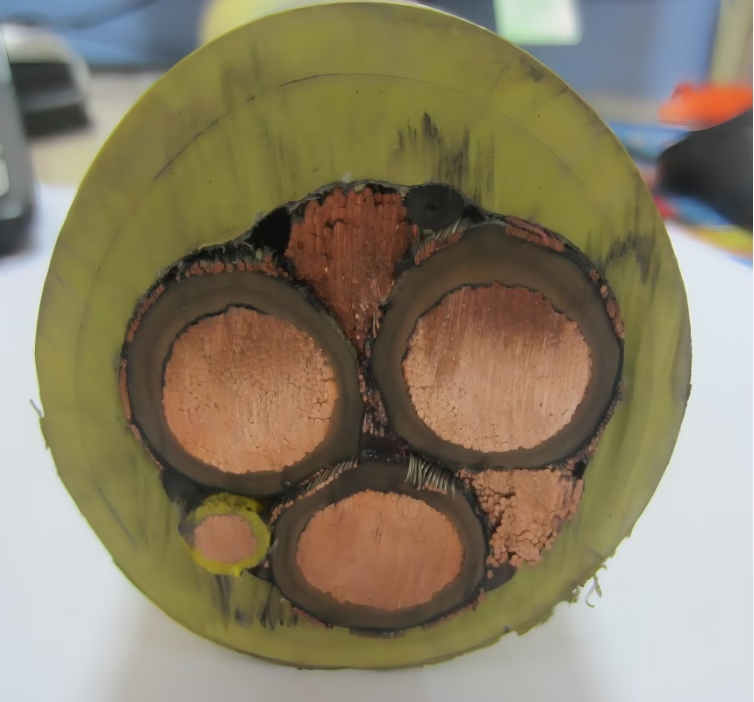
Type SHD-GC (Shielded, High-voltage, with a Grounding Conductor) cables represent the industry standard for high-voltage portable power distribution in surface and underground mining operations. These cables are manufactured according to ICEA S-75-381/NEMA WC 58 standards and must comply with MSHA 30 CFR Part 7 flame resistance requirements for use in mining environments. SHD-GC型(带接地导体的屏蔽高压)电缆代表了露天和地下采矿作业中高压便携式配电的行业标准。这些电缆根据ICEA S-75-381/NEMA WC 58标准制造,并必须符合MSHA 30 CFR第7部分的阻燃要求,方可用于采矿环境。

Coupler Compatibility: Matching Type SHD-GC Cables with Patton & Cooke 15kV Connectors

Type SHD-GC (Shielded, High-voltage, with a Grounding Conductor) cables represent the industry standard for high-voltage portable power distribution in surface and underground mining operations. These cables are manufactured according to ICEA S-75-381/NEMA WC 58 standards and must comply with MSHA 30 CFR Part 7 flame resistance requirements for use in mining environments. SHD-GC型(带接地导体的屏蔽高压)电缆代表了露天和地下采矿作业中高压便携式配电的行业标准。这些电缆根据ICEA S-75-381/NEMA WC 58标准制造,并必须符合MSHA 30 CFR第7部分的阻燃要求,方可用于采矿环境。
Type 450 cables are Australian-standard reeling and trailing cables designed specifically for mining applications. Defined under AS/NZS 1802 (formerly AS 1802), these cables feature robust construction capable of withstanding the harsh conditions of underground and surface mining environments. The "Type 450" designation indicates cables rated for 450/750V operation in mining applications.

Ampcontrol Protection Relays: Required Pilot Core Resistance for Type 450 Cables

Type 450 cables are Australian-standard reeling and trailing cables designed specifically for mining applications. Defined under AS/NZS 1802 (formerly AS 1802), these cables feature robust construction capable of withstanding the harsh conditions of underground and surface mining environments. The “Type 450” designation indicates cables rated for 450/750V operation in mining applications.
Type W portable power cables represent the gold standard for heavy-duty industrial applications, specifically engineered to meet the demanding requirements of mining, construction, and entertainment industries. The General Cable Anaconda brand has established itself as a benchmark product in this category, recognized for superior durability and electrical performance in extreme environments. W型便携式电力电缆代表了重型工业应用的最高标准,专门设计用于满足采矿、建筑和娱乐行业的苛刻要求。通用电缆Anaconda品牌已成为该类别的基准产品,以其在极端环境中的卓越耐久性和电气性能而闻名。

General Cable Anaconda Brand Cross-Reference: Finding the Right Type W Portable Cord

Type W portable power cables represent the gold standard for heavy-duty industrial applications, specifically engineered to meet the demanding requirements of mining, construction, and entertainment industries. The General Cable Anaconda brand has established itself as a benchmark product in this category, recognized for superior durability and electrical performance in extreme environments. W型便携式电力电缆代表了重型工业应用的最高标准,专门设计用于满足采矿、建筑和娱乐行业的苛刻要求。通用电缆Anaconda品牌已成为该类别的基准产品,以其在极端环境中的卓越耐久性和电气性能而闻名。