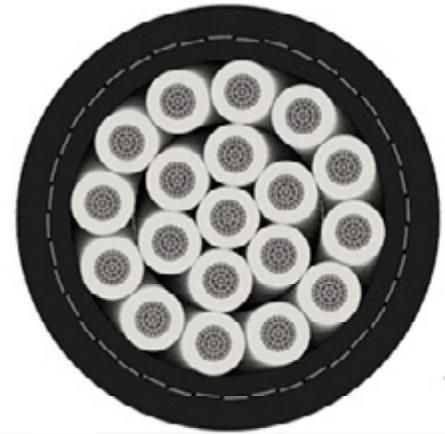
elastomer insulated cable

When engineers first encounter the AS/NZS 2802 standard for electric reeling and trailing cables used in mining and general industrial applications, a seemingly contradictory requirement immediately stands out. The standard mandates the exclusive use of electrolytic multiple-stranded circular flexible tinned copper wire conductors, explicitly rejecting aluminium despite its well-documented weight advantages. Given that aluminium weighs approximately 30 percent of copper's mass for equivalent electrical resistance, this specification appears counterintuitive, particularly for mobile mining equipment where weight reduction directly translates to improved fuel efficiency, reduced structural loading, and enhanced operational flexibility. 当工程师首次接触AS/NZS 2802标准时,用于采矿和一般工业应用的电动卷筒和拖缆,一个看似矛盾的要求立即凸显出来。该标准强制要求专门使用电解多股圆形柔性镀锡铜线导体,明确拒绝使用铝材,尽管铝的重量优势有充分记录。

Aluminium Conductors: Why Are Aluminium Conductors Strictly Prohibited in AS/NZS 2802 Trailing Cables Despite the Weight Savings?

When engineers first encounter the AS/NZS 2802 standard for electric reeling and trailing cables used in mining and general industrial applications, a seemingly contradictory requirement immediately stands out. The standard mandates the exclusive use of electrolytic multiple-stranded circular flexible tinned copper wire conductors, explicitly rejecting aluminium despite its well-documented weight advantages. Given that aluminium weighs approximately 30 percent of copper’s mass for equivalent electrical resistance, this specification appears counterintuitive, particularly for mobile mining equipment where weight reduction directly translates to improved fuel efficiency, reduced structural loading, and enhanced operational flexibility. 当工程师首次接触AS/NZS 2802标准时,用于采矿和一般工业应用的电动卷筒和拖缆,一个看似矛盾的要求立即凸显出来。该标准强制要求专门使用电解多股圆形柔性镀锡铜线导体,明确拒绝使用铝材,尽管铝的重量优势有充分记录。
Comprehensive Technical Analysis of Chlorinated Polyethylene (CPE) vs Chlorosulphonated Polyethylene (CSP) Sheath Performance Under Extreme UV Radiation in Pilbara Region Mining Operations 氯化聚乙烯(CPE)与氯磺化聚乙烯(CSP)护套在皮尔巴拉地区采矿作业极端紫外线辐射下性能的综合技术分析

UV Resistance in Type 441 Mining Cables: Does CPE Sheath Meet “Extremely High UV” Requirements of Australian Surface Mines?

Comprehensive Technical Analysis of Chlorinated Polyethylene (CPE) vs Chlorosulphonated Polyethylene (CSP) Sheath Performance Under Extreme UV Radiation in Pilbara Region Mining Operations 氯化聚乙烯(CPE)与氯磺化聚乙烯(CSP)护套在皮尔巴拉地区采矿作业极端紫外线辐射下性能的综合技术分析
In the demanding world of surface mining operations, dragline excavators and mobile material handling equipment rely on high-voltage flexible cables to deliver continuous electrical power as these massive machines traverse mining sites. The choice between Type 450 and Type 455 cables manufactured to AS/NZS 2802:2000 standards represents a critical engineering decision that directly impacts equipment reliability, operational costs, and cable service life. Both cable types are designed for voltage ratings from 3.3 kilovolts to 33 kilovolts, with operational temperatures spanning from negative 25 degrees Celsius to positive 90 degrees Celsius, making them suitable for the diverse environmental conditions encountered in Australian mining operations

Dragline Cables 22kV/33kV: Type 450 vs Type 455 — Which Design Delivers Superior Longevity for Reeling and Trailing Applications?

In the demanding world of surface mining operations, dragline excavators and mobile material handling equipment rely on high-voltage flexible cables to deliver continuous electrical power as these massive machines traverse mining sites. The choice between Type 450 and Type 455 cables manufactured to AS/NZS 2802:2000 standards represents a critical engineering decision that directly impacts equipment reliability, operational costs, and cable service life. Both cable types are designed for voltage ratings from 3.3 kilovolts to 33 kilovolts, with operational temperatures spanning from negative 25 degrees Celsius to positive 90 degrees Celsius, making them suitable for the diverse environmental conditions encountered in Australian mining operations
British Standard BS7917 covers a wide range of cable types used in fixed wiring applications in offshore units where additional fire resistant properties are required. It sets out the constructional requirements and additional tests under fire conditions. The purpose of producing BS7917 was to promote the use of cables with fire resistance in the event of fire, ensuring continued circuit integrity during emergency situations.

What is BS7917 Cable?

BS7917 cable, BS7917 fire resistant cable, BS7917 SW2, BS7917 SW3, BS7917 SW4, fire resistant offshore cable, elastomer insulated cable, EPR insulation cable, GSWB armoured cable, galvanized steel wire braid, 0.6/1kV offshore cable, 150/250V instrumentation cable, halogen free cable, LSZH marine cable, low smoke zero halogen, mica glass tape fire resistant, F0 fire rating 750°C, F1 fire rating 950°C, 3 hour fire resistance, circuit integrity cable, offshore platform cable, FPSO cable, marine vessel cable, ship wiring cable, oil platform cable, gas platform cable, tinned copper conductor, Class 5 flexible conductor, Class 2 stranded conductor, collective screen cable, individual screen cable, BS6883 cable, IEC 60331-21, IEC 60332-3-22, IEC 60754-1, oil resistant cable, flame retardant cable, heat resistant cable, offshore fixed wiring, mobile offshore unit, fixed offshore unit, TCu/MGT/EPR cable, ASHM GSWB cable, offshore crane cable, propulsion circuit cable, control instrumentation cable, emergency system cable, BS7917電纜, 防火電纜, 耐火電纜, 海上電纜, 船用電纜, 無鹵電纜, 低煙無鹵, 阻燃電纜, 耐油電纜, 海洋平台電纜, Anhui Feichun cable, Feichun Special Cable, 安徽飛純電纜
British Standard BS6883 covers the specifications for elastomer insulated cables for fixed wiring in ships (shipwiring) and on mobile and fixed offshore marine units. This standard specifies the requirements and test methods for shipboard fixed wiring of lighting, power, control, instrumentation and propulsion circuits with a voltage rating of up to 8.7/15kV.

What is BS6883 Cable?

BS6883電纜, BS6883船用電纜, 船用電纜, 海上電纜, 船用佈線電纜, 船舶電纜, LSZH電纜, LSHF電纜, 低煙無鹵電纜, EPR船用電纜, 海上電力電纜, 船用電纜, 657TQ電纜, 658TQ電纜, SW4型電纜, SW3型電纜, SW2型電纜, 鎧裝船用電纜, 非鎧裝船用電纜, 鋼絲編織電纜, HOFR電纜, 無鹵電纜, 阻燃船用電纜, 勞氏船級社電纜, DNV電纜, UKOOA電纜, 600/1000V船用電纜, 船用儀表電纜, 海上平台電纜, 鑽井平台電纜, 石油平台電纜, FPSO電纜, 耐火電纜, BS7917電纜, 彈性體絕緣電纜, EPR絕緣電纜, 鍍錫銅船用電纜,BS6883, BS6883 cable, marine cable, offshore cable, shipwiring cable, ship cable, LSZH cable, LSHF cable, low smoke halogen free cable, EPR marine cable, offshore power cable, shipboard cable, 657TQ cable, 658TQ cable, Type SW4 cable, Type SW3 cable, Type SW2 cable, armoured marine cable, unarmoured marine cable, GSWB cable, steel wire braid cable, HOFR cable, halogen free cable, flame retardant marine cable
What is TYPE 440 1.1 to 11KV Mining Cable to AS/NZS 2802:2000?

What is TYPE 440 1.1 to 11KV Mining Cable to AS/NZS 2802:2000?

TYPE 440 mining cables represent a specialized category of heavy-duty flexible trailing cables designed specifically for power distribution in mining operations. These cables serve as the electrical lifelines of mining operations, delivering power to mobile machinery and equipment across voltage ranges from 1.1kV to 22kV.
TYPE 241 mining cables represent a specialized category of elastomer-insulated, semiconductive-screened power cables specifically engineered for the demanding operational conditions encountered in underground coal mining environments.

What is TYPE 241 1.1 to 22kV Mining Cables to AS/NZS 1802:2003?

TYPE 241 mining cables represent a specialized category of elastomer-insulated, semiconductive-screened power cables specifically engineered for the demanding operational conditions encountered in underground coal mining environments.