ATEX mining cable

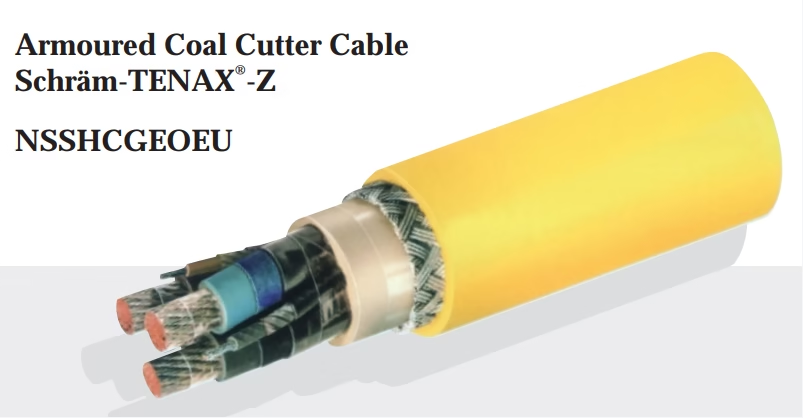
NSSHCGEOEU — это специализированный бронированный гибкий кабель, предназначенный для подключения мобильных машин, эксплуатируемых в условиях экстремальных механических нагрузок, преимущественно в горнодобывающей промышленности. Кабель разработан в соответствии с международным стандартом DIN VDE 0250, часть 812, который устанавливает требования к конструкции, электрическим характеристикам и механической прочности кабелей для угольных комбайнов.

Schräm-TENAX® -Z NSSHCGEOEU

бронированный кабель для угольных комбайнов, кабель NSSHCGEOEU, кабель для горнодобывающего оборудования, кабель для угольных шахт, гибкий шахтный кабель, кабель для комбайна, резиновый кабель для шахт, кабель EPR изоляция, кабель 0.6/1 kV горный, кабель для LHD погрузчика, кабель медно-стальная броня, кабель концентрический экран, силовой кабель для шахт
BS6708, mining cable, quarry cable, trailing cable, EPR cable, SWA cable, coal cutter cable, excavator cable, 礦用電纜, 採石場電纜, 拖曳電纜

What is BS6708 Cable?

British Standard BS6708 sets out the requirements for flexible trailing cables where used in mining operations and quarries. These cables are often referred to as trailing cables, quarry cables, or auxiliary cables and have applications with a wide range of dynamic mining equipment including excavators, coal-cutters, crushing machines, and shuttle cars. flexible trailing cable, mine cable, EPR mining cable, SWA mining cable, chloroprene cable, coal cutter cable, excavator cable, shuttle car cable, crushing machine cable, coal face cable, Type 7 mining cable, Type 7M cable, Type 7S cable, Type 11 cable, Type 20 cable, Type 21 cable, Type 307 cable, Type 331 cable, Type 621 cable, Type 631 cable, 640/1100V mining cable, 1.9/3.3kV mining cable
H05RR-F Cable

What is H05RR-F Cable?

H05RR-F cables excel in underground mining environments where they serve as power supply conductors for mobile equipment and fixed installations. The constant movement of mining equipment creates significant abrasion challenges for trailing cables, requiring advanced polymer compounds with high abrasion indices and specialized insulation materials with superior flex memory[24]. These cables are specifically designed for coal cutters operating in cable chains (cable handlers) and similar face equipment, where they must withstand continuous flexing, mechanical stress, and exposure to moisture and dust.
R(N)TSCGEWOU

Mining Cable Applications: Extra Heavy Duty Solutions for Extreme Global Mining Conditions

Mining operations worldwide demand the most reliable and durable electrical cable solutions available. Extra heavy duty mining cables with specialized outer jackets have consistently exceeded performance expectations in the most severe mining conditions across Europe, North America, South America, Australia, and Asia, establishing themselves as the industry standard for stringent mining applications. These cables represent critical infrastructure components that power essential mining equipment from underground continuous miners to massive surface draglines, operating reliably in environments characterized by extreme mechanical stress, chemical exposure, moisture, and temperature variations.
TYPE 409 mining cables represent a specialized category of flexible trailing cables designed to meet the rigorous demands of surface mining, underground mining operations, and general industrial applications where movable plant requires reliable electrical power supply. Manufactured in compliance with the AS/NZS 2802:2000 standard, these Class 2 heavy-duty cables feature ethylene propylene rubber (EPR) insulation, composite copper and polyester braid screening, and elastomeric sheath construction. Available in voltage ratings from 1.1 kilovolts up to 22 kilovolts, TYPE 409 cables serve as the electrical lifeline for machinery ranging from handheld drills and pumps to massive dragline excavators and shovels.

TYPE 409 1.1 to 22kV Mining Cables to AS/NZS 2802:2000

The engineering sophistication of TYPE 409 cables reflects decades of development in mining cable technology, incorporating semiconductive screening systems, central cradle separators, and interstitial pilot conductors that work together to ensure safe and reliable operation in extreme environmental conditions. The cables must withstand extraordinary mechanical stresses, continuous flexing, abrasion from dust and debris, exposure to oils and chemicals, ultraviolet radiation, and temperature extremes while maintaining electrical integrity and personnel safety.